












France and Japan converge in a layered dialogue of craft and culture as Dior reimagines its Parisian legacy in Tokyo. Nestled in the calm urban fabric of Daikanyama, the Bamboo Pavilion transcends retail to become a spatial expression. Opened in February 2026, the project extends the house’s long relationship with Japan, translating cultural references into built form. The pavilion, spanning approximately 1,800 square meters, creates a slow, immersive journey where landscape, architecture, and display converge.
The project redefines luxury through an object-driven interior composed of light, greenery, and material contrast, allowing Paris and Tokyo to intersect in a subtle, shared ground.
Rethinking Retail as Space
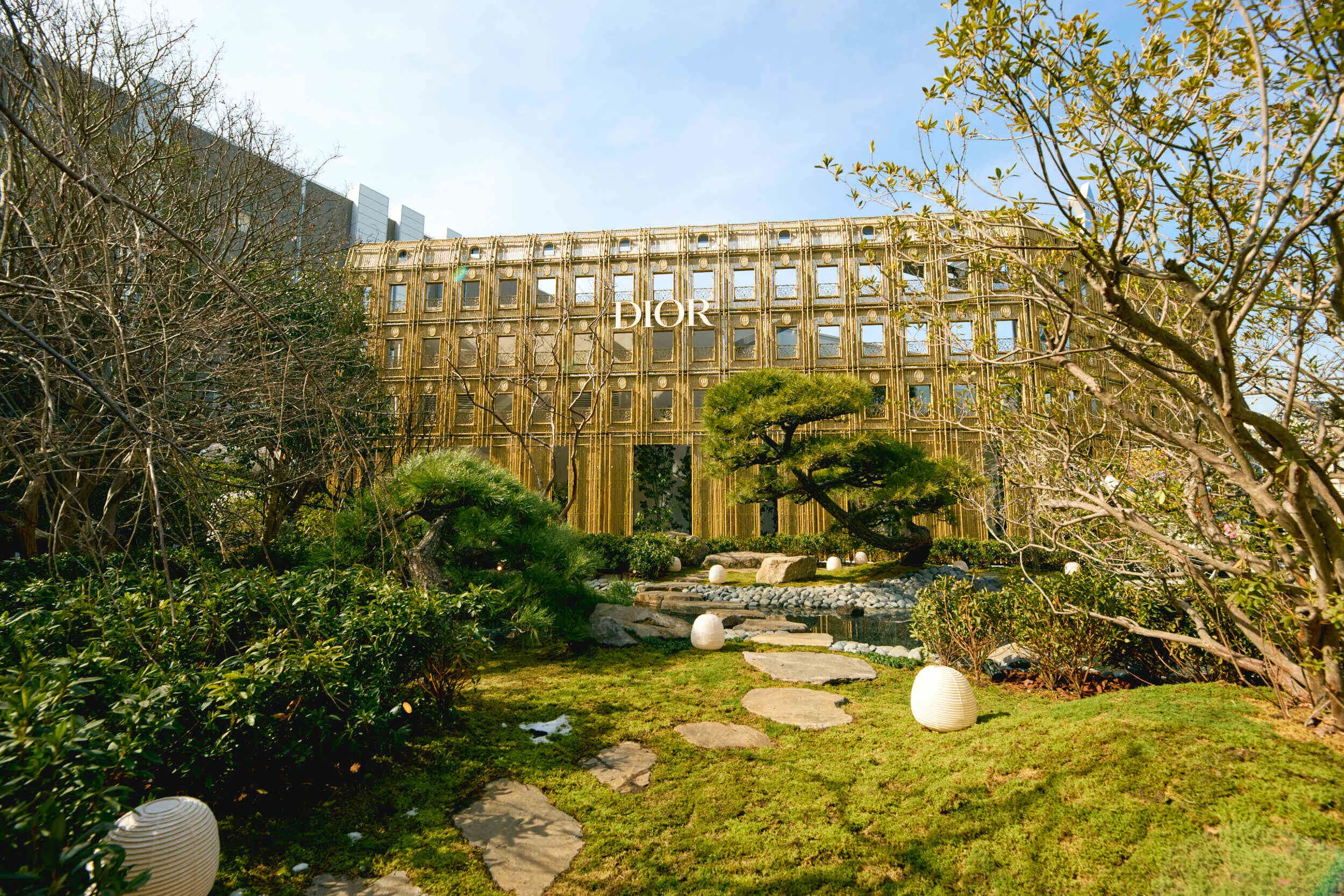
Dior develops the pavilion as an in-house design, with the support of a wide network of Japanese creatives and specialists. This layered authorship is central to the project’s identity. It is built through multiple contributions that reflect both craftsmanship and experimentation.
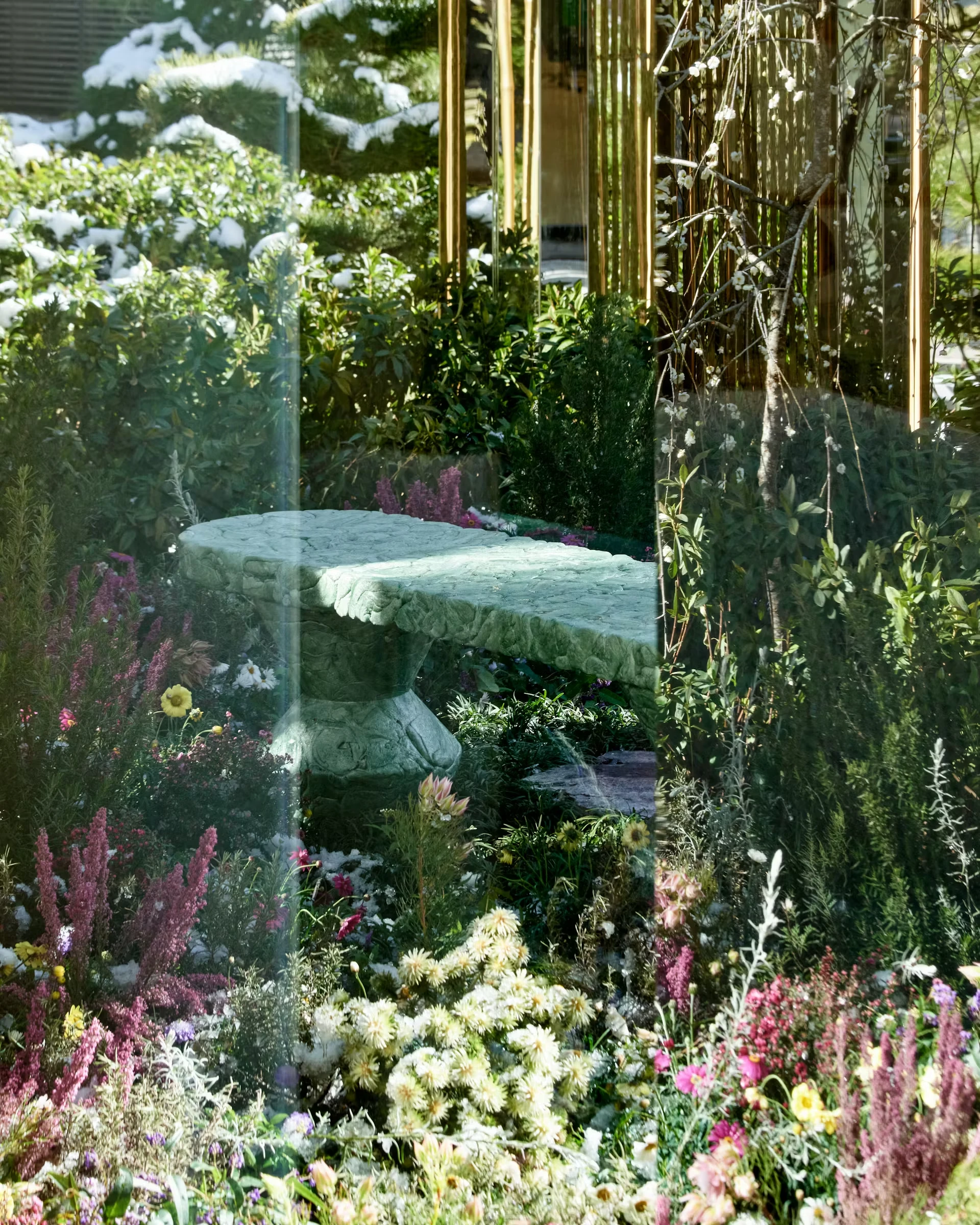
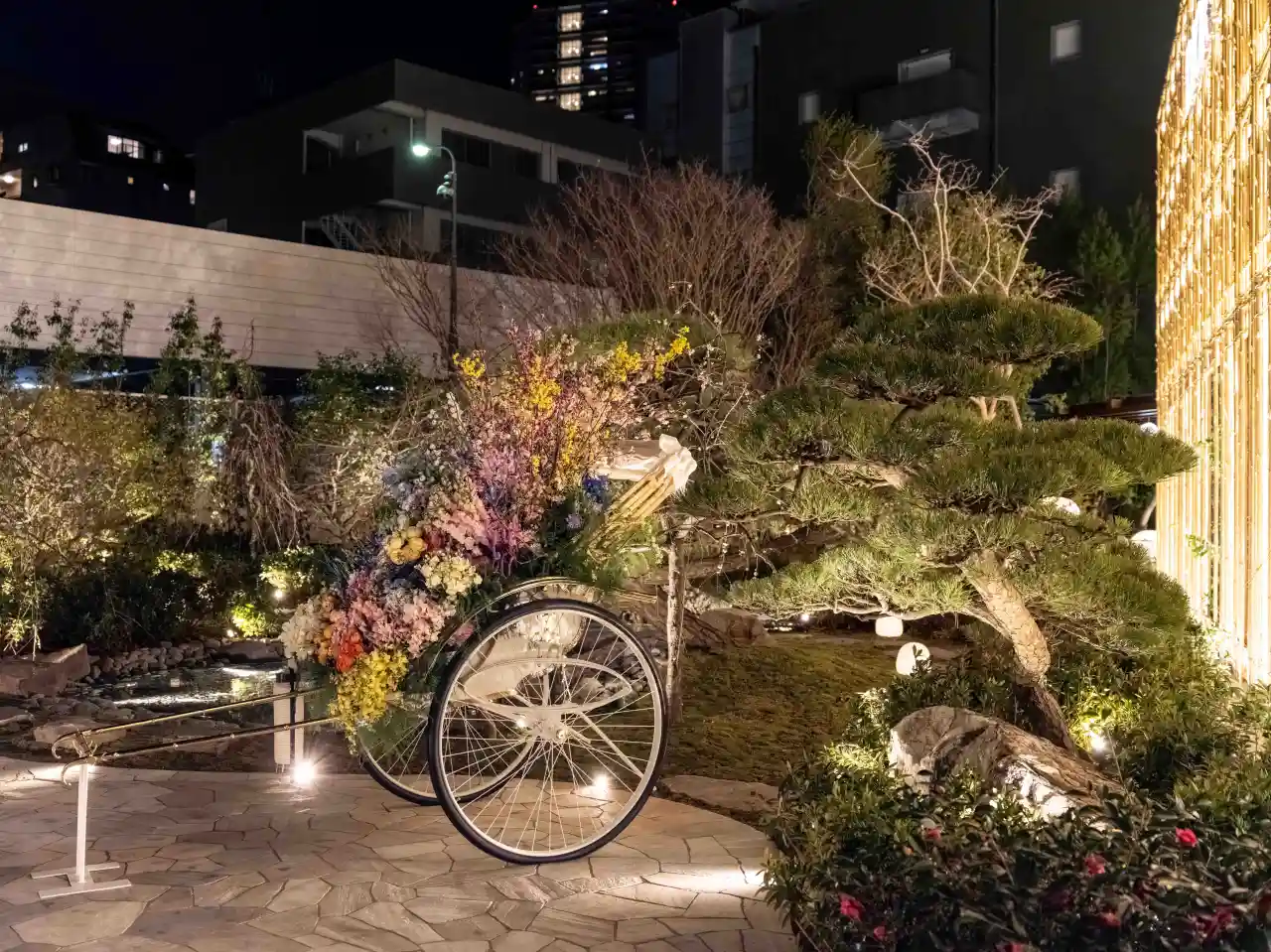
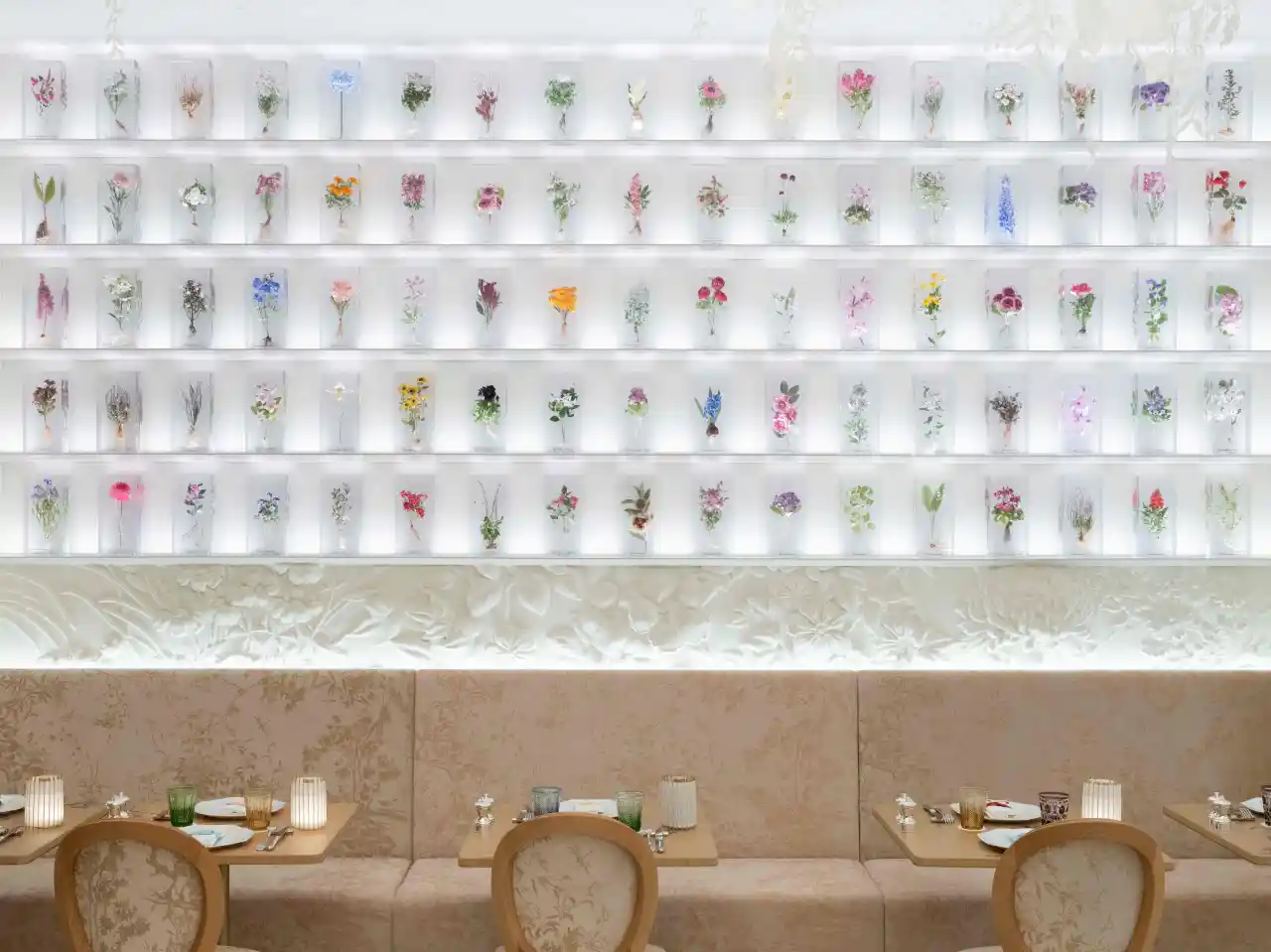
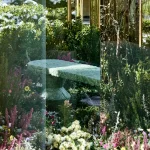
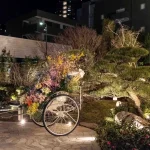
Landscape plays a defining role where the garden and planted environments are shaped by Seijun Nishihata, whose work introduces a living system that continues to evolve. Alongside this, floral artist Azuma Makoto has designed immersive botanical installations that extend the idea of nature into the interior.
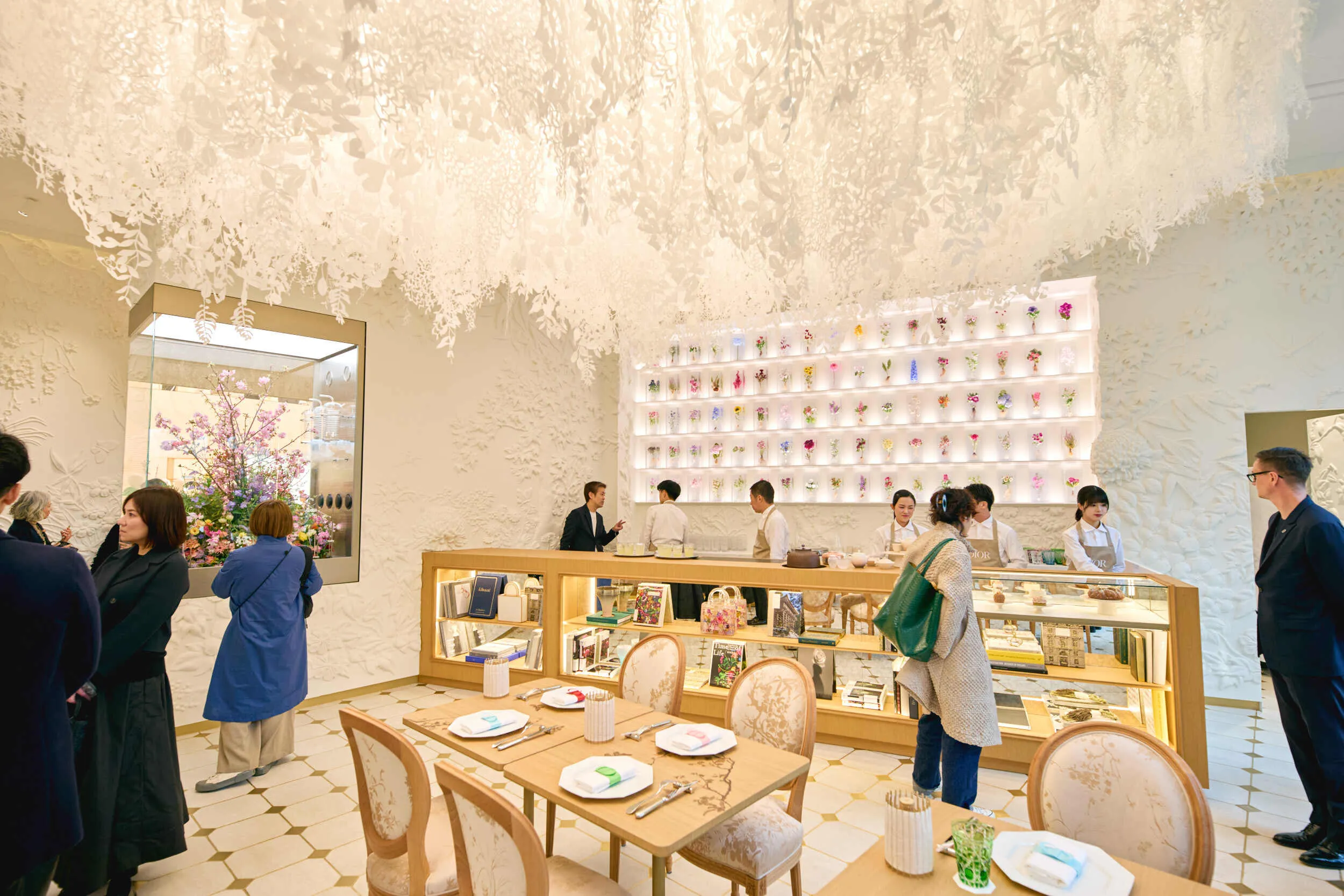
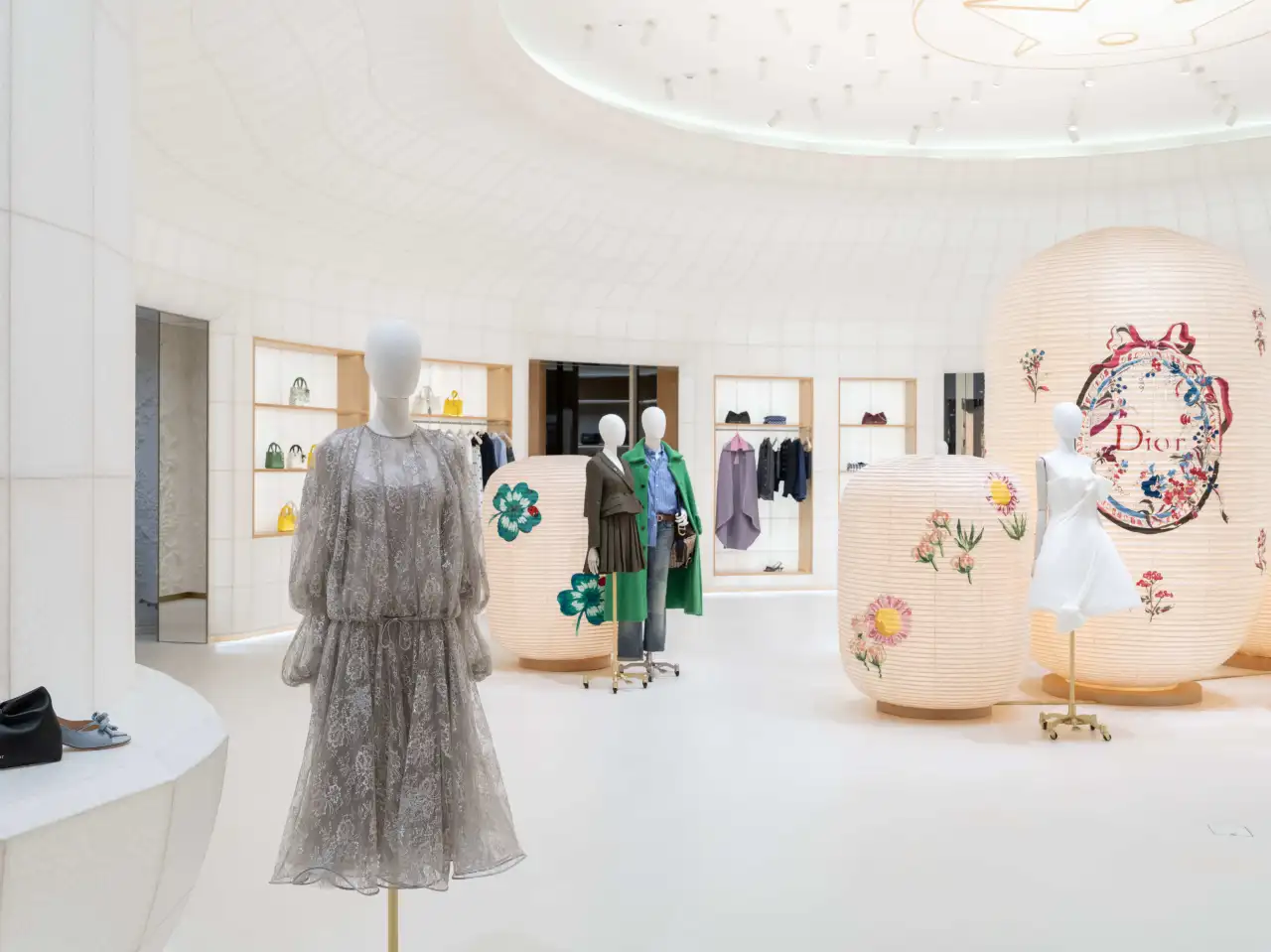
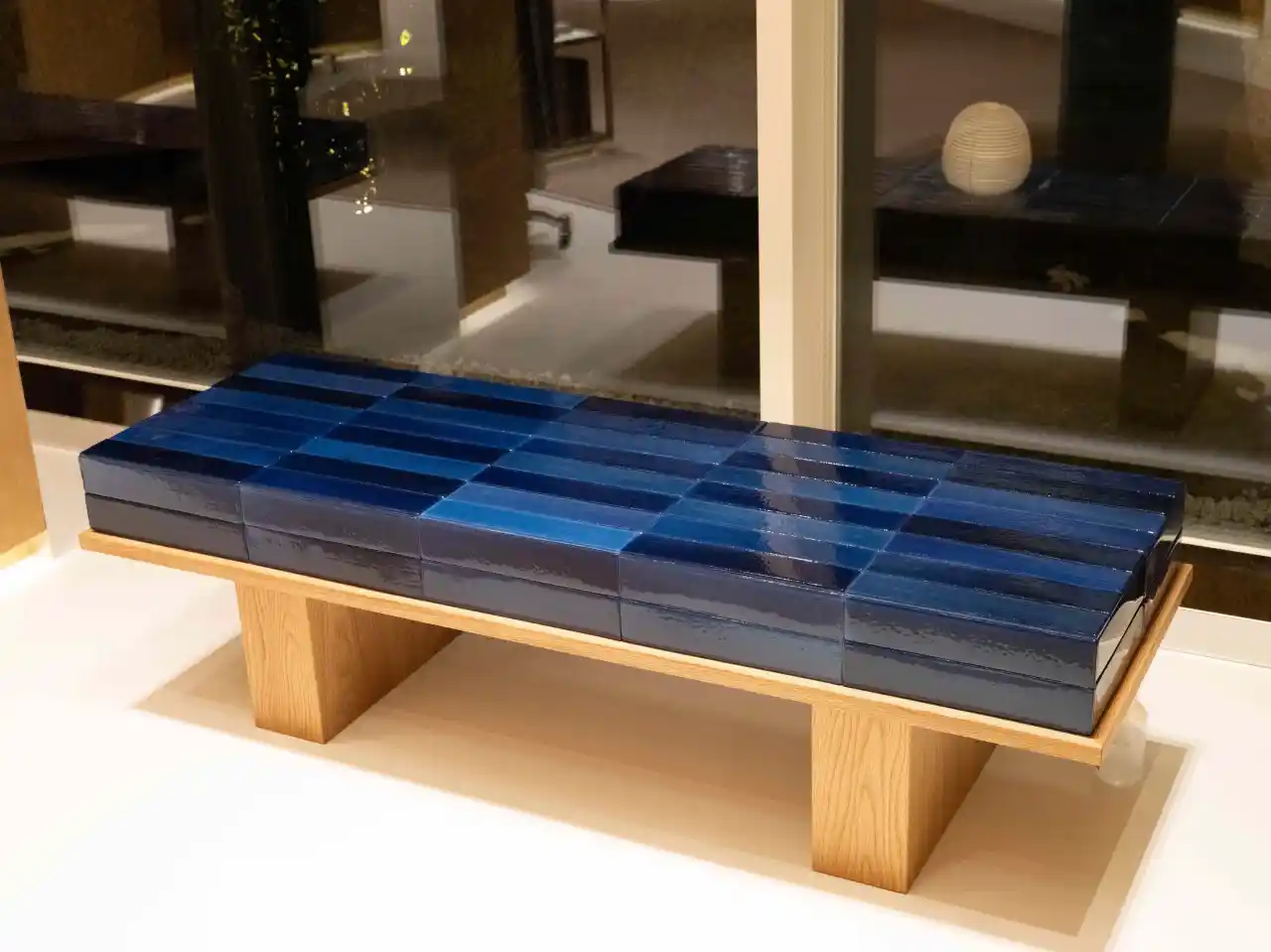
Studios such as we+, Takt Project, and artists like Ayumi Shibata have designed the furniture, installations, and crafted elements that merge art and design. These interventions define how the space is experienced at different scales.
Facade and architectural expression
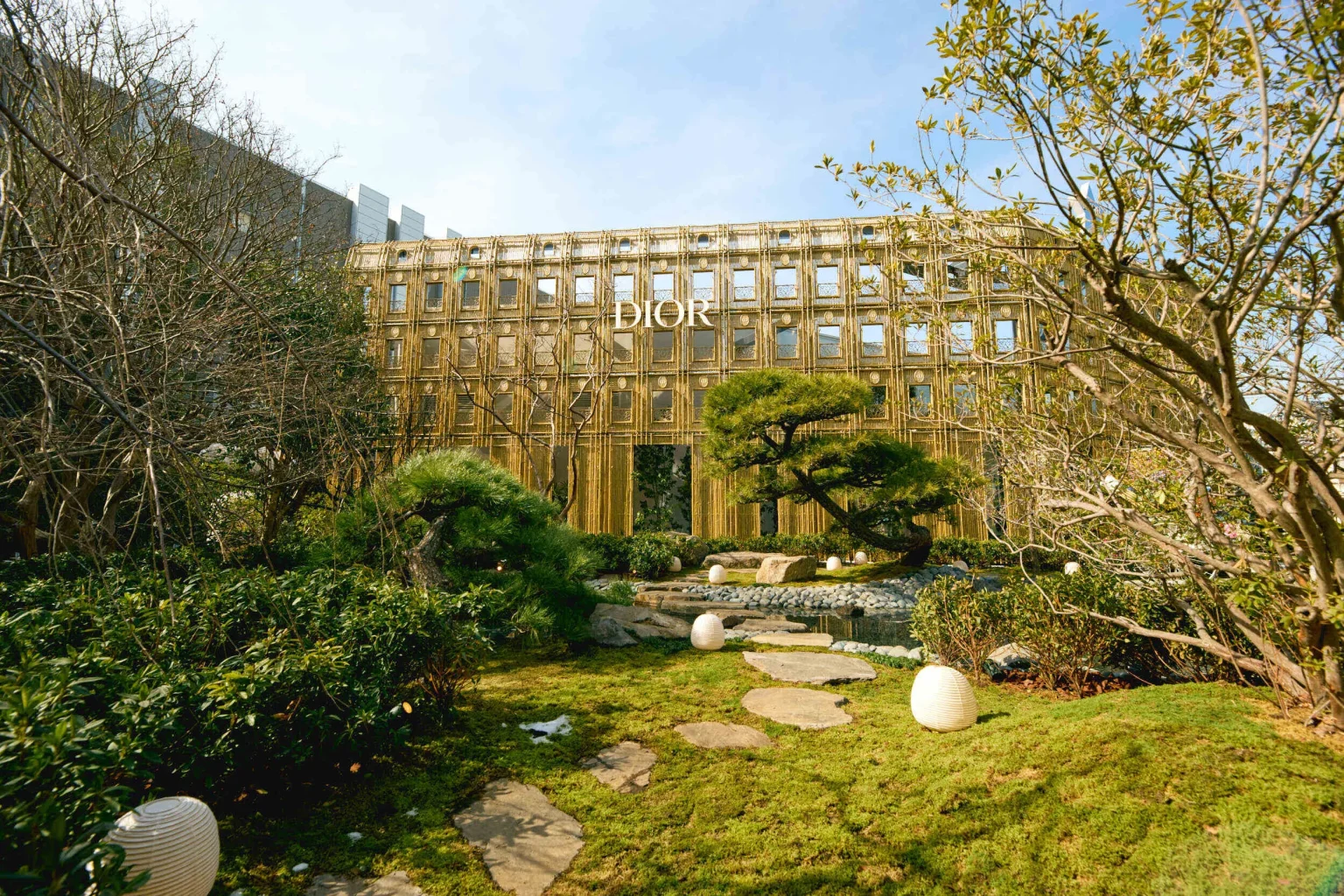
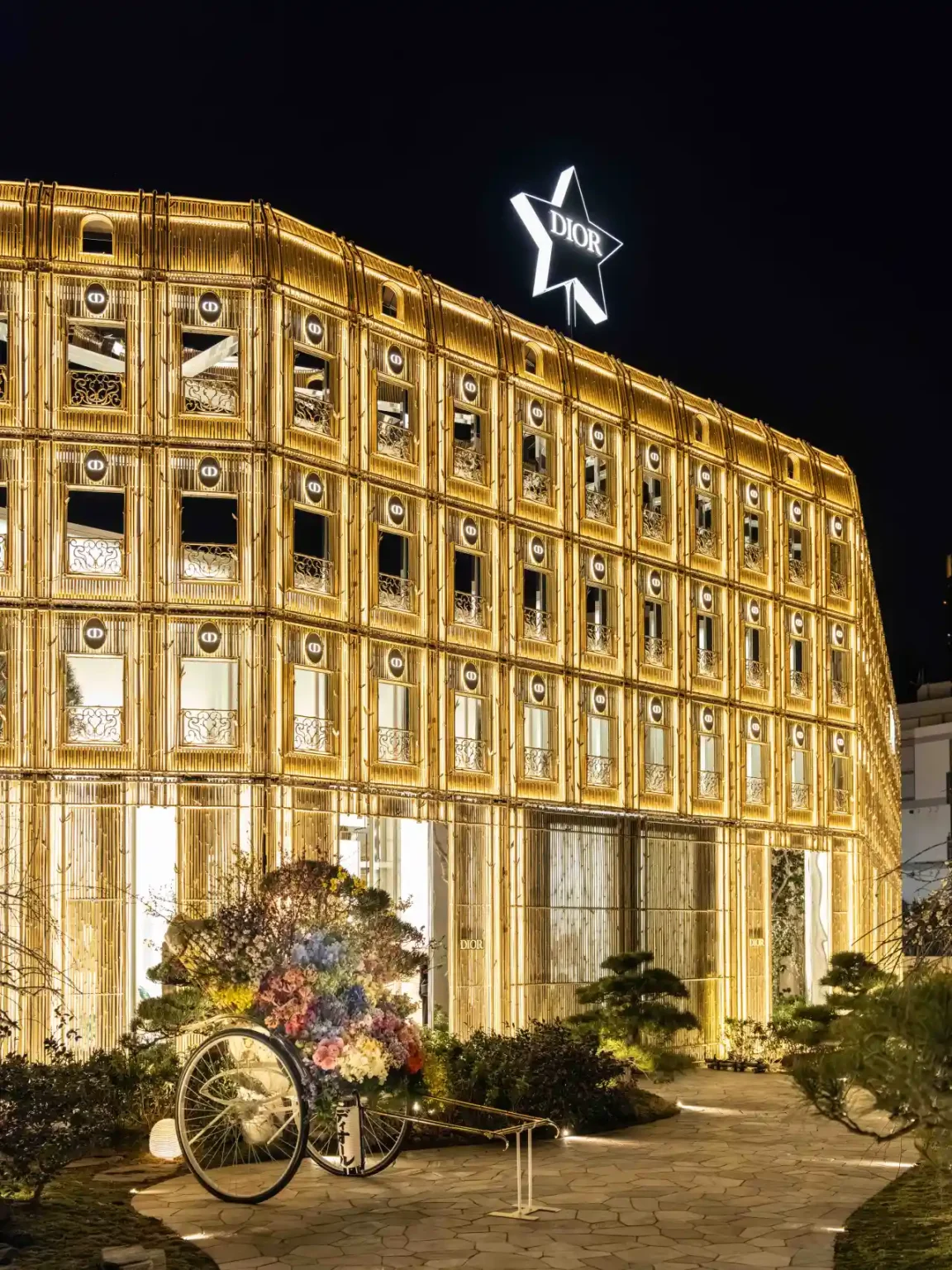
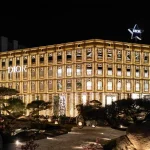
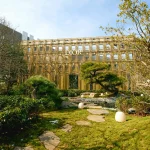
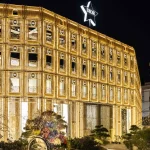
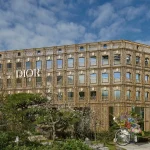
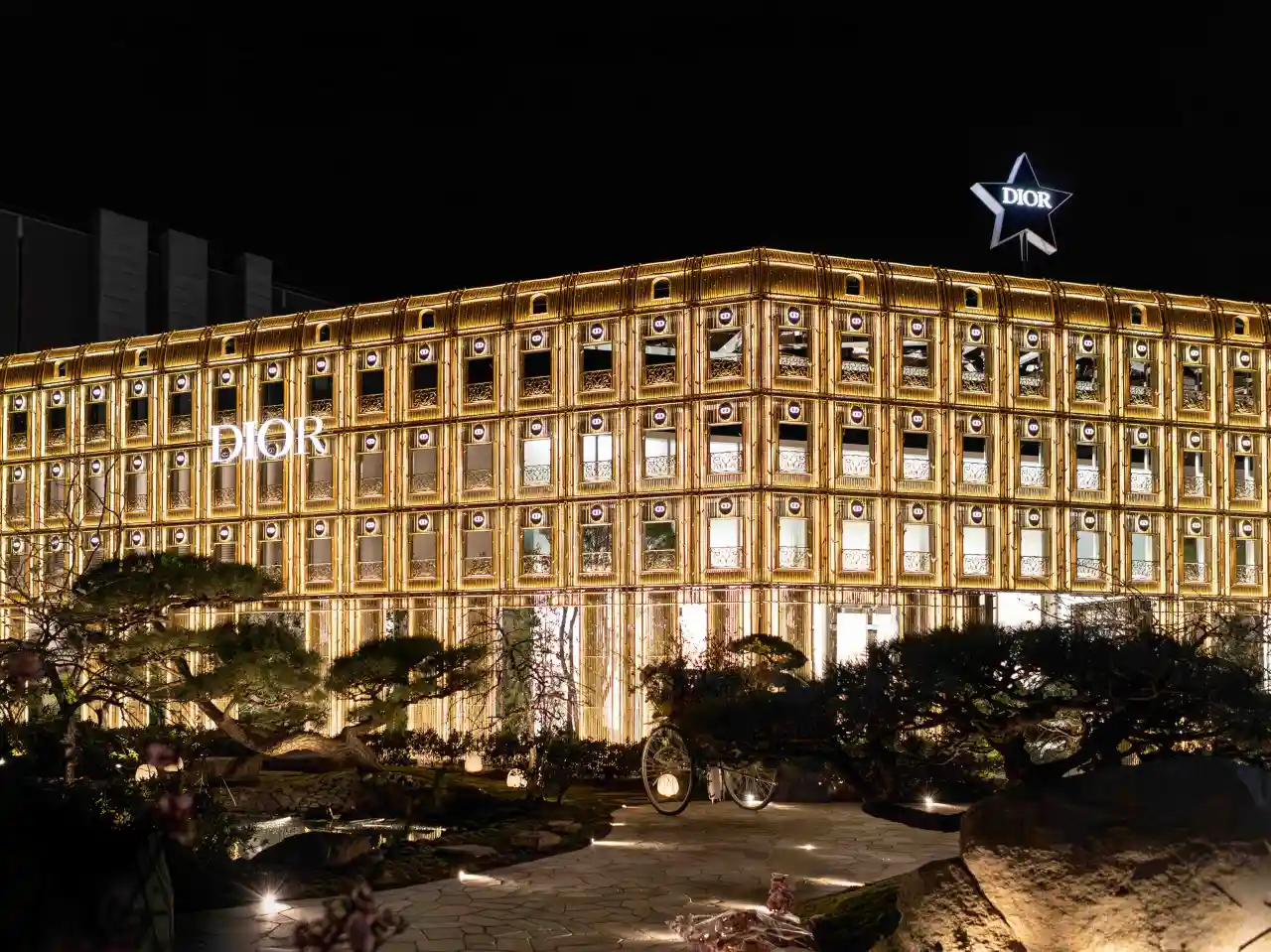
The pavilion’s most beautiful feature is its golden bamboo façade. It wraps the building in a dense, rhythmic screen made of vertical elements that recall natural bamboo groves while maintaining a controlled geometric order.
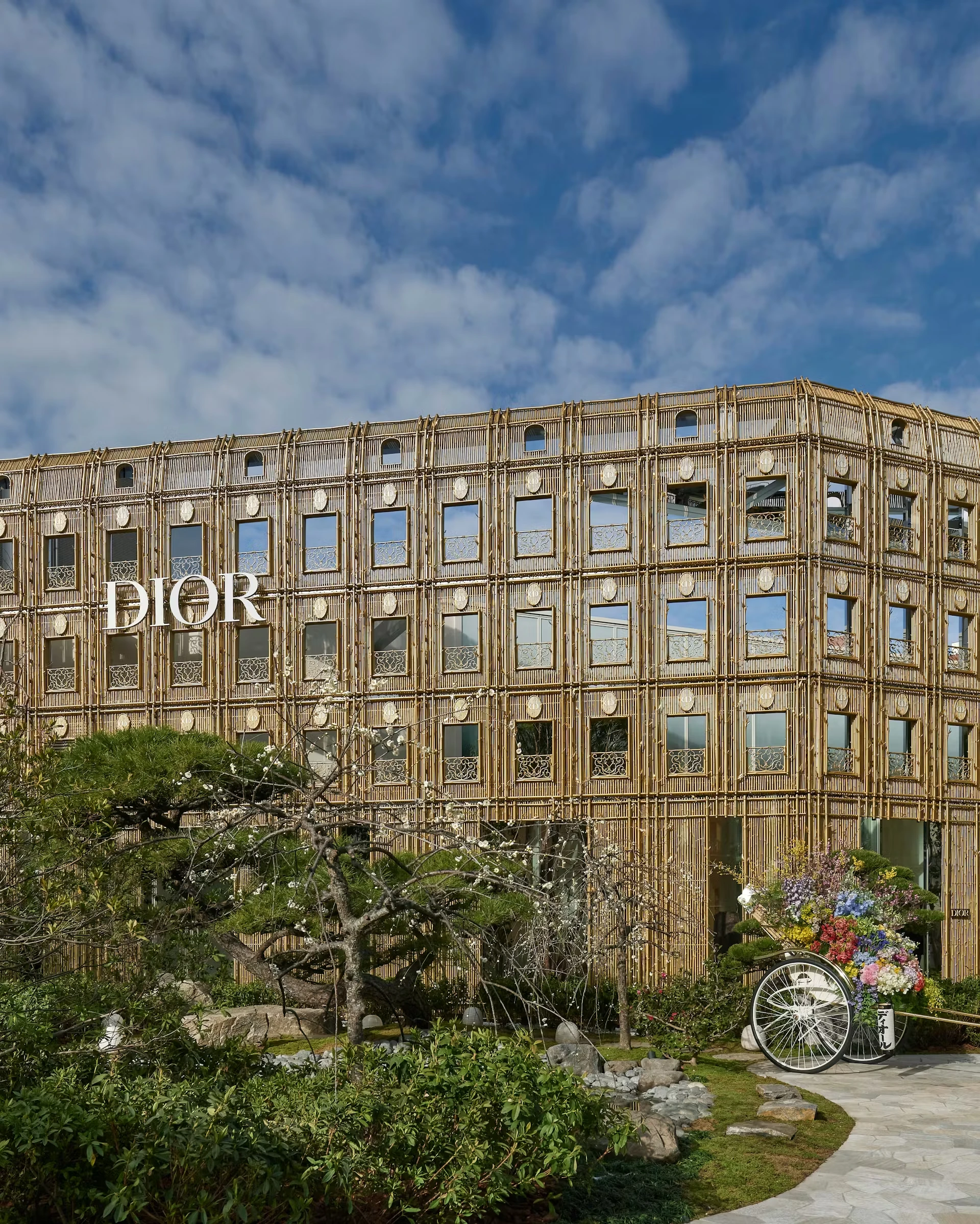
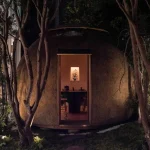
This outer layer works on several levels, appearing as a glowing object from a distance, especially at night when light filters through the structure, giving it a lantern-like presence in the neighborhood. Up close, the repeated bamboo elements create a tactile, porous boundary that softens the transition between inside and outside.
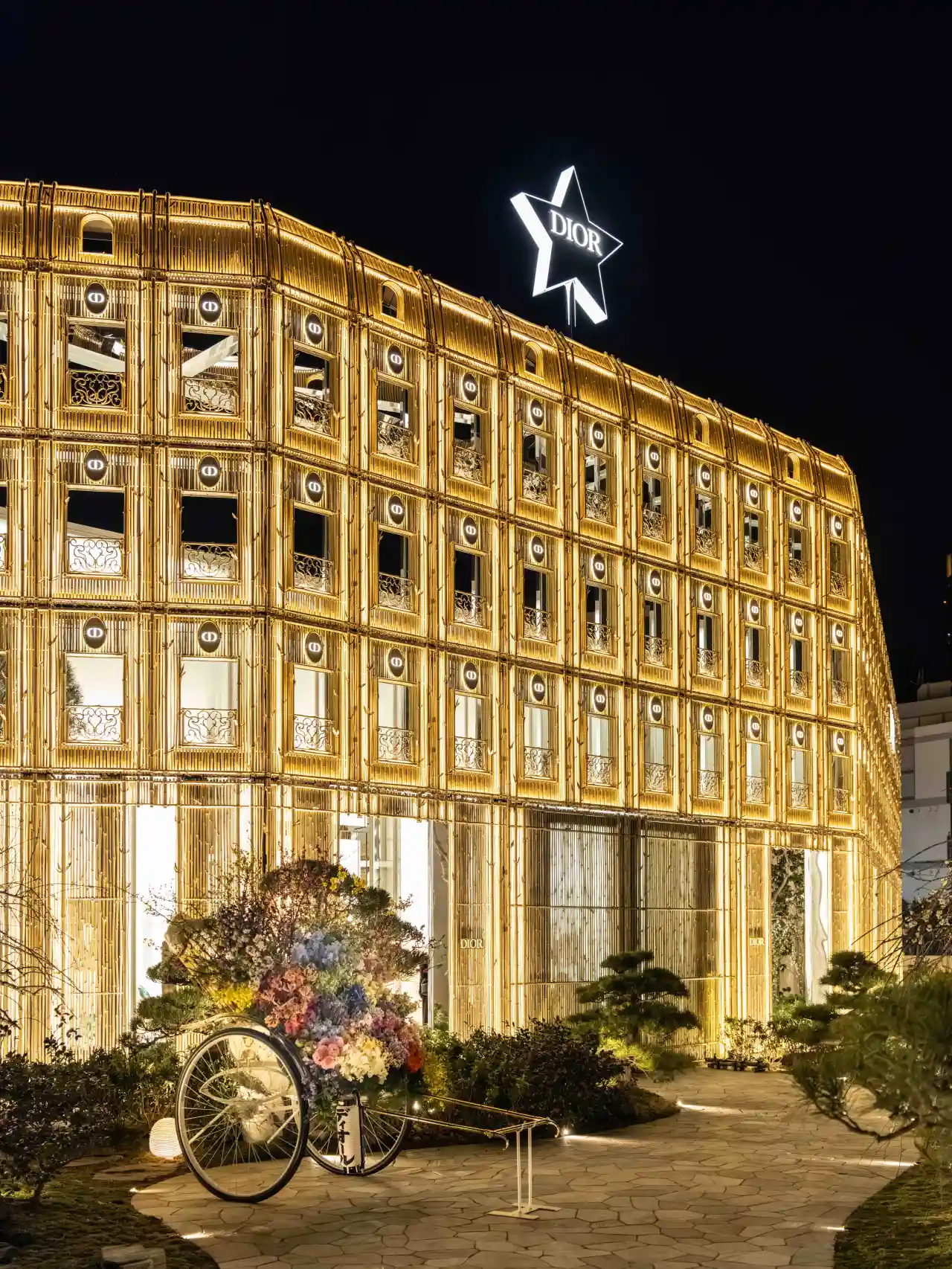
A subtle reference to Dior’s original Paris flagship on Avenue Montaigne is reflected in the façade’s proportions and rhythm, reinterpreted through a distinct material language. Instead of repeating the original, the design replaces stone with bamboo and neutral tones with a warm gold finish.
Interior spaces and spatial sequence
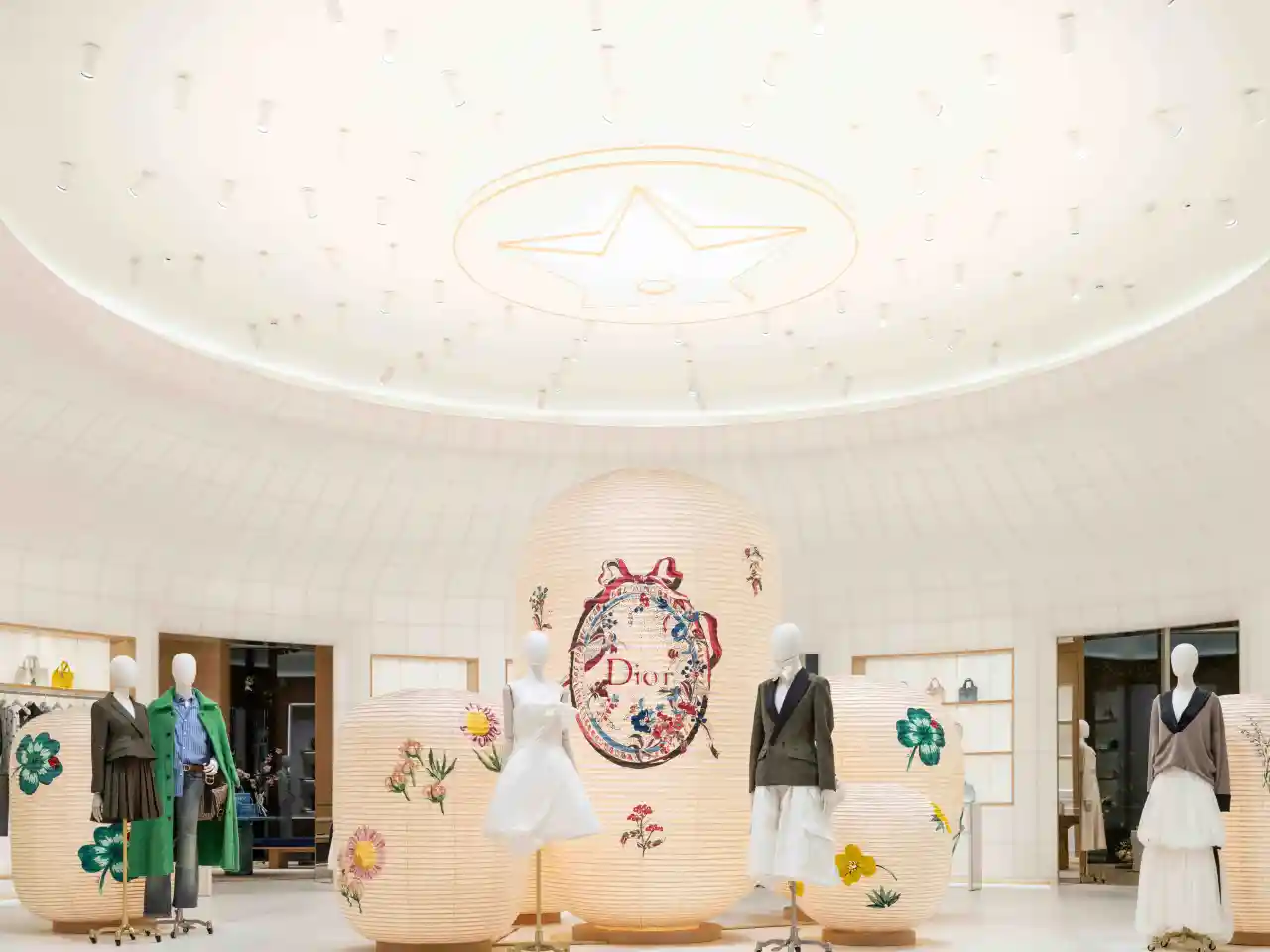
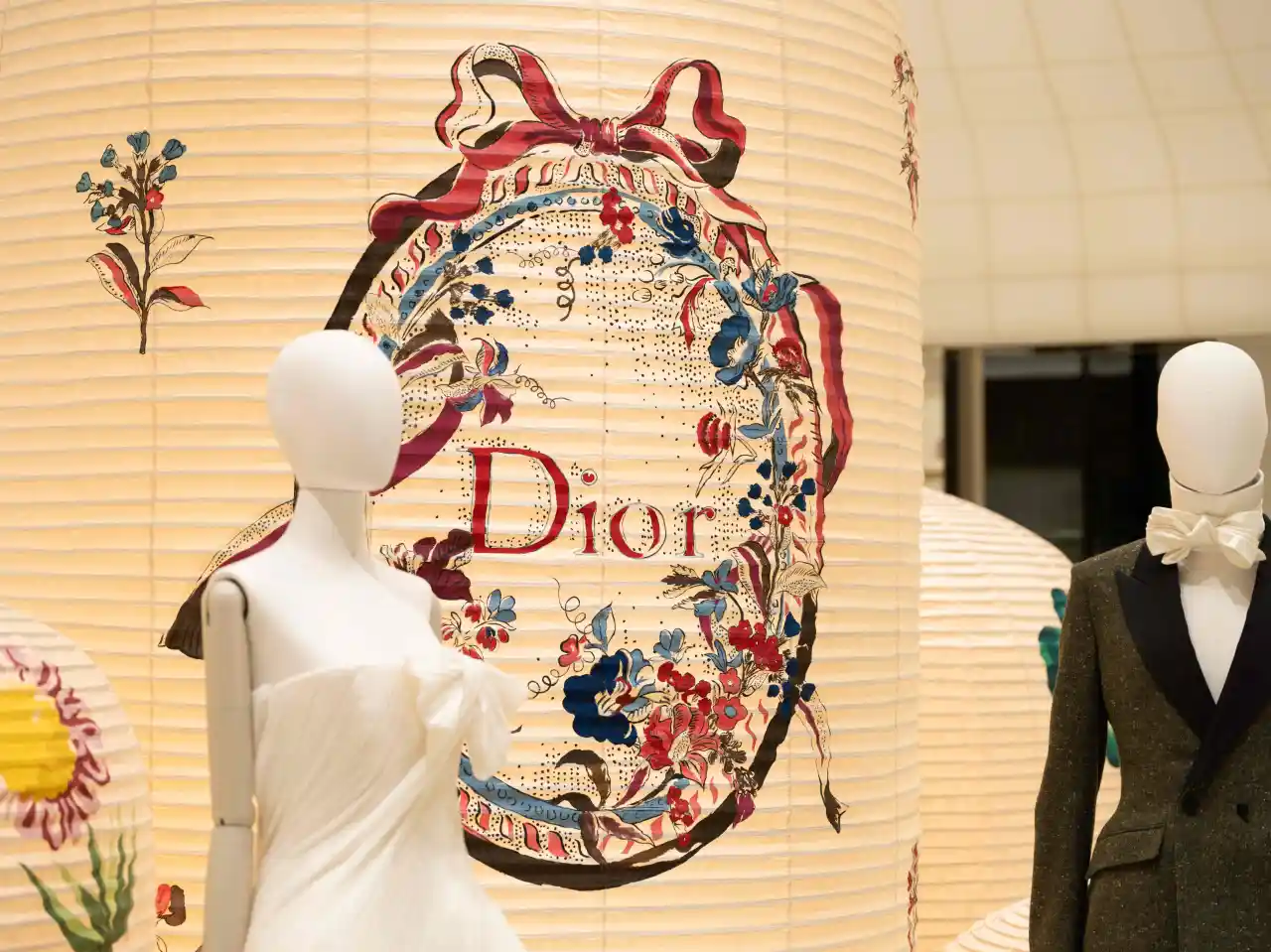
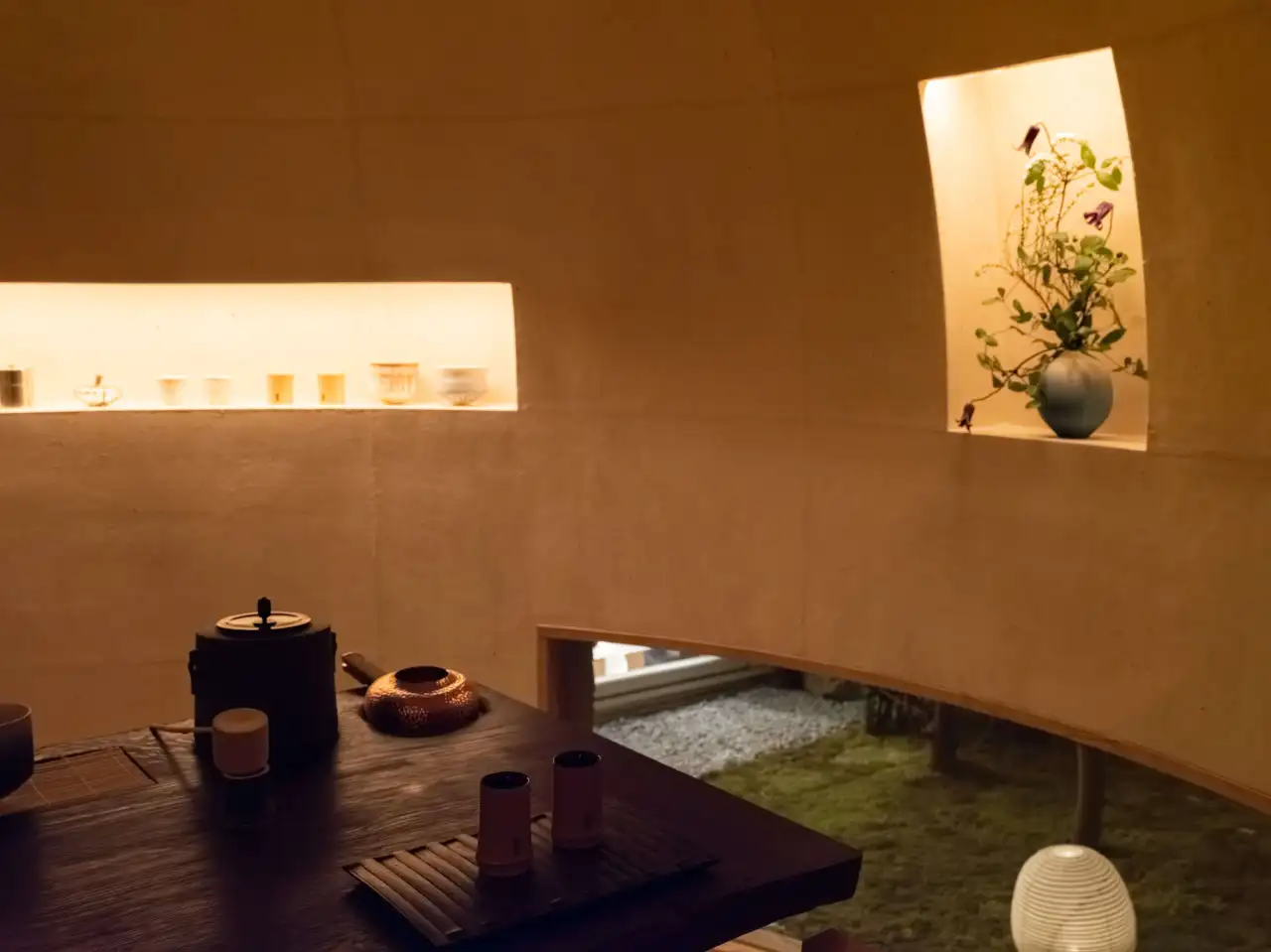
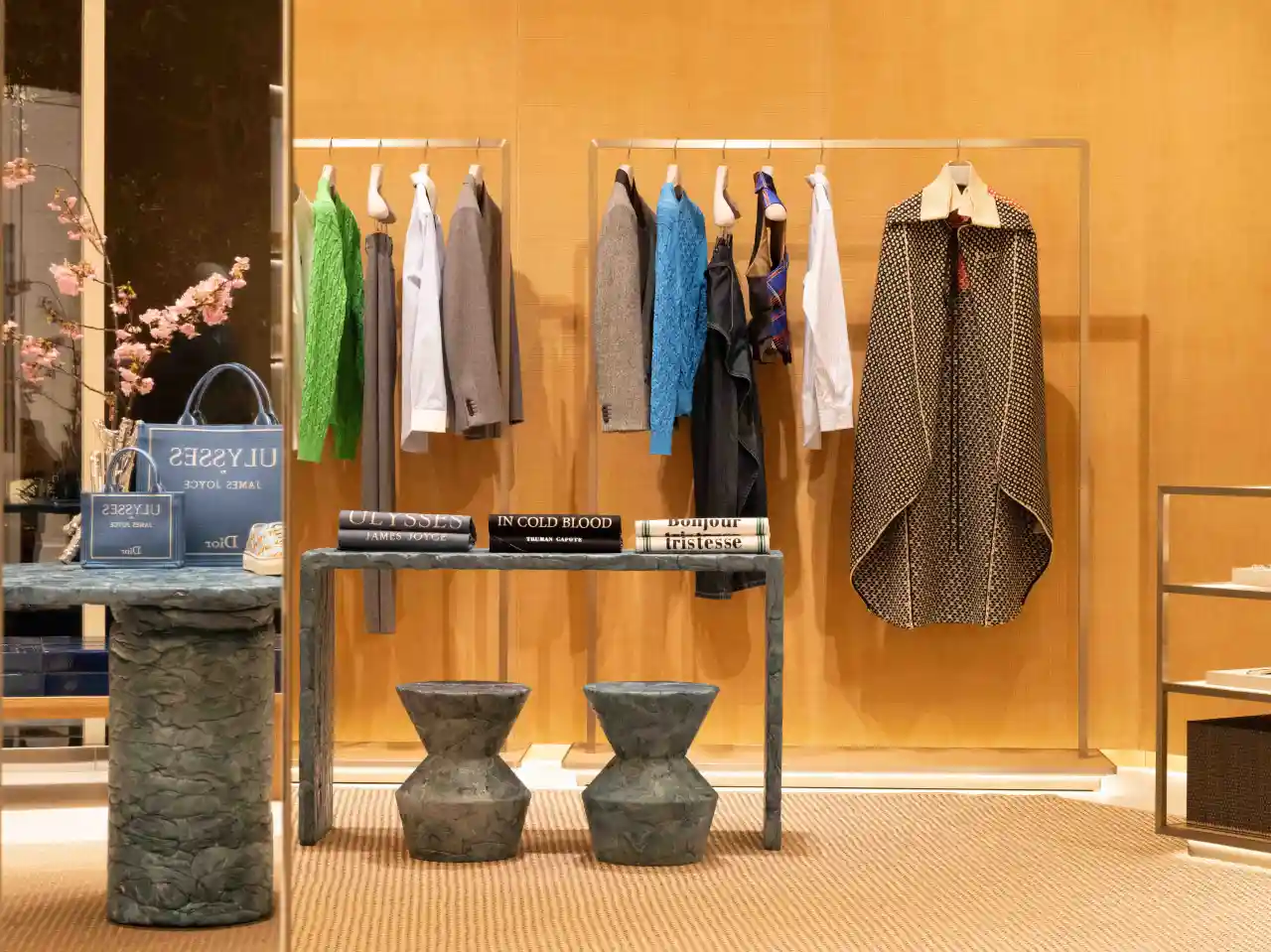
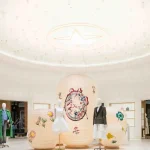
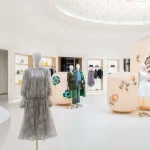
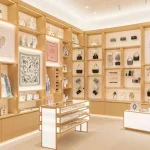
Inside, the atmosphere shifts from a luminous exterior to a controlled calm, with materials chosen for how they filter light. Washi paper surfaces diffuse brightness into a soft glow, while parquet flooring takes a cue from Dior’s Paris heritage without dominating the space.
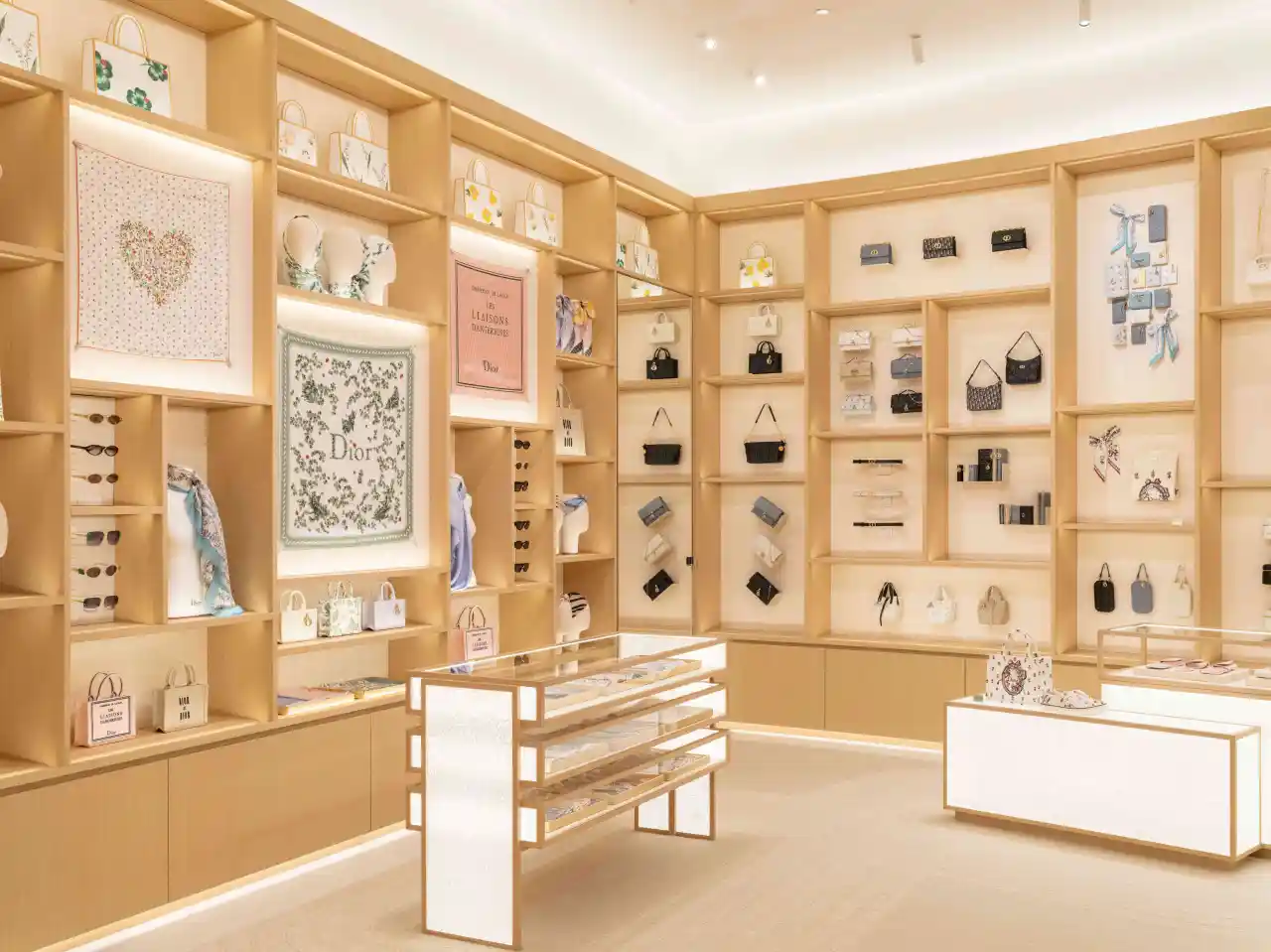
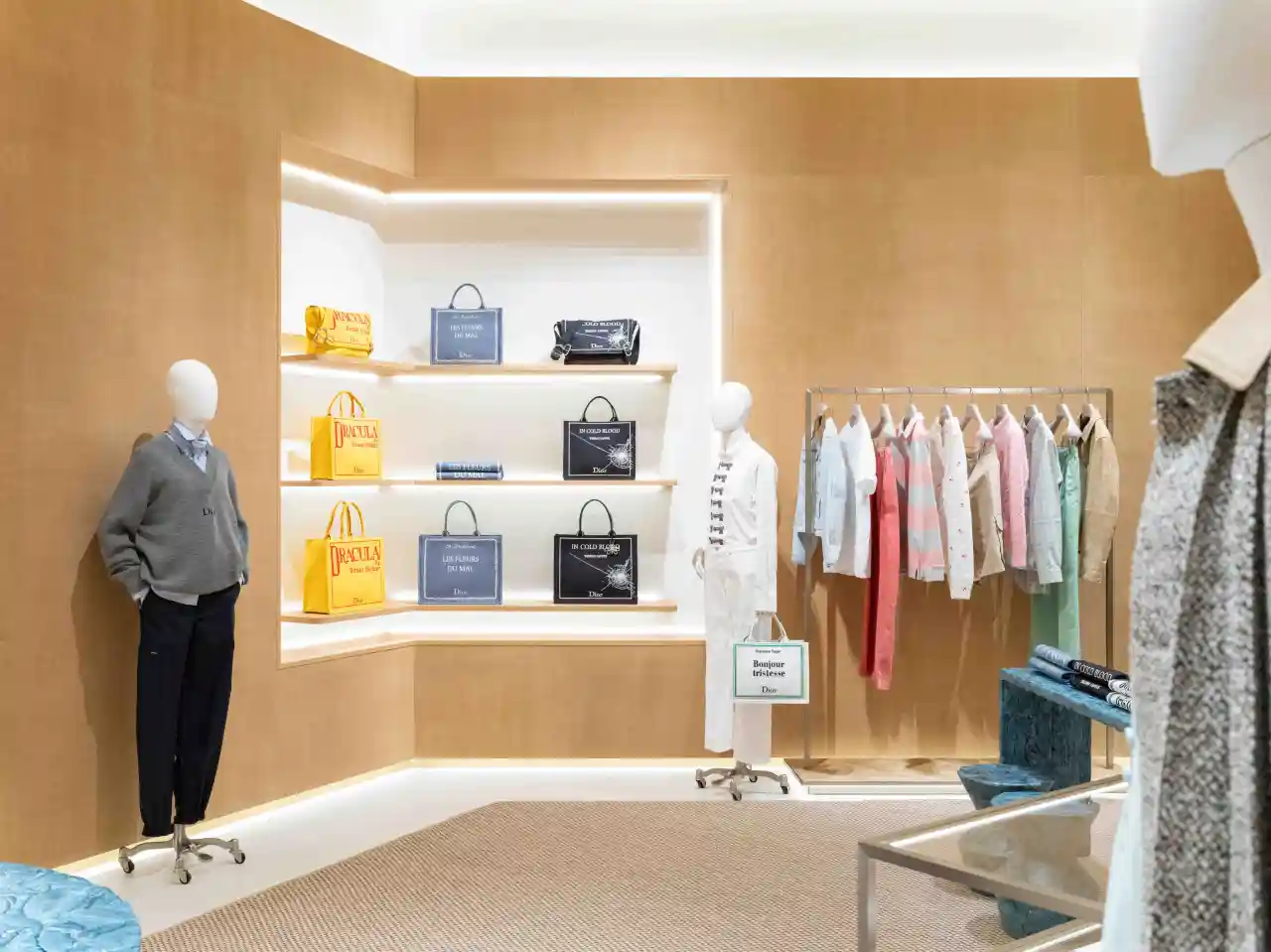
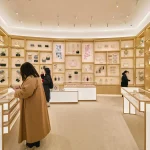
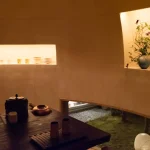
Each section reveals a distinct facet of the brand, yet transitions unfold seamlessly, maintaining a quiet continuity throughout. Recessed niches present products with restraint, allowing each object to emerge with subtle clarity.
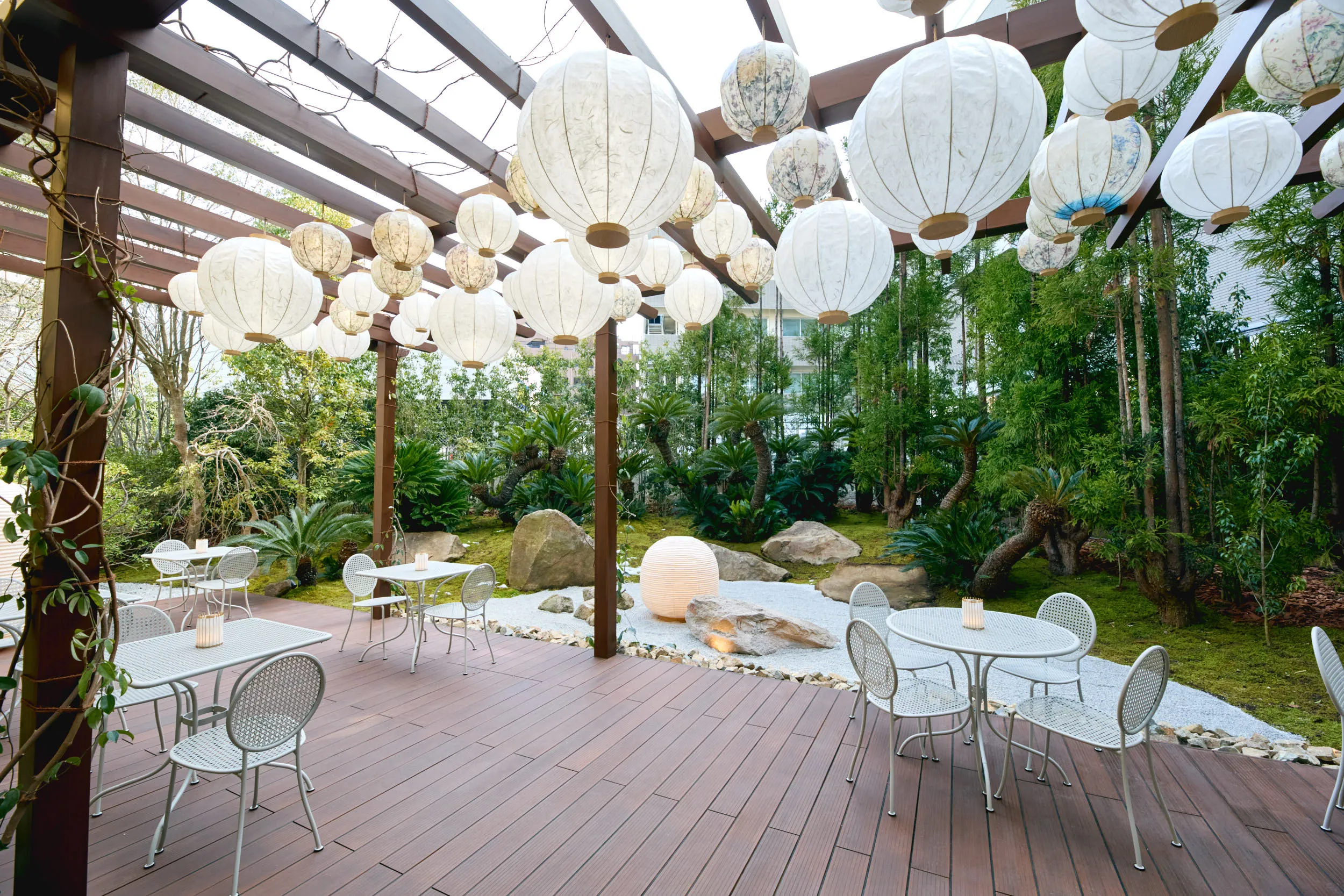
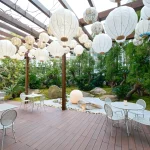
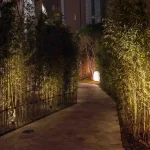
At the core, planted zones and garden elements gently interrupt the retail sequence, where a Zen garden, terraces, and a reflective water feature invite moments of pause. This thorough integration of landscapes within the interior transforms the experience from purely commercial to quietly contemplative.
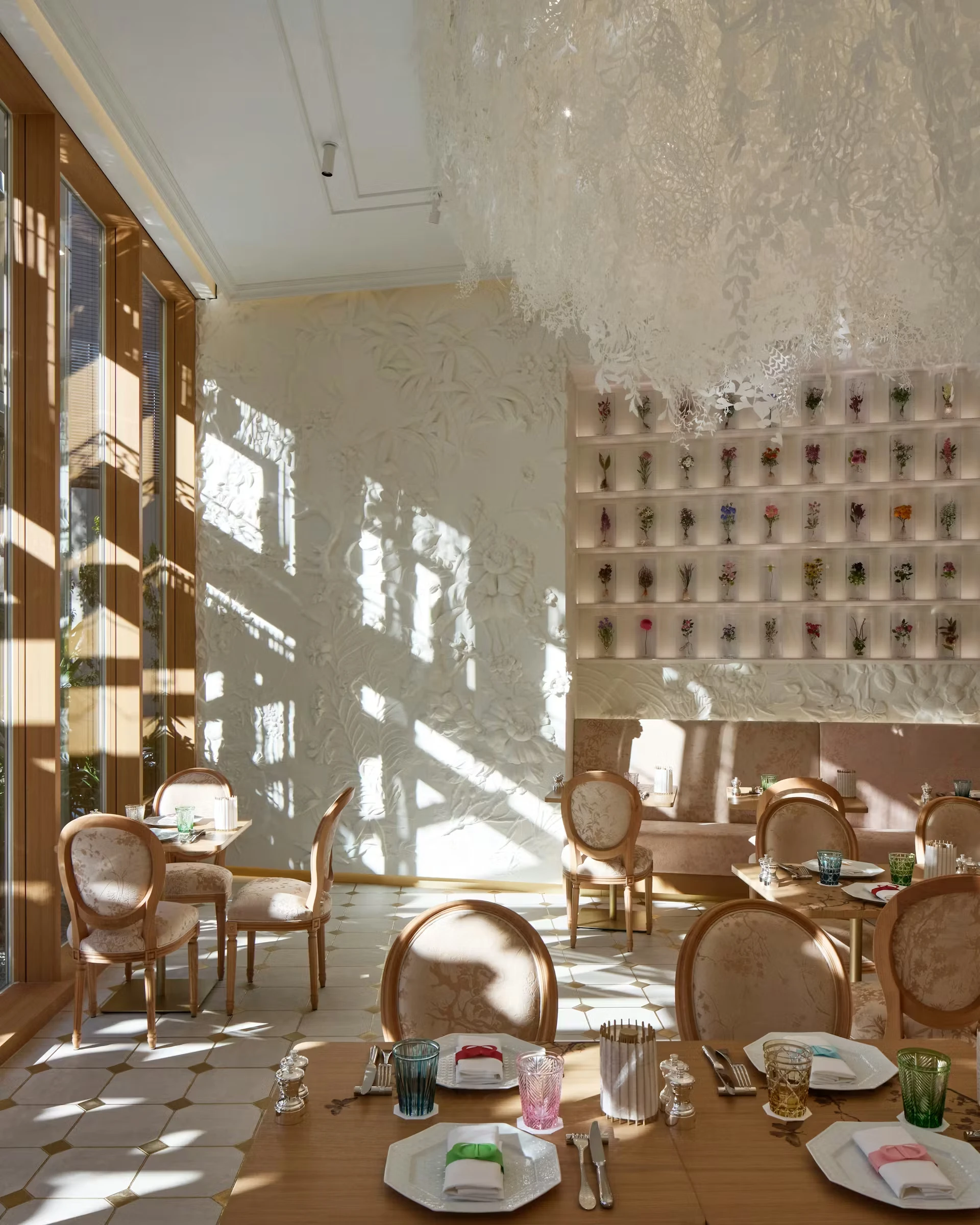
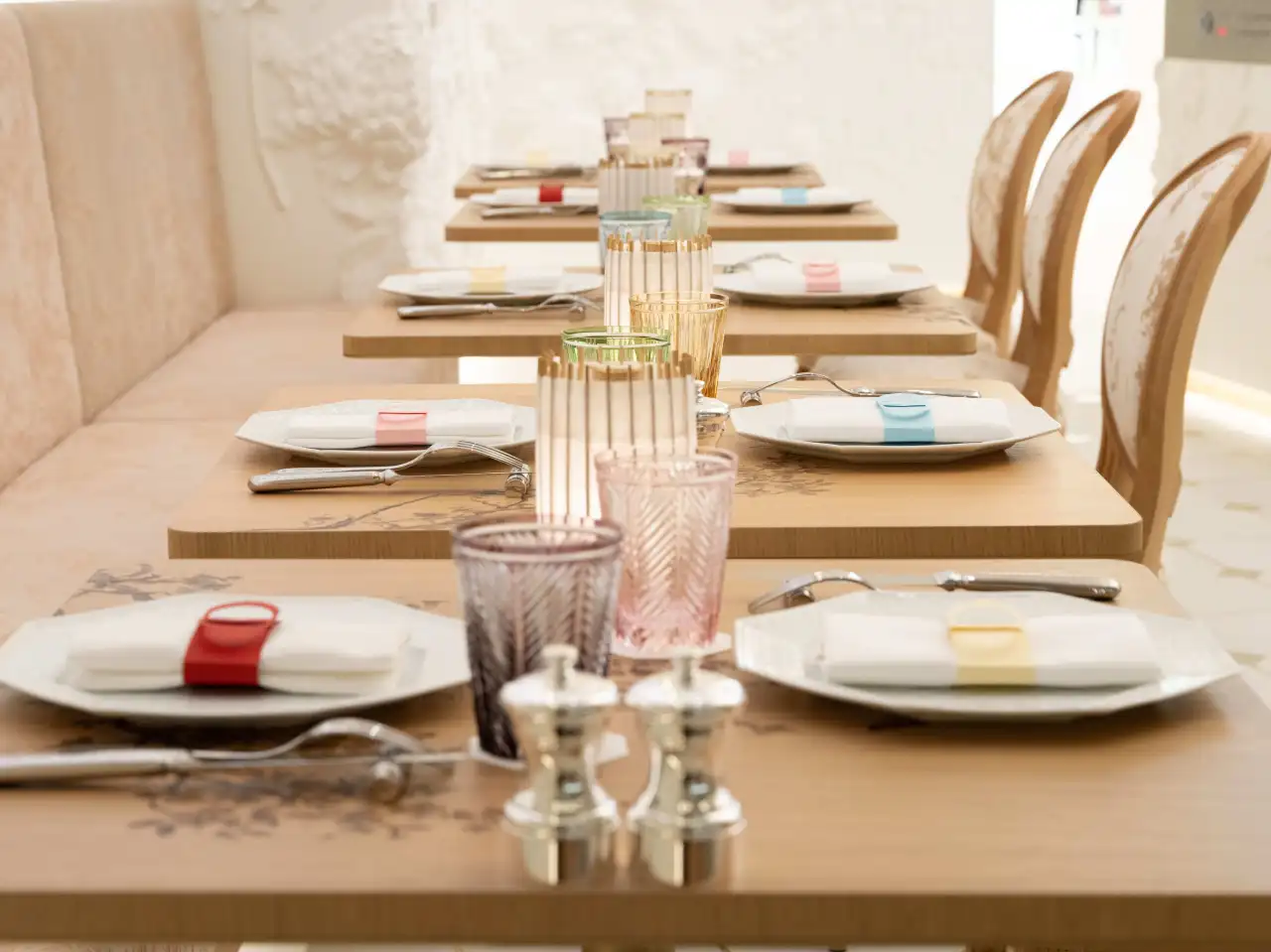
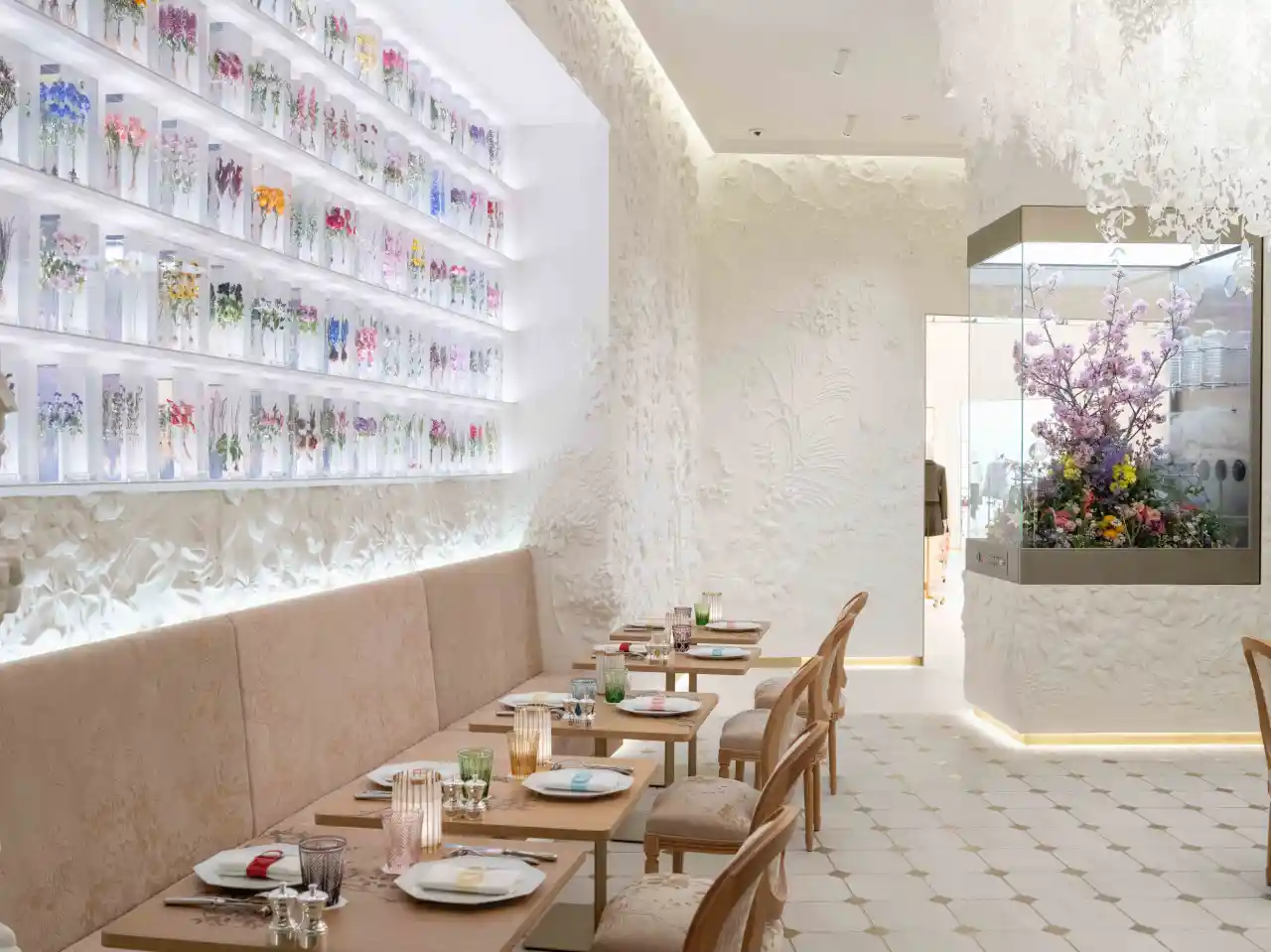
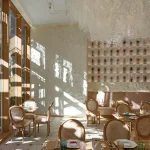
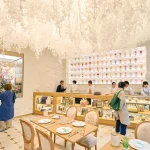
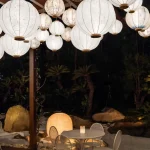
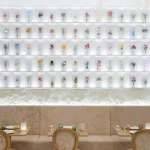
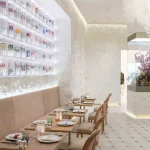
The café continues this approach, where floral installations and suspended artworks shape a space that feels less like an addition and more like a seamless extension of the spatial narrative.
Concept and Ideas Behind Dior’s Pavilion
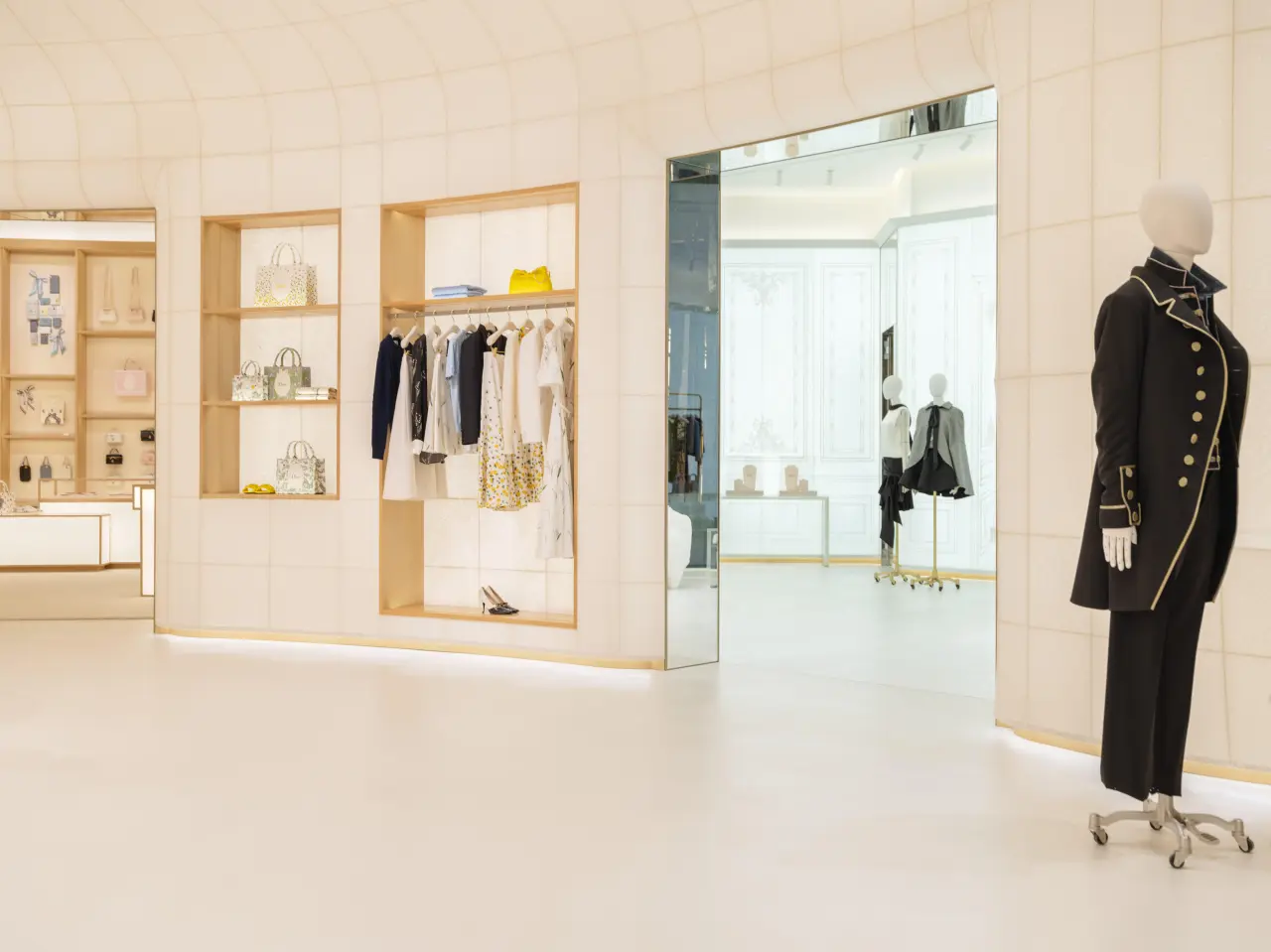
Its guiding ideas unfold through the space itself, shaped by a quiet dialogue between France and Japan where parquet flooring, star motifs, and couture references are subtly reinterpreted through Japanese materials, craftsmanship, and spatial restraint.
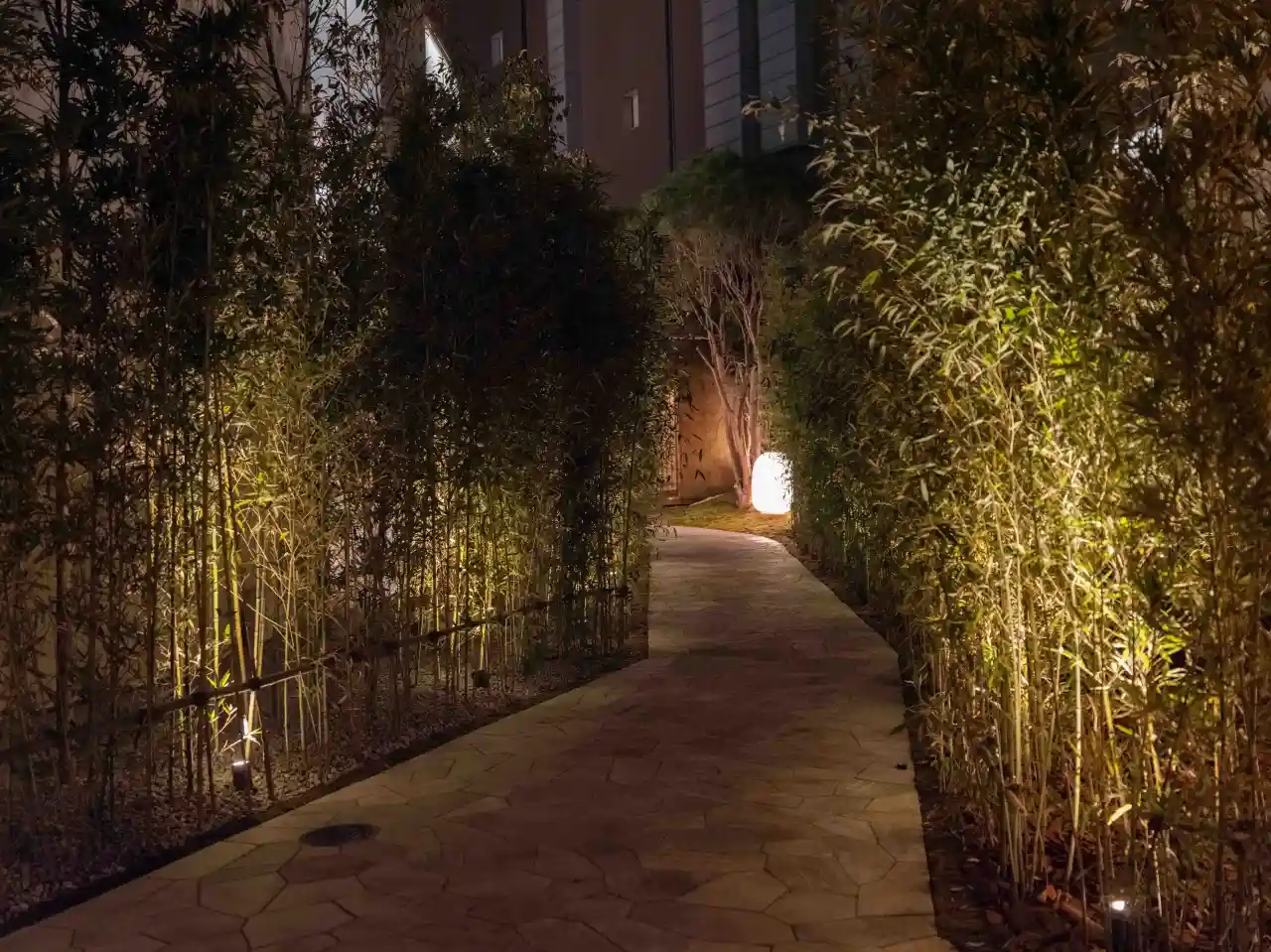
Another focus is nature, with the pavilion using landscape as a defining structure. Plants, gardens, and natural materials shape how the building is organized and how it is experienced over time. The design traces back to Christian Dior’s enduring fascination with gardens, grounding the project in the house’s heritage while expressing a distinctly site-specific sensibility.
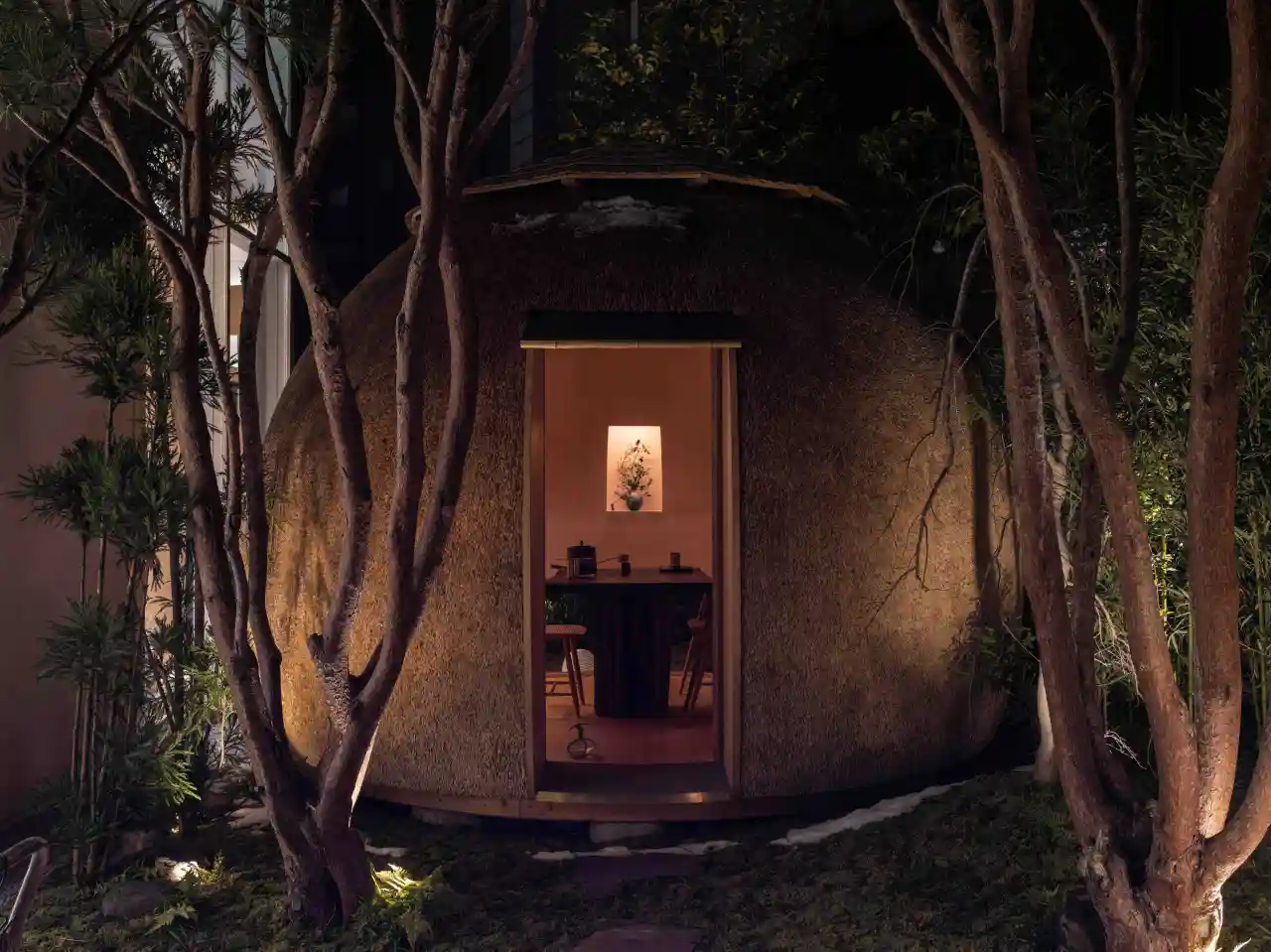
A sense of impermanence underpins the design, where the bamboo façade, filtered light, and changing plant life create a space that evolves. This blurs the line between architecture and a living landscape.