


Italy is once again preparing to welcome the world to the Winter Olympic Games. From February 6 to 22, 2026, the Milano–Cortina Winter Olympics will unfold across the country’s northern regions, returning the Games to Italian soil seventy years after Cortina hosted the Winter Olympics in 1956 and two decades after Turin’s 2006 edition. This third chapter is not a repetition of the past, but an expansion of it, reflecting how the scale and ambition of the Games have evolved.
Rather than centering on a single host city, Milano–Cortina 2026 will stretch across more than 22,000 square kilometres, weaving together Alpine landscapes, historic towns, and contemporary urban centers. Events will be held across four regions, Lombardy, Veneto, and Trentino, linking cities and venues in Milan, Cortina, Valtellina (Bormio and Livigno), and Val di Fiemme (Predazzo and Tesero). This unprecedented geographic spread will make Milano–Cortina 2026 the most widely distributed Winter Olympics in history, transforming the Games into a journey across Italy’s mountains, valleys, and cultural landscapes.
Going beyond being just a sporting event, Milano-Cortina 2026 has become a significant milestone demonstrating how mega-events can engage with a city, encompassing iconic locations in northern Italy. By making use of 85% of existing facilities in order to reduce construction costs and highlight regional diversity, the Games support mountain communities by addressing local challenges while accelerating infrastructure improvements, tourism, and long-term resilience.
Investments in road and rail systems aim to shorten travel times and improve daily connectivity, while a series of significant architectural projects are reshaping the city’s built environment. The Milano-Cortina 2026 Winter Olympics, with a total economic value of €3.4 billion, encompassing 98 projects, 47 sports facilities, and 51 transportation infrastructure projects, are set to begin on February 6, 2026, at the San Siro Stadium in Milan.
1. Milano Cortina Olympic Village
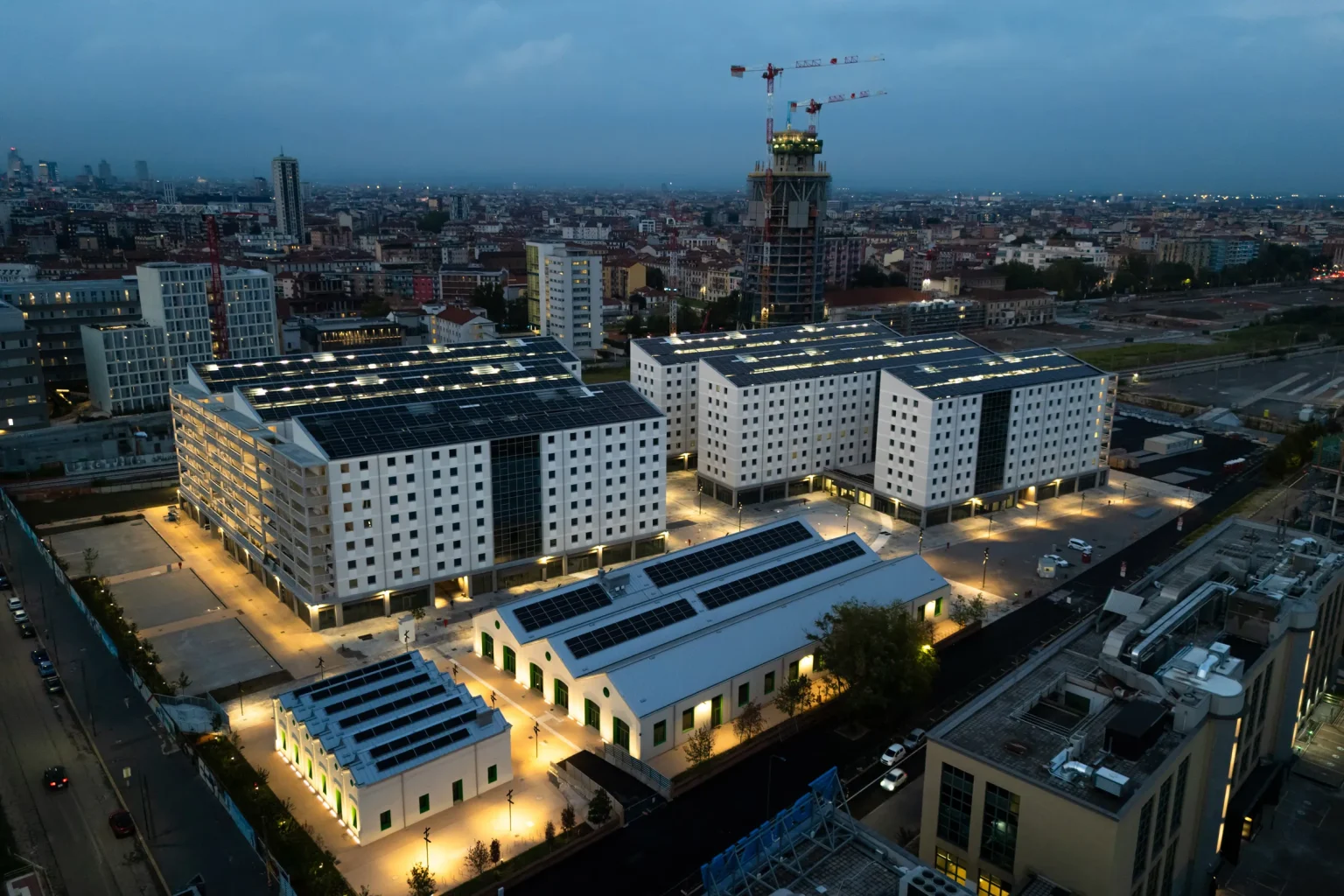
Designed by SOM for the 2026 Winter Olympics, the innovative and sustainable village project is a key part of the Porta Romana Railway Master Plan. The project offers a new urban center integrating residential, commercial, and public spaces with minimal environmental impact. Designed to embrace the rhythm of the area’s street layout, the Milano-Cortina Olympic Village creates a permeable urban block featuring various new public pathways and connections to other components of the master plan.
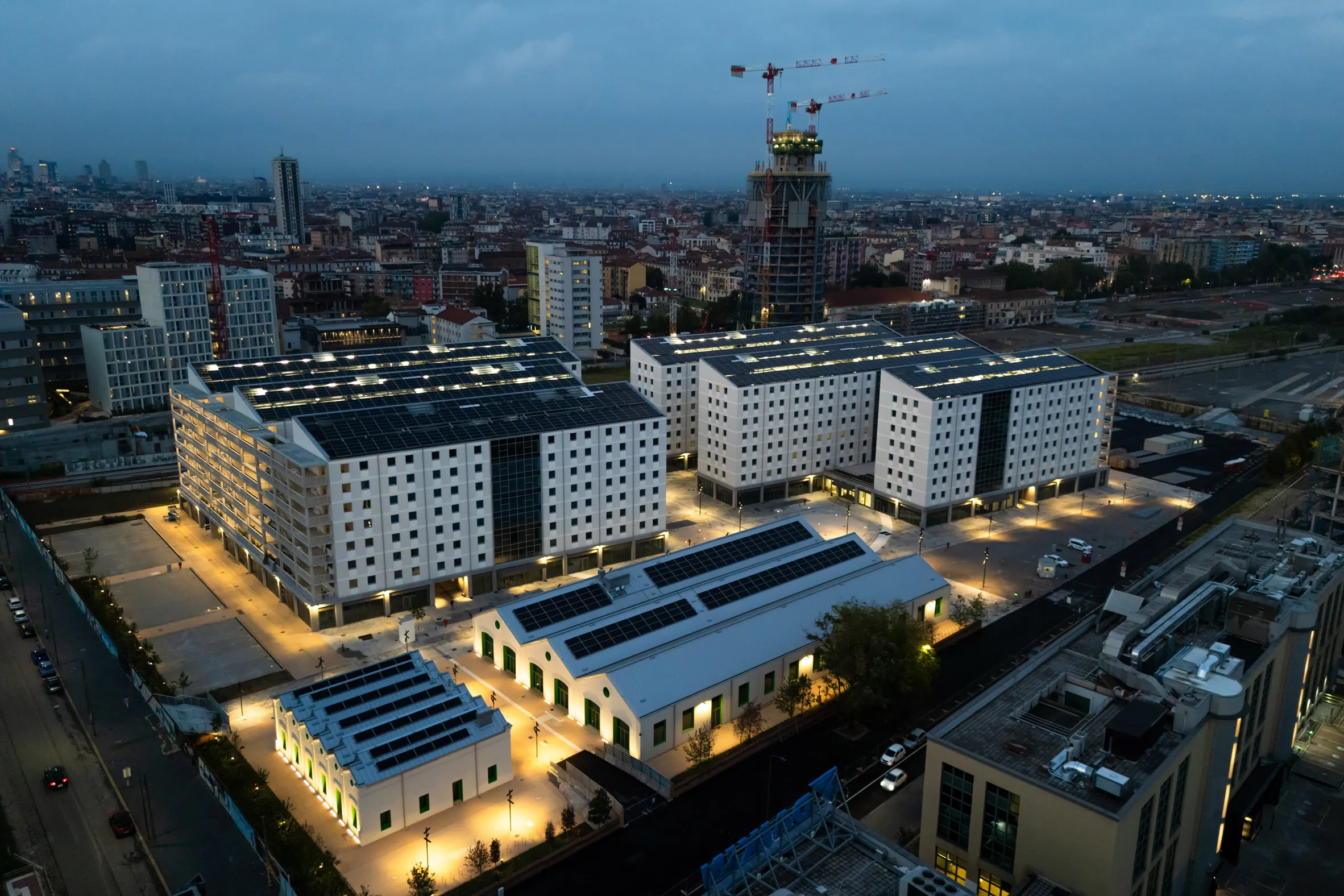
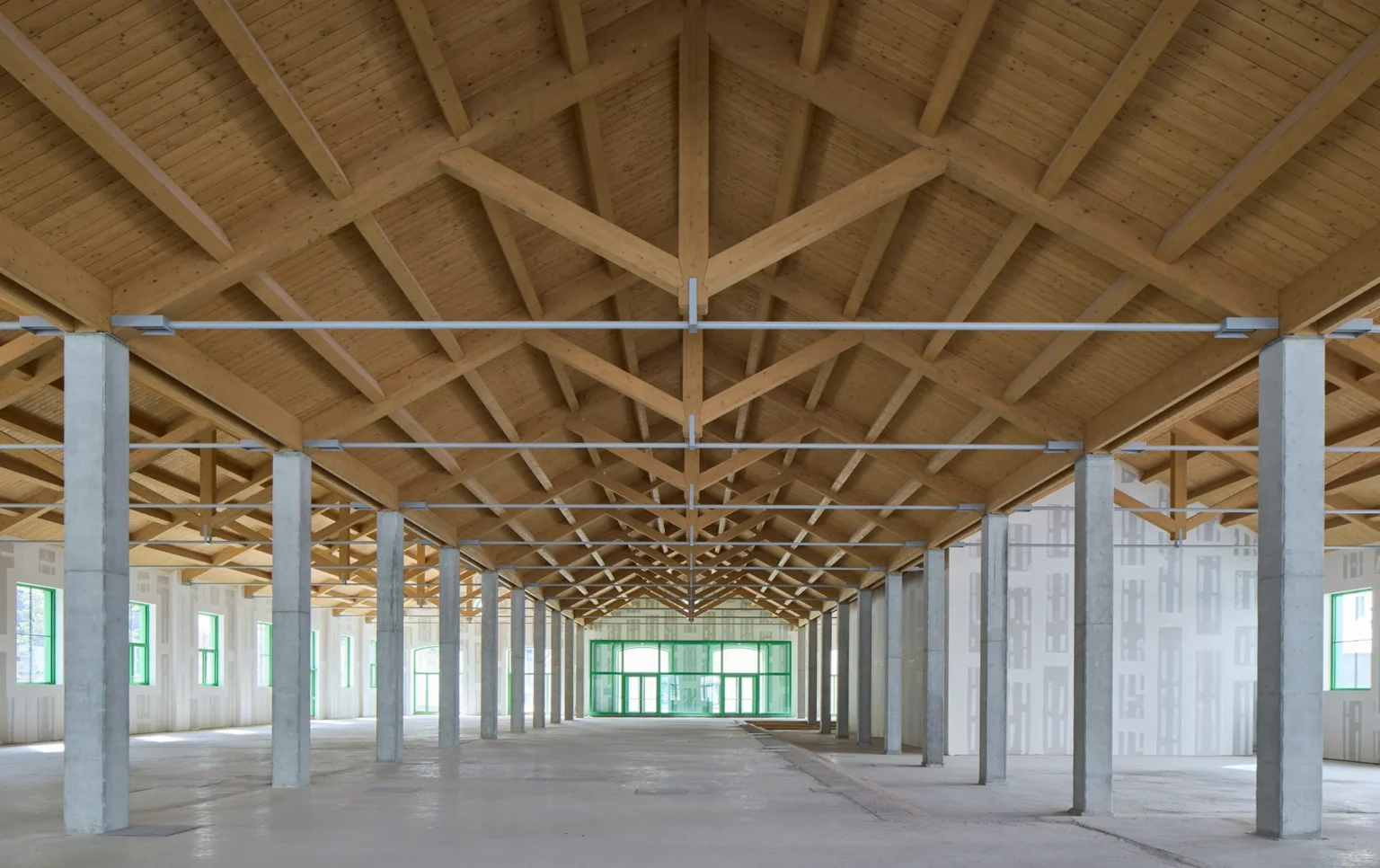
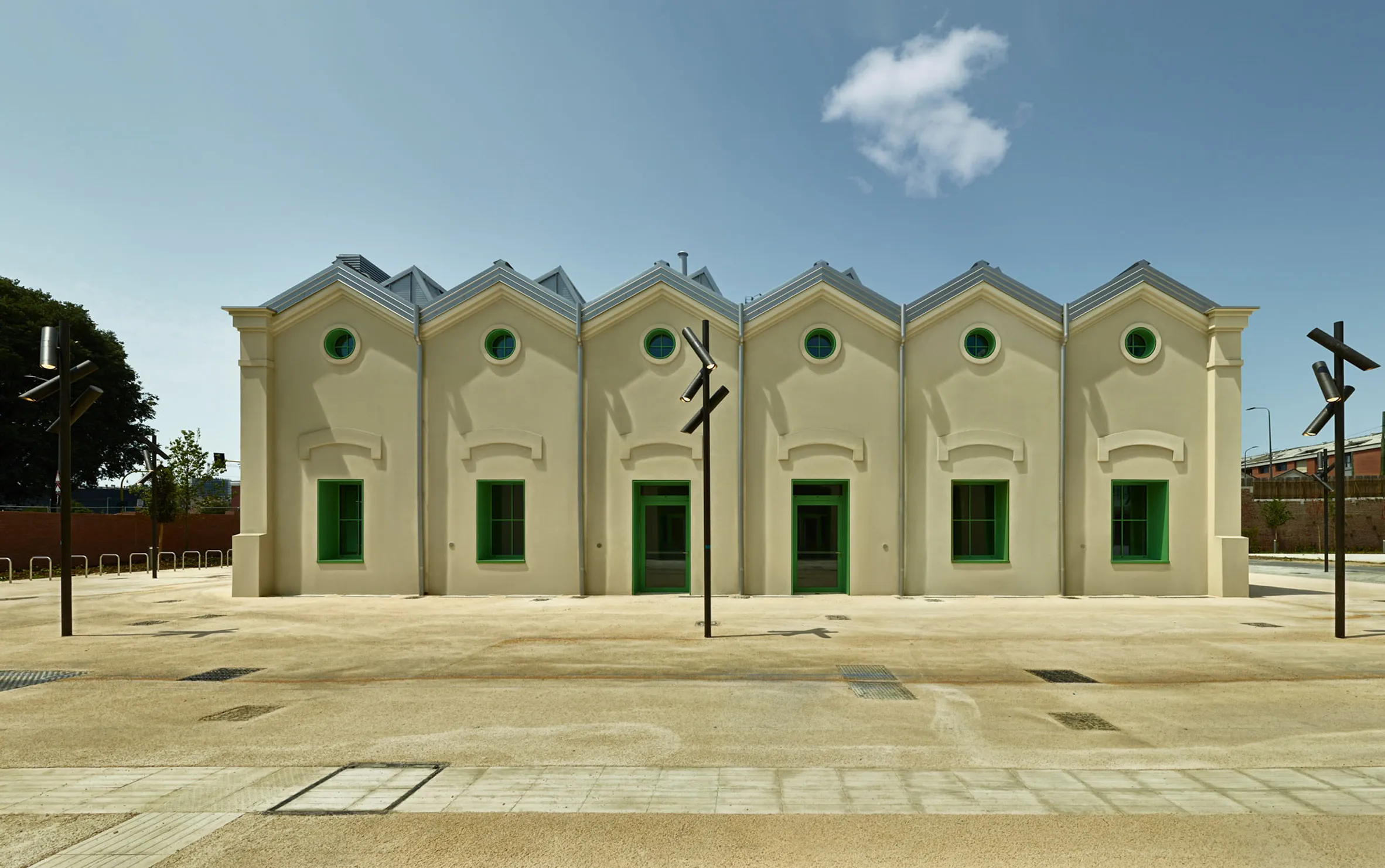
Designed as part of Milan’s urban fabric, the Cortina Olympic Village incorporates a range of public green spaces, the conversion of two historic buildings, and six new residential buildings to serve Olympic athletes in the short term. Following the Games, the six newly constructed residential buildings and the two restored historic structures will be converted into student housing and affordable residences. Furthermore, following the conclusion of the event, the Olympic Village Square will become a neighborhood square with street-level shops, bars, restaurants, and cafes, as well as open spaces for farmers’ markets and other community events.
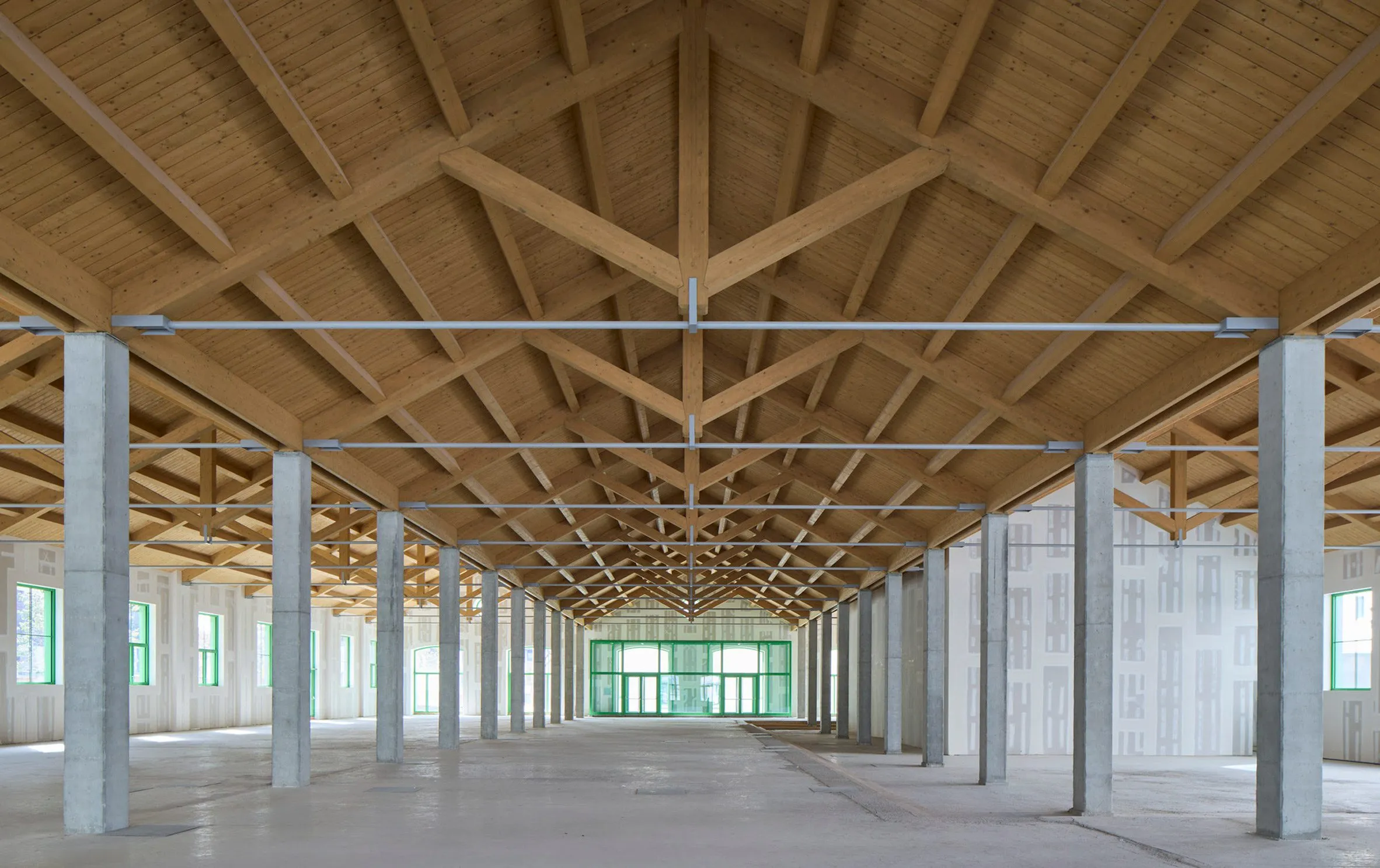
Inspired by Milan’s architectural heritage, the design incorporates shared terraces, vertical greenery, and urban farming systems to foster community life and climate resilience. Modular design, prefabricated facade panels, and a simplified construction process significantly reduce the amount of carbon used in construction.
2. Arena Milano
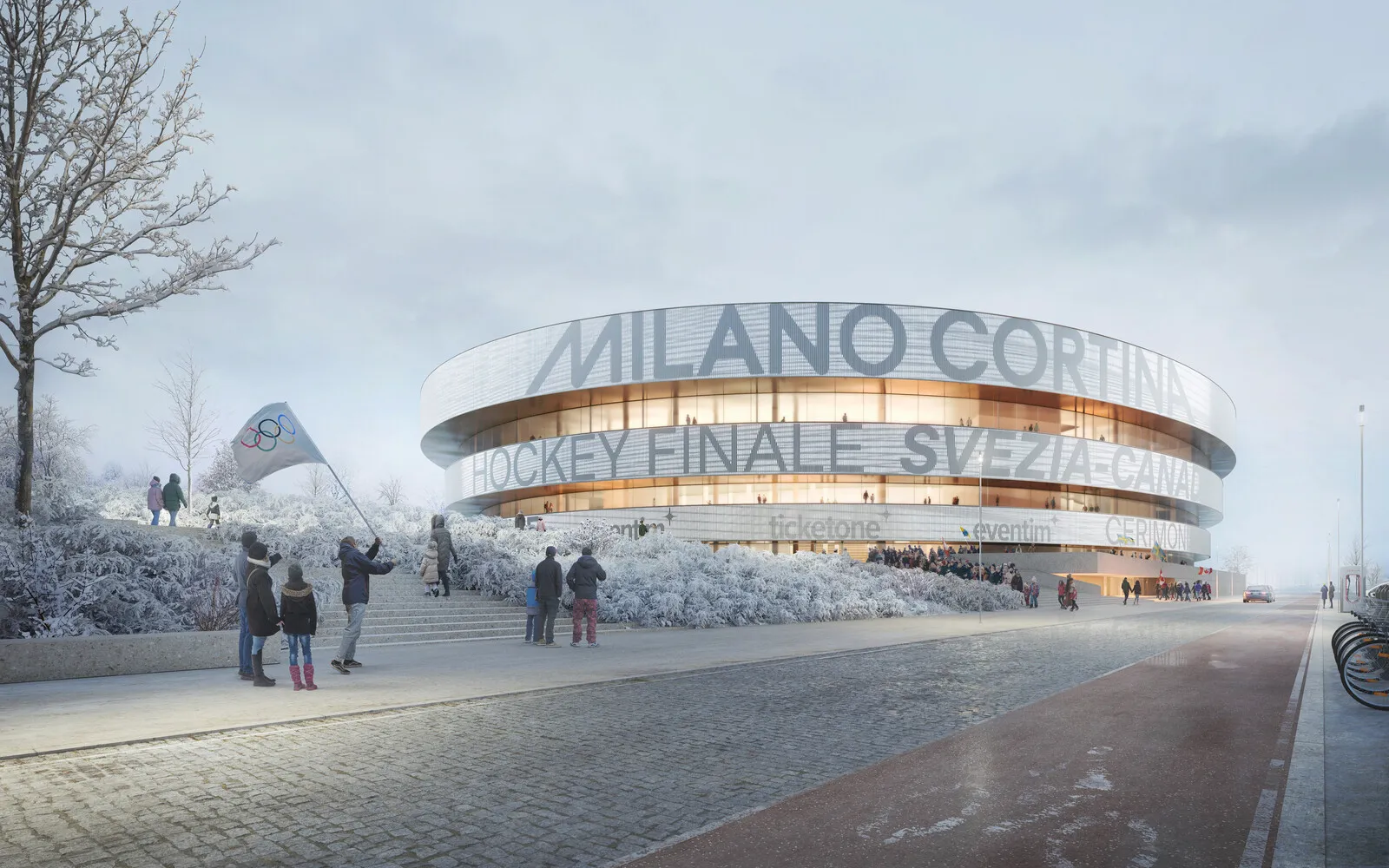
Designed by David Chipperfield Architects, Arena Milano, which will host events for the Milano Cortina 2026 Winter Olympics, is located at the heart of Milano Santa Giulia, a newly regenerated urban district. With a capacity of 16,000 people, Arena Milano is suitable for sporting and cultural events. Its central location integrates with the wider area, which includes housing, educational facilities, commercial programs, and a large park, creating a 10,000 square meter public meeting place.
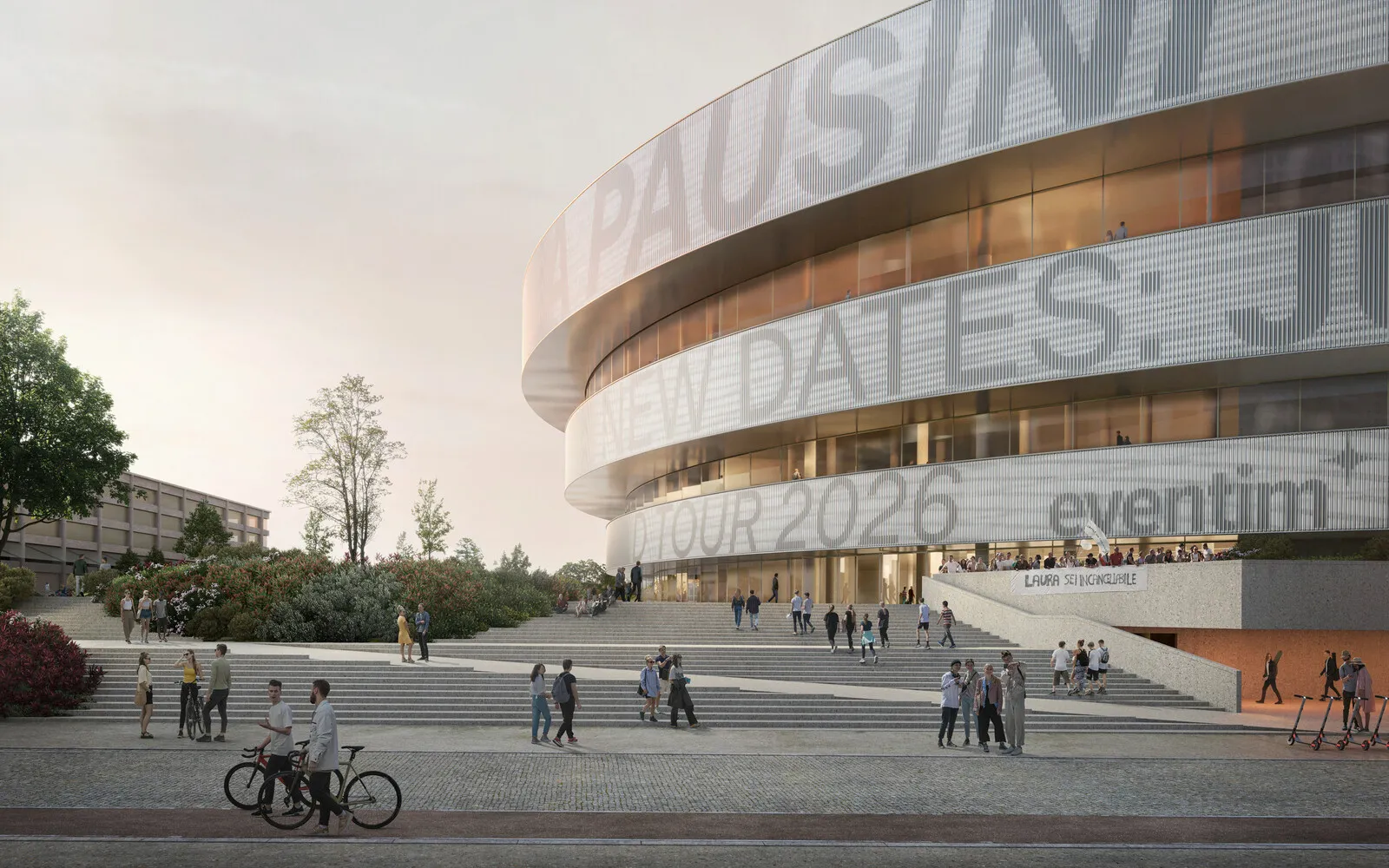
Reinterpreting the classical Roman amphitheatre through contemporary materials and tectonics, the building adopts an elliptical form. Reinterpreting the classic Roman amphitheater with modern materials and tectonics, the building has an elliptical form. The slightly rotated arena welcomes guests from the west, and a wide staircase leads visitors to an elevated platform encompassing almost the entire space. Inside, the design offers two spectator levels, halls, box sections, and spacious lobbies.
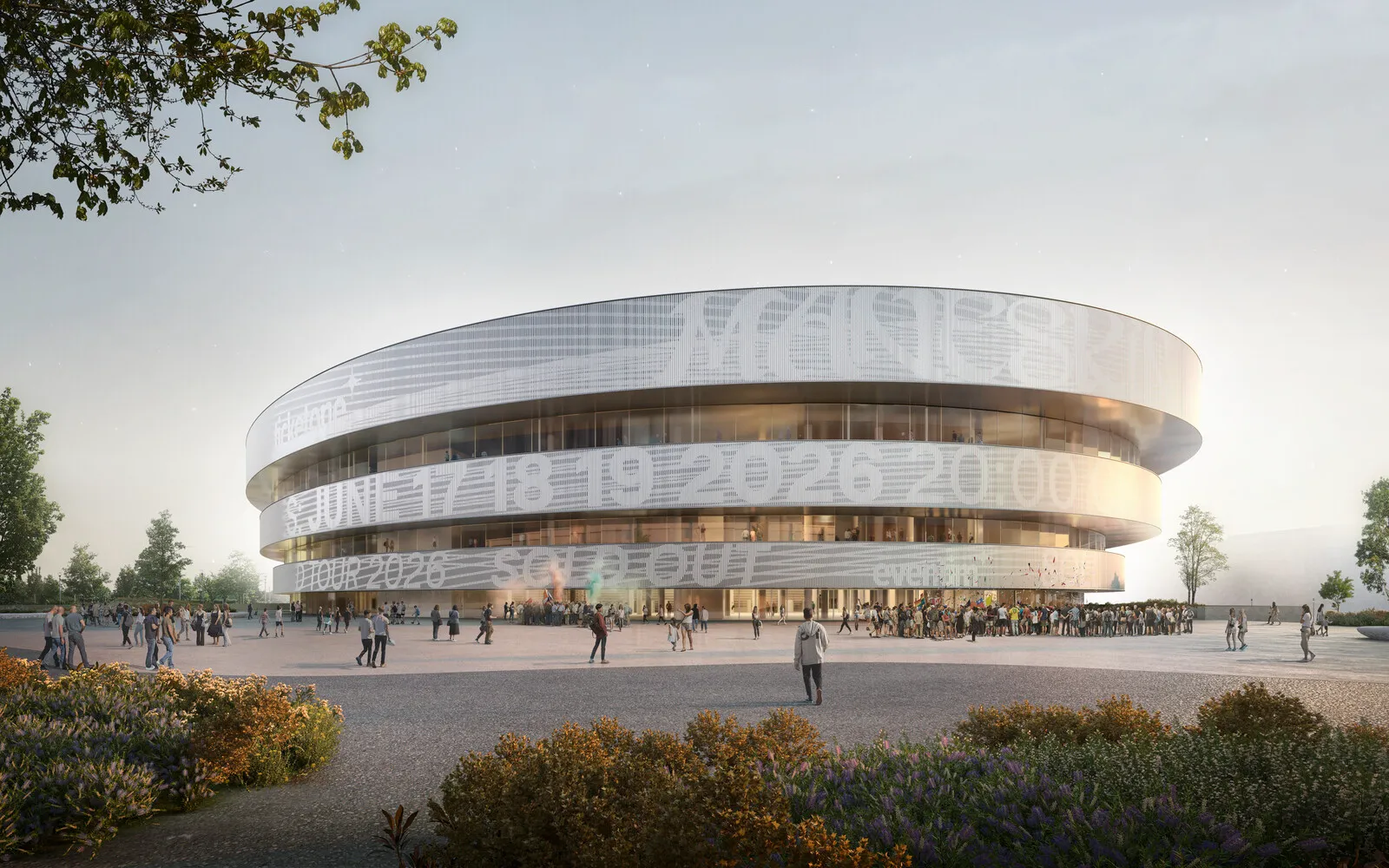
In addition to measures aimed at minimizing resource consumption and CO₂ emissions, the sustainability concept also includes photovoltaic systems on the roof, which largely meet the needs of the energy-efficient building in the area.
3. Welcome
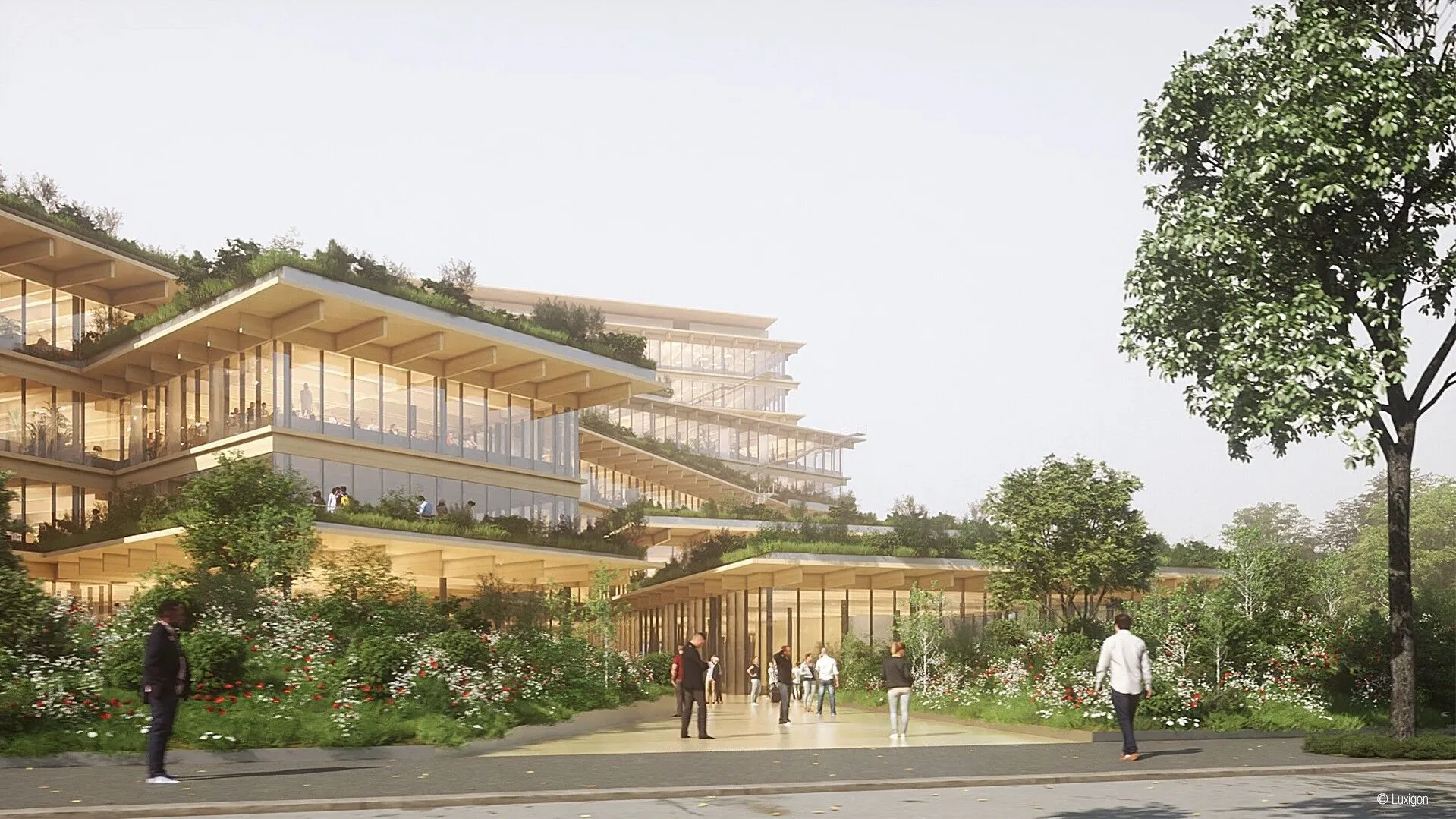
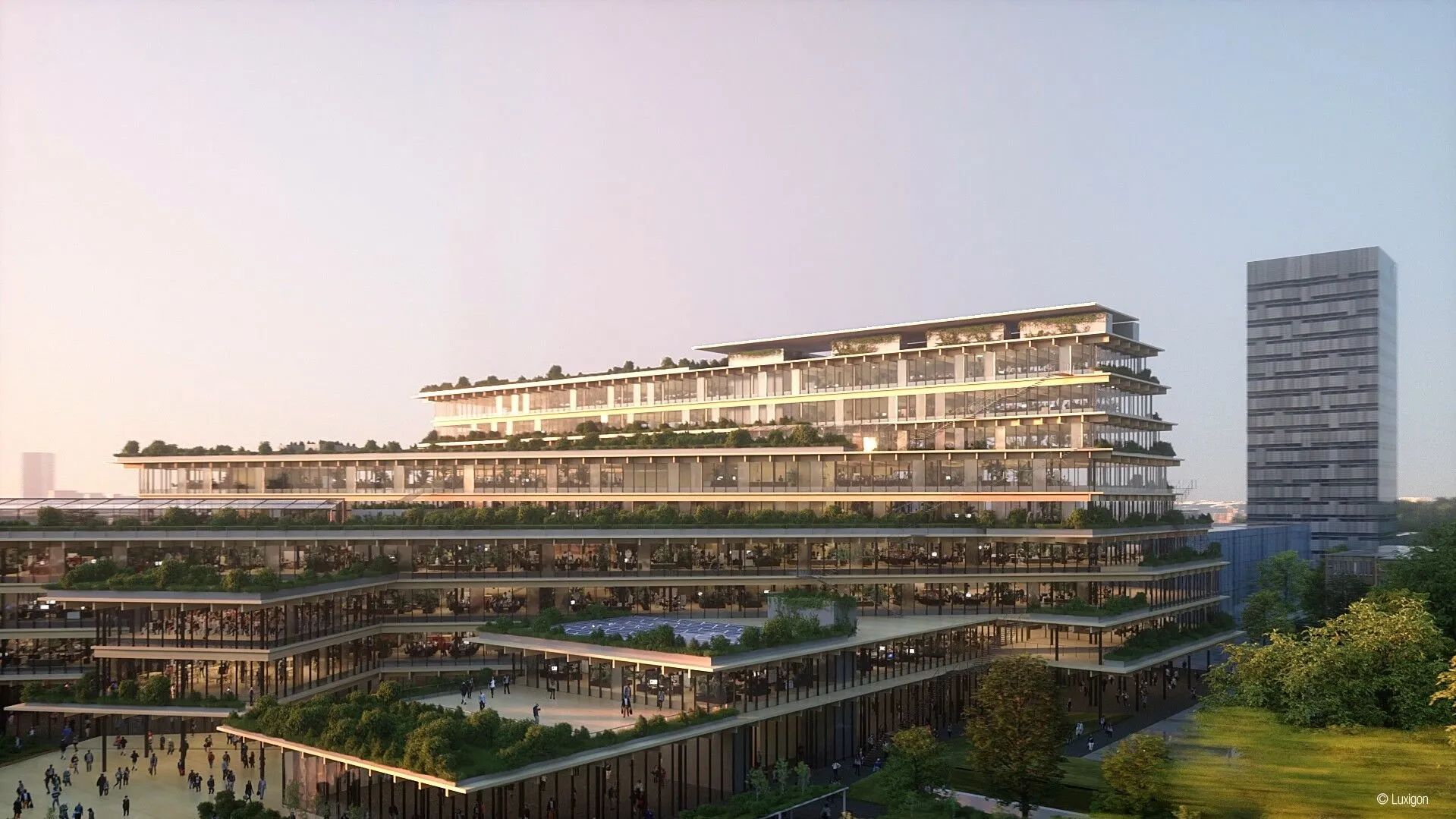
Welcome, designed by Kengo Kuma & Associates, is built on a previously abandoned industrial site in Milan’s former Rizzoli district. This biophilic project, acting as a catalyst to revitalize the entire area, aims to bring people and nature together for a better quality of life and work.
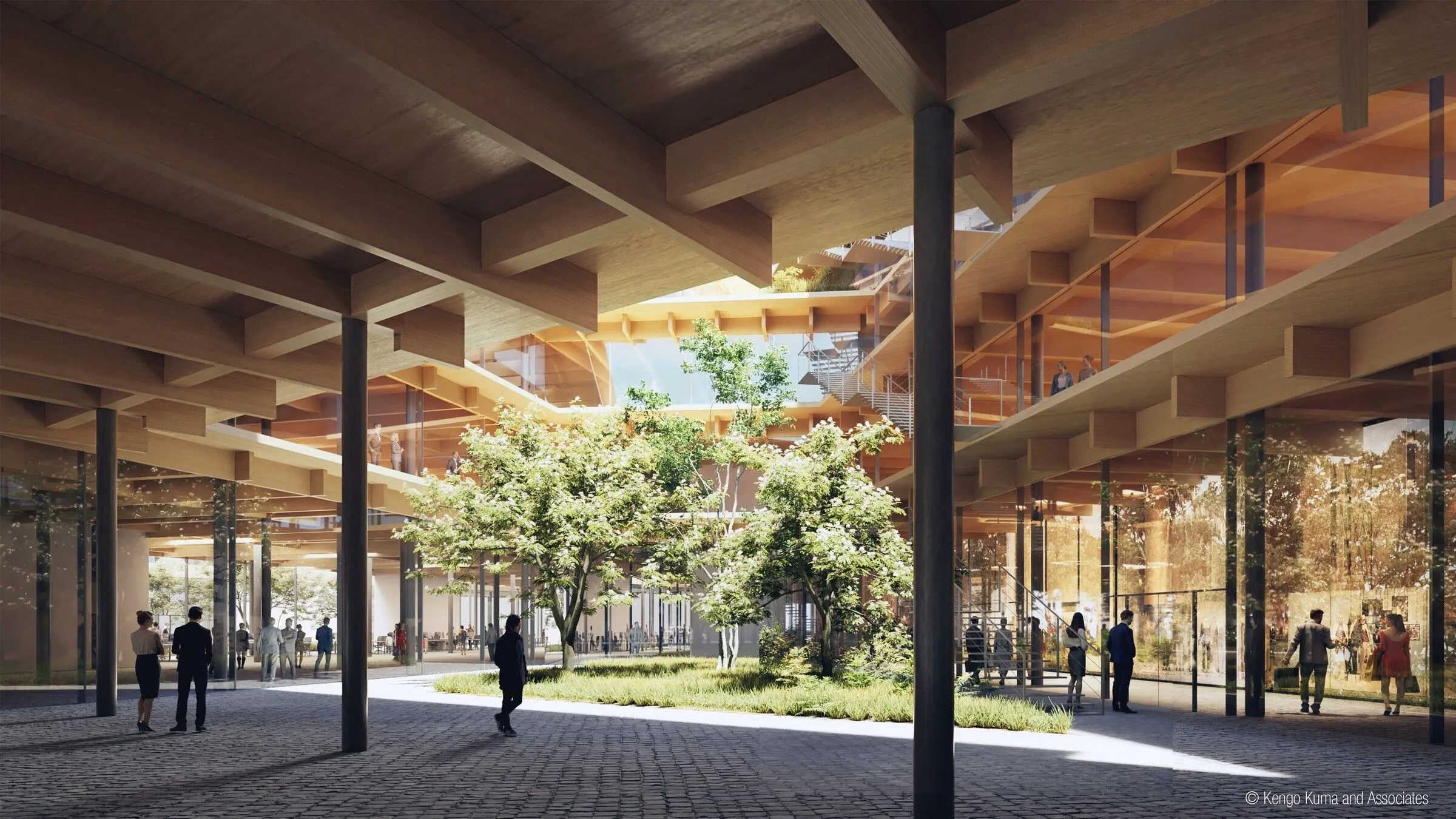
Placing community at the core of its design, Welcome brings together offices, auditoriums, co-working spaces, meeting rooms, restaurants and lounges, retail units, a supermarket, wellness facilities, and temporary exhibition and performance spaces. All of these functions are connected by a continuous shared green space that runs throughout the project. The green infrastructure includes the Piazza, filled with vegetation and surrounded by gentle hills; open-air courtyards dedicated to informal work and meetings; terraces designed as extensions of the outdoors; and greenhouses that serve as private workspaces also suitable for recreation.
4. CityWave
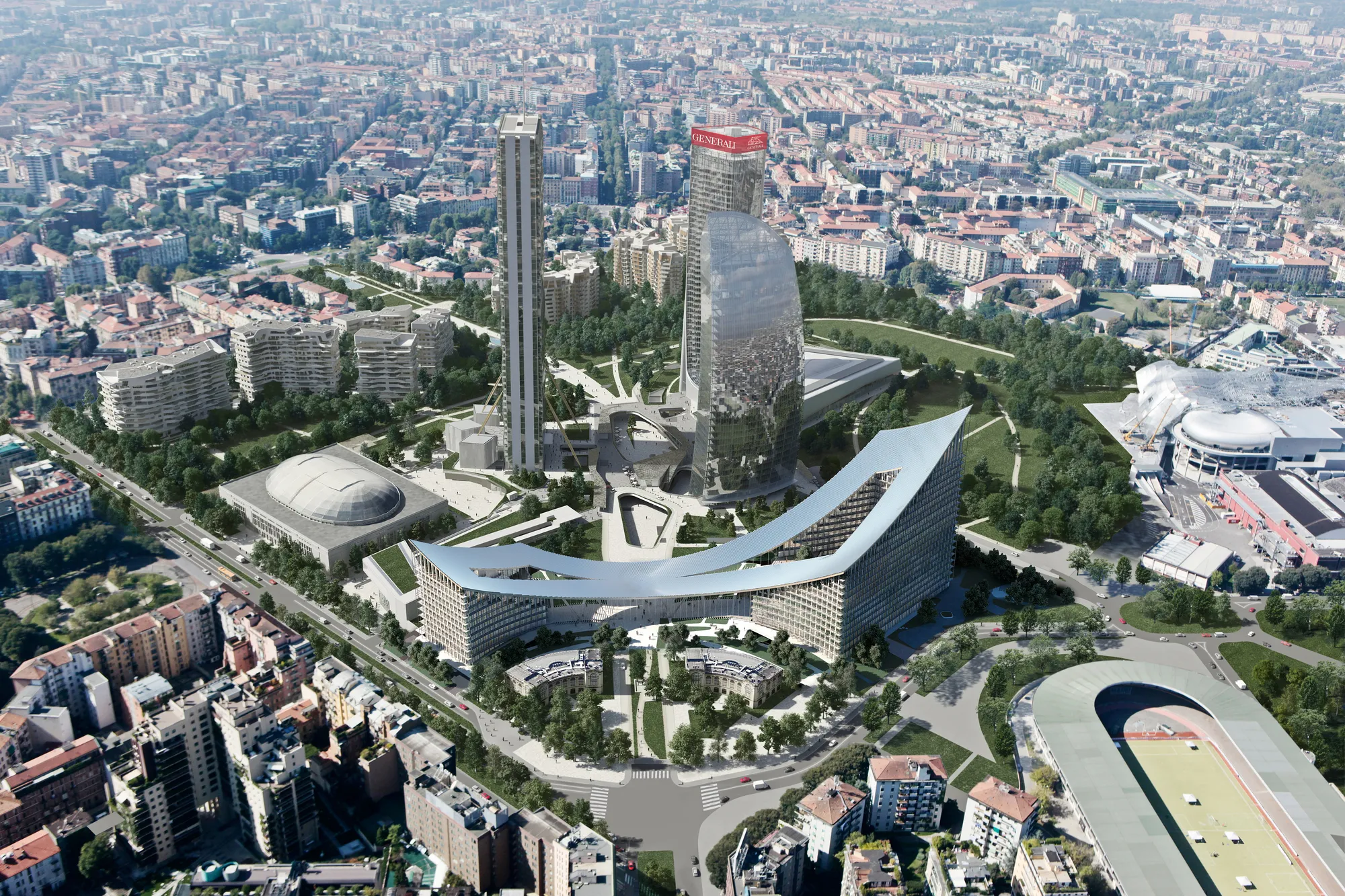
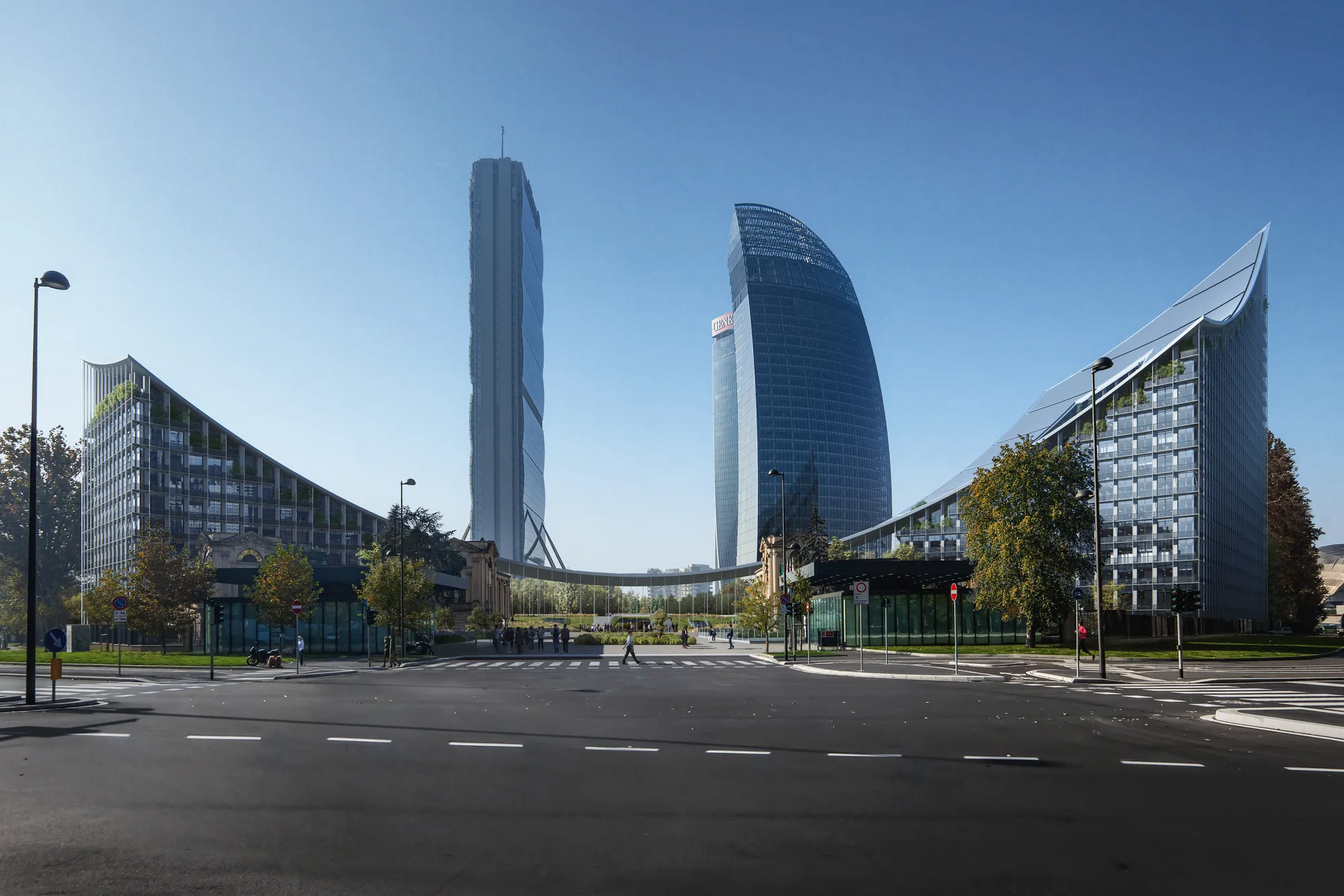
Designed by BIG (Bjarke Ingels Group) as part of Milan’s CityLife development, CityWave is a 73,000 m² office complex. The project consists of two buildings rising 105 and 53 metres in height, connected by a monumental canopy. The unique 140-meter-long roof, intended to be Europe’s largest integrated urban solar roof, is entirely covered in photovoltaic tiles.
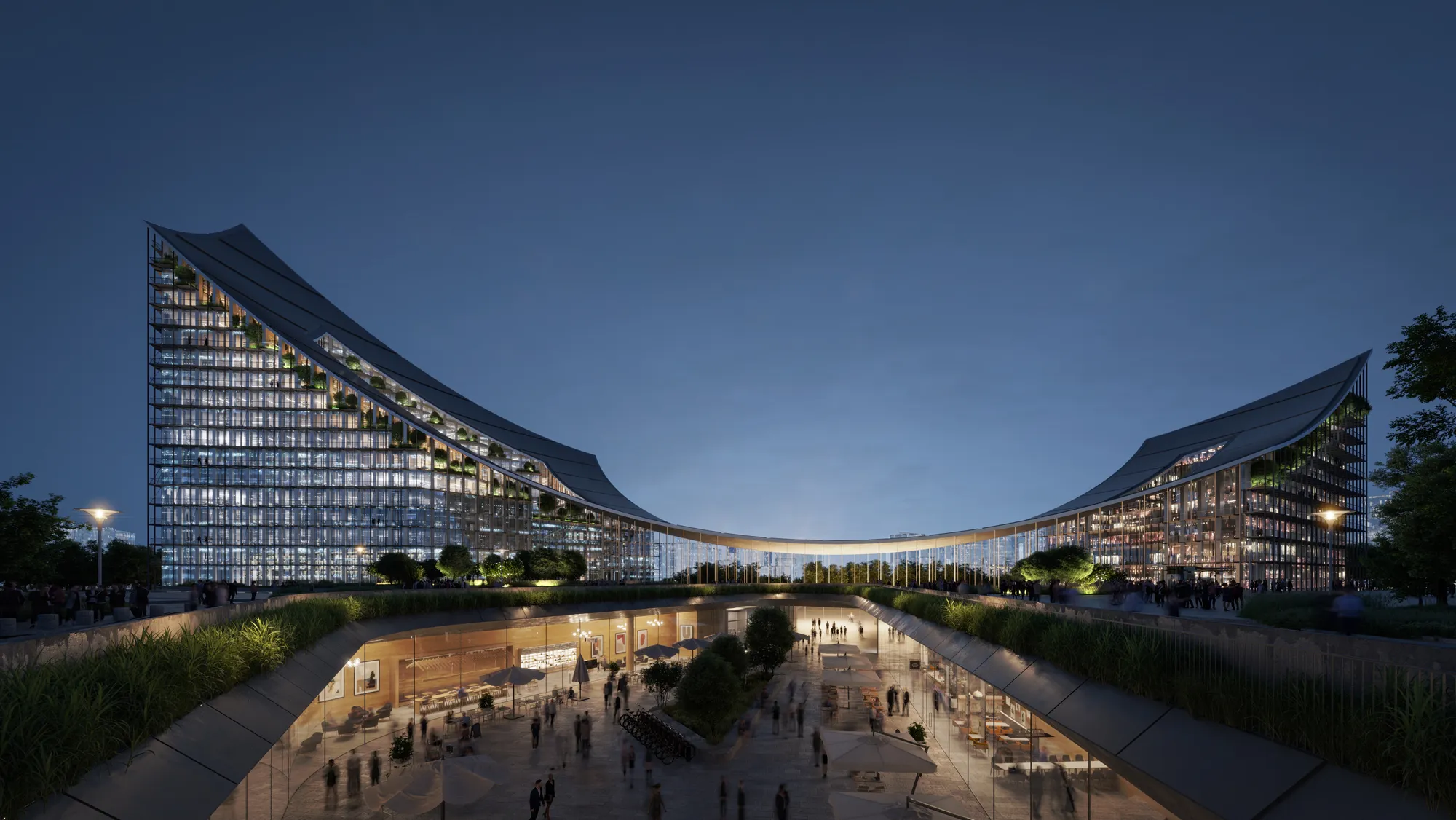
Replacing conventional infrastructure with a shaded public square and landscaped areas, CityWave’s courtyards, porticos, and roof terrace reference Italy’s portico tradition and Milan’s architectural heritage. Defined more by connectivity than by height, the two courtyard buildings help bridge the scale difference between the surrounding neighborhood and the central towers.
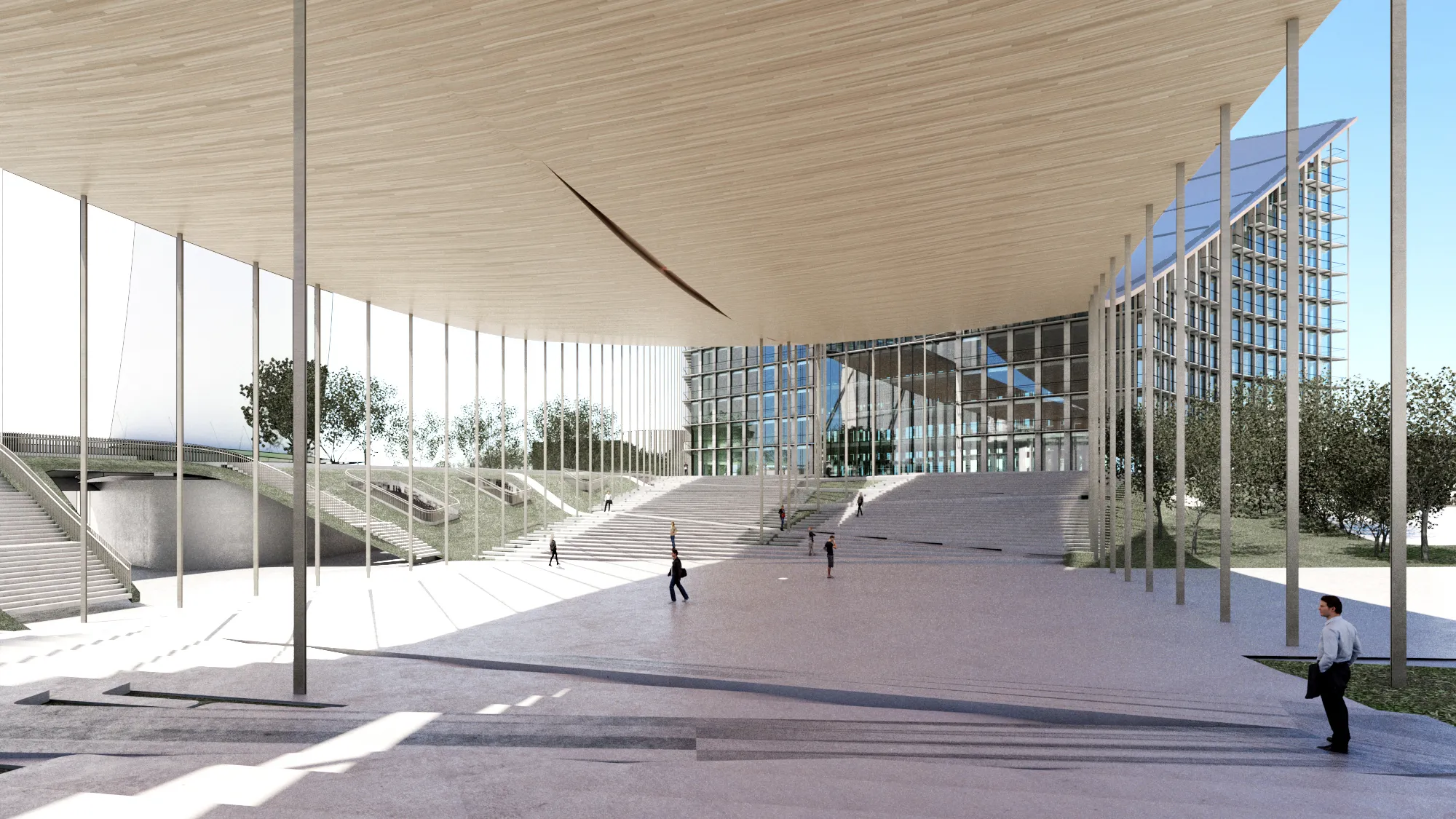
Preliminarily certified for WELL and LEED Platinum, the project incorporates groundwater cooling and thermal storage systems that reduce energy demand by up to 40%. The solar roof, expected to generate approximately 1,200 megawatt-hours per year, supports the goal of modeling the workplace of the future.
5. Padel Pavilion
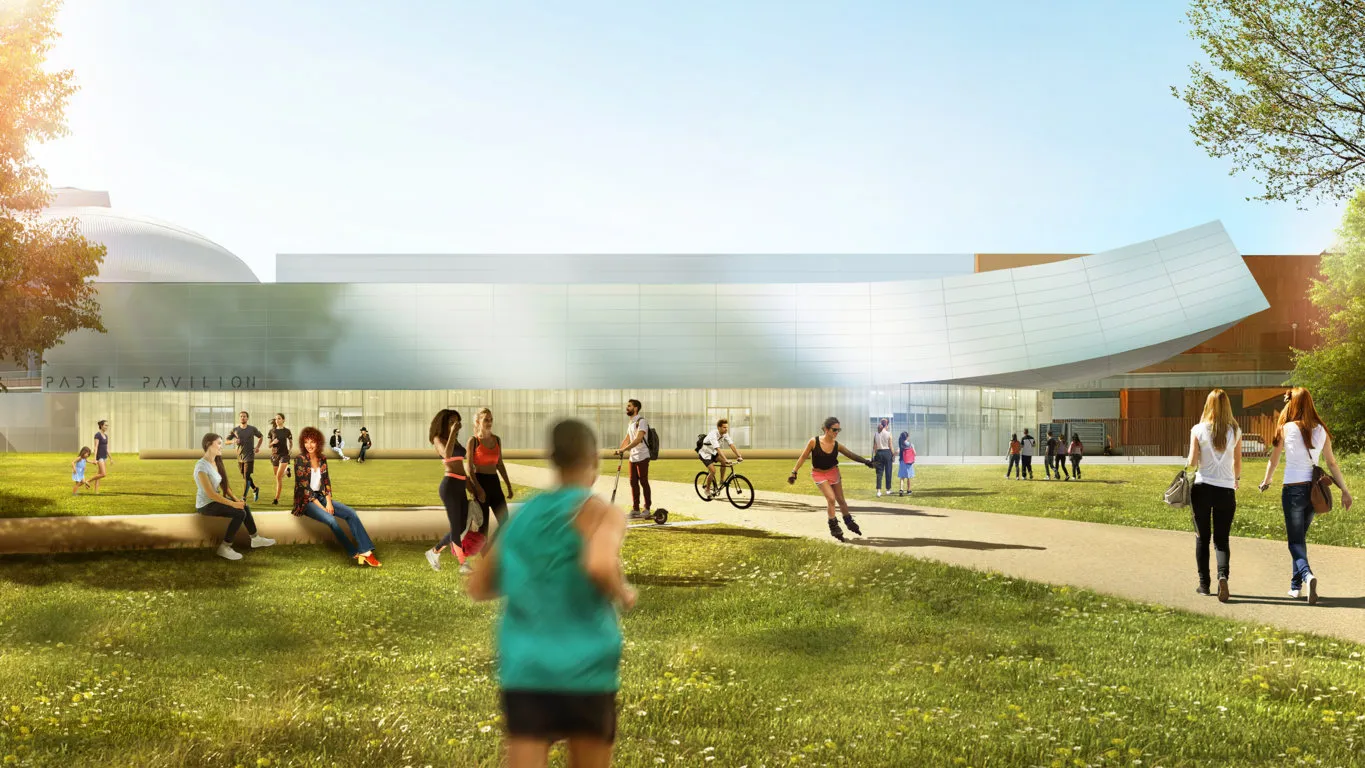
Designed by Fabio Novembre ahead of the 2025 Winter Olympics, the Padel Pavilion is an innovative sports center located in a park in Milan’s CityLife district. Its entrance, reminiscent of the nearby CityWave building, is defined by a 17-meter-long curved cantilever, visually aligning the structure with the soft geometries of its architectural surroundings.
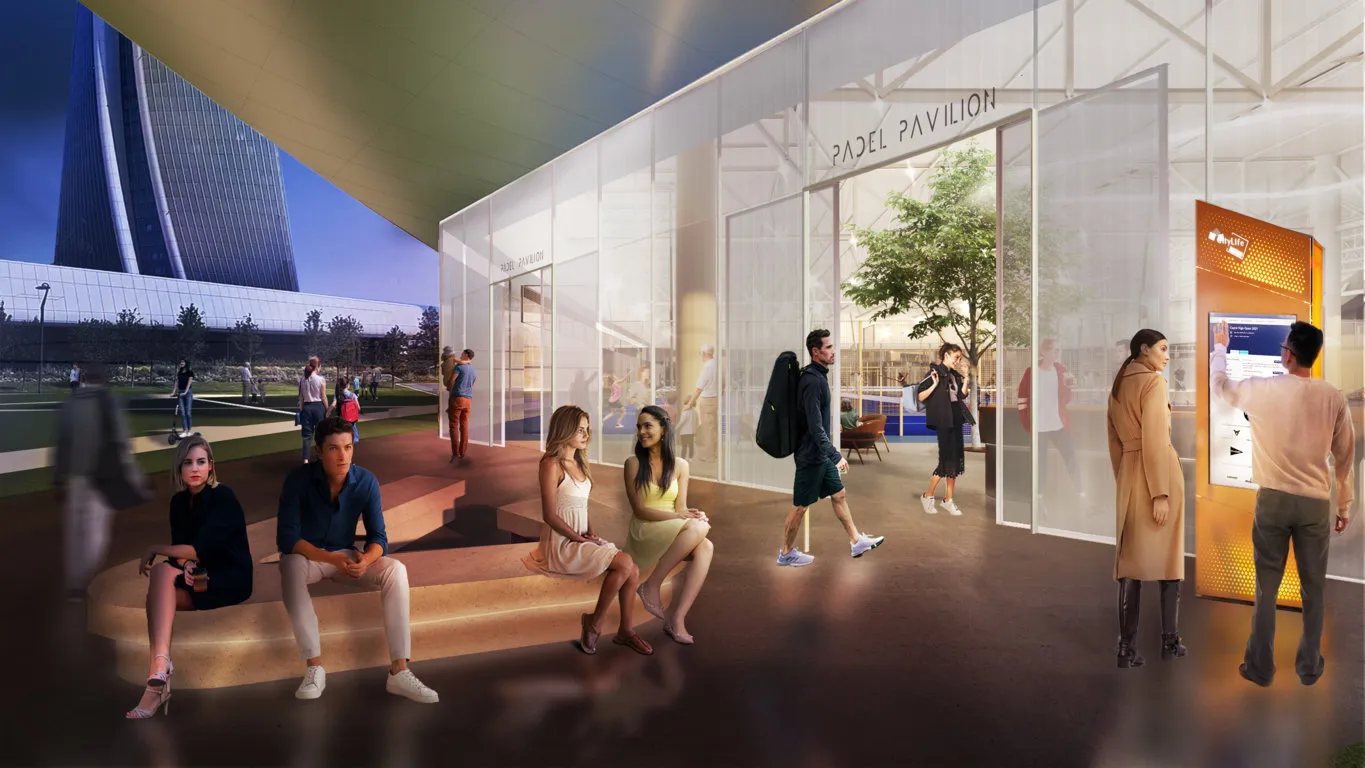
Spanning 2800 m² and standing 12 meters tall, the Padel Pavilion houses seven padel courts. It also includes food and beverage areas and an events space. Designed with the needs of the sport in mind, the pavilion has a design that can be adapted for other purposes in the future. The ground floor of the building is made of translucent polycarbonate, while the upper part is made of reflective aluminum.
6. A2A Headquarters
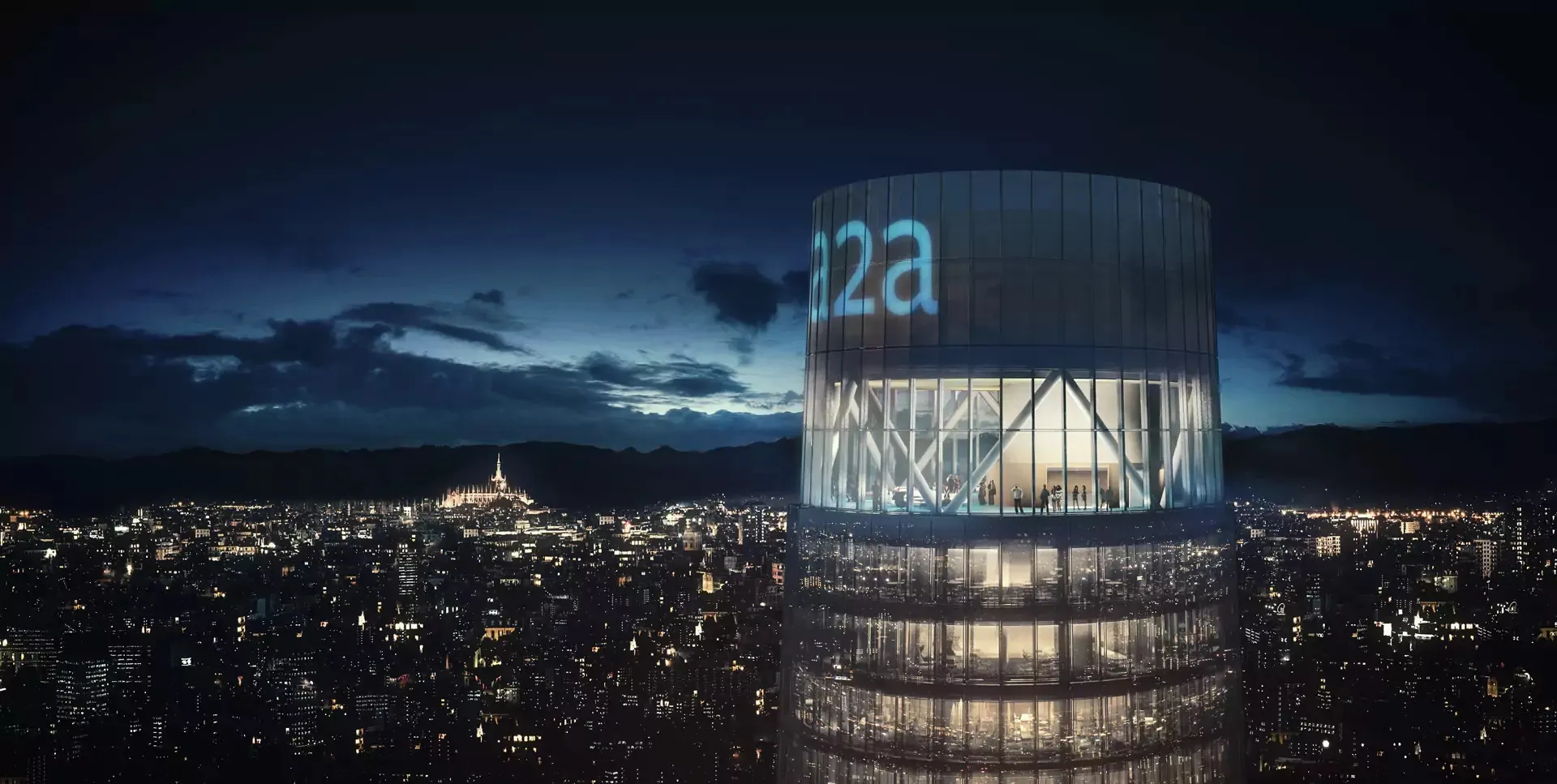
Designed by ACPV Architects (Antonio Citterio and Patricia Viel), A2A Headquarters is an office building inspired by Milan’s industrial past. A 144-meter-high “lighthouse” tower, it represents the pinnacle of the local area’s green transformation and is a major new urban development project. Responding to constantly evolving workplace needs, the project creates adaptable office spaces while revitalizing the local urban fabric through 6,320 m² of new public green areas.
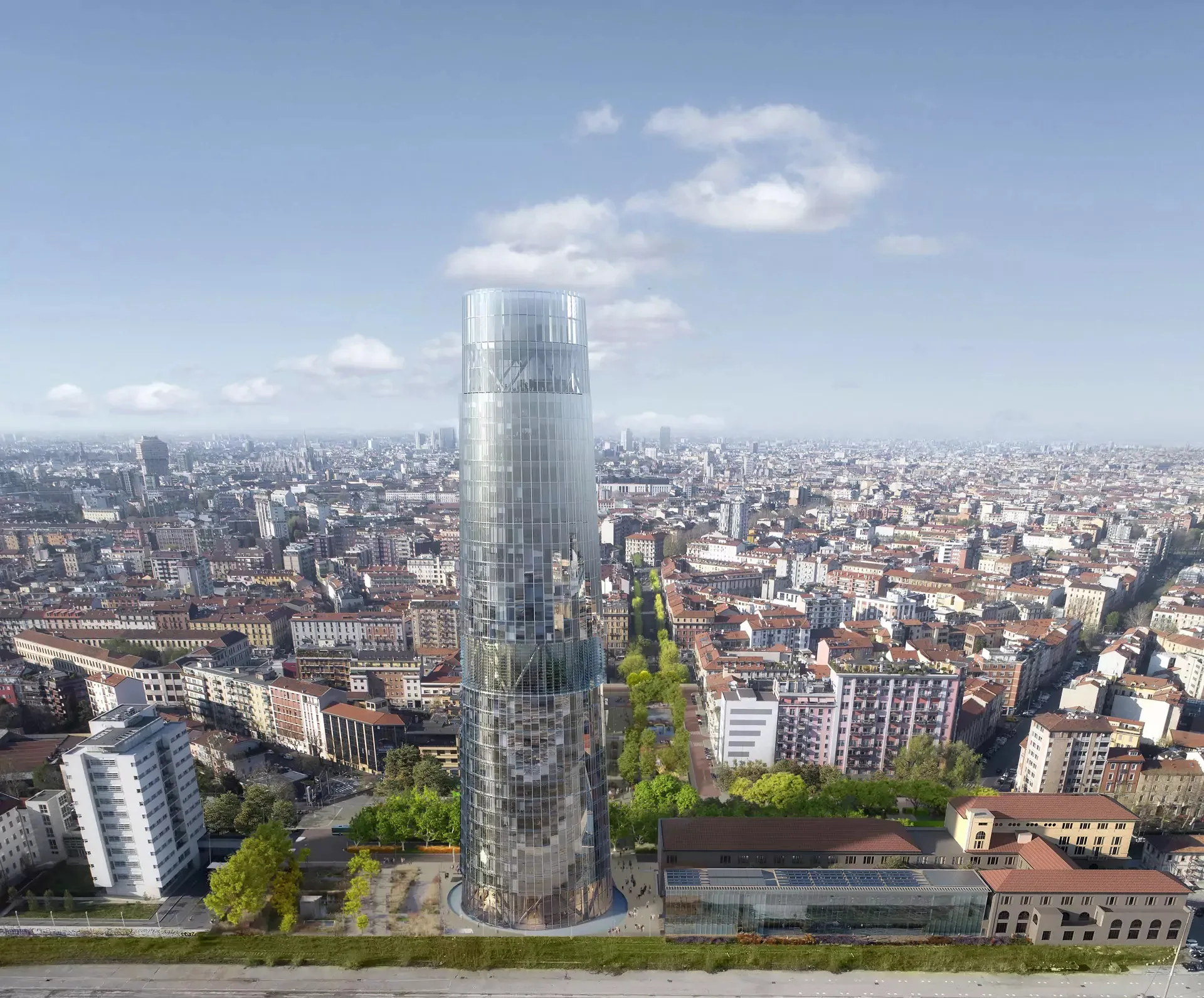
Accommodating 1500 people, the A2A Headquarters tower, complete with a flexible, open, and green courtyard, is divided into two groups of office floors framed by a spacious entrance hall on the first floor, a central sky garden, and an observation terrace at the top. With flexible spaces that can be reconfigured for multiple uses, including co-working areas and meeting rooms, the project addresses future professional needs.
7. Pirelli 39
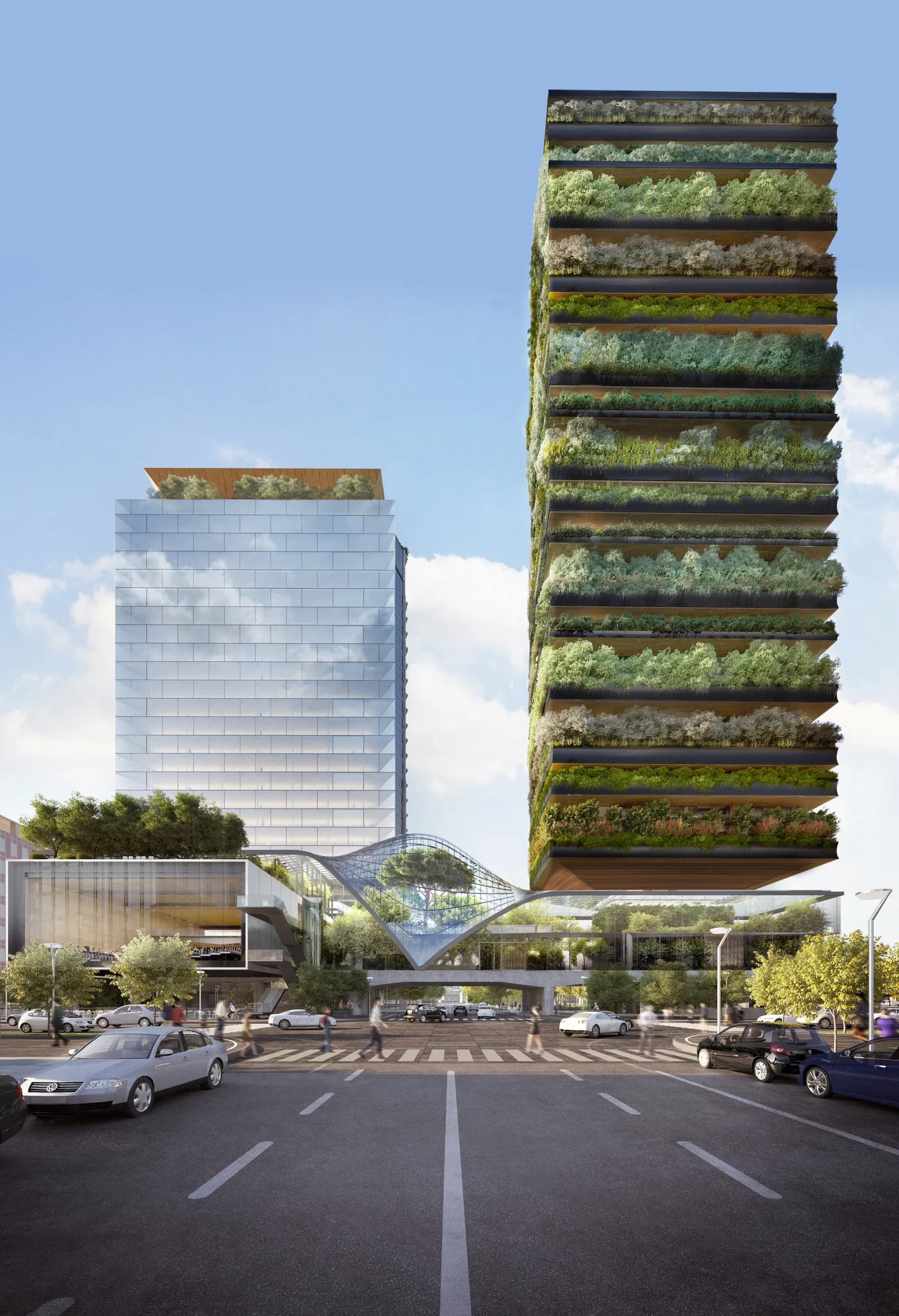
Diller Scofidio + Renfro and Stefano Boeri Architetti won the Pirelli 30 redevelopment project, organized by the Milan Municipality. This mixed-use project, revitalizing the Porta Nuova Gioia district, connects the Scalo Farini Central Station with the city center. The proposal reactivates the existing “Pirellino” office tower and introduces a new residential high-rise incorporating 1,700 m² of integrated vegetation, along with a bridge building spanning Via Melchiorre Gioia. This bridge, connecting the two structures, serves as a hub for events, shows, and exhibitions, as well as housing a biodiversity greenhouse offering immersive, educational experiences as a specialized laboratory.
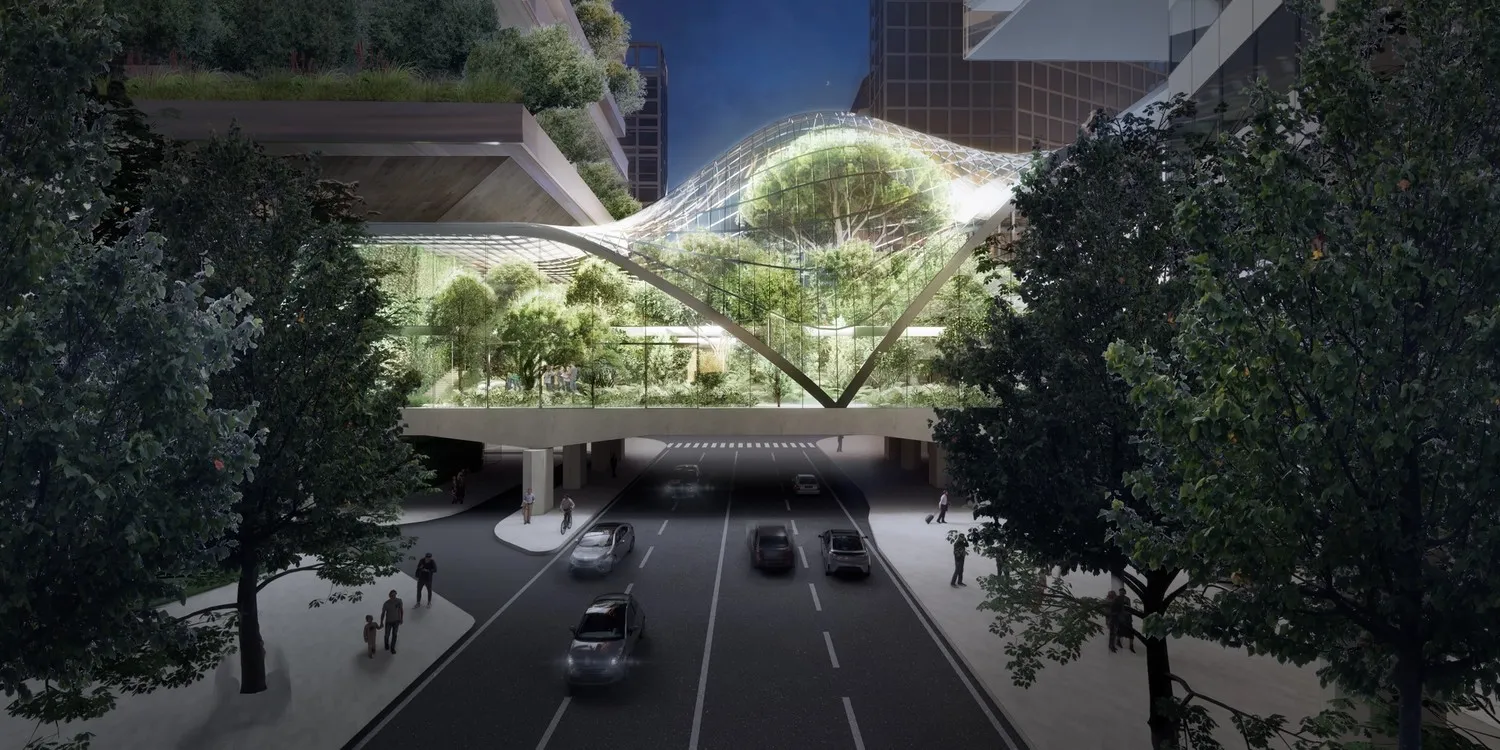
As Italy’s first redevelopment project aligned with ESG objectives and next-generation EU guidelines, Pirelli 30 is designed to meet the highest sustainability standards. Expected to absorb fourteen tons of CO₂ and produce nine tons of oxygen annually, the project will utilize 2700 m² of photovoltaic panels to meet 65% of its energy needs.