
































Tensegrity structures stand as an extraordinary feat of architecture and engineering; the unique compositions together seem to defy the very laws of physics and gravity. These engineering masterpieces balance components in perfect tension and compression, creating lightweight yet remarkably stable forms.
As one of the most captivating and inspiring innovations in modern construction, tensegrity has captured the imagination of architects, designers, and engineers, inspiring a wave of creativity and experimentation. Beyond architecture, the equilibrium systems have found applications in fields as diverse as engineering and biology, proving that true innovation often lies in the art of balance.
What is a Tensegrity Structure?
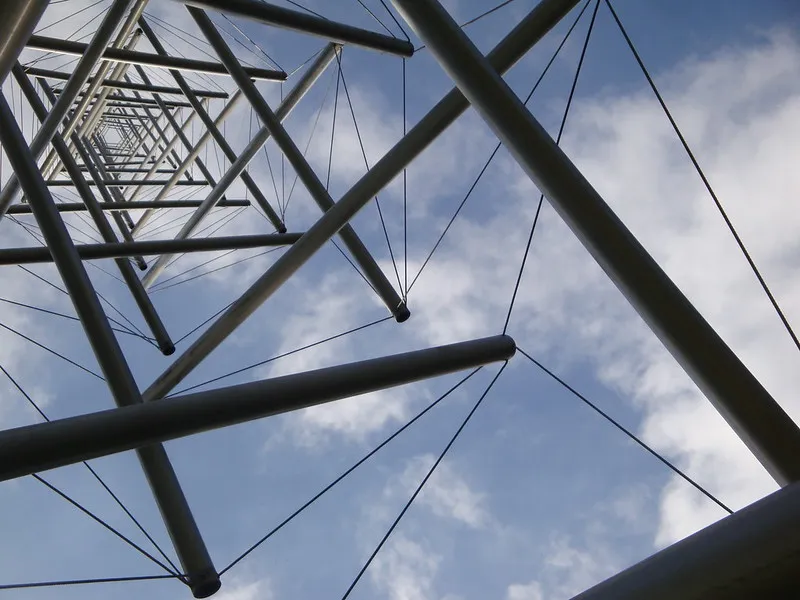
Tensegrity, short for “tensional integrity,” is a fascinating design concept where balance is born from tension (pull) and compression (push) working together in perfect harmony. The primary composition of the structure consists of isolated components that do not touch each other, yet the entire form holds together through a web of cables or tendons, creating a stable equilibrium.
This ingenious principle has inspired architects and engineers to craft everything from elegant pavilions and dynamic bridges to mesmerizing sculptures and futuristic installations. The stable form of tensegrity has enabled designers and engineers to explore tensegrity forms that can be deployed in aerospace and integrated where compact storage and expansion are crucial.
Buckminster Fuller and Tensegrity Structure
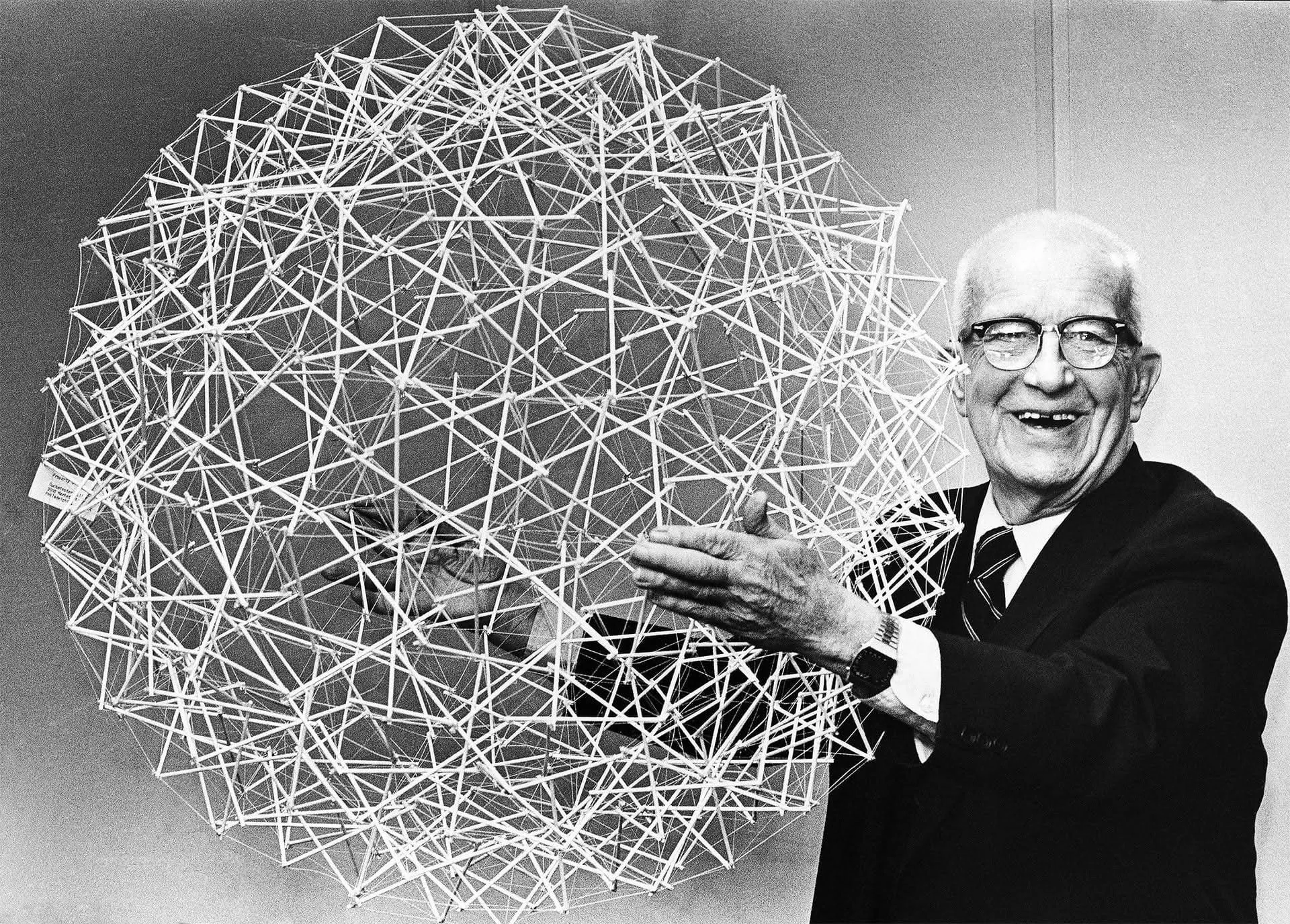
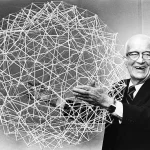
The term “tensegrity” was coined by visionary architect Richard Buckminster Fuller in the 1960s, though his exploration of innovative structural systems began as early as the 1920s. The concept took form when his student Kenneth Snelson brought it to life through his 1948 sculpture “X-Piece,” marking the first tangible realization of Fuller’s visionary idea. This collaboration between Fuller and Snelson laid the foundation for a revolutionary design philosophy that continues to inspire architects, engineers, and artists today.
Fuller describes tensegrity structures as ‘self-tensioning structures composed of rigid structures and cables, with forces of traction and compression, which form an integrated whole.’ He believed tensegrity represented nature’s own engineering, a system of dynamic equilibrium found in living organisms, where structure and movement are beautifully intertwined.
Through this idea, Fuller redefined the way we perceive stability, demonstrating that true strength often lies in balance, not in rigidity. Fuller described tensegrity as a self-tensioning structure composed of rigid components and cables, emphasizing its natural efficiency compared to traditional compression-based designs.
Key Characteristic of Tensegrity Structures
Read further for some defining characteristics and advantages of the unique tensegrity structures, followed by dynamic examples defying the Law of Physics and Gravity.
1. Stability
Despite the minimal utilization of the rigid elements, the entire composition as a whole offers remarkable stability. This stability is due to the tensile and compressive components, with internal forces that keep the elements in stable equilibrium (self-stress state).
2. Modular Structure
Each component of the tensegrity structure is complete on its own; the flexibility of the structure allows it to combine with other structures, creating a complex system. The system is modular in nature, creating various compositions with the same components that can be assembled and dismembered at ease.
3. Globally Applicable
The interconnected components and composition are always flexible and applicable in various fields of engineering, design, architecture, aerospace, etc.
6 Examples of Dynamic Tensegrity Structures
1. Munich Olympic Stadium, Germany
Architect: Behnisch and Partners, Frei Otto
Location: Munich, Germany
Typology: Sports field, Stadium
Completed: 1972
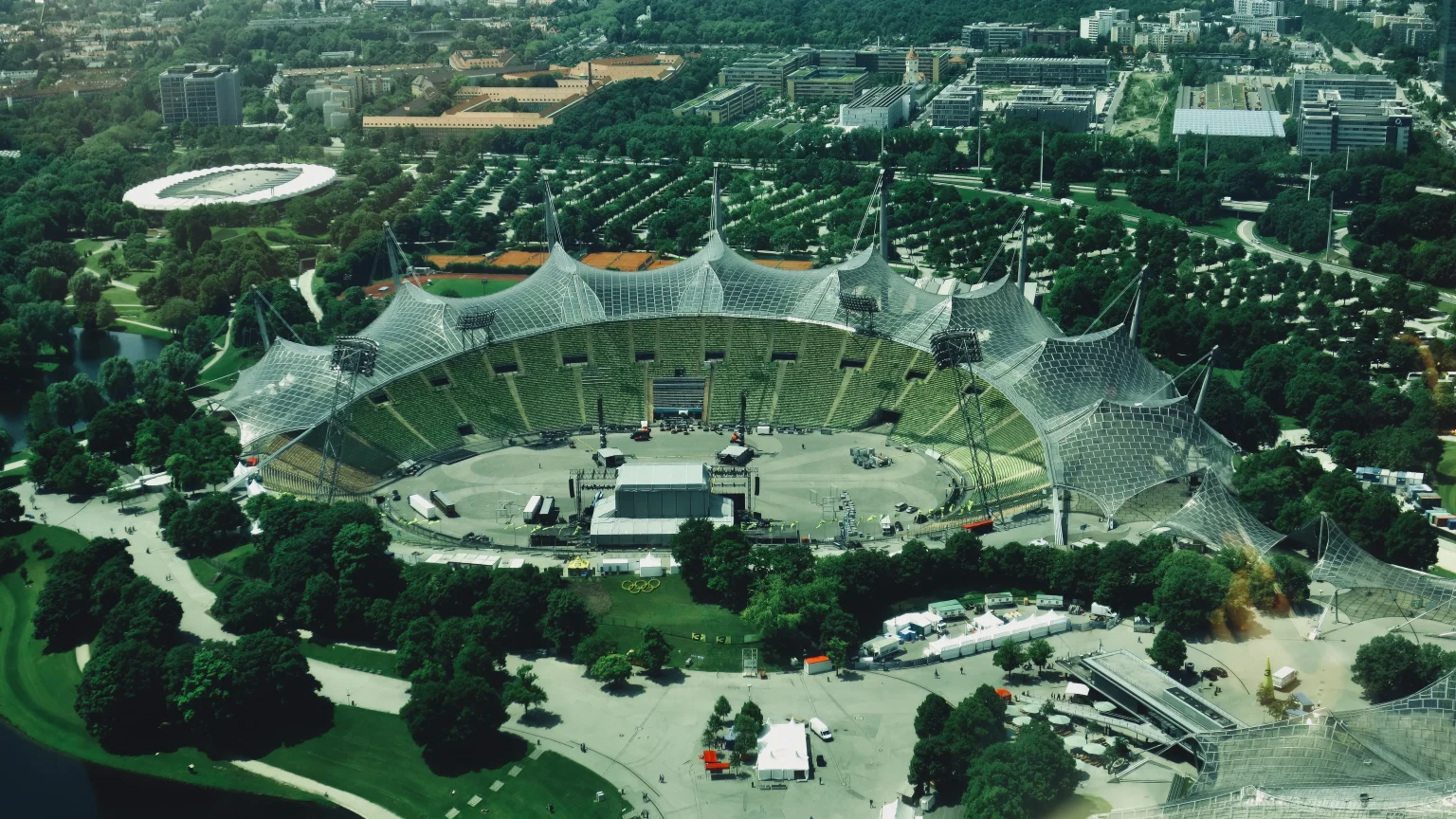
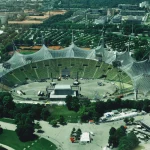
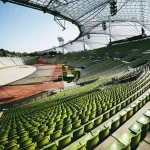
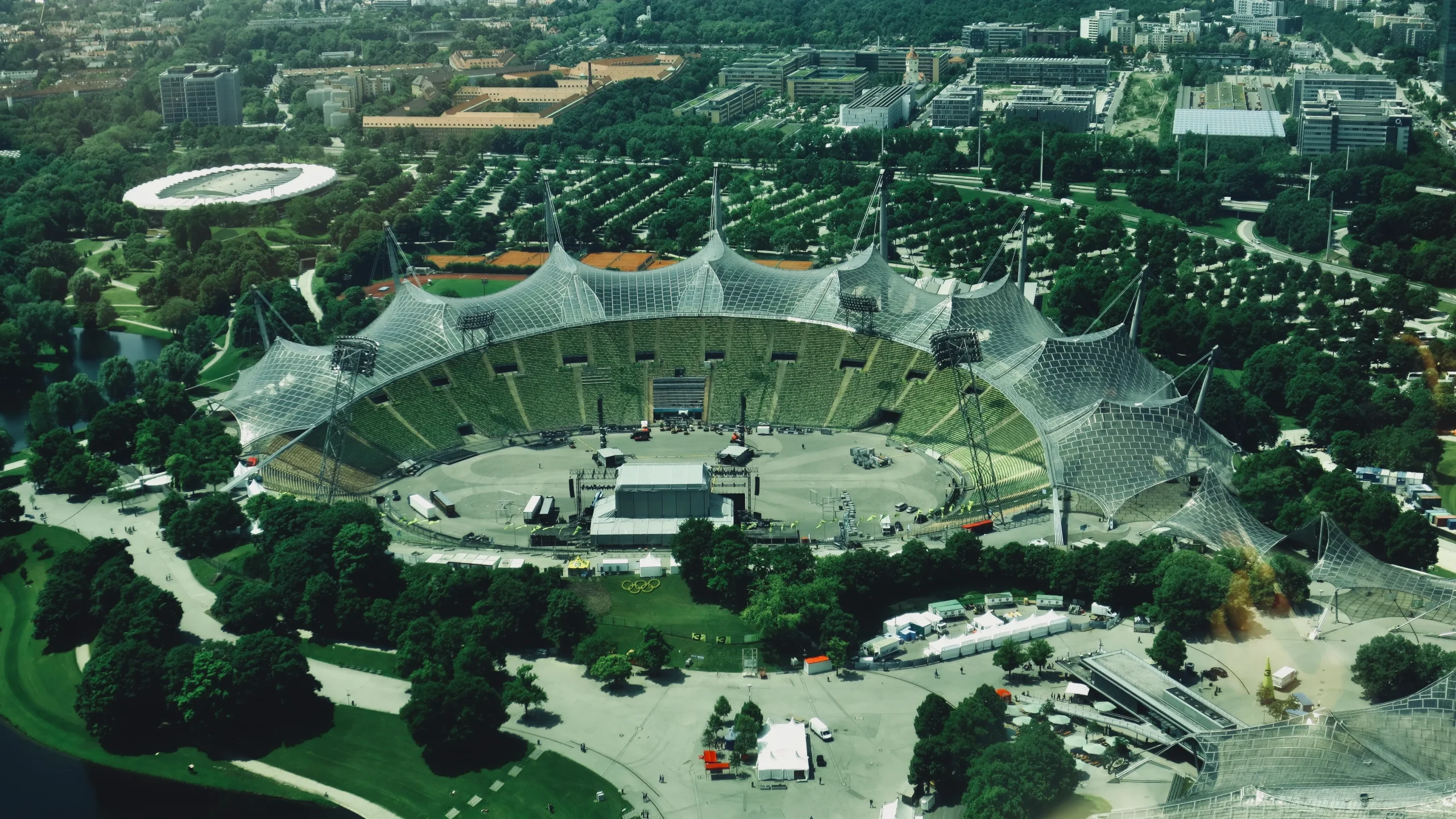
The Munich Olympic Stadium, designed by the visionary architects Günther Behnisch and Frei Otto for the 1972 Summer Olympics, stands as a masterpiece of lightness and motion. Its sweeping, tent-like canopy gracefully drapes across the landscape, echoing the flowing contours of the nearby Alps.
This ingenious tensegrity structure not only covers the arena’s expanse but also seems to blend architecture and nature into a fluid form that blends seamlessly, rather than dominating the surrounding landscape. The application of the system is not only feasible with extreme stability but also capable of creating beautiful architecture.
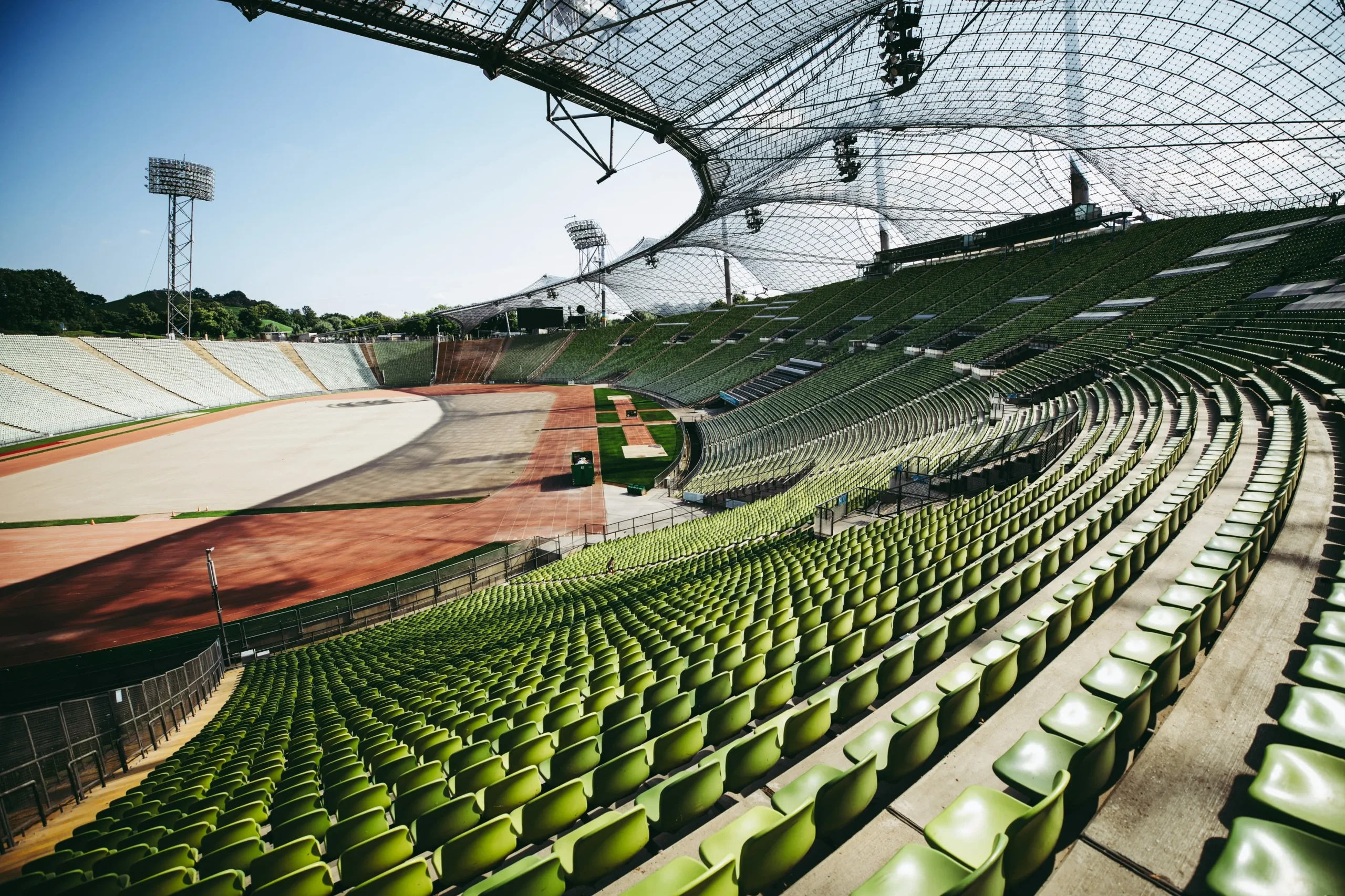
The stadium’s lightweight roof, an ingenious blend of cables and supports, elegantly balances tension to achieve structural harmony. The structure is a unique example of how an economy can be seamlessly integrated within architecture, not interfering with the architectural innovation.
This organic masterpiece seamlessly fuses economy with innovation, its flowing, minimal-surface form gracefully spanning the stadium, tracks, and pool. The primary structure is crafted from a metal frame with spaces covered by a PVC membrane, resulting in minimal weight and optimal stability. It stands as a timeless example of how engineering precision can beautifully merge with architecture.
2. Montreal Biosphere, Canada
Architect: Buckminster Fuller
Location: Canada, North America
Typology: Cultural, Museum
Completed: 1967
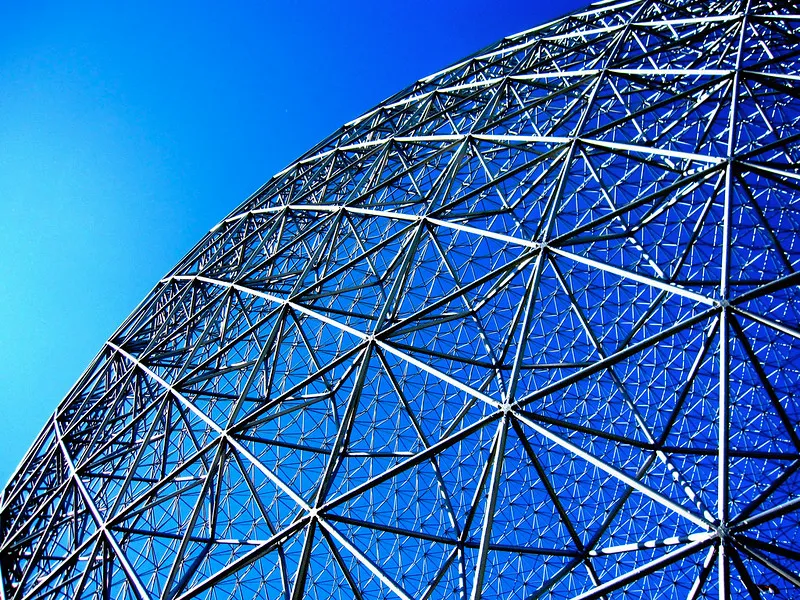
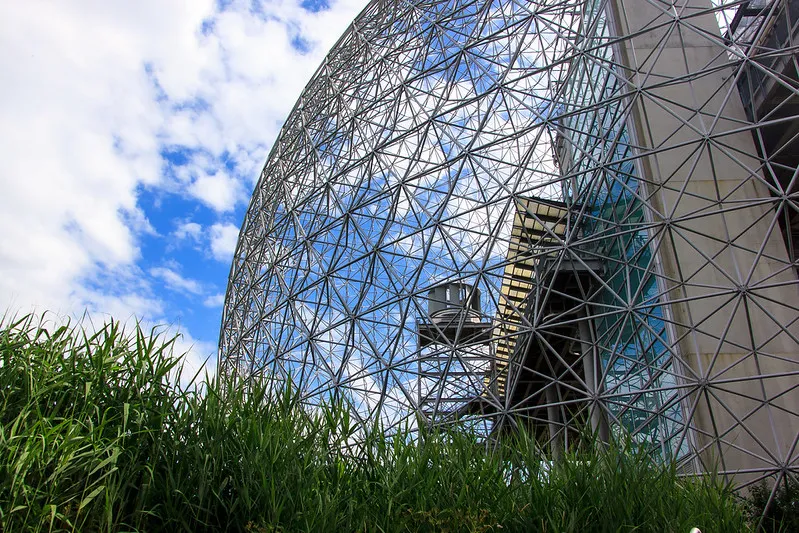
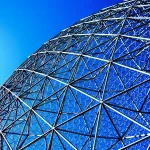
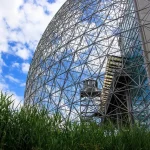
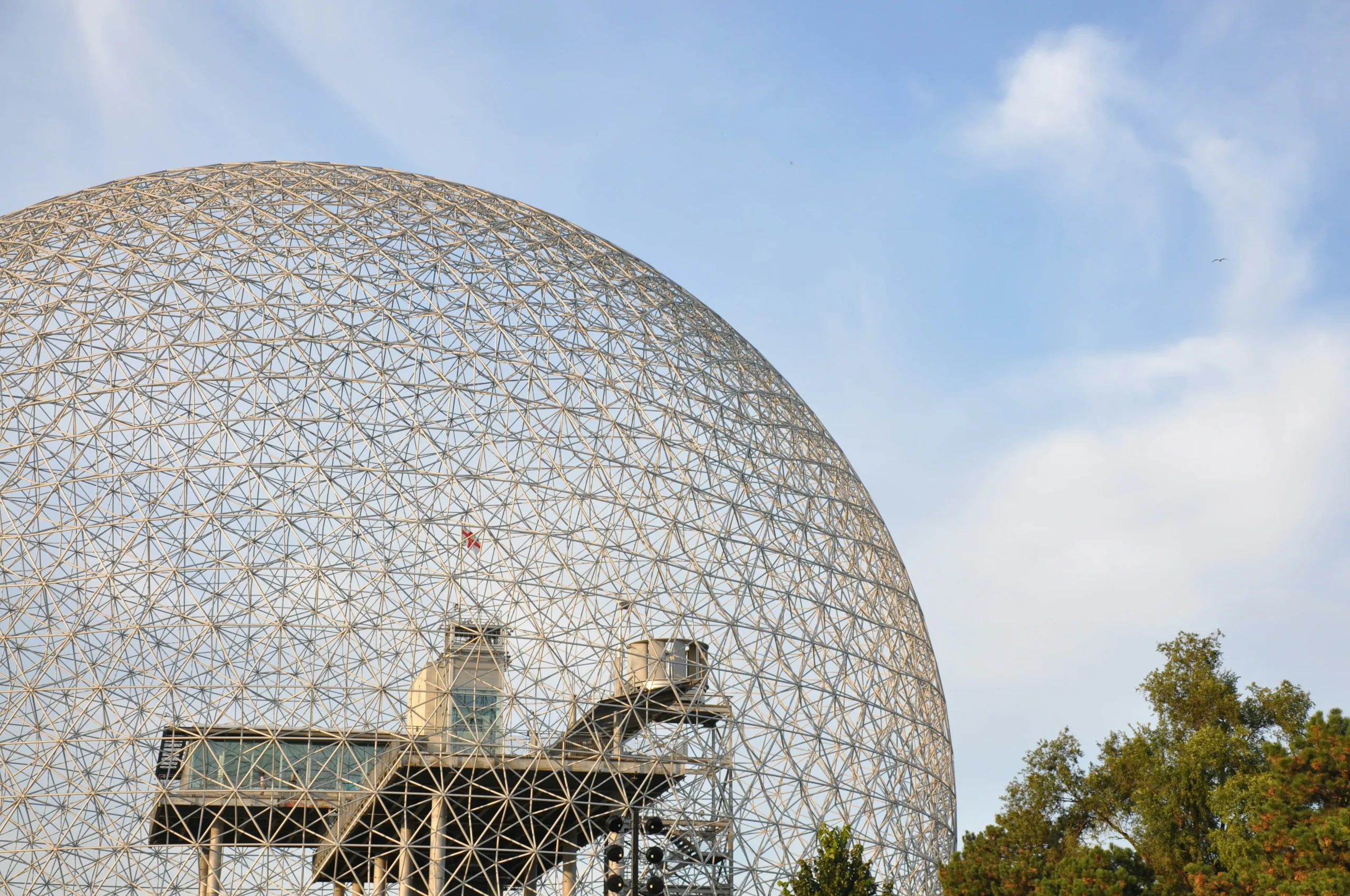
The Montreal Biosphere, designed by visionary architect Buckminster Fuller and completed in 1967, stands as a striking symbol of sustainable innovation and environmental consciousness. Situated in the Parc Jean-Drapeau on the Saint Helens Island, which was originally built as the United States pavilion for the 1967 World Fair.
Today, it serves as a museum dedicated to environmental awareness, featuring interactive exhibits that explore the delicate balance of our planet’s ecosystems. The geodesic dome is one of the most renowned cultural landmarks and one of the popular tourist destinations. The structure’s design was inspired by Fuller’s belief in achieving maximum spatial efficiency with minimal material utilization.
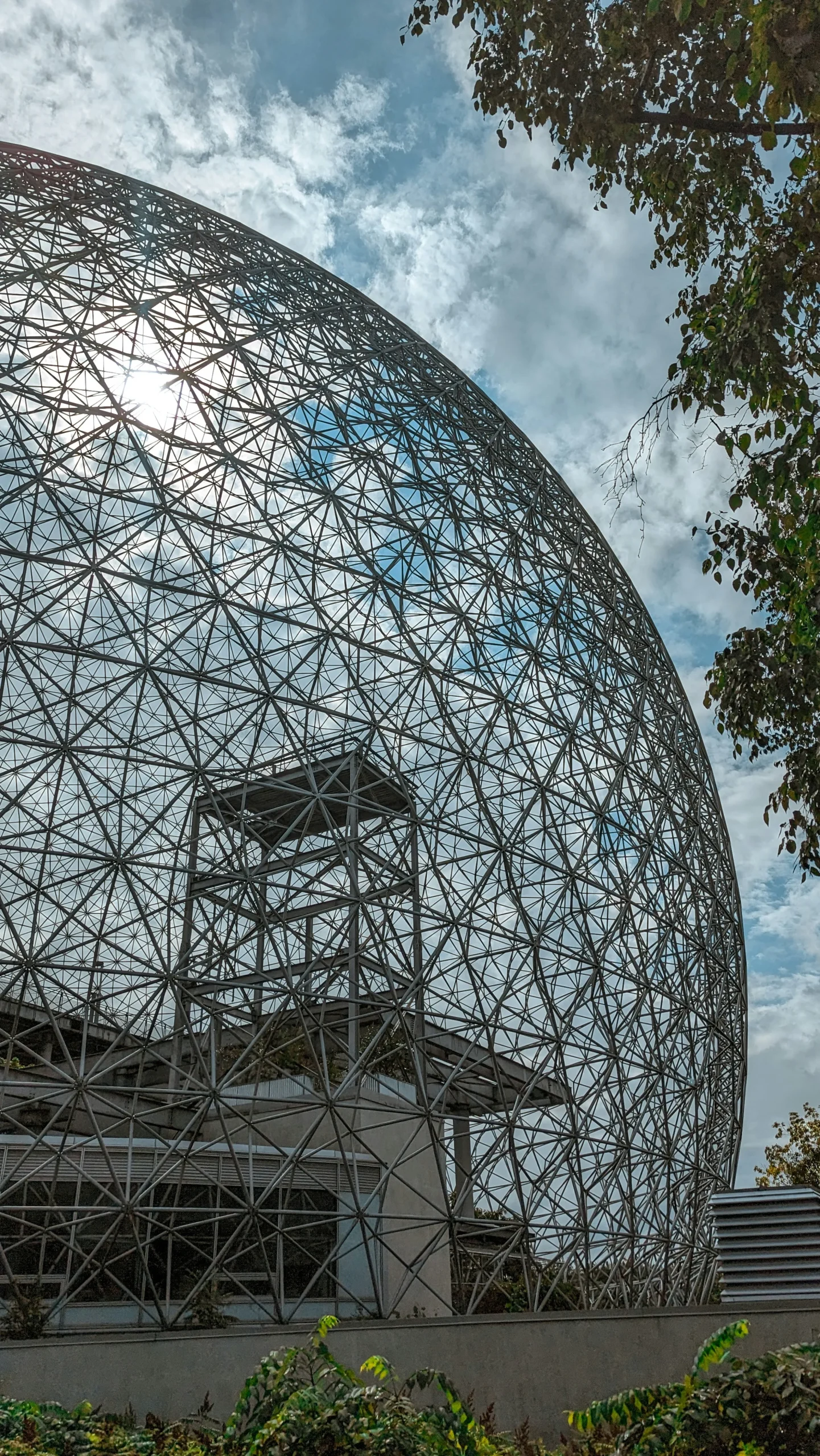
The tensegrity dome structure, composed of hundreds of interconnected aluminum triangular components, embodies stability and lightweight design in visually stunning architecture. Buckminster Fuller viewed the triangle as the perfect geometric form for the tensegrity structure, which helps create an even force distribution by achieving ‘Synergetic Geometry.’ This innovative construction approach gave rise to the self-supporting geodesic dome, a lightweight yet stable structure showcasing sustainability through minimal material utilization. Fuller’s visionary design remains a timeless inspiration, redefining minimalist and eco-conscious architecture.
3. Needle Tower
Architect: Kenneth Snelson (Artist)
Location: Washington, DC, United States
Typology: Tower
Completed: 1968
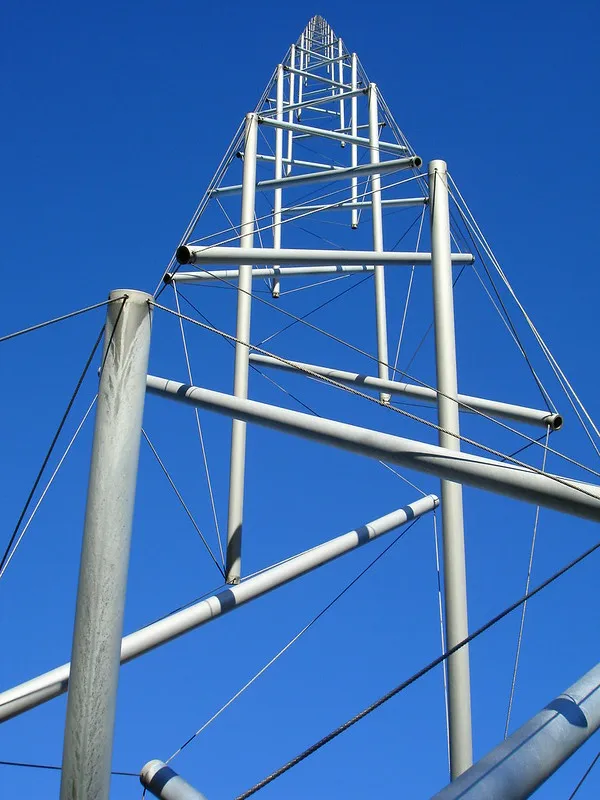
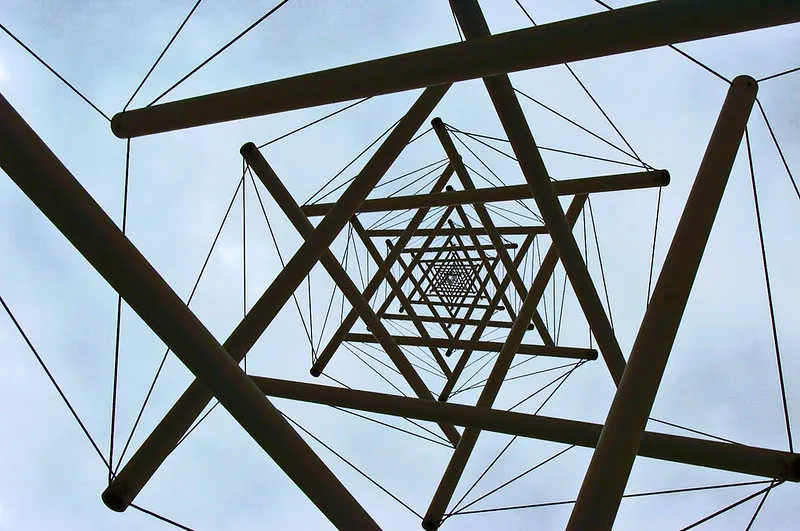
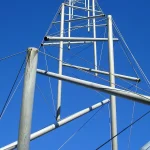
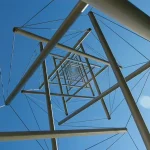
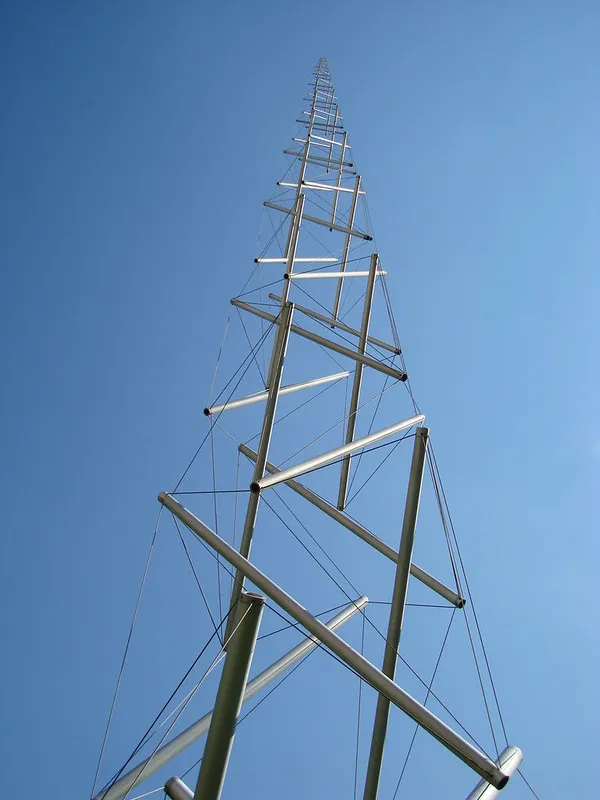
The Needle Tower, designed by visionary artist Kenneth Snelson for the Hirshhorn Museum and Sculpture Garden in Washington, D.C., stands as a striking symbol of tensegrity design. It is one of the most iconic examples of tensegrity structures designed by Snelson. Influenced by Buckminster Fuller, Snelson skillfully balanced tension and compression through a network of aluminum and stainless-steel elements. Soaring 26.5 meters high, the tower’s elegant tapering form appears weightless and is an abstract form that fuses art, geometry, and engineering precision.
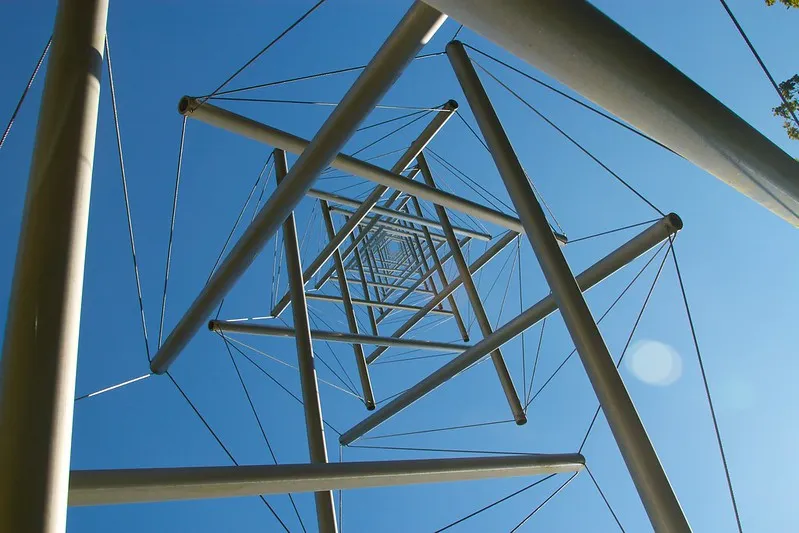
The structure is composed of aluminum tubes acting in compression that are held together in tension by the stainless-steel cables at the end of each tube. The characteristic feature of the tower is that when one perceives it from the middle, it appears as a six-pointed Star of David, whose steel cables disappear from afar. The rods have been arranged in a helical pattern while supporting the tower by a single cable anchored to the ground. Along with the ground-level support, the cable is also attached to the top of the tower, which helps keep the tower upright. The form and structure of the tower enabled it to withstand high wind forces and severe weather conditions.
4. Underwood Pavilion by students of Ball State University in Muncie, United States

Architect: Students and Professors from Ball State University
Location: Muncie, United States
Typology: Temporary Installation
Completed: 2014
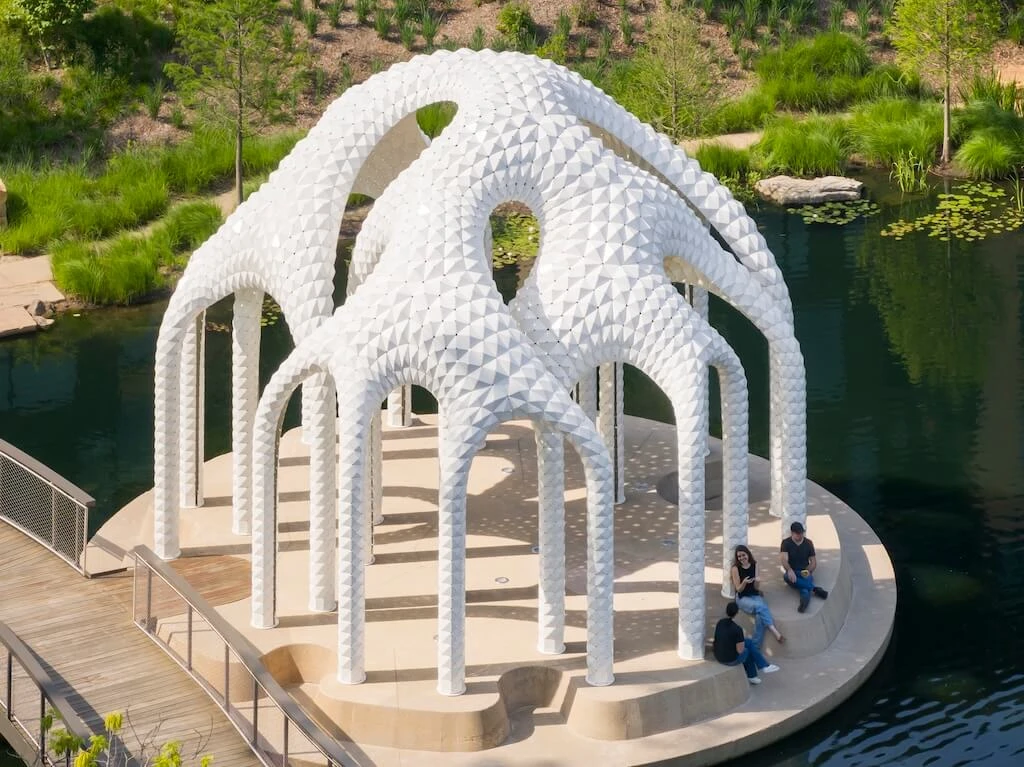
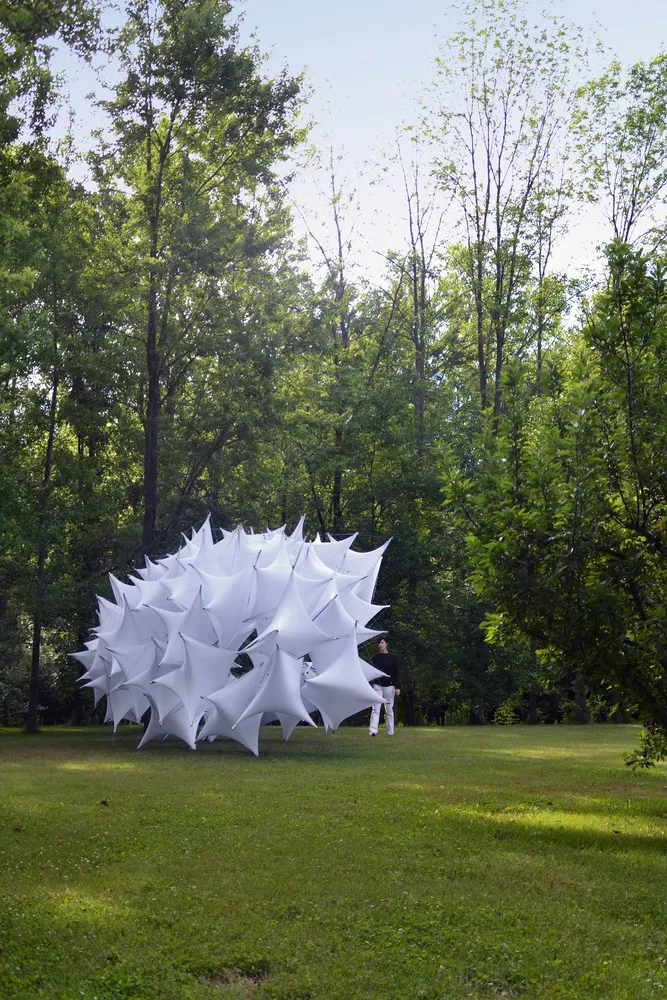
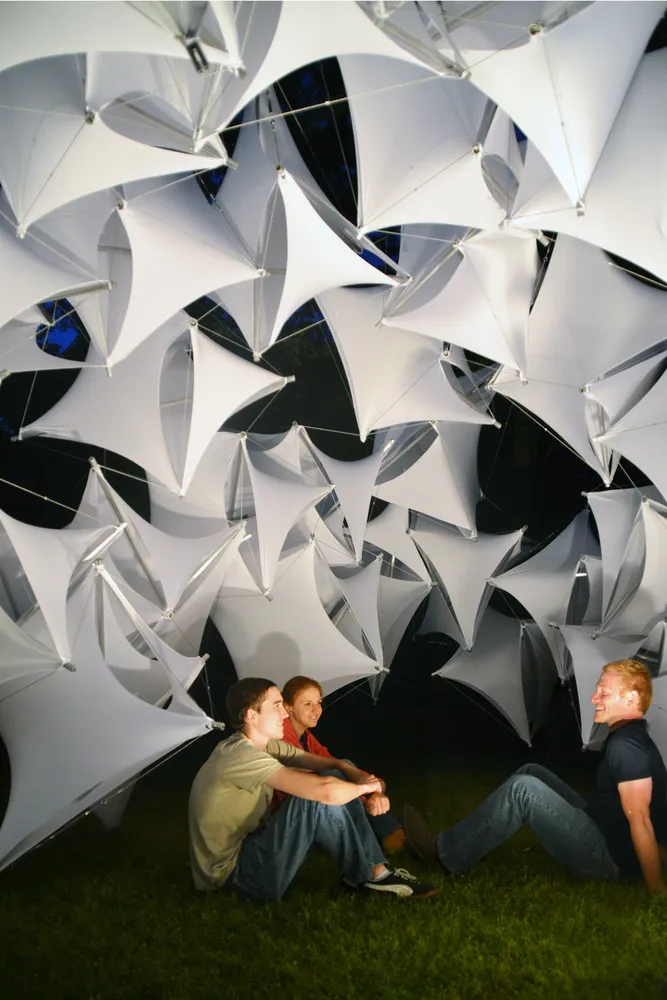
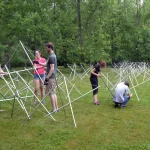
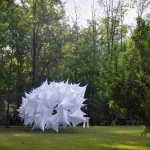
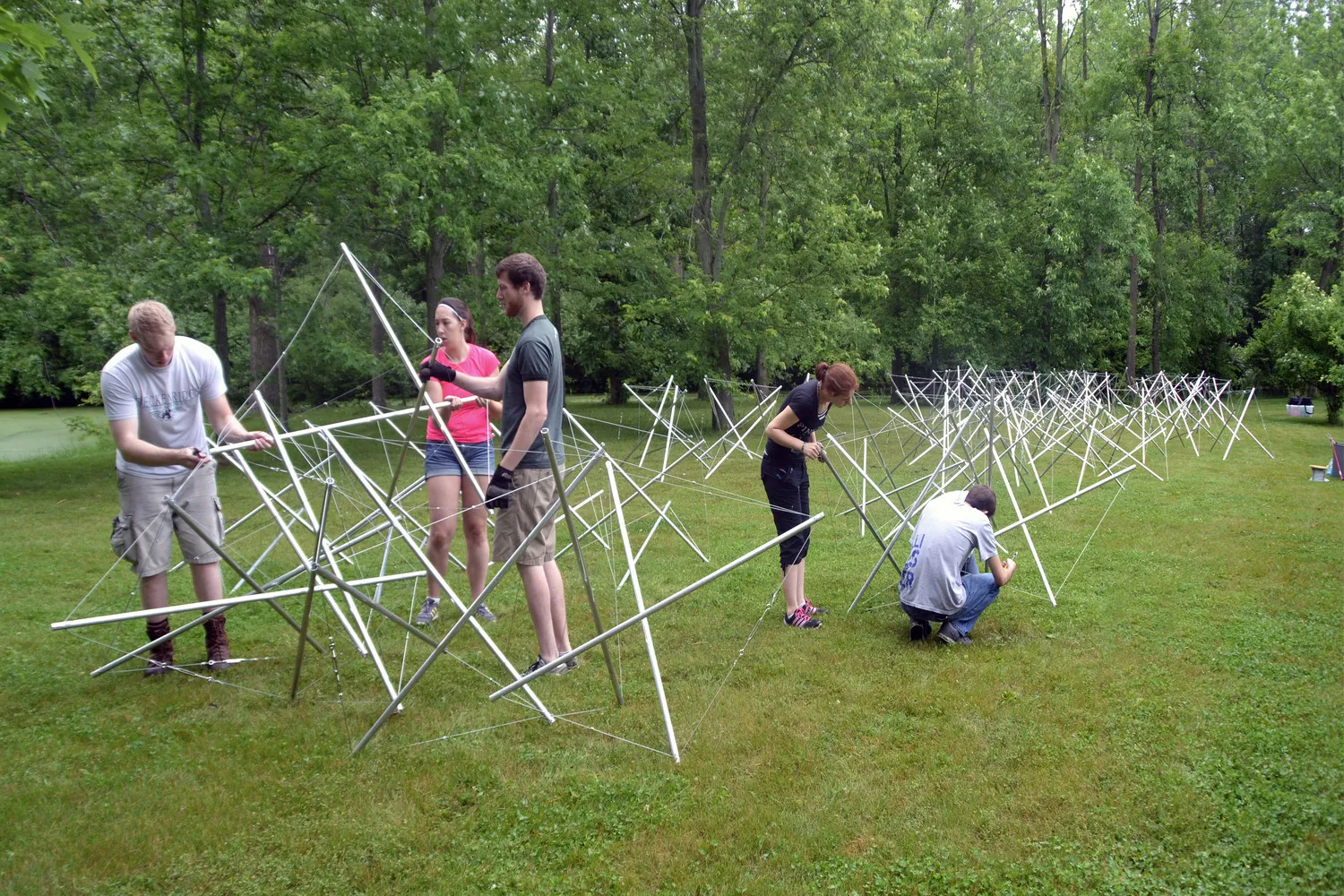
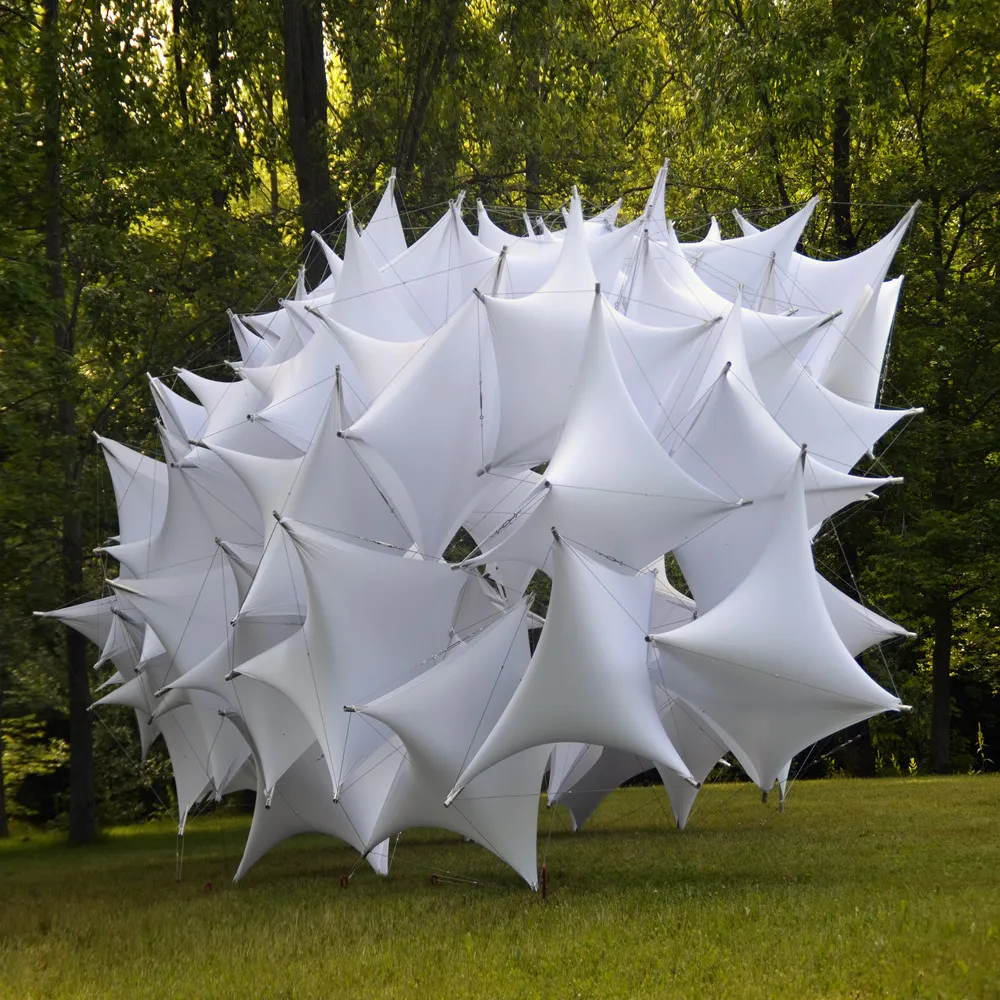
A group of architecture students from Ball State University, together with professors Gernot Riether and Andrew Wit, came together to transform the city’s local art fair into the city’s new destination. The Underwood Pavilion is a parametric tensegrity structure designed by 56 uniquely shaped modules, providing visitors with refuge from the sun and surrounding landscape views. The temporary lightweight structure of the pavilion takes advantage of the self-sustainable form of the tensegrity system. The pavilion is a perfect example of architecture and engineering, where tensegrity systems have been parametrized to adapt to the site and its context.

The pavilion is composed of 56 lightweight tensegrity modules crafted from Elastan, an eco-friendly polymer fabric. Each module evolves from a 3-strut tensegrity unit, with different variations achieved by adjusting the distance and scale between its upper and lower faces. These subtle shifts create dynamic rotations, giving the structure its fluid, twisting rhythm. Designed through advanced parametric tools like Rhino and Kangaroo, with every module creating a lightweight structure.
5. Kurilpa Bridge, Australia
Architect: Cox Rayner Architects with Arup
Location: Brisbane, Australia
Typology: Pedestrian Bridge
Completed: 2009
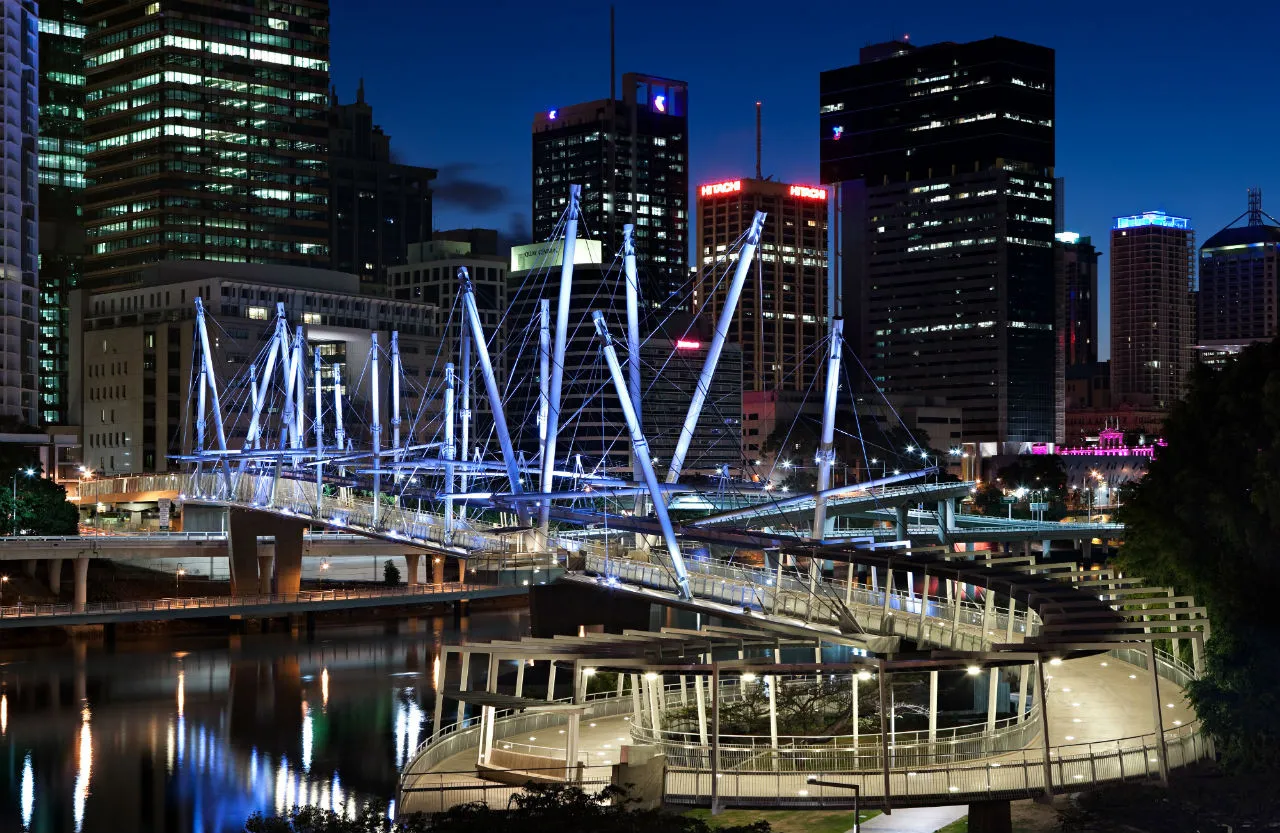
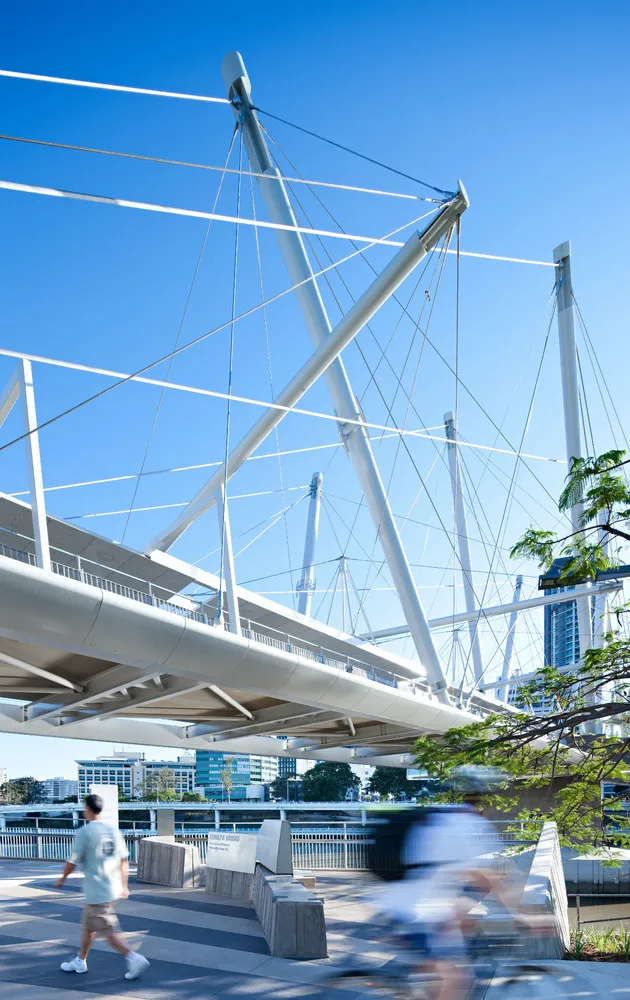
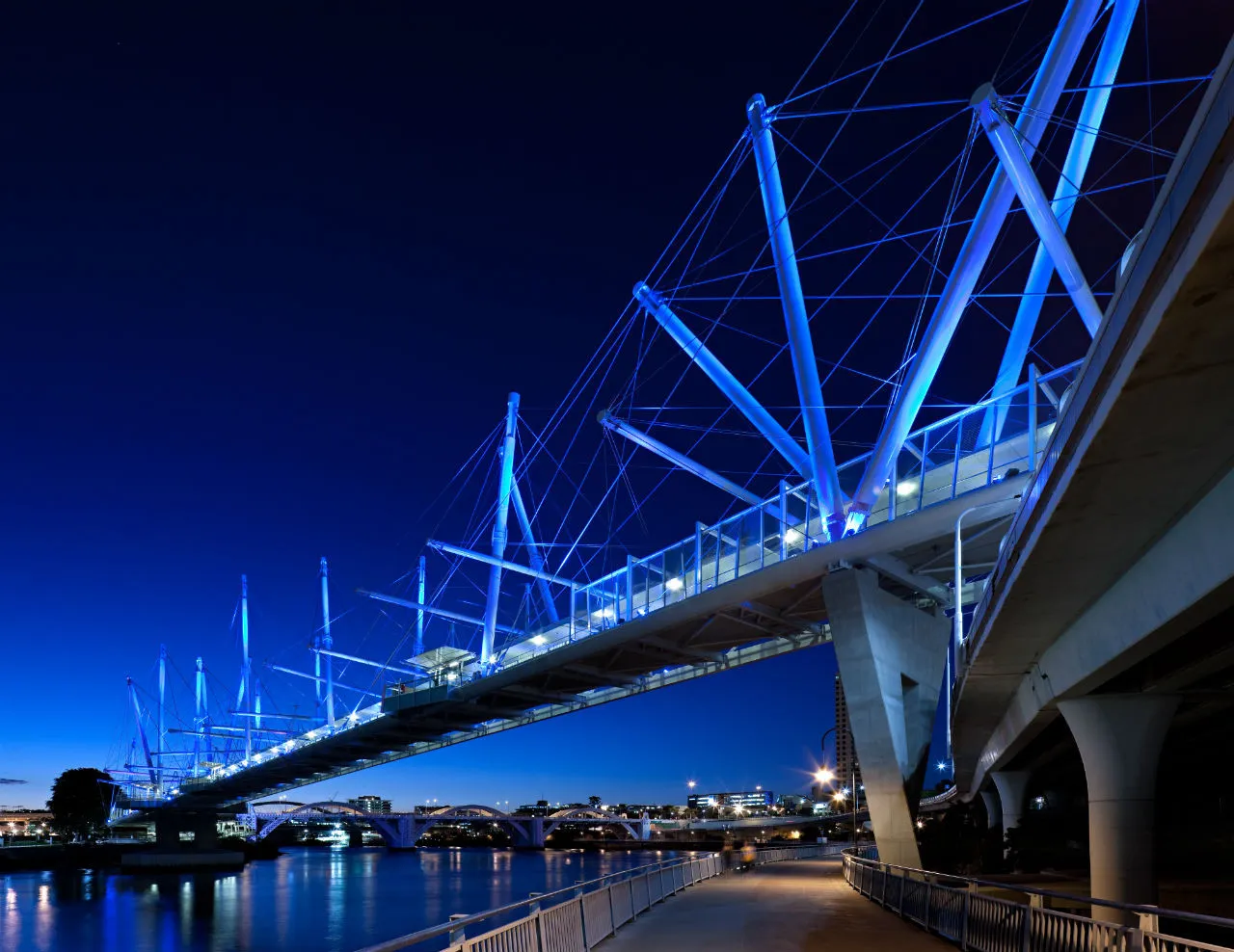
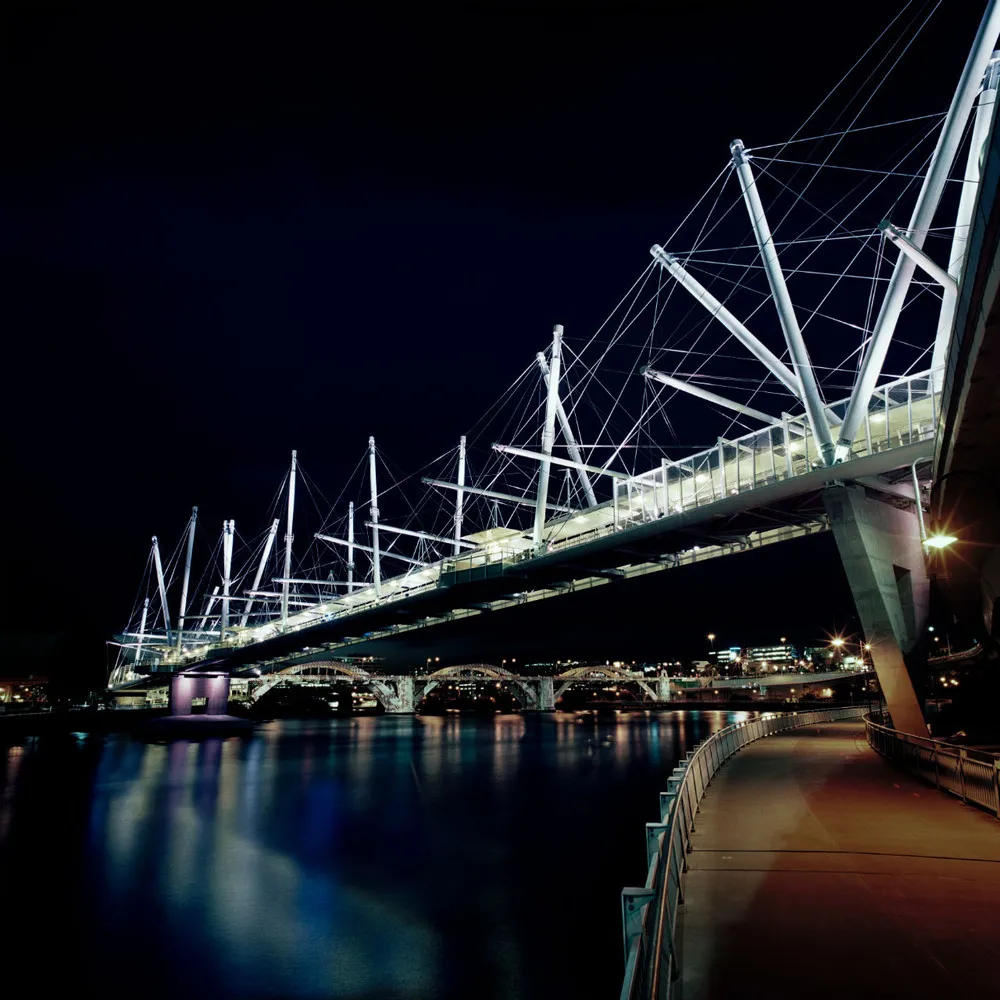
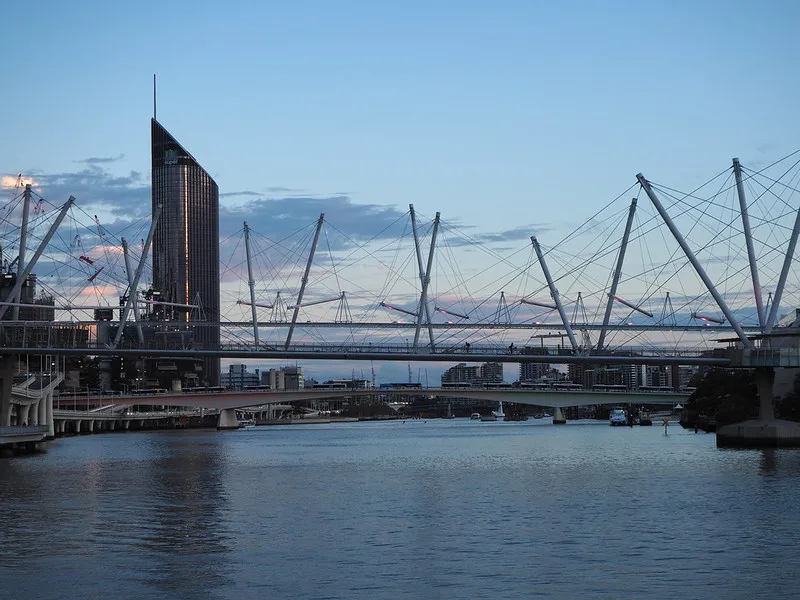
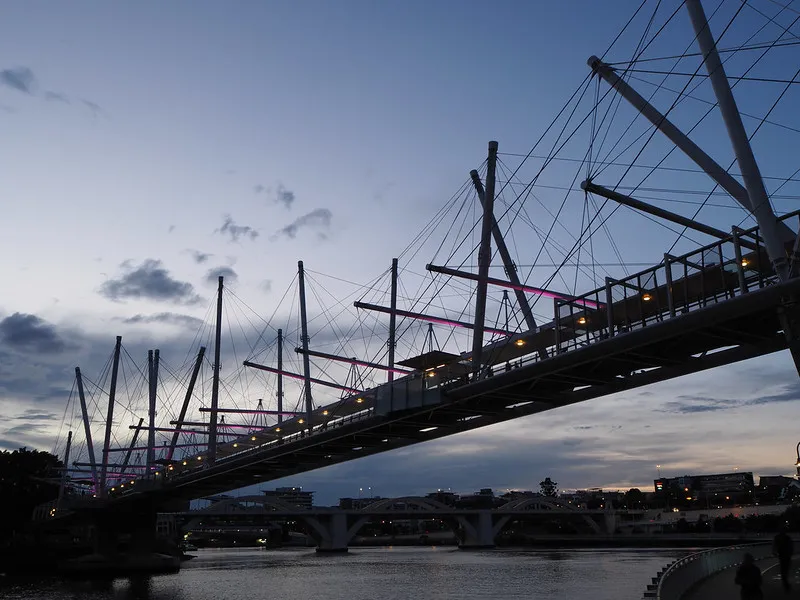
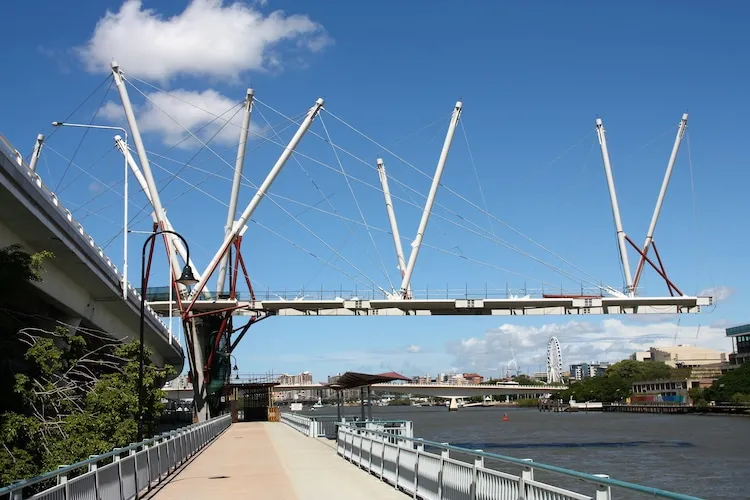
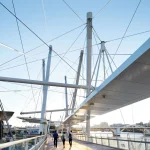
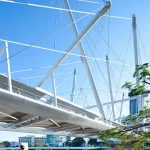
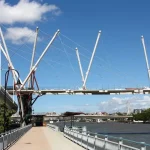
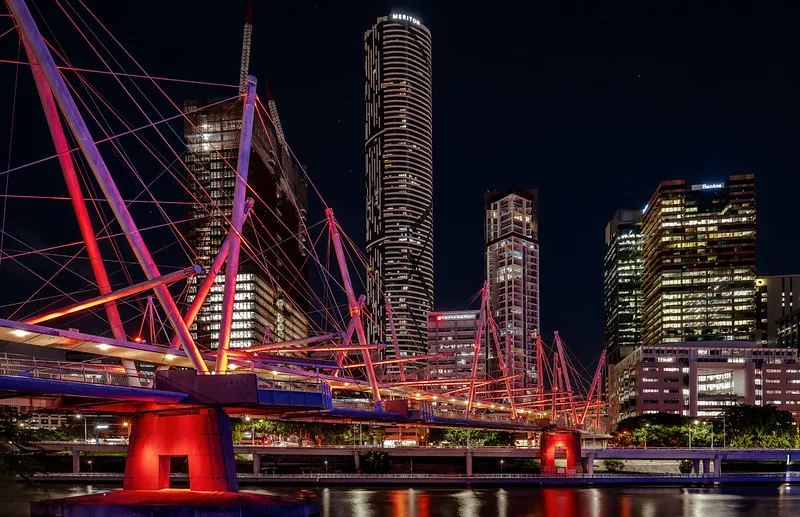
The Kurilpa Bridge, once called the “Tank Street Bridge,” gracefully links Kurilpa Point with Brisbane’s central business district. Completed in 2009 and designed by Cox Rayner Architects in collaboration with Arup Engineers, the 1,500-foot pedestrian and cycling bridge stands as one of the world’s largest hybrid tensegrity bridges. The bridge is a pathway for pedestrians and cyclists, and also serves as a vital link between the central business district and the cultural precinct. The structure has become a striking architectural masterpiece in Brisbane, redefining urban connectivity with unique architecture.
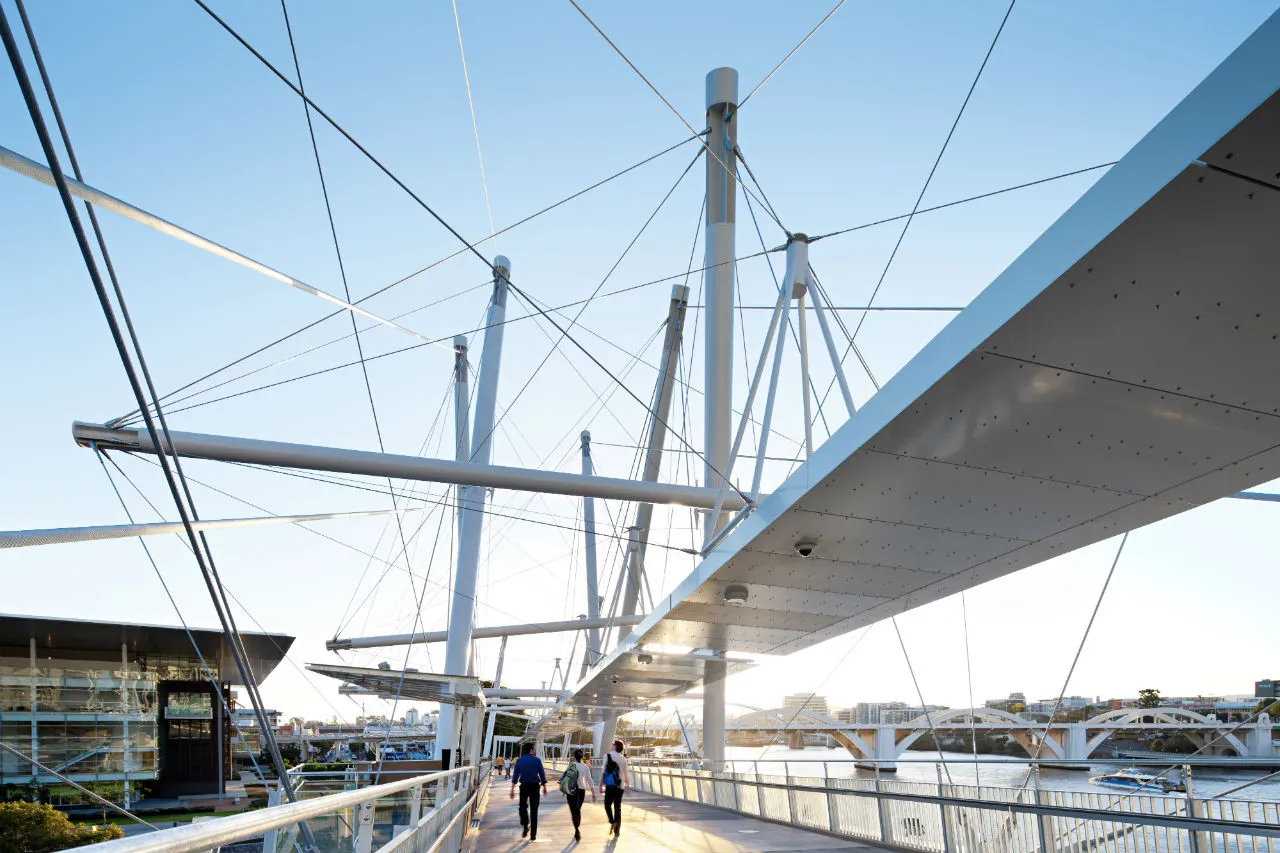
The bridge showcases a stunning balance of aluminum masts and steel cables, forming a stable and elegant tensegrity structure, showcasing structural innovation. Inspired by Richard Buckminster Fuller’s tensegrity principles, its horizontal spars are supported by a cable-stay system, creating a dynamic yet stable design. Beyond its engineering brilliance, the bridge enriches Brisbane’s urban landscape with viewing decks, rest areas, and an all-weather canopy that invite public interaction.
6. Denver International Airport, United States

Architect: Fentress Architects
Location: Denver, United States
Typology: Airport
Completed: 1995
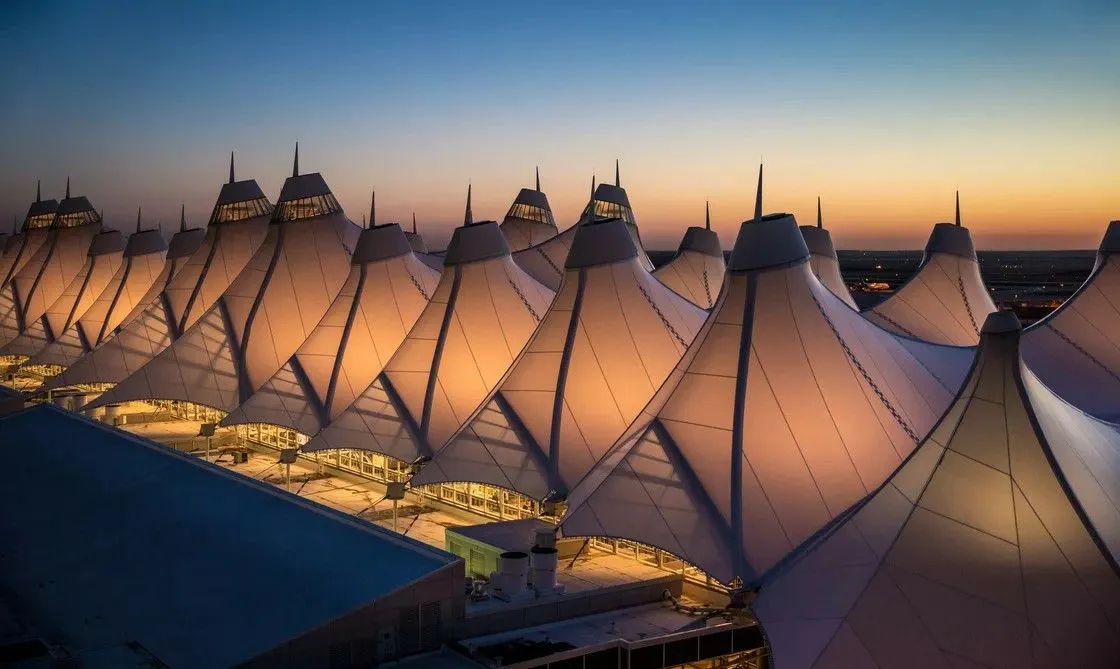
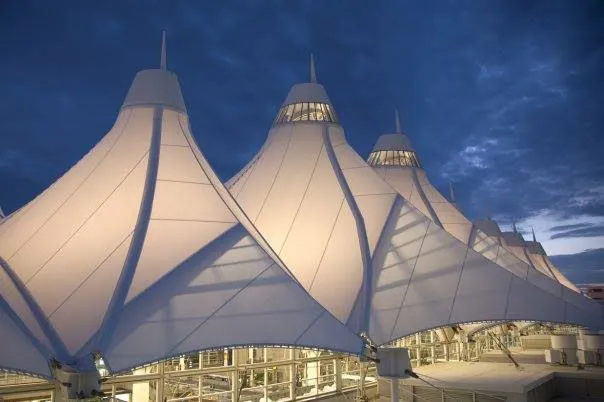
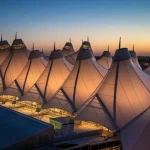
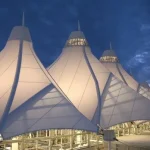
The Denver International Airport stands as an architectural icon, celebrated for its soaring, wave-like tensegrity roof system that defines Colorado’s skyline. The passenger terminal is more than just a travel hub; it also acts as a distinctive landmark for Colorado and the Western US. The airport’s striking fiberglass roof forms peaks gracefully, echoing the snow-capped Rocky Mountains. Spanning roughly 300 by 1,000 feet, the terminal’s undulating roof is supported by an ingenious catenary steel cable system, showcasing a seamless blend of engineering innovation and sculptural beauty.
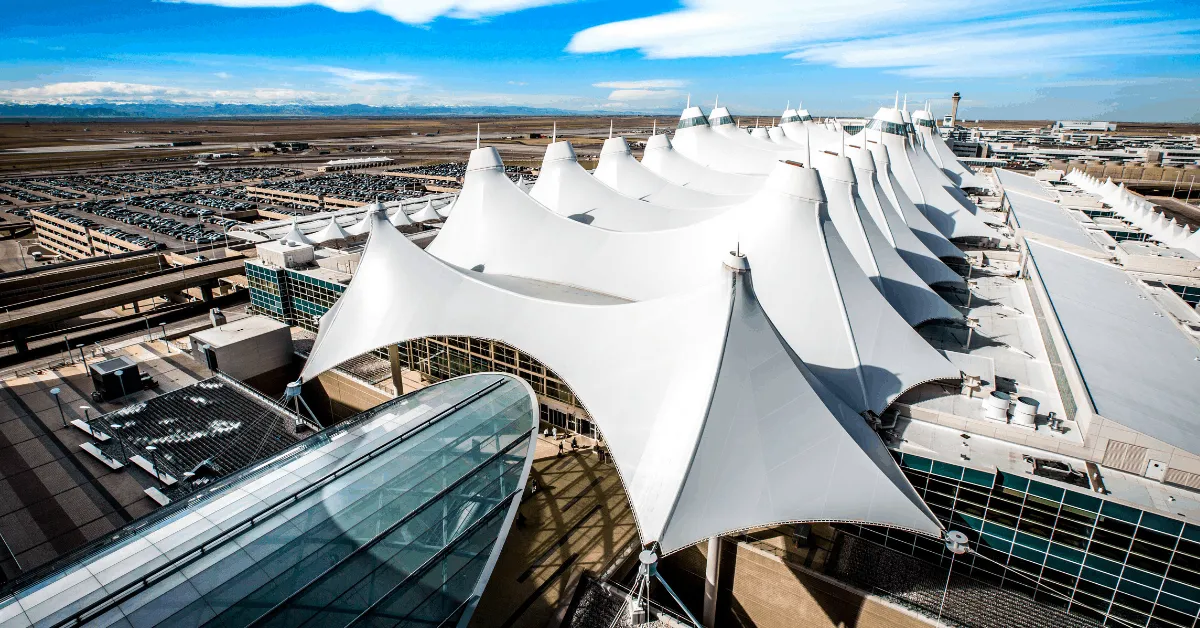
The architecture of the airport was recognized as a paradigm shift in the way architects and designers perceive airport design. The Teflon-coated tensile membrane utilizing tensegrity systems helped decrease cost and time, and set the stage for memorable form. The roof rises 130 to 150 feet high, and the translucent form illuminates the interiors with daylight, flooding the terminal interiors with natural sunlight. The catenary system of the form supports the peaks with numerous wires, creating a stable form with tension and compression. The fabric roof has been punctured with glass skylights, while the triangular clerestory windows are on the east and west sides.