
For much of the last two decades, the role of the work environment has been continuously redefined.
What organizations expected from their offices twenty years ago differs a lot from what they expect today. At various stages, workplaces were designed to support productivity, attract talent, strengthen culture, improve teamwork, and enable new ways of working.
But then the rules started changing.
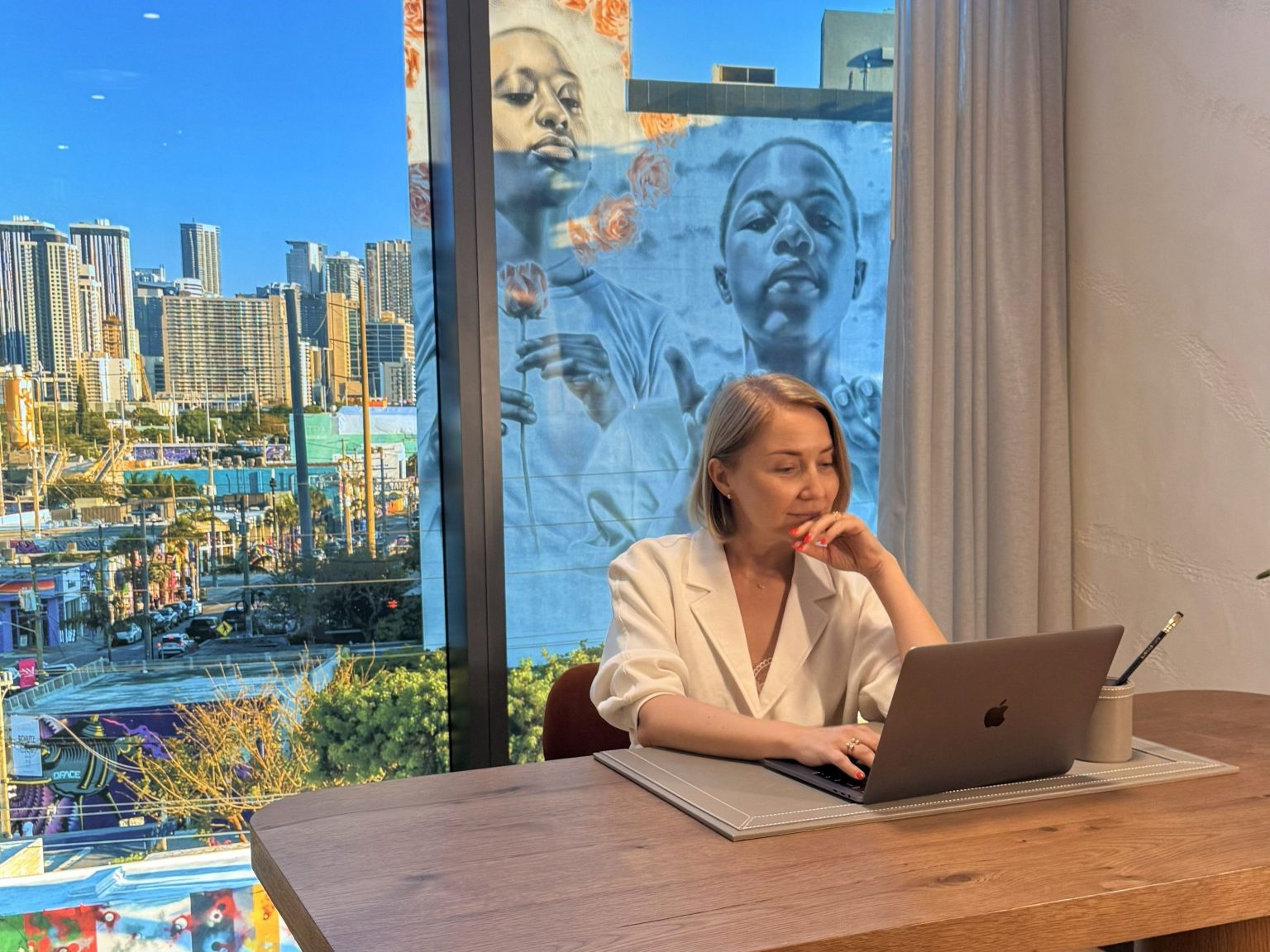
One of the biggest turning points came with the COVID-19 pandemic. Long-established assumptions about where work happens were suddenly challenged, and organizations around the world began adapting to hybrid models and new ways of interaction. For workplace strategist Olena Samoliuk, this period marked a pivotal shift in how organizations approached the relationship between people, space, and business operations.
For a time, it seemed that hybrid work would become the defining organizational challenge of the decade.
Just as companies were adapting to hybrid work, a different set of challenges began to emerge. Growing geopolitical uncertainty, infrastructure disruptions, and rapidly changing business conditions raised a different set of questions, ones that extended far beyond where people work. These evolving realities reinforced Olena Samoliuk’s focus on creating workplaces that could adapt to uncertainty while continuing to support organizational resilience and continuity. Organizations increasingly found themselves asking how to maintain effective office operations in less predictable conditions.
It was this question that gradually became central to Olena Samoliuk’s professional focus.
How Olena Samoliuk Built Her Workplace Strategy Expertise
With over 18 years of experience in spatial transformation and construction project management, Olena Samoliuk has worked with different multinational organizations in the technology, manufacturing, engineering, consumer goods, and professional services sectors. Her portfolio includes projects for Microsoft, Bosch, Henkel, Dentons, Uber, WIX, and other international businesses, whose office space ranges from a few thousand to hundreds of thousands of square feet, with a combined value exceeding $60 million, and whose workspaces employ thousands of employees in different countries.
Over the course of her career, she has contributed to the transformation of more than 50 workplaces in Eastern and Western Europe, with much of her work taking place in Ukraine, where companies have faced an exceptional pace of change in recent years. Recently, her professional work has expanded to include projects in the United States, allowing her to compare workplace challenges across vastly different economic and cultural contexts.
Having begun her career in project management, her responsibilities expand significantly over the years, encompassing workplace strategy, stakeholder alignment, behavioral analysis, change management, and the integration of business objectives into the physical environment. This combination of strategic and operational experience gave her a unique understanding of how organizations interact with their workplaces and respond to change.
Across different markets and industries, Olena Samoliuk observed that workplace strategies became more sophisticated in supporting business growth, the employee experience, and new ways of working. Yet one question kept surfacing: what happens when the assumptions those workplaces were designed around suddenly change?
“For years, space strategy discussions have been focused on employee experience, collaboration, productivity, and efficient use of the office space,” says Olena Samoliuk. “Much less attention has been paid to the role that offices can play in helping organizational resilience in the face of sudden change.”
Colleagues and clients frequently began asking the same question: Is there a structured approach to adapting the office spaces to changing conditions?
Whether it was supporting fast growth, implementing hybrid work, optimizing space usage, or responding to operational disruptions, many organizations faced remarkably similar challenges despite utterly different circumstances. Over time, Olena Samoliuk has noticed that some approaches to adaptation have consistently proven more effective than others. Understanding what made these approaches successful eventually became the basis for her Workplace Adaptation Methodology.
Developing a Workplace Adaptation Methodology
The first version of the methodology emerged during the transition to hybrid work.
It was developed from the observation that workplace needs constantly change as business priorities evolve, workforce expectations shift, and organizations face new realities.
The framework is built around four areas that Olena Samoliuk considers essential for workplace adaptation:
• employee behavior and work experience
• spatial adaptability and flexibility
• operational continuity
• safety and organizational resilience
Over time, this approach led to a different way of thinking about office planning. Instead of asking how a workplace should function under ideal conditions, it encourages organizations to consider how the space can continue supporting people and business needs across a range of situations.
This methodology has subsequently been applied and refined in numerous workplace transformation projects implemented by Olena Samoliuk and her team in various organizational environments
Later, it was formalized and published as a peer-reviewed academic work on adapting office spaces to hybrid work models and changing conditions.
Its principles have been used to help organizations cope with changes in the workplace, transition to hybrid working conditions, and address evolving operational challenges.
Testing Adaptability in Practice
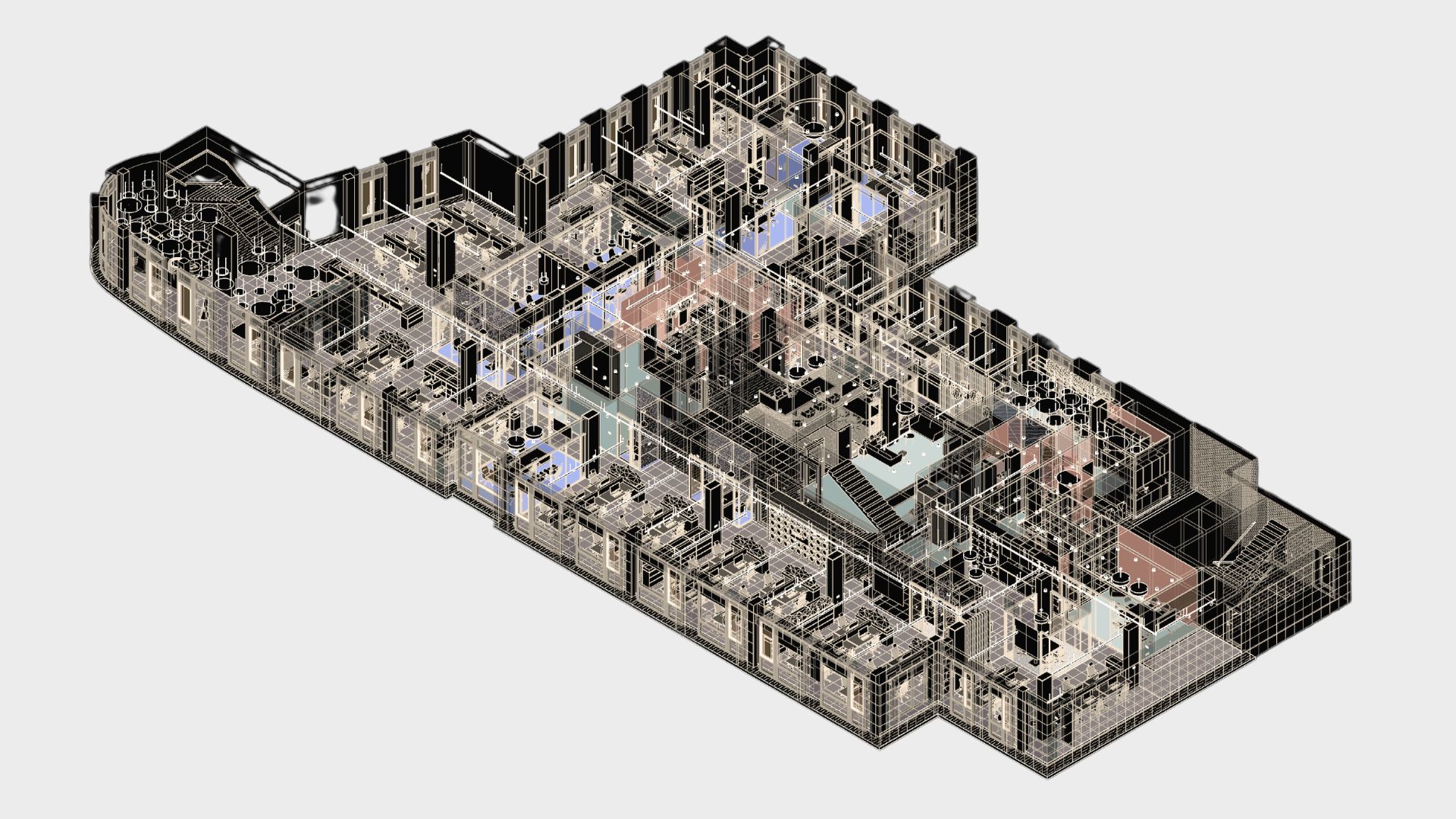
One of the most illustrative examples of this methodology application occurred within a Ukrainian network of club offices that has significantly expanded beyond the traditional role of the workspace.
Using behavioral analysis and scenario planning, office spaces were redesigned to better reflect how people actually use them. Flexible collaboration areas, quiet zones for focused work, modular meeting rooms, and adaptable workstations were introduced to support various activities throughout the day. As organizational needs changed, the spaces were further adapted to ensure reliable connectivity, backup infrastructure, equipped shelters, and access to essential resources during periods of disruption.
“What distinguishes Olena’s approach is her ability to go beyond simply designing a workspace and focus on how that space can support people and organizations during periods of change,” says Nataliia Didenko, founder of Tceh Office Space Club.
The project has demonstrated that the workspace can become both more actively used and more responsive to people’s needs. For Olena Samoliuk, this has confirmed the key principle of her methodology: workplace adaptability is not primarily a design task. The office is no longer just a workspace. It is increasingly becoming a source of stability, continuity, and support.
Beyond Hybrid Work
While hybrid work remains an important part of the workplace conversation, Olena Samoliuk believes it is no longer the only challenge businesses are trying to solve.
Working with international companies in Ukraine exposed Olena Samoliuk to a different set of questions. In an environment shaped by constant uncertainty, discussions about workplace flexibility often became secondary to more fundamental concerns: how to maintain business operations, support employees, and create conditions that allow organizations to continue functioning despite disruption.
In these circumstances, the role of the office expanded far beyond collaboration and productivity. It became part of a broader support system for people and organizations, helping provide stability, well-being, continuity, and a sense of security and psychological support when conditions around them changed continuously.
“For me, one of the most important lessons has been that the most valuable workplaces are not necessarily the most designed, efficient, or technologically advanced. They are the ones that remain relevant and supportive as external circumstances continue to change,” says Olena Samoliuk.
This conviction continues to shape both her professional work and the ongoing development of her workplace adaptation methodology.
Looking Ahead
Looking back with hindsight, the researcher sees her methodology as the result of years spent observing how organizations respond to change.
Although circumstances may differ from one country to another, the core challenge remains remarkably similar: creating an office ecosystem that continues supporting people and business goals when conditions become less predictable.
As workplace expectations continue to change, she believes that adaptability will become one of the most valuable qualities any office space can possess.
Perhaps that is why Olena Samoliuk’s current work in the United States now centers on human-centered spatial projects through her practice, Sensearium. For her, the next step is not just to design well-designed places people use, but to create environments that support how people live, work, connect, and respond to change.