

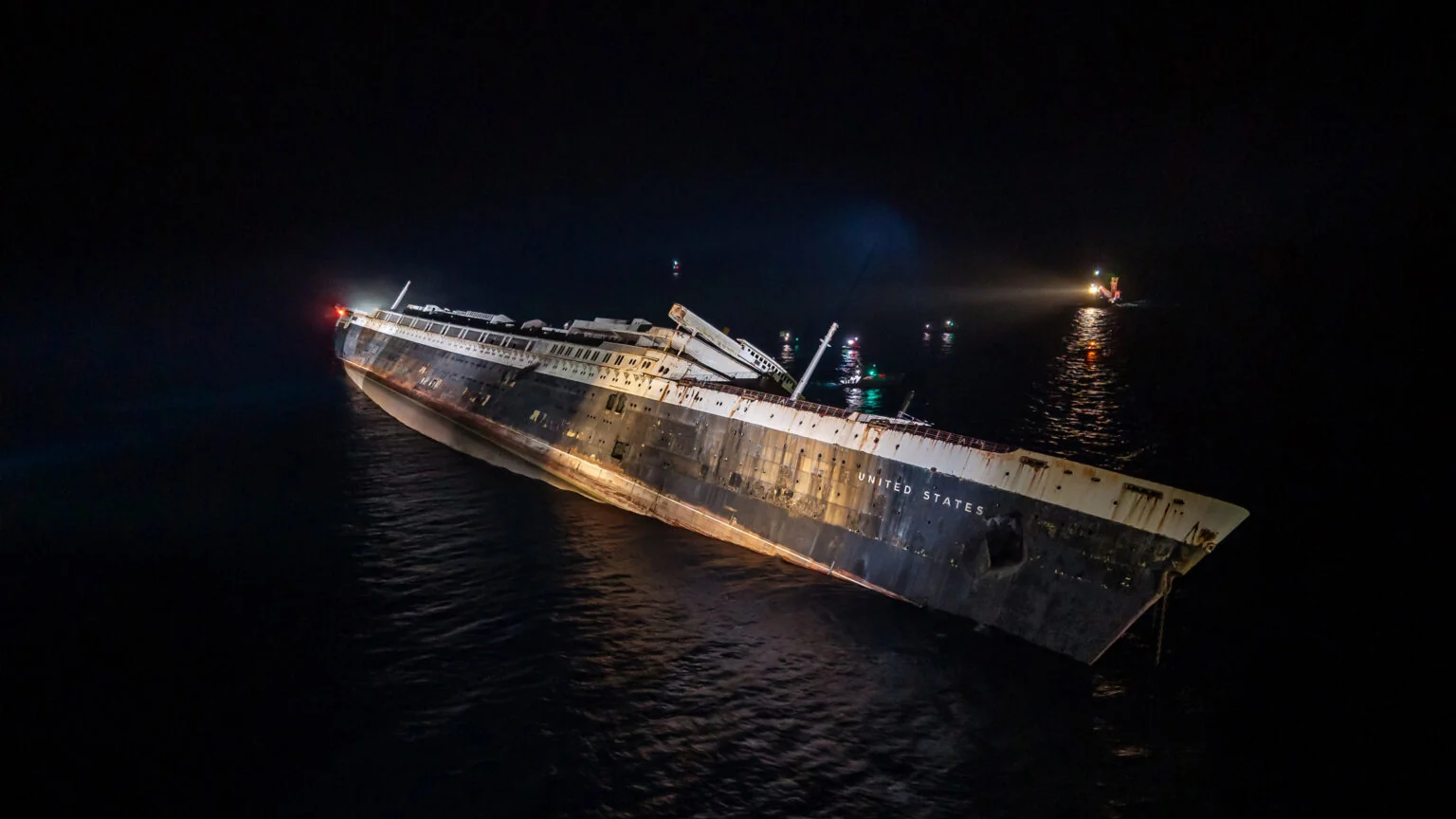
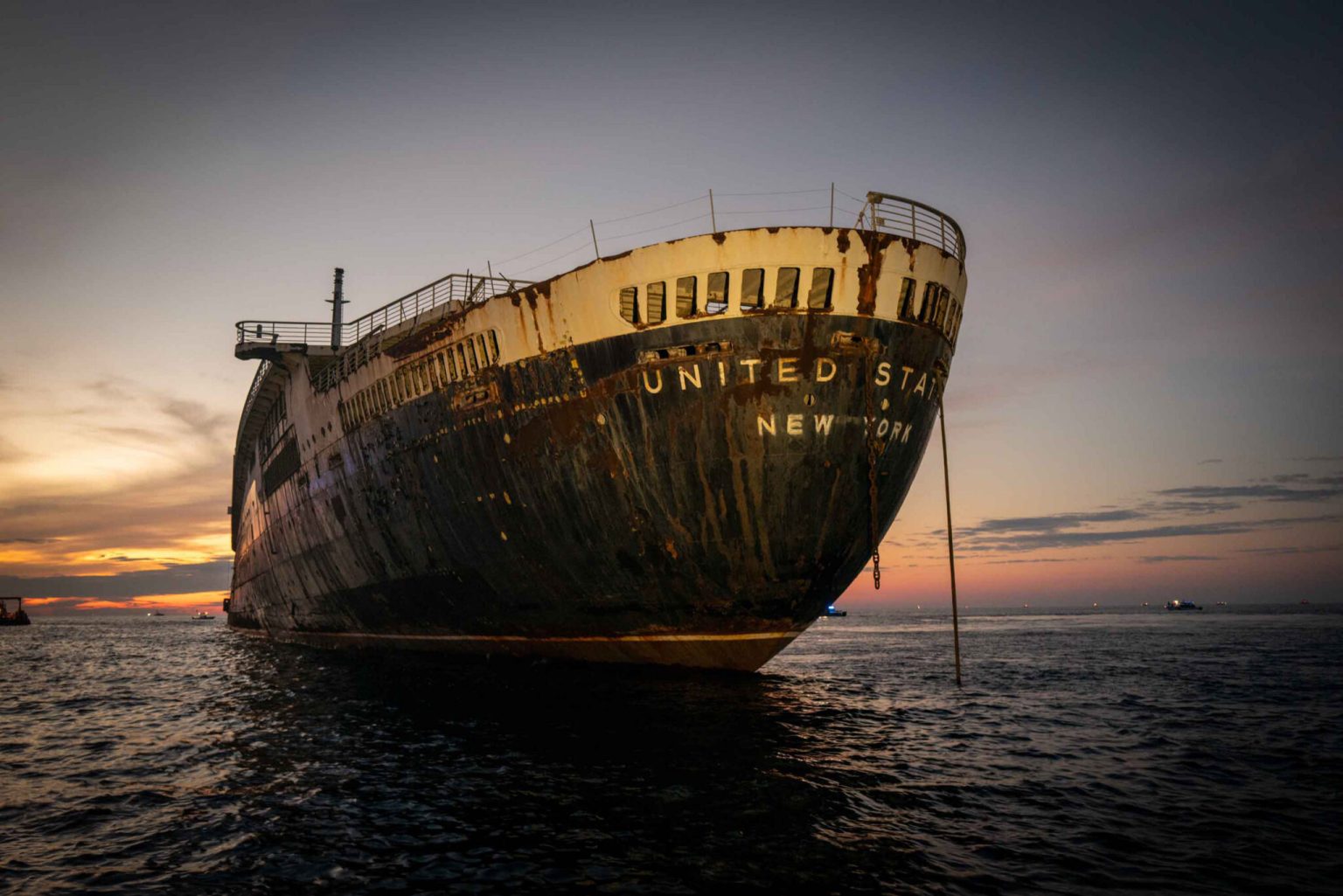


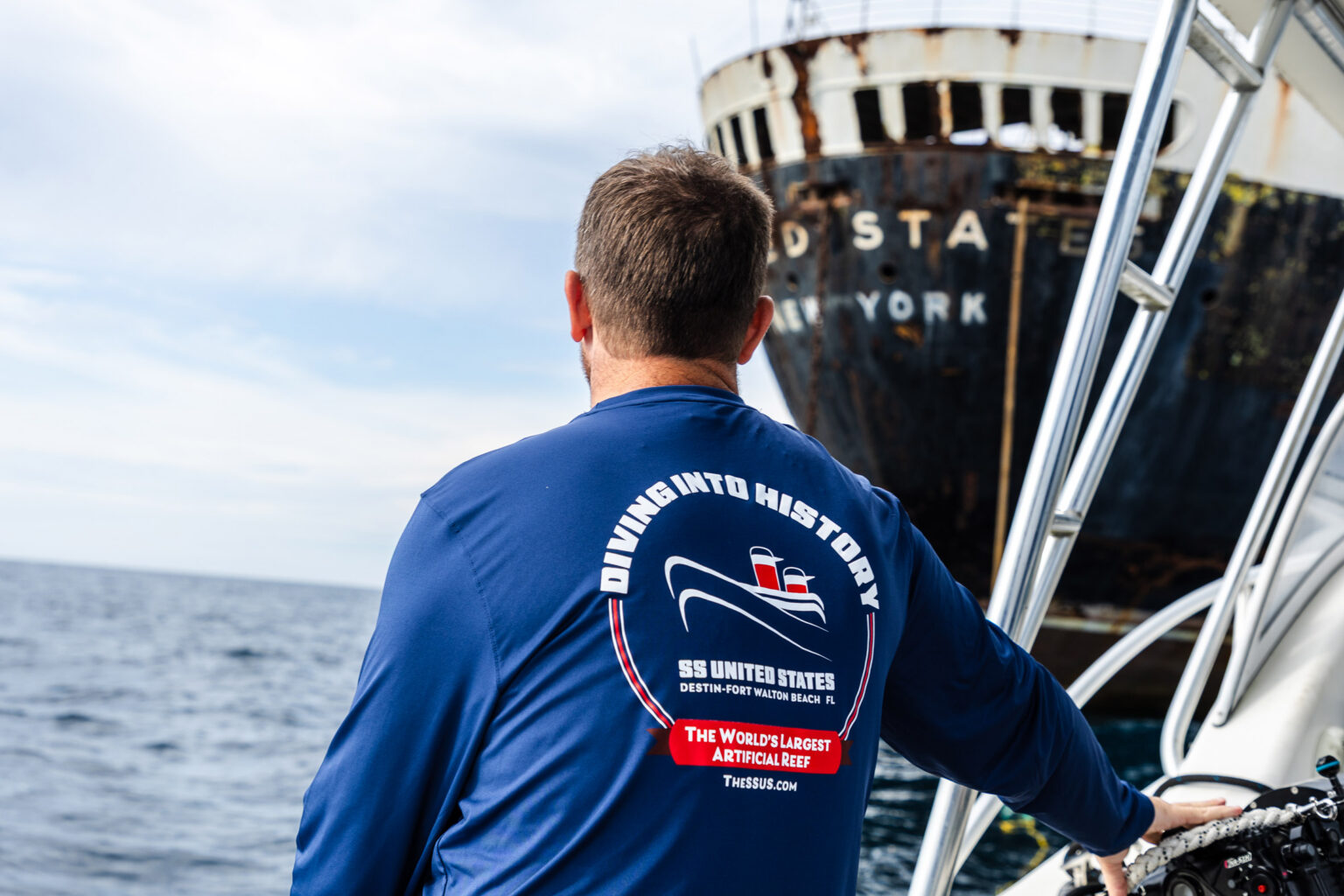
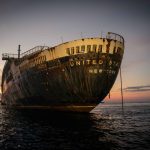
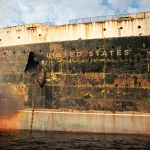
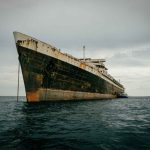
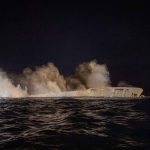
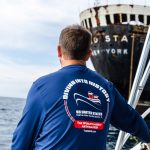
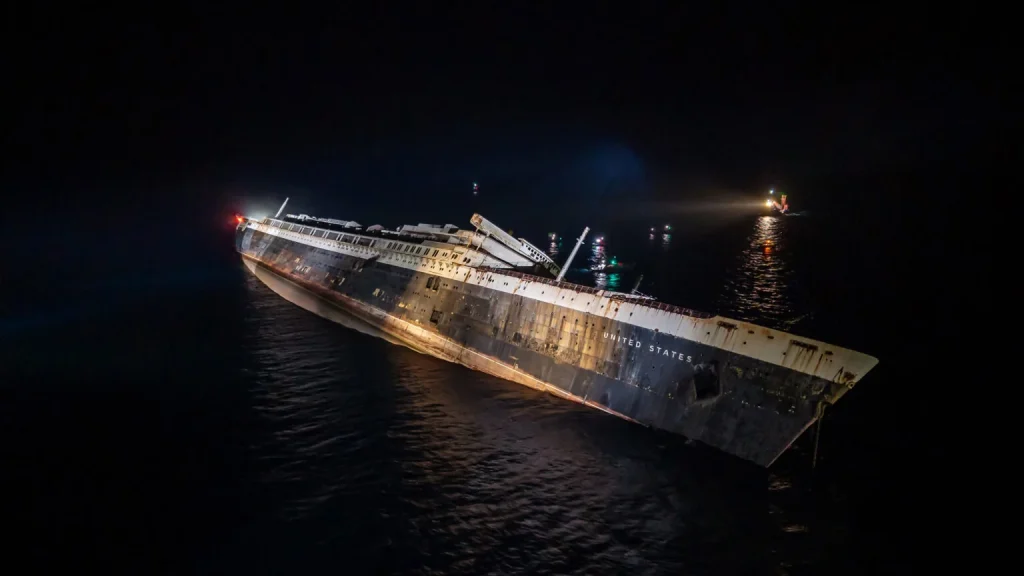
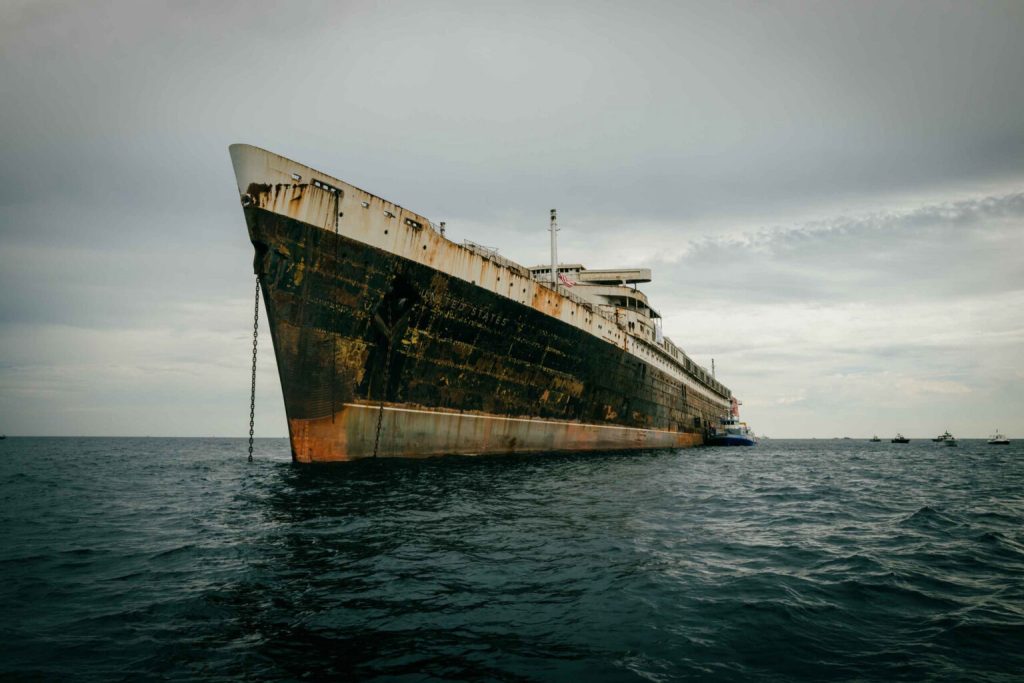
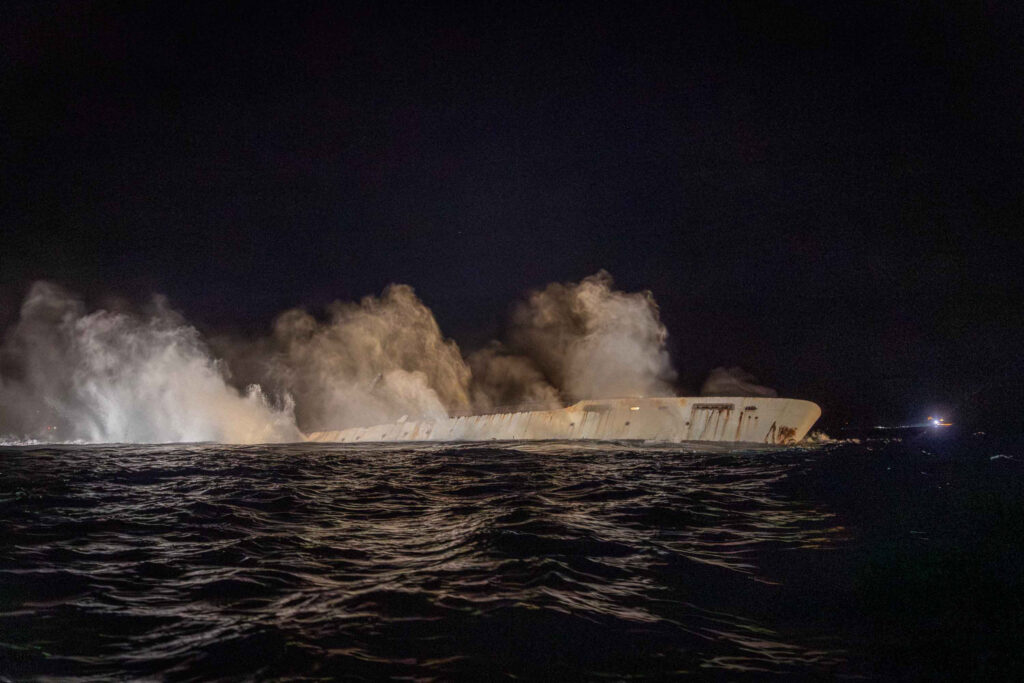
On 11 November 2026, the SS United States, the largest passenger liner ever built in America and the holder of the transatlantic speed record since 1952, was deliberately flooded and sent to the floor of the Gulf of Mexico. Approximately 22 nautical miles off Destin, Florida, the 990-foot vessel settled upright in about 180 feet of water. Its uppermost decks now rest roughly 55 to 60 feet below the surface, making it accessible to recreational and technical divers while creating the world’s largest artificial reef formed from a single ship.
The event marks the end of a long and contested afterlife for an icon of mid-century American engineering. It also opens a new chapter in which a work of naval architecture becomes permanent marine infrastructure.
Launched in 1952, the SS United States was built for both prestige and military readiness. Its lightweight aluminum superstructure and powerful engines allowed it to cross the Atlantic in just over three days at an average speed of nearly 36 knots, a record that still stands. After retiring from service in 1969, the ship spent decades in various states of preservation and decay, including long years docked in Philadelphia.
In 2024, Okaloosa County, Florida, purchased the vessel for one million dollars with a clear plan: transform it into a major dive attraction and habitat. After extensive preparation in Mobile, Alabama, including removing hazardous materials and cutting openings through the hull and interior decks, the ship was towed into position and scuttled by controlled flooding. No explosives were used. The goal was a controlled, upright landing that would maximize both ecological potential and diver safety.
Architecture as Habitat
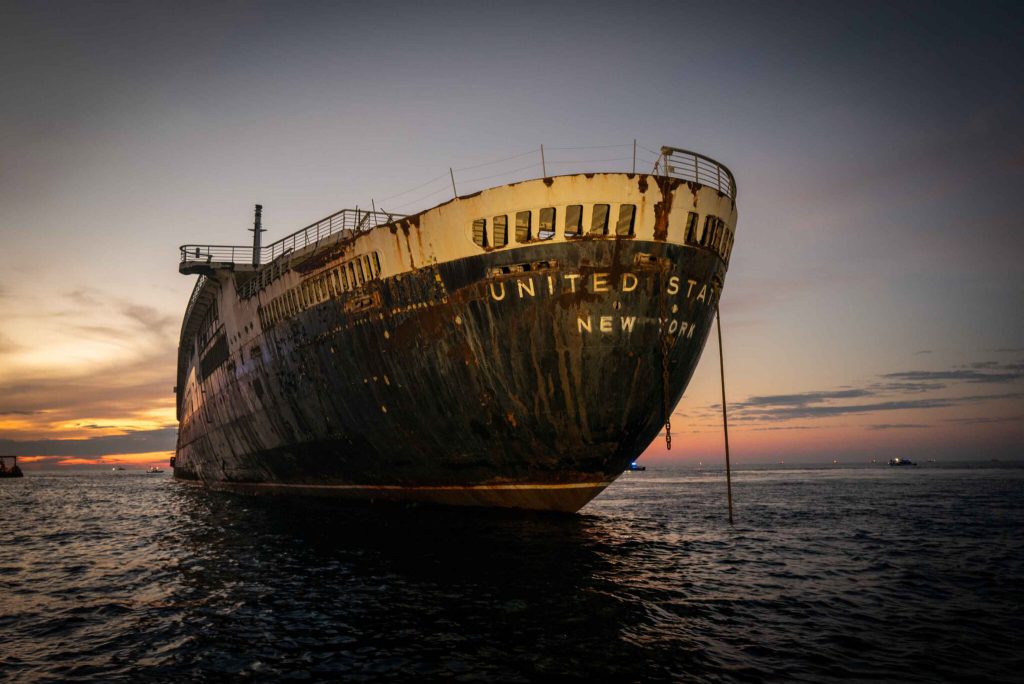
What was once a floating city of steel and aluminum is now a three-dimensional landscape of corridors, decks, and voids. Deliberately cut passageways through the twelve decks allow water, light, and marine organisms to move freely through the structure. Over time, algae, sponges, corals, and fish will colonize surfaces that once carried passengers between continents.
In architectural terms, the project reframes the ship as a permanent spatial system rather than a temporary vessel. The original design logic of circulation, compartmentation, and structural hierarchy is now read by currents and marine life. The same qualities that made the ship efficient for human occupation (clear routes, strong structure, and layered volumes) now serve ecological succession.
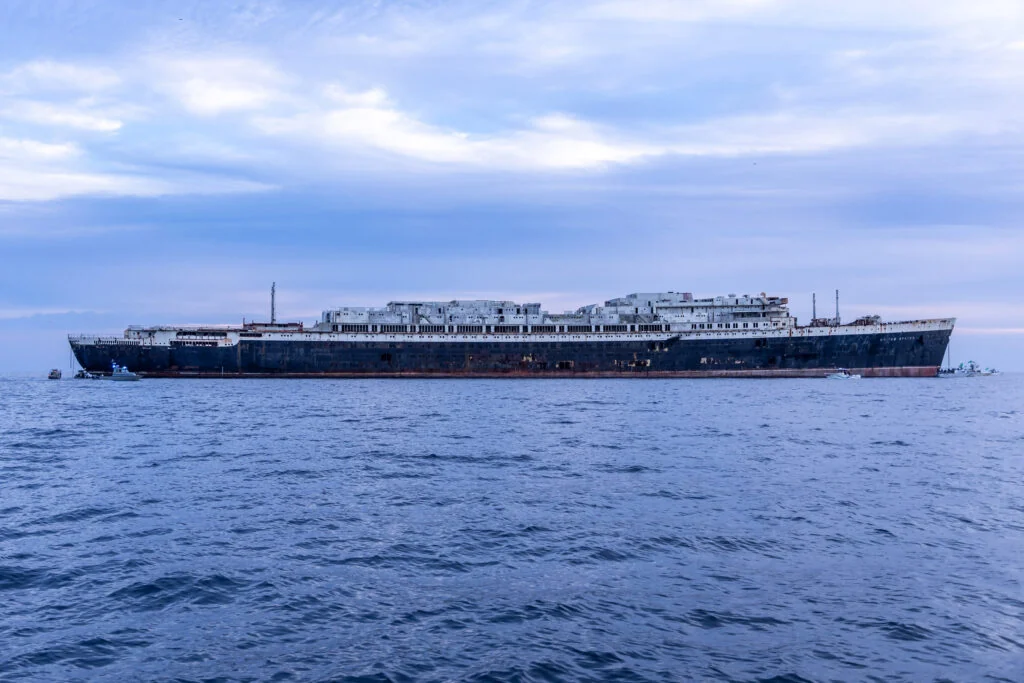
At 990 feet in length, the SS United States surpasses previous large artificial reefs such as the aircraft carrier USS Oriskany. Its scale creates a vertical and horizontal range of habitats that smaller wrecks cannot offer, from shallower sunlit decks to deeper, darker holds.
Design Intent and Public Experience
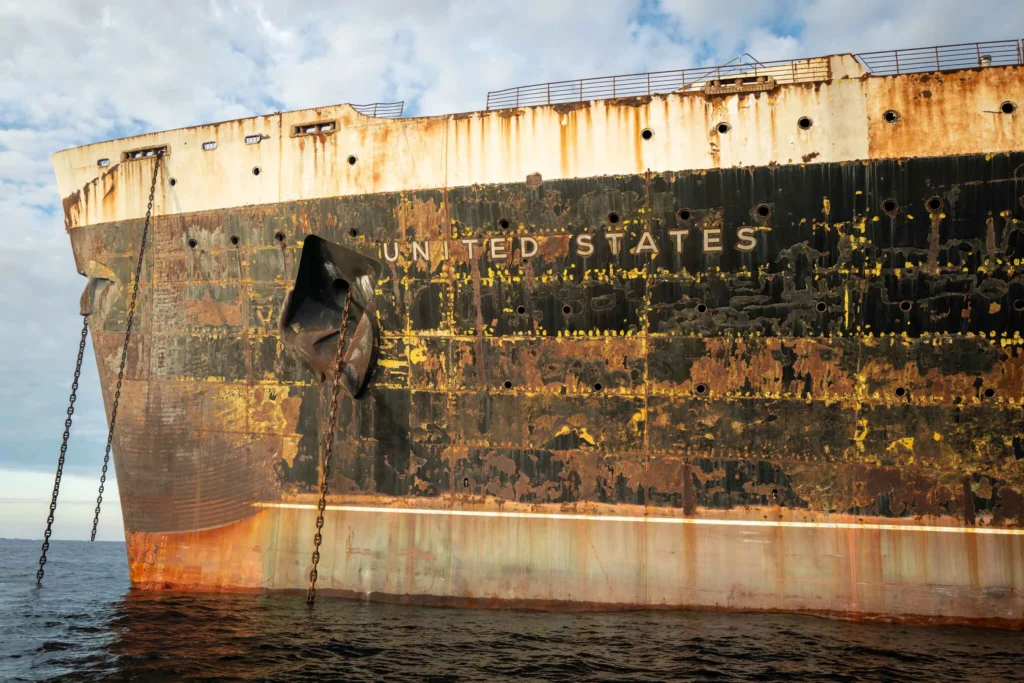
The project is not only ecological. It is also a carefully considered public landscape for divers. By resting upright with the upper decks at recreational depths, the reef invites a wide range of visitors while still offering technical challenges at greater depths. The ship’s famous lines and remaining structural features give the site a strong identity that pure concrete reef modules rarely achieve.
For the region, the economic and cultural calculations are clear. Existing artificial reefs already generate significant tourism and fishing activity. County officials expect the SS United States to become a signature destination that draws divers from around the world while supporting local marine research.
Scientific partners, including institutions such as Woods Hole Oceanographic Institution and regional laboratories, will monitor how a structure of this size develops as a living reef. The data will inform future large-scale artificial reef projects.
Memory and Transformation
Not everyone welcomed the decision to sink the ship. Preservationists had hoped for a museum or land-based reuse. Yet after years of costly maintenance and limited public access, the reef project offered a form of continuity. The vessel remains intact as a single object. Its story can still be told, and people can still encounter it, now by descending rather than boarding.
In this sense, the sinking is less an erasure than a change of medium. The architecture of the ship continues, only now it is experienced through water, light, and the slow accumulation of marine life. What was once a machine for crossing oceans has become a machine for generating habitat.
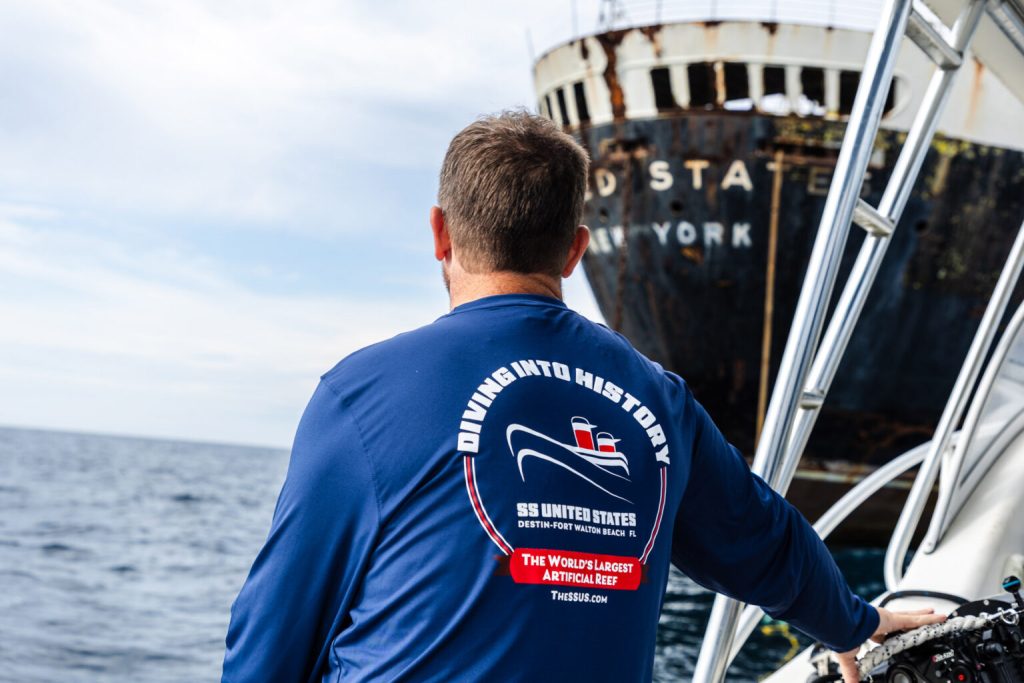
The SS United States no longer races across the Atlantic. It has taken up permanent residence on the Gulf floor, where its carefully prepared form will gradually disappear under living growth while remaining legible as one of the most ambitious acts of adaptive reuse ever undertaken at sea.