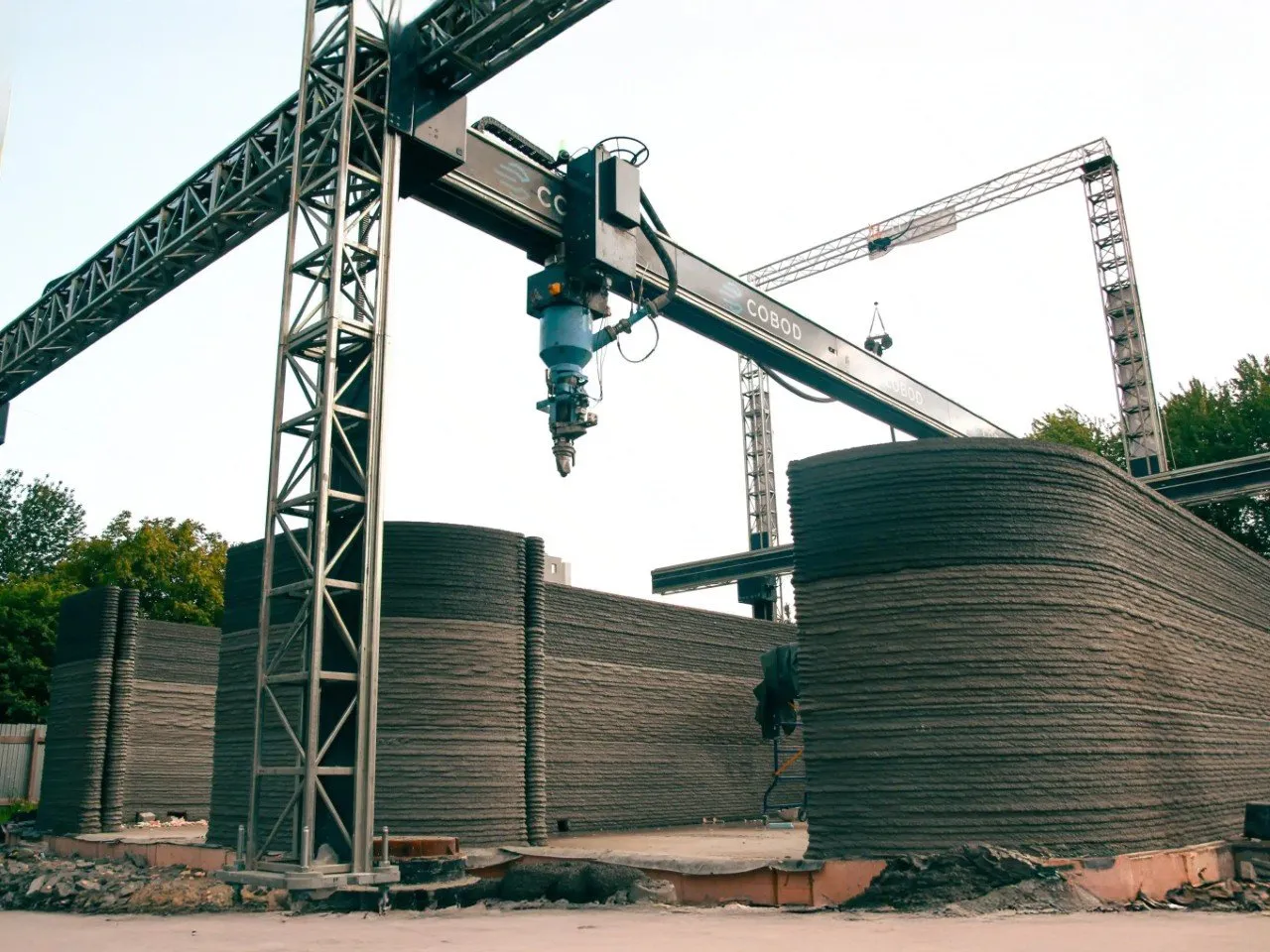

Qatar has set a new global benchmark in construction by starting work on the world’s largest 3D-printed building project, two futuristic public schools, each spanning 20,000 m², for a combined 40,000 m². In terms of scale, the schools are nearly 40 times bigger than the largest 3D-printed structure built until now.
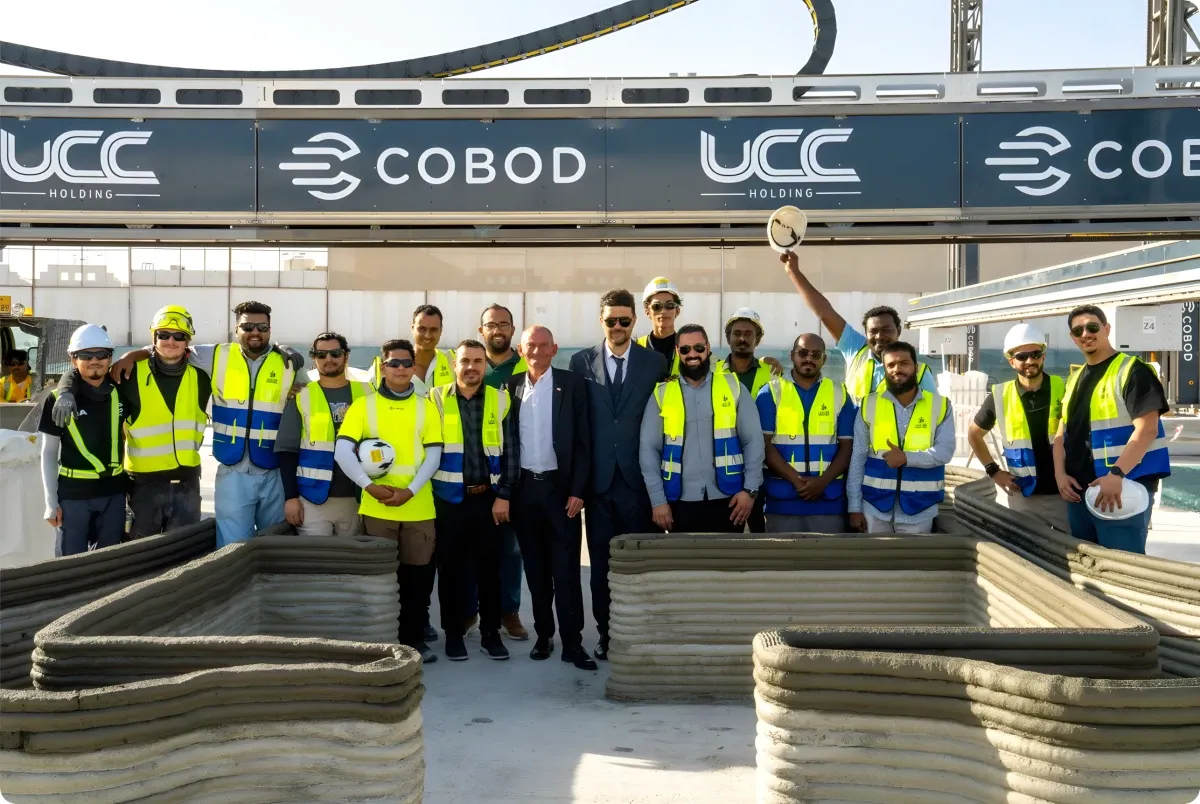
At the forefront of this mega-project is UCC Holding, working alongside Ashghal, Qatar’s Public Works Authority. They’ve teamed up with COBOD International, the Danish company at the forefront of construction-scale 3D printing. Together, the partners are turning what was once a bold concept into an unprecedented architectural reality.
Two colossal BODXL 3D printers from COBOD. Each printer measures roughly 50 meters long, 30 meters wide, and 15 meters high, the size of a Boeing 737 hangar, and they’re the largest ever built.
The project was preceded by eight months of testing at a trial site, led by an in-house 3D-printing team in Doha. Over 100 full-scale test prints were completed to fine-tune custom concrete mixes, develop nozzle designs, and ensure the technology could perform reliably in Qatar’s extreme desert climate.
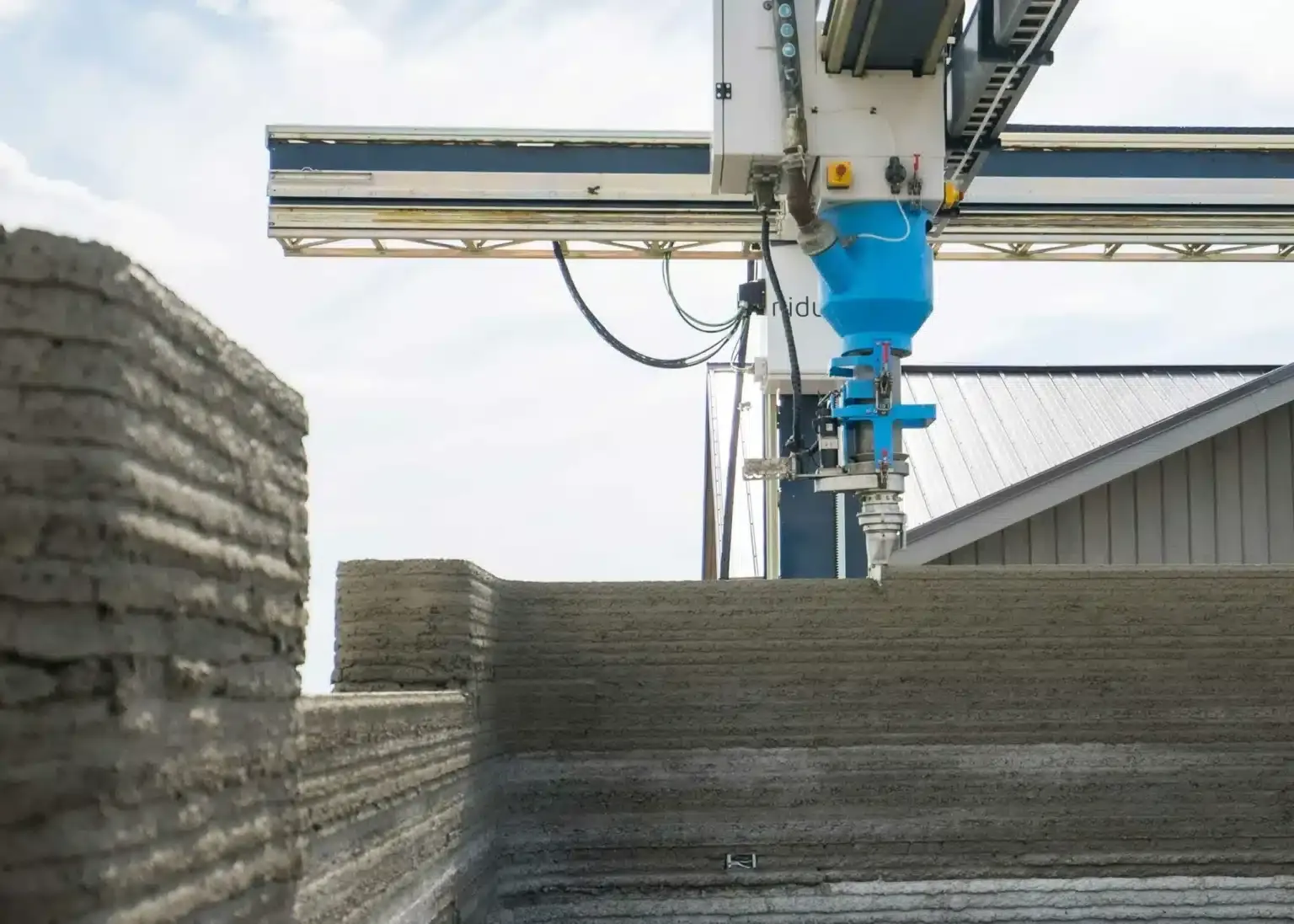
One BODXL printer alone can build on a 1,500 m² footprint, reaching up to five stories (roughly 7,500 m² of built space). With two printers working side by side, the team can deliver the school’s full 40,000 m² footprint efficiently.
3D printing cuts down on both material use and construction waste, reducing overall costs while lowering the carbon footprint. Printing also happens mostly at night, avoiding Qatar’s intense daytime heat, improving energy efficiency, and ensuring safer working conditions. The full 14-school development is scheduled for completion by the end of 2025, with further project details to be released in the months ahead.
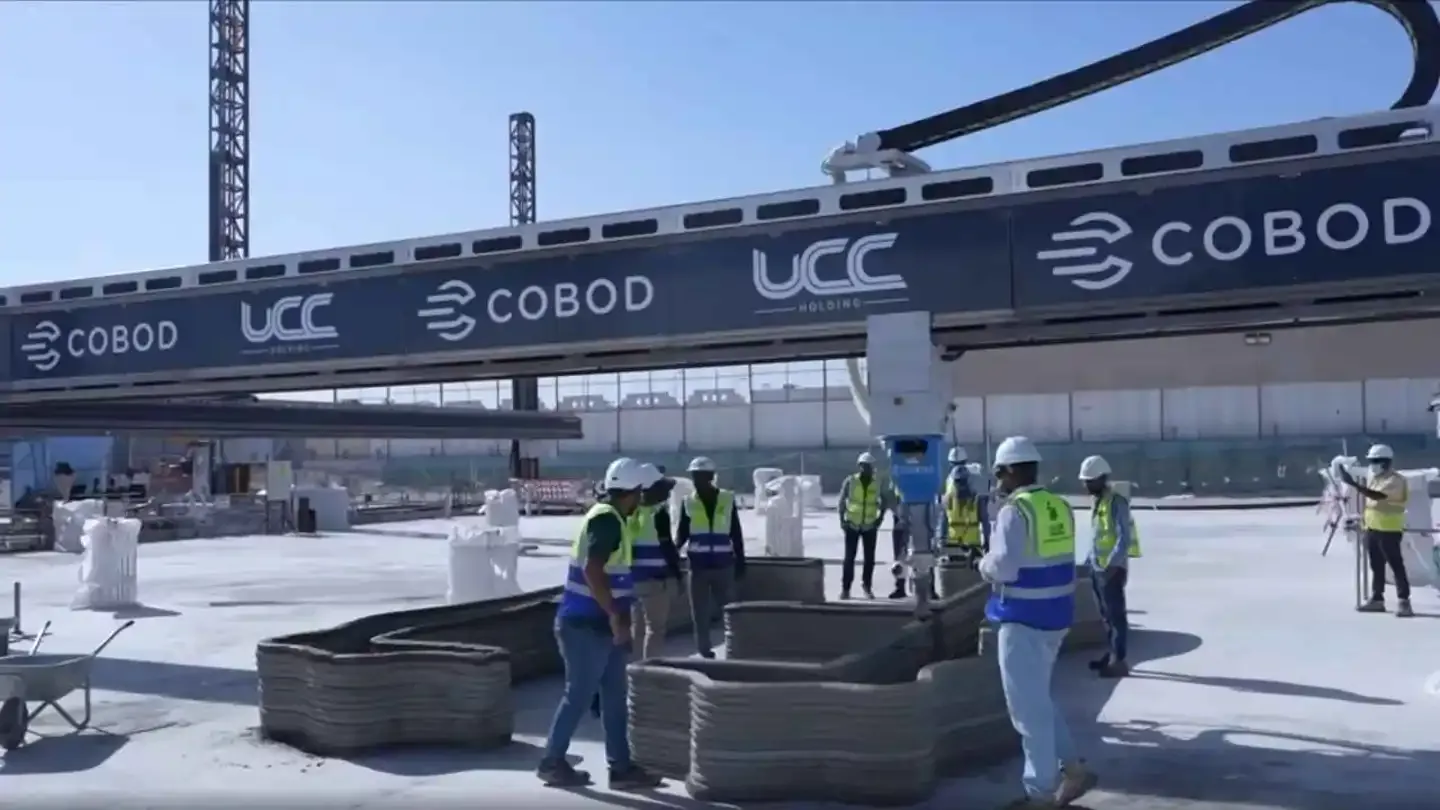
Design-wise, the schools embrace organic, flowing forms inspired by desert landscapes. The layered printing technique allows for curved, dune-like walls that are nearly impossible to achieve with conventional methods.
Image Credit: COBOD/UCC Holding