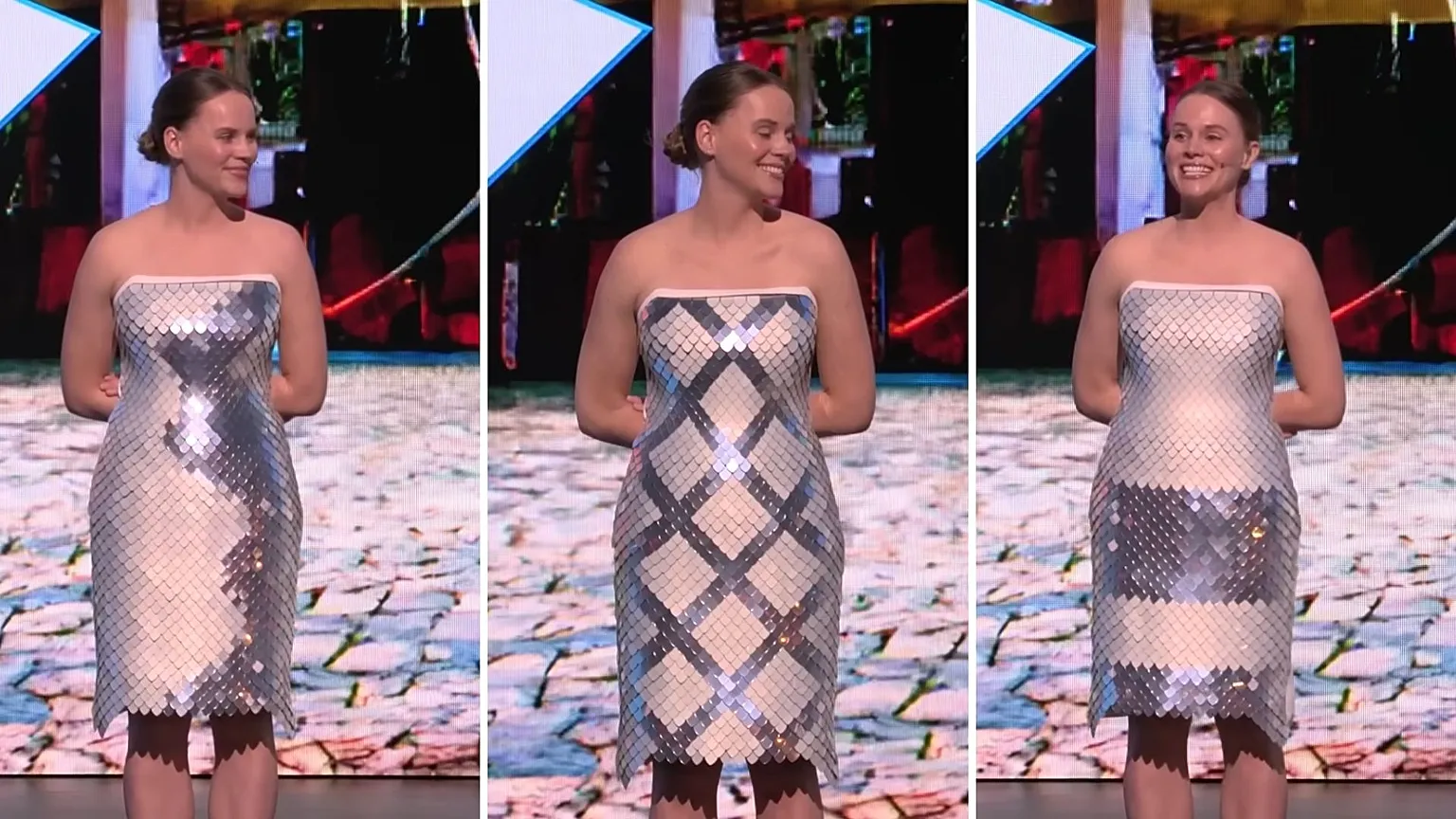

Adobe Research introduced Project Primrose, a groundbreaking proof-of-concept wearable that redefines what clothing can be. The innovative dress features a responsive surface capable of shifting its patterns and light reflections in real time, merging digital design with textile craftsmanship.
The Vision That Inspired Project Primrose
The roots of Project Primrose trace back to an internal Adobe Research concept from 2013: a vision of adaptive garments that could change appearance based on conditions such as weather. From that early metaphor, the team moved into hardware prototyping (with a project called Glasswing) and eventually formalized a wearable platform combining flexible electronics, textile engineering, and creative design. According to Adobe, the objective was to create “a new kind of canvas for creativity,” a garment that integrates with design tools and enables pattern/appearance switching.
Technology Behind Adobe’s Digital Dress
Petals, driver boards & materials
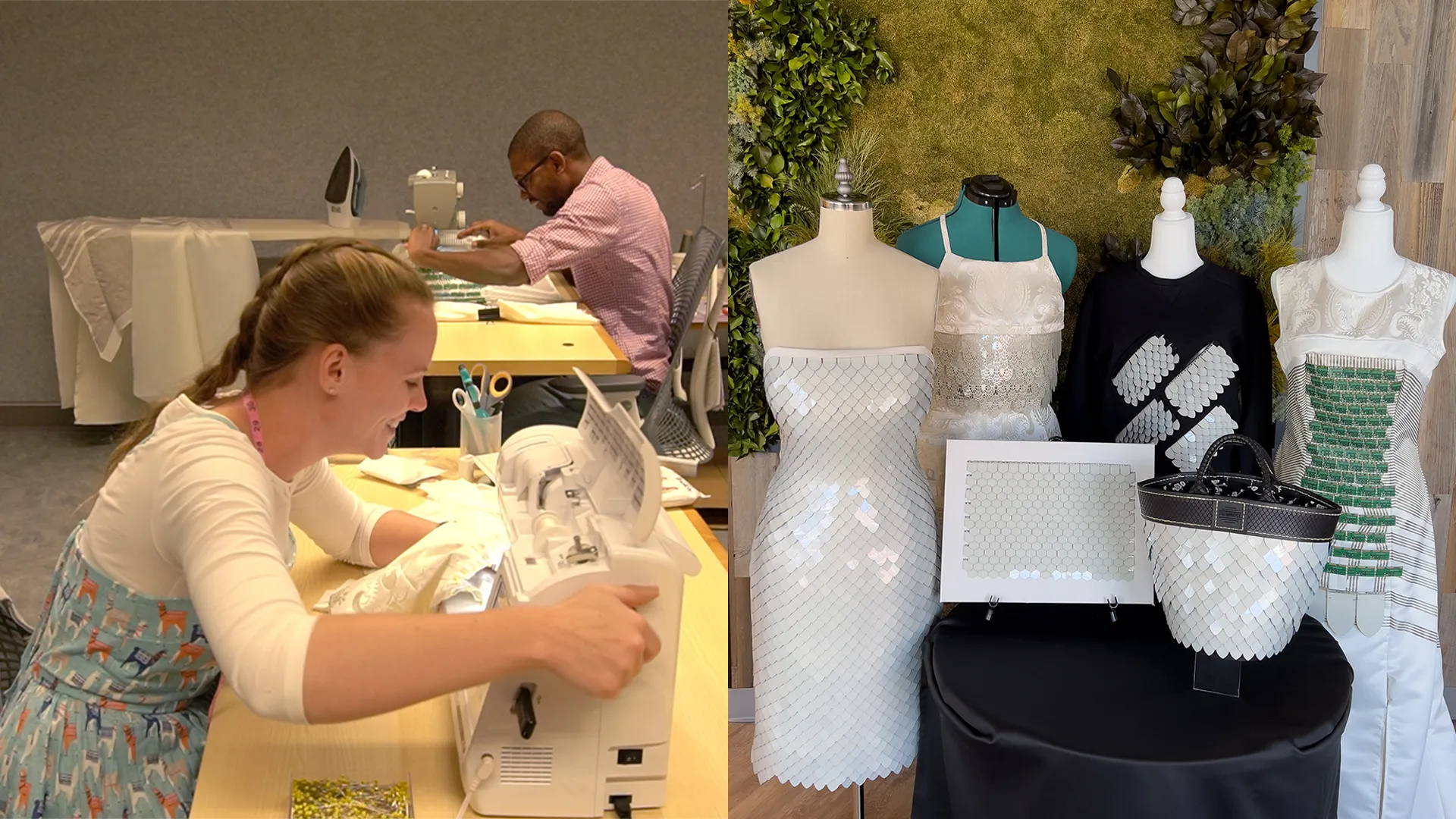
One of the most striking details of the dress uses 1,182 petal-shaped modules, each sewn by hand onto the garment. These modules act as dynamic pixels made of laser-cut polymer-dispersed liquid crystal (PDLC) elements, which switch between transparent and diffused states, thus altering reflectivity and texture rather than emitting light.
Underlying these petals are 74 driver boards (in the earlier version), and in the later runway version, they expanded to 88 modular controllers, each staging multiple petal modules. The circuitry had to be extremely thin, flexible, robust against bending, and safe for skin contact.
Software/creative workflow
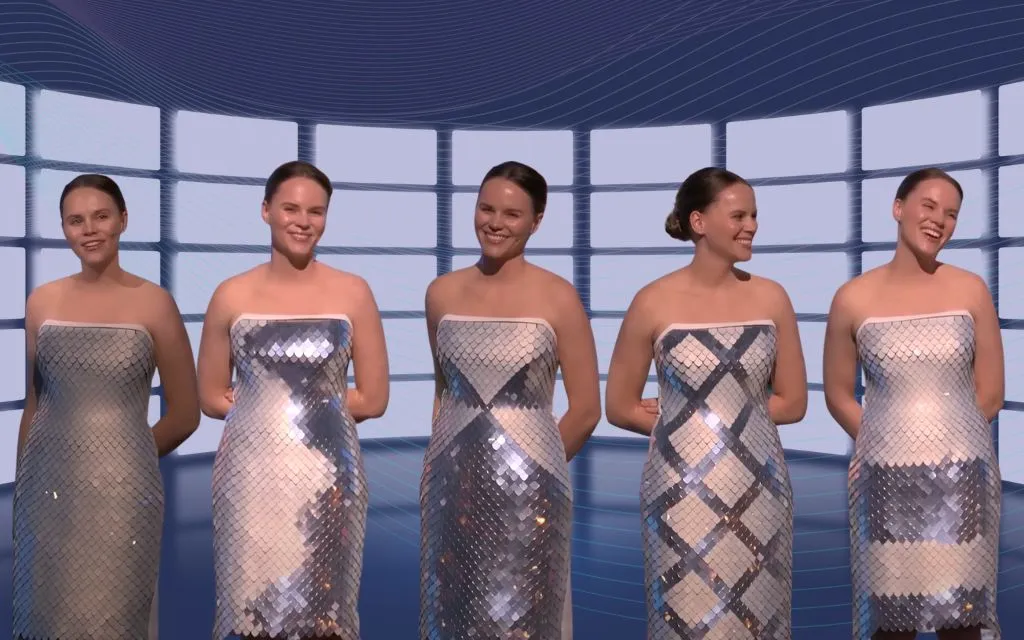
The design pipeline integrates Adobe’s creative tools, pattern and motion design in Adobe After Effects and Illustrator, and then translation of those animations into firmware that drives the petal hardware. The dress acts as a non-emissive display surface, meaning it doesn’t emit light like LEDs but rather modulates ambient light via the PDLC layers.
Wearability & materials
In the runway iteration, the base fabric shifted to a stretch satin to support full 360° coverage and dynamic motion. The design also addressed geometry challenges: petal size and spacing varied (16 different sizes) to accommodate the dress’s curves and maintain visual uniformity.
Public Reveal & Collaboration
Project Primrose was revealed publicly at Adobe’s “MAX Sneaks” event in 2023. The dress made waves. Audience reaction streamed online, and the piece rapidly gained viral exposure through social media.
Shortly afterward, Adobe’s research team partnered with fashion designer Christian Cowan to produce a runway-ready version for New York Fashion Week. The collaborative version extended coverage to the full dress (not just the front), introduced star-shaped petals (Cowan’s signature), and accelerated assembly in a matter of weeks.
Key Features & Capabilities
- Dynamic pattern change: The dress can switch between static patterns and animations in real-time, triggered manually or preset in loops.
- Non-emissive display: Uses light-modulating materials (PDLC) rather than traditional light-emitting diodes, enabling a reflective yet changeable surface.
- Full body coverage: In the latest version, petals cover the entire 360° garment surface, enabling visual effects from all angles.
- Designer-driven content: The workflow allows patterns created in standard design tools (Illustrator, After Effects) to be mapped to the textile hardware, making this system a hybrid of fashion design and digital content creation.
- Wearable form factor: Although still a prototype, the garment prioritizes flexibility, comfort, and mobility, underlining that it’s apparel first, device second.

Implications for Fashion & Technology
- Creative canvas for designers: Project Primrose reframes a garment not as a static commodity but as a platform allowing designers and wearers to reimagine appearances on demand. It bridges textile craftsmanship, electronics, and digital content.
- Sustainability & customization potential: By enabling one garment to adopt multiple looks via software and appearance changes, this approach hints at reducing the volume of garments produced and sold—one item, many visual states.
- Challenges & areas for improvement: The dress is expressly a prototype, not ready for mass production, broad use, or everyday wear. Issues such as durability, washability, cost, user comfort, and long-term maintenance remain to be solved.
- Gateway to broader applications: While the fashion dress is the high-visibility example, Adobe notes that the underlying technology (flexible display modules, designer workflow integration, and content publishing) could extend to other domains: furniture, accessories, and interior surfaces.
Project Primrose represents a meaningful intersection of design, engineering, and fashion. It suggests that garments of the future might not just be cut and sewn, but they might be programmed. That said, the road from breakthrough prototype to everyday wearable remains long. For now, Primrose stands as a bold demonstration of possibility: a wearable canvas for creative change, signaling what lies ahead when textile craftsmanship meets interactive technology.
Image credit: Adobe