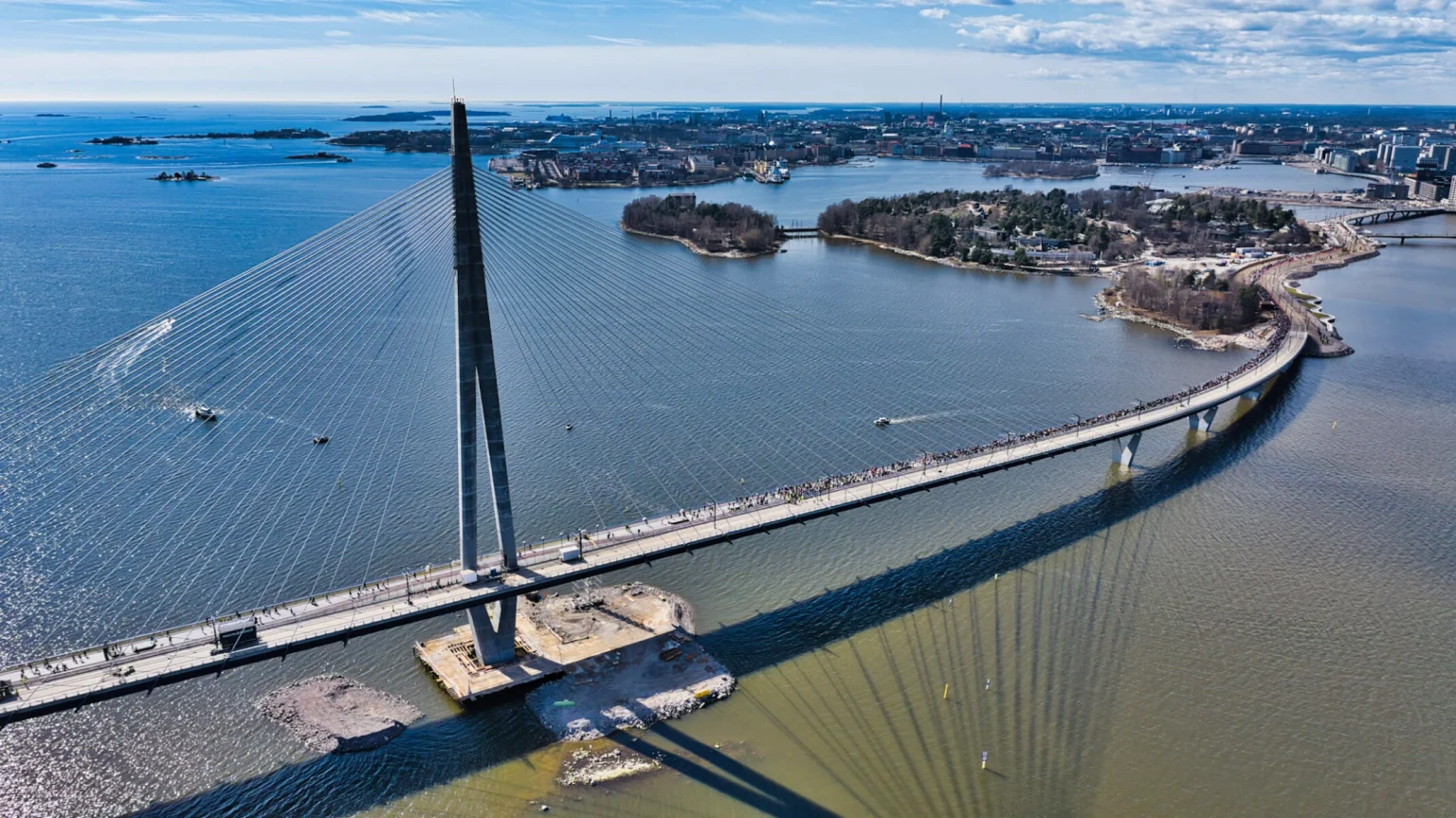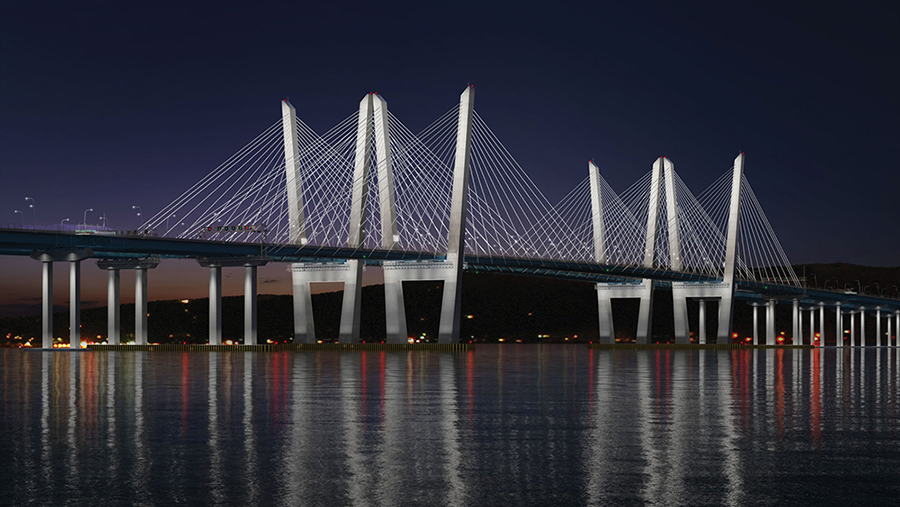
The new $4 billion Tappan Zee Bridge will partially open to traffic this weekend, marking a major transformation in the transportation landscape of New York’s Hudson Valley. Replacing an aging crossing that had long struggled with congestion and maintenance problems, the new bridge introduces not only additional transportation capacity but also a new visual and spatial presence along the Hudson River.
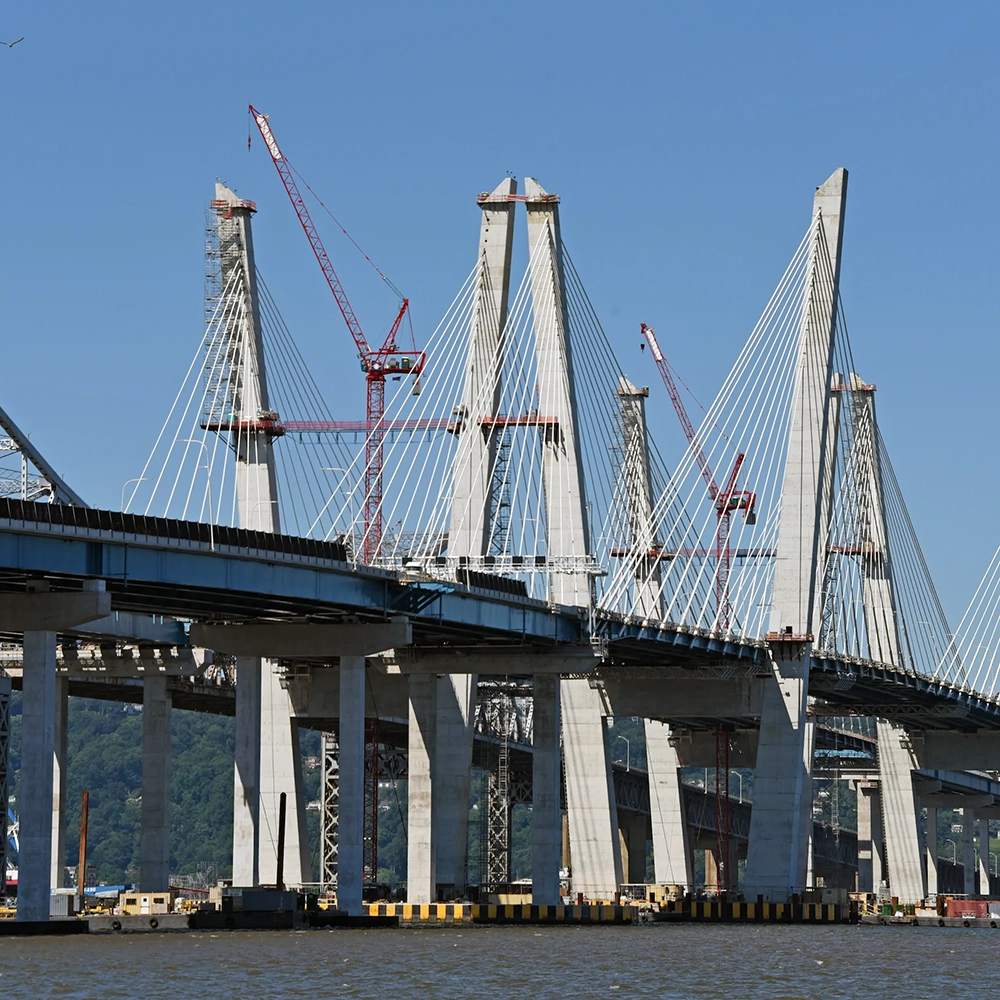
From an urban design perspective, the project is significant because the Tappan Zee Bridge’s scale functions as more than a piece of transportation infrastructure. It becomes part of the region’s identity and reshapes how communities on both sides of the river connect to one another. By providing a wider and more efficient crossing, the new structure is intended to improve regional mobility while supporting connections between Westchester and Rockland counties.
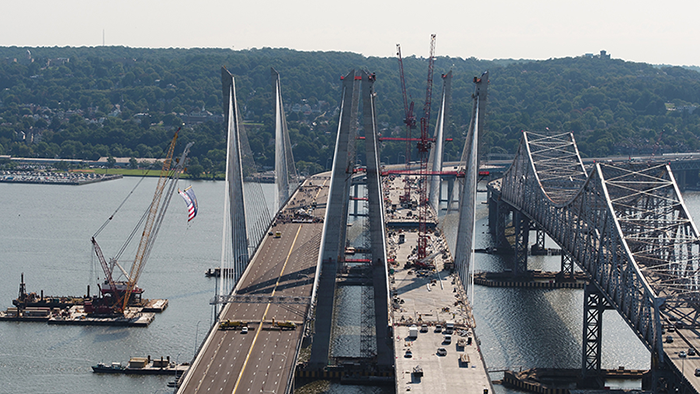
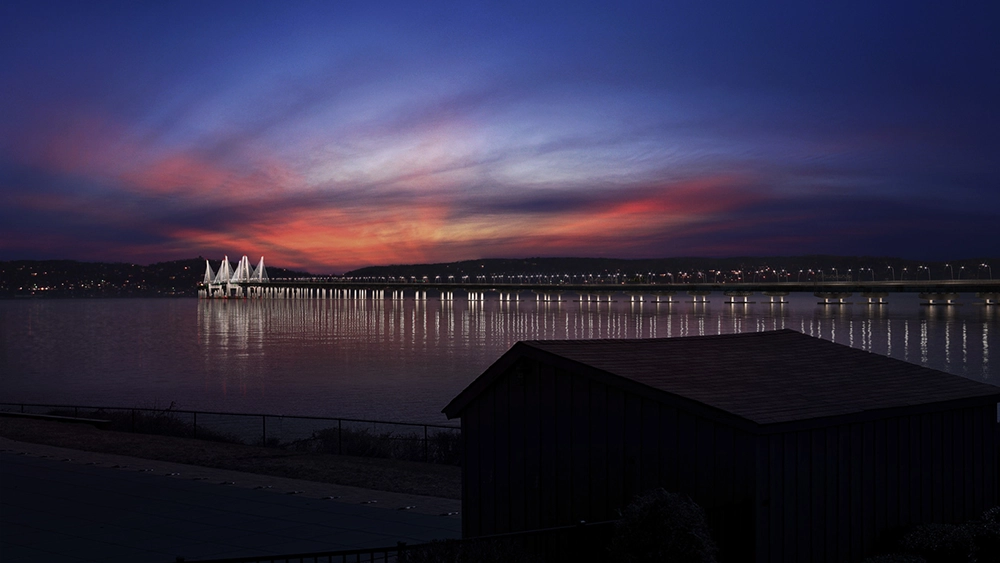
Its cable-stayed form also establishes a distinctive landmark within the Hudson Valley landscape. Eight tall towers rise above the river, creating a strong vertical rhythm against the predominantly horizontal character of the water and surrounding terrain. The arrangement of the towers and cables gives the Tappan Zee Bridge a lightweight appearance despite its enormous structural scale, allowing it to read as a contemporary intervention rather than simply a replacement for the old crossing.
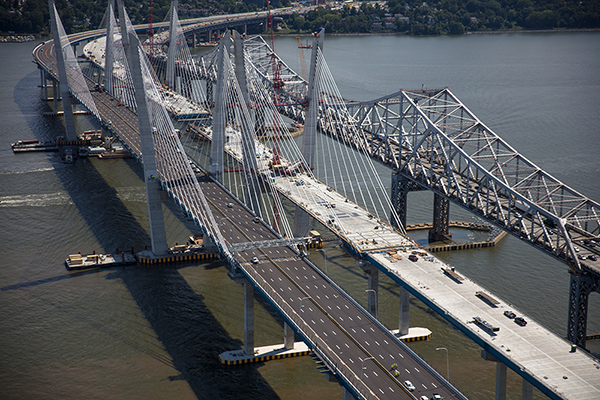
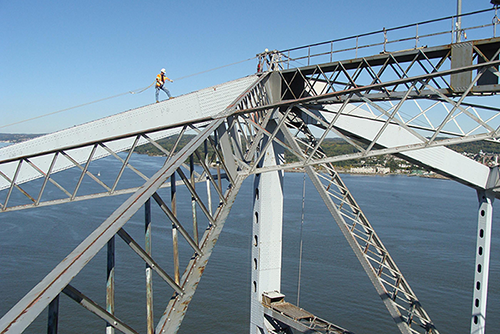
The relationship between infrastructure and landscape is particularly important along the Hudson. The river is both a transportation corridor and a major ecological and scenic resource, so the construction of such a large structure inevitably affects views, waterfront conditions, and the experience of the river. The new Tappan Zee Bridge’s streamlined profile seeks to establish a more coherent visual relationship with its surroundings, while the removal of the old bridge will eventually open new perspectives across the water.
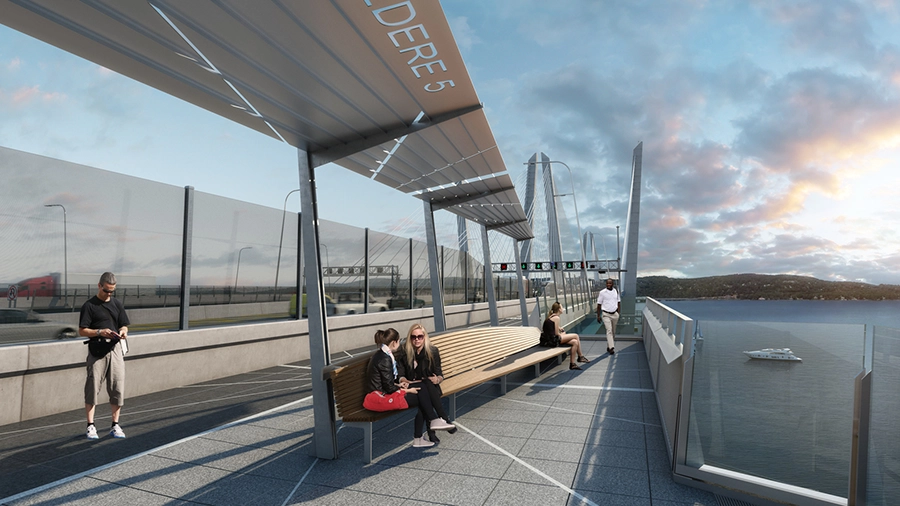
Beyond the roadway itself, the project forms part of a broader strategy for improving public access and recreational connections along the Hudson. Bicycle and pedestrian facilities incorporated into the new crossing create opportunities to experience the river at a slower pace, transforming the Tappan Zee Bridge from a purely functional corridor into a potential public landscape. These connections can strengthen relationships between waterfront communities and encourage cycling, walking, and recreational movement across the region.
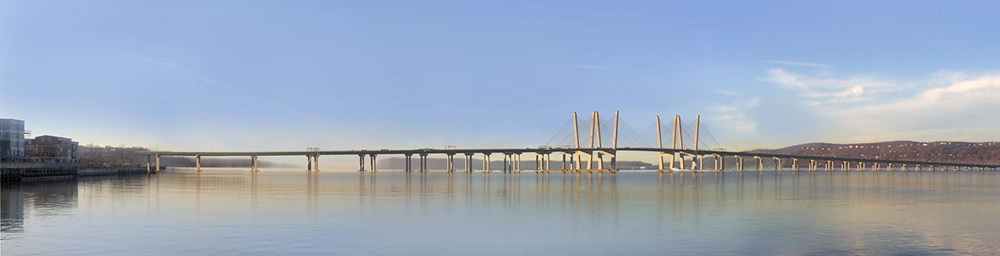
The project also demonstrates how contemporary infrastructure can contribute to urban character. Rather than treating engineering and landscape as separate disciplines, major transportation projects increasingly have to consider visual identity, environmental impact, public accessibility, and regional connectivity together.
In this sense, the Tappan Zee replacement represents an attempt to integrate mobility with the broader landscape of the Hudson Valley.
Its opening is therefore more than a transportation milestone. The bridge introduces a new architectural landmark, reorganizes regional movement, and establishes another layer in the evolving relationship between New York’s infrastructure and its landscape.
Because cities are apparently incapable of simply building a bridge without making it an urban-design statement, the Tappan Zee replacement has become part of a much larger conversation about how infrastructure can shape the places through which people move.