



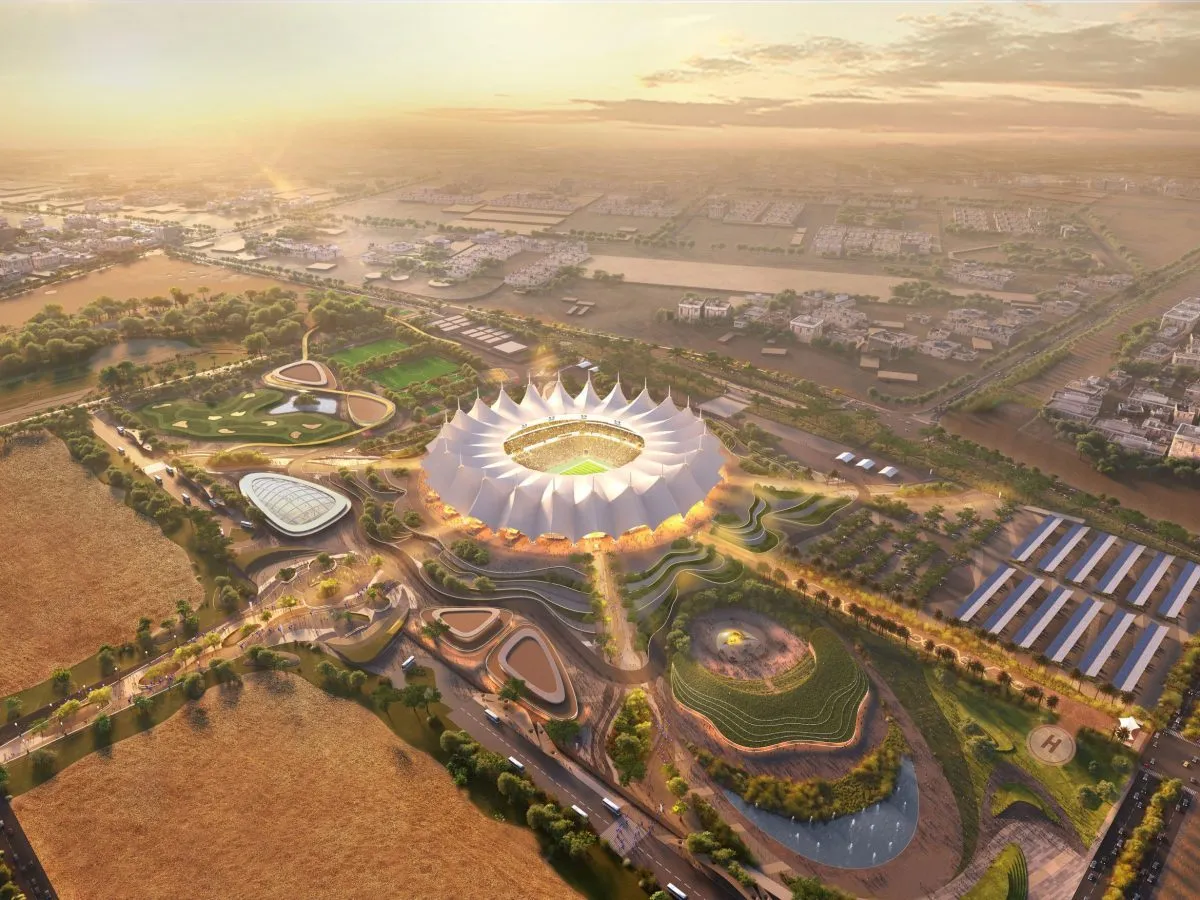
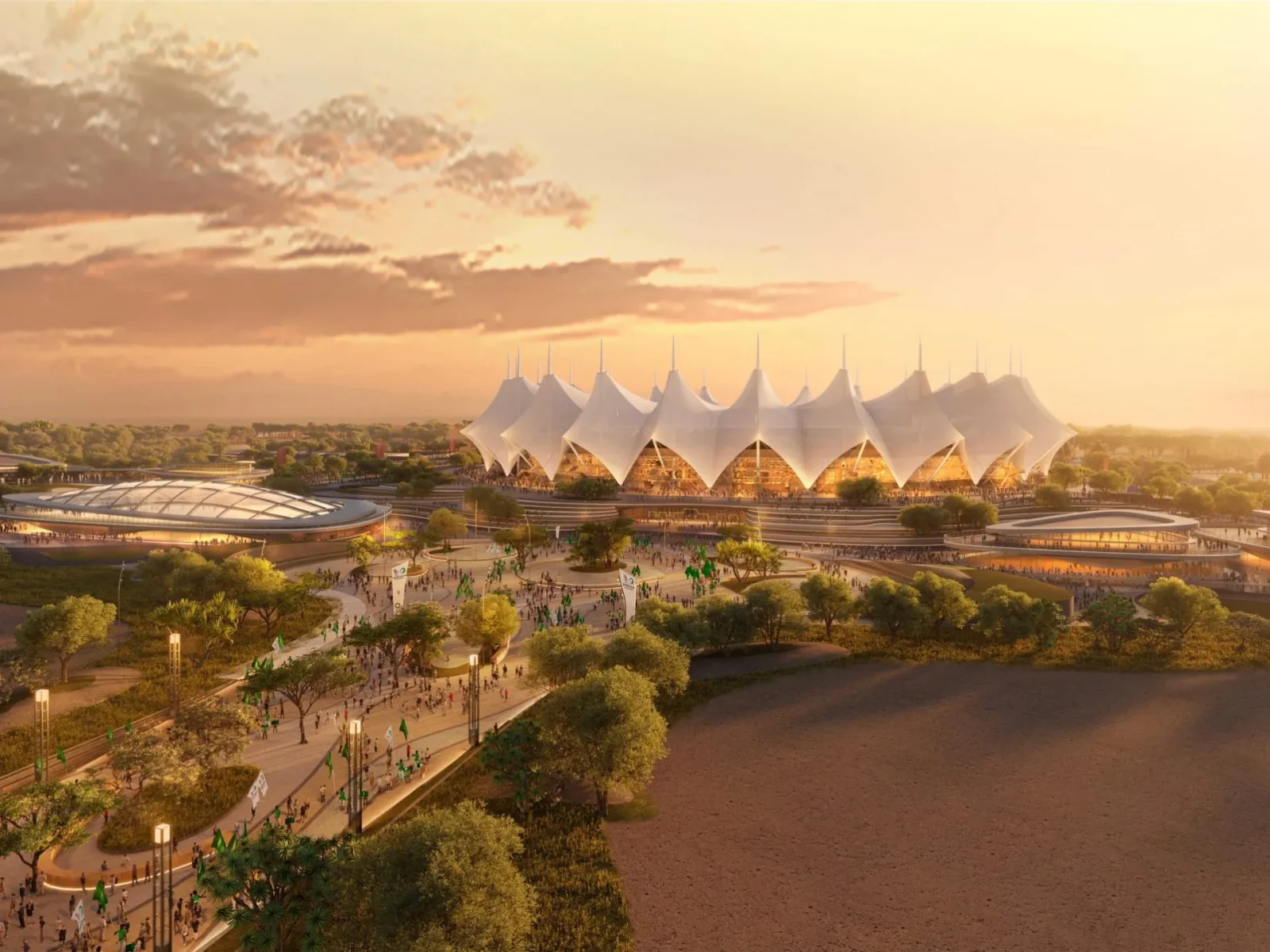
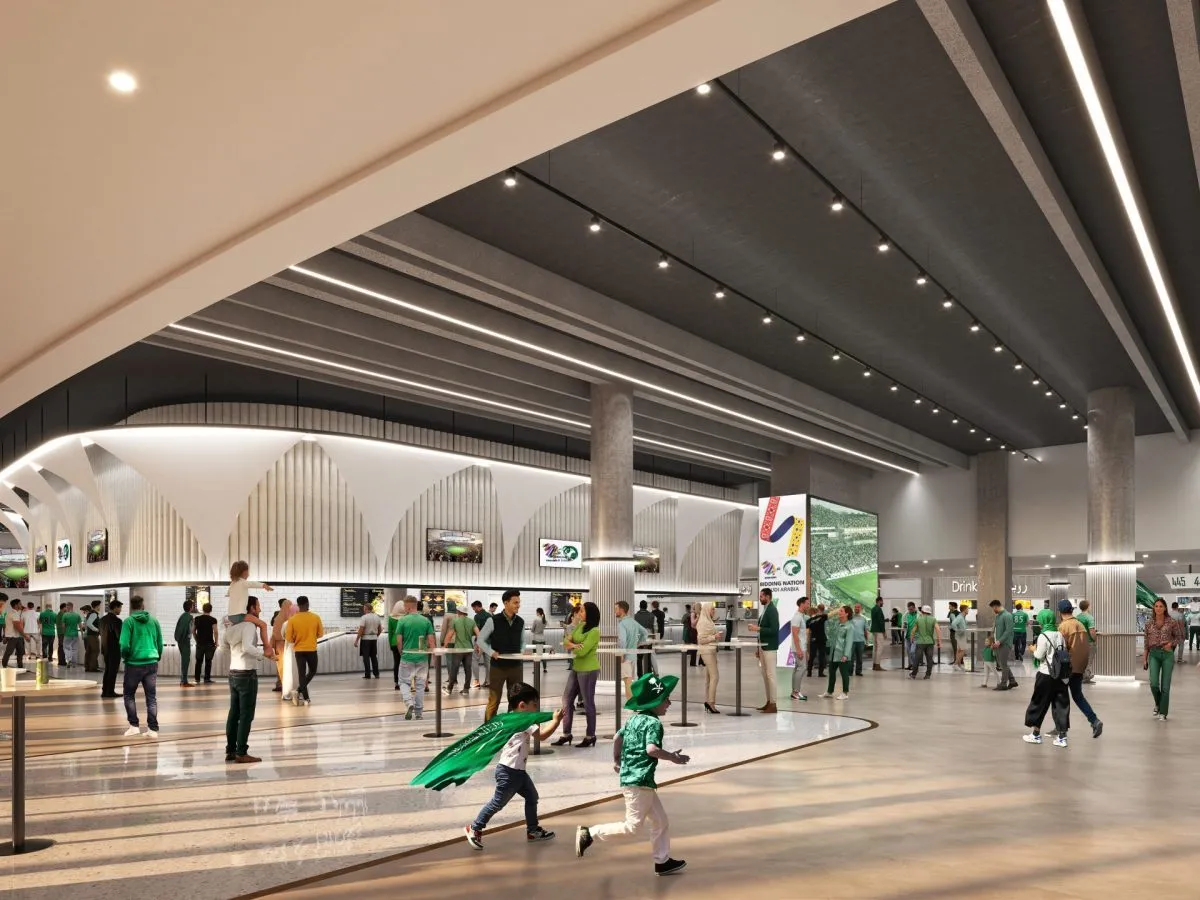
As Saudi Arabia prepares to host the FIFA World Cup 2034, one of the country’s most recognizable sporting venues is undergoing a major transformation. The historic King Fahad Sports City Stadium in Riyadh, originally opened in 1987, is being redesigned by Populous through a renovation strategy that balances heritage preservation, sustainability, and contemporary stadium requirements.
Instead of replacing the venue with an entirely new structure, the project focuses on extending the life of one of the Middle East’s most significant sporting landmarks while adapting it to meet the expectations of modern football tournaments, concerts, and large-scale public events.
Populous Adopts a Sustainability-First Design Strategy
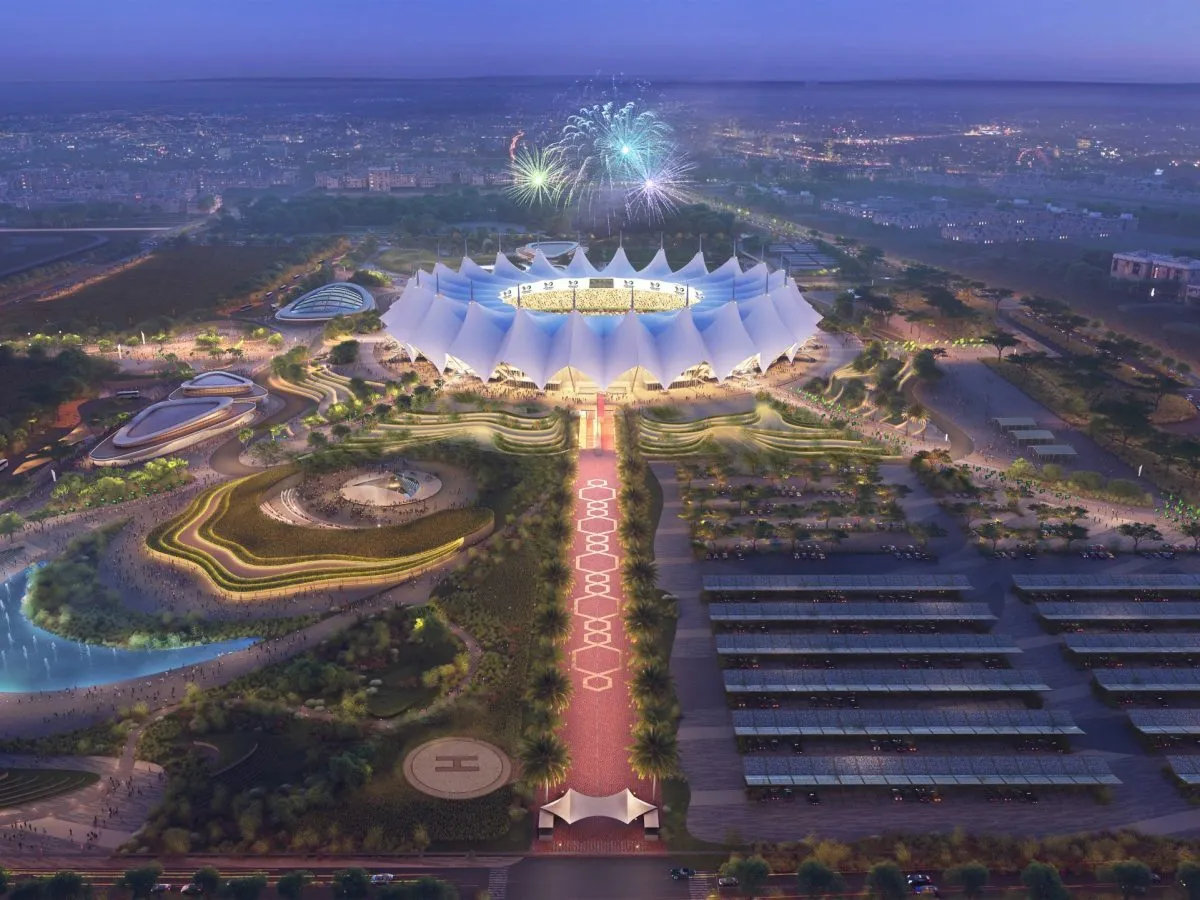
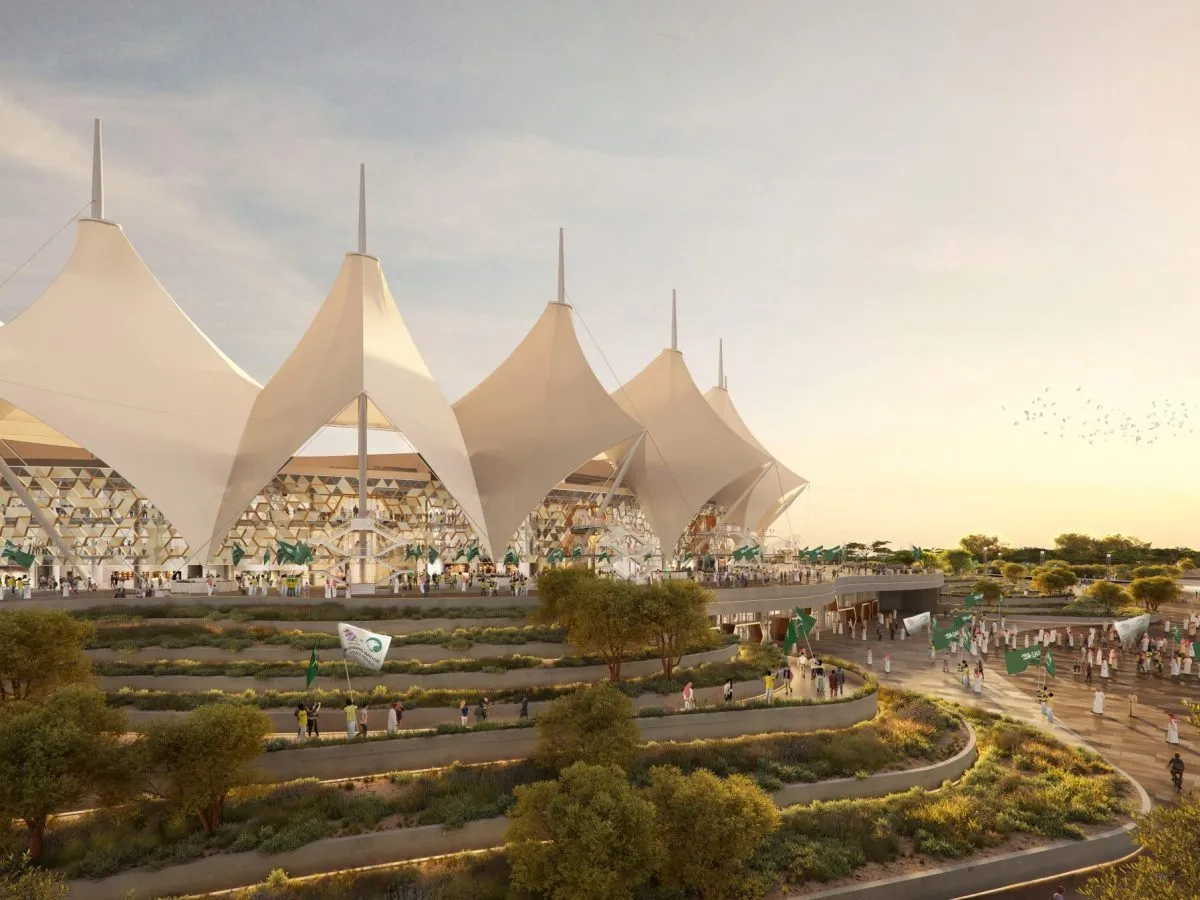
When King Fahad Sports City Stadium opened in the late 1980s, it quickly became a defining feature of Riyadh’s skyline. Designed with a distinctive tensile roof inspired by traditional Bedouin tents, the stadium introduced a new architectural identity for sports venues in the region.
For decades, it has served as the home ground of the Saudi Arabian national football team and has hosted a wide range of international sporting competitions. Beyond football, the venue has welcomed boxing championships, motorsport events, cultural celebrations, and globally recognized music performances, cementing its role as a national landmark.
Its importance is set to continue as the stadium prepares to host matches during the 2027 AFC Asian Cup before becoming one of the key venues for the 2034 FIFA World Cup.
The renovation reflects a growing shift within global sports architecture toward adaptive reuse. Populous has developed a design approach that prioritizes retaining and upgrading existing structures wherever possible.
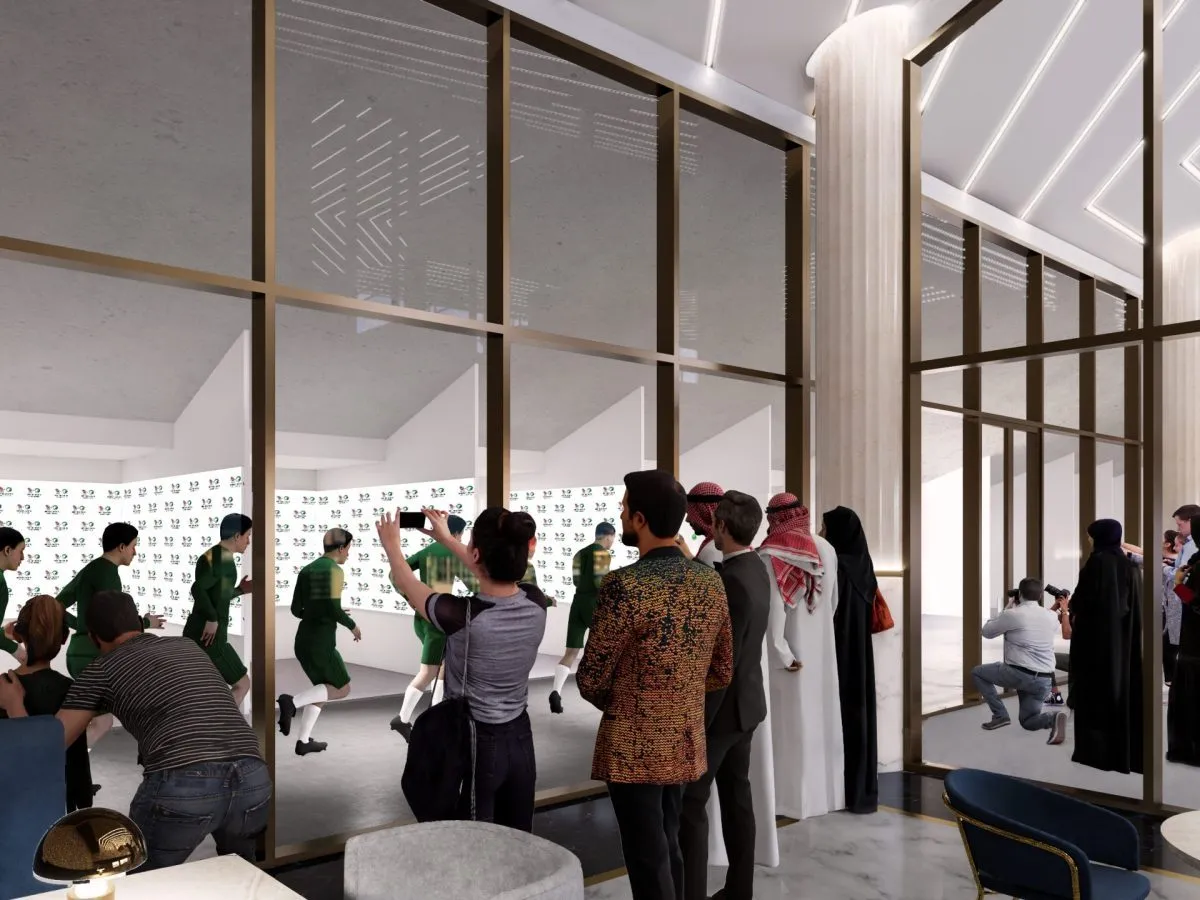
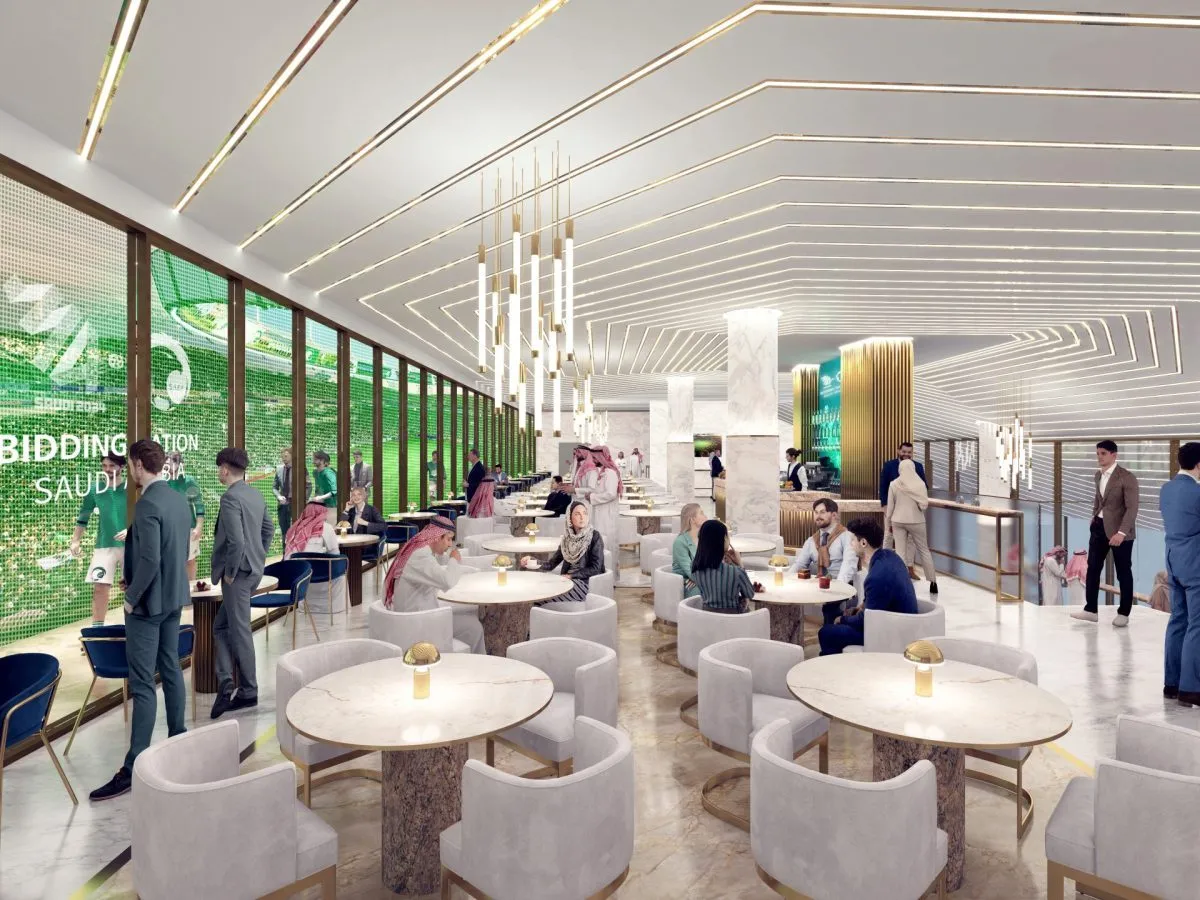
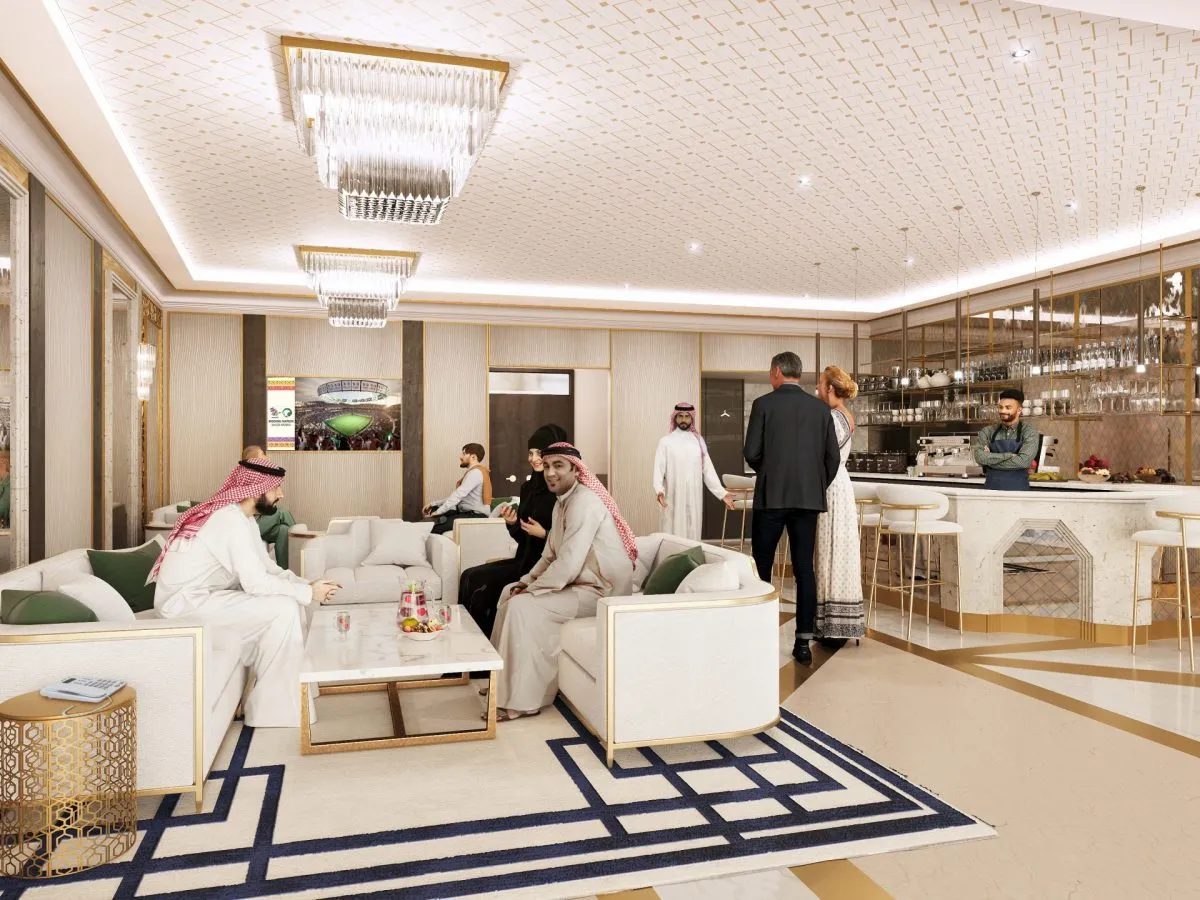
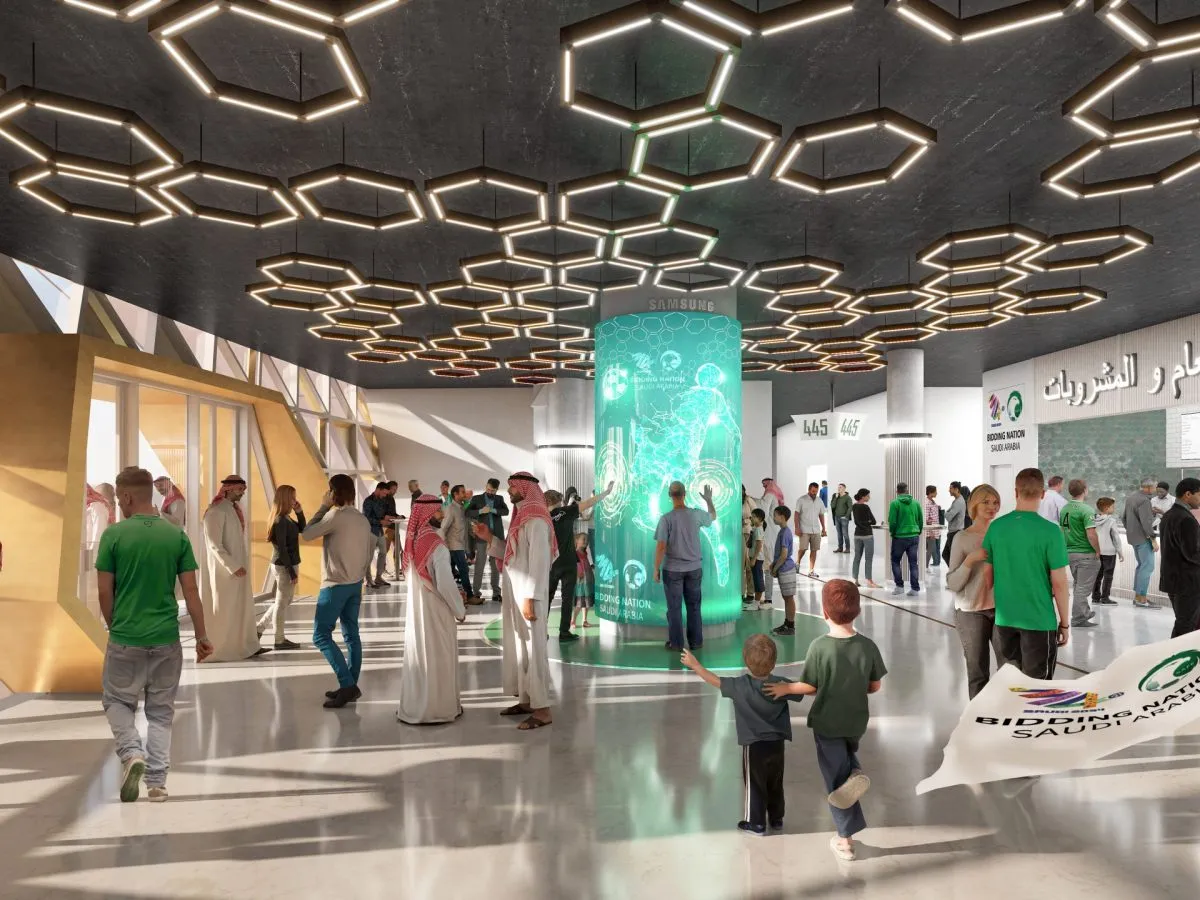
Several original components of the stadium are being preserved and integrated into the new design. This includes parts of the East Stand and the iconic western “Hive” structure, helping maintain the venue’s historic character while introducing upgraded spectator amenities, hospitality spaces, media facilities, and operational infrastructure.
The project demonstrates how large-scale sports venues can reduce environmental impact by reusing existing assets.
Reusing Stadium Materials to Create a Circular Design Model
One of the most notable aspects of the redevelopment is the extensive reuse of materials from the original stadium.
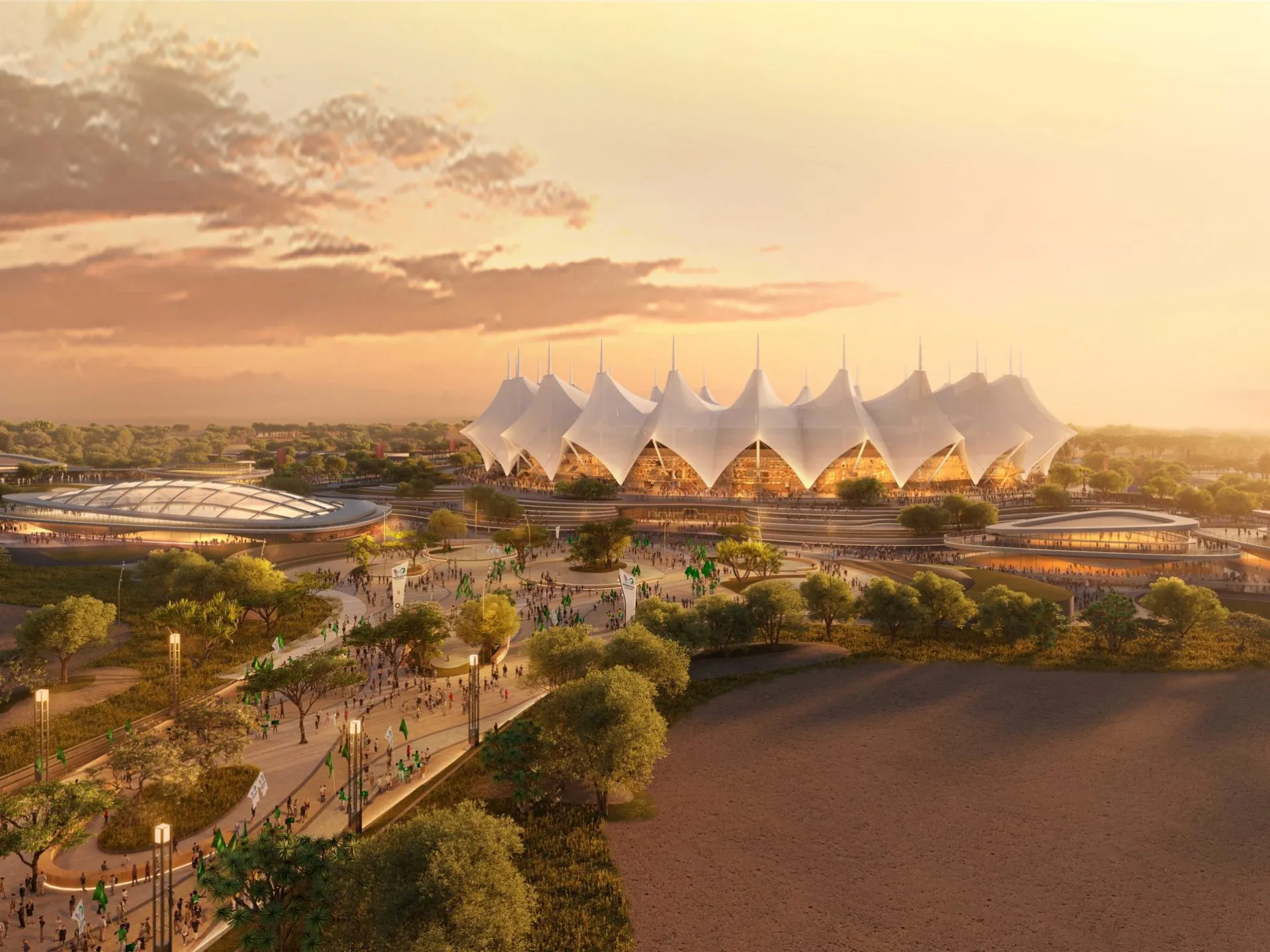
The existing roof canopy, which had reached the end of its operational lifespan, is being carefully dismantled. The steel masts and cables are being repurposed into photovoltaic-covered parking structures that will generate renewable energy for the site. These solar installations are expected to meet the stadium’s everyday energy needs on non-major-event days.
Similarly, the stadium’s recognizable hexagonal cladding panels are being incorporated into new landscape terraces and service buildings across the wider masterplan, preserving elements of the venue’s architectural identity in new forms.
Seats, lighting poles, and sanitary fixtures removed during construction are also being redirected to community-focused initiatives, extending their lifecycle beyond the stadium itself.
Expanding Capacity Through Subterranean Construction
To meet FIFA tournament standards and accommodate larger audiences, the redevelopment introduces a new lower seating tier.
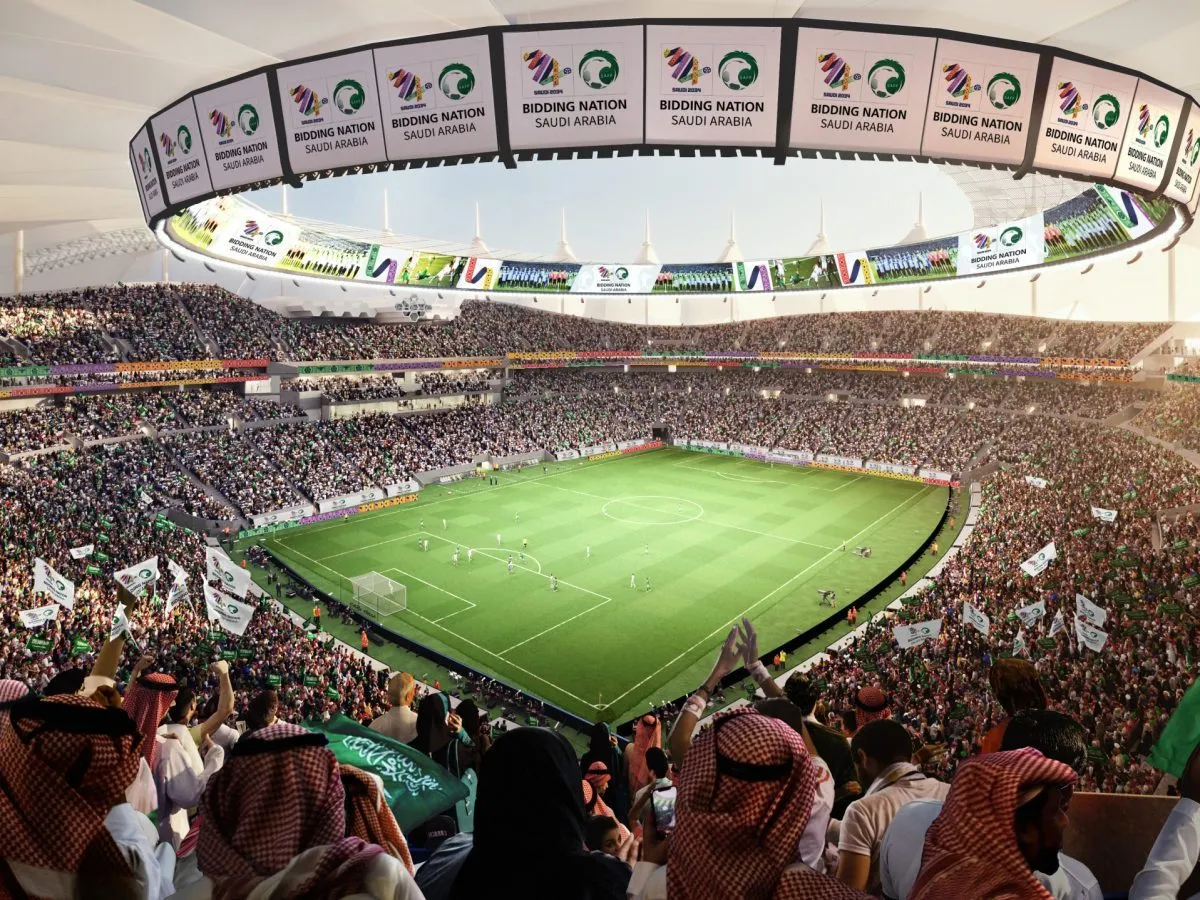
Rather than extending outward, designers are excavating approximately ten meters below ground level to create additional spectator capacity. This strategy allows the stadium to increase seating numbers while maintaining its familiar external profile.
The excavated soil is not being removed from the site. Instead, it will be reused to shape new landscaped areas, training facilities, and recreational zones around the stadium, reducing transportation-related emissions and construction waste.
A New Roof Canopy Preserves the Stadium’s Signature Silhouette
While the original roof structure is being replaced, the design team has sought to preserve the visual identity that has made King Fahad Stadium recognizable for nearly four decades.
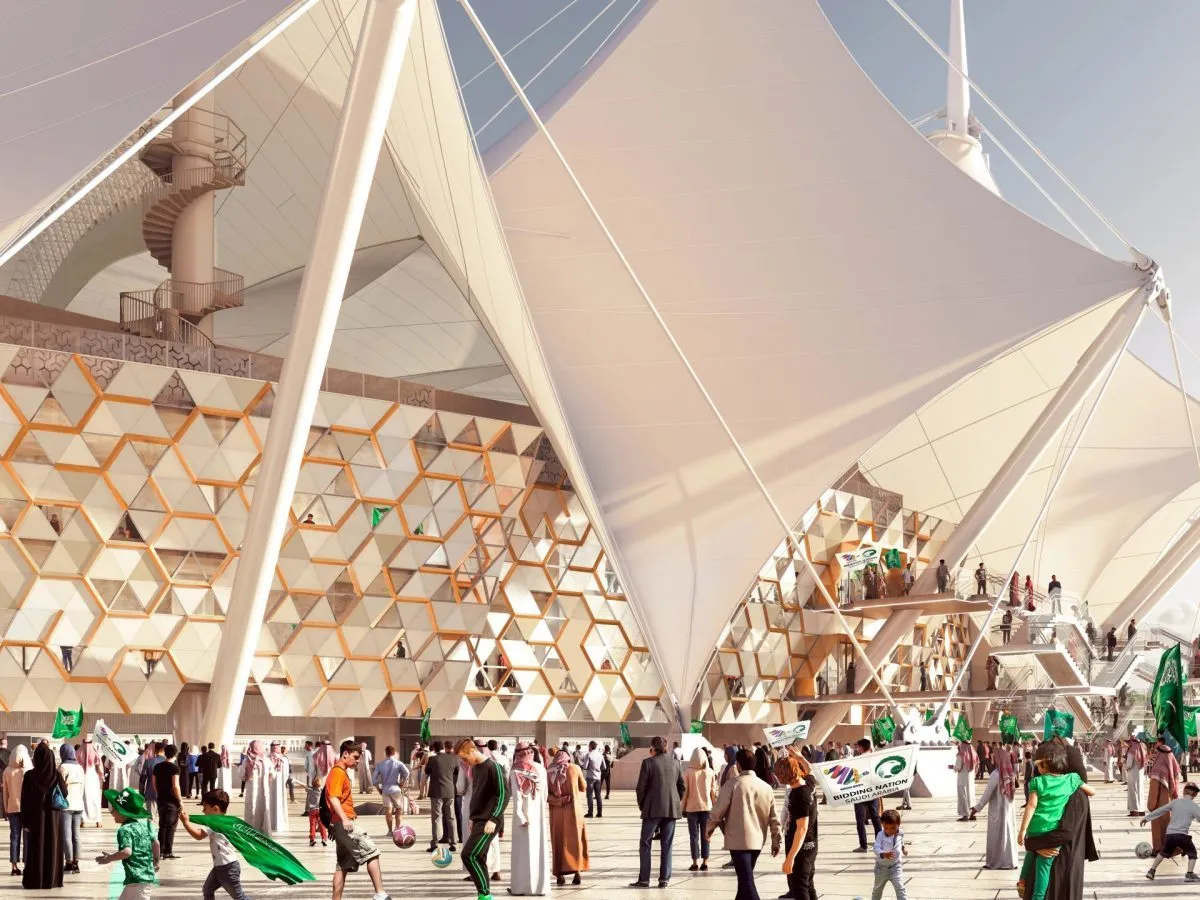
A new cable-net roof canopy spanning approximately 36,000 square meters will provide shade across the seating bowl and podium areas while supporting the technical demands of contemporary sporting and entertainment events.
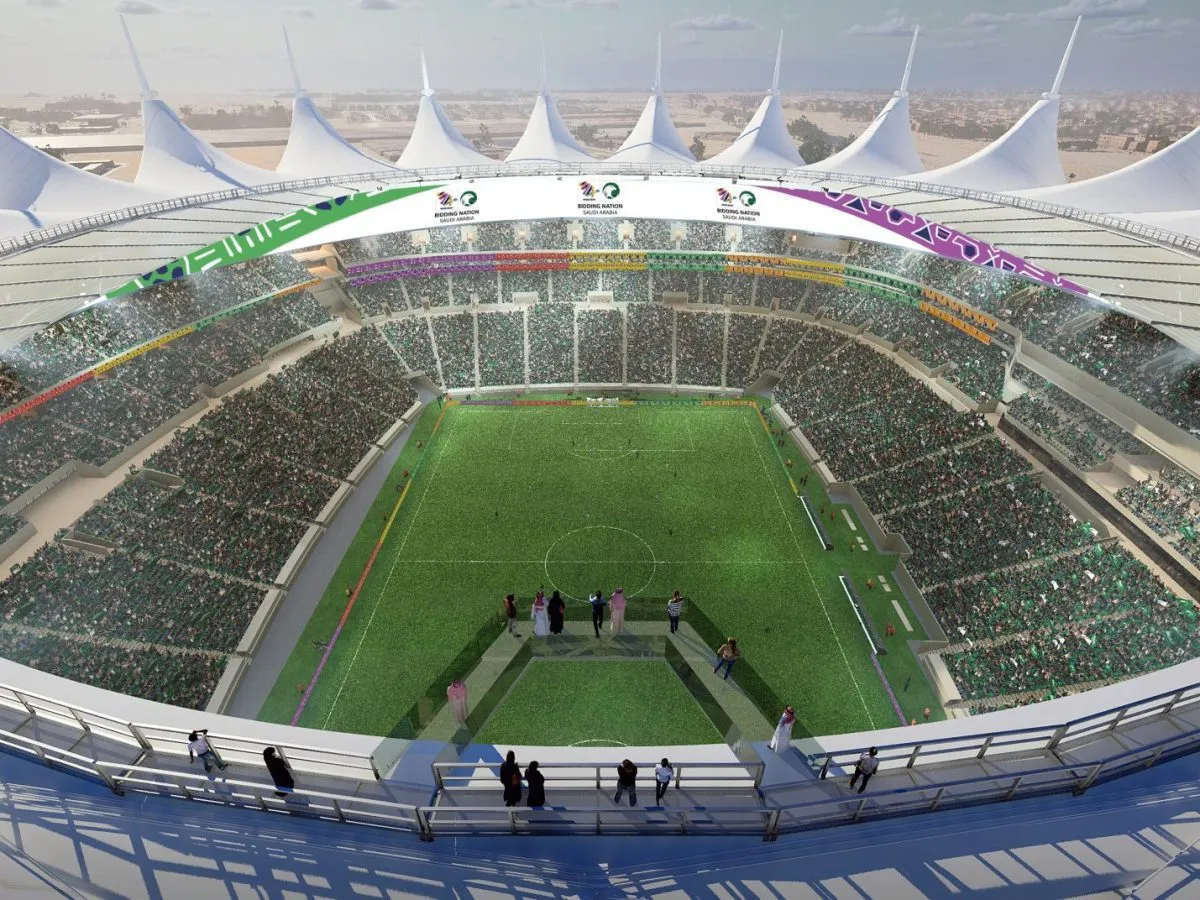
New structural masts will also accommodate modern lighting, broadcasting equipment, and concert rigging systems that were not envisioned when the stadium first opened in the 1980s.
Beyond Football: Creating a Sports and Community Destination
Populous has developed a broader master plan aimed at transforming the surrounding site into an active year-round destination.
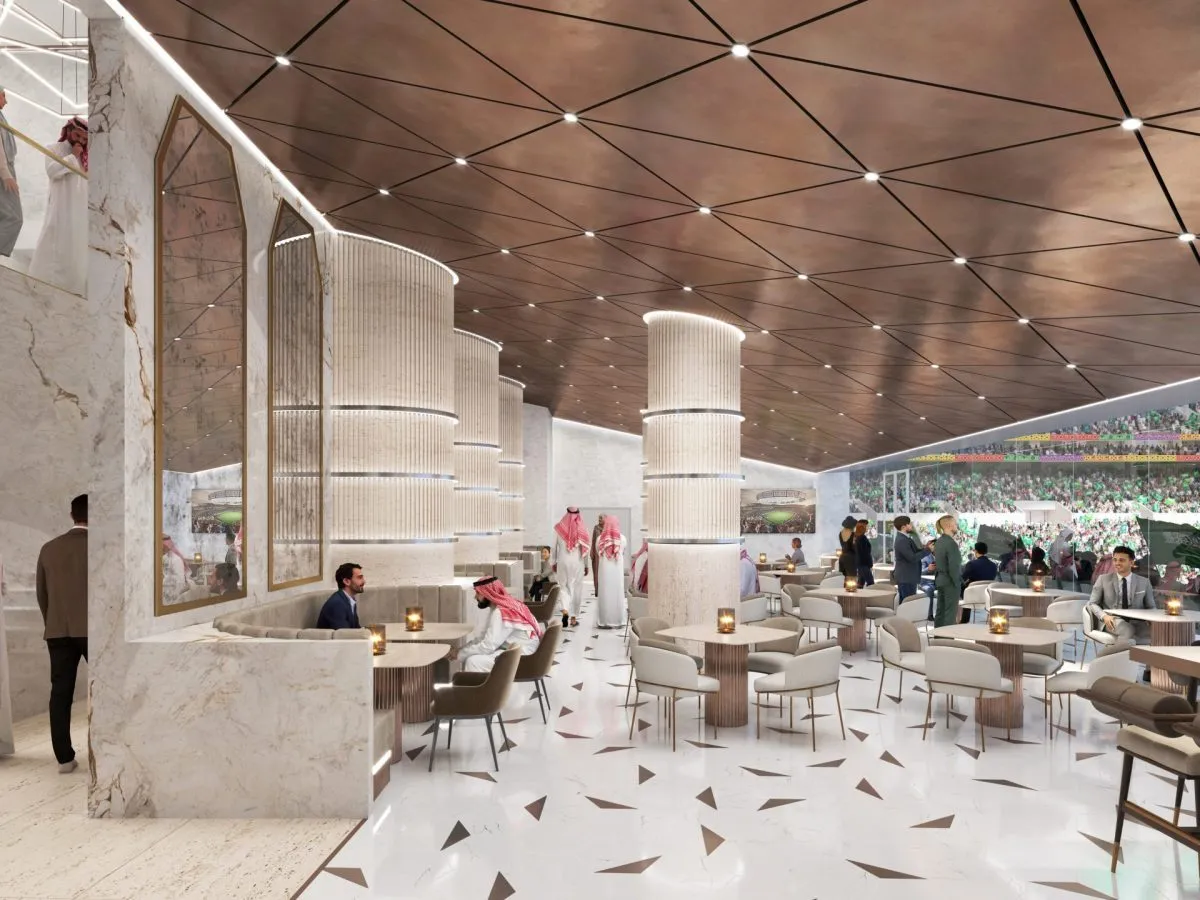
New amenities planned for the development include a football academy, sports center, amphitheater, fan zones, five-a-side football pitches, footgolf facilities, and commercial spaces. More than 400 existing trees will be relocated and replanted as part of a new public park landscape designed to support everyday community use.
The vision shifts King Fahad Sports City from a venue used primarily during major events into a multifunctional sports and recreation hub serving Riyadh throughout the year.
Preparing a Historic Venue for a FIFA World Cup 2034
As Saudi Arabia accelerates preparations for the FIFA World Cup 2034, the renovation of King Fahad Sports City Stadium highlights a different approach to stadium development—one that values heritage alongside innovation.
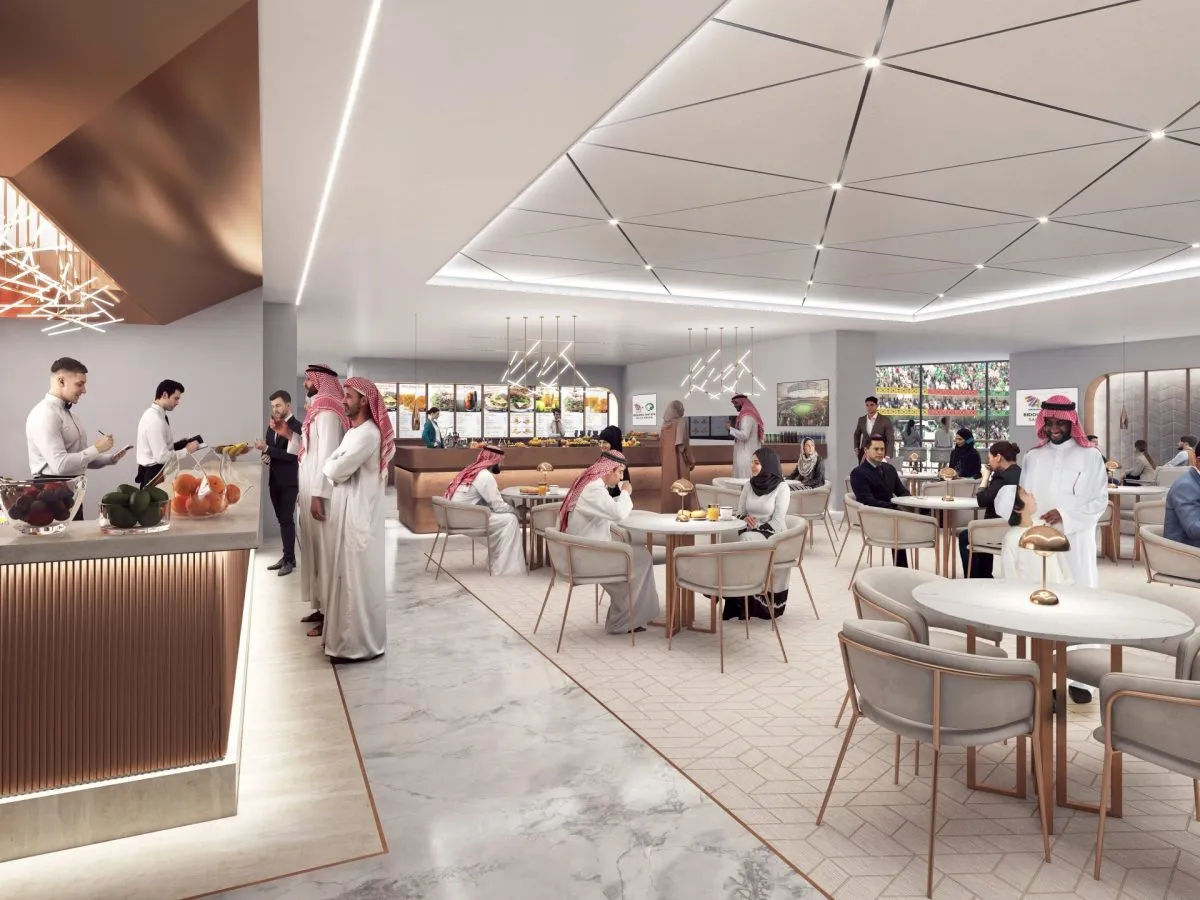
Through adaptive reuse, renewable energy integration, material recycling, and community-focused planning, Populous is transforming one of the kingdom’s most iconic sporting landmarks into a venue capable of meeting future demands while preserving its architectural legacy. The project positions King Fahad Sports City Stadium as a World Cup venue and a model for sustainable stadium redevelopment in the region.
Credit: Populous
.jpg "Fran Silvestre - Rethinking Architecture")


.jpg2.jpg "Carlo Ratti - Rethinking Architecture")