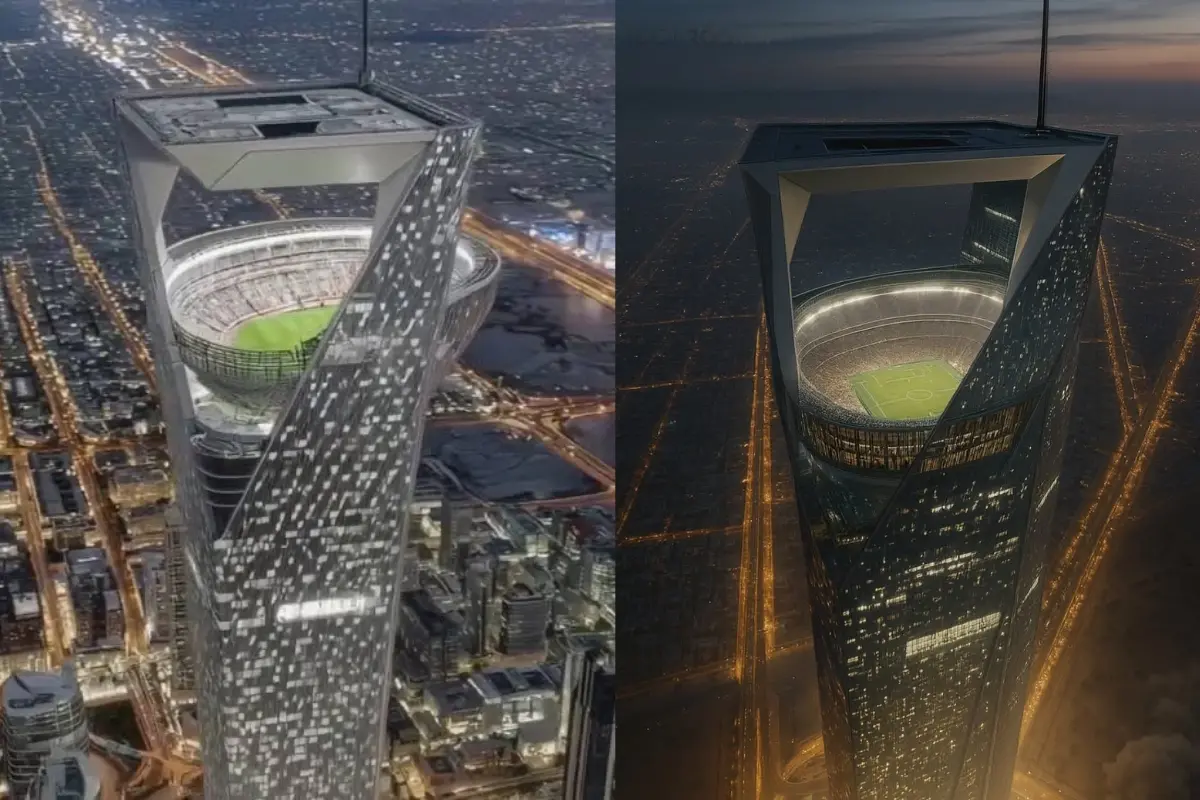
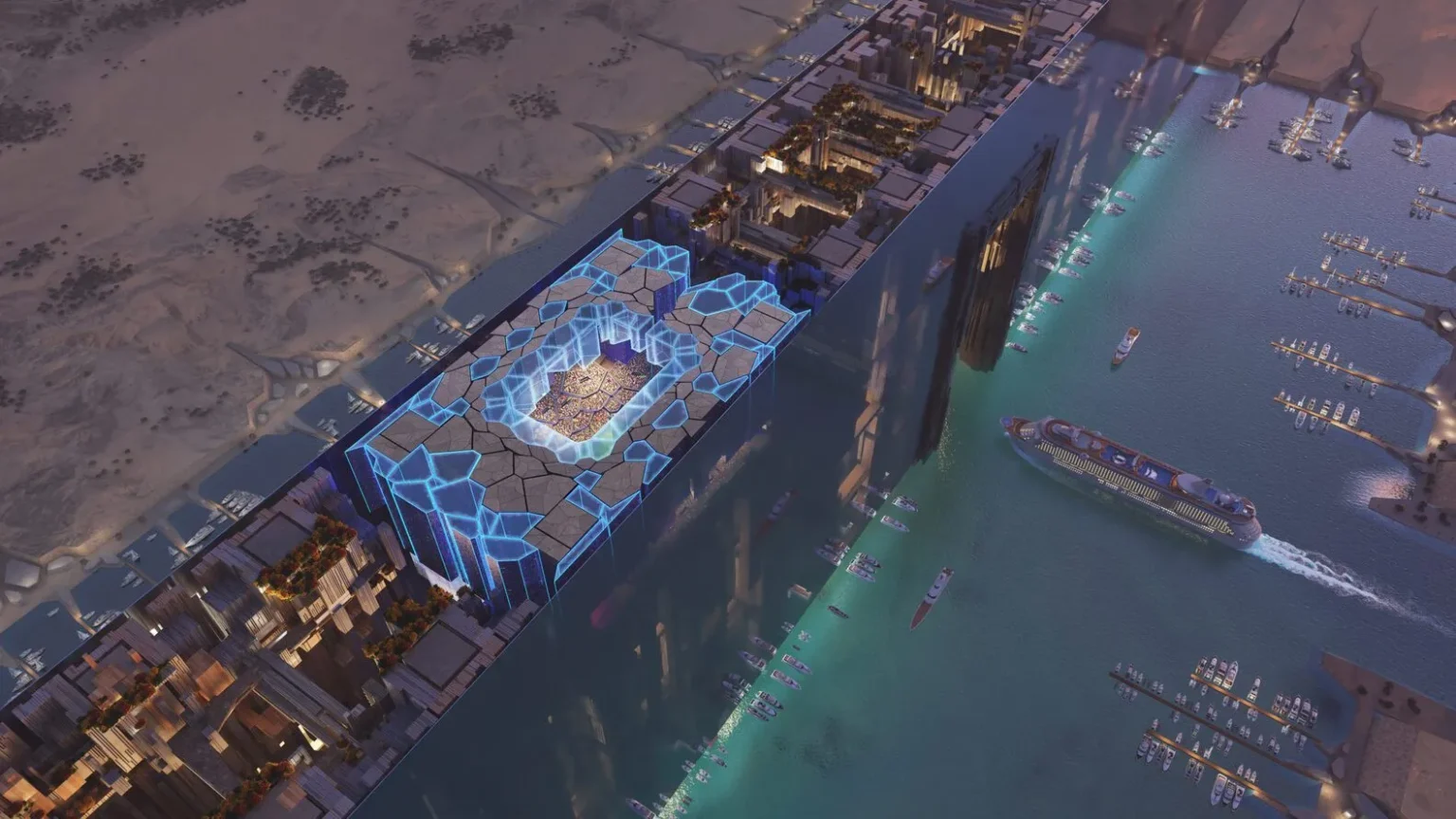





Riyadh, Saudi Arabia – To host the 2034 FIFA World Cup, Saudi Arabia has unveiled plans for what it describes as the world’s first “Sky Stadium” a football venue suspended roughly 350 meters (about 1,150 ft) above the desert floor. The proposed arena, part of the futuristic megacity NEOM development and the linear smart-city project The Line, is reportedly designed to accommodate around 46,000 spectators and run entirely on renewable energy.
Vision and Specifications of Saudi Arabia’s World’s First Sky Stadium
Saudi Arabia’s upcoming Sky Stadium, also referred to as the NEOM Stadium, is shaping up to be one of the most significant sports infrastructure projects ever proposed. The stadium will form part of the nation’s plan to build 15 advanced venues across five host cities in preparation for the 2034 FIFA World Cup. The development aligns with the country’s long-term strategy to redefine global sports architecture and promote innovation through its Vision 2030 initiative.
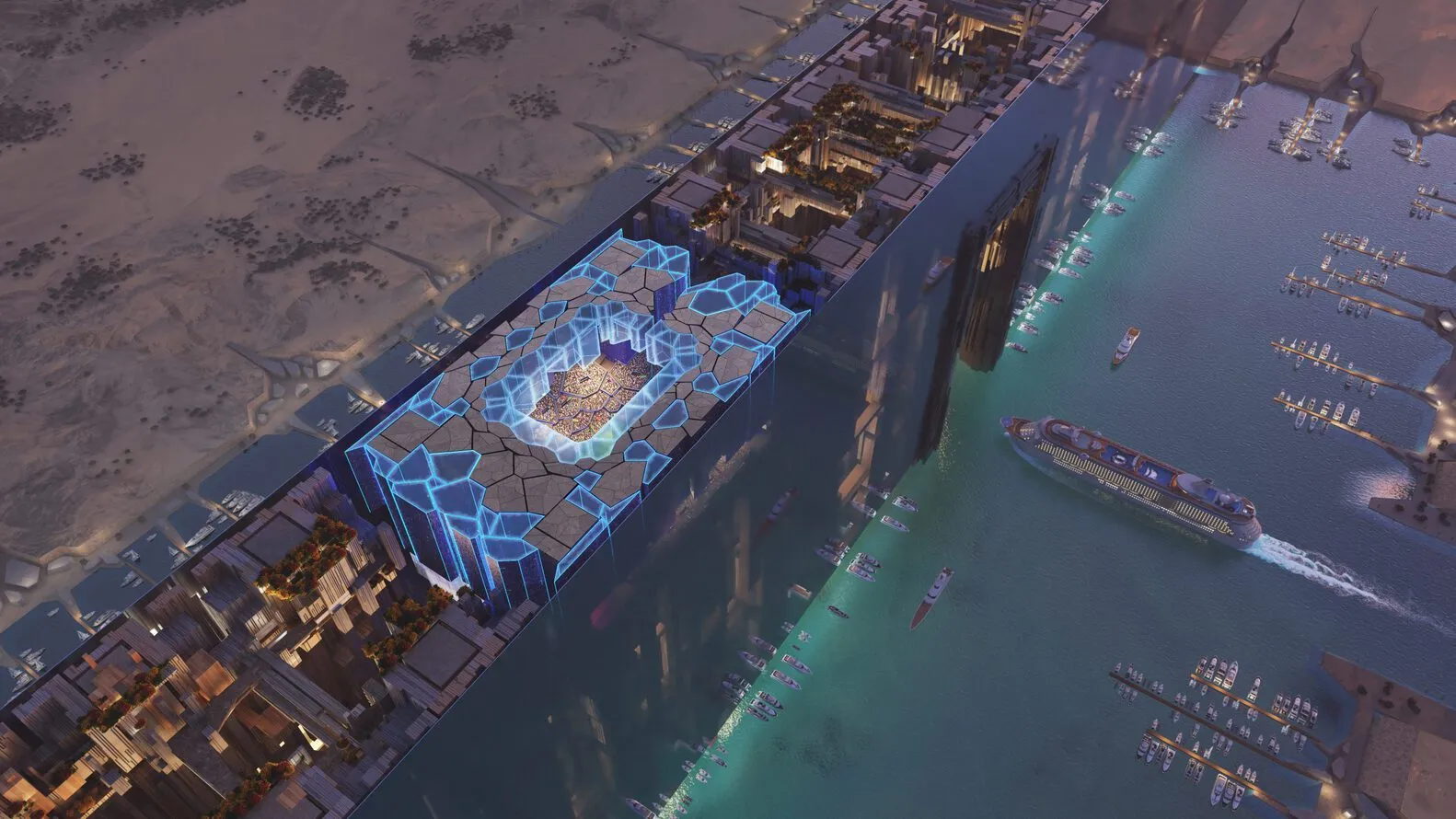
The Sky Stadium is expected to seat approximately 46,000 spectators, making it one of the mid-sized yet technologically advanced World Cup arenas. Designed to hover about 350 meters (1,150 feet) above the ground, the structure will overlook the NEOM desert landscape, creating a panoramic view of Saudi Arabia’s northwestern region.
Construction is projected to begin around 2027 and reach completion by 2032, ensuring readiness well ahead of the tournament. The stadium’s location within The Line, NEOM’s smart linear city, will allow it to seamlessly integrate with surrounding urban systems. Access will rely on electric and autonomous transport networks, consistent with NEOM’s goal of eliminating traditional vehicle traffic.
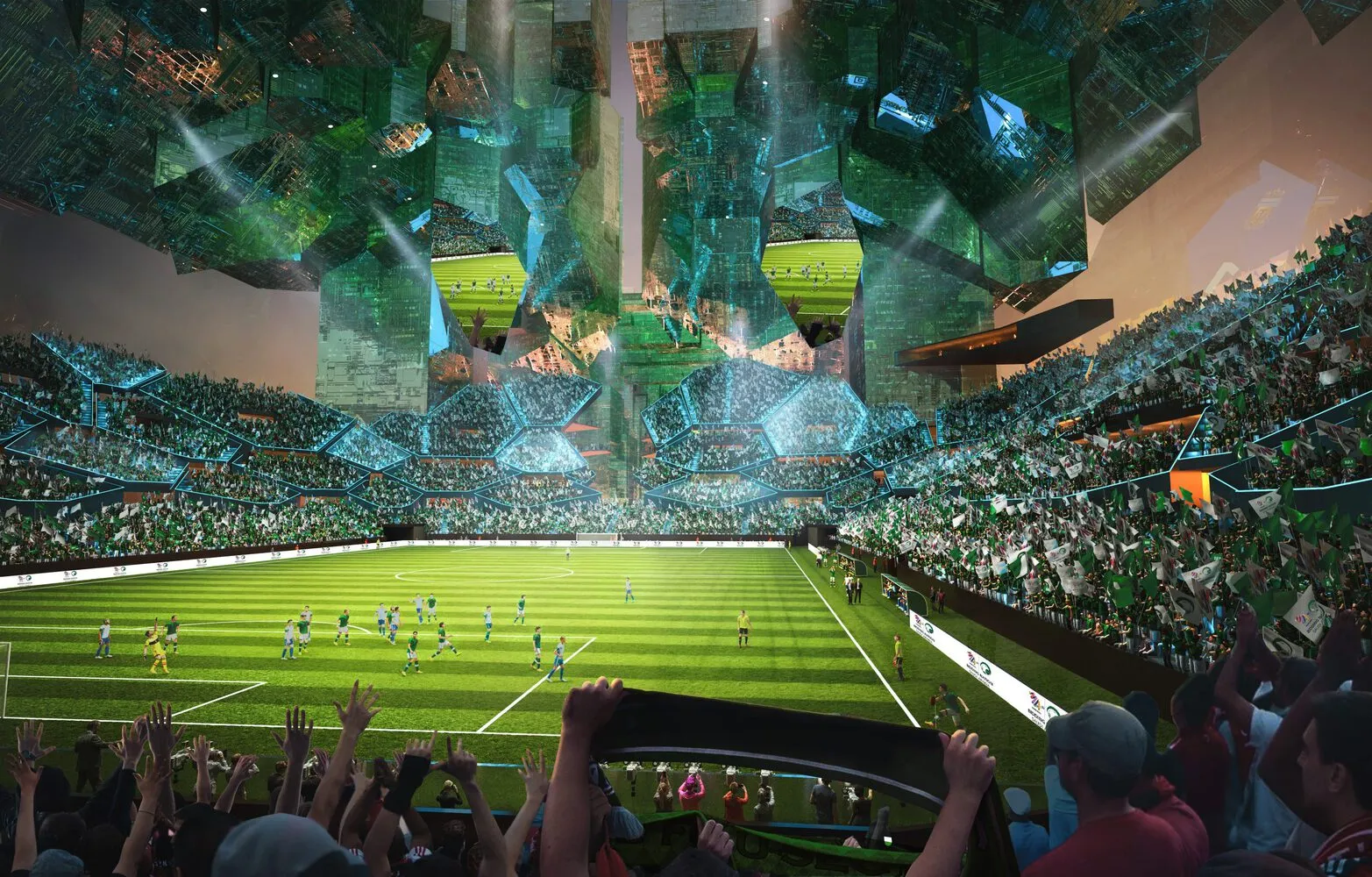
The Sky Stadium embodies the country’s technological vision and its growing role as a global sports hub. If realized as planned, the structure could set a precedent for how future mega-events balance innovation, sustainability, and large-scale engineering in extreme environments.
Feasibility and Design Constraints of the Sky Stadium Project
Despite the futuristic concept, the Sky Stadium brings significant engineering and logistical hurdles. Raising a 46,000-seat stadium hundreds of meters above desert terrain presents questions of structural safety, wind and heat load, crowd access (elevators, pods), and emergency evacuation. Moreover, the underlying NEOM and The Line projects have experienced scope revisions, which may affect the stadium’s timeline or design.
Public Reactions and Key Concerns
While the Sky Stadium has captured global attention for its scale and industry, it has also raised a number of practical and ethical concerns. Observers have questioned whether the project’s budget, construction schedule, and technical risks have been fully considered and whether a stadium elevated hundreds of meters above the desert will genuinely improve the spectator experience or remain a symbolic showpiece.
Critics have also highlighted broader issues linked to Saudi Arabia’s large-scale developments, including labor conditions, environmental impact, and project transparency. These discussions reflect the growing scrutiny surrounding the nation’s rapid expansion into global sports and infrastructure.
Key questions still under discussion include:
- Can the stadium be delivered on time and within the projected budget?
- How will high-altitude heat and wind affect both players and fans?
- Will the facility continue to benefit local communities after the World Cup, or risk becoming underused once the event concludes?

The proposed Sky Stadium in Saudi Arabia is a bold statement of intent, merging audacious architecture, sustainable design, and global sports staging. Whether it materializes exactly as expected and whether it fulfills its promised legacy remains to be seen.
Image credit: NEOM