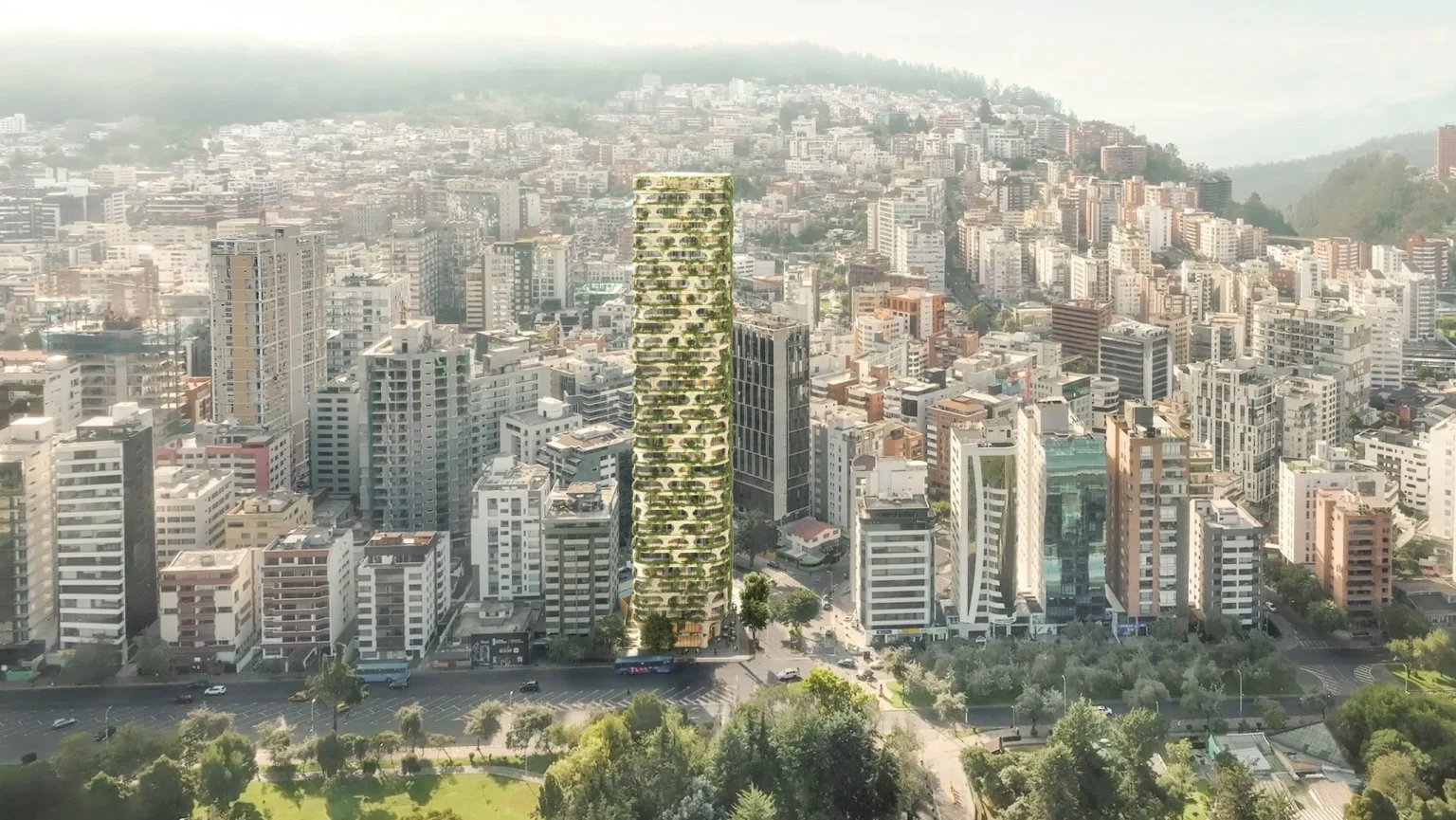


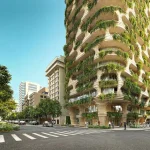
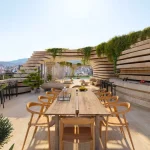
Qapital Tower in Quito, Ecuador introduces a 32-storey residential skyscraper designed by Japanese studio Kengo Kuma and Associates in collaboration with Uribe Schwarzkopf.
Rising 128.5 meters, it marks Kengo Kuma’s first project in the city and forms part of a broader wave of international architectural interventions shaping Quito’s central business district near La Carolina Park. The design merges compact urban living with nature-driven architecture and material experimentation, positioning the tower as a residential hub and a cultural statement, expected to be completed in 2029.
High-Density Living and Urban Investment Vision
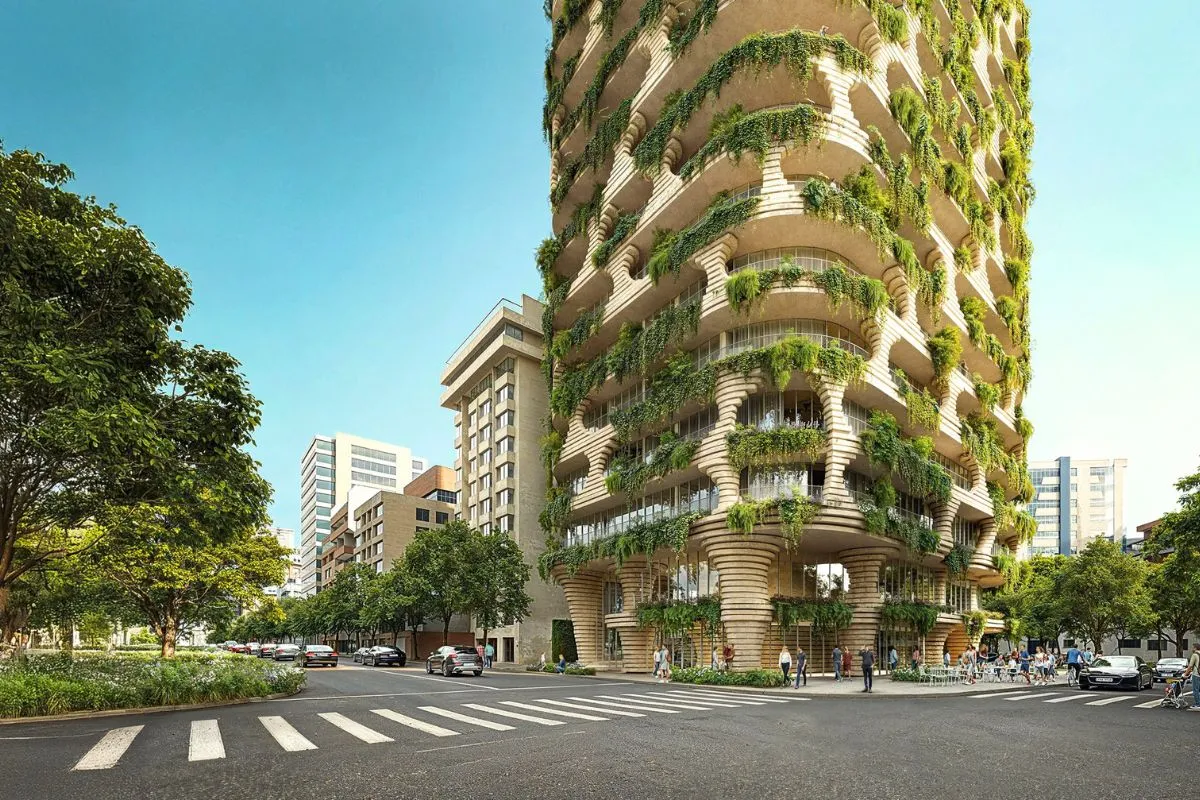
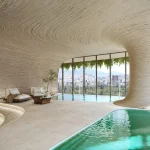
Under developer Joseph Schwarzkopf, the project is structured around 509 micro-apartments ranging from 21 to 36.15 square metres. These compact units are designed for flexible living and investment use, responding to Quito’s rising demand for short-term rental housing. The lower levels incorporate three commercial floors, while the upper program includes amenities such as a rooftop pool, spa, and pet facilities. Together, these elements reflect a strategy focused on density, efficiency, and lifestyle-driven urban real estate development.
Ceramic-Inspired Material Philosophy
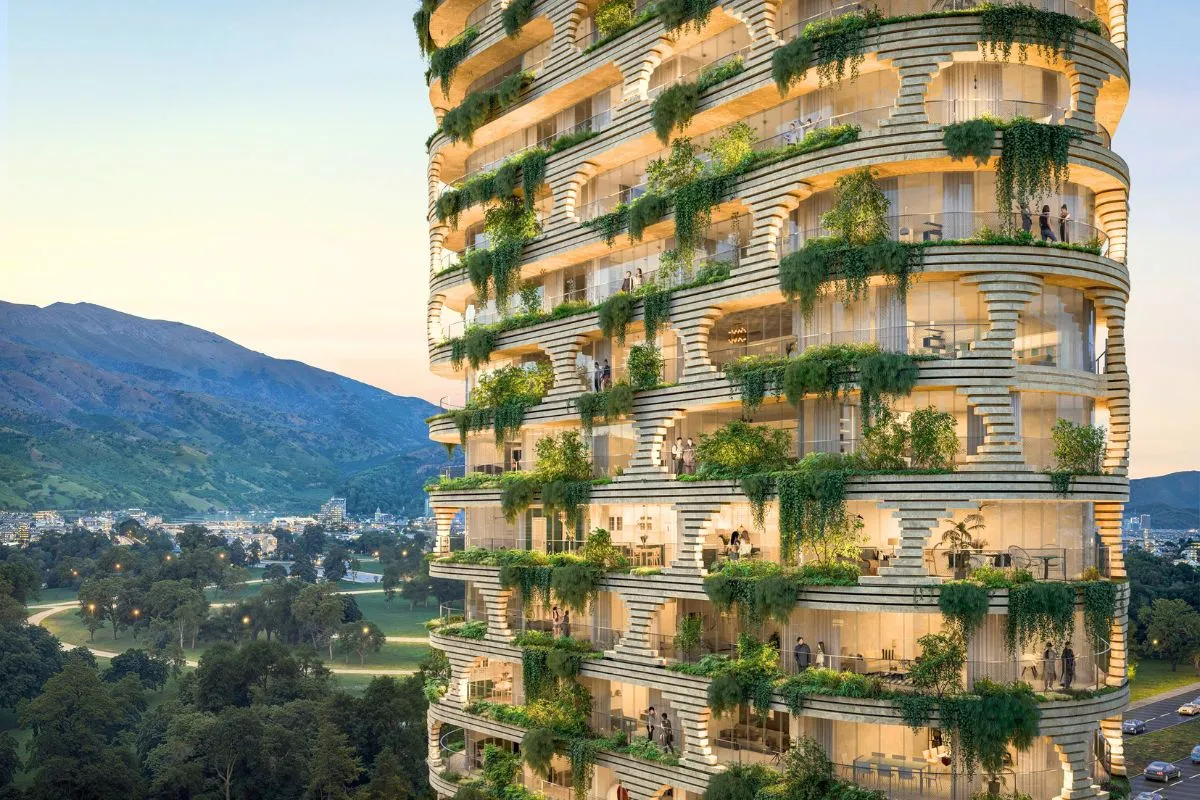
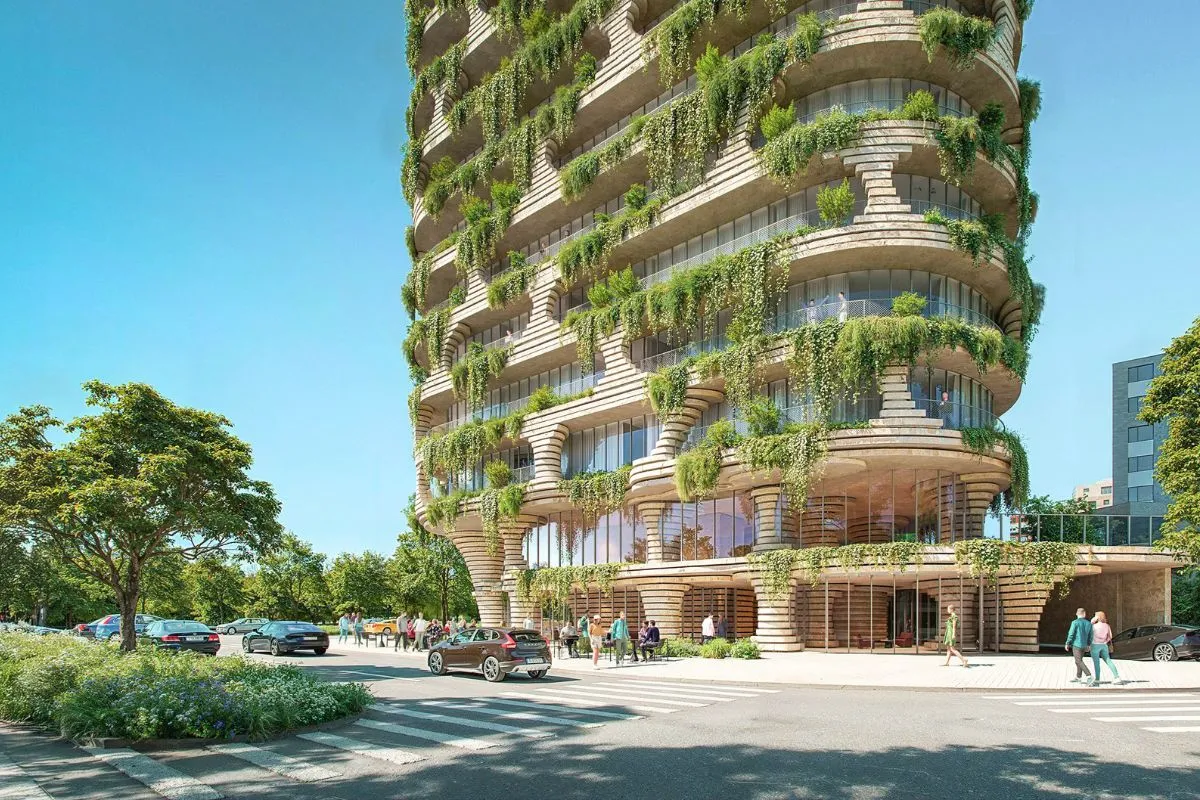
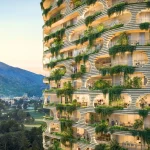
Kengo Kuma’s design approach for Qapital Tower is strongly influenced by ceramic traditions shared between Japan and Ecuador. This material dialogue shapes the façade’s carved, striated surface, which resembles layered stone and handcrafted ceramic textures. The building’s deep openings and recessed balconies soften its mass, allowing vegetation to integrate into the architecture and reinforcing a sense of crafted imperfection. Through this ceramic-inspired language, the skyscraper design expresses continuity between ancient material practices and contemporary high-rise design.
Andes-Inspired Form of Texture and Verticality
The design is also shaped by the rugged topography of the Andes mountains surrounding Quito. The tower’s porous façade and cavern-like openings echo the natural erosion and layered rock formations found in the landscape. Balconies function like crevices, allowing plants to spill outward and integrate greenery into the building’s skin. Kengo Kuma’s approach transforms the skyscraper into a vertical extension of the surrounding terrain, blurring boundaries between built form and natural environment.
Compact Living Meets Organic Spatial Experience
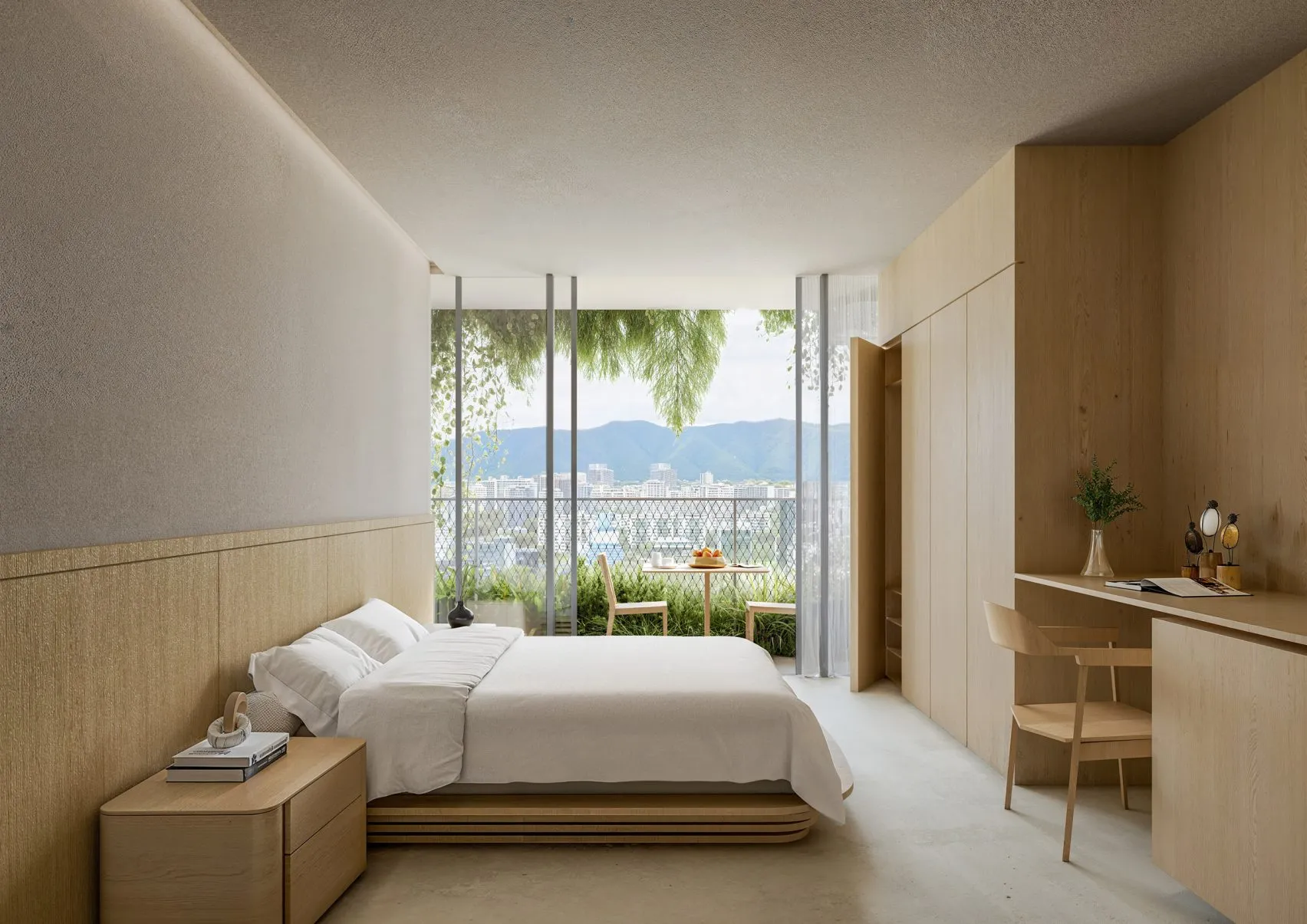
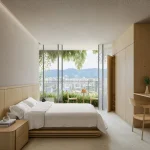
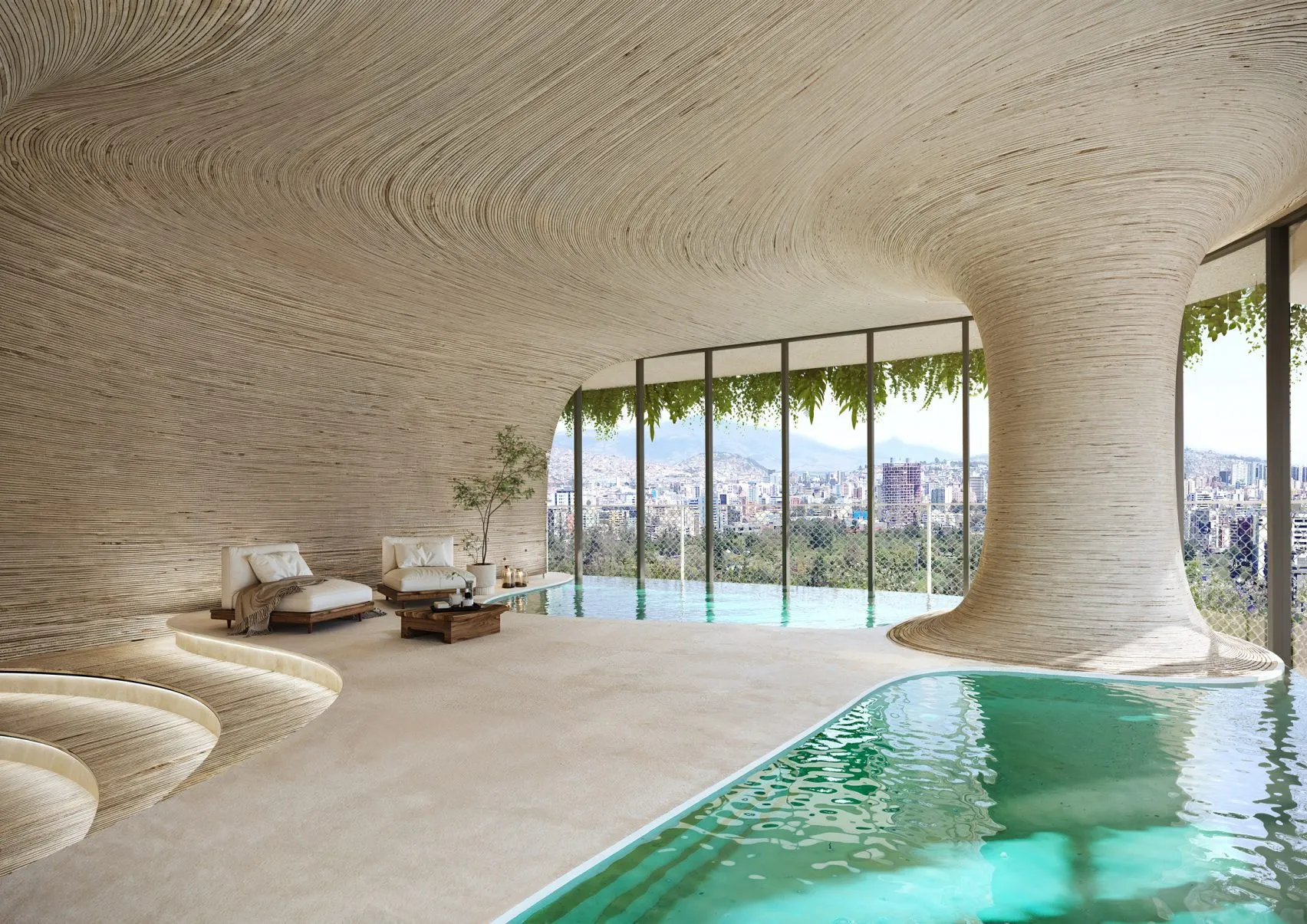
Inside, the tower balances compact residential efficiency with expansive communal environments. Apartment units are finished in light wood, emphasizing simplicity and warmth within a limited footprint. In contrast, shared amenity spaces expand into sculptural, organic volumes that include spa areas, leisure zones, and a rooftop pool.
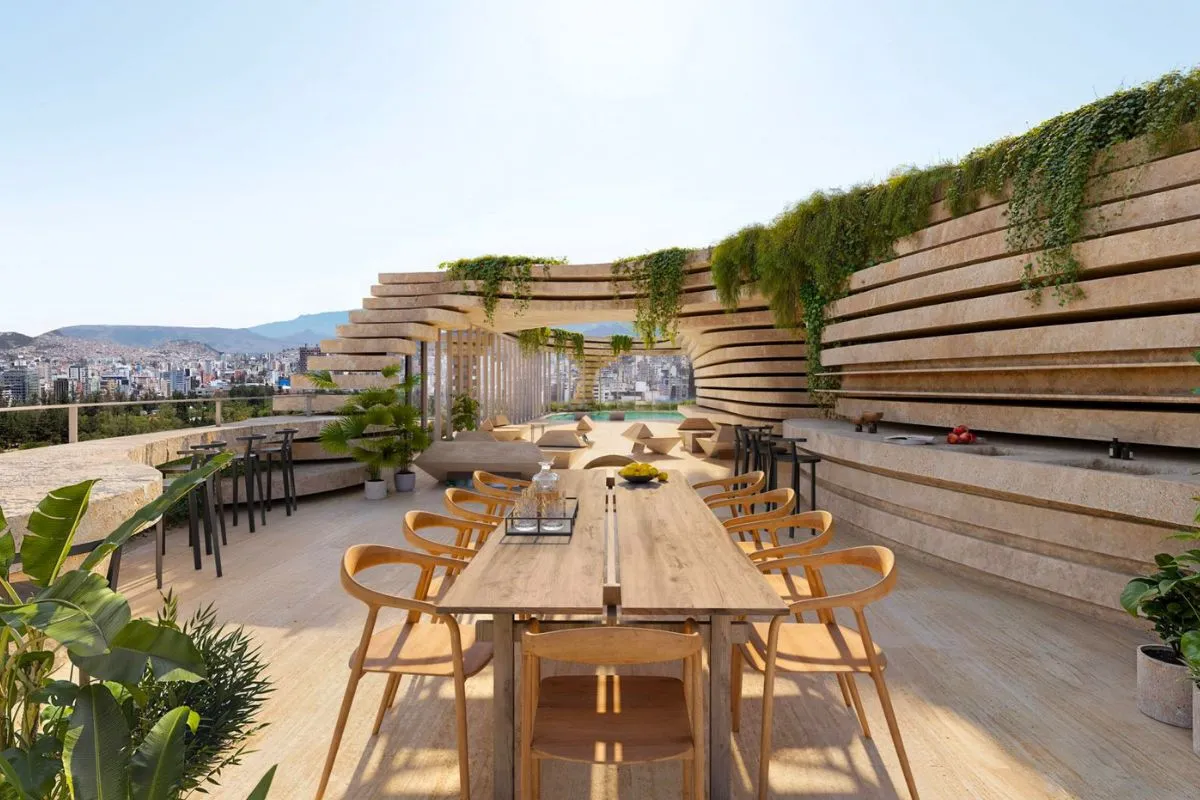
These contrasting spatial experiences create a rhythm between private density and collective openness, reinforcing the building’s vision of adaptable urban living in a high-rise context.
Credit: Kengo Kuma Studios