

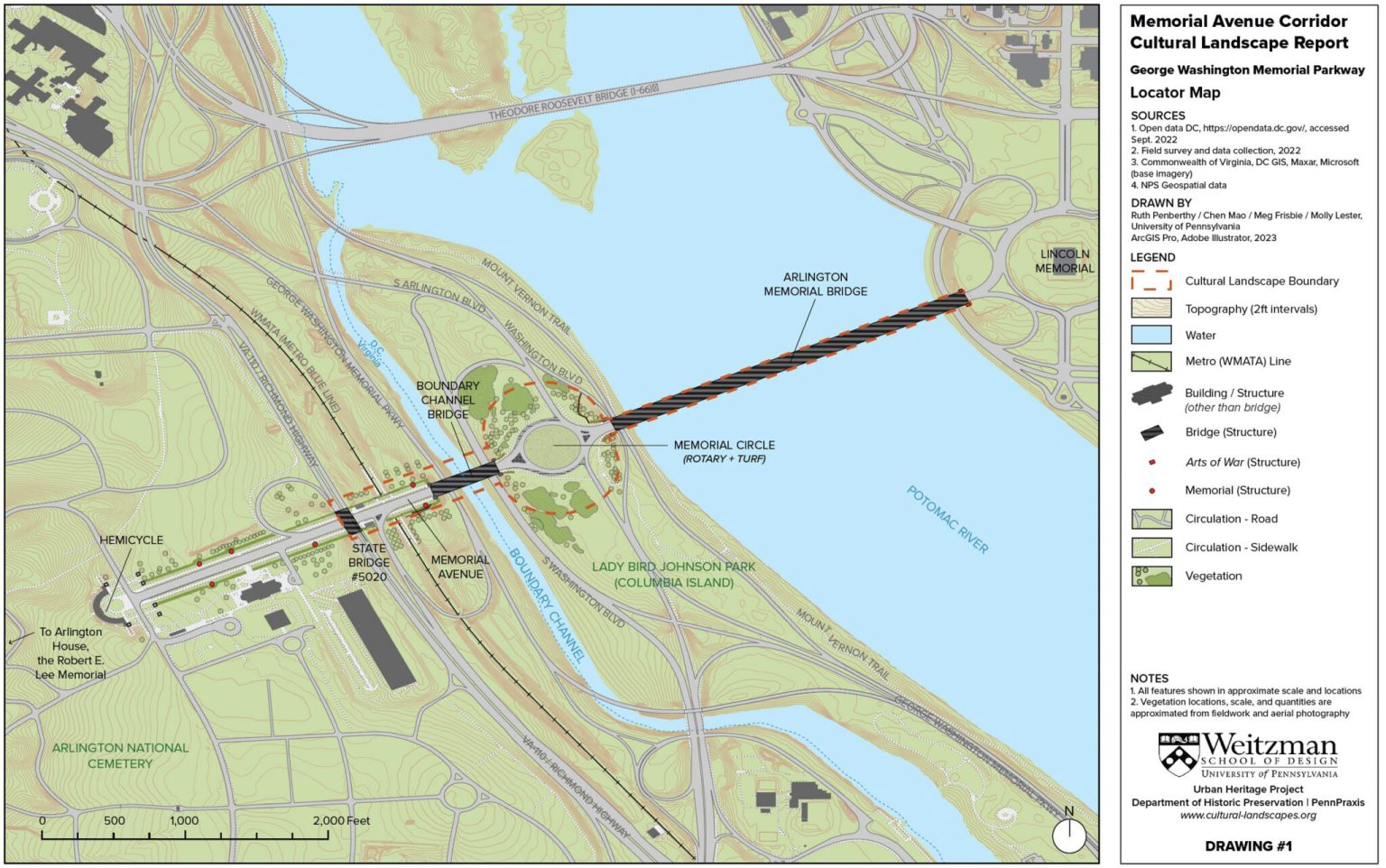
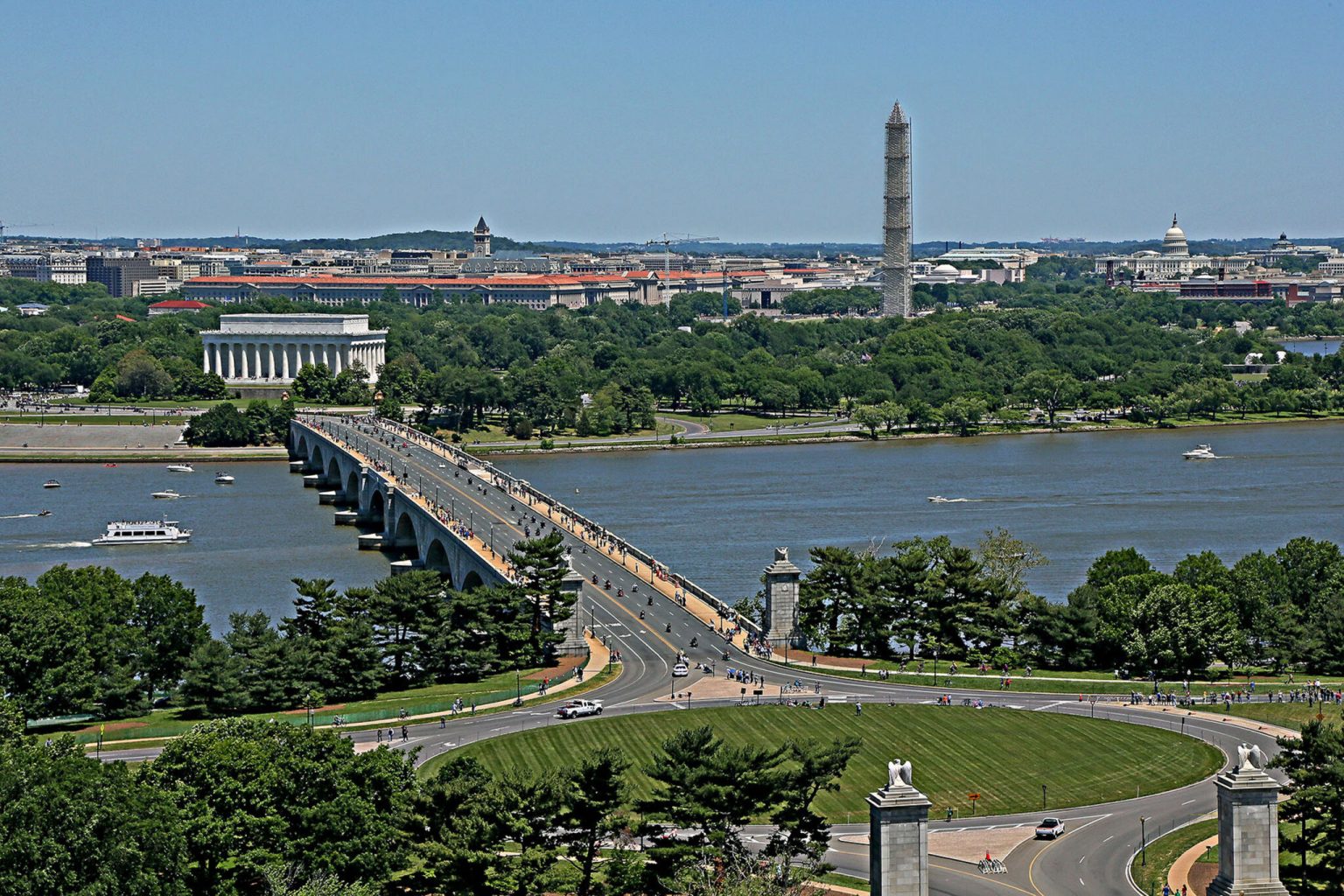

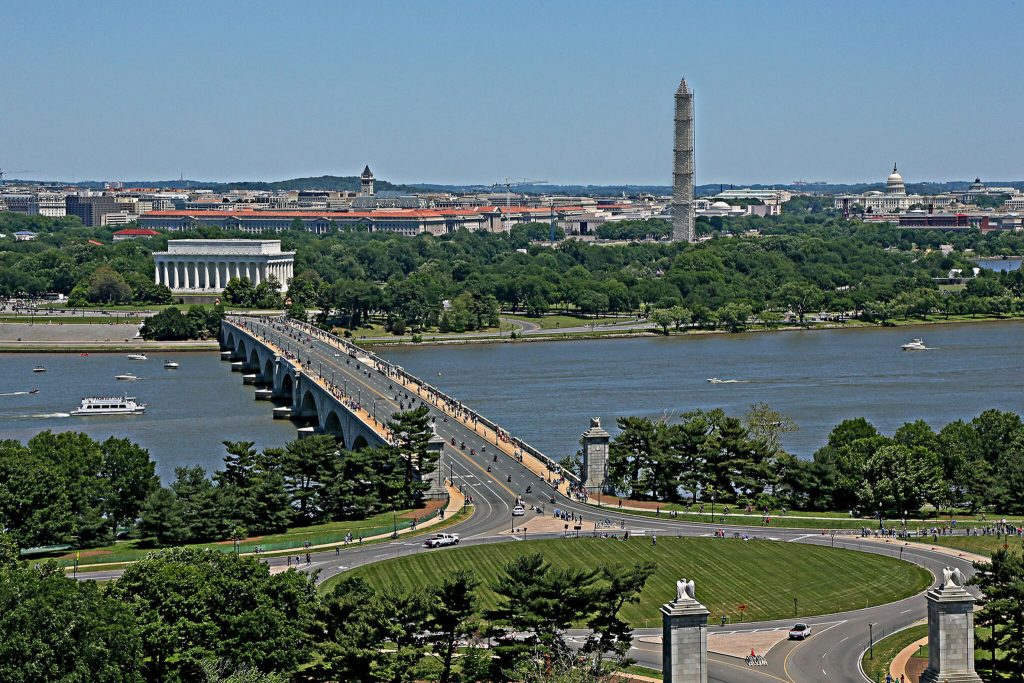
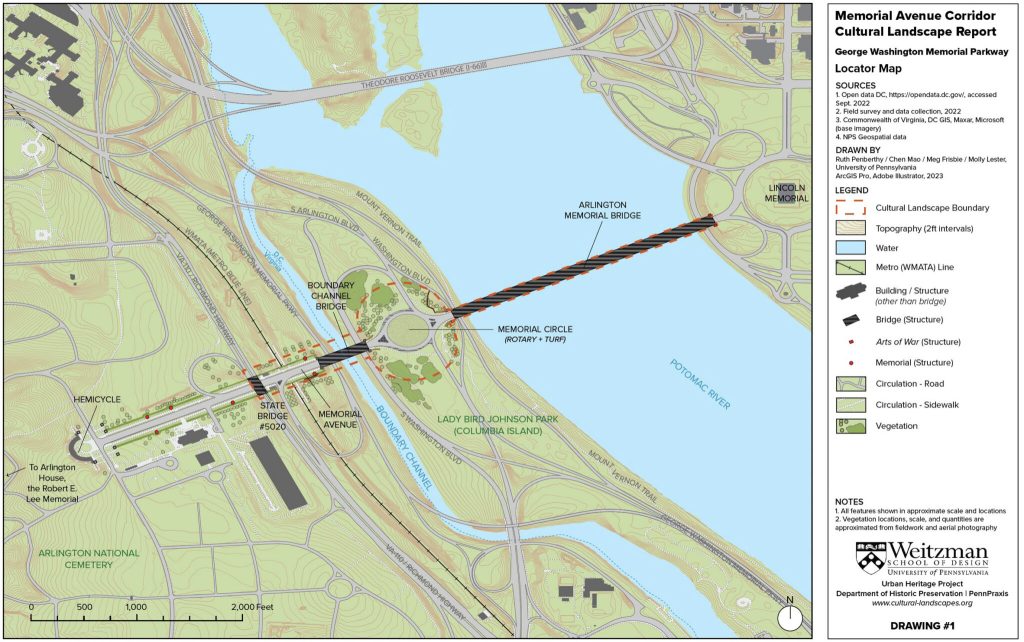
Some places are meant to be crossed, not claimed. Memorial Circle has always been one of them, a threshold rather than a destination, a point of passage along the long axis that carries the eye from the Lincoln Memorial across the Potomac and into Arlington National Cemetery. When plans emerged for a 250-foot triumphal arch on the site, that quiet role came under pressure. In response, two landscape architecture students from the Harvard Graduate School of Design have offered a different kind of presence.
Jeremy Dvorak and Jake Geitner, working in collaboration with The Cultural Landscape Foundation, have released a pair of design provocations that replace vertical assertion with horizontal calm. Both schemes center on water, open sightlines, and the historic processional axis that has long defined this stretch of national landscape.
Titled “Memorial Avenue: An Irreplaceable Axis of National Memory,” the proposals emerged from a 2026 seminar taught by Charles A. Birnbaum, founding president of The Cultural Landscape Foundation. They arrive at a moment when the arch project itself faces legal challenges and public debate, offering not a competing monument but a reconsideration of what the site can hold.
A Void Along the Axis
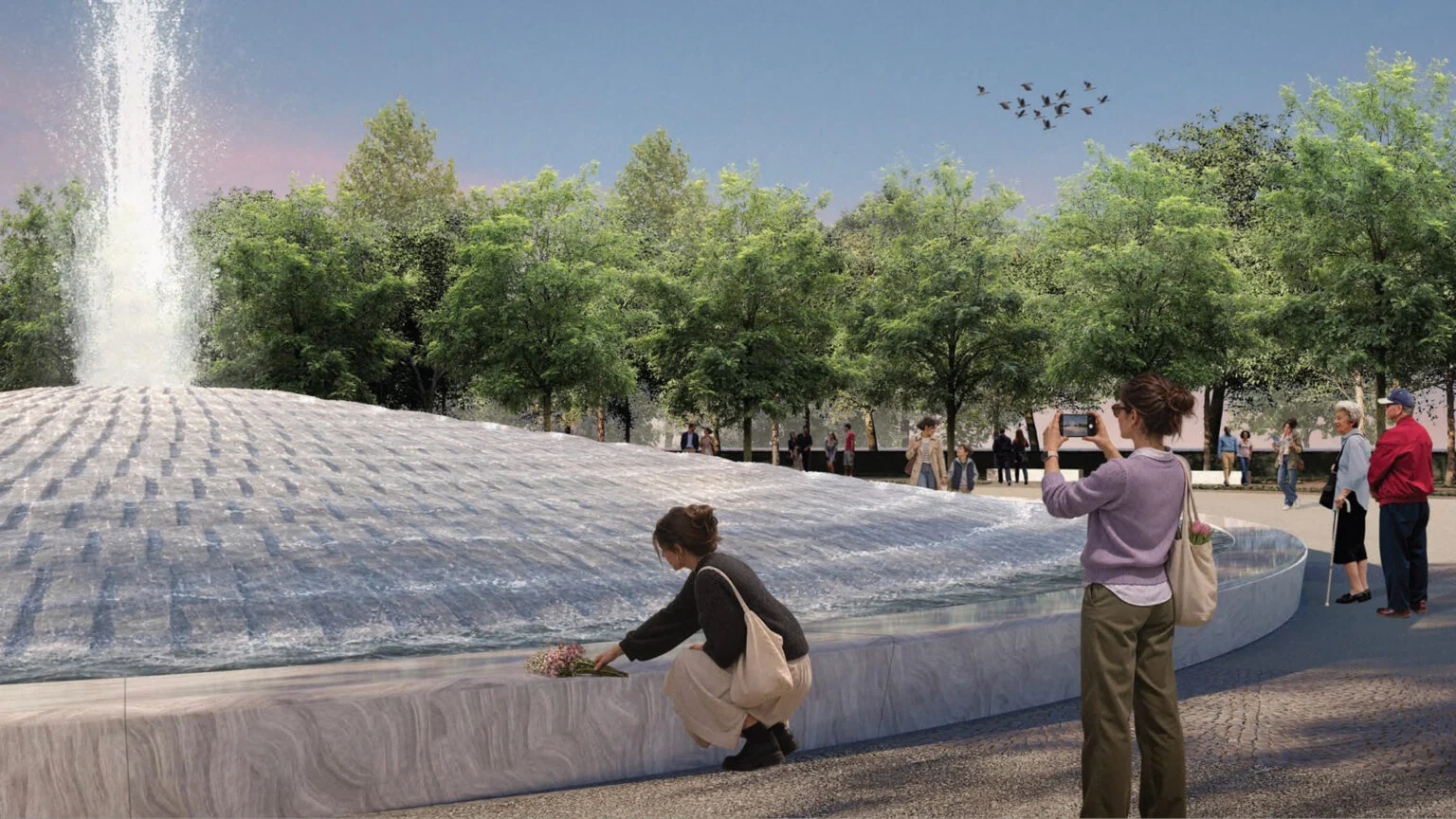
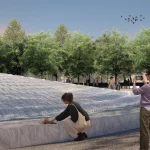
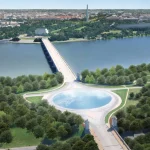
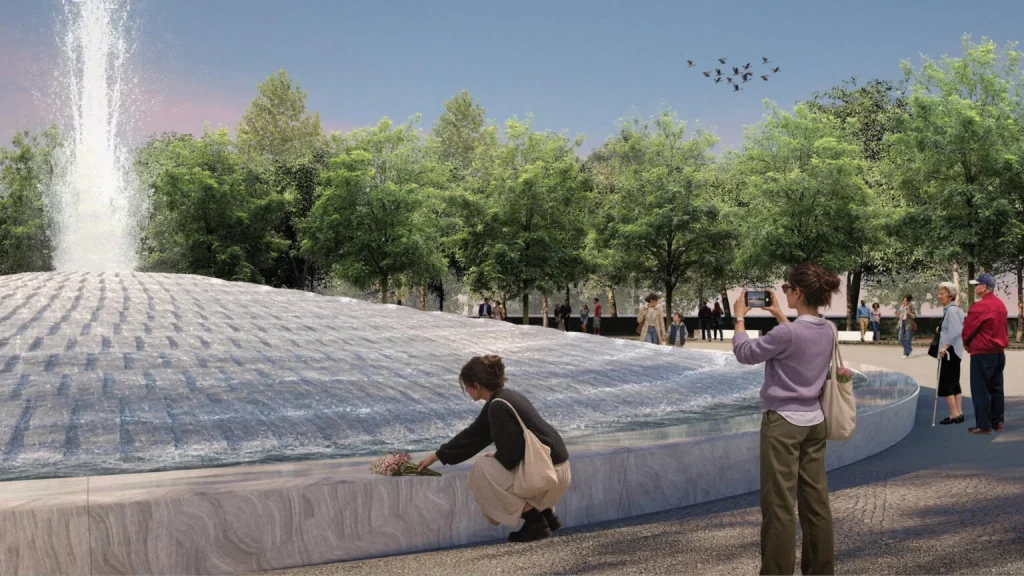
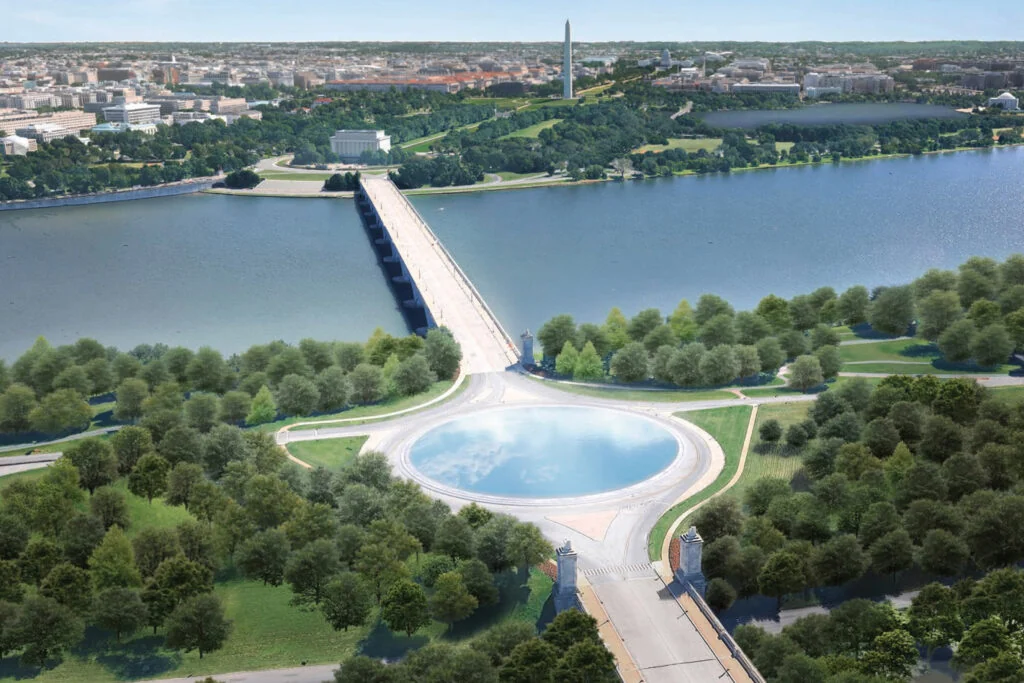
The first proposal treats Memorial Circle as a deliberate void. The existing grassy center of the traffic roundabout is transformed into a low, expansive reflecting pool. A perimeter of natural stone frames the water and carries inscriptions related to belonging and unity. The design is intentionally restrained. It is meant to be experienced primarily in motion, by those passing through the circle in vehicles, while preserving the long east-west views that define the axis.
This approach leaves the broader traffic pattern largely intact. It produces limited impact on vehicular circulation and avoids adverse effects on the dozens of historic properties that surround the site. In place of a dominant vertical form, the pool creates a quiet surface that mirrors sky, trees, and the distant silhouettes of the Lincoln Memorial and the Washington Monument. The circle becomes less an object to be occupied and more a pause within a larger sequence of national space.
Straightening the Path
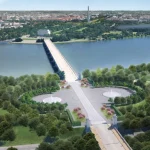
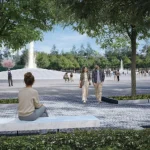
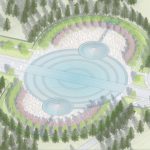
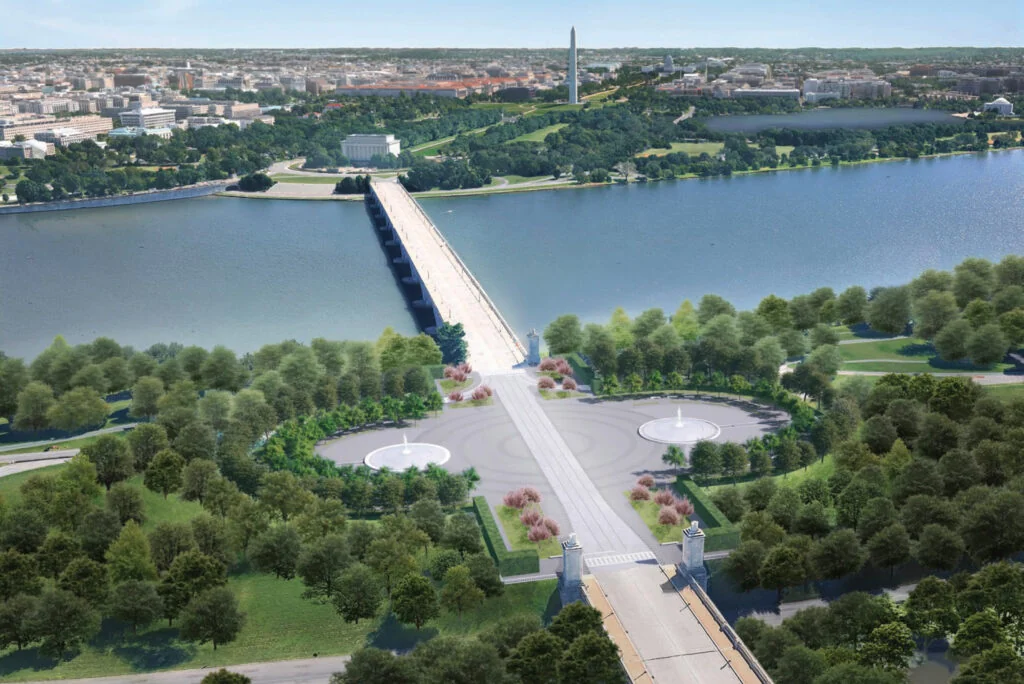
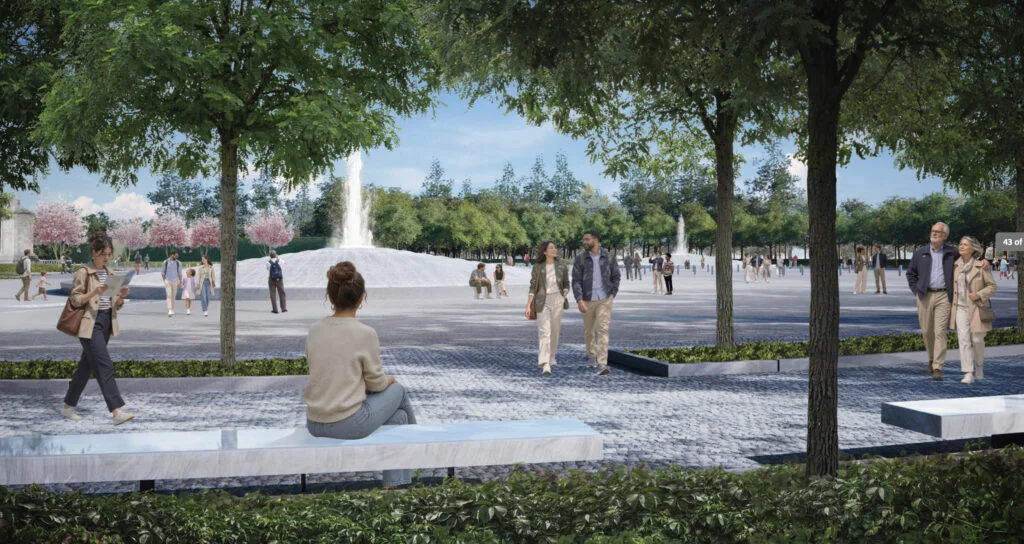
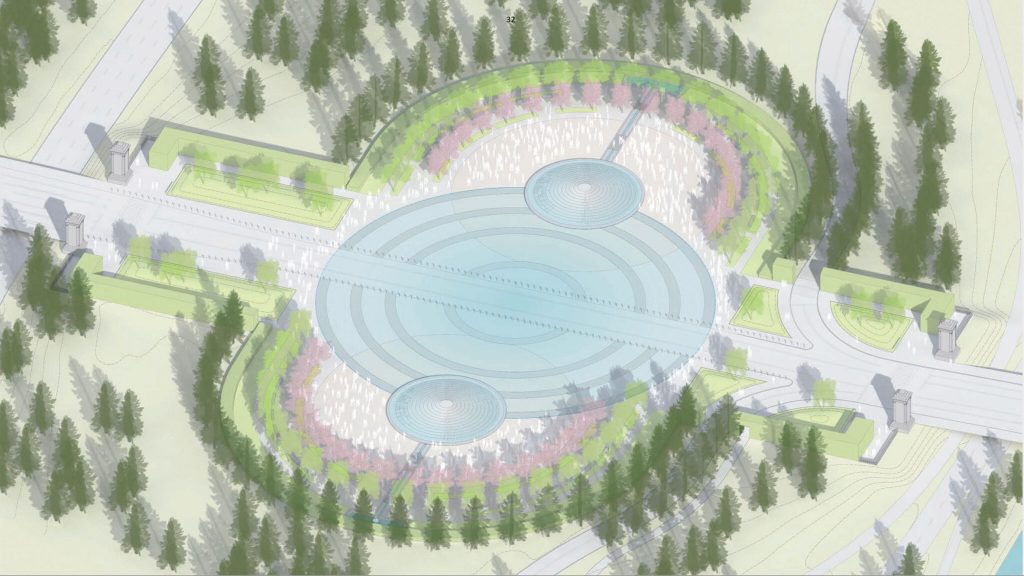
The second proposal is more transformative. It removes the traffic circle altogether and inserts a straight thoroughfare that reconnects Arlington Memorial Bridge directly with Memorial Avenue. Two circular fountains, set within low stone mounds and formal planting, frame the new axis. Their geometries draw from earlier historic proposals for the site, layering concentric circles, intersecting alignments, and structured vegetation into a composition that acknowledges the past while establishing a contemporary identity.
On ordinary days, the road functions as a clear processional route. On commemorative occasions, when the bridge is closed to traffic, the central space can be flooded to form a continuous reflecting surface, turning the roadway into a temporary plaza of water. In this configuration, the landscape itself becomes the event, capable of shifting between everyday circulation and ceremonial stillness.
Landscape as Record
Both schemes share a conviction that the power of the site lies in its alignments rather than in any single object placed upon it. The long view from the Lincoln Memorial across the bridge and into Arlington National Cemetery is treated as an irreplaceable cultural asset. By keeping the axis open and privileging water over mass, the proposals allow the existing monuments and the cemetery beyond to remain the primary points of focus.
The students describe the landscape as a physical record of its own change. The fountains and pools do not erase history; they make visible the layers of planning, memory, and adaptation that have shaped the corridor. In doing so, they offer a form of monumentality that is cumulative rather than singular, collective rather than personal.
Context and Counterpoint
The proposals arrive against the backdrop of a highly charged discussion about national memory and the authority to shape it. The original arch concept, sometimes referred to in public discourse as a triumphal marker for the nation’s 250th anniversary, has drawn criticism for its scale, its potential to obstruct views, and its departure from the more understated language of the surrounding memorial landscape. A federal court order has temporarily halted construction, creating a pause in which alternative visions can be considered.
Dvorak and Geitner’s work does not claim to resolve that debate. It simply demonstrates that other possibilities exist. By grounding their designs in historical research and the specific spatial character of Memorial Avenue, they shift the conversation from the height of a structure to the quality of the experience along the axis.
Lessons in Restraint
In an era when public monuments often compete for attention through size and symbolism, these provocations argue for a different measure of significance. A low pool can hold as much meaning as a tall arch if it allows people to see farther, to move more freely, and to recognize themselves within a longer continuum of place and memory.
The designs also underscore the role of landscape architecture in civic discourse. Rather than treating the ground as a neutral platform for architecture, they treat the ground itself as the primary medium of expression. Water, stone, planting, and alignment become the tools through which questions of belonging, continuity, and national identity are explored.
An Axis That Remains Open
Whether either proposal is ever realized is secondary to the space they open in the public imagination. At a moment when the future of Memorial Circle remains unresolved, Dvorak and Geitner have shown that the site does not need to be claimed by a single, overwhelming form. It can remain a place of passage, reflection, and shared view.
The most lasting monuments may not be those that rise highest above the landscape, but those that allow the landscape, and the history it carries, to stay visible and accessible to all who cross it.