
The European Commission has proposed a common rating system for data centers to make their environmental performance more transparent and encourage more sustainable integration into Europe’s energy infrastructure. The initiative is particularly significant for architecture and building design, as data centers are rapidly becoming some of the most resource-intensive building types in contemporary cities.

The EU plans to triple its data center capacity over the next five to seven years, driven largely by artificial intelligence and growing demand for computing infrastructure. While this expansion supports Europe’s digital independence, it also creates substantial architectural and environmental challenges, including electricity consumption, water use, carbon emissions and pressure on existing energy grids.
From Technical Infrastructure to Sustainable Architecture
The proposed rating scheme will apply to individual data centers with capacities exceeding 500 kW. Rather than evaluating buildings solely according to their energy consumption, the system will also consider how effectively they interact with surrounding infrastructure.
This expands the architectural responsibility of data centers. Their design can no longer be considered independently from energy networks, water systems and urban infrastructure. Buildings may need to incorporate technologies for waste-heat recovery, renewable energy generation and flexible electricity consumption, transforming the data centre from a passive energy consumer into an active component of the wider energy system.
Waste heat is particularly important. The Commission estimates that reusing approximately half of the waste heat generated by European data centers could correspond to the heating demand of around four million households. This creates opportunities for architects and urban planners to consider data centers as potential sources of district heating rather than isolated technical facilities.
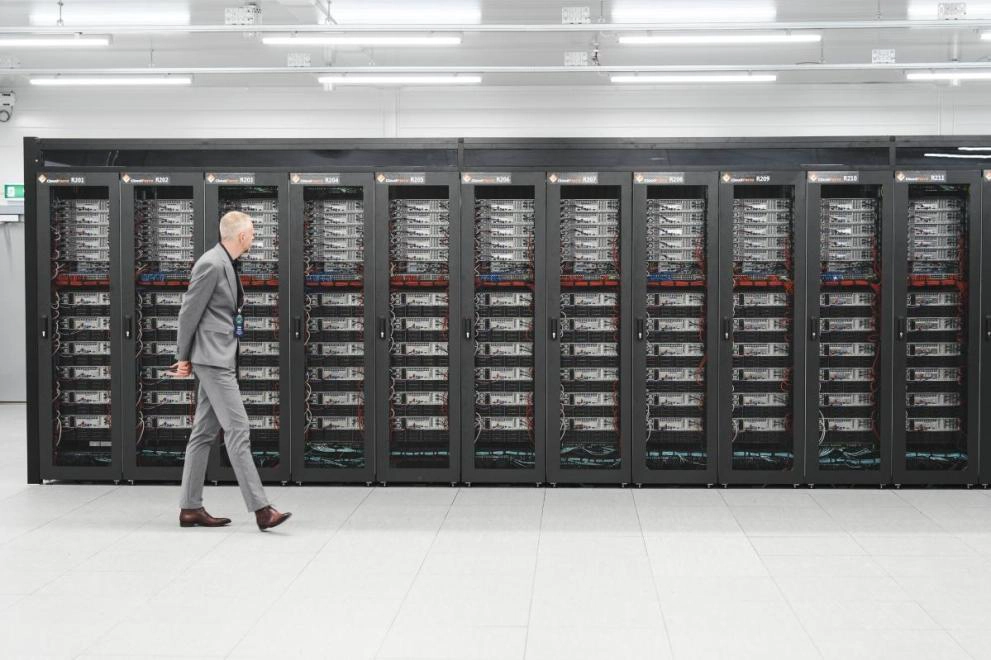
Data Centres as New Urban Infrastructure
The proposal also introduces a broader architectural question: how should increasingly large digital facilities be integrated into cities and landscapes?
Future data center design may require stronger relationships with renewable energy infrastructure, district heating networks, water management systems and public utilities. Their location could become as important as their internal efficiency. A well-positioned facility capable of exchanging heat or responding to grid conditions could reduce infrastructure pressure while contributing to local energy systems.
The Commission is also consulting on minimum performance standards for European data centers, with the intention of creating a stronger market for sustainable digital infrastructure.

Data Centres as New Urban Infrastructure
The proposal also introduces a broader architectural question: how should increasingly large digital facilities be integrated into cities and landscapes?
Future data centre design may require stronger relationships with renewable energy infrastructure, district heating networks, water management systems and public utilities. Their location could become as important as their internal efficiency. A well-positioned facility capable of exchanging heat or responding to grid conditions could reduce infrastructure pressure while contributing to local energy systems.
The Commission is also consulting on minimum performance standards for European data centers, with the intention of creating a stronger market for sustainable digital infrastructure.
Measuring the Environmental Performance of Buildings
The initiative reflects a wider shift in architectural practice from designing buildings for operational efficiency toward evaluating their complete resource relationships. Energy, water, heat recovery and grid flexibility increasingly become architectural parameters rather than purely engineering concerns.
Data centers consumed approximately 68 TWh of electricity in the EU in 2024, with demand projected to reach 114 TWh by 2030, partly because of artificial intelligence. Their environmental footprint therefore makes them an increasingly important building type in the transition toward low-carbon infrastructure.
The first sustainability labels for individual data centers are expected in 2027, with a review of the rating system planned for the end of 2028. For architects, engineers and urban planners, the development signals a future in which the sustainability of digital infrastructure will depend not only on efficient equipment, but also on where data centers are built, how they are designed, and how they participate in the energy systems around them.