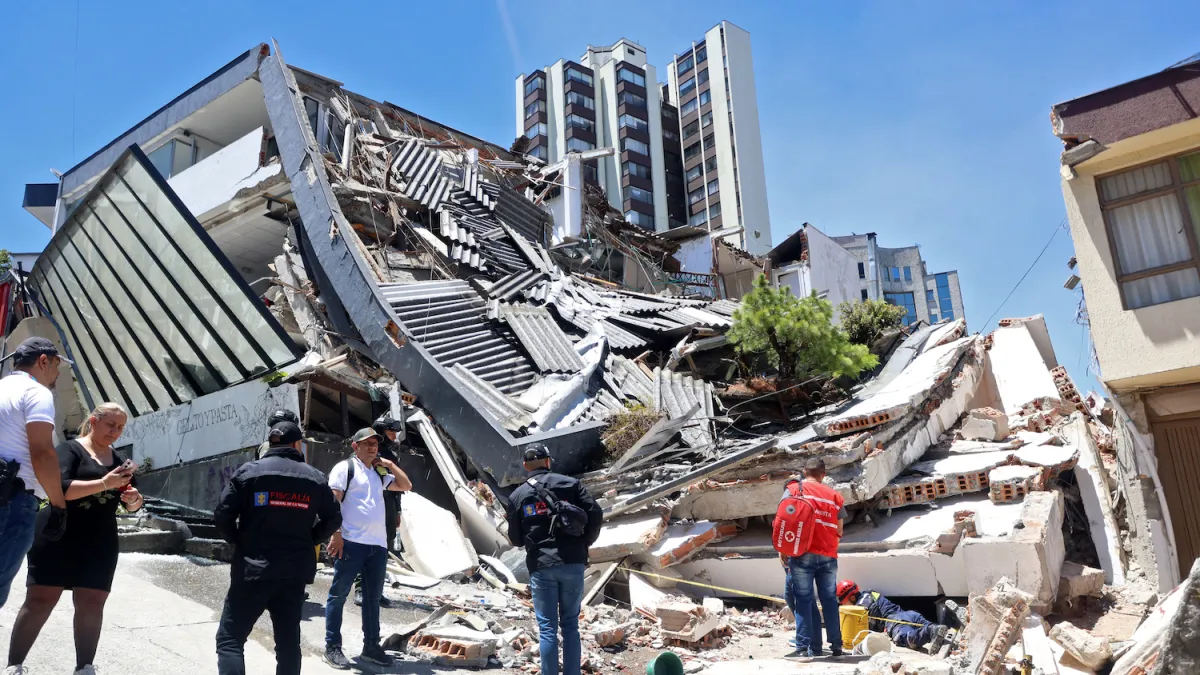

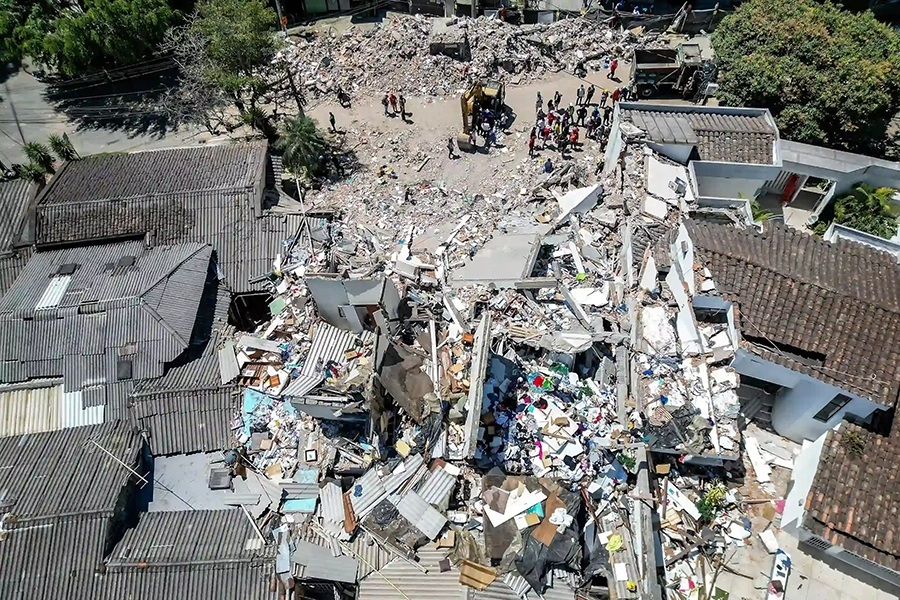
On August 10, 2026, a magnitude 7.4 earthquake struck western Colombia, with its epicenter near San José del Palmar in the department of Chocó. The Colombia earthquake became one of the country’s most destructive seismic events of the 21st century, affecting a wide territory that included Cali, Pereira, Manizales, Armenia and Quibdó. By August 15, the reported death toll had approached 290, with thousands injured and many people still missing. More than 100,000 people were reported to have been affected, turning the disaster from a local emergency into a national reconstruction challenge. (Reuters)
Yet the Colombia earthquake is not only a humanitarian catastrophe. It is also a dramatic test of Colombian architecture, infrastructure and urban planning. The destruction demonstrates that the vulnerability of a city is determined not simply by the strength of an earthquake, but by the relationship between geology, construction practices, building regulations, urban density and the quality of critical infrastructure.
Cities Under Seismic Stress
The hardest-hit urban areas include Pereira and Cali, two very different cities that nevertheless reveal the complexity of earthquake-resistant urbanism.
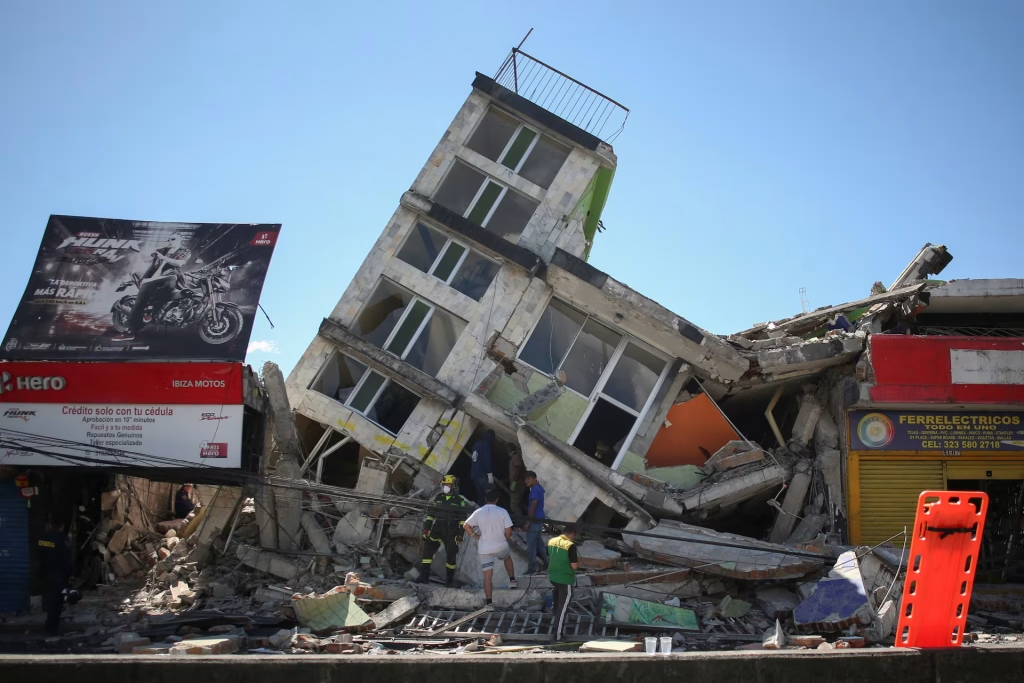
Pereira sits within Colombia’s coffee-growing region and has developed a dense urban landscape containing apartment buildings, commercial structures, institutional buildings and older low-rise construction. The Colombia earthquake caused building collapses and severe structural damage, while Pereira’s Matecaña Airport also suffered damage to sections of its terminal ceiling.
Cali, Colombia’s third-largest city, experienced extensive damage to residential and public buildings. Hospitals and other essential facilities were affected, demonstrating one of the central principles of disaster-resilient architecture: a building that survives structurally is not necessarily a building that remains operational. Hospitals, schools, airports and emergency centers must continue functioning after an earthquake, precisely when the city needs them most.
This distinction between structural survival and functional resilience is increasingly important in contemporary architecture. A hospital with an intact structural frame but damaged elevators, water systems, electrical infrastructure or medical equipment may technically remain standing while practically becoming unusable.
The Vulnerability of Historic Architecture
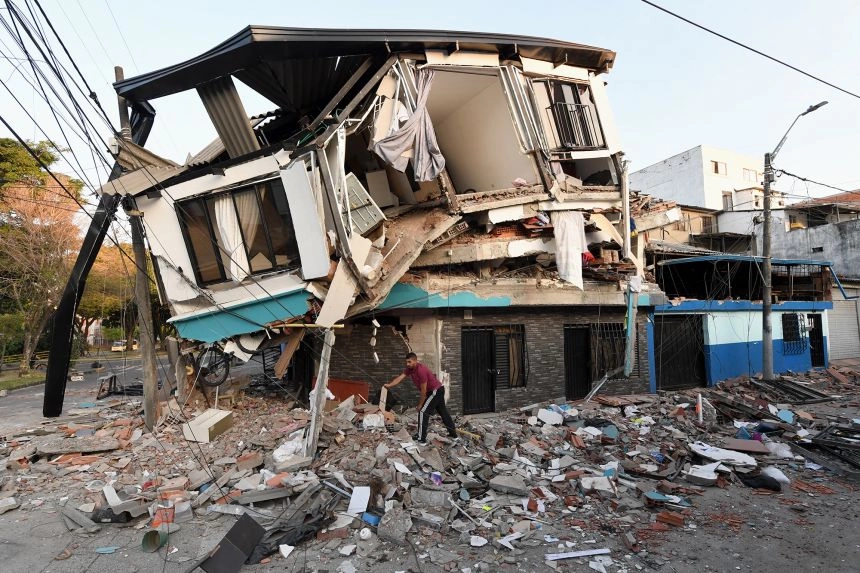
The Colombia earthquake also exposed the fragility of Colombia’s architectural heritage. In Manizales, one of the most recognizable landmarks in the region, the Metropolitan Cathedral Basilica of Our Lady of the Rosary, suffered severe damage when one of its towers collapsed. The cathedral is particularly significant because of its scale and architectural character, making its damage a cultural loss as well as a structural one.
Historic buildings present a difficult problem for seismic engineers. Many were constructed long before modern seismic standards existed, using masonry, stone, brick or other materials that can perform poorly under lateral movement. Strengthening them without destroying their architectural identity requires a delicate balance between conservation and structural intervention. The Colombian earthquake therefore raises a question faced by historic cities around the world: how can architectural heritage be preserved without turning it into a seismic liability?
Architecture Beyond the Building
The disaster also reveals why earthquake resilience cannot be reduced to stronger buildings. Urban resilience depends on networks.
Roads must remain accessible. Airports must operate. Hospitals need independent power and water systems. Bridges, telecommunications networks and emergency shelters must withstand the initial shock and remain functional during aftershocks.
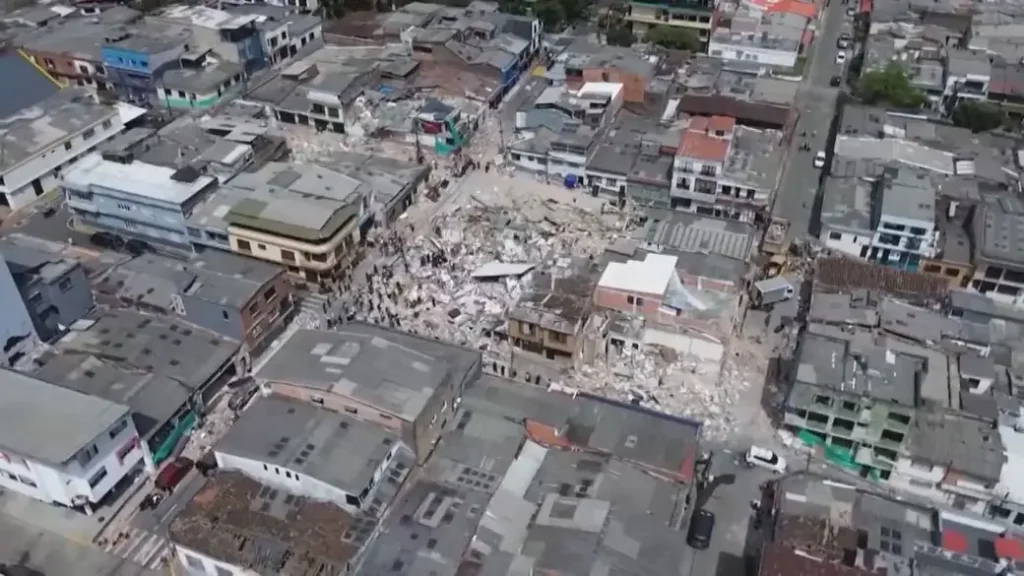
The damage reported across Colombia illustrates the scale of this interconnected problem. Hundreds of cities and municipalities were affected, while schools, health centers, roads, water systems and airports suffered damage.
For architects and urban planners, this means resilience must be designed at several scales: from the structural detail to the neighborhood, from the building to the metropolitan infrastructure.
Rebuilding as an Architectural Opportunity
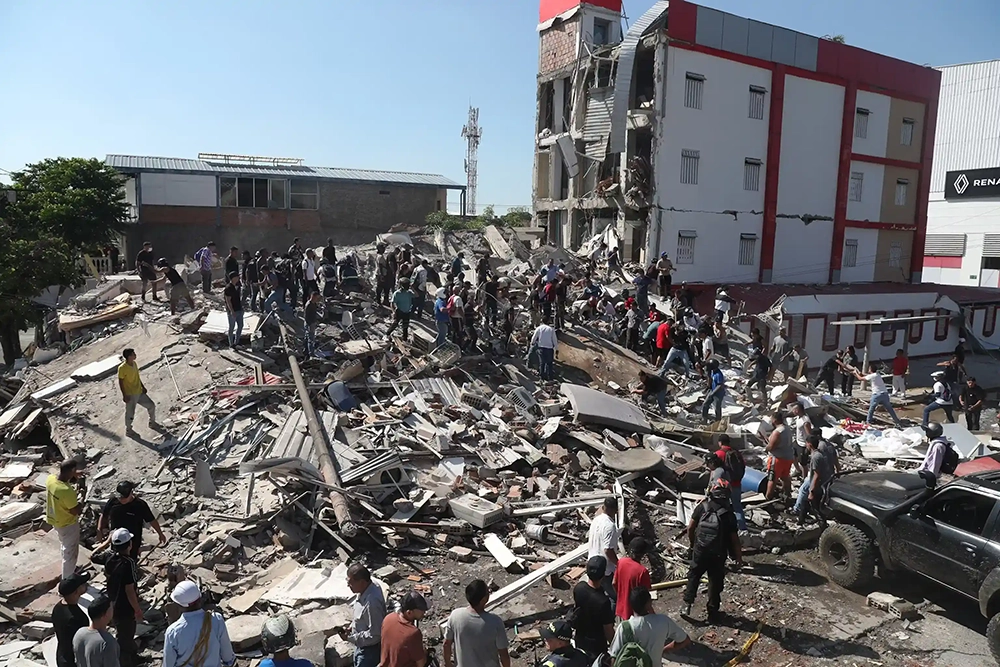
Reconstruction will inevitably involve replacing damaged homes and public buildings. But simply rebuilding what existed before would be a missed opportunity.
The post-earthquake city can become safer, more accessible and more adaptable. New housing can incorporate improved structural systems, lighter construction, better emergency exits and flexible interior layouts. Public spaces can be designed as emergency gathering areas. Schools and hospitals can become resilient community hubs capable of providing shelter and services after disasters.
The challenge is particularly important in Colombia because seismic risk is not an exceptional phenomenon. The country lies within a highly active tectonic environment, making earthquakes a recurring condition rather than a remote possibility.
From Seismic Codes to Urban Resilience
The 2026 earthquake should therefore provoke a broader discussion about the future of Colombian cities. Building codes are essential, but codes alone cannot create resilient urban environments. Enforcement, construction quality, maintenance, infrastructure redundancy and public preparedness are equally important.
Architecture has often been celebrated for creating iconic forms and memorable skylines. Earthquakes remind us of a less glamorous but far more fundamental responsibility: keeping people alive when the city stops behaving as expected.
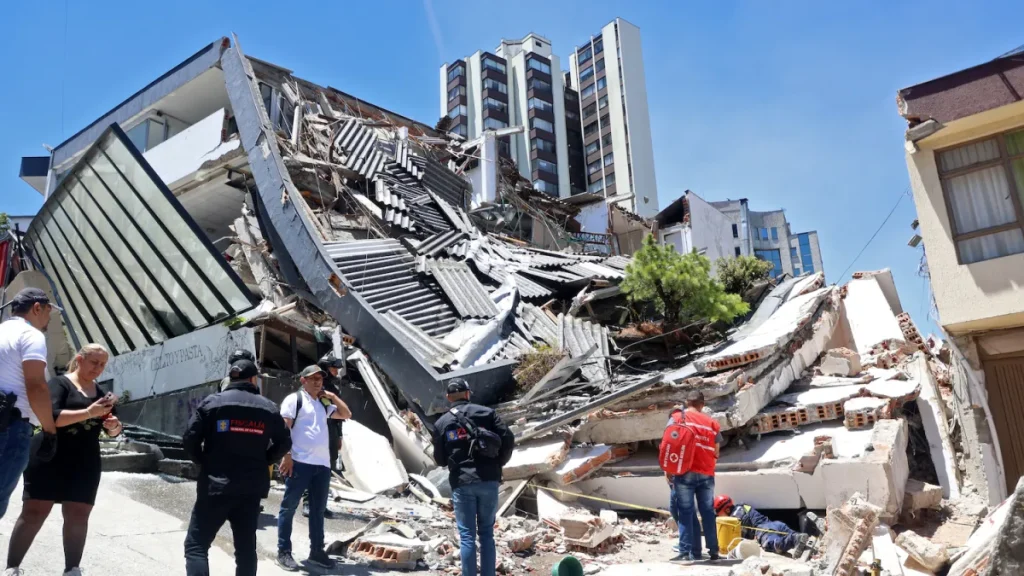
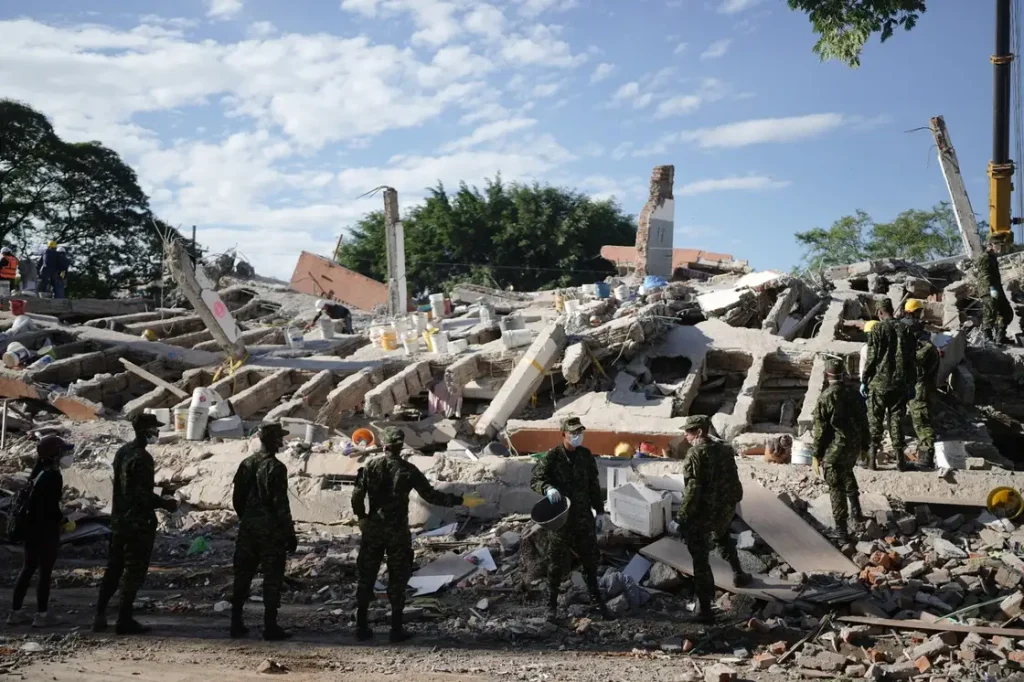
The rubble left across western Colombia is therefore more than evidence of destruction. It is a record of how buildings, infrastructure and cities responded to extreme forces. The reconstruction that follows will determine whether that record becomes merely a catalogue of loss or a blueprint for a more resilient Colombia. The most important architectural achievement after the earthquake may not be another landmark building. It may be a city in which homes, hospitals, schools, streets and public spaces are designed to remain useful when the next earthquake inevitably arrives.