


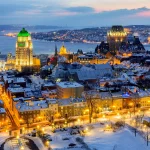

Perched on the banks of the St. Lawrence River, Quebec City is one of the oldest European settlements in North America and the cradle of French civilization in Canada. Founded by Samuel de Champlain in 1608, the city developed as the capital of New France. It became a critical gateway linking Europe with the interior of the continent through an extensive network of rivers and trade routes.
Unlike many North American cities that were reshaped by industrialization and large-scale redevelopment, Quebec City retained much of its historic urban structure. Centuries of French and British influence are visible in its architecture and also in its street patterns, public spaces, and relationship with the landscape. The city’s development was guided by geography, with a vast cliff overlooking one of North America’s most important waterways, where commerce and governance converged.
This city guide highlights the places, buildings, and landscapes that make Quebec City a compelling urban destination.
Old Québec (Vieux-Québec) & Fortifications
Upper Town (Haute-Ville)
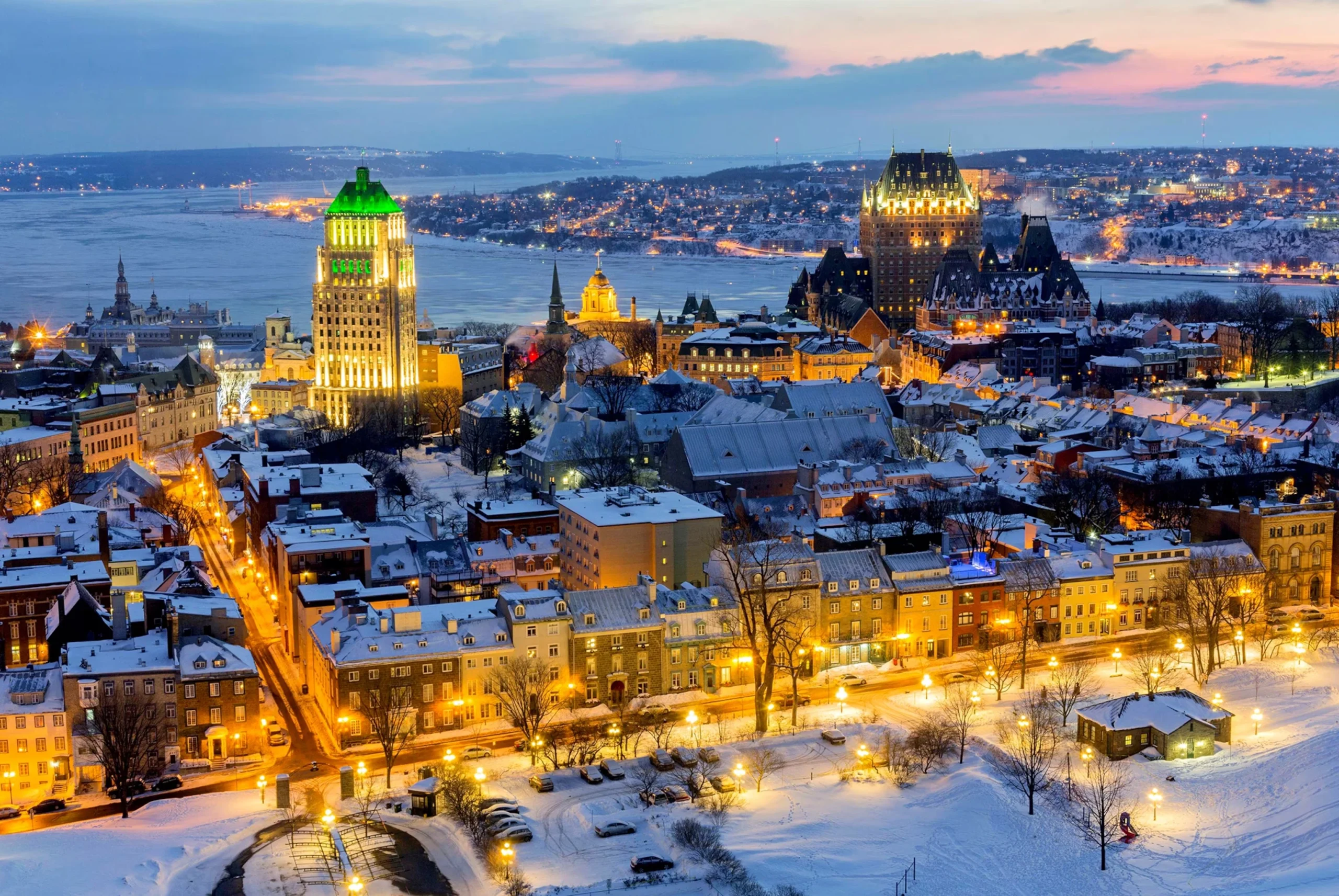
Occupying the summit of Cap Diamant, Quebec City’s Upper Town has served as the city’s military heart since the seventeenth century. Its elevated position overlooking the St. Lawrence River offered an advantage for defense and surveillance, shaping the district’s development as the center of colonial power in New France.
The urban fabric of the Upper Town is defined by tightly knit stone buildings, steep streets, and a network of squares, institutions, and fortifications compressed within a compact area. Unlike the grid-based planning common in many North American cities, the streets here respond directly to the promontory’s rugged topography, creating irregular routes. Upper Town presents a record of French and British influence. Thick masonry walls, steeply pitched roofs designed to shed snow, dormer windows, and stone facades reflect building traditions adapted to Quebec’s climate. Religious landmarks, government buildings, military structures, and historic residences coexist within a walkable urban environment that has evolved over more than four centuries.
City Gates & Citadelle
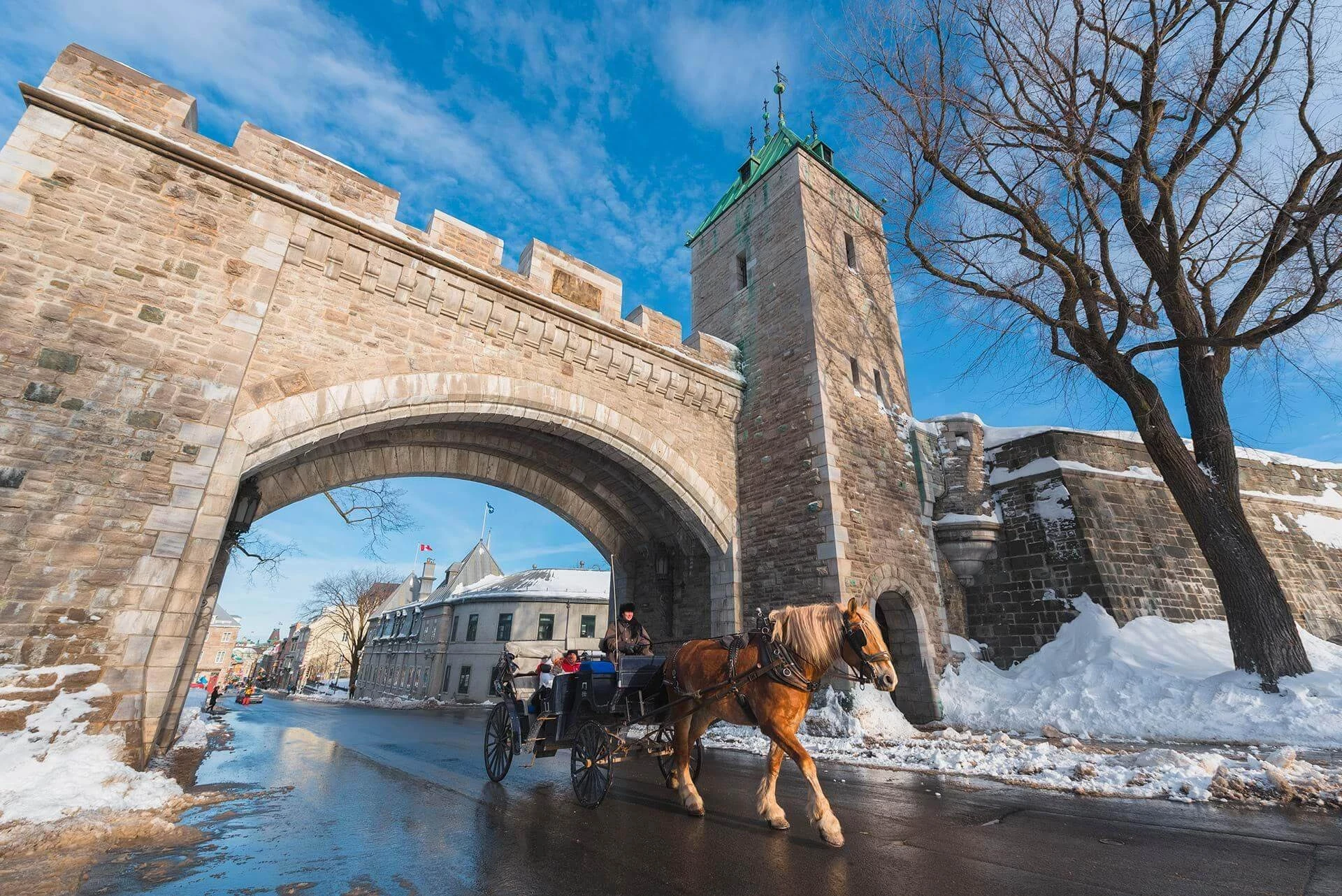
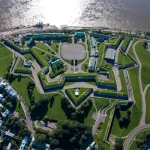
Quebec City’s fortifications make it the only city north of Mexico to retain its complete defensive wall system. Developed under French and British rule, the fortifications reflect more than two centuries of military engineering. Stretching nearly 4.6 kilometers around the Upper Town, the walls were designed to protect the colonial settlement from potential attack while reinforcing its status as a military stronghold. Bastions, ramparts, and defensive earthworks follow the natural contours of Cap Diamant, creating a fortified edge.
Saint-Louis Gate and Kent Gate, both rebuilt during the nineteenth century, embody the Romantic architecture that emerged during the Victorian era. Their stone towers, pointed arches, and decorative detailing contribute to the European character for which Quebec City is widely known.
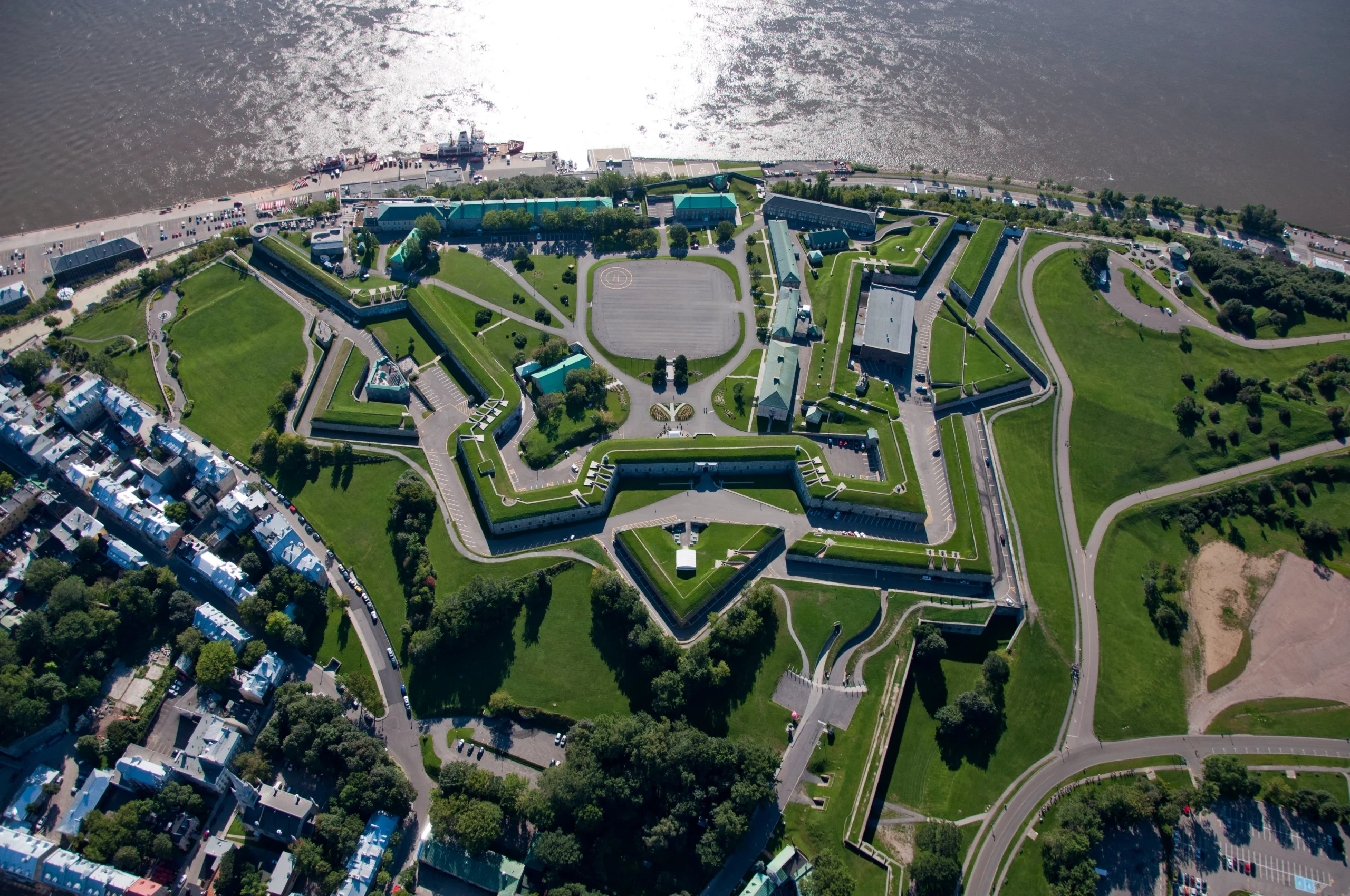
Dominating the western edge of the Upper Town is the Citadelle, a star-shaped fortress constructed by the British between 1820 and 1850. Inspired by the principles of Vauban-style military engineering, its angular geometry and defensive walls were designed to withstand artillery attacks while controlling access to the city and river. Occupying the highest point of Cap Diamant, the Citadelle remains an active military installation and serves as the official residence of the Governor General of Canada in Quebec.
Lower Town (Basse-Ville)
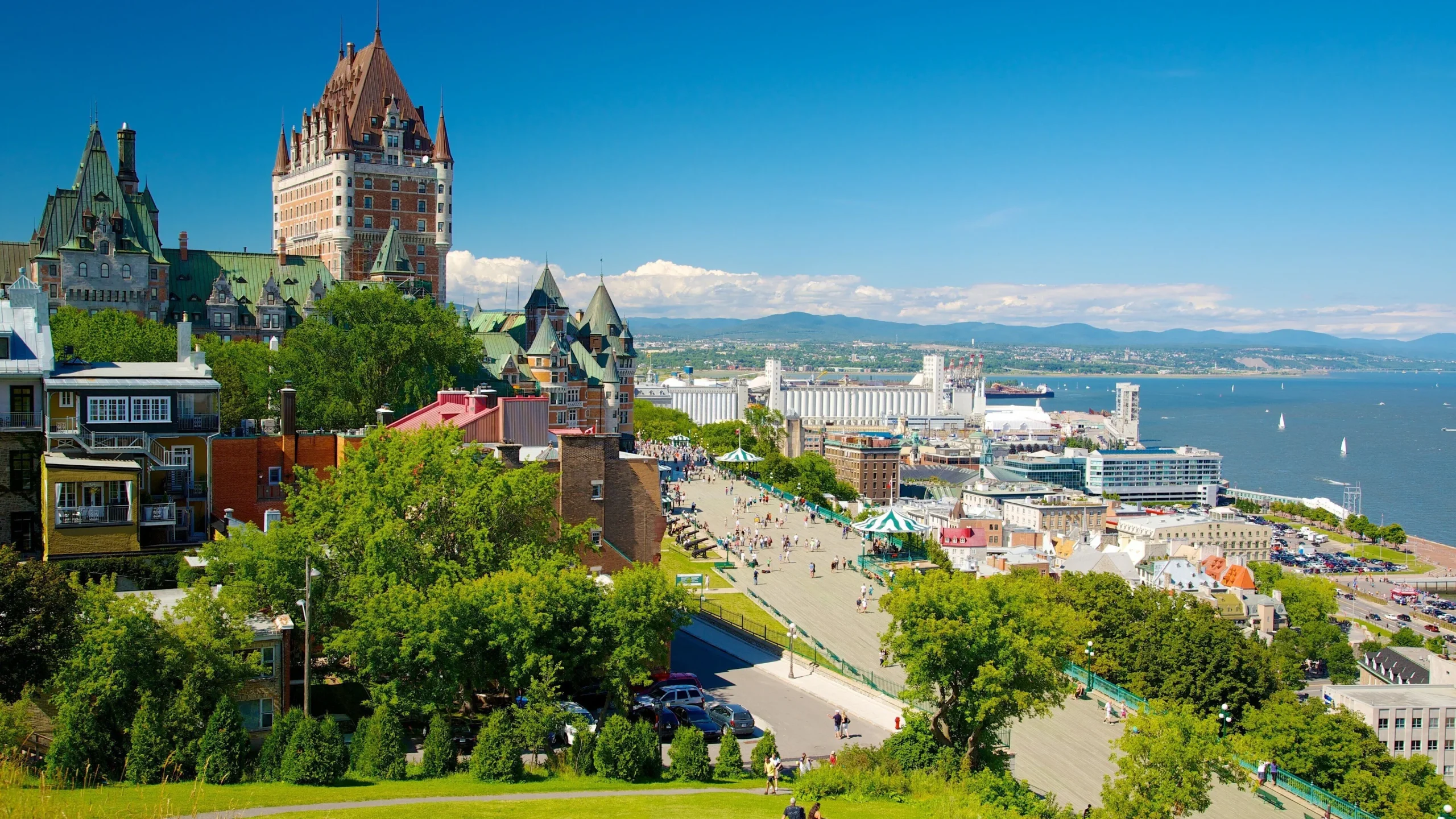
Nestled between the St. Lawrence River and the cliffs of Cap Diamant, Quebec City’s Lower Town developed as the commercial and maritime heart of the colony. While the Upper Town housed military, religious, and administrative institutions, the Lower Town evolved around trade, shipping, and daily commerce. Its street network reflects the constraints of the narrow land strip at the base of the cliff. Buildings are closely spaced, streets are intimate in scale, and public spaces unfold as a sequence of small squares and lanes. The architecture is characterized by stone facades, steep roofs, dormer windows, and a pedestrian-friendly urban grain that has remained intact over the centuries.
Iconic Landmarks
Château Frontenac & Terrasse Dufferin
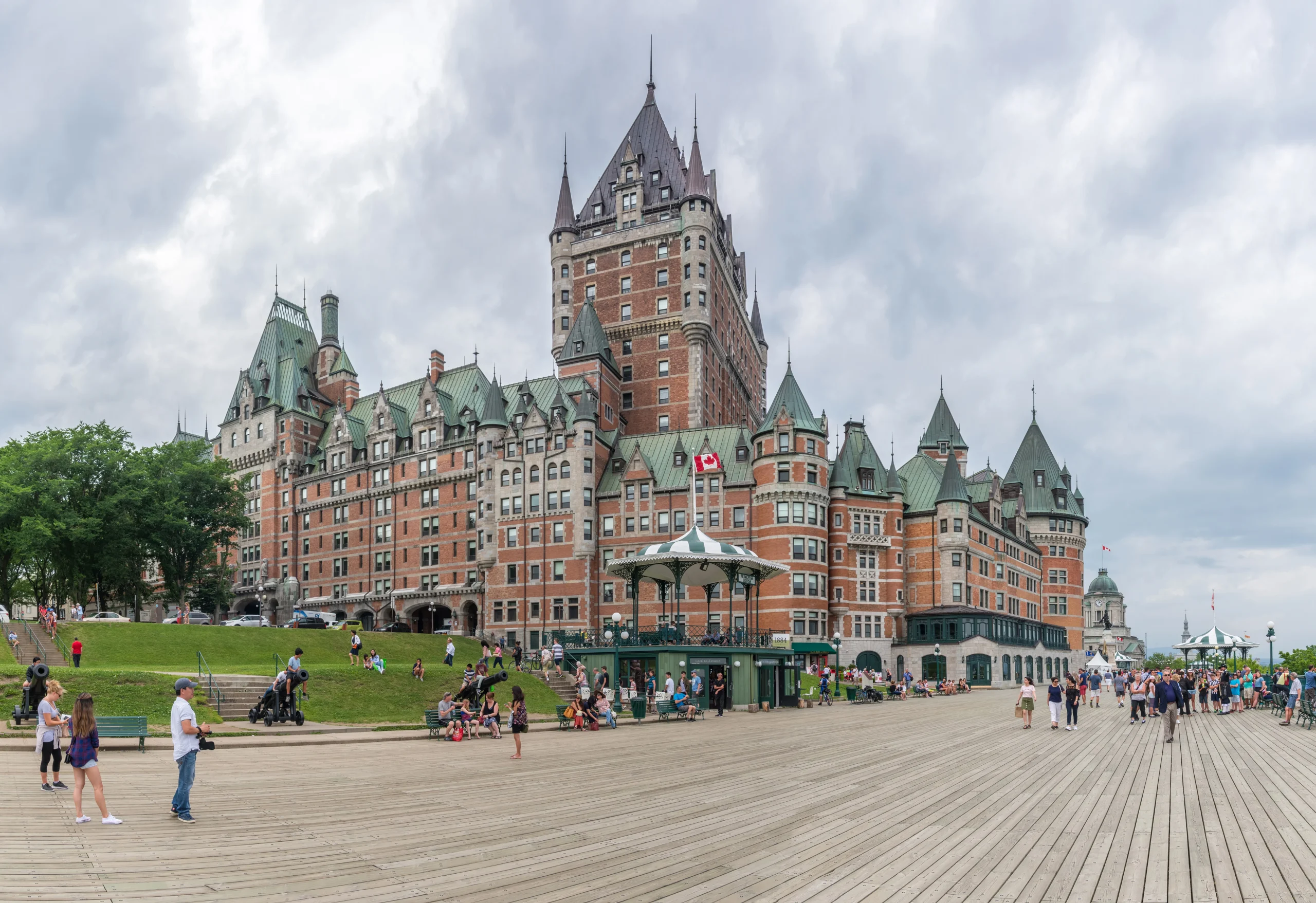
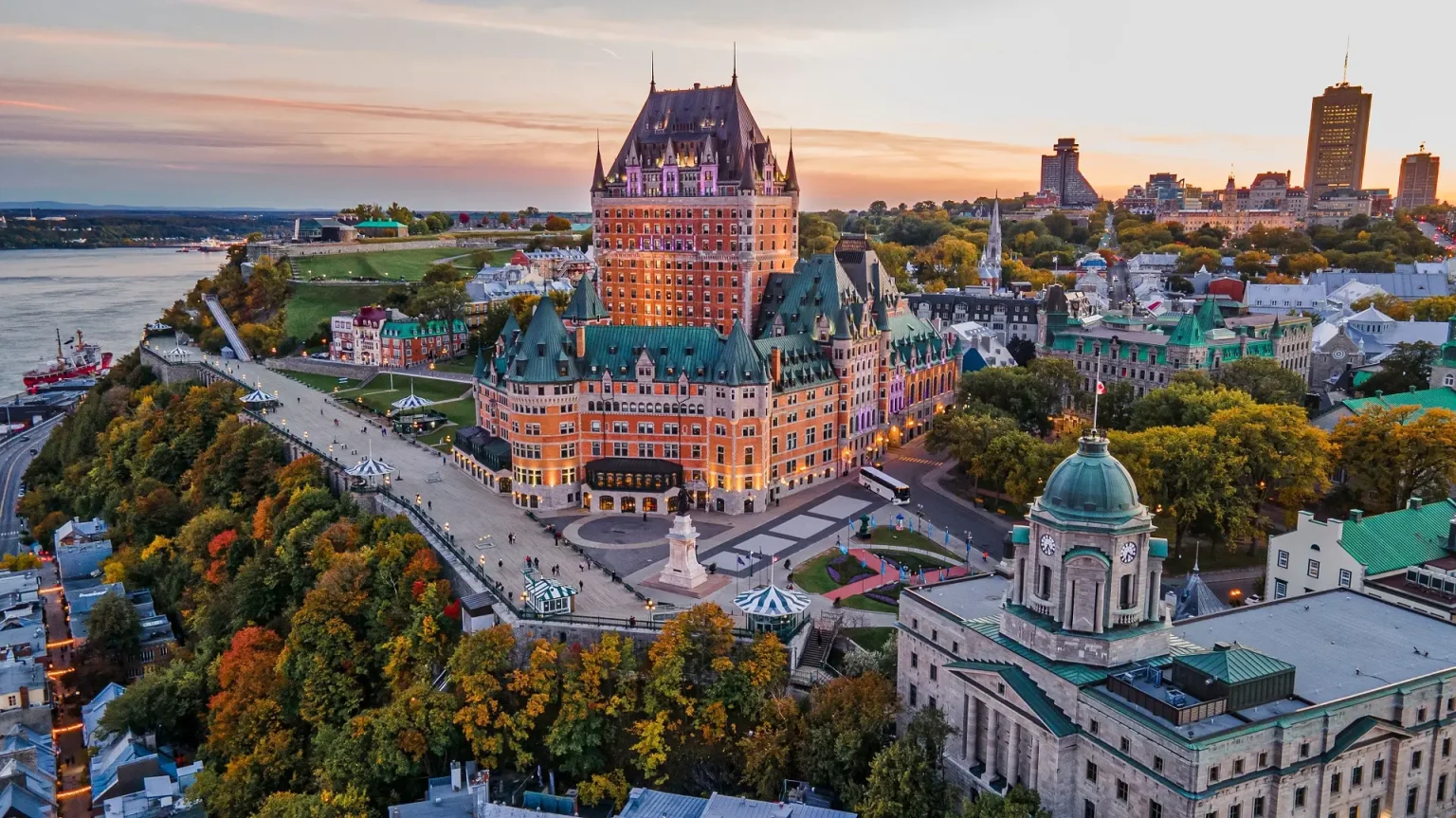
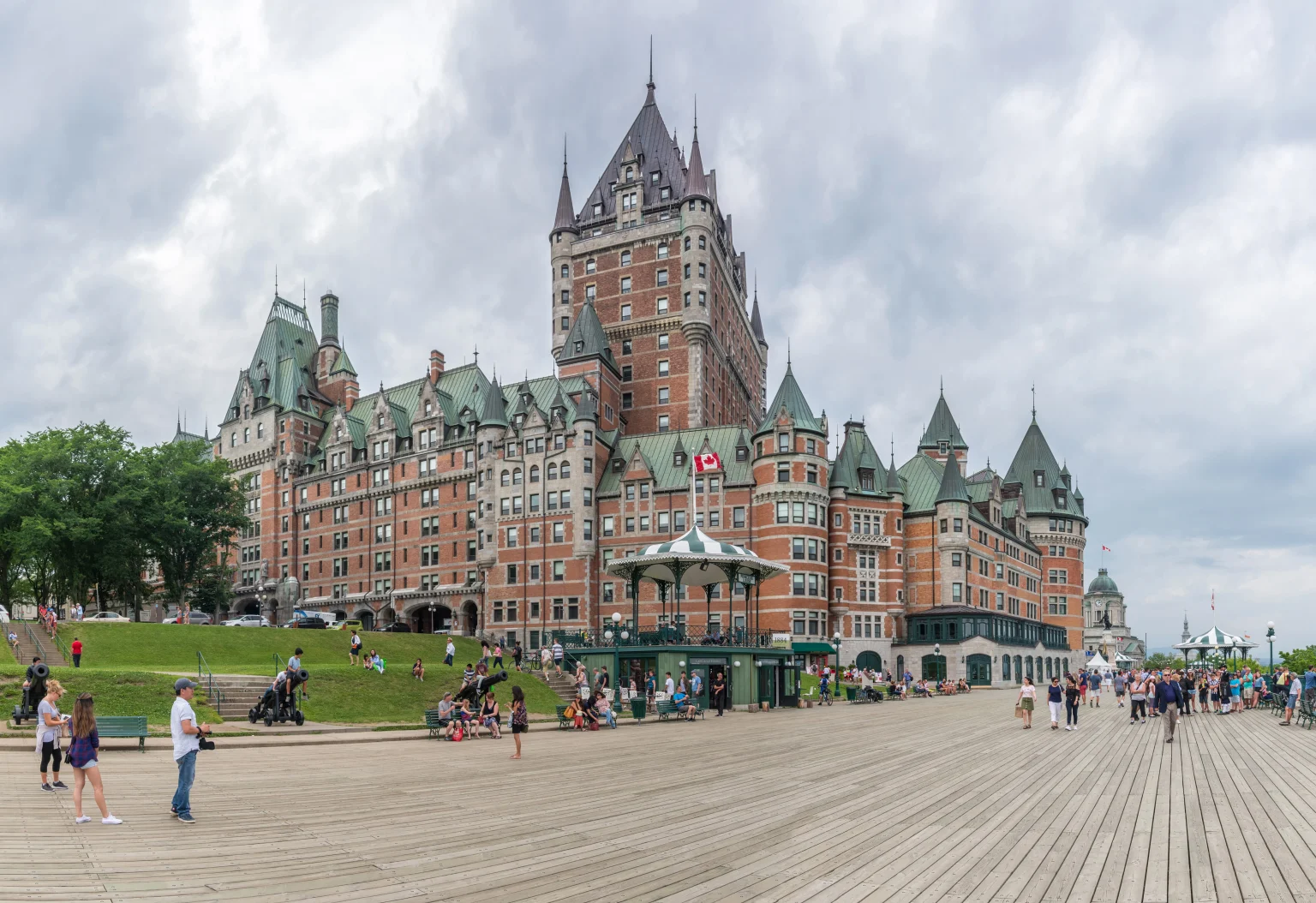
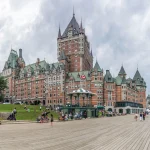
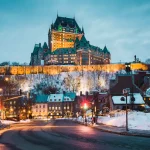
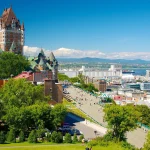
Completed in 1893 for the Canadian Pacific Railway and designed by American architect Bruce Price, Château Frontenac was part of a broader movement to promote luxury rail tourism across Canada. Its château-inspired design, characterized by steep copper roofs, turrets, dormers, and ornate masonry detailing, drew inspiration from the castles of France’s Loire Valley.
Directly in front of the hotel stretches Terrasse Dufferin, a long wooden boardwalk built along the cliff edge in the late nineteenth century. Named after Governor General Lord Dufferin, who played a crucial role in preserving Quebec’s fortifications, the promenade functions as a public gathering space and a viewing platform. Its elevated position offers views of the St. Lawrence River, the Lower Town, and the surrounding landscape.
Price Building
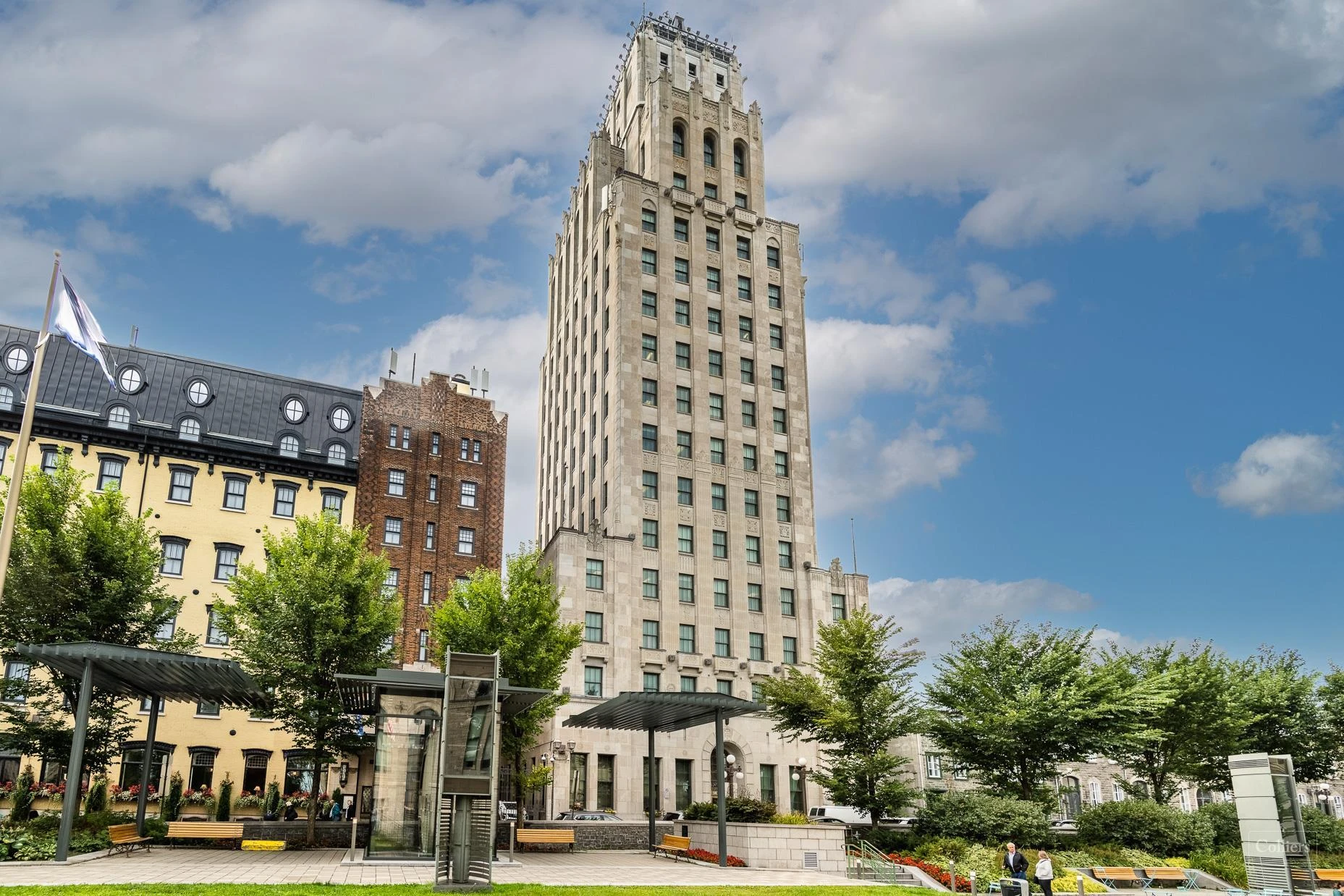
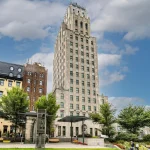
Rising above the predominantly low-rise fabric of Old Québec, the Price Building was completed in 1931 as the headquarters of the Price Brothers timber company. The 18-story tower is an example of Art Deco architecture in Quebec. At the time of its completion, it was the tallest building in the city.
Designed by architects Ross and Macdonald, the building is characterized by a vertical Art Deco skyscraper. Its stepped massing, strong vertical piers, and stylized ornamentation draw the eye upward, creating a sense of height despite the tower’s relatively modest footprint. Clad in pale limestone, the structure maintains a visual connection to the masonry of Old Québec while clearly expressing the modern architecture of the early twentieth century. The Price Building represents a shift from the French colonial and Victorian influences that dominate much of Quebec City.
Notre-Dame de Québec Basilica-Cathedral
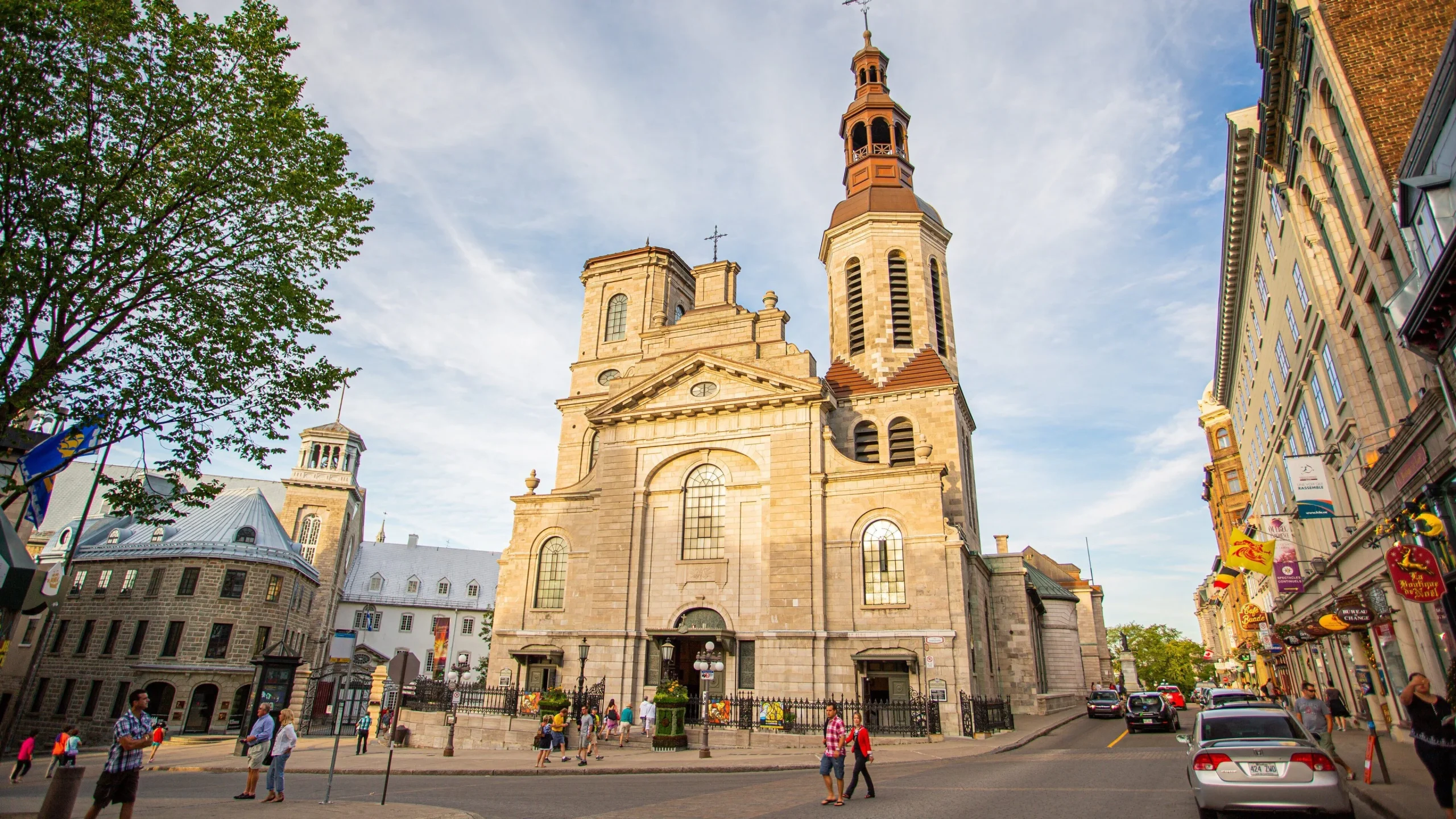
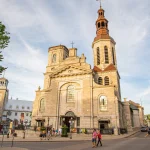
Founded in 1647, Notre-Dame de Québec Basilica-Cathedral is the oldest Catholic parish north of Mexico. The cathedral’s architecture reflects centuries of reconstruction and expansion. While its origins lie in the French colonial era, fires and wartime damage led to multiple rebuilding campaigns. The current facade exhibits a restrained Neoclassical composition with symmetrical towers, classical detailing, and a stone elevation that contrasts with the more ornate Gothic Revival churches built elsewhere in North America during the nineteenth century.
Inside, the cathedral features a longitudinal nave, vaulted ceilings, gilded decorative elements, and fine woodwork that reflect the influence of French ecclesiastical traditions. The richly detailed interior stands in contrast to the relatively sober exterior, a characteristic found in many churches of New France. Beyond its architectural significance, the cathedral forms part of a larger institutional ensemble that includes the Séminaire de Québec and several historic public spaces.
Musée de la civilisation & Musée national des beaux-arts du Québec
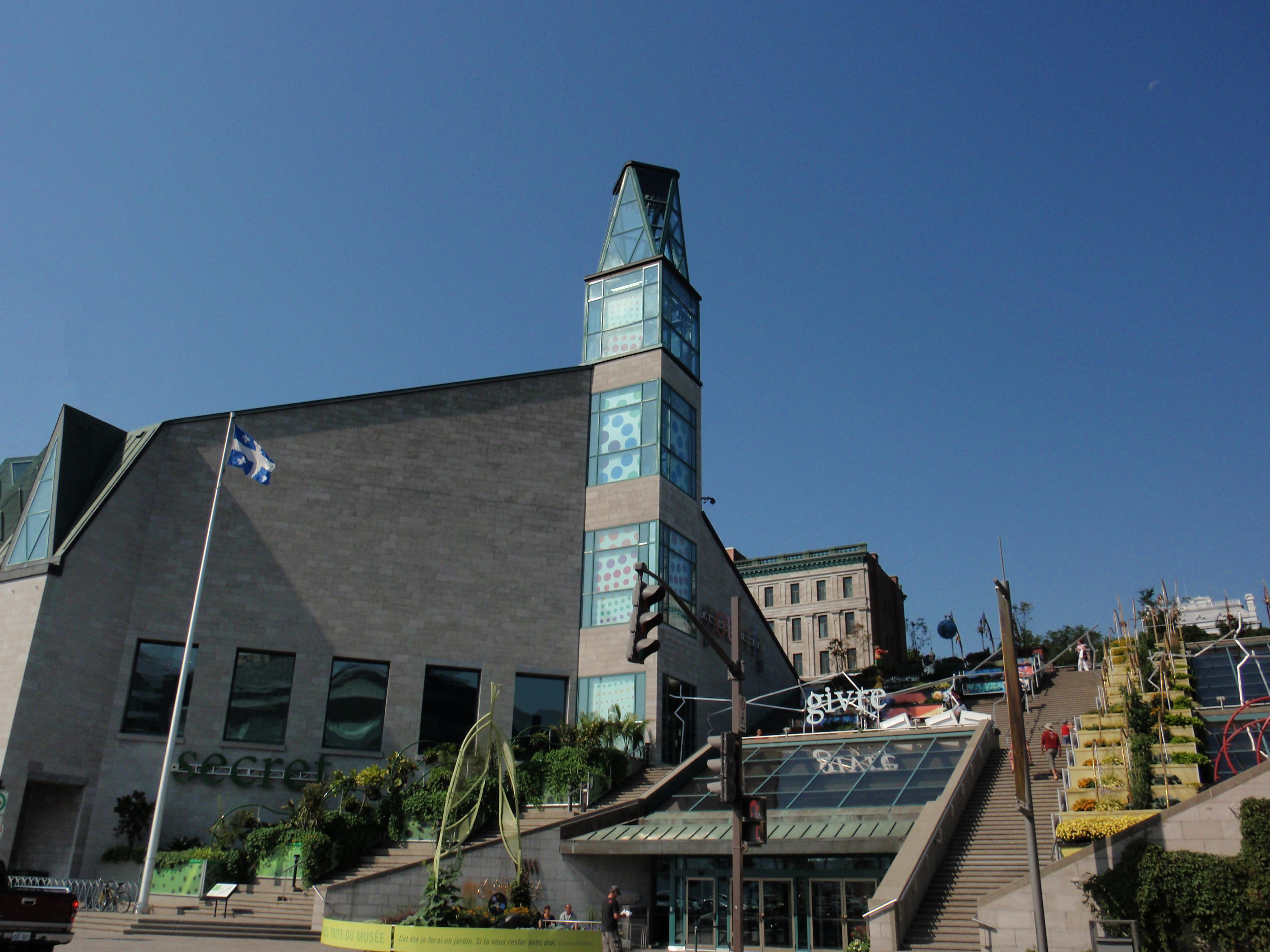
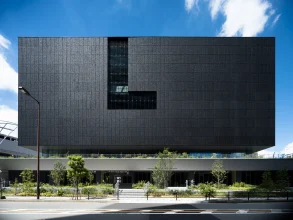
The Musée de la civilisation and the Musée national des beaux-arts du Québec represent two distinct approaches to integrating modern architecture. Designed by architect Moshe Safdie and completed in 1988, the Musée de la civilisation occupies a prominent site between the Old Port and the historic Lower Town. The museum responds to the scale of the existing streetscape through a composition of stone-clad volumes, glazed surfaces, and framed public spaces. Its design links the waterfront to the historic city while introducing contemporary light-filled atriums, bridges, and interconnected galleries.
The Musée national des beaux-arts du Québec, located within the Plains of Abraham district, is another museum complex that combines historic structures with contemporary additions, most notably the Pierre Lassonde Pavilion designed by OMA and Provencher_Roy. Defined by its transparent glass facade, clean geometries, and generous public circulation spaces, the pavilion merges with the surrounding parkland.
Séminaire de Québec & L’aile de la Procure
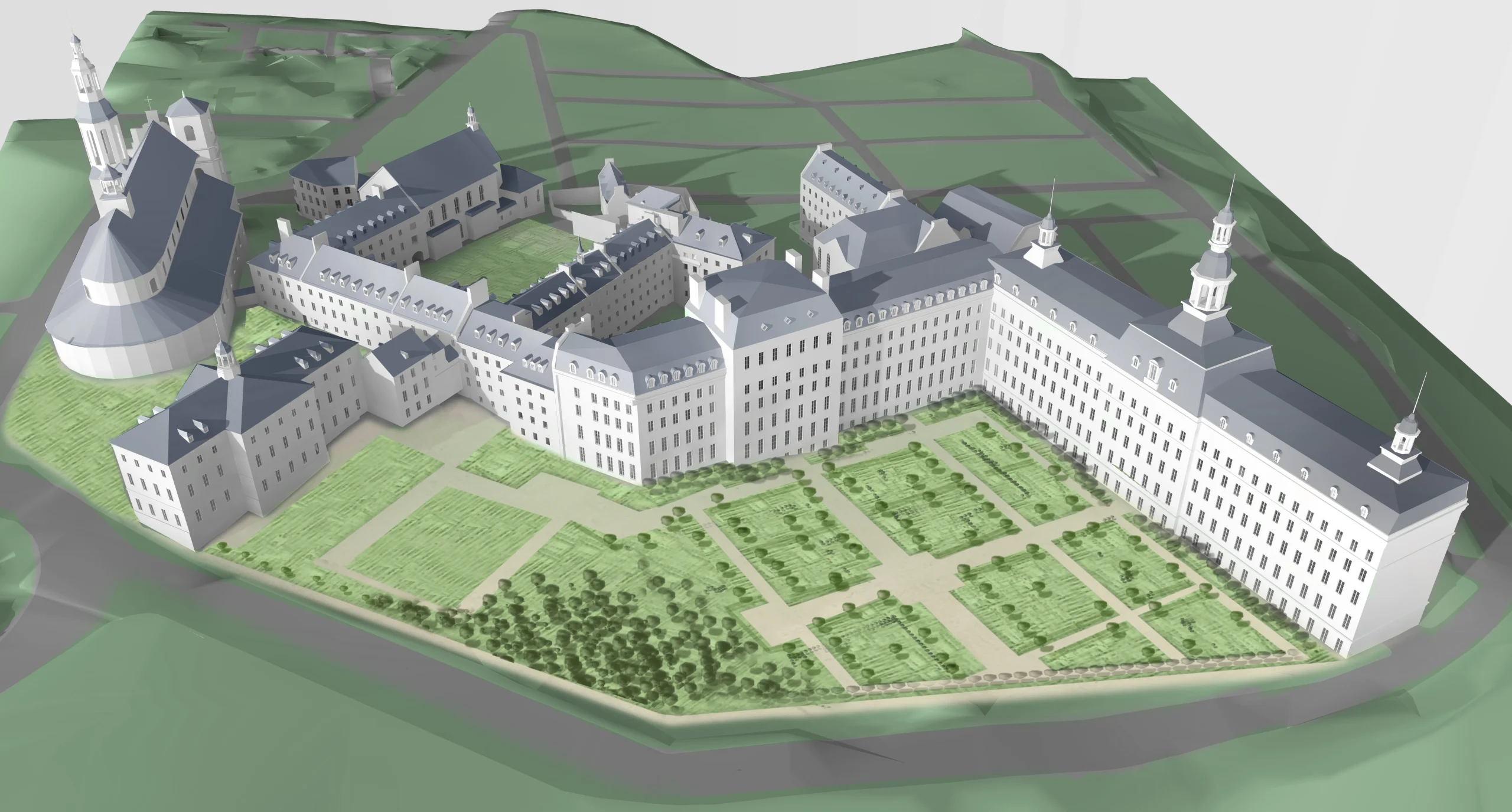
Founded in 1663 by François de Laval, the Séminaire de Québec is an institutional complex in North America and a cornerstone of French colonial architecture in Canada. Established to train clergy and support the growth of New France, the seminary evolved into a substantial ensemble of interconnected buildings, courtyards, and gardens within the fortified Upper Town.
Its architecture reflects the practical building traditions of New France. Thick stone masonry walls provided insulation against harsh winters, while steeply pitched roofs facilitated snow shedding. The buildings are characterized by restrained ornamentation, vertically proportioned windows, and a strong emphasis on durability. These climatic adaptations became defining features of early Quebec architecture. Among the complex’s most significant structures is L’aile de la Procure, constructed in the late seventeenth century. Considered one of the oldest surviving sections of the seminary, it exemplifies the classical French architectural influence brought to the colony and adapted to local conditions.
Landscape & Excursions
Old Port & Louise Basin
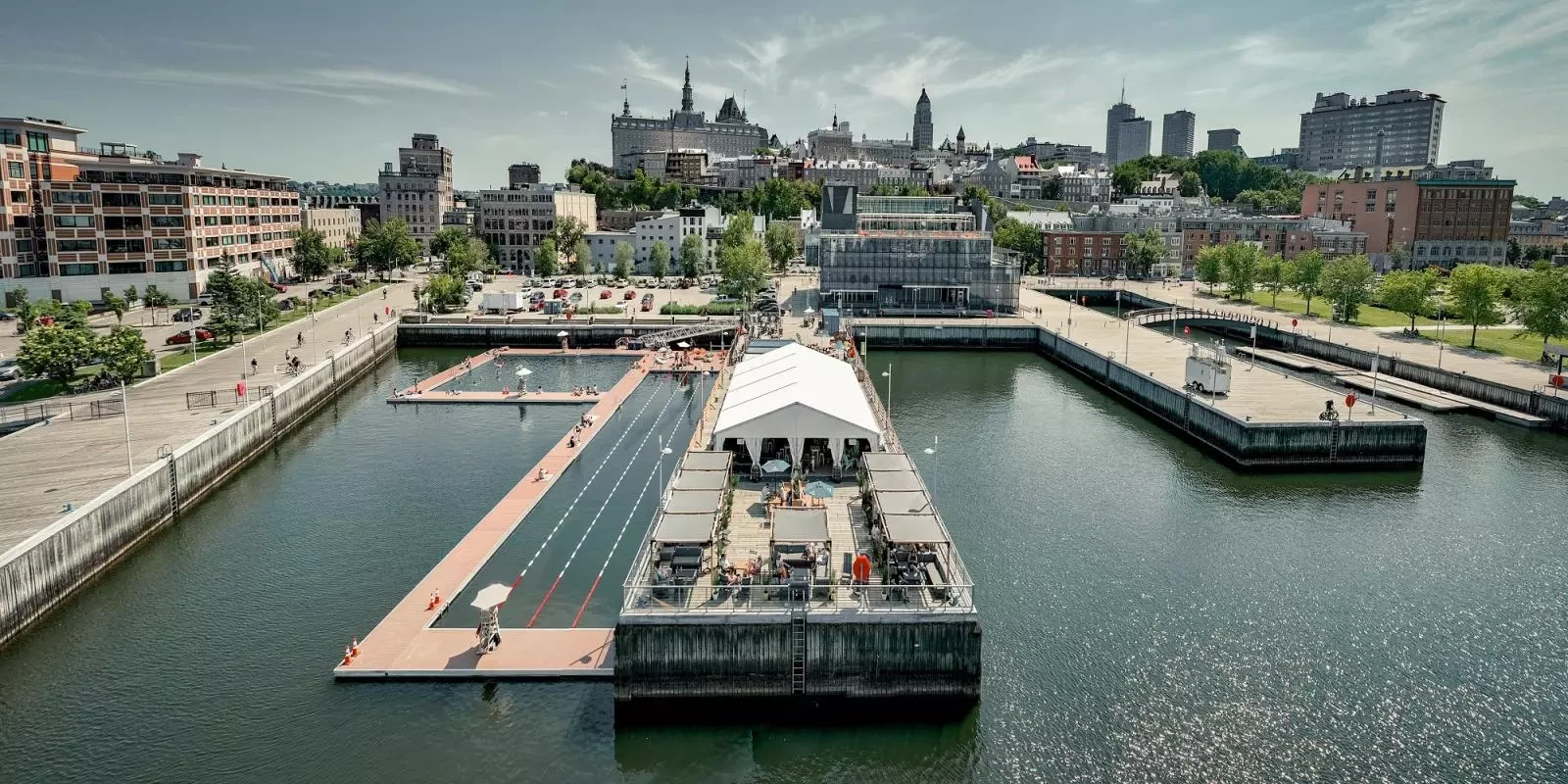
Once the center of maritime trade, shipbuilding, and commercial activity, the waterfront played a critical role in the city’s economic development from the seventeenth century onward. Warehouses, docks, and port infrastructure once dominated the shoreline, connecting the colony to transatlantic trade networks.
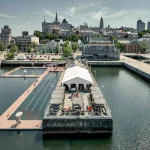
Today, the area has been transformed into a public waterfront while retaining traces of its industrial heritage. Louise Basin, originally developed as a protected harbor in the nineteenth century, now functions as a marina surrounded by promenades and public spaces. The adaptive reuse of former port lands has created a landscape where visitors gain some of the city’s most compelling views, with Château Frontenac, the Price Building, and the fortified Upper Town rising above the riverfront.
Montmorency Falls Park
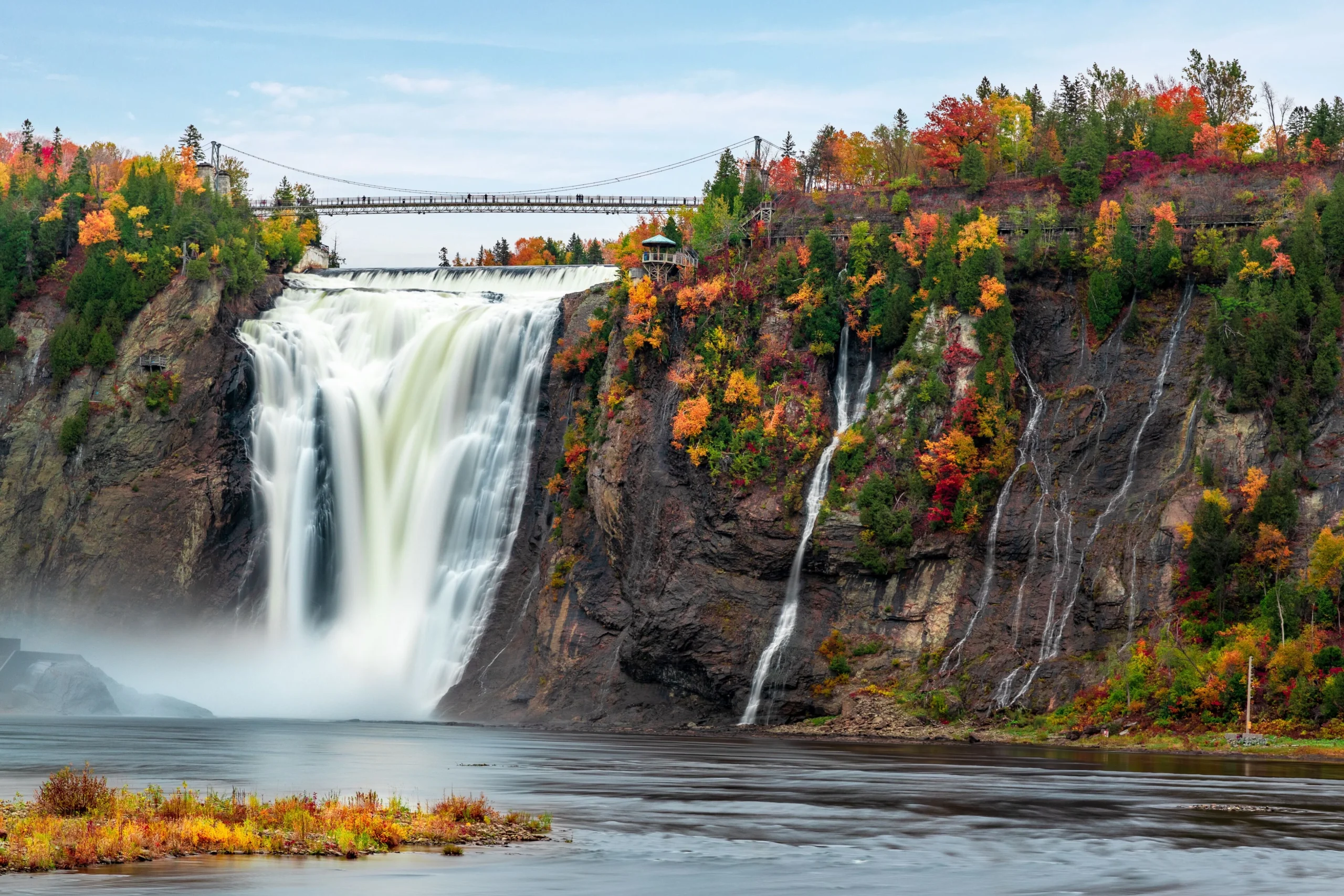
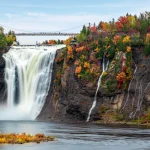
Located just east of Quebec City, Montmorency Falls plunge 272 feet (83 meters), higher than Niagara Falls. Suspension bridges, observation platforms, stairways, and elevated walkways guide visitors through a sequence of views. These interventions emphasize the scale and power of the falls while creating multiple vantage points from which to experience the surrounding cliffs, river, and forested terrain.
Plains of Abraham (Battlefields Park)
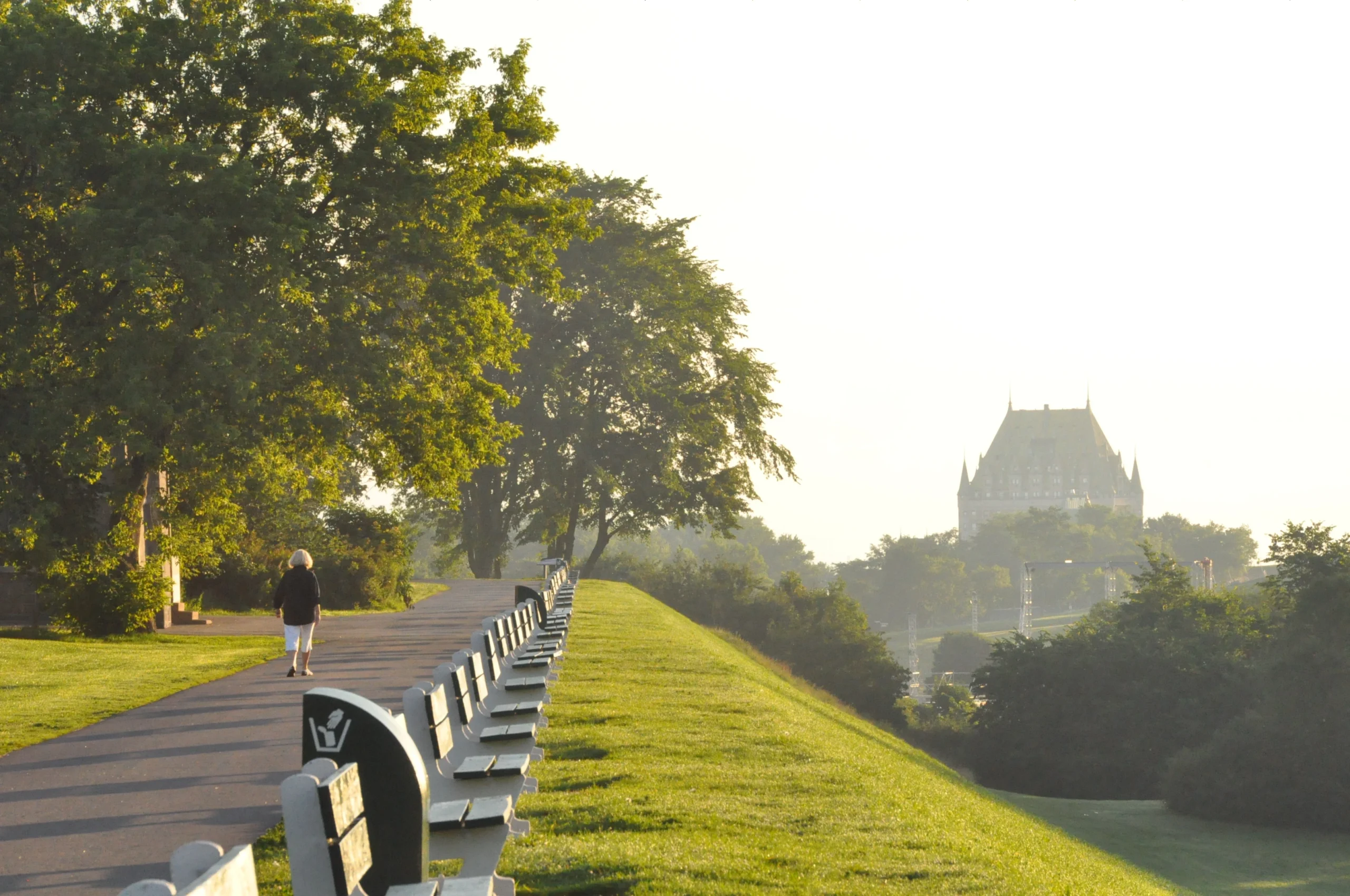
The Plains of Abraham stretch along the western edge of Old Québec. The site is best known as the location of the Battle of Quebec in 1759, where British and French forces clashed in a decisive conflict that altered the course of North American history.
Unlike the dense urban fabric of the fortified city, the park introduces a sense of openness. Rolling lawns, wooded areas, and broad pathways create a landscape that frames the city. This contrast allows visitors to appreciate Quebec’s skyline from a distance, with views of the fortifications, Château Frontenac, church spires, and cliff-top architecture rising above the river. The Plains of Abraham actually function as a critical green buffer between the historic core and later city expansion.
Île d’Orléans & Sainte-Anne-de-Beaupré
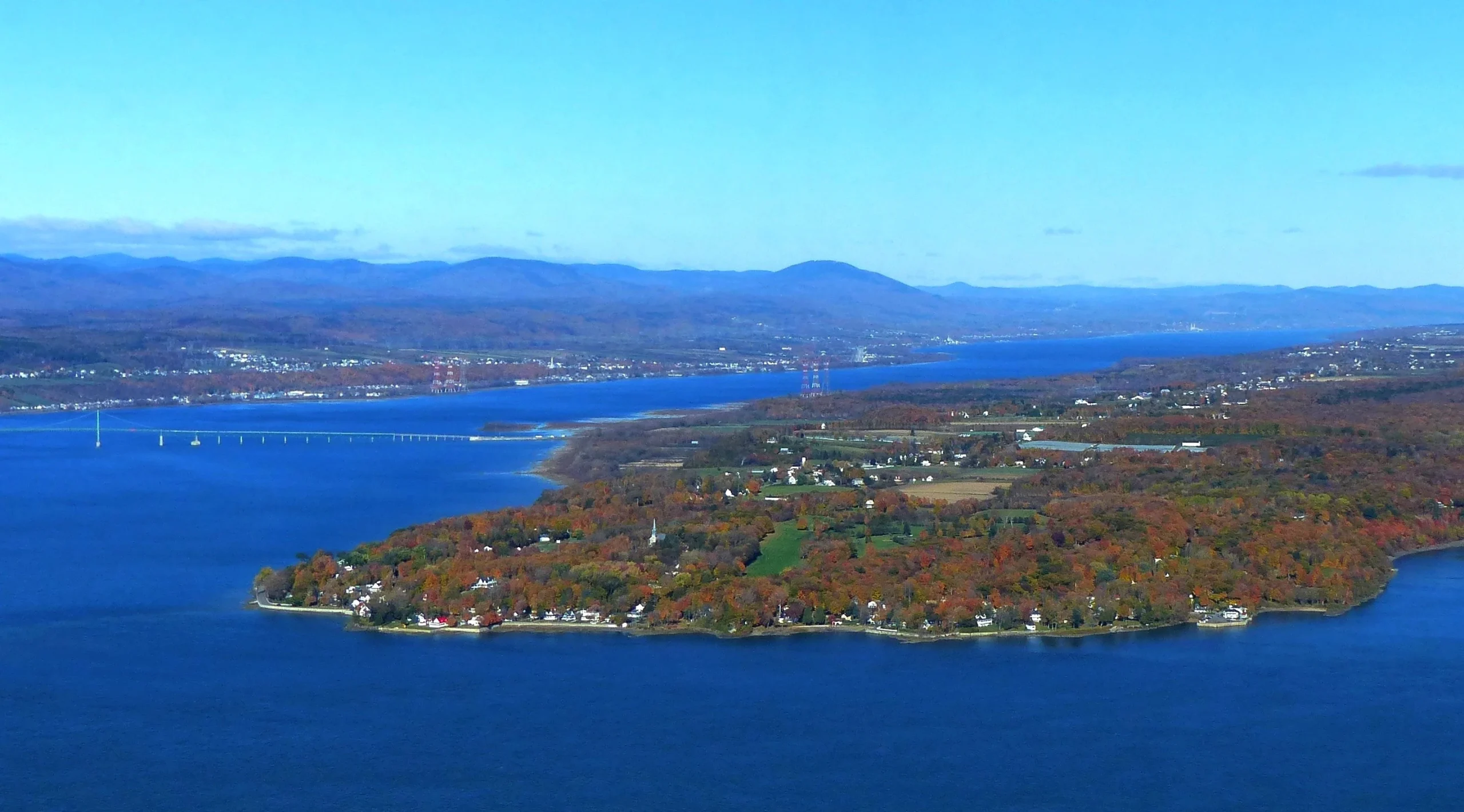
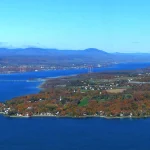
Île d’Orléans offers a glimpse into the rural landscapes that sustained the colony of New France. Settled in the seventeenth century, the island remains characterized by agricultural fields, small villages, historic farmhouses, barns, and parish churches. Its vernacular architecture reflects centuries of adaptation to local climate and materials, with stone and timber structures, steep roofs, and compact building forms defining the landscape.
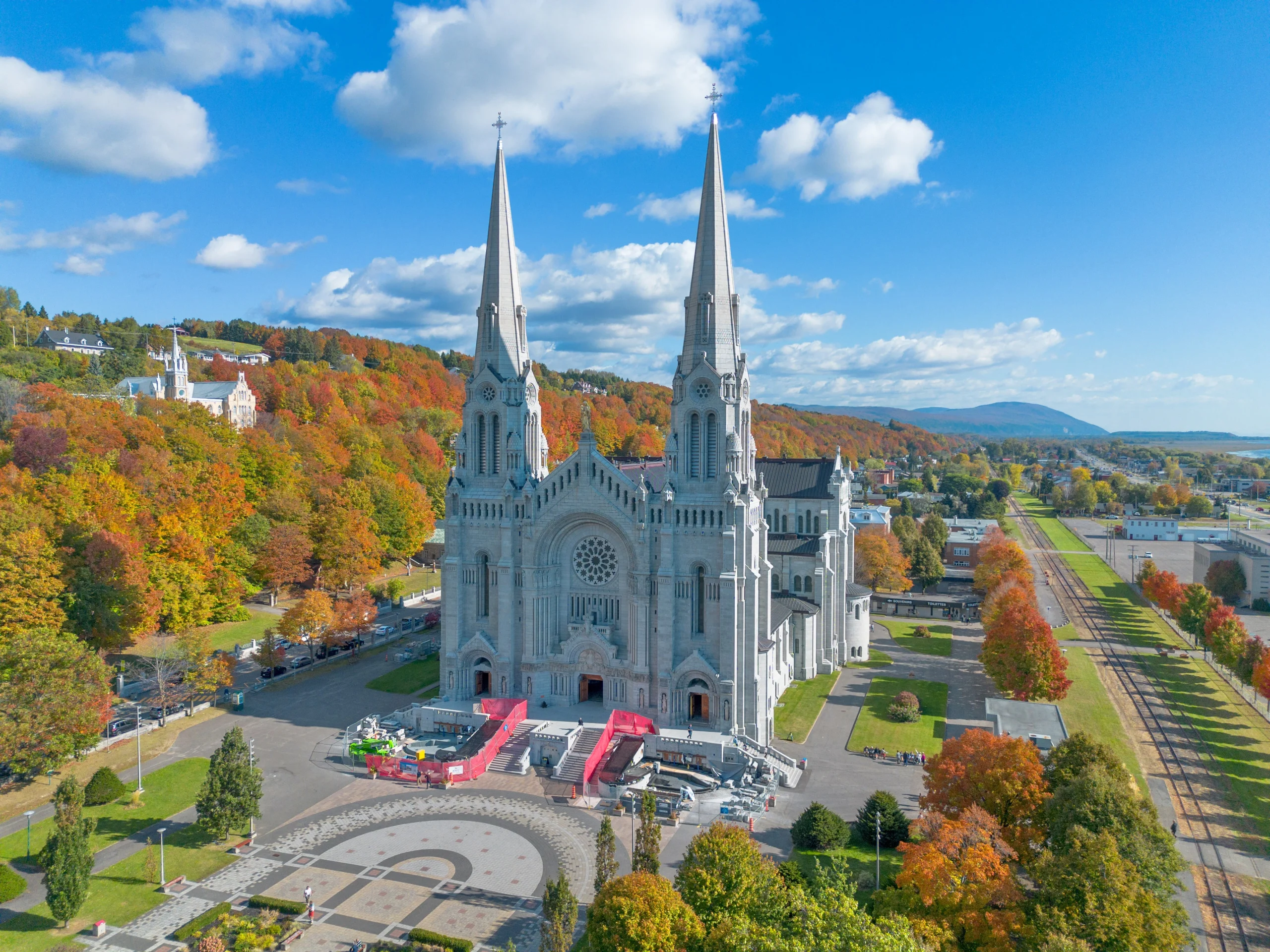
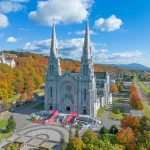
A short distance beyond the island lies Sainte-Anne-de-Beaupré, one of North America’s most important pilgrimage destinations. The focal point is the Basilica of Sainte-Anne-de-Beaupré, a monumental church completed in the early twentieth century. Its architecture combines Romanesque Revival and Gothic Revival influences, expressed through twin towers, vaulted interiors, richly detailed mosaics, stained glass, and sculptural ornamentation.
Streets & Squares
Rue du Petit-Champlain
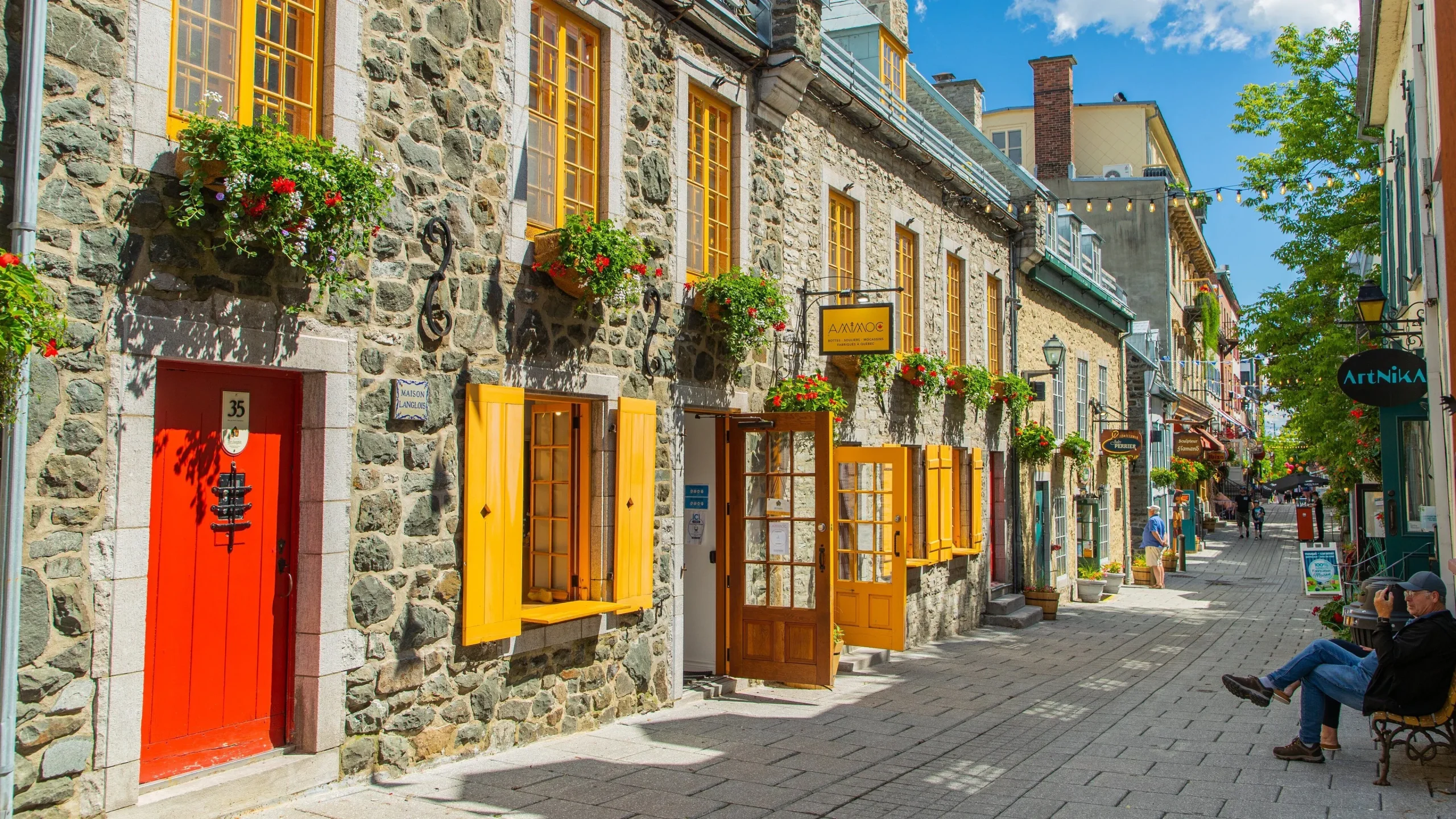
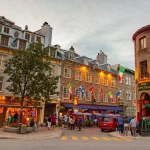
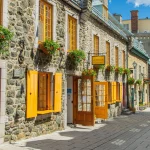
Rue du Petit-Champlain is a commercial street in North America. Established during the early French colonial period, the narrow pedestrian street follows the contours of the Lower Town. The street’s architectural character is shaped by traditional New France building typologies, including masonry facades, steep roofs, dormer windows, and brightly painted shutters. Ground-floor shops occupy former residential and commercial buildings, maintaining the fine-grained rhythm that has characterized the street for centuries. Seasonal decorations, hanging flower baskets, and preserved storefronts further reinforce Quebec’s identity.
Place Royale & Surrounding Lanes
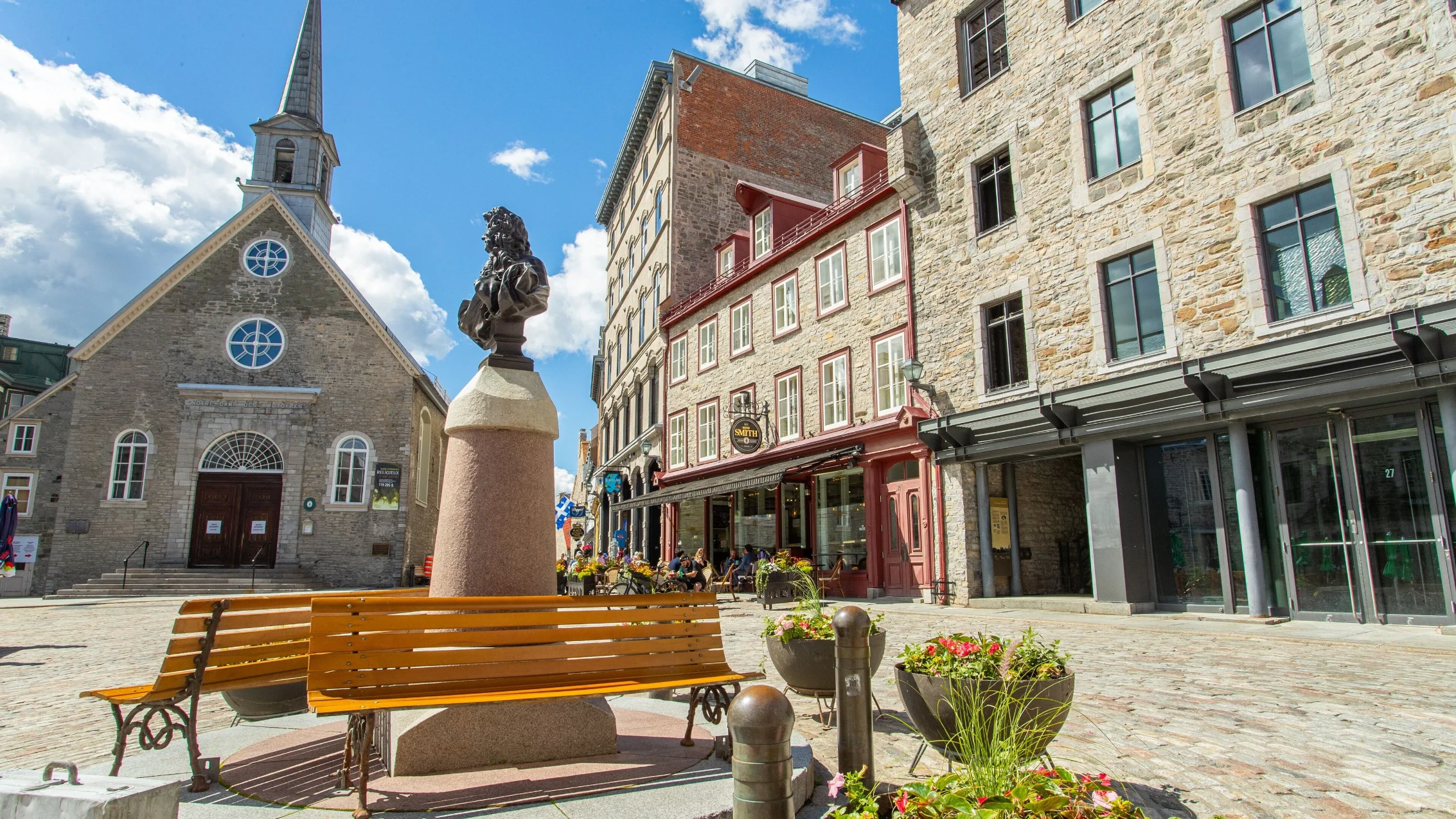
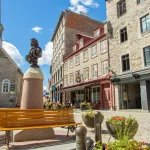
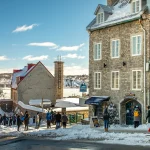
Often considered the birthplace of French North America, Place Royale occupies the site where Samuel de Champlain established a trading post in 1608. The square is an important surviving ensemble of colonial urbanism in Canada, offering a concentration of seventeenth-, eighteenth-, and nineteenth-century architecture. Surrounded by stone buildings with steeply pitched roofs, dormers, and traditional masonry facades, the square retains the spatial qualities of an early French colonial settlement. The surrounding lanes extend this experience through a network of narrow streets, passageways, and small public spaces.
Rue Saint-Paul & Rue Saint-Pierre
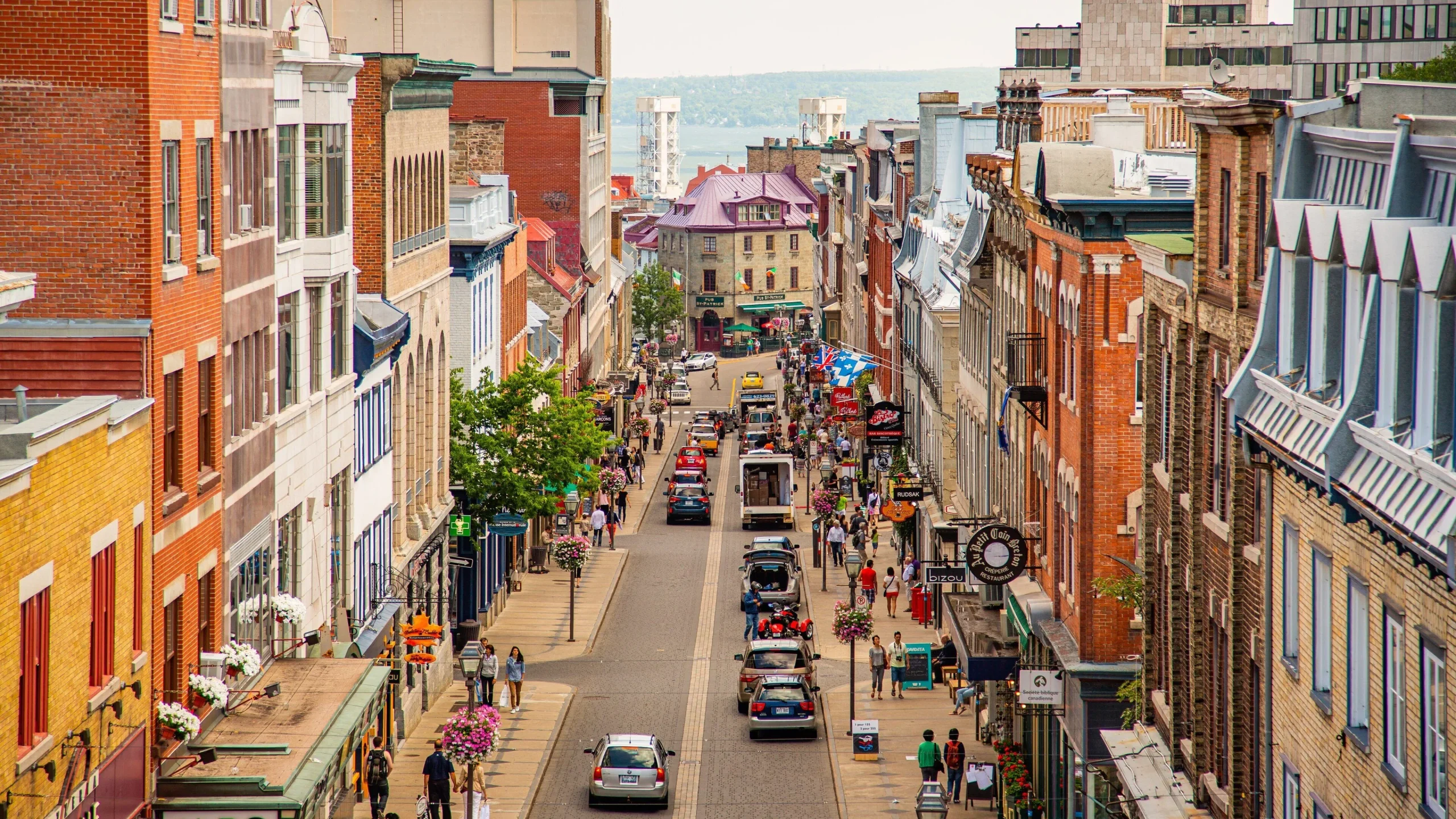
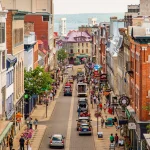
Located between the Old Port and the Lower Town, Rue Saint-Paul and Rue Saint-Pierre reflect Quebec City’s mercantile history. These streets developed as commercial corridors serving the waterfront, where merchants, traders, and shipping-related businesses established warehouses, offices, and residences close to the port. Architecturally, they differ from the picturesque character of Petit-Champlain. Larger building footprints, warehouse structures, stone and brick facades, and industrial details contribute to a more utilitarian urban character. Many historic commercial buildings have been adapted into galleries, boutiques, cafés, and cultural spaces.
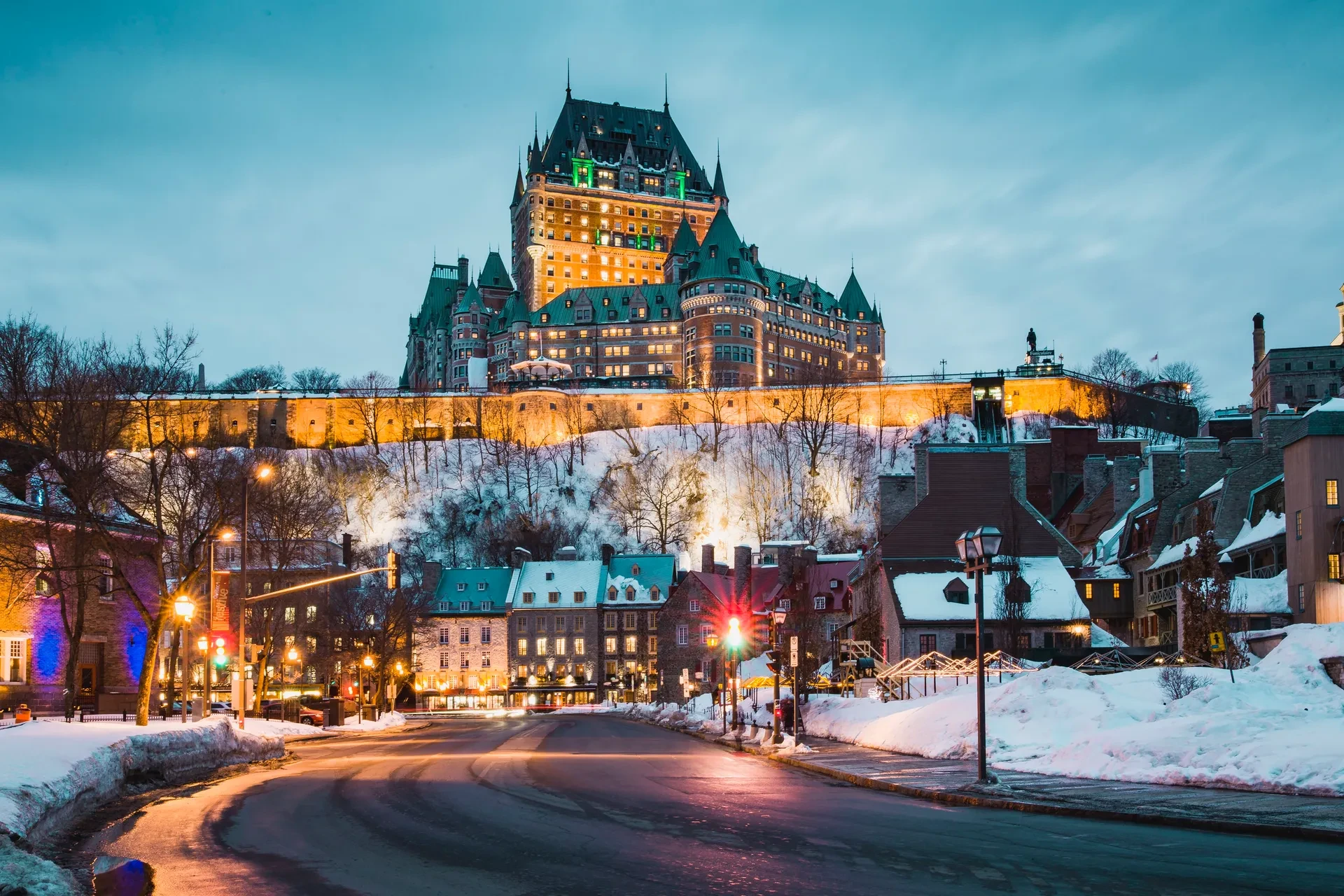
Today, Quebec City reveals more than four centuries of architectural evolution, from colonial masonry buildings and institutional complexes to twentieth-century landmarks and contemporary cultural interventions. Streets open onto squares, promenades overlook rivers, and viewpoints frame entire districts, creating a city that unfolds through a sequence of composed urban scenes.