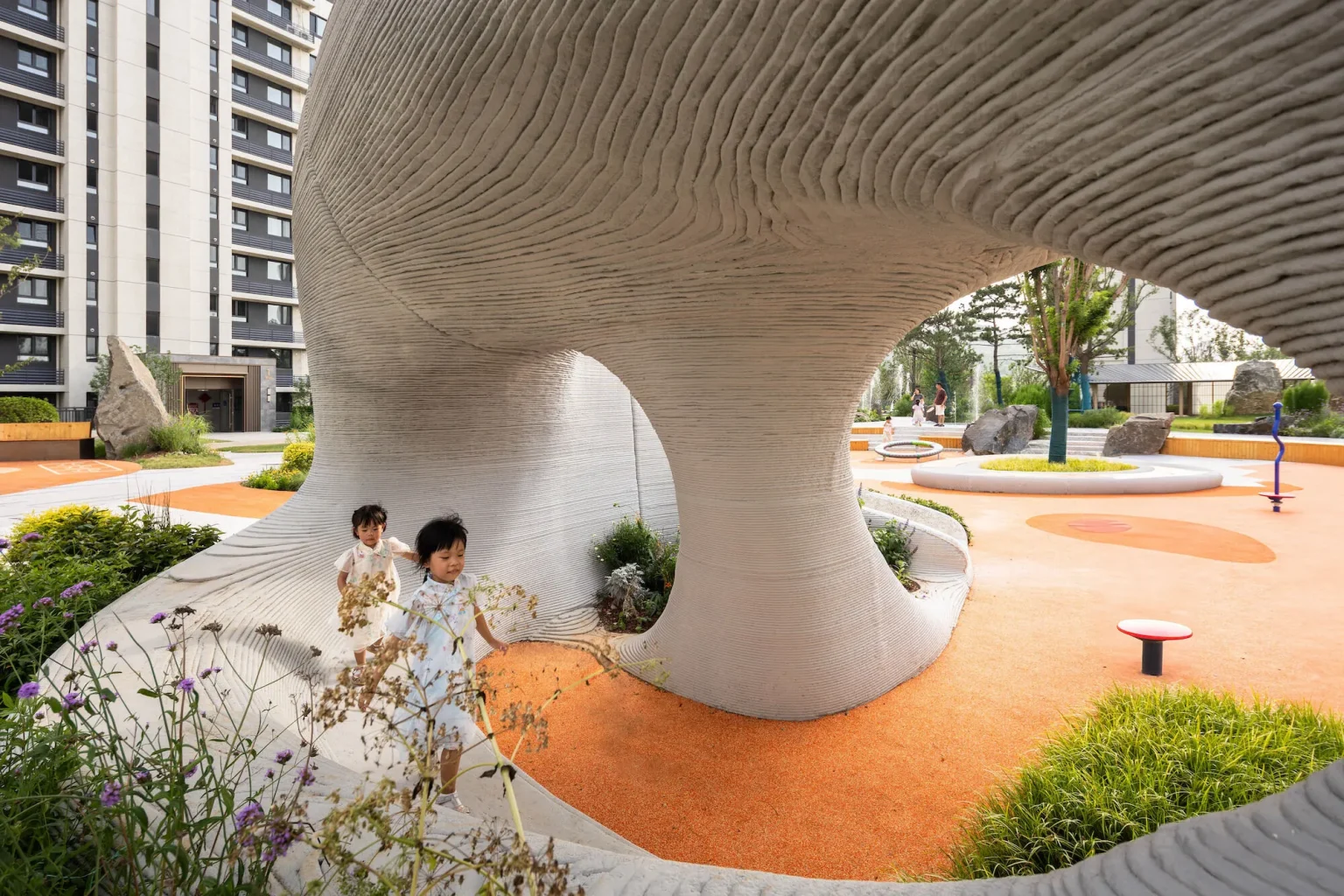
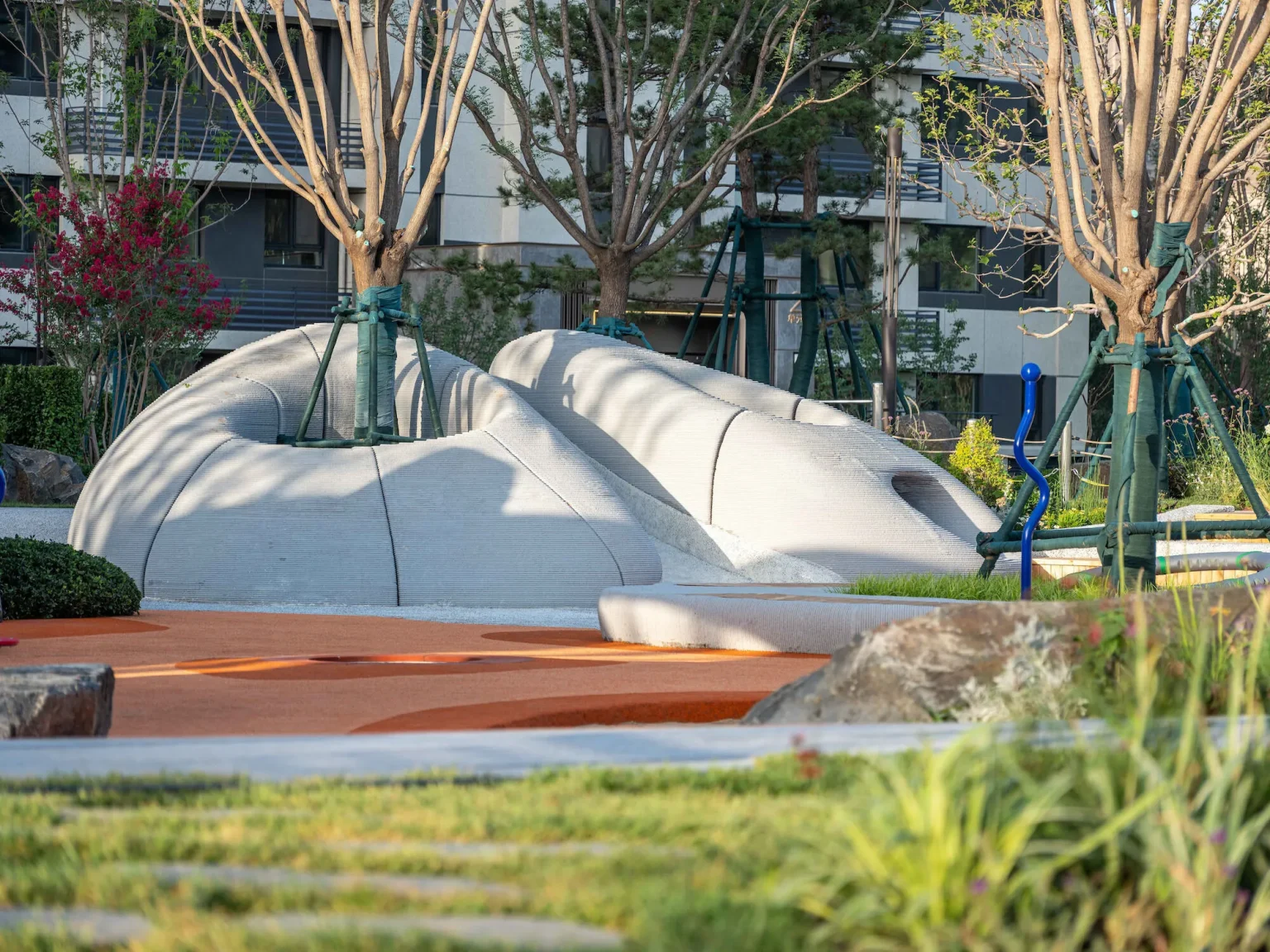

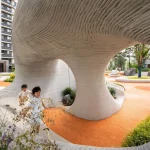
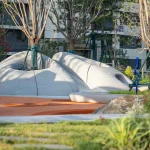
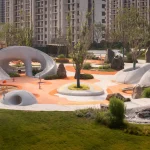
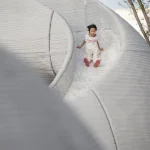
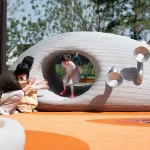
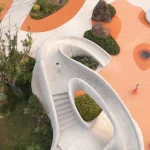
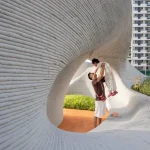
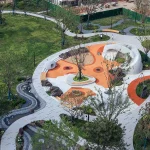
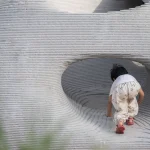
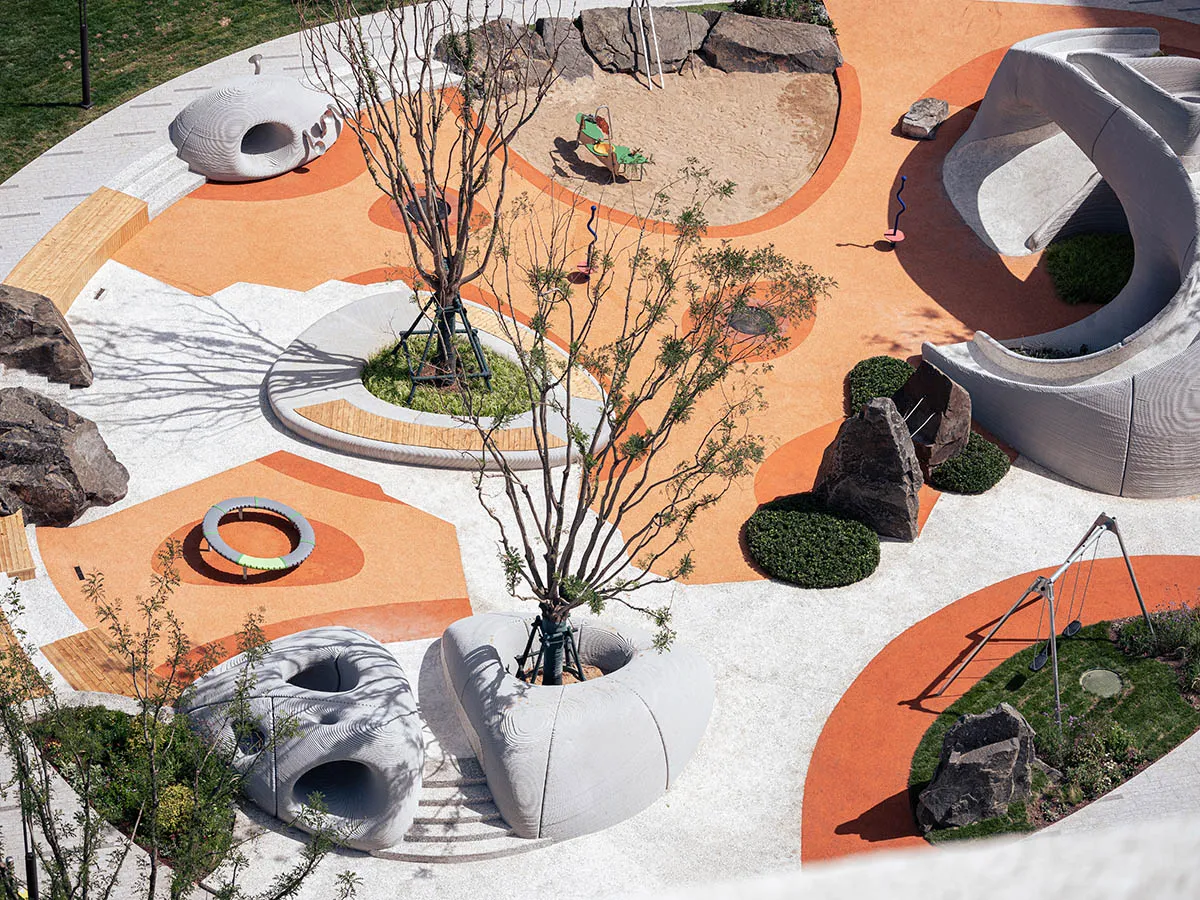
Children in Jinan are exploring China’s first large playground made almost entirely from 3D-printed concrete. Designed by Shanghai-based XISUI Design, Boulder Park spans 4,000 square metres at the heart of the new Yunwan Garden community park.
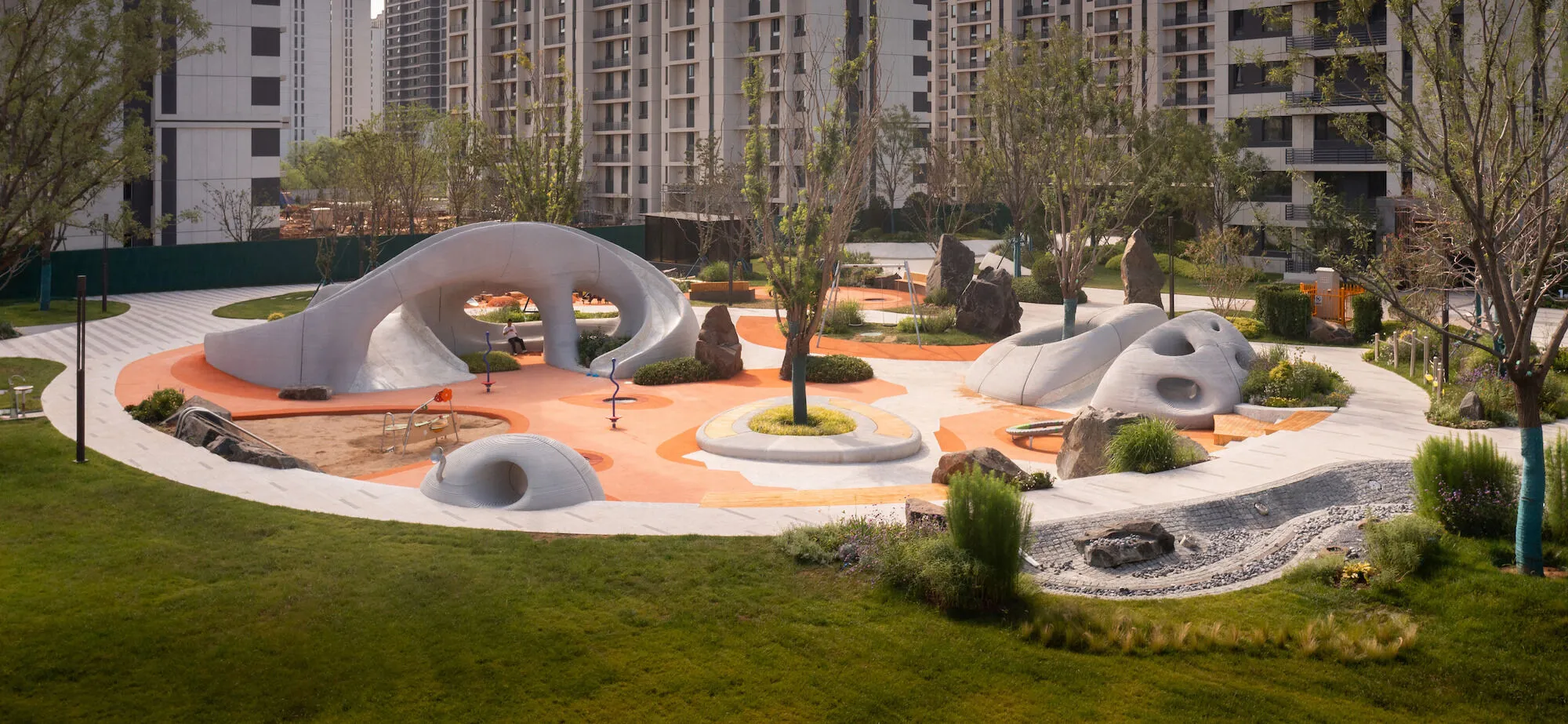
A Playground Without Equipment
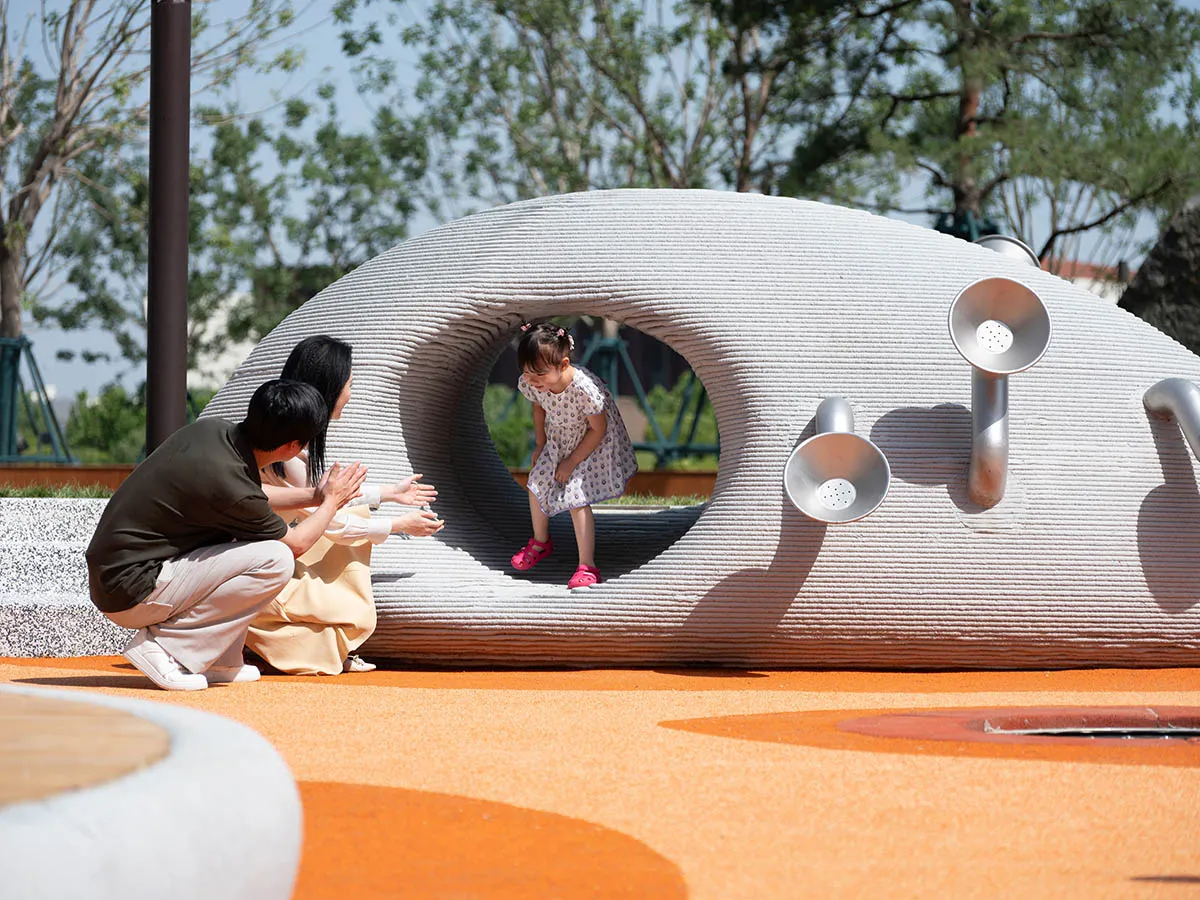
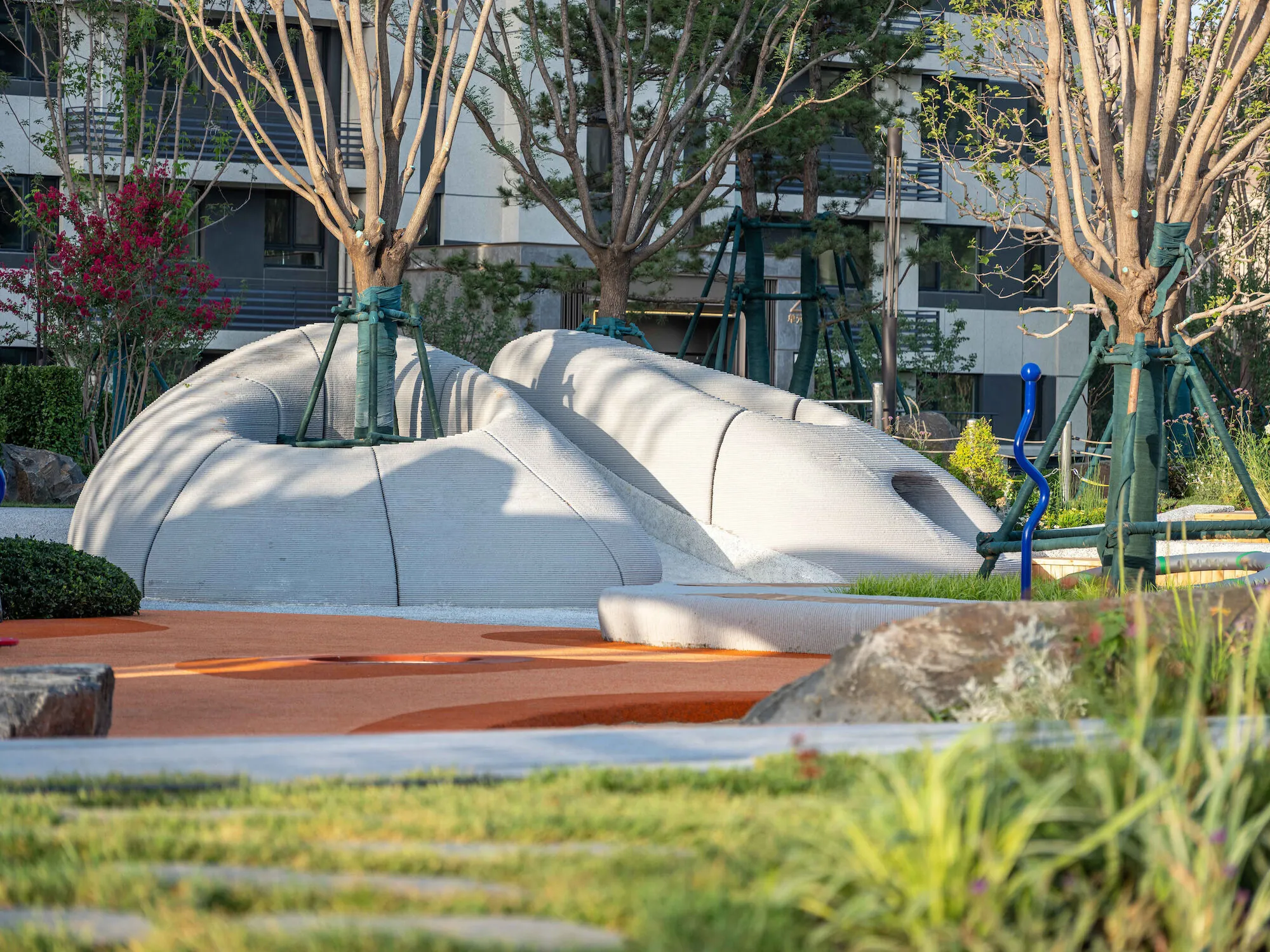
Instead of installing prefabricated equipment, XISUI built the playground from 3D-printed concrete boulders. These forms work as climbing walls, tunnels, bridges, slides, and seating, turning geology into architecture. In nature, a boulder is mass and permanence, while in the park, it becomes a platform for play. This reframes the playground as open terrain rather than a fenced zone, embedding play within the wider landscape.
Five Themed Zones in Yunwan Garden
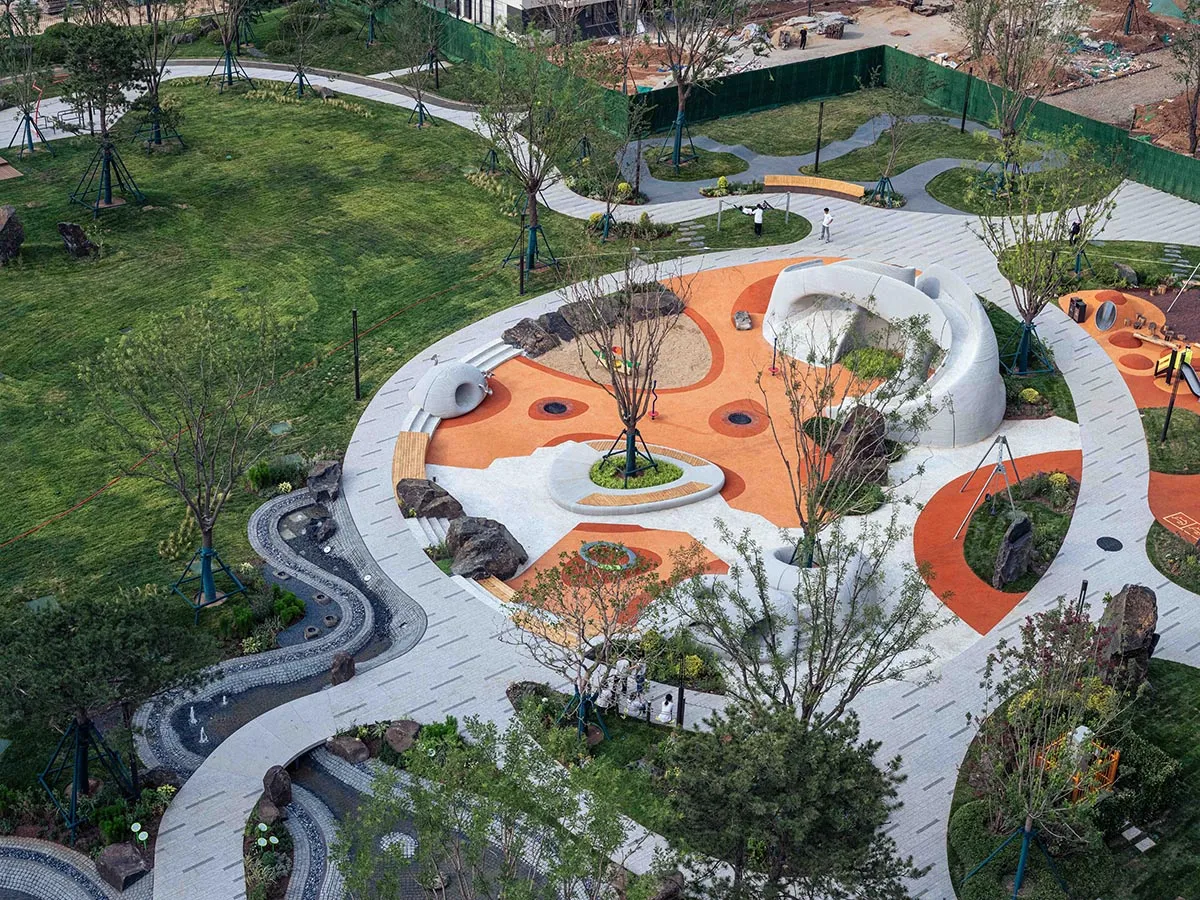
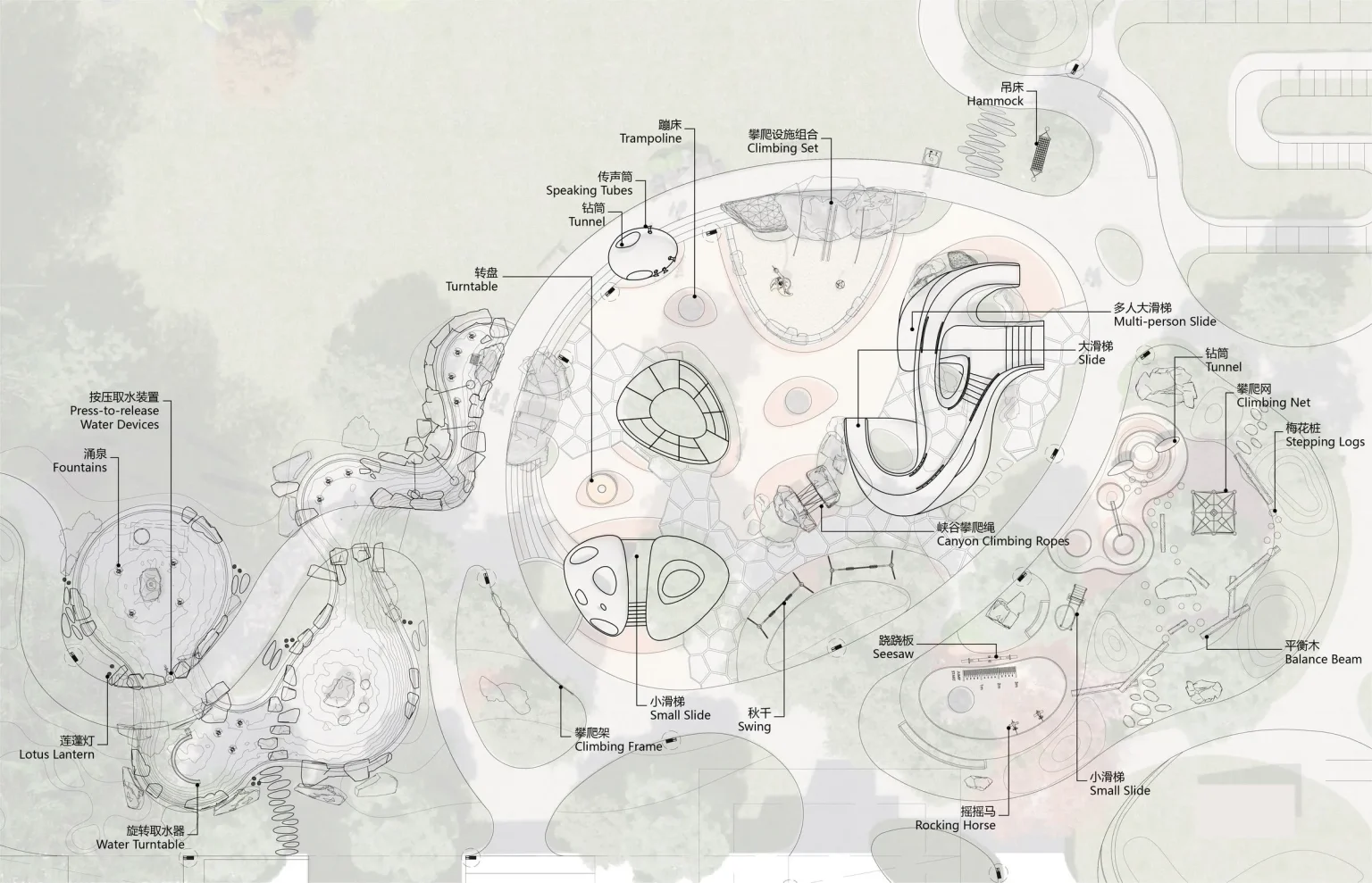
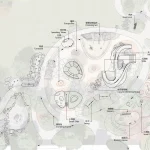
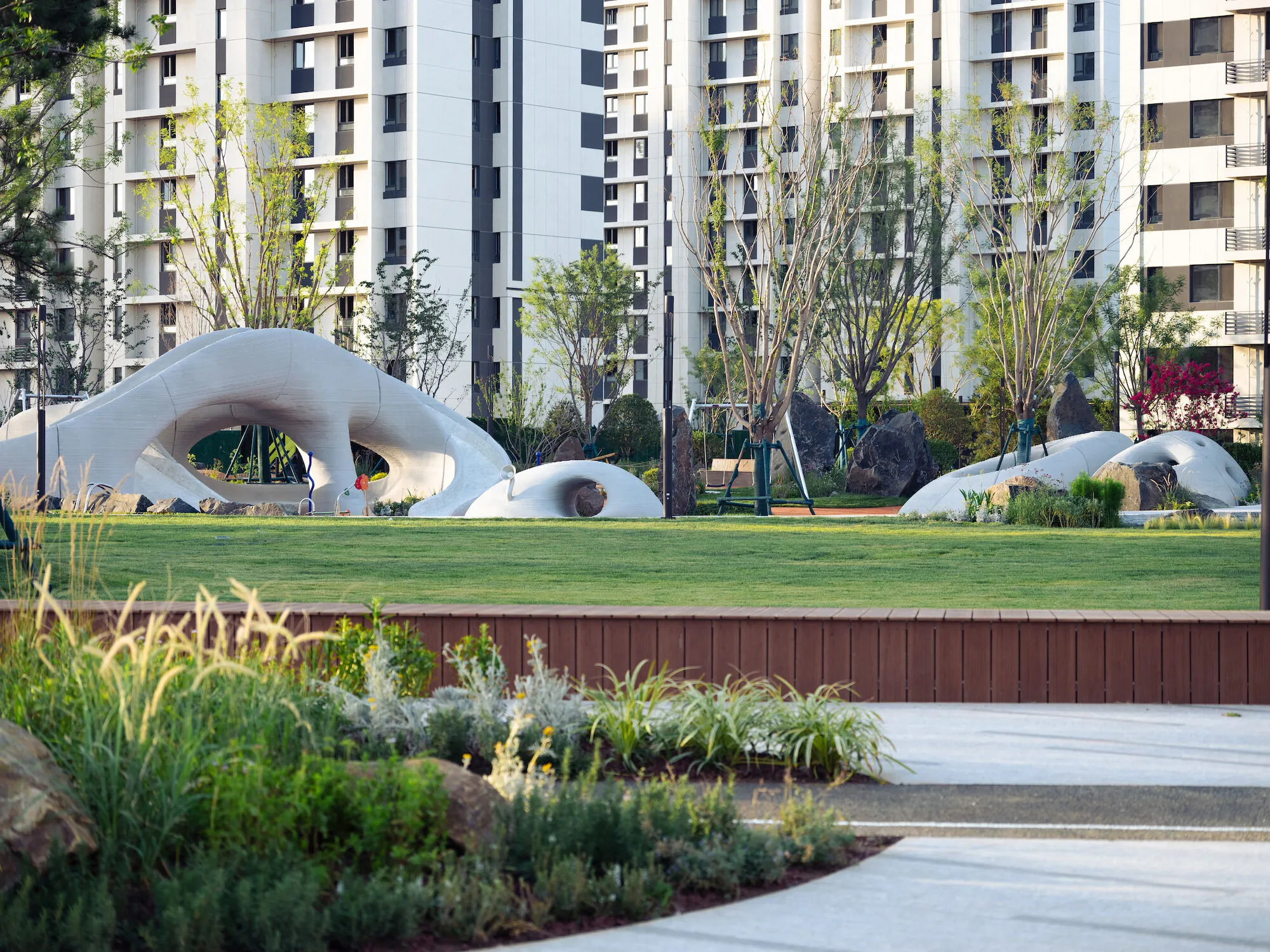
Boulder Playground is one of five themed zones within Yunwan Garden, alongside Water Garden, Forest Garden, Stone Garden, and Flower Garden. Play elements such as swings, trampolines, climbing nets, and water features are embedded directly into the terrain. The park reads as a continuous landscape rather than a collection of separate structures.
How 3D-Printed Concrete Builds Without Formwork
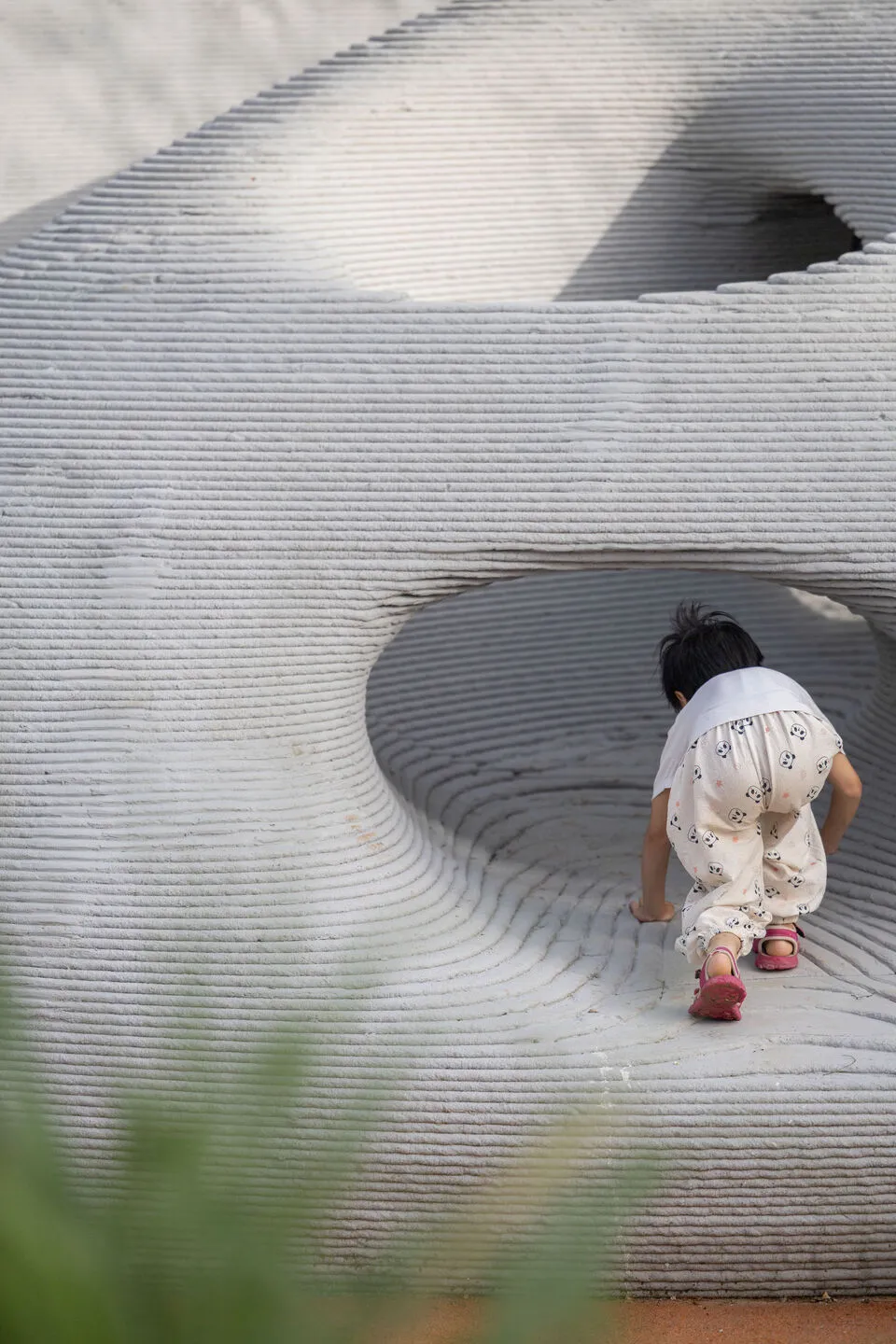
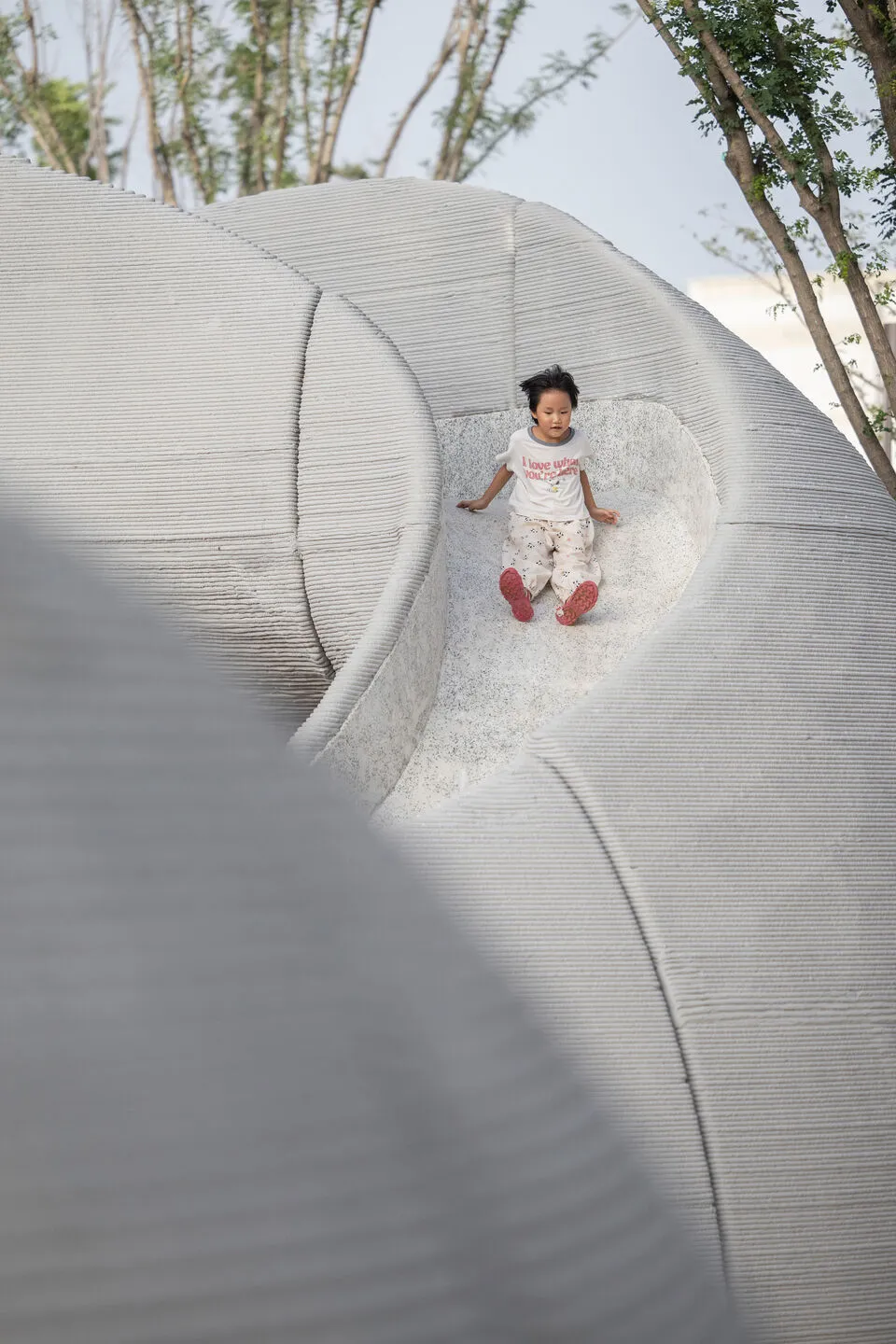
While the design references natural forms, its construction depends on robotics. XISUI used robotic-arm-controlled 3D printing to fabricate the playground’s structures. The process extrudes concrete in layered ribbons, eliminating the need for formwork and allowing free-form geometries with striated textures that echo rock formations.
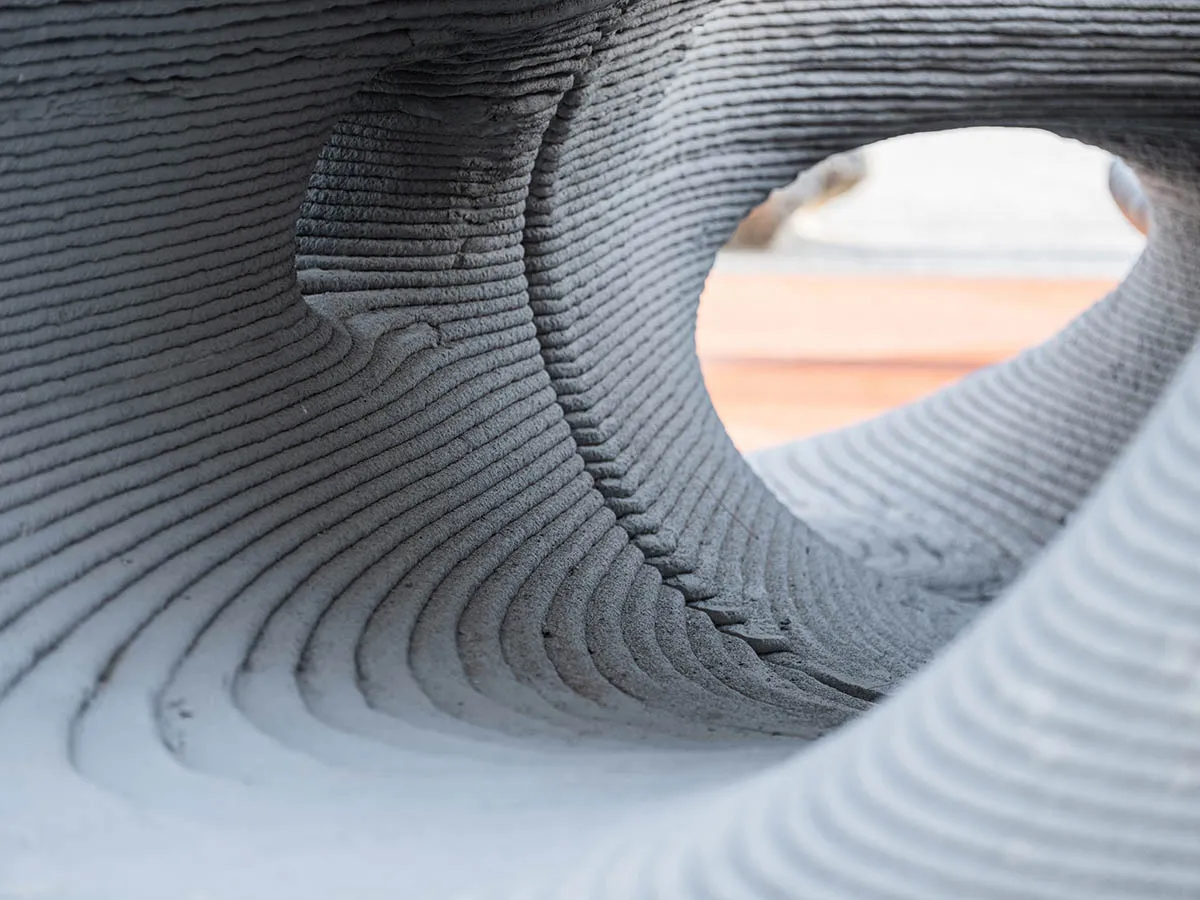
The printed material reaches a compressive strength of 50 MPa, stronger than the C40 grade common in standard construction, ensuring durability and safety under heavy use. The structures stand both robust and softened, a “new stone” whose stratified surfaces read as geological while revealing their machine-made origins.
Unlike traditional playgrounds, Boulder Park is not a flat surface populated with equipment. Instead, it is a continuous terrain that children traverse like a canyon, weaving through caves, ridges, slopes, and channels.
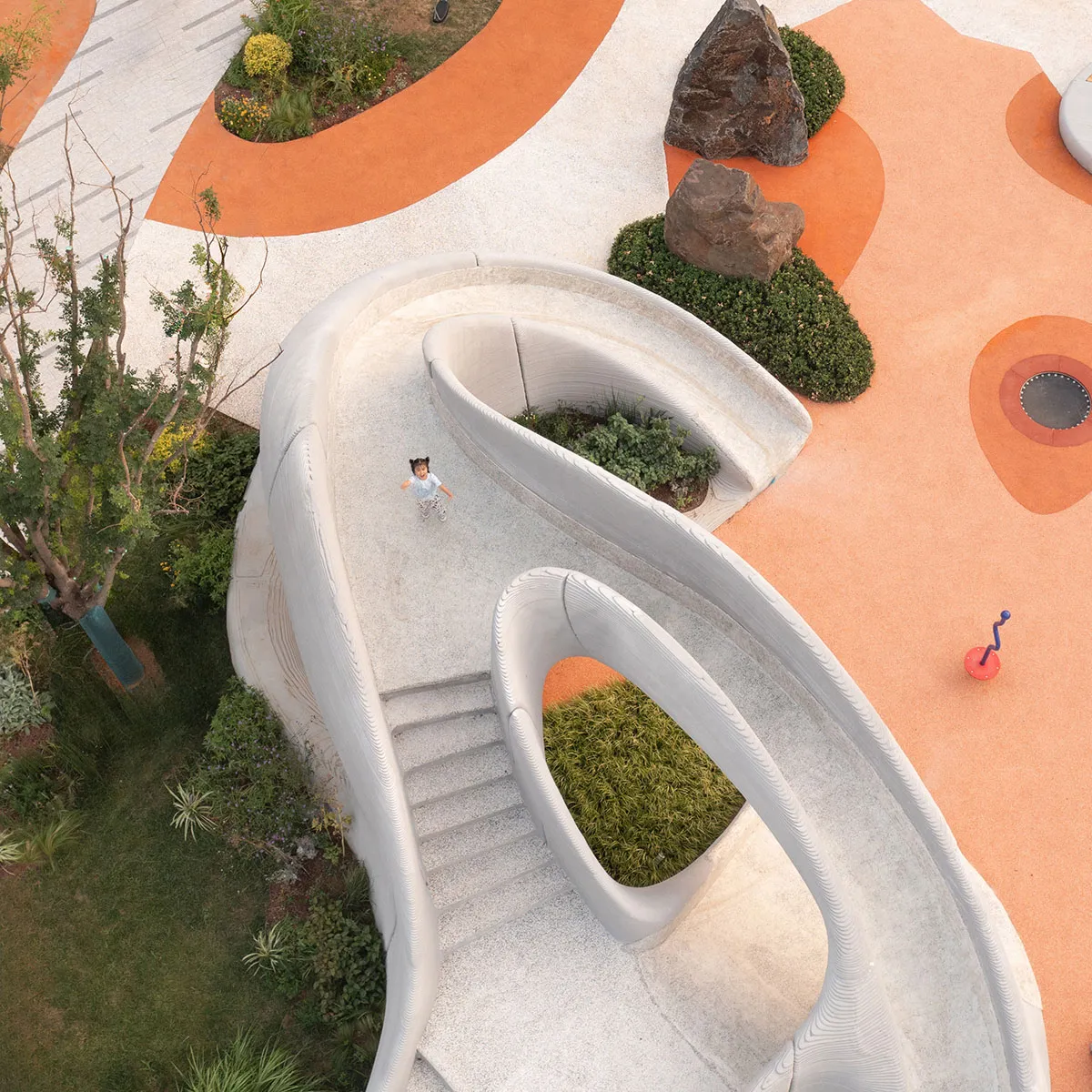
Each printed element was designed to perform multiple roles. A cavity doubles as a climbing tunnel, a ridge functions as a slide, and an outcrop becomes informal seating. Edges are softened, corners rounded, and surfaces scaled for children’s bodies, embedding safety into the form itself. The design reframes concrete, which is often associated with infrastructure and mass housing, as a material for tactile exploration.
Landscape as a Laboratory for Digital Construction
XISUI’s lead designer, Yihao Hu, sees landscape as an ideal testing ground for architectural printing. The structural demands are less intense than those of full buildings, allowing greater freedom in exploring fabrication techniques.
Yet the technical challenges, like reinforcement detailing, curing conditions, and load distribution, are complex enough to advance research and push innovation. “The landscape allows us to experiment with form, texture, and assembly in ways that point toward architecture’s future,” Hu explains. In this sense, Boulder Park is both a children’s playground and a laboratory for digital construction.
What sets Boulder Park apart from experimental pavilions or exhibitions is its place in daily life. It is not a temporary installation but a neighborhood playground, used constantly by children, parents, and residents. Innovation here is not put on display for specialists but folded into routine community use.
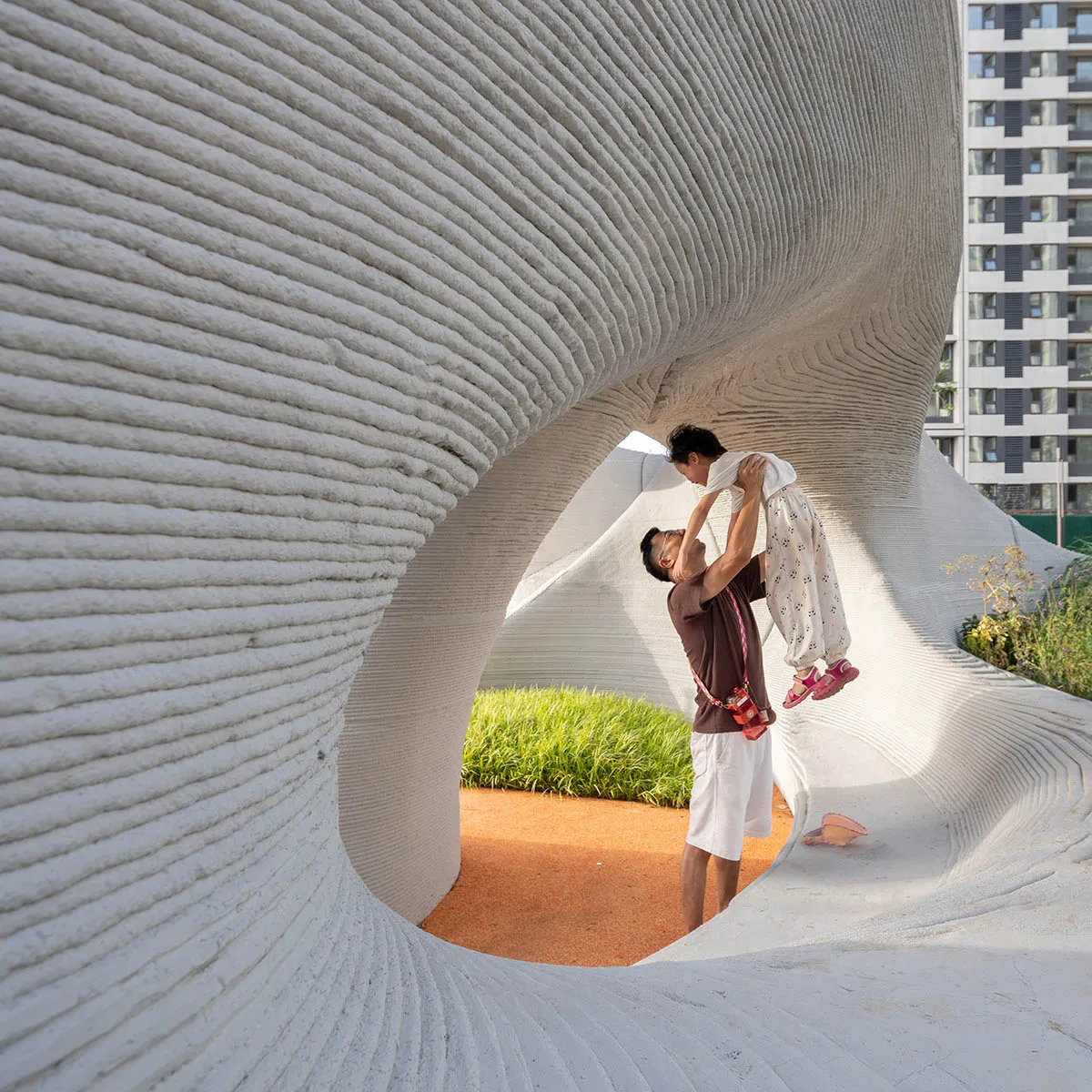
And that change matters. The project shows how 3D-printed construction can move beyond prototypes and exhibitions to function as durable public infrastructure. For designers, it offers a case study in scaling robotic printing. For residents, it simply provides a landscape for play. By pairing new fabrication methods with forms drawn from geology, XISUI created a setting that feels both futuristic and familiar.
As children climb its striated surfaces, they are not only playing. They are growing up inside a new 3D-printed architecture shaped by nature and technology.
Image Credit: © Zhou Sheng, CHENIN Visual | XISUI Design