

Architecture has always borrowed from its own history. Columns return in new forms, familiar geometries reappear in unfamiliar contexts, and architects reinterpret materials, proportions, and spatial traditions. Yet something different is happening with the growing use of artificial intelligence in architectural design.
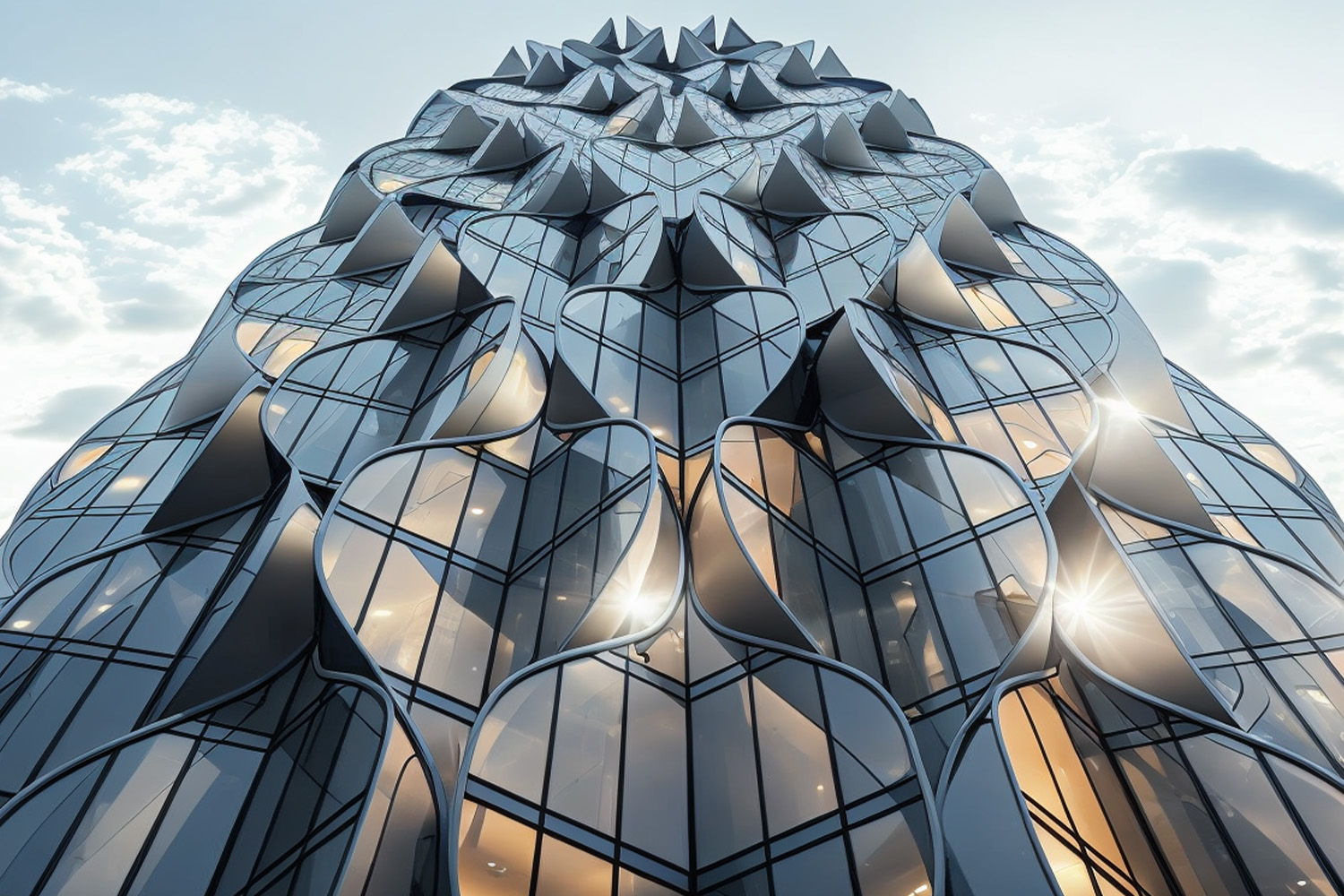
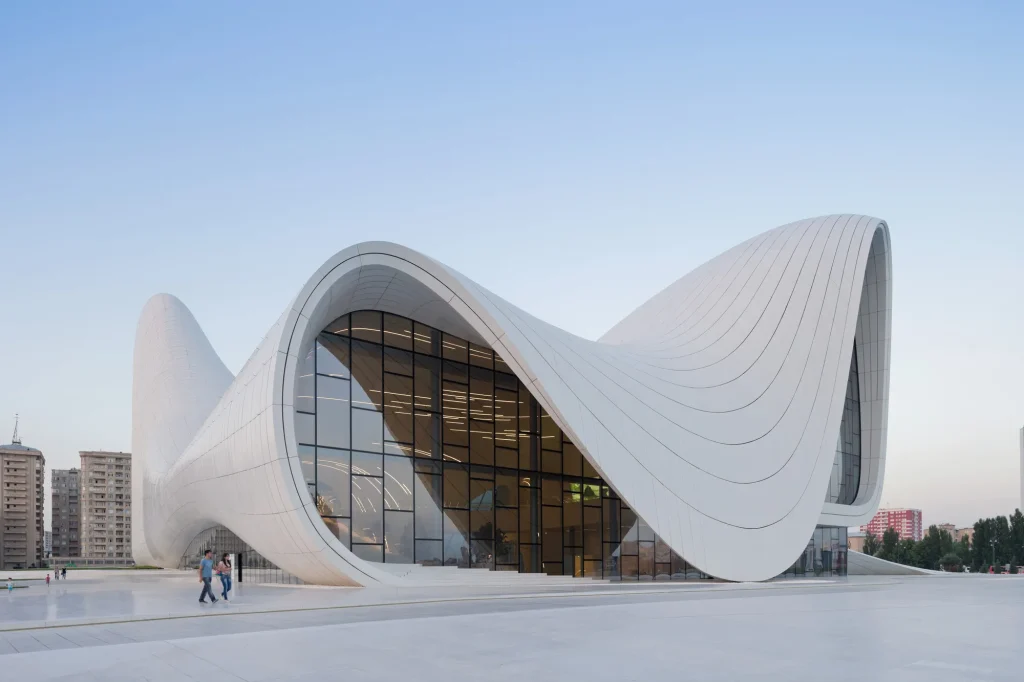
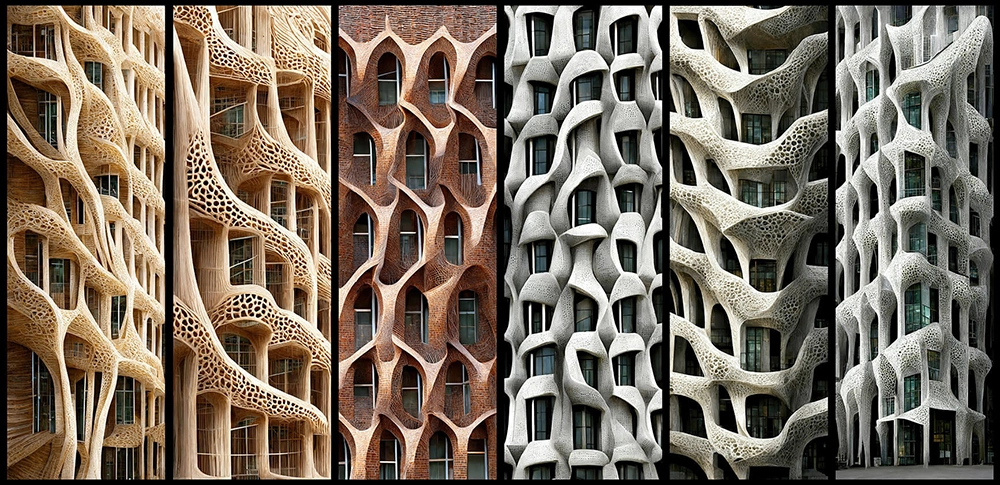
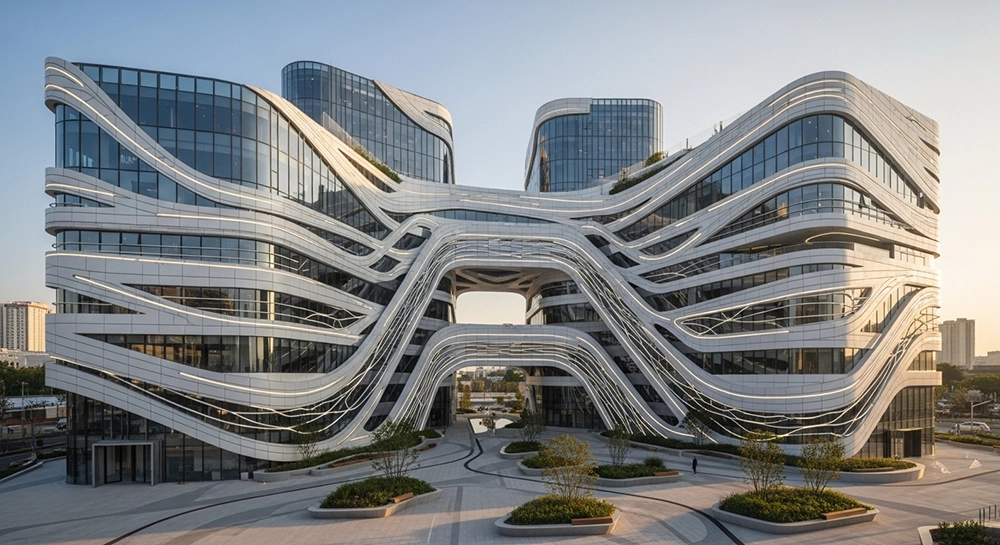
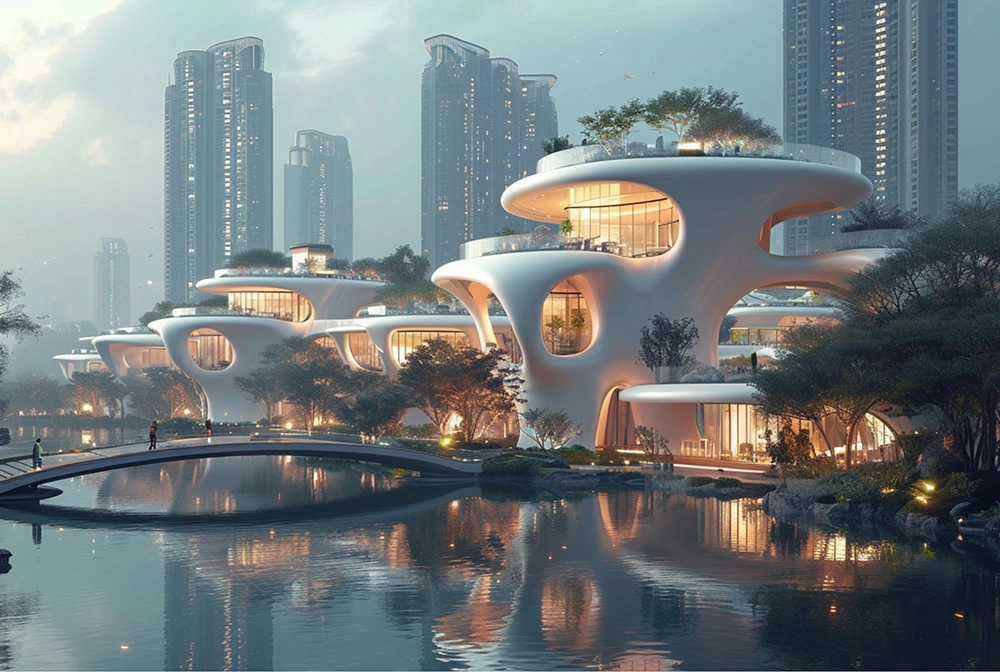
Across countless generated images, buildings increasingly share a recognizable visual language: sculptural curves, dramatic cantilevers, seamless glass surfaces, layered façades, and interiors bathed in carefully controlled light. The results can be beautiful, sometimes astonishingly so. But after scrolling through enough of them, a troubling question emerges: if AI can generate almost any building imaginable, why do so many of its buildings look alike?
The answer lies not simply in the technology itself, but in the relationship between algorithms, architectural representation, and the cultural expectations that shape contemporary design.
The Architecture of a Statistical Average

Generative AI does not develop architectural taste in the human sense. It identifies patterns across vast collections of images, learns associations between visual elements, and produces new compositions based on those relationships. When prompted to create a contemporary museum, a luxury residence, or a sustainable cultural center, it draws on visual conventions that frequently appear in representations of those building types.
The problem begins when familiarity becomes a substitute for architectural invention.
Contemporary architectural media already circulate a relatively narrow collection of desirable images. Buildings with fluid geometries, dramatic silhouettes, expansive glazing, and polished surfaces are widely reproduced because they photograph well and communicate innovation quickly. These images become part of the visual material through which generative systems learn what contemporary architecture is supposed to look like.
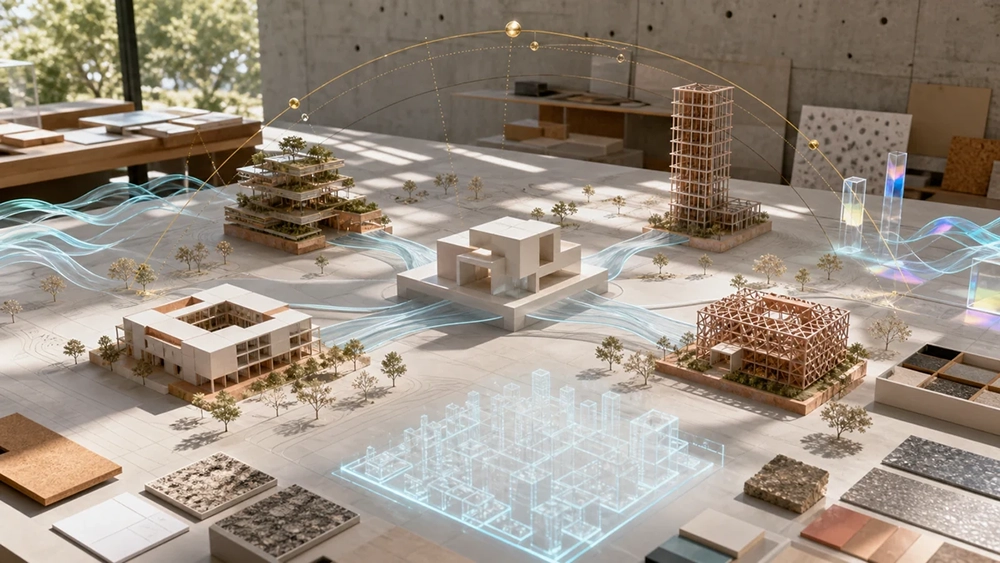
The resulting buildings are not necessarily copies of existing projects. Their similarity is more subtle. They reproduce the visual logic of architectural images that have already achieved cultural visibility.
A generated building may combine the curved roof of one project, the façade language of another, and the spatial atmosphere of a third. Each element may appear original in isolation, while the complete composition remains trapped within an established aesthetic vocabulary.
This is the paradox of algorithmic taste: a system capable of producing enormous visual variation can repeatedly converge on a relatively small set of recognizable architectural expressions.
When the Image Becomes the Brief
One of the most significant changes introduced by AI image generation is the growing distance between architectural appearance and architectural reasoning.
In conventional design, a building develops through a complicated negotiation between program, structure, circulation, climate, materials, regulations, construction methods, and human experience. These conditions do not always produce elegant images. They introduce constraints, compromises, and occasionally awkward solutions. Yet such difficulties are often where meaningful architectural decisions emerge.
Image-generating systems operate differently. They can produce the appearance of a resolved building without resolving the questions that would make that building possible.
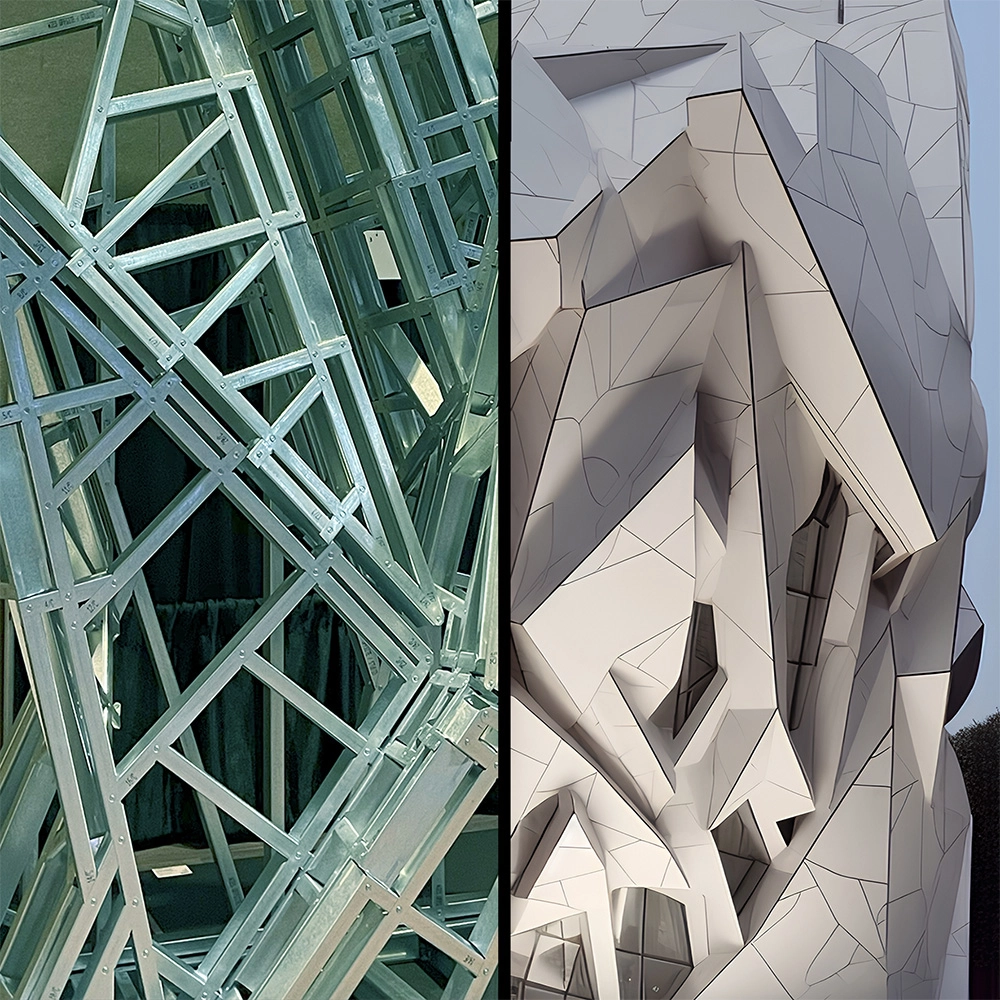
A façade can suggest a sophisticated structural system without revealing how its loads are transferred. A spectacular roof can appear almost weightless while ignoring drainage, maintenance, and construction tolerances. An interior can communicate serenity without considering how people navigate it, occupy it, or experience it throughout the day.
When these images become the primary reference for design development, architecture risks being judged by how convincingly it resembles architecture rather than by how intelligently it performs.
This does not mean that visual experimentation is superficial. Architectural representation has always been an essential instrument of thought. Drawings, models, and renderings allow designers to explore possibilities that cannot yet be built. The problem arises when the representation stops being a means of investigation and becomes the final measure of success.
AI makes this shift particularly tempting because it dramatically reduces the time required to produce persuasive images. A designer can generate dozens of alternatives before developing a single coherent plan. The quantity of options increases, but the underlying architectural questions may remain untouched.
The result is a peculiar form of abundance: more designs, more images, and more apparent innovation, without a corresponding increase in spatial or conceptual diversity.
The Hidden Influence of Architectural Platforms
Algorithmic taste is not produced by AI alone. It is shaped by the platforms, institutions, and professional cultures that determine which architectural images become desirable in the first place.
Online architectural platforms reward visual impact. Social media favors images that communicate immediately, often without requiring viewers to understand a building’s location, history, program, or construction. A striking silhouette can travel across the world in seconds, detached from the circumstances that produced it.
AI enters this environment and amplifies its existing preferences.
If the most visible examples of contemporary architecture repeatedly feature similar formal gestures, these gestures become convenient signals of quality. Designers learn to recognize them, audiences learn to expect them, and generative systems learn to reproduce them. The process becomes circular: familiar images shape new designs, which then reinforce the familiarity of the original visual language.
This is particularly problematic for architectural competitions and early-stage conceptual design. A proposal that looks immediately contemporary may appear more convincing than one whose architectural intelligence requires explanation. A building with an unusual spatial organization, modest material expression, or contextually specific form may struggle to compete with a polished image of a sweeping, futuristic structure.
The danger is not that architects will stop experimenting. It is that experimentation itself may become standardized.
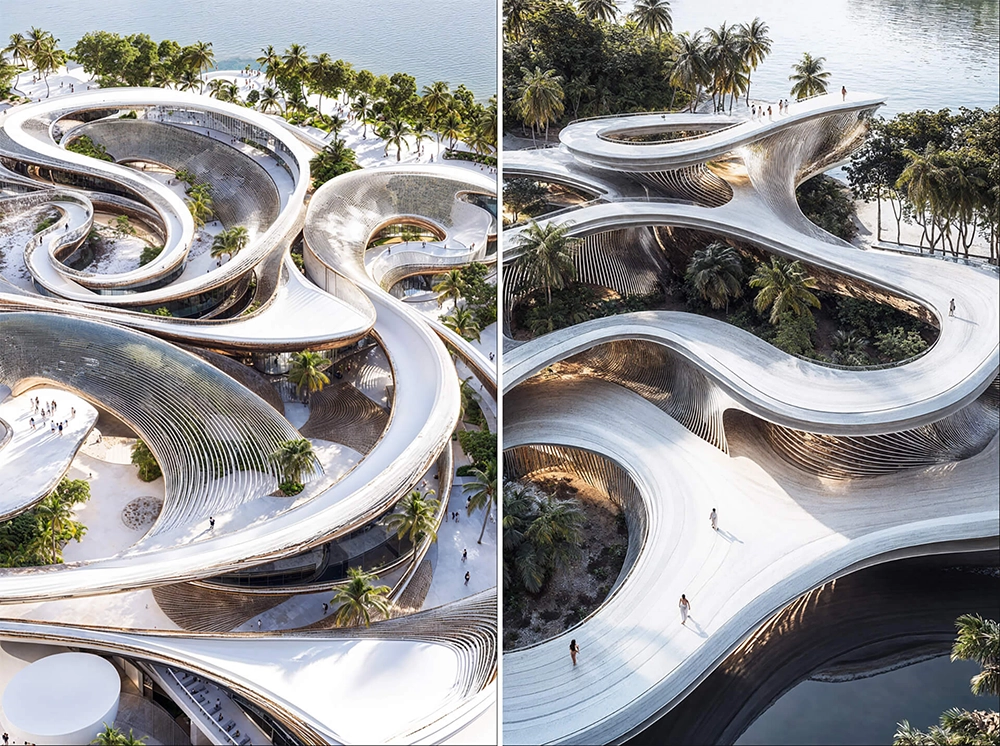
Even unconventional forms can turn into predictable visual formulas when they are repeatedly used to signify creativity. Curves become shorthand for innovation. Exposed greenery becomes shorthand for sustainability. Parametric surfaces become shorthand for technological sophistication. The architectural gesture remains visible, but its original purpose becomes increasingly difficult to distinguish from its marketing value.
Why Place Matters More Than Style
Architecture is never created in an abstract visual universe. It occupies a particular piece of land, encounters a particular climate, uses particular resources, and becomes part of a particular cultural landscape.
These relationships provide architecture with its specificity.
A building in Shiraz must respond to conditions that differ substantially from those of a building in Copenhagen or Singapore. Solar exposure, seasonal temperature changes, water availability, construction traditions, patterns of public life, and local material supply all influence what constitutes an appropriate architectural response.
Yet AI-generated architectural imagery often treats context as a decorative layer. A building may be placed against a desert landscape, a dense European street, or a tropical garden without meaningfully changing its fundamental design. The background changes, while the architecture remains almost interchangeable.
This is not merely a problem of regional identity or visual authenticity. It is a problem of architectural intelligence.
Consider the relationship between a courtyard and a hot climate. A courtyard can organize circulation, create privacy, moderate exposure to sunlight, and support social interaction. Its geometry and proportions emerge from several overlapping demands. A generative image might reproduce the visual appearance of a courtyard while ignoring the environmental and social relationships that give it value.
The distinction is crucial. Architecture does not become context-sensitive simply because an image includes local vegetation, traditional ornament, or familiar materials. Context must influence the organization of space, the behavior of the building, and the relationship between occupants and their surroundings.
AI can assist architects in exploring these relationships, but only when the design process supplies meaningful contextual information and evaluates the resulting proposals against real conditions. Otherwise, regional architecture risks becoming a collection of visual references assembled into globally familiar forms.
The Cost of Designing for Recognition
There is also an economic dimension to algorithmic similarity.
Architectural projects operate within systems of risk, investment, approval, and public expectation. Clients often want buildings that appear distinctive without becoming difficult to understand, expensive to construct, or challenging to market. Developers may seek a recognizable identity that distinguishes a project while preserving broad commercial appeal.
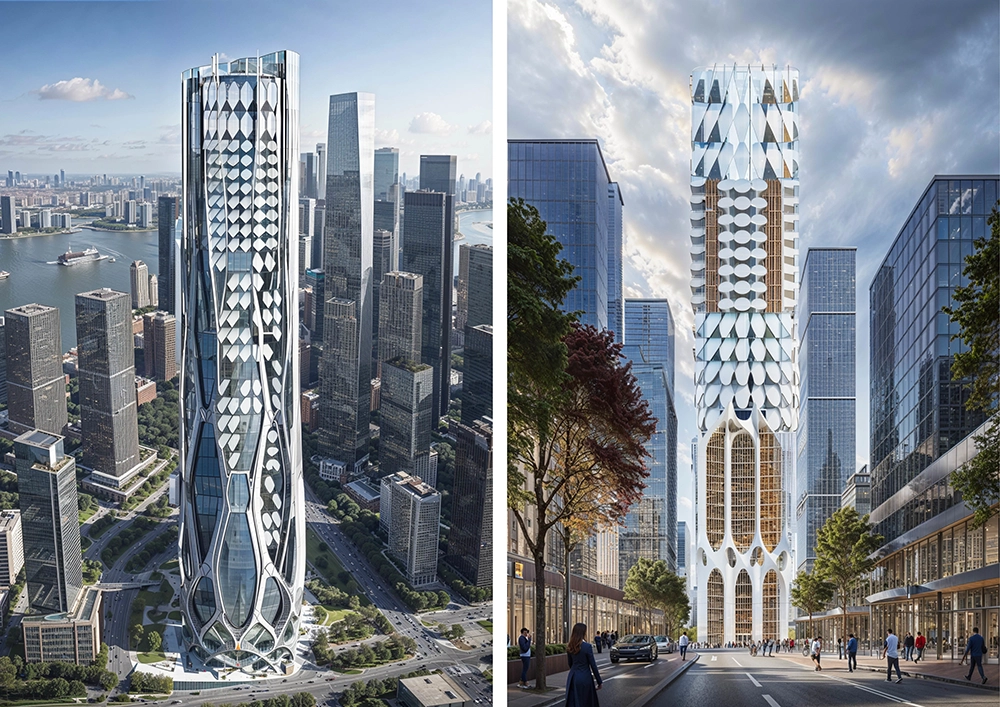
AI-generated images fit comfortably within this logic. They can quickly produce a polished visual identity, helping clients imagine a project and helping design teams communicate an idea. But they can also encourage a preference for formal novelty that remains safely within established aesthetic conventions.
The resulting architecture may look experimental while remaining commercially predictable.
A sculptural façade can distinguish a residential development in promotional material without changing the quality of its apartments. An elaborate entrance can establish a memorable image without improving the relationship between the building and the street. A dramatic atrium can create a compelling rendering while contributing little to everyday social life.
These are not failures exclusive to artificial intelligence. Architecture has long struggled with the difference between visual distinction and substantive innovation. AI makes the distinction more urgent because it can produce convincing evidence of architectural ambition before that ambition has been tested.
The professional responsibility therefore shifts. Architects must become more critical of the images they generate, asking not only whether a proposal looks original but also what makes it architecturally necessary.
Why does this building have this form? What does the geometry accomplish? How does it shape movement, light, comfort, construction, and public life? Could a simpler intervention achieve the same purpose more effectively?
Such questions may appear less exciting than generating another hundred images. They are also far more likely to produce architecture worth building.
Can AI Develop a More Diverse Architectural Imagination?
The answer depends on how the technology is used.
AI is not inherently committed to repetitive architecture. Generative systems can support alternative approaches to design, including the exploration of unfamiliar spatial arrangements, material combinations, structural systems, and environmental strategies. They can help architects investigate possibilities that might otherwise remain unexplored because of limited time or resources.
However, visual variety alone is not sufficient. A collection of differently shaped buildings can still express the same underlying assumptions about luxury, monumentality, transparency, and technological progress.
A genuinely diverse architectural process must expand the questions being asked, not merely multiply the answers.
One approach is to begin with performance and experience rather than with a desired visual style. Instead of prompting a system to create an iconic cultural building, an architect might investigate how a public building can accommodate informal gatherings, remain comfortable during extreme heat, support changing patterns of use, and create meaningful transitions between public and private space.
Another approach is to introduce constraints that challenge dominant visual conventions. Limited material palettes, adaptive reuse, low-carbon construction, incremental development, local building practices, and tight spatial budgets can all redirect the design process away from familiar spectacle.
Architects can also use AI comparatively rather than illustratively. Multiple proposals can be evaluated according to daylight, circulation, energy demand, structural feasibility, accessibility, and the quality of shared spaces. In this process, the most visually dramatic option does not automatically become the preferred solution.
Such methods do not eliminate the need for architectural judgment. They make that judgment more important.
The architect’s role is no longer simply to generate a form, nor is it to accept the most attractive output from a machine. It is to establish meaningful criteria, recognize the limitations of generated proposals, and decide which possibilities deserve further development.
Beyond the Algorithmic Aesthetic
The deeper question is whether architecture should aspire to a recognizable global style at all.
Architecture has always moved between shared influences and local differences. International movements, technological advances, and changing social conditions have connected designers across geographical boundaries. There is nothing inherently wrong with buildings sharing ideas or formal languages. Similarity becomes a problem when it reflects a narrowing of architectural thought rather than a deliberate exchange of knowledge.
AI-generated architecture exposes this tension with unusual clarity. It makes the production of visual novelty easier while revealing how difficult it can be to escape established ideas about what innovative architecture should look like.
The solution is not to reject artificial intelligence or romanticize a past in which every building possessed a unique identity. Architectural history offers plenty of repetition, imitation, and fashionable conformity without any assistance from algorithms.
Instead, architects need to recognize that computational creativity is inseparable from the criteria used to guide it. The images selected as references, the constraints entered into a workflow, the evaluation methods applied to proposals, and the priorities established by clients all influence the architecture that emerges.
A more critical use of AI would treat it as a tool for questioning architectural conventions rather than efficiently reproducing them. It would encourage designers to investigate why certain forms have become dominant, whose interests they serve, and what alternative spatial possibilities remain unexplored.
Ultimately, the value of an AI-designed building should not be measured by how futuristic it appears or how many visual variations can be generated. It should be measured by the quality of the spaces it creates, its response to place, the resources it consumes, and the lives it supports.
Architecture does not need an endless supply of new shapes. It needs better reasons for choosing them. If AI helps architects discover those reasons, it may expand the discipline’s imagination. If it merely teaches buildings to resemble the most successful images of other buildings, then its apparent creativity will conceal a familiar architectural problem: the production of difference without meaningful change.