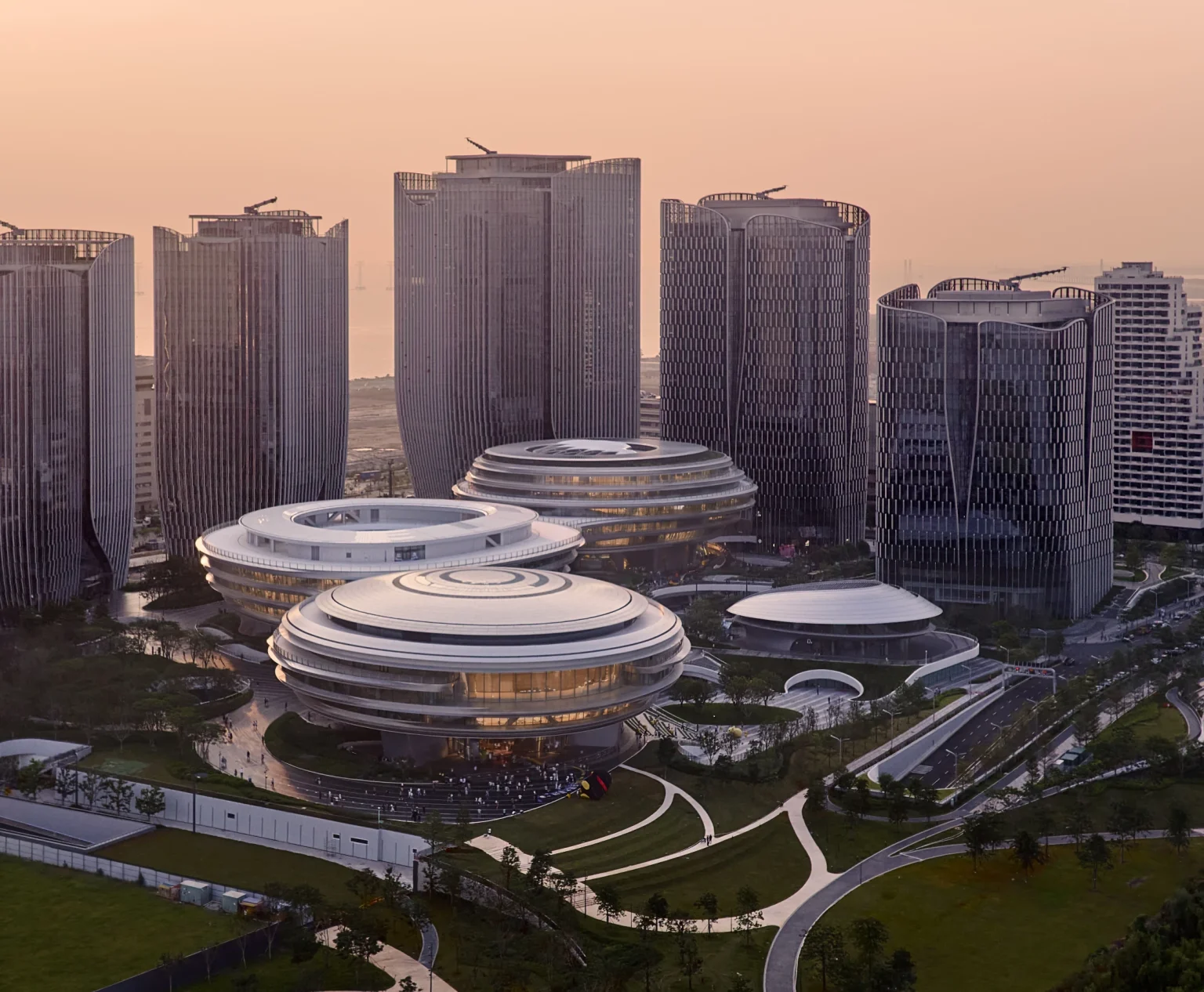








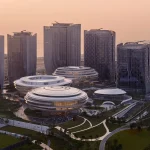
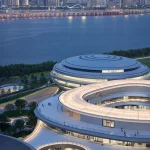
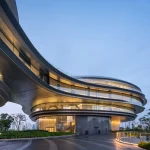
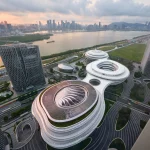
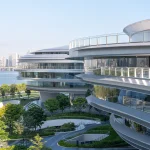
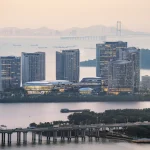
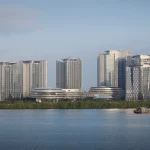
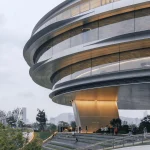
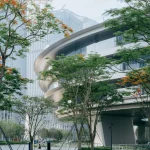
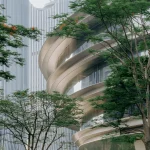
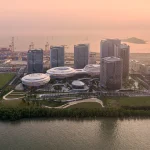

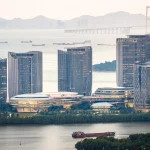
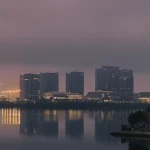
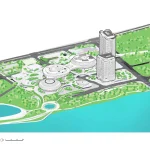
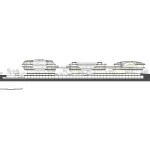
Technology campuses have been designed as inward-looking environments, prioritizing privacy and employee-exclusive spaces. Tencent’s newly completed Tengyun Center (Tencent Cloudrise) in Shenzhen takes a markedly different approach. Designed by MAD Architects under the leadership of Ma Yansong, Dang Qun, and Yosuke Hayano, the headquarters elevates its primary building mass approximately 8.6 meters above ground, transforming the space beneath into an open public landscape.
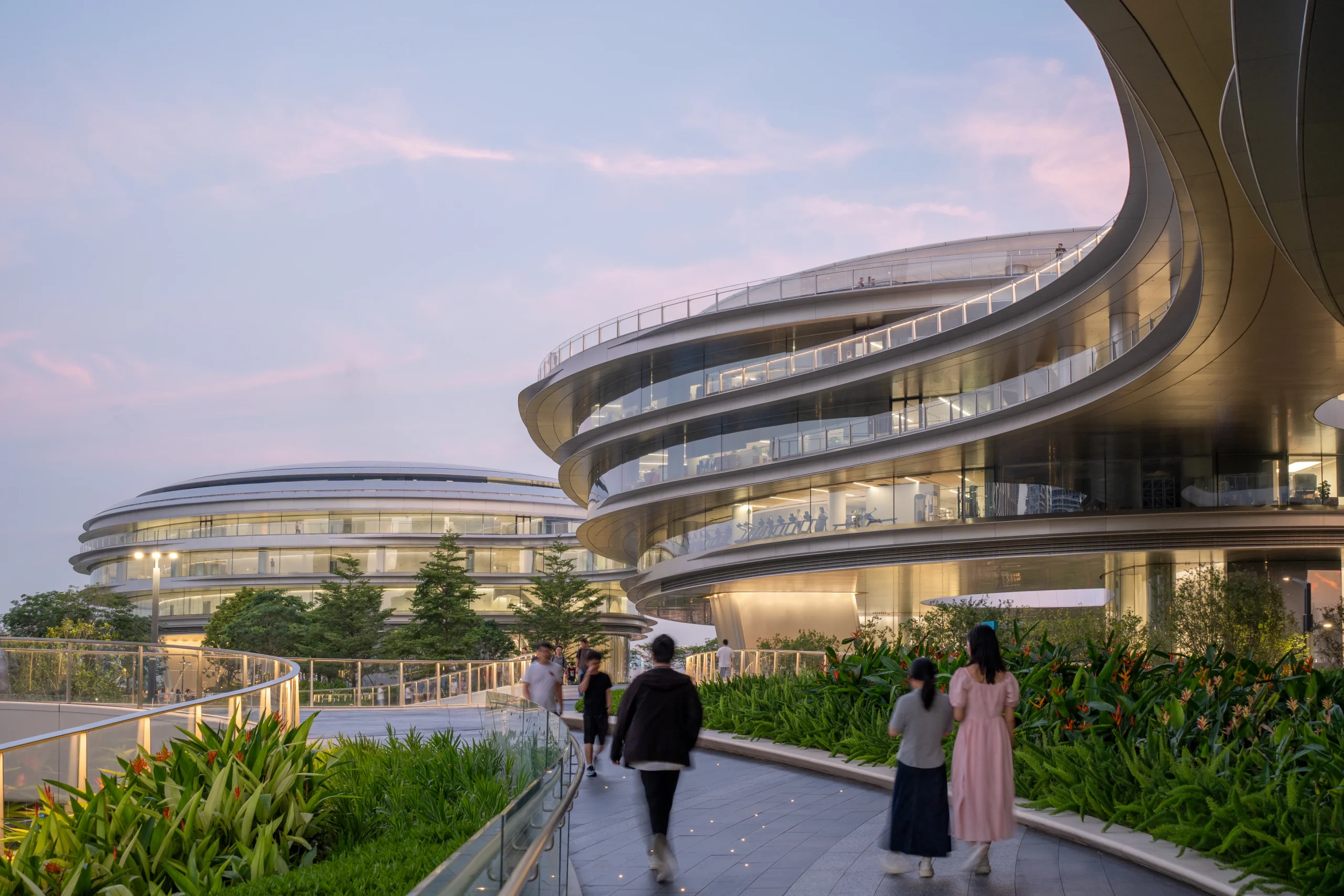
Completed after six years of design and construction, the 412,000-square-meter campus reframes the corporate headquarters as civic infrastructure, integrating workplace, waterfront ecology, and public life along Shenzhen’s Da Chan Bay.
An Elevated Headquarters That Returns the Ground to the City
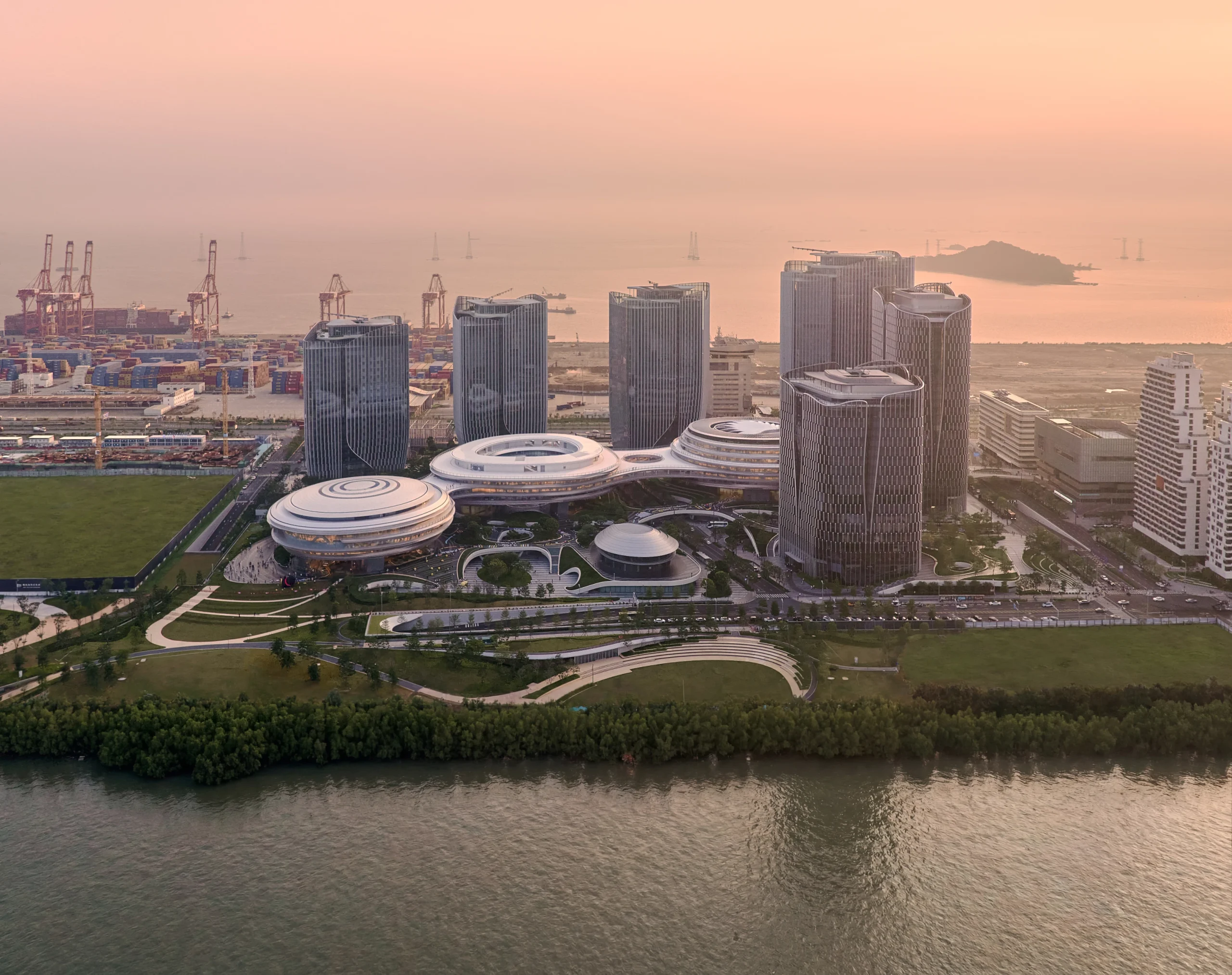
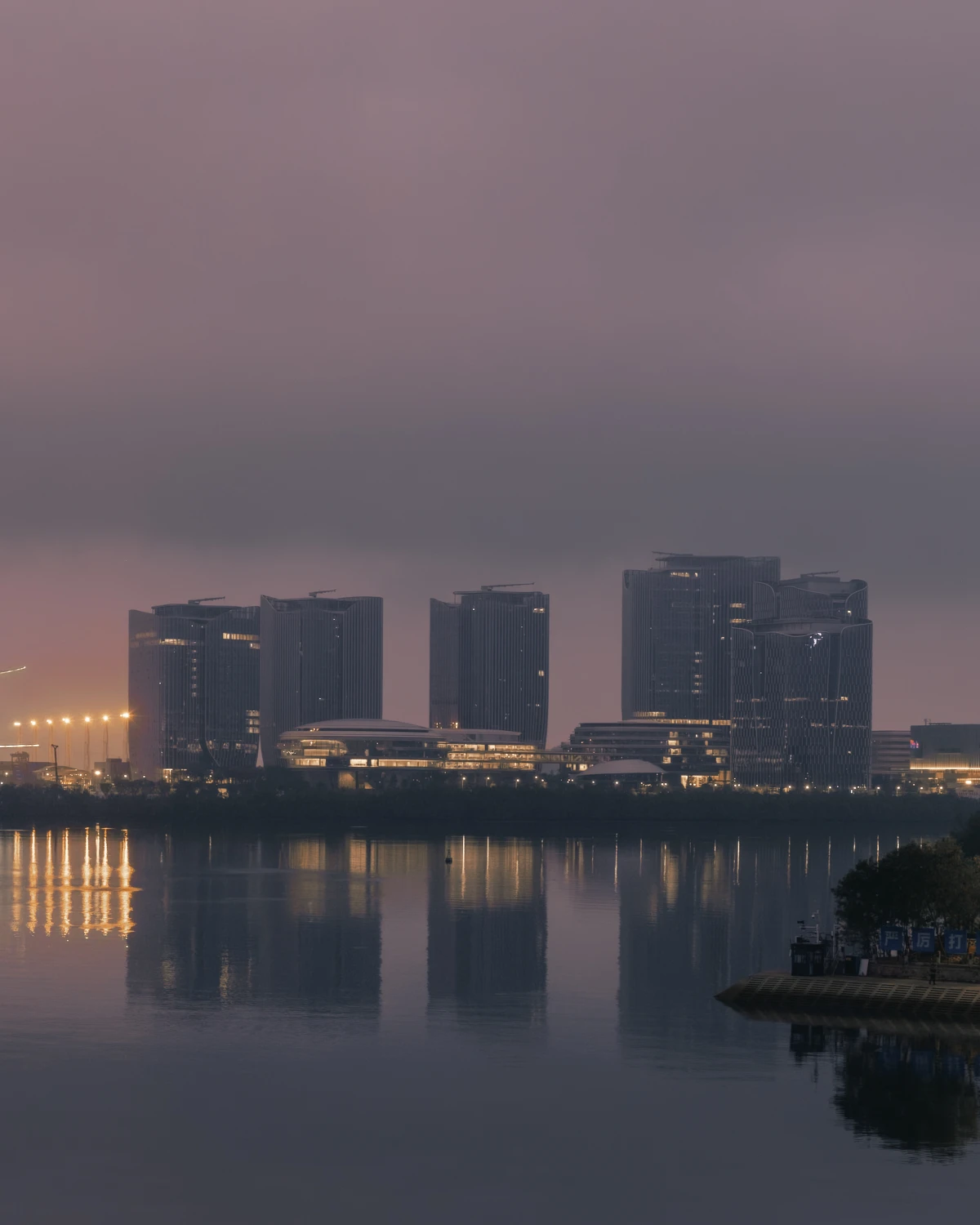
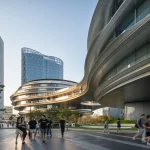
Instead of occupying its valuable coastal site with a conventional office complex, MAD raises three interconnected “cloud” volumes on ten structural cores. The strategy effectively frees nearly two floors of ground-level space, allowing pedestrians, visitors, and local residents to move beneath the building without entering Tencent’s offices.
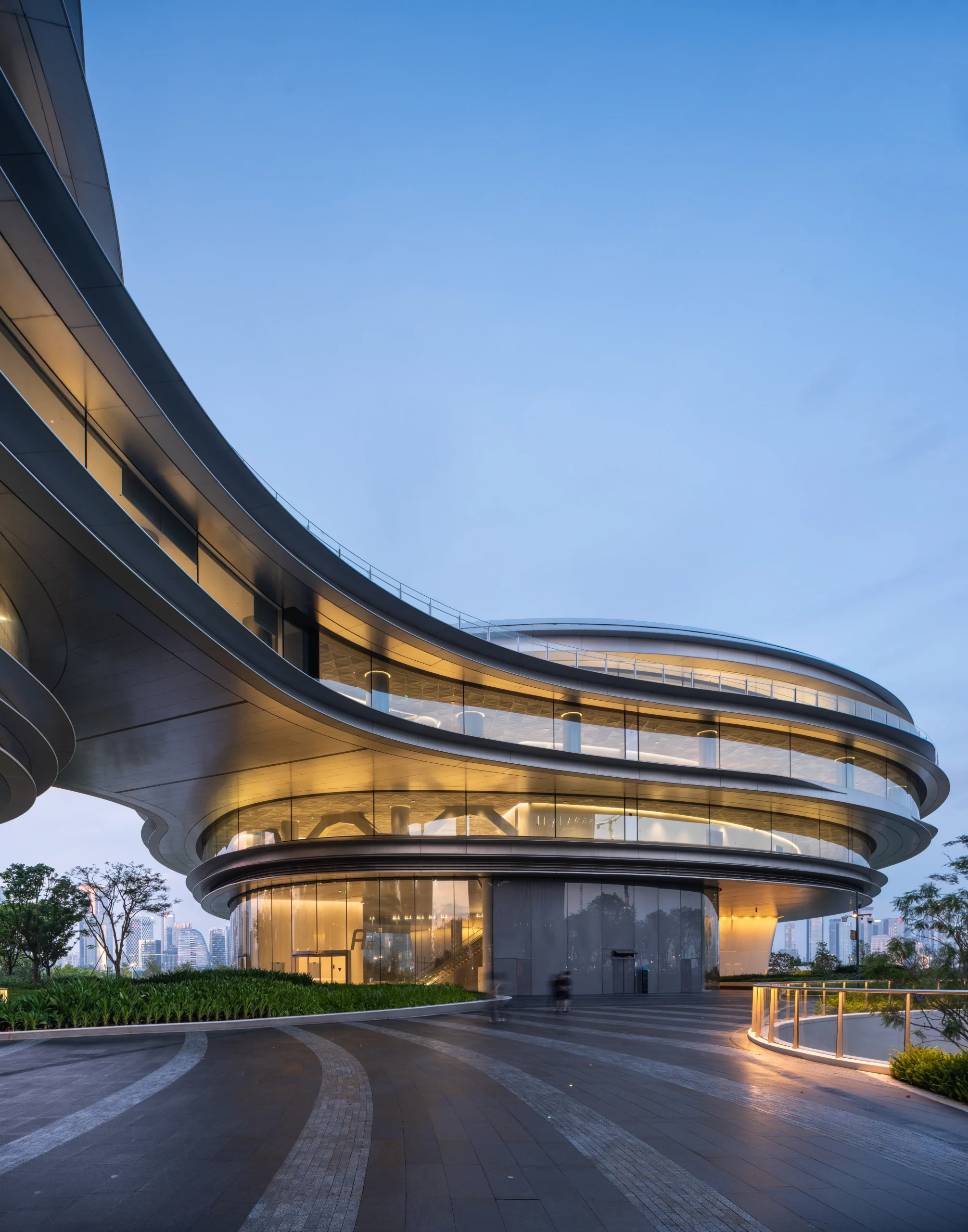
For founder Ma Yansong, the architectural gesture extends beyond visual expression.
“Floating is not a visual effect; it’s a spatial idea. By lifting the headquarters, we give the ground back to the city. It’s not about making a closed-off corporate icon, but about letting the building become part of everyday urban life. In this sense, ‘floating’ is simply a way to make public space more open and accessible.”
Three Interconnected Buildings Form a Continuous Urban Experience
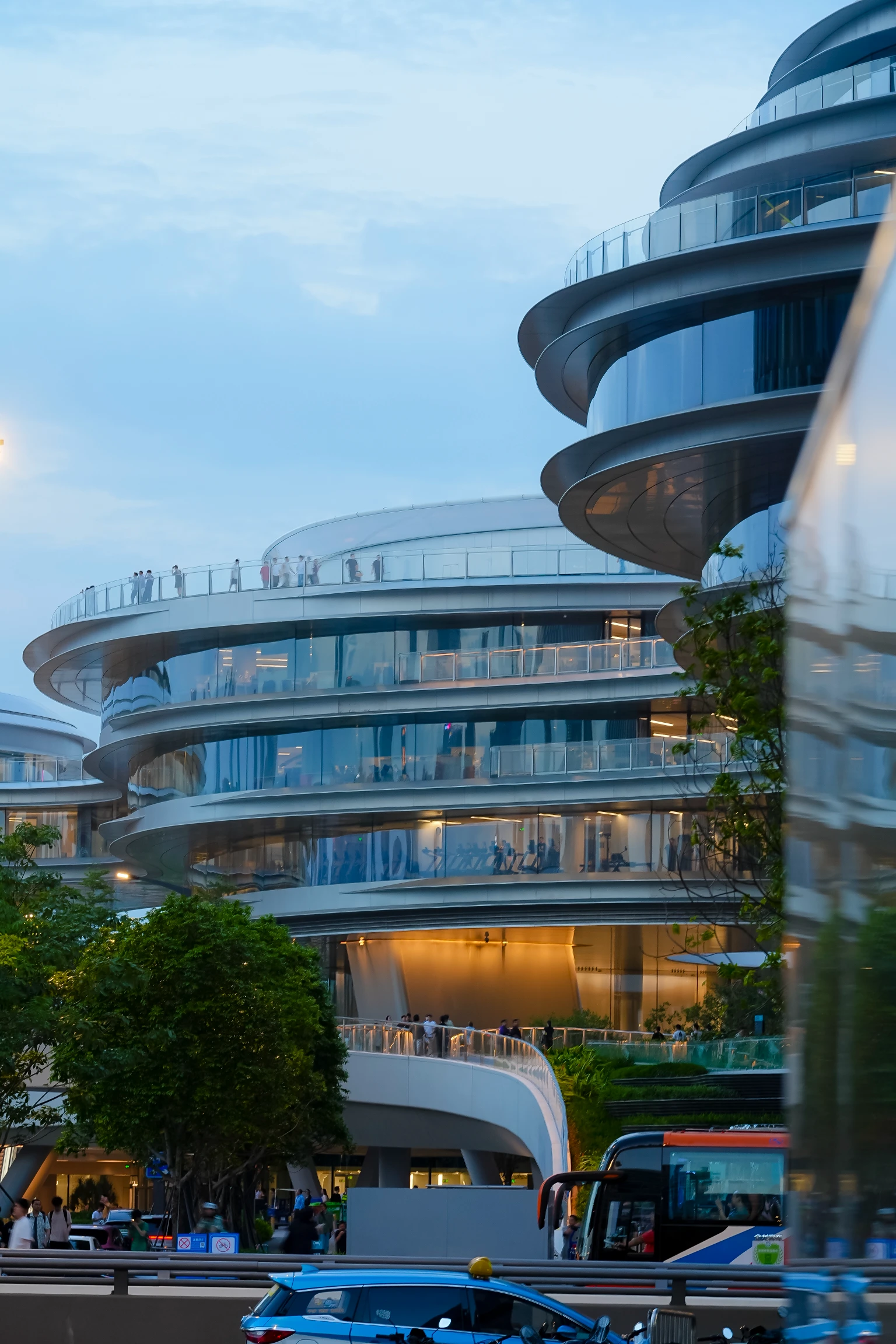
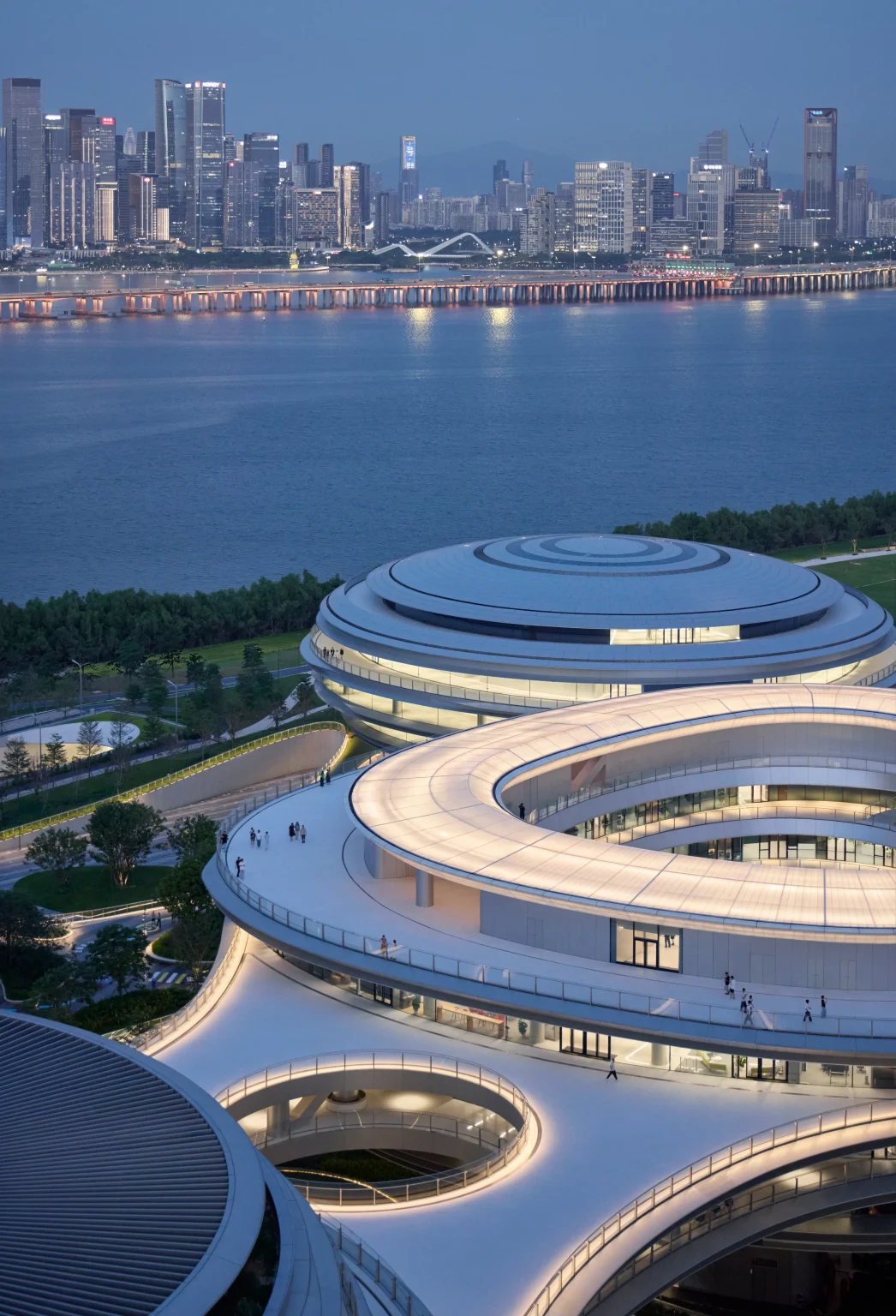
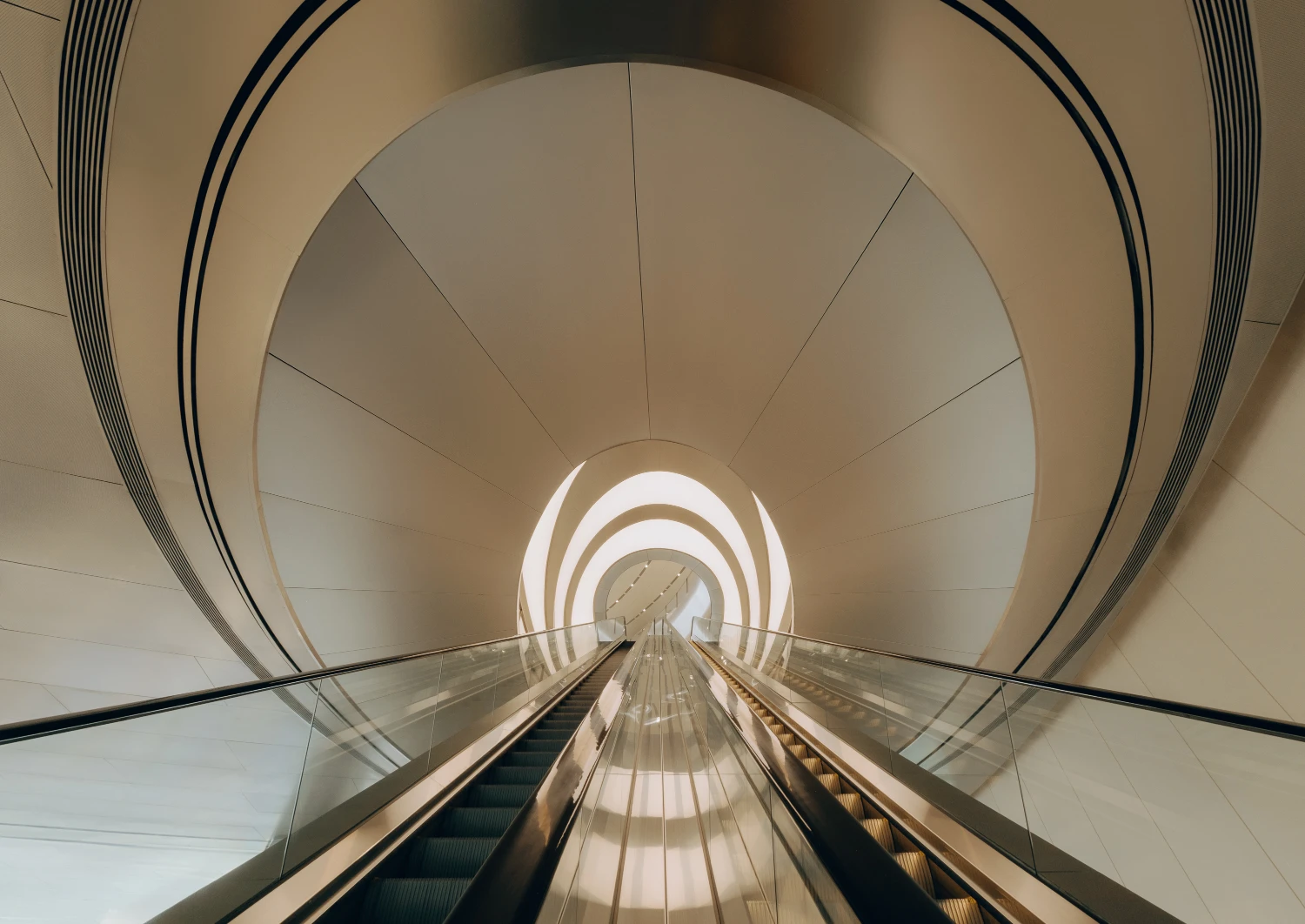
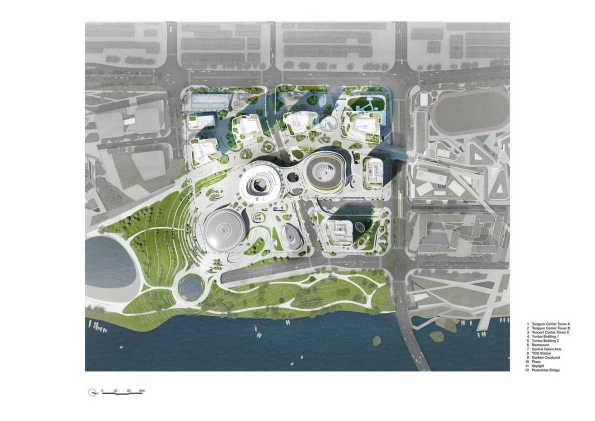
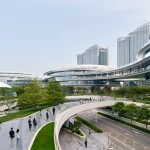
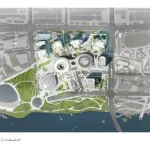
Organized along a north-south axis, the headquarters consists of three elevated building volumes connected through steel-truss sky bridges that function as circulation routes and communal gathering spaces overlooking the bay.
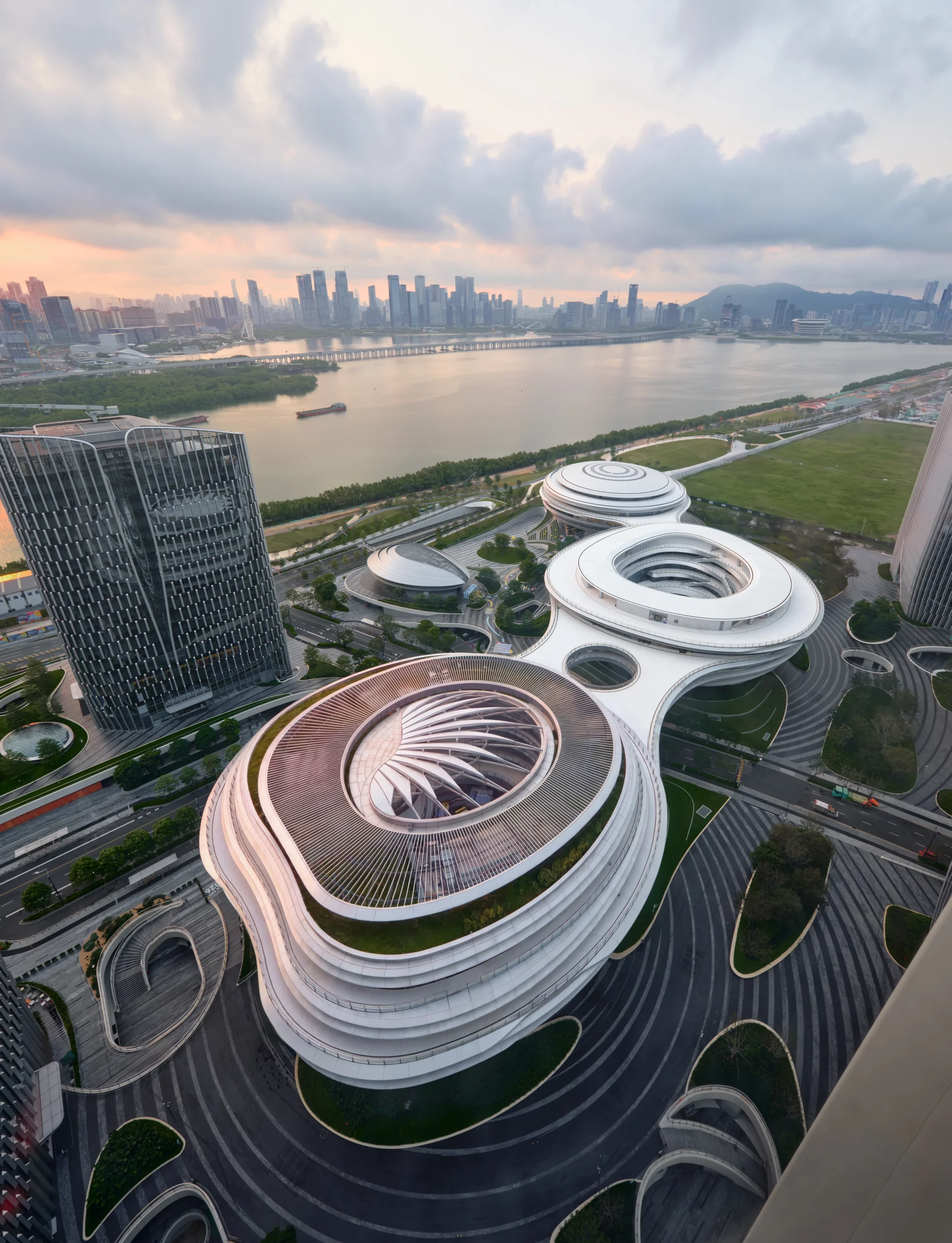
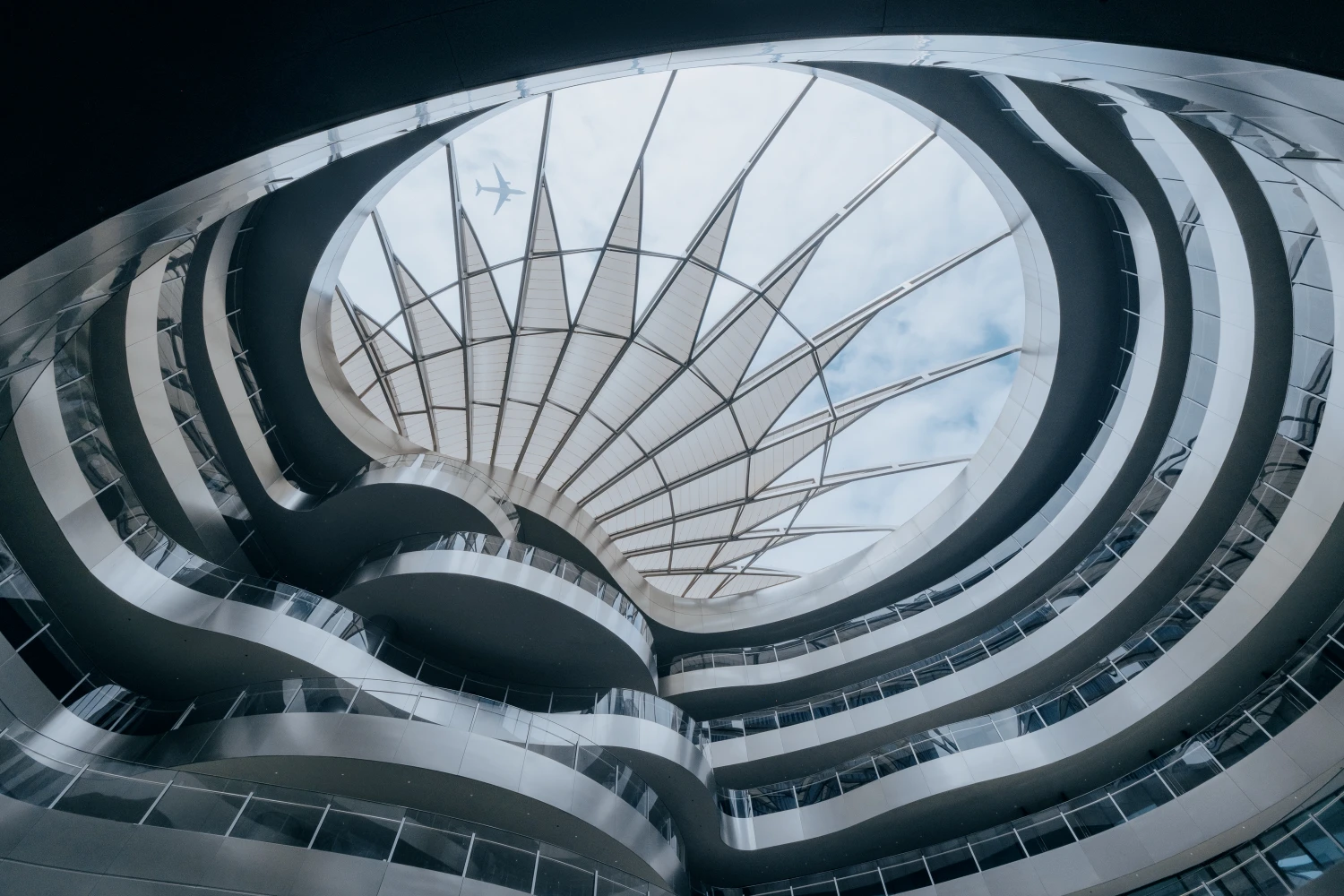
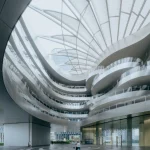
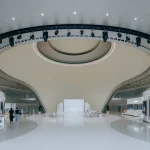
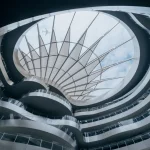
The southern building accommodates exhibition spaces and multifunctional event venues, including a publicly accessible second-floor hall overlooking the waterfront. The central and northern buildings house office spaces organized around open atriums, while a semi-open shell-shaped ETFE skylight introduces natural daylight and filters the intense coastal sun.
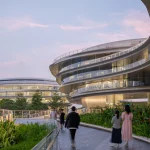
The campus creates a gradual transition between urban streets, landscaped gardens, elevated walkways, workplaces, and the coastline.
Sea Views Designed for Everyone
A defining aspect of the project is its rethinking of workplace hierarchy.
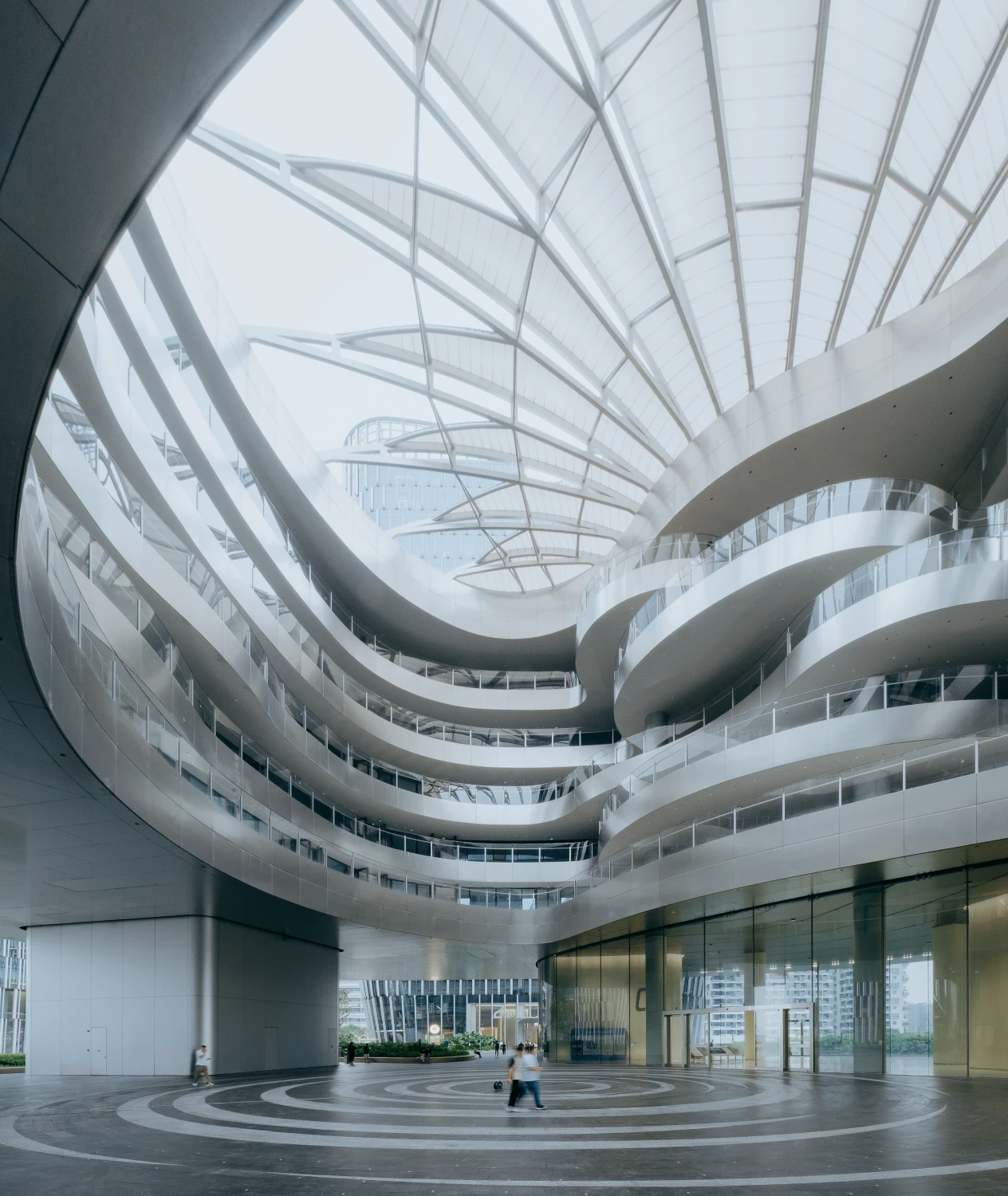
Instead of reserving waterfront views for executive offices, approximately 80 percent of workstations overlook the sea. Shared circulation spaces and communal amenities also maintain continuous visual connections to the coastline, ensuring the landscape becomes part of everyday working life for all employees.
Since trial operations began, around 14,000 Tencent employees have moved into the campus.
Replacing Corporate Boundaries with Public Landscape
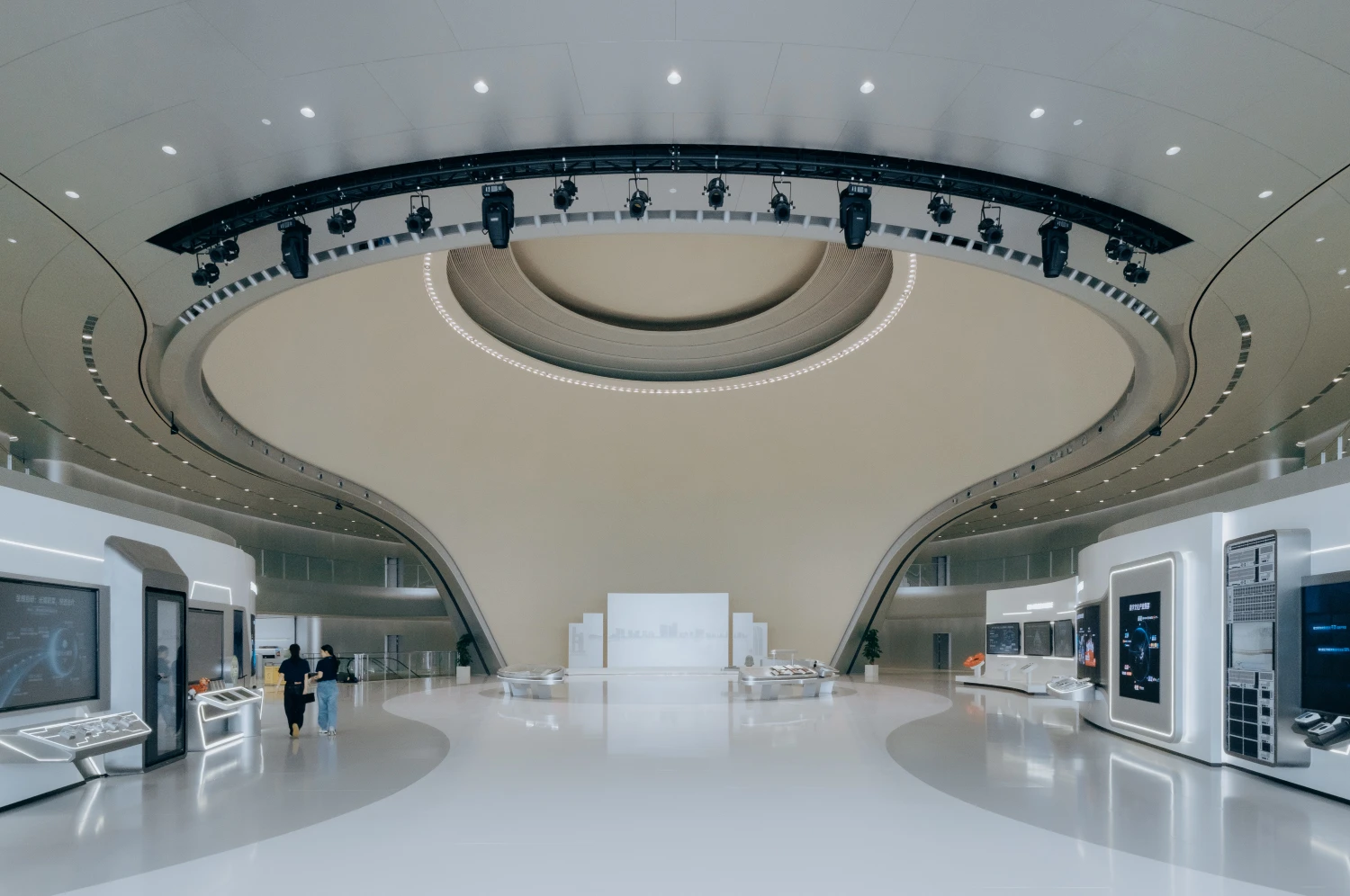
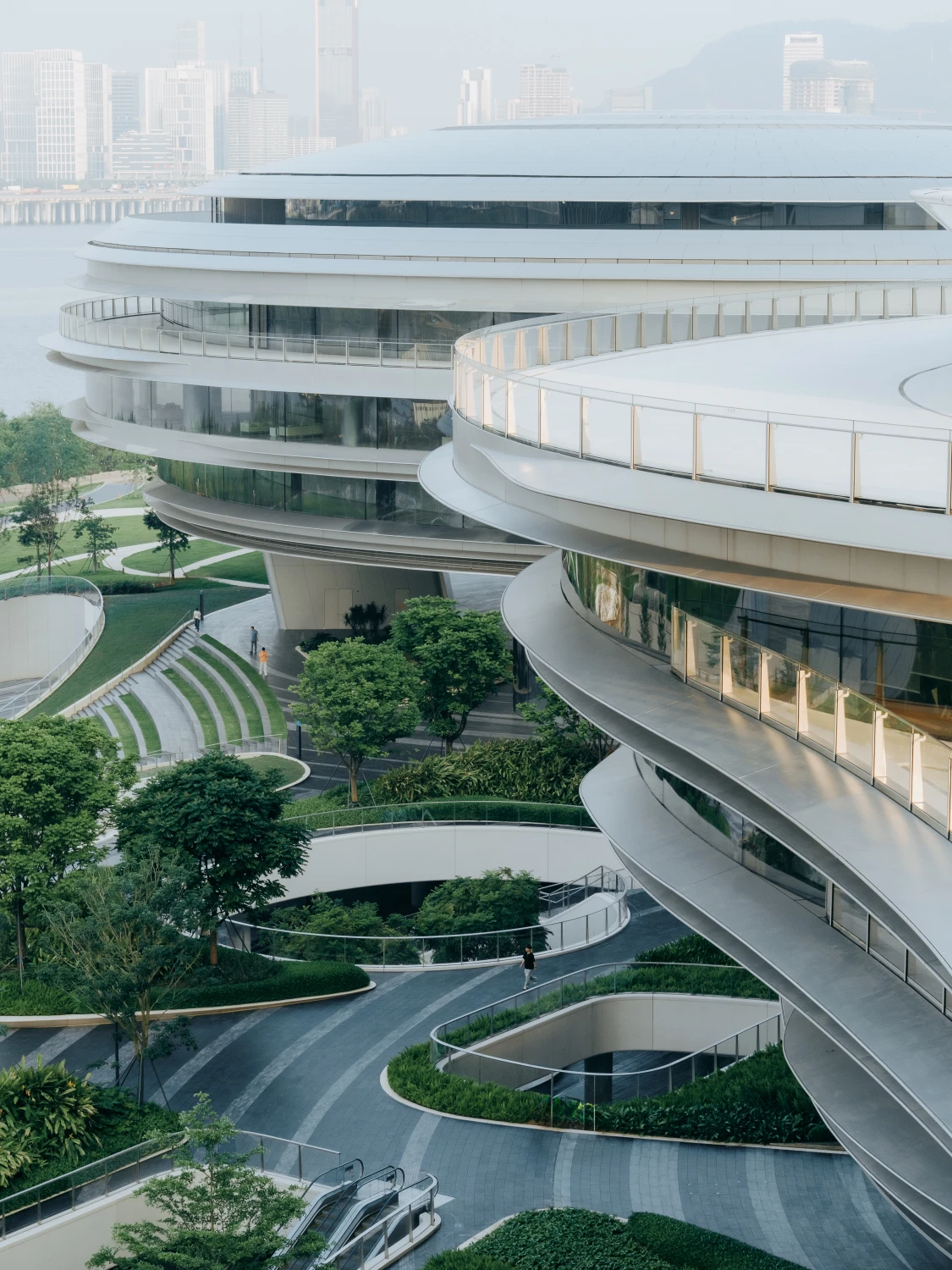
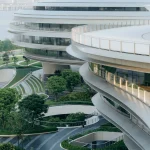
At ground level, traditional security walls and enclosed plazas have been replaced by lawns, shaded gardens, pedestrian pathways, and planted slopes that extend Shenzhen’s waterfront public realm into the campus. The landscape allows public space, workplace functions, and ecological zones to coexist.
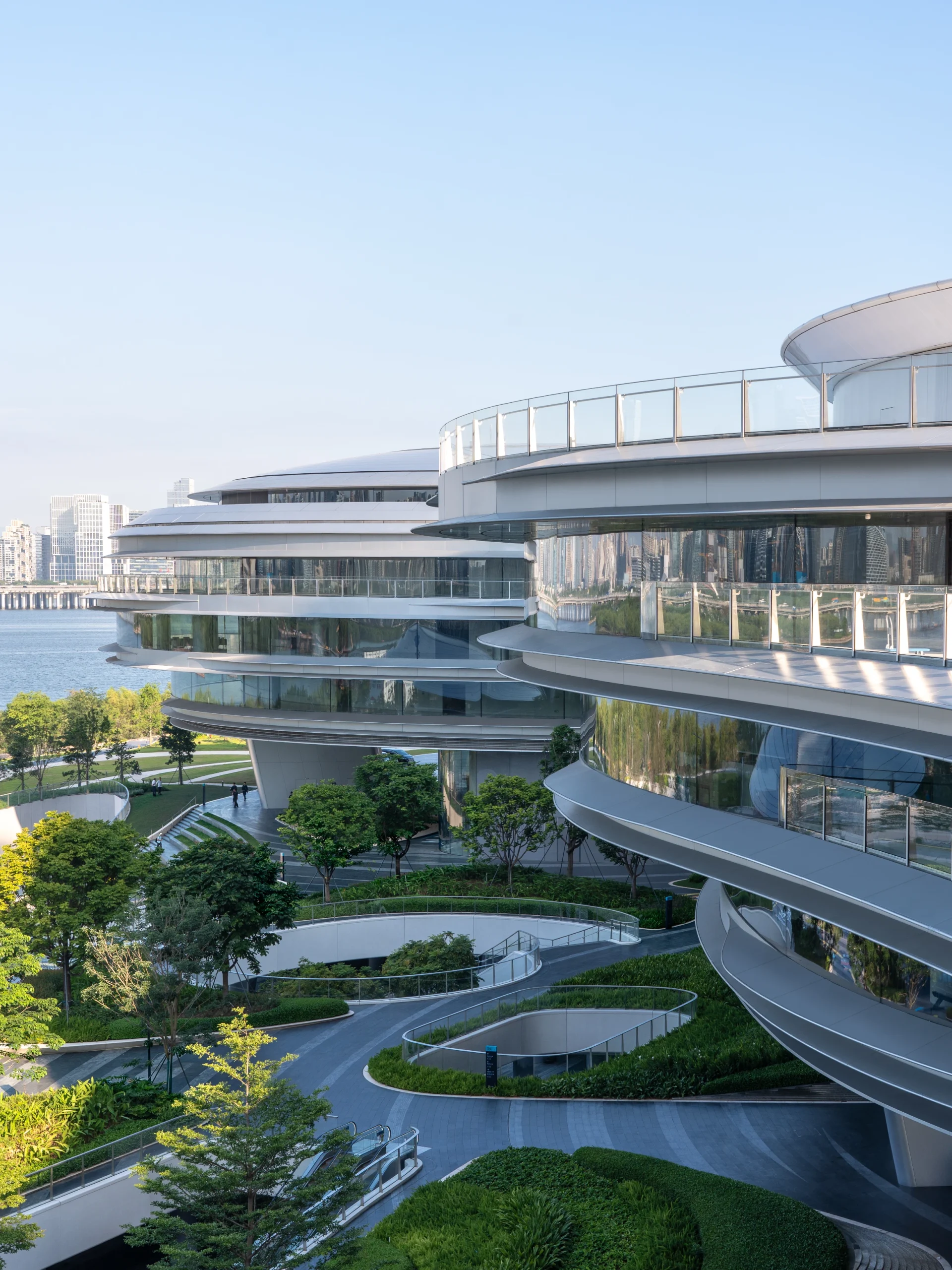
The approach differs from many contemporary corporate campuses, where public access often remains limited despite open-looking landscapes.
Working with the Existing Coastal Ecology
Beyond public accessibility, the project also responds to the site’s sensitive environmental conditions.
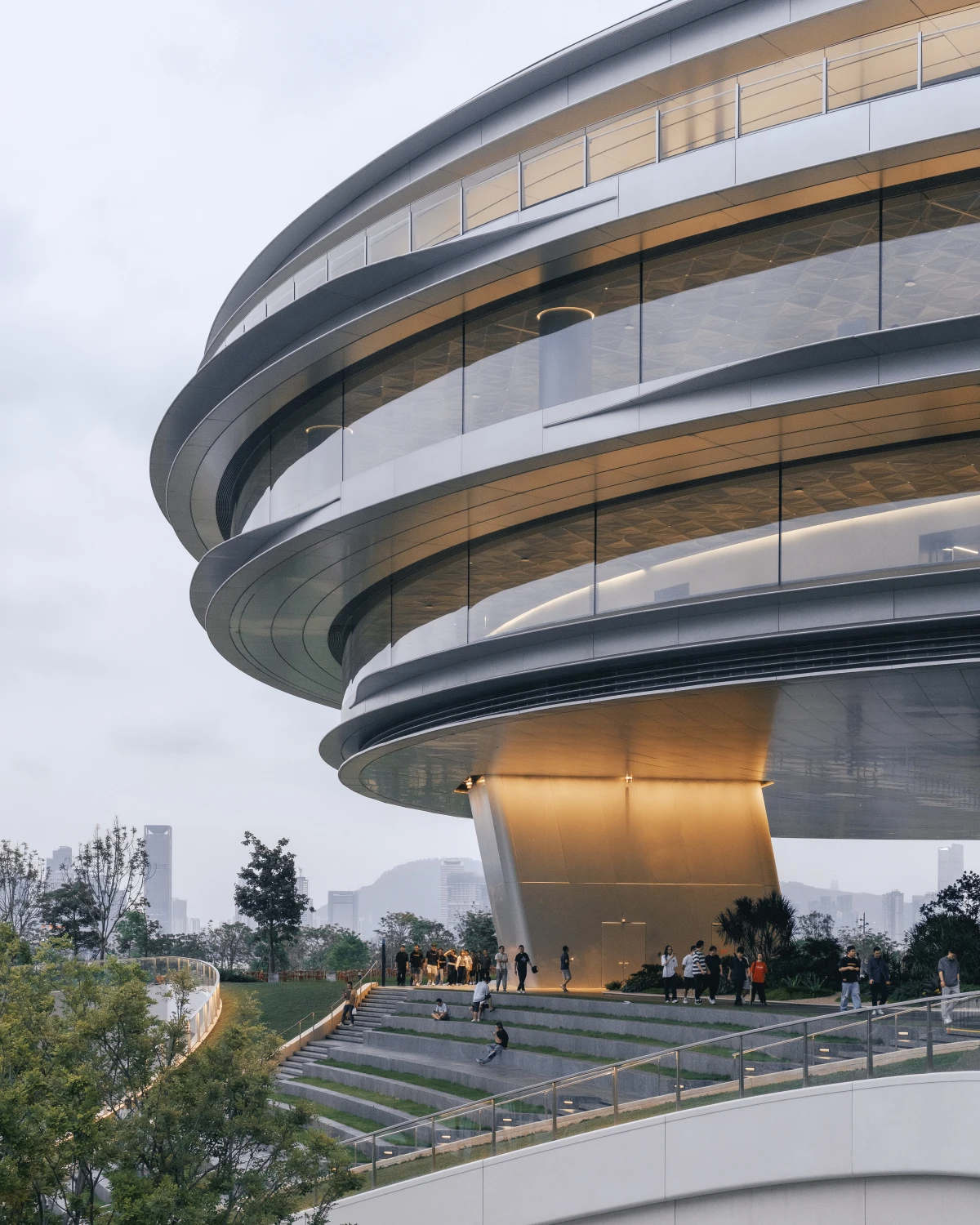
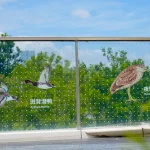
Developed alongside a government-led coastal restoration initiative, Tengyun Center preserves existing mangrove forests, tidal habitats, and migratory bird routes instead of reshaping them into ornamental landscapes.
By elevating the headquarters above ground, the design minimizes disruption while allowing the shoreline’s existing ecosystems to remain intact.
Structure and Façade Designed Around Openness
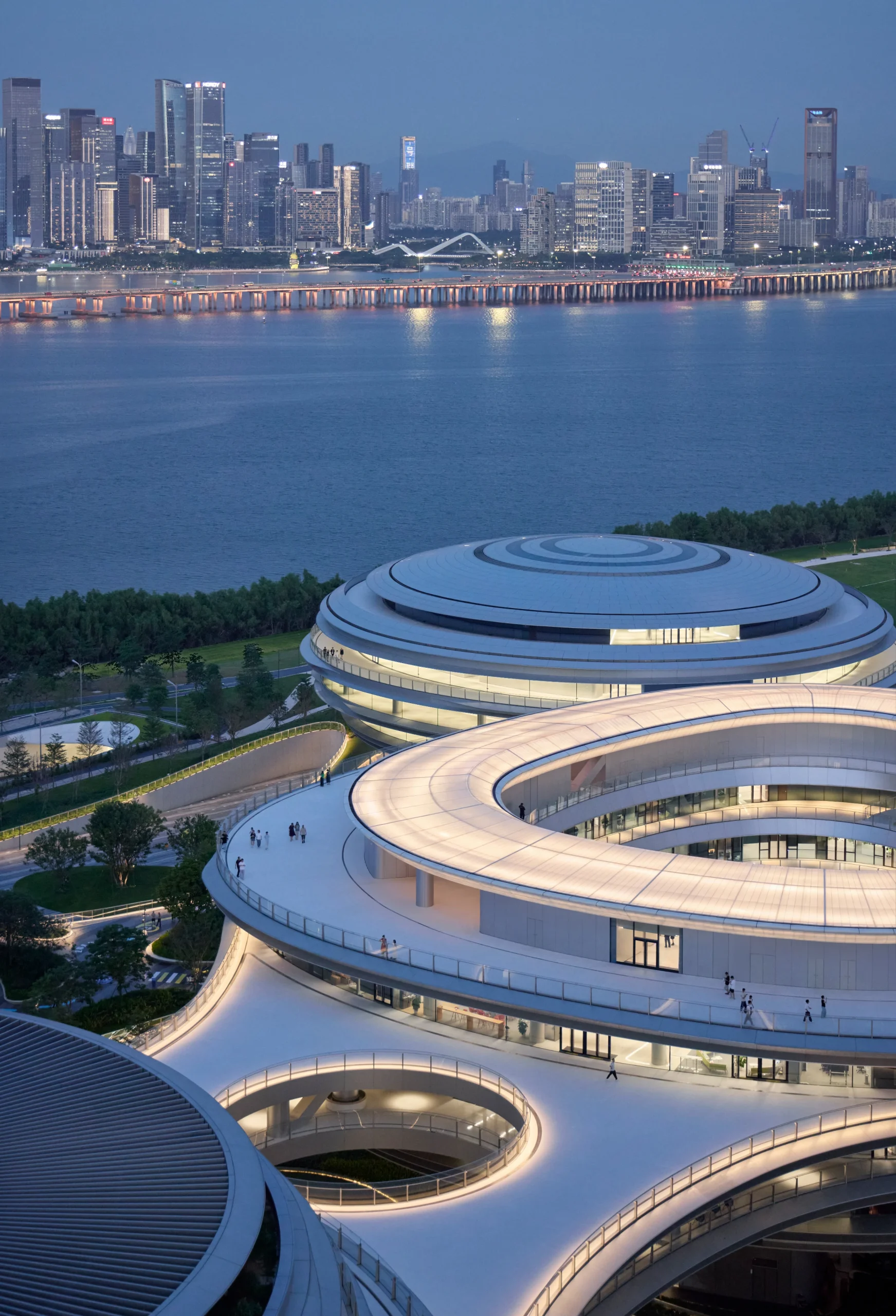
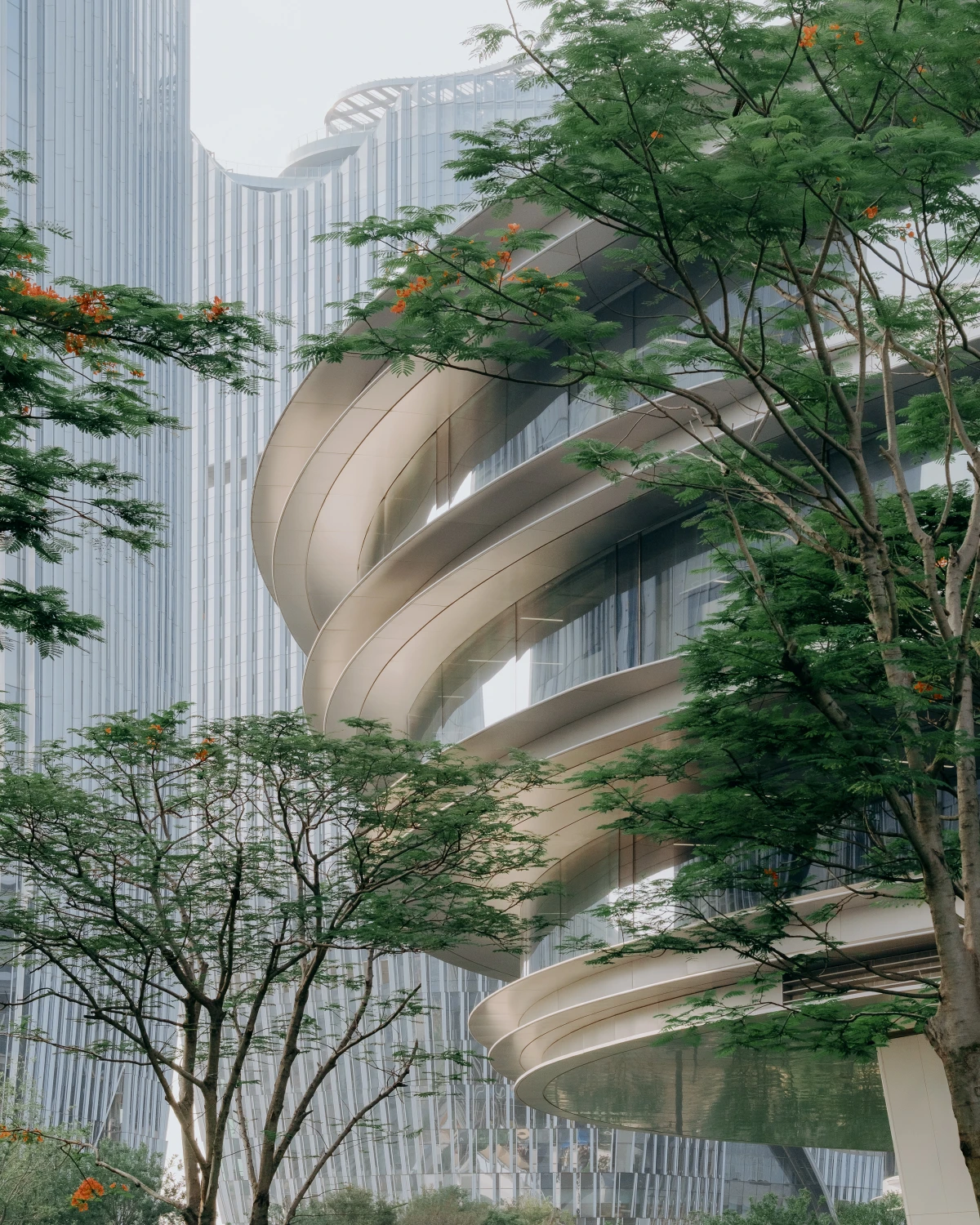
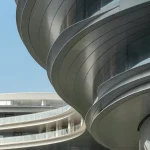
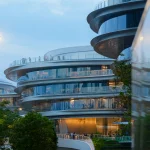
Long-span structural systems create flexible office interiors with fewer columns, while elevated steel-truss bridges connect the three building volumes above the public realm. Large curved glass façades reduce visual barriers toward the waterfront, and integrated horizontal shading follows the building’s geometry to improve solar performance without compromising views.
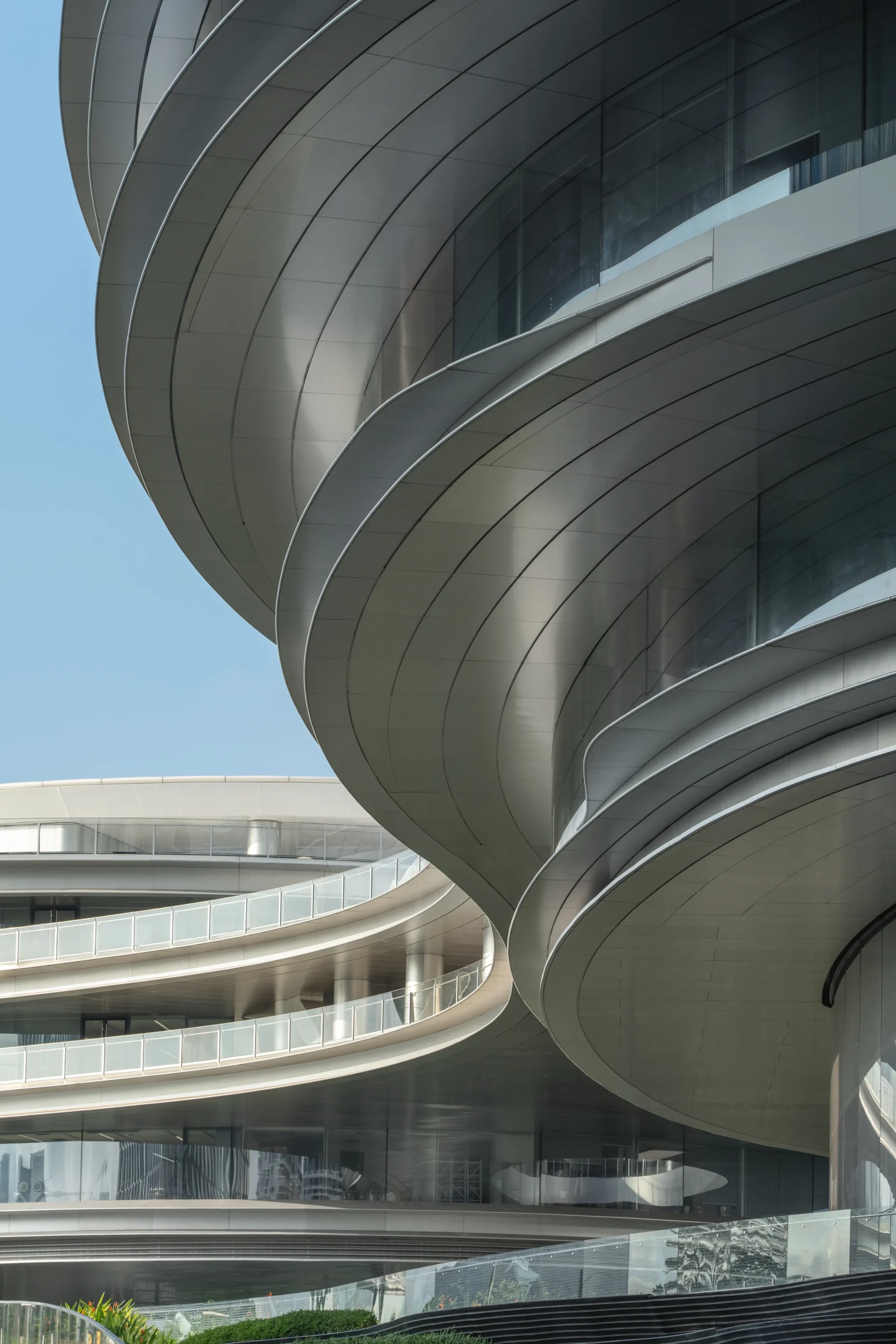
The structural and façade systems work together to strengthen the relationship between architecture, landscape, climate, and public movement.
A New Model for the Corporate Headquarters
Completed as part of Tencent’s larger headquarters development across Qianhai and Da Chan Bay, Tengyun Center presents an alternative vision for one of architecture’s most private building types.
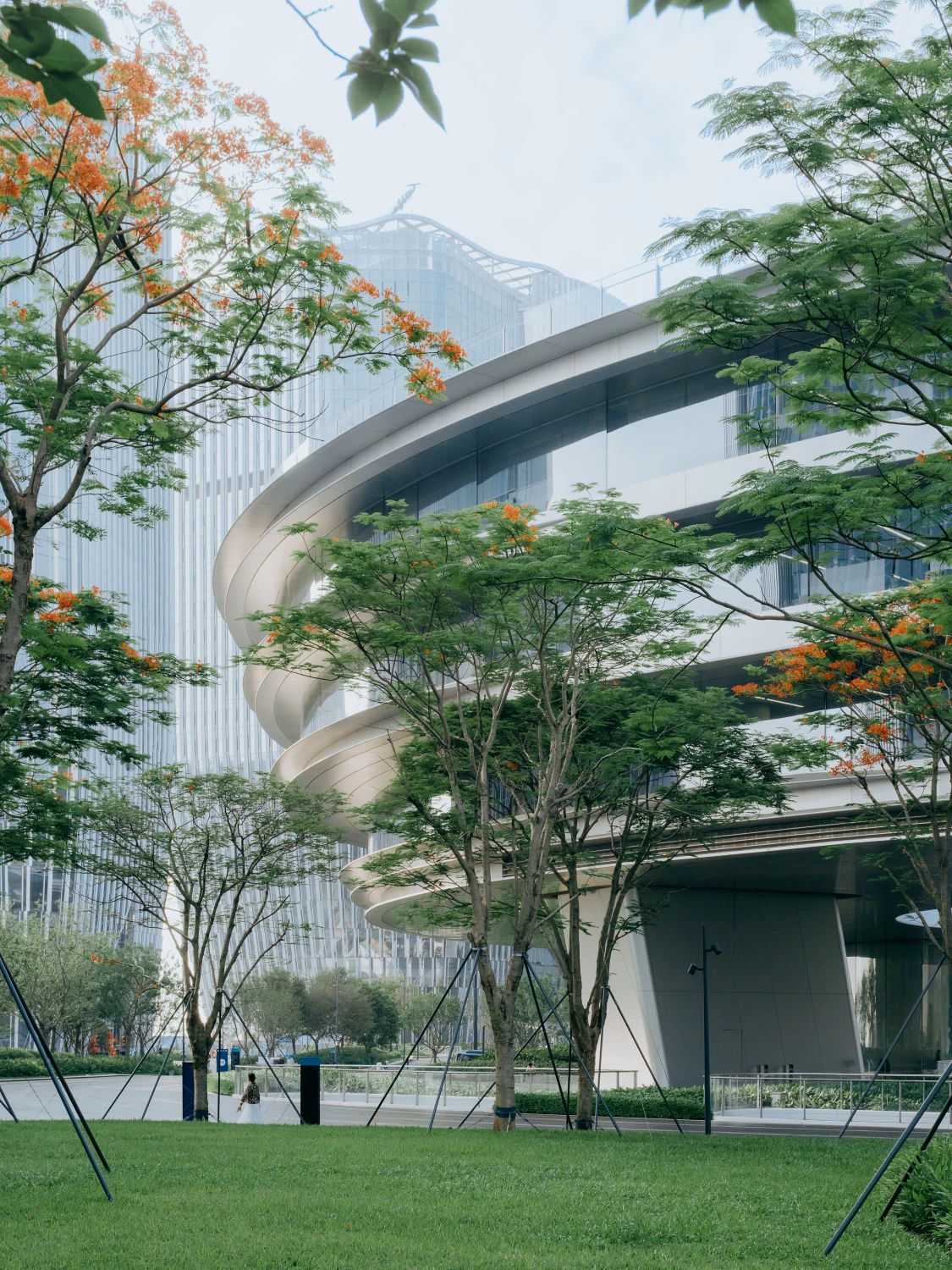
Instead of treating the headquarters as an isolated corporate enclave, MAD positions it as part of the city’s public infrastructure, integrating workplaces, open landscapes, and coastal ecology within a single urban framework.
As cities continue to reconsider how large campuses engage with their surroundings, Tengyun Center offers a compelling example of how corporate architecture can contribute to public life.
Tengyun Center Project Details
Project: Tengyun Center (Tencent Cloudrise)
Location: Shenzhen
Typology: Office Campus
Status: Completed (2026)
Design Period: 2020–2026
Site Area: Approximately 72,000 sq m
Building Area: Approximately 412,000 sq m
Client: Tencent Technology (Shenzhen) Co., Ltd.
Architecture: MAD
Principal Partners in Charge: Ma Yansong, Dang Qun, Yosuke Hayano
Photography: AOGVision, Zhang Chao, Zhu Yumeng, Sun Haiyong