



For decades, architects have spoken about sustainability as one of the profession’s greatest responsibilities. Yet despite remarkable advances in materials, digital tools, and environmental technologies, many ambitious design ideas are still compromised between concept and construction. Environmental strategies that appear convincing in competition boards or design presentations often lose their impact once projects enter the realities of engineering, fabrication, procurement, and site execution. The gap between architectural intent and built reality remains one of the industry’s most persistent challenges.
For architectural designer Cen Shen, this disconnect has become the central question of her work. Instead of approaching sustainability as a collection of technologies or certifications applied after a design has been established, Shen argues that environmental performance should emerge naturally from the architectural process itself.
Throughout her academic research, professional contributions to building-envelope projects, and award-winning projects, she has consistently explored how the building envelope can evolve beyond its conventional role as an exterior skin to become the critical interface where architecture, construction, ecology, and human experience converge.
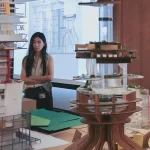
As the founder of CSLab and an architectural designer at Elicc Group, Shen operates across both speculative research and large-scale practice. Educated at Columbia University’s Graduate School of Architecture, Planning and Preservation (GSAPP) after completing her architectural studies at Pratt Institute, she belongs to a generation of architects equally comfortable investigating theoretical questions and contributing to complex urban developments. That dual perspective distinguishes her work from many contemporary practitioners, allowing ideas developed through research to inform projects that will ultimately shape the built environment.
Rethinking the Building Envelope as an Architectural System
While many experienced architects view the building envelope primarily as a technical requirement responsible for weather protection or energy performance, Shen approaches it as architecture’s most influential design medium. For her, the envelope is not simply where a building ends; it is where environmental performance, construction methodology, material innovation, and spatial experience begin to interact.
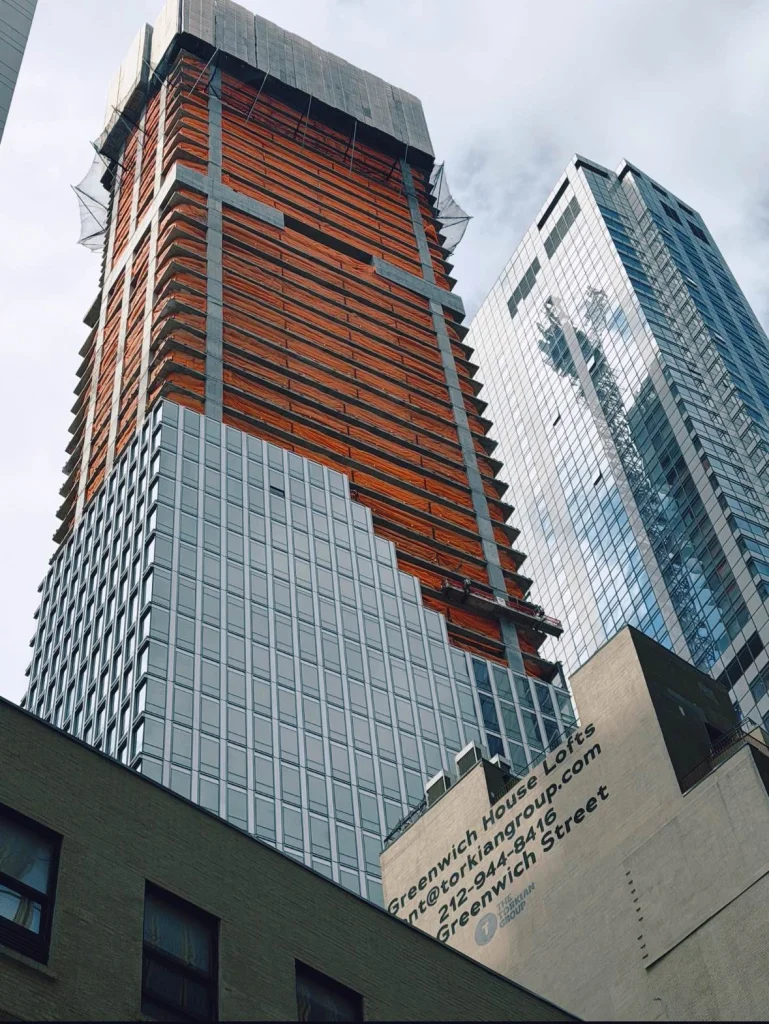
This philosophy appears consistently throughout her portfolio. Instead of treating façades as isolated design elements, her work investigates how exterior systems influence daylight, thermal performance, circulation, views, structural logic, and ultimately the experience of inhabiting architecture. The envelope becomes an active participant in shaping architectural form rather than a decorative surface applied to it.
That thinking extends beyond aesthetics. Shen argues that architecture should no longer separate environmental ambition from construction reality. Design decisions should anticipate fabrication methods, installation processes, maintenance requirements, and long-term ecological performance from the earliest conceptual stages. In doing so, sustainability becomes embedded within architecture itself instead of remaining dependent on technologies added after the design is complete.
This integrated perspective reflects a broader shift taking place across contemporary architecture, where computational workflows, digital fabrication, and interdisciplinary collaboration increasingly blur traditional boundaries between design, engineering, and construction. Beyond being purely technological advancements, these developments represent an opportunity to fundamentally redefine the architect’s role in Shen’s view.
Connecting Research with Practice
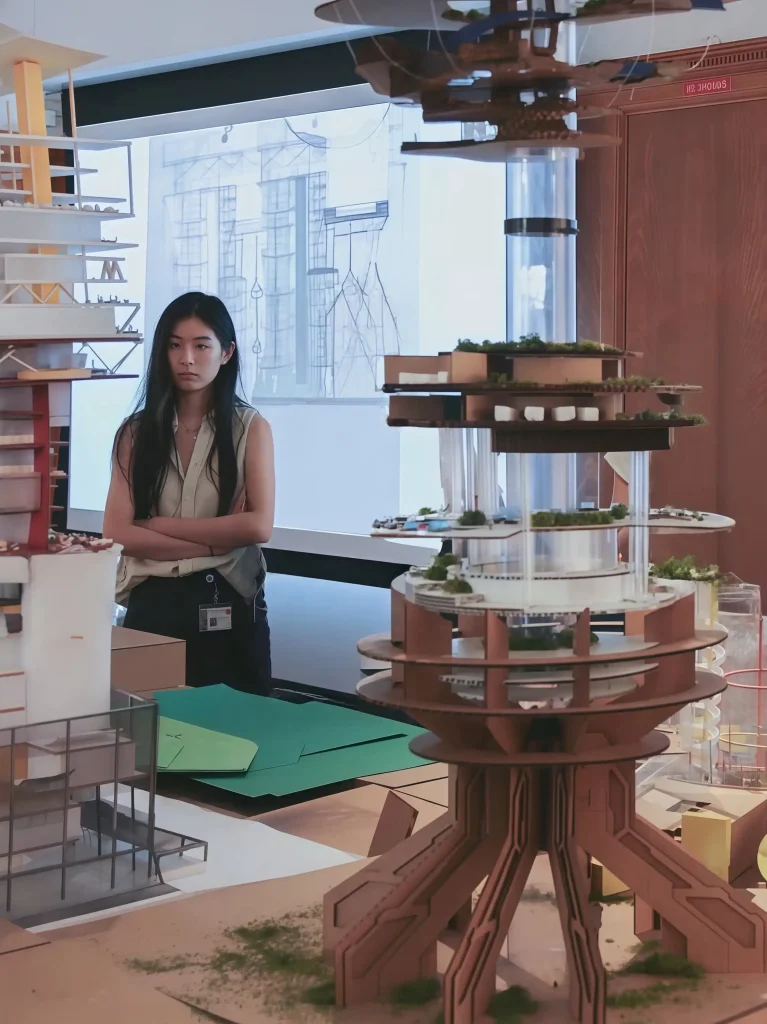
Few skilled architects move as fluidly between speculative academic research and the realities of large-scale construction. Her work demonstrates that conceptual investigations need not remain confined to the studio, but can inform practical design strategies in the built environment.
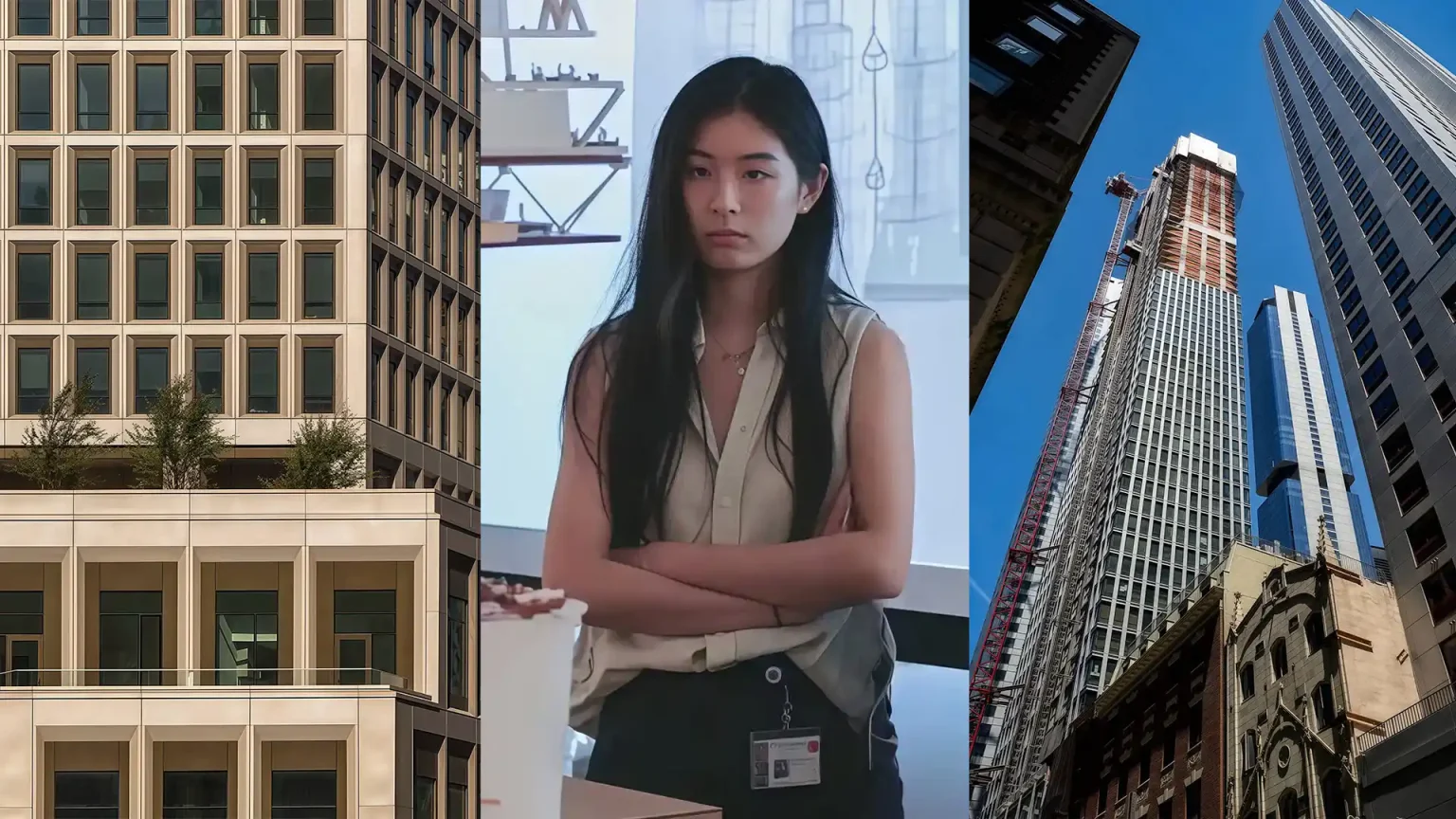
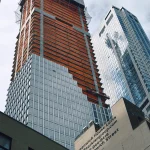
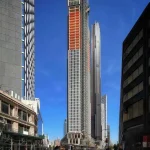
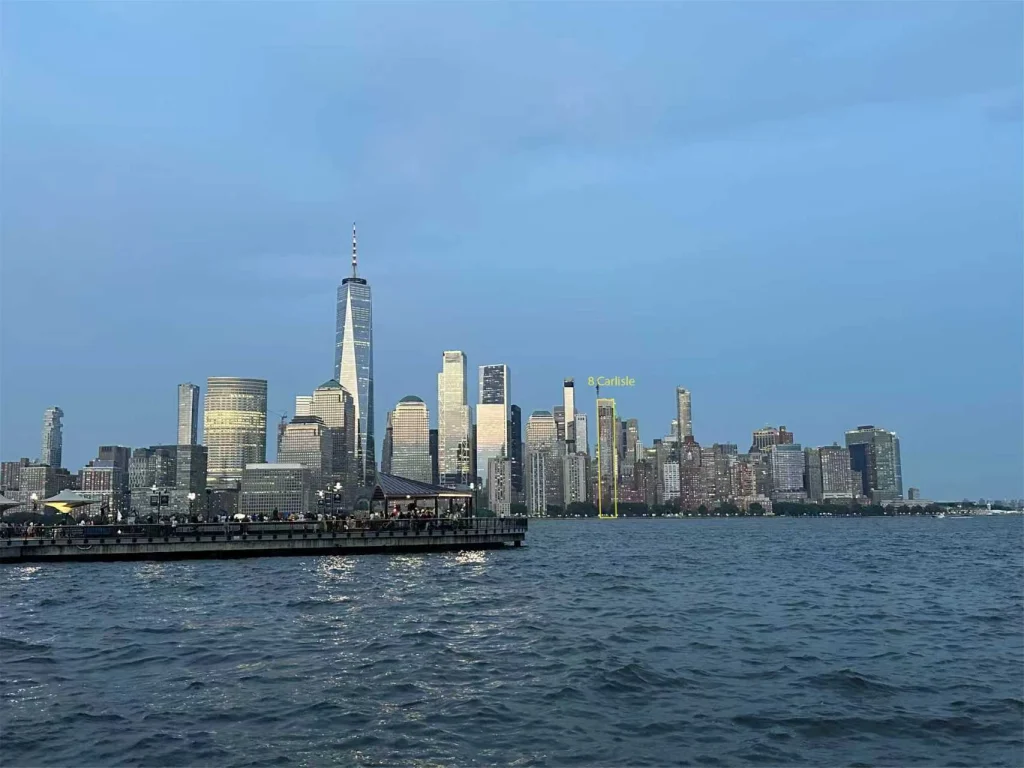
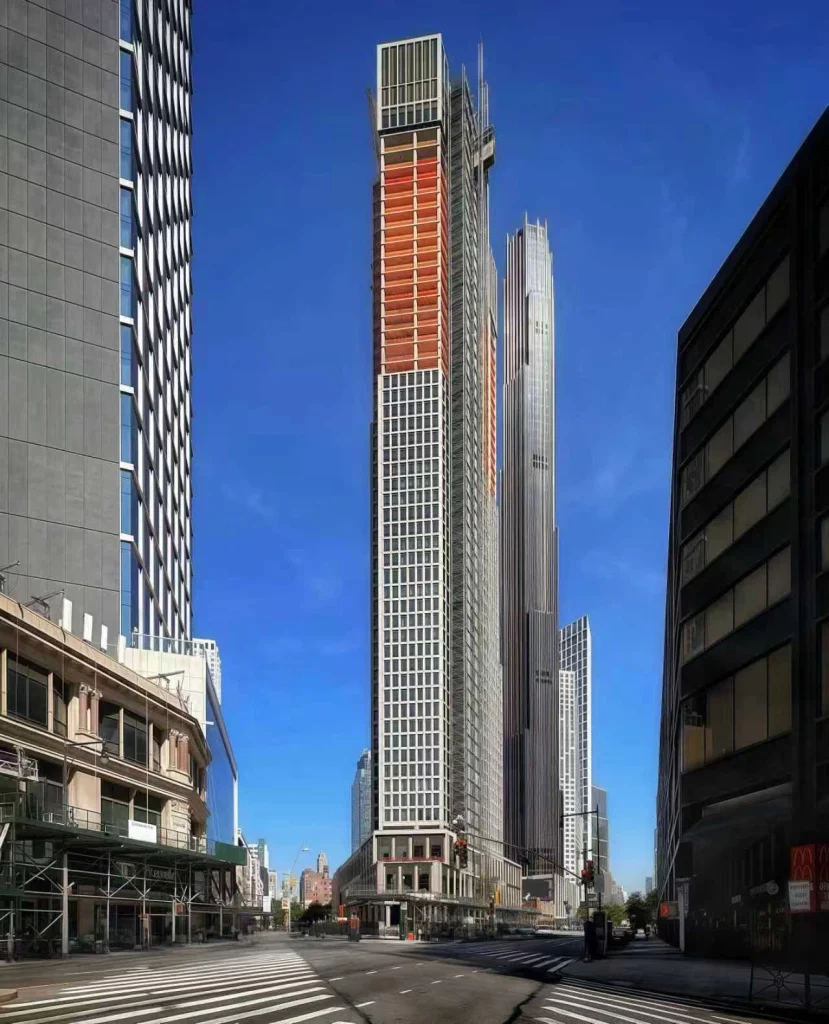
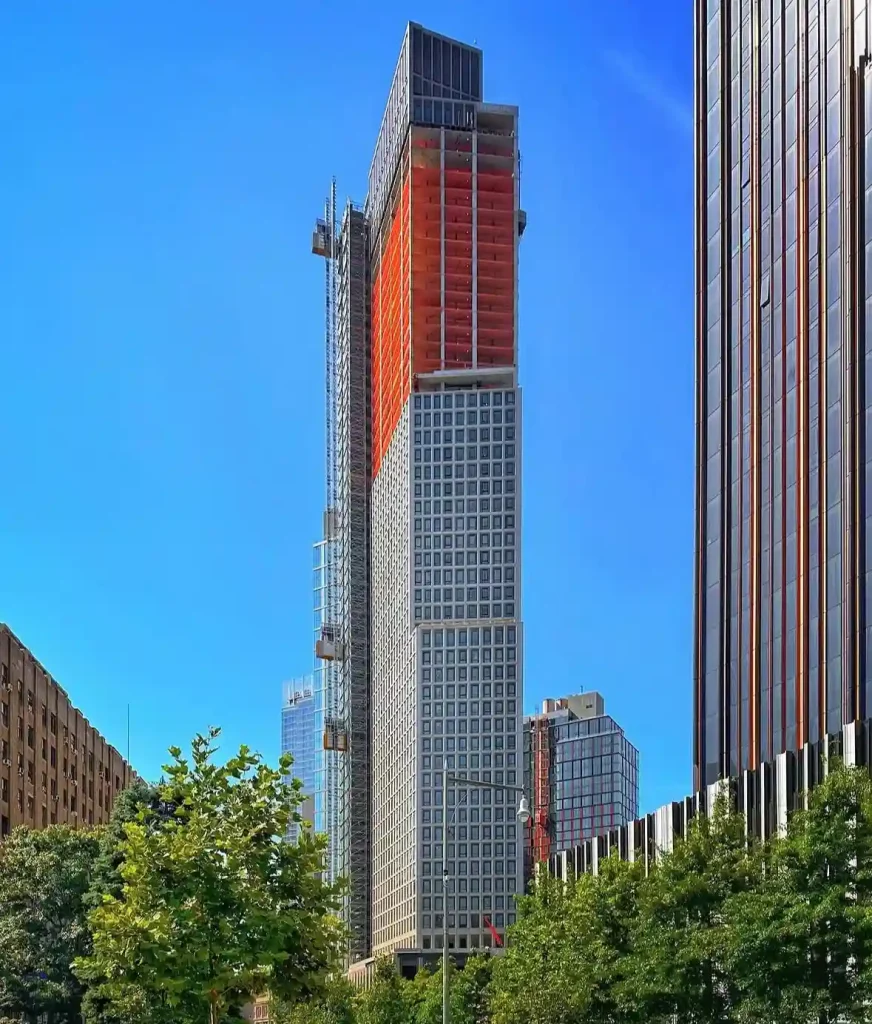
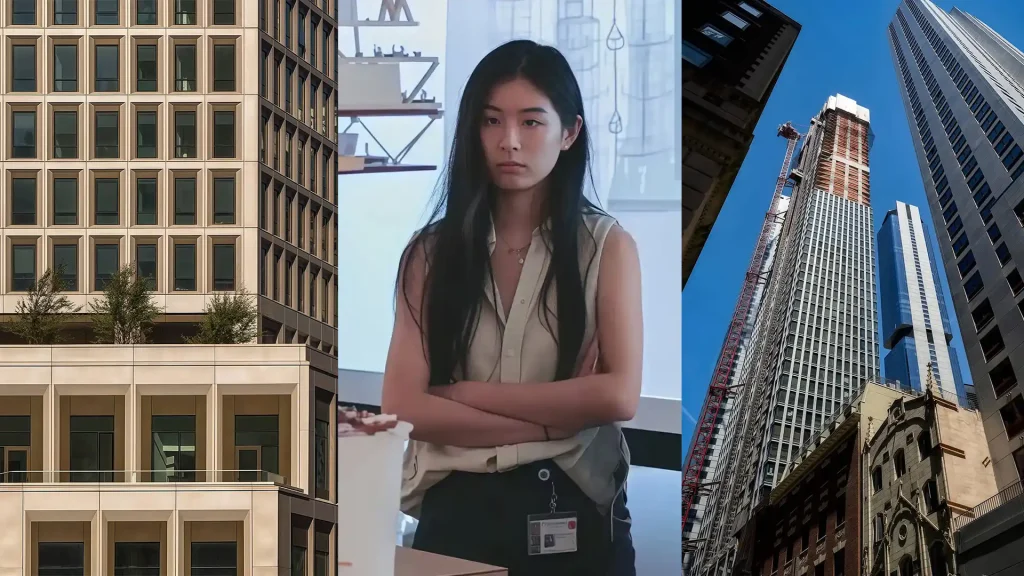
Her professional involvement in 8 Carlisle Street in Manhattan’s Financial District illustrates how these ideas encounter the realities of large-scale construction. Designed by Handel Architects, the residential tower is being delivered with Elicc Group providing façade design assistance, technical development, fabrication, and installation. As an architectural designer at Elicc Group, Shen has contributed to the development and coordination of the building-envelope system, working at the intersection of architectural intent, technical resolution, fabrication, and on-site execution.
The residential tower, currently reshaping part of Lower Manhattan’s skyline, represents the type of complex urban development where façade systems must negotiate structural performance, environmental efficiency, constructability, and architectural identity simultaneously. Working on projects of this scale provides valuable insight into how design intentions evolve through multidisciplinary collaboration and increasingly sophisticated building delivery processes.
The same mindset informs Shen’s professional involvement in The Brook, a residential project in Brooklyn designed by Beyer Blinder Belle (BBB). Elicc Group contributed to the project through façade design-assist, technical development, fabrication, and construction, translating the architectural design intent into a coordinated and buildable envelope system. Instead of introducing sustainable technologies after the building had been finalized, environmental systems became inseparable from the project’s facade structural and spatial organization. Within this collaborative delivery process, Shen’s work focused on how environmental and architectural intentions could be carried through façade detailing, fabrication, coordination, and construction rather than being compromised during execution.
Rainwater management, for example, was integrated into the building through concealed drainage systems embedded within balcony assemblies. This required careful coordination between architectural intent, façade detailing, installation tolerances, and long-term performance. Through Elicc Group’s design-assist and construction scope, Shen worked on the technical development and coordination necessary to translate these requirements into buildable façade conditions.
Shen’s involvement in the façade design-assist and delivery process provided direct insight into how environmental infrastructure could remain visually unobtrusive while still playing a fundamental role in the building’s performance, reinforcing her belief that environmental performance depends as much on thoughtful delivery and technical integration as on design ideas.
Experiences working within collaborative delivery processes such as these have informed what Shen describes as Integrated Ecological Delivery (IED), a methodology that reconnects architecture, construction, infrastructure, and ecological performance into a continuous process instead of treating them as separate disciplines. At its core, the methodology asks not how sustainability can be added to buildings, but how buildings can be conceived differently from the very beginning.
The same principles also appear throughout her academic work. Lost and Found, developed at Columbia GSAPP, reimagines adaptive reuse by treating buildings as evolving systems capable of continuous transformation rather than fixed objects, while proposing the reuse of existing materials as both environmental strategy and architectural expression.
In Double Agency, completed at Pratt Institute, Shen explored the adaptive transformation of Brooklyn’s historic grain terminal into a hybrid cultural and production space, demonstrating how architectural interventions can simultaneously respond to industrial heritage, social interaction, and contemporary urban life.
Her professional Yinglinzheng Kindergarten project similarly reveals an interest in allowing landscape, circulation, and educational environments to evolve together. Drawing from the site’s challenging topography, the project uses the terrain as a generator of spatial organization, producing layered public spaces that merge landscape with learning environments.
Although these projects differ significantly in scale and program, they share a common ambition: architecture should emerge through relationships between environmental systems, construction logic, and human experience rather than through isolated formal gestures.
A New Architectural Philosophy for an Ecological Future
What ultimately distinguishes Shen’s work is not a recognizable visual language but a consistent design philosophy. Across her projects, architecture is understood as an evolving system shaped by material research, environmental thinking, interdisciplinary collaboration, and technological innovation. Buildings are never treated as static objects; instead, they become adaptive frameworks capable of responding to changing ecological, social, and urban conditions.
This perspective also influences her role beyond design practice. As a jury member for international architectural awards, Shen evaluates projects not only through formal or aesthetic qualities but through conceptual clarity, environmental responsiveness, and their potential contribution to the future of architecture.
Her growing international recognition reflects increasing interest in this research-driven approach. Shen has received honors including the iF Design Award, A’ Design Award, NY Architectural Design Awards, MUSE Design Awards, International Design Excellence Awards (IDEA), American Good Design Awards, and the Architecture Master Prize, acknowledging work that bridges environmental innovation with architectural experimentation.
As artificial intelligence, computational design, robotics, and digital manufacturing continue to transform architectural practice, Shen believes the profession’s future will depend less on adopting individual technologies than on integrating them into more intelligent design processes. Technological innovation alone cannot solve architecture’s environmental challenges unless it remains connected to ecological thinking and construction realities. Future architects, she argues, will increasingly act as coordinators of complex interdisciplinary systems where digital workflows, material research, fabrication, and environmental performance develop simultaneously rather than sequentially.
That vision aligns closely with broader conversations taking place across organizations such as the Council on Tall Buildings and Urban Habitat (CTBUH), where high-performance envelopes and integrated building systems are becoming essential to the next generation of urban development.
For Shen, sustainability is not the final objective. Instead, she proposes something more fundamental: redesigning the process through which architecture itself is conceived and delivered. Her work suggests that the next generation of architecture will not be defined solely by taller buildings, smarter software, or more efficient materials, but by the ability to reconnect disciplines that have gradually drifted apart. When design, construction, environmental performance, and material intelligence begin informing one another from the outset, architecture becomes more than an object, it becomes an evolving ecological system capable of responding to the complexities of the twenty-first century.
In that sense, Cen Shen’s contribution extends beyond individual buildings. She represents a new generation of architects redefining the relationship between ideas and execution, demonstrating that the future of architecture may ultimately be shaped not by what buildings look like, but by how they are imagined, assembled, and integrated into the environmental systems they inhabit.
8 Carlisle Street
Architectural Design: Handel Architects
Façade / Building Envelope: Elicc Group — design-assist, technical development,
fabrication, and installation
The Brook
Architectural Design: Beyer Blinder Belle (BBB)
Façade / Building Envelope: Elicc Group — design-assist, technical development,
fabrication, and construction