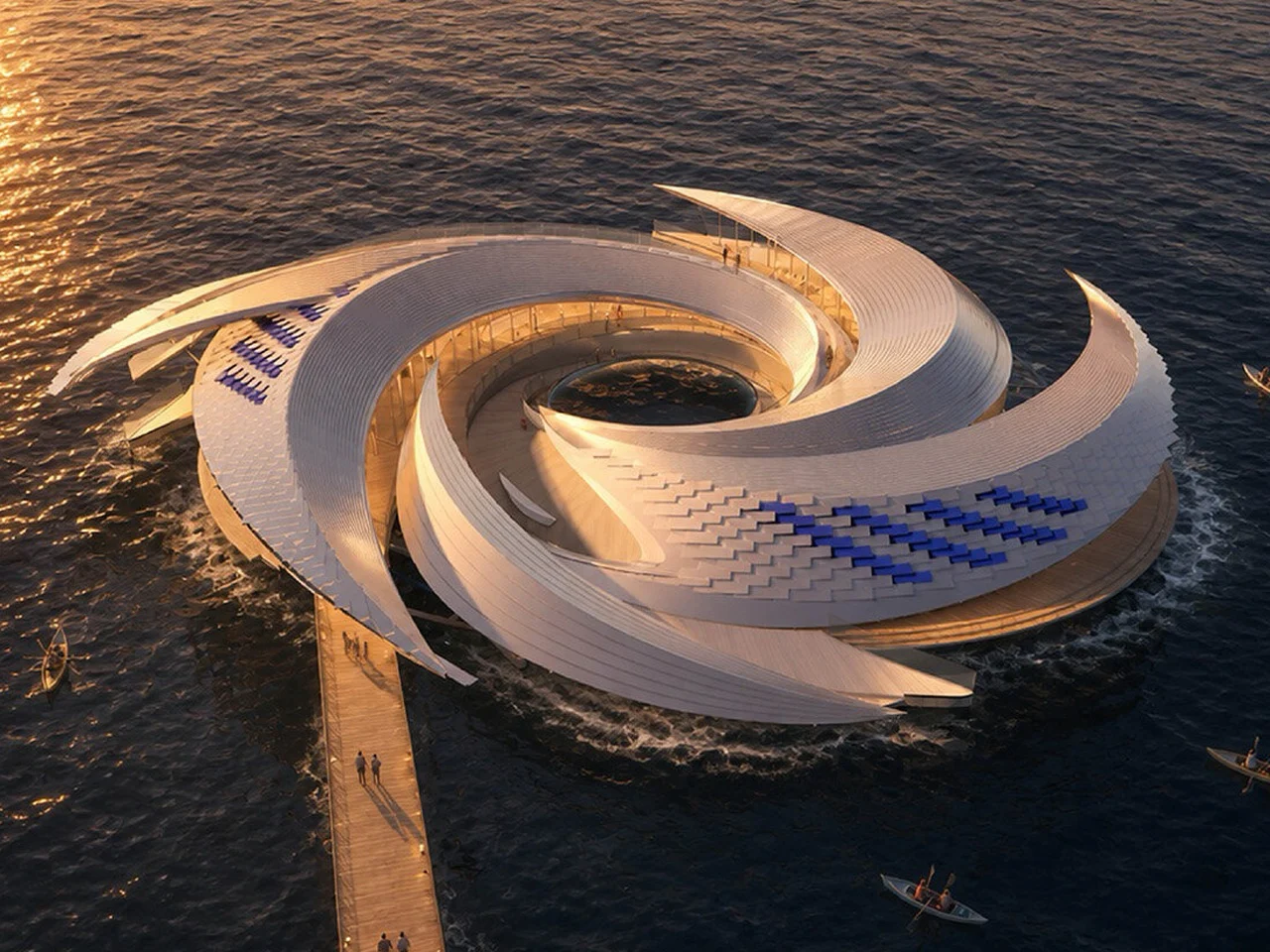
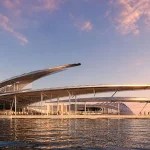
Designed by architect Yufeng Tu, Ocean Vortex is a speculative floating parliament that reimagines marine pollution as both a building material and a catalyst for environmental action. Recognized as a finalist in the 2026 YAC Ocean Parliament competition, the project addresses the growing accumulation of plastic waste in the Pacific Ocean by proposing a civic structure built directly from recycled marine debris. The proposal places governance, education, and ecological restoration within the environment affected by the crisis.
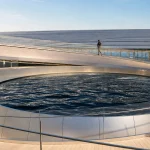
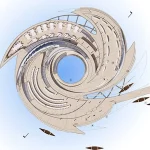
The project takes the form of a spiraling vortex floating on the ocean’s surface. Inspired by the ocean currents responsible for concentrating floating debris into vast garbage patches, the swirling geometry organizes circulation, views, and public engagement. Visitors are guided inward along a continuous pathway that culminates in a central water courtyard, creating a symbolic journey through the environmental issues the structure seeks to address. The vortex form translates the movement of wind, waves, and ocean currents into an architectural language that reflects the dynamics of marine ecosystems.
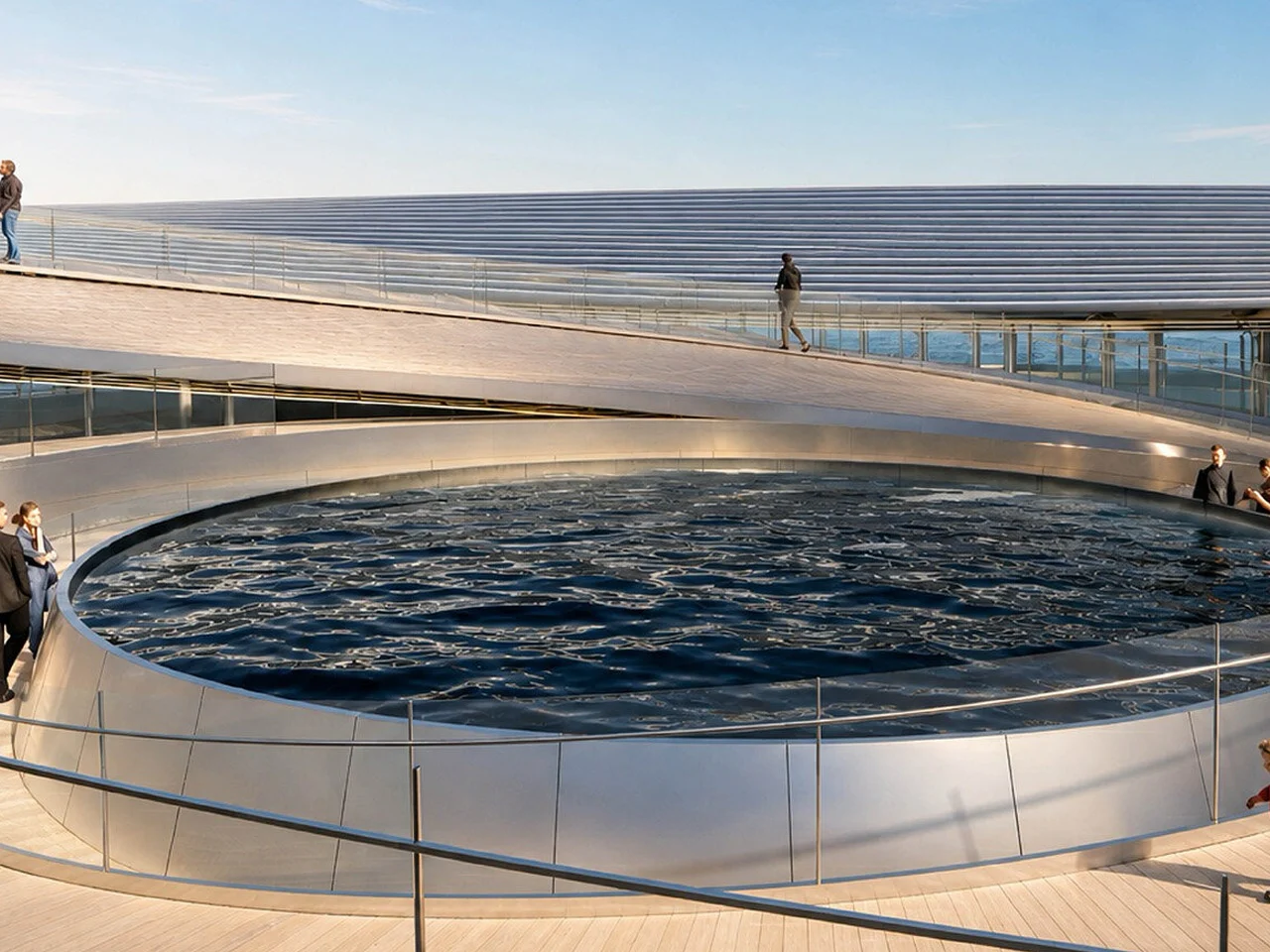
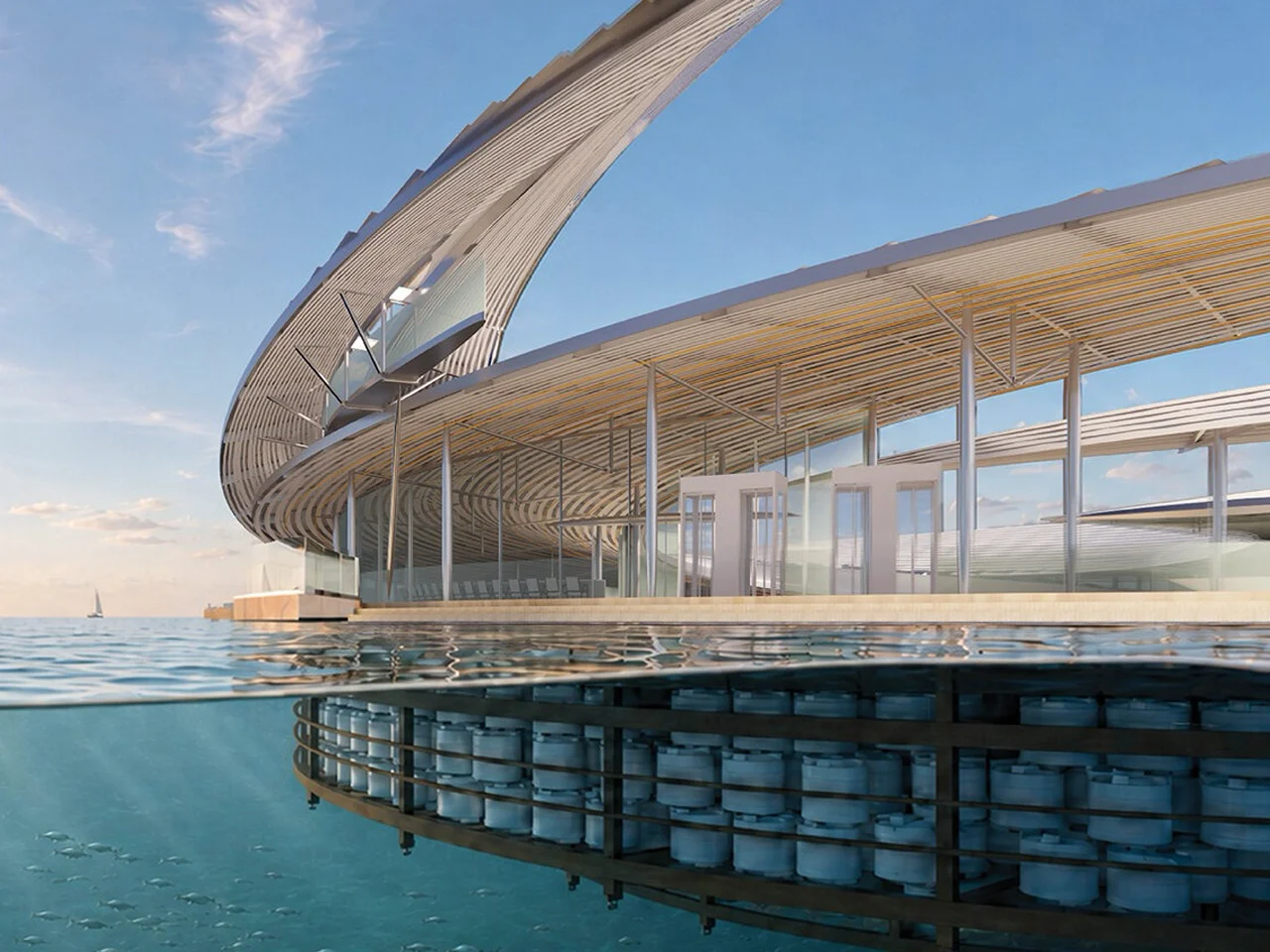
At the heart of the proposal is a structural system that transforms discarded materials into functional architecture. A steel framework supports the floating platform, while recycled plastic barrels and marine waste containers are repurposed as buoyancy elements. Materials that once contributed to ocean pollution become essential components of the building’s flotation system, reinforcing the project’s circular design philosophy. By embedding recycled waste into its structural logic, Ocean Vortex demonstrates how architecture can actively participate in environmental remediation rather than simply representing it.
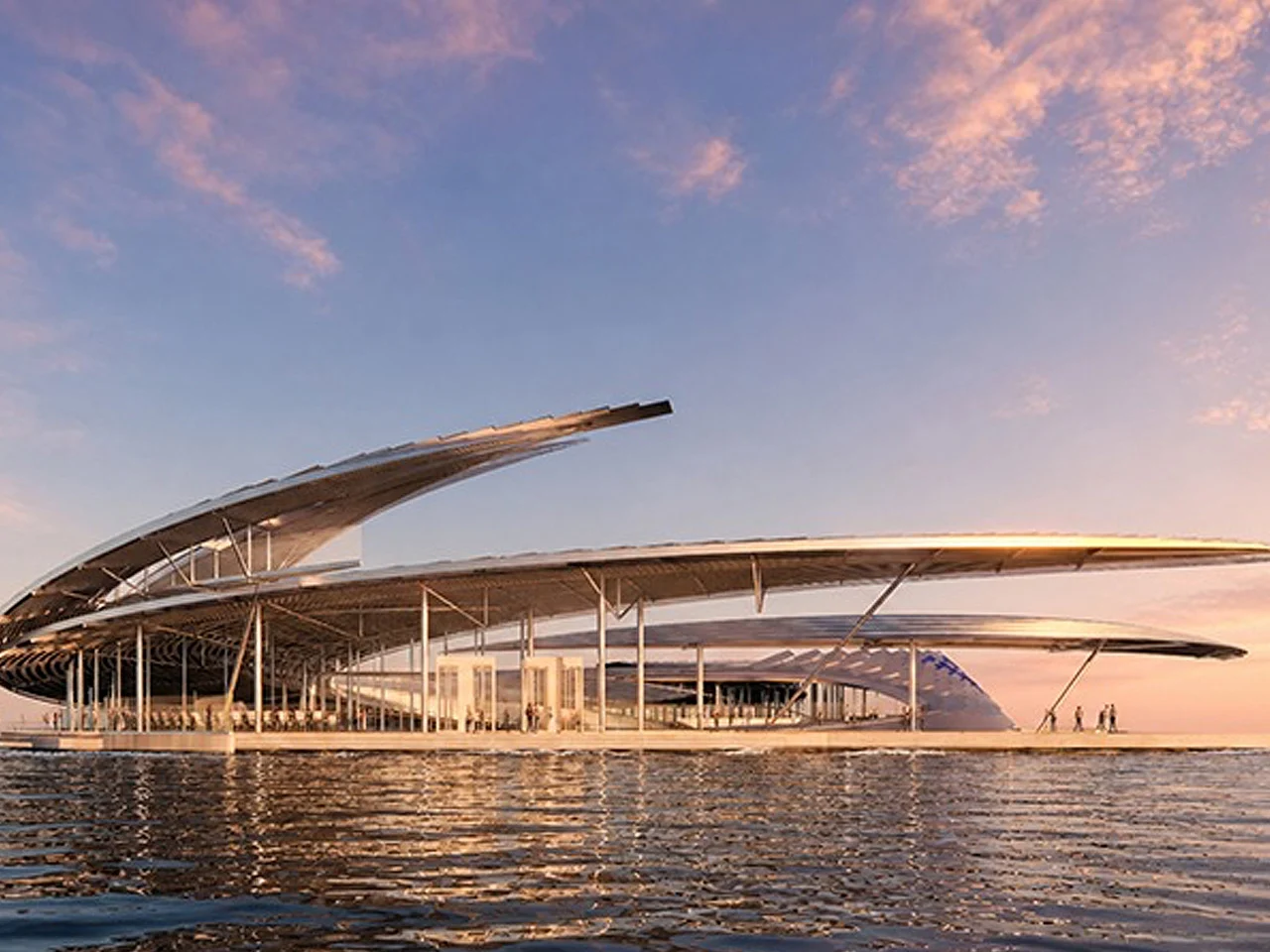
The program combines public, governmental, and environmental functions within a single interconnected platform. Exhibition spaces and a museum educate visitors about marine pollution and ocean conservation, while parliamentary chambers and meeting rooms provide spaces for civic dialogue and decision-making. Separate circulation routes distinguish public visitors from parliament members and staff, allowing educational and governmental activities to coexist while maintaining operational efficiency.
Solar panels installed on the roof generate renewable energy for daily operations, while submerged levels accommodate hydroponic cultivation facilities, desalination infrastructure, and energy conversion systems. Flexible seabed anchorage allows the platform to adapt to tidal changes and wave movements while maintaining stability. These environmental systems are intentionally exposed, making ecological processes visible to occupants and reinforcing the project’s educational mission.
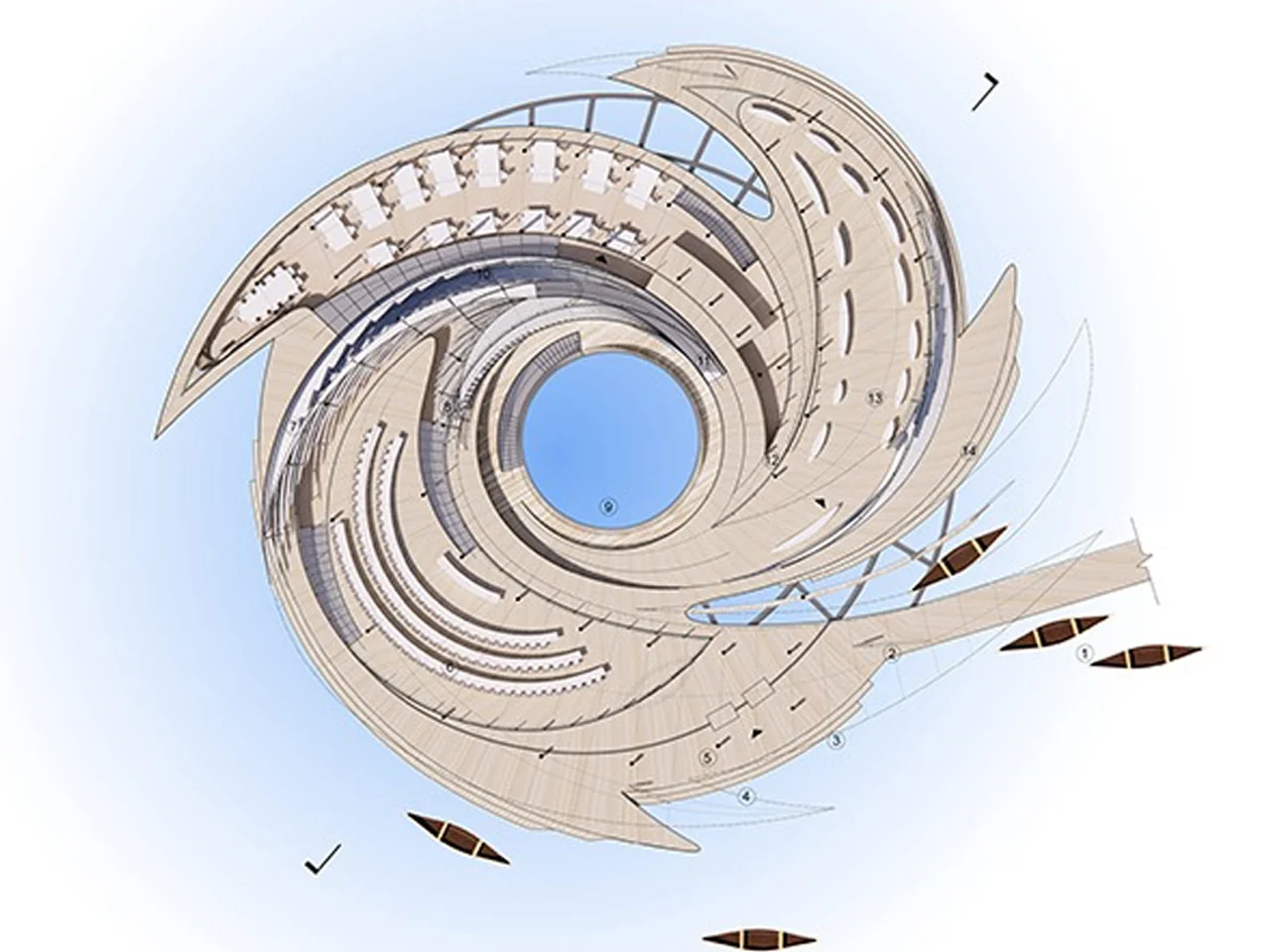
Ocean Vortex proposes a new model of civic architecture in which governance, environmental awareness, and resource recovery are interconnected. By transforming marine waste into a public institution, the project suggests that future civic spaces could actively participate in addressing global ecological challenges while serving as platforms for dialogue and collective action.
Ocean Vortex Project Facts
Project Name: Ocean Vortex
Designer: Yufeng Tu
Project Type: Speculative floating parliament
Competition: YAC Ocean Parliament 2026
Recognition: Finalist in the 2026 competition
Image credit: Yufeng Tu