




Buildings have always moved, even when architecture pretends to be still. A panel slides into place. A screen folds back from the sun. A door responds before a hand reaches it. These small shifts can change how a space feels, performs, and receives people. As buildings become more responsive, adaptive thresholds are emerging as one of architecture’s most charged design territories: a point where structure, control, climate, and human behavior meet.
From kinetic façades to everyday thresholds
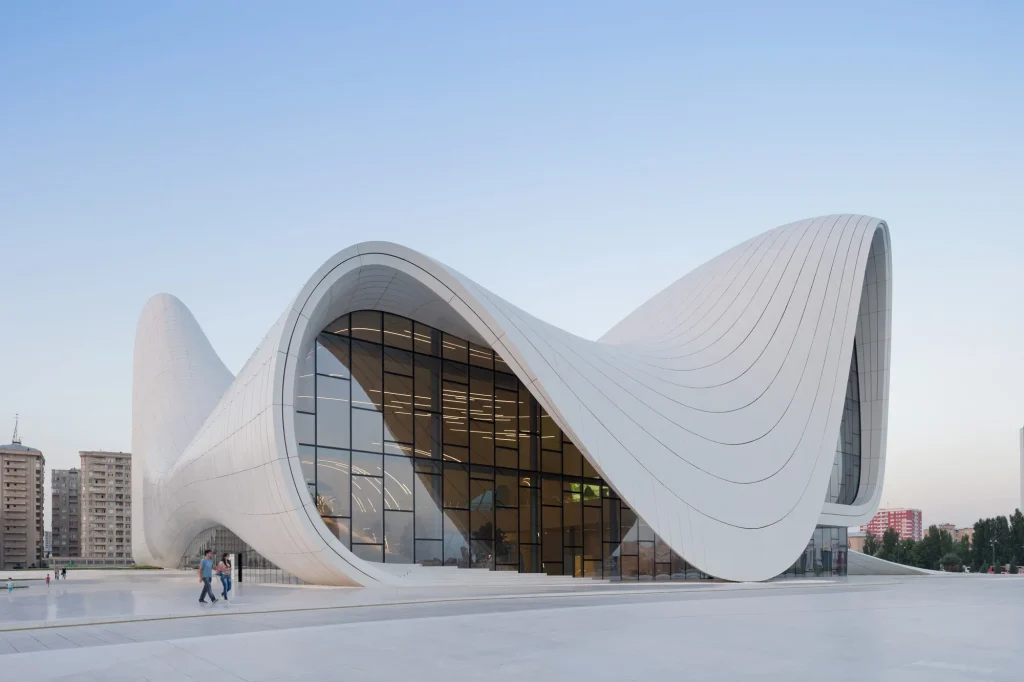
For years, architectural movement has been tied to spectacle. Think of façades that open like mechanical flowers, panels that track the sun, and building skins that shift. These projects helped define the language of kinetic architecture, proving that motion can become part of a building’s identity rather than an afterthought.
The same logic gains another kind of power at a smaller scale. A threshold can filter light, manage airflow, control privacy, guide access, or alter the rhythm of arrival. When these elements become responsive, the edge of a building stops behaving like a fixed line. It becomes an active zone shaped by use, timing, and environmental pressure.
That shift matters because thresholds are where architecture becomes personal. People rarely experience a building as a complete object at once. They meet it through entries, frames, screens, gates, windows, passages, and edges. When those points can be adjusted, the building begins to feel less rigid and more responsive to daily life.
What makes a threshold adaptive?
A threshold becomes adaptive when it can respond to changing conditions instead of serving one fixed purpose. The response might come from sensors, programmed movement, manual control, or simple mechanical intelligence. It can react to heat, glare, airflow, security needs, occupancy, or use.
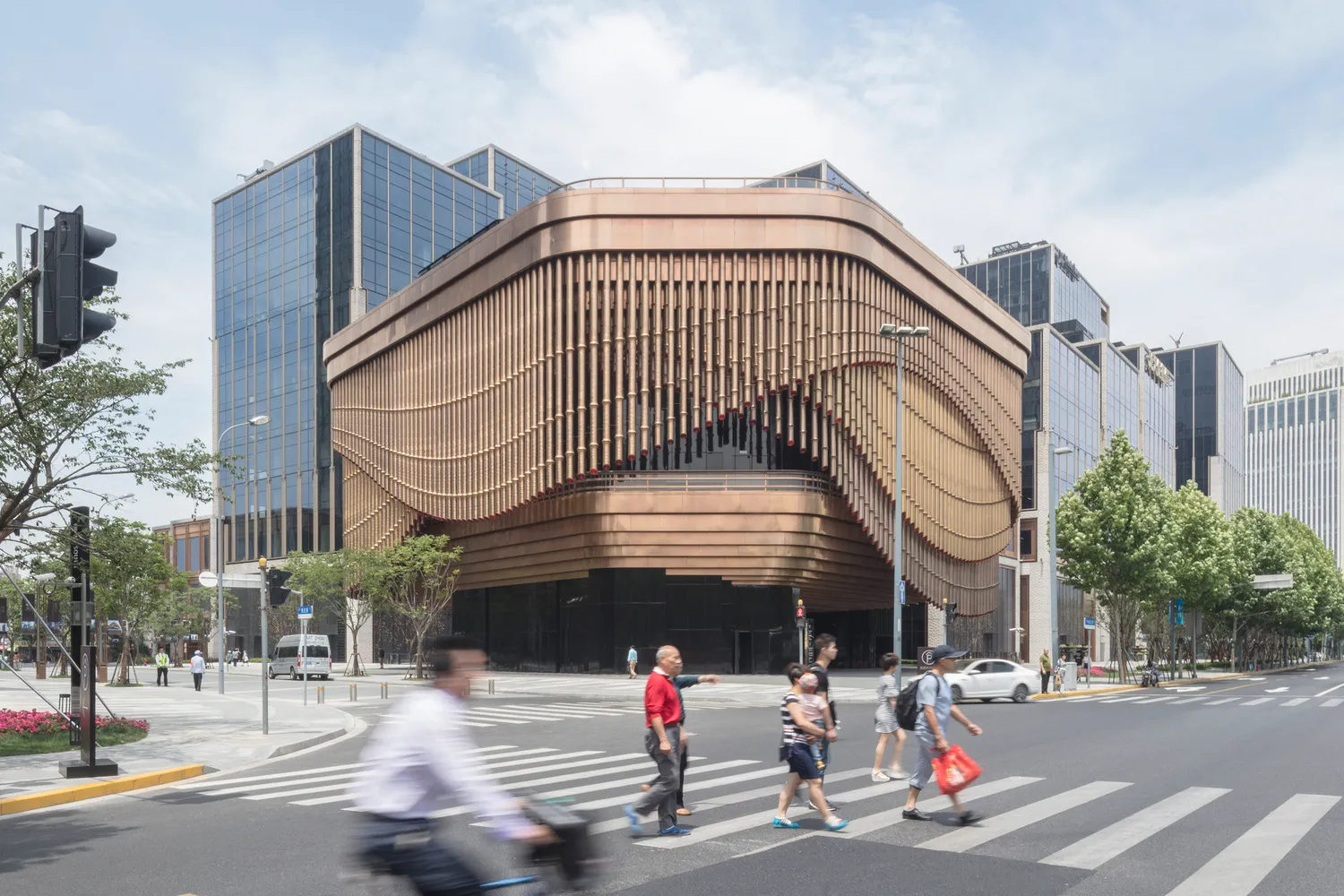
This changes the role of familiar architectural parts. Doors, shutters, vents, partitions, and gates often begin as passive separators. They become instruments for shaping performance. A screen can soften sunlight before it turns into glare. A sliding wall can let one room shift between work, gathering, and privacy. A controlled entry can balance openness with protection without making the space feel defensive.
The overlooked intelligence of small movements
Large kinetic systems attract attention because they can transform a building’s silhouette. Smaller movements are easier to miss, even when they shape the daily experience of architecture. A hinge, track, motor, sensor, or folding mechanism can change how a room opens, how a façade breathes, or how an entry point receives people.
These micro-movements matter because they work close to the body. They influence the pause before entry, the feeling of transition, and the balance between exposure and enclosure. A soft-closing panel, a shaded doorway, or a retractable screen can make a space feel considered without asking for attention.
This is where adaptive design becomes less about visual drama and more about behavior. Movement can choreograph how people pass through a building, help a home expand for guests, let a workspace shift during the day, or allow a cultural building to manage crowds with greater ease.
Smart access as a design layer
Access is one of the clearest places where adaptive thresholds appear in everyday life. A building entrance can work as more than a single, static point of passage. It can respond to timing, security, weather, occupancy, and the habits of the people using it.
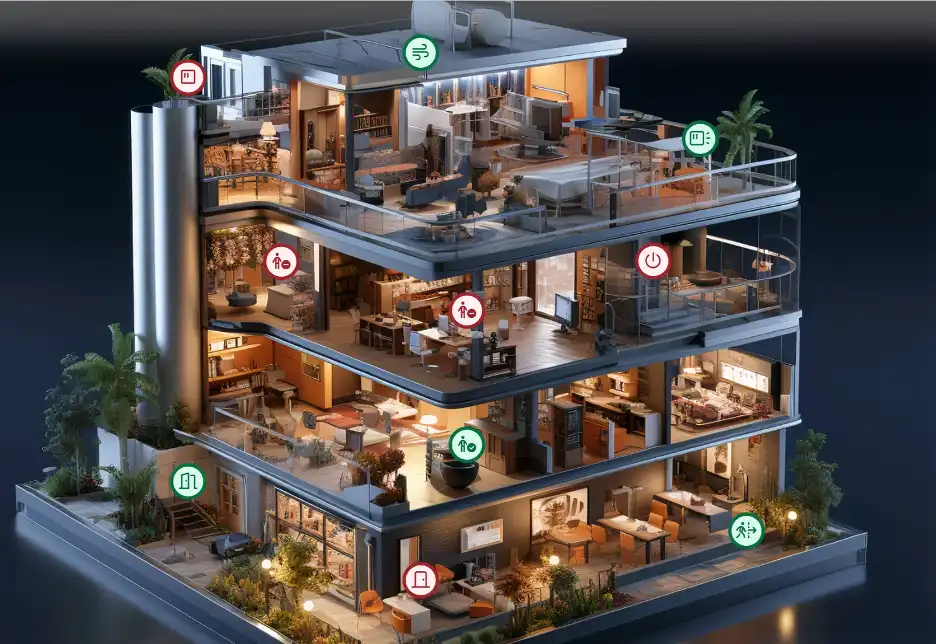
At the domestic scale, even a garage door opener can be understood as part of this shift, combining motion, safety sensors, remote control, and user timing into one responsive threshold. The idea scales across other building types through automated gates, operable façades, controlled service entries, retractable partitions, and adaptive shading systems. Movement becomes a design layer, shaping how a building receives people and manages its edges.
Sensors, controls, and the architecture of response
Adaptive thresholds depend on more than movement. Their value comes from the relationship between physical parts and the systems that guide them. Sensors can read light, motion, temperature, occupancy, air quality, or position. Controls translate that information into a response that feels simple from the user’s side.
This is where architectural movement becomes part of a wider performance strategy. Research into advanced building controls shows how buildings can use control and monitoring strategies to adjust systems with greater precision. For thresholds, that intelligence can support better timing, smoother access, improved comfort, and a closer connection between the building’s edge and the conditions around it.
The goal is not automation for its own sake. A responsive opening should reduce friction. It should help the building do something that a static element cannot do as well: Admit air at the right moment, soften light before it overheats a room, open a service zone safely, or close a vulnerable edge when conditions change.
Why adaptive thresholds matter for future buildings
Adaptive thresholds make architecture more responsive at the points where people interact with it most. They can support smoother circulation, more flexible interiors, better environmental control, and safer access without forcing the building to become visually complicated.
Their strength is subtlety. A threshold can open a space to daylight, close it against heat, filter views, protect an entry, or shift a room’s function with a single movement. When designed well, these systems make buildings feel more attentive. They respond at the scale of daily behavior, where architecture is experienced through touch, timing, comfort, and motion.
The future is in the edges
The most expressive buildings of the coming years may rely less on constant transformation and more on smaller systems placed at the perimeter. Openings that adjust, thresholds that sense, and surfaces that respond with precision can give buildings a more refined relationship with their surroundings.
This makes the edge a powerful design territory. It connects the technical ambitions of responsive architecture with the ordinary moments that define how people use space. A building that moves well does not need to announce every adjustment. Sometimes it simply opens at the right moment, filters the right amount of light, or shifts just enough to make architecture feel alive.