







Disney worlds often feel like they exist somewhere far from reality. Places where castles float above the sea, villages glow in warm light, and landscapes seem too perfect to be real. But look a little closer, and you’ll find that many of these settings are not entirely imagined. They begin with real places.
For decades, designers and artists have traveled across countries, studying architecture, towns, and natural landscapes. They sketch, simplify, and reinterpret what they see. They turn real locations into something more cinematic, more magical. What makes this connection interesting is not just spotting similarities but understanding how a harbor, a mountain, or a historic building can carry a mood strong enough to tell an entire story.
This list brings together nine such real locations from around the world that inspired some of Disney’s most memorable settings.
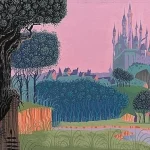
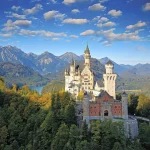
1. King Stefan’s Castle, Sleeping Beauty — Inspired by Neuschwanstein Castle, Germany
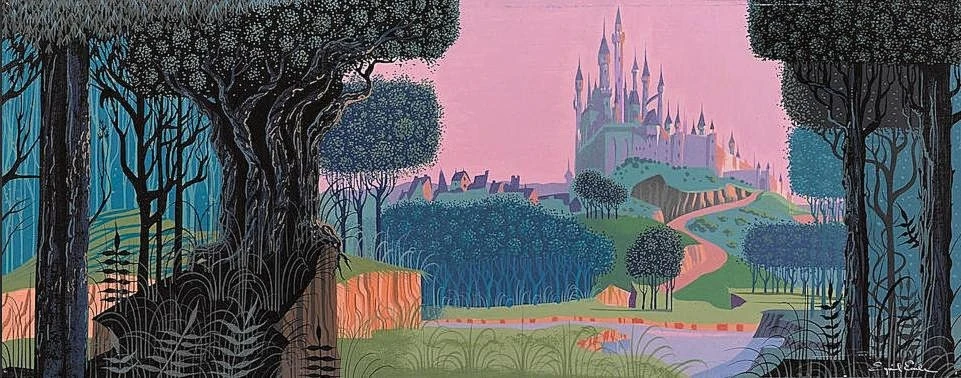
Rising above forests and cliffs, King Stefan’s Castle is designed to feel elevated and almost unreal.
That quality comes directly from Neuschwanstein Castle in southern Germany. Built in the 19th century by King Ludwig II, the castle was never intended as a defensive structure. Instead, it was a romantic retreat, drawing heavily from medieval imagery and theatrical design. Ideally, Neuschwanstein is defined by its verticality with slender towers, pointed spires, and steep roofs rising sharply against the landscape, creating a strong upward movement.
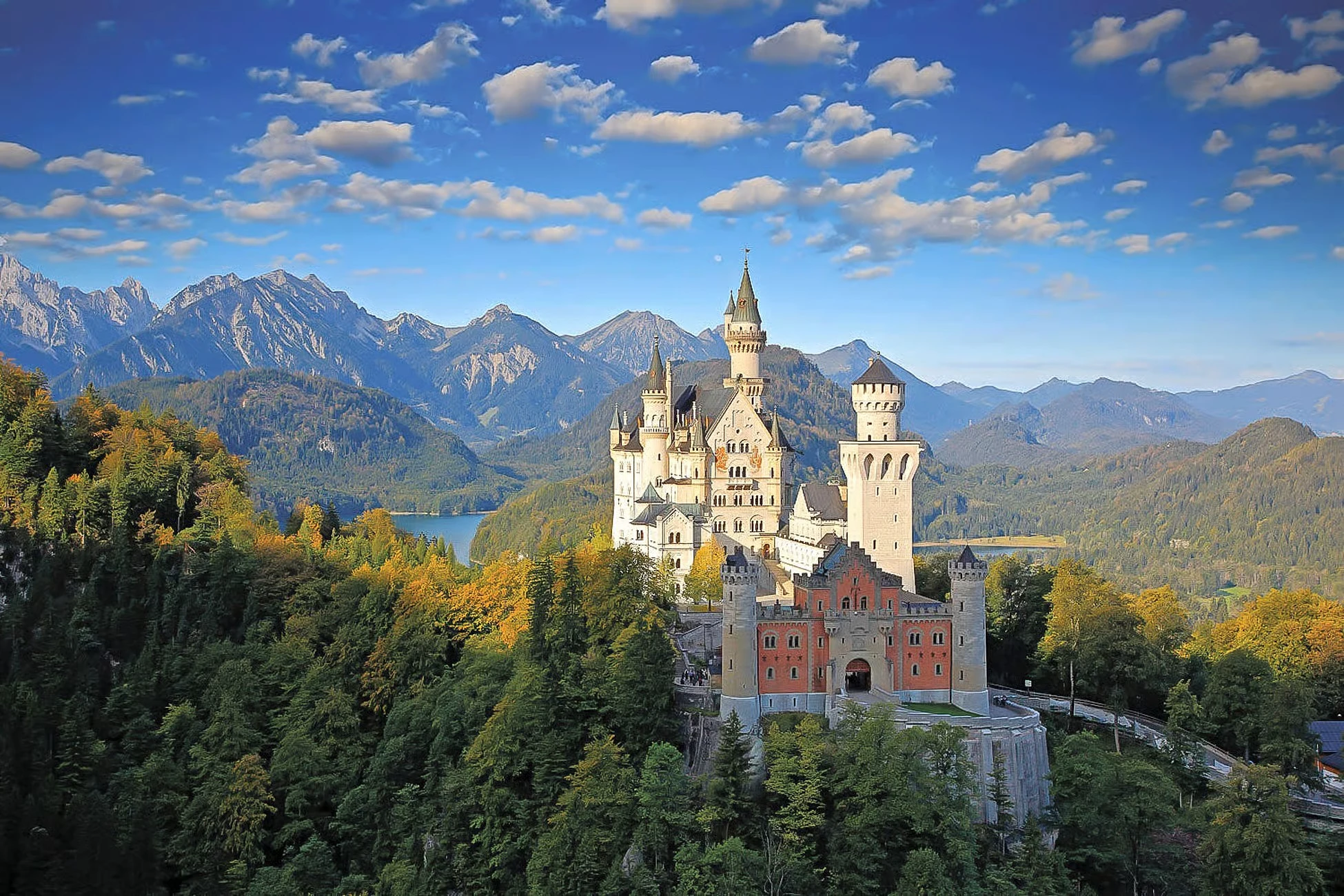
The composition is positioned on a hill so it can be seen from a distance, with the surrounding mountains acting as a dramatic backdrop. The detailing is intricate: arched windows, decorative facades, and volumes give the castle a sense of depth without making it feel heavy. Its light-colored surfaces further enhance the contrast against the darker forested surroundings.
Disney refines King Stefan’s Castle as more symmetrical, with cleaner lines. The proportions are adjusted to make the structure read clearly in animation.
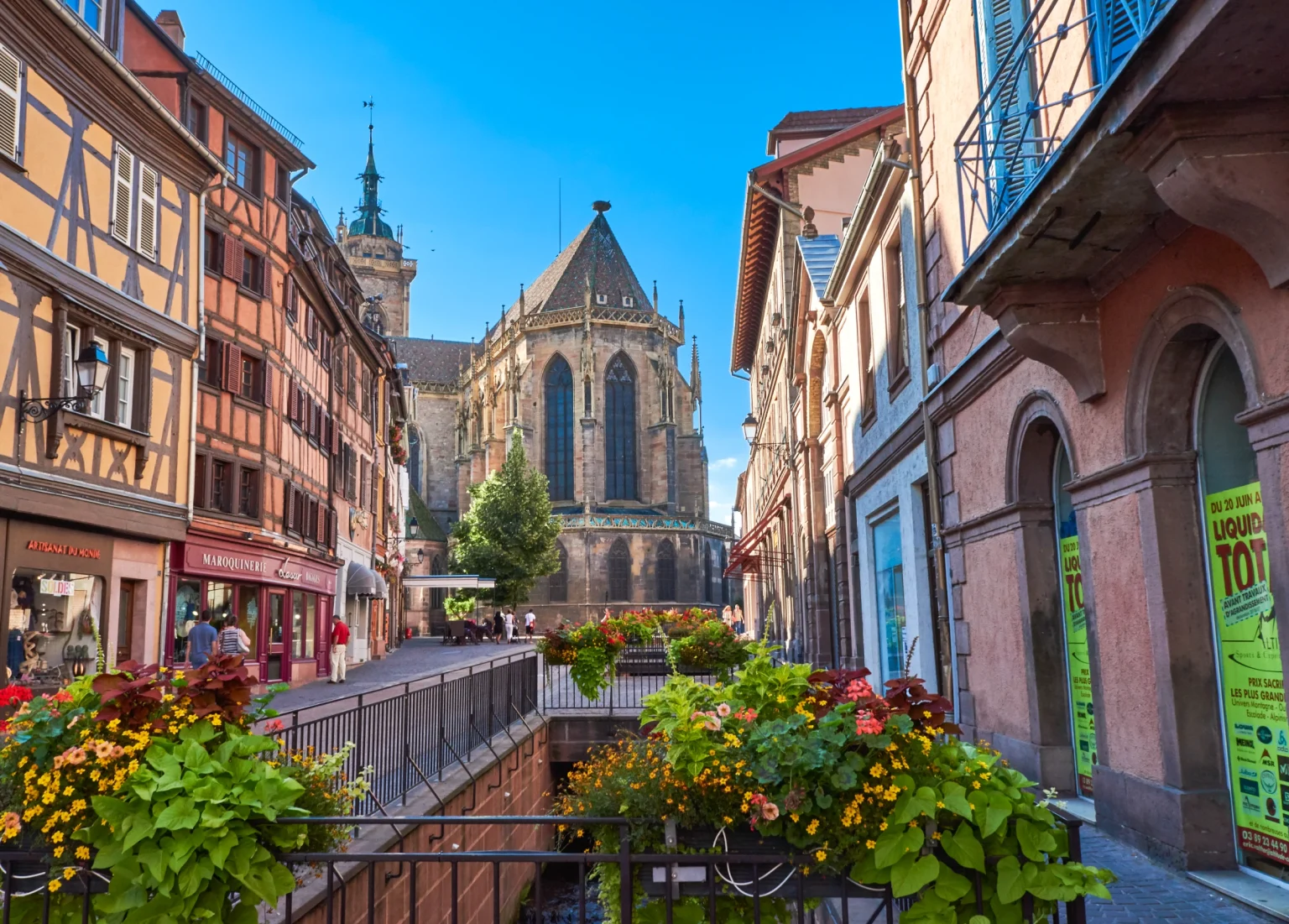
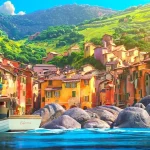
2. Village of Beauty and the Beast — Inspired by Colmar, Alsace, France
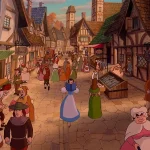
The village setup in Beauty and the Beast is detailed and lived-in, a place where daily life unfolds in streets, markets, and small public spaces.
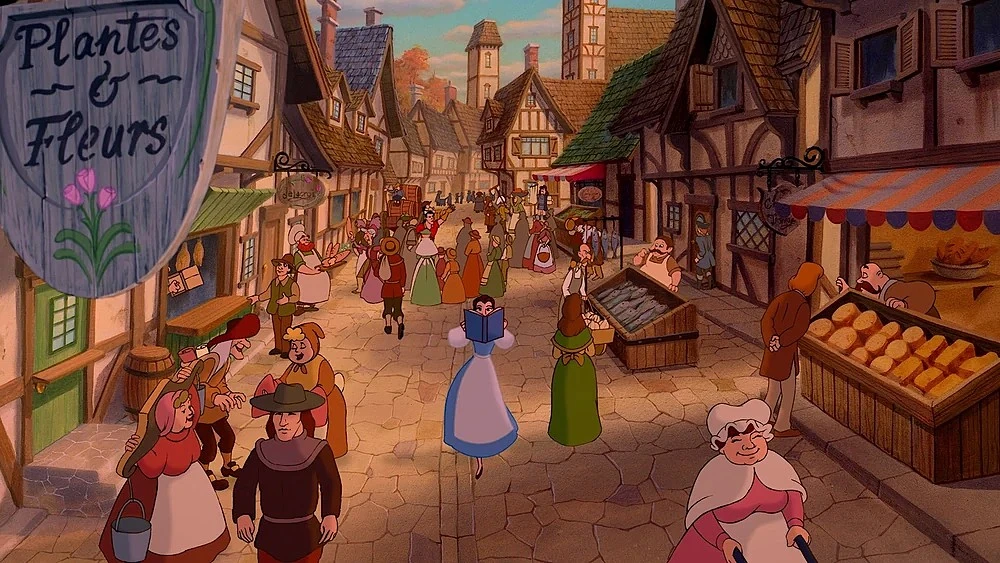
It is inspired by Colmar in northeastern France. Known for its well-preserved old town, Colmar is defined by half-timbered houses, sloped roofs, and narrow cobbled streets that weave through the settlement. Buildings sit close together, forming a continuous street edge that makes the space feel enclosed and intimate. The facades of Colmar are expressive but not grand.
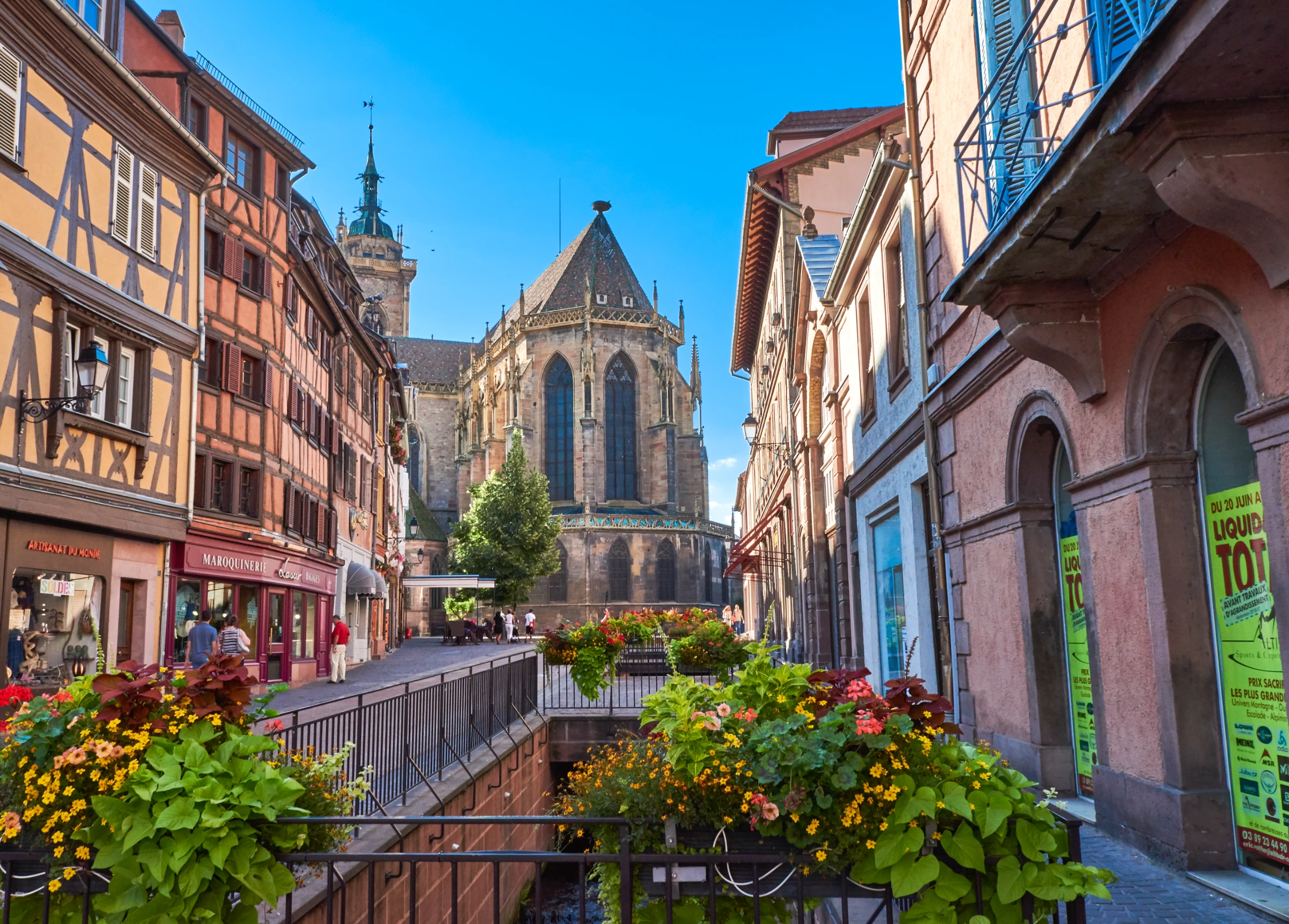
Timber frames are visible on the exterior, filled with plaster and painted in soft colors. Windows are small and framed with wooden shutters, while balconies and sills are decorated with flowers. The scale is consistent and human, with most buildings rising just a few storeys.
In the movie, the village becomes slightly more orderly, with clearer sightlines and a more open central square.
3. Central Station, Zootopia — Inspired by Atocha Station, Spain
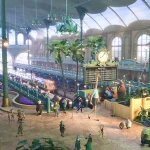
Central Station, in Zootopia, is the first glimpse of the city, a vast, bustling space where animals of every size move through a shared urban system.
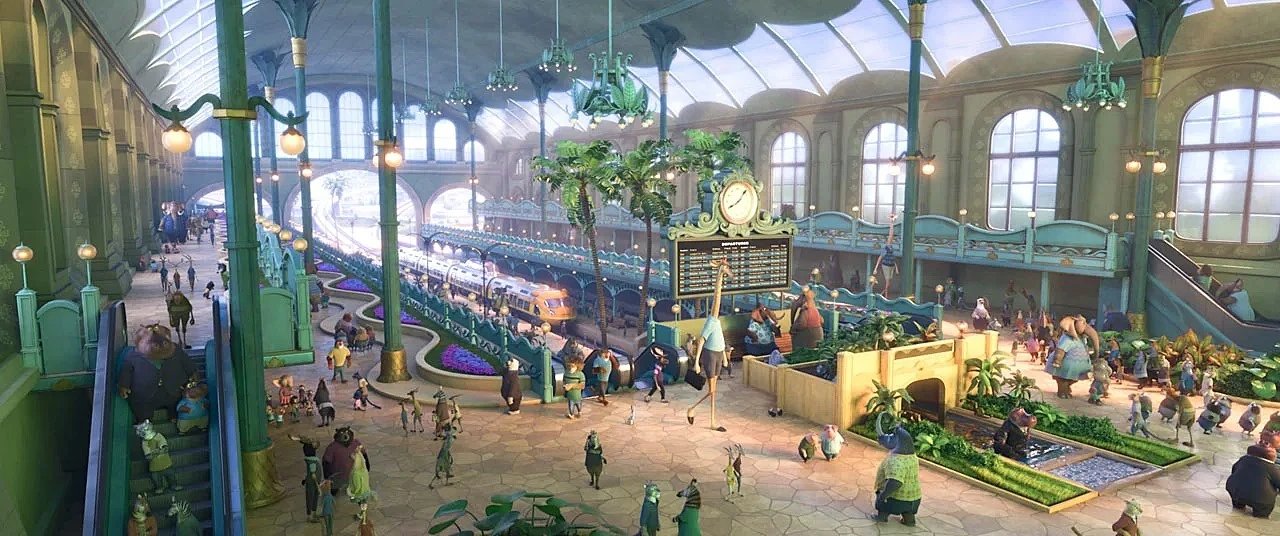
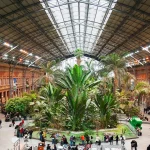
This sense of scale is closely inspired by Atocha Railway Station in Madrid. Originally built in the 19th century, the station is defined by its large iron-and-glass structure, which creates a bright, naturally lit interior. What makes it unique is the tropical garden placed inside the main hall, filled with palm trees and dense vegetation.
Architecturally, Atocha Station is organized as a single expansive volume. The high vaulted roof allows light to flood in, while the steel structure keeps the interior visually open. Circulation happens across wide platforms and walkways; moving feels fluid even at a large scale.
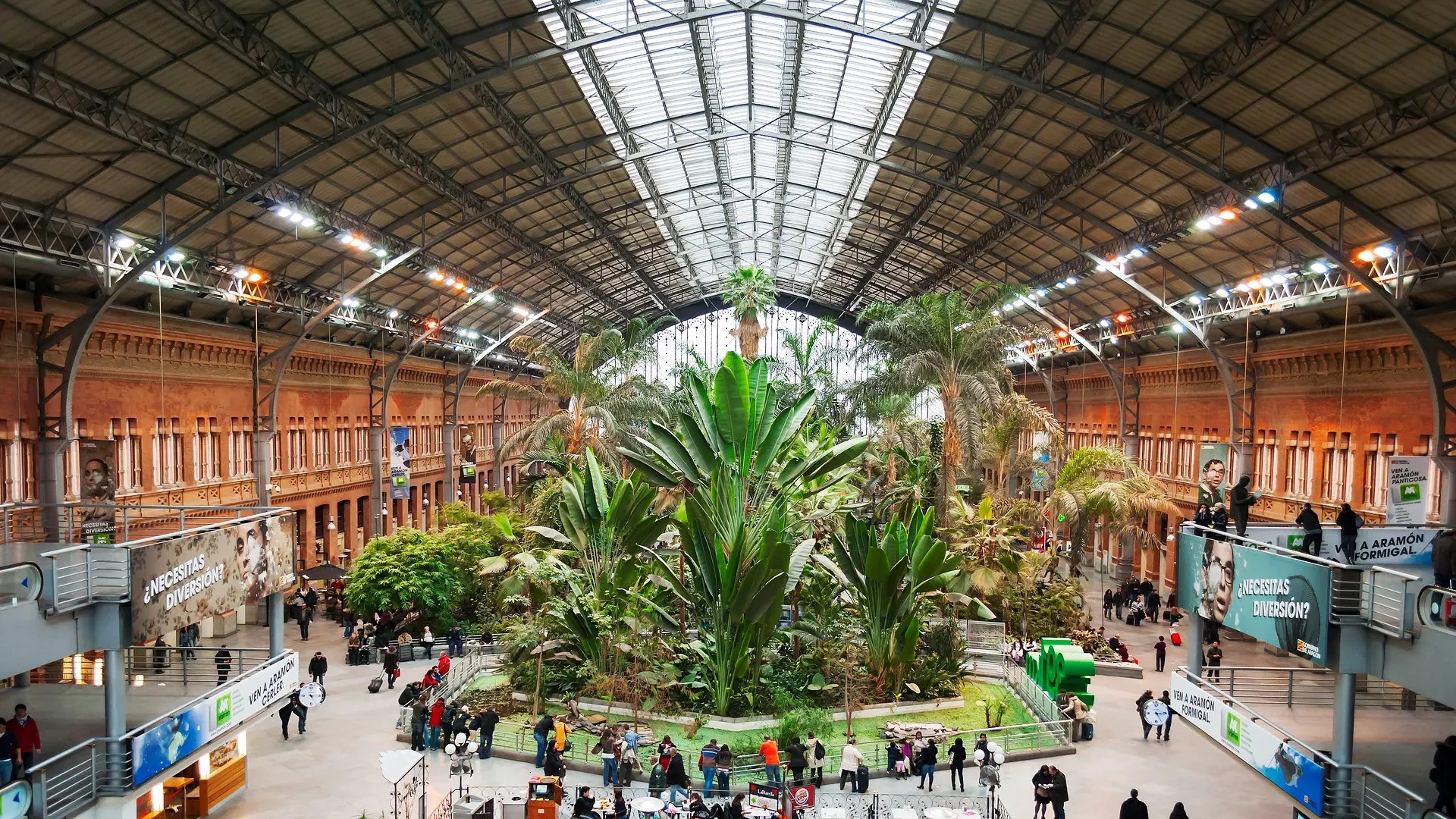
Disney takes this framework and amplifies it. Central Station becomes taller, larger, and more exaggerated to accommodate animals of different sizes, from tiny rodents to giraffes. The vegetation becomes more integrated into the design, turning the station into a hybrid of infrastructure and ecosystem.
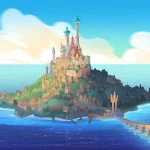
4. Corona Island, Tangled — Inspired by Mont-Saint-Michel Abbey, France
Rising out of the sea, the kingdom of Corona is a compact island settlement, where buildings climb upward toward a single, dominant tower.
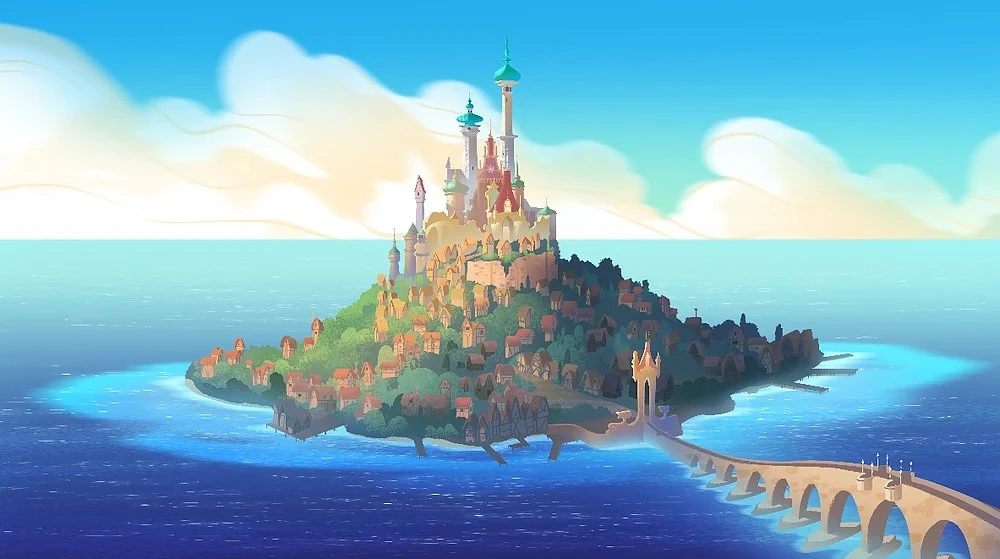
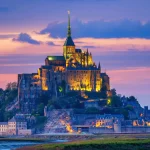
This reflects Mont-Saint-Michel Abbey, located off the coast of Normandy. Built on a rocky tidal island, the abbey and its surrounding village are structured vertically, with narrow streets and tightly packed buildings leading up to the abbey at the top. Mont-Saint-Michel is defined by its layering.
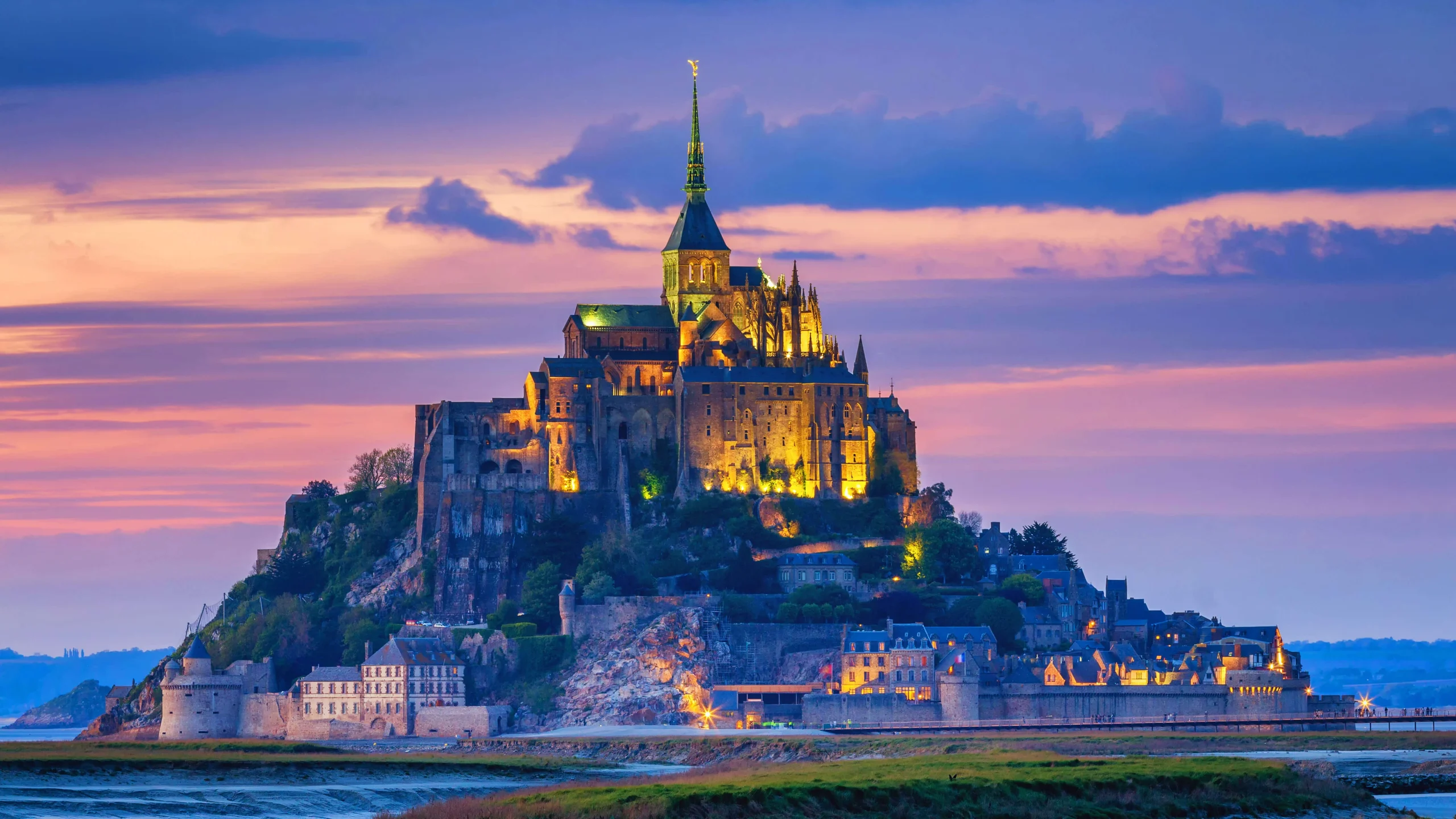
The base holds the village; above it rise defensive walls and clustered houses, and at the highest point sits the abbey with its tall spire. The entire composition is organized around this upward movement. The tidal landscape adds another dimension, with the island appearing isolated during high tide and connected to land at low tide.
Corona becomes brighter and more spacious. The dense medieval fabric is simplified, and the castle is made more prominent.
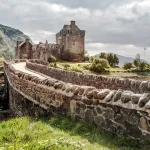
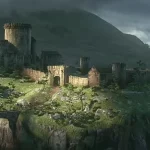
5. Castle DunBroch, Brave — Inspired by Eilean Donan Castle, Scotland
Set against misty hills and surrounded by water, Castle DunBroch is defensive and closely tied to the rugged landscape of the Highlands.
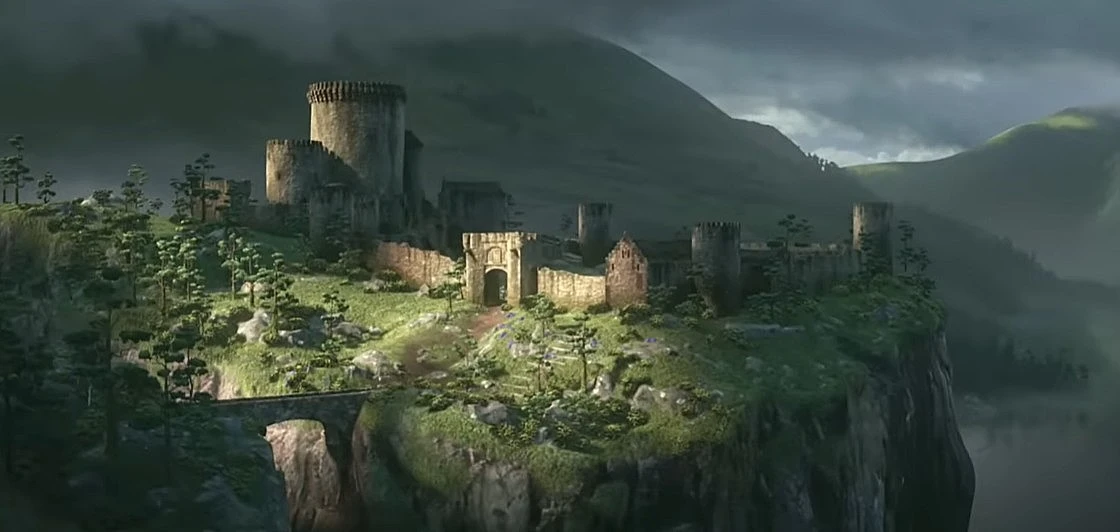
Castle DunBroch is inspired by Eilean Donan Castle, one of Scotland’s most iconic castles. Positioned at the meeting point of three lochs, it sits on a small tidal island, connected to the mainland by a narrow stone bridge. The setting itself exposes its remote terrain. The castle is compact and fortified with thick stone walls; small window openings and irregular volumes reflect its defensive origins.
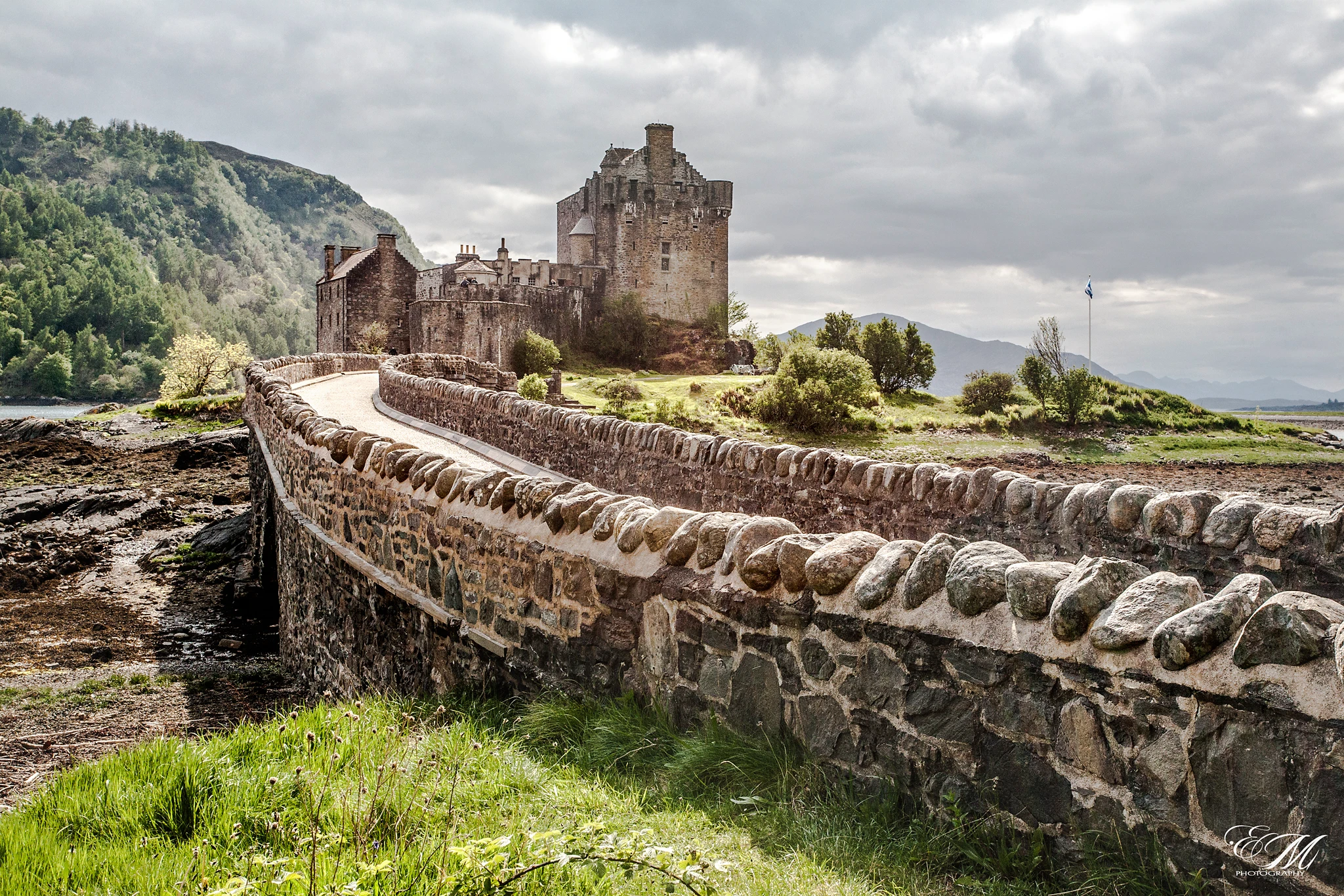
Towers rise modestly, and the structure spreads horizontally, adapting to the rocky base it stands on. Eilean Donan Castle echoes the surrounding hills and water. Weather, mist, and light constantly change how it is perceived.
Castle DunBroch becomes slightly larger with clearer edges and a more readable silhouette. The ruggedness is retained.
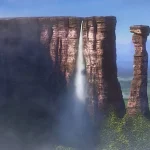
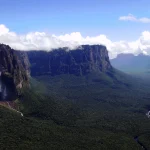
6. Paradise Falls, Up — Inspired by Canaima National Park, Venezuela
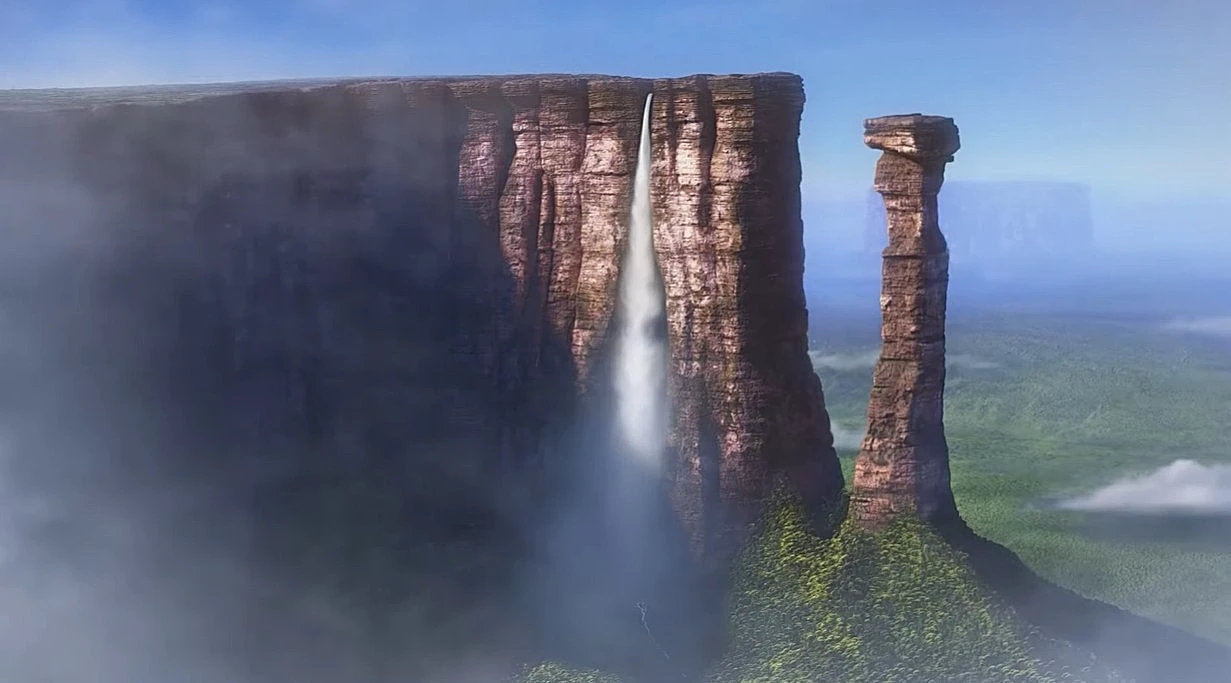
Paradise Falls in Up is imagined as a remote, almost mythical landscape, a place that feels untouched, distant, and larger than life.
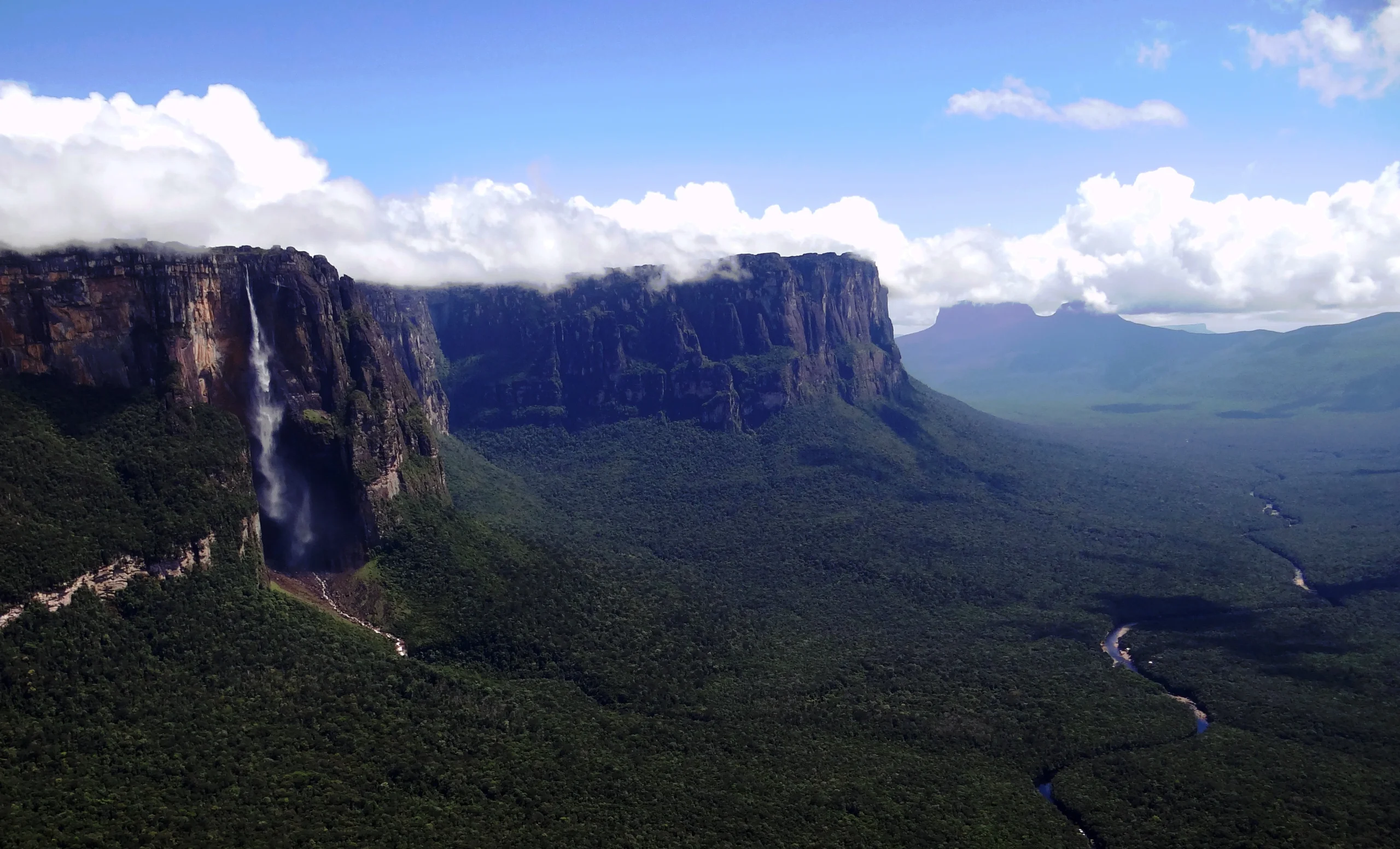
That sense of scale comes directly from Canaima National Park in Venezuela, home to the world’s tallest waterfall, Angel Falls, which drops nearly 979 meters from the edge of a flat-topped mountain called a tepui. The landscape here is unlike anything else. Massive table-top mountains rise abruptly from dense rainforest, with sheer vertical cliffs and waterfalls spilling straight down into the jungle below. These tepuis are ancient geological formations, creating isolated ecosystems that feel completely cut off from the rest of the world. There are no gradual slopes or transitions. The land rises suddenly, and the waterfalls fall freely through open air, often breaking into mist before they reach the ground.
Pixar and Disney take these elements and simplify Paradise Falls into a symmetrical and visually focused design, with one dominant waterfall and a clearly defined plateau. The surrounding jungle and the overall scale are adjusted to fit the story.
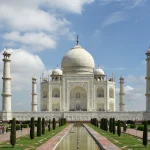
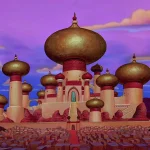
7. Sultan’s Palace, Aladdin — Inspired by the Taj Mahal, India
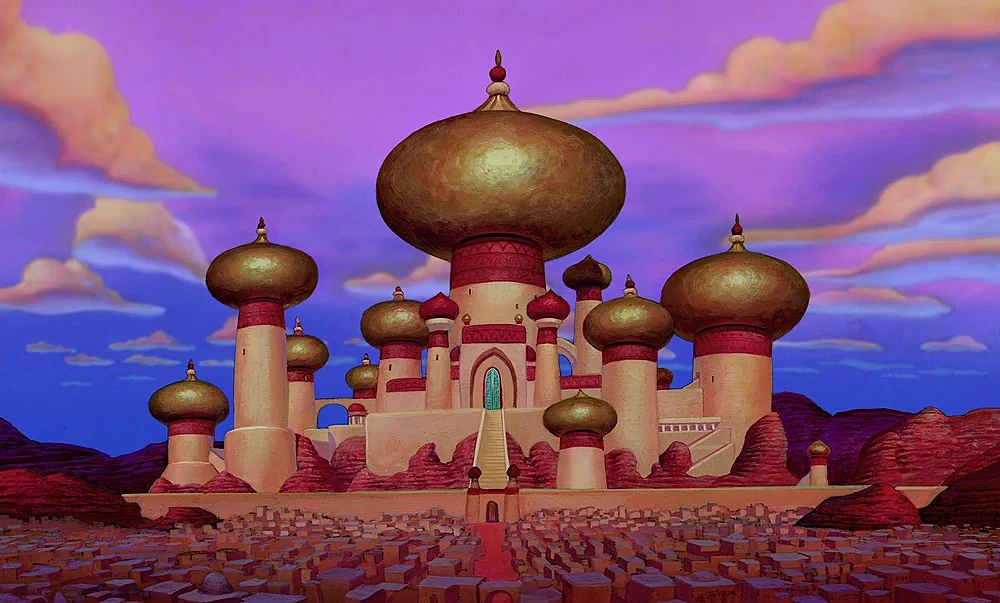
Set at the heart of Agrabah, the palace stands as a symbol of power, scale, and visual richness, rising above the city with its large central dome and layered forms.
That image draws strongly from the Taj Mahal, one of the most recognizable examples of Mughal architecture. Built in the 17th century, the structure is defined by its perfect symmetry, with a dominant central dome, flanking minarets, and a composition laid out along a clear axis. Architecturally, the Taj Mahal showcases proportion. The central dome anchors the entire composition, while smaller domes and arched openings create a rhythmic pattern across the facade. White marble surfaces reflect light, giving the building a glowing quality. The layout is formal, with gardens and water channels reinforcing its symmetry.
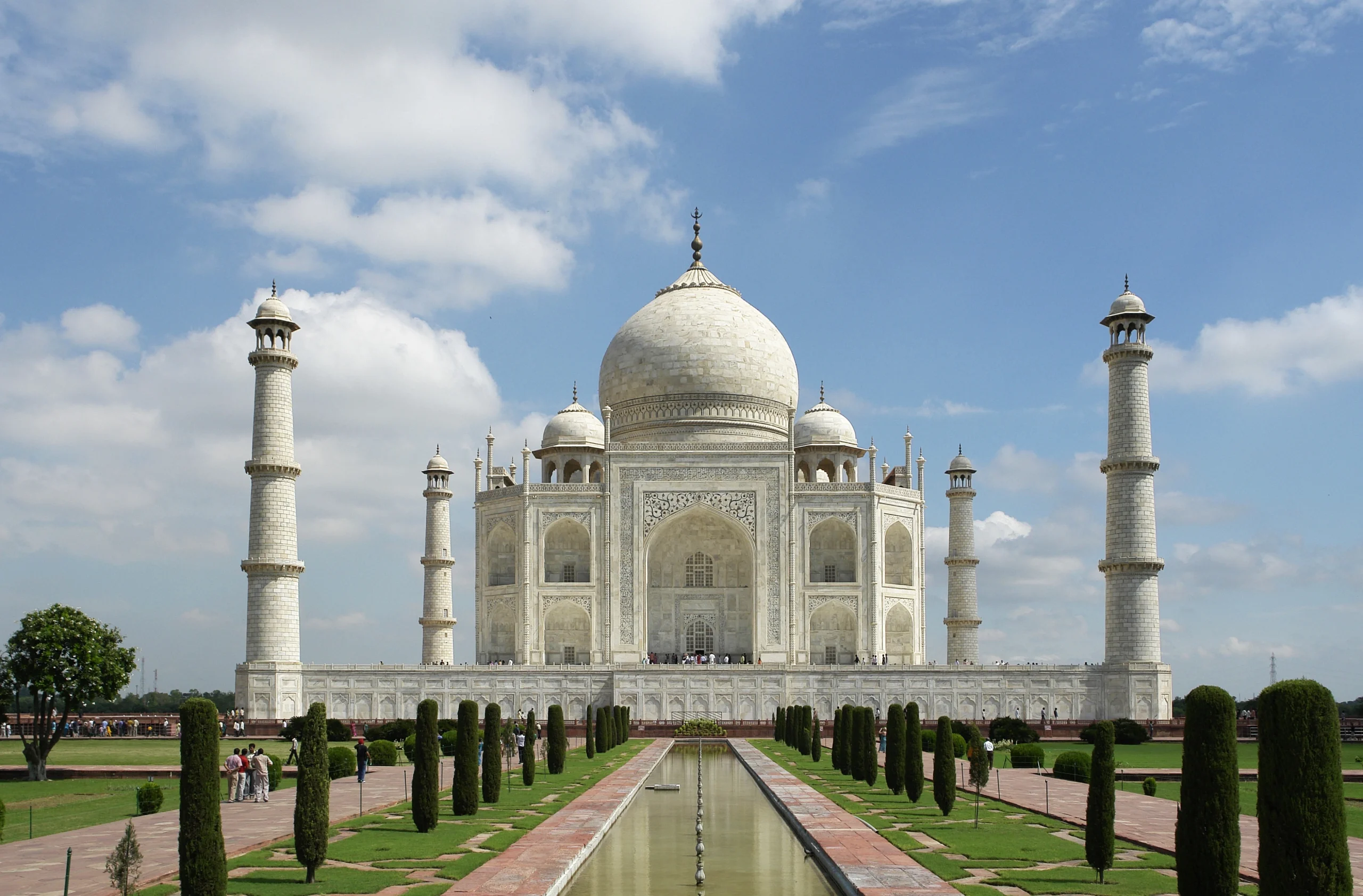
The Sultan’s Palace is recreated as larger and more ornate, with exaggerated domes and brighter colors. The strict symmetry is loosened slightly to make the structure feel more animated and expressive.
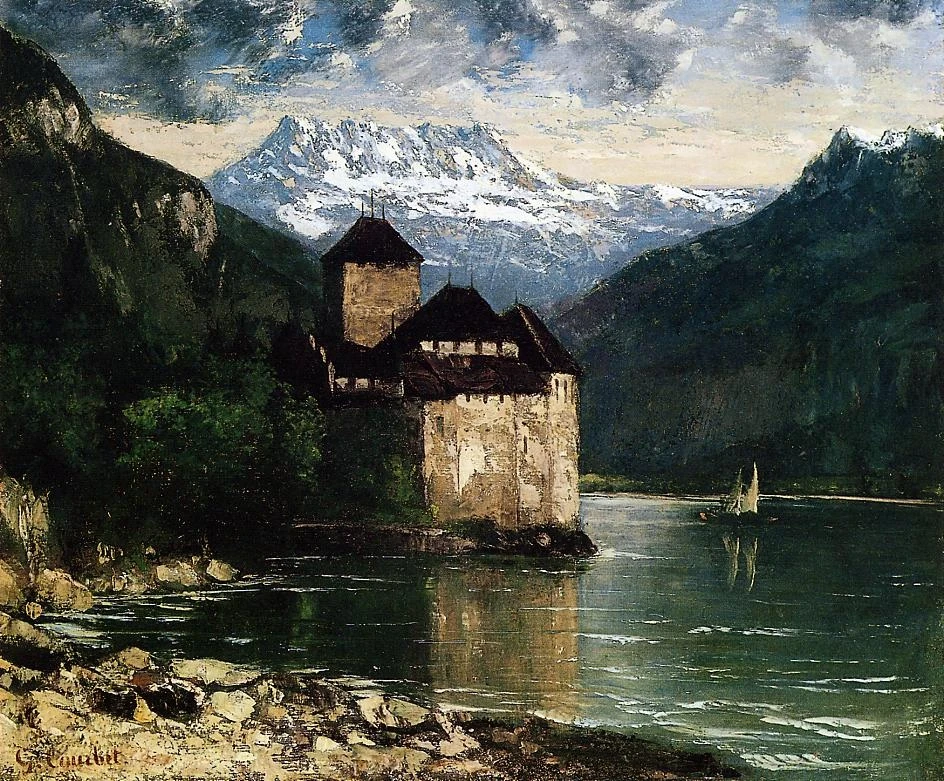
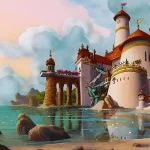
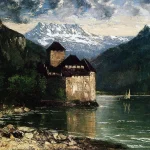
8. Prince Eric’s Castle, The Little Mermaid — Inspired by Chillon Castle, Switzerland
In The Little Mermaid, Prince Eric’s castle sits right at the edge of the sea, acting as a bridge between Ariel’s underwater world and life on land.
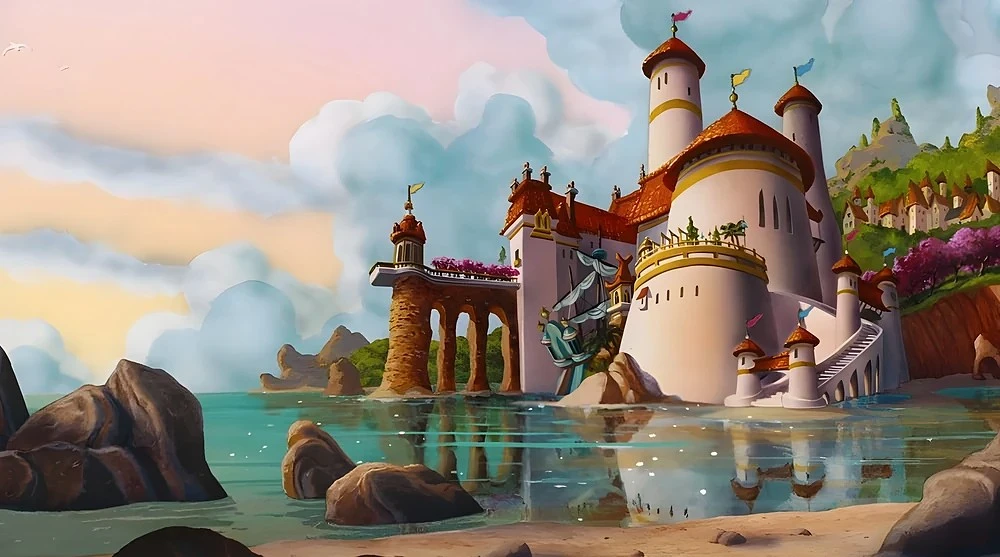
This setting closely reflects Chillon Castle, located along the shores of Lake Geneva. Unlike many castles built on hills for defense, Chillon is placed directly by the water, with its foundations touching the lake and its walls rising straight from the edge. It is a medieval complex that consists of multiple buildings grouped around enclosed courtyards, with cylindrical towers, sloped roofs, and thick stone walls. The materials are simple: local stone and timber. Openings are small and controlled, designed for protection.
Disney reworks this into something more legible and idealized. Prince Eric’s Castle becomes brighter, more symmetrical, and visually open, with larger windows and clearer tower forms. The defensive heaviness is softened, and the structure feels more welcoming. But the core idea remains intact: a castle placed at the edge of land and water.
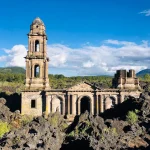
9. Santa Cecilia, Coco — Inspired by San Juan Parangaricutiro Church, Mexico
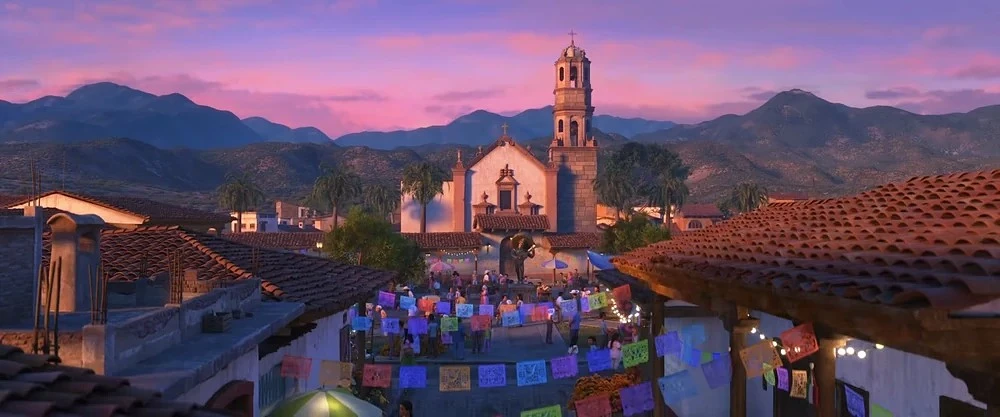
Santa Cecilia in Coco is set across streets and rising ground. It feels built over time, where history and everyday life exist side by side.
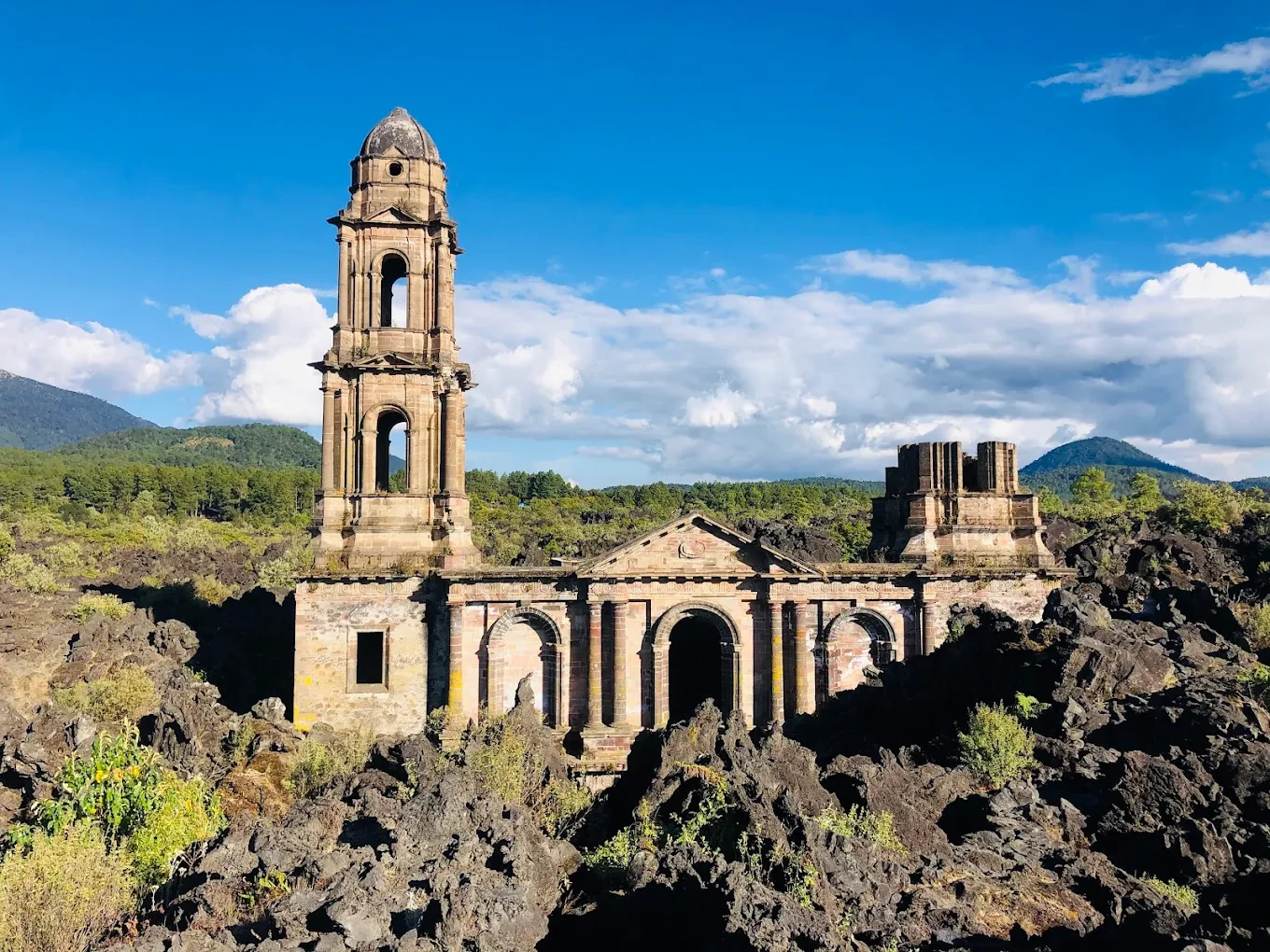
One of its key references is the San Juan Parangaricutiro Church in Mexico. What remains today is a partially buried church, with only its tower and parts of the structure visible above a vast field of hardened lava, the result of the Parícutin volcanic eruption in the 1940s. The original church was modest in scale, built in stone with a simple tower and arched openings. Today, the surrounding landscape has changed dramatically, leaving the structure as a fragment, isolated and marked by time.
This sense of layering and continuity carries into Santa Cecilia. The town is arranged along slopes, with houses stacked closely, streets stepping upward, and spaces overlapping. Bright colors, decorative details, and open courtyards create a lively surface.
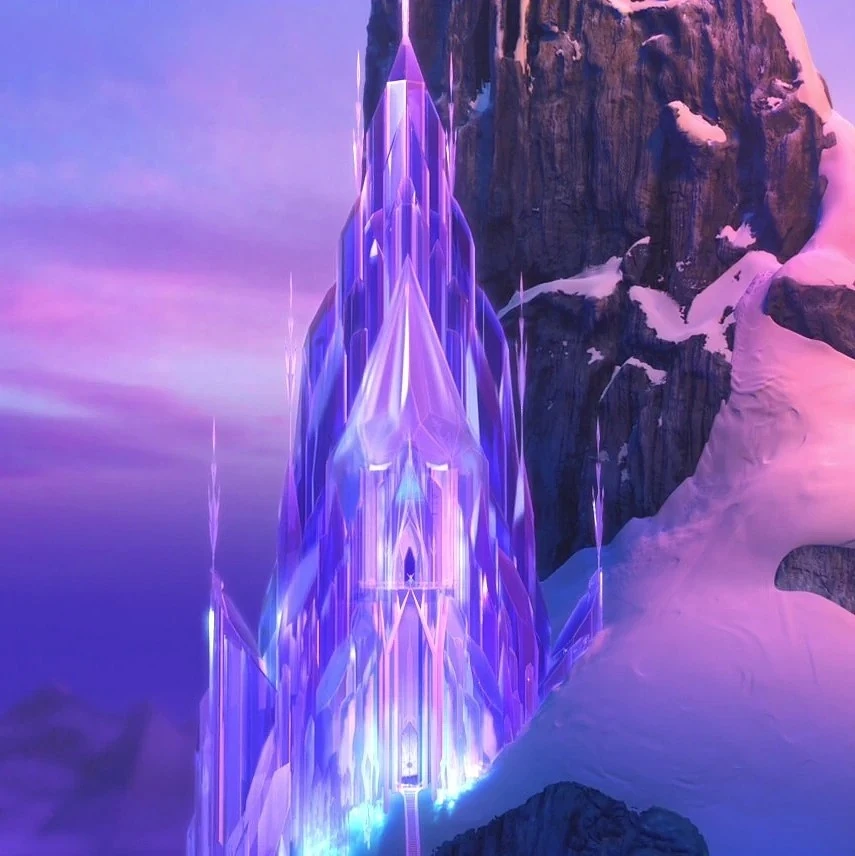
What these places really show is how Disney artists think. They don’t copy what they see. They observe it closely, then choose what to keep and what to leave out. A real place might be complex. In animation, it becomes clearer. Shapes are simplified, views are controlled, and every element is placed with intention.