



London’s iconic BT Tower is set for architectural modifications, as new redevelopment plans reveal proposals for a luxury hotel, a rooftop swimming pool, public viewing spaces, and revived hospitality areas inside the Grade II-listed landmark. The project is being led by American hospitality company MCR Hotels alongside London architecture practice Orms.
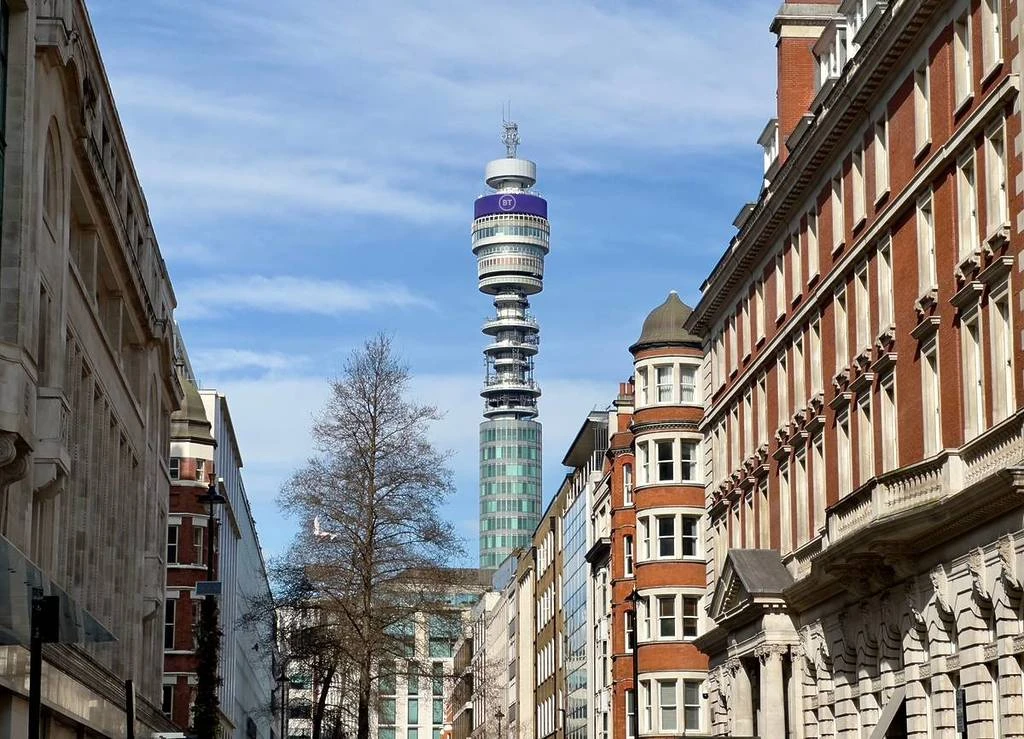
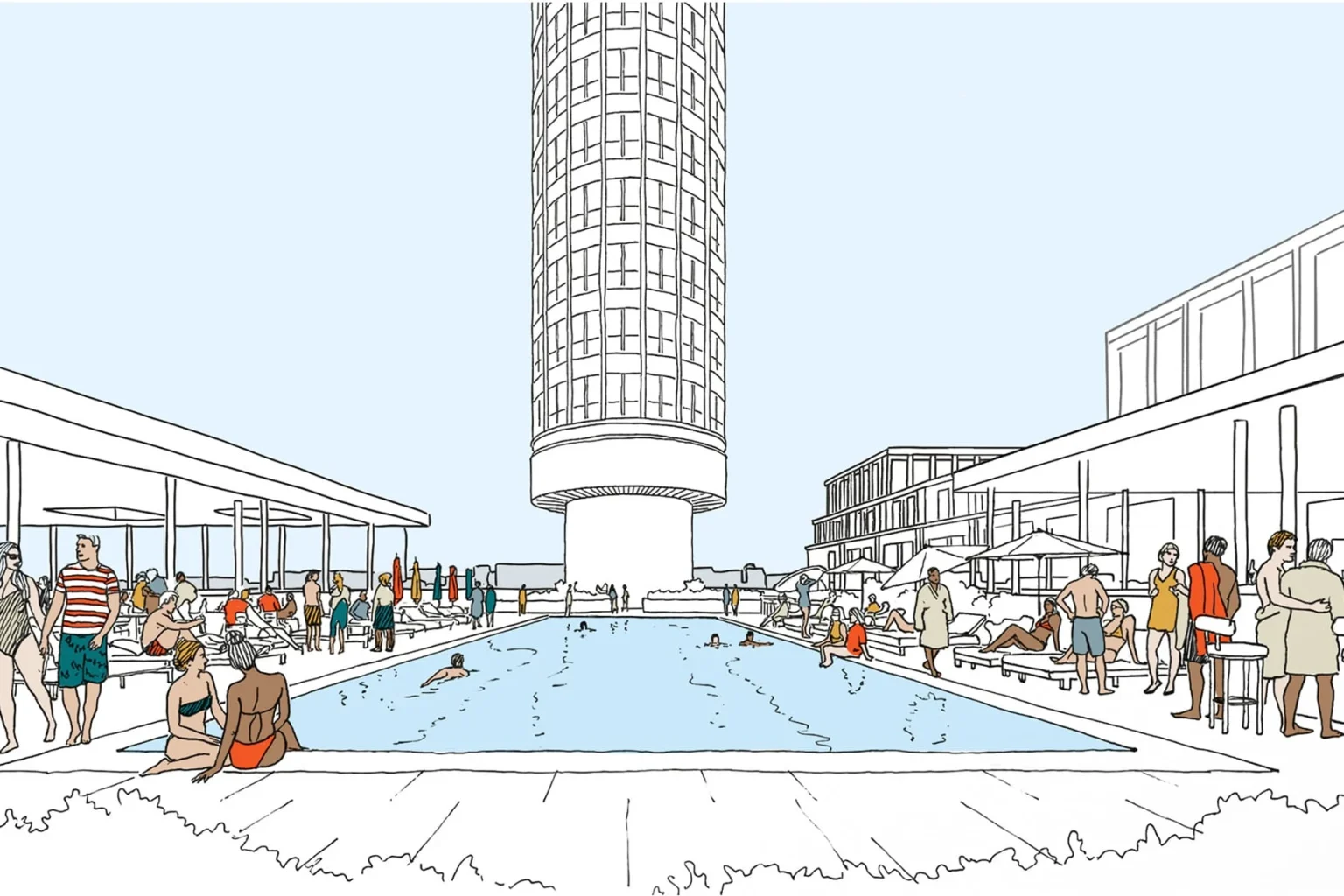
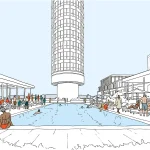
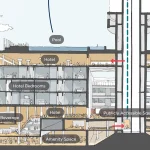
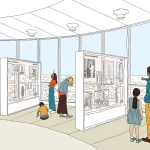
The newly released concepts mark the clearest indication yet of how the 177-meter communications tower could evolve from a largely closed telecommunications structure into a public-facing mixed-use destination. Among the headline proposals is a rooftop swimming pool positioned near the top of the tower, potentially making it one of the highest swimming facilities in central London. Early plans also include publicly accessible viewing galleries, retail areas, restaurants, and a redesigned public square at the base of the building.
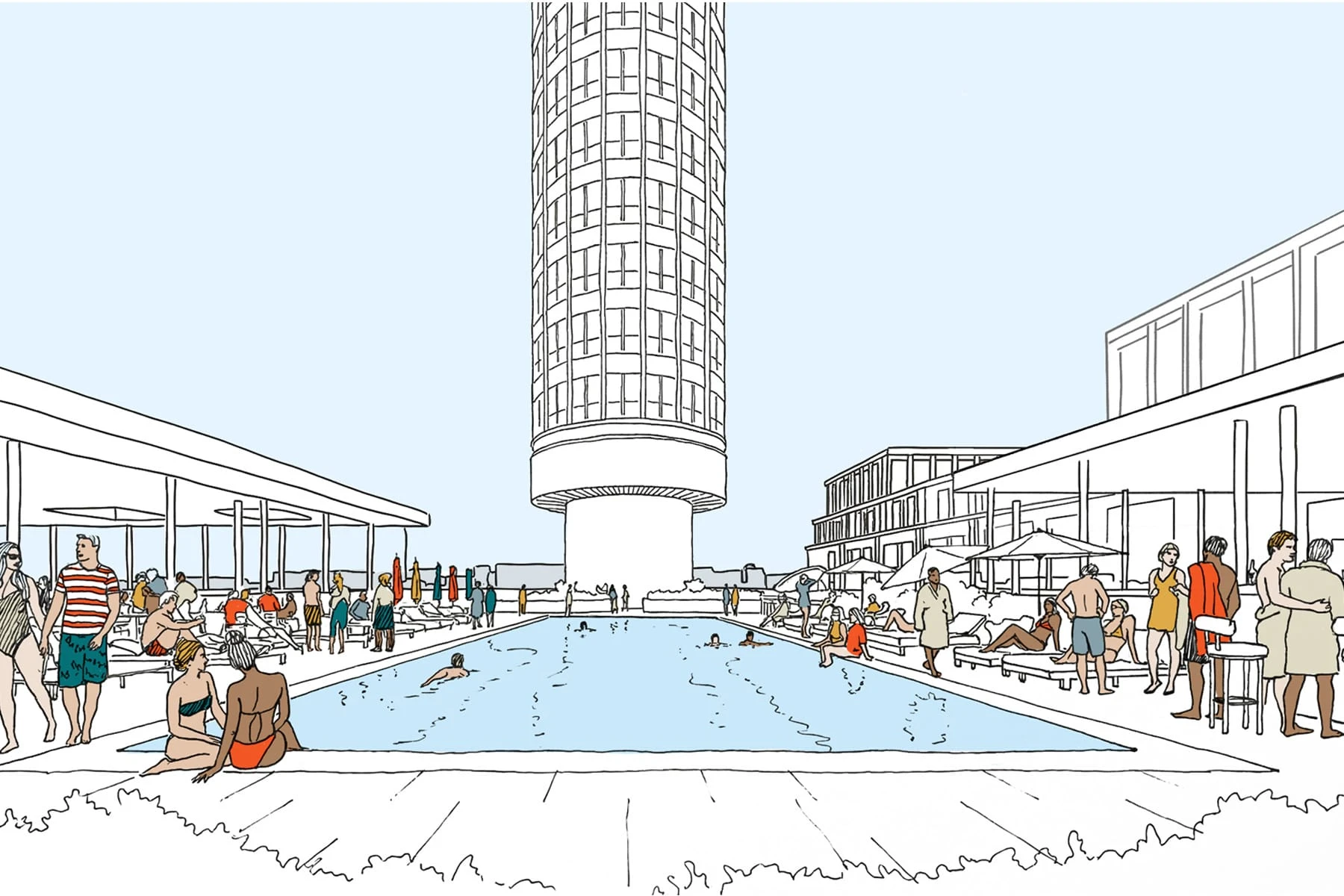
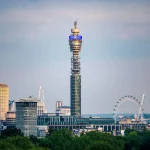
Originally completed in 1964 as the Post Office Tower, the BT Tower became a defining feature of London’s skyline and served as a major telecommunications hub for decades. Public attractions, including its revolving restaurant and observation decks, were once among the capital’s most popular experiences before public access was restricted following a bombing incident in 1971. Although portions of the building reopened temporarily for special events in later years, the tower has remained largely inaccessible to the public for more than four decades.
MCR Hotels acquired the BT Tower from BT Group in 2024 in a £275 million agreement, with the intention of preserving and repurposing the structure as a hospitality-led destination. The company previously indicated it wanted to secure the long-term future of the landmark while reopening it to the public. However, construction work cannot fully begin until BT completes the decommissioning of the remaining telecommunications infrastructure, a process expected to continue until around 2030.
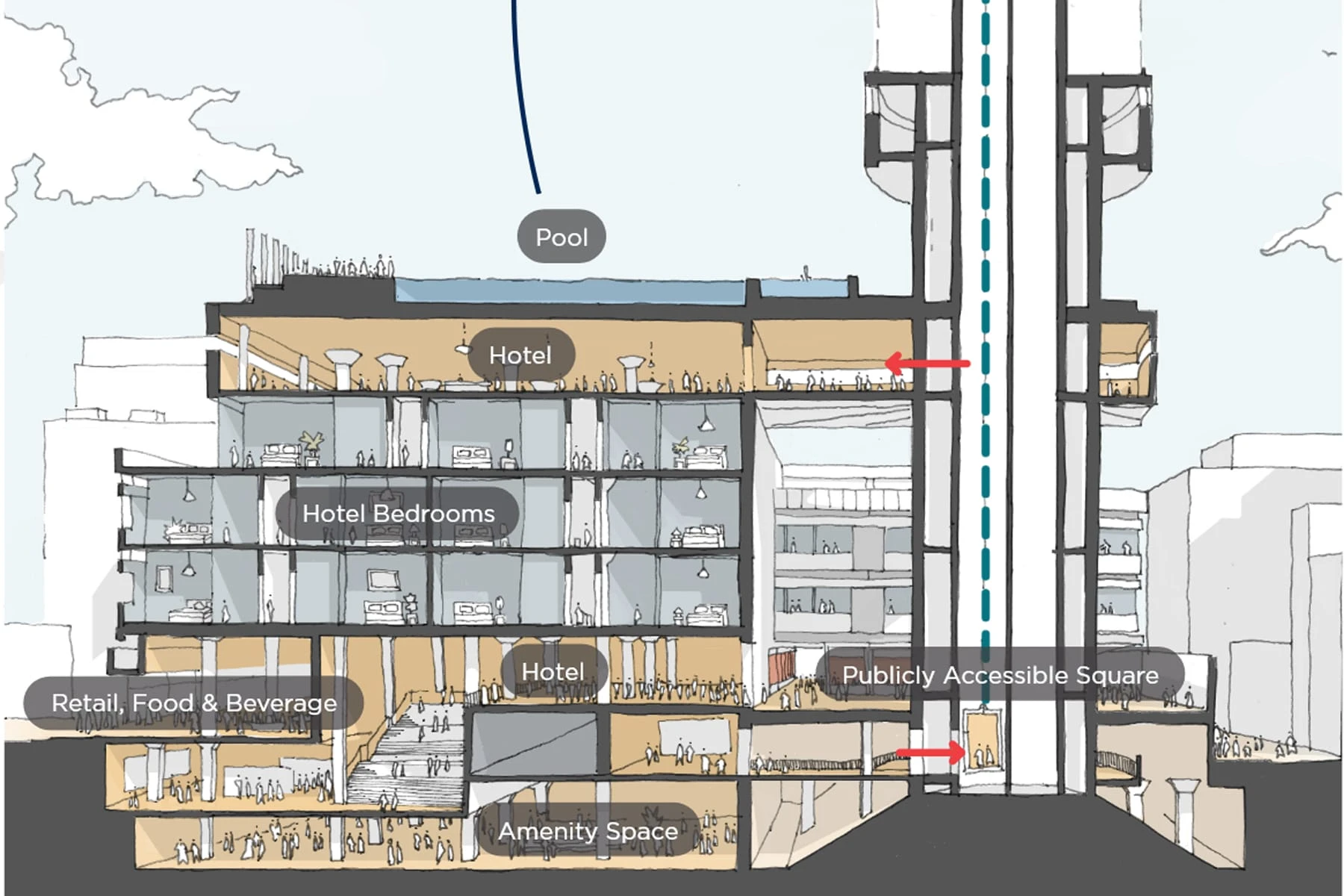
The redevelopment was initially linked to Heatherwick Studio, but Orms officially took over the project earlier this year. Orms is known for adaptive reuse and hospitality-led schemes in London, including work on The Standard hotel and Outernet London. The practice is now overseeing public consultation stages before formal planning applications are submitted.
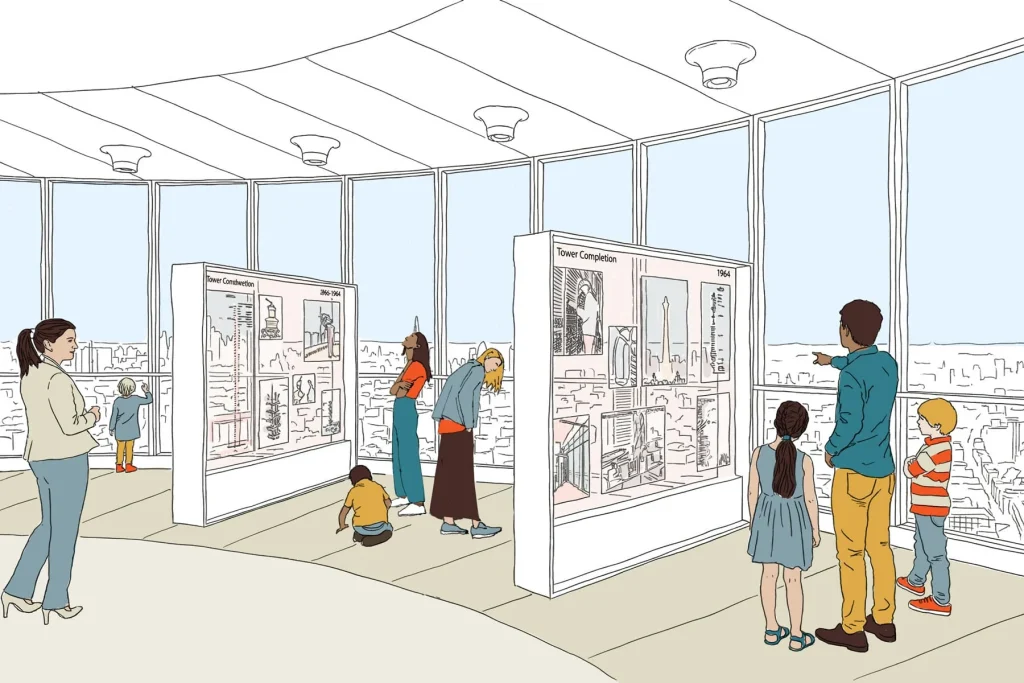
According to consultation material released by the development team, the wider masterplan aims to reconnect the tower with the surrounding Fitzrovia neighborhood through new pedestrian routes and open public spaces. Developers say the project intends to celebrate the BT Tower’s heritage while introducing new commercial and community uses. Public exhibitions presenting the emerging proposals are scheduled to take place in May at University College London.
One of the most closely watched aspects of the redevelopment remains the potential return of the tower’s famous revolving restaurant. While developers have not confirmed final operational details, multiple reports suggest hospitality and dining spaces inspired by the original “Top of the Tower” concept are under consideration as part of the wider hotel scheme.
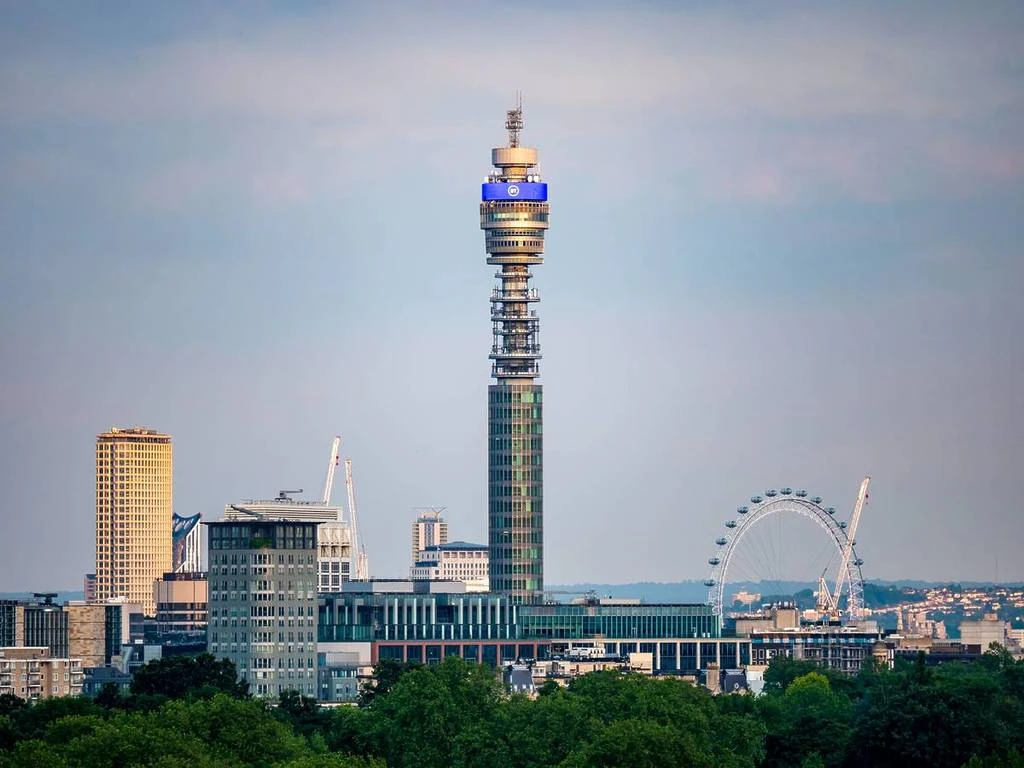
The proposed rooftop pool has already generated significant attention across architecture and urban design circles because of its unusual placement atop one of Britain’s most recognizable postwar structures. At the same time, the project is expected to face detailed planning scrutiny around heritage preservation, local infrastructure impact, and construction logistics within Fitzrovia’s narrow historic streets. Camden Council has already reviewed early-stage concepts through its strategic planning panel.
Image Source: Consultation documents / ianvisits.co.uk