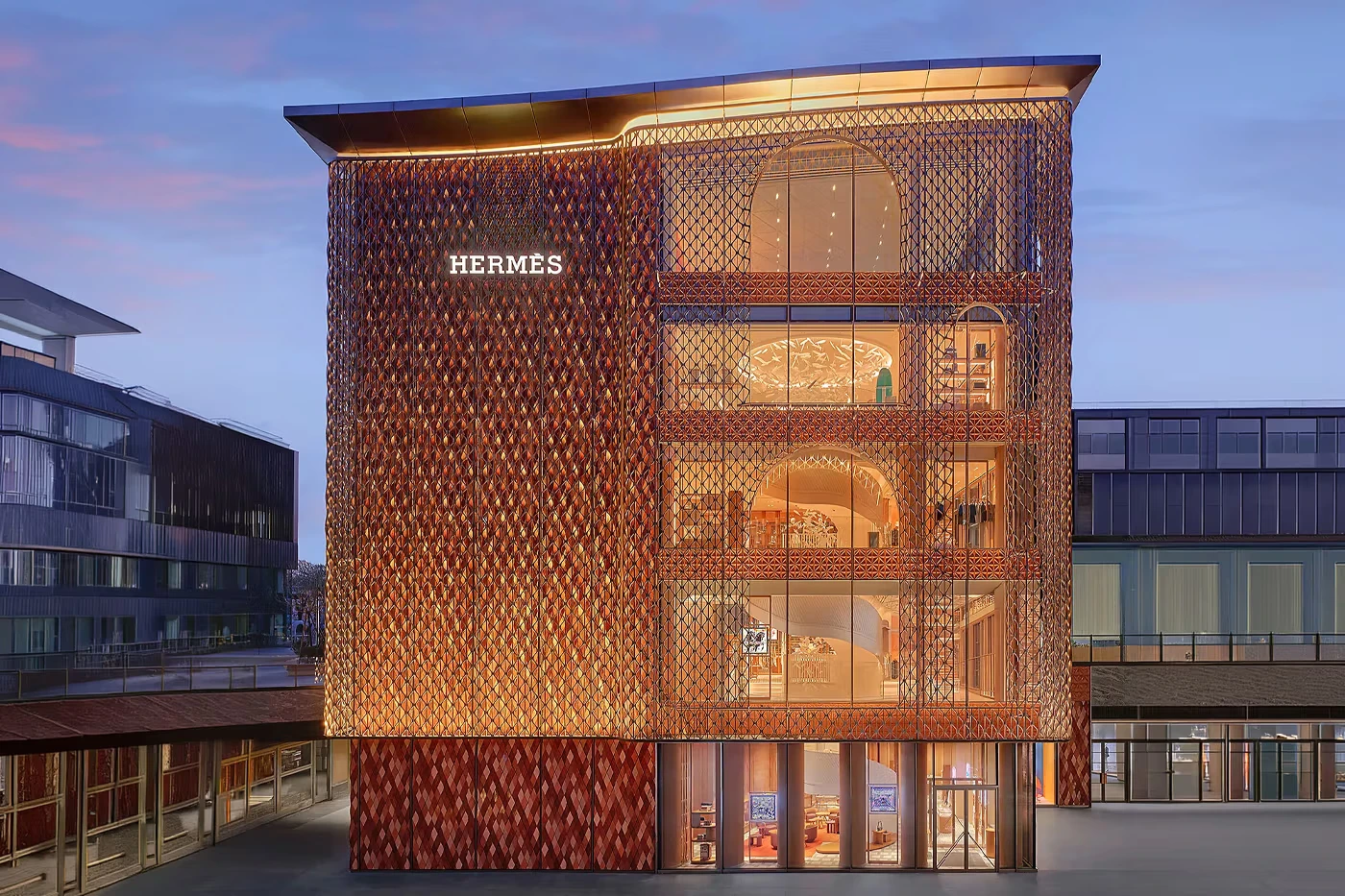
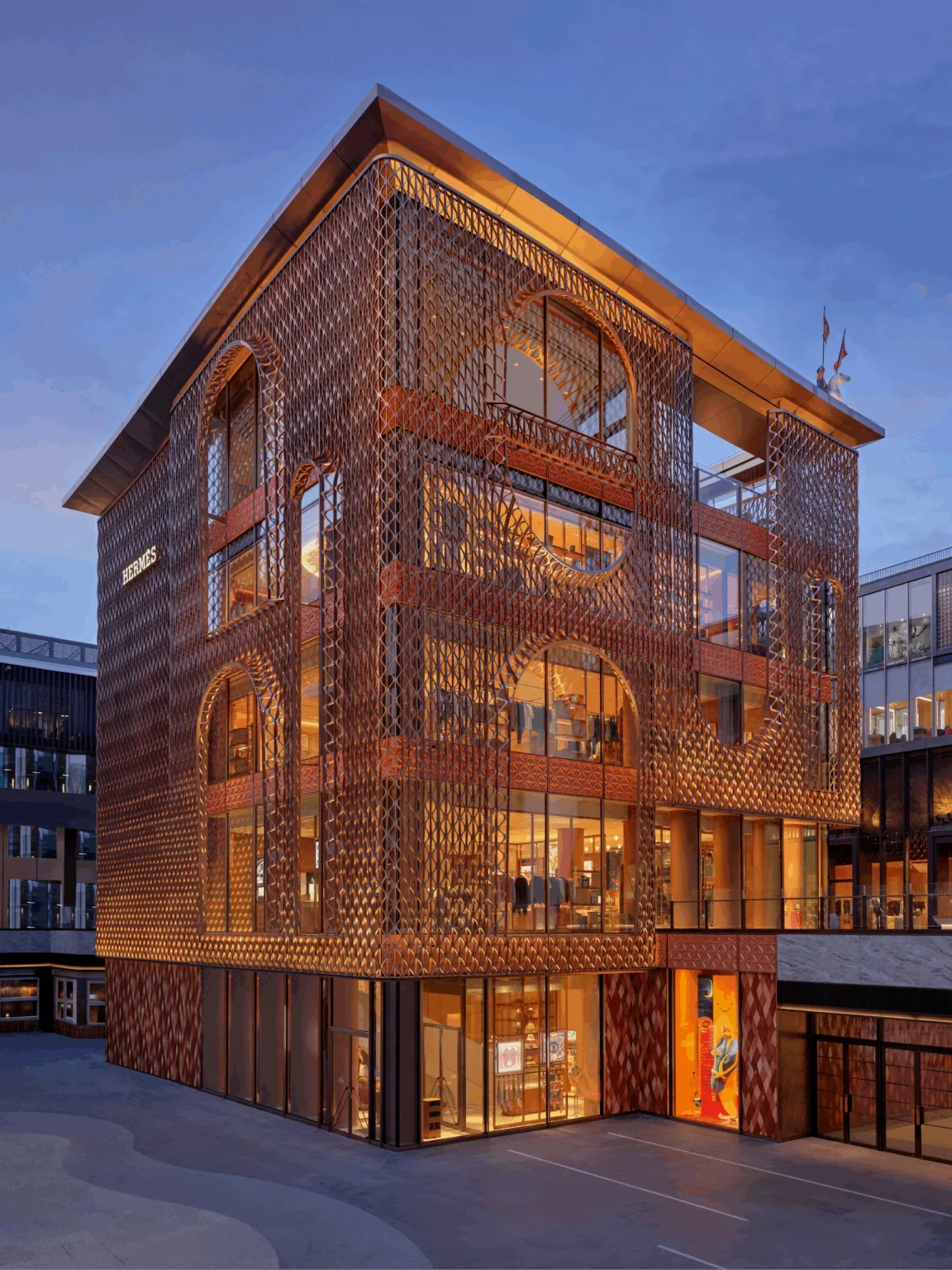


Set within Beijing’s Sanlitun district, the new Hermès flagship establishes the brand’s first standalone store in the city, expanding its presence through a purpose-built architectural expression. Designed by Paris-based RDAI with Mamou-Mani Architects, reads as a semi-transparent veil. Its rhythmic composition between solid and open elements filters daylight to softly illuminate the interiors. The building refines existing principles through local materiality and urban response. The result positions itself as a crafted object within the street, meticulously calibrating material, light, and context through precision and restraint.
A Layered Ceramic Facade
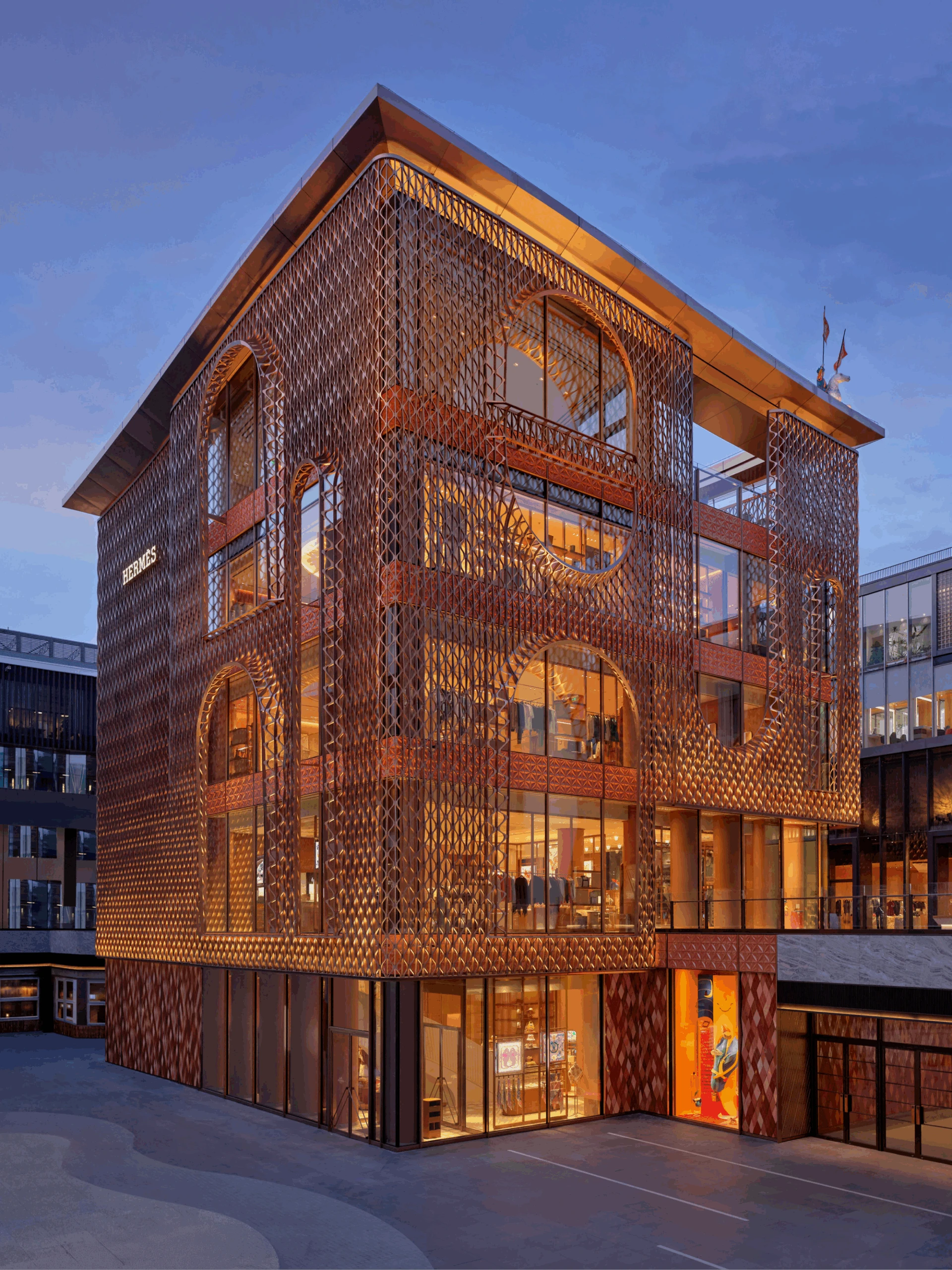
The façade is structured as a composed system of glass and ceramic, where material hierarchy drives both performance and perception. A grid of ceramic modules forms the outer layer; each piece has a subtly varied finish, allowing the surface to register shifts in daylight. Developed to echo the texture and tonality of traditional Chinese ceramics, the material introduces a cultural layer without resorting to direct symbolism. This creates a façade that appears to change density over the course of the day, at times reading as solid and at others as permeable.
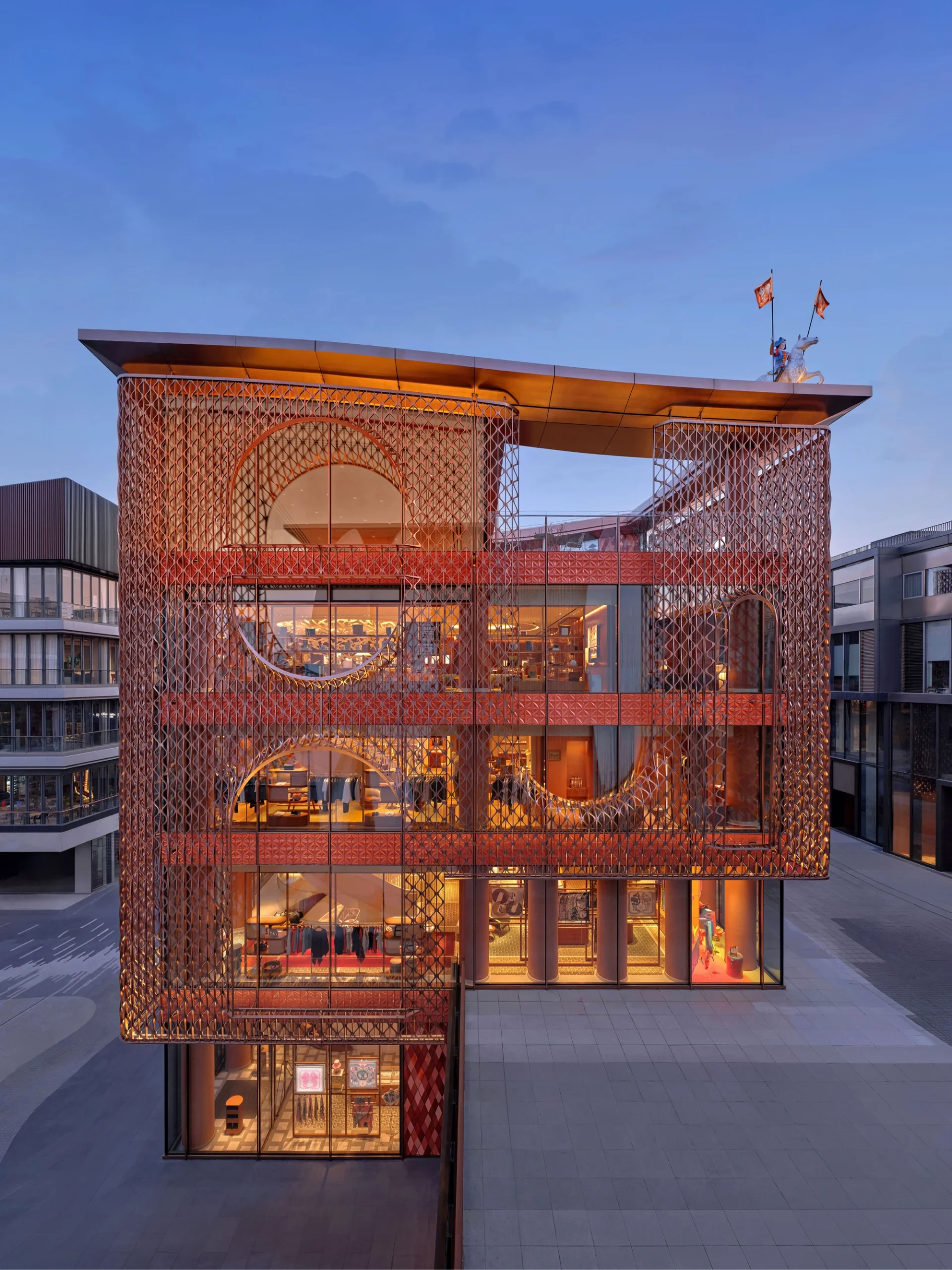
Behind this layer, large glass panels open the building to the street, but never fully expose it. The ceramic acts as a screen, tempering transparency and introducing depth. The relationship between the two materials is spatial, establishing a threshold that mediates between interior and exterior conditions. From oblique angles, the façade compresses into a textured plane; from frontal views, it reveals a softer, luminous interior presence.
At night, the building’s reading shifts. Interior light passes through the ceramic grid, turning the structure into a diffuse glow rather than a brightly lit display. This controlled illumination reinforces the building’s role within the streetscape, not as a spectacle, but as a steady visual anchor.
Interior as a Sequence of Spaces
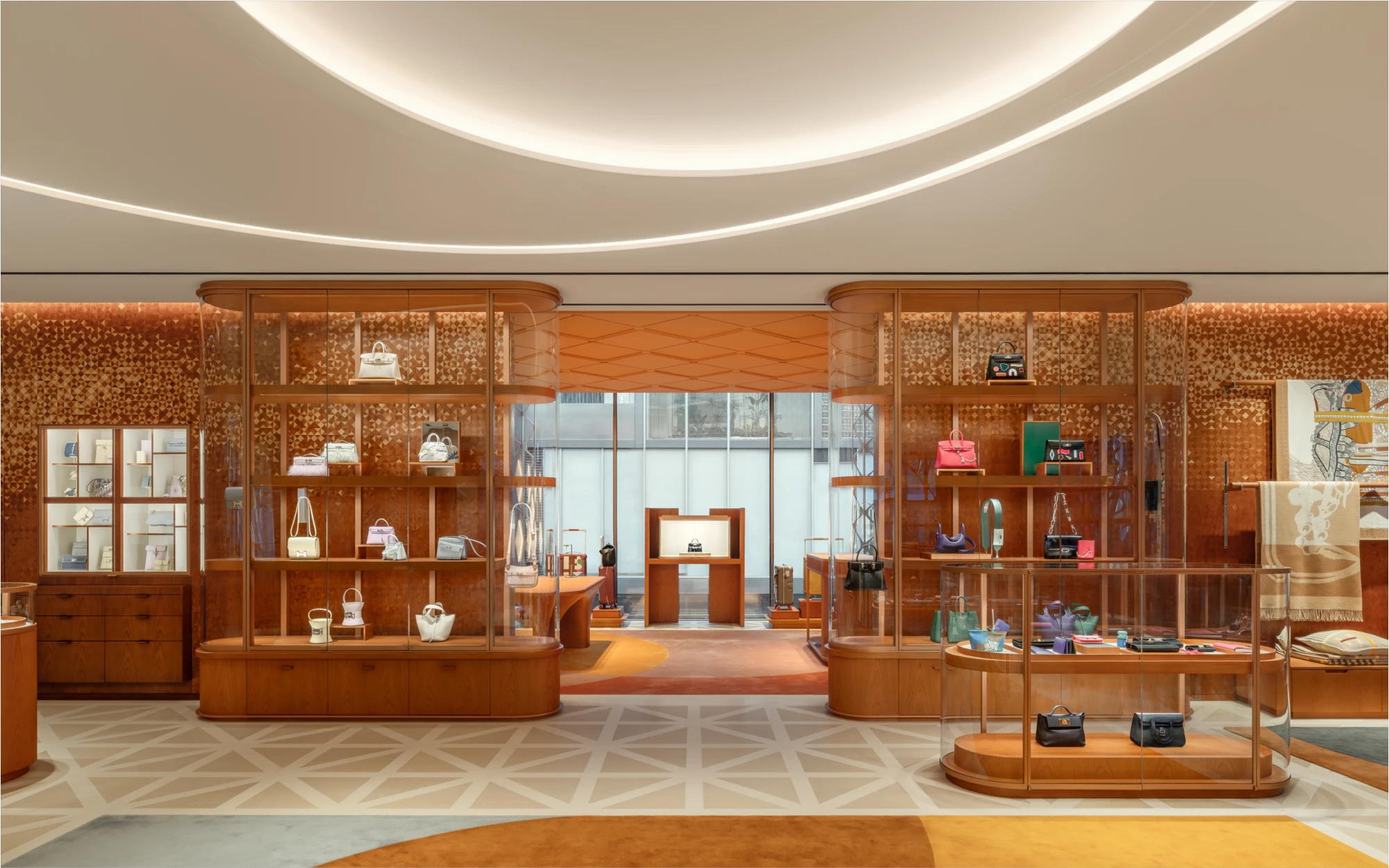
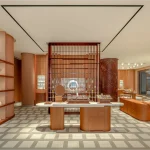
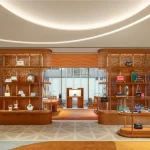
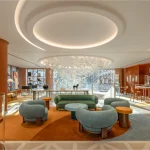
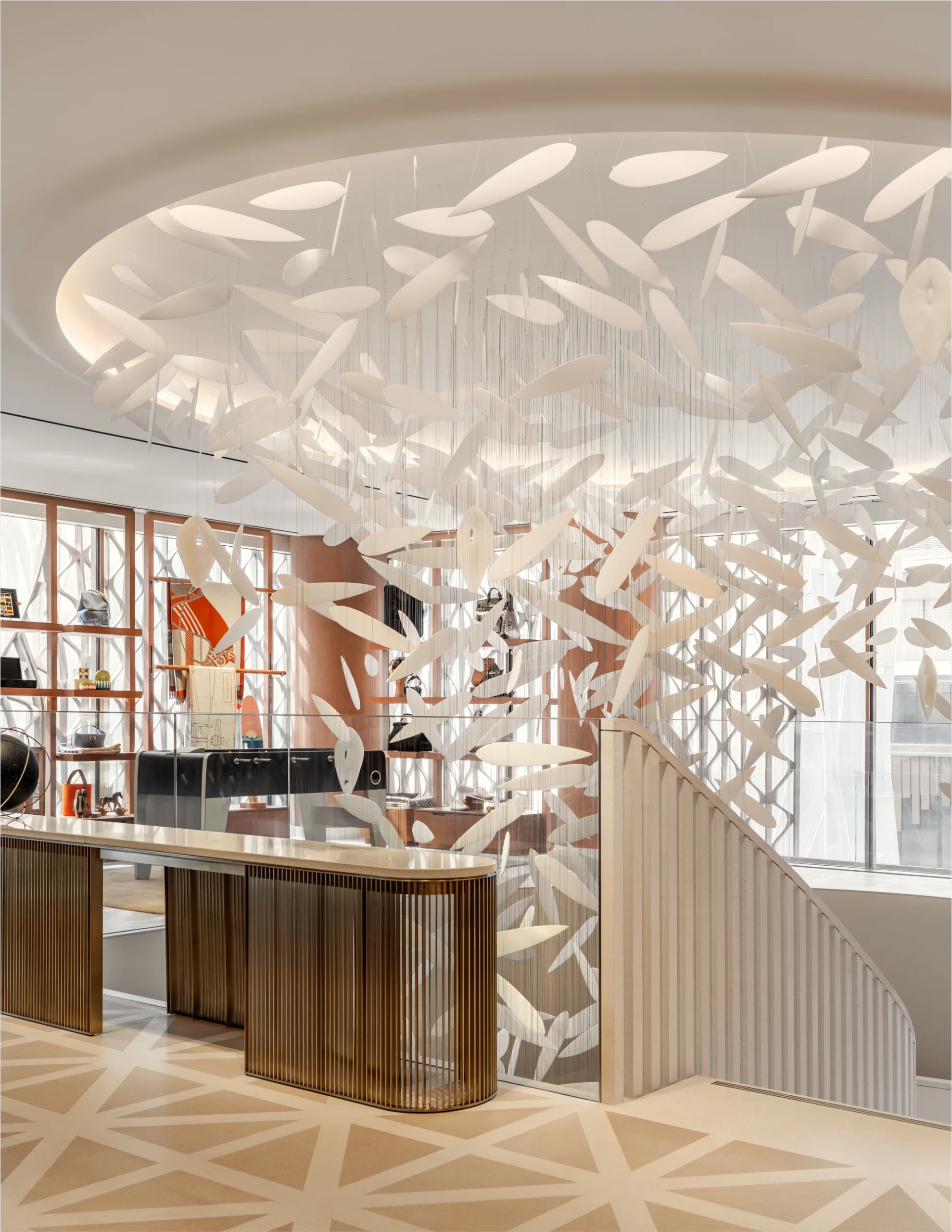
The interior avoids the scale of a single open floor, instead unfolding through a series of rooms that create a measured progression. This spatial sequencing, a recurring strategy in Hermès stores by RDAI, slows movement and allows each section to hold its character while remaining visually connected. Transitions are handled through slight adjustments in level, ceiling height, and material.
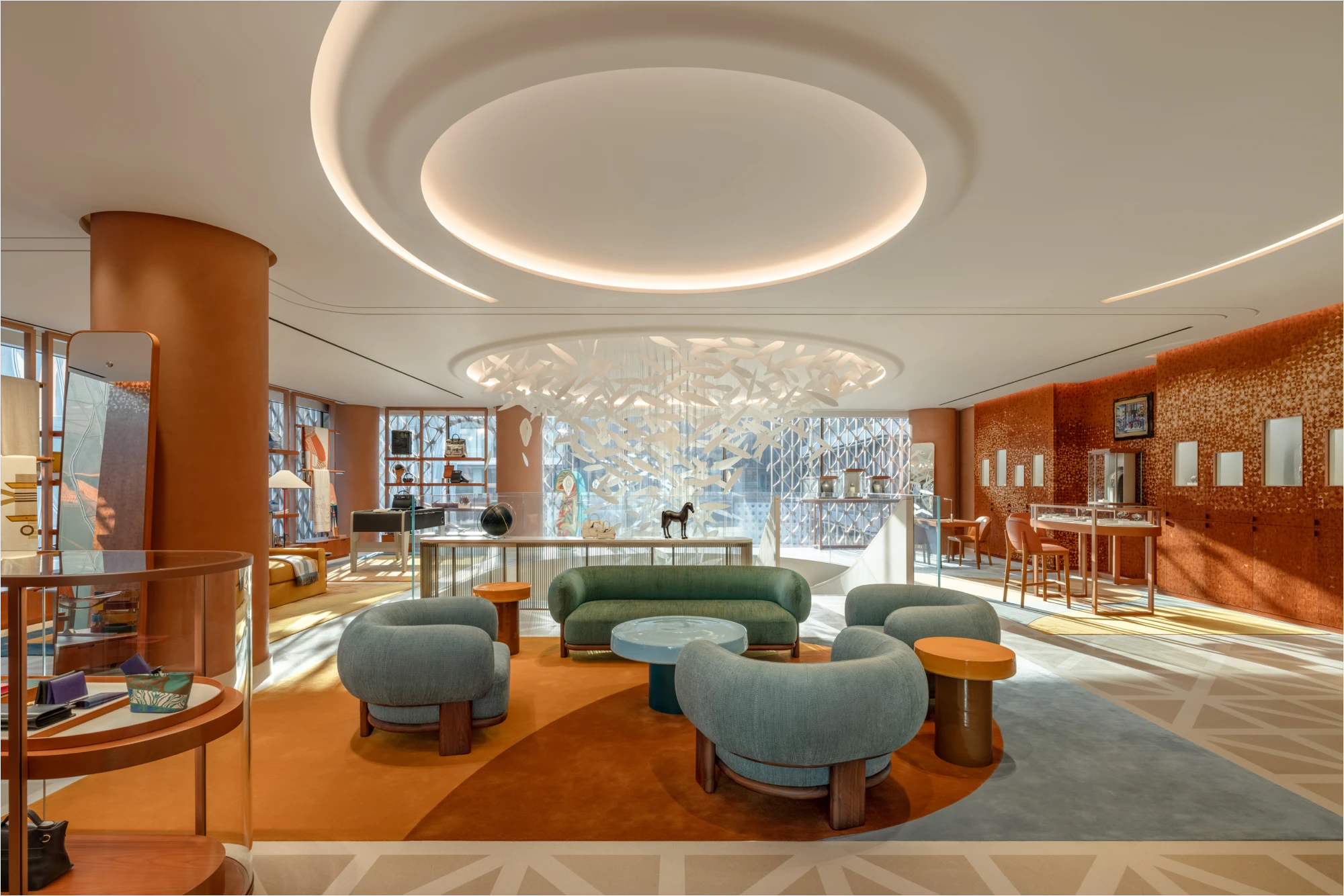
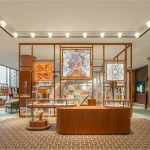
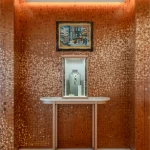
The material palette of stone flooring, timber elements, and textured wall finishes introduces variation without excess. Surfaces are detailed so they can be read at close range, reinforcing a sense of craftsmanship that aligns with the brand’s heritage. In certain areas, patterned floors reference geometric traditions, grounding the space while maintaining a contemporary clarity.
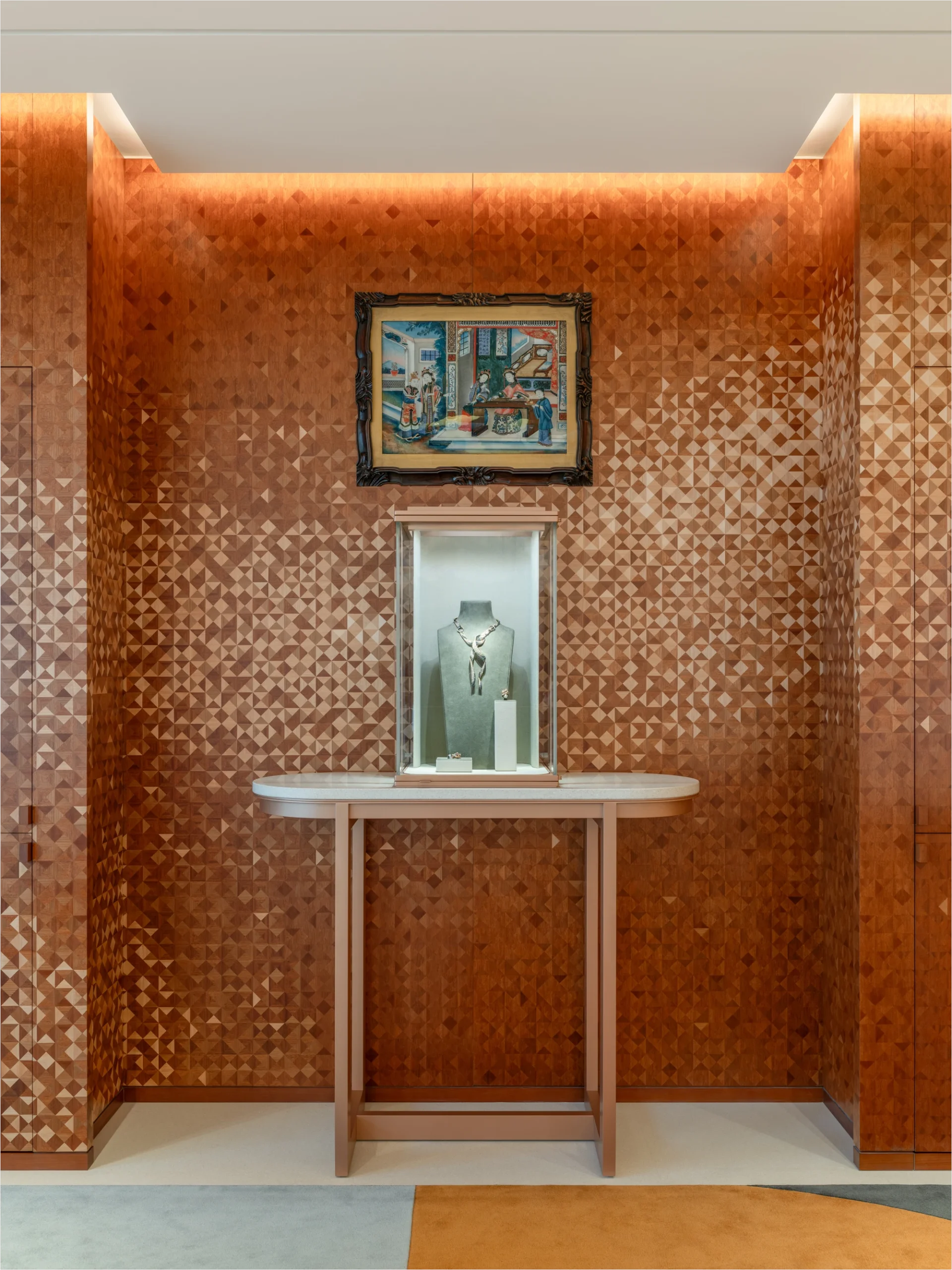
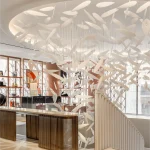
Daylight enters through the façade in a filtered manner, creating soft gradients across the interiors. Artificial lighting is integrated into ceilings and display systems, ensuring that products are highlighted without dominating the spatial experience. The overall atmosphere remains calm and evenly balanced.
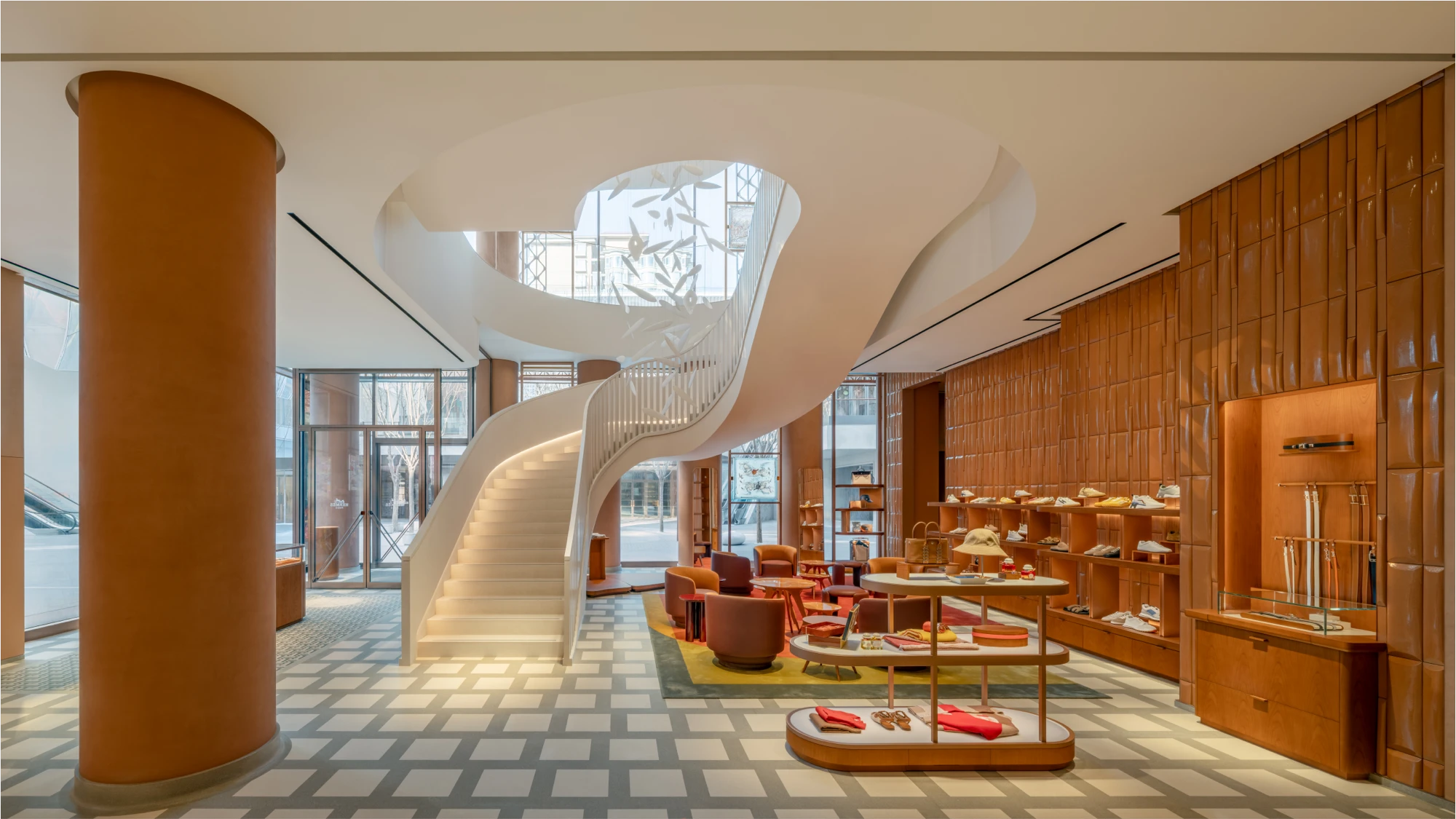
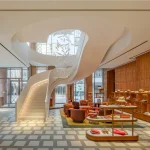
Vertical movement is treated as part of the architectural narrative. Staircases are positioned to draw visitors through the building, their forms subtly sculptural yet restrained. As one moves upward, the spatial rhythm continues, with each level maintaining continuity while offering slight variation in layout and tone.
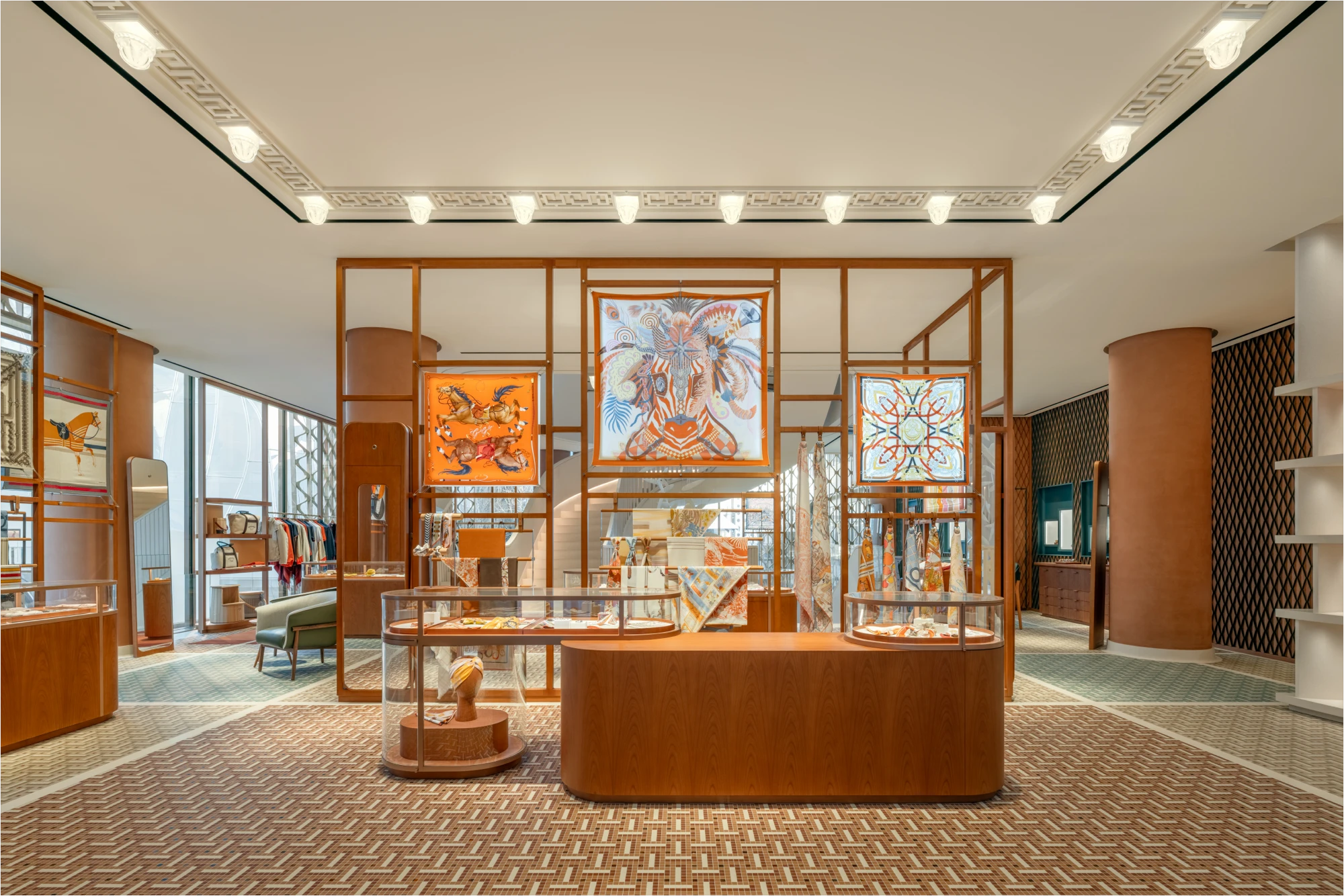
The project ultimately embodies a consistent approach, closely aligning architecture, material, and retail function. RDAI’s direction ensures that the flagship builds its identity through repetition, craftsmanship, and the controlled handling of light, resulting in a space that feels both locally attuned and unmistakably Hermès.
Image credit © Hermès / Photography: Jonathan Leijonhufvud