




Nordic design is a philosophy rooted in simplicity, functionality, and a deep respect for nature. It creates spaces that make people feel calm, serve their needs, honor the environment, and inspire communities. From government buildings to churches, workplaces, and climate centers, here is how Nordic architecture blends human-centered design with sustainability, offering holistic architectural solutions that nurture both society and the planet.
Designing Civic Spaces with Purpose
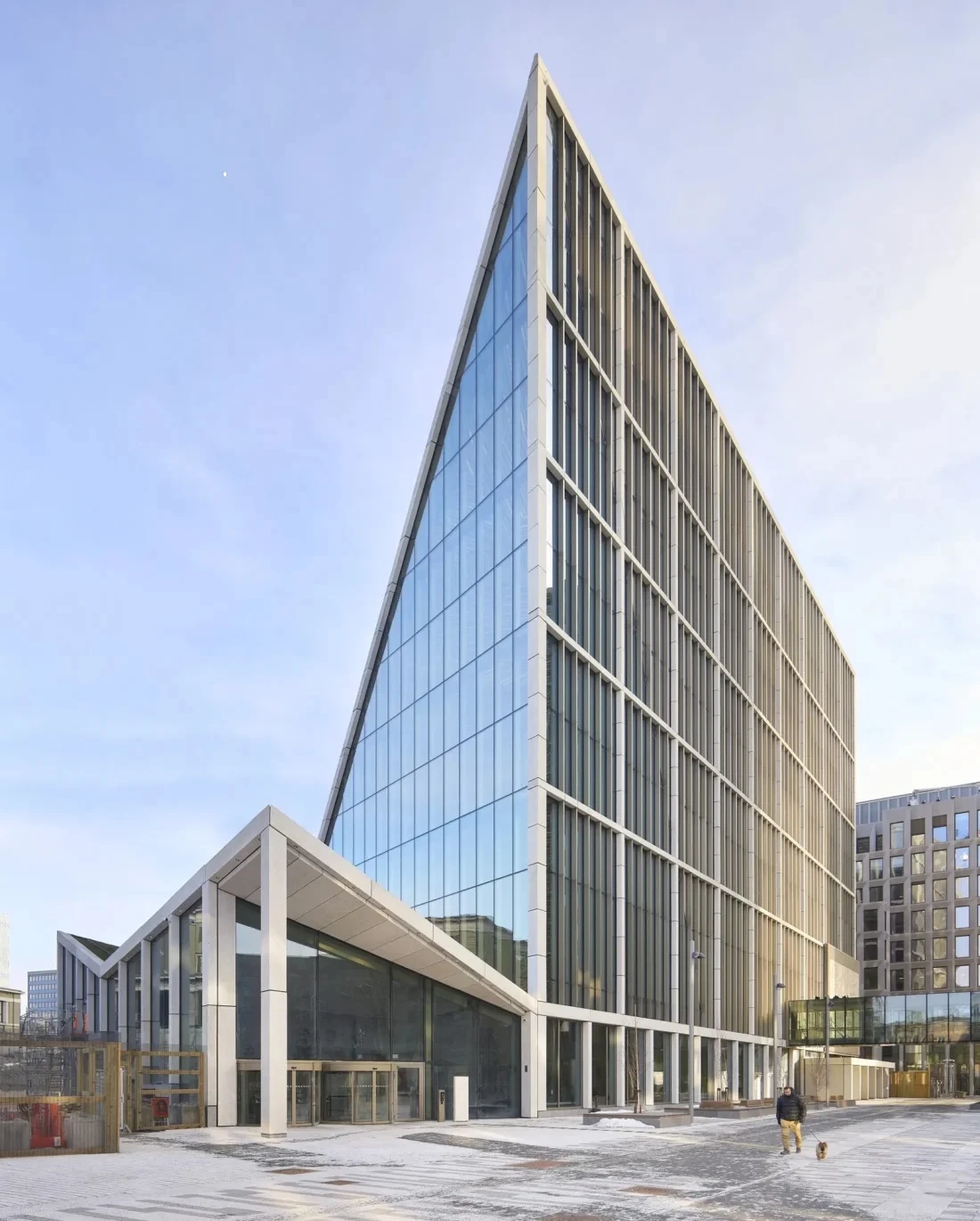
Civic architecture in the Nordic region goes beyond functionality with inclusive, accessible, and engaging spaces. Public plazas, open corridors, and thoughtfully organized offices allow communities to interact with institutions, encouraging transparency and trust. Nordic design principles ensure that these spaces are human-scaled, balancing security with openness while maintaining a sense of dignity and purpose.
By combining social values with innovative architectural solutions, these civic projects foster connection, reflect democratic ideals, and promote a sense of belonging.
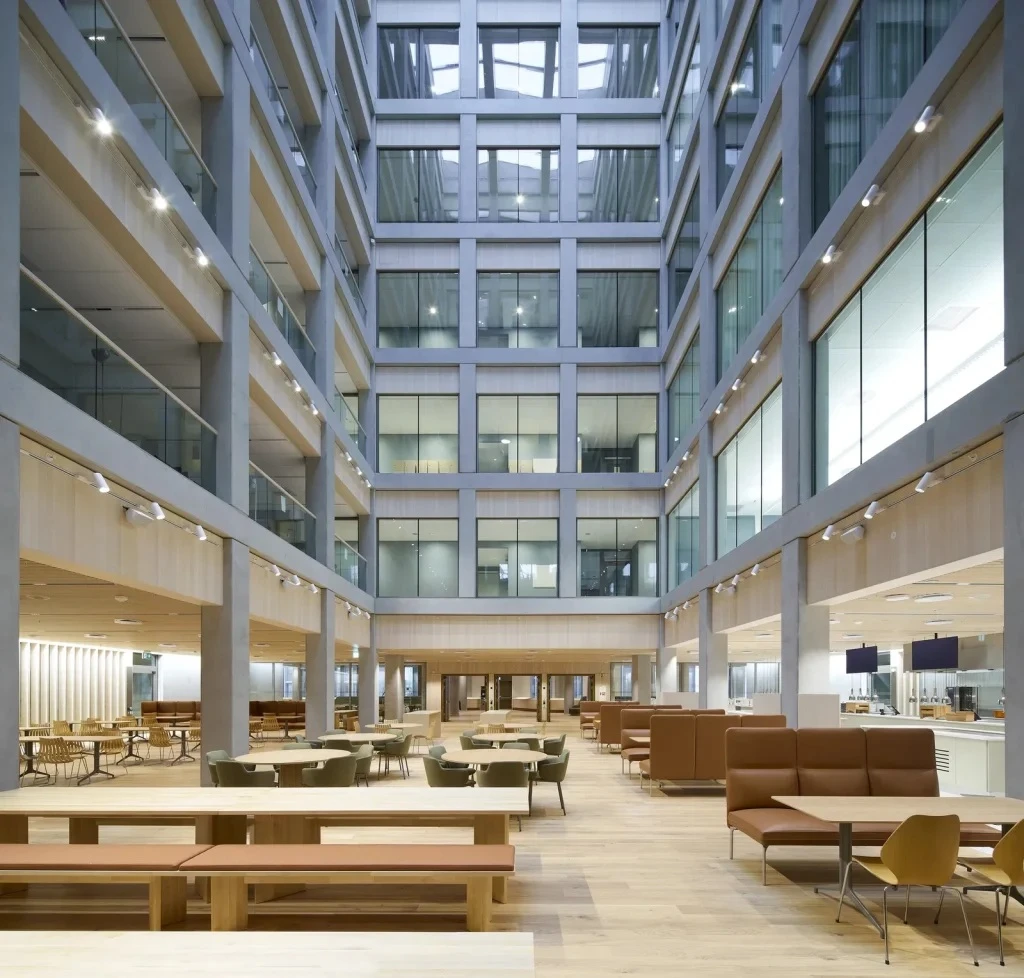
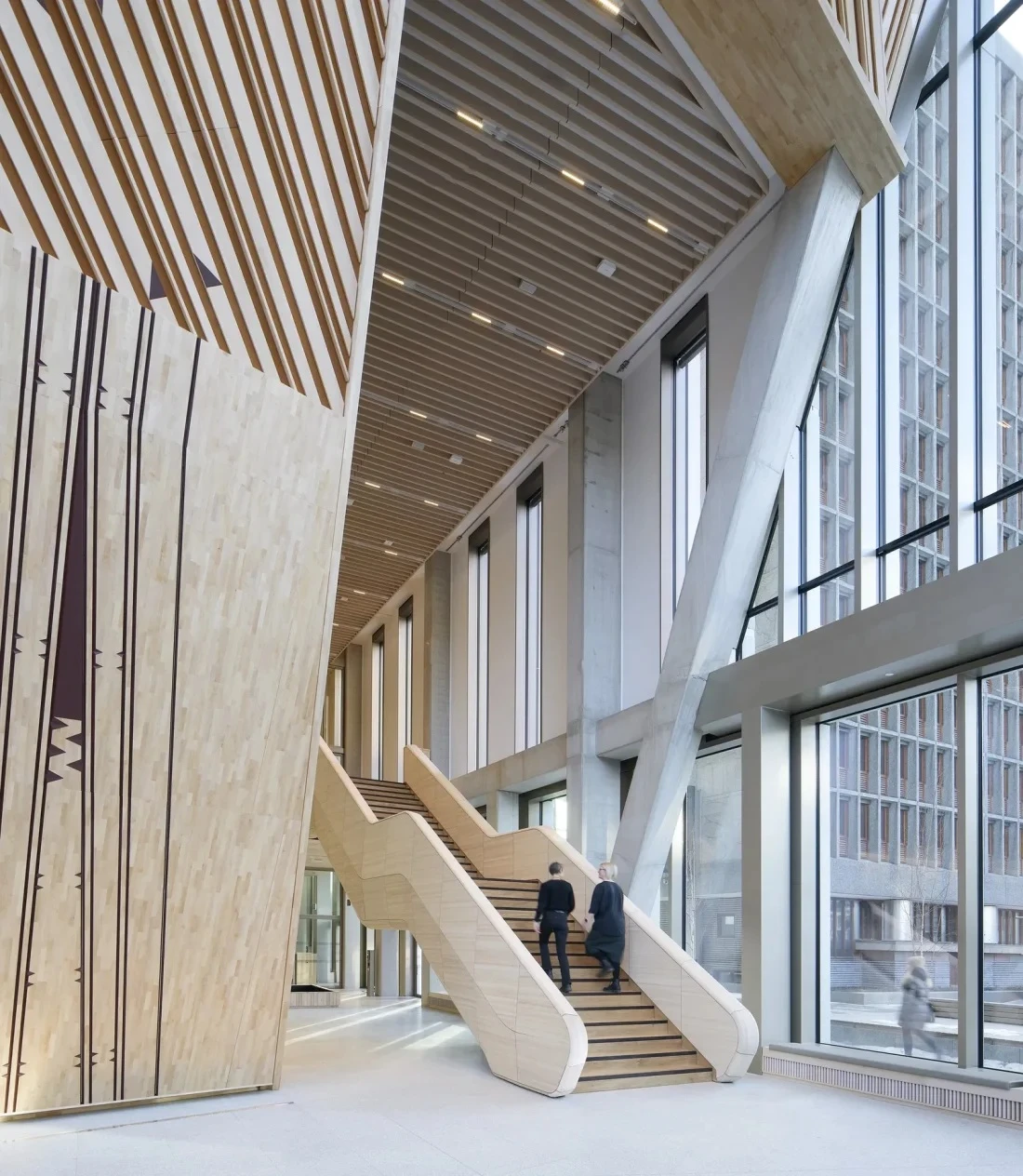
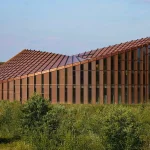
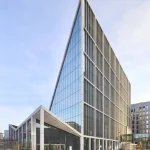
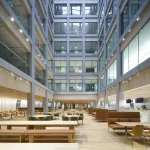
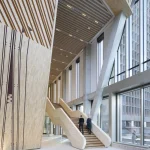
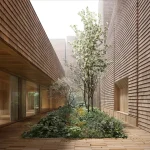
Designed by Nordic Office of Architecture, the new Government Quarter reimagines a formerly closed, security-driven site as a place where governance and public life coexist. Just a short walk from Norway’s Parliament, the redevelopment opens streets, plazas, and green spaces for people to gather, walk, and engage, all while maintaining the security needed for a national center.
The masterplan blends history and innovation, restoring key buildings like Høyblokken, adding five new structures, and integrating cultural spaces and art. Sustainability, local craftsmanship, and open connectivity shape a civic landscape where architecture becomes protective and inviting.
Creating Community and Spiritual Connection
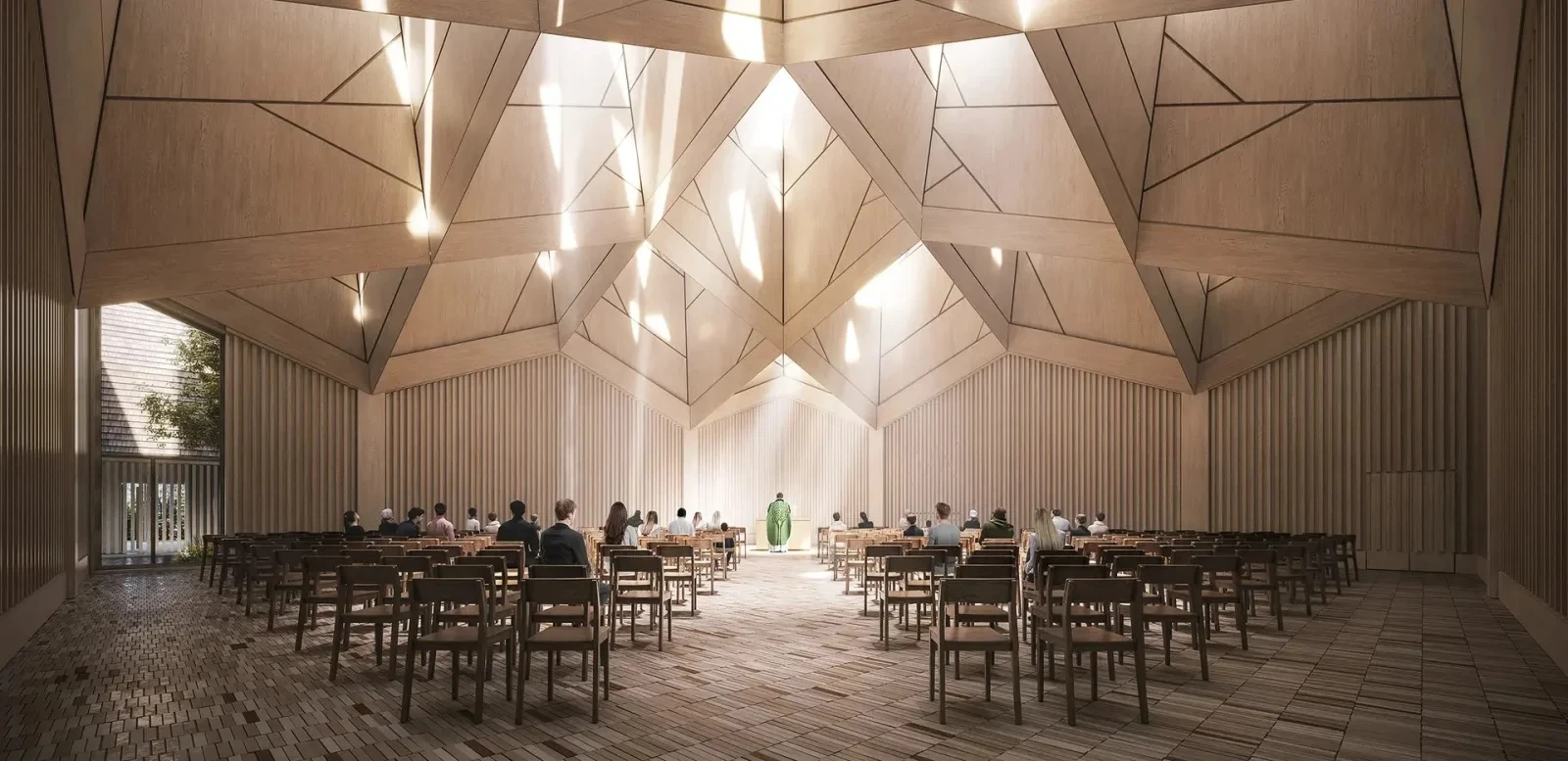
Nordic sacred spaces focus on flexibility, warmth, and inclusivity while creating environments that encourage reflection and shared experiences. Natural light, wood finishes, and open layouts foster serenity while promoting a welcoming atmosphere for visitors. These designs are sensitive to community needs, making spiritual or gathering spaces relevant for contemporary society.
Through thoughtful spatial planning, these buildings also serve as multi-functional hubs where social events, cultural gatherings, and communal activities coexist with traditional spiritual practices.
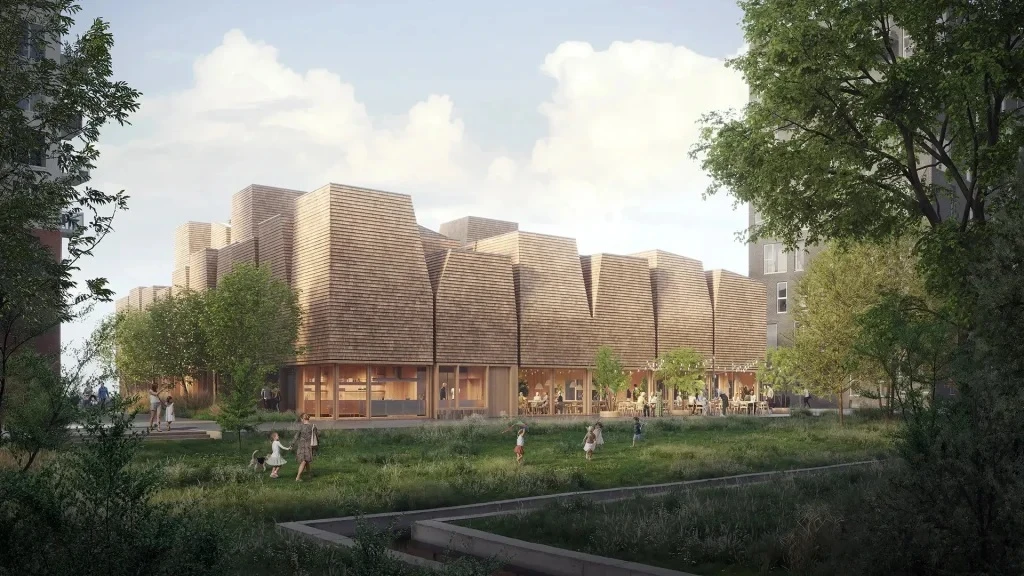
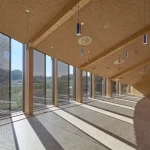
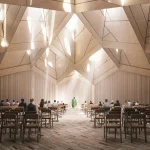
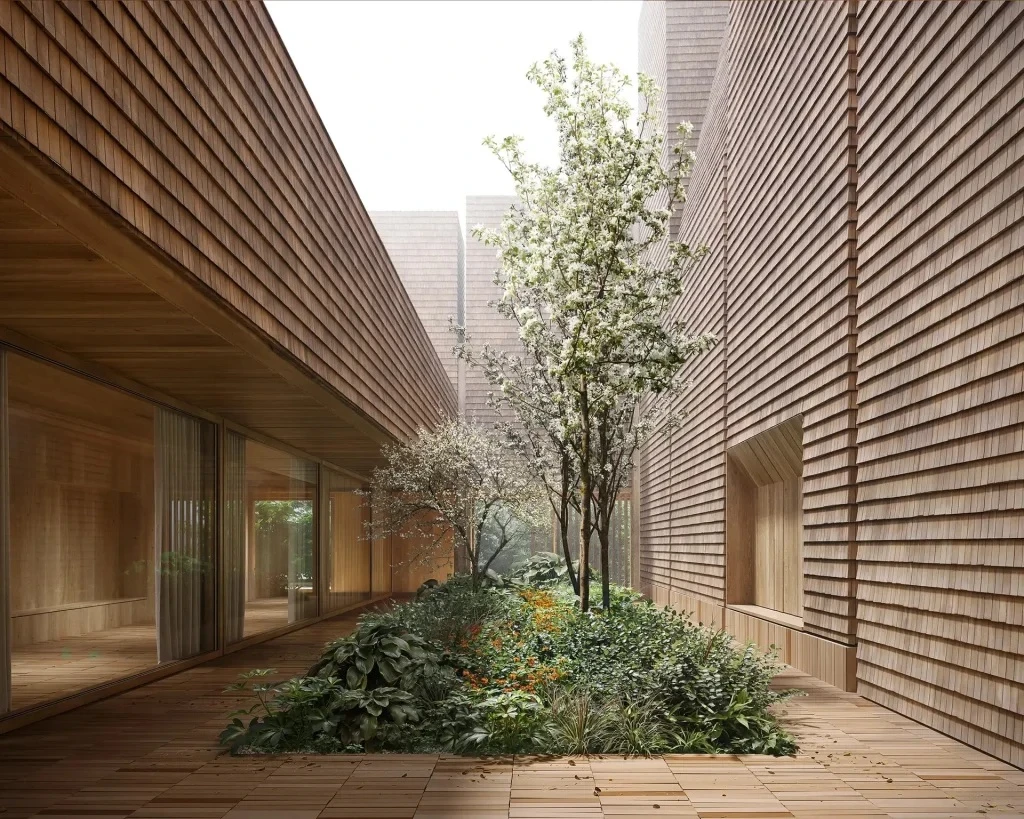
Henning Larsen’s Ørestad Church in Copenhagen conceptualizes the contemporary church as a civic and spiritual landmark. Crafted in timber with wood-shingle façades made from whole-tree offcuts, the design responds to Ørestad’s expansive natural landscape. The project includes a chapel, sheltered courtyard, and flexible cultural spaces, allowing gatherings, concerts, and community events alongside traditional worship. Completion is expected in 2026, marking Copenhagen’s first new-build church in three decades.
Light-filled interiors feature wooden roof domes that filter daylight, enhancing serenity and openness. Landscaped surroundings with grasses, perennials, and cherry trees blur boundaries between architecture and nature, creating a sustainable, inclusive, and contextually rooted landmark.
Workplaces Inspire Collaboration
Nordic workplaces prioritize well-being, creativity, and sustainability, turning offices into environments that reflect organizational culture. Open-plan layouts, flexible workstations, and abundant natural light promote collaboration while supporting focus and productivity. Materials and finishes are chosen for durability, aesthetics, and environmental responsibility.
These spaces also emphasize human experience, balancing communal areas with quiet zones and integrating sustainable design solutions. By designing workplaces that prioritize people, Nordic architects create offices that are not only efficient but also inspiring, as they foster a sense of innovation, engagement, and a sense of shared purpose among employees.
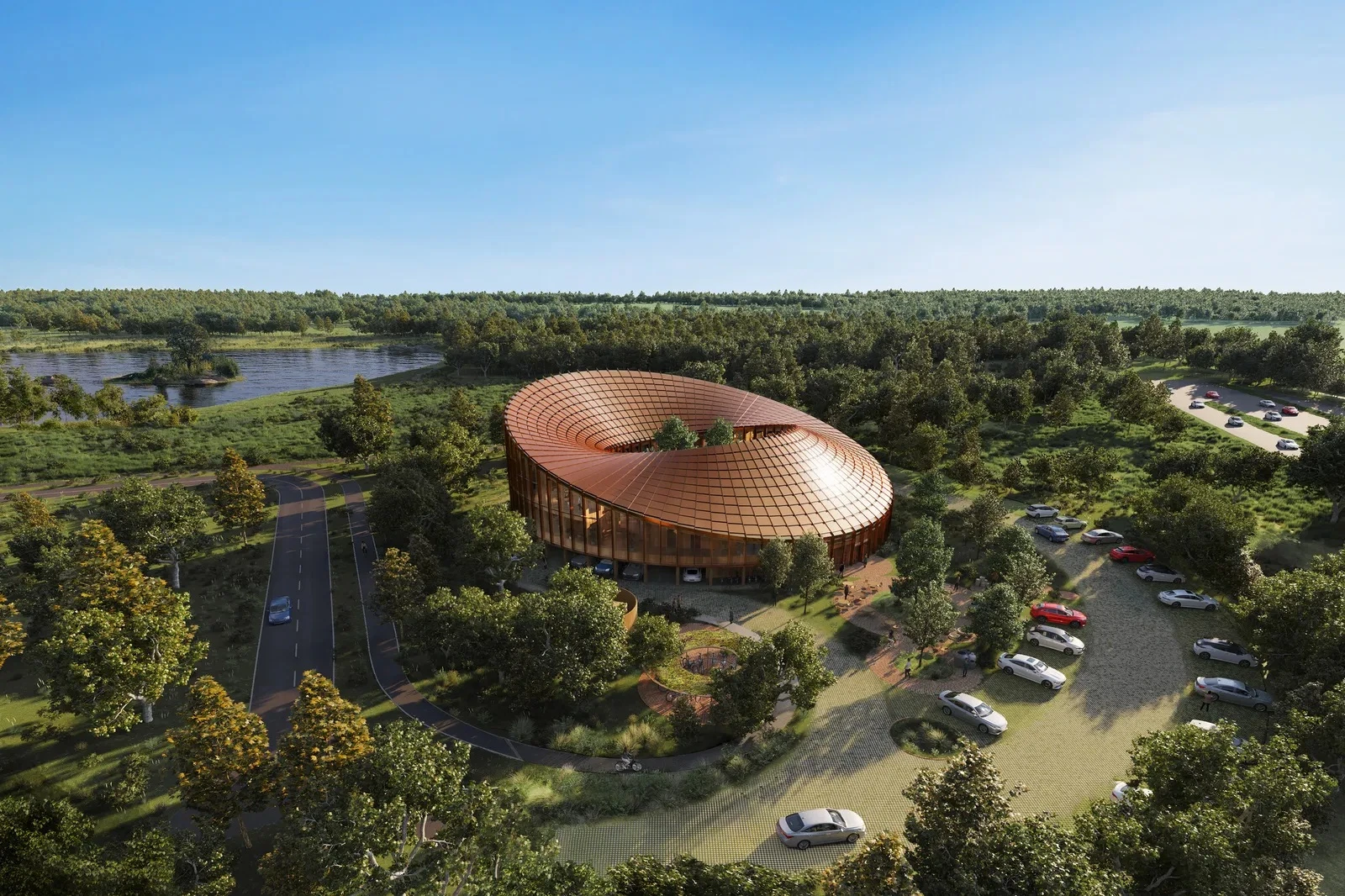
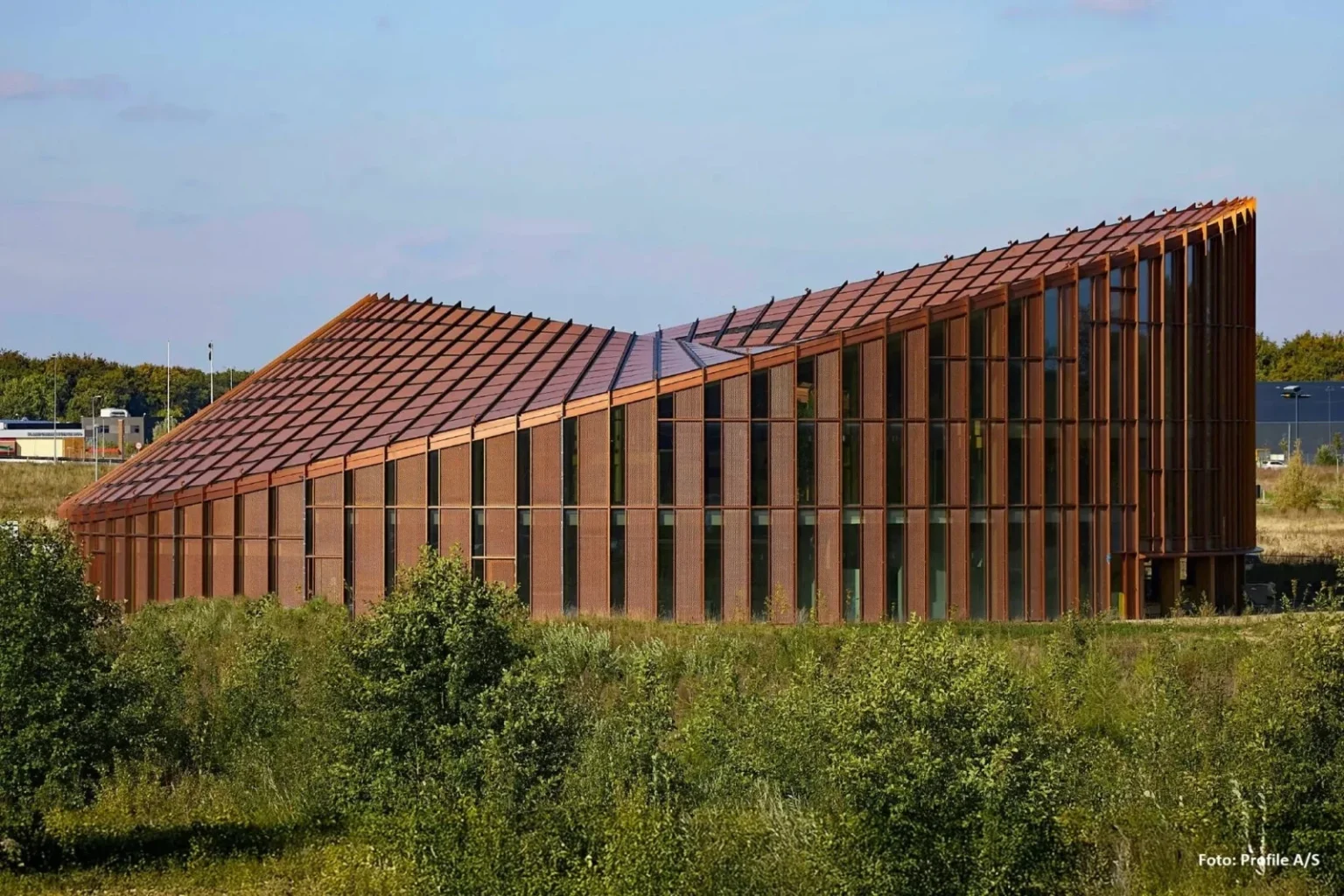
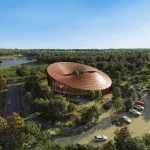
The recently completed Dymak Headquarters in Odense, Denmark, designed by Bjarke Ingels Group (BIG), is a fine example of contemporary Scandinavian architecture with mass timber construction. The radical circular structure is supported by 44 cross-laminated timber (CLT) frames and features an undulating roof integrated with 880 photovoltaic panels. Spanning 2,800 m², the HQ combines offices, showrooms, and social spaces around a central courtyard, creating a fluid and connected workplace that responds to natural and industrial surroundings.
The building’s interiors highlight wood, clay, and cork, referencing Dymak’s pottery products while offering tactile warmth and acoustic comfort. Radial CLT frames form a starburst pattern that supports the roof and internal floors, while passive solar shading, recycled bricks, and sustainable materials reinforce the project’s commitment to energy efficiency and circular design.
Designing for Environmental Awareness
Nordic architecture often merges functionality with environmental stewardship, designing spaces that educate and engage the public on sustainability challenges. Buildings integrate research, community engagement, and climate-responsive design to create meaningful interactions with the natural world. Materials, light, and spatial organization reflect ecological priorities while enhancing the visitor experience.
By creating immersive, adaptive spaces, Nordic architects connect people to nature, encouraging learning, reflection, and a shared commitment to sustainability.
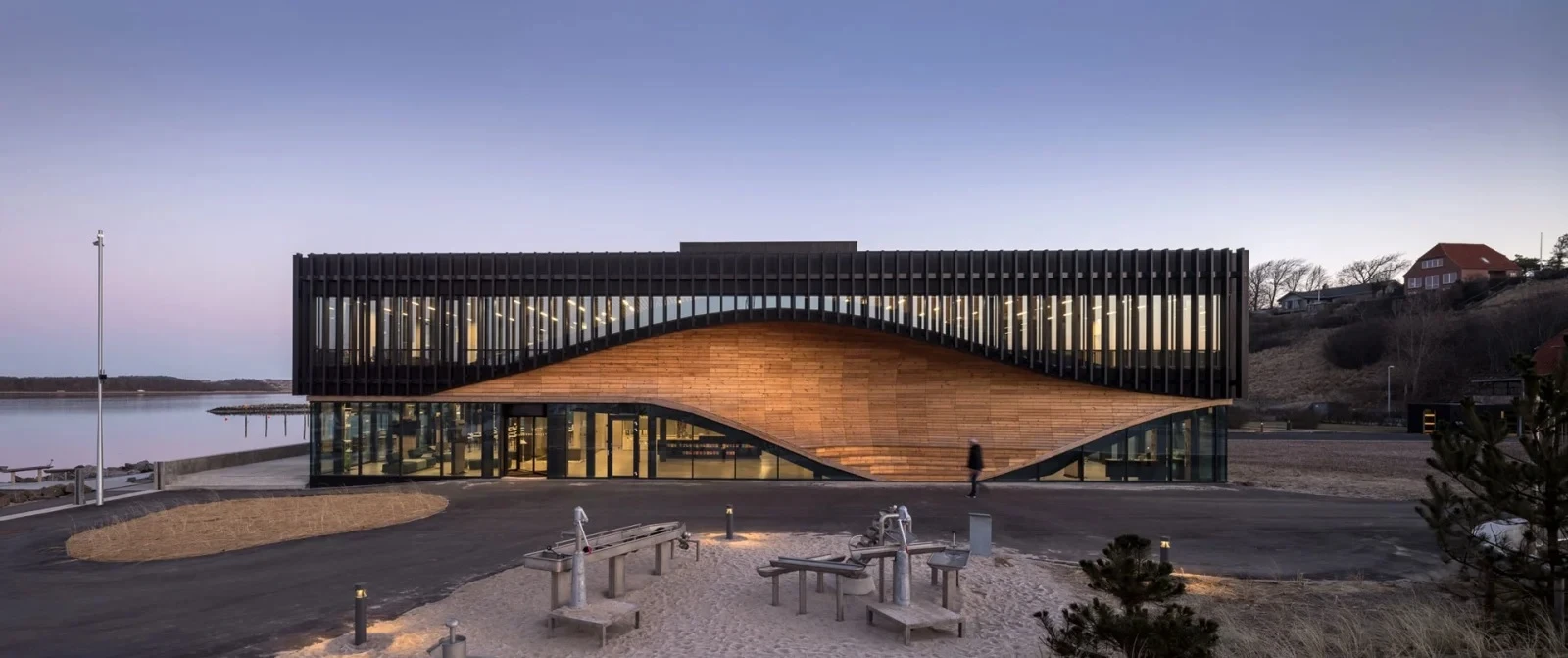
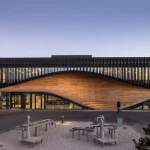
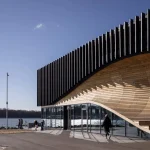
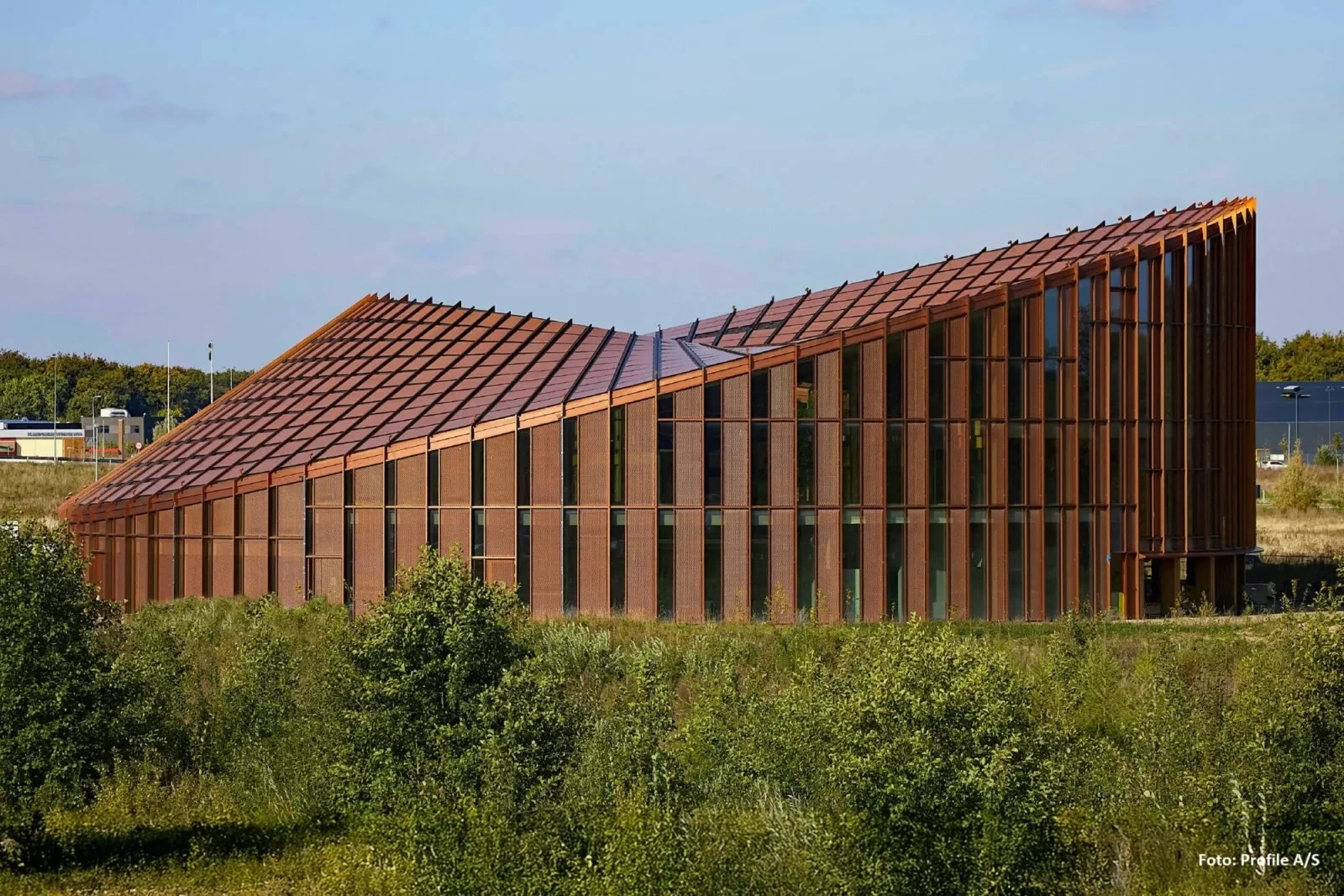
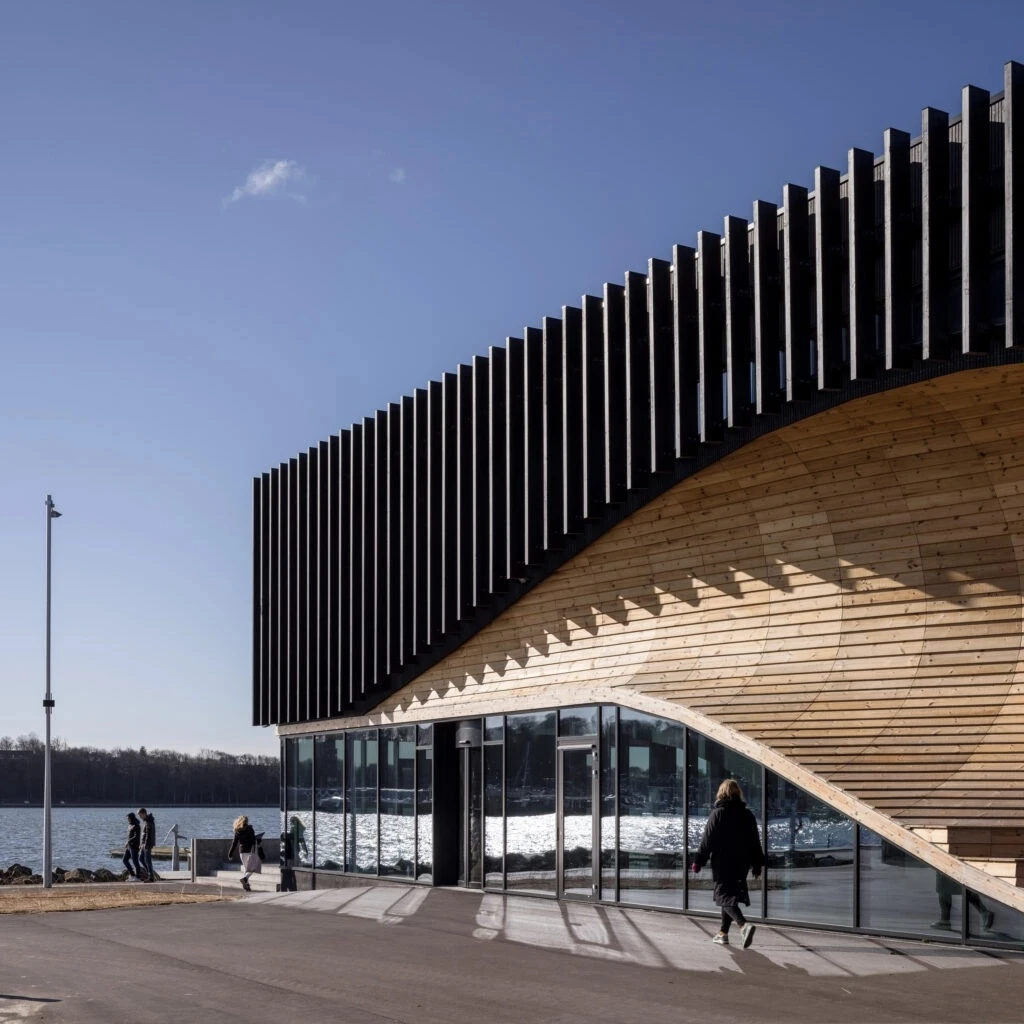
Klimatorium in Lemvig, Denmark, serves as an international hub for climate research, storm surge studies, and innovative water solutions. Situated on the harborfront, the building responds to rising sea levels and extreme weather while reflecting the town’s fishing heritage. Designed by 3XN, it combines rustic materials like wood, concrete, and steel with a pragmatic two-storey layout that blends seamlessly into the low-scale urban landscape. A sculptural wooden wave at the entrance creates a liminal space between interior and exterior, serving as a landmark and sheltered gathering area.
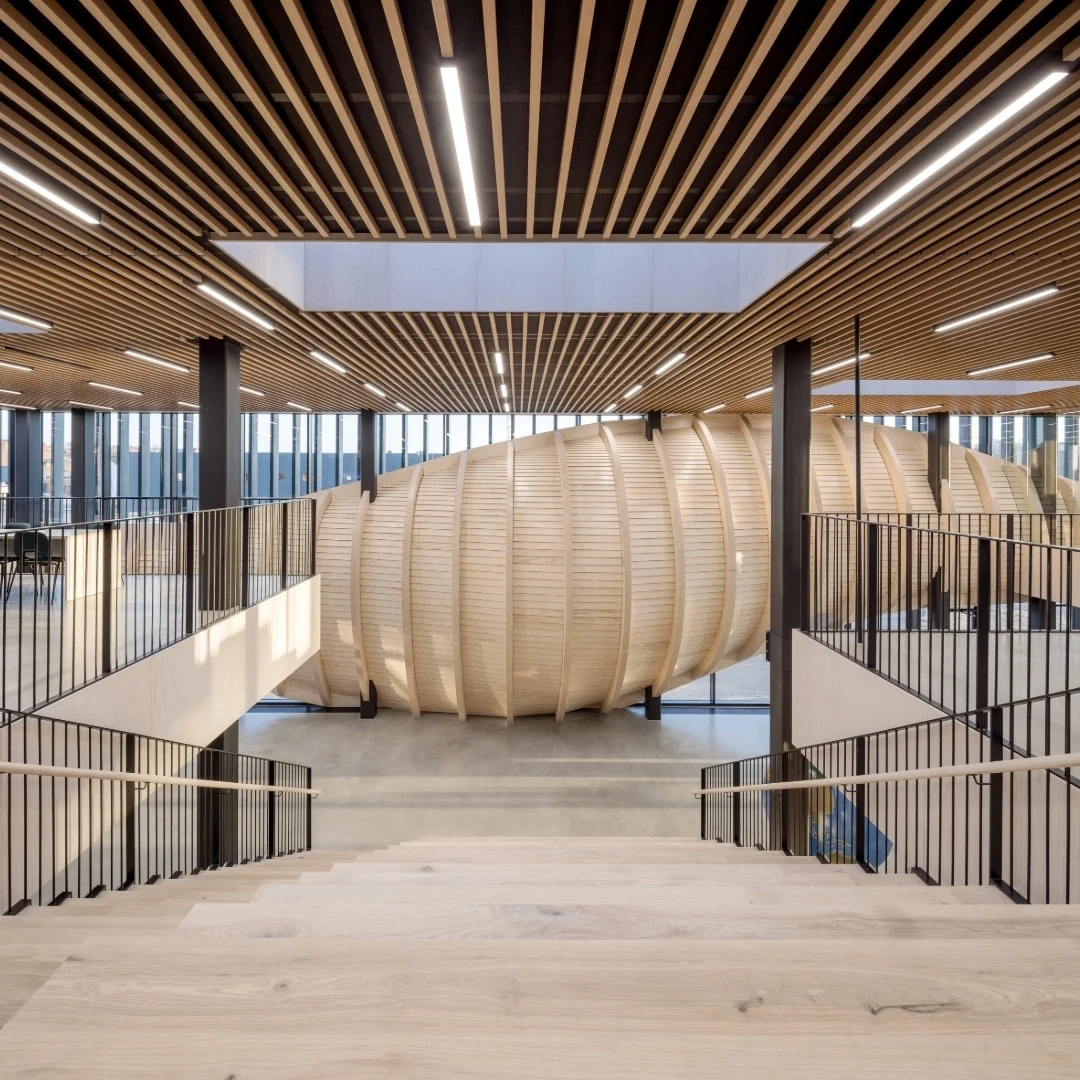
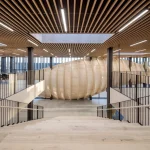
Inside, research facilities and public exhibition spaces coexist. The upper floor accommodates offices, meeting rooms, and lounges, while the flexible ground floor hosts exhibitions, a café, and social spaces. Ash-black vertical louvers evoke traditional boat hulls, providing sun protection, and the surrounding “Green Climate Corridor” integrates flood management with recreational landscapes, connecting the city to the waterfront while showcasing local craftsmanship and sustainable design strategies.
Nordic design blends elegance with functionality and innovation with responsibility. By fostering community, well-being, and sustainable practices, it transforms spaces into living narratives that reflect culture, human connection, and environmental care that enrich life while protecting the planet.