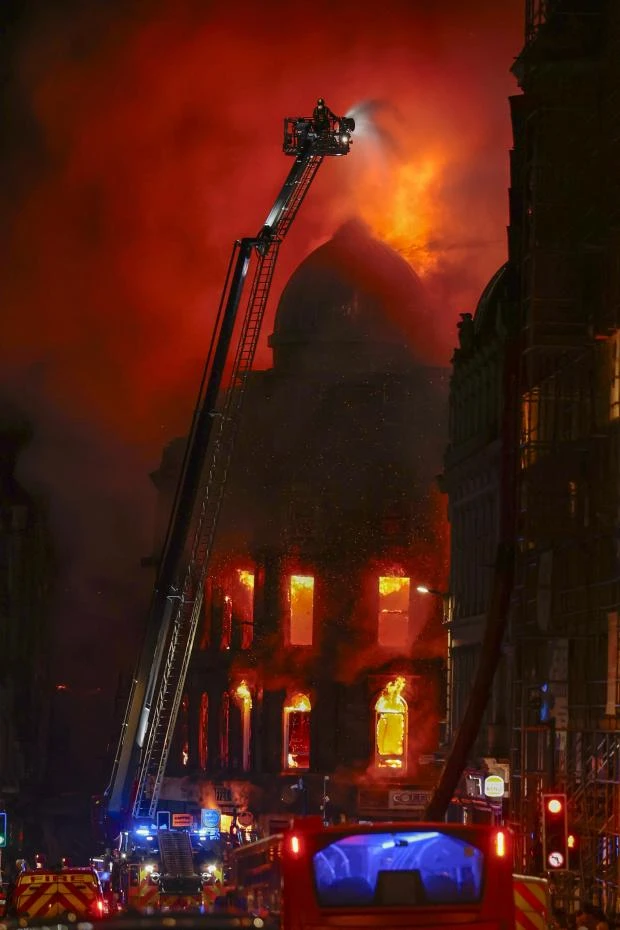
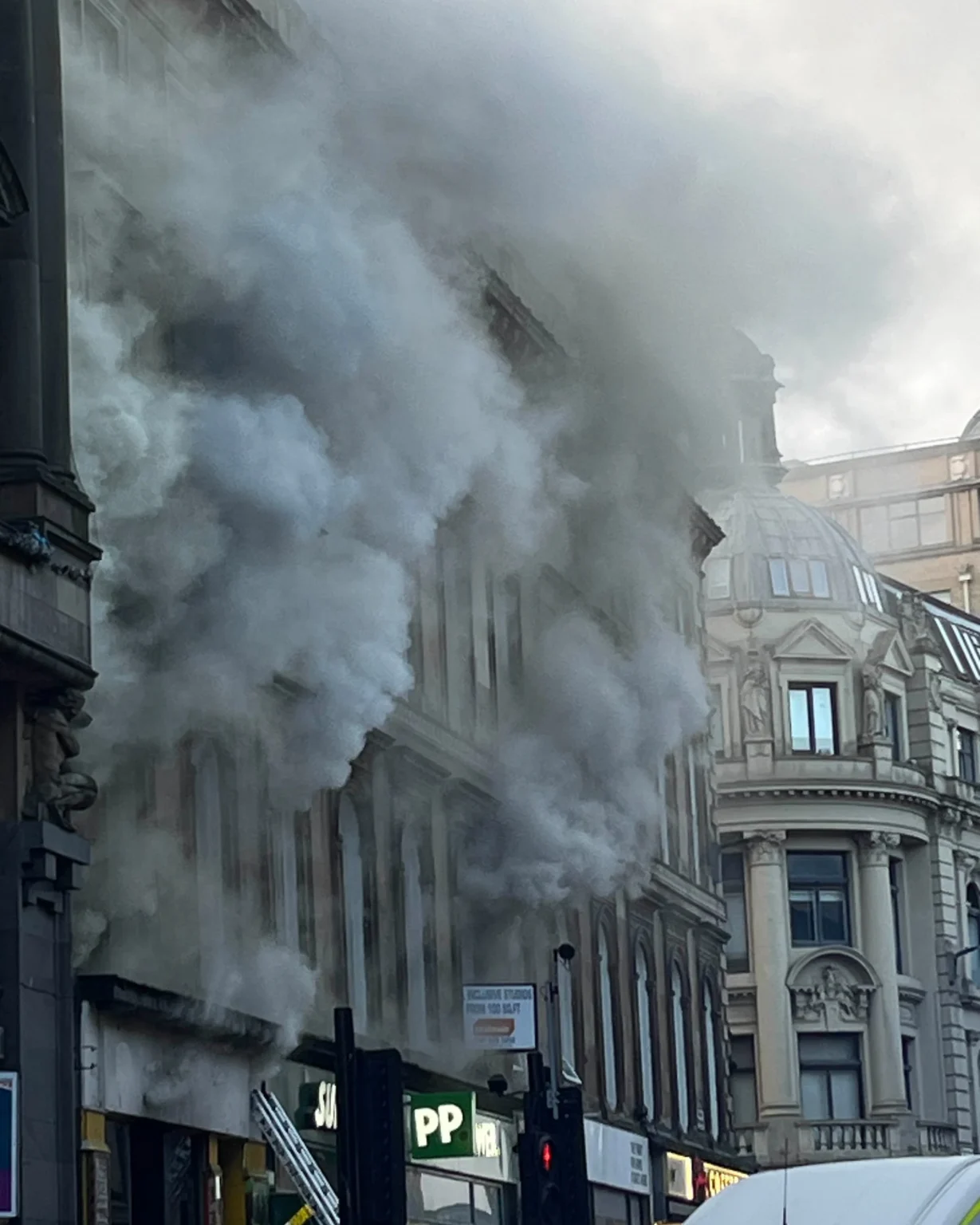
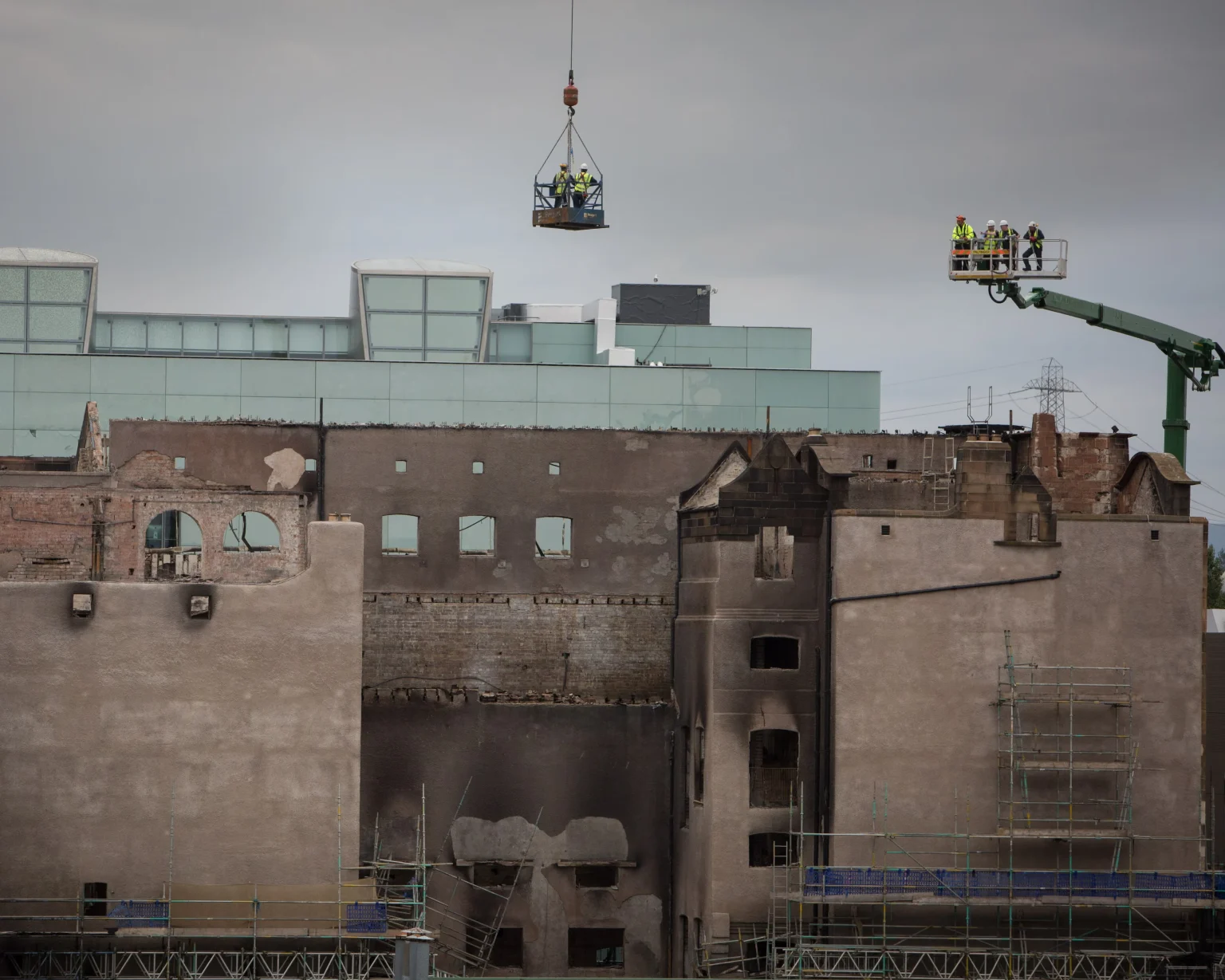
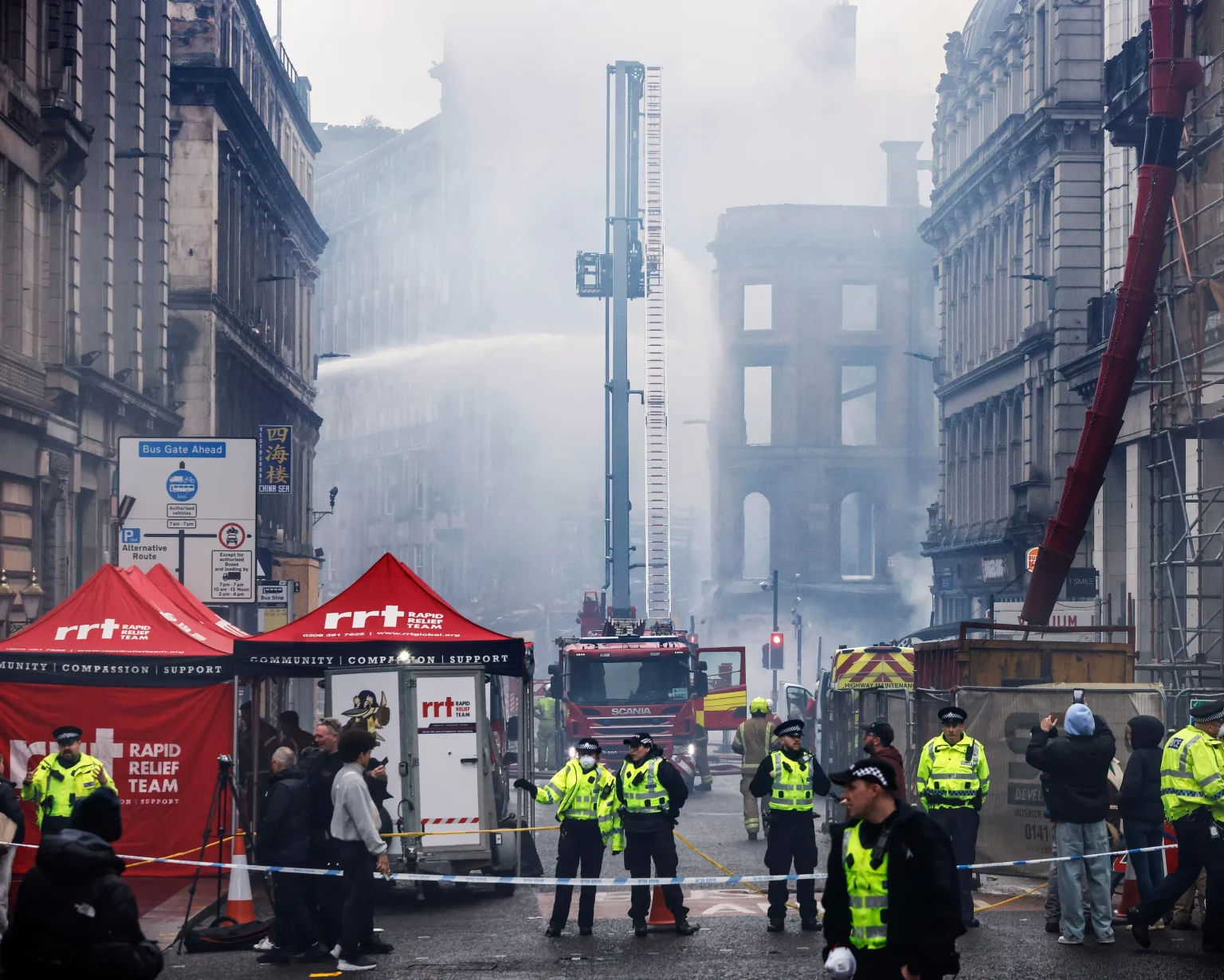
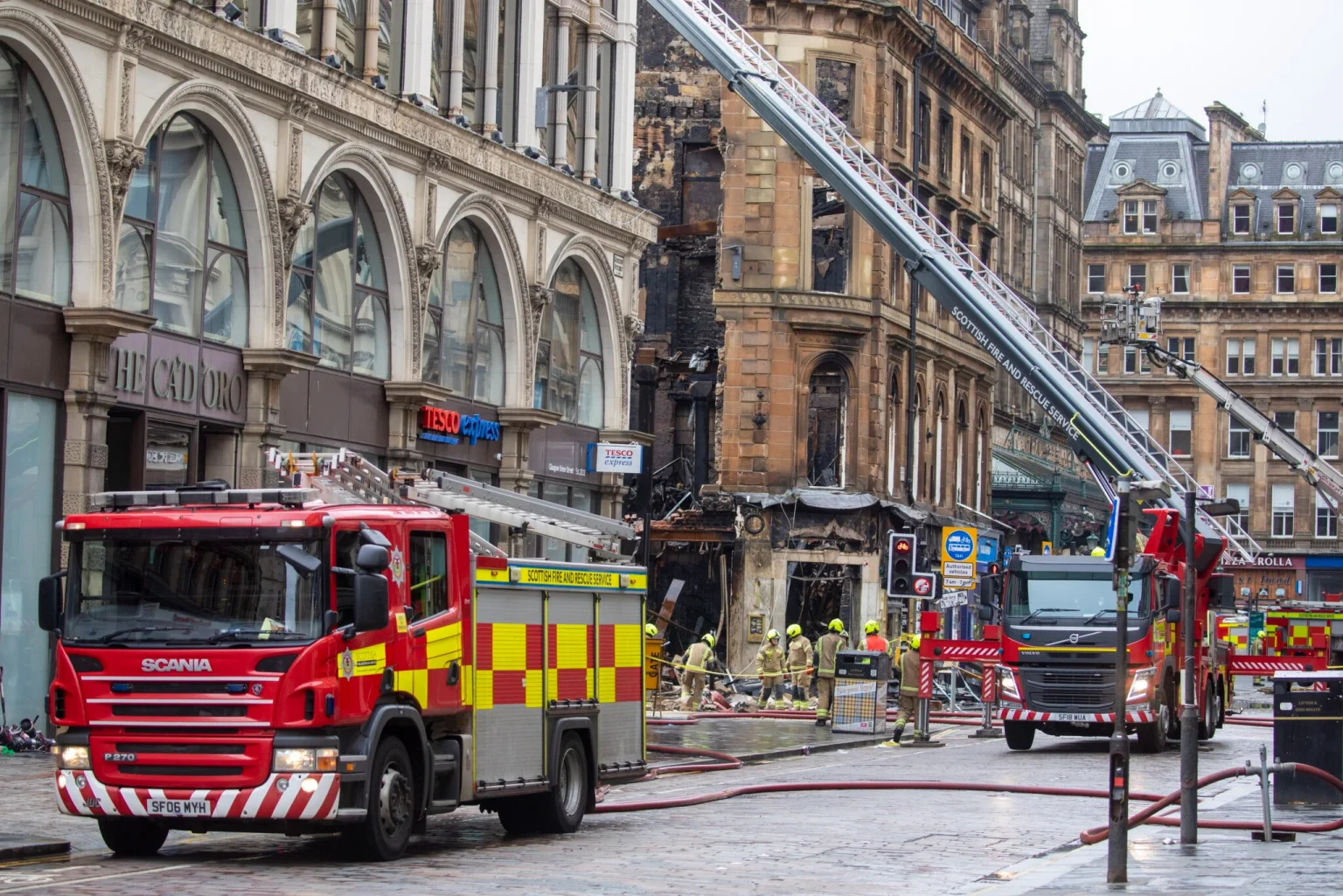
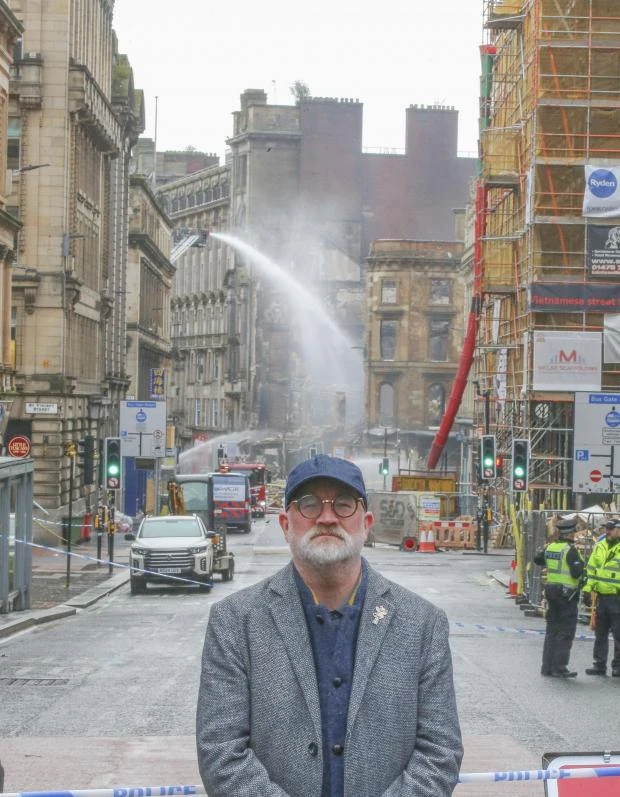
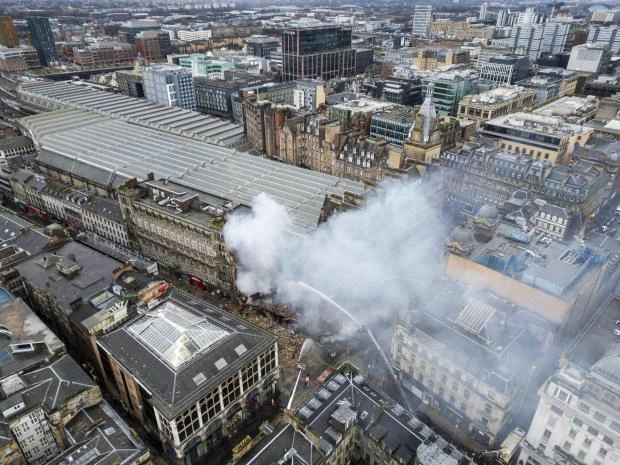
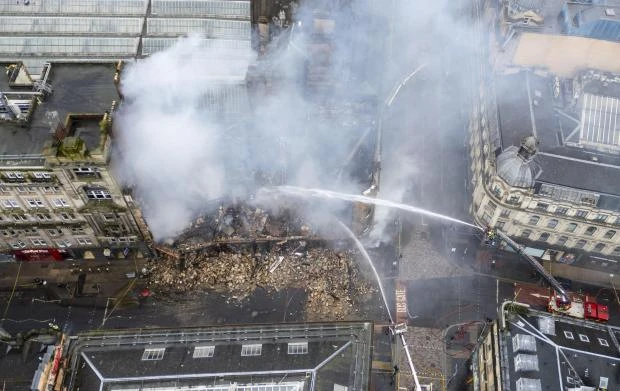
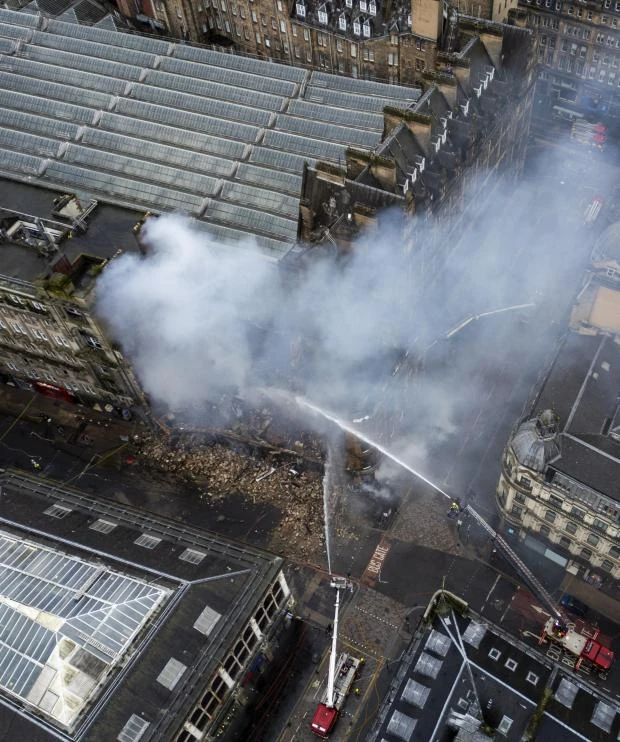


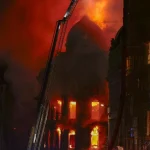
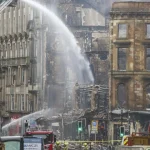
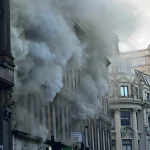
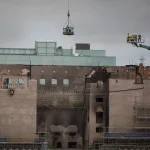
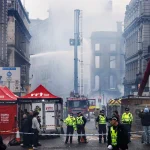
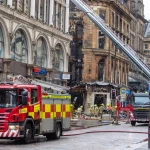

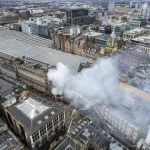
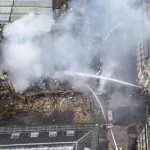
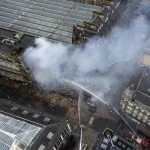
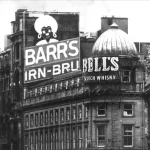
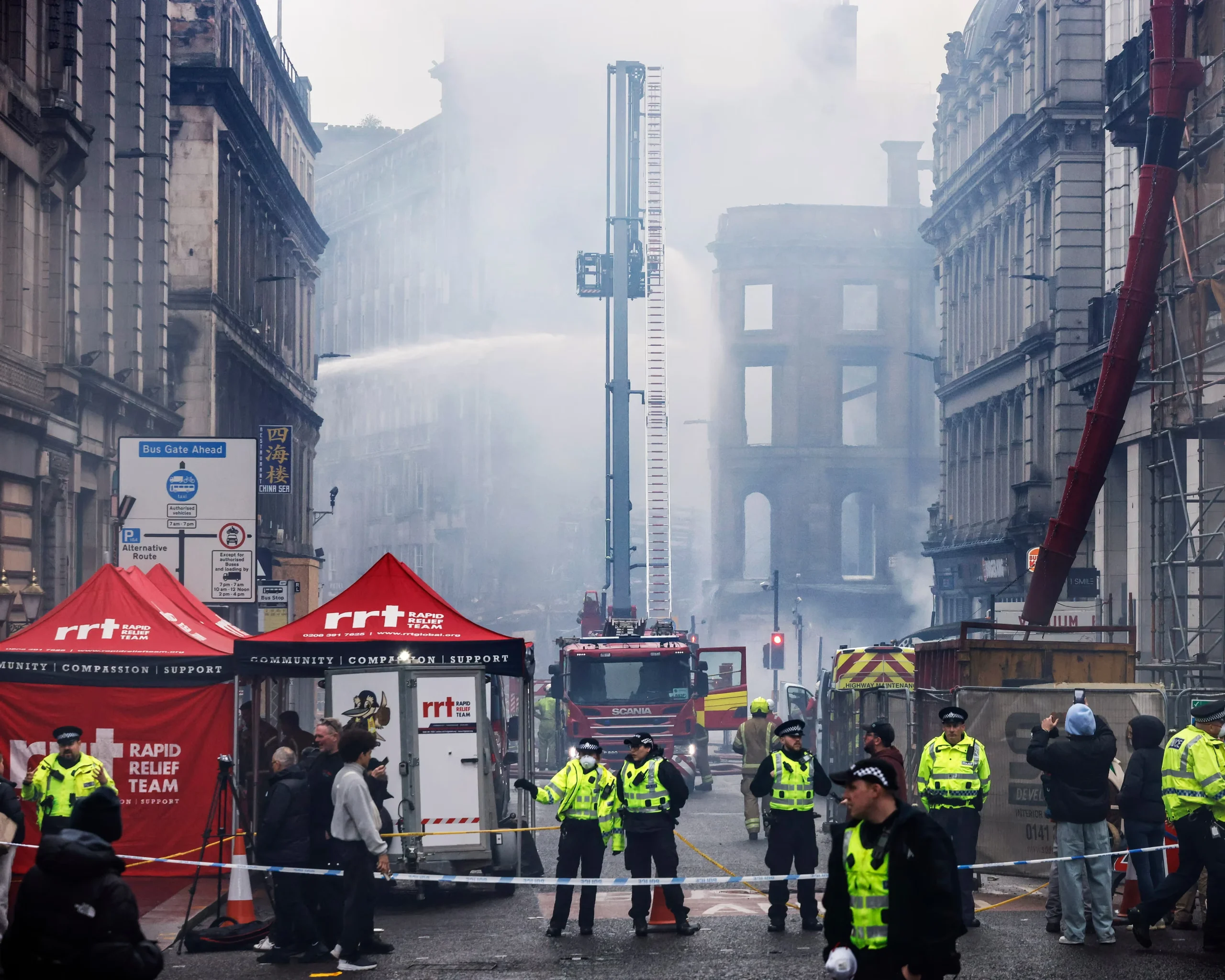
On March 8, 2026, at the intersection of Union Street and Gordon Street, a 175-year-old B-listed Victorian commercial block was destroyed in a Glasgow fire. The fire, which originated in a ground-floor retail unit, precipitated the near-total collapse of the building’s internal structure and its iconic corner dome, affecting Scotland’s busiest railway infrastructure network.
Union Corner Disaster
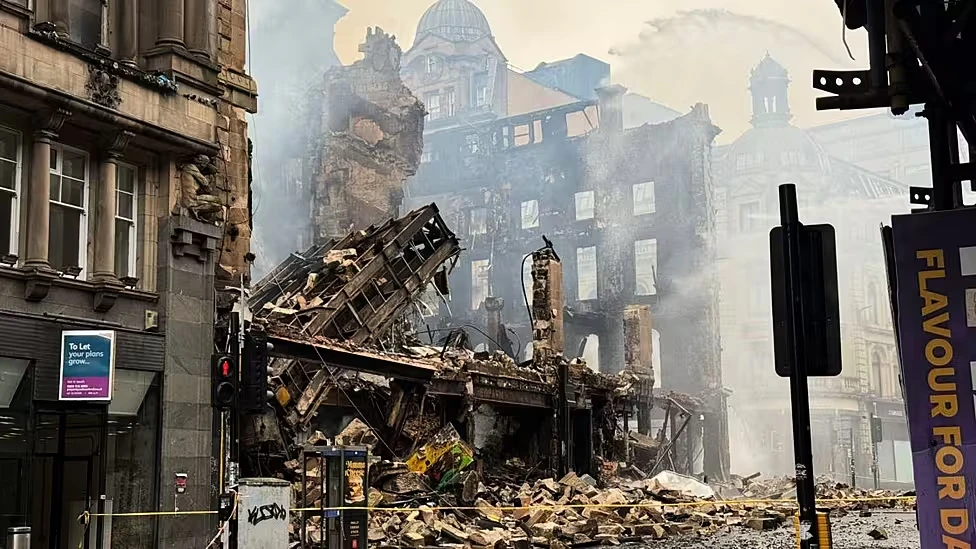
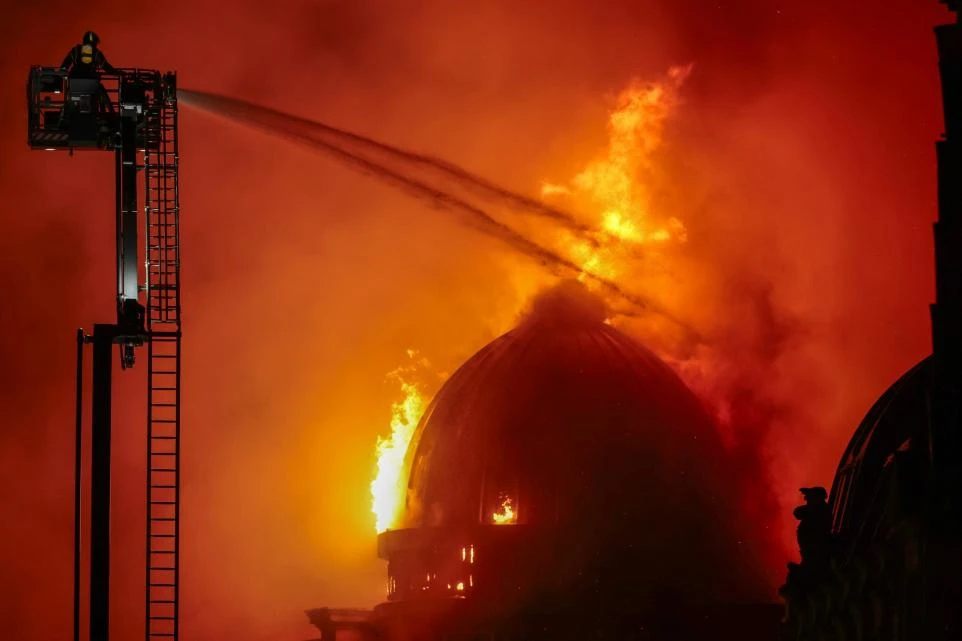
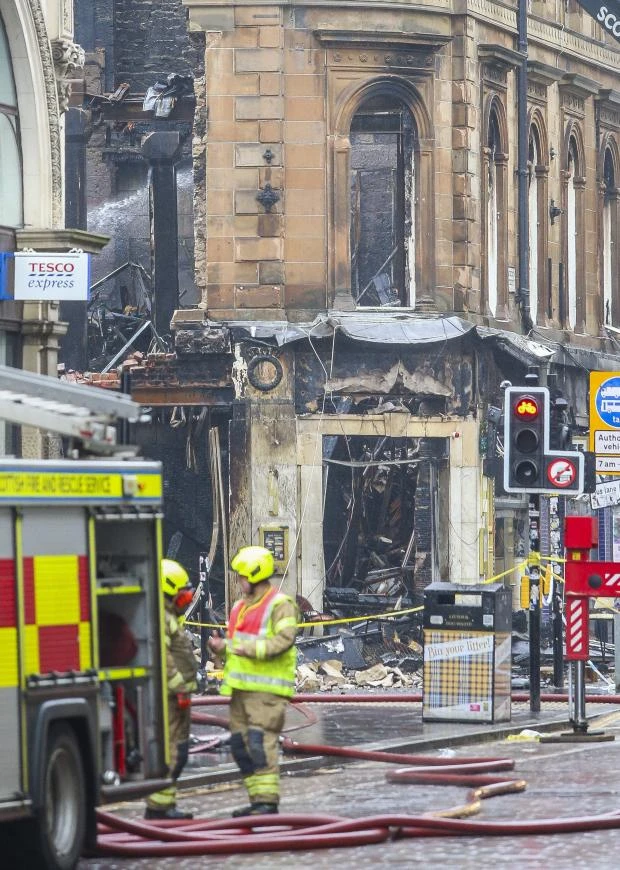
The fire incident began around 15:45 on Sunday, March 8, 2026, within the ground-floor unit at 105 Union Street. Thick smoke emanating from the shop doorway was followed by a series of explosions. The fire rapidly spread from the local retail shop to its structural core, damaging the integral components. The Scottish Fire and Rescue Service (SFRS) deployed over 250 firefighters and utilized three high-reach aerial platforms to tackle the blaze from multiple fronts. Despite these efforts, the fire spread into the ceiling, entering the timber systems and collapsing the corner dome into the interior of the building.
Structural Vulnerability and Fire Spread
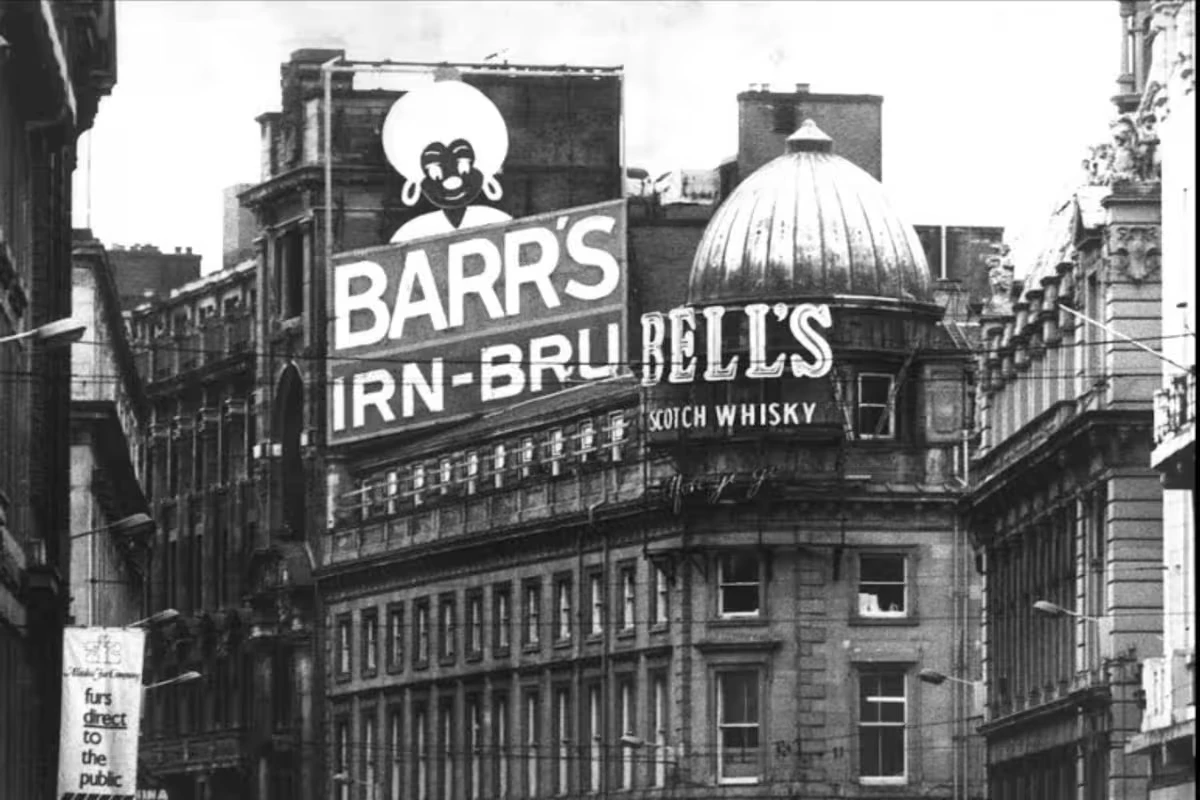
Completed in 1851, the structure at 101–115 Union Street and 59–69 Gordon Street was designed by the firm of Brown and Carrick, specifically by the architect James Brown. The iconic design feature was the dome, a timber-framed and lead-clad structure, acting as a visual anchor for millions of travelers arriving in Glasgow.
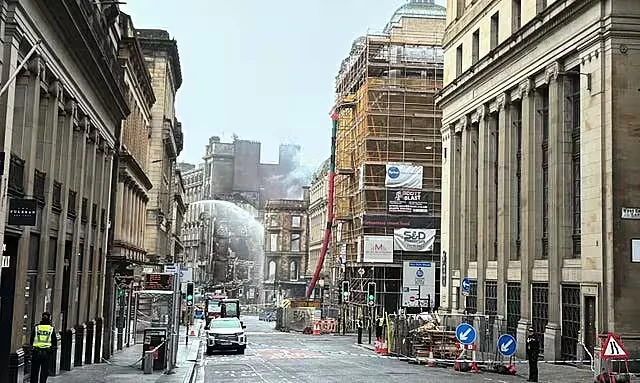
The structure was composed of load-bearing masonry exterior walls and internal timber floor joists. Between these floors and the decorative lath-and-plaster ceilings were significant horizontal voids. In a Glasgow fire, these voids remain hidden from the efforts of firefighters, acting as unintended chimneys, drawing heat and flames upward and outward through the building.
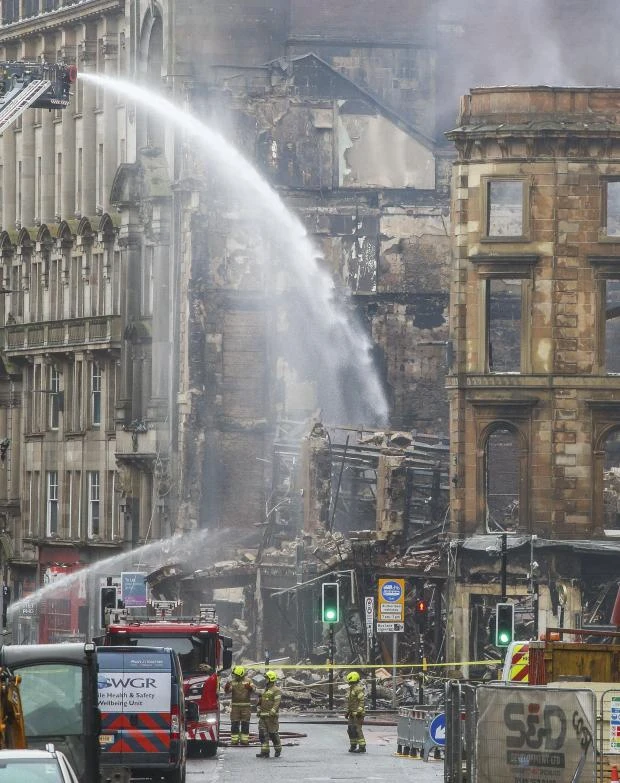
The collapse of the dome was the most visually striking and structurally significant failure. The dome, sitting atop the curved corner of the masonry facade, dropped vertically, punching through the weakened floor systems below and creating a massive interior void that further accelerated the chimney effect.
Shutdown of Glasgow Central
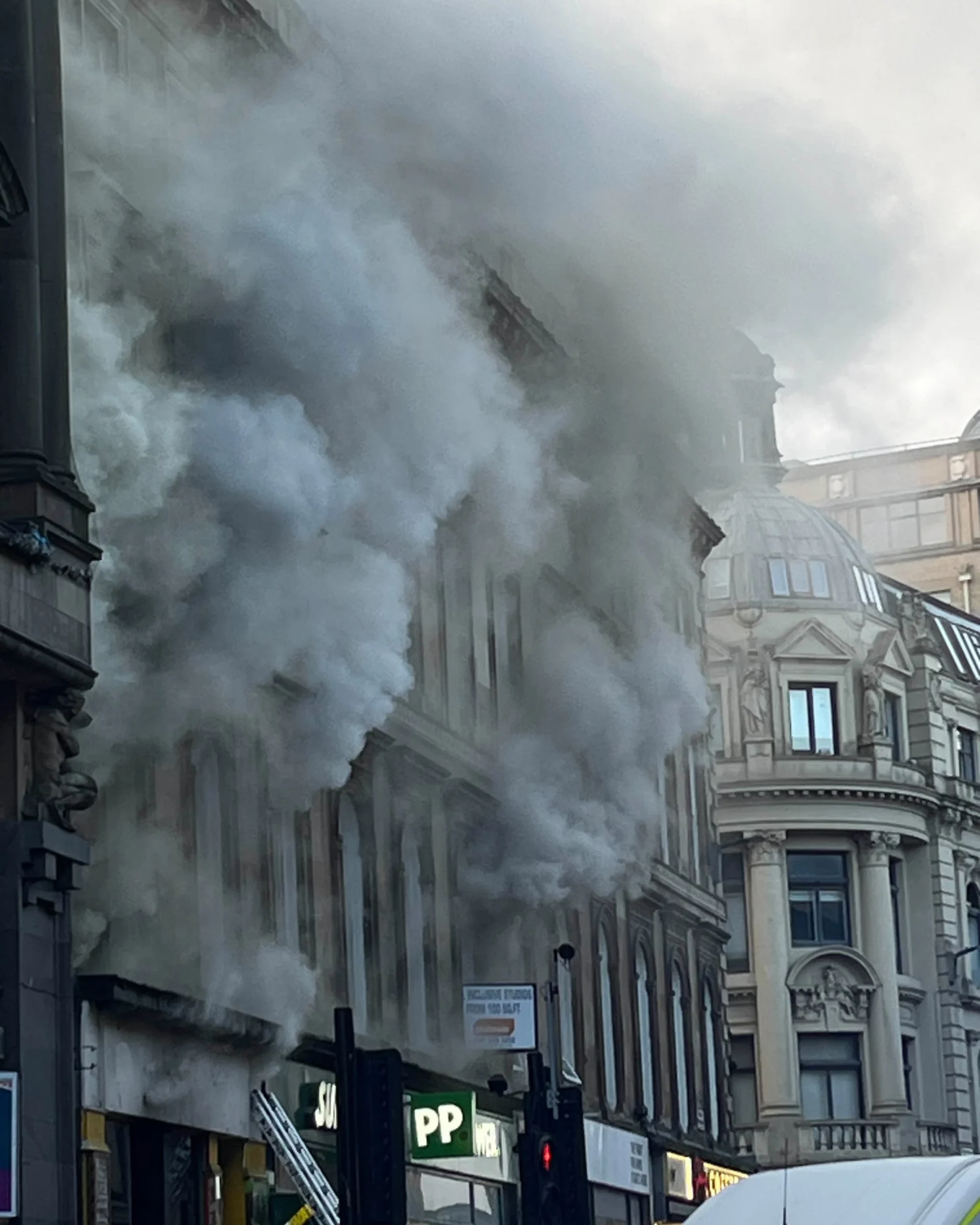
The investigation report into the Union Street fire illustrates the disproportionate impact of lithium-ion battery technology on heritage Victorian-style buildings. Glasgow Central Station, the busiest railway station in Scotland, with approximately 25 million passengers per year, was forced into a complete closure of the high-level platforms. The fire at Glasgow Union Corner exposes the intersection of systemic regulatory neglect, architectural vulnerability, and the emergence of new technological risks.
Patterns of Heritage Loss
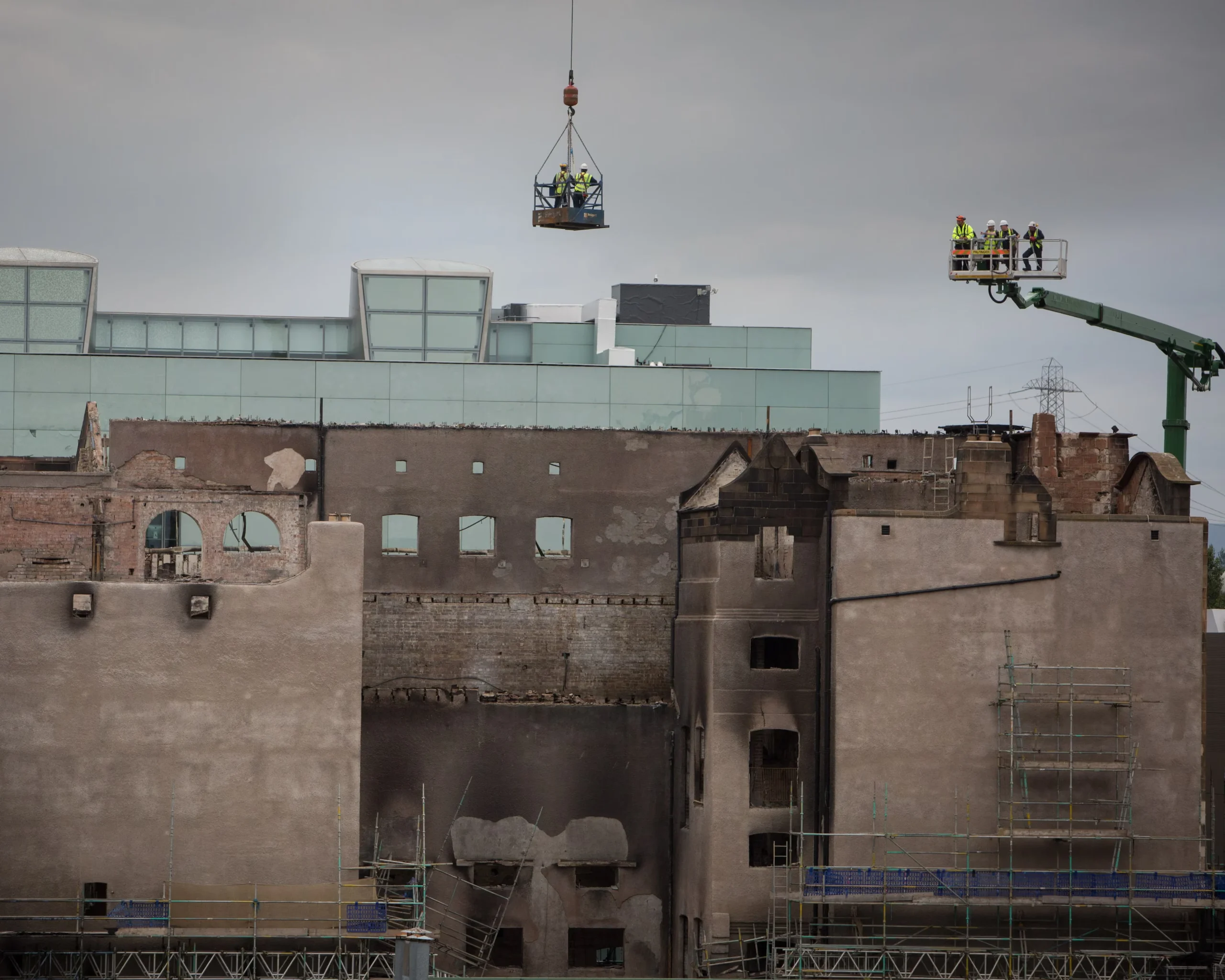
Glasgow has suffered a series of fires in the last decade, damaging its historic Victorian buildings. The Glasgow School of Art (GSA) fire of 2018 was facilitated by the very same architectural vulnerabilities seen at Union Street: vertical service voids and original ventilation ducts that acted as chimneys. The loss of the O2 ABC, a music venue, further underscores how fire in one heritage building can lead to the collateral destruction of an entire city block.
The loss of a 175-year-old landmark and the disruption of a national transportation artery serve as a warning that Glasgow’s status as a Victorian city is increasingly unstable. In the immediate response to the Union Street blaze, First Minister John Swinney visited the site and announced the formation of a Ministerial Oversight Board. Chaired by the Cabinet Secretary for Justice, the board is intended to provide structural stabilization, coordination, and policy reviews. The 2025 amendments extend the ban on combustible external wall cladding systems to include hotels, guest houses, and hostels.