





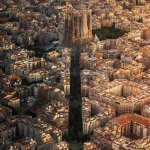
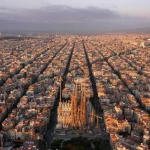
In Barcelona 2026, architecture moves beyond exhibition halls and into daily life. As the World Capital of Architecture, designated by UNESCO and the International Union of Architects, the city will host a year-long program that unfolds across streets, neighborhoods, and public spaces. More than 1,500 events and 200 architectural initiatives are planned, ranging from site-based installations and urban walks to research forums and open discussions on how cities are built and used.
Barcelona 2026 coincides with two defining anniversaries: 100 years since the death of Antoni Gaudí and 150 years since the passing of Ildefons Cerdà. Their ideas still shape the city in visible ways. Gaudí explored structure through form, material, and craft, while Cerdà approached the city as an organized system designed around health, movement, and social balance. Together, their work continues to influence how Barcelona grows and adapts.
What makes Barcelona 2026 significant is its scale and its openness. Architecture is treated as a public process. Residents and visitors are invited to walk the city, question its spaces, and understand how design decisions affect housing, mobility, climate response, and everyday life. In this sense, Barcelona becomes a place where buildings, streets, and infrastructure all take part.
1. Sagrada Família

Architect: Antoni Gaudí (continued by successors)
Year Started: 1882 (ongoing construction)
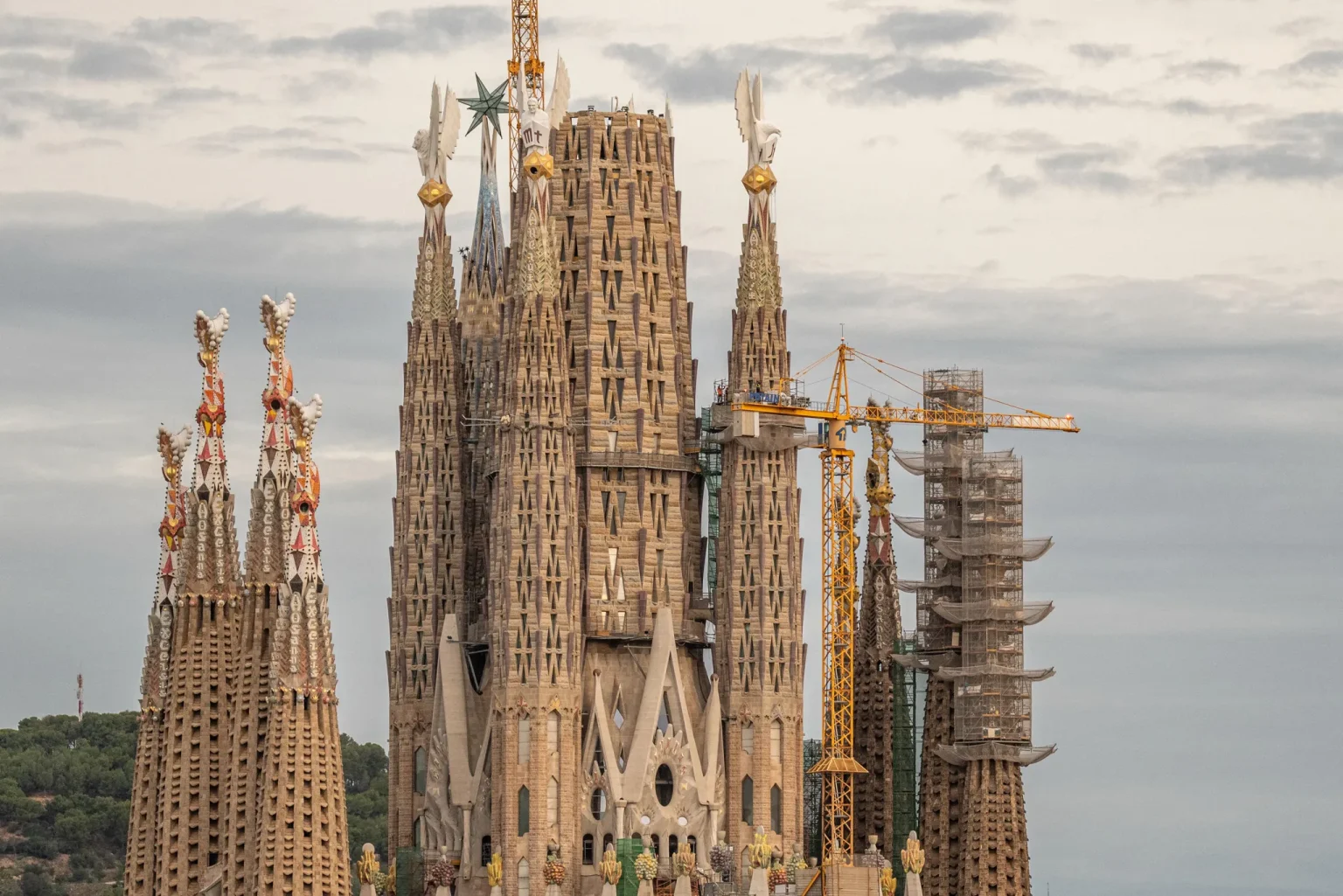
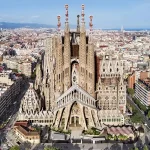
The Basílica de la Sagrada Família stands as one of the most extraordinary works of architecture in the modern era. Created in the late 19th century, it has become inseparable from the identity of Barcelona and the legacy of Antoni Gaudí.
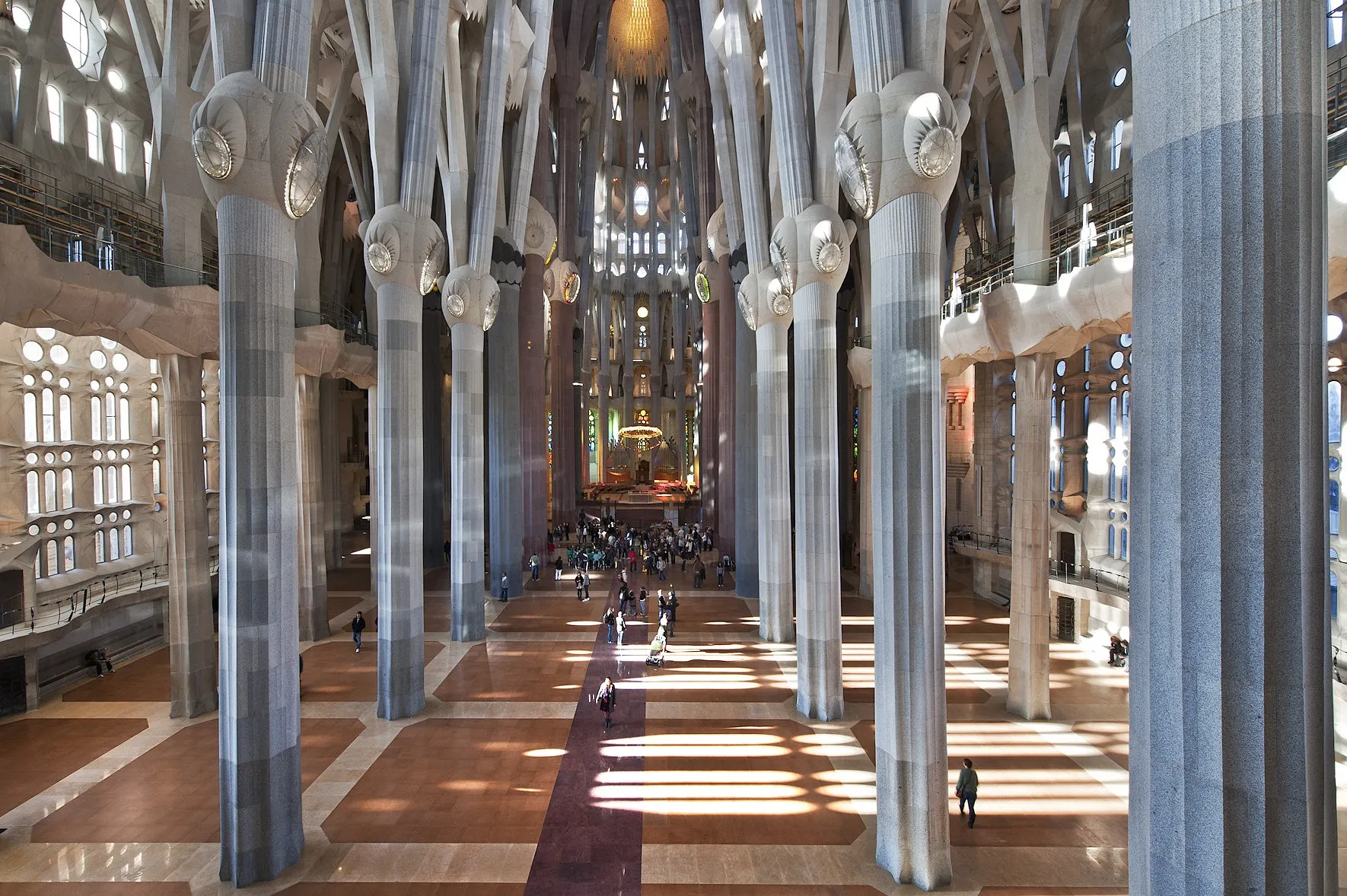
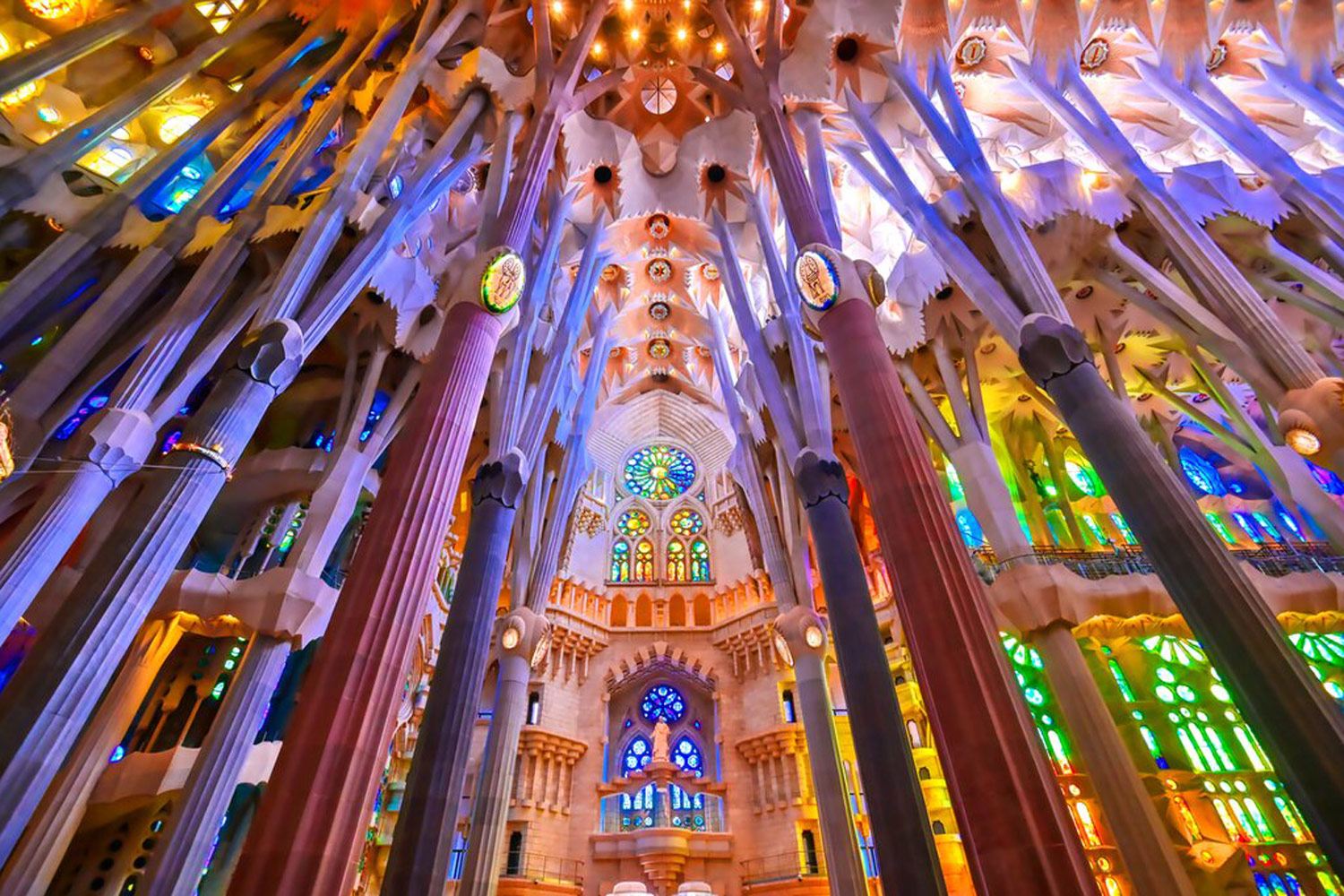
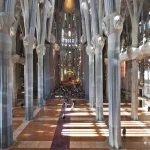
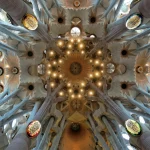
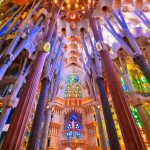
Inside the basilica, towering columns branch like trees, distributing loads upward in a way that mimics natural growth. Vaults are shaped as hyperboloids and helicoids, geometries that allow light to filter through with sculptural richness while keeping structural efficiency high. Façades packed with sculptural narrative translate episodes from the Bible into textured stone, turning the exterior into a kind of theological relief sculpture.
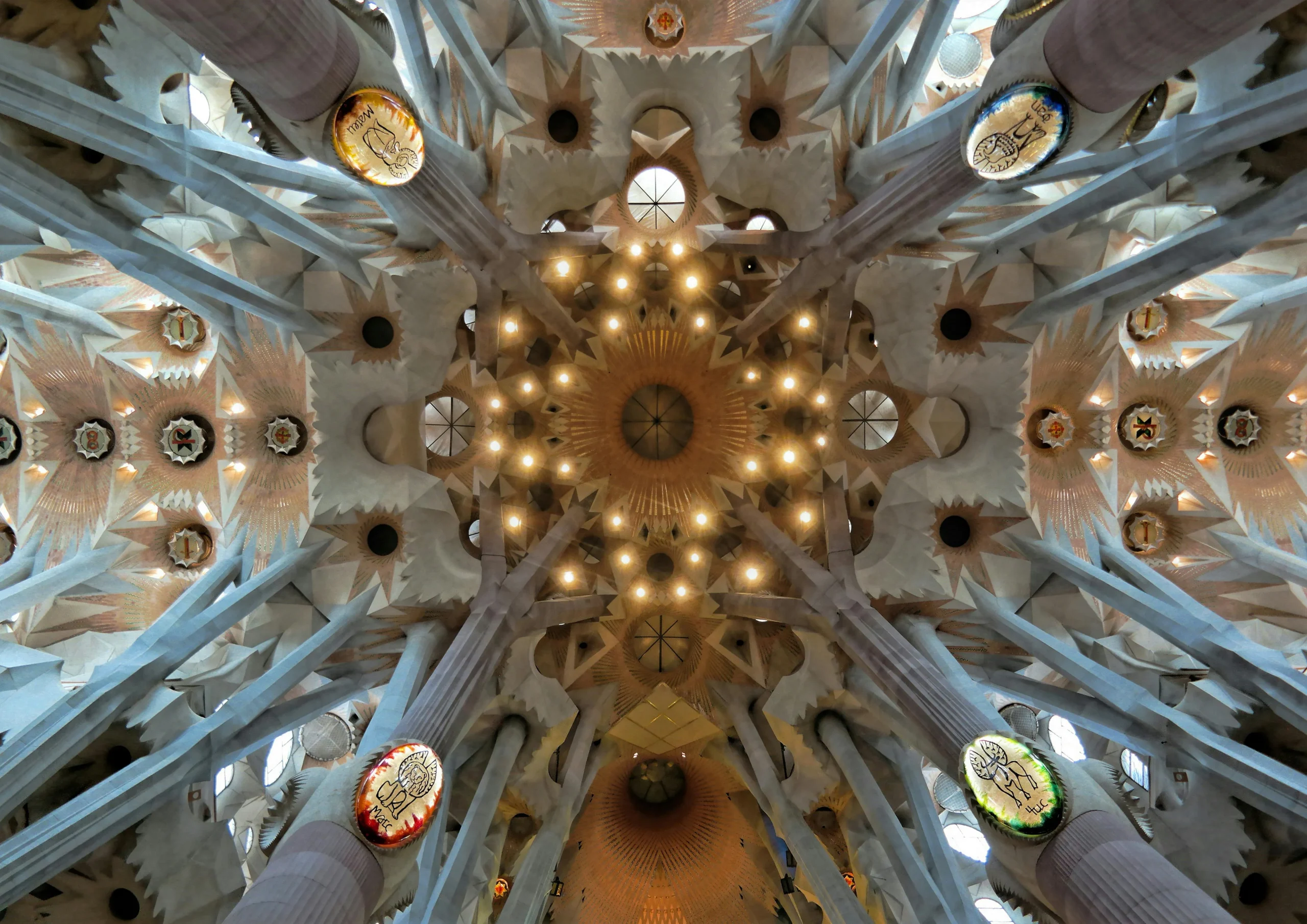
Gaudí rejected strict symmetry and borrowed precedent in favor of a design rooted in nature’s own geometry. Light modulation is central to the spatial experience: stained glass windows are oriented and colored to animate interiors throughout the day, turning the play of natural light into a kind of moving liturgy (light itself plays a ritual role). At the same time, expressive structural innovations like inclined columns and ruled surfaces allowed Gaudí to explore new load paths long before many of these ideas were common in modern engineering.
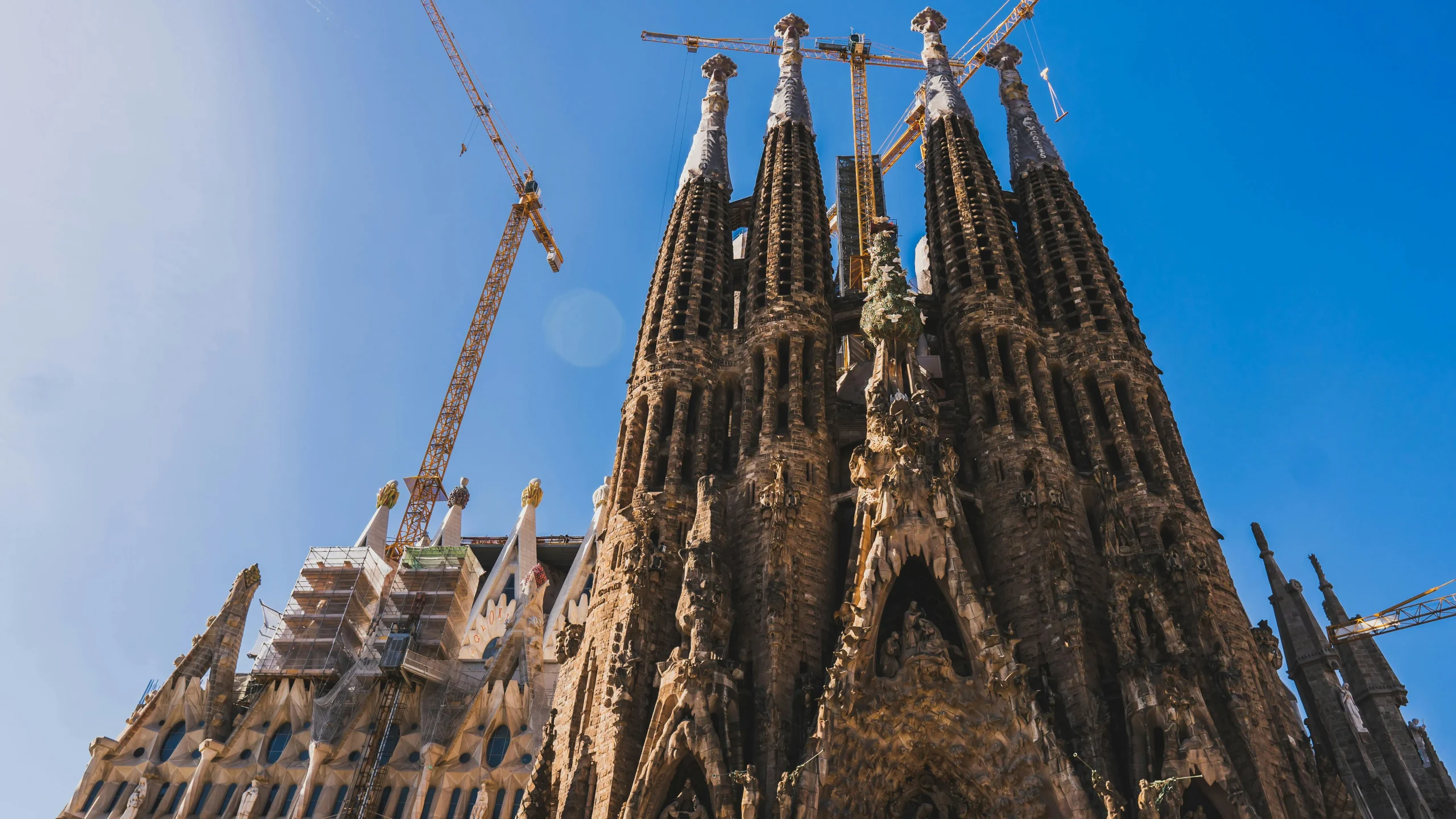
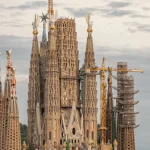
By mid-2026, the completion of the Jesus Tower is set to crown the basilica’s vertical narrative, making it the tallest church tower in the world.
2. Torre Glòries

Architect: Jean Nouvel (with b720 Arquitectos)
Year Built: Completed in 2005
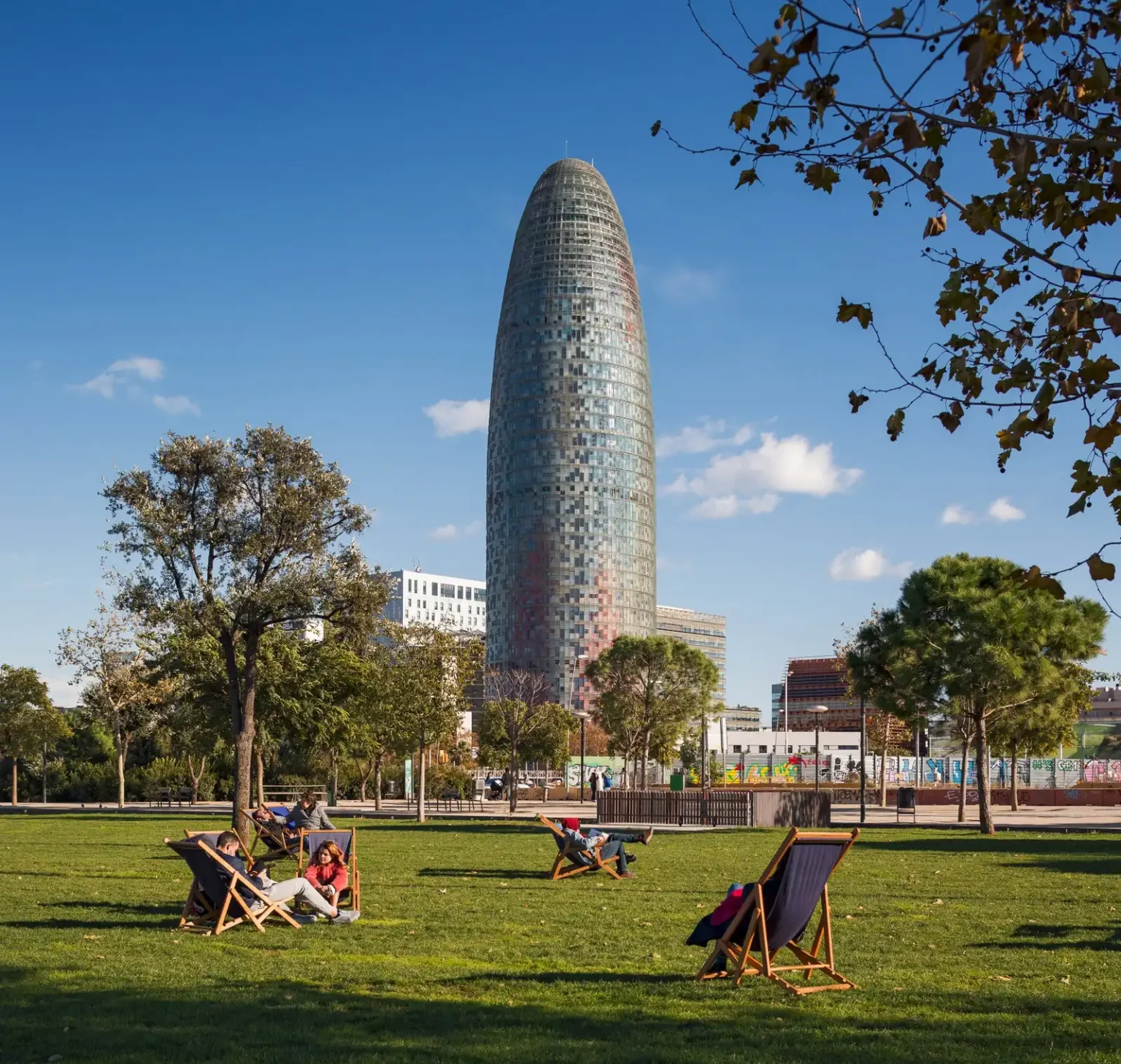
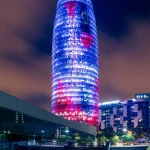
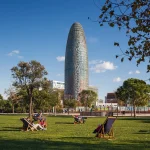
Torre Glòries, formerly known as Torre Agbar, marks a decisive shift in Barcelona’s skyline. Rising from the redeveloped Glòries district, the tower breaks away from the city’s traditionally horizontal urban fabric and announces a new, vertical identity tied to Barcelona’s post-industrial transformation. Jean Nouvel’s design rejects the conventional glass-box skyscraper. Instead, the tower takes on a soft, bullet-like form inspired by Mediterranean geology, water geysers, and ancient Catalan mud houses. Its rounded profile reduces wind pressure and gives the building a sculptural presence that feels deliberate rather than aggressive. The structure stands as an object building, yet remains closely tied to its urban and climatic context.
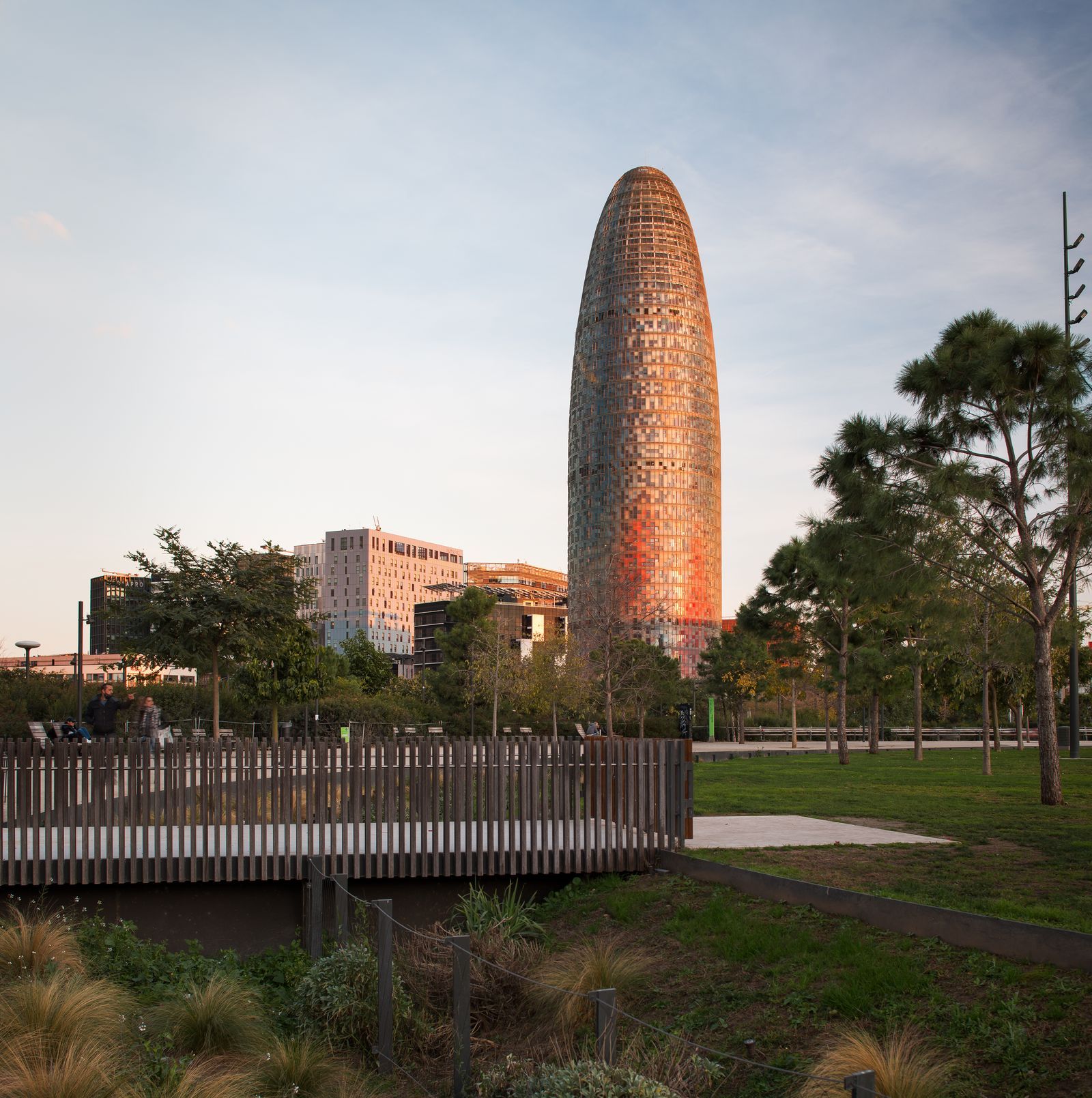
The tower is defined by its double-skin façade. An inner concrete shell provides structural stability, while an outer layer of glass and aluminum louvers wraps the building like a climatic filter. These louvers respond to sunlight and heat, helping regulate interior temperatures and reduce energy demand. By day, the façade reflects changing light conditions; by night, it becomes a luminous landmark through programmable LED illumination embedded within the skin.
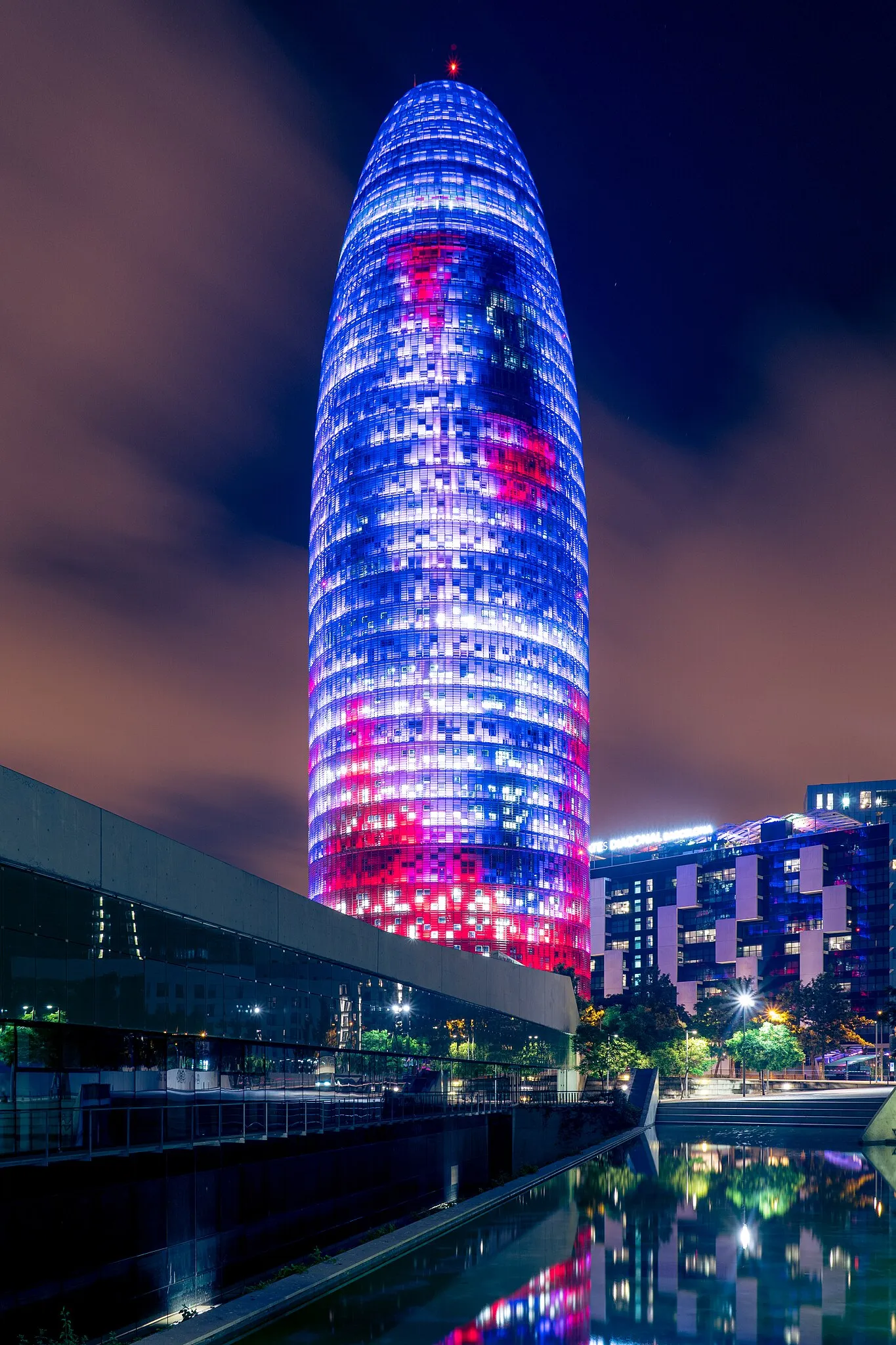
The tower accommodates office spaces alongside cultural and public functions, reinforcing its role as more than a corporate high-rise. Its later transformation into a mirador and exhibition space further strengthened its connection to public life, allowing residents and visitors to engage with the city from above. Infrastructure systems were integrated early in the design, balancing energy efficiency with flexibility of use.
3. Barcelona Pavilion
Architect: Ludwig Mies van der Rohe (with Lilly Reich)
Year Built: 1929 (reconstructed in 1986)
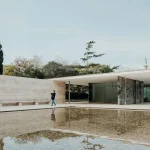
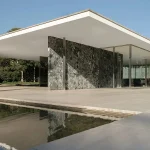
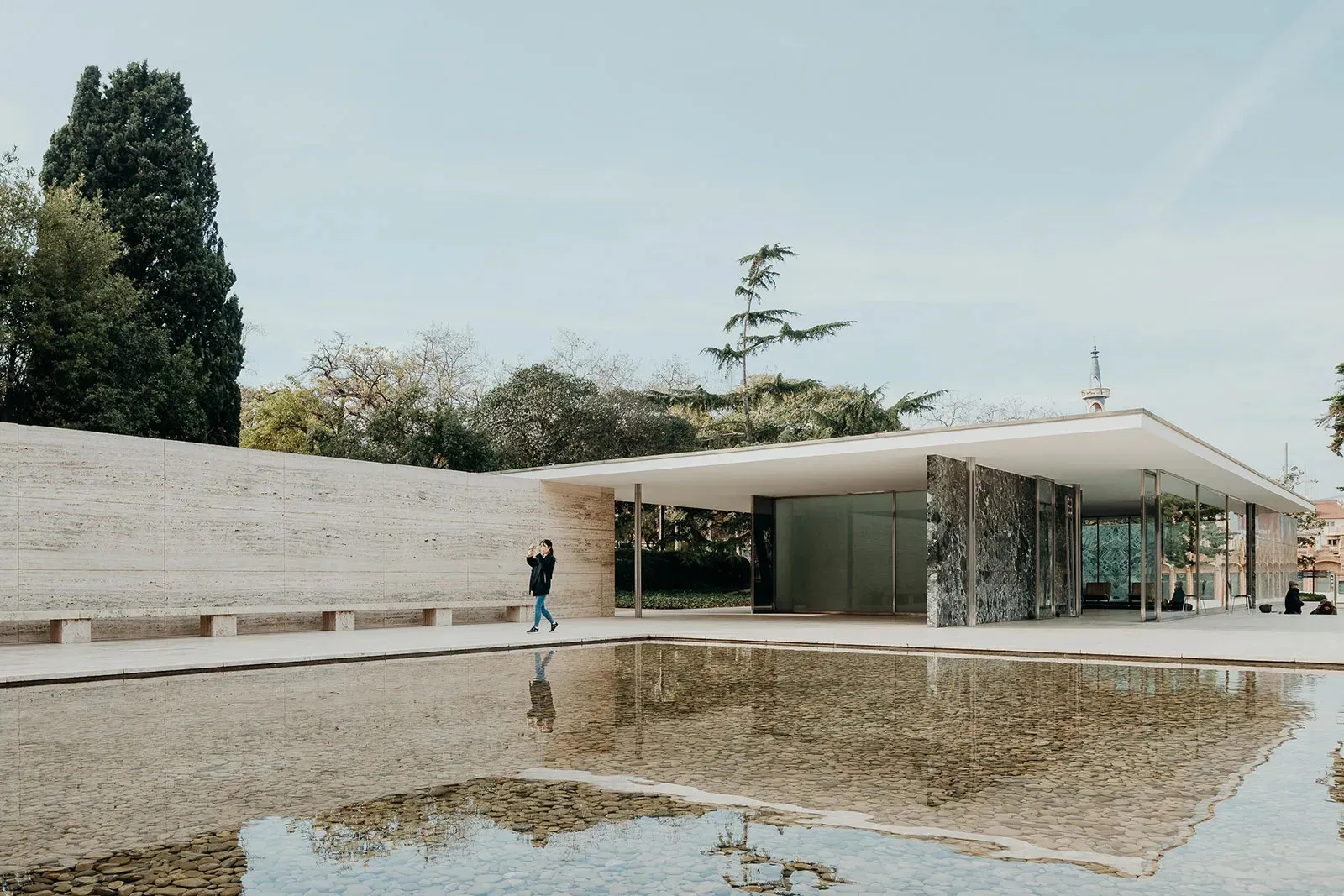
The Barcelona Pavilion was originally designed as the German Pavilion for the 1929 International Exposition, intended not to house exhibits but to represent Germany itself. Temporary by nature, the building was dismantled after the fair and later reconstructed in 1986 on its original site. Despite its modest scale, it has become one of the most influential works of 20th-century architecture.
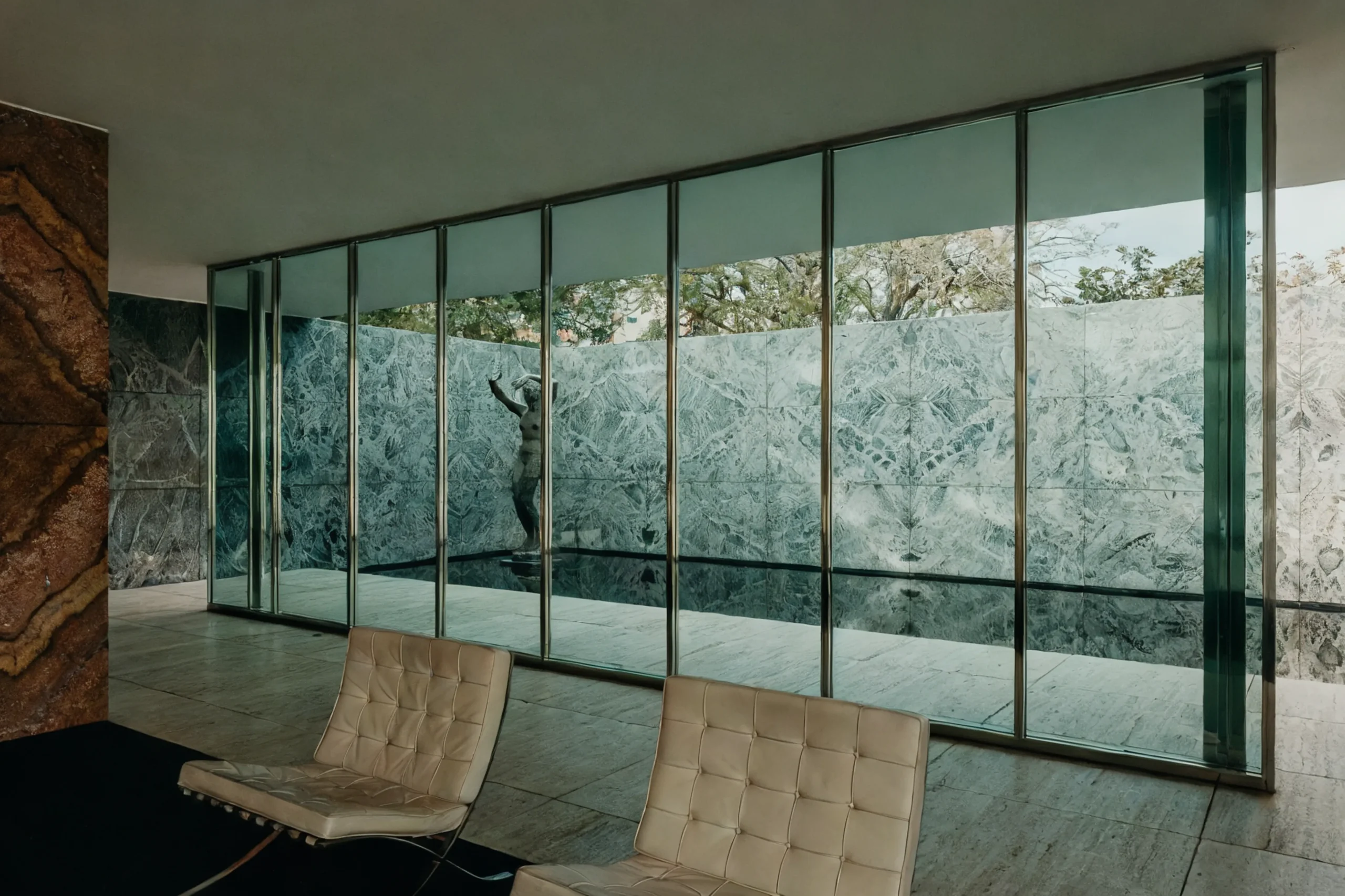
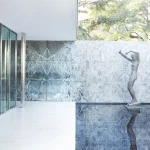
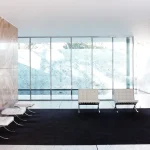
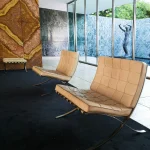
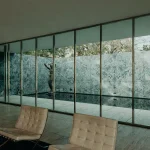
Mies van der Rohe abandoned the idea of rooms bounded by walls and instead composed the building from a series of horizontal and vertical planes. These planes slide past one another, creating fluid transitions between interior and exterior. Circulation is intuitive and unforced, guided by geometry. Travertine floors, green Alpine marble, golden onyx, and tinted glass are used with precision and restraint. These materials define space, reflect light, and establish visual weight. Their polished surfaces amplify reflections, dissolving boundaries and reinforcing the sense of spatial continuity. The famous onyx wall, placed for spatial balance, exemplifies Mies’s belief in material as an ordering device.

The pavilion relies on a minimal steel framework. Slender chrome-plated cruciform columns carry the roof, freeing the walls from load-bearing roles. This separation of structure and enclosure was radical at the time and allowed Mies to pursue his idea of “free plan” architecture with clarity and discipline. Infrastructure is deliberately concealed, reinforcing the pavilion’s calm, abstract presence. It was designed to host diplomatic receptions and quiet contemplation, which explains its measured scale and lack of overt symbolism. The inclusion of reflecting pools and Georg Kolbe’s sculpture adds a controlled dialogue between architecture, water, and the human figure.
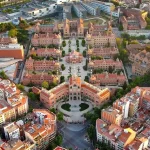
4. Hospital de Sant Pau
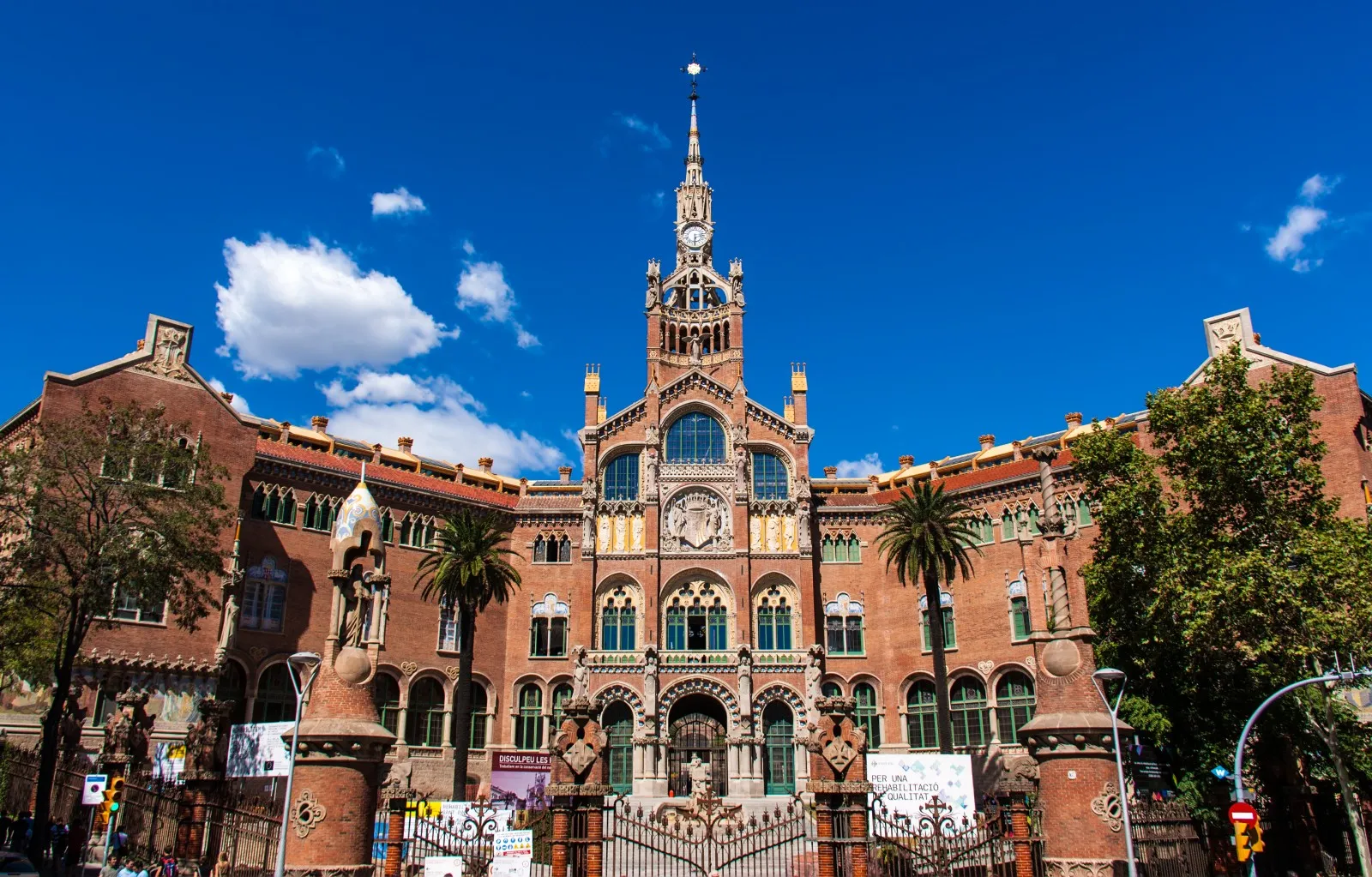
Architect: Lluís Domènech i Montaner
Year Built: 1902–1930
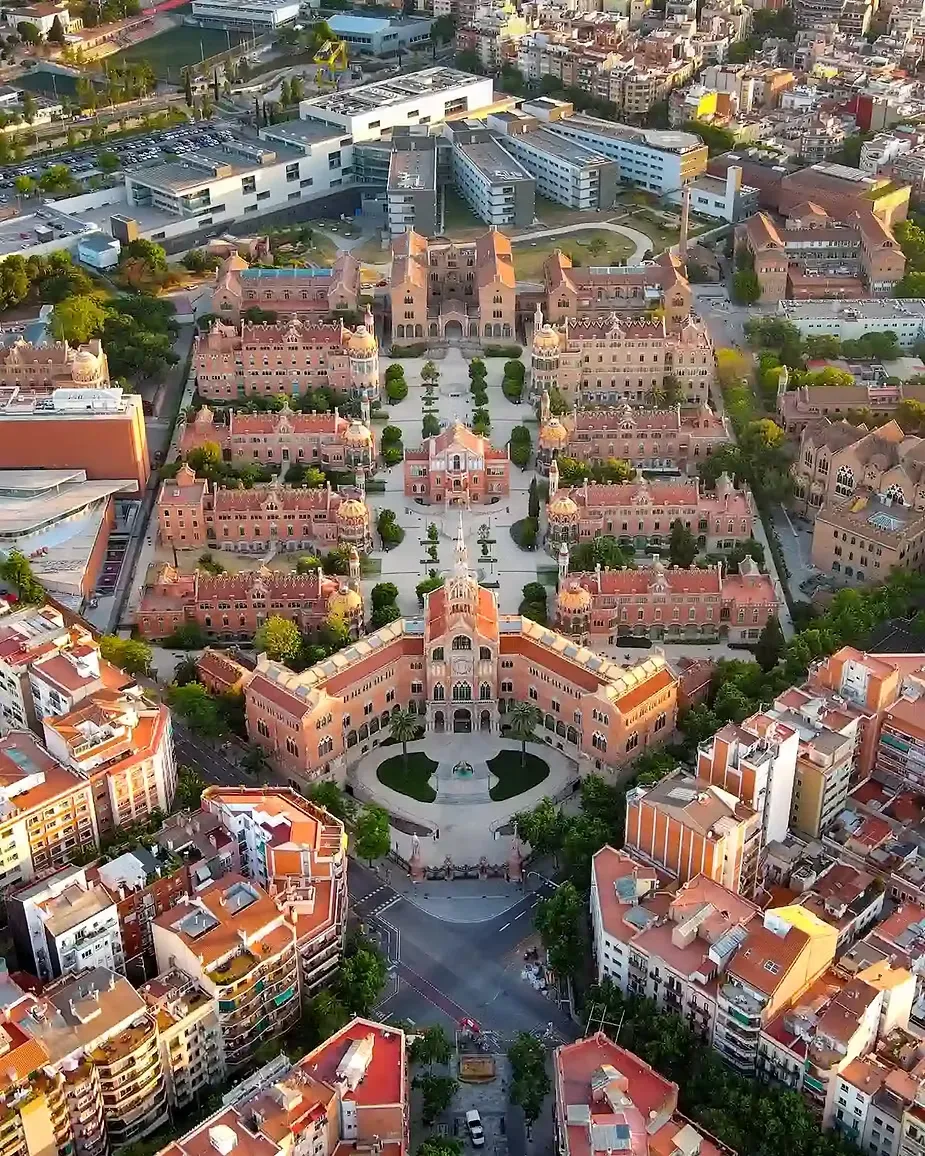
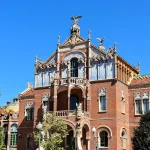
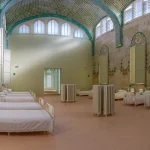
The Hospital de Sant Pau stands as one of the most progressive healthcare complexes of the early 20th century. Located in Barcelona’s Eixample district, it redefined how medical architecture could function, feel, and relate to its users. Designed by Lluís Domènech i Montaner, a key figure of Catalan Modernisme, the hospital rejects the idea of the hospital as a single, imposing mass and replaces it with a system rooted in care, clarity, and dignity.
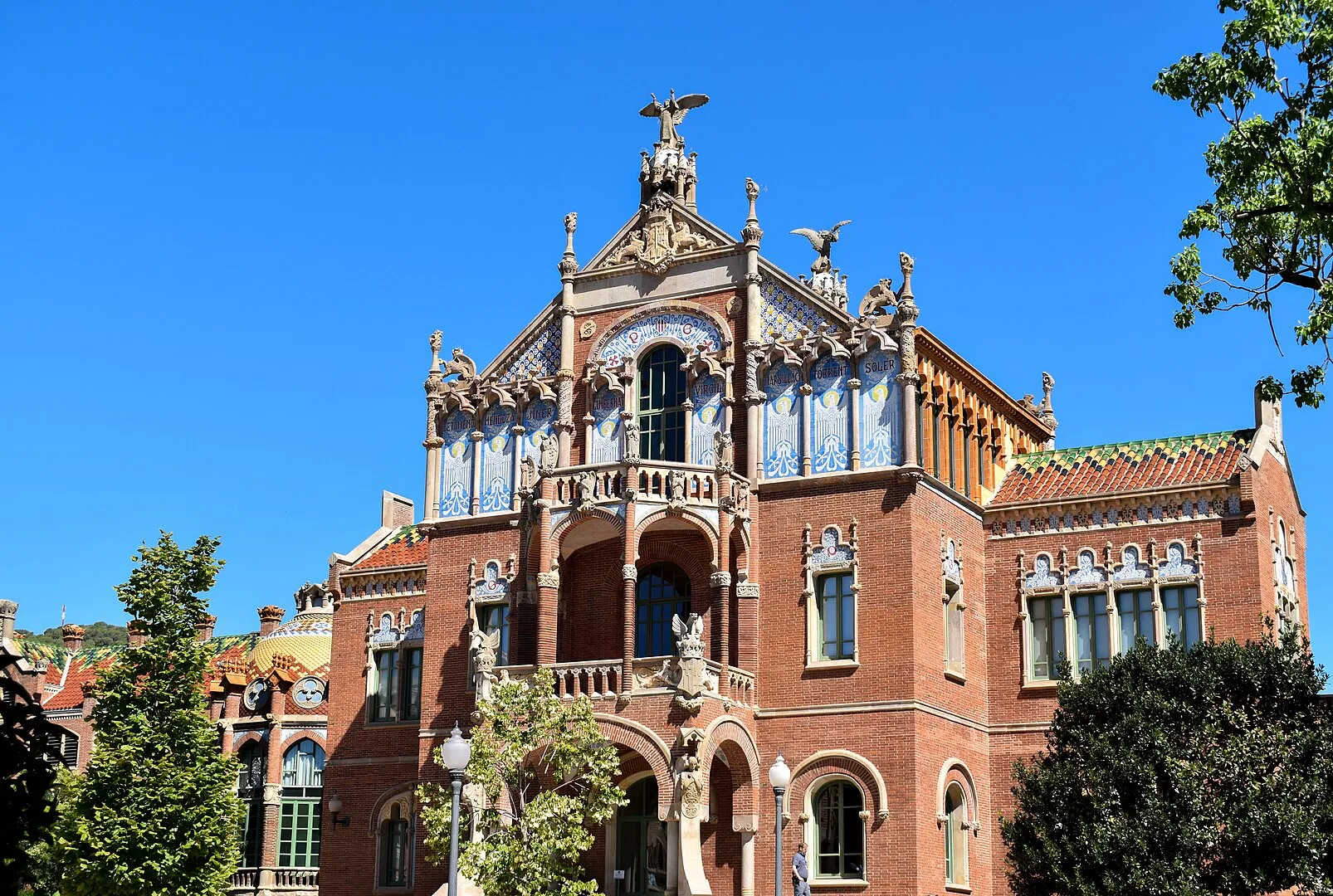
The complex is organized as a series of individual pavilions distributed across landscaped gardens. Each pavilion was originally dedicated to a specific medical function, allowing patients to be separated by treatment while remaining connected through a network of underground service tunnels. This decentralized layout improved hygiene, reduced the spread of infection, and ensured that every ward received abundant natural light and cross-ventilation principles that were advanced for their time and remain relevant today.
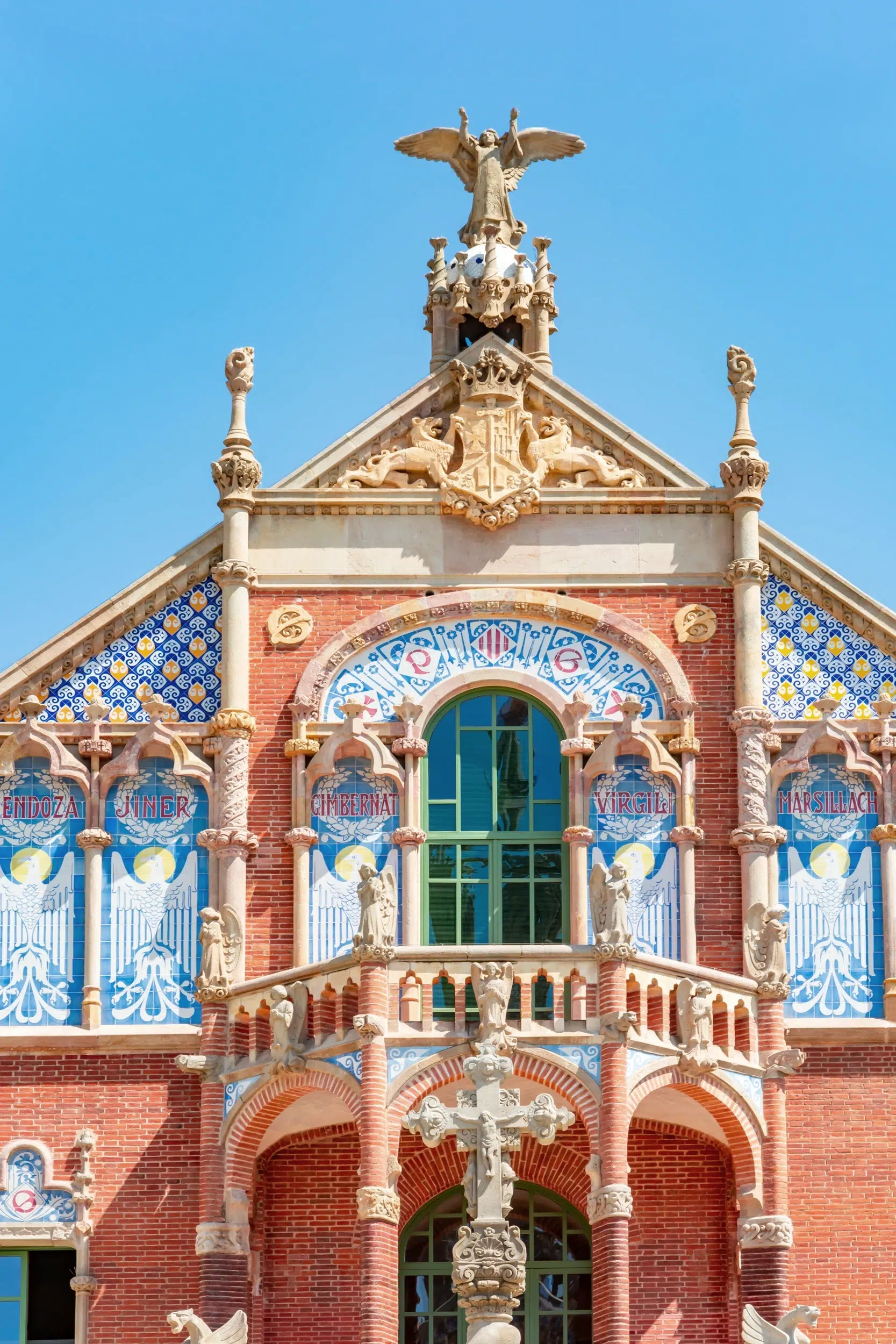
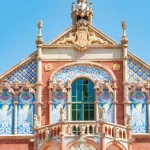
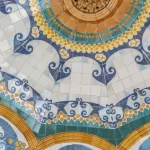
Brick façades, ceramic mosaics, sculpted stonework, and decorative tile roofs are used as surface ornament and also as part of a cohesive system that humanizes the institutional setting. Domènech i Montaner believed beauty was not a luxury in healthcare but a therapeutic means. Color, pattern, and craftsmanship were deployed to reduce anxiety and reinforce a sense of care.
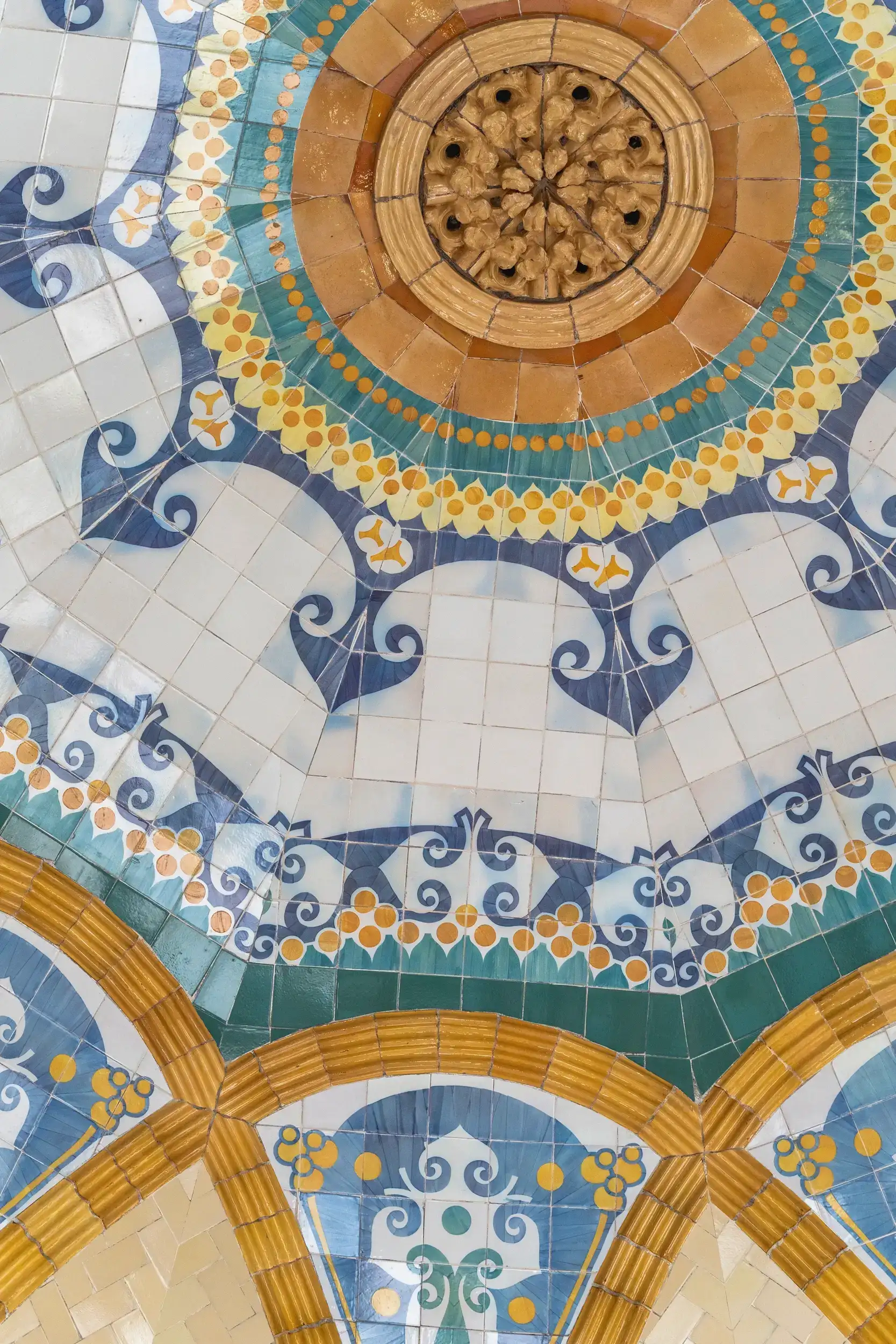
The hospital was grounded in the idea that the environment influences healing. Gardens were central elements of the design, offering patients visual relief, fresh air, and orientation within the complex. Movement through the site is calm and legible, with clear sightlines and generous spacing between buildings. Underground tunnels handled logistics, supplies, and circulation of staff, keeping the surface level free for patients and visitors. This separation allowed the visible architecture to remain calm and humane, while the technical systems operated discreetly below.
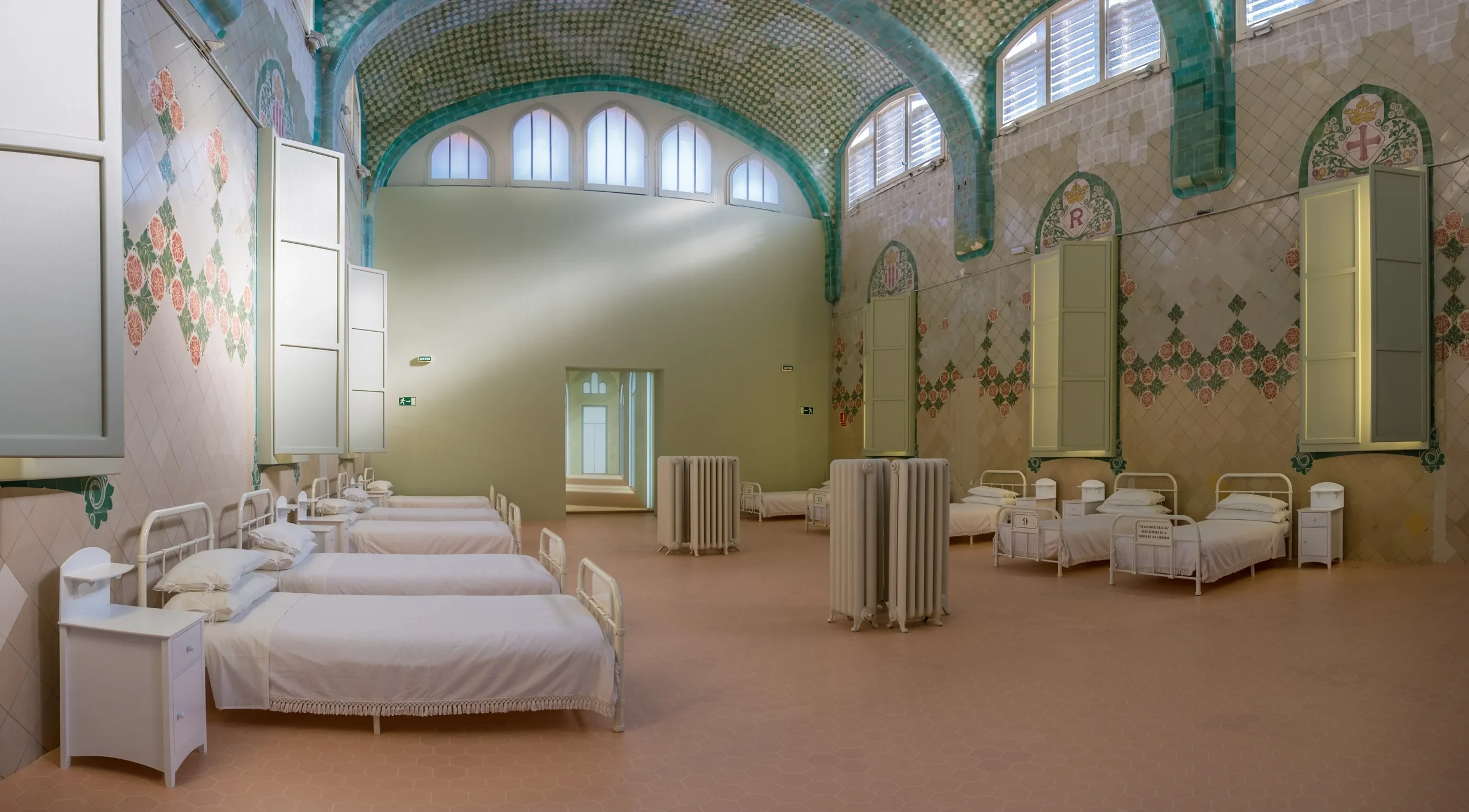
The hospital served Barcelona for most of the 20th century before medical operations were relocated to a newer facility. Today, the restored complex functions as a cultural, educational, and research campus, preserving its architectural integrity while adapting to new uses.
5. Eixample
Urban Planner: Ildefons Cerdà
Year Built: 1859 (construction began in the 1860s)
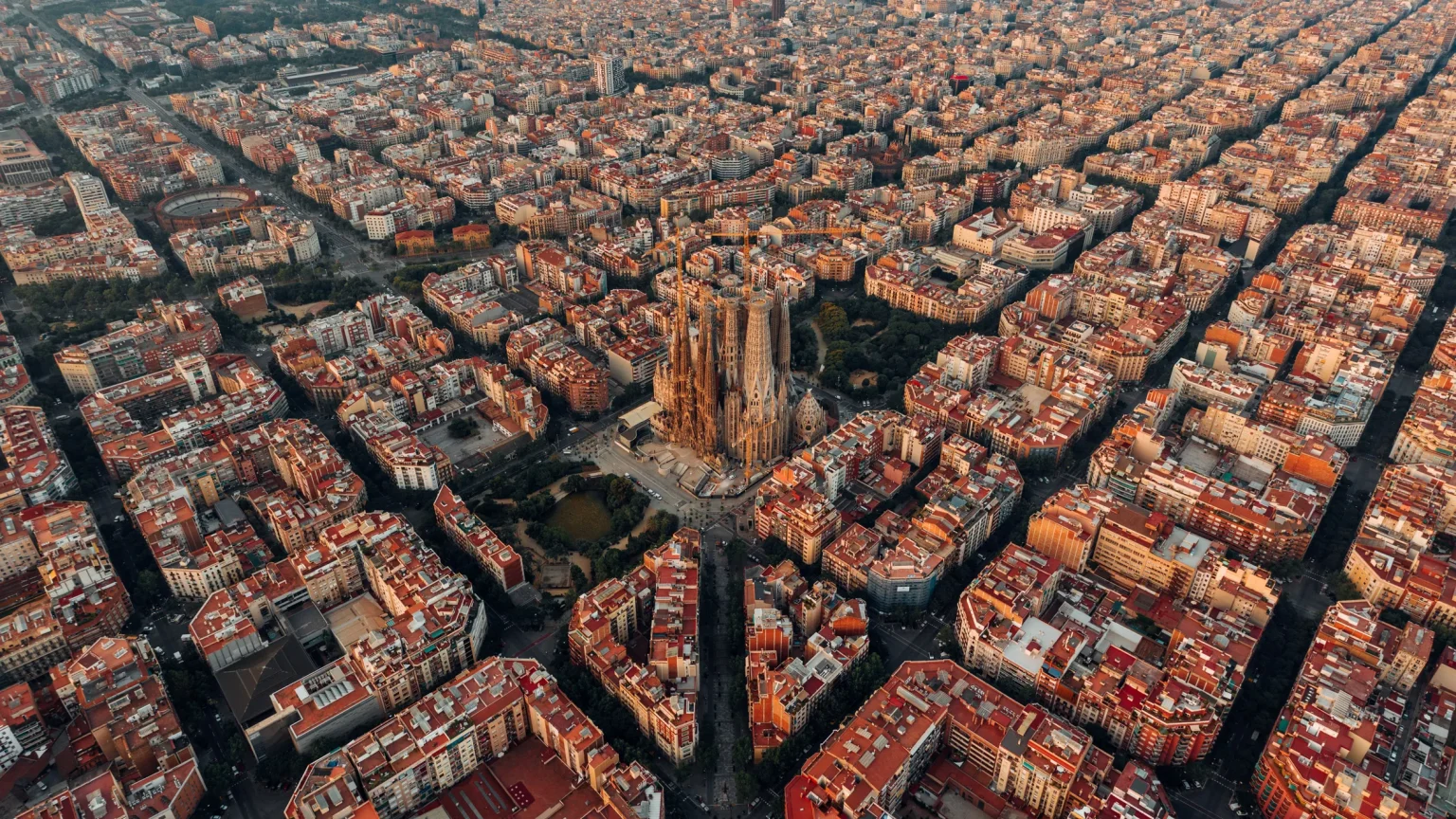
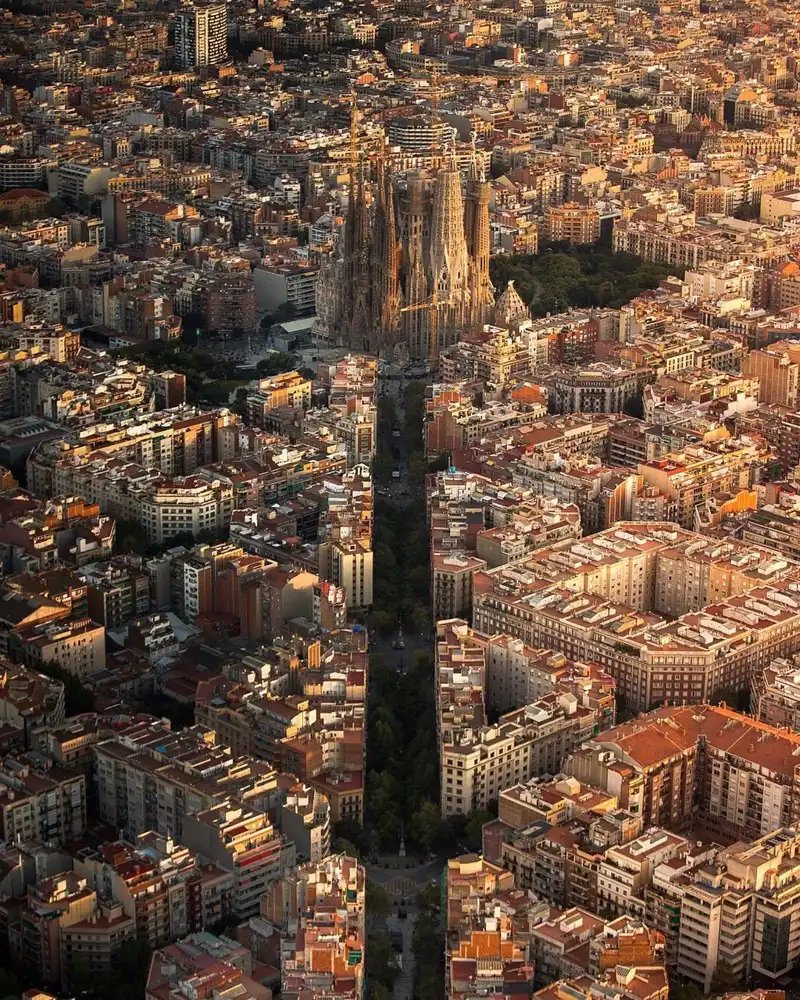
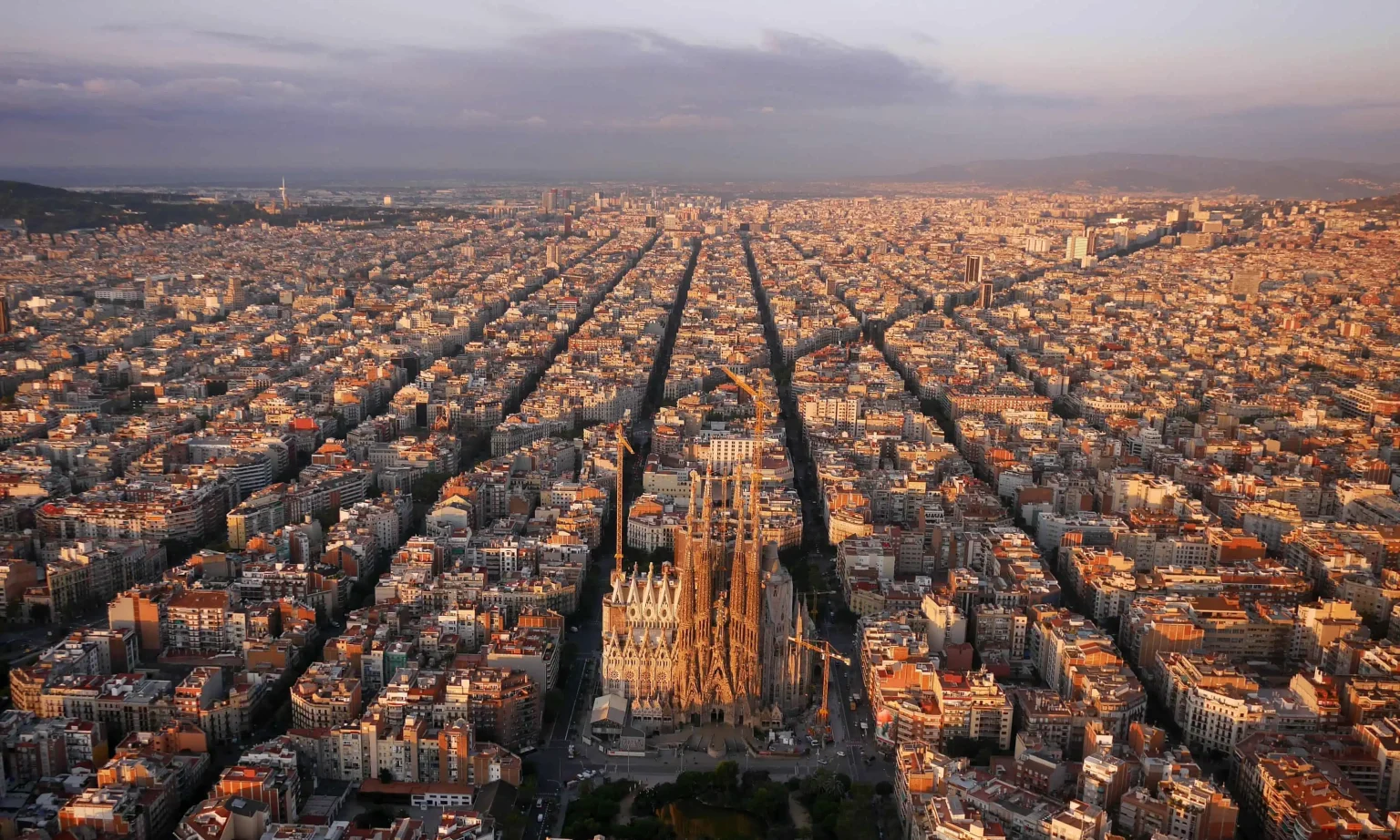
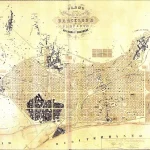
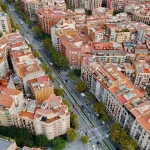
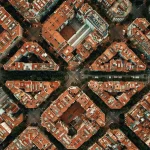
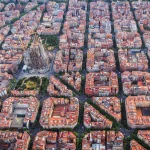
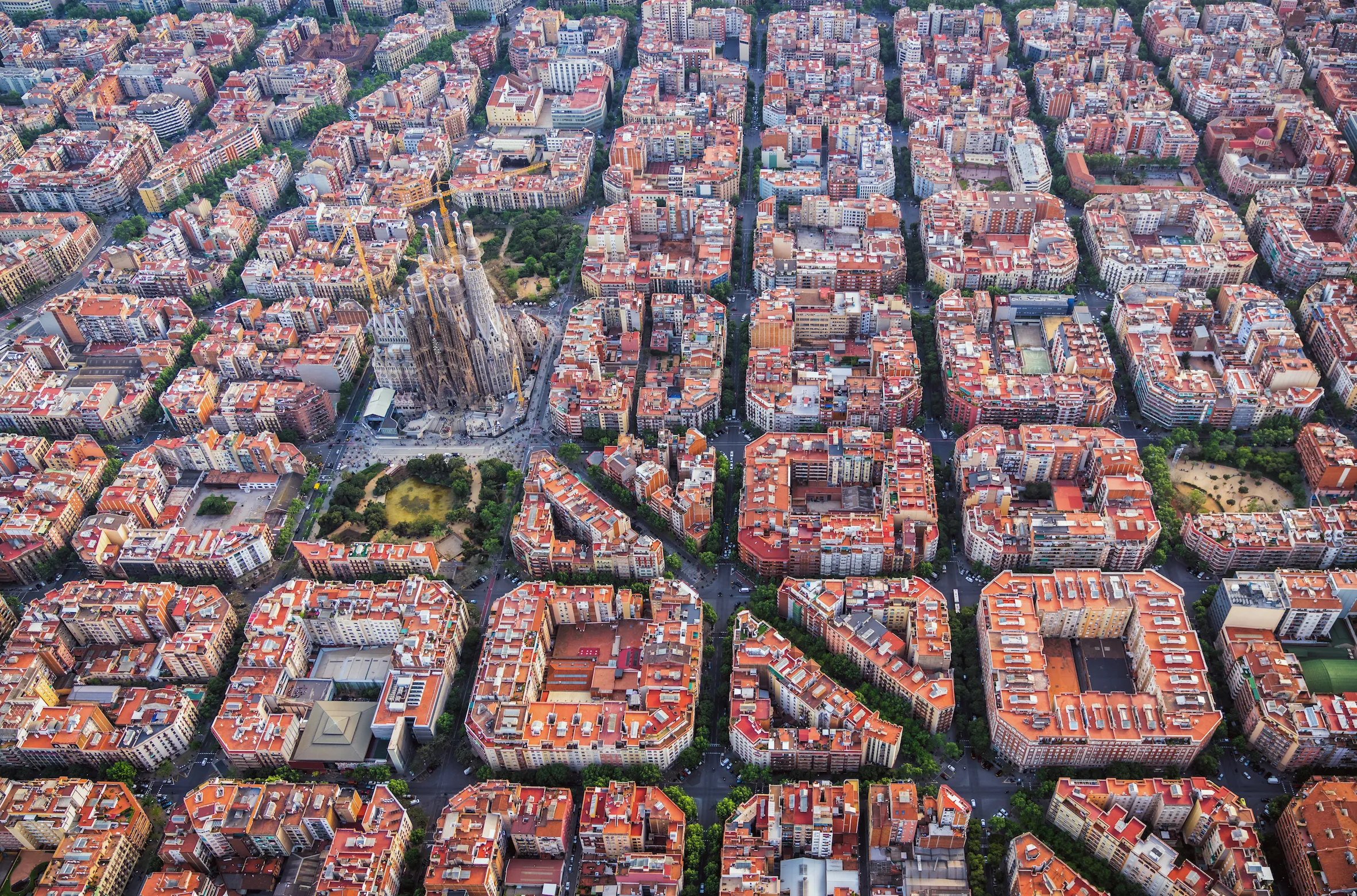
The Eixample is a foundational urban system that reshaped Barcelona’s growth and social life. Designed by engineer and planner Ildefons Cerdà in the mid-19th century, it emerged as a response to the severe overcrowding, poor sanitation, and social inequality of the medieval city. Cerdà proposed a radically reasonable expansion based on data, infrastructure, and human needs. The Eixample is defined by its orthogonal grid of uniform blocks, each measuring approximately 113 by 113 meters. The most distinctive feature is the chamfered corners, or chafláns, which widen intersections to improve visibility, airflow, and turning space for vehicles. These angled corners were functional decisions rooted in safety, circulation, and hygiene.
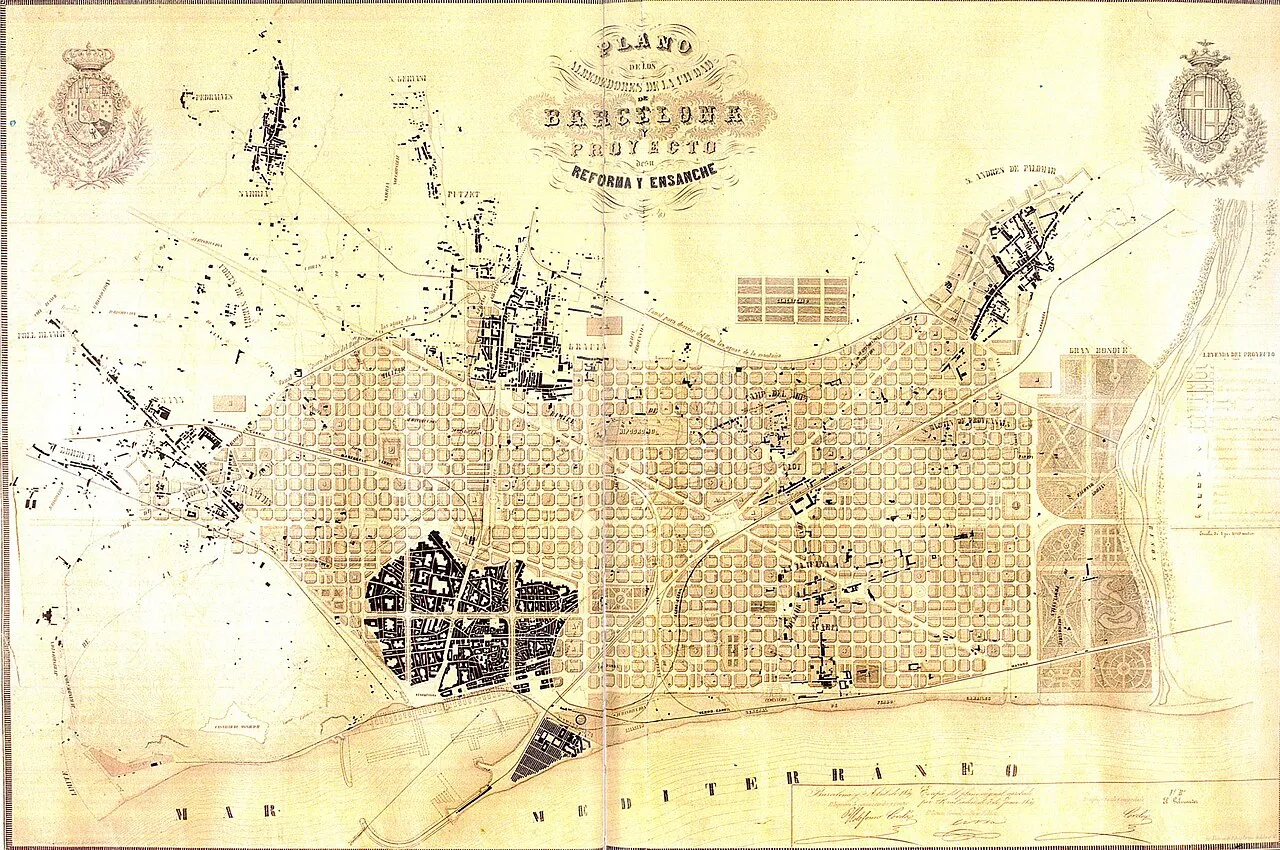
He envisioned the city as an organism in which mobility, light, air, and greenery were essential to public health. Streets were deliberately wide to allow sunlight and ventilation to penetrate deep into the urban fabric. Each block was originally intended to be built on only two sides, leaving generous interior courtyards as shared green spaces for residents. While later development compromised some of these ideals, the underlying structure remains legible.
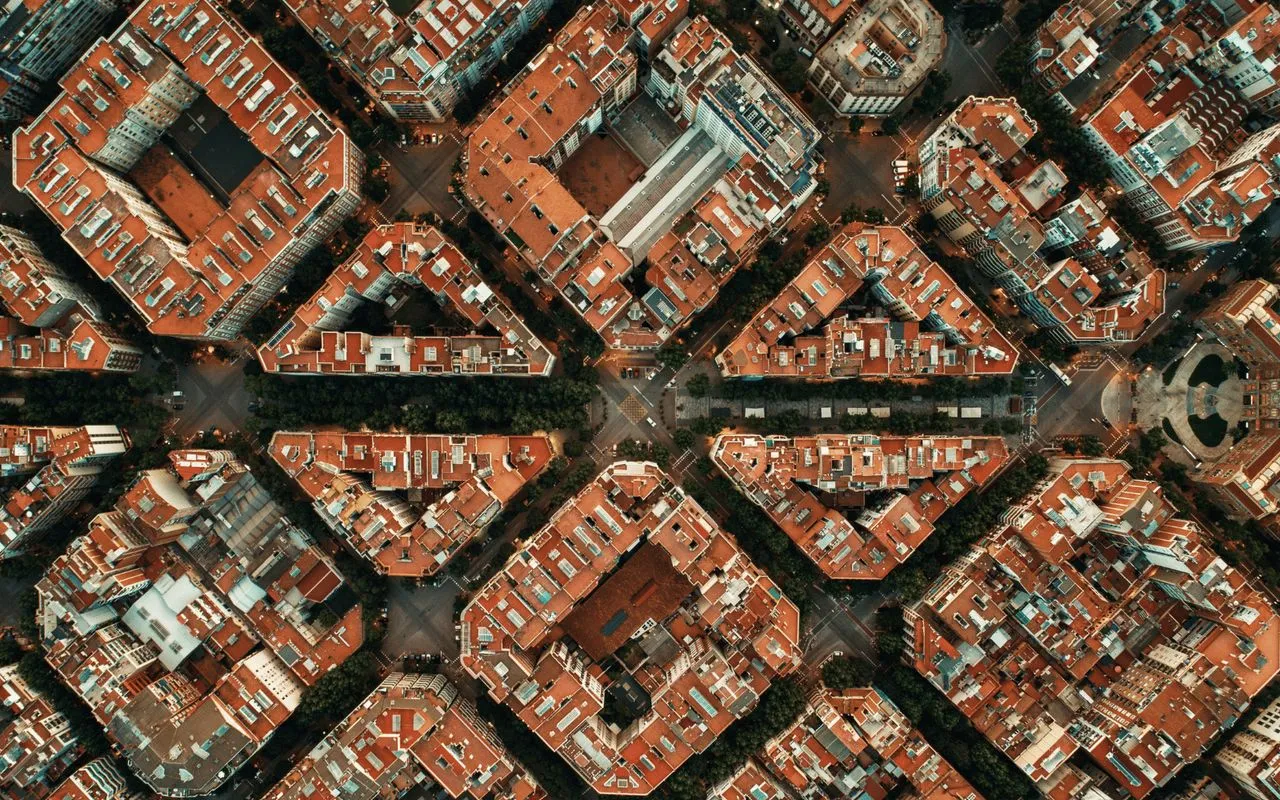
Cerdà integrated systems for water supply, sewage, waste removal, and transport into the grid from the outset, an approach that was uncommon at the time. He anticipated multiple modes of movement, designing streets that could accommodate pedestrians, horse-drawn vehicles, and later, public transport. This foresight allowed the Eixample to adapt to technological change without losing its coherence. The Eixample was intended to dissolve rigid class divisions. By repeating the same block structure across the expansion, Cerdà aimed to avoid spatial segregation and promote social mixing.
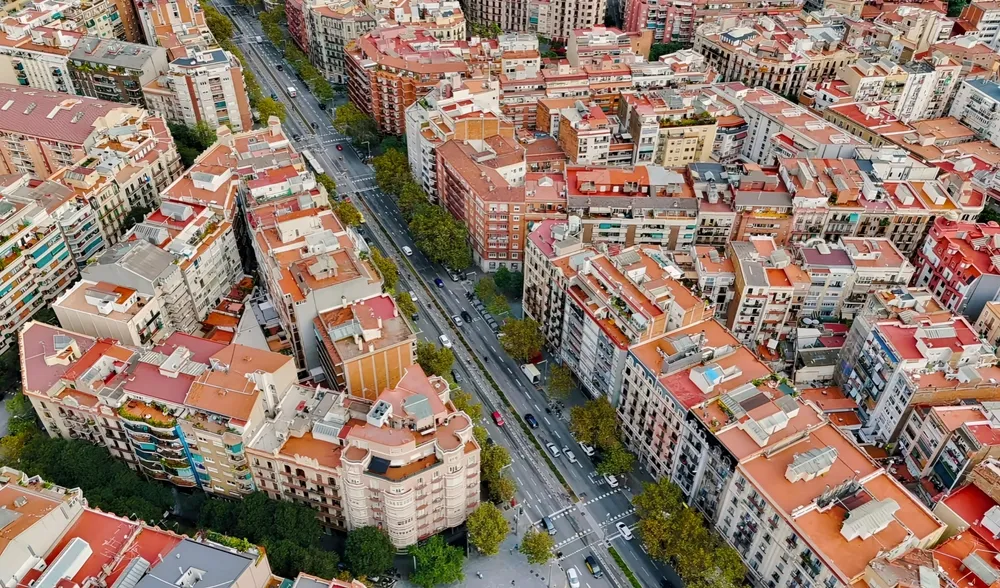
Over time, architectural expression within the Eixample evolved. The consistent grid became a framework for diverse buildings, including landmark works of Catalan Modernisme by architects such as Gaudí, Domènech i Montaner, and Puig i Cadafalch. This balance between strict urban order and architectural freedom is one of the district’s lasting strengths.
6. Montjuïc Communications Tower
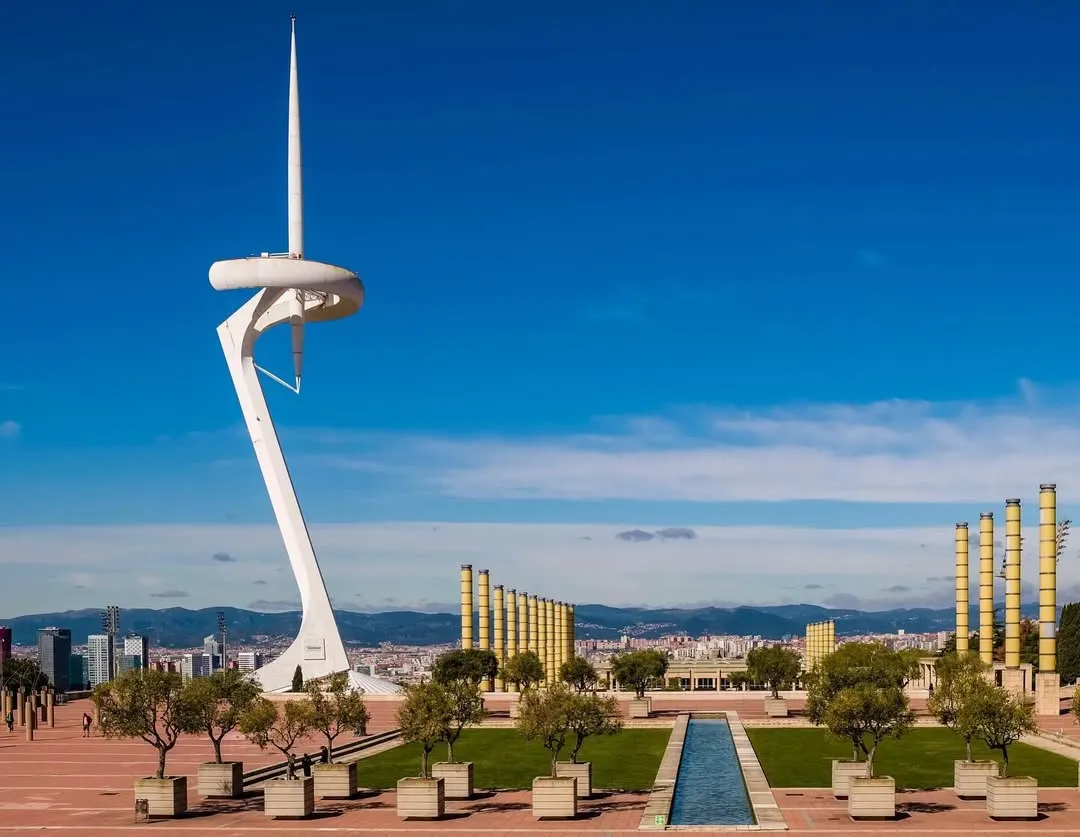
Architect: Santiago Calatrava
Year Built: 1989–1992
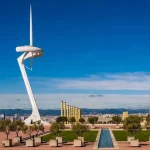
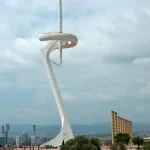
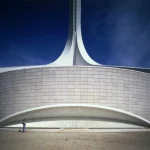
The Montjuïc Communications Tower, also known as the Torre Calatrava, was designed as part of Barcelona’s transformation for the 1992 Olympic Games. While its primary function is infrastructural, the tower was conceived as a public landmark, intended to carry symbolic weight alongside its technical role. Positioned on Montjuïc hill, it acts as both a broadcasting device and a visual marker within the Olympic landscape.
The tower is defined by a sense of controlled balance. Rising approximately 136 metres, it appears to lean and shift, as if resting lightly on a single point. This apparent instability is deceptive. The geometry is carefully calculated, with loads directed through a central concrete shaft and stabilised by steel elements working in tension and compression. The result is a structure that feels dynamic while remaining structurally rigorous.
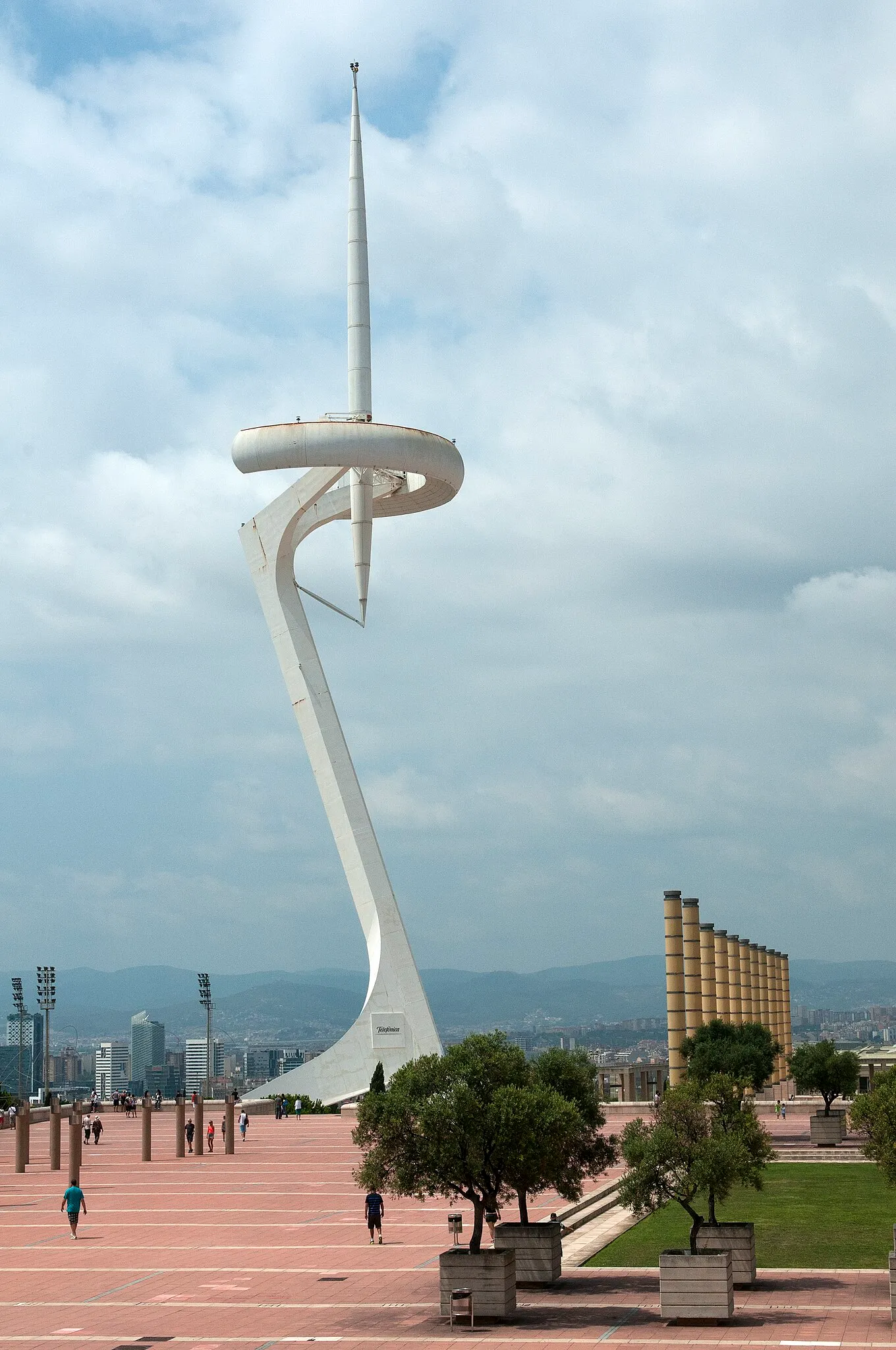
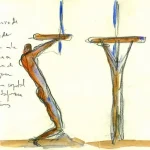
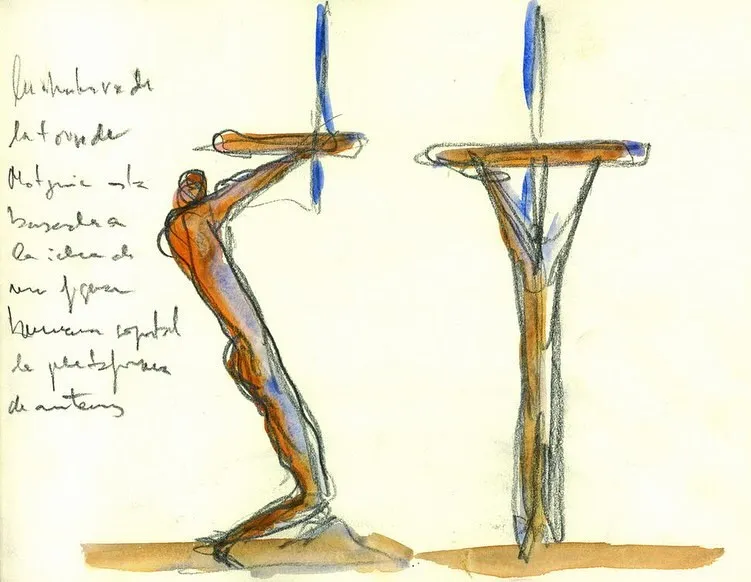
Calatrava’s concept merges human form, movement, and infrastructure. The tower is often read as an abstracted human figure holding the Olympic flame, a deliberate reference to the athletic body and the event it was built to serve. This anthropomorphic reading guides the formal logic of the structure. Every curve and inclination responds to structural necessity while reinforcing the sculptural narrative. White concrete and steel give it a sharp, luminous presence against the sky, reinforcing the sense of lightness and precision.
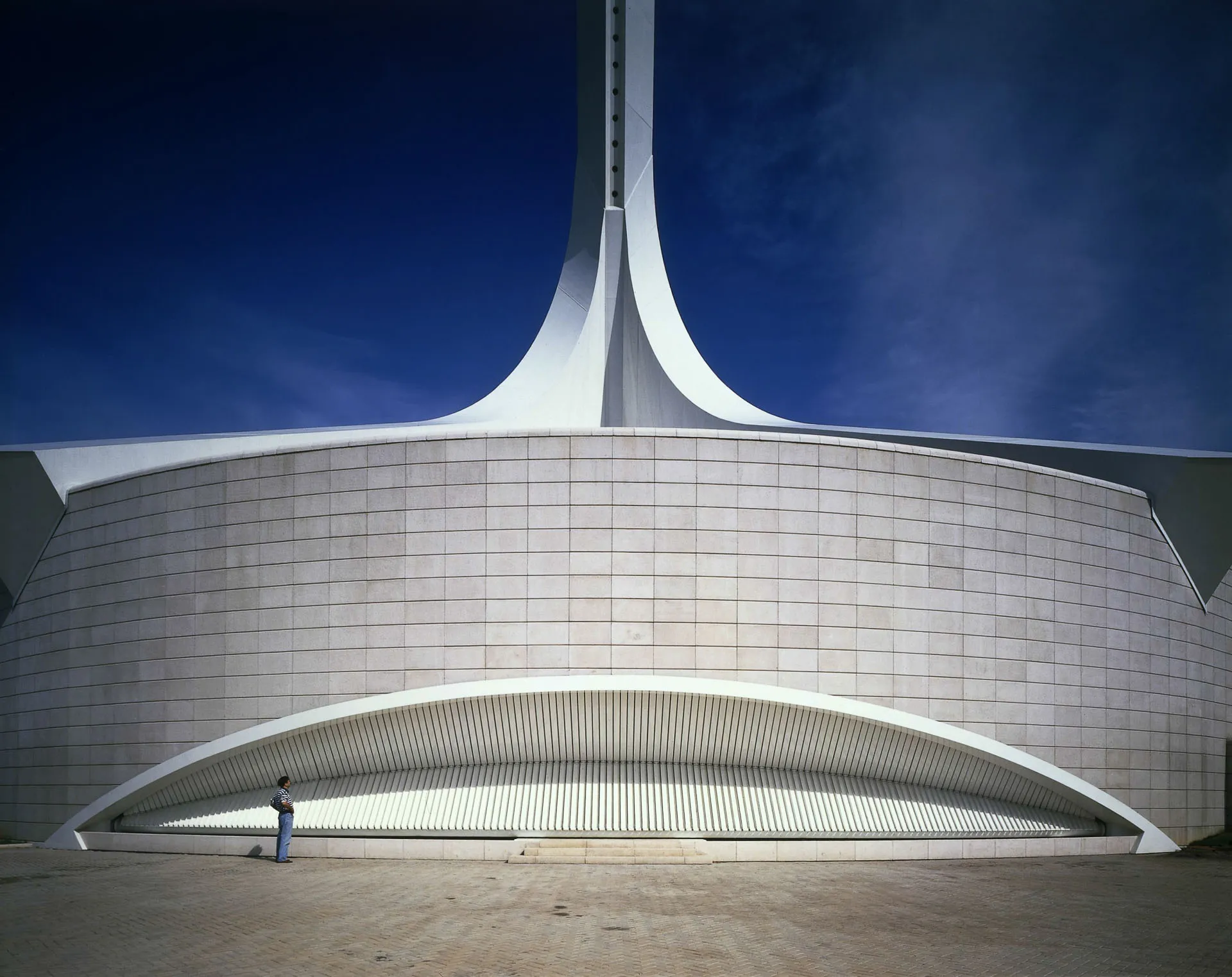
The tower serves as a telecommunications hub, broadcasting television and radio signals across the city. Its height and location were carefully selected to maximise coverage, while internal systems are compactly integrated to maintain the clarity of the external form.
7. Casa Batlló
Architect: Antoni Gaudí
Year Built: 1904–1906 (remodelling of an earlier structure)
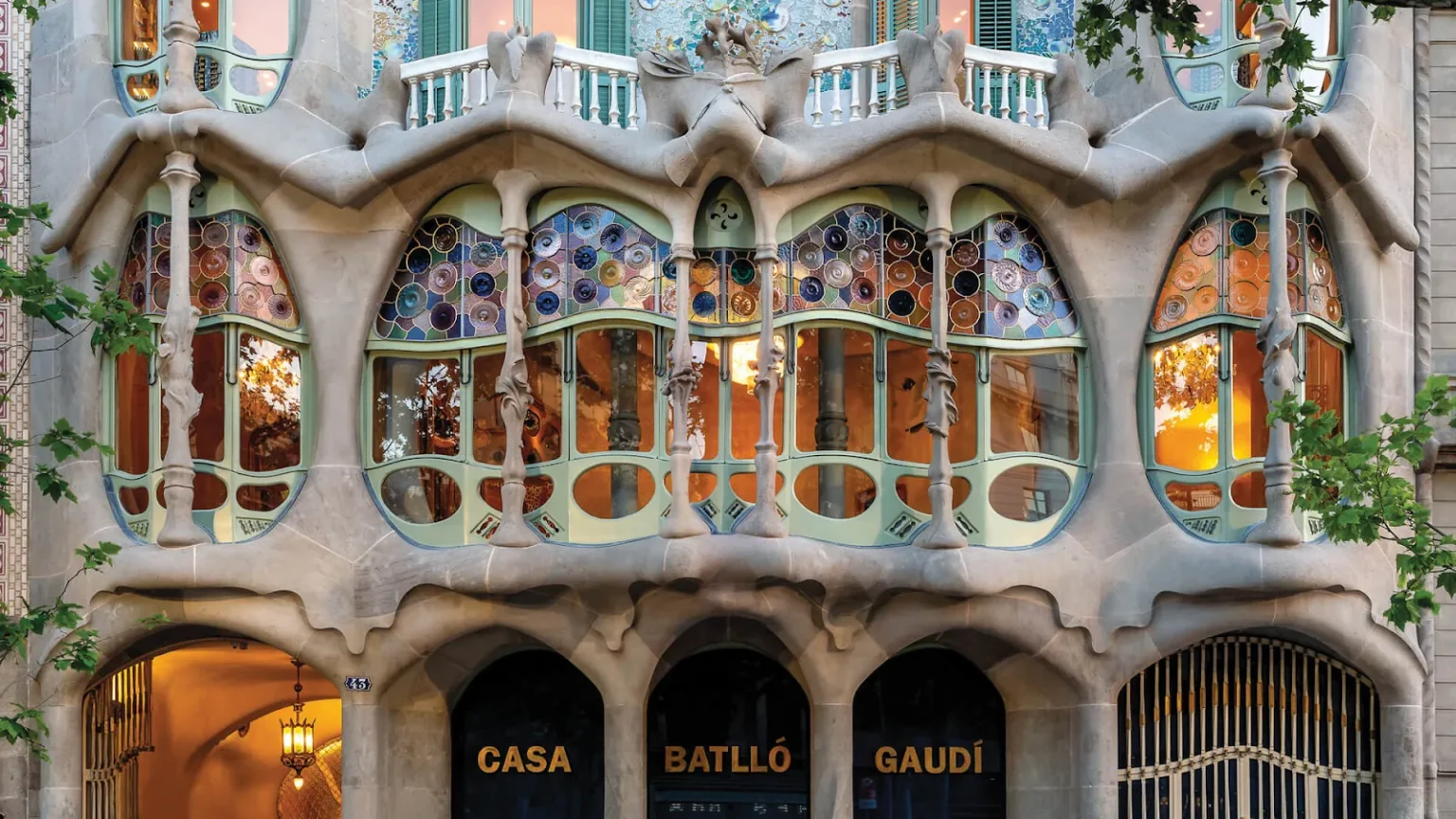
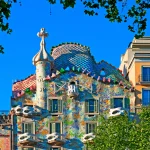
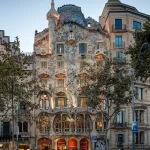
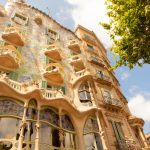
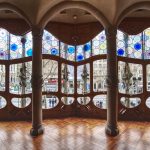
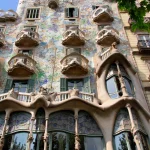
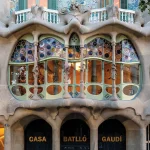
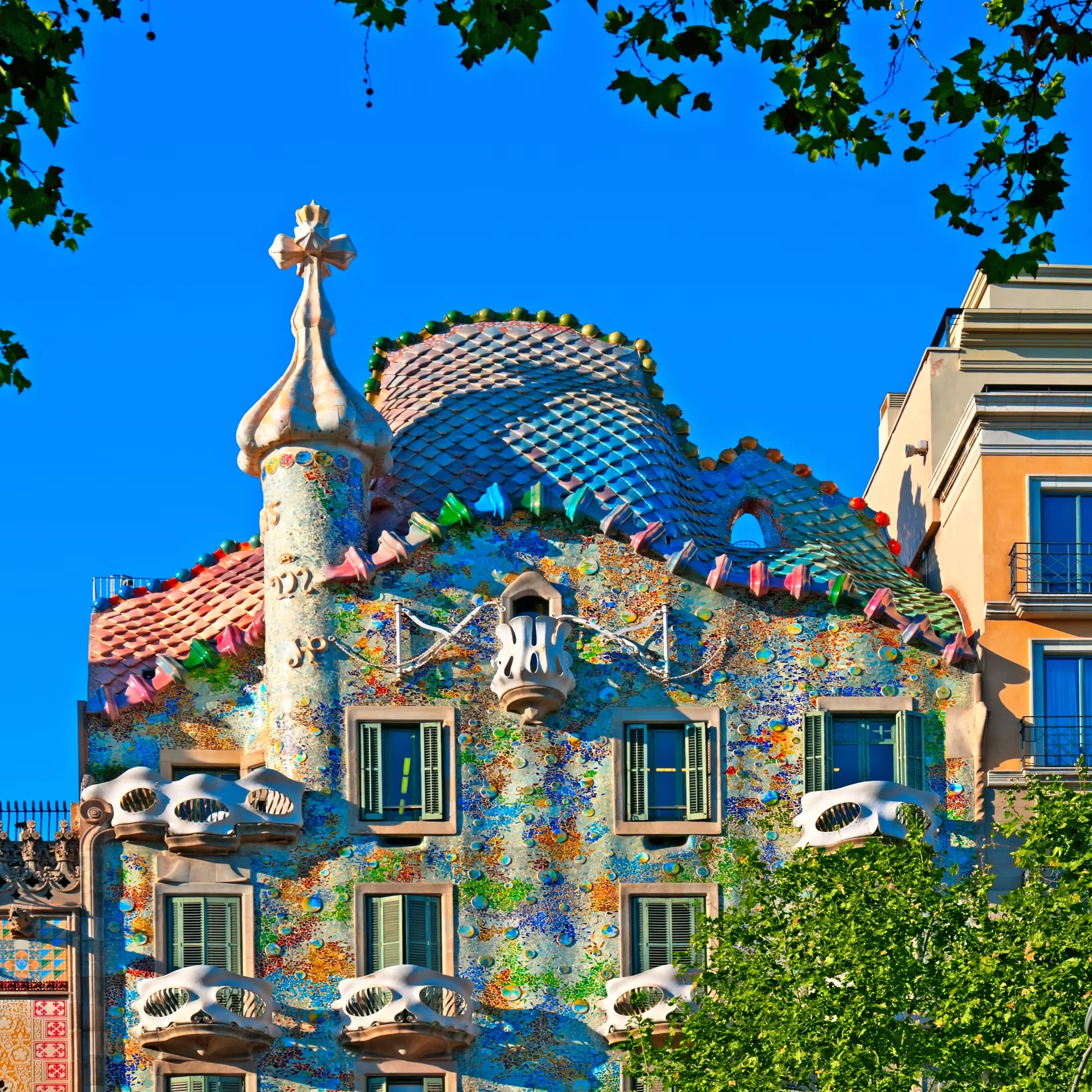
Casa Batlló is one of Antoni Gaudí’s most refined urban works, located on Passeig de Gràcia within Barcelona’s Eixample. Gaudí was designated to radically remodel an existing 19th-century house, transforming it into a highly experimental exploration of structure, surface, and domestic space.

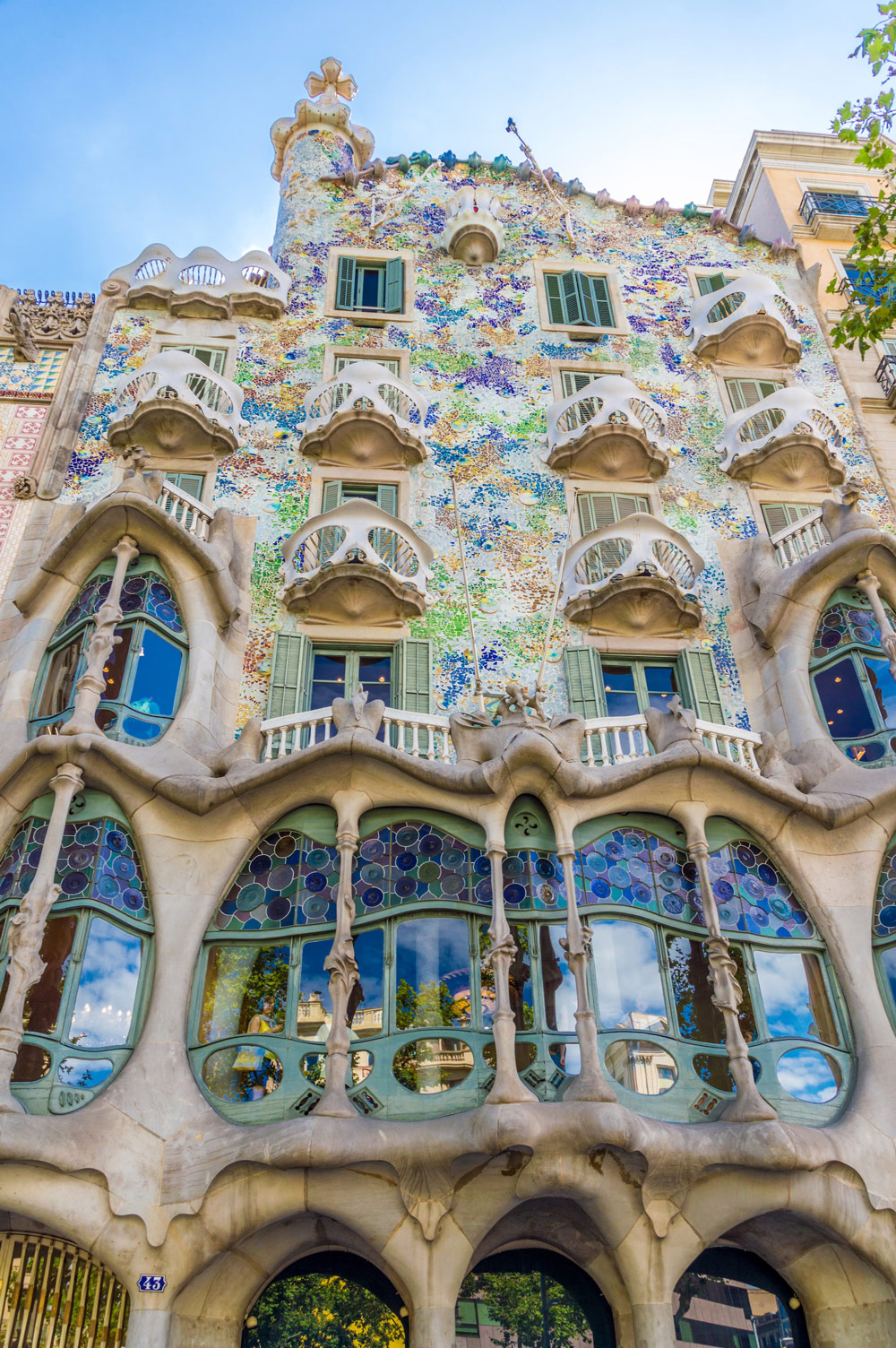
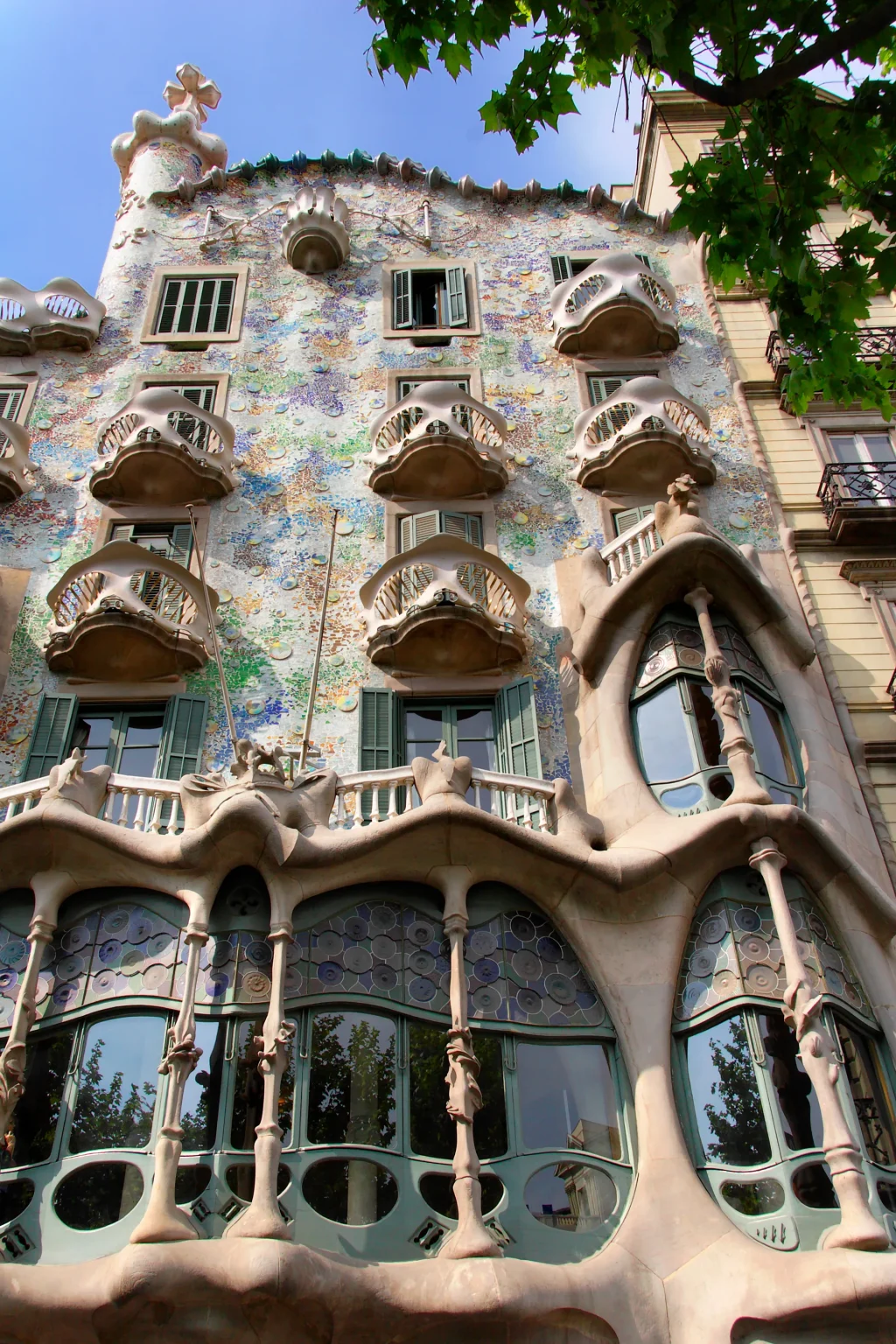
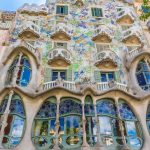
Casa Batlló’s street elevation undulates like a soft skin, composed of stone, glass, and ceramic mosaic (trencadís). Balconies resemble masks or skeletal forms, while the roof curves like the spine of a dragon, often interpreted as a reference to the legend of Sant Jordi, the patron saint of Catalonia. These figurative readings, however, are grounded in precise material and structural decisions rather than pure symbolism.

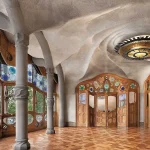
The concept behind Casa Batlló is rooted in nature as an ordering system. Gaudí avoided straight lines wherever possible, favouring curves that distribute forces more efficiently and create spatial continuity. Internally, the house is organised around a central light well, expanded and reshaped to draw daylight deep into the building. Tiles within the light well graduate in colour from dark to light, correcting for uneven illumination and creating a consistent visual balance across floors.
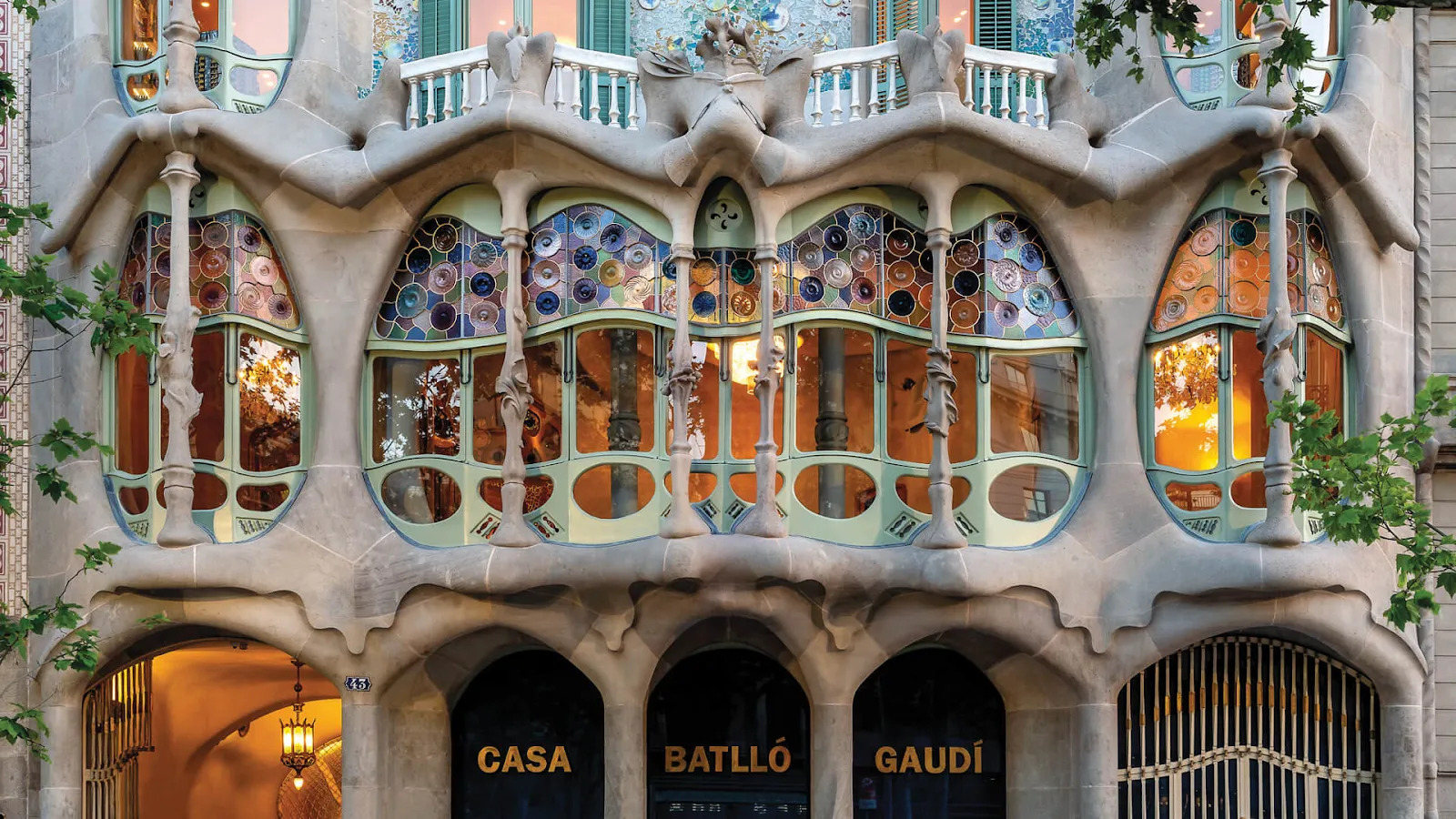
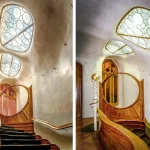
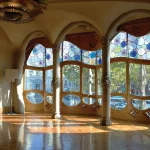
Gaudí designed natural ventilation systems, adjustable windows, and spatial gradients that regulate temperature and airflow. Doors, vents, and openings are shaped to guide the movement of air intuitively. These strategies reveal Gaudí’s practical understanding of climate, often overlooked beneath the building’s expressive surface. Casa Batlló was designed as a private residence for the Batlló family, with rental apartments above. Gaudí treated domestic life with the same intensity he applied to monumental works. Staircases, handrails, ceilings, and even door handles were custom-designed to fit the human body, reinforcing a tactile, ergonomic relationship between user and building.
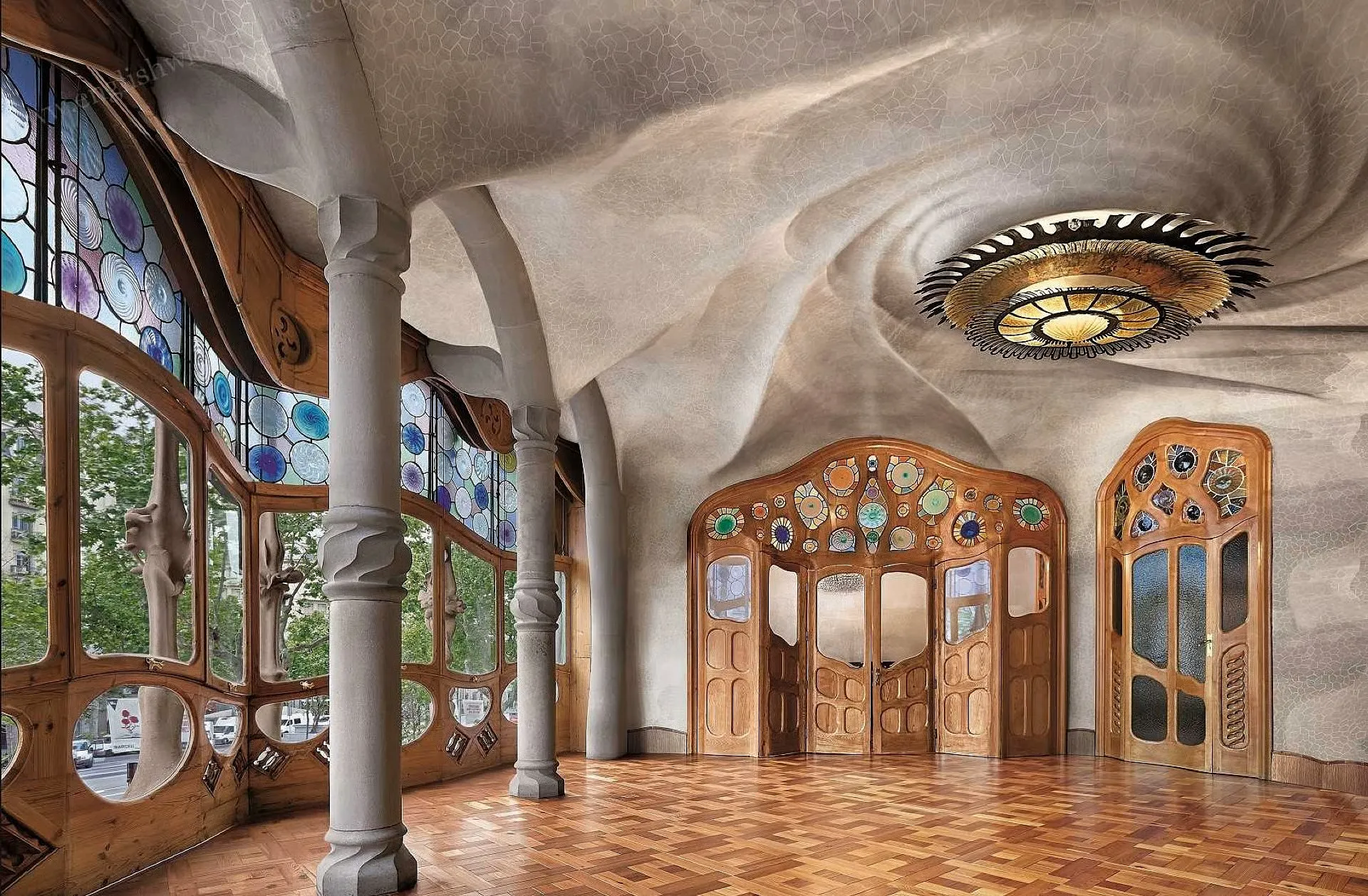
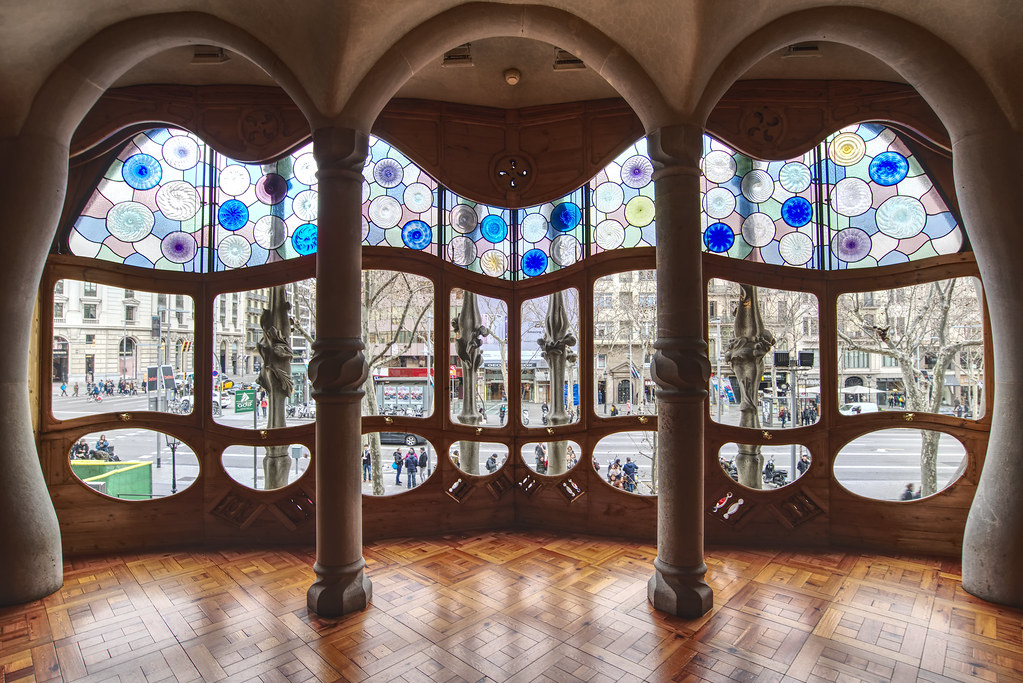
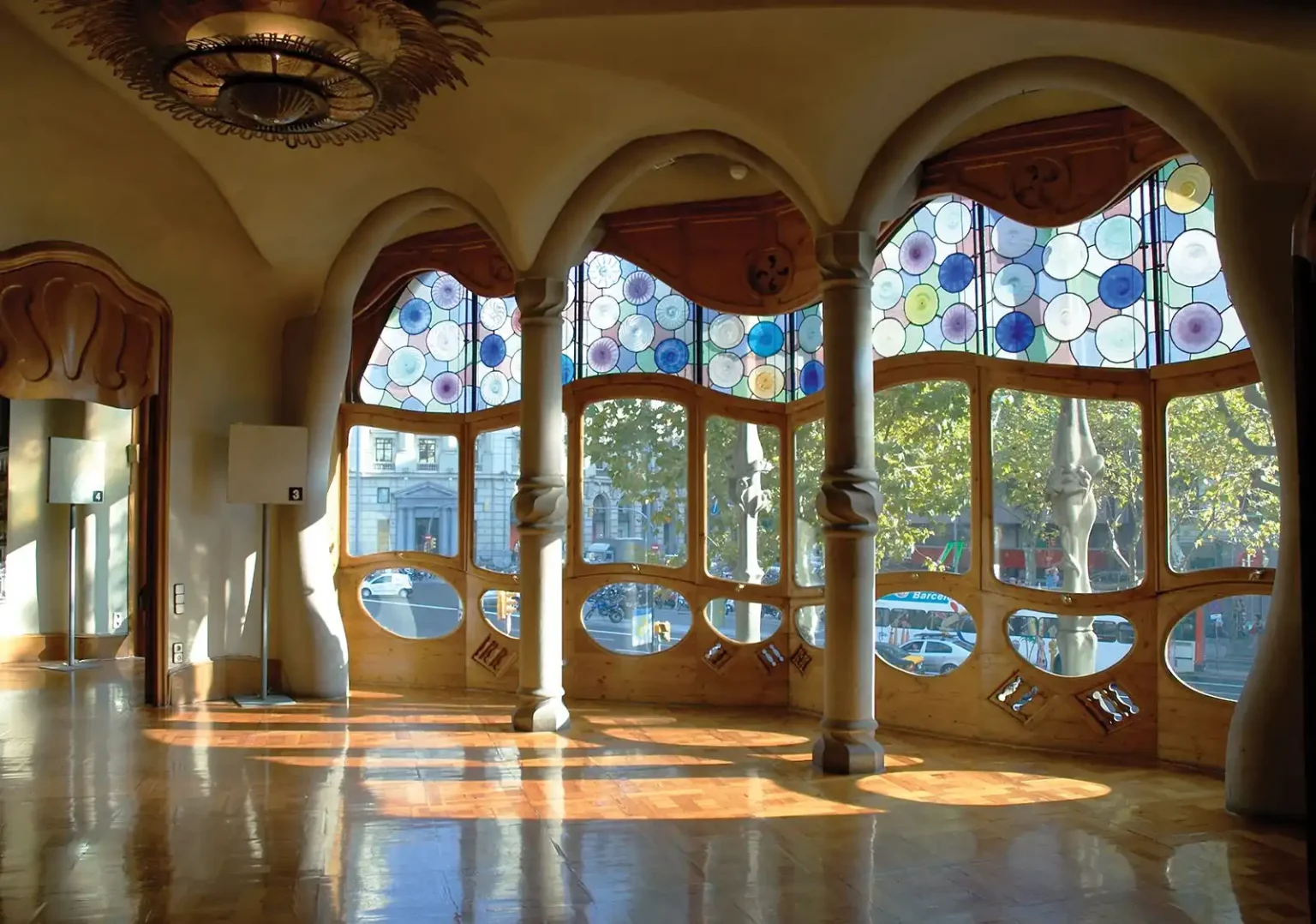
Ceilings ripple outward like water disturbed by motion, wooden joinery curves organically, and structural columns dissolve into spatial features. Ornament is never applied independently; it emerges from construction, material behavior, or use. This synthesis is central to the building’s coherence.
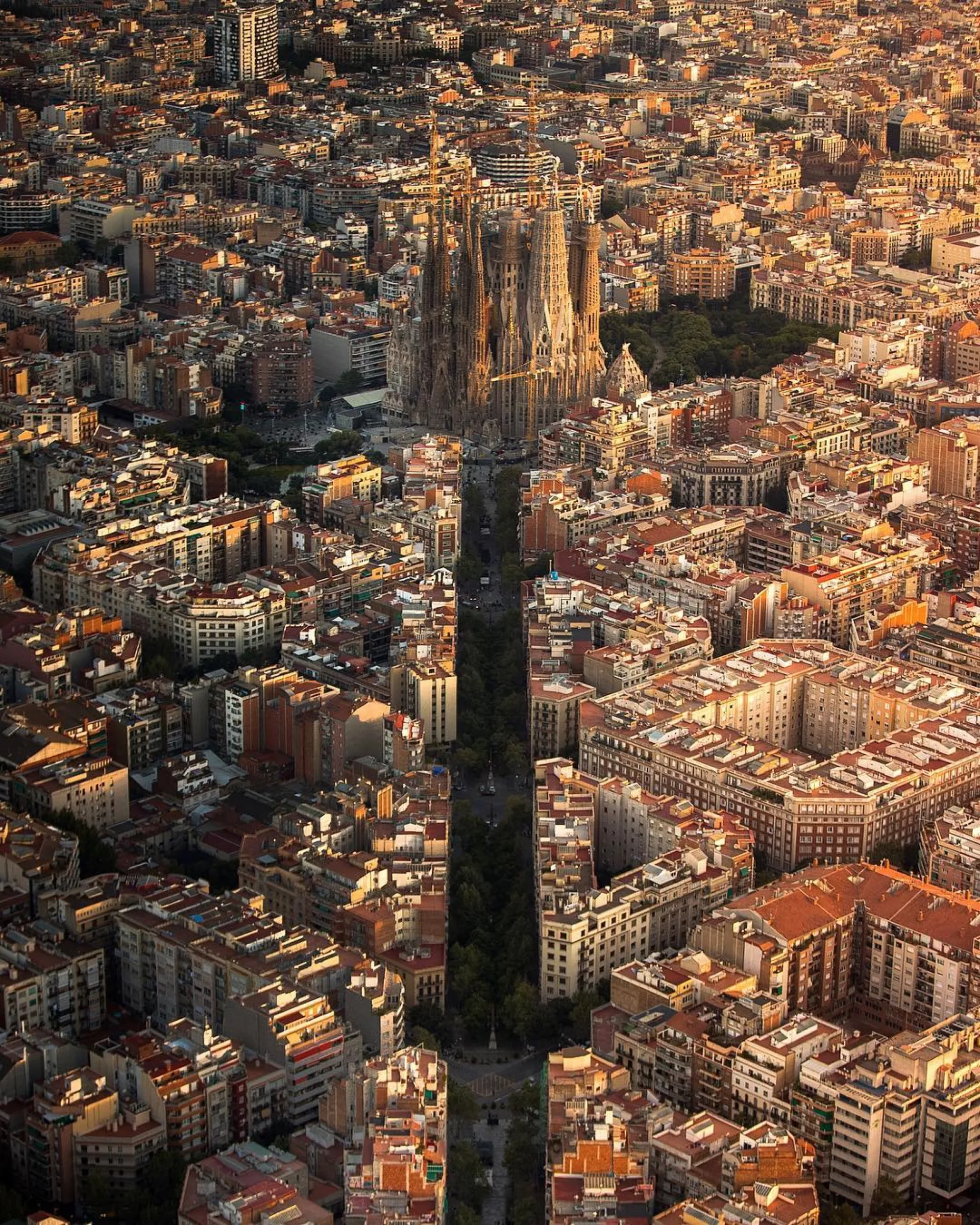
Barcelona, as the world capital of architecture, is the way architectural thinking transforms the city’s everyday life. Planning, infrastructure, housing, and public space are treated as cultural acts, shaped by long-term vision. Figures like Gaudí and Cerdà established foundations rooted in structure, nature, and social responsibility, while later architects expanded those ideas through modernism, technological innovation, and civic infrastructure. In 2026, as Barcelona takes on the role of World Capital of Architecture, the city presents architecture as a living system to be walked, questioned, and inhabited. This continuity between past endeavor and present responsibility is what makes Barcelona a showcase of architecture and a city shaped by it.