

Researchers at ETH Zurich are developing a digital co-pilot that helps specialists take a comprehensive approach to restoring historic sandstone buildings affected by weathering. The system combines artificial intelligence and extended reality to support on-site assessment and decision-making. An initial version has already been created and tested as part of a pilot project at the Notre-Dame Cathedral in Lausanne. The work shows how advanced digital tools can strengthen built heritage conservation.
The Notre-Dame Cathedral in Lausanne was built between 1170 and 1235 and is the largest Gothic church in Switzerland. Over the centuries, this major monument has been altered, extended, and restored many times. Its lantern tower, nearly 80 meters high, has seen several redesigns, the latest during a major restoration campaign at the end of the 19th century. The sandstone used in the cathedral and in many monuments across the Swiss plateau is highly susceptible to degradation caused by water, including freezing, swelling, and atmospheric pollution. This makes conservation and water management constant priorities.
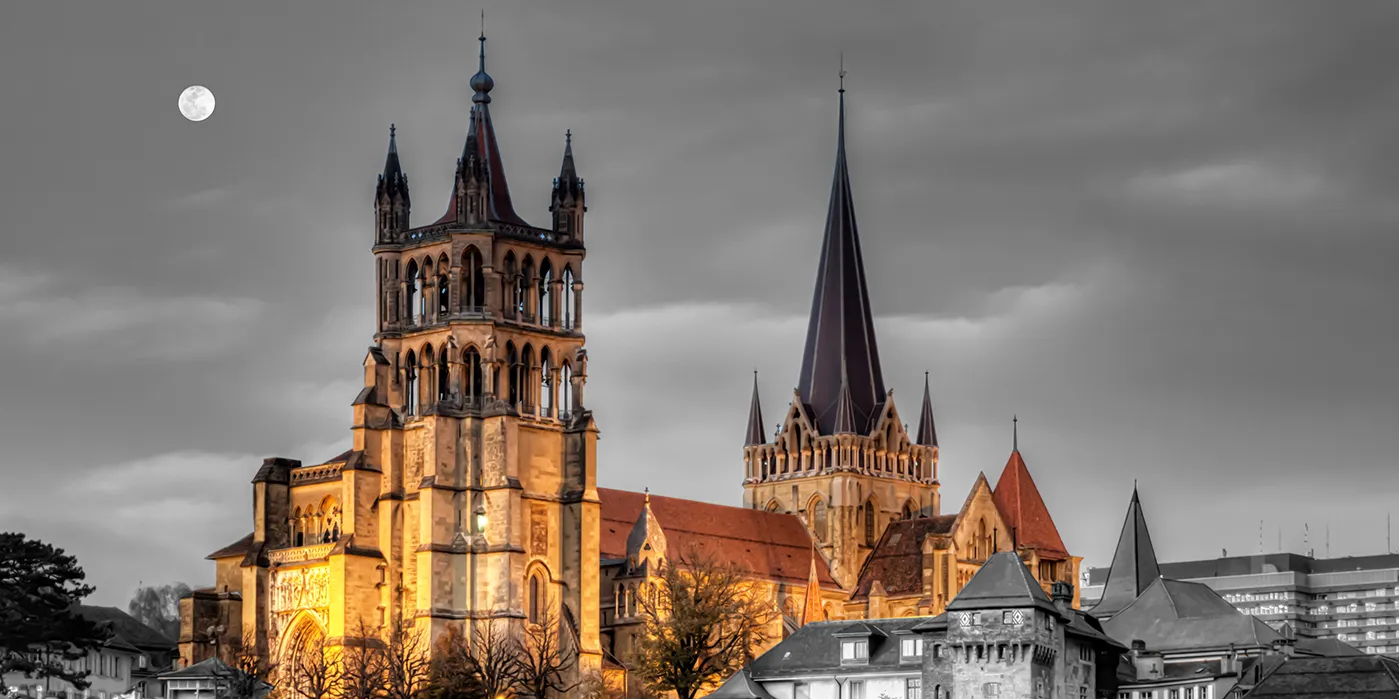
ETH Zurich explores extended reality for heritage conservation
ETH Zurich researchers have highlighted in several scientific publications how digital tools can support conservators. This work is part of the “Heritage++” research project at the ETH Institute for Building Materials, led by Robert Flatt, Professor of Physical Chemistry of Building Materials, and linked to the ETH Center Design++, which studies computer-assisted methods in architecture, engineering, and construction.
The current focus is on applying extended reality and artificial intelligence to the restoration of historic buildings.
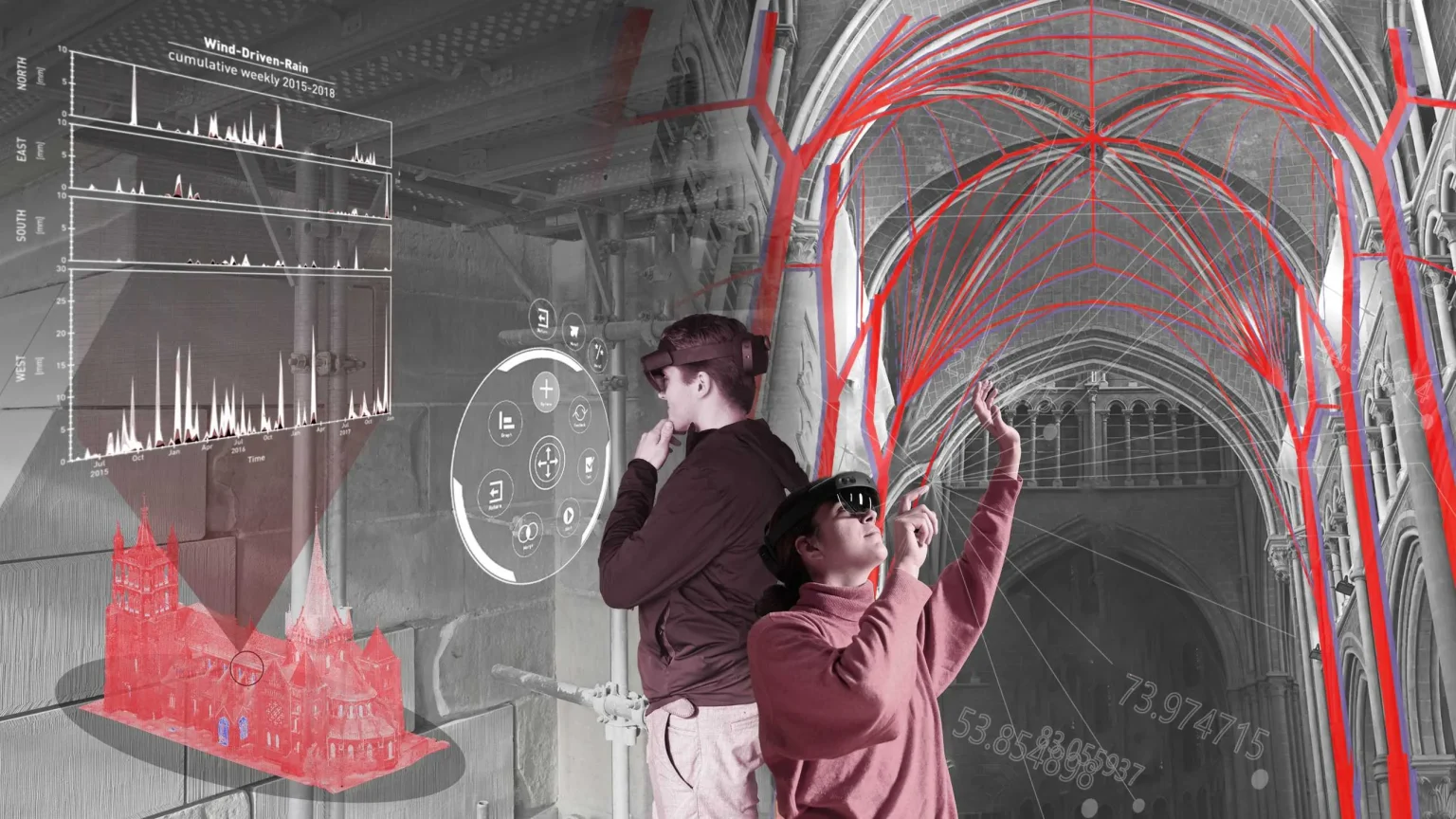
The main result is an immersive co-pilot, a virtual assistant designed to support conservators during their work. It relies on spatial computing technologies that analyze physical space and overlay it with digital information, visible through a tablet or an XR headset. “XR technologies have huge potential to support collaboration between experts in architecture, materials science, history, and built heritage conservation,” says Robert Flatt.
In a recent article in the International Journal of Architectural Heritage, the researchers show how structural information can be integrated and enhanced through XR to support decision-making and improve knowledge transfer. “Our article presents a new way to show and explore how the building behaves structurally. Experts from different fields and the general public can view these insights, helping ensure that structural safety and integrity are properly considered in future interventions,” explains Ricardo Maia Avelino, postdoctoral fellow at Design++.
Mapping Lausanne Cathedral in 3D
Development of the digital co-pilot for Lausanne Cathedral progressed in two steps. First, the team created 3D models of the cathedral using laser scanning and photogrammetry surveys. They then enriched the models with detailed data on each stone element, assigning an age, mineralogical composition, and degradation type. This allows users to see when a stone was installed, where it came from, and its current condition. The data came from several sources, including geologists at the University of Lausanne. For now, mapping covers specific sections of the cathedral, with work continuing.
Visitors using a tablet or an XR headset can view these mapped areas with overlays showing age, material composition, and damage. “During on-site inspections, our digital co-pilot gives conservators an overview of the monument’s condition and the relevant details. Based on the weak points they identify, they can then decide what should be done,” says Yamini Patankar, a doctoral student supported by a Swiss Government Excellence Scholarship.
Climate-resilient restoration strategies
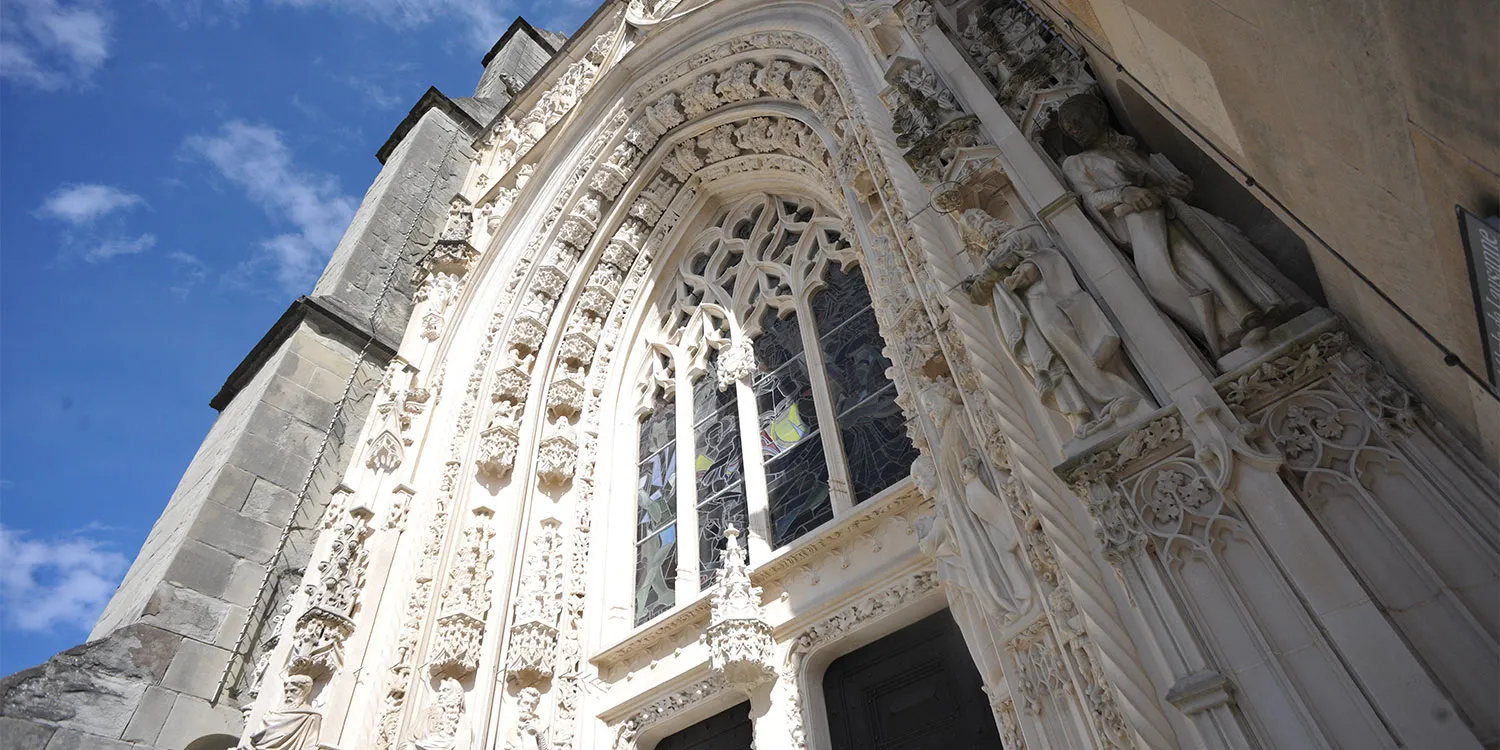
A key principle in heritage restoration is to retain as much original material as possible. To support this, ETH Zurich researchers study how sandstone deteriorates. Water drives all degradation processes, mainly through rain. While vertical rain can be managed architecturally, wind-driven rain cannot. Exposure to this type of rain, especially during extreme wetting followed by rapid drying, is a major cause of damage and varies sharply depending on location.
During such events, moisture penetrates the clay-bearing sandstone and causes deterioration through swelling, salt crystallization, and freezing. To better understand these processes and the impact of air pollution, researchers have been measuring wind-driven rain, local microclimate, and moisture profiles inside the stones for several years using a sensor network around the cathedral.
At the same time, the team is developing a model that links local exposure, especially wind-driven rain, to the observed forms and severity of damage. This could help experts predict how damage may evolve with time and under changing climate conditions, including more frequent extreme weather events. These insights can inform tailored restoration strategies and improve the long-term durability of interventions.
Applicable to other buildings
Digital tools such as 3D models and Heritage Building Information Modelling are already used in built heritage. The “Heritage++” project builds on this by integrating data from multiple disciplines, with a strong focus on conservation, and by making this information interactive. It also creates space to incorporate the practical expertise of conservators. The digital co-pilot developed for Lausanne Cathedral could be applied to other sandstone monuments, including bridges, castles, and monasteries, and eventually to buildings made from other materials.

Christophe Amsler, the architect responsible for Lausanne Cathedral, expects digital technologies to become standard in conservation. “Preserving historic monuments requires constant care. Advances in technology can help us repair and maintain these buildings while staying faithful to their original character and heritage.”
A digital app for the cathedral’s 750th anniversary
In October, Lausanne marked the 750th anniversary of the Notre-Dame Cathedral. To mark the occasion, ETH researchers developed an app within the “Heritage++” project to give the public insight into ongoing conservation work. “Visitors can use the app, which incorporates extended reality, to learn about the cathedral’s history and to understand the conservation work taking place and why it matters,” says ETH doctoral student Camilla Tennenini.
The app combines specialist literature with video recordings in which experts explain the restoration. This information is also displayed on the cathedral itself through the 3D model and augmented reality, accessible inside or outside the building via a smartphone or tablet.
Looking ahead, the co-pilot will be expanded with a large language model that extracts information from specialist literature and videos. Conservators will then be able to access relevant knowledge directly on-site. In time, the public will also be able to ask questions about the cathedral’s renovations through the app.