



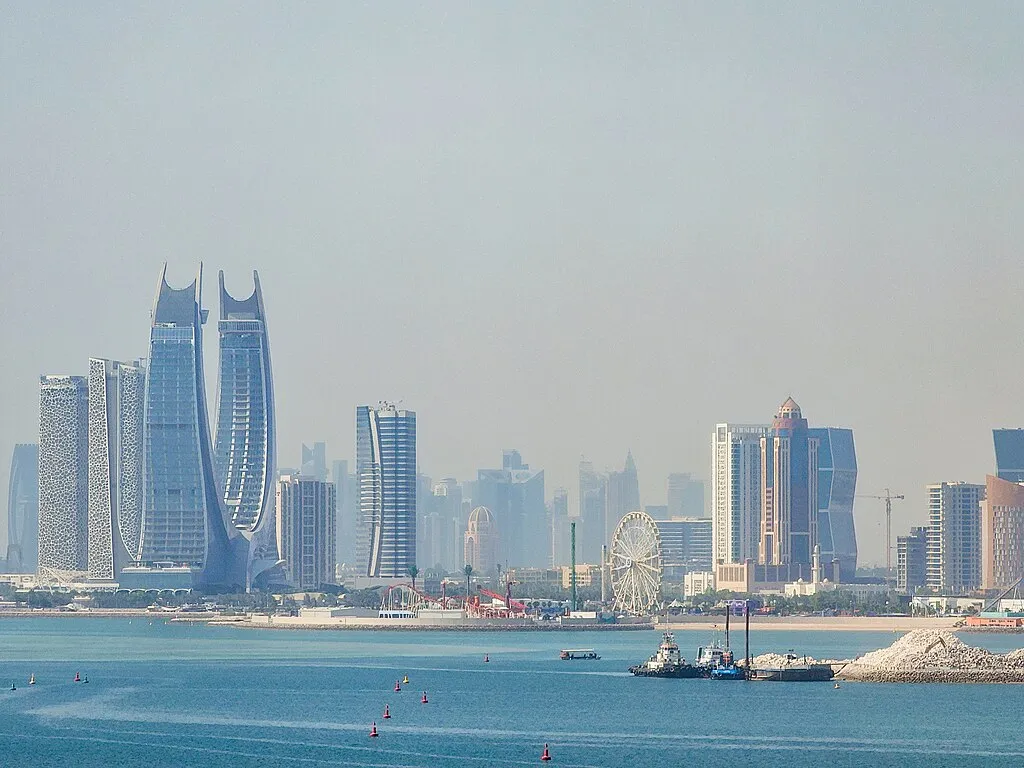



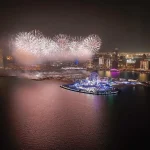
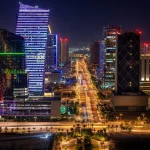
Lusail, a 38-square-kilometer masterplanned city rising just north of Doha, stands today as one of the world’s most ambitious urban developments. Conceived under Qatar’s National Vision 2030, it serves as a living laboratory for large-scale infrastructure, from district cooling and smart city control systems to an integrated tram network connecting to the capital. It is also the setting for the tournament’s showpiece, the Lusail Stadium, which hosted the 2022 FIFA World Cup final. Lusail City in Qatar is a useful case study for architects and urbanists examining the ways mega-events influence urban development.
Masterplan and program: a mixed-use metropolis
Conceived by the Lusail Real Estate Development Company for Qatari Diar, Lusail’s master plan lays out 19 districts, including marinas and lagoons, a central boulevard, residential towers, and waterfront villas. The city is designed to accommodate hundreds of thousands of residents and workers while concentrating hospitality and entertainment along its waterfront and Qetaifan (entertainment) islands.
The ambition is to create a self-contained, mixed-use city centered around a business district, cultural venues, and expansive public open spaces. The city’s designers promoted Lusail as an integrated urban system.
Infrastructure as an urban strategy
What distinguishes Lusail from many developments is the emphasis on integrated utilities: a large-scale district cooling network, underground utilities, pneumatic waste systems, and a light-rail/tram backbone intended to knit districts together and connect Lusail to Doha’s metro network. Marafeq has been called one of the largest district cooling systems in the world to serve the new city. Proponents argue that district cooling reduces per capita energy demand for air-conditioning and simplifies building systems across diverse developments.
The Lusail Light Rail Transit and links to the Doha Metro were planned to make the city transit-first and to absorb the massive short-term mobility demand generated by major events. These infrastructure commitments are central to Lusail’s narrative as a smart, sustainable city.
Lusail Iconic Stadium
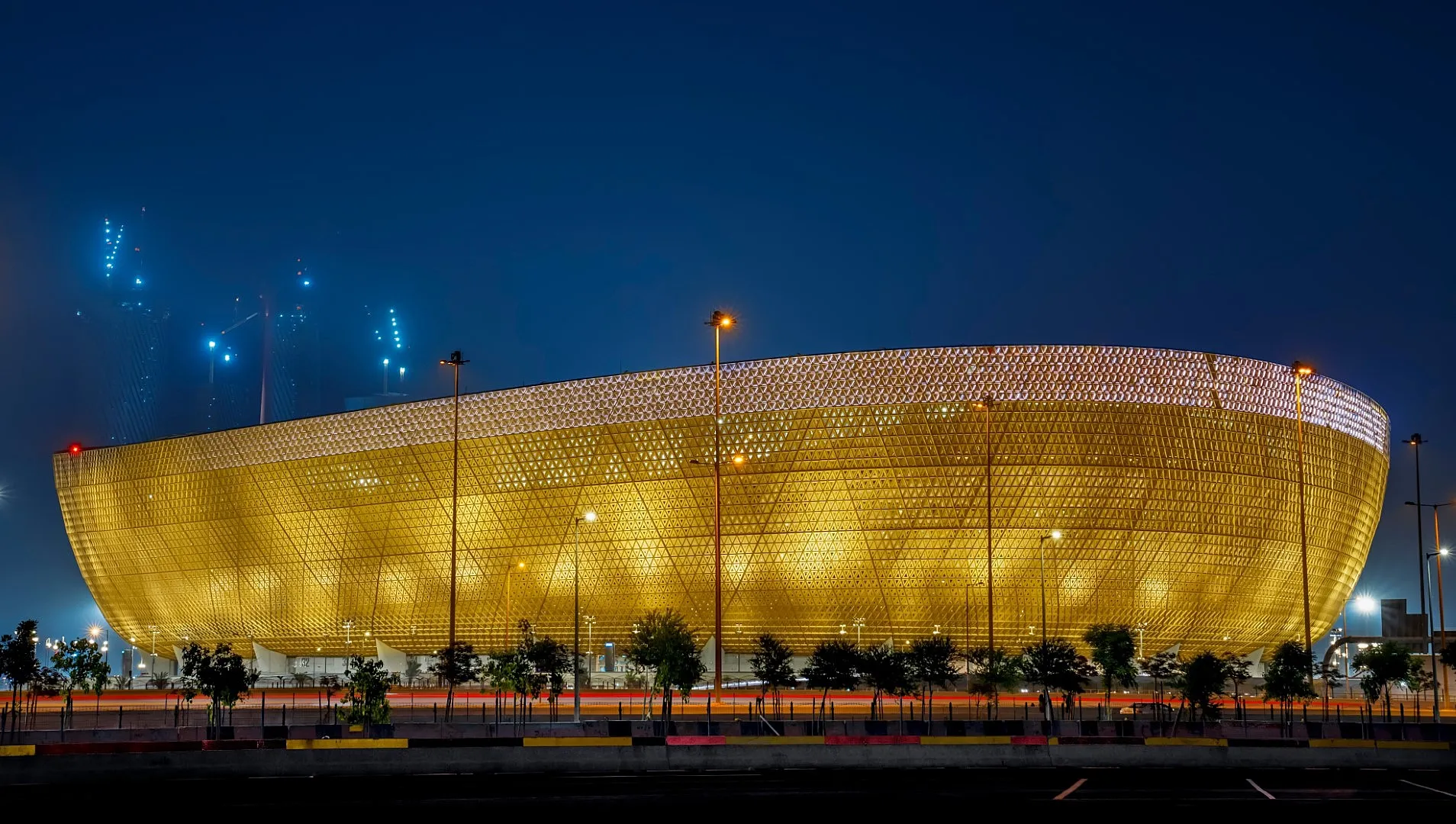
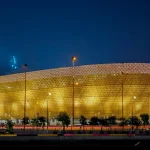
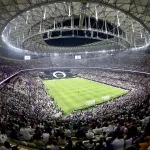
The Lusail Iconic Stadium is designed by Foster + Partners in collaboration with Populous and Arup. The golden, bowl-shaped stadium became the centerpiece of the 2022 FIFA World Cup. Lusail Iconic Stadium became the tournament’s largest venue and the site of the final between Argentina and France on 18 December 2022. The stadium’s golden, perforated facade, diagrid structure, and sweeping roof reference regional craft and climatic logic. The facade geometry shades concourses, the roof and high-performance envelope reduce solar heat gain, and outdoor cooling strategies were implemented to improve spectator comfort while managing energy use.
The stadium also received top ratings under the Global Sustainability Assessment System (GSAS) for design and construction.
Exploring Lusail City
From sustainable parks to architectural icons, here are the places that define Lusail’s urban character.
1. Marina Promenade
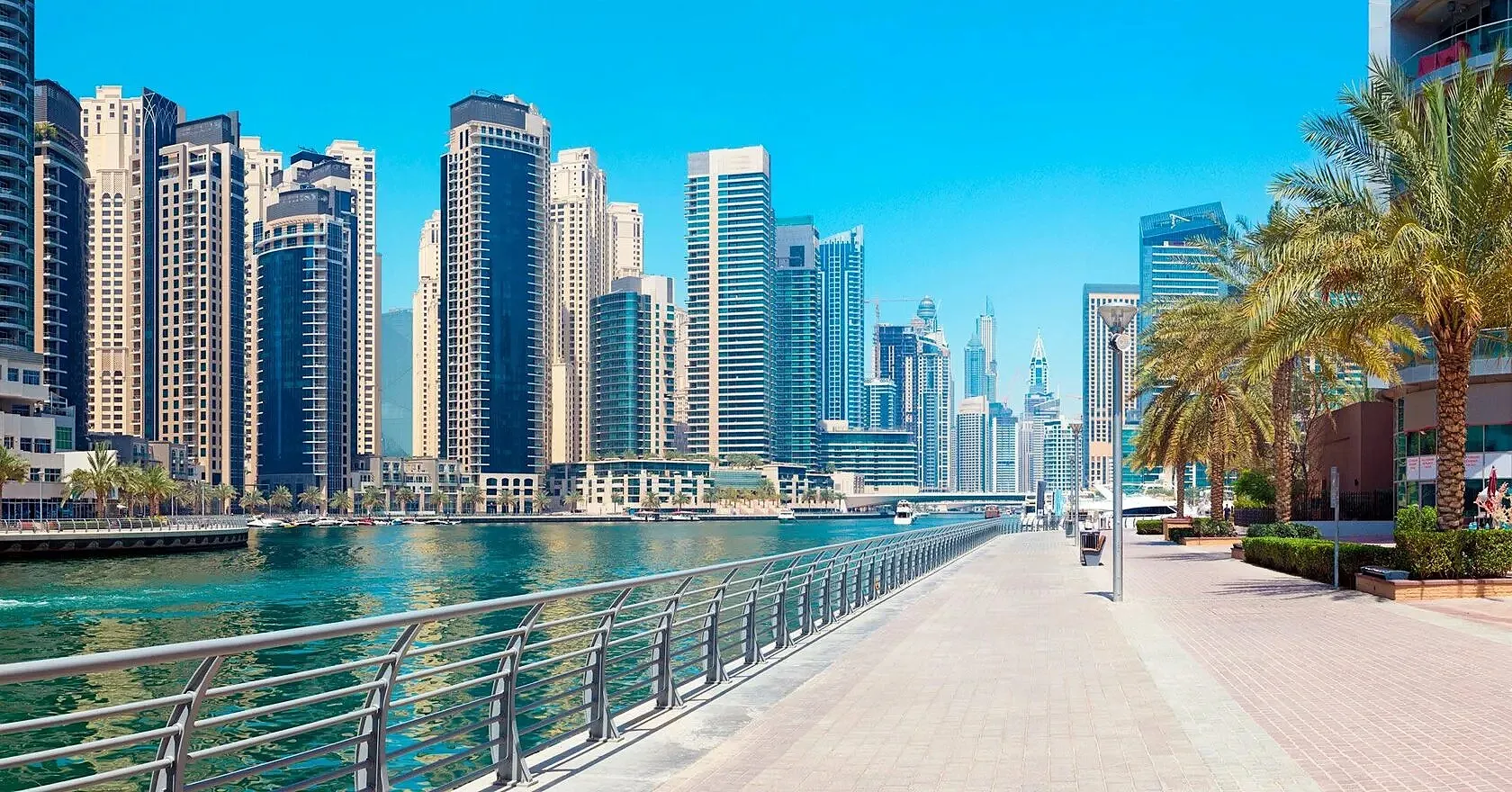
Inaugurated in 2018, Lusail Marina Promenade is a waterfront destination. It is designed, developed, and executed by Nakheel Landscapes. The promenade features wide walkways, landscaped green areas, and shaded paths, making it perfect for evening strolls, jogging, or cycling. It stretches along a 4.2-kilometer-long sea facade and includes five covered lounges, the first of their kind in the Gulf.
The promenade is family-friendly, with dedicated play areas for children having swings, see-saws, jumping discs, all set alongside palm trees. Visitors can also enjoy a variety of cafés and restaurants offering everything from street food to gourmet dishes, making it a food hub in the city.
Nearby attractions add to its appeal. Lusail Entertainment City, just 15 minutes away, offers theme parks, theaters, shops, and more, while the Qetaifan Islands provide an escape with pedestrian bridges and hi-tech facilities. Lusail Marina Promenade is also easily accessible from Doha Corniche.
2. Crescent Park
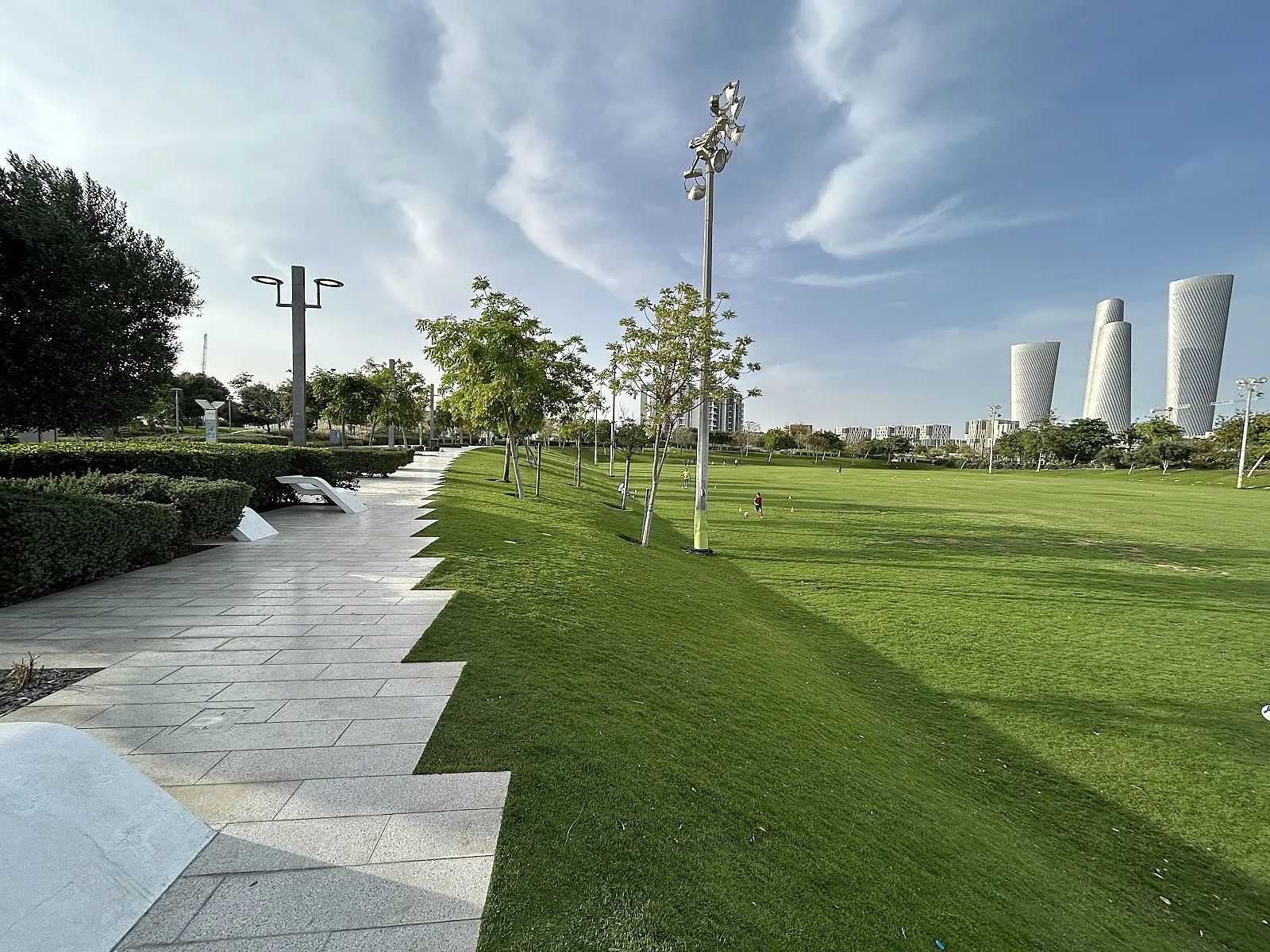
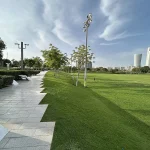
Crescent Park in Lusail City is a planned development spearheaded by Lusail Real Estate Development Company and Qatari Diar. It covers 275,000 square meters and is inspired by Qatar’s desert and dunes. Opened in 2019, the park provides a peaceful green space in the middle of the growing city. The park is divided into seven distinct areas, known as “Park Allees.” These include the Sculptural Dunes, The Hill, The Forest, Crescent Plaza, The Canyons, The Lake, Water-Play Area, Mosque, and Sports Area.
The park is also eco-friendly and uses recycled water to keep the green spaces lush and healthy. One of the most famous features is the Crescent Arch, a large steel structure that visitors can climb. The top can hold over 100 people and gives amazing views of the park and Lusail City.
3. Place Vendôme (Qatar Entertainment City)
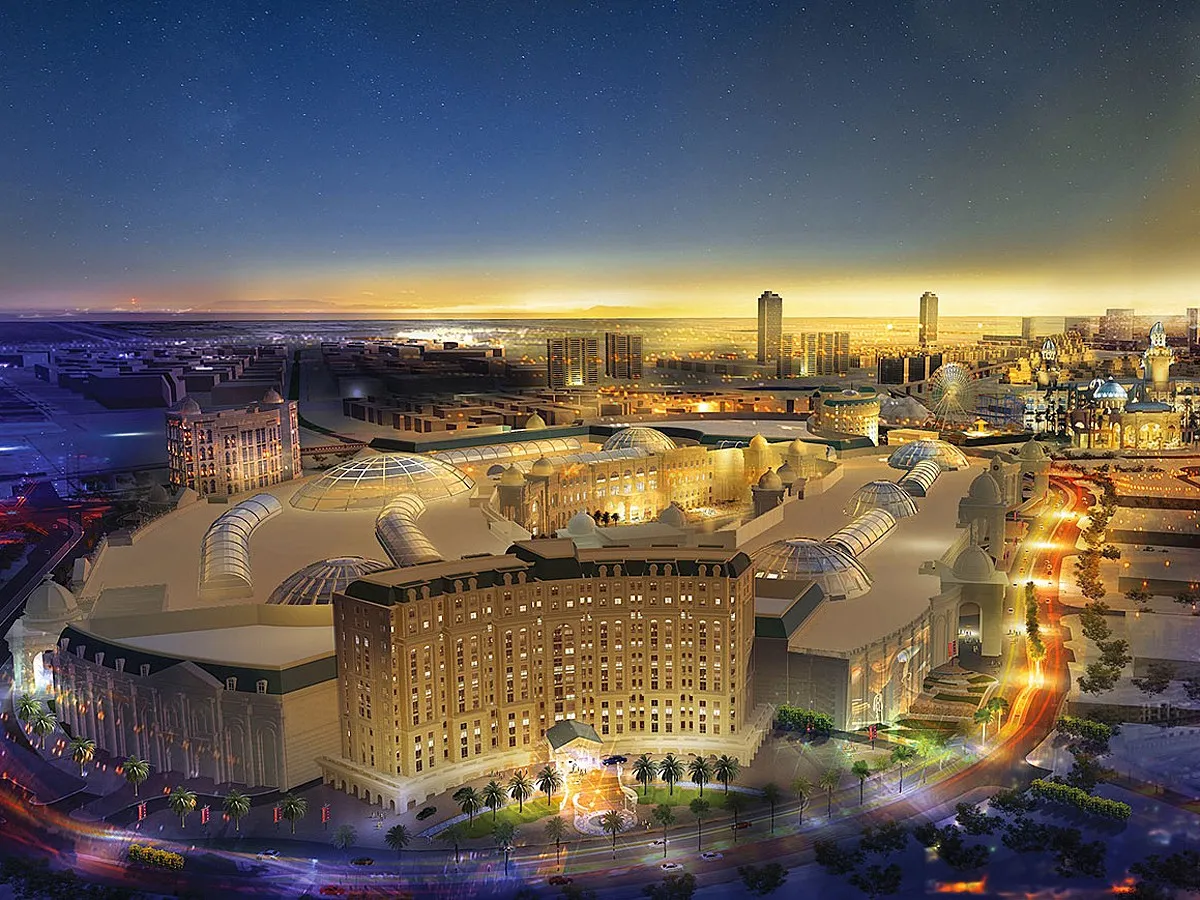
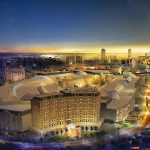
Place Vendôme is a mixed-use development designed by Arab Engineering Bureau (AEB), also known as Ibrahim Jaidah Architects & Engineers. It spans a massive 186,933 square meters. The complex features the largest shopping mall in Qatar, covering 148,000 square meters, alongside hospitality spaces including a luxury hotel, a family-focused hotel, and serviced apartments.
The design combines classical French-inspired architecture with the Arabian Gulf environment. Inside the mall, a mix of high-end stores, medium-range shops, entertainment zones, media centers, and food and beverage options spread across four floors. One of the standout features is the water canal flowing through indoor and outdoor spaces, linking cafes, restaurants, and plazas. Highlights also include dancing fountains and one of the world’s largest 3D architectural laser shows inside the Qatar Entertainment City.
4. Katara Towers
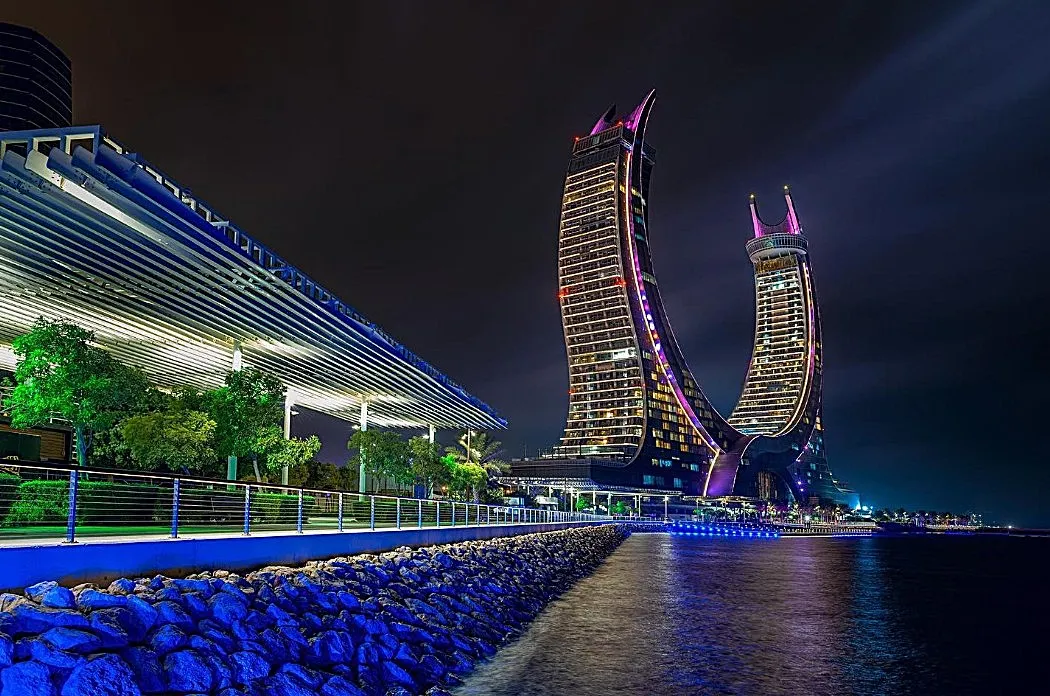
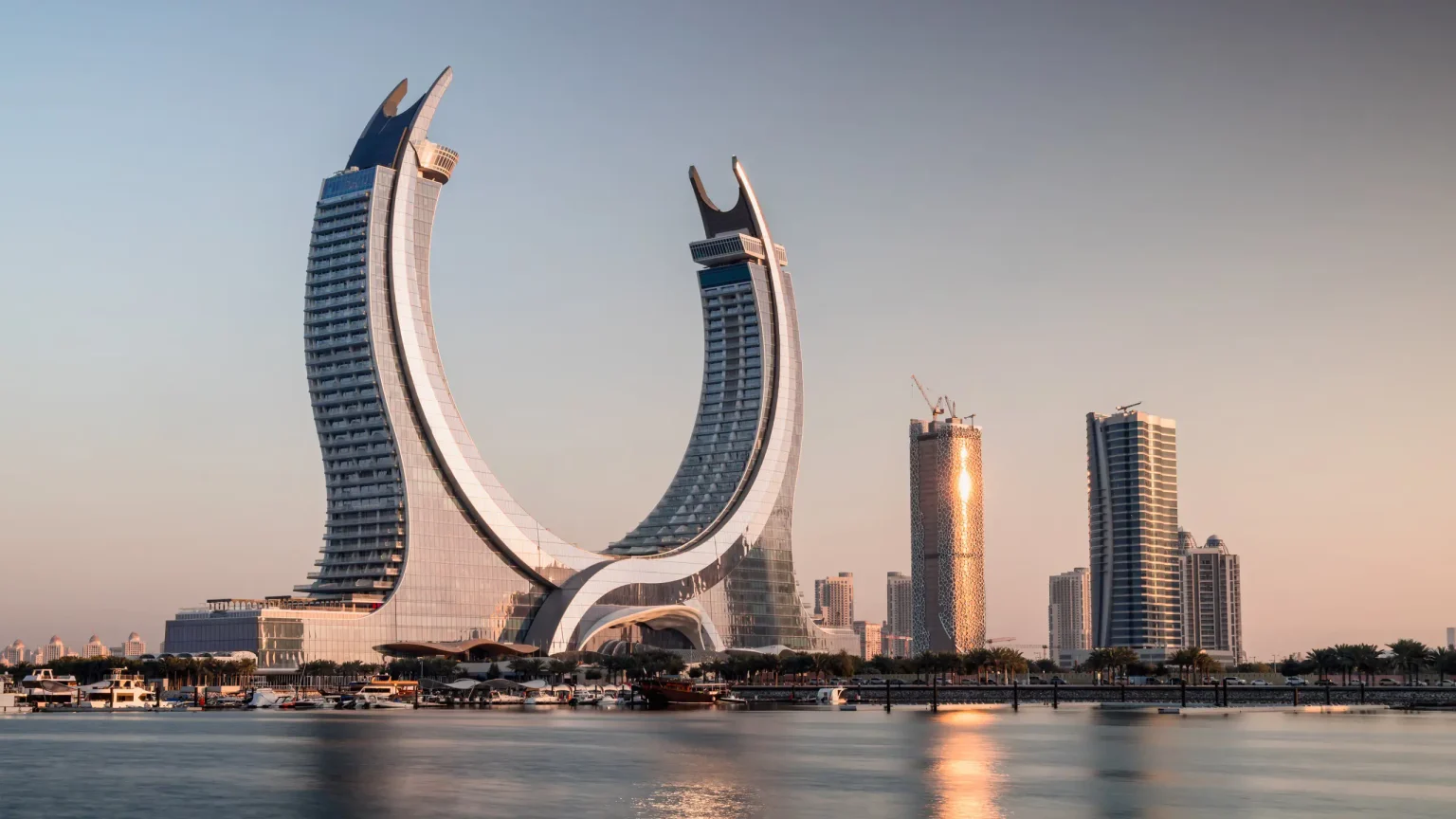
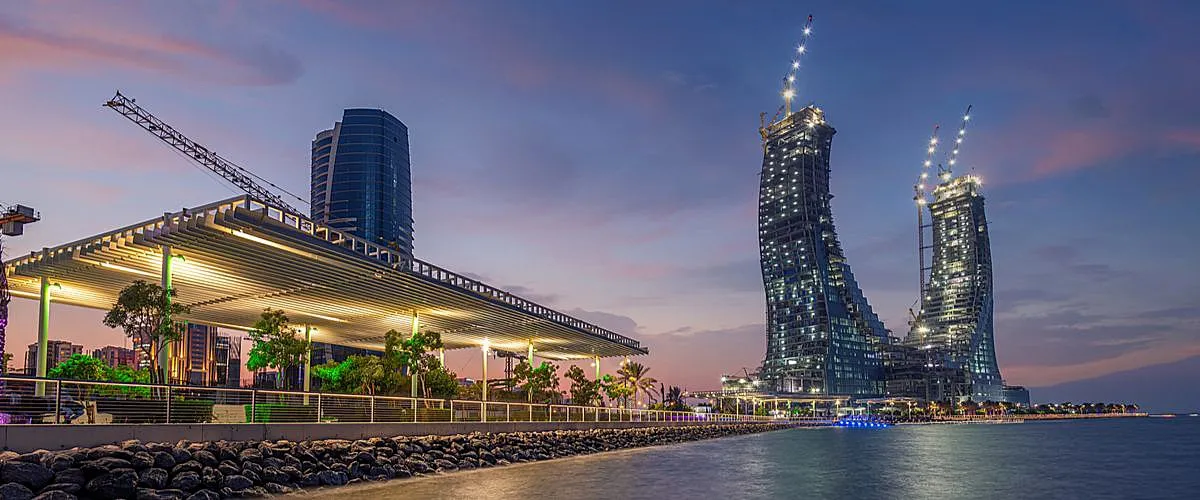
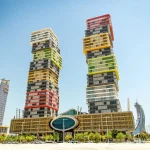
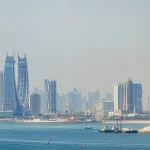
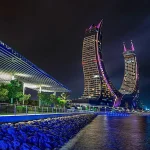
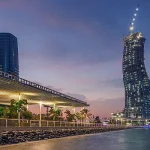
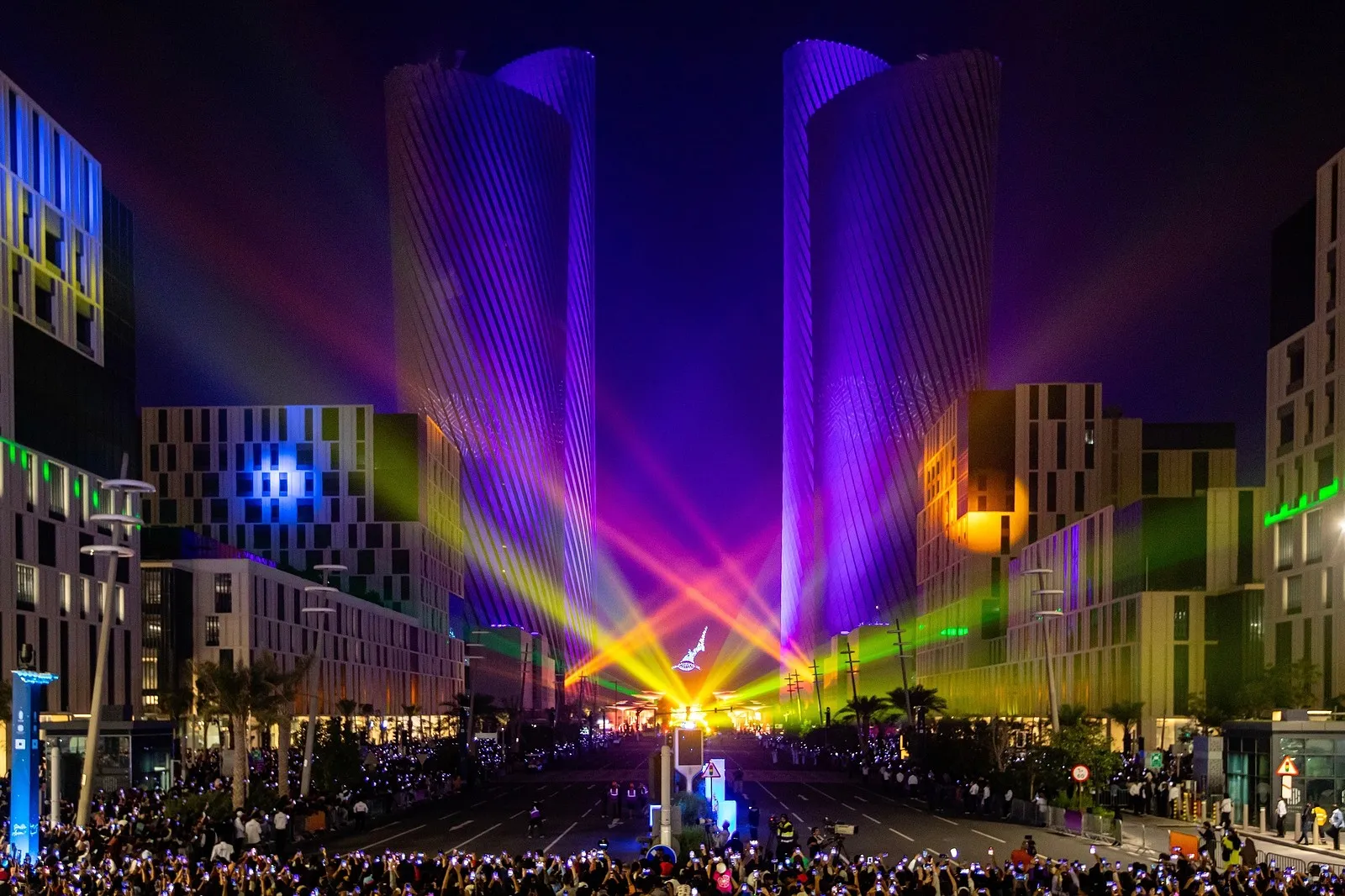
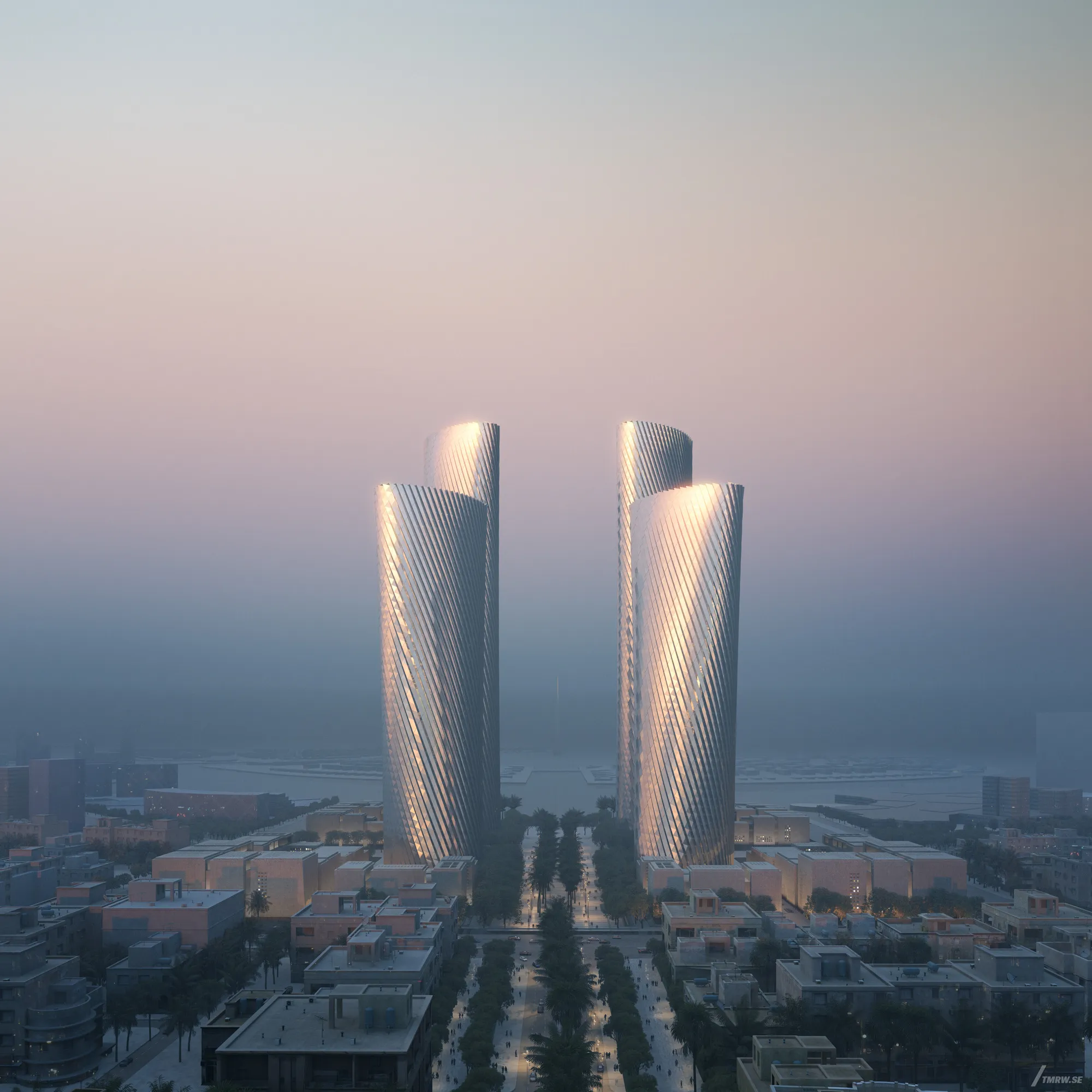
Designed by Kling Consult, the Katara Towers are inspired by crossed scimitars, the traditional swords of the Middle East. The 211-meter high towers house the Lusail Katara Hotel, including two famous hotel brands, Raffles and Fairmont, spread across more than 48,000 square meters. Each tower measures 300,000 square meters, combining luxury hospitality with residential, commercial, and office spaces.
The Raffles tower offers only suites, a rooftop bar, and a private cinema, while the Fairmont features 362 rooms, an outdoor pool, and breathtaking views of the Persian Gulf. The Fairmont lobby is spectacular, with 18-carat gold accents and the world’s largest chandelier, standing at 56 meters high. Both towers have a curvilinear design, making them instantly recognizable landmarks in Lusail Marina. Katara Towers are also celebrated for their sustainability. It is the first hospitality project in Qatar to achieve a GSAS Design & Build 5 Stars rating. The exterior lighting, designed by PUK Lighting, highlights the towers’ sweeping curves at sunset and night.
5. Lusail Boulevard
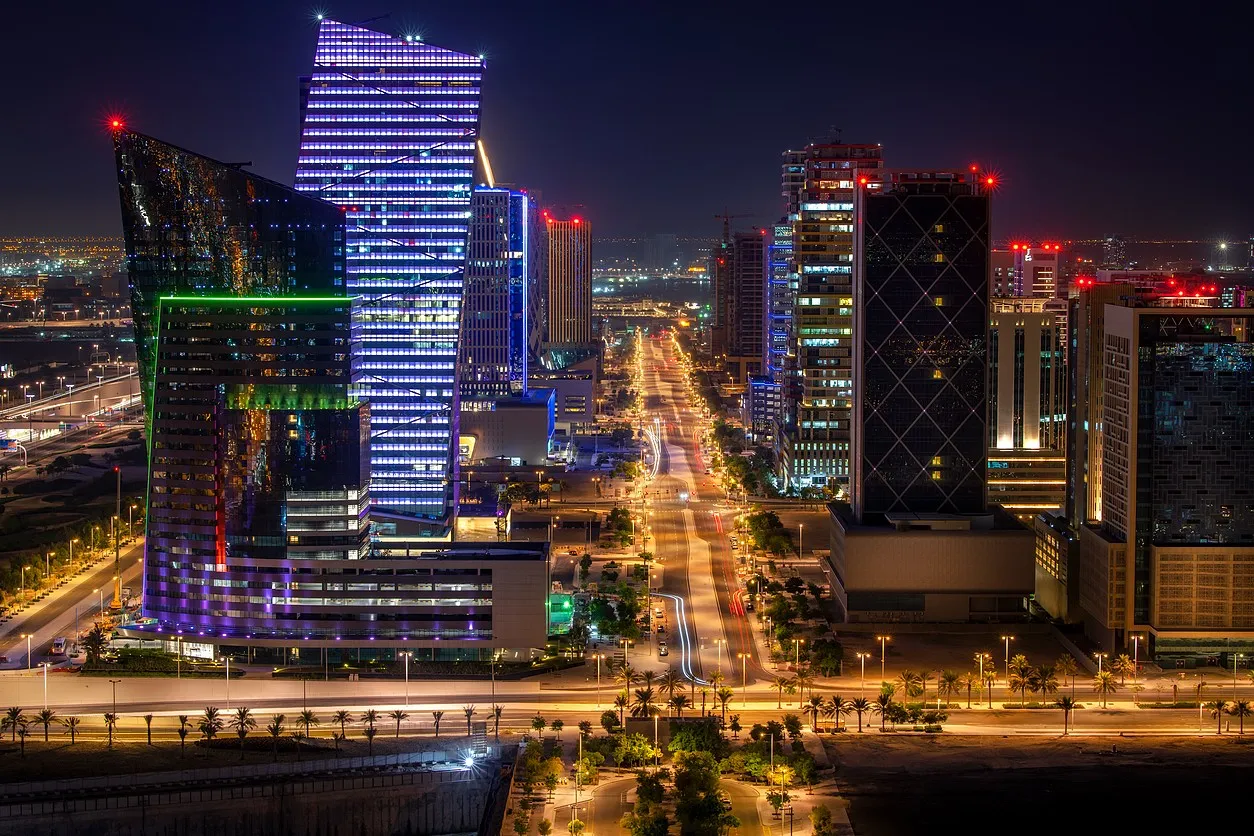
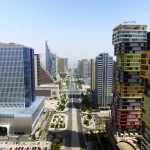
The city’s central spine, Lusail Boulevard, features large-scale screens, art installations, and pedestrian-friendly streetscapes. Its design highlights the role of public space in creating urban identity.
Lusail Boulevard is a mix of shopping, dining, entertainment, and residences along a 1.3 km pedestrian-friendly avenue. Designed by HOK Architects in collaboration with Delta Lighting Design, the boulevard is considered a cosmopolitan high street. Its planned layout connects three main zones – the western gateway, the main avenue, and the station plaza – linking residential, commercial, and entertainment areas. With four tram stations and underground parking for thousands of vehicles, Lusail Boulevard is designed to be fully accessible and convenient for all visitors.
Restaurants, cafes, retail outlets, galleries, and theatres line the avenue and encourage gathering and cultural experiences. Street furniture and lighting were integrated into the design, drawing inspiration from the local environment and the distinctive shape of the Oryx horn. Lusail Boulevard is planned with diffused lights along pedestrian paths, dynamic lighting along tram tracks, and sparkling pendants above shaded walkways.
6. Al Maha Island
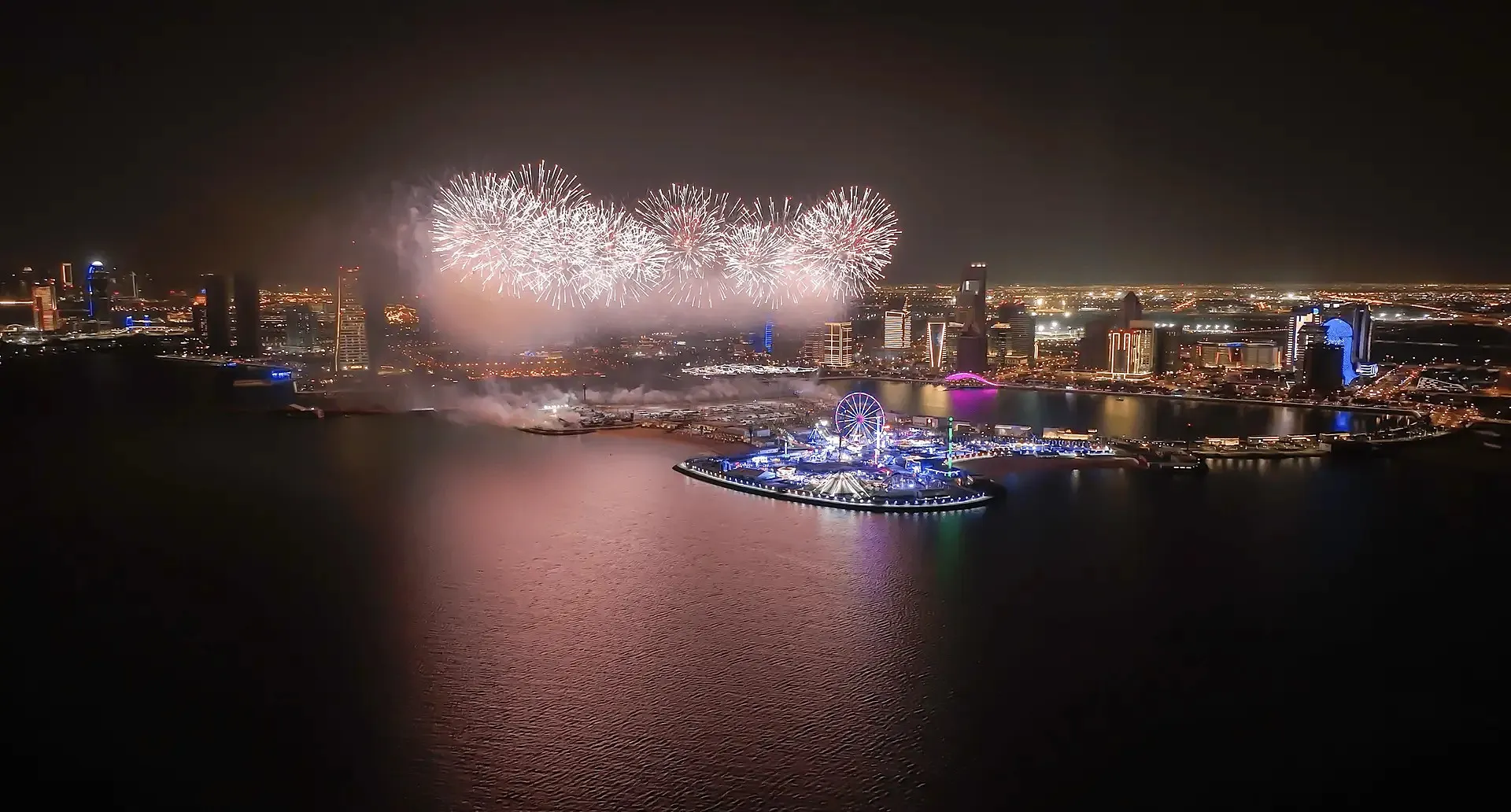
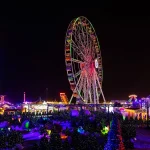
Spanning 230,000 square meters, Al Maha Island has entertainment, high-end dining, and luxury hospitality. Over the years, it has become a must-visit destination for families, tourists, and nightlife enthusiasts. Multiple firms, including Herzog & de Meuron and Foster + Partners, have contributed to the design of Al Maha Island. Open from November to April each year, Al Maha Island ensures visitors enjoy a perfect winter getaway filled with fun and excitement.
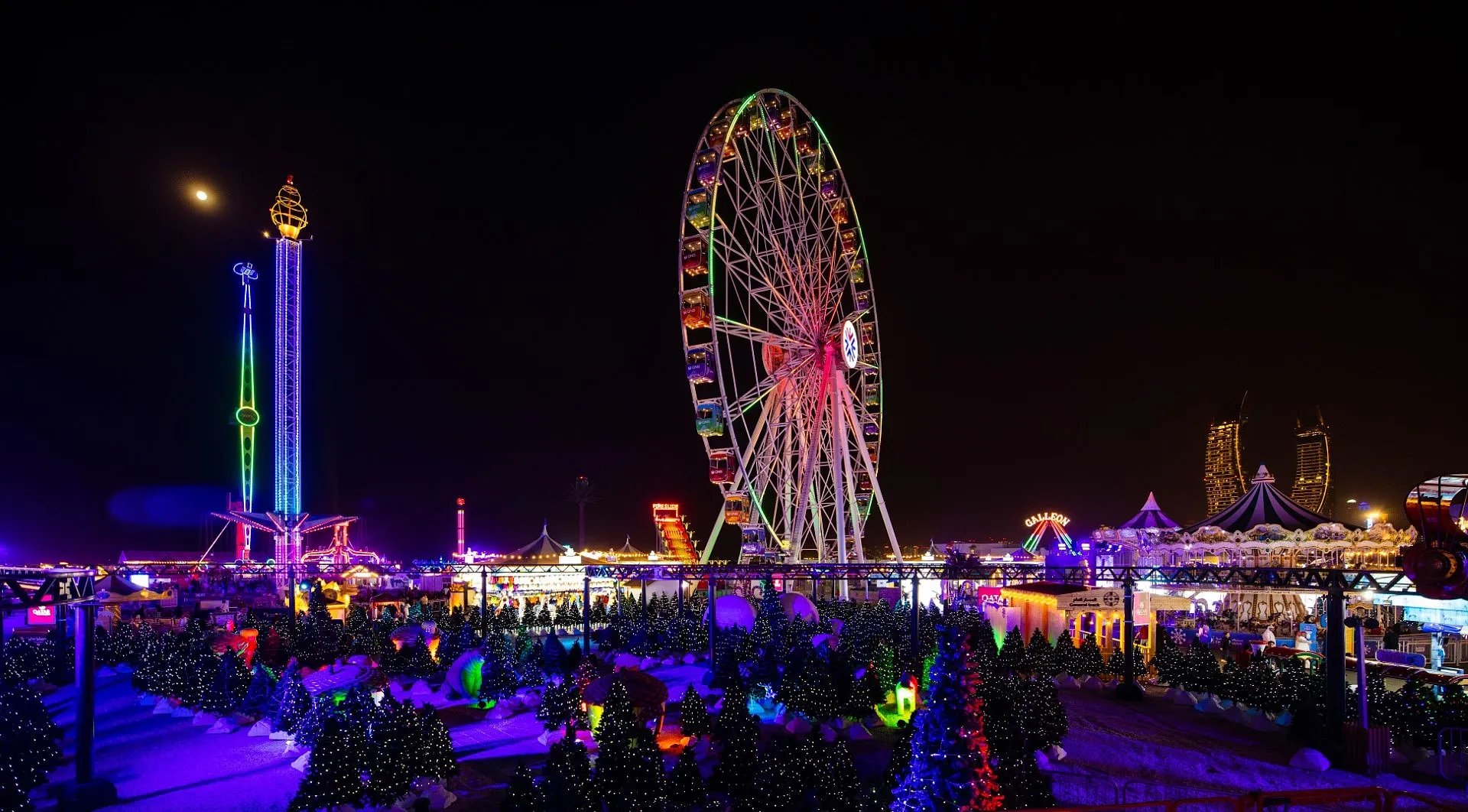
The island is home to Lusail Winter Wonderland, a festive attraction offering rides, games, and seasonal experiences for all ages. For those seeking upscale experiences, the high-end dining district has some of the world’s finest restaurants, including Nammos Beach Club, Em Sherif, Zuma, Carbone, and Tatel. Visitors can also enjoy a selection of casual eateries such as Pura Vida, Rosso Pomodoro, Karaki Lounge, etc.
7. Iconic Bridges and Towers
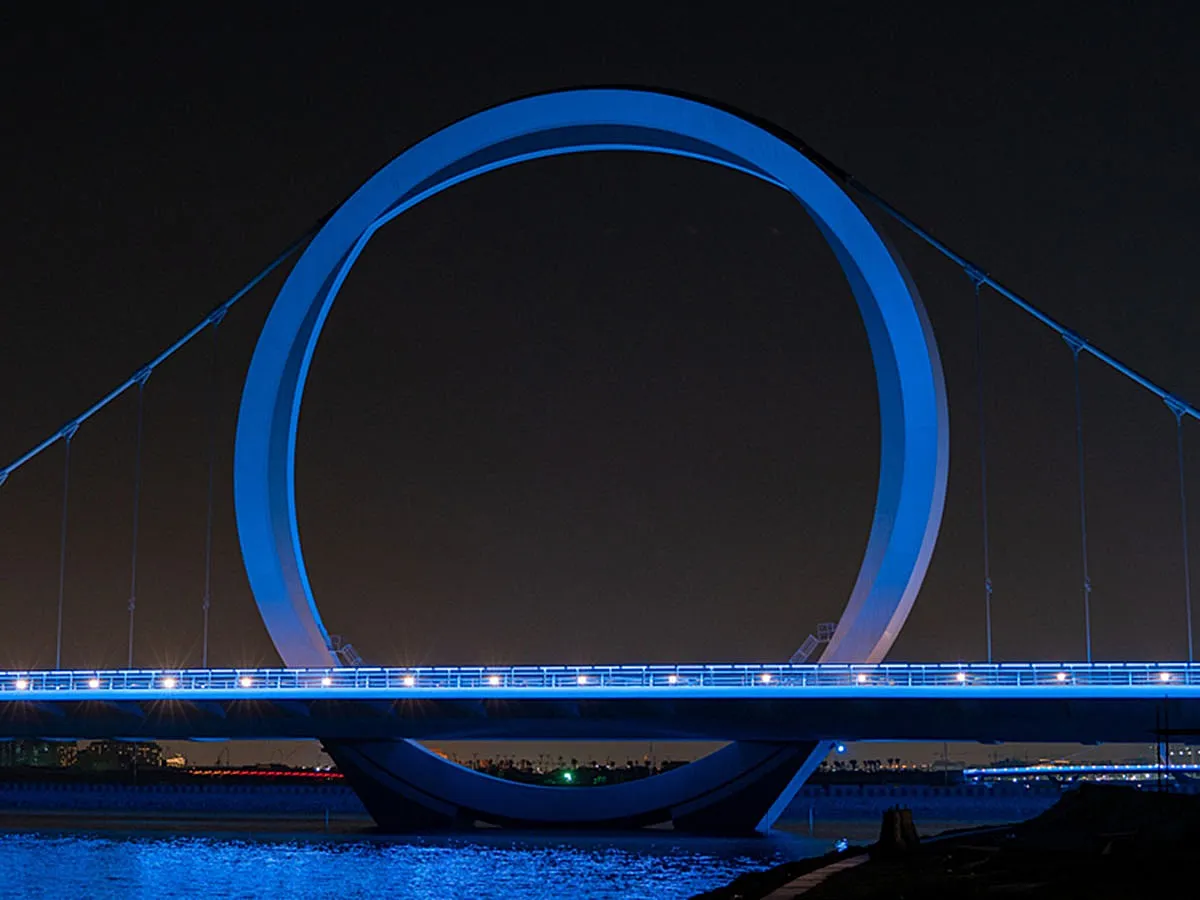
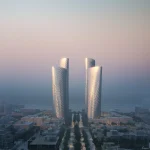
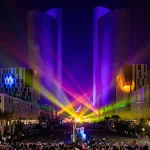
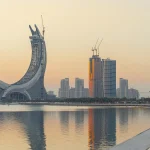
Lusail’s Wheel Bridges are an example of modern architecture. The twin bridges, rising 50 metres above sea level, are architectural landmarks of the new Lusail district. The design highlights the ‘Q’, a nod to Qatar’s identity, using O-shaped pylons that carry a symbolic meaning. Most of the bridges in Lusail City are designed by Dissing+Weitling.
The suspension-style bridges feature 28-metre-wide girders split in two and connected with steel cross beams, ensuring the circular form remains unbroken. Positioned 800 metres apart, the twin structures create visual effects from certain angles, as one circle appears perfectly inside the other.
FIFA World Cup 2022
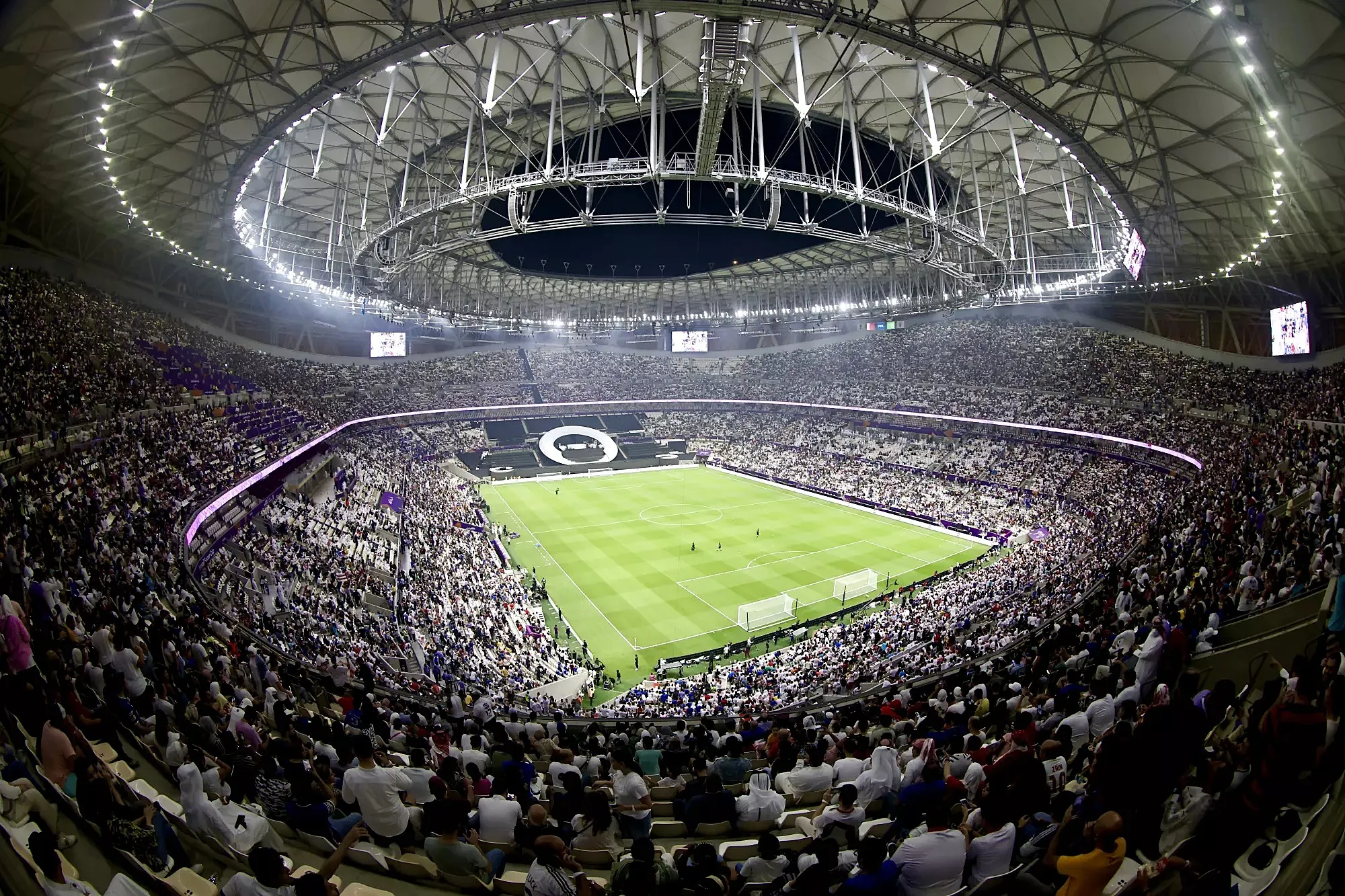
The World Cup accelerated Lusail’s delivery priorities. Building a world-class stadium and the supporting transport and hospitality infrastructure became major objectives. The stadium and certain boulevard elements were prioritized so the city could host matches, broadcast ceremonies, and welcome hundreds of thousands of spectators. In the process, Lusail demonstrated how large-scale projects can expedite construction timelines and facilitate complex financing.
Post-event reconfiguration
Qatar’s stated approach to legacy has three strands:
- Downscaling and repurposing stadiums: Lusail’s capacity was designed to be reduced after the World Cup, and parts of the venue were adapted for community use.
- Integrating transport assets into a normalised urban mobility network.
- Leveraging high-profile infrastructure to catalyze private investment and long-term tourism: whether Lusail becomes a dense, mixed-income city or a luxury waterfront enclave will depend on market dynamics, housing policy, and the supply of civic amenities that attract everyday residents.
What does Lusail teach architects and planners?
Infrastructure-first can be transformative and risky
Centralized systems such as district cooling and tram networks enable efficiencies at scale and position Lusail as a model of integrated utilities. Yet they also introduce single points of failure and demand robust long-term operations and governance.
Mega-events compress decision timelines
The FIFA World Cup accelerated Lusail’s urban delivery, producing civic outcomes within condensed timeframes. However, this urgency can sideline slower social investments, schools, local services, and everyday urban amenities that are essential for year-round livability.
Design must be matched with ethics
Iconic form and sustainability certifications do not absolve projects from scrutiny over how they are built. Transparent procurement, fair labor practices, and accountability mechanisms are critical for ensuring that ambitious architecture is delivered without human cost.
Lusail City: an experiment
Lusail City is a high-stakes urban project that showcases what concentrated capital and ambitious engineering collaborations can achieve rapidly. On paper, Lusail ticks many boxes: district cooling capable of achieving large-scale efficiencies, GSAS ratings for stadiums, and connections to tram and metro systems, as well as urban design guidelines that reserve substantial land for open space and landscape.
These technical systems are not trivial. District cooling, when well-executed, lowers the energy intensity of cooling at the building scale and centralizes expertise and maintenance; GSAS certification indicates attention to regional sustainability parameters during design and construction.
But certification and systems do not automatically equal operational sustainability at the city scale; how systems are commissioned, maintained, and regulated over decades matters. Lusail’s sustainability case is credible in its engineering intent. Its long-term environmental performance will depend on governance, consumption patterns, and climate resilience measures as the city densifies.