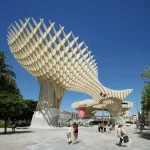
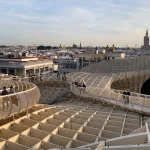
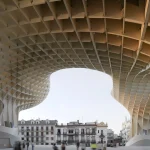
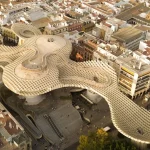
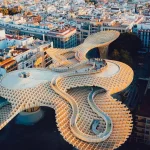
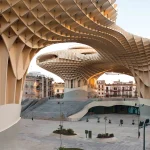
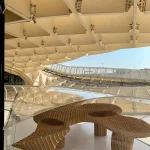
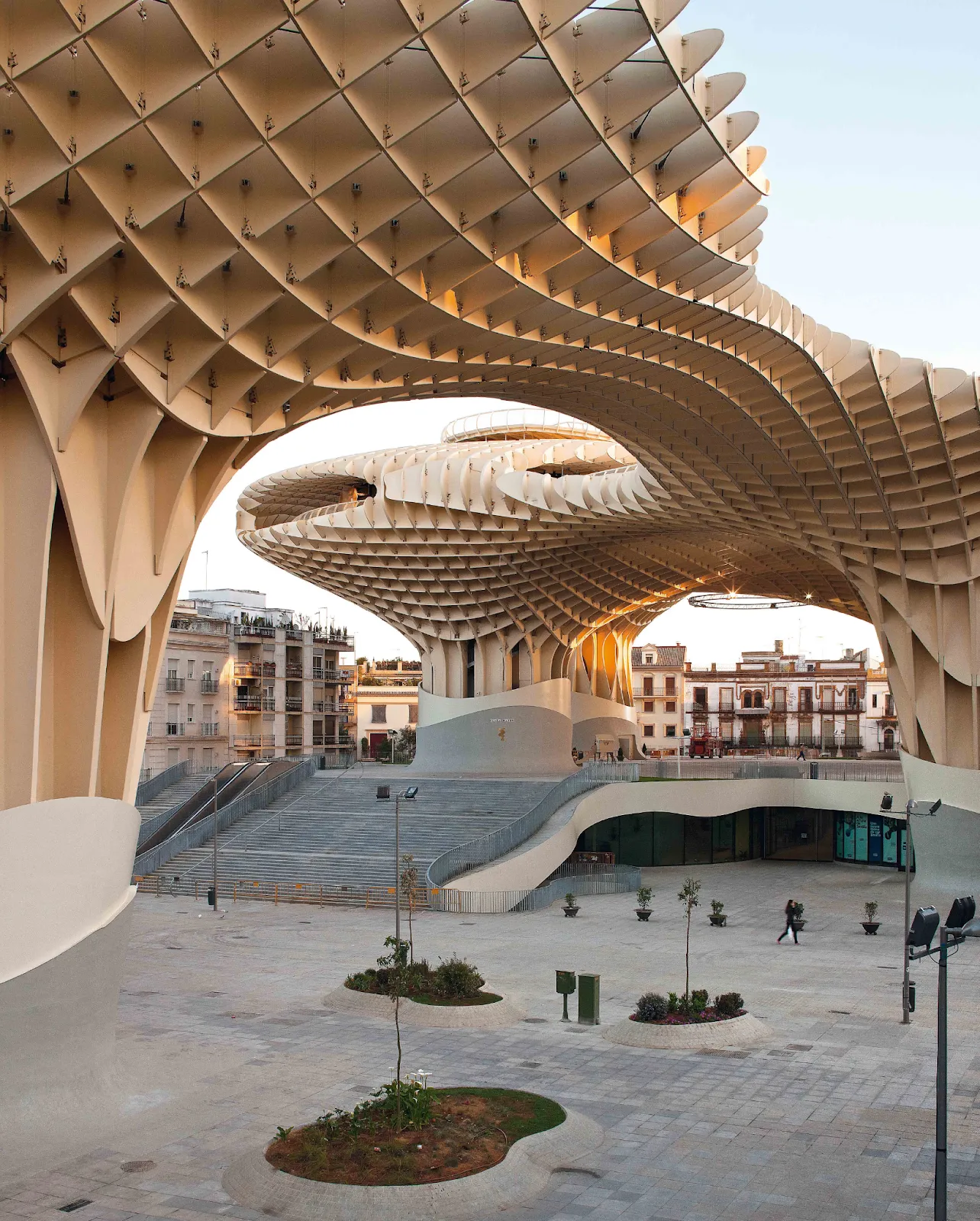
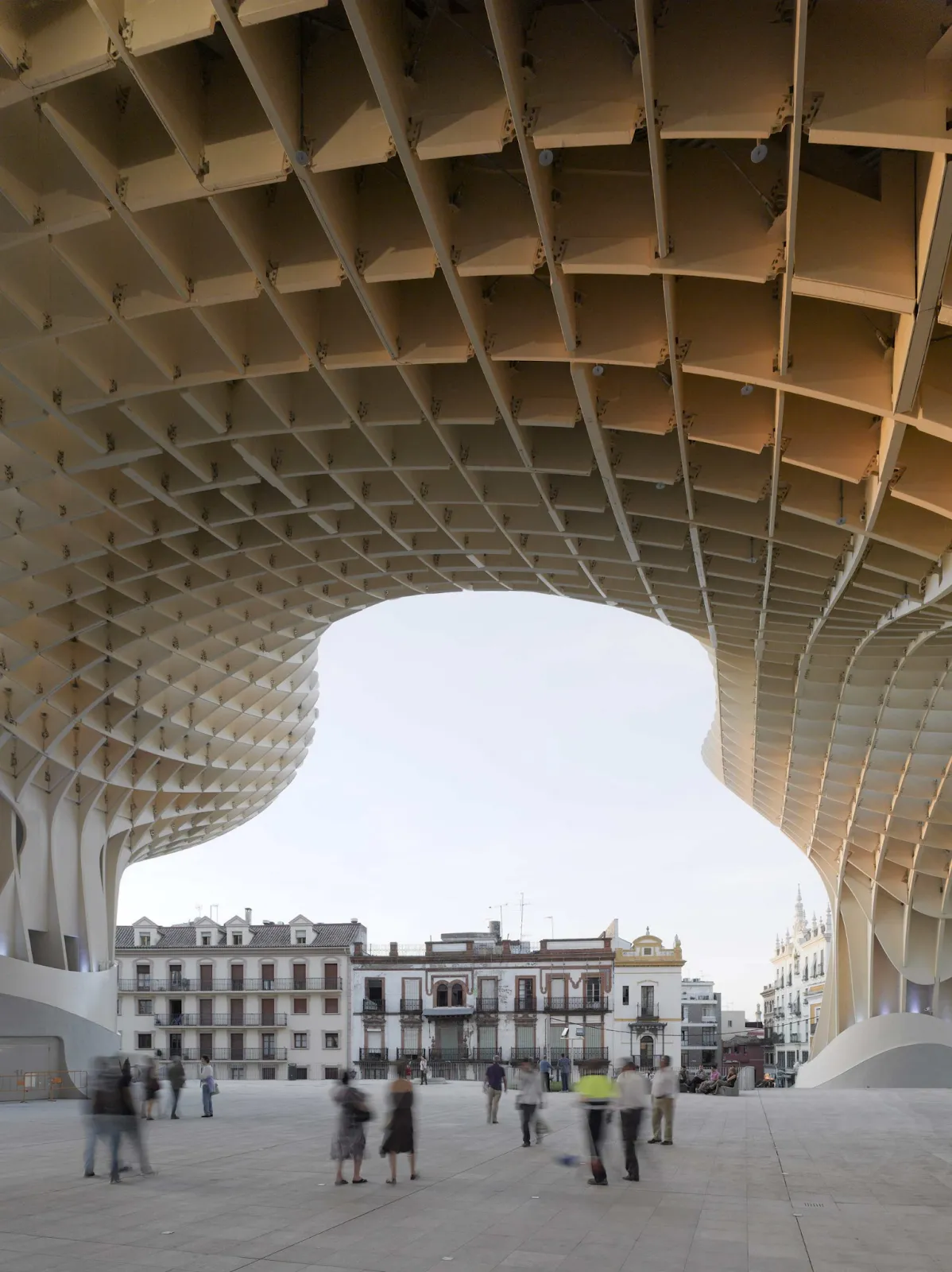
Setas de Sevilla, also known as Metropol Parasol, rises above Seville’s Plaza de la Encarnación, reimagining the traditional civic square with a bold, modern twist. Instead of traditional masonry, it uses a sinuous timber lattice to create a monumental canopy of roughly 150 × 70 m and ~26–28 m in height.
Designed by Berlin-based Jürgen Mayer H. with engineering by Arup, it reactivates a medieval void with stratified public space and radical structure, redefining how heritage and modernity coexist in the heart of Seville’s old town.
Architectural Design and Spatial Layers of Metropol Parasol
Cathedral Without Walls
Jürgen Mayer H. referenced the soaring vaults of Seville Cathedral and the leafy ficus groves in nearby plazas, reinterpreting them as organic parasols rather than static monuments. The result is an open-air spatial cathedral, supporting light, movement, and communal interaction rather than imposing formal enclosure.
Programmatic Layering
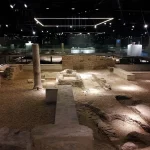
- Level 0 (–5 m Antiquarium): An underground museum preserves excavated Roman and Moorish remains, displayed in a spacious 4,879 m² diaphanous chamber with atmospheric lighting and mist-like silicone membranes to evoke historical memory.
- Level 1 (Ground-level Market): Restored traditional stalls and cafés activate street edges, reestablishing the plaza’s role as an exchange space.
- Level 2 (5 m Elevated Plaza): A 3,000 m² platform dedicated to public events, shaded beneath the parasol canopy.
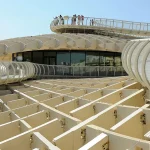
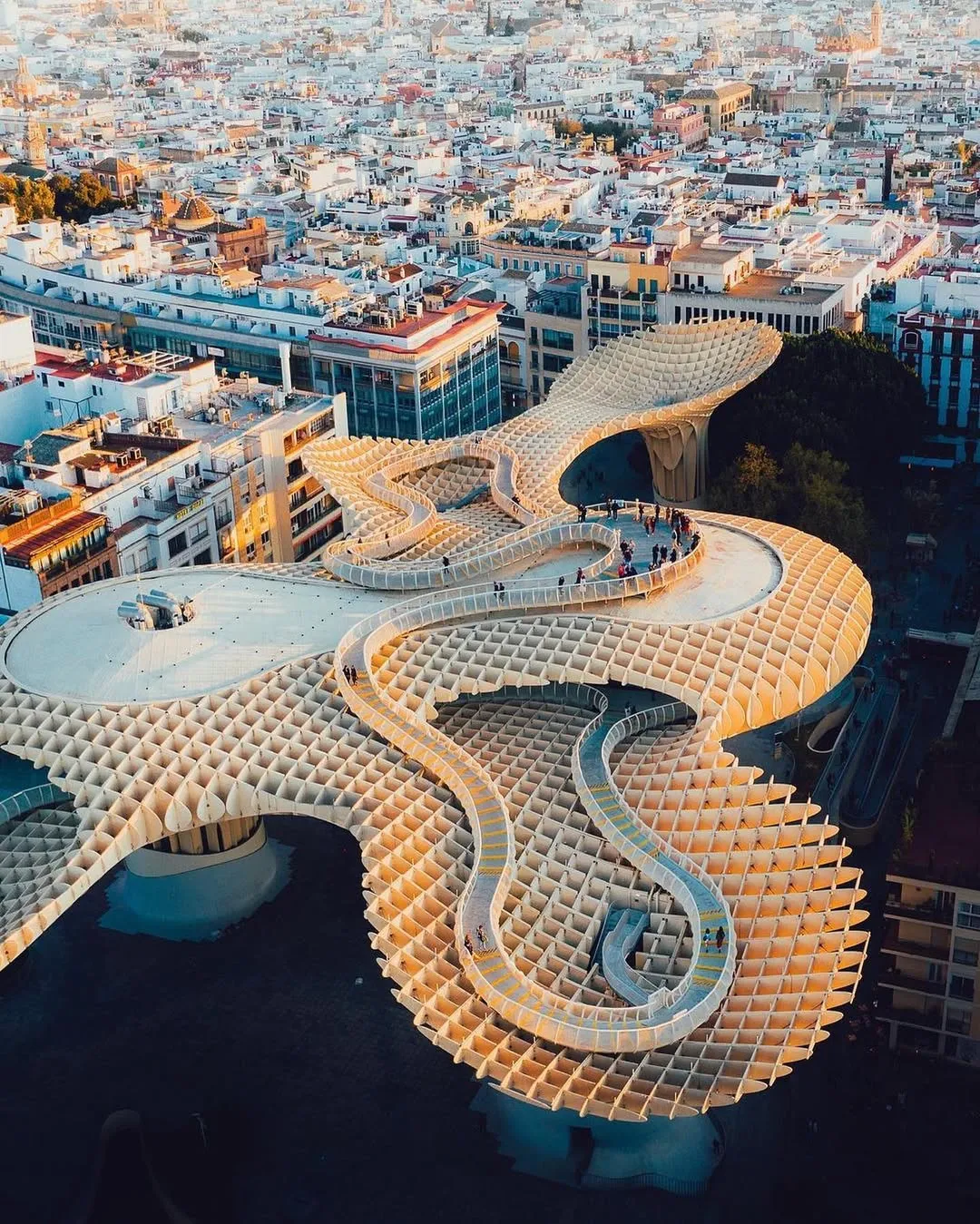
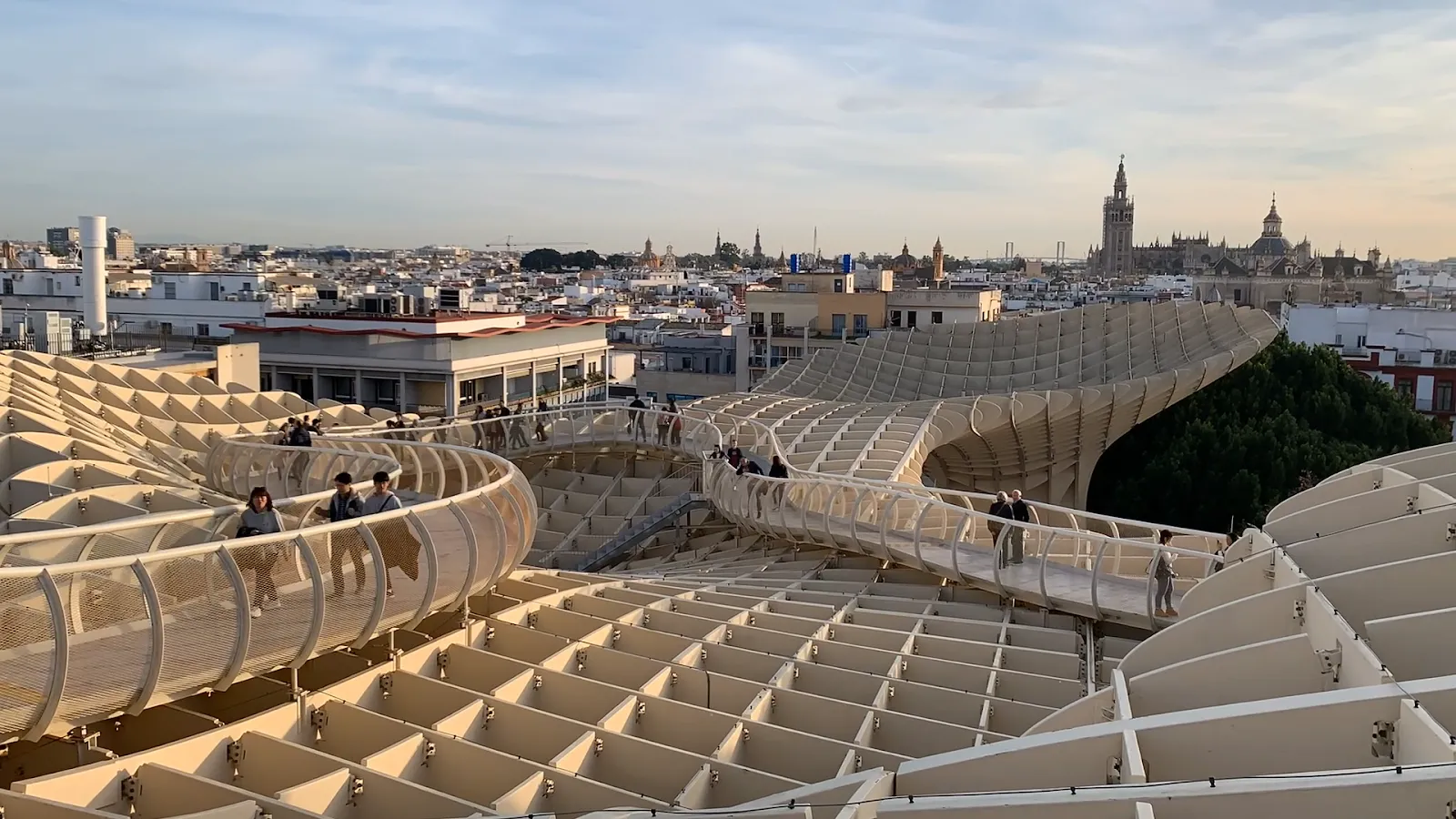
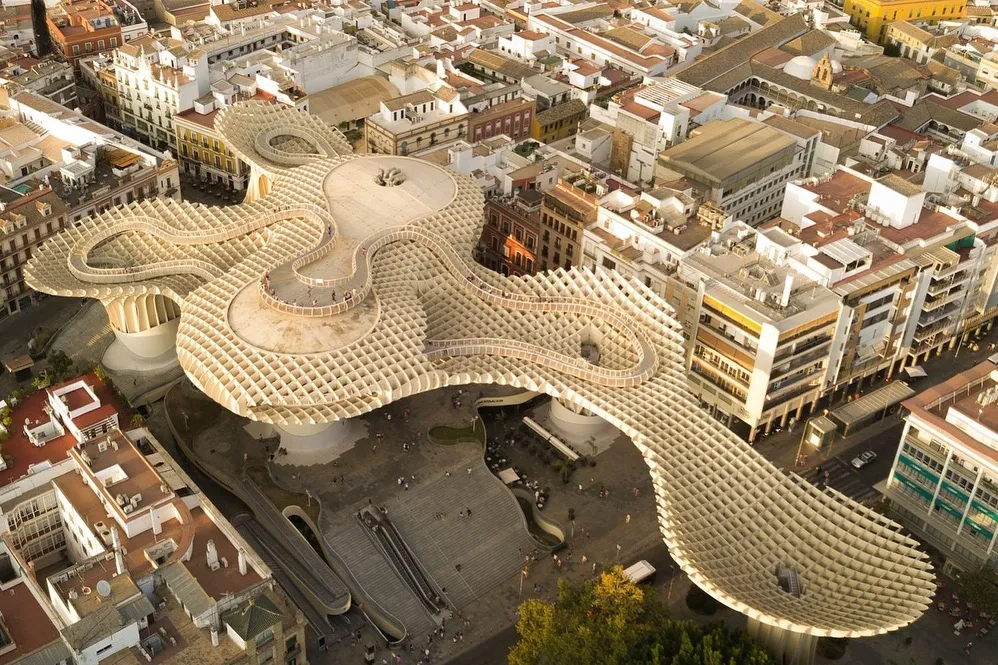
- Levels 3–4 (22–28 m Terraces & Restaurant): Overhead walkways, stairs, and elevator cores pierce the canopy, drawing users to panoramic terraces and a perched restaurant overlooking Seville.
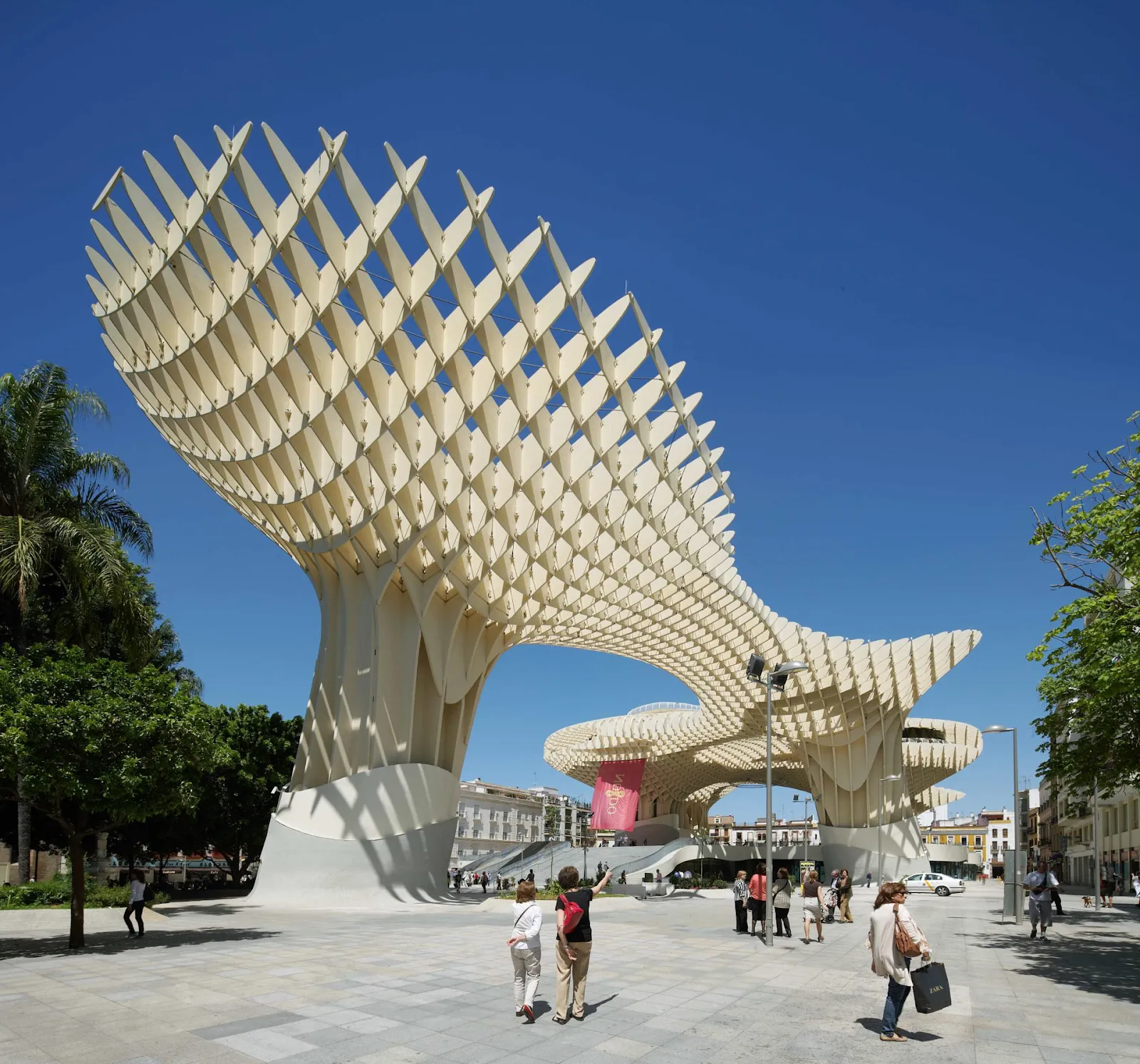
This vertical sequence encourages continuous circulation, forging layered public experiences rather than static horizontals.
Structural Innovation & Computational Design
Bi-directional Timber Grid
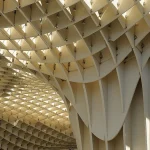
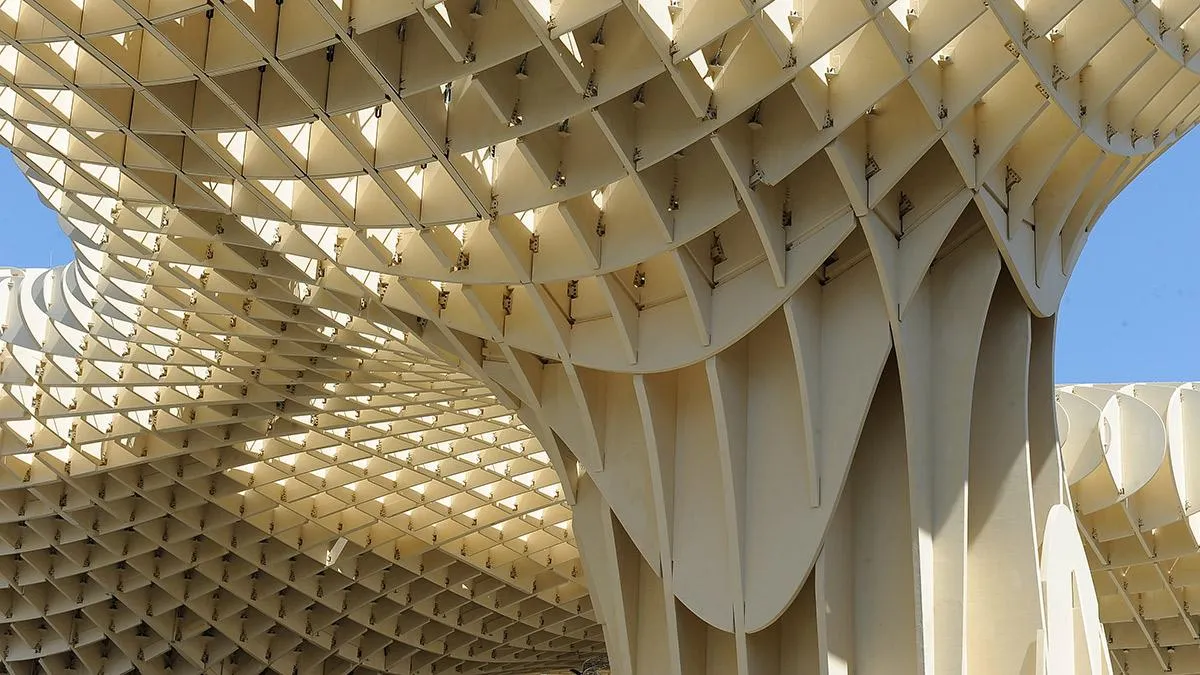
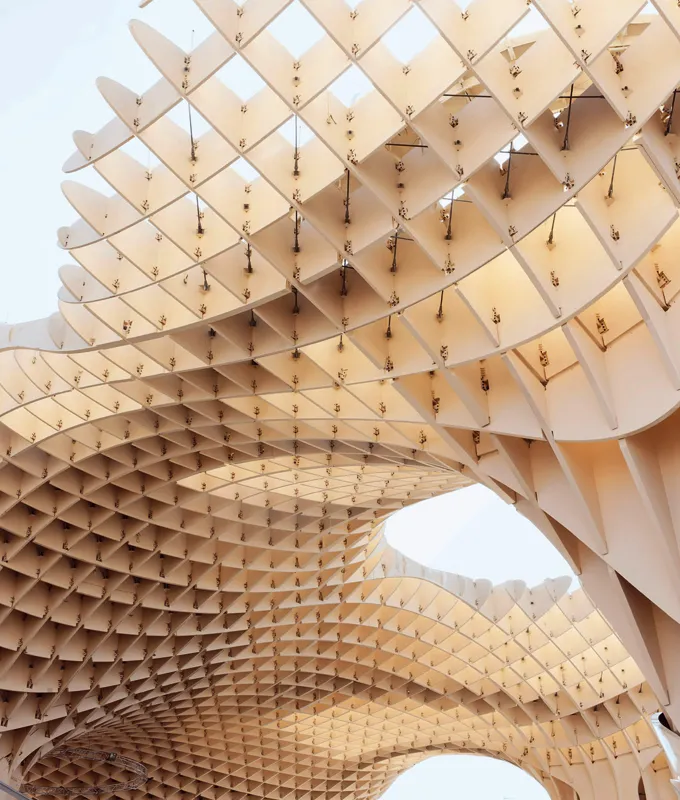
The free-form mushroom parasols are constructed from a precise orthogonal waffle grid. Kerto-Q laminated veneer lumber plates, ranging in thickness from 68 to 311 mm and lengths up to 16.5 m, are CNC-cut into ~3,400 unique pieces. They’re assembled into a 1.5 × 1.5 m lattice spanning the canopy, producing shell action at the macroscale.
Steel Diagonals & Connector Nodes
To stabilize the open lattice and support rooftop walkways, diagonal steel stiffeners were strategically embedded beneath the grid. Approximately 3,000 connector nodes of steel rods joined with high-strength polyurethane resins bind the timber elements into a cohesive shell capable of handling shear and compressive forces.
Hybrid Substructure & Material Integration
Urban constraints, including archaeological sensitivity, meant foundation points had to align with six concrete cores, precluding intermediate columns. These mushroom-like concrete piers anchor the canopy and house circulation towers. Around them, steel-concrete composite trusses and tie rods support elevated structures like restaurants and bridges.
Digital Stress Optimization
Arup and specialist teams used sophisticated FEM software like RFEM to iterate beam sizes, connector geometry, and diagonals. Parametric routines modeled stresses at nodes and branches until the timber grid achieved its structural integrity, then exported directly to CNC fabrication lines.
The Structural Materials Behind Setas de Sevilla’s Design
Kerto-Q LVL, a bonded Finnish pine product, undergoes epoxy ‘post-curing’ and is finished with a flexible 2–3 mm polyurethane coating to protect against Andalusian sun, moisture, and thermal expansion. This finish guards durability while preserving the breathability of wood.
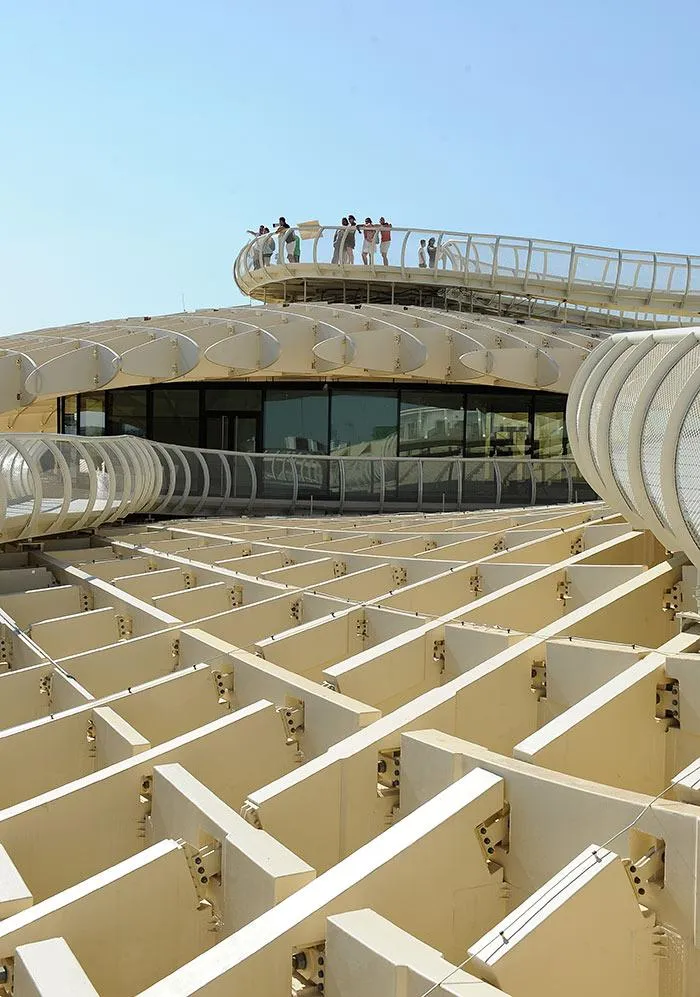
The laminated timber and resin system underwent thorough fire-performance and hygrothermal testing. Node design and element sizing account for wood’s expansion and combustibility, ensuring code compliance in an exposed public structure.
Metropol Parasol Was Built: Construction, Timeline, and Prefabrication
From June 2005 to March/April 2011, Construction began in mid-2005, was initially targeted for 2007, but structural doubts over canopy feasibility caused major redesigns and halved material changes.
Off-Site Prefabrication: Approximately 3,400 timber panels and 3,000 nodes were fabricated in Aichach, Germany. Panels were CNC-machine cut, dry-assembled, shipped, and erected on-site, a process that ensured precision and quality.
The Impact on Seville: Urban Renewal and Cultural Influence
Setas de Sevilla (Metropol Parasol) completes a narrative arc from medieval square to 19th-century market parking lot iconic timber canopy. Its parasols mediate between buried relic and aerial views, producing a vertical extension of civic life, anchored in both earth and sky.
The discovery of Roman and Moorish ruins halted excavation in 2004. The Antiquarium’s design was led by architect Felipe Palomino and required membrane walls and lighting design to evoke ancient atmospheres. The entire canopy was then designed to hover above this sensitive strata, connecting architecture and archaeology rather than concealing history.
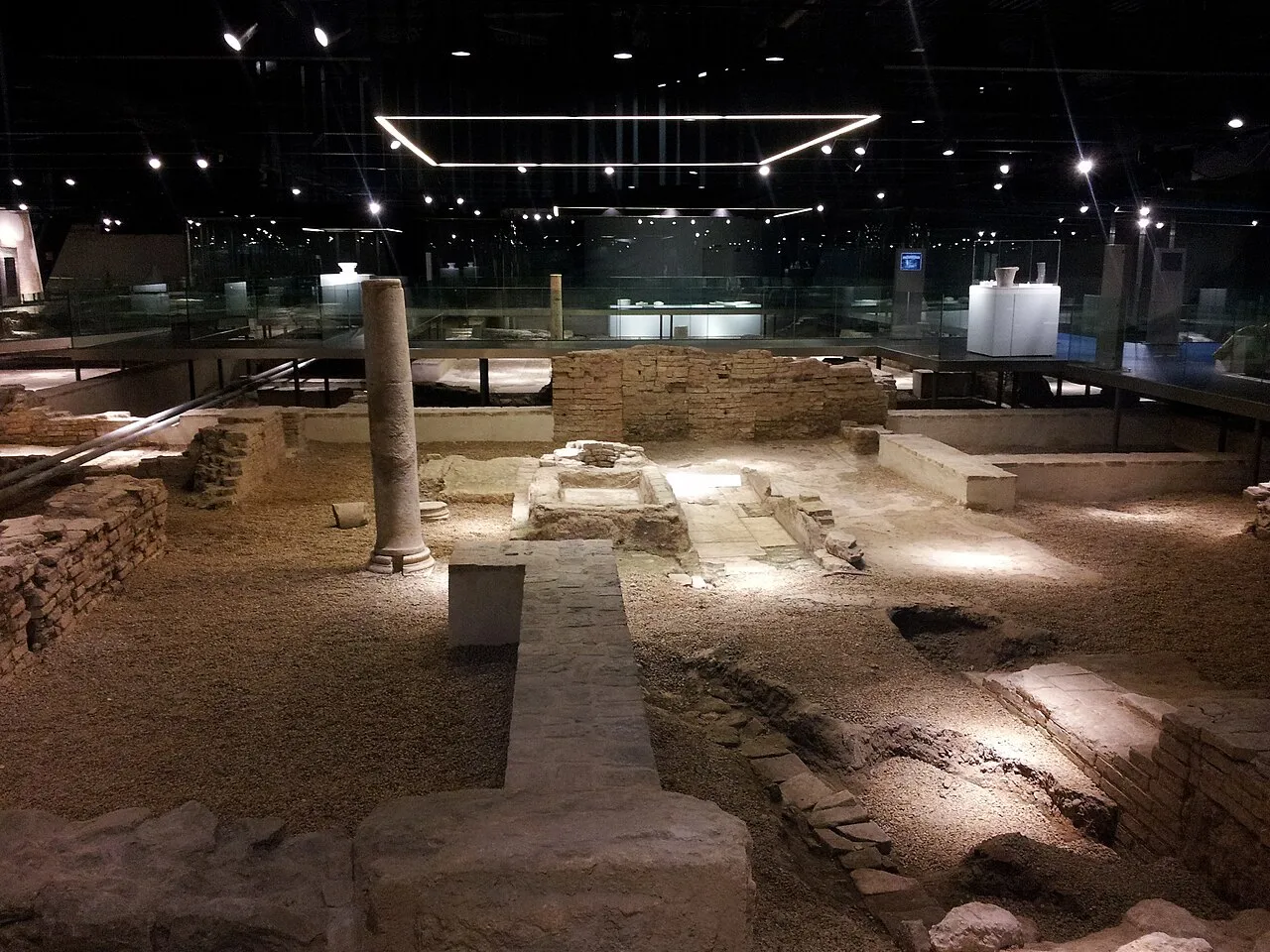
Studies by the University of Seville show that the Setas catalyzed surrounding commerce, recording ~€154 million in economic throughput by 2022, with a 1:1 public investment return. Today, it ranks as Seville’s third-most visited urban site.
While engineering overruns and avant-garde form sparked criticism, the structure has transmuted into a signature urban icon. Subsequent generations see it not as an outlier but as a vital connector between Seville’s medieval inheritance and 21st-century ambition.
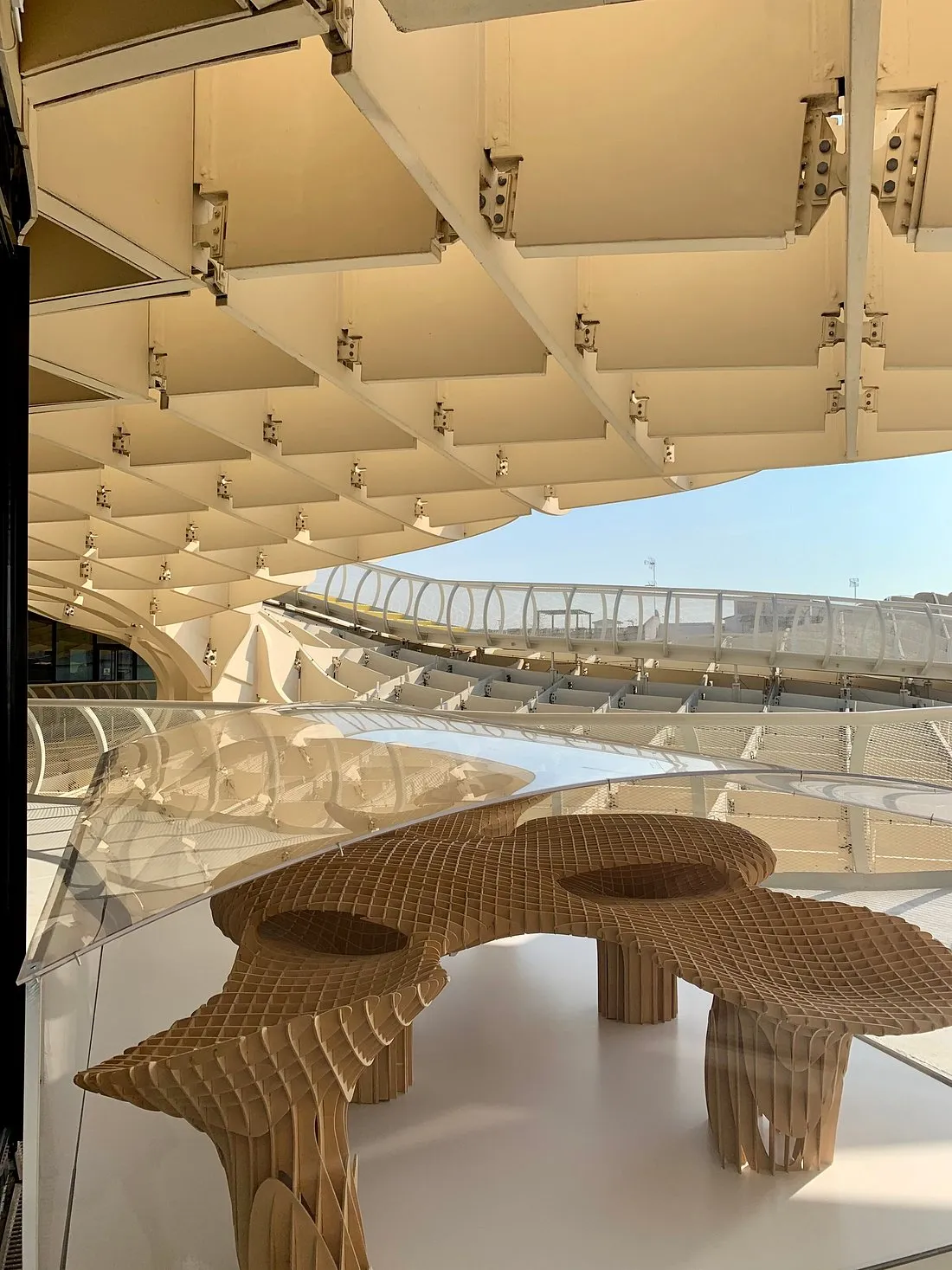
Setas de Sevilla is a wooden cathedral-narrative that weaves archaeology and future vision. J. Mayer H’s vision, Arup’s digital computation, and advances in LVL technology have composed a structure that is civic in scale, bold in appearance, and enduring in impact, a true exemplar of how material intelligence and spatial generosity can reshape urban identity.