


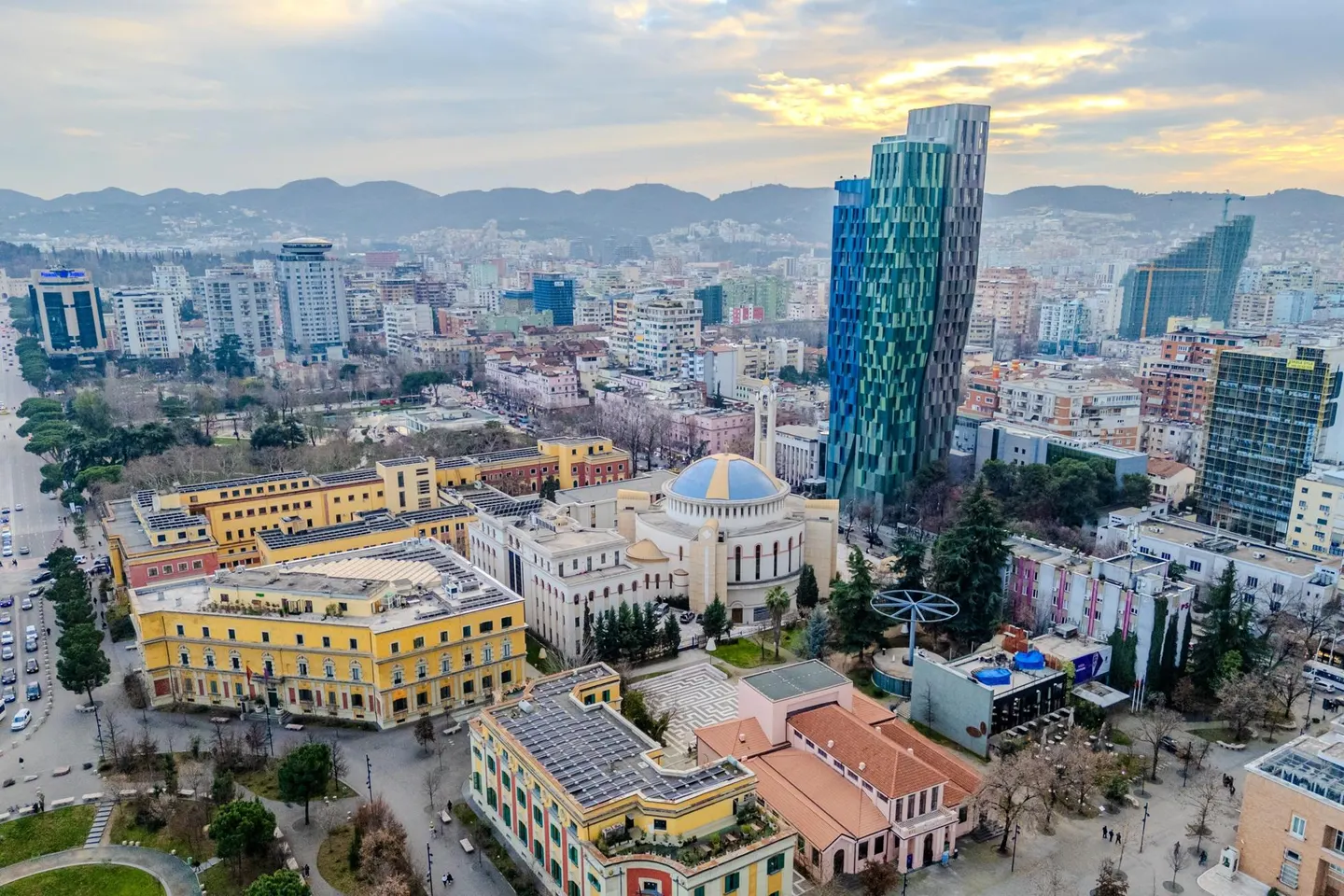


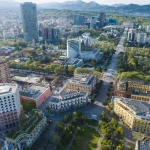
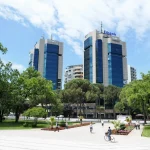
For decades, Tirana remained one of Europe’s least-known capitals. Isolated under communist rule for much of the twentieth century, the city developed largely outside the global architectural spotlight. Tirana is a collection of overlapping eras: Ottoman landmarks sit near Italian Rationalist civic buildings, Socialist monuments share the skyline with contemporary towers. Former symbols of dictatorship have been transformed into museums, cultural centers, and public spaces. Together, these buildings create a timeline that stretches from the Ottoman Empire to the twenty-first century.
These 20 architectural landmarks offer the clearest introduction to Tirana’s architectural evolution.
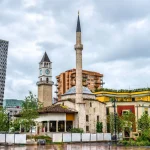
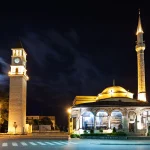
1. Et’hem Bey Mosque: The Ottoman Origins of Tirana
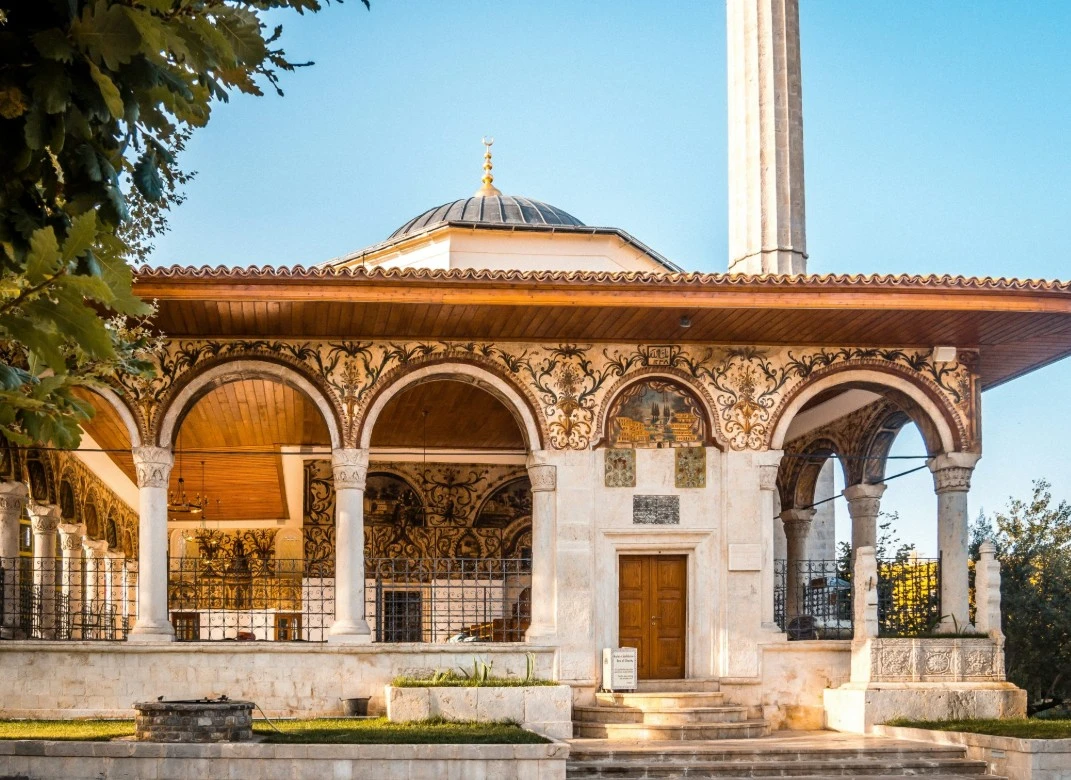
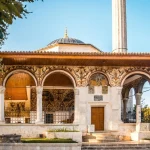
Completed in the early nineteenth century, Et’hem Bey Mosque is one of the oldest surviving buildings in Tirana. Built between the late eighteenth and early nineteenth centuries, the mosque reflects the period when Tirana was still a small Ottoman town organized around trade, religion, and local commerce. Architecturally, the building stands out for its proportions and richly painted interiors. The prayer hall is decorated with frescoes depicting trees, landscapes, waterfalls, and bridges, which is an unusual feature in Islamic religious architecture of the period. Its covered portico and slender minaret add to its appearance. Located beside Skanderbeg Square, the mosque creates a contrast with the monumental buildings that surround it today.
2. Clock Tower of Tirana
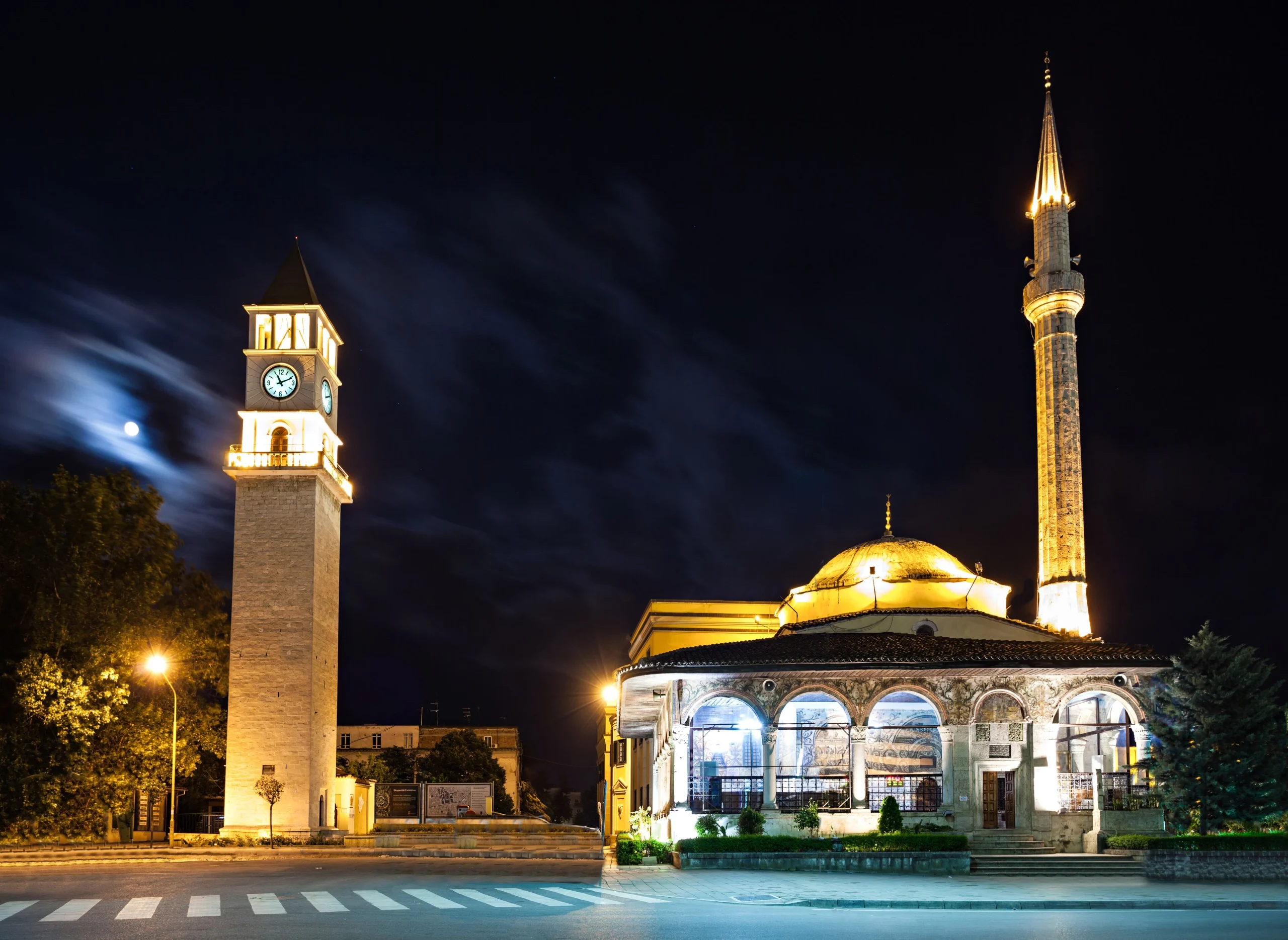
Standing beside the Et’hem Bey Mosque, the Clock Tower was completed in 1822. The tower originally functioned as a practical urban feature, helping residents keep track of time in an era before personal clocks were common. Built of stone and rising above the surrounding townscape, it became a recognizable point of orientation within the growing settlement. Although relatively modest compared to modern towers, the structure once dominated Tirana’s skyline. Its simple form and vertical presence reflect the architectural character of the Ottoman city, where mosques, markets, and civic landmarks formed the center of daily life. Together with the Et’hem Bey Mosque, it reflects Tirana’s pre-modern period and helps visitors understand what the city looked like before large-scale modernization began.
3. Tanners’ Bridge: Pre-Modern Tirana
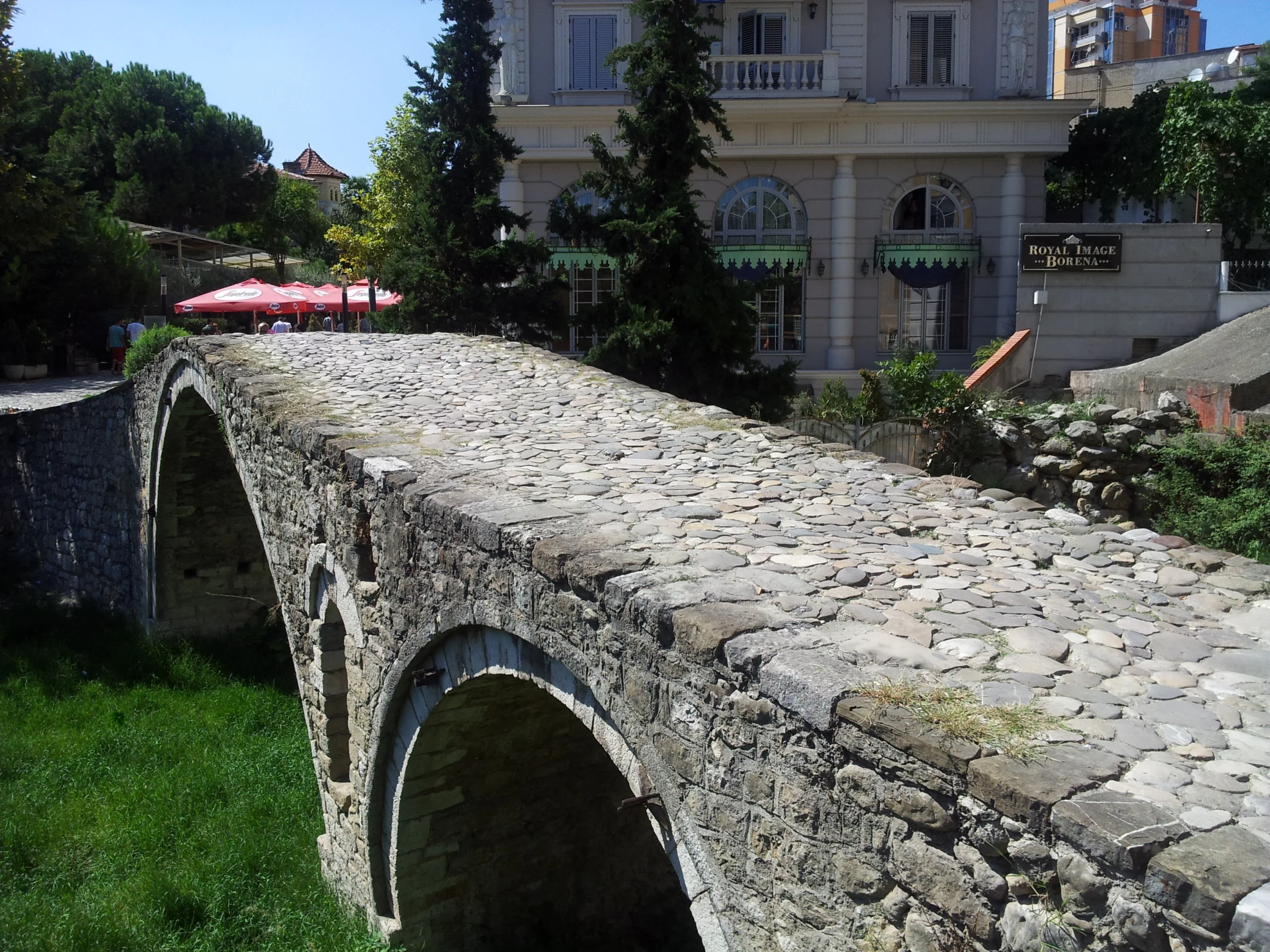
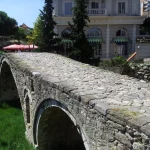
Constructed during the eighteenth century, the stone bridge once crossed the Lana River and formed part of an important route used by merchants, farmers, and craftsmen entering the city. Its name comes from the leather tanners who worked nearby and regularly crossed the bridge to reach markets. Built from local stone and featuring a simple arched structure, it reflects traditional Ottoman engineering techniques. Today, urban expansion has transformed the area around it, but the bridge remains an important reminder that Tirana was once a much smaller settlement. It offers context for understanding the city’s evolution before the arrival of modern planning and large civic projects.
4. Mother Teresa Square and the University Ensemble: Italian Rationalism
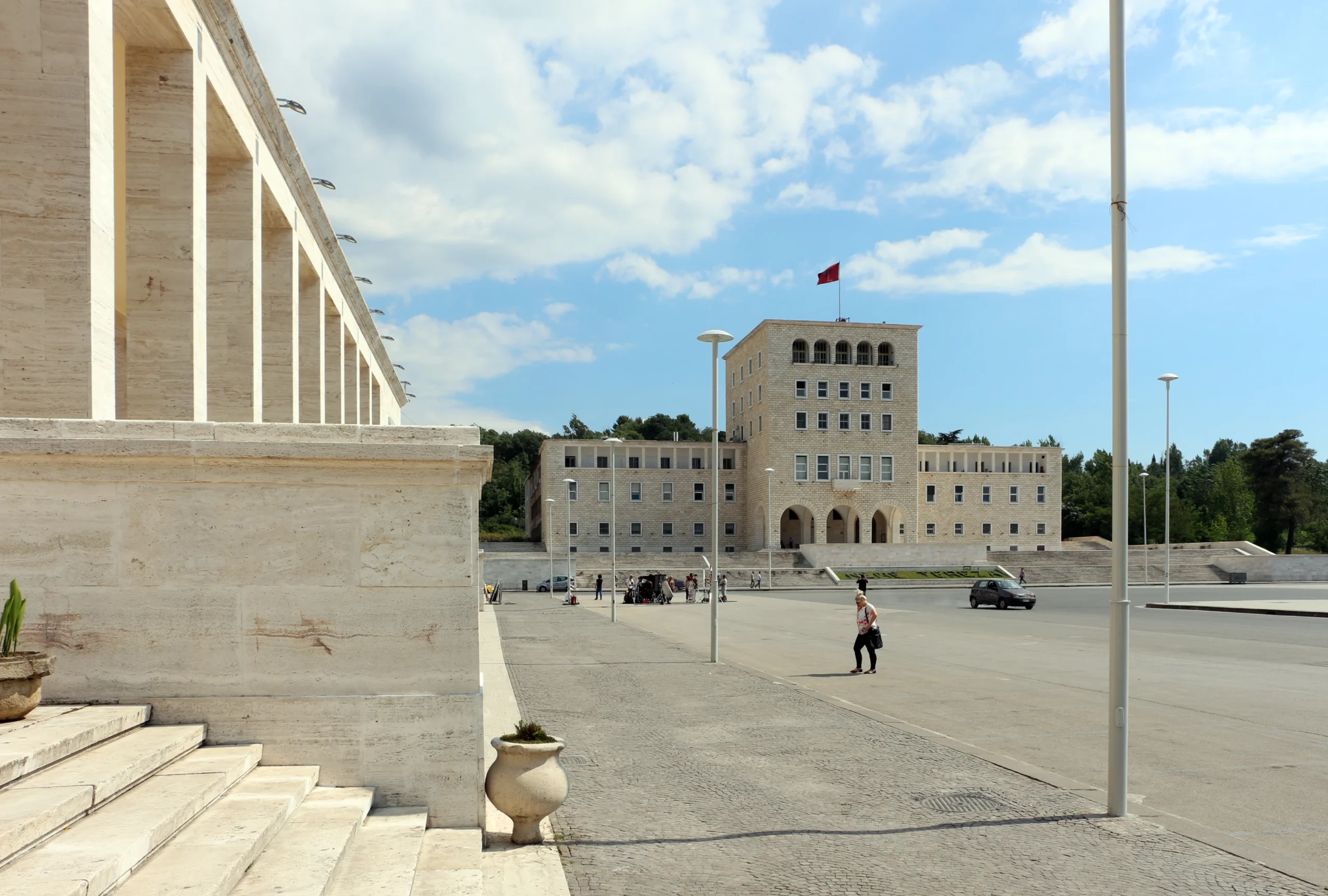
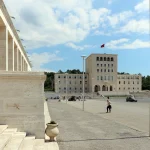
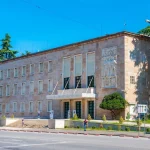
Developed during the 1930s under Italian administration, the square formed part of an ambitious masterplan that sought to modernize Tirana through formal planning and monumental civic architecture. The project was heavily influenced by Italian Rationalism, an architectural movement that emphasized symmetry, geometry, and clear spatial organization. The buildings surrounding the square, including the University of Tirana and the Polytechnic University, reflect these principles through their clean lines, balanced proportions, and restrained ornamentation. Instead of relying on decorative facades, the architecture derives its strength from composition and scale. The square is defined by broad open space and long sightlines.
5. Prime Minister’s Office
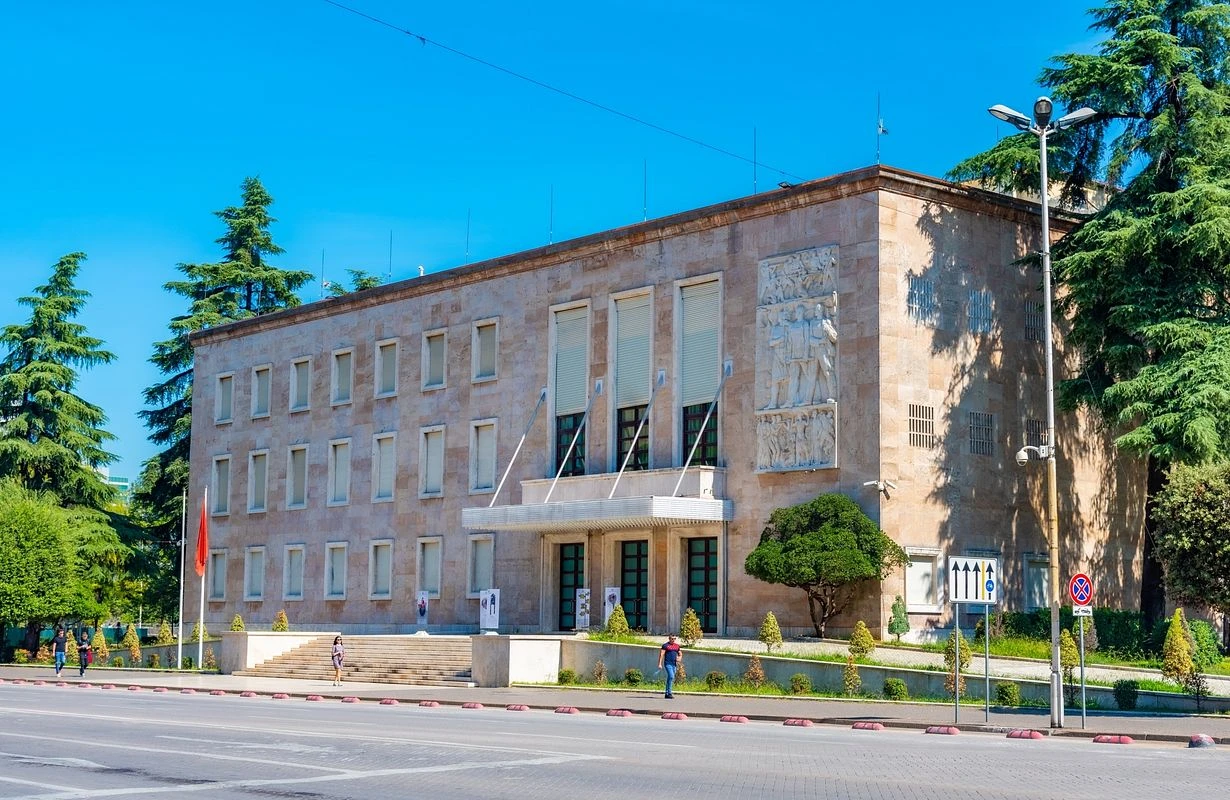
Located along Tirana’s principal civic boulevard, the Prime Minister’s Office forms part of the Italian-planned governmental district established during the 1930s. The building reflects Rationalism through its geometry, proportions, and disciplined facade. Unlike more decorative government buildings found elsewhere in Europe, the design relies on simplicity and order to communicate authority. The building forms part of a larger urban composition that includes government ministries, institutional buildings, and public squares. Together, these structures created a formal administrative center.
6. Palace of Culture: Socialist Architecture
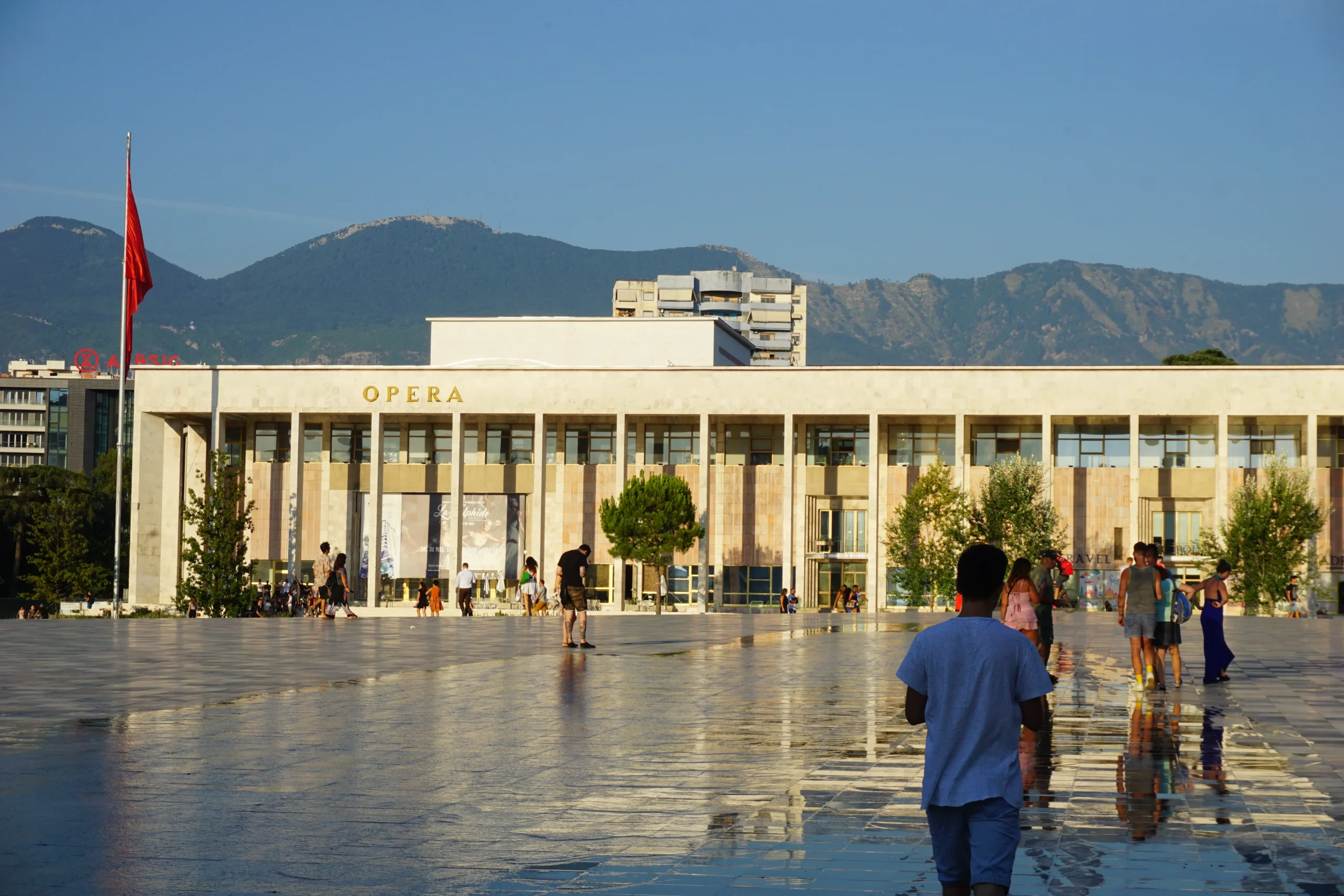
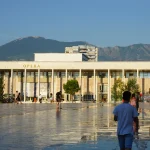
Completed during the 1960s, the building occupies a prominent position on Skanderbeg Square and was designed to house theaters, performance spaces, and cultural institutions. Like many public buildings constructed during the communist period, it was intended to symbolize collective identity and state investment in public life. The structure is defined by its imposing scale, repetitive facade rhythm, and strong geometric composition. Large volumes and a restrained material palette create a sense of permanence and authority. Although its political context has changed, the building now functions as a cultural destination.
7. National Historical Museum
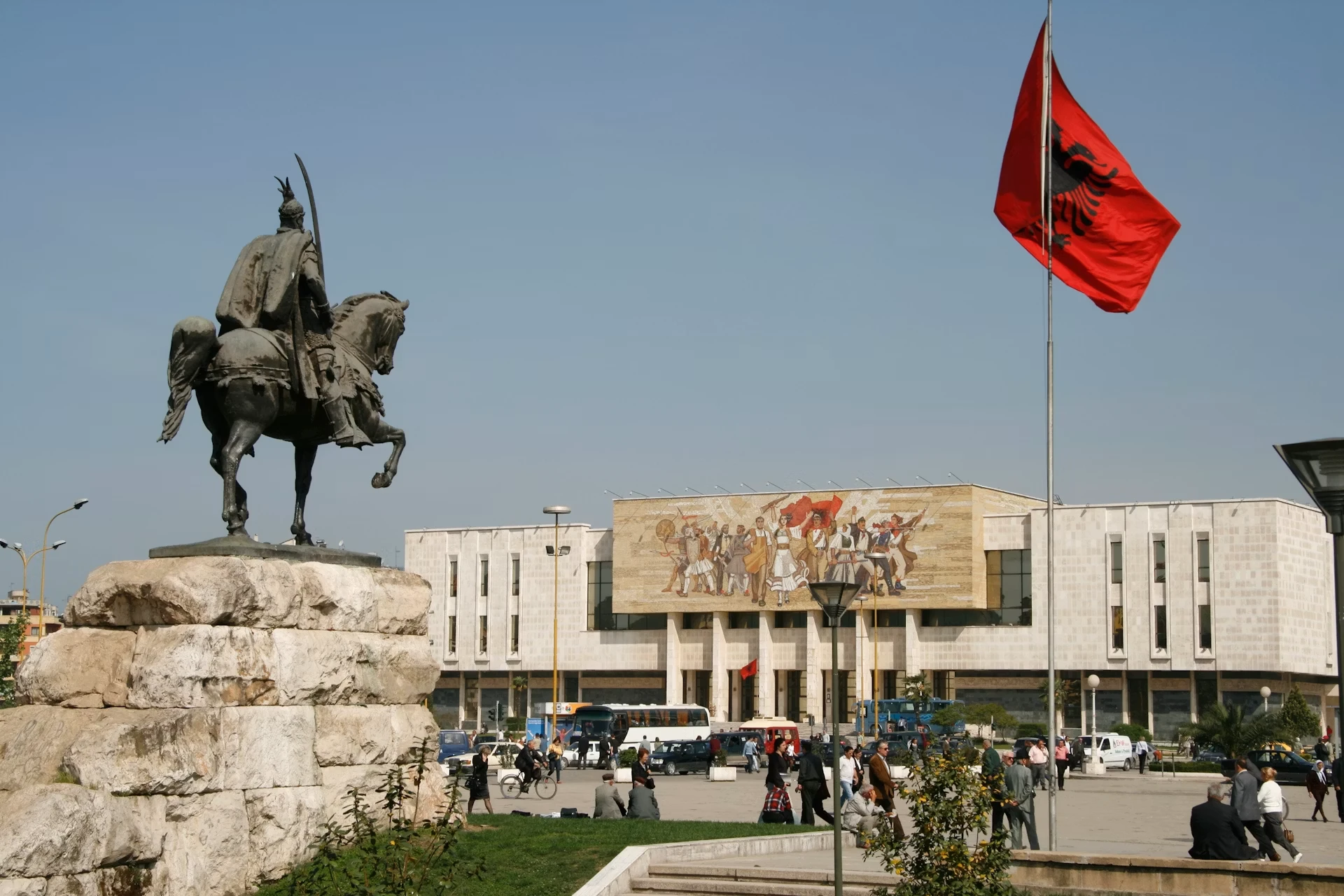
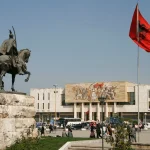
Facing Skanderbeg Square, the National Historical Museum is one of the largest buildings in Albania. Completed in 1981, the museum was designed during the communist era as a place to present and celebrate Albanian history. Its most distinctive feature is the enormous mosaic facade, which depicts figures from different periods of the nation’s past. The architecture itself is monumental and highly symbolic. Broad facades, large public spaces, and strong geometric forms emphasize the building’s civic importance. Like many museums of the period, it was intended to function as a statement about national identity.
8. Tirana International Hotel
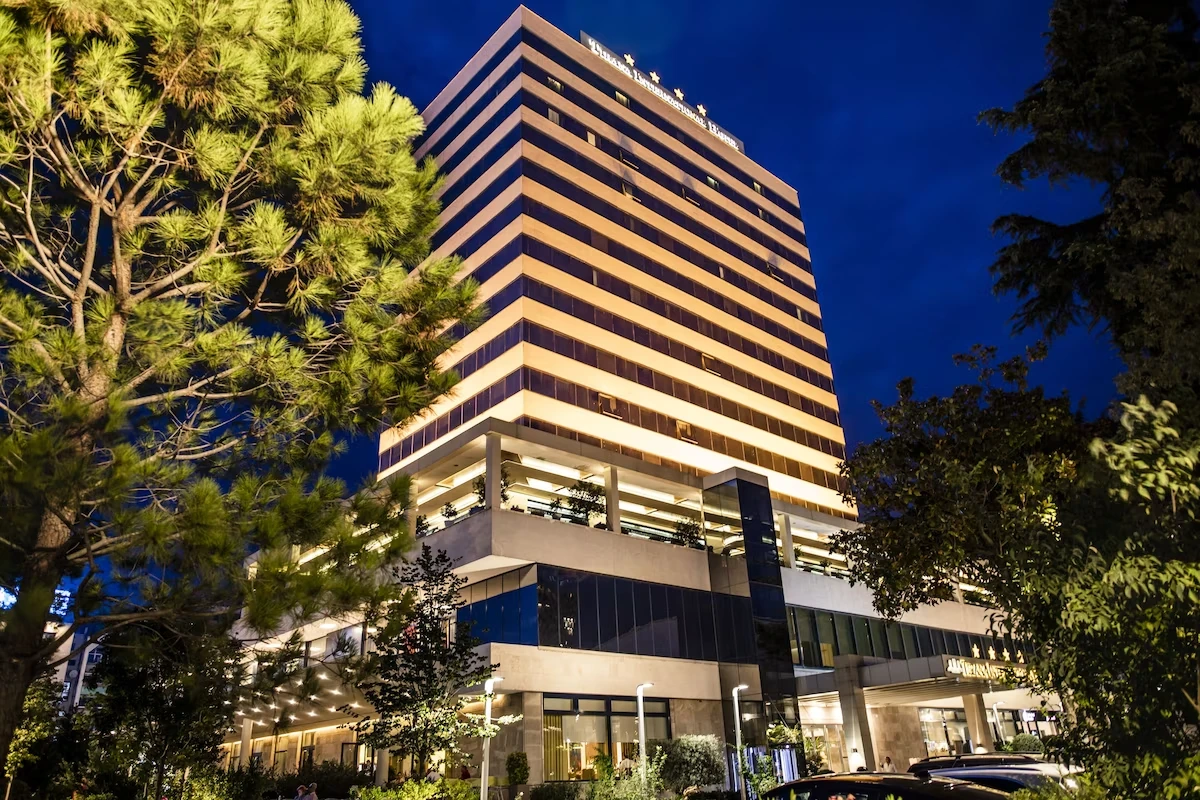
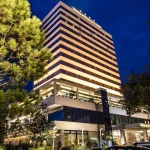
Constructed during the socialist period, the hotel was designed to accommodate foreign visitors and official delegations. At a time when Albania remained largely isolated from the outside world, the project represented a significant investment in modern infrastructure. The building’s architecture reflects the functional modernism of the era. It showcases rectilinear form, repetitive facade, and strong vertical profile.
9. Pyramid of Tirana
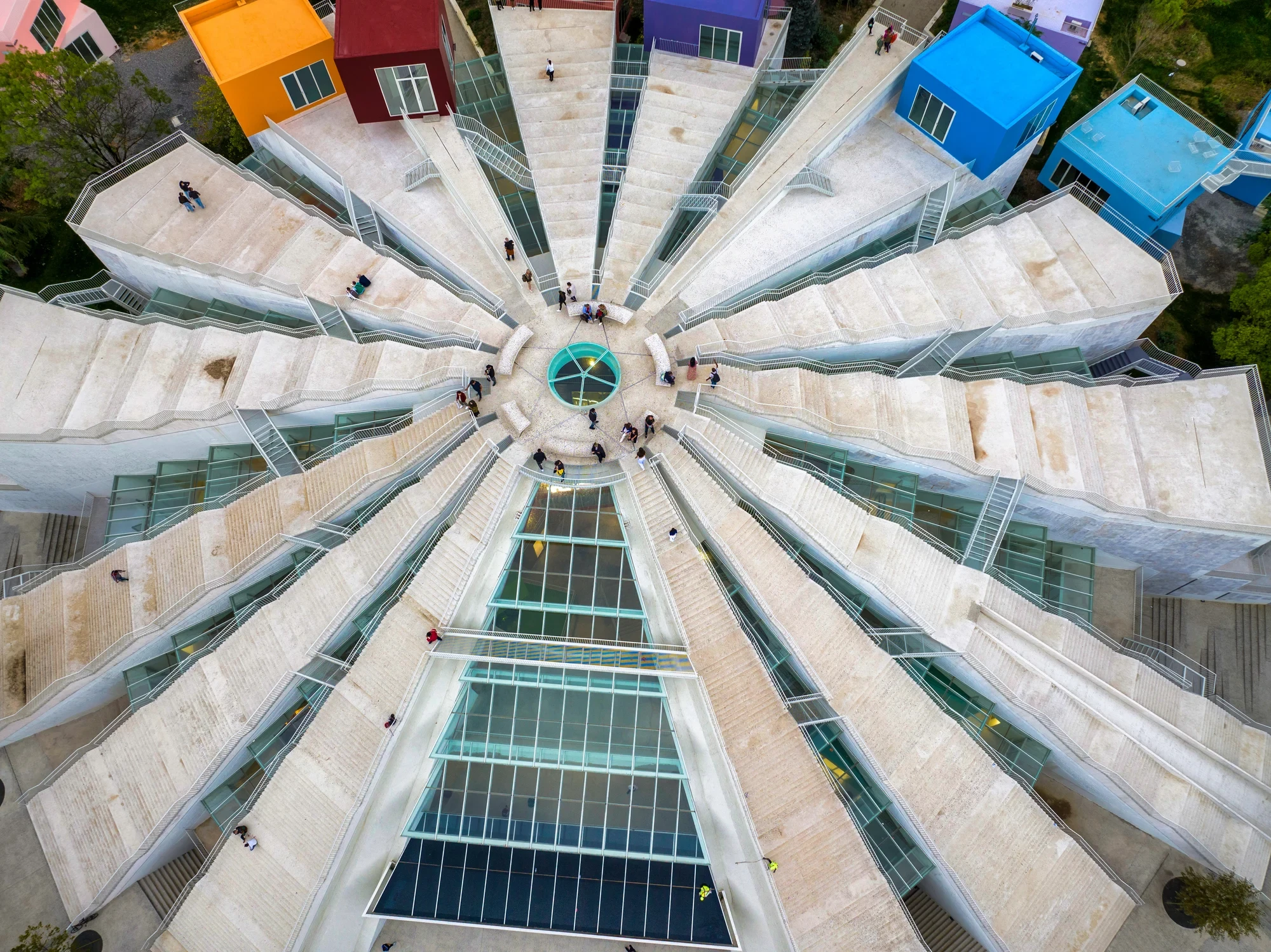
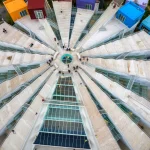
Completed in 1988 as a museum dedicated to communist leader Enver Hoxha, the structure was originally conceived as a monumental political statement. Its dramatic geometric form differed from the more conventional socialist buildings found elsewhere in the city. The low-profile pyramid shape, sloping concrete surfaces, and angular geometry created a striking architectural identity. Following the collapse of communism, however, the building lost its original purpose and spent years in an uncertain state.
Recent redevelopment by MVRDV transformed the structure into a public cultural and educational center. New interventions introduced learning spaces, public programs, and accessible circulation routes while preserving the building’s distinctive form. Today, the Pyramid stands as a successful example of adaptive reuse in Tirana.
10. House of Leaves Museum
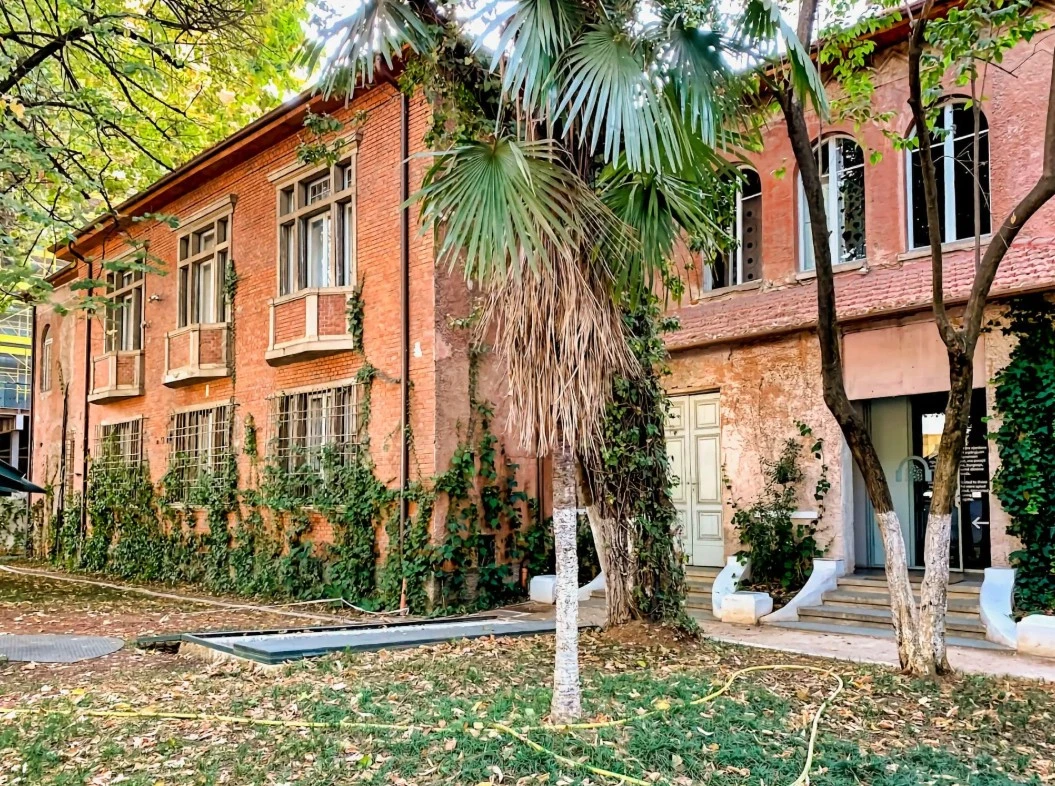
The House of Leaves Museum occupies a former surveillance headquarters used by Albania’s secret police during the communist era. The museum documents the extensive monitoring and surveillance systems that operated during the dictatorship while preserving many original spaces. Architecturally, the project demonstrates the value of adaptive reuse as a tool for public memory. Instead of transforming the structure into something entirely new, the renovation allows visitors to engage directly with its history.
11. Resurrection of Christ Orthodox Cathedral
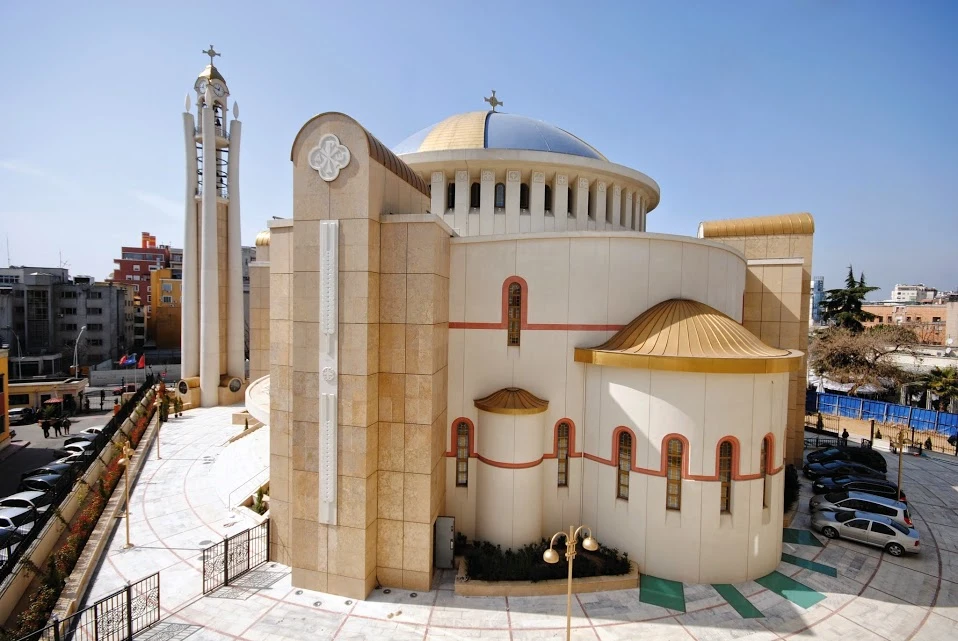
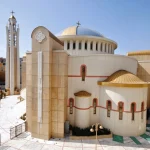
Completed in 2012, the Resurrection of Christ Orthodox Cathedral is one of the largest Orthodox churches in the Balkans. The building was constructed after the fall of communism, when religious practice was once again permitted following decades of state atheism. Its architecture draws inspiration from Byzantine traditions, incorporating a large central dome, bell towers, and richly decorated interiors.
The cathedral’s curved forms and light-colored materials stand in sharp contrast to the predominantly modernist architecture that surrounds it. Inside, elaborate iconography and ceremonial spaces reinforce its role as a major religious center.
12. Bunk’Art: Reinventing a Cold War Relic
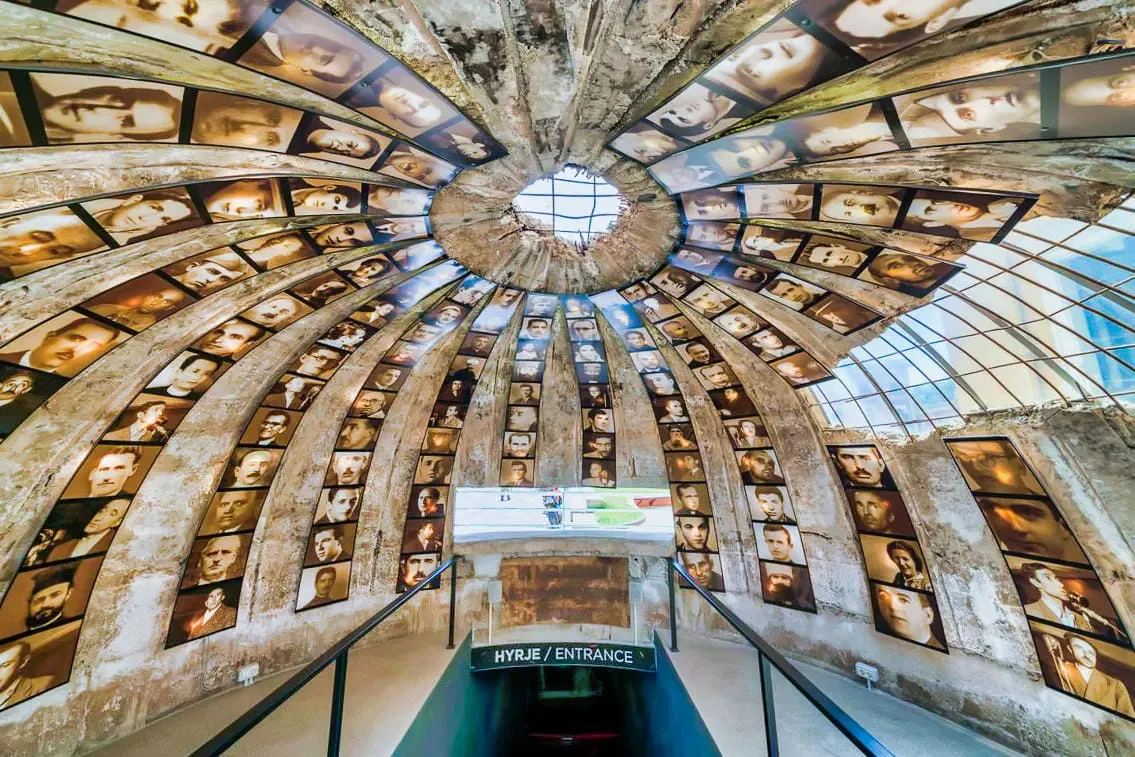
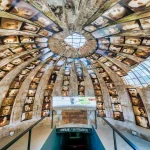
An important architectural remnant of communist Tirana is the extensive bunker infrastructure commissioned under Hoxha’s regime. Built for political leaders during the Cold War, the complex was designed to withstand a nuclear attack. Hidden beneath a hillside on the outskirts of Tirana, it contains dozens of rooms, corridors, and command spaces. The architecture reflects the intense atmosphere of political isolation that characterized Albania during the communist period.
Thick concrete walls, narrow passageways, and secure chambers create an environment unlike any conventional museum. Today, the bunker houses exhibitions focused on history, politics, and everyday life under communism.
13. TID Tower
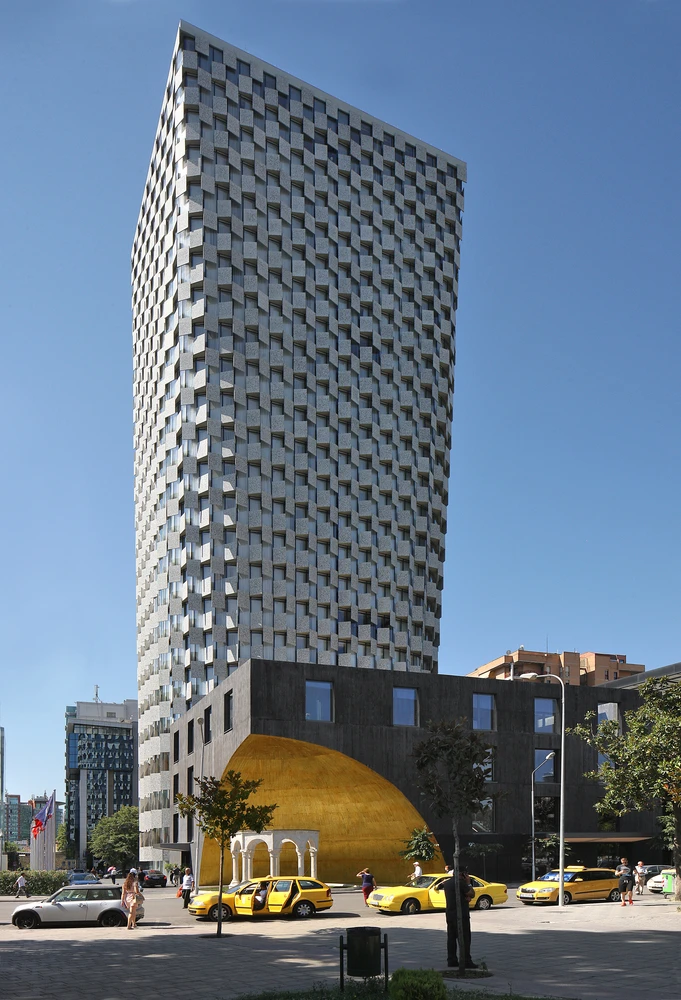
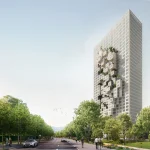
Completed in 2012, TID Tower marked a turning point in Tirana’s architectural development. Designed by Belgian architecture firm 51N4E, the mixed-use tower introduced a more contemporary and experimental approach to high-rise design. Its faceted geometry creates changing views and allows the building to respond to the surrounding urban fabric. Unlike many glass towers that could exist in any city, TID Tower engages directly with its context through form and placement. Its irregular shape creates visual interest while helping define public space at street level.
14. Air Albania Stadium
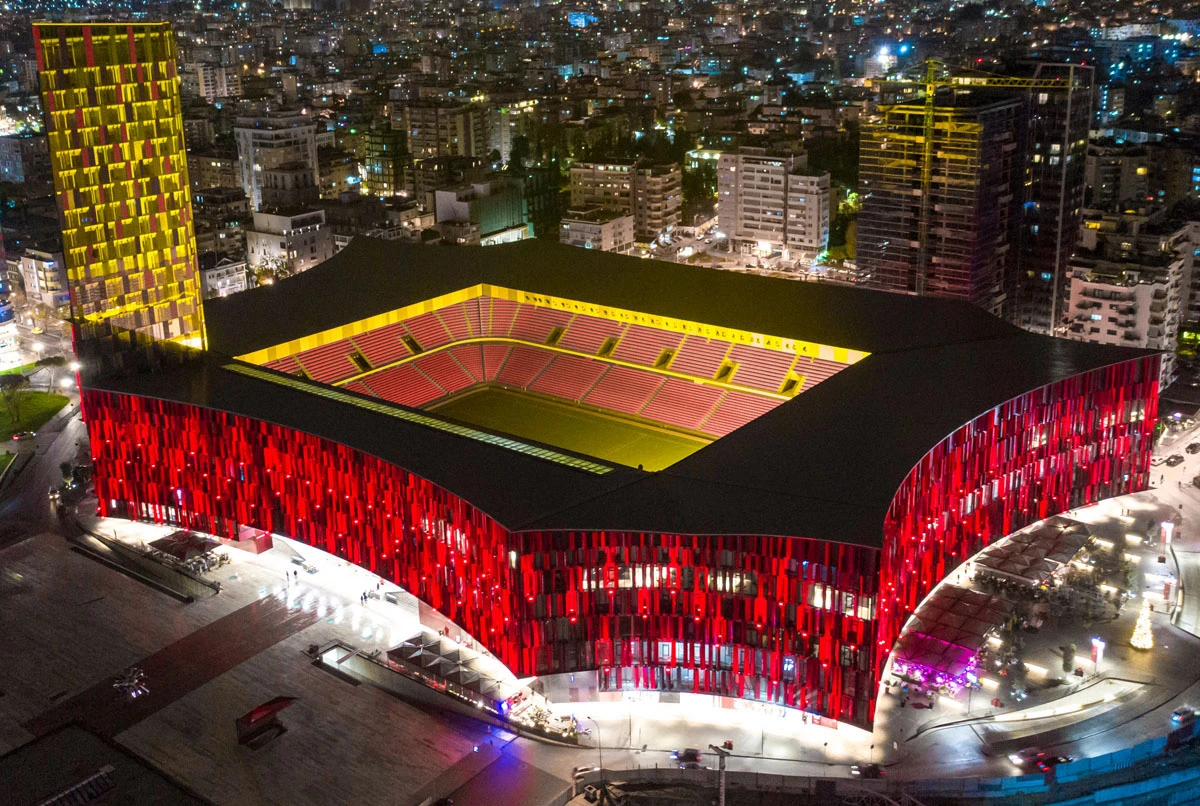
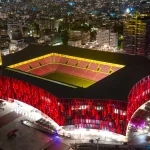
Completed in 2019, the project combines a football stadium with hotels, offices, restaurants, and retail spaces, creating a mixed-use urban complex. This integration of multiple functions reflects contemporary approaches to large-scale urban development. Architecturally, the stadium is distinguished by its faceted facade, which incorporates Albania’s national colors of red and black. The angular geometry gives the building a strong visual identity while helping it stand out within the cityscape.
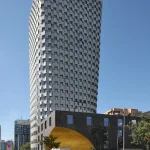
15. Downtown One
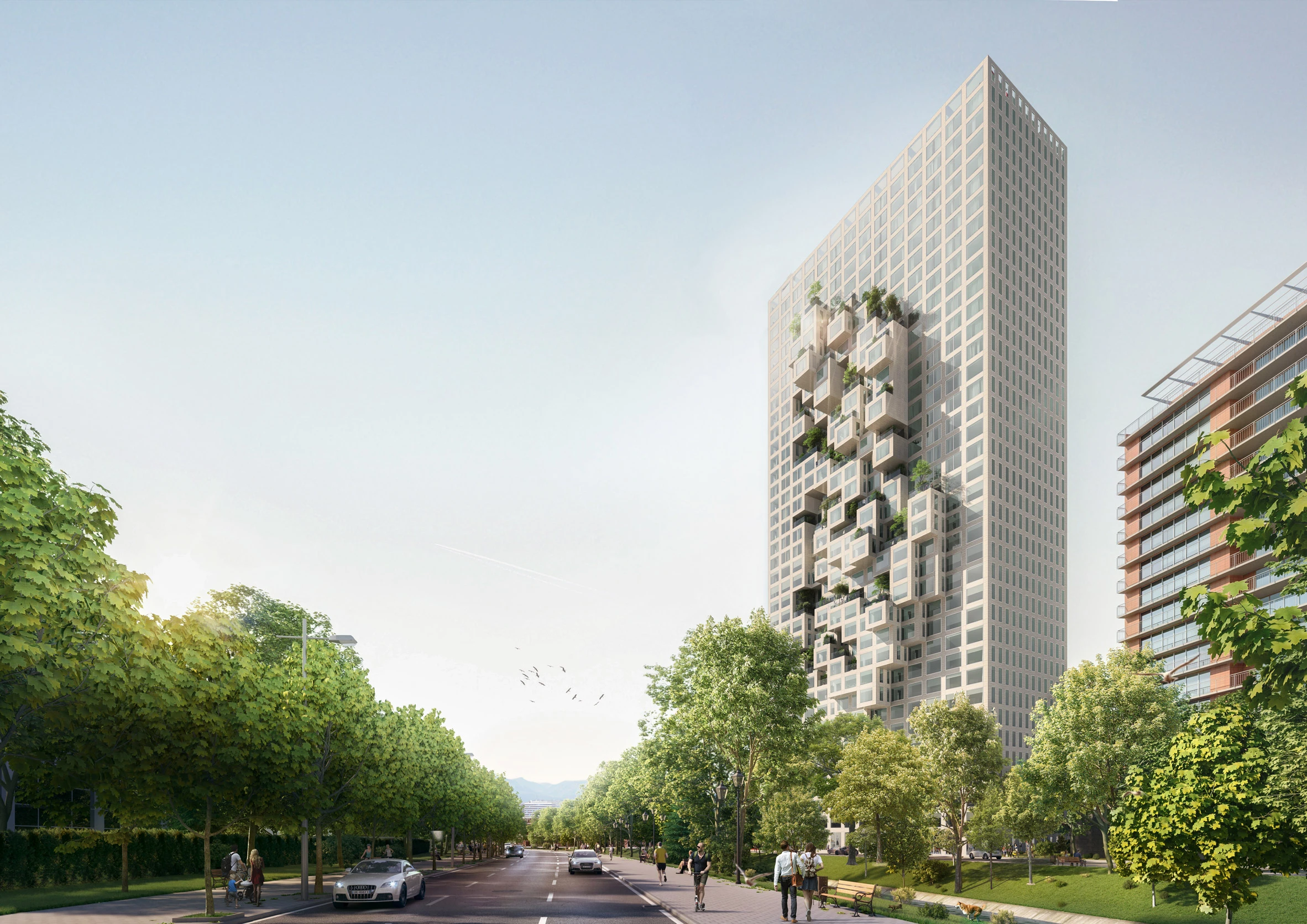
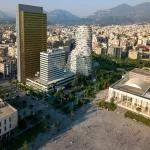
Designed by Dutch architecture firm MVRDV, its defining feature is a pixelated facade that incorporates a map of Albania into the building envelope, creating a connection between architecture and national identity. The tower reflects the growing density and ambition of contemporary Tirana. Its mixed-use program accommodates residential, commercial, and office functions while contributing a distinctive silhouette to the skyline. More importantly, Downtown One illustrates how the city is positioning itself within contemporary architectural discourse. As new projects continue to emerge across Tirana, the tower stands as a symbol of a capital that remains actively engaged in shaping its future.
16. Blloku District
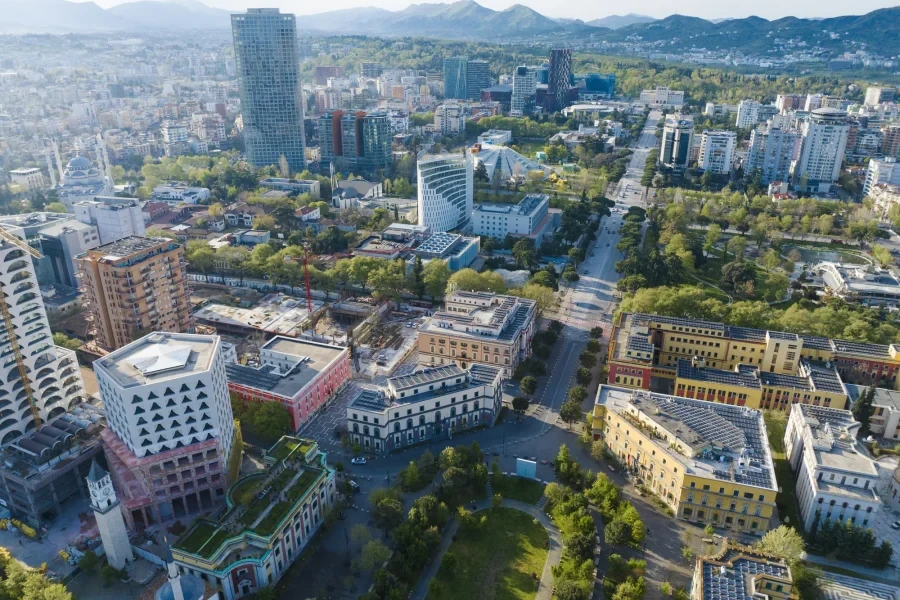
No district illustrates Tirana’s social transformation more clearly than Blloku. During the communist era, the neighborhood was restricted to party elites and government officials, functioning as a closed political enclave inaccessible to ordinary citizens. Today, Blloku is an active urban district with cafés, restaurants, boutiques, and creative spaces that occupy streets once associated with state power and exclusivity. Architecturally, Communist-era residential blocks stand beside contemporary interventions, while outdoor terraces animate sidewalks throughout the neighborhood.
17. Pazari i Ri
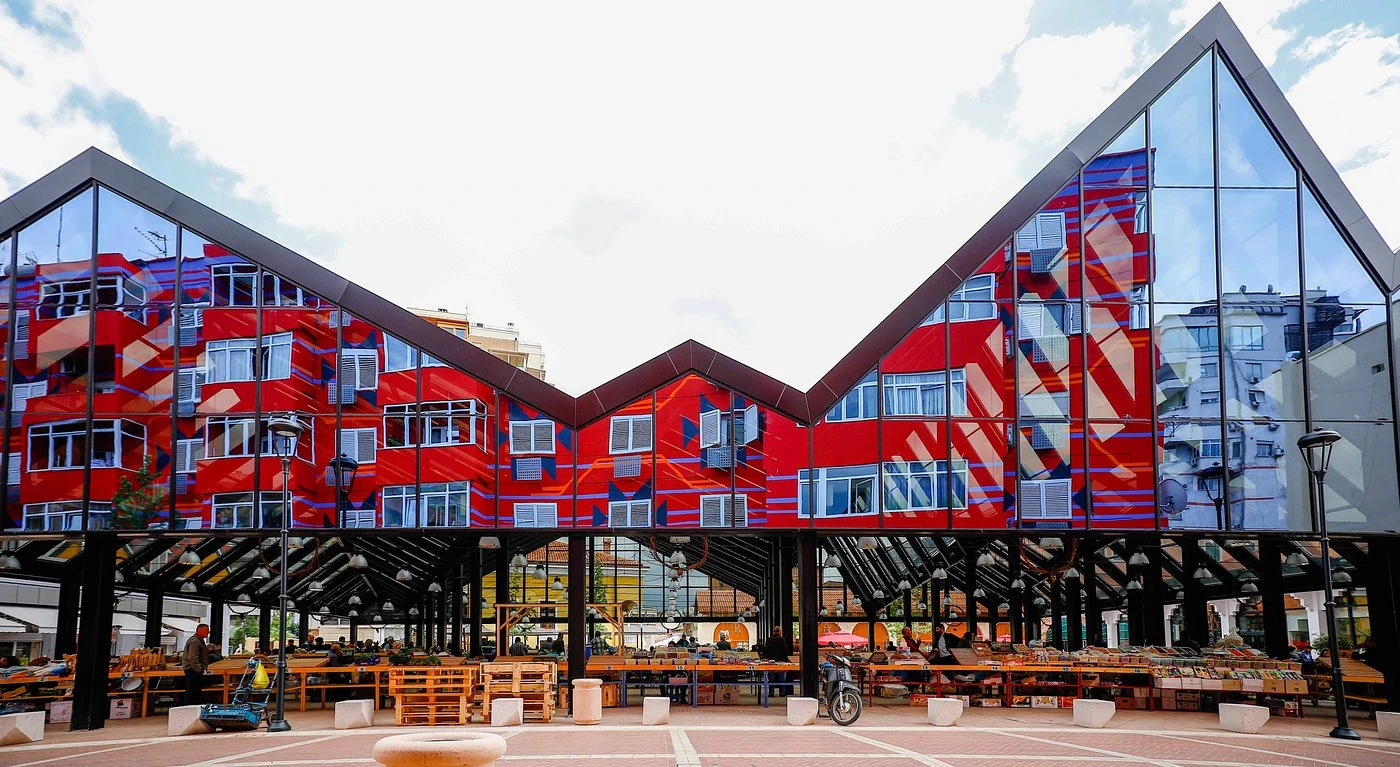
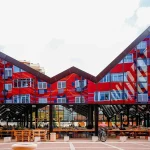
Another important urban transformation can be seen in Pazari i Ri, Tirana’s revitalized market district. Historically functioning as one of the city’s commercial centers, the area underwent significant redevelopment focused on pedestrianization and placemaking. The redesigned public spaces prioritize walkability, open-air activity, and social interaction. Bright facades and restored structures contribute to a more cohesive urban identity while maintaining the district’s local character.
18. The Grand Park and Artificial Lake
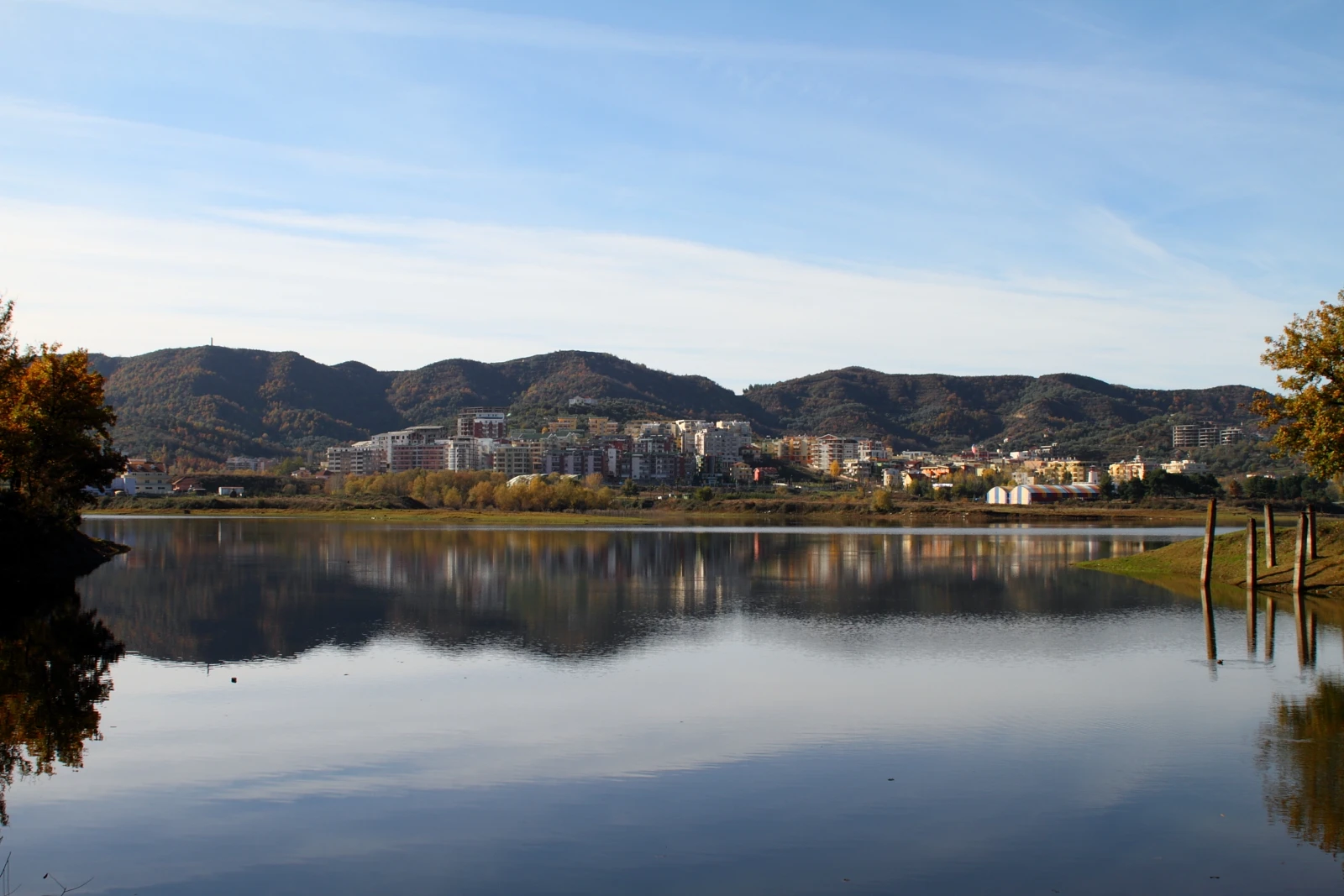
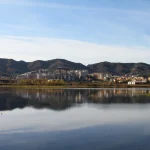
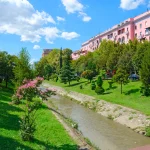
Tirana’s relationship with landscape also plays an important role in its urban identity. The Grand Park and Artificial Lake area provides one of the clearest examples of landscape urbanism within the city. Here, architecture recedes slightly as public recreation and environmental space become the focus: walking paths, cafés, open lawns, and shaded gathering areas.
19. Twin Towers: Post-Communist Tirana
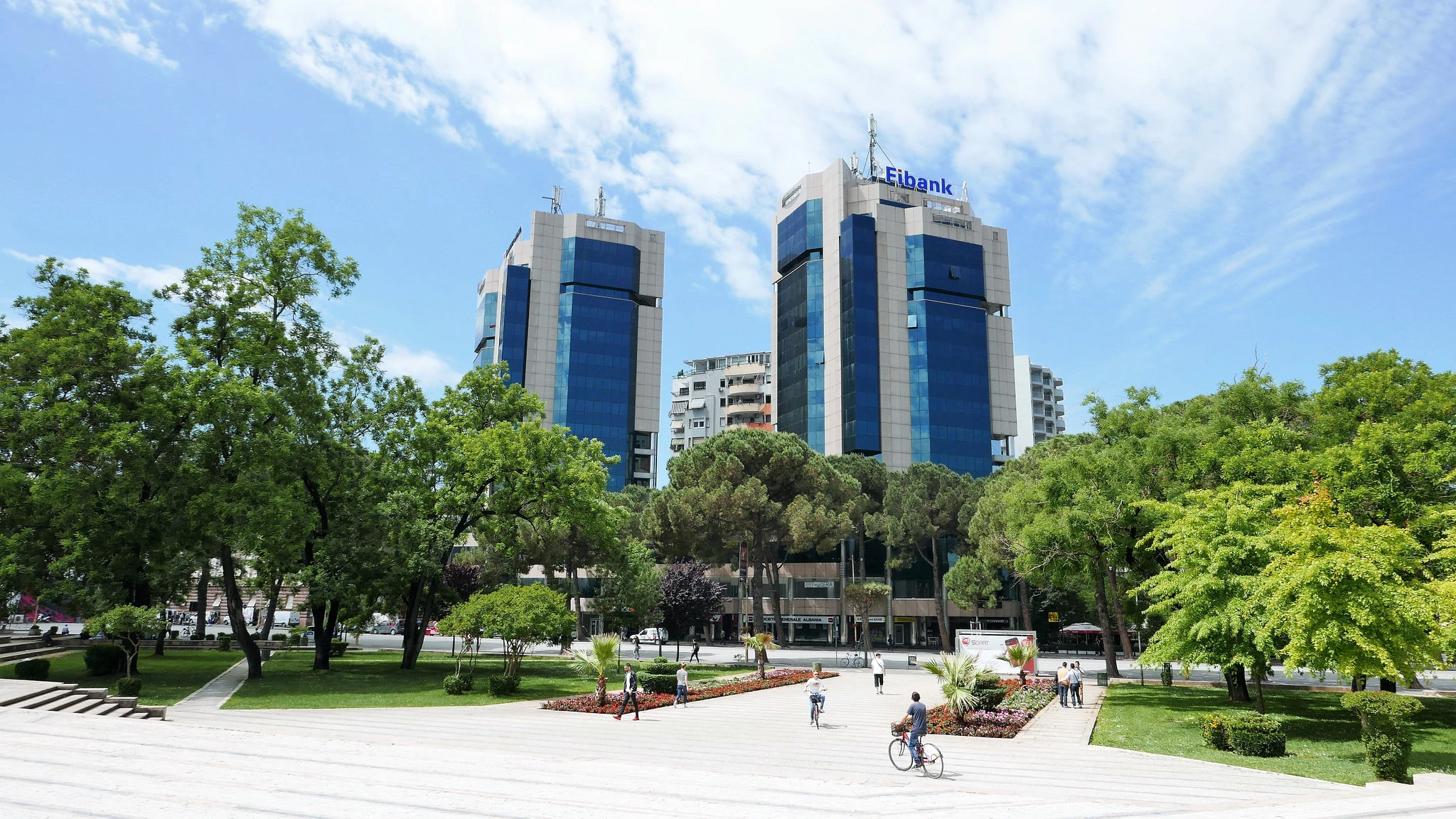
Completed in the early 2000s, the project emerged during a period of rapid economic and social change following the fall of communism. The towers introduced a new language centered on private investment, commercial development, and international business. The two high-rise structures are defined by their contemporary glass facades, vertical proportions, and clean geometric forms. Unlike the monumental civic architecture of the socialist era, the towers were designed to accommodate offices, retail spaces, and commercial activity.
Their location along the main boulevard places them at the intersection of multiple architectural eras. Italian Rationalist institutions, socialist landmarks, and contemporary developments can all be viewed within the surrounding urban context.
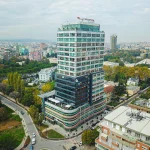
20. ABA Business Center
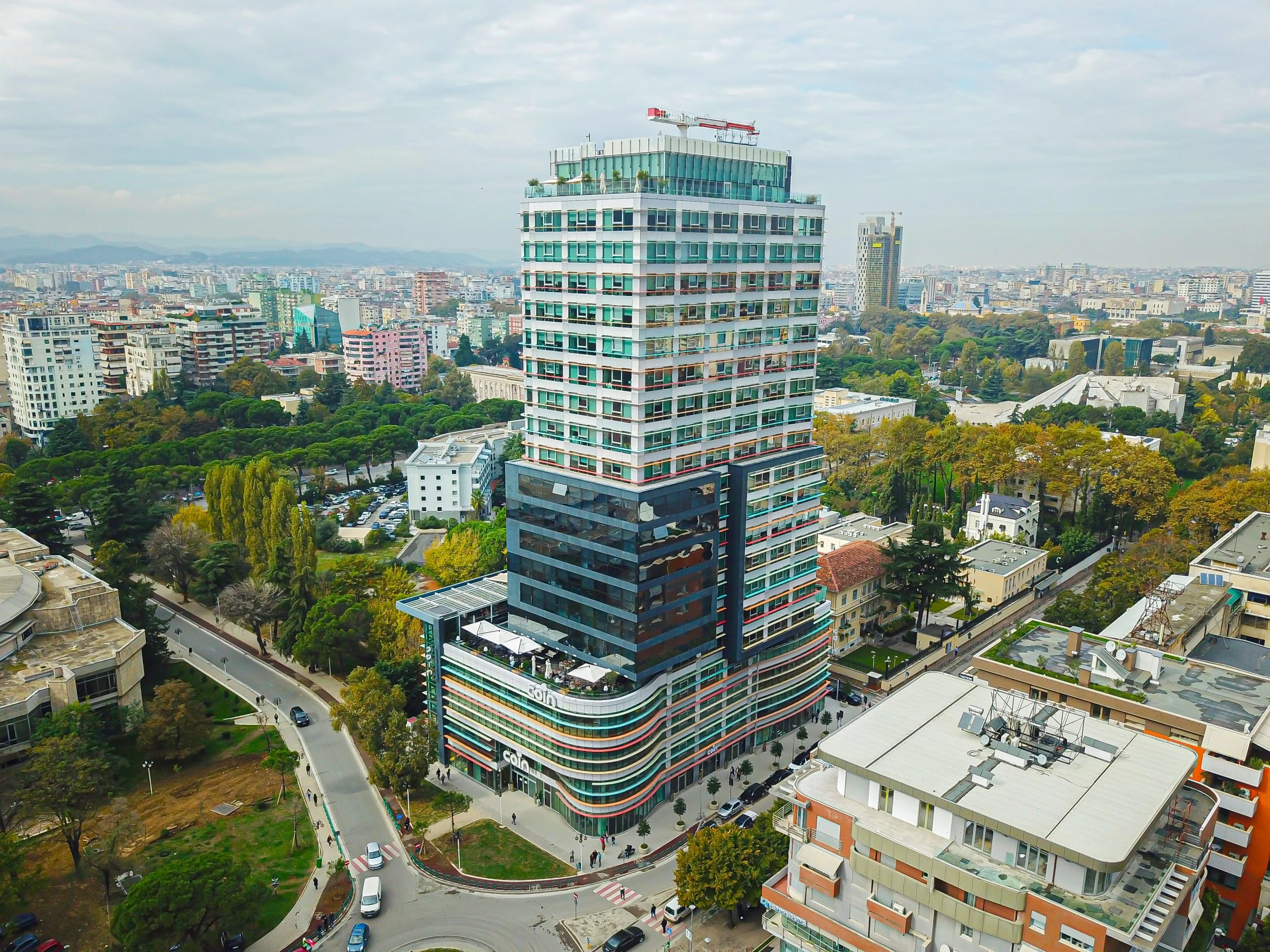
Completed in 2010, the ABA Business Center is a new generation of commercial architecture in Tirana. Located along the city’s primary boulevard near Mother Teresa Square, the mixed-use complex combines offices, retail spaces, and hospitality functions within a contemporary urban framework. The building’s glass-and-stone facade, clean geometric massing, and prominent corner location reflect Tirana’s shift toward international business and private-sector development after the fall of communism. ABA represents a more market-driven urban identity, where mixed-use development and commercial activity play a central role in shaping the city.
Tirana’s architecture reflects the different periods that shaped the city over time. Ottoman landmarks reveal their early beginnings, Italian Rationalist buildings introduced a modern framework, socialist-era structures brought monumental civic architecture, and contemporary projects continue to shine on the skyline. For architects and urban observers, the Albanian capital has developed its own architectural language through adaptation, experimentation, and reinvention.