








Bridges, which connect two areas separated by gaps or obstacles, have transformed into architectural marvels thanks to today’s technology. While mostly constructed using materials like steel and concrete, structural glass is another preferred material. Structural glass bridges, or skybridges, connect two separate areas, offering panoramic views of the landscape and often creating the feeling of walking in mid-air. Furthermore, thanks to the transparency of the glass, sunlight effortlessly filters through the bridge, reflecting interesting light and shadow patterns onto the surrounding structures.
In this article, we will examine 8 impressive glass bridge designs that give the impression of walking in mid-air:
1. Zhangjiajie Grand Canyon Glass Bridge
Location: Hunan, China
Architect: Haim Dotan
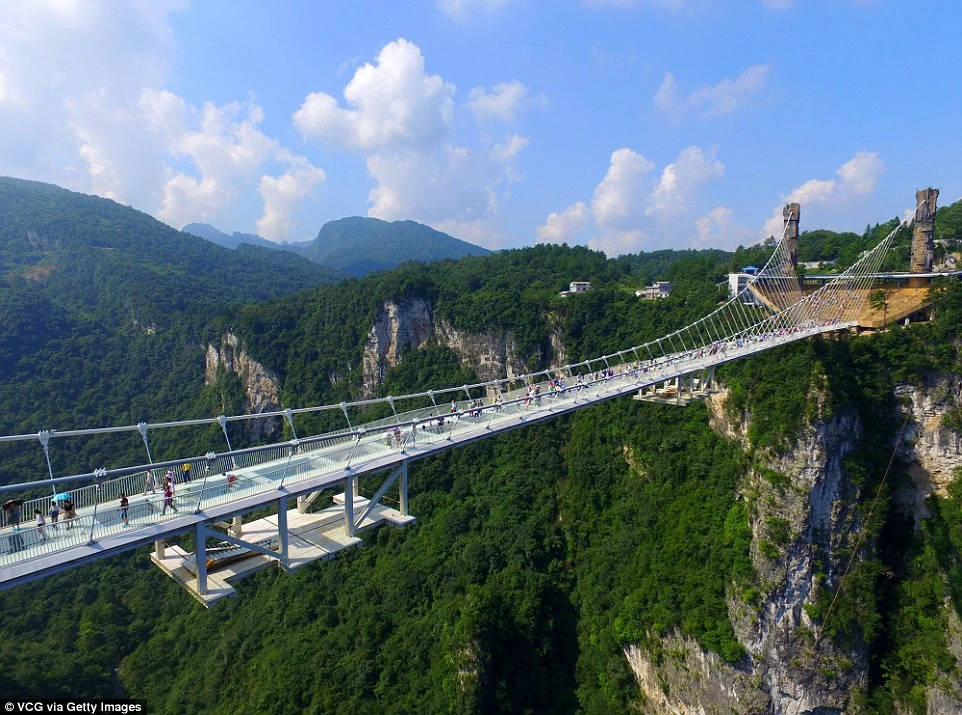
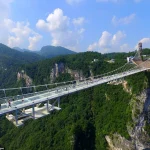
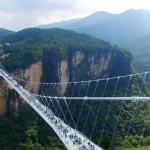
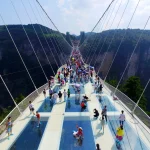
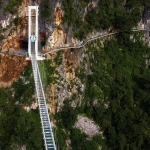
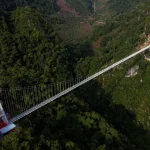
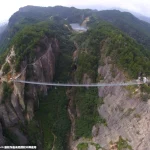
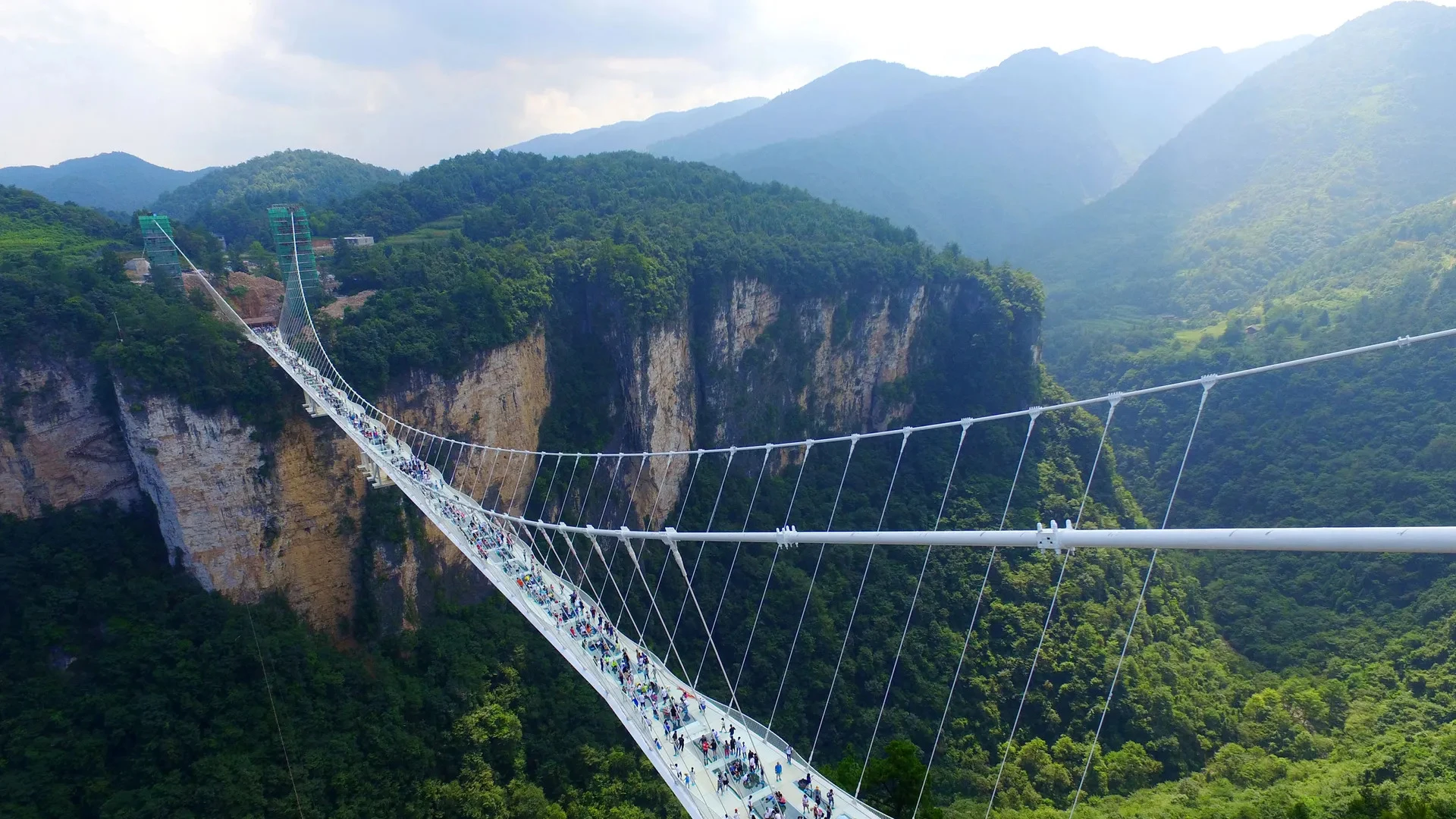
Spanning two cliffs across the canyon, the Zhangjiajie Grand Canyon Glass Bridge measures 430 meters in length, 6 meters in width, and rises 300 meters above the canyon floor, making it the world’s longest and highest glass-bottomed bridge. Designed by Haim Dotan, this glass bridge has a capacity to carry 800 people simultaneously. Glass panels placed along the walkway offer visitors breathtaking views of the canyon below.
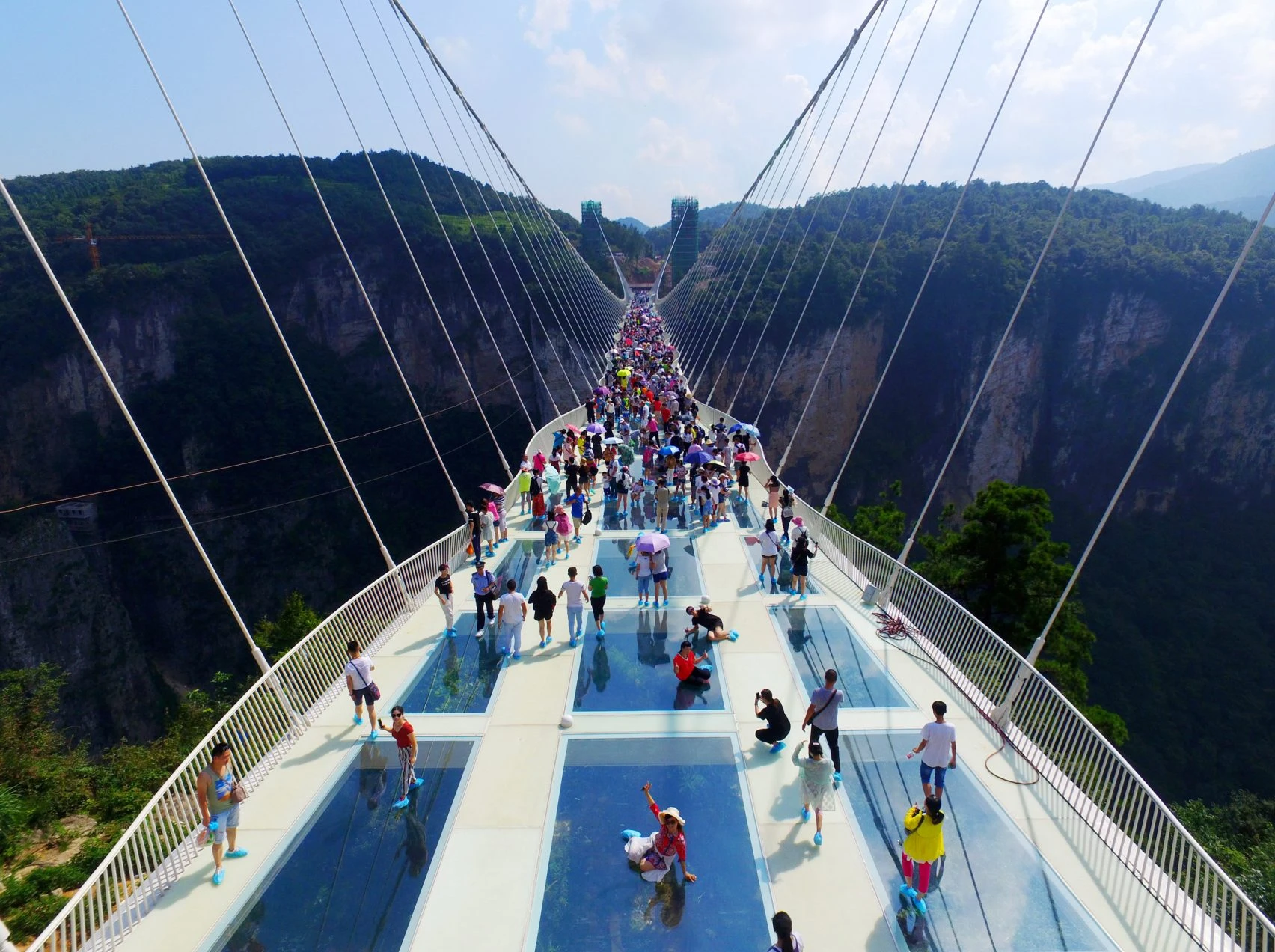
Supported by slender steel beams, the glass panels are engineered to make the bridge appear as invisible as possible, allowing it to seemingly disappear into the surrounding clouds. Suspended by tension cables between the edges of two cliffs, the bridge’s glass walkway is adorned with undulating slatted railings, and the path narrows towards the center of the canyon, creating an exaggerated perspective.
Many of today’s most ambitious bridge designs are made possible through computational design, 3D modeling, and parametric workflows that optimize structure, geometry, and performance. For architects and designers interested in learning the fundamentals behind these innovative forms, PAACADEMY offers specialized workshops on Grasshopper3D, Rhino, and algorithmic design, providing practical skills for creating complex architectural geometries and structural systems.
2. Glacier Skywalk
Location: Jasper National Park, Canada
Architect: Sturgess Architecture
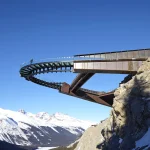
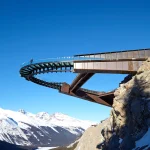
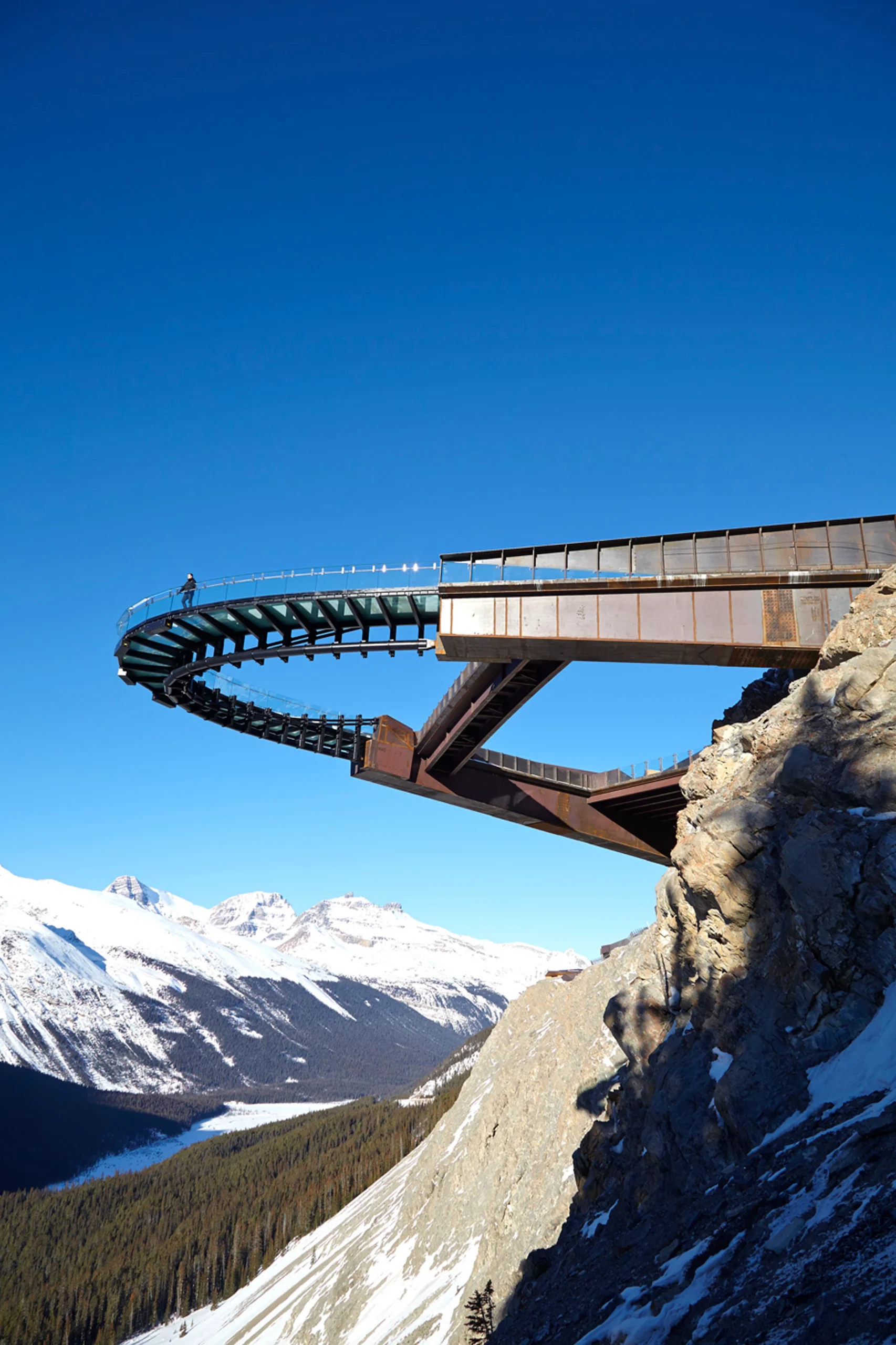
One of the world’s most impressive glass bridges, the Glacier Skywalk is an architectural tourist experience that makes it possible to experience the Columbia Ice Fields. Extending visitors onto a glass-floored cantilever 280 meters above the Sunwapta Valley, the Skywalk also functions as an open-air interpretive exhibit. The Discovery Vista, which projects outward from the mountainside, allows visitors to take in the breathtaking scale of the glacier and the valley below from a remarkable vantage point.
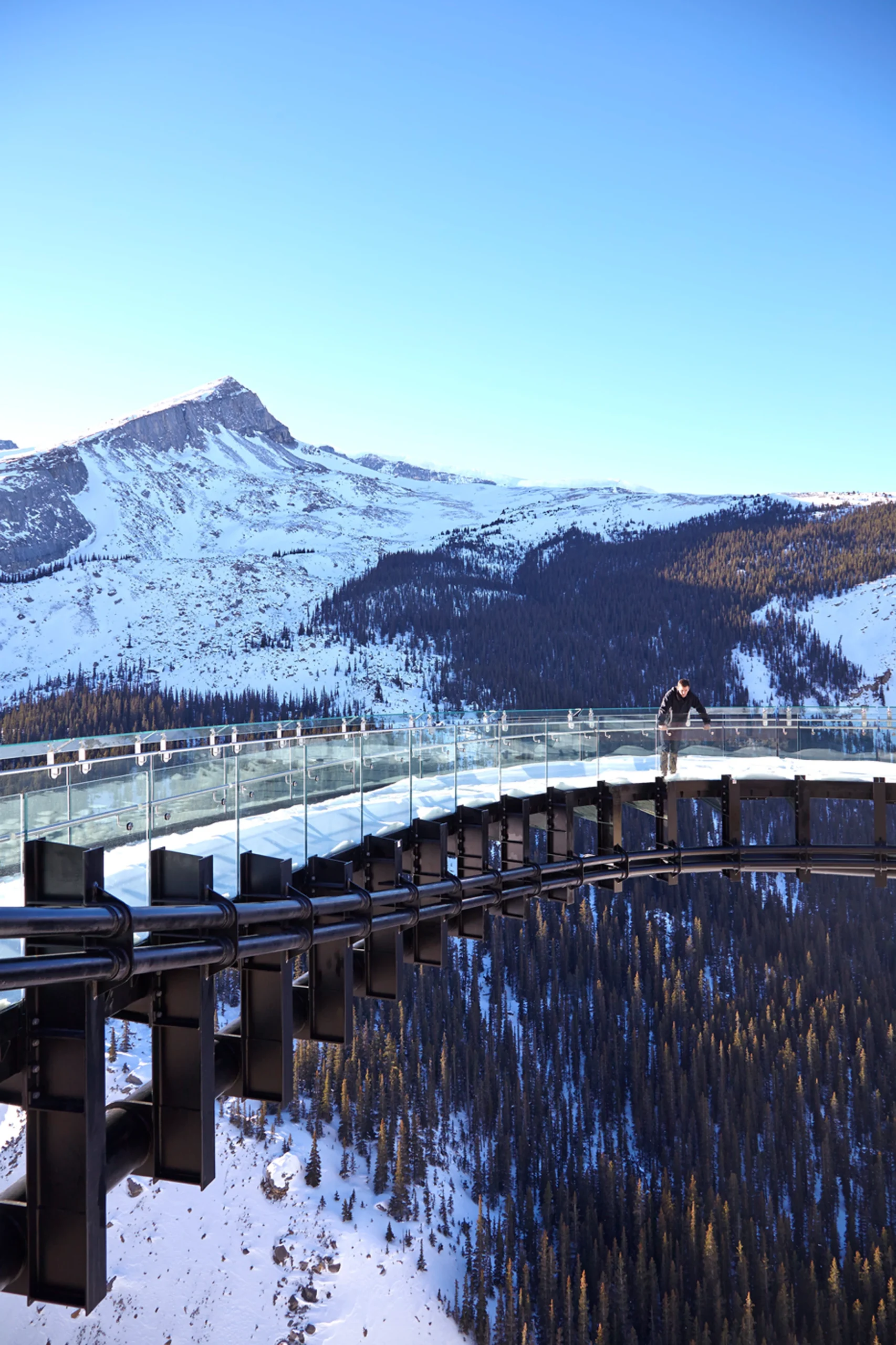
The natural landscape that inspired the Glacier Skywalk influenced the choice of materials. The geological movement of the thrust fault line in the region created a fractal landscape and affected the architectural form. The angular forms, rusty tones, and warm texture of Corten steel are related to the rocky outcrops of the surrounding mountains. The glazing, on the other hand, mimics the glacial flow below.
3. Bach Long Glass Bridge
Location: Moc Chau, Vietnam
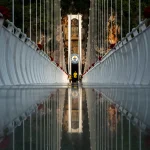
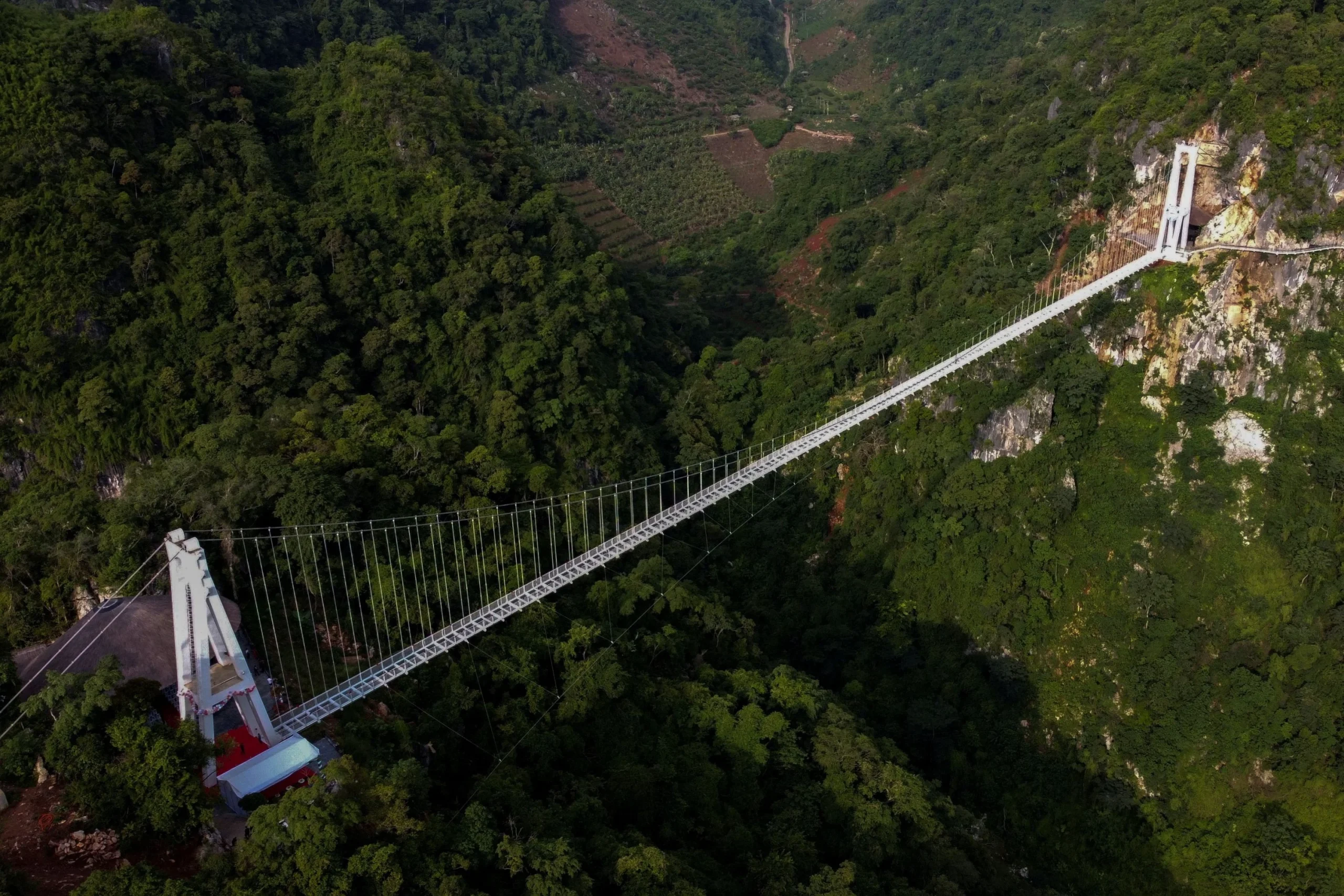
The Bach Long Glass Bridge, Vietnam’s longest and highest glass pedestrian bridge, opened in 2022 in the Moc Chau Island Mountain Park, approximately 130 kilometers west of Hanoi. The suspension bridge features a 290-meter main span and is complemented by a 342-meter glass walkway along the western side of the canyon. Like a cloud path connecting two mountain slopes, the glass bridge stands tall amidst thousands of mountains and forests: “your head is in the sky, your feet are on the ground.”
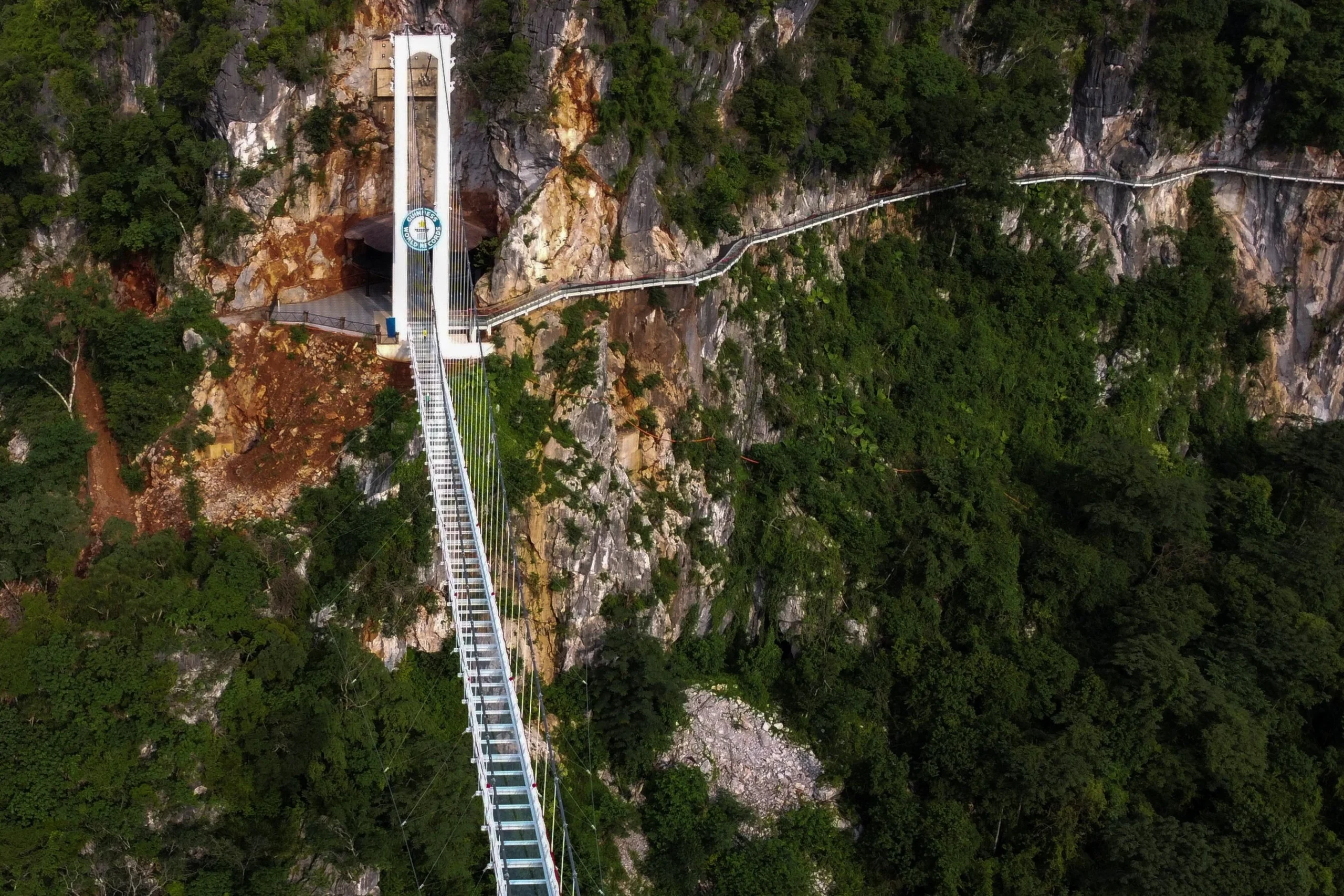
Clad with ultra-clear glass manufactured by the French brand Saint-Gobain, the Bach Long Glass Bridge is constructed with three layers of 4-centimeter-thick tempered glass, creating a brilliant surface that reflects sunlight in striking colors. Its transparent design gives the structure a light, almost floating appearance within the untouched mountain scenery. Thanks to its tempered glass, the bridge can carry 450 people simultaneously, offering travelers panoramic views and allowing them to feel completely immersed in nature.
4. Haohan Qiao (Brave Men’s Bridge)
Location: Shiniuzhai National Park, China
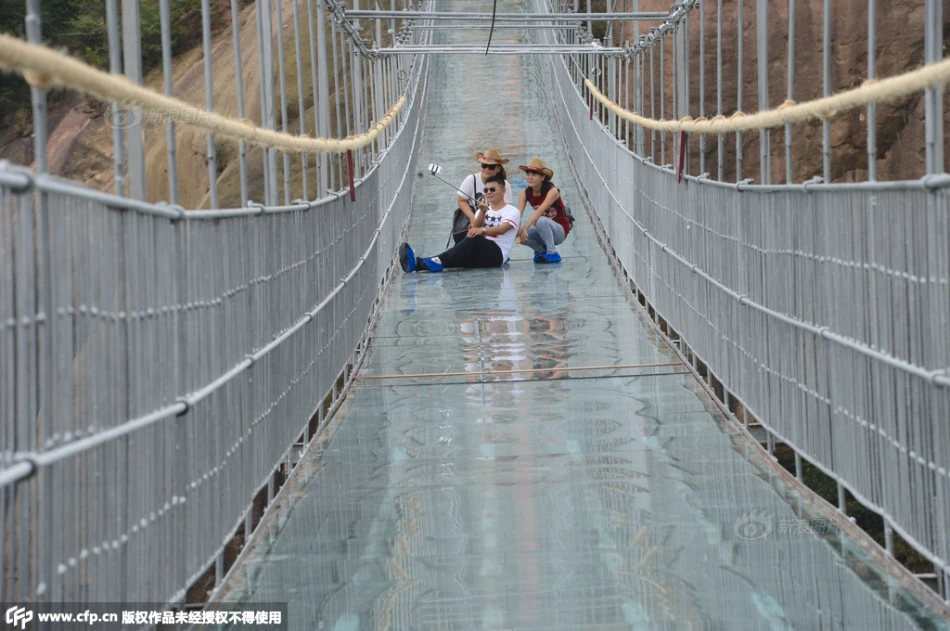
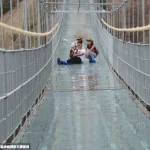
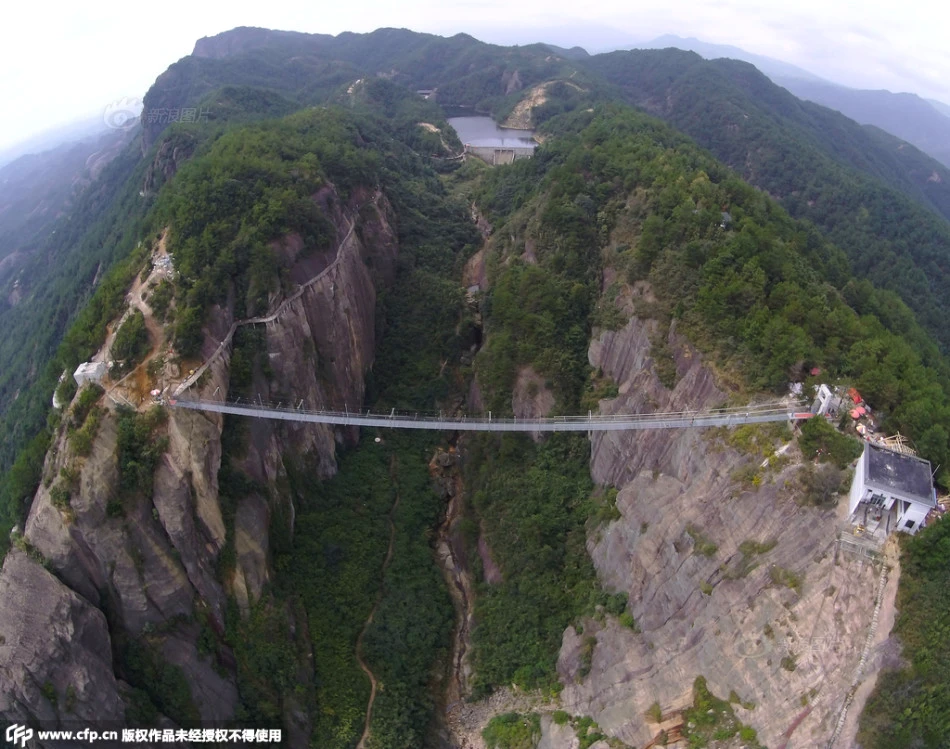
Completed in 2014 by replacing the wooden planks of an existing timber bridge with transparent glass panels, the Haohan Qiao Glass Bridge became the first bridge in China to be constructed entirely of glass. Suspended 180 meters above the ground between two cliffs in Shiniuzhai National Geological Park in Hunan, the steel frame used to support and surround Haohan Qiao is strongly and rigidly constructed. The 24-millimeter-thick tempered glass can support 800 people simultaneously.
5. Grand Canyon Skywalk
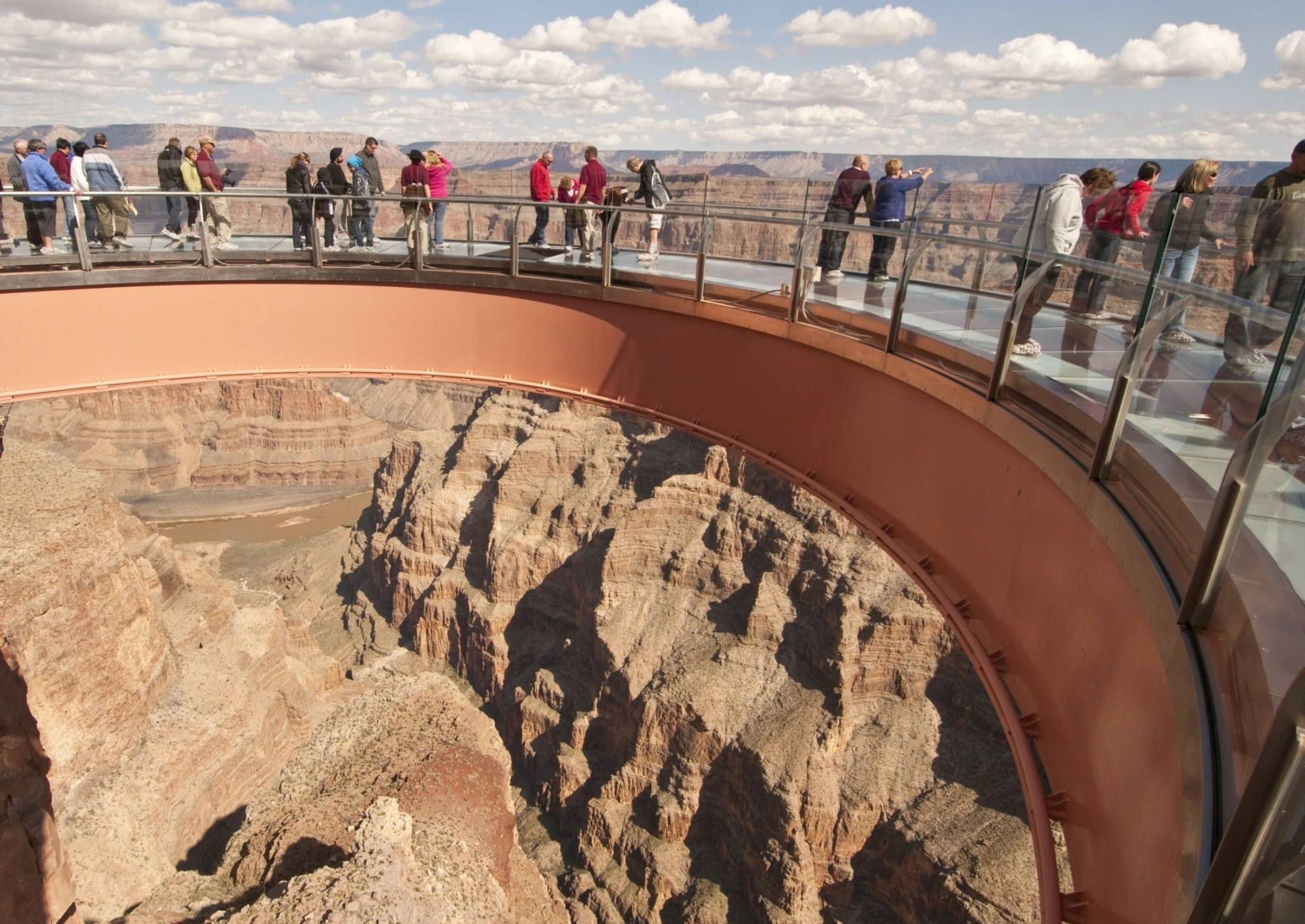
Location: Grand Canyon West, US
Architect: M.R.J. Architects
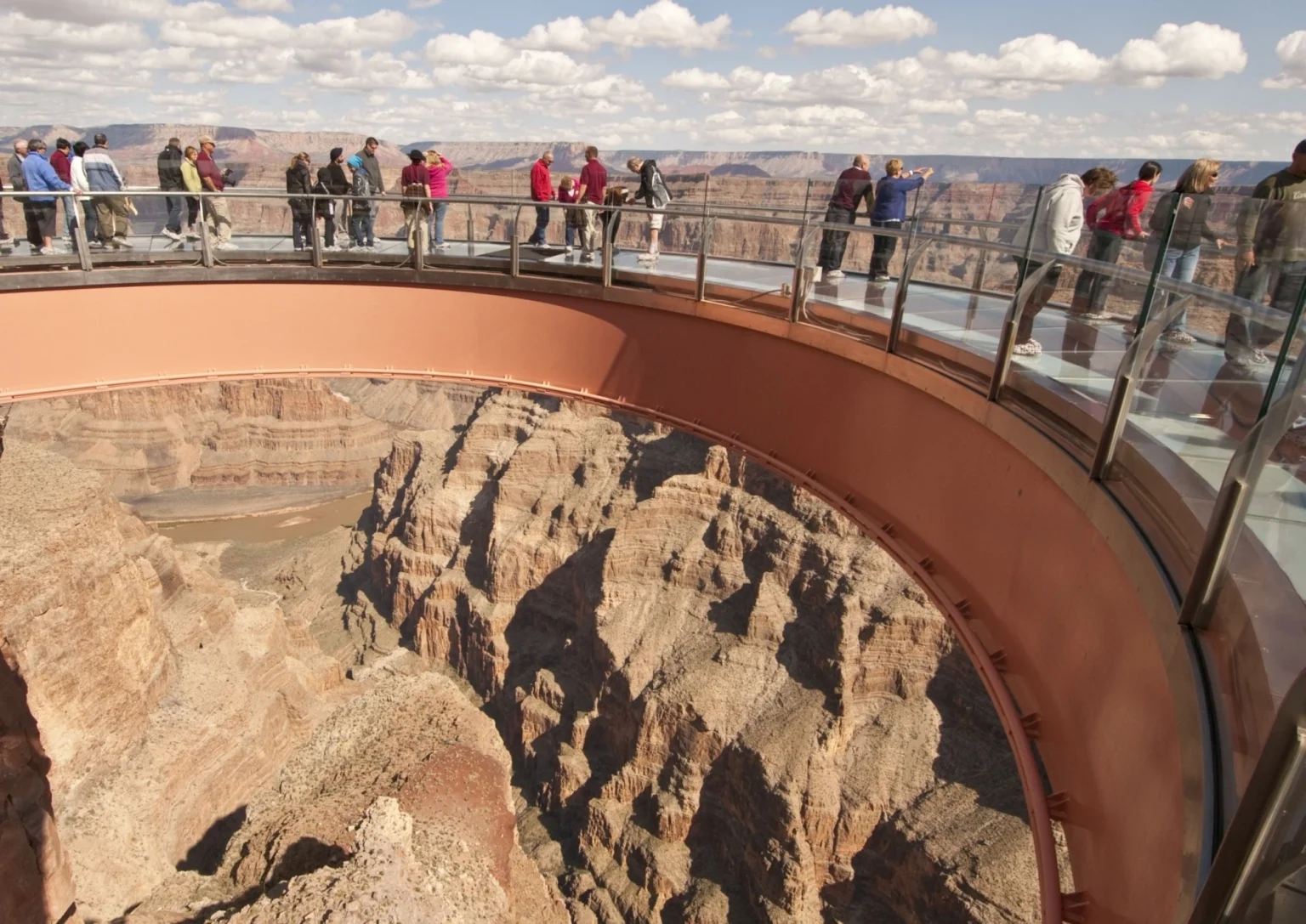
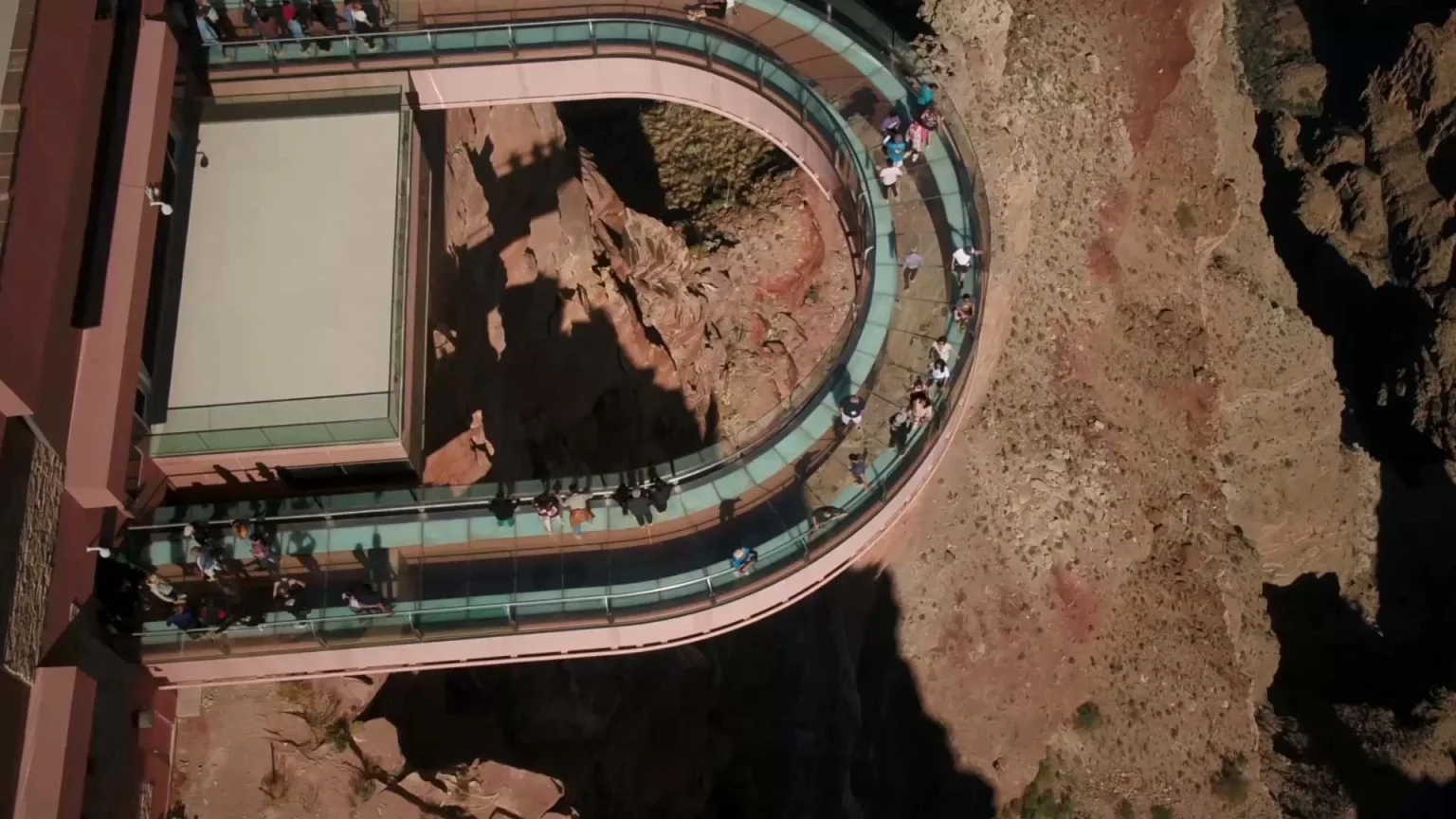
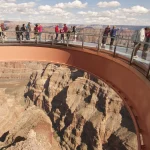
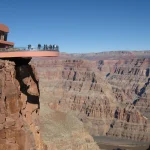
Extending 70 meters from the edge of Grand Canyon West, the horseshoe-shaped Skywalk is a glass bridge offering one of the world’s most surreal views. This modern engineering feat, the largest glass cantilever bridge of its time, was completed in four years and opened in 2007. Inspired by the rod-and-plate construction techniques believed to have been used in building the Egyptian pyramids, engineers carefully rolled the structure into position from the canyon rim without allowing it to touch the canyon walls below.
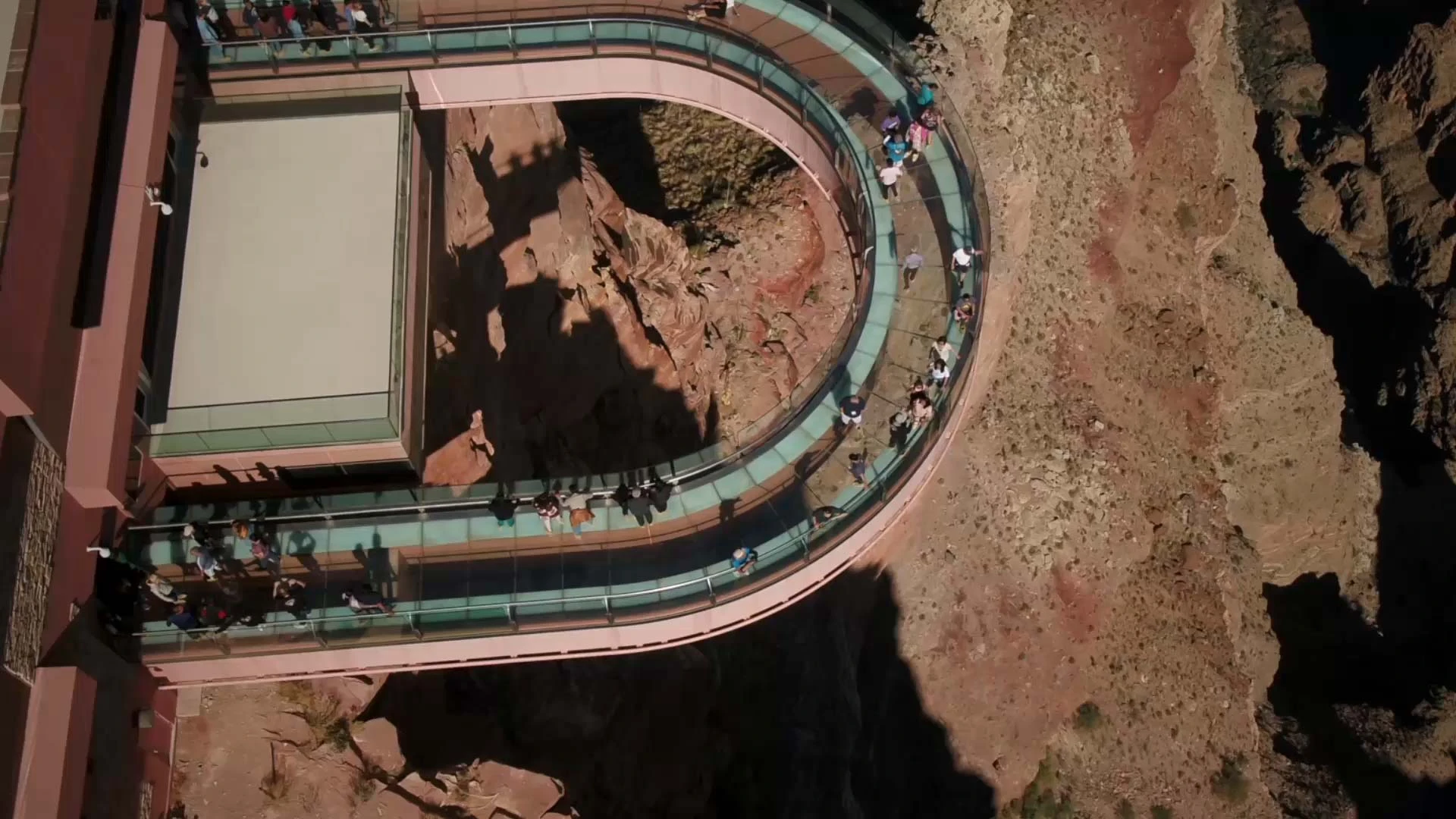
The bridge is anchored deep into the red limestone bedrock and stabilized by massive counterweight rods, enabling the entire glass structure to project approximately 21 meters beyond the canyon edge without any support beneath it.
Built to withstand earthquakes of magnitude 8.0 and wind speeds reaching 160 km/h, the Skywalk has a capacity to carry 800 people simultaneously. Its crystal-clear glass floor offers visitors breathtaking views, providing an opportunity to experience the Grand Canyon.
6. Tianmen Mountain Glass Skywalk
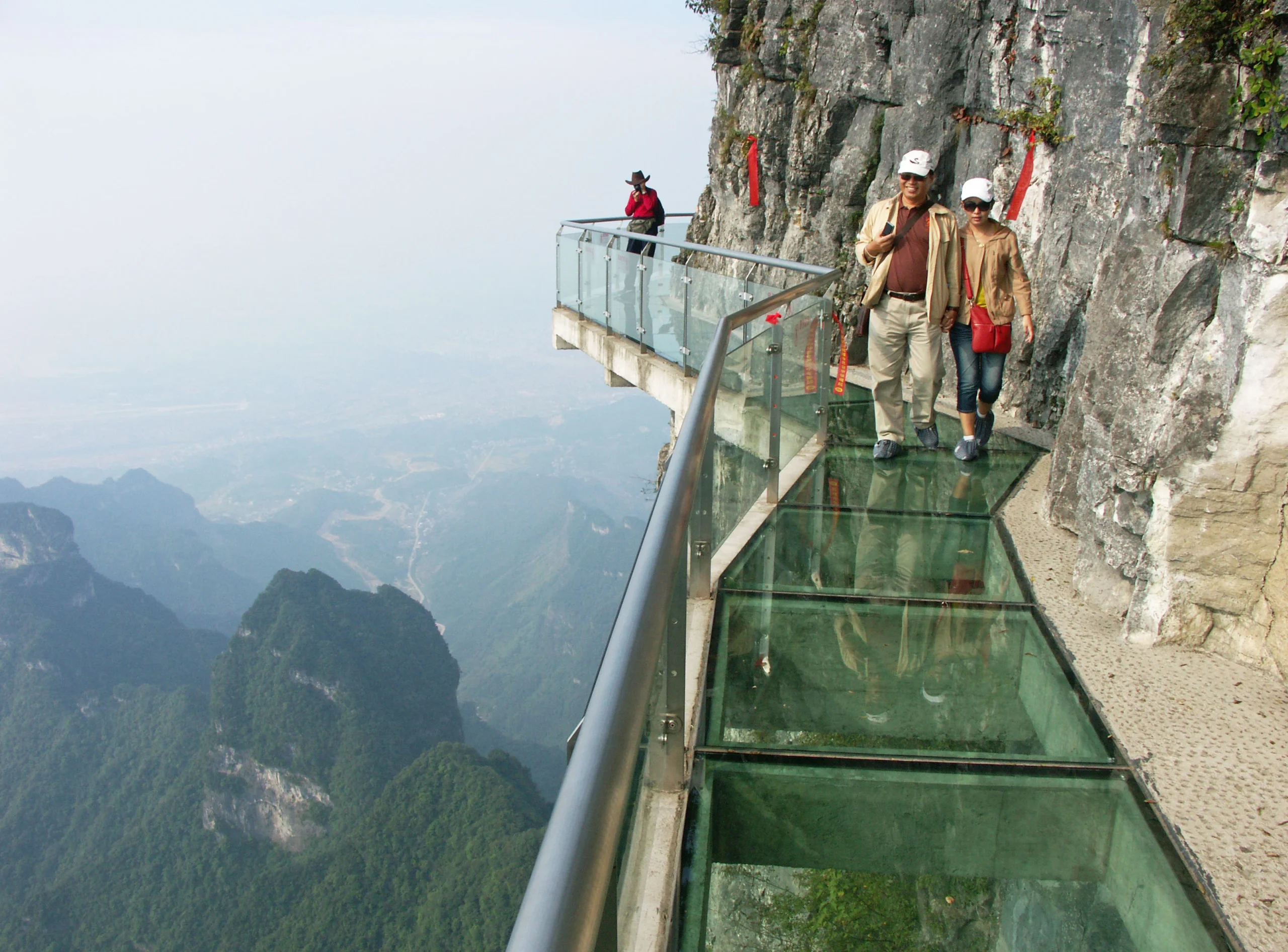
Location: China
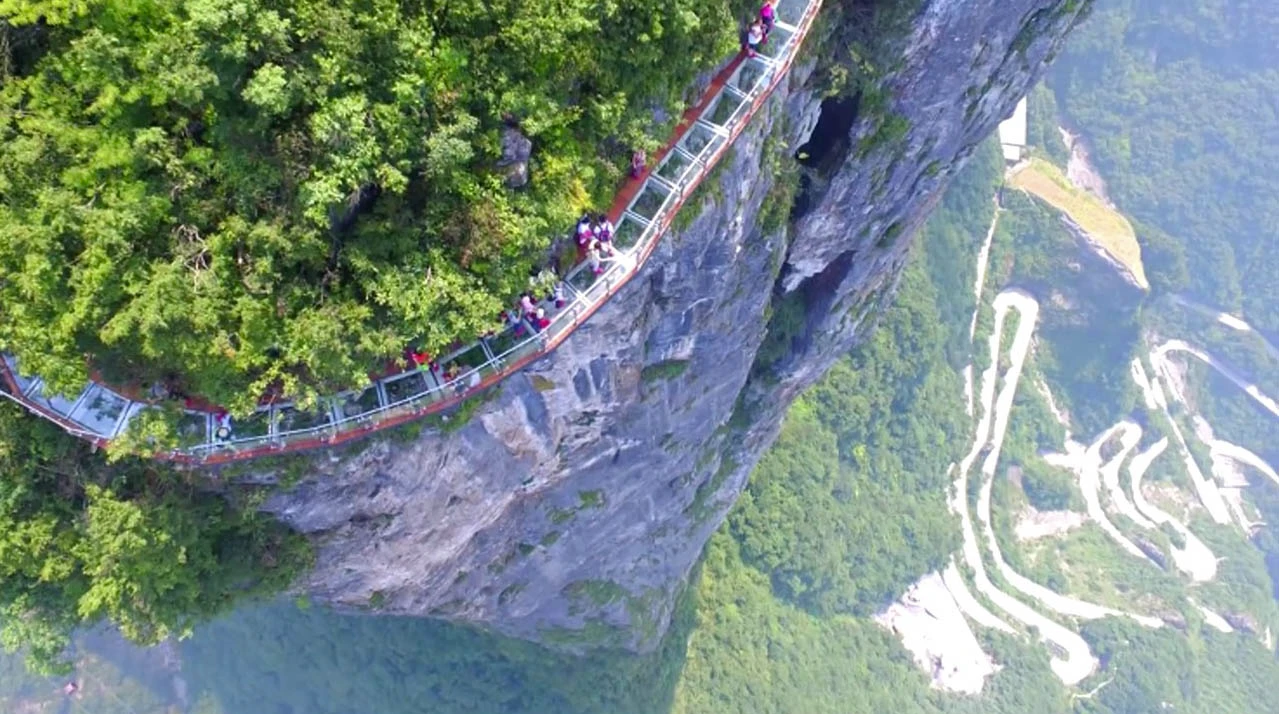
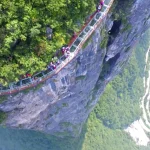
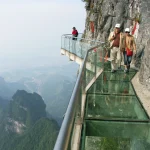
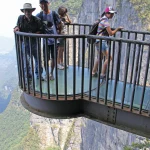
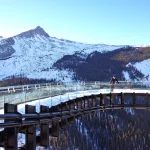
Located on the slopes of China’s Tianmen Mountain, the 100-meter-long and 1.6-meter-wide Glass Skywalk, also known as the “Coiling Dragon Cliff,” is a transparent glass walkway. With its floor and railings made of glass, the walkers are greeted with breathtaking views of the cliffs and wilderness below.
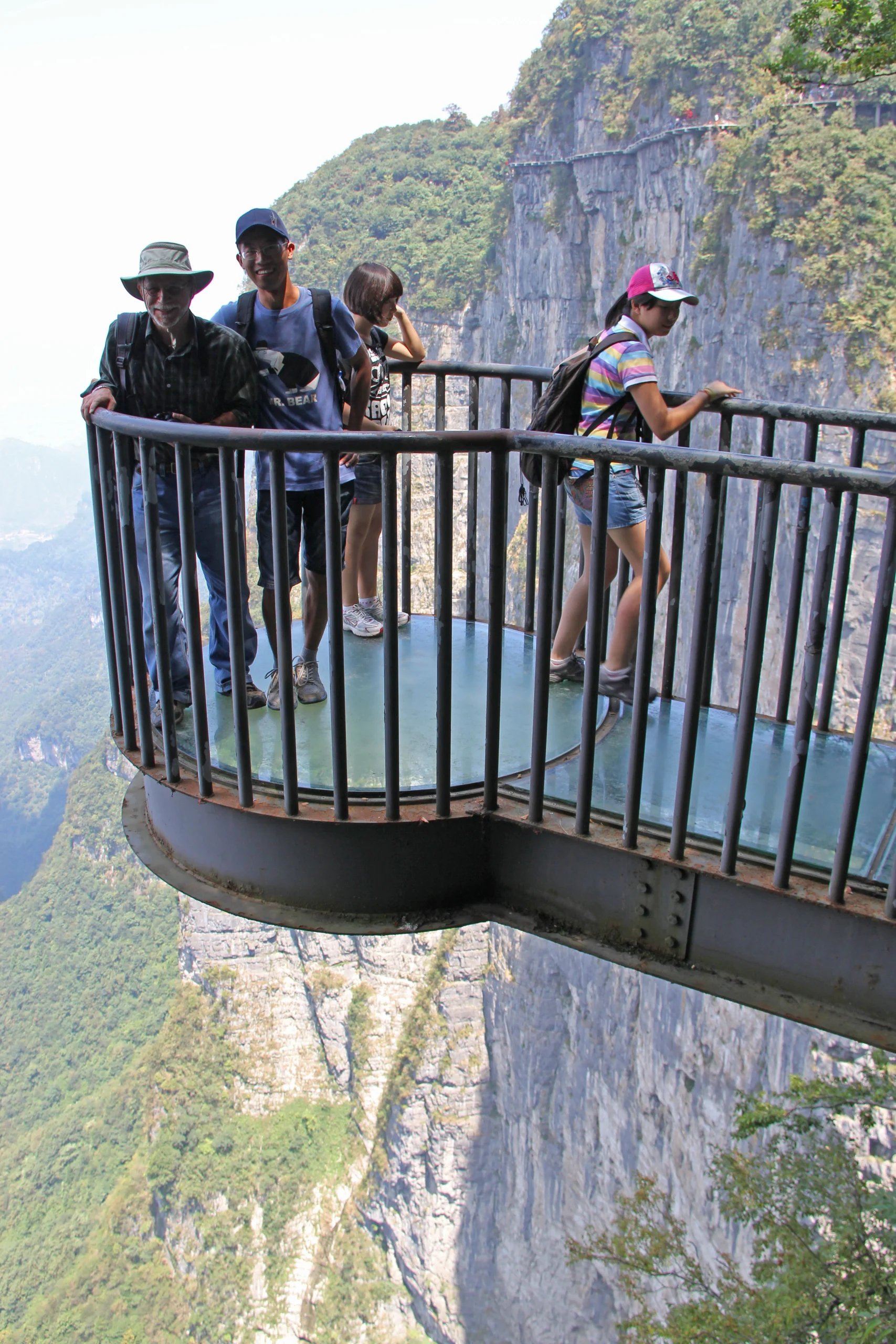
Constructed with 2.5-inch-thick glass panels, the Skywalk is situated at an elevation of approximately 1,430 meters (4,692 feet) above sea level, with the cliffs dropping nearly one mile beneath parts of the walkway. The walkway connects to the western slope of Yunmeng Fairy Peak, where Tianmen Mountain and Zhangjiajie meet.
7. Edenland Pedestrian Bridge in Luxelakes
Location: Chengdu, China
Architect: unarchitecte
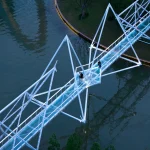
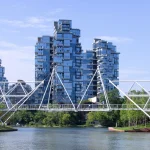
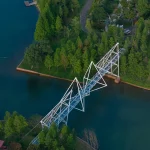
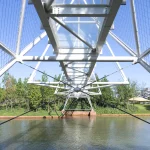
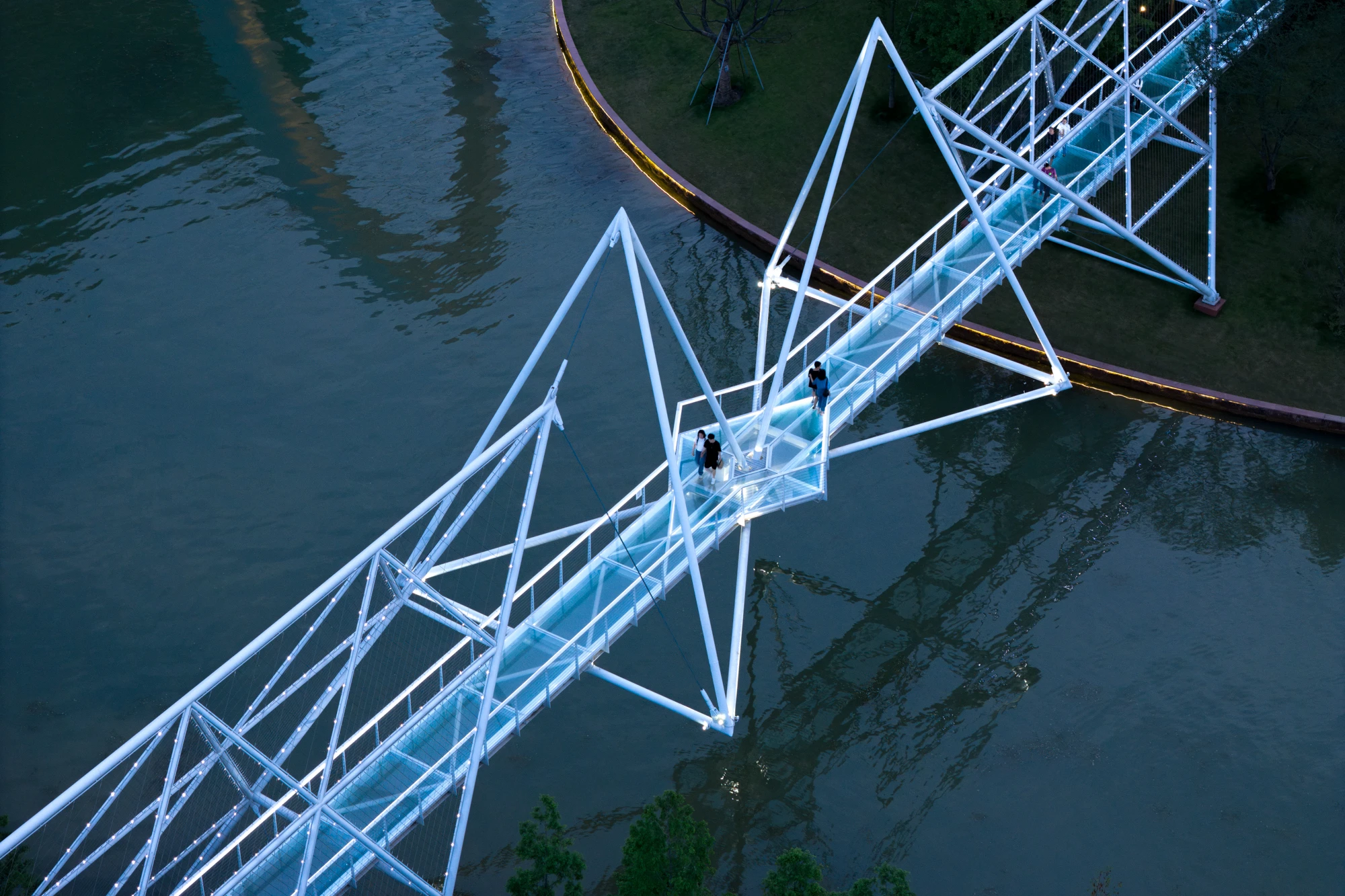
The Edenland Pedestrian Bridge, connecting LuxeIsland and Edenland in Luxelales, aims to strengthen the connection between community clusters, parks, green spaces, and commercial areas in the region. Defined by a distinctive triangular pyramid motif, the bridge stands apart from the other curvilinear pedestrian bridges in Luxelakes through its minimalist aesthetic, geometric clarity, and sense of tranquility.
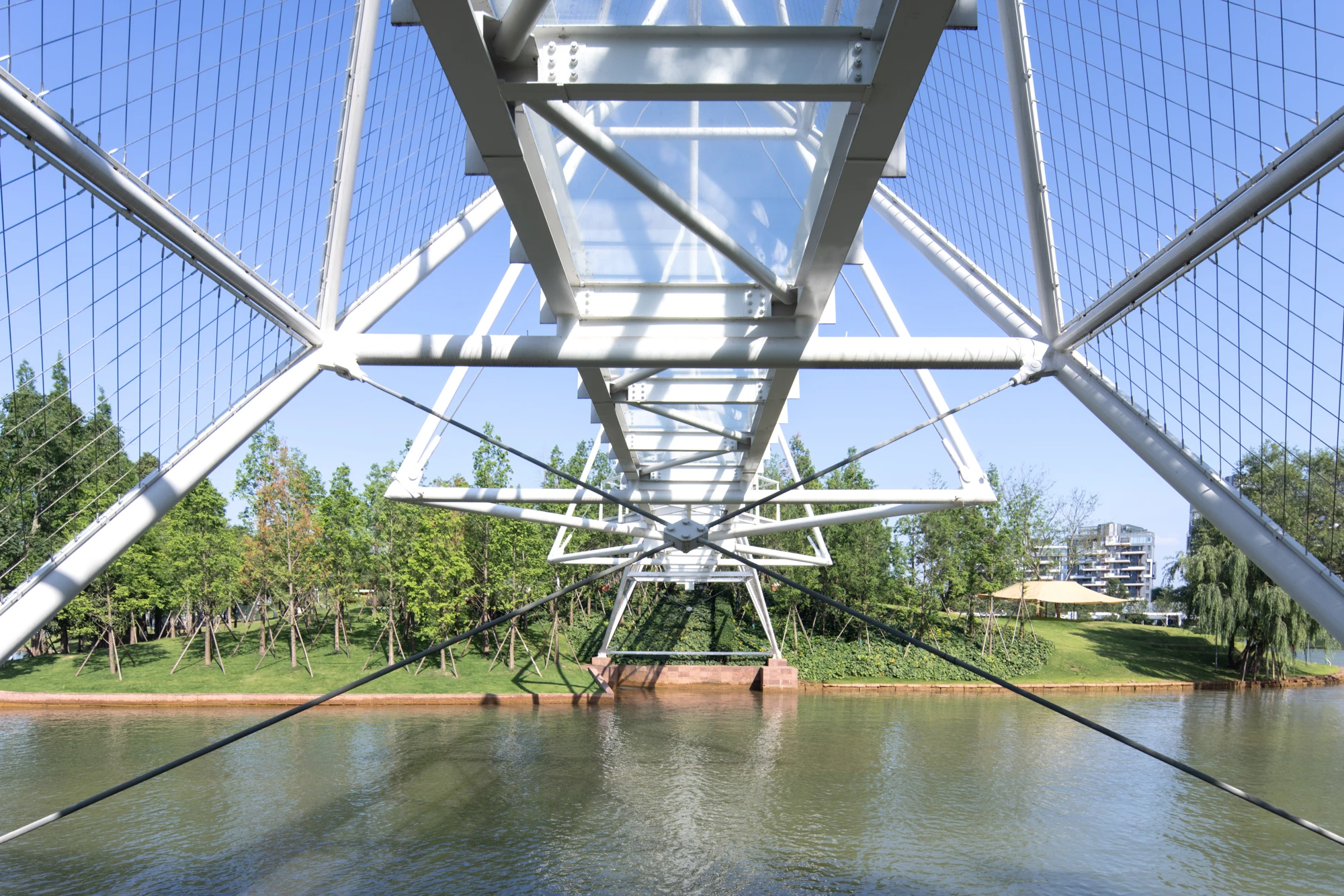
The bridge adopts a tensegrity structural system, in which triangular pyramid-shaped steel frames serve as the primary towers at both ends of the bridge. The upper corners on the shore side are pulled down and secured with coupling cables on either side. The pulling of these cables creates pre-tension in the cables of the upper corners attached to the water-facing end, leaving the other two right-angled triangular pyramids suspended above the water surface.
The two ends of the bridge deck are fixed to the shore with sliding supports, and the structure, composed of four triangular pyramids, supports an 80-meter-long (50-meter span) glass pedestrian bridge, creating an overall stable structural system and an aesthetically pleasing sense of “lightness.”
8. Glass Bridge in Huangchuan Three Gorges Scenic Area
Location: China
Architect: UAD
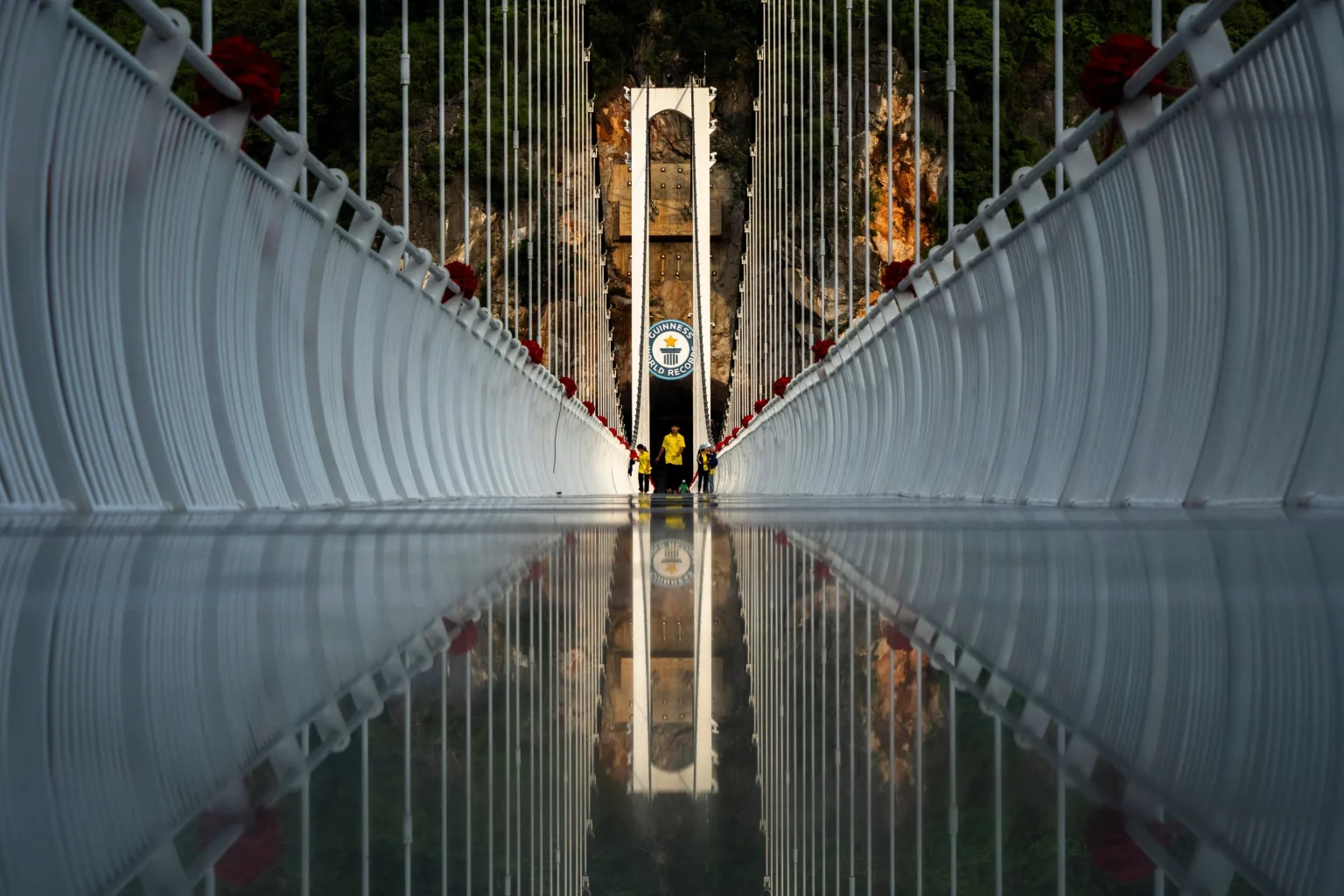
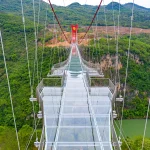
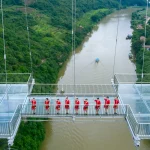
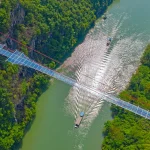
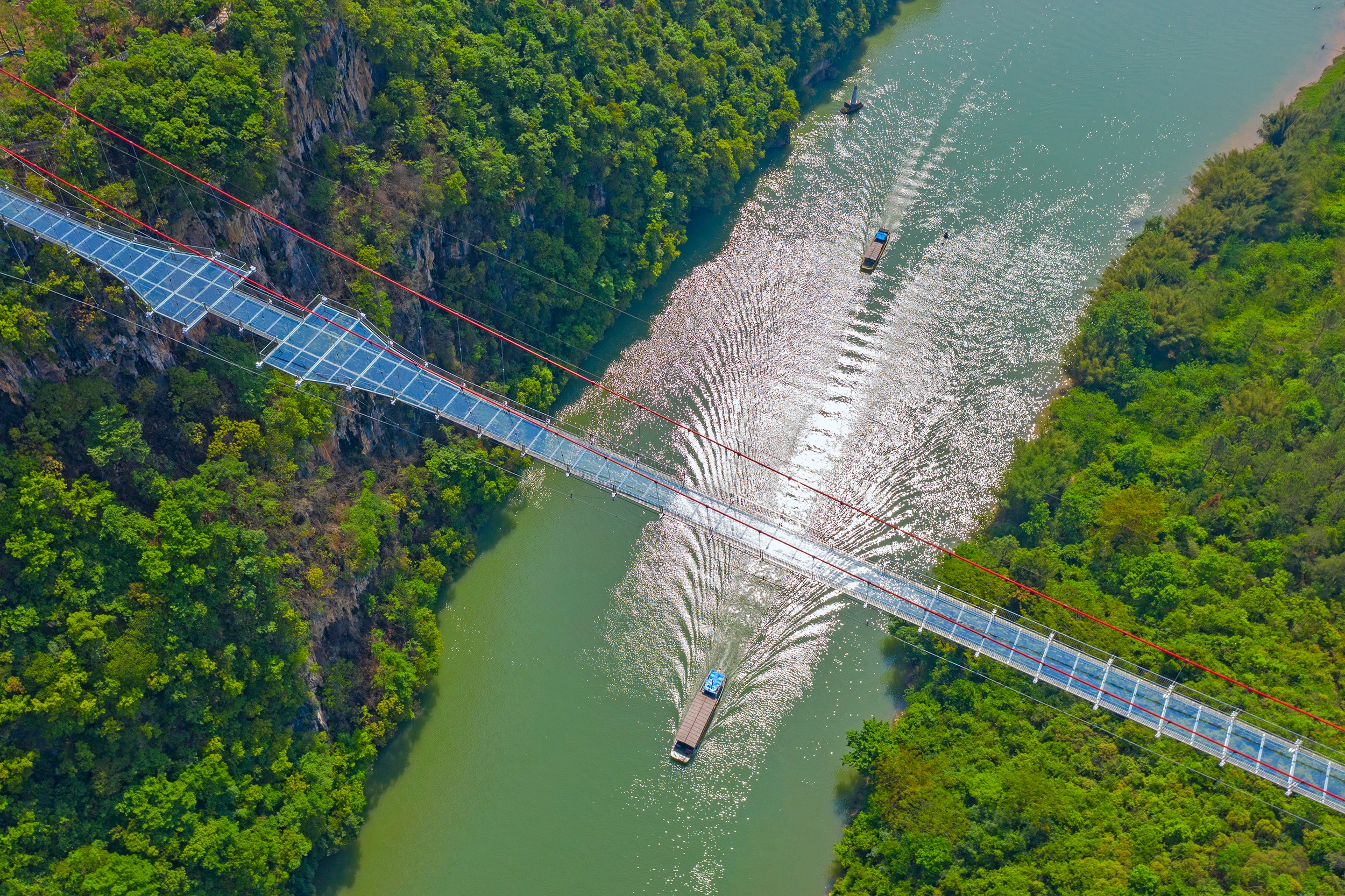
Located on the Lianjiang River in Guangdong Province, the Glass Bridge in Huangchuan, at 526 meters long, is recognized by Guinness World Records as the world’s longest glass-bottomed bridge. Suspended 201 meters above the river, the bridge connects the two sides of a dramatic canyon and is designed to accommodate up to 500 visitors at a time. The deck, made of three layers of 4.5 cm-thick tempered laminated glass, is designed to be completely transparent, allowing tourists to look directly down. This glass coating gives the bridge deck a crystal-like brilliance, high transparency, and refractive index.

Surrounded by steel railings, the bridge deck expands to 8.8 meters in width at four designated viewing platforms, creating spacious observation areas where visitors can stop to enjoy the spectacular scenery. It is suspended by cables mounted on two red towers on either side of the river.