

Architecture has always depended on a peculiar form of education: learning by doing work that is not yet particularly important. Before an architect can make convincing decisions about structure, material, circulation, or urban form, they must spend years dealing with the ordinary demands of practice. They draw details, revise plans, prepare presentations, check dimensions, coordinate drawings, and discover, often through mistakes, why apparently simple decisions become complicated when buildings meet reality.
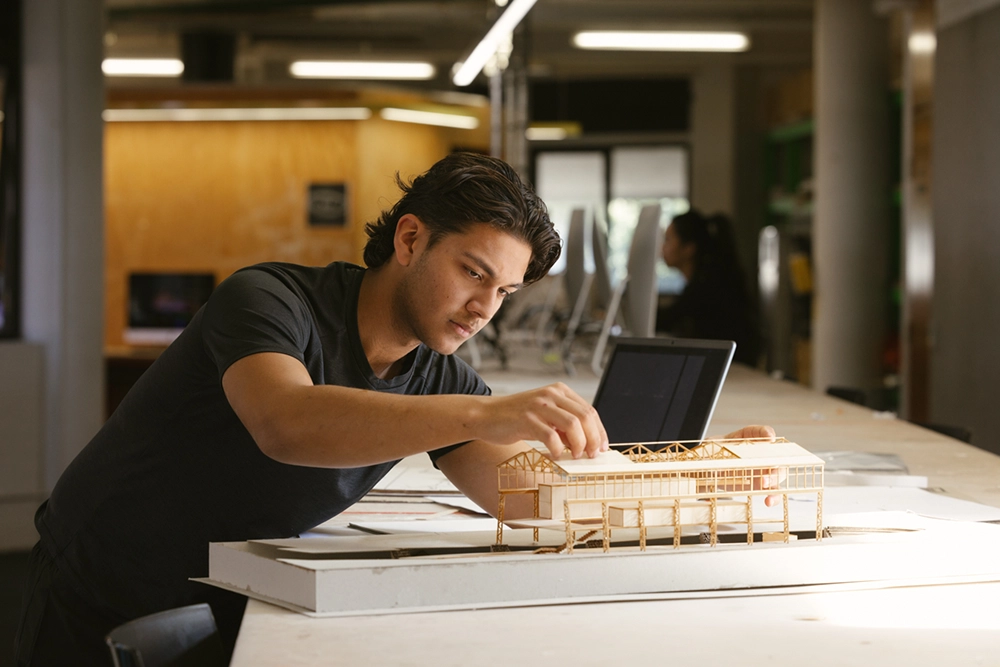
Artificial intelligence is beginning to take over many of these tasks. Drawings can be generated, layouts explored, images rendered, specifications organized, and design alternatives produced in minutes. For architecture firms facing tight deadlines and financial pressures, the attraction is obvious. Why pay a junior architect to spend hours on work that software can complete in seconds? But this question contains a dangerous assumption: that junior architects perform tasks merely to produce deliverables. In reality, those tasks are also how architects learn to think.
The growing automation of entry-level architectural work raises a question more consequential than whether AI will replace junior employees. What happens when the profession removes the very activities through which its future experts develop?
The Hidden Curriculum of Architectural Practice
Architectural education does not end at graduation. In many respects, it begins again when students enter professional practice and encounter the distance between an attractive design proposition and a building that can actually be constructed.
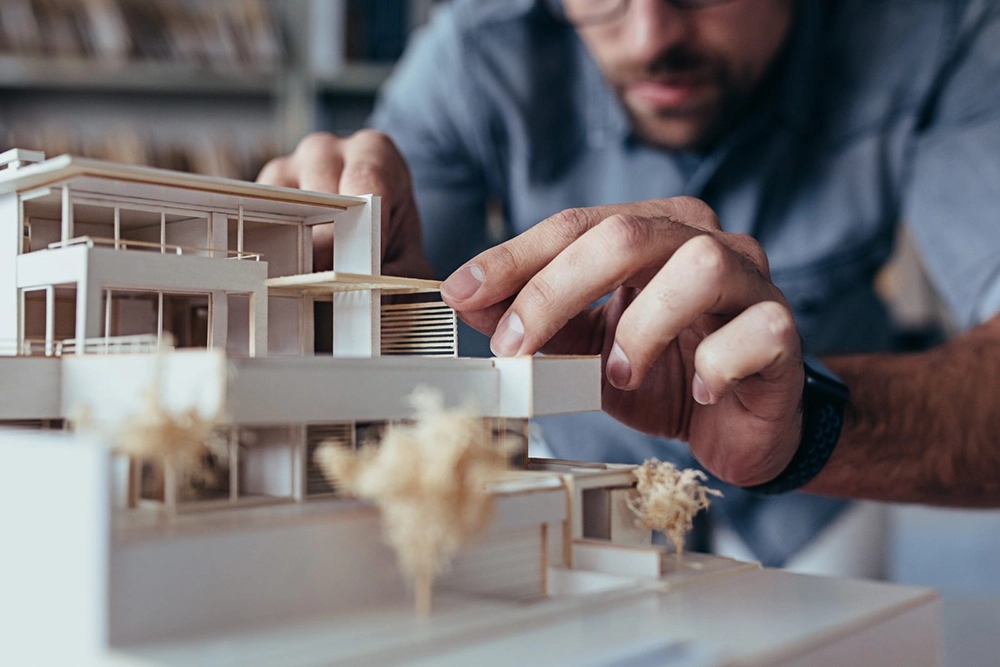
A junior architect who redraws a complicated junction repeatedly is not simply learning how to operate drafting software. They are gradually developing an understanding of tolerances, material thicknesses, construction sequences, and the consequences of decisions made elsewhere in a project. A person who coordinates drawings discovers how structural systems, mechanical services, fire regulations, and spatial intentions compete for the same limited space.
These lessons are rarely delivered as formal instruction. They emerge from repetition, correction, observation, and sometimes frustration. An experienced architect points out an inconsistency. A contractor questions a detail. A drawing that appeared clear on a computer screen proves impossible to interpret on site. Gradually, technical information becomes professional judgment.
This is the apprenticeship hidden inside everyday architectural production.
AI threatens to make parts of this process invisible. If a system automatically identifies clashes, generates construction details, and produces coordinated drawings, the junior architect may receive a polished result without encountering the sequence of decisions that made it possible. The output improves, but the opportunity to develop independent judgment may diminish.
The distinction matters because architecture is not simply the production of correct drawings. It involves recognizing when a drawing is incorrect, incomplete, misleading, or technically possible but architecturally undesirable.
A profession that automates its mistakes before young practitioners can learn from them may also automate some of its most valuable lessons.

Efficiency Without Experience
The economic logic behind automation is difficult to dismiss. Architectural practice operates under commercial constraints, and repetitive work can consume time that might otherwise be devoted to design development, client communication, or technical coordination. AI can help reduce administrative burdens and accelerate certain stages of production.
Yet the benefits are not distributed equally across a professional hierarchy.
Senior architects may use AI to generate alternatives, test assumptions, or communicate ideas more effectively. Their accumulated experience allows them to evaluate results critically. They recognize when a generated plan violates an unstated requirement or when an impressive visualization conceals an unresolved construction problem.
A junior architect has fewer reference points. The same system that helps an experienced designer work faster can encourage an inexperienced designer to accept a plausible result without understanding its weaknesses.
This creates an asymmetry: AI becomes more valuable to those who already know what good architecture requires, while potentially weakening the process through which less experienced practitioners acquire that knowledge.
The danger is not that young architects will stop working. They may become busier than ever, producing more options, processing more generated material, and responding to increasingly rapid design cycles. The problem is that activity and learning are not interchangeable.
A junior architect can spend an entire day refining AI-generated proposals without developing the capacity to produce, assess, or defend a design independently. Productivity statistics might celebrate the result. Professional development might tell a different story.

When the Office Stops Teaching
Traditional architectural offices have never been perfect educational environments. Junior employees have often been expected to work long hours on repetitive assignments, sometimes with little explanation of the larger project. Romanticizing this system would be a mistake. Apprenticeship can involve exploitation as easily as education.
However, the solution to poor training cannot be the disappearance of training altogether.
Historically, many architectural offices have relied on proximity. Young architects observe how senior colleagues respond to difficult clients, negotiate conflicting requirements, revise a concept after technical feedback, and make compromises without abandoning the project’s central intentions. They learn not only from explicit instructions but also from witnessing decisions as they unfold.
Automation can disrupt this informal transmission of knowledge. If fewer people are involved in drawing production, fewer opportunities may arise for collaborative review. If design development becomes a sequence of prompts and generated alternatives, the conversations that once accompanied the production of those alternatives may never happen.
Consider a façade detail. In a conventional workflow, a junior architect might draw it, receive criticism, investigate a construction solution, and return with a revision. The exchange exposes the reasoning behind the decision. In an automated workflow, software may produce a technically credible detail immediately, leaving the architect responsible mainly for checking the final output.
Checking is necessary, but it is not equivalent to developing a solution from first principles.
An office that removes the junior architect from the production process must deliberately replace the learning opportunities that production once provided. Otherwise, it risks becoming an organization that consumes expertise without reproducing it.
The New Junior Architect: Operator, Editor, or Designer?
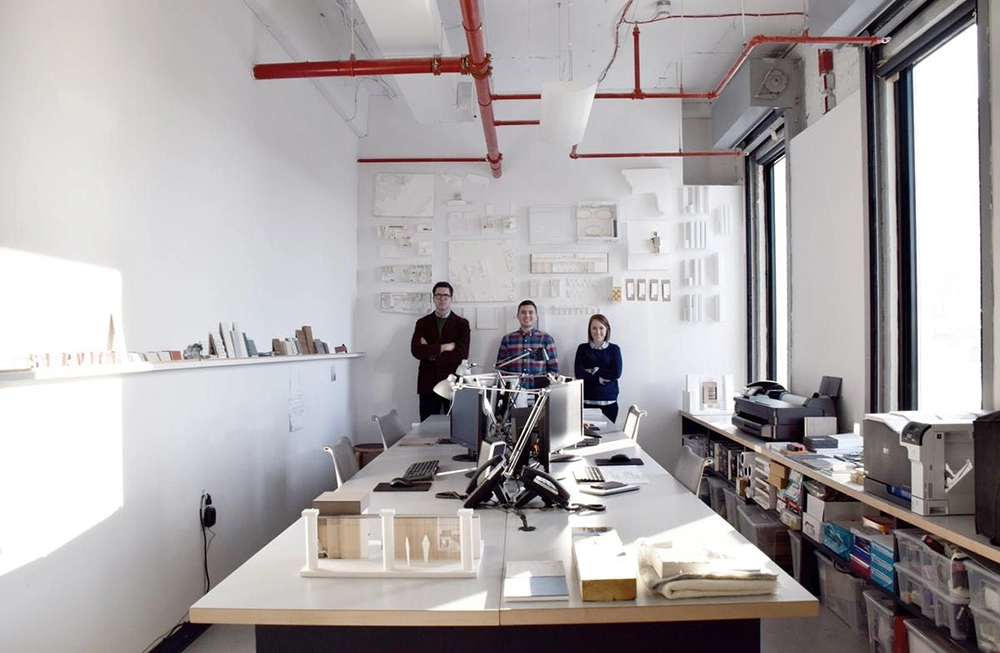
AI does not necessarily eliminate the junior architect’s role. It changes the competencies that firms demand from it.
The emerging professional may be expected to formulate precise instructions, compare generated alternatives, identify errors, coordinate digital workflows, and translate conceptual ambitions into technically credible proposals. These are legitimate architectural skills. They may even allow younger designers to explore complex problems earlier in their careers.
But there is a difference between directing a system and understanding the domain in which that system operates.
A designer who knows how to request a convincing timber structure but cannot evaluate its spans, connections, fire performance, or material limitations is not yet equipped to take responsibility for that design. Likewise, generating dozens of spatial configurations does not guarantee an understanding of how people will experience those spaces, how they relate to their surroundings, or how they will perform over time.
The most capable young architects will therefore need a combination of digital fluency and disciplinary depth. They must understand what AI can accelerate, what it can approximate, and what still requires architectural interpretation, technical investigation, and human accountability.
This is not an argument for preserving every traditional task. It is an argument for distinguishing between work that is repetitive and work that is educational. Sometimes they are the same activity.
The challenge for architectural practice is to identify which experiences can disappear without consequence and which must be redesigned as explicit learning opportunities.
Can Architectural Education Fill the Gap?
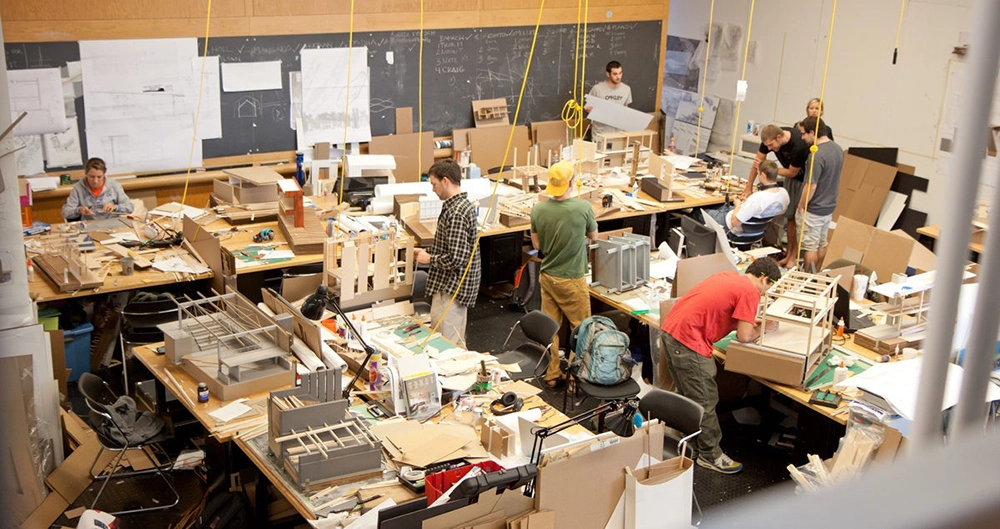
Universities might appear to be the obvious place to address the problem. Yet architectural education already faces a difficult balance between conceptual exploration, technical competence, digital experimentation, and professional preparation.
If firms increasingly automate routine production, schools cannot assume that graduates will acquire technical understanding through employment alone. They may need to reconsider how students learn construction, documentation, coordination, and design evaluation.
This does not mean returning to an education dominated by manual drafting. Nor does it mean rejecting generative design tools. Students should learn to use AI critically, including understanding how generated proposals can conceal structural, environmental, regulatory, or contextual weaknesses.
More importantly, they should experience the reasoning behind architectural decisions. They should be asked to develop details, test alternatives against actual constraints, explain why a proposal fails, and revise their work in response to evidence. A generated answer can be part of that process, but it should not automatically become a substitute for it.
The same responsibility extends to architectural firms. Offices that benefit from automation should invest some of those gains in structured mentoring, technical workshops, design reviews, and supervised problem-solving. Junior architects need opportunities to make decisions, defend them, and learn from their consequences.
If AI reduces the time required to produce drawings, the time saved should not automatically become another billable target. Some of it must be reinvested in developing the people who will eventually lead projects.
Otherwise, universities and firms may find themselves working against each other: schools producing graduates who lack practical experience, and offices refusing to provide that experience because software has made it commercially unnecessary.
The Risk of a Profession That Cannot Renew Itself
The long-term consequences extend beyond individual careers.
Architecture depends on the continuous transfer of knowledge between generations. Technical understanding, design judgment, professional ethics, and awareness of construction realities develop through a combination of formal education and practical experience. This process allows a profession to renew itself rather than simply repeat established methods.
If junior architects are no longer given meaningful opportunities to develop these capacities, firms may become increasingly dependent on a smaller group of experienced professionals and a growing collection of automated systems. In the short term, that arrangement might appear efficient. Over time, it could create a fragile professional structure in which expertise is concentrated, mentoring declines, and fewer people are prepared to assume responsibility for complex projects.
There is also a less visible architectural consequence. Young practitioners need opportunities to challenge conventions, not merely reproduce established solutions more efficiently. Their gradual development allows them to question details, experiment with materials, and discover alternative approaches through direct engagement with design problems.
When early-career work becomes the supervision of automated output primarily, the profession risks narrowing the range of experiences through which new ideas emerge. AI can produce variation at remarkable speed, but variation is not the same as critical innovation. A designer must still recognize when a familiar solution should be rejected and why a different one deserves to exist.
The issue is not whether machines can produce architectural drawings. They already can. The issue is whether architectural culture can maintain the human capacity to understand, criticize, and improve what those machines produce.

Designing a New Apprenticeship
The future of architectural practice should not be defined by a choice between technological progress and traditional craftsmanship. AI can remove tedious work, expand access to complex analytical tools, and give young architects more time to investigate design possibilities. Used carefully, it could improve architectural education and professional practice alike.
But these benefits will not emerge automatically. They depend on how firms organize work, how universities teach design, and how the profession defines competence.
An effective AI-era apprenticeship would allow junior architects to use automated systems while remaining involved in the reasoning those systems perform. They might compare generated details with manually developed alternatives, investigate why a coordination tool identifies a conflict, or test a proposed layout against accessibility requirements and actual patterns of use. Instead of merely receiving an answer, they would learn to interrogate it.
Senior architects would also need to become more deliberate teachers. When routine production no longer creates natural opportunities for instruction, mentoring must become an explicit part of professional practice. That requires time, organizational commitment, and recognition that training is not an optional activity to be postponed whenever a deadline approaches.
Architectural firms should ultimately judge automation not only by the number of hours saved or drawings produced, but also by whether their younger staff become more capable of making independent decisions.
This is a demanding standard, but architecture has always required more than the efficient completion of tasks. Buildings remain physical, consequential, and difficult to correct once constructed. Their design requires people who can connect abstract intentions to material realities and accept responsibility when those intentions meet the world.
The real question, then, is not whether AI can do the junior architect’s work. It is whether architectural firms can automate that work without eliminating the conditions that produce experienced architects.
If they cannot, the profession may discover that it has solved a problem of productivity by creating a problem of succession. The drawings will arrive faster, the presentations will look better, and the software will become more sophisticated. Yet the people expected to make sound architectural decisions in the future may have had fewer opportunities to learn how.
A profession cannot survive on the expertise of its past generations indefinitely. At some point, someone must be allowed to become the expert.