



Tokyo reveals itself as an iconic city shaped by design, where history and innovation exist in quiet conversation. Ancient temples and shrines rest comfortably alongside bold contemporary architecture, reflecting a place defined by both respect for tradition and a constant urge to evolve.
For architects, designers, and curious travellers, the city offers an intimate glimpse into a layered identity formed by craftsmanship, innovation, and an ever-changing urban rhythm. From minimalist works by Japan’s leading architects to richly detailed sacred spaces, Tokyo’s buildings tell stories of continuous transformation, making the city an unforgettable destination for experiencing architecture as lived culture.
Explore the 10 iconic architectural landmarks in Tokyo that are a must-visit for architecture lovers:
1. Sensoji Temple
Location: Asakusa
Typology: Cultural, Religious – Temple
Year: 628 AD
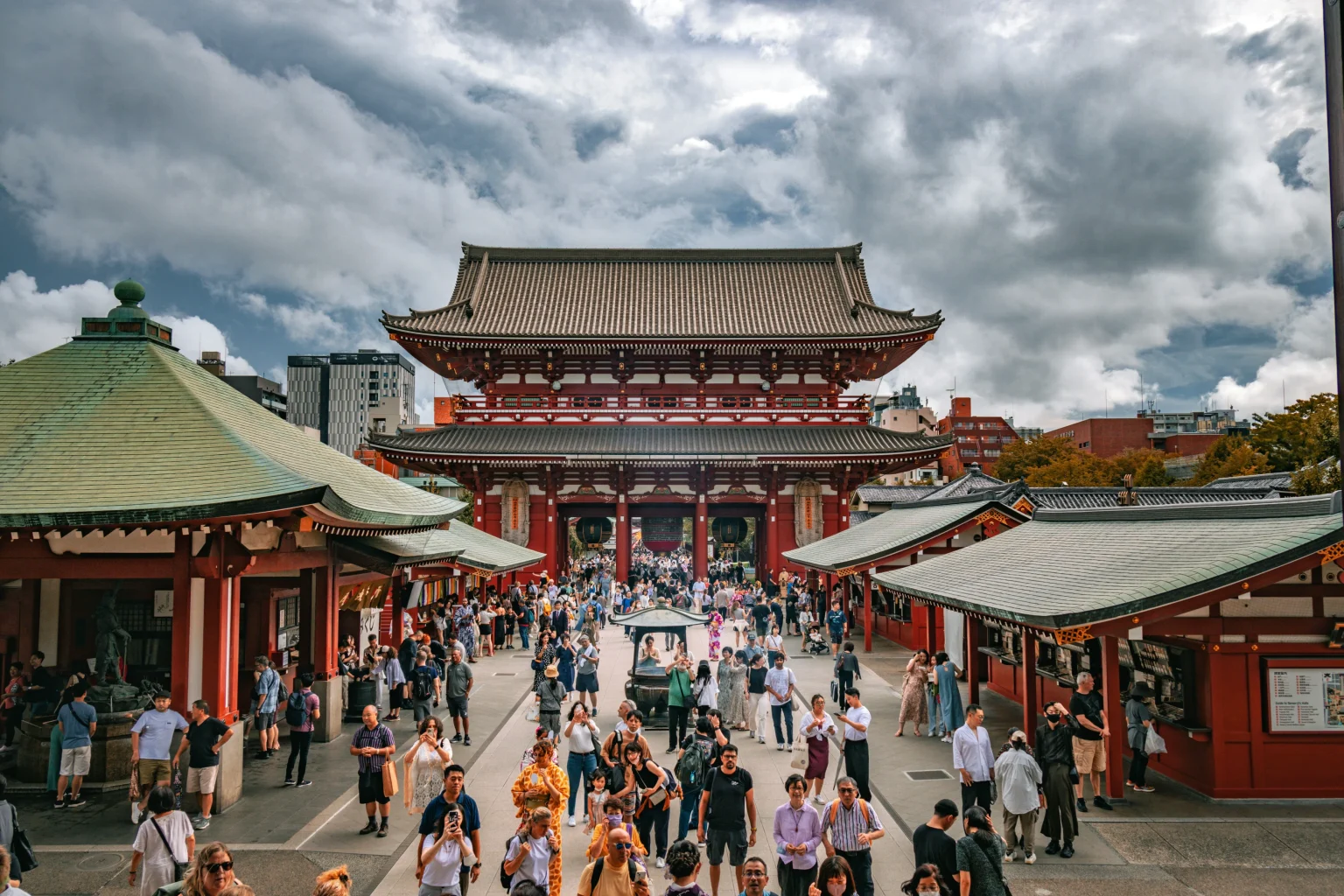
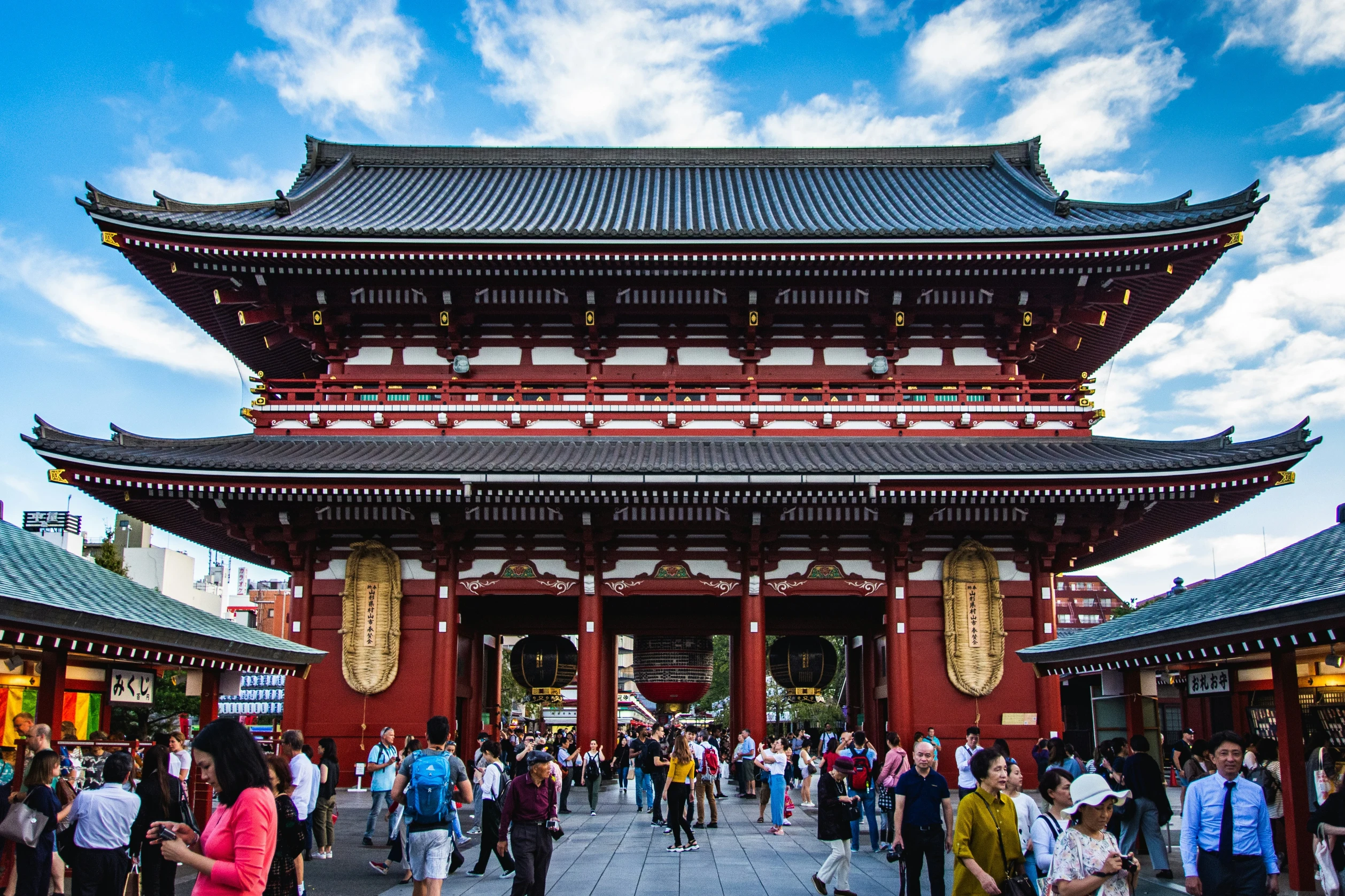
Sensoji Temple, also known as Asakusa Kannon, stands as Tokyo’s oldest and most revered Buddhist sanctuary, quietly anchoring the historic district of Asakusa. Dedicated to Kannon, the bodhisattva of compassion, the temple complex unfolds through a sequence of grand gates, a five-story pagoda, and the richly adorned main hall, drawing millions of visitors each year. Though the site was devastated during the 1945 air raids of World War II, its careful reconstruction in the decades that followed transformed loss into renewal. Today, Sensoji’s architecture weaves tradition with resilience, still standing as a profound testament to Japan’s rich spiritual and cultural heritage.
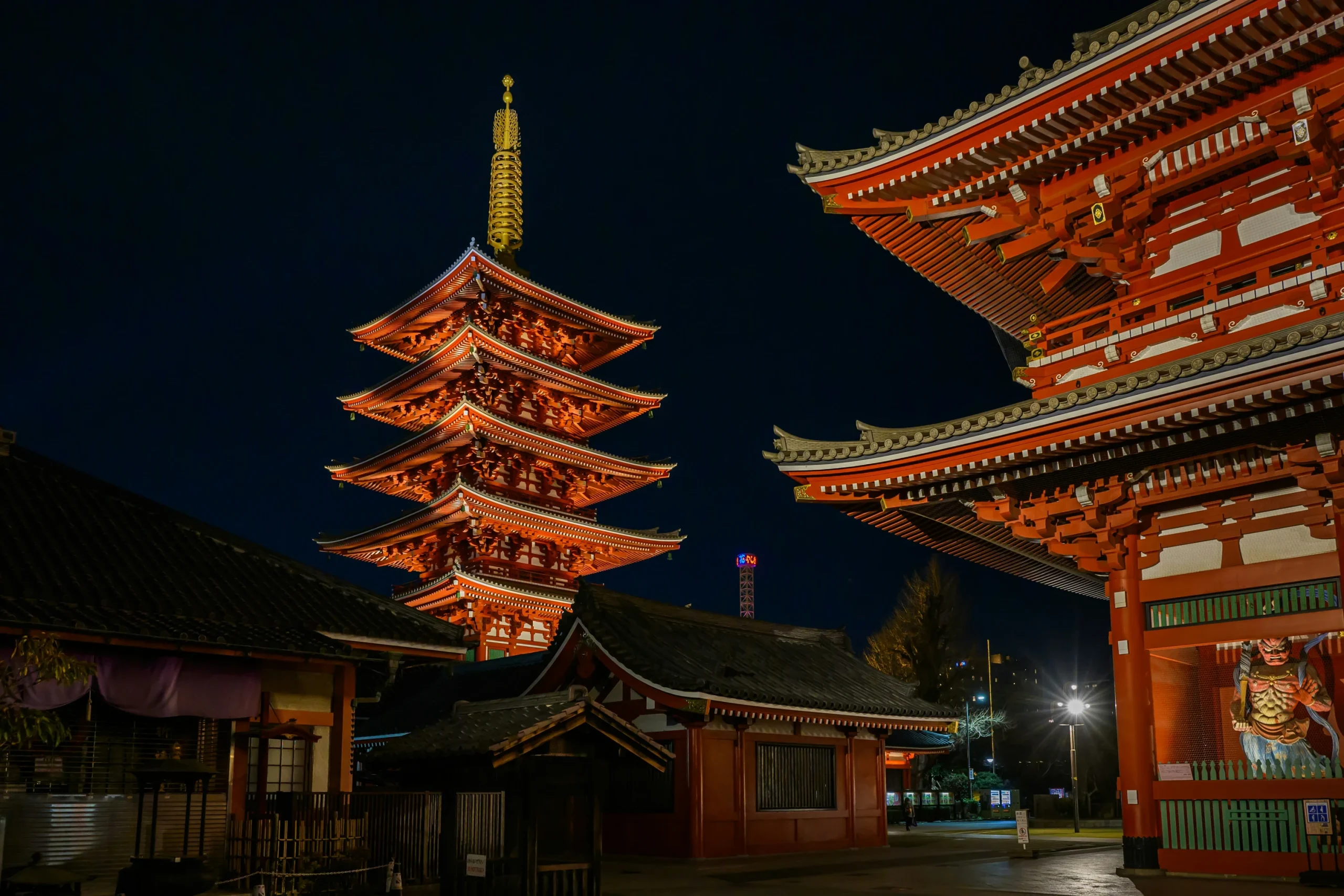
The temple’s architecture is a graceful expression of Buddhist tradition shaped by rich Japanese craftsmanship. The complex starts with a monumental Thunder Gate (Kaminari mon), adorned with red lanterns, which sets the tone for what lies ahead. Aligned precisely with the entrance, the Kannon Hondo, the main hall, shelters the hidden golden statue of Kannon within a postwar, fire-resistant structure as a symbol of endurance and reverence. Nearby, the five-story pagoda is rebuilt in reinforced concrete and reaches over 48 meters, combining structural strength with intricate detail.
2. Tokyo Tower
Location: Minato
Architect: Tachū Naitō
Typology: Tower
Year: 1958
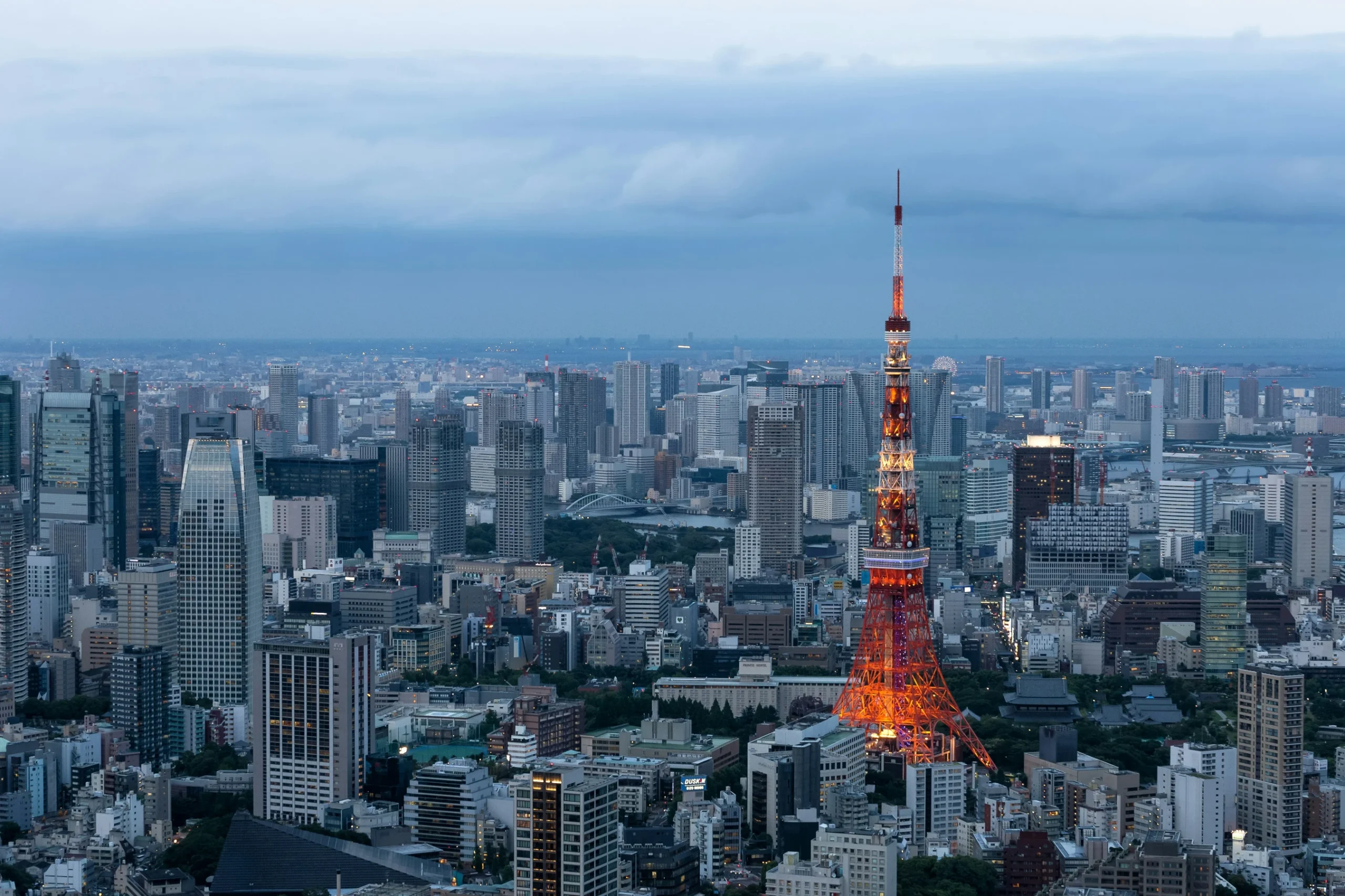
Tokyo Tower stands as one of the city’s most recognizable silhouettes. Located in Shiba-Koen, Minato, the 332.9-meter-high structure, when designed, was Japan’s tallest tower before the construction of Tokyo Skytree. The elegant lattice steel form draws inspiration from the Eiffel Tower, finished in a palette of white and international orange that meets aviation safety standards, giving the tower its iconic identity. Designed by Tachū Naitō, an architect, engineer, and pioneer of earthquake-resistant construction.
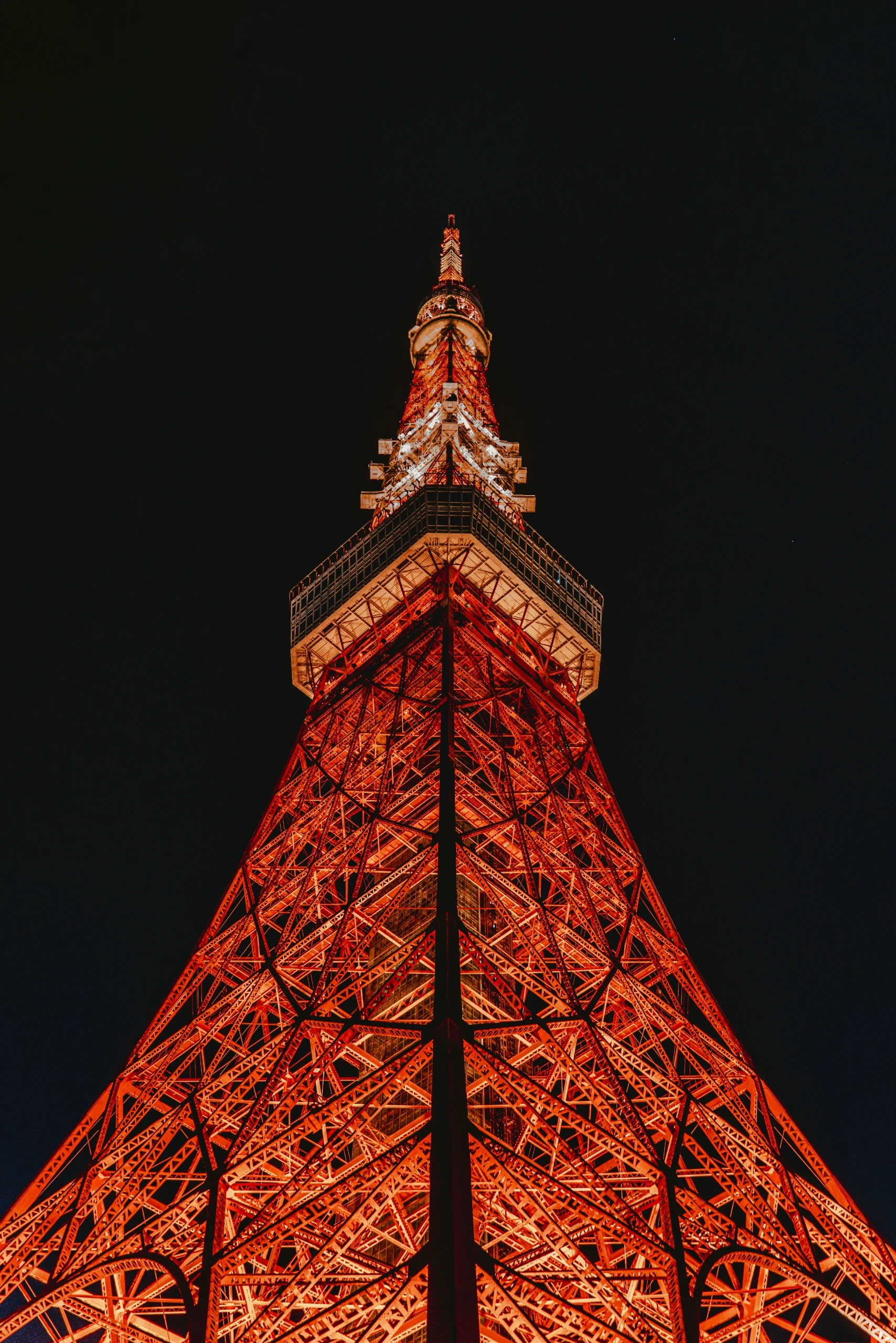
Designed as more than an observation and communications tower, it stands as a powerful symbol of postwar optimism, technical engineering, and Tokyo’s embrace of modernity. Engineered to respond to Japan’s frequent seismic activity, the tower’s height and lightweight steel structure showcase advanced strategies, including the innovative use of recycled materials. The bold red steel beam framework is not merely visual but precisely calibrated to resist earthquakes, natural forces, and long-term corrosion. At its base, a four-story podium forms a lively public realm of museums, restaurants, and shops, ensuring the tower remains not just a skyline icon but a place where engineering, culture, and everyday life intersect.
3. Tokyo International Forum
Location: Marunouchi
Architect: Rafael Viñoly Architects
Typology: Civic Complex
Year: 1991-1996
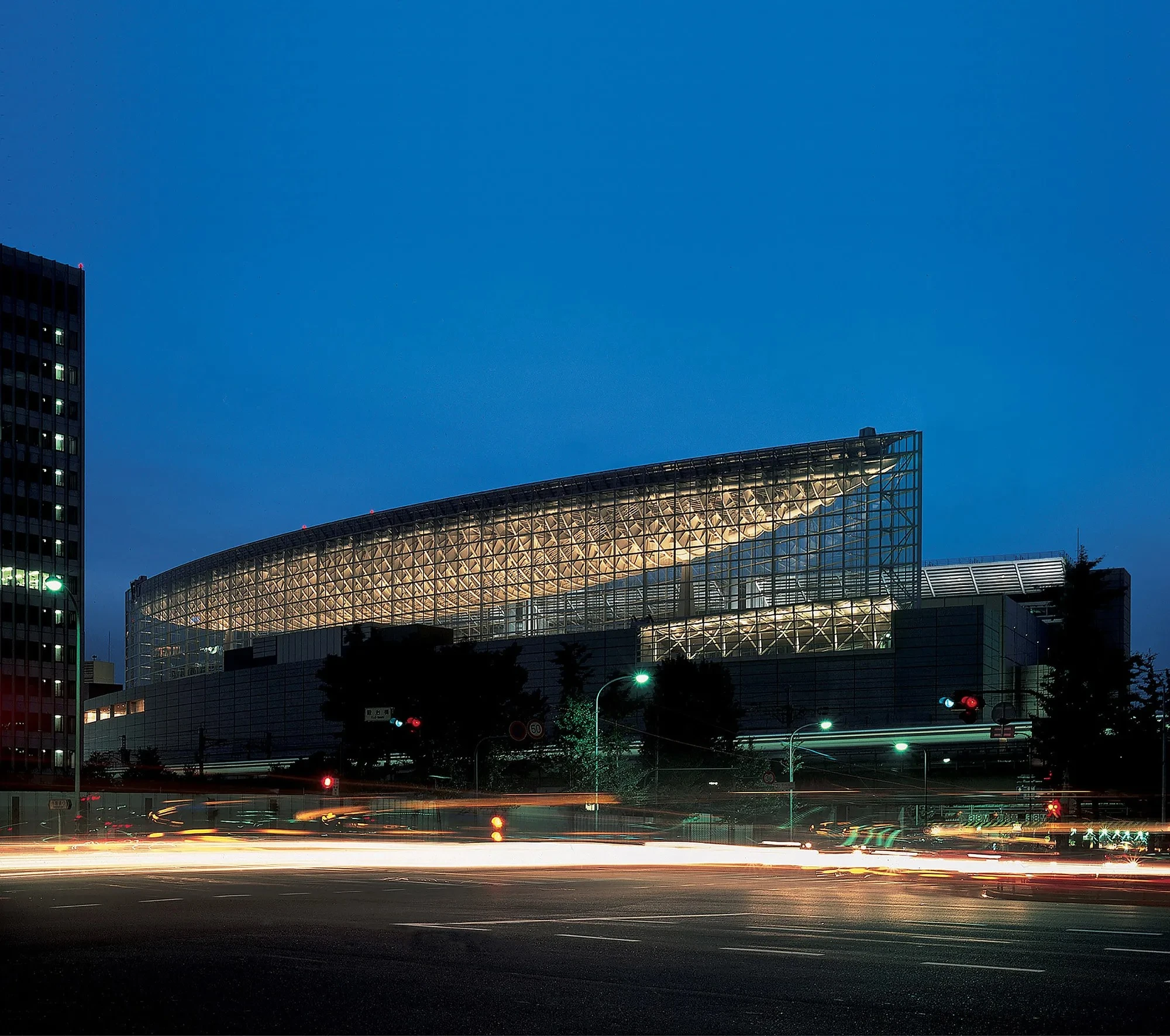
The Tokyo International Forum stands as a remarkable civic landmark, unfolding across a 6.7-acre site in the heart of the city and designed by Rafael Viñoly Architects. Commissioned by the Tokyo Metropolitan Government, the complex was envisioned as a dynamic centre for global dialogue, culture, and public life. Situated in one of Tokyo’s busiest pedestrian zones, connected to four subway lines, and flanked by Tokyo and Yurakucho stations. Completed in 1996, the Forum redefined civic architecture and how it can transform the urban landscape. The complex hosts activities, ranging from dance, music, and theatrical performances to large-scale conventions, exhibitions, corporate meetings, and social receptions.
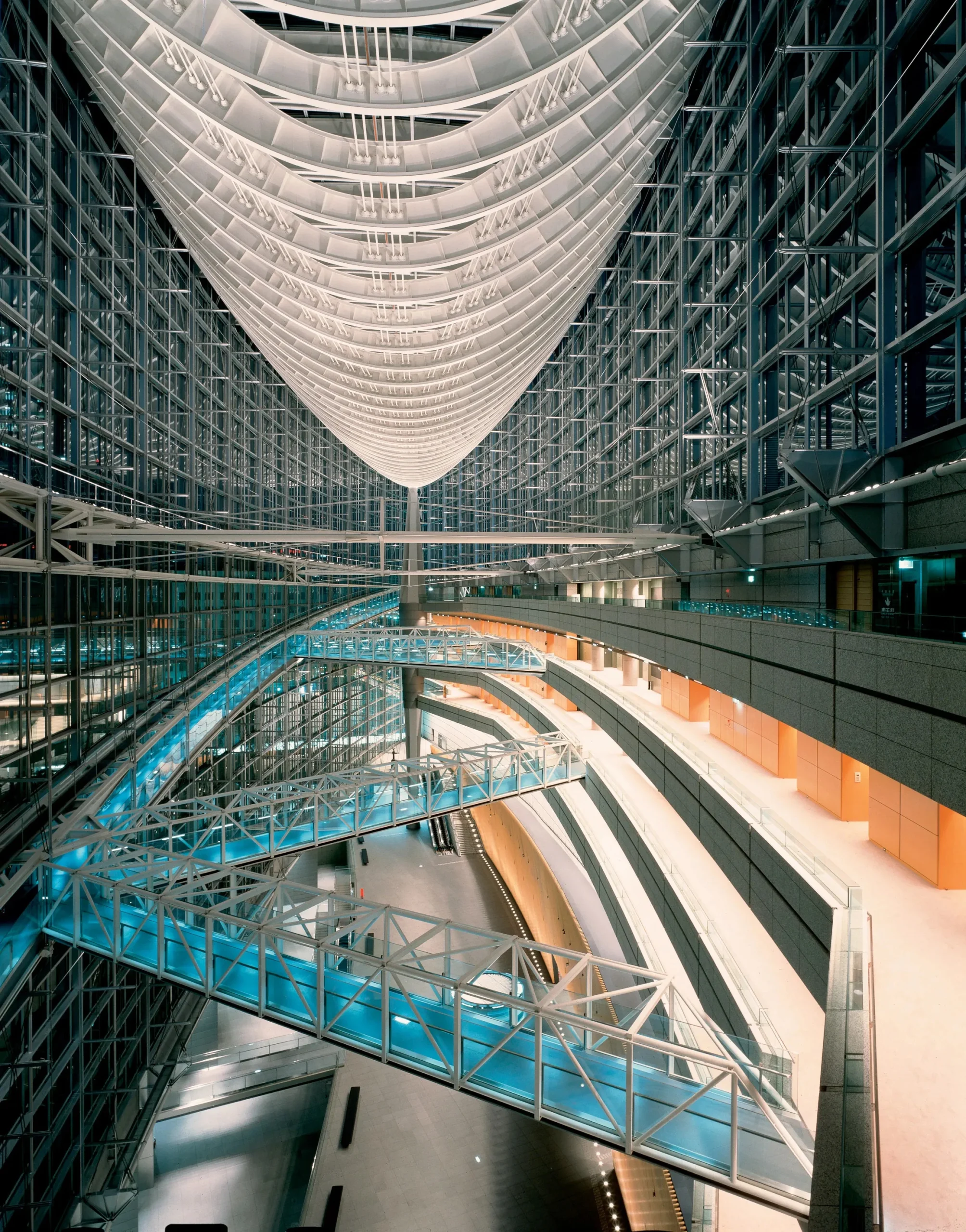
The design was conceived as an open civic forum, welcoming to the public yet carefully shielded from the impact of urban surroundings. A landscaped plaza enclosed by a strong granite perimeter wall, extending under four suspended performance halls that step down gracefully along the site’s western edge. The characteristic feature on the eastern side, where the plaza opens toward the iconic Glass Hall, captures the eye. Enclosed within a vast glass volume, a dramatic 228-meter-long steel truss appears to hover overhead, the most striking spatial moment. Formed by two intersecting arcs of glass and steel, the hall exemplifies daring structural innovation, where precision-engineered glass beams work in concert with steel supports to achieve both transparency and strength.
4. Fuji TV Building
Location: Minato
Architect: Kenzo Tange Associates
Typology: Corporate Office
Year: 1993-1996
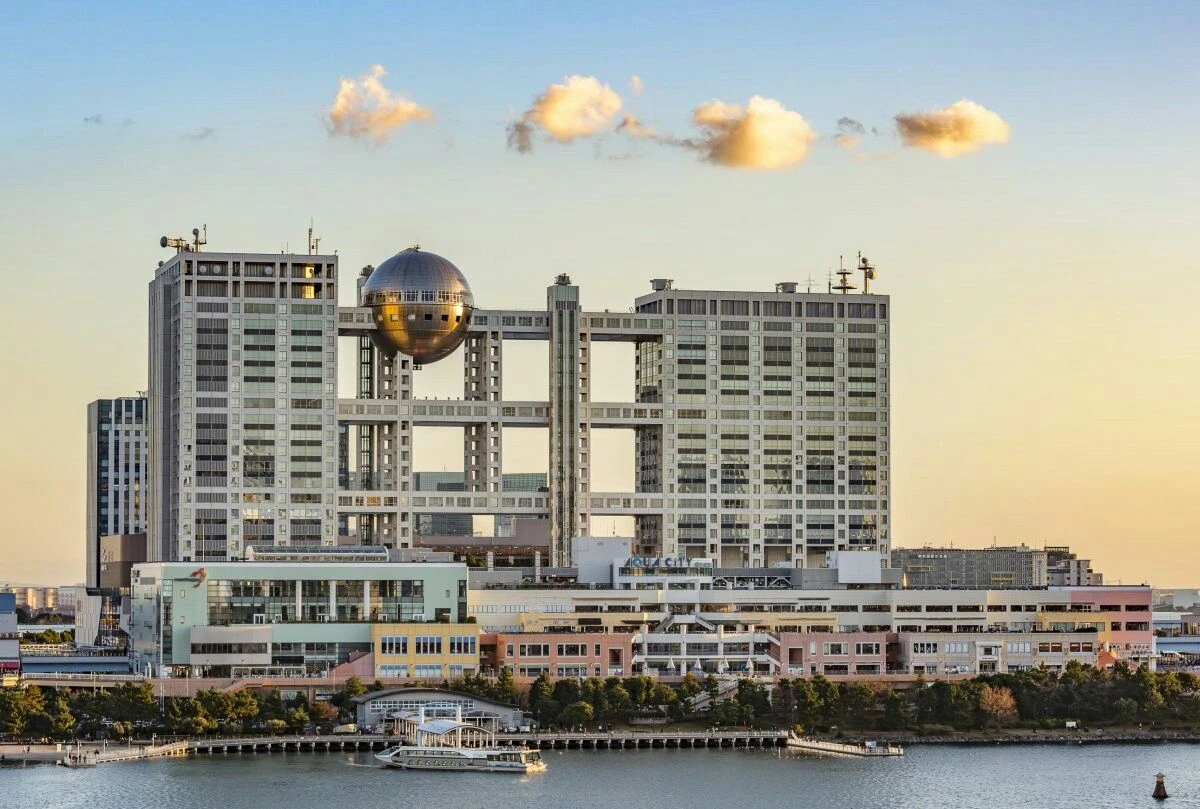
Designed by Kenzo Tange Associates, the Fuji Television Building stands as a bold architectural landmark along Tokyo’s Minato waterfront. Completed in 1996 as the headquarters for the Fuji Television Network, the building reflects a forward-looking vision that extends beyond the striking exterior into the advanced broadcast technologies within. Its unconventional form quickly captured public imagination, transforming the structure into an unmistakable and eye-catching landmark. Set within Tokyo’s coastal urban fabric, the experimental architecture contributes to the city’s fabric, embodying design, media, and future-facing innovation that came together to shape a new visual architectural identity for the area.
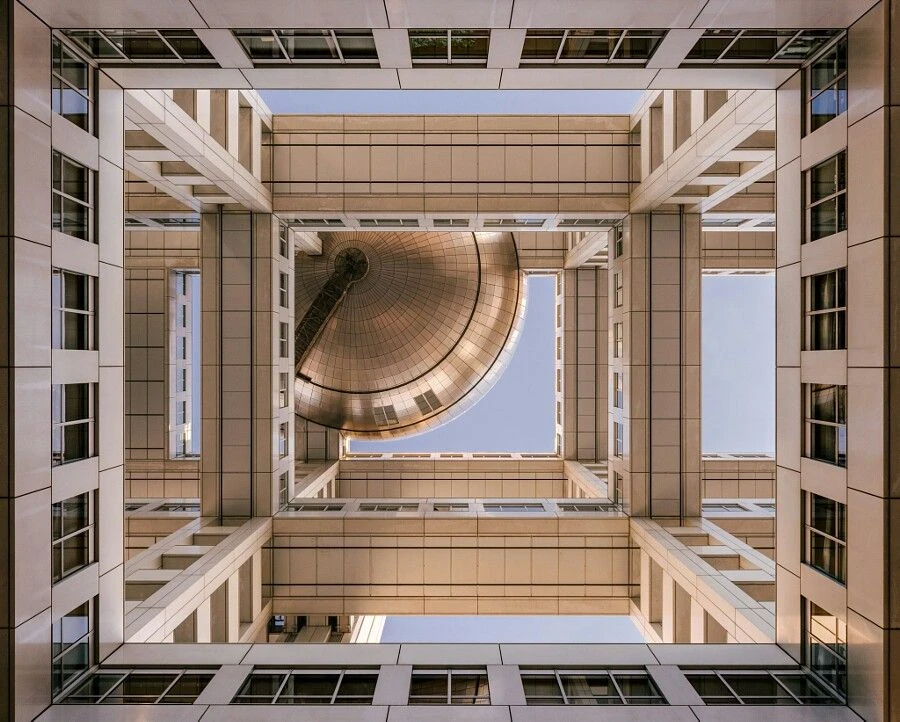
The design is a bold expression of Neo-Metabolic architecture, defined by monumental scale and adaptability to contemporary urban life. Composed of concrete volumes linked by elevated pedestrian bridges (corridors of heaven), the structure is crowned by a striking floating sphere clad in salt-resistant titanium, housing an observatory. Rising 123.45 meters with 25 floors and two basement levels, balancing visual drama with functional clarity. Inside, generous open corridors encourage movement and informal interaction, as well as the exchange of ideas, reflecting the building’s role as both a workplace and a creative hub.
5. St Mary’s Cathedral
Location: Sekiguchi, Bunkyo-Ku
Architect: Kenzo Tange Associates
Typology: Religious – Cathedral
Year: 1964 and Restoration in 2007
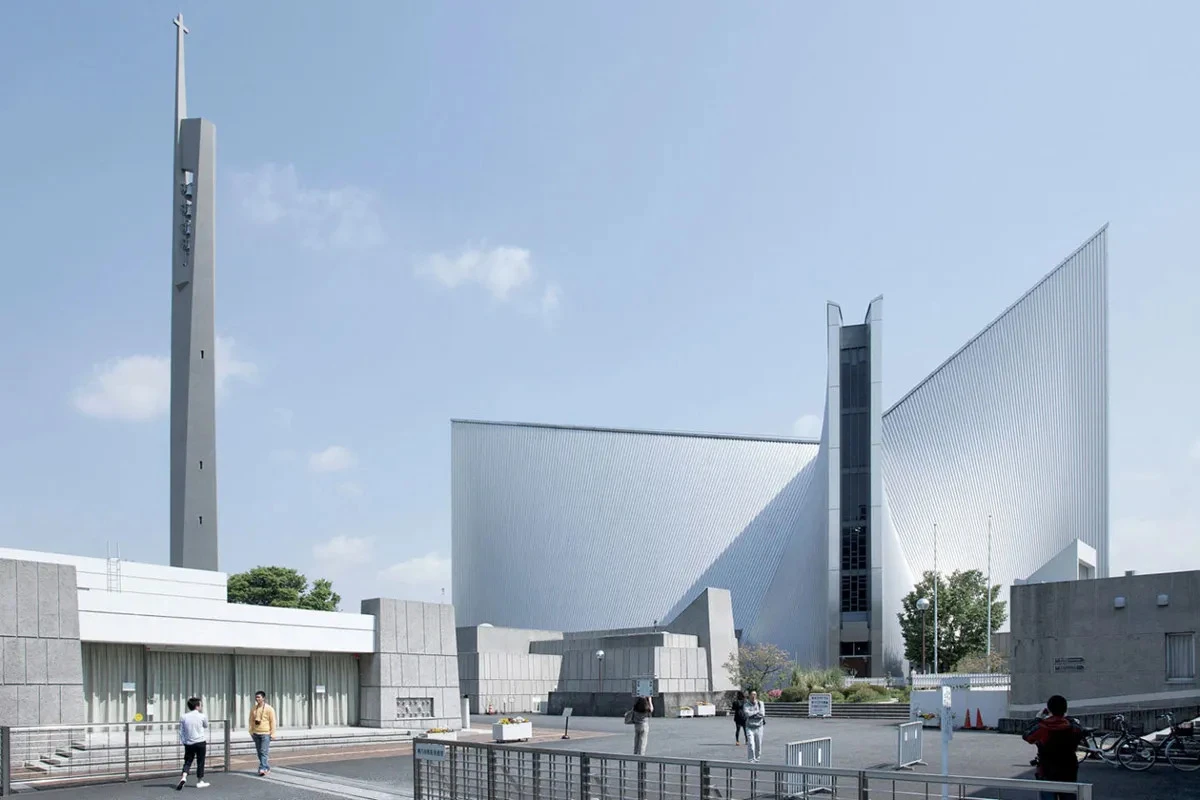
The St. Mary’s Cathedral, designed by the renowned architect Kenzo Tange, stands as a powerful reimagining of sacred architecture in postwar Japan. Originally completed in 1964 and later renovated in 2007, the cathedral replaced the old wooden cathedral, which was burnt down during wartime. The new cathedral’s architecture was a stark contrast from traditional Gothic style, reflecting Kenzo Tange’s approach to modern and metabolist architecture. The design showcases an abstract yet contemporary presence while balancing all conflicting elements.
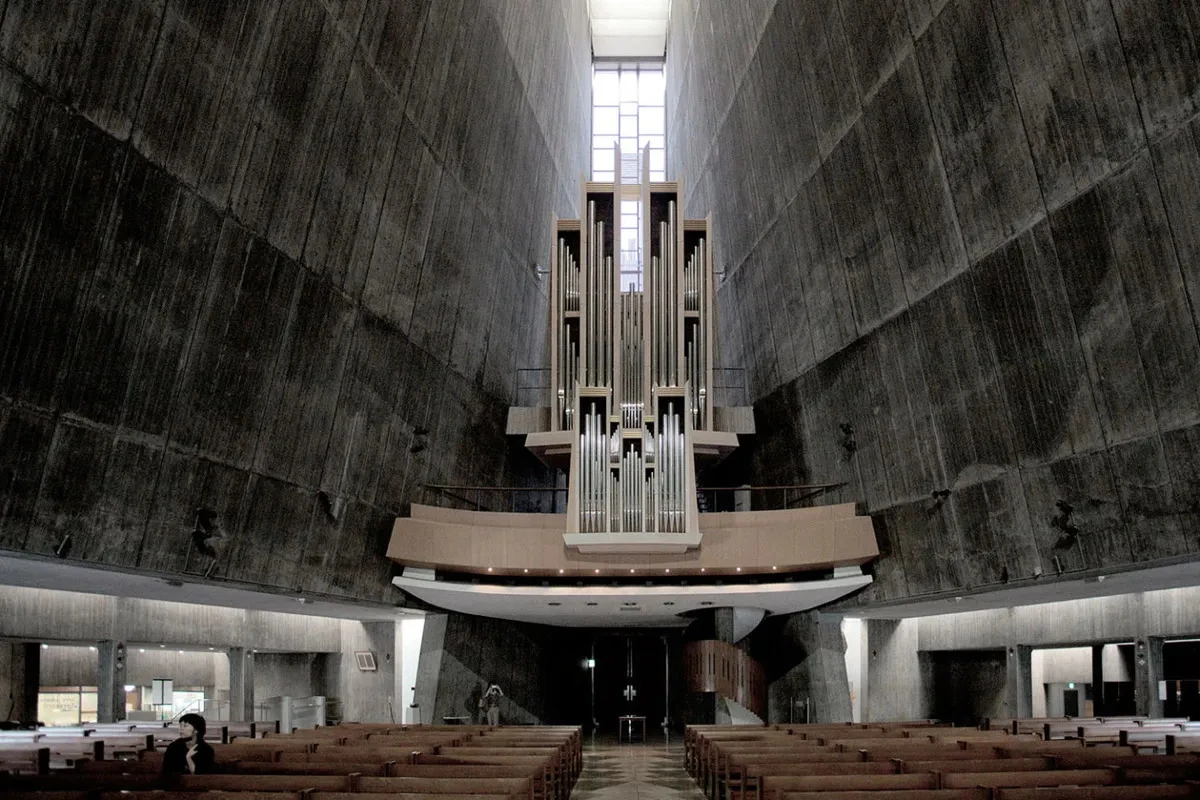
The restrained and expressive architecture is a striking contrast to traditional cathedral designs, anchored by a bell tower that rises 61.6 meters above the main structure. A cross-shaped layout unfolds into eight hyperbolic paraboloids, transforming the building into a contemporary spiritual landmark. 8 sculptural walls and roof planes enclose and open the space, allowing shafts of daylight to seep through vertical slits and skylights. Inside, the atmosphere shifts into raw, textured, and tactile spaces, offering a deeply bold contrast to the cathedral’s polished modern exterior.
6. Prada Aoyama
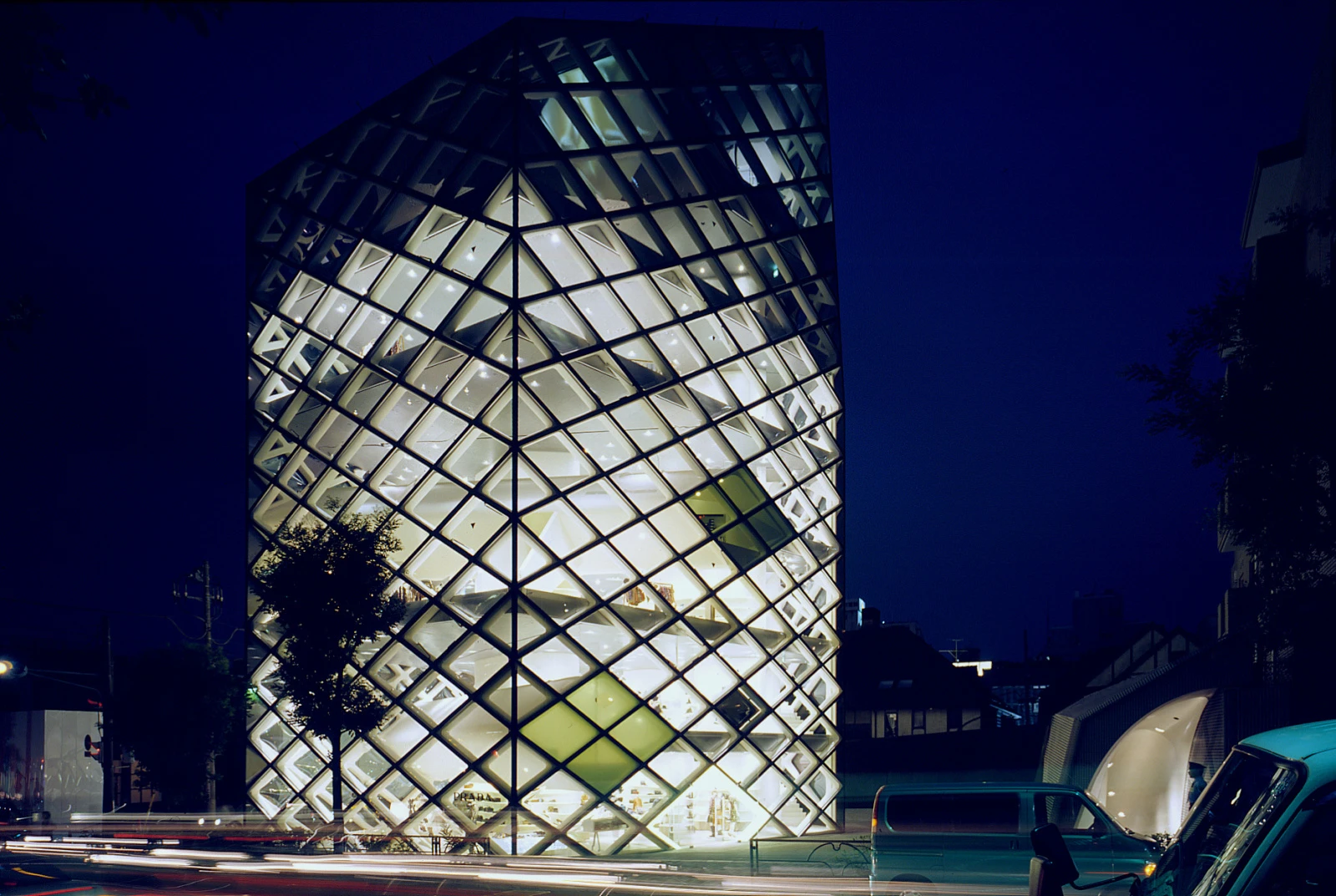
Location: Tokyo, Japan
Architect: Herzog & de Meuron
Typology: Commercial
Year: 2000-2003
Designed by Herzog & de Meuron, the Prada Aoyama building in Tokyo sits as a crystal-like architecture within the dense urban fabric of Minato. Conceived as an architectural expression for the luxury fashion house, the structure rises vertically to concentrate on allowable floor area, intentionally freeing portions of the site from development. The form responds to the surrounding urban geometry, resulting in a volume shaped by angles and local constraints.
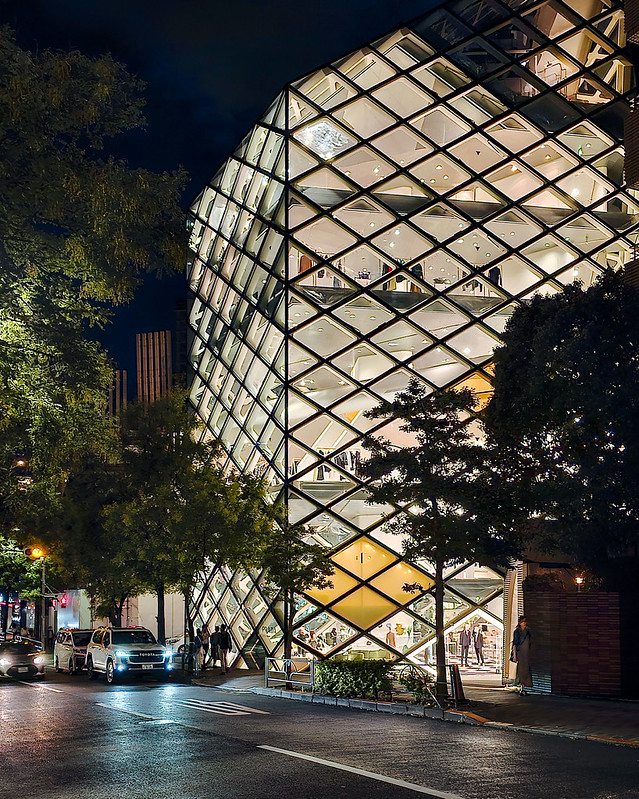
The architecture’s defining feature is its grid façade, which transforms with movement, appearing like a glowing crystal and like an abstracted form with a pitched silhouette. The grid, also being an aesthetic element, is integral to the building’s structure, along with vertical cores that support the ceilings and stabilize the form. Horizontal members strengthen the framework, also shaping private and public zones within otherwise open, light-filled floors. Convex, concave, and flat glass panels are used to create the rhomboid grid that shifts reflections and views, offering a cinematic view.
7. Tokyo Skytree
Location: Sumida
Architect: Nikken Sekkei Group, Tadao Kamei, Shigeru Yoshino, Tetsuo Tsuchiya
Typology: Tower
Year: 2008-2012
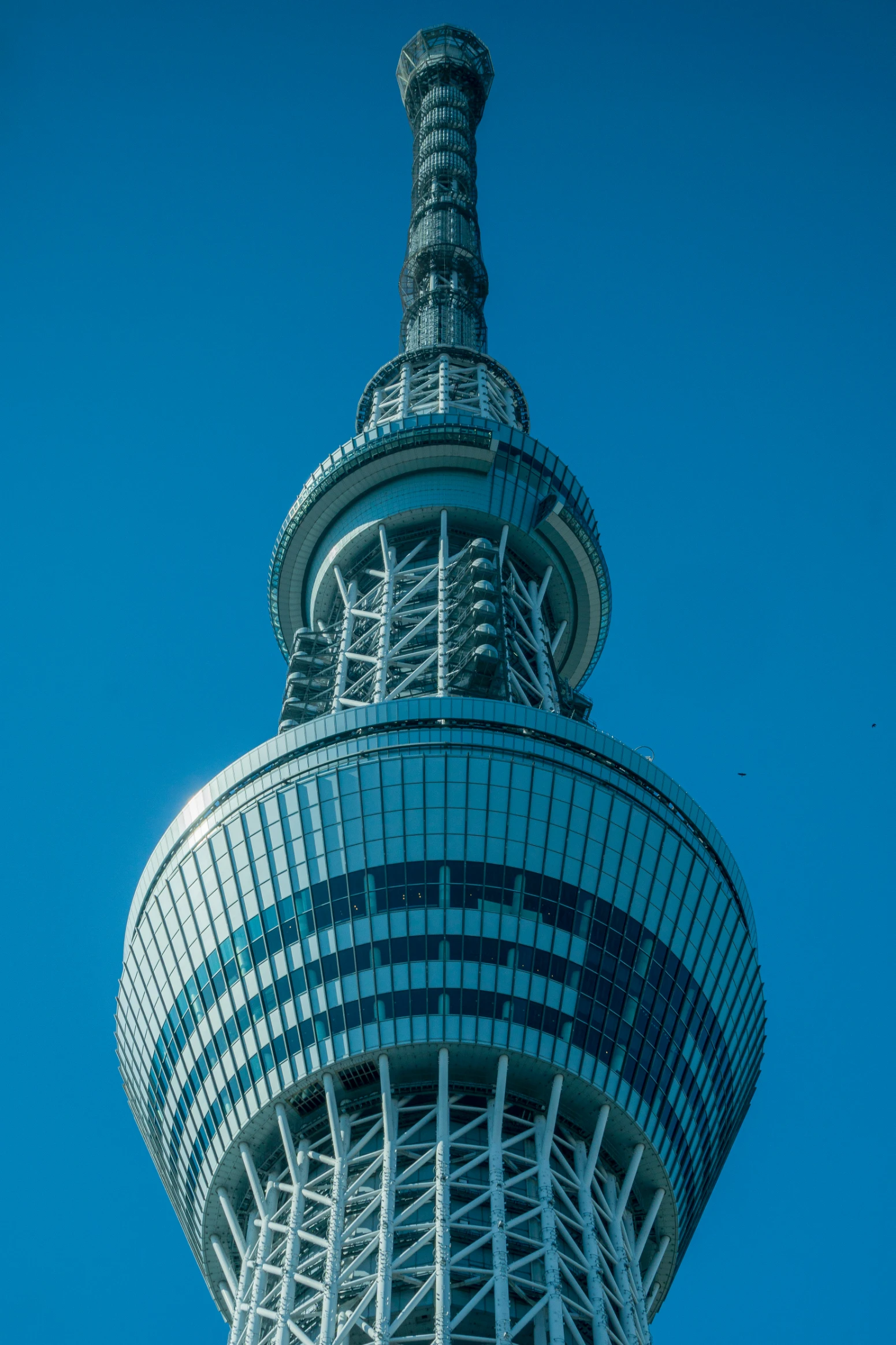
The Tokyo Skytree stands as the pinnacle of architecture, modern engineering, and urban design in Tokyo. Completed in 2012, the tower rises to an impressive height of 634 metres and is one of the tallest structures in Japan and across the globe. The design seamlessly blends aesthetic appeal with thoughtful structural logic, transforming into an engineering masterpiece as a graceful part of Tokyo’s skyline. The television and radio tower is meticulously engineered to resist earthquakes through advanced systems of vibration control, wind management, and efficient vertical circulation.
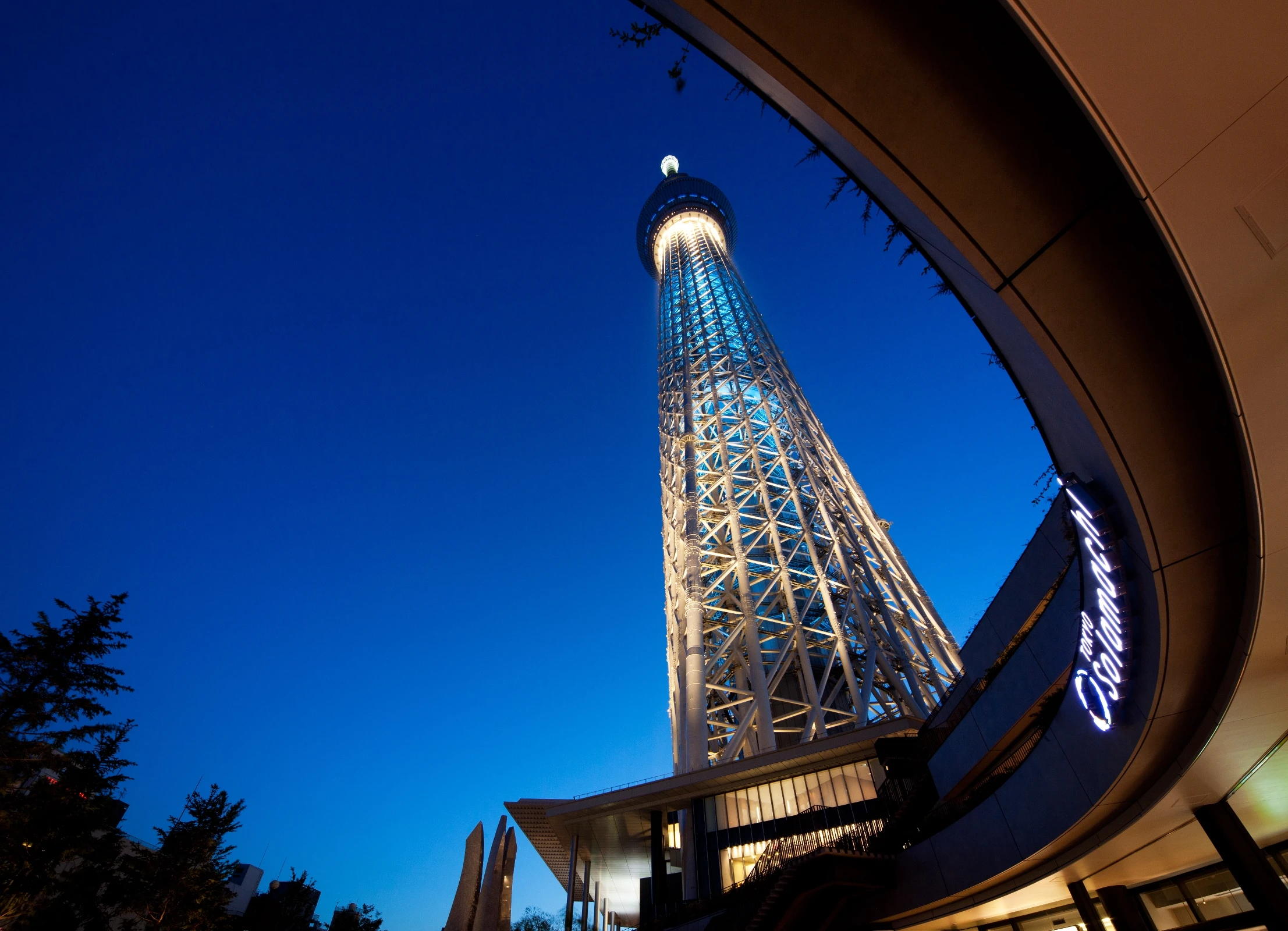
The Tokyo Skytree stands as a refined fusion of visionary architecture and advanced engineering, achieving extraordinary height with remarkable structural elegance. Rising from an equilateral triangular base with each side approximately 68 metres that subtly transforms into a circular form, reflecting traditional Japanese ideas of flow and transformation while maintaining exceptional stability.
Its three-part composition, a tripod-like base, shaft, and pinnacle, creates a dynamic identity, supported by a reinforced concrete core wrapped in a lattice steel framework that efficiently resists wind and seismic forces. Beyond its engineering brilliance, the Skytree anchors a vibrant shopping centre at its base, and the Sumida Aquarium, seamlessly integrating culture, leisure, and public life beneath one of the world’s most iconic towers.
8. SunnyHill’s Apple
Location: Tokyo, Japan
Architect: Kengo Kuma & Associates
Typology: Pavilion
Year: 2013
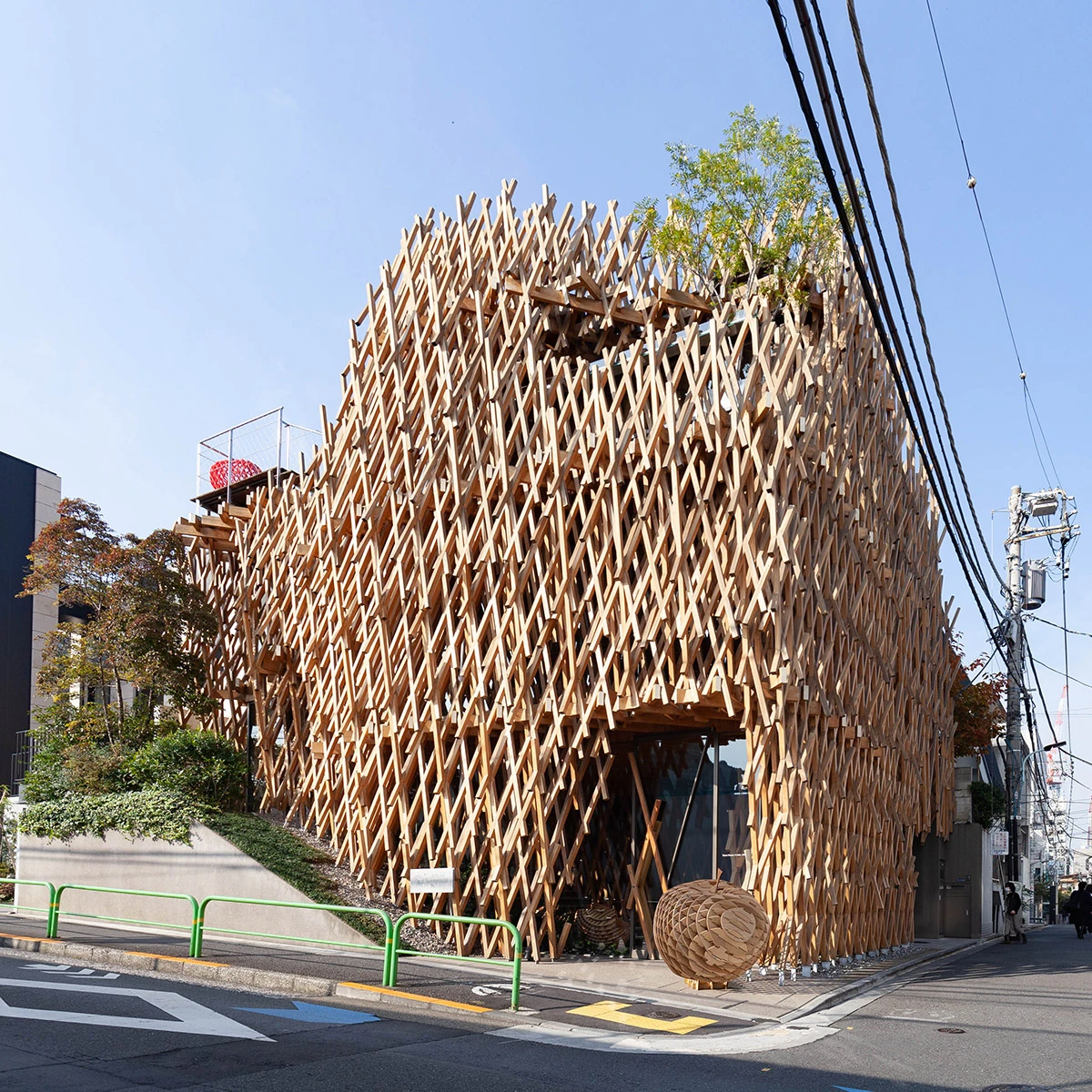
Sunny Hills Apple is a charming piece of timber architecture by Kengo Kuma & Associates, where craftsmanship and contemporary design come together in harmony. Conceived as a retail architecture housing a brand store known for its signature pineapple cakes and newly introduced apple cakes. The building stands out as a warm wooden presence amid Tokyo’s dense fabric of concrete, steel, and glass. The expressive timber façade reflects KKAA’s philosophy of reinterpreting tradition through digital design tools, resulting in a structure inspired by the delicate weave of a bamboo basket. Rising three storeys high, the building is composed of an intricate lattice of wood inspired by construction techniques from historic temples and shrines.
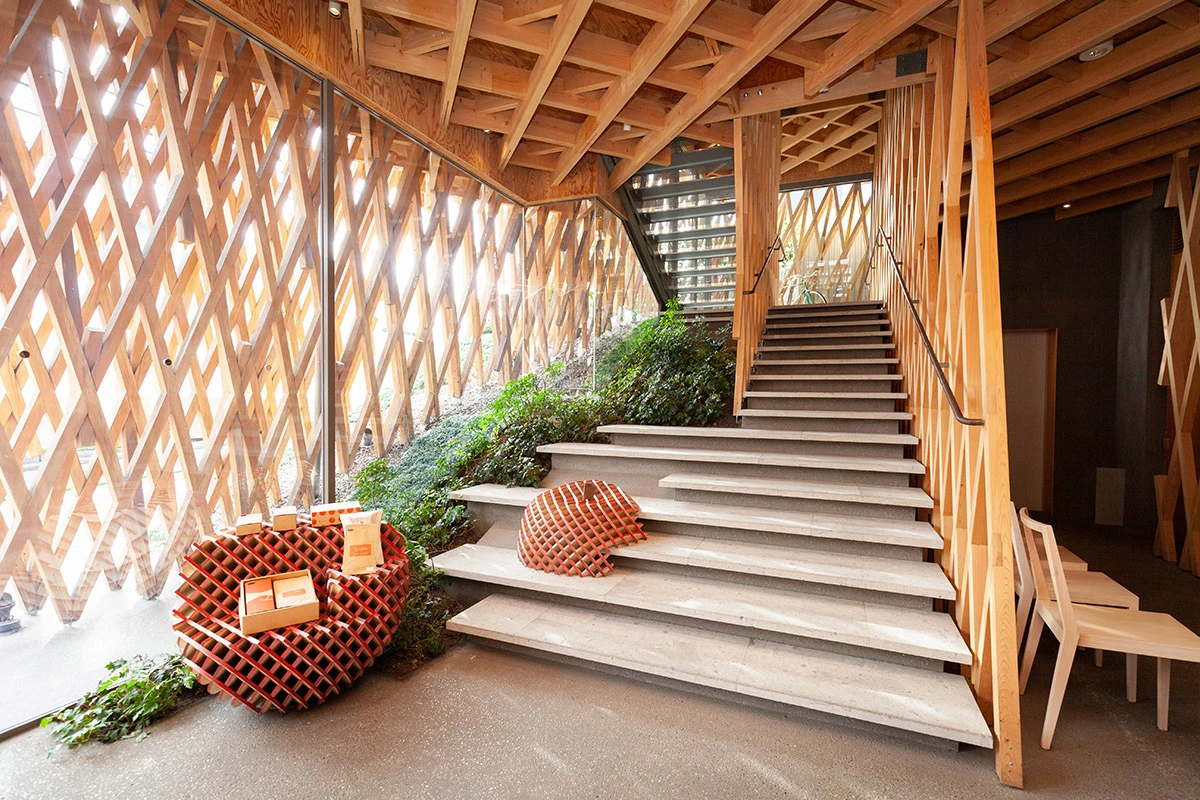
The building’s timber façade unfolds like a cloud volume, formed from slender wooden elements, each precisely cut into 60-millimetre squares. Utilizing traditional Jigoku-gumi joinery technique, the timber pieces are interlocked seamlessly with sleek plywood panels, creating a delicate yet structurally sound skin. Advanced parametric modelling and digital fabrication allow the timber components to be laser-cut with remarkable accuracy, giving rise to a layered and intricate three-dimensional lattice.
9. Japan National Stadium
Location: Tokyo, Japan
Architect: Kengo Kuma & Associates
Typology: Civic, Sports – Stadium
Year: 2016-2019
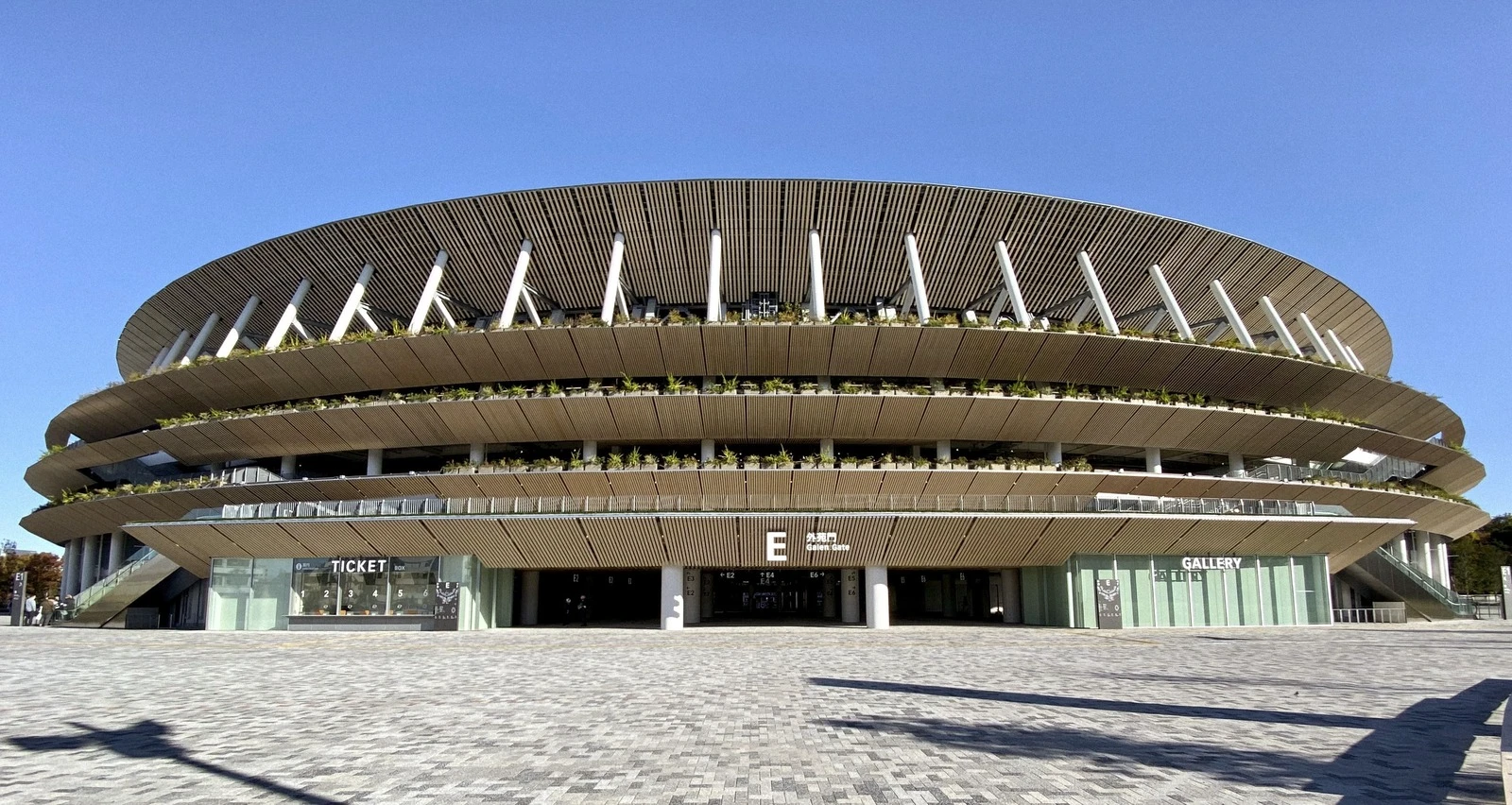
Widely regarded as one of the world’s most iconic contemporary stadiums, the Japan National Stadium stands as a powerful symbol of Tokyo’s Olympic legacy. Designed by Kengo Kuma & Associates in collaboration with Taisei Corporation and Azusa Sekkei, the stadium reimagines stadium architecture through the lens of tradition, craft, and sustainability. Its elegant oval form is wrapped in a richly layered façade composed of warm timber elements, softening the scale of the structure while grounding it in natural materiality.
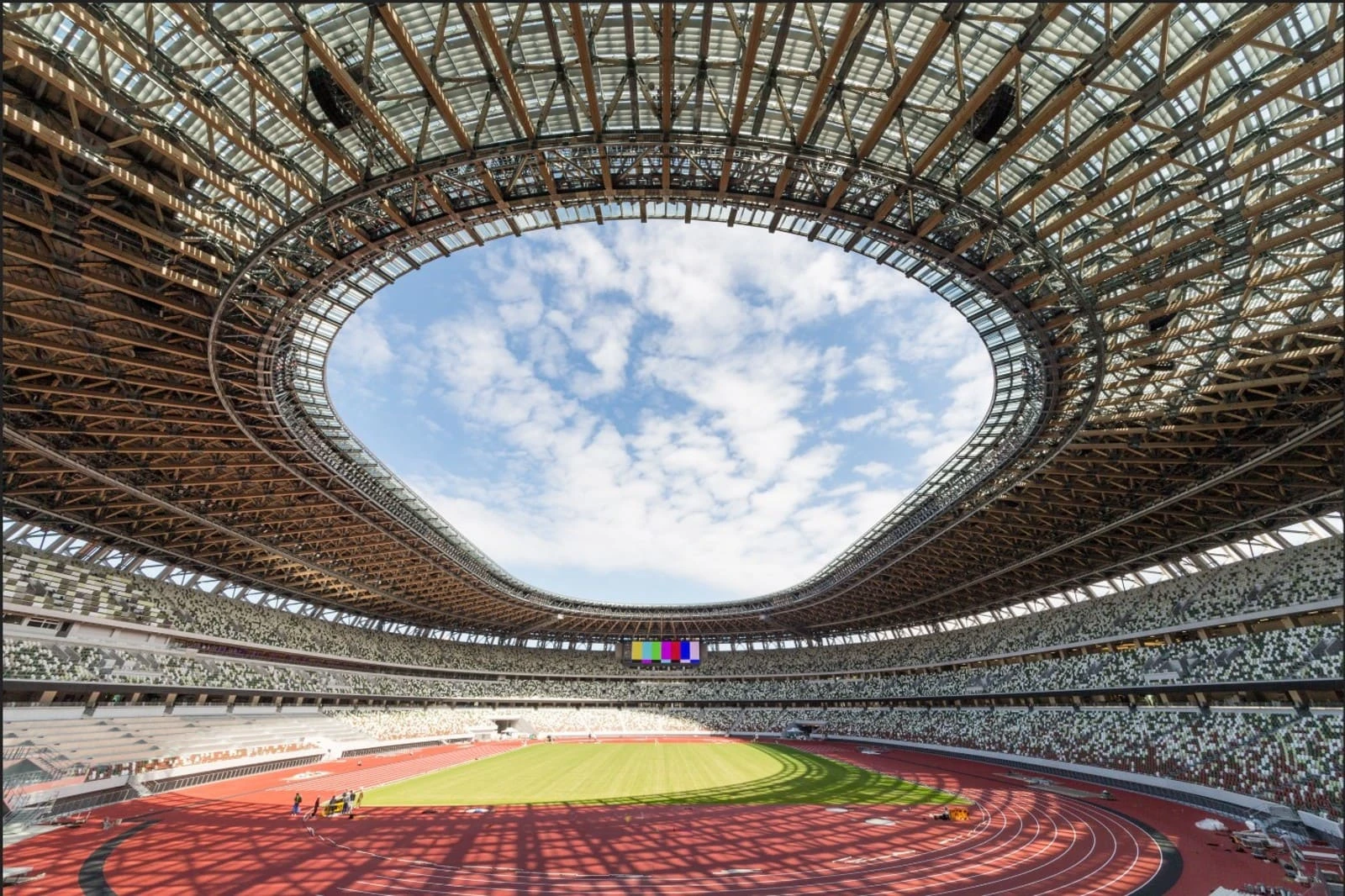
The roof is engineered as an elegant truss system that fuses steel beams with laminated timber, utilizing the stiffness of wood to resist wind and seismic forces while keeping the structure light and refined. Multi-level eaves, reinterpreting traditional Japanese architecture, wrap the façade lining beneath with wooden louvers, blending craftsmanship with contemporary expression. Beyond their visual warmth, these elements perform environmentally, filtering harsh sunlight, encouraging natural airflow, and enhancing comfort within the stands.
10. Asakusa Culture & Tourism Centre
Location: Tokyo, Japan
Architect: Kengo Kuma & Associates
Typology: Cultural
Year: 2012
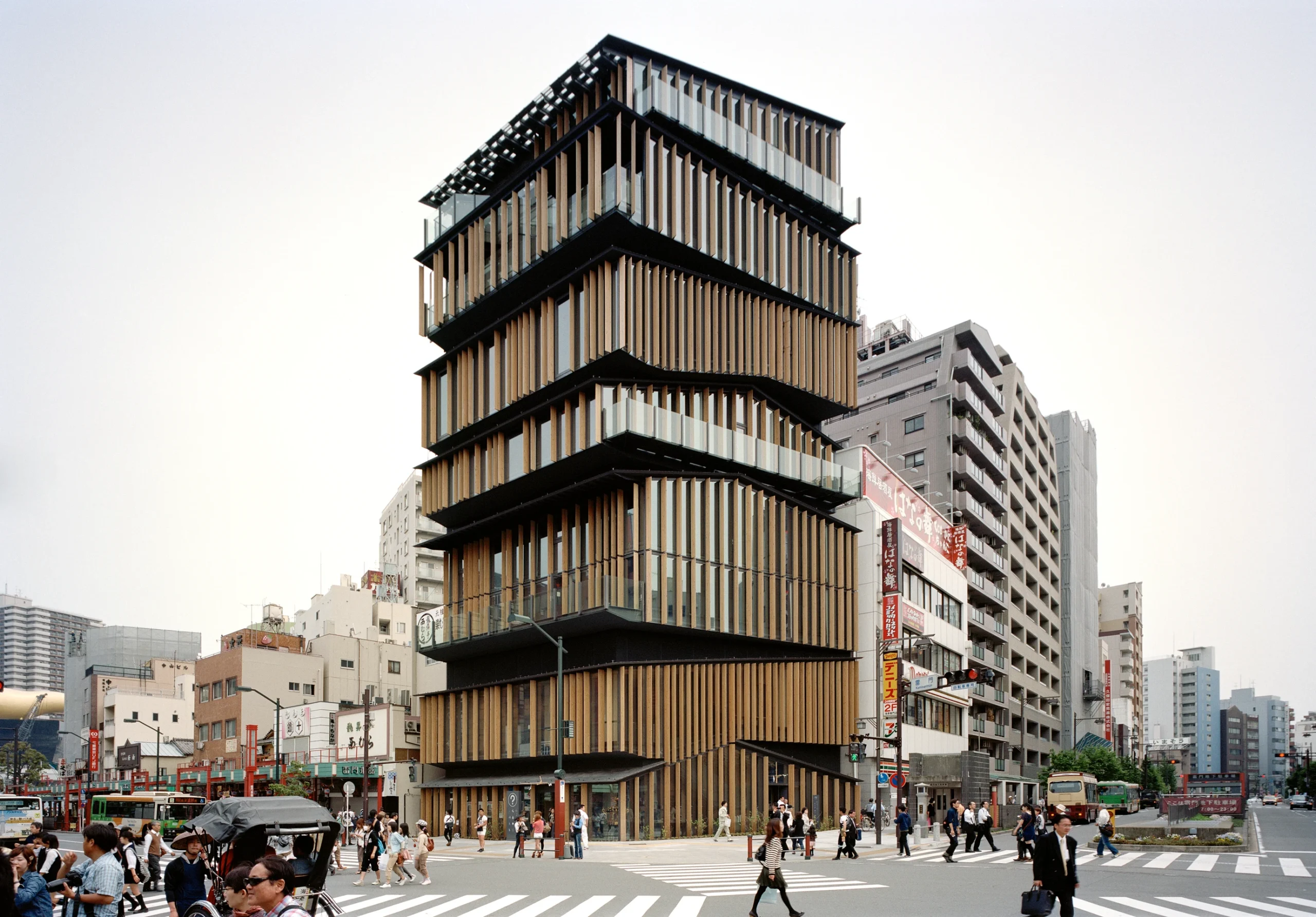
Situated beside the iconic Kaminarimon Gate, the Asakusa Culture & Tourism Centre by Kengo Kuma & Associates stands as a bold yet respectful architecture among the historic precinct of Sensō-ji. As mentioned by the architects, ‘In the corner premise of just 326㎡ across Kaminari-mon Gate, the building was required to accommodate plural programs such as a tourist information center, conference room, multi-purpose hall, and an exhibition space.’ Layered roof forms define each level, creating a feel of traditional rooftops piled up, reinterpreted through a contemporary style. The services and equipment are thoughtfully tucked into diagonal zones between floors and roofs, allowing spatial volume within a modest height.
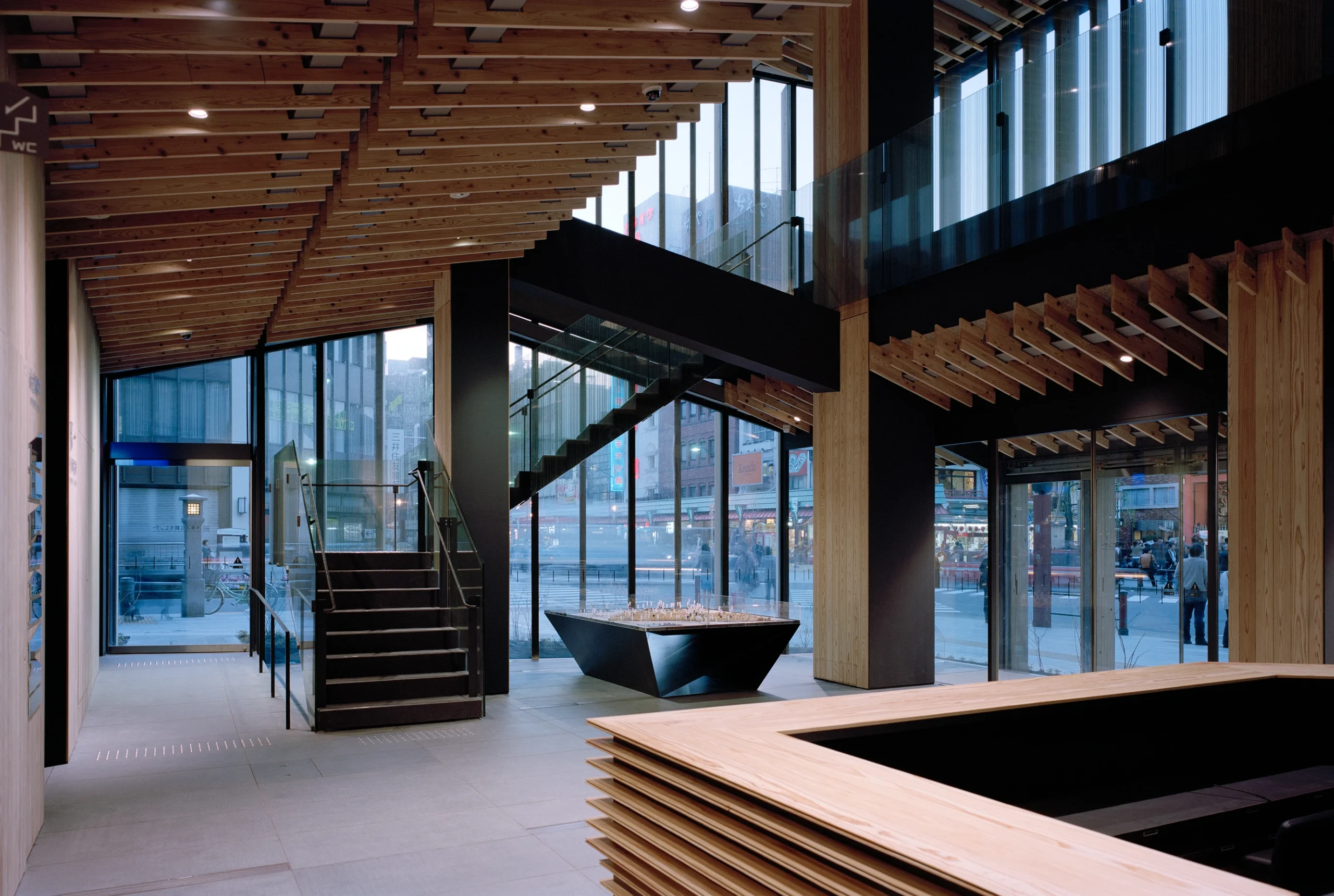
Each layer of the façade is shaped by the roof above it, subtly defining the character and function of every floor. The first and second levels unfold around an atrium and internal stair, where movement reveals the gentle slope of overlapping roofs. On the sixth floor, the inclined roof is transformed into a terraced interior, allowing the entire room to operate like an intimate theatre. As the rooflines tilt toward Kaminarimon and shift in height from level to level, each floor engages with the city in its own way.