


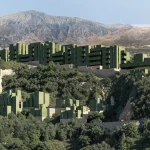
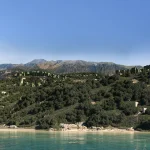
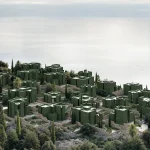
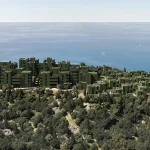

On the southern edge of Albania’s Riviera in Dhërmi, The Veil is designed in direct response to a sensitive coastal landscape. The surrounding deciduous forests cover a significant portion of the region, and the mountainous terrain has historically limited development. As a result, the site requires mindful handling to avoid unnecessary environmental disturbance.
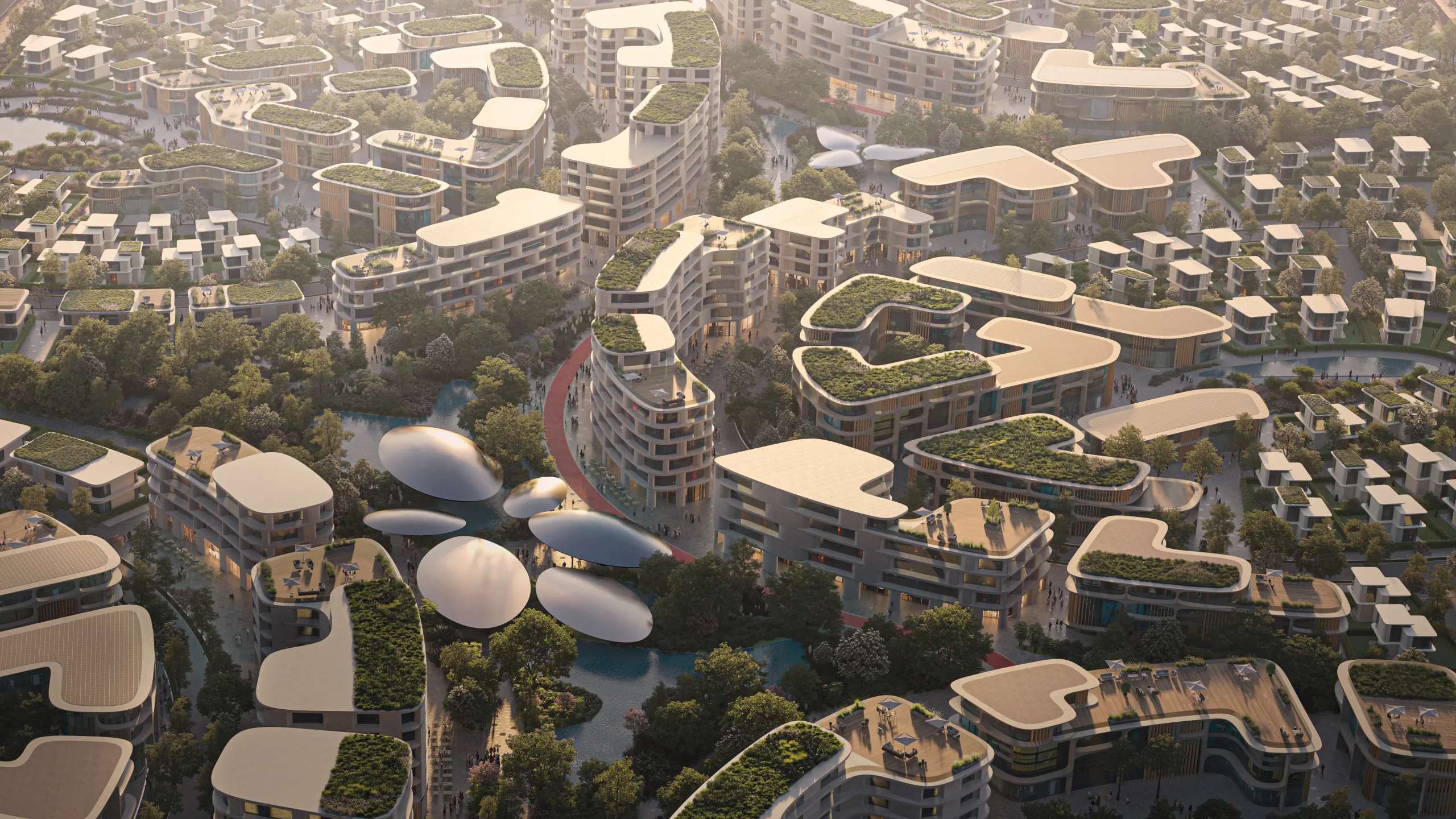
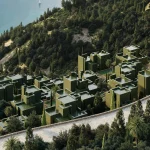
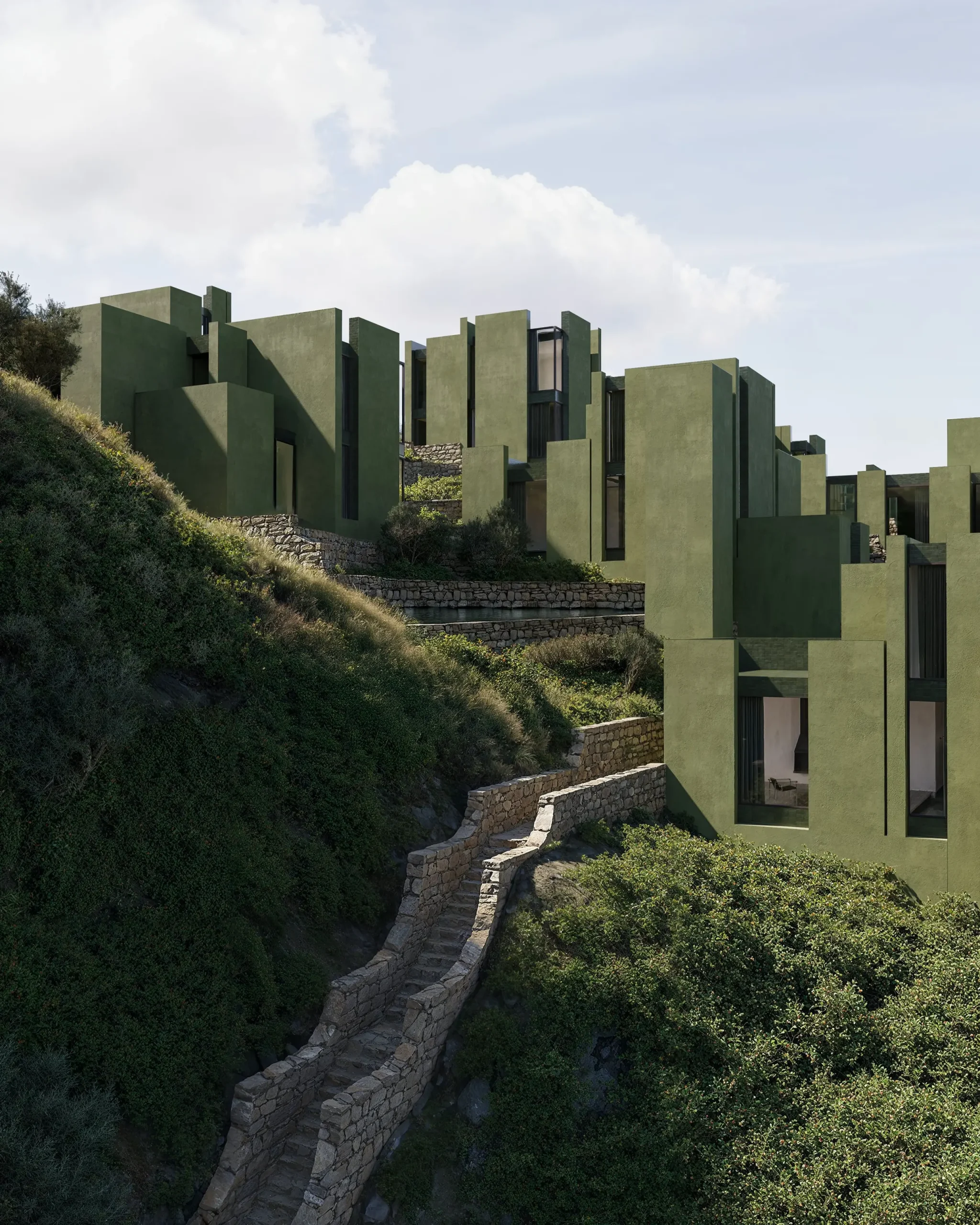
Bofill Taller de Arquitectura approaches the project with this constraint in mind. The proposal focuses on preserving the existing character of the forest while introducing a built system that adapts to the land. The development occupies two plots of different sizes. Across these, 366 apartments and 77 villas are distributed in sixteen typologies, each varying in size and internal organization. Their placement follows the natural topography, aligning with contour lines and settling onto platforms instead of relying on excavation. This approach reduces intervention and allows the architecture to sit more lightly on the terrain.
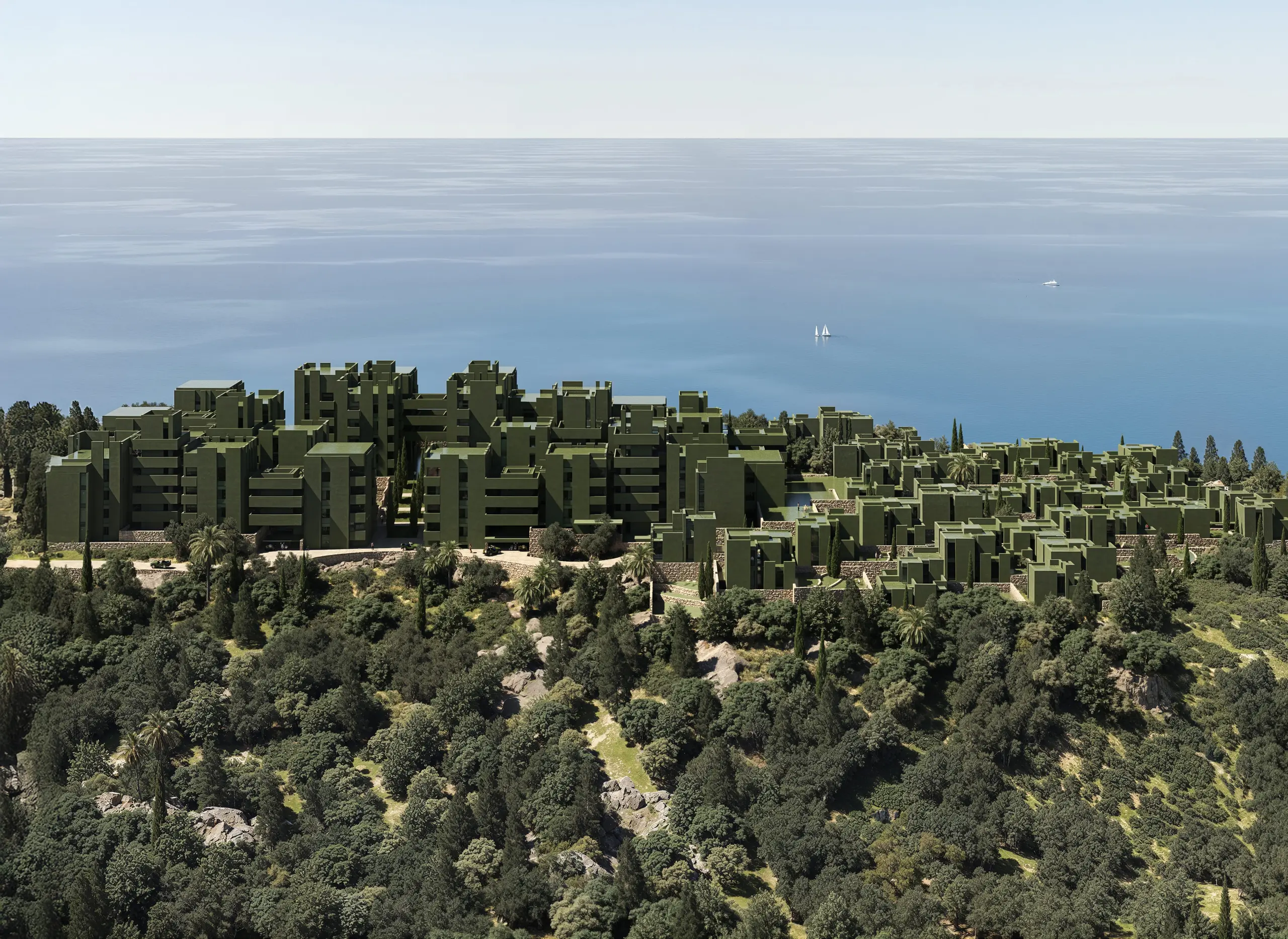
The project is described as behaving like a “light or invisible veil” laid over the landscape. This idea defines its overall organization. Instead of forming a single dominant structure, the architecture spreads across the site as a distributed system.
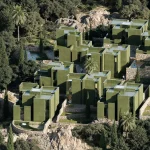
Buildings are positioned among existing trees, avoiding significant vegetation wherever possible. This results in a layout where natural and built elements coexist.
Ground Strategy and Movement Network
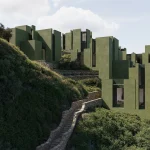
At the ground level, locally sourced stone establishes a continuous base across the site. This material steps up and down with the natural slope of the mountains, forming a network of paths and stairs that connect different parts of the development.
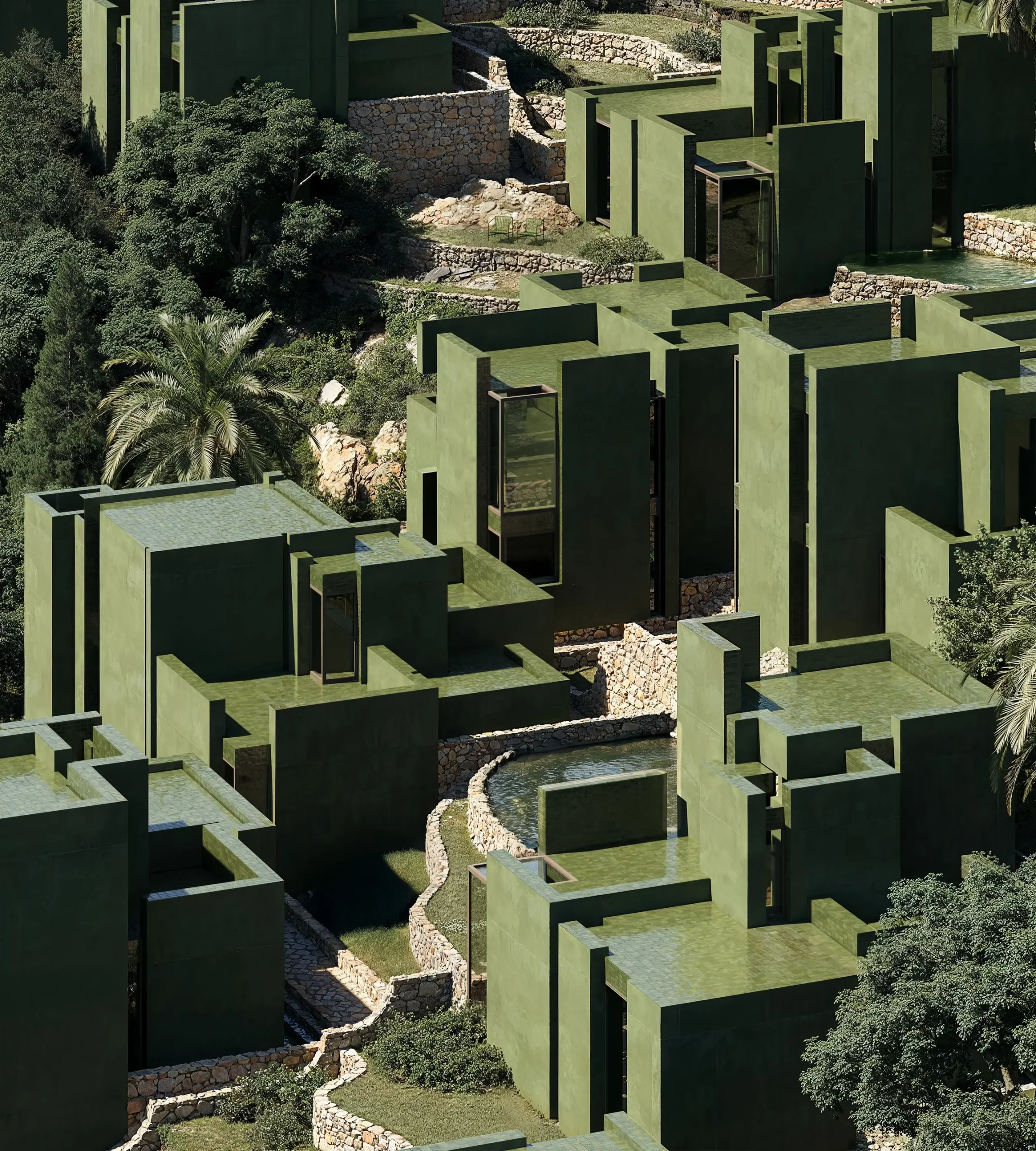
The tones of this paving are derived from the surrounding landscape. Samples taken from the site informed a palette of four colors, allowing circulation spaces to visually relate to their context.
This network of movement is integral to how the project is experienced, linking units while following the existing terrain.
Vertical Growth Within the Landscape at The Veil
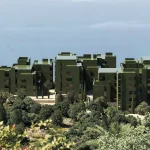
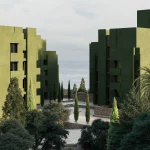
The overall diagram of the project is defined by horizontal platforms combined with vertical growth. Buildings rise between trees, positioning themselves to access views of the Adriatic Sea while maintaining distance from significant natural elements.
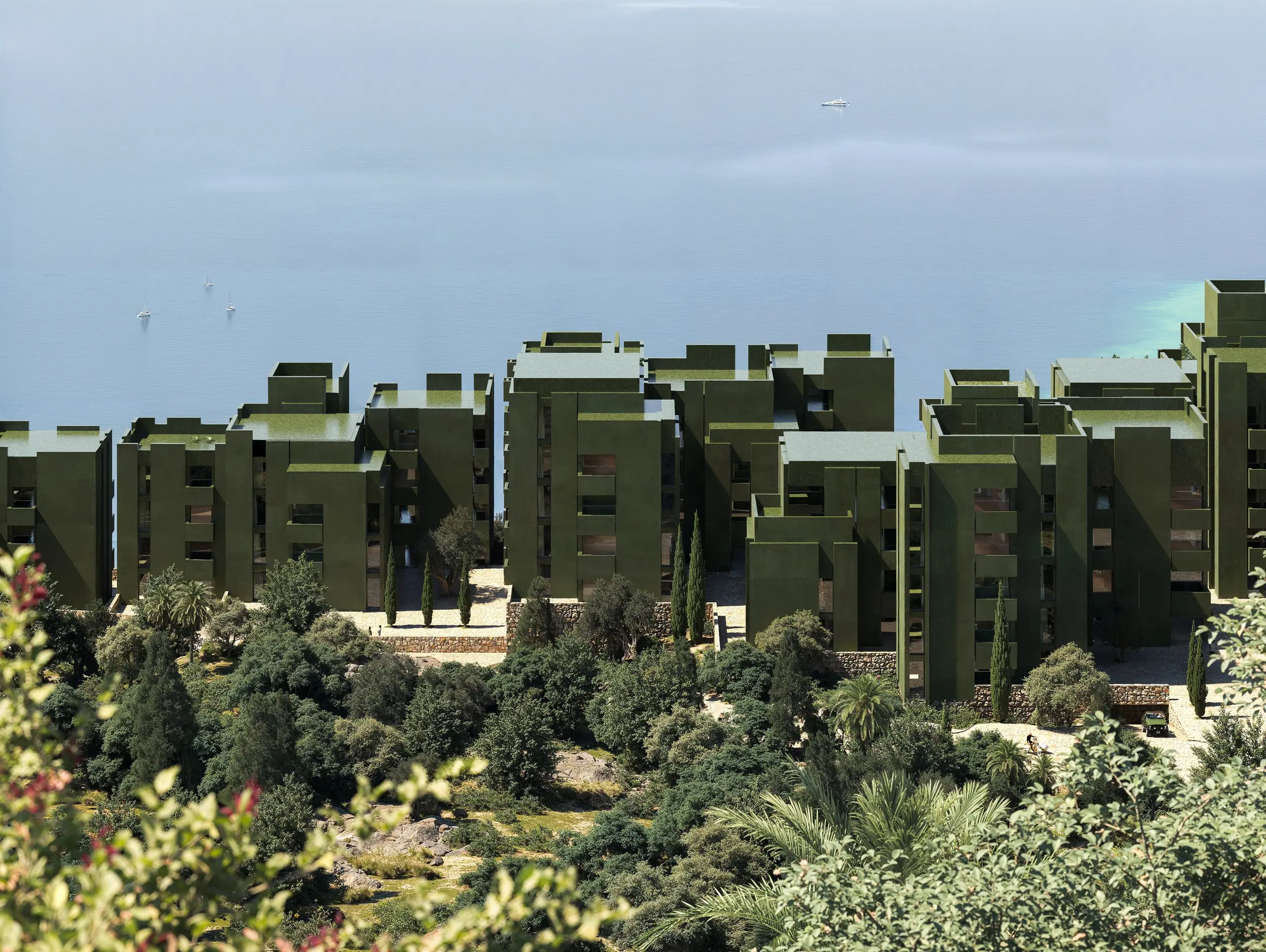
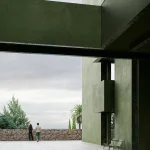
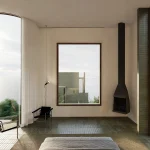
The units incorporate large openings, balconies, terraces, and pools. These features are intended to create an open and permeable environment, allowing visual and physical connections to the landscape.
Material Consistency and Visual Identity
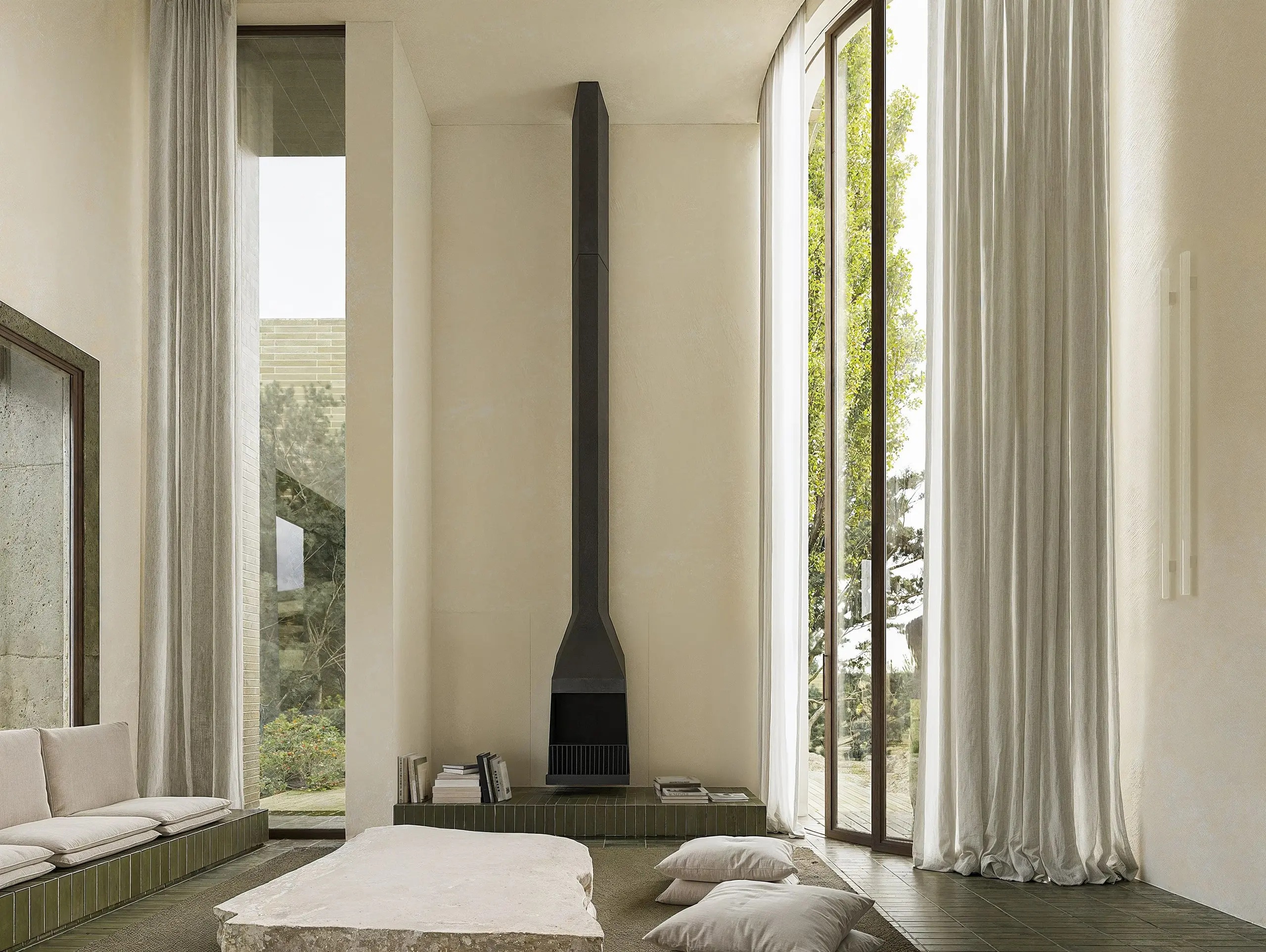
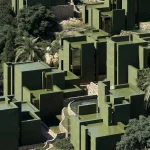
Although the volumes vary in size and configuration, they are unified through a consistent material and facade strategy. Concrete and glazed ceramic tiles are used across the development, creating a coherent visual language.
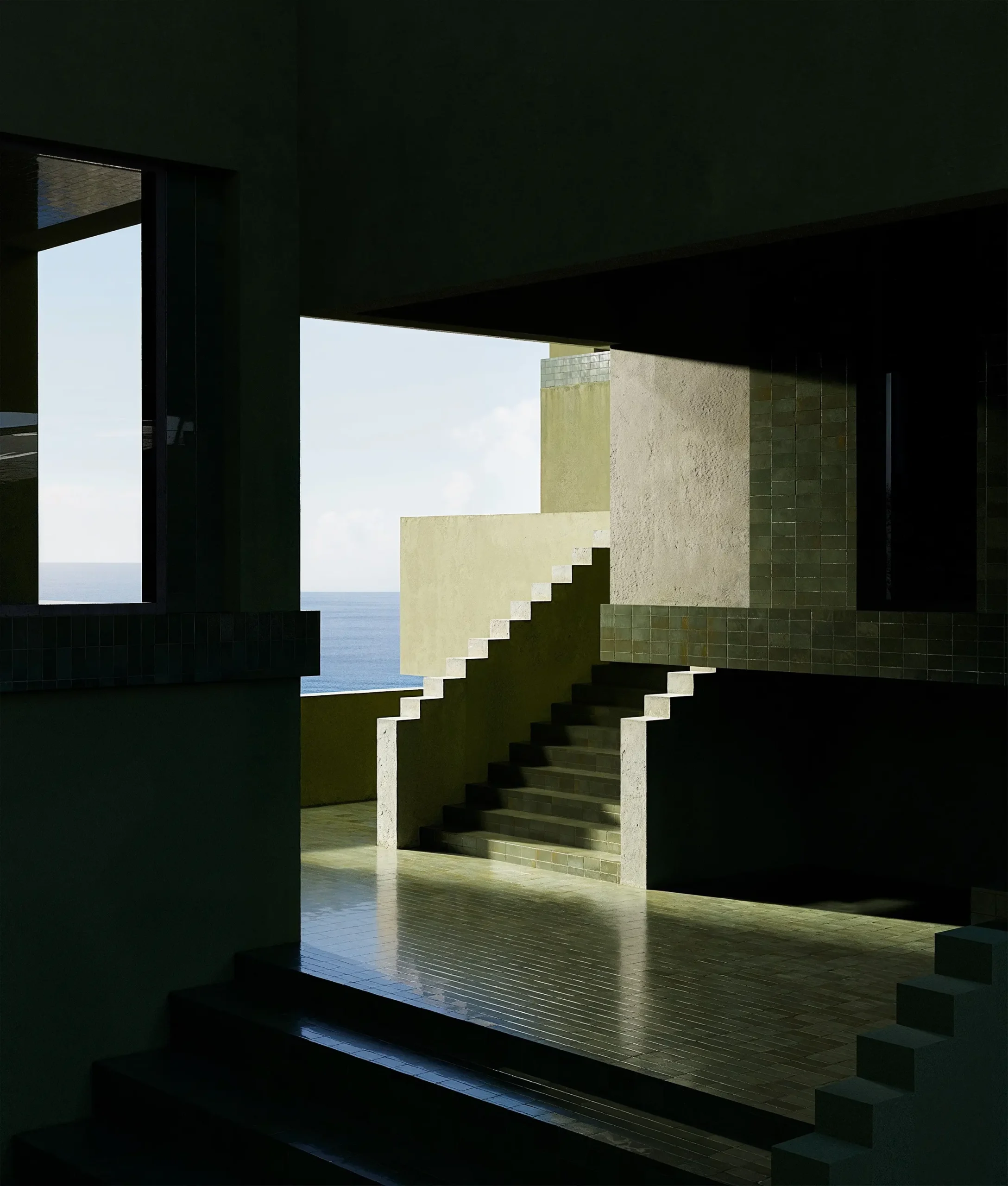
This approach aims to produce an architecture that is absorbed into its surroundings, reflecting light and shadow rather than asserting a strong contrast with the environment.
Shared Program and Central Organization
A principal communal building acts as the main shared space within the project. It contains a social club, restaurant, gym, and multiple pools.
At the center of this building, a courtyard introduces a variation in geometry. Unlike the predominantly rectilinear layout of the project, this space curves around a group of existing trees. This moment makes the design approach explicit: the architecture adjusts to the landscape, allowing natural elements to remain central.
The Veil is defined as a distributed system shaped by topography, vegetation, and careful placement. By aligning with contours, minimizing excavation, and preserving existing trees, the project maintains a consistent relationship with its site. The architecture functions as a layer across the terrain, where built form and landscape remain closely interconnected.
Image credit: Bofill Taller de Arquitectura