






Chris Williamson, President of the Royal Institute of British Architects (RIBA), has put forward an infrastructure proposal called “The Loop.” The concept was recently submitted to the Royal Academy’s 2026 Summer Exhibition and develops an idea for a high-speed rail and energy network linking major cities in the northern British Isles.
Williamson’s goal is to reframe regional development by weaving transportation, energy distribution, and economic collaboration into a single, shared infrastructure system. By doing so, he claims that cities traditionally competing for limited investment can instead function as a cohesive, collaborative global city capable of driving long-term prosperity.
What The Loop Is and How It Would Work
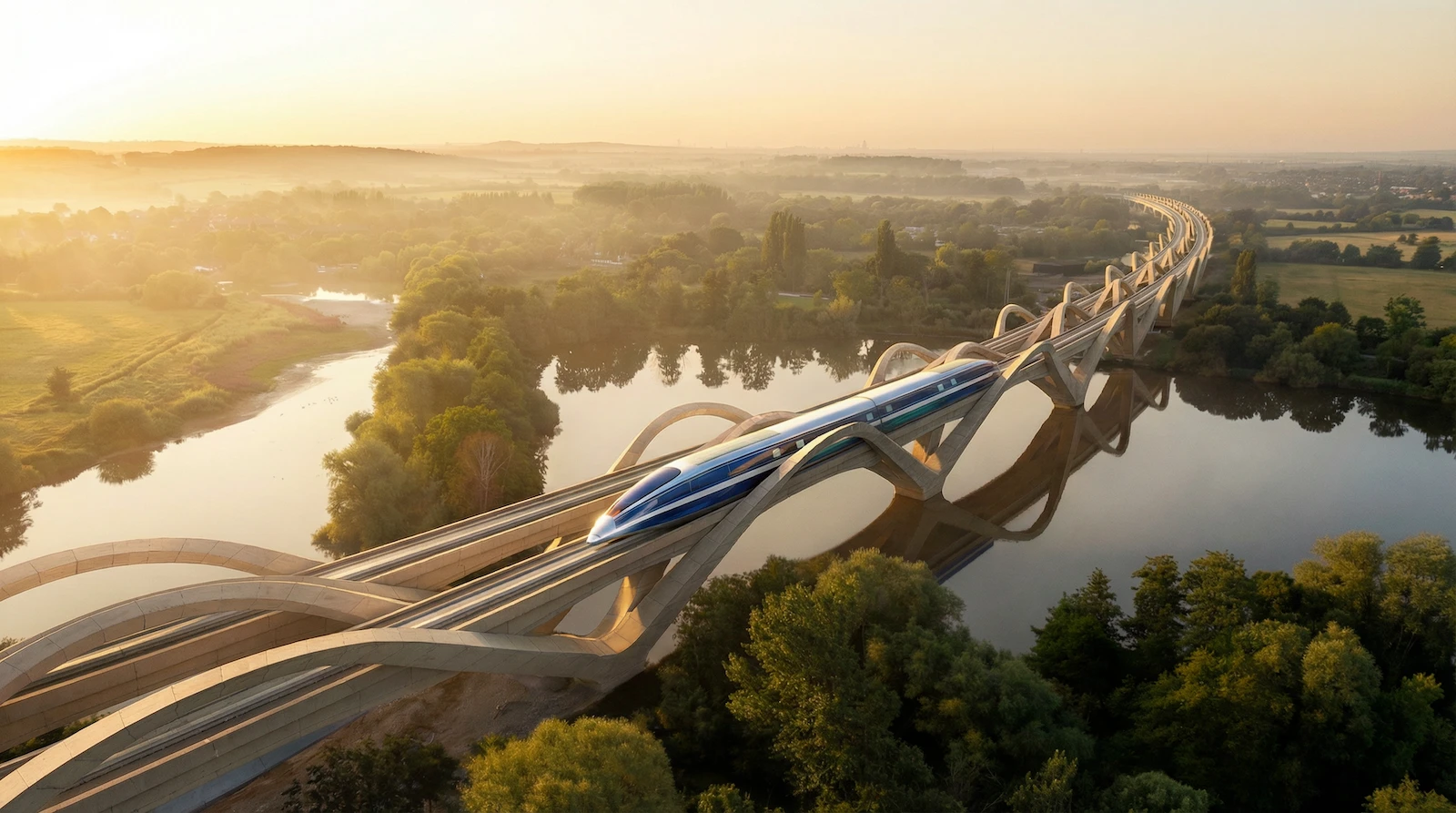
At its core, The Loop is a high-speed circular rail network connecting nine urban centers across Great Britain and Ireland. The proposed cities are Glasgow, Edinburgh, Newcastle, Leeds, Manchester, Liverpool, Bangor, Dublin, and Belfast.

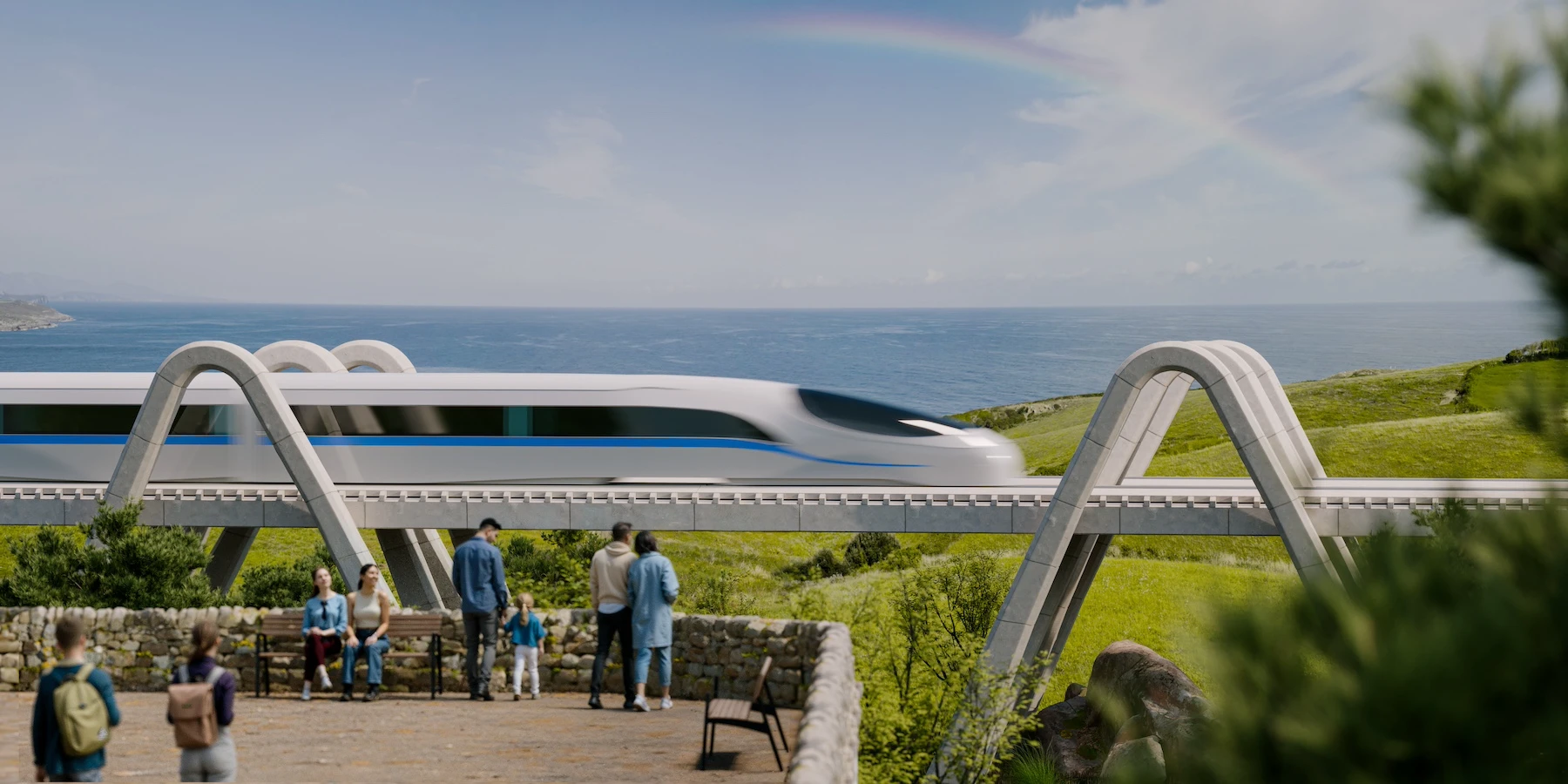
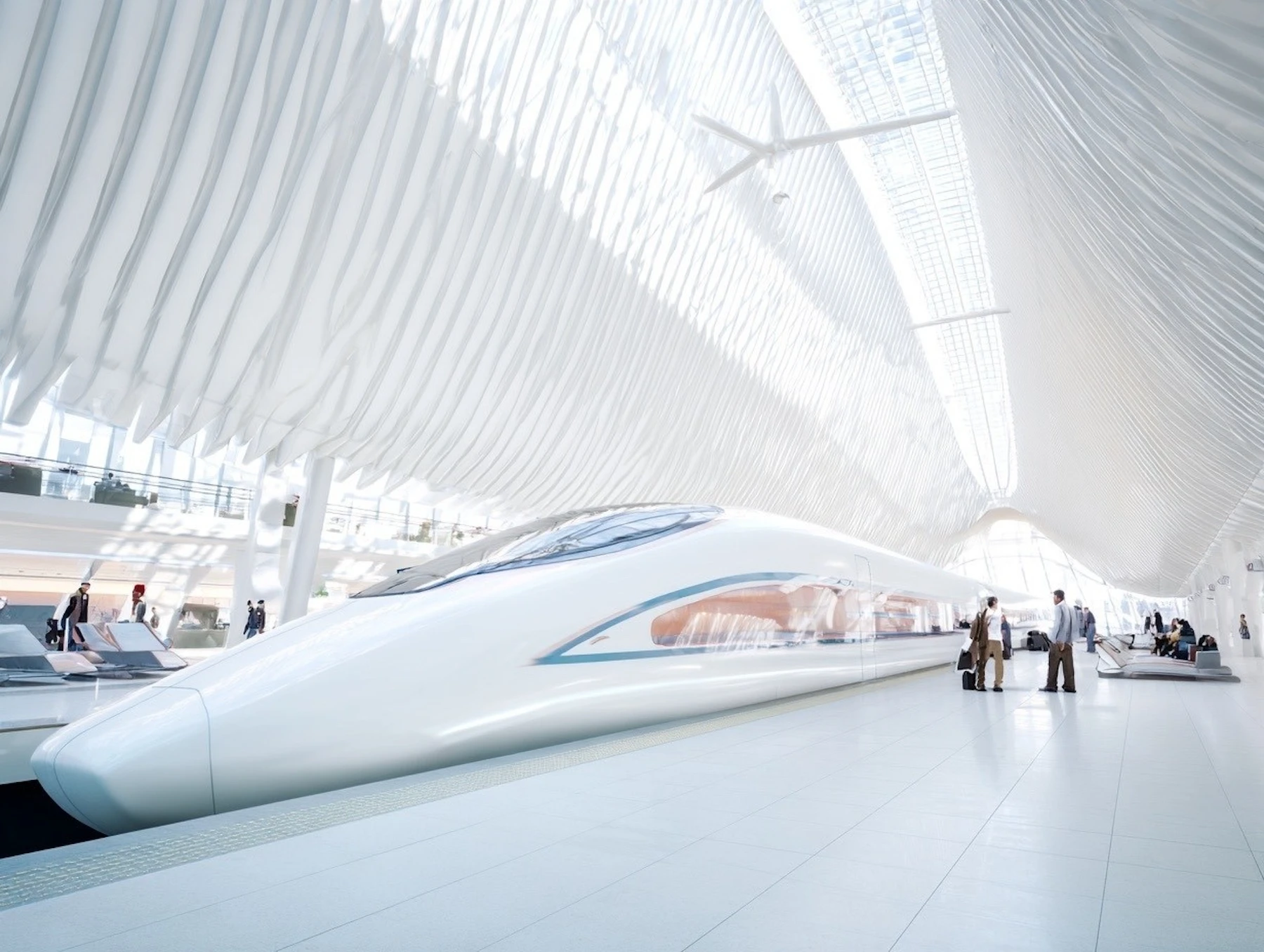
Williamson describes this network as creating one connected northern city, with roughly ten million people living within the linked system. Trains would operate on elevated tracks around the circuit, running every five minutes at speeds of up to 300 miles per hour. The design aims for direct, point-to-point journeys stopping at intermediate stops, promising travel times shorter than many current city commuting routes.
Williamson’s proposal pairs the transportation network with a continuous energy “ring main” alongside the tracks. This energy backbone would gather onshore and offshore wind power and be supplemented by small modular nuclear reactors placed at key nodes.
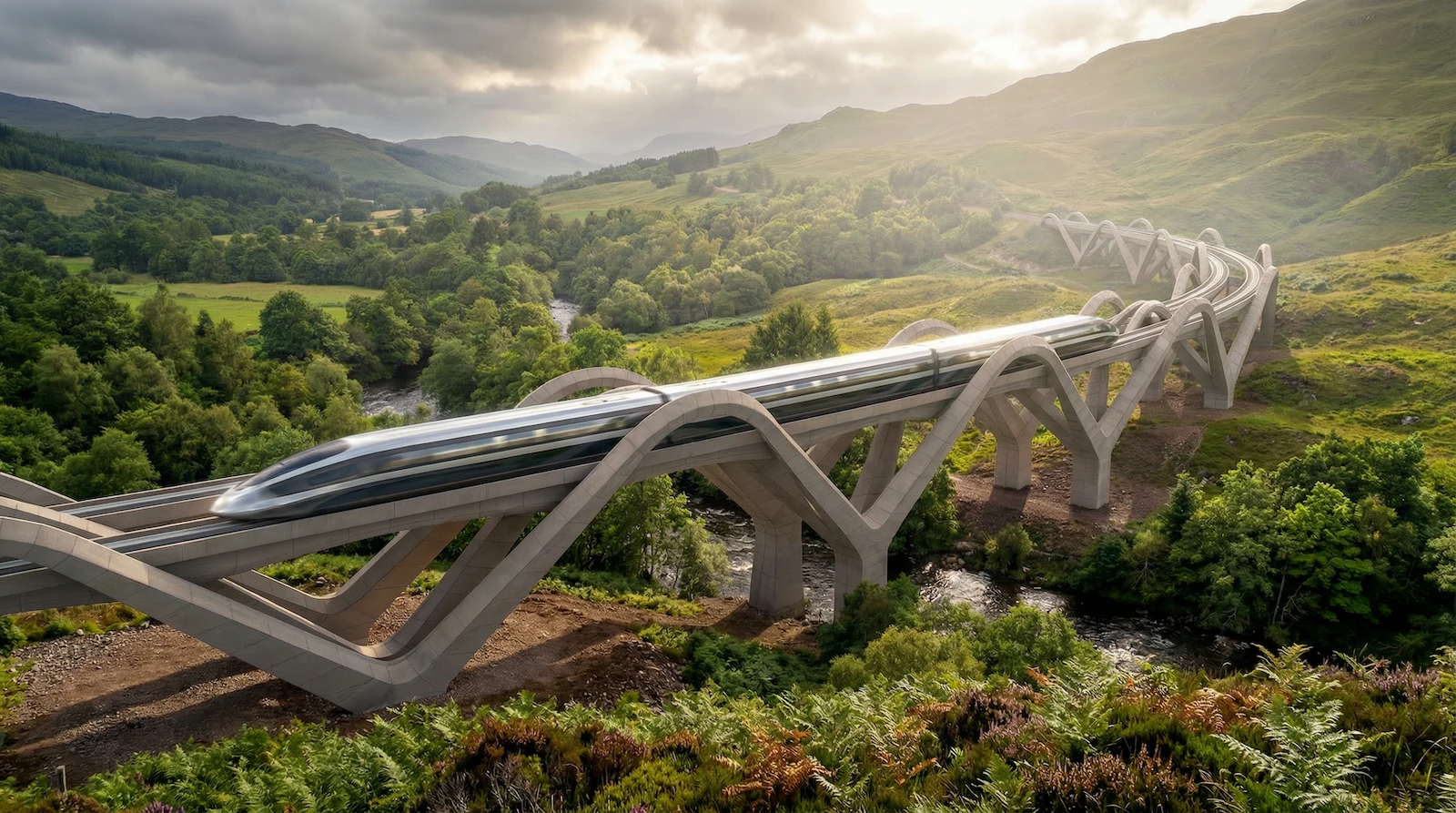
The idea is that this integrated system would not only move people quickly but also redistribute clean energy across regions, helping power economic clusters like advanced manufacturing, data centers, and other energy-intensive sectors. Waste heat from these activities could be captured for productive uses such as food production.
Williamson has emphasized that The Loop is designed so housing and services follow where employment is already feasible, instead of speculative development that precedes infrastructure. He sees this as a pathway to better regional planning and economic resilience.
Design, Costs, and Wider Impacts
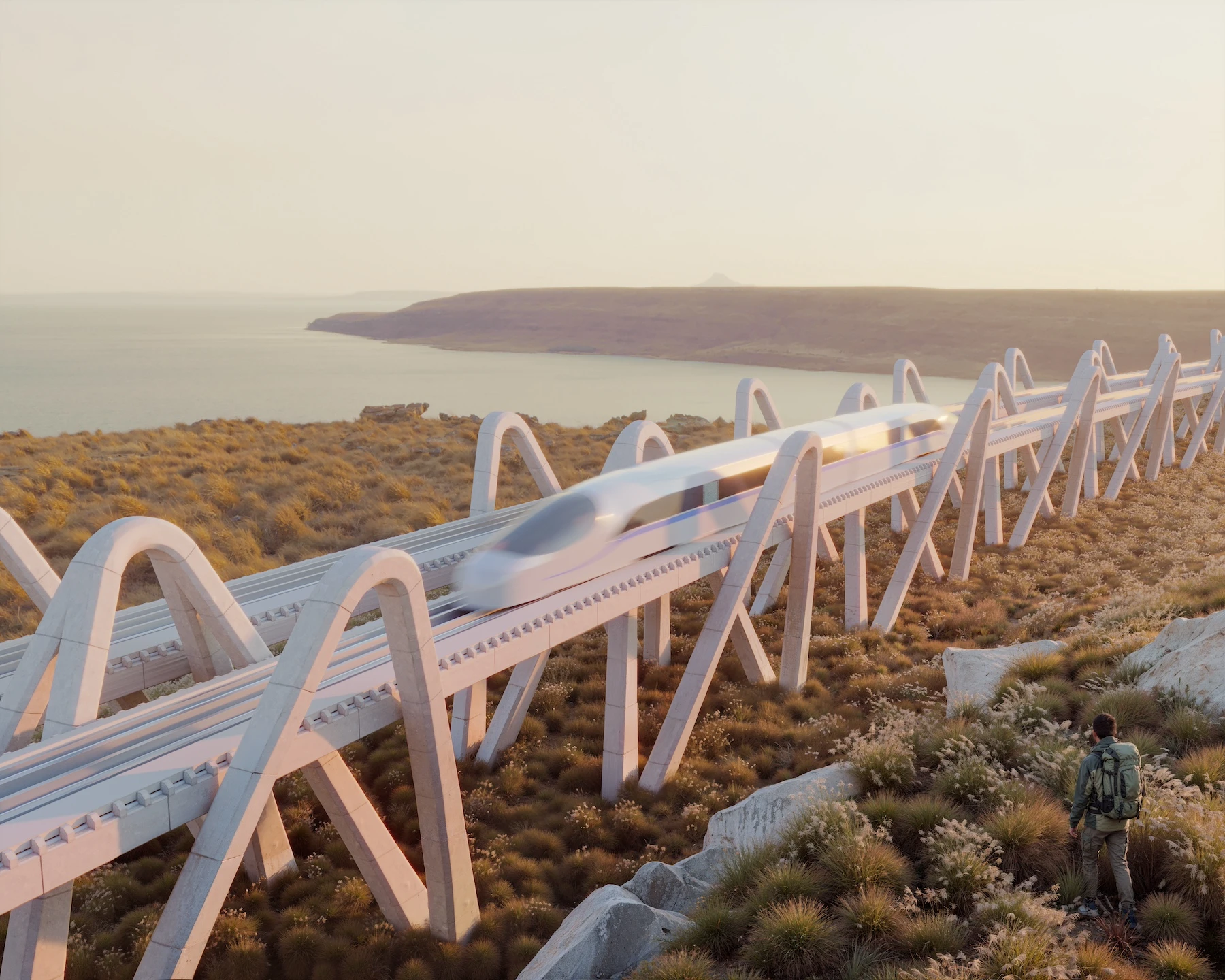
The elevated structure of The Loop would rely on locally sourced stone arches as part of the support system, with early consultancy input from engineering studio Elliott Wood. Regional materials and employment are part of the proposal’s economic vision, with long-term maintenance jobs included alongside initial construction work.
Projected construction costs are estimated at around £130 billion, with suggested annual economic benefits of about £12 billion. Williamson and his collaborators suggest that linking these cities could also free up capacity on existing transport infrastructure, reduce freight traffic on roads, and help meet carbon reduction targets.
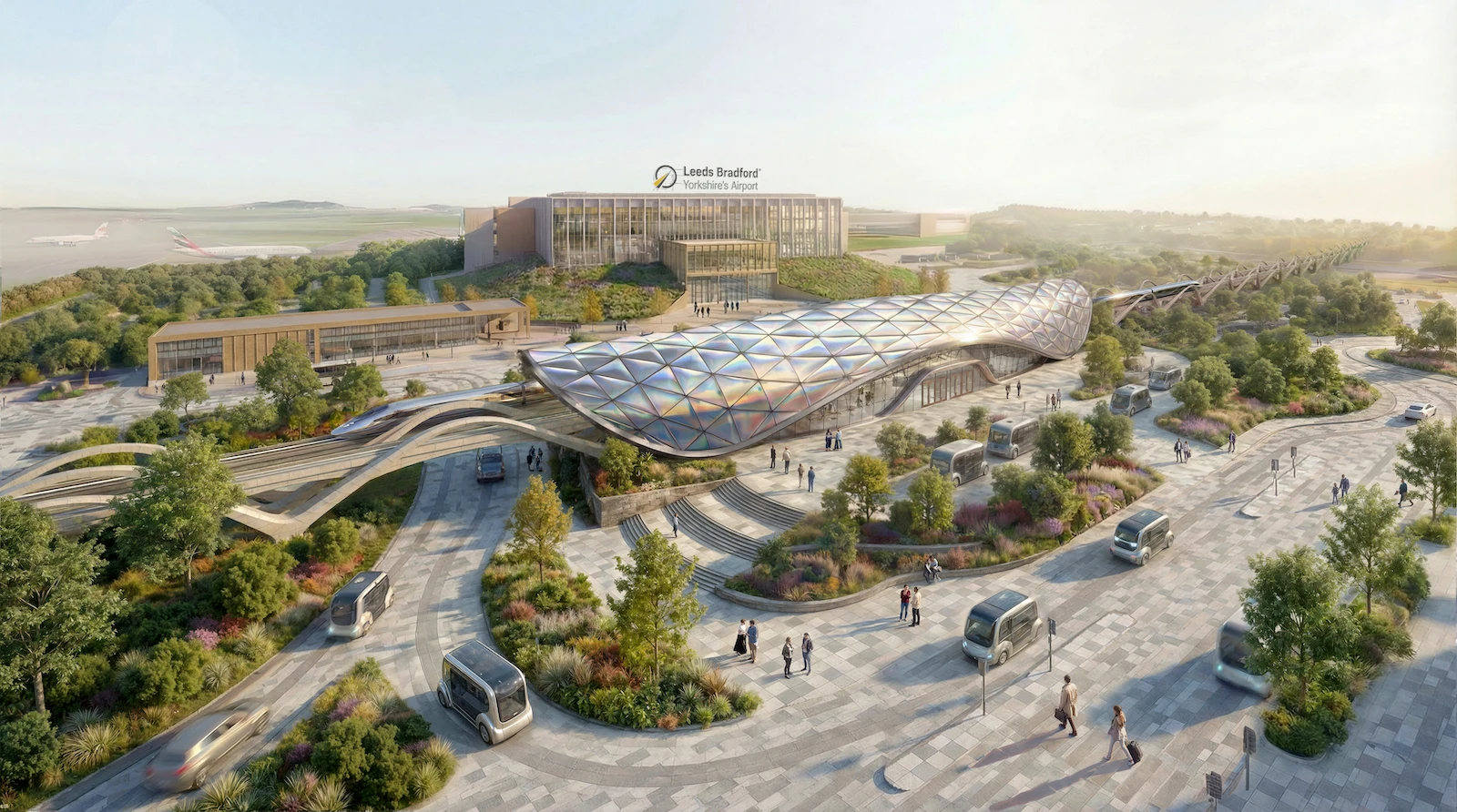
Including Dublin and Belfast in the network means The Loop would involve cross-border cooperation between the UK and Ireland, adding a political layer to the project’s delivery. Williamson acknowledges these challenges but frames them as part of the broader benefits of the initiative.
Image credit: © Chris Williamson