



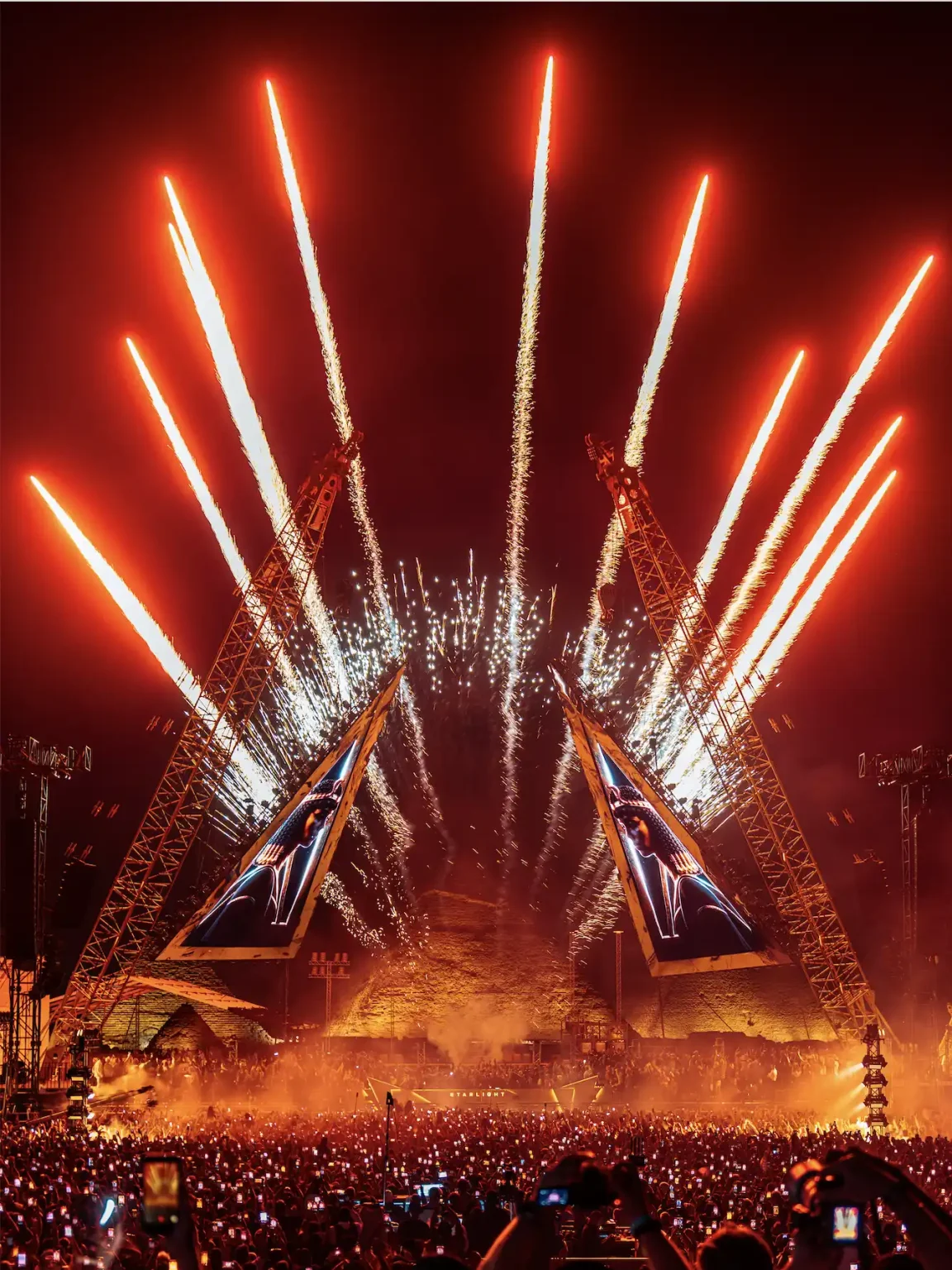
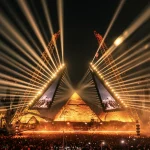
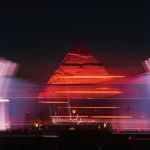
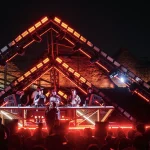
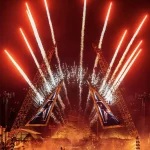
On the Giza Plateau, with the pyramids as its backdrop, multimedia studio SILA SVETA designed three stages for Starlight, a two-day electronic music festival that brought large-scale digital scenography, lighting, lasers, and video installations.
Organized by the team behind EXIT Festival, Starlight marked the first multi-day, multi-stage music festival held at the historic site. More than 50 artists performed across the event, including Charlotte de Witte, Michael Bibi, Adriatique, Vintage Culture, and Pete Tong.
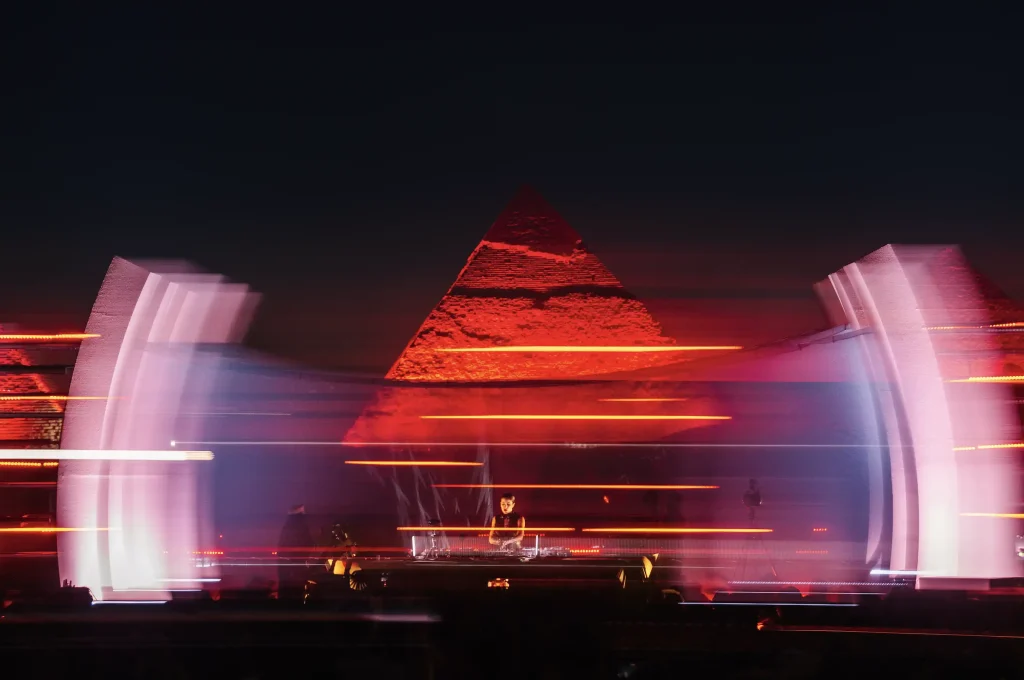
For the festival, SILA SVETA developed the MAIN, Orion, and No Sleep stages, giving each a distinct visual identity while responding to the exceptional archaeological setting. Beyond the architectural and scenographic concepts, the studio worked with SILA SVETA Music on executive production, lighting design, and video content.
“We’ve known the EXIT Festival team for years and have been looking for an opportunity to work together for a long time. The launch of their new festival, Starlight, at the pyramids turned out to be the perfect occasion,” explains Alexander Us, Co-Founder and Creative Director of SILA SVETA.
A Stage Framed Around the Pyramids
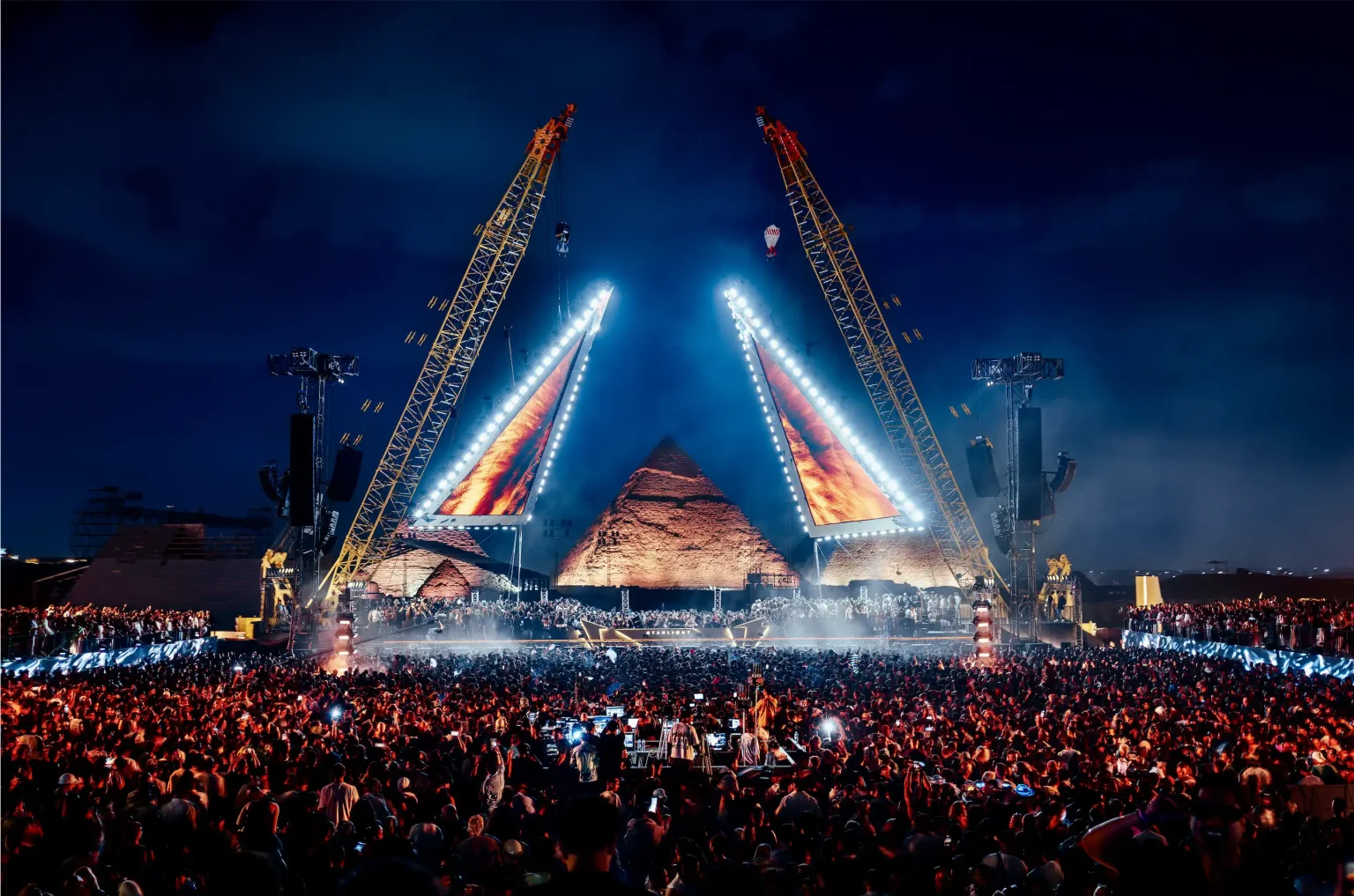
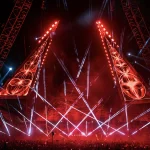
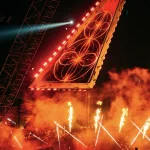
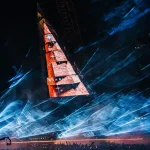
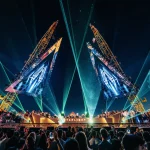
The MAIN stage formed the centerpiece of SILA SVETA’s intervention. Instead of creating a conventional stage backdrop that would visually compete with its surroundings, the studio developed an installation around two elongated triangular screens suspended from construction cranes.
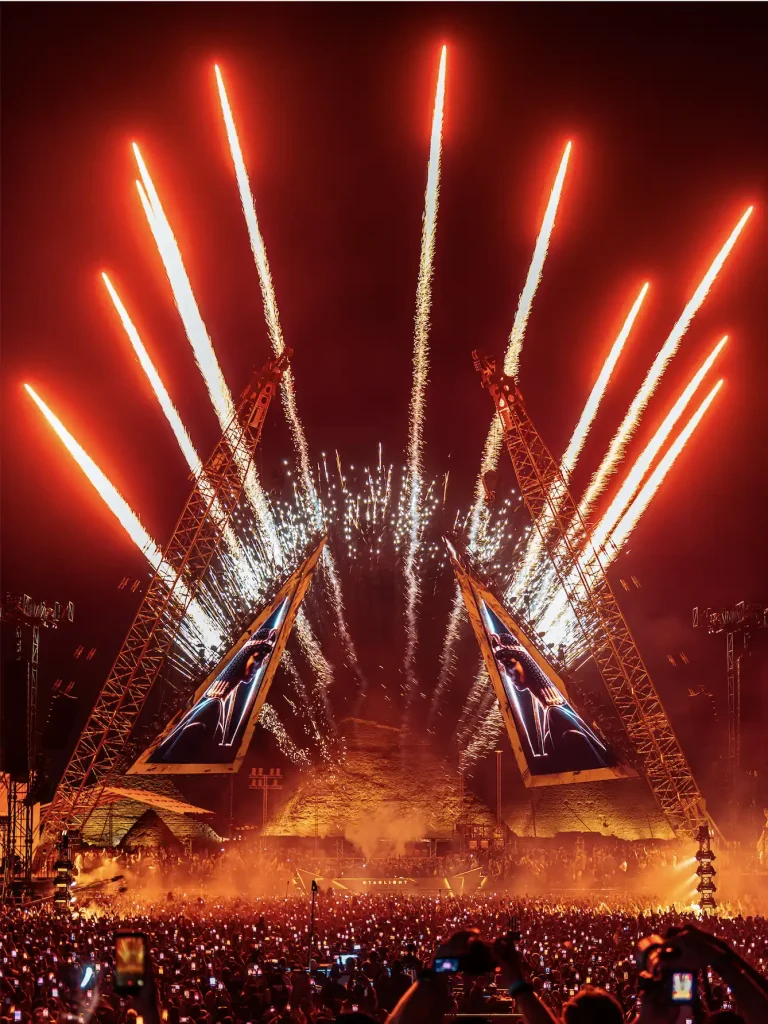
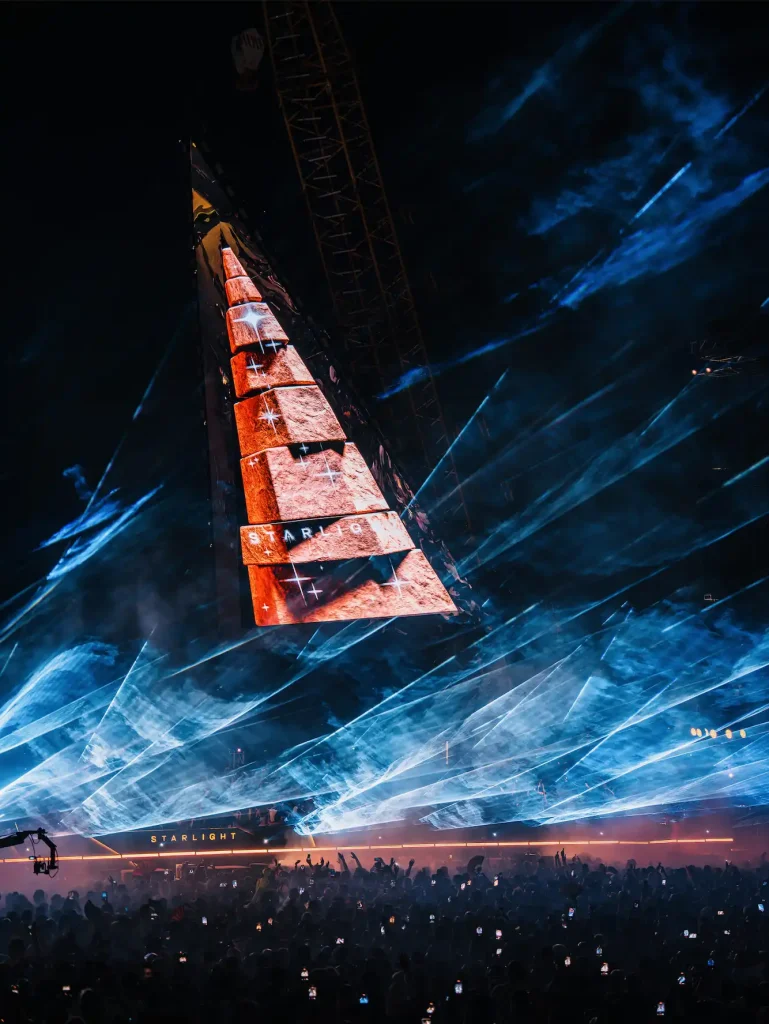
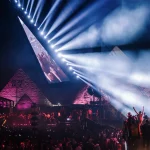
The screens were separated by a large central opening, maintaining a direct view toward the Pyramids of Giza. This void effectively made the historic landscape part of the composition, positioning the ancient structures between two pieces of contemporary media architecture.
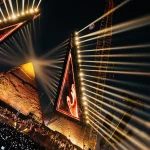
The geometry of the installation was developed in dialogue with the pyramid itself. Its triangular screens repeated and abstracted the familiar silhouette while introducing a distinctly technological material language.
“The stage draws on the geometry of the central pyramid, translating the sacred visual language of Ancient Egypt into a vision of the future,” says Us. “We echoed its silhouette with two futuristic triangular screens and connected them to the pyramid’s apex through light, bringing the elements together into a single composition.”
According to Us, the resulting stage operated as “a kind of launchpad at the meeting point of two eras.”
From Mirrored Installation to Multimedia Landscape
The character of the MAIN stage shifted between daylight and night. During the day, mirrored surfaces reflected the surrounding desert, sky, and pyramids, allowing the structure to interact with changes in natural light and its immediate landscape.
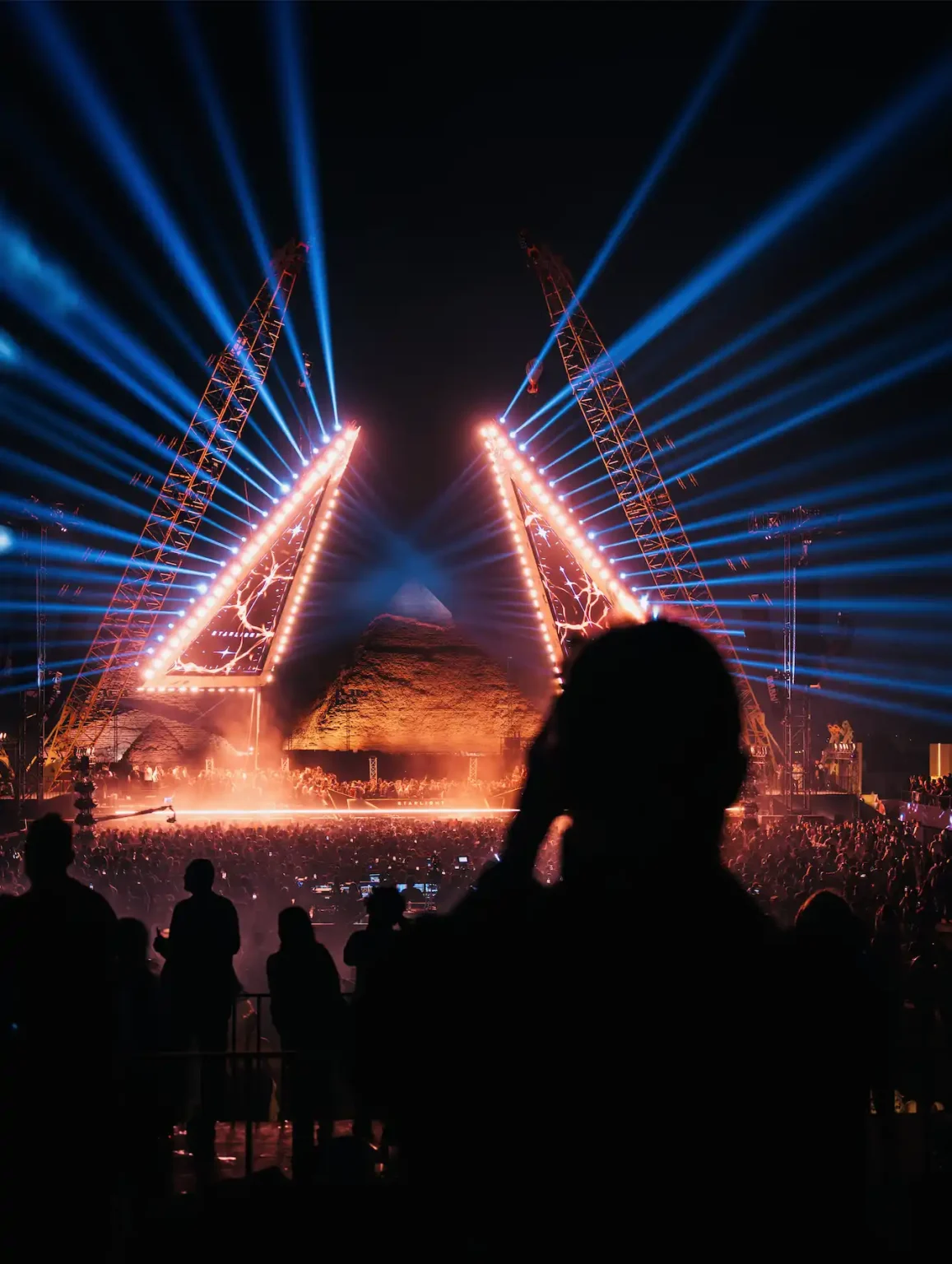
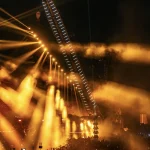
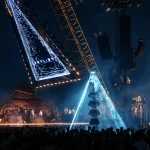
After sunset, the installation transitioned into a large-scale audiovisual environment. The triangular screens displayed moving digital content, while lasers and lighting extended the composition beyond their physical boundaries.
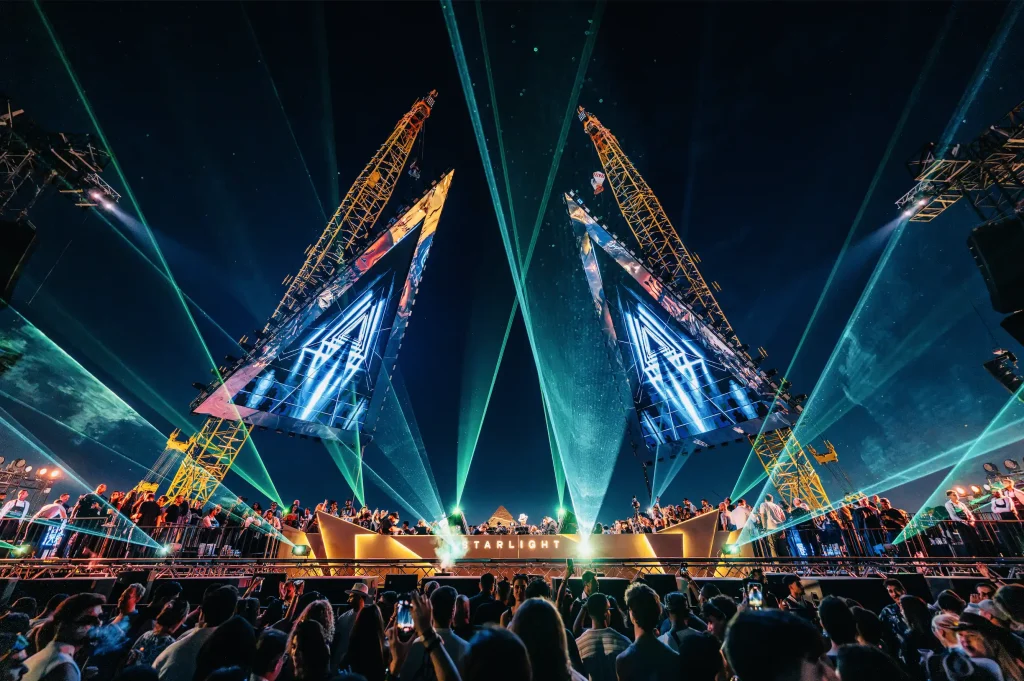
Holographic laser pyramids introduced additional geometric forms across the site, creating temporary volumes of light that echoed the monuments in the distance. Instead of limiting the visual program to the stage facade, SILA SVETA treated the surrounding space as part of the performance environment.
This approach allowed the ancient landscape to remain continuously visible while digital elements appeared around and across it. The pyramid was not converted into a screen or concealed behind festival infrastructure; its existing geometry became a reference point around which the temporary installation was organized.
Engineering a Suspended Stage in the Desert
The unusual configuration also created a substantial engineering challenge. Suspending two large, elongated screens from construction cranes meant that their size and surface area had to be considered against the wind conditions of the exposed plateau.
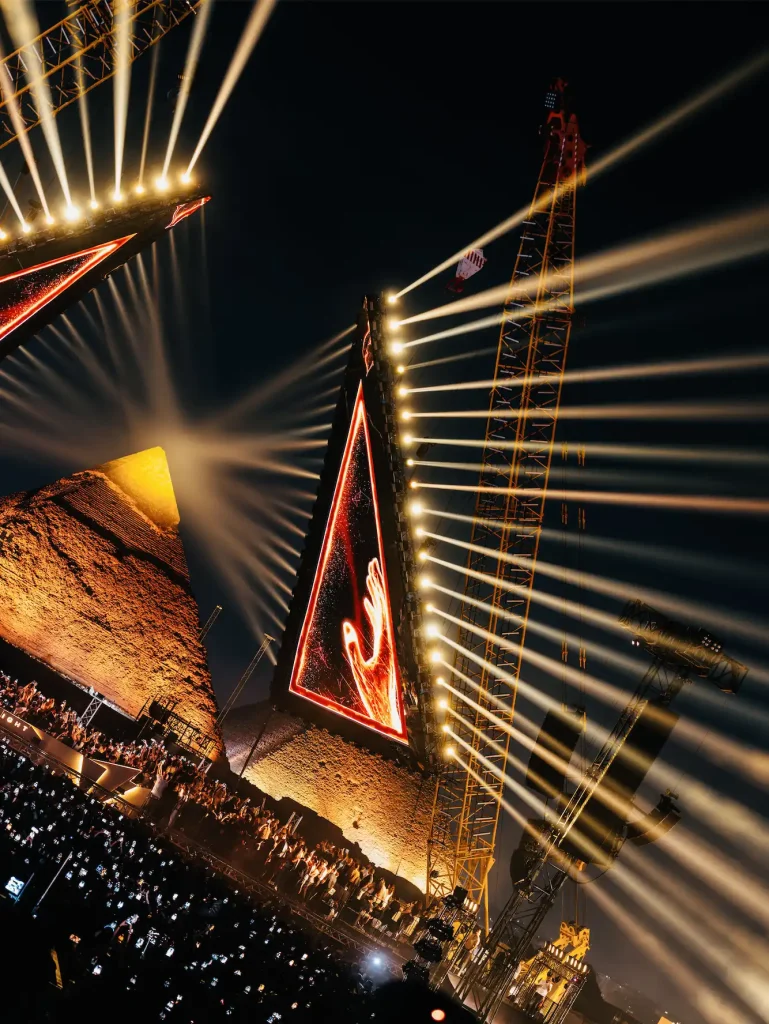
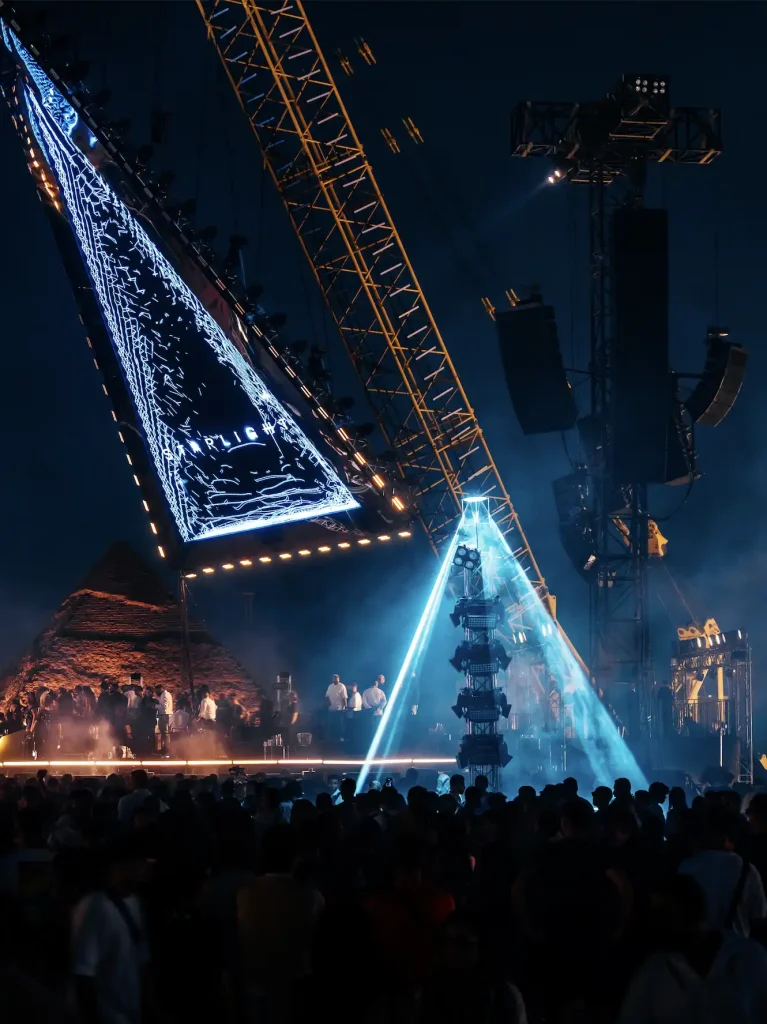
The screens generated significant wind loads, making structural stability and rigging central to realizing the design. SILA SVETA collaborated with Egyptian technical specialists and structural engineers to develop the suspension and installation system required to safely support the structures.
The engineering solution was therefore closely tied to the visual concept. Keeping the center of the stage open depended on suspending its primary media surfaces rather than supporting them with a conventional stage structure that could obstruct views toward the pyramids.
Three Visual Identities Across Starlight
While the MAIN stage provided the festival’s most monumental intervention, SILA SVETA also designed the Orion and No Sleep stages as more intimate environments. Together, the three stages established different spatial and visual experiences across Starlight while remaining part of a broader multimedia identity.
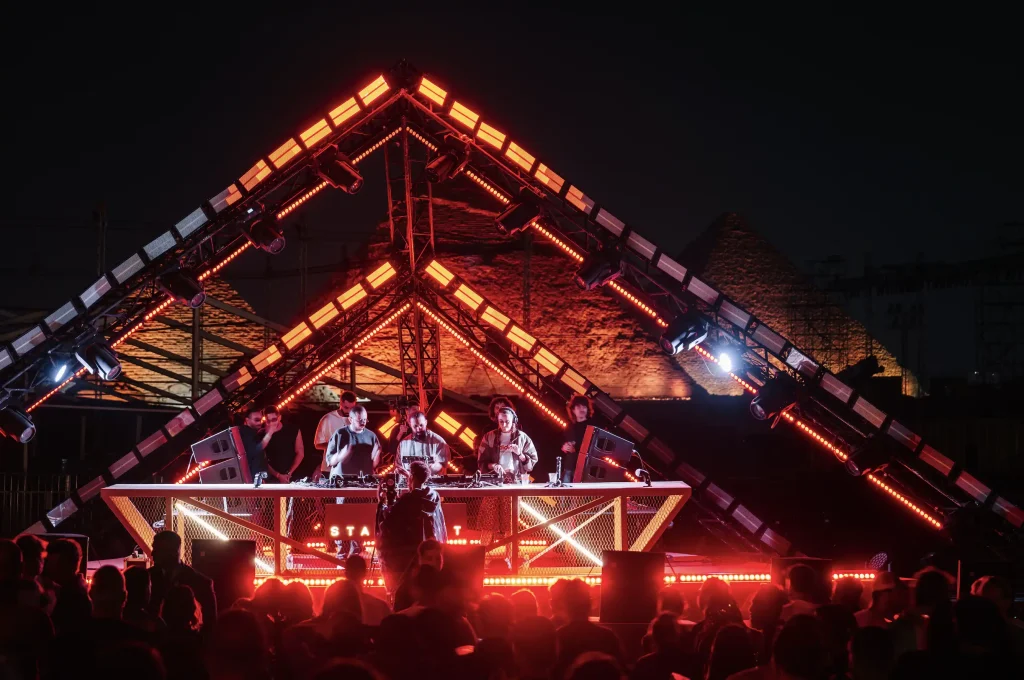
The project brought together stage design, moving image, lighting, laser technology, music, and engineering within one of the world’s most recognizable historic landscapes. At Giza, SILA SVETA’s design did not attempt to reproduce the scale or permanence of the pyramids. Instead, the temporary architecture used their geometry and presence as the framework for a contemporary audiovisual environment.
For two nights, the resulting installation placed digital scenography alongside an architectural form that has occupied the plateau for thousands of years, creating a deliberate visual encounter between ancient monument and temporary media architecture.