

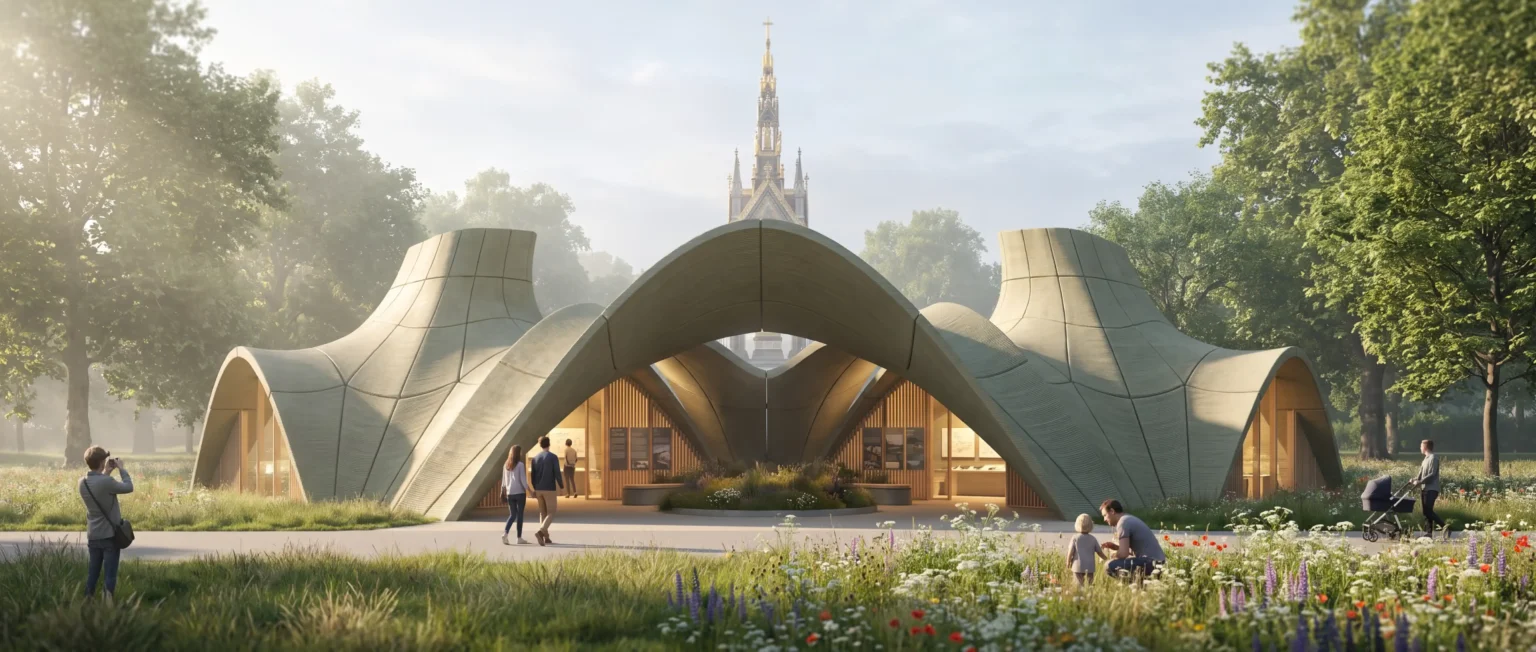




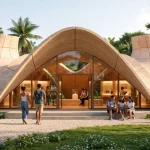
Most World Expos still arrive as temporary spectacles that leave behind concrete foundations, shipping containers, and a familiar sense of waste. BLNG Studio’s Pavilion Network starts from the opposite assumption. What if the Expo itself could travel light, build with what the land already offers, and disappear without residue?
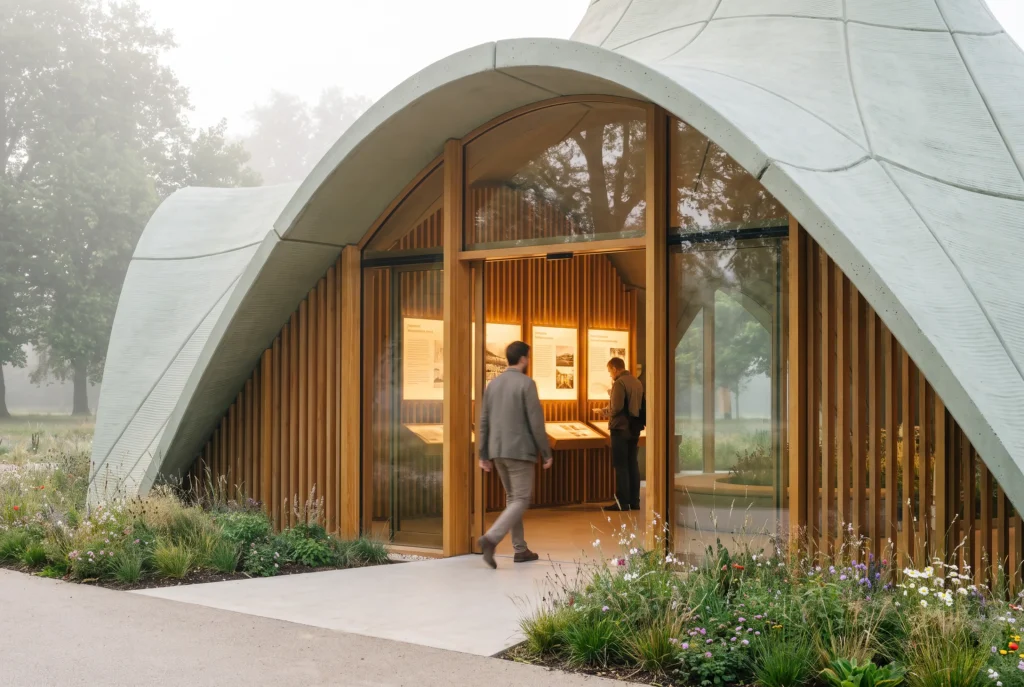
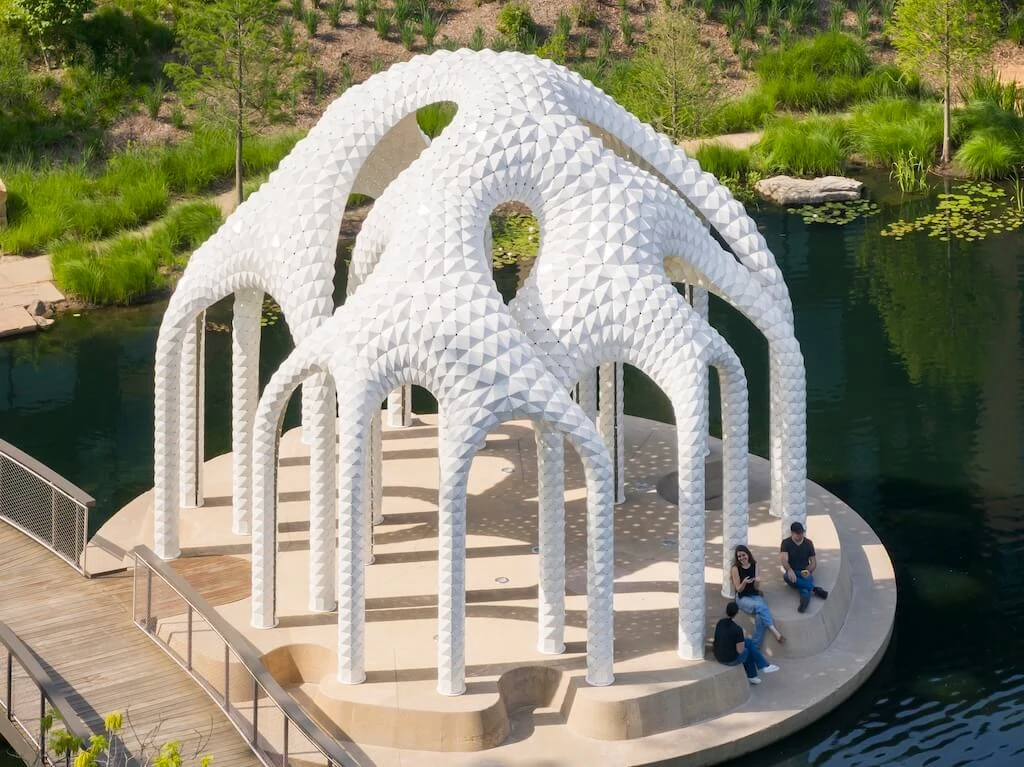
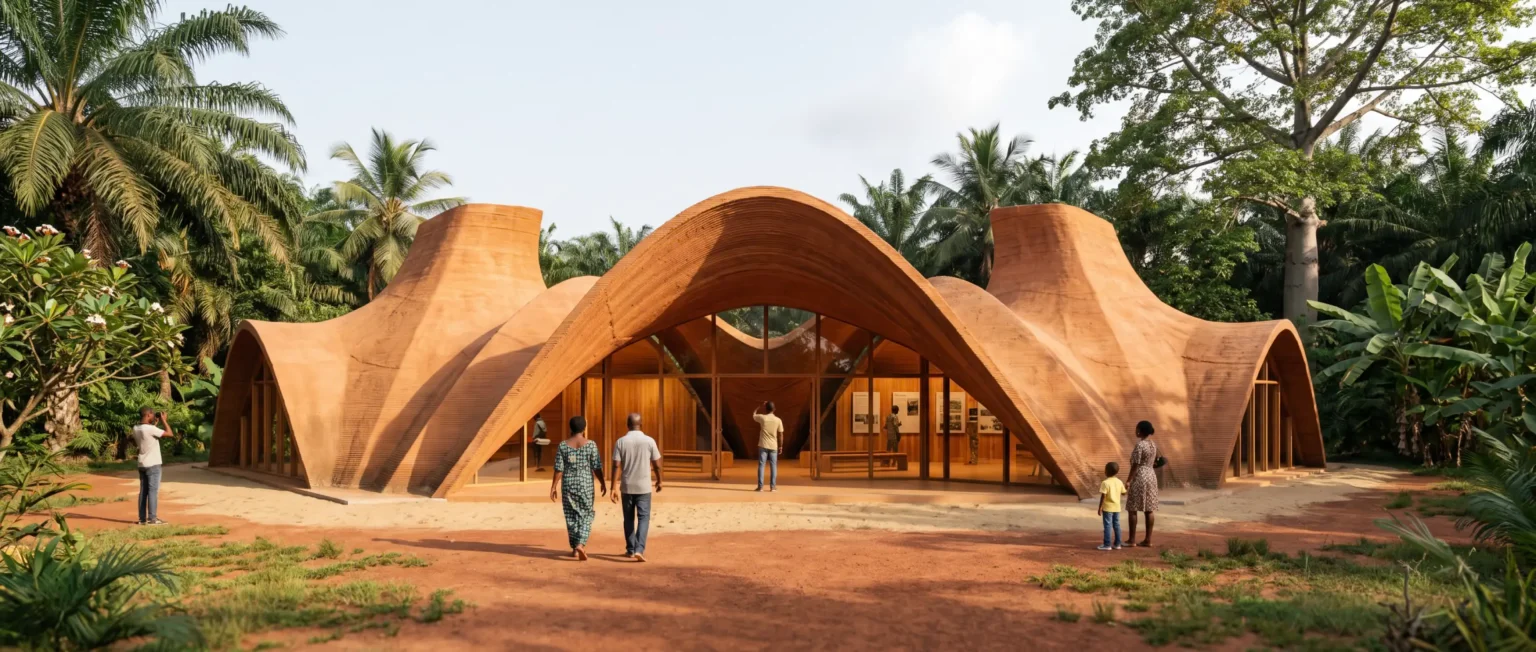
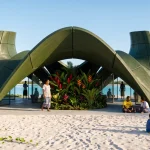
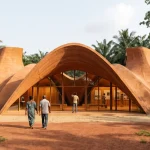
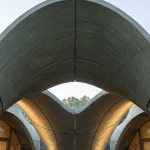
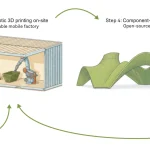
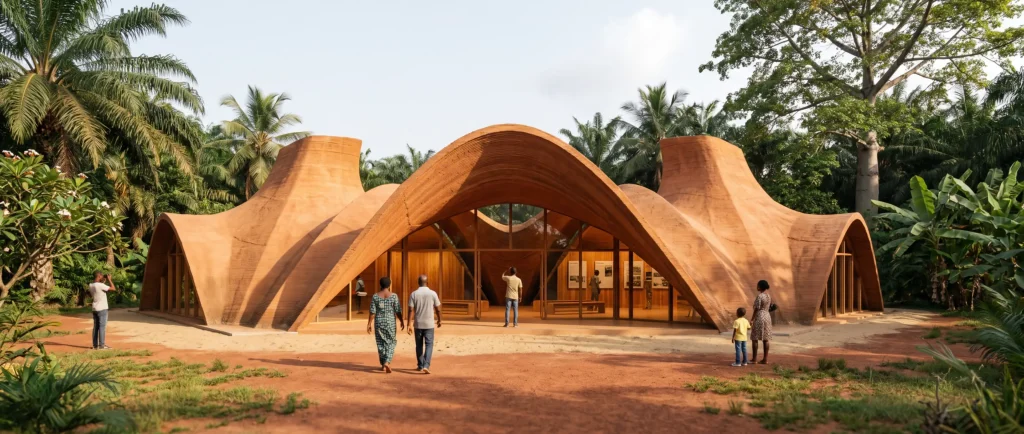
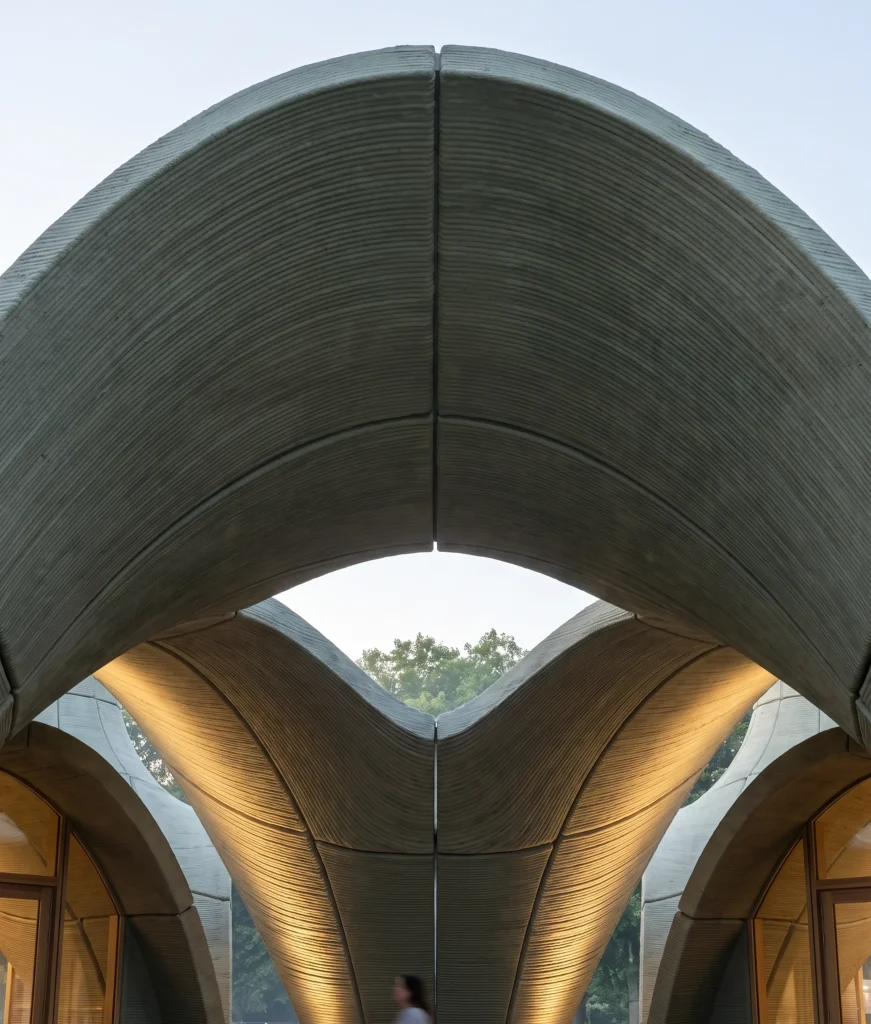
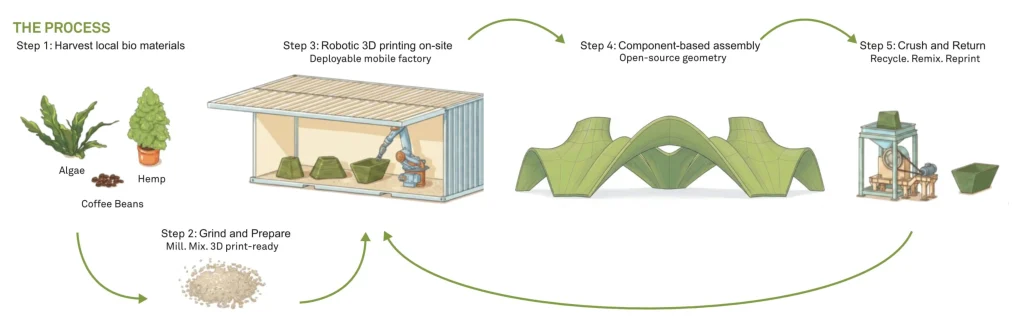
Pavilion Network is a proposal for a distributed World Expo. Instead of a single monumental site, the project imagines a constellation of pavilions printed on location by a mobile robotic factory. Each structure is made from locally harvested biomaterials: hemp fiber, algae composite, mycelium, and plant-based PLA derived from cassava or sugarcane. When the event ends, every component can be crushed, re-pelletized, and printed again.
The material loop closes on site. The geometry, robotic protocols, and fabrication methods are released as open source. Any community with access to the files and basic robotic equipment can produce its own node. The network has no center. Every pavilion functions as an equal point of exchange.
Architecture as Temporary Infrastructure
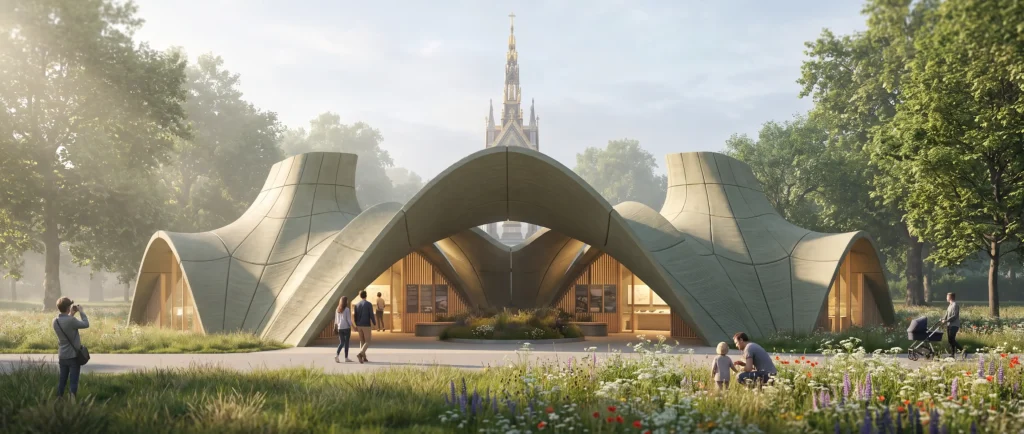
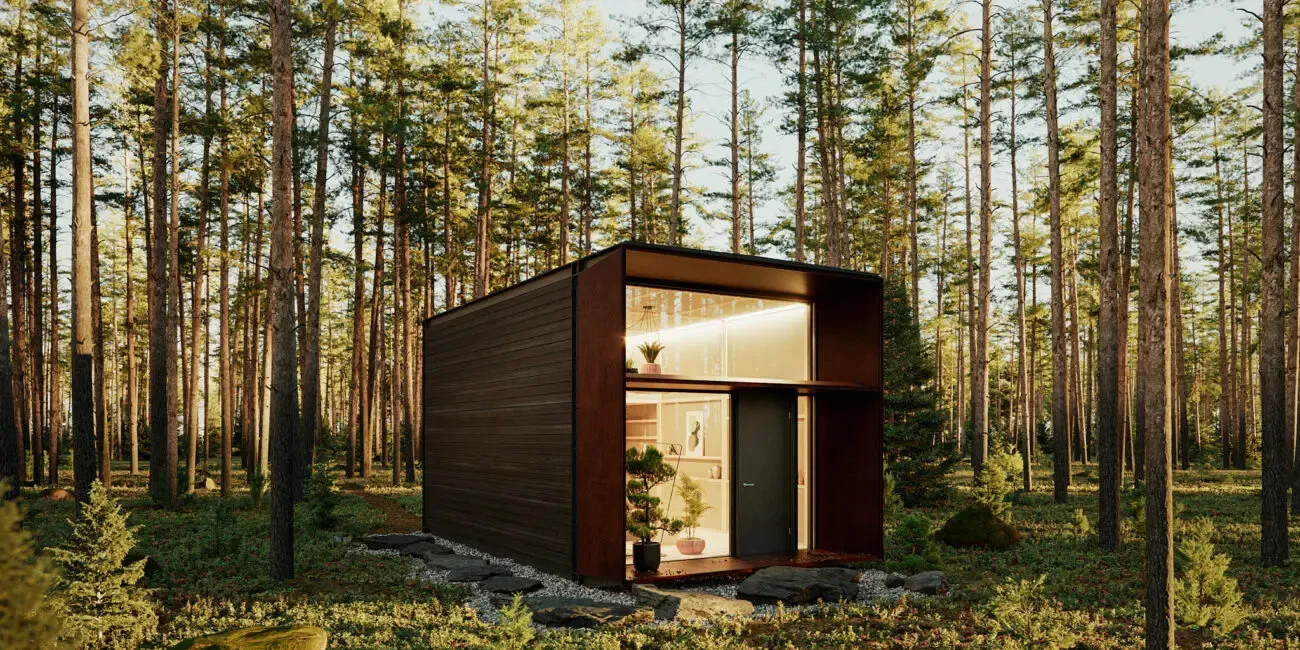
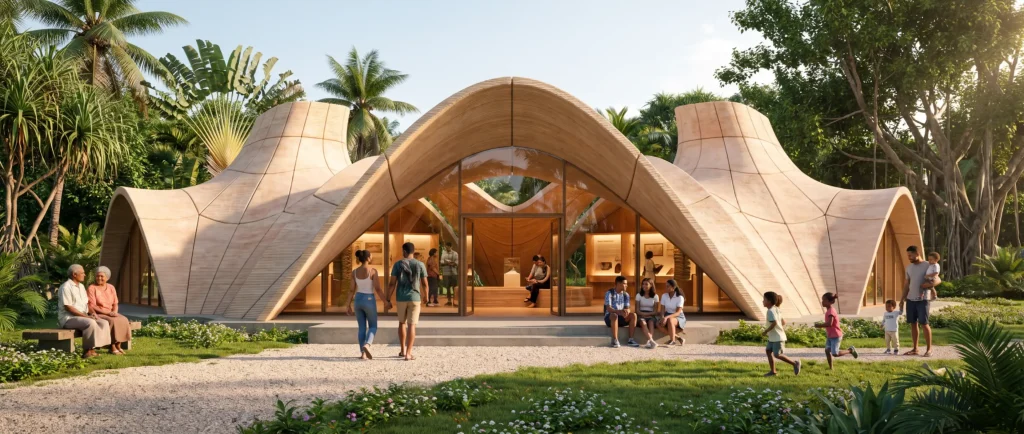
Each pavilion contains three primary spaces. A shared community room hosts gatherings, workshops, and local events. A broadcasting room allows the community to share knowledge, stories, and research with the wider network. A receiving room streams content arriving from other nodes around the world. The architecture is deliberately modest in program so that the emphasis remains on exchange rather than display.
Because the pavilions are printed rather than assembled from imported kits, their forms can respond to local climate, available materials, and cultural preferences. The same digital files produce different physical outcomes depending on the feedstock and environmental conditions. This is not generic modularity. It is situated fabrication.
Closing the Material Loop
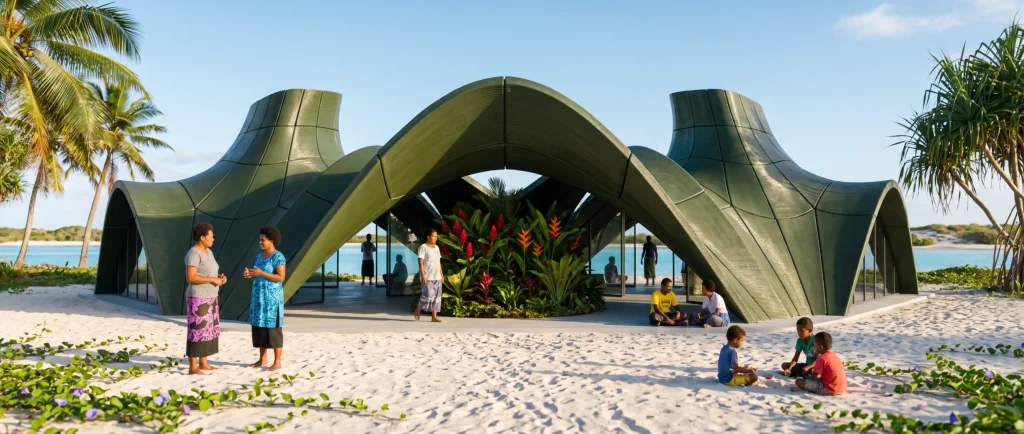
The most radical aspect of the proposal is the insistence on full circularity. Conventional temporary architecture often claims sustainability through lightweight materials or reuse of steel frames. Pavilion Network goes further. The entire structure is designed from the outset to return to the same material stream that produced it. Nothing is shipped away for recycling. Nothing is left behind as landfill.
A mobile robotic factory travels between sites, depositing the next pavilion and later reclaiming the previous one. The process treats architecture as a temporary concentration of biomass rather than a permanent claim on land and resources. In an era when the environmental cost of large events is under increasing scrutiny, the project offers a concrete alternative to the cycle of build, celebrate, demolish.
Open Source as Civic Gesture
By publishing the design, fabrication protocols, and robotic instructions, BLNG Studio removes the usual barriers of proprietary technology. The project does not require specialized consultants or exclusive licenses. It treats design knowledge as a shared resource. This approach aligns with a broader movement in computational design toward open tools and transparent processes.
The decision also shifts the architect’s role. Instead of delivering a finished object, the studio delivers a system that others can adapt, improve, and localize. Authorship becomes distributed. The original design remains recognizable, yet each realization belongs equally to the community that prints it.
Learning the Tools: Workshop and Astra
Projects like Pavilion Network depend on a new generation of designers fluent in both computational geometry and emerging digital workflows. For those interested in exploring similar territory, Parametric Architecture Academy offers a practical entry point through its workshop “ChatGPT-6 Astra for Parametric Design: LLM to Rhino.” The course focuses on using large language models together with Astra to generate and refine parametric geometry that can be taken directly into Rhino. Participants learn how conversational AI can accelerate early design exploration while maintaining precise geometric control. The workshop is available at PAACADEMY and provides a useful bridge between conceptual ambition and executable digital models.
A Network Without Hierarchy
Traditional World Expos organize nations around a central site and a hierarchy of national pavilions. Pavilion Network dissolves that structure. There is no main boulevard, no iconic centerpiece, no ranking of scale or budget. Every node carries the same status. Knowledge flows laterally. A community in one climate zone can learn from techniques developed in another without mediation by a central organizing body.
This flat structure carries political implications as well as architectural ones. It suggests that cultural exchange does not require monumental infrastructure or national competition. It can occur through modest, temporary, and regenerative means.
Implications Beyond the Expo
Although framed as a World Expo proposal, the underlying system has wider applications. Temporary housing after disasters, pop-up cultural venues, research stations in remote locations, and seasonal agricultural facilities could all adopt similar principles. The combination of local material sourcing, robotic fabrication, and open-source protocols creates a model that is both technologically advanced and socially accessible.
The project also challenges the common assumption that digital design necessarily leads to complex, high-tech, and expensive construction. Here the digital layer enables simplicity and circularity rather than formal excess. The sophistication resides in the system, not in the individual object.
Looking Ahead
Pavilion Network remains a proposal, yet its logic is already actionable. The materials exist. The robotic technology is advancing rapidly. The open-source model has proven itself in other fields. What is required is the willingness to treat temporary architecture as a material cycle rather than a disposable event.
BLNG Studio has offered more than a collection of elegant forms. It has outlined a different relationship between architecture, place, and time. In a world that continues to build and discard at an unsustainable rate, the idea of a pavilion that can be printed, used, returned to the soil, and printed again feels less like speculation and more like a necessary next step.