

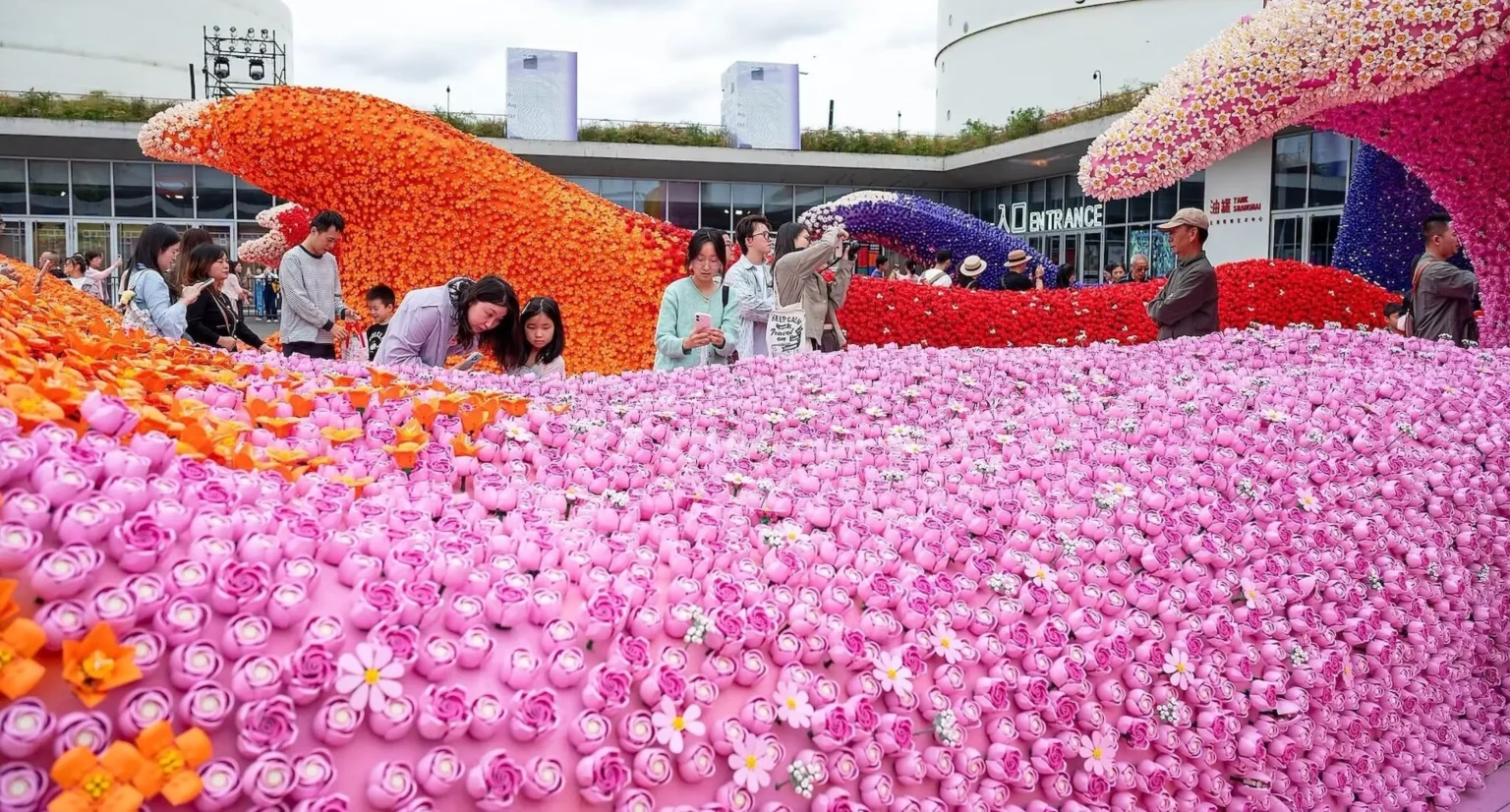
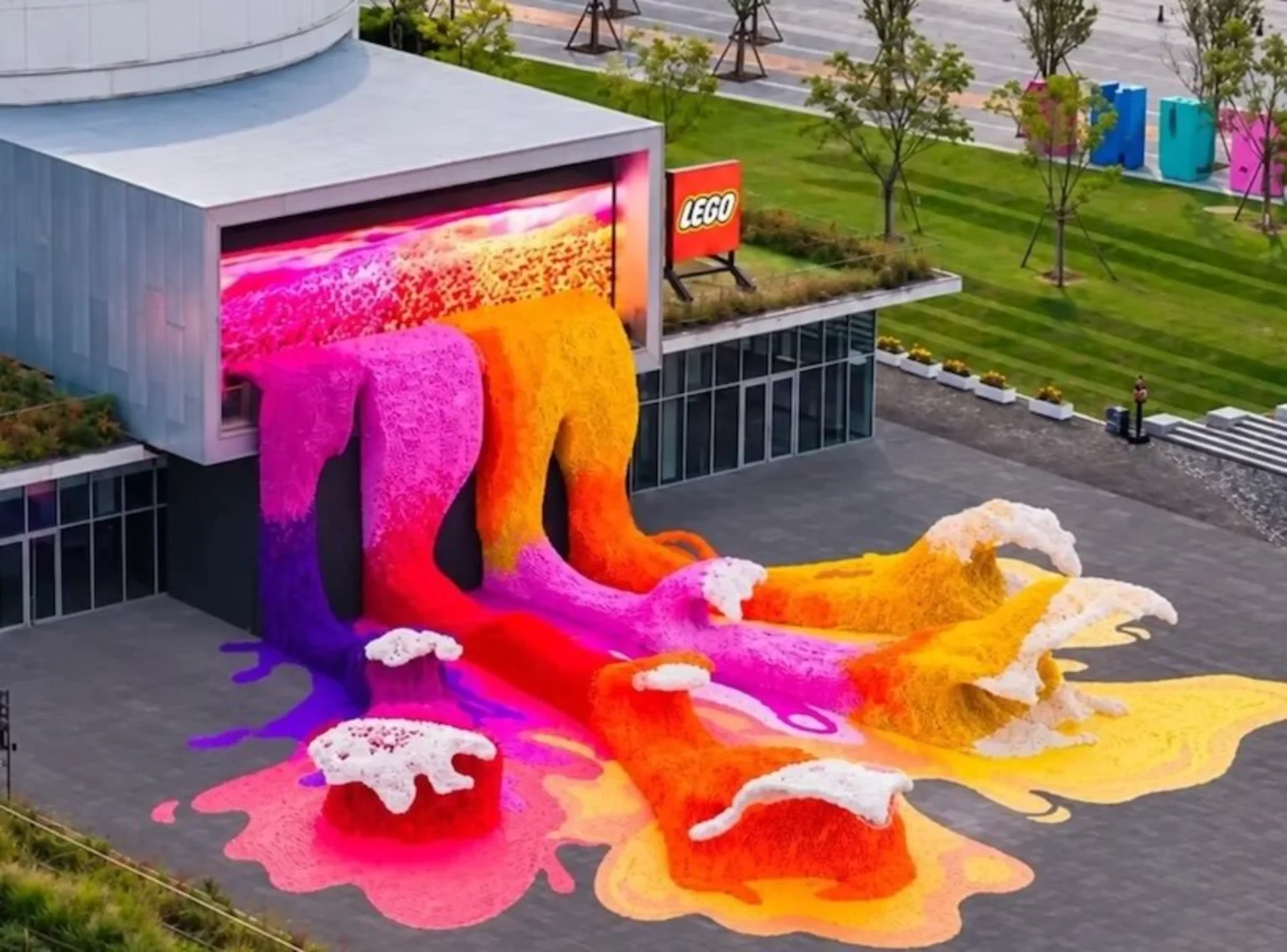


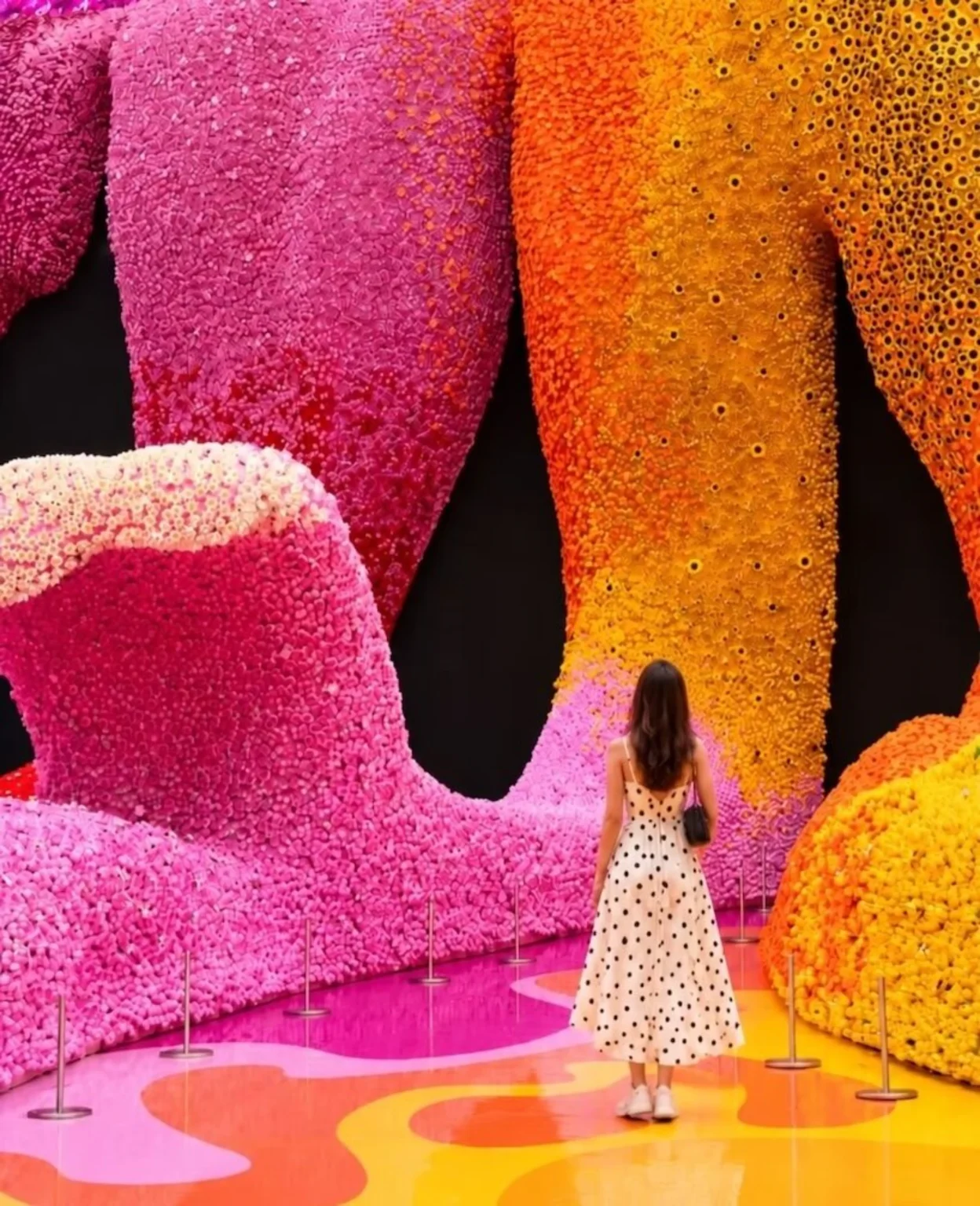
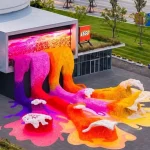
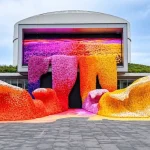
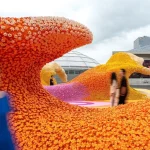
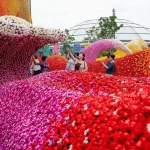

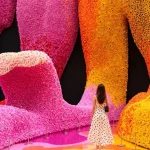
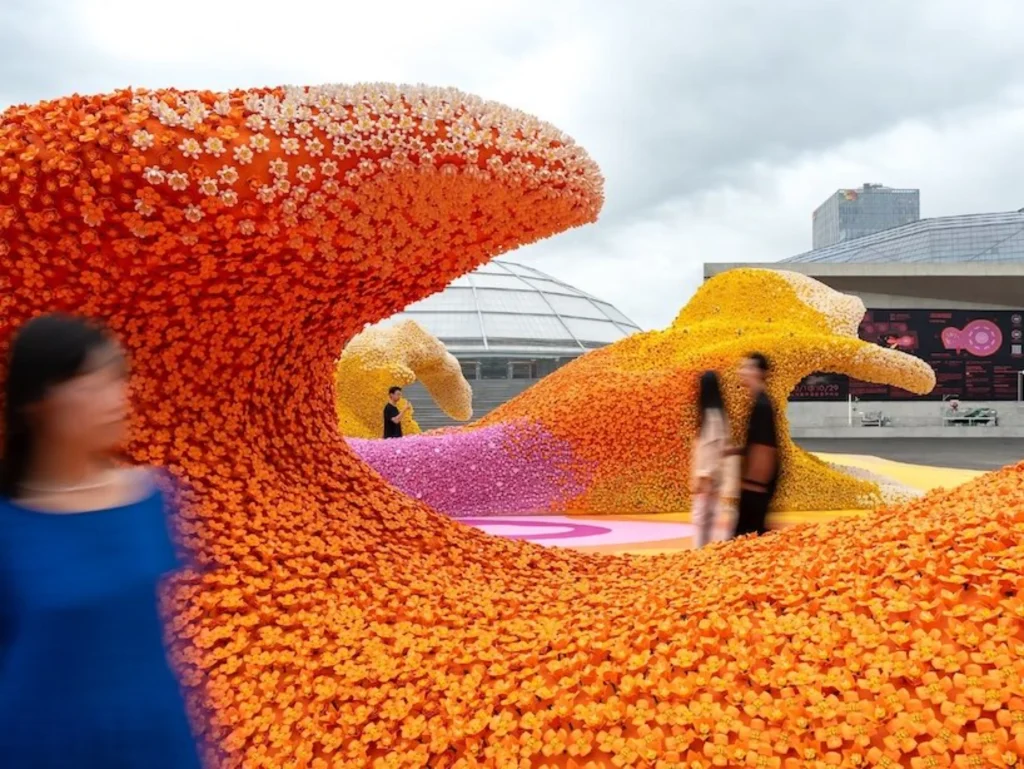
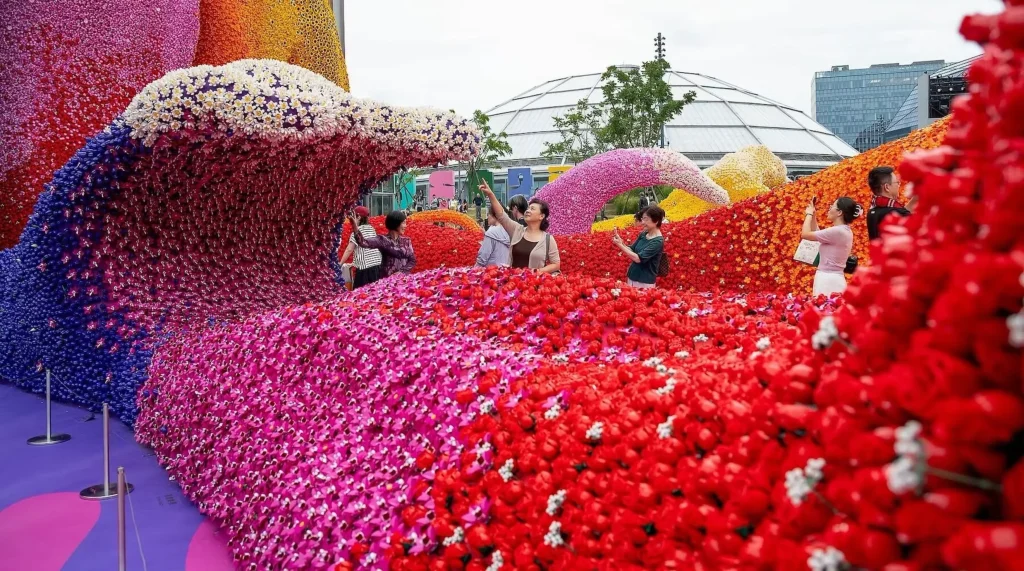
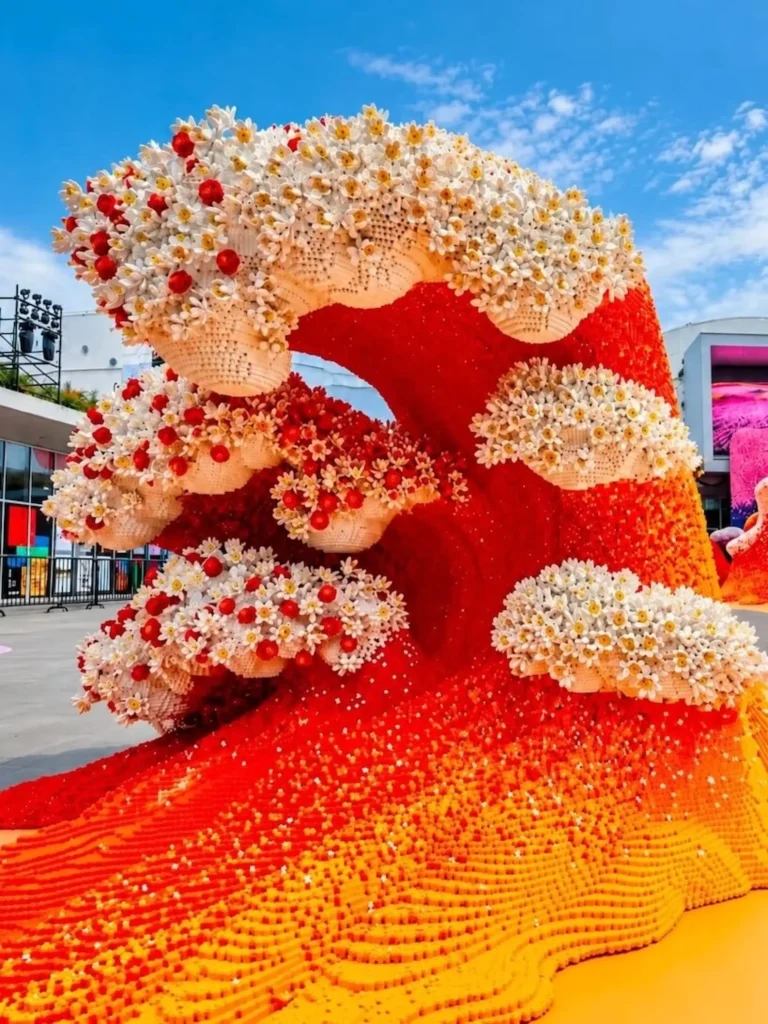
Concrete oil tanks rarely bloom. At TANK Shanghai on the West Bund, one of them has. From the base of a former industrial vessel, a dense cascade of plastic LEGO flowers pours outward, covering roughly 800 square meters of ground and stretching thirty meters in length. The installation is built from more than 380,000 individual LEGO botanical pieces. Roses, sunflowers, tulips, and other species form sweeping bands of red, yellow, orange, and white that appear to move even though every brick is locked in place.
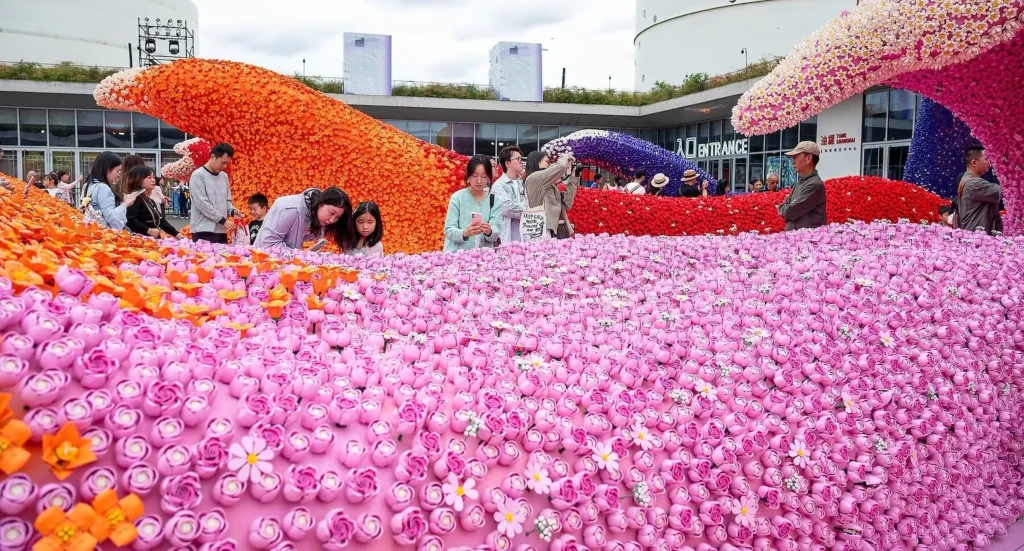
The work is the outdoor centerpiece of the LEGO Bloom Exhibition, open from 1 to 29 October 2026. It sits within a larger project that treats the familiar brick as both material and medium for public art. The Danish company has taken its Botanical Collection out of living rooms and into a waterfront landmark, turning a piece of Shanghai’s industrial past into a temporary landscape of color and scale.
An Industrial Shell, a Floral Gesture
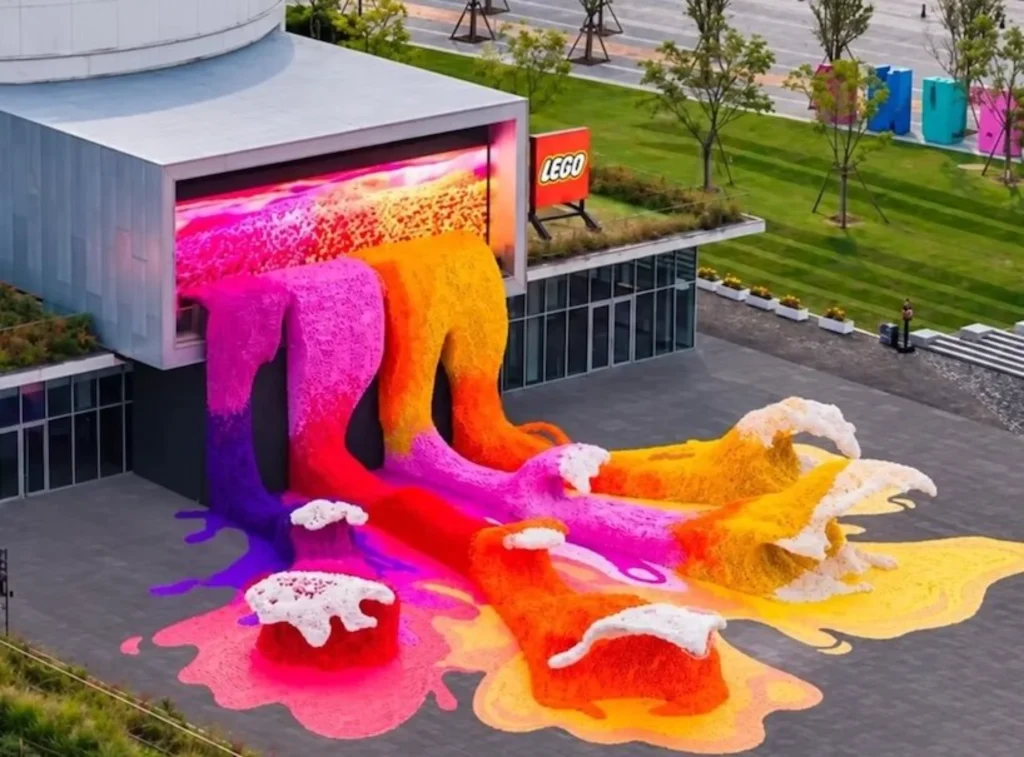
TANK Shanghai occupies a cluster of former oil storage tanks along the Huangpu River. The site already carries a quiet drama of volume and texture. Placing a soft, multicolored wave against that hard geometry creates an immediate contrast. The flowers seem to erupt from the tank itself, as if the structure had finally decided to flower.
Visitors walking the waterfront encounter the installation first as color, then as detail: each petal and leaf is assembled from the same system of studs and tubes that children and adults have handled for generations.
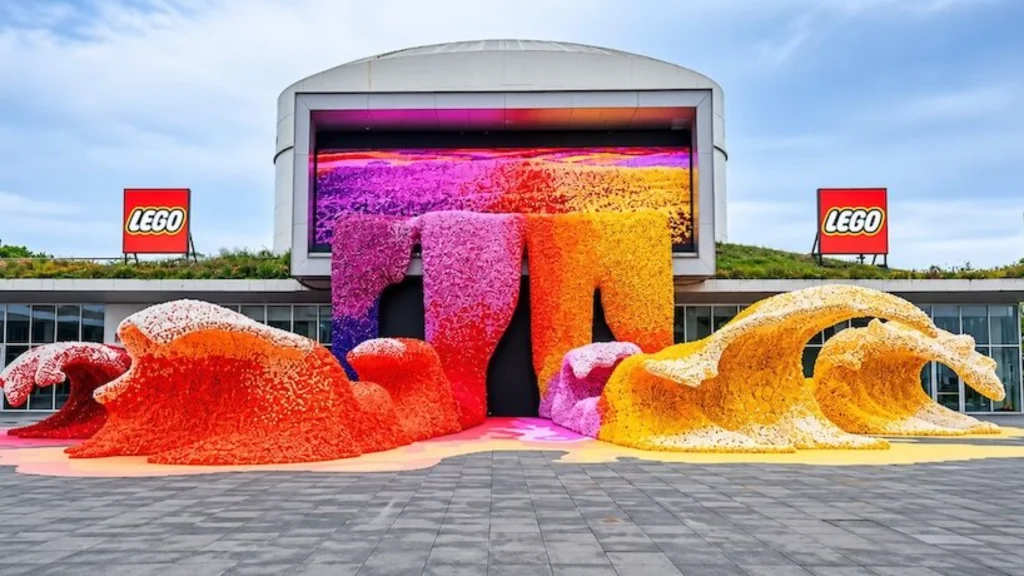
The scale does more than impress. It shifts the meaning of the brick. A single LEGO flower is a quiet object for a shelf. Three hundred and eighty thousand of them become architecture. The wave reads as both landscape and sculpture, a piece that belongs equally to the language of public art and the language of play.
Inside the Tank
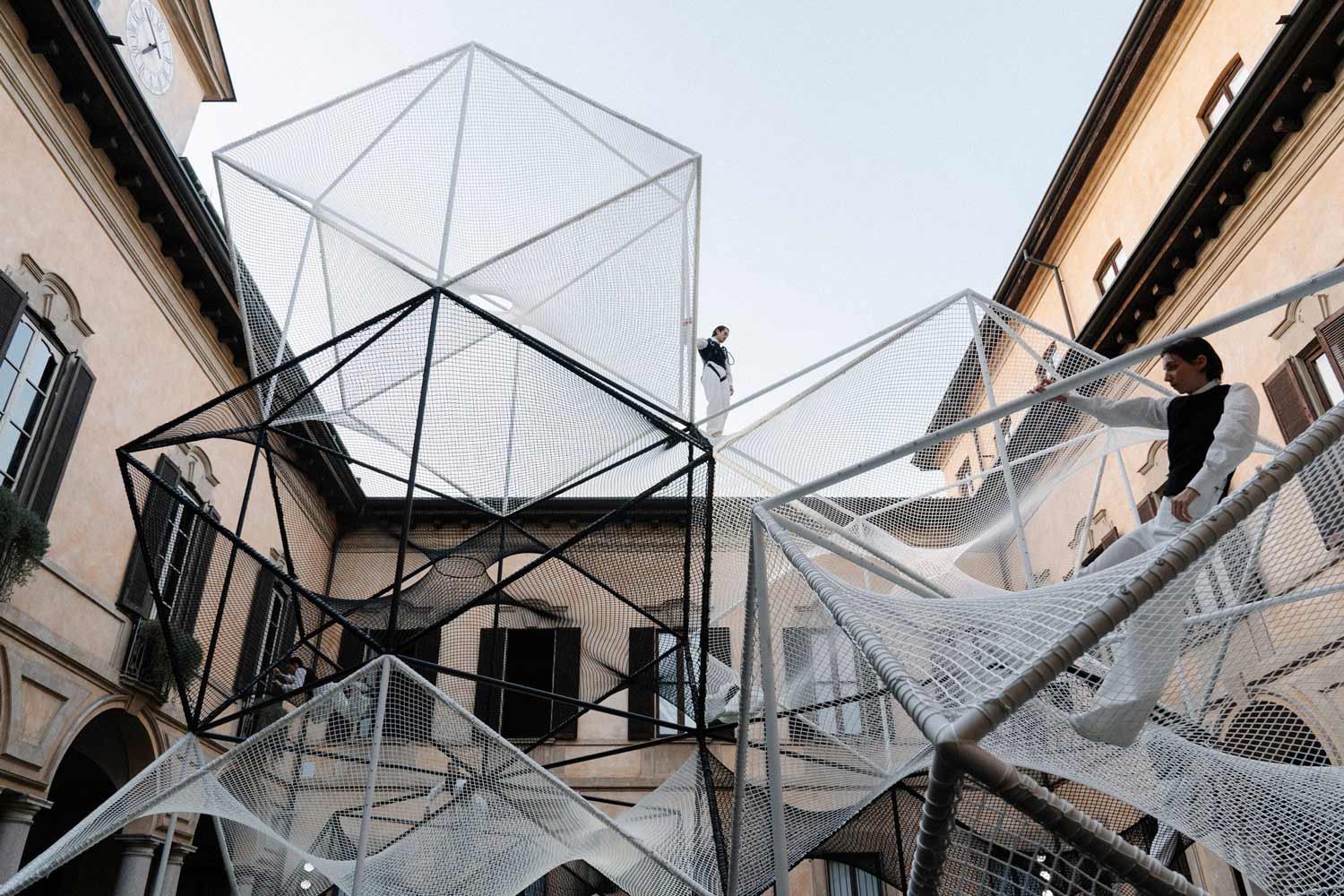
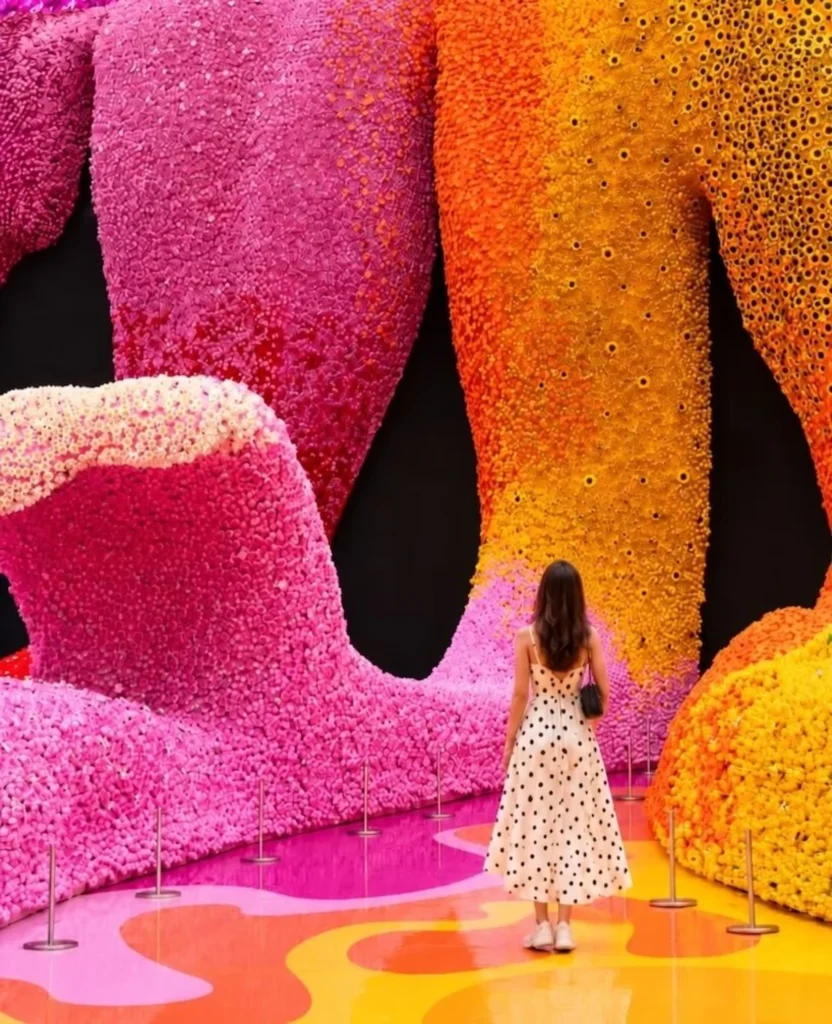
Enter the tank and the experience changes. The exhibition titled “Where Blooms Begin” presents eighteen installations created by artists from different fields. LEGO botanical elements are combined with metal, textiles, mirrors and other materials, expanding the vocabulary beyond pure brick construction. Some works treat the flowers as reflective surfaces; others embed them in fabric or frame them within kinetic structures. The result is less a display of finished sets and more a conversation about what the material can become when placed in different hands.
A 360-degree wraparound screen completes the indoor sequence. Visitors can build their own LEGO flowers on site, scan them, and watch the digital versions join a continuous flow of color on the surrounding walls. The gesture is simple yet effective: the exhibition does not stop at looking. It invites contribution. Each scanned flower becomes part of a shared virtual garden that grows for the duration of the show.
Play as Public Practice
Outside again, a second outdoor zone titled “Playful Floral Corridor” returns the flowers to more domestic scales. Finished LEGO botanical sets are arranged in everyday settings, suggesting how the same pieces might live in homes, offices, or quiet corners. A temporary shop stocks the current range, allowing visitors to take a smaller version of the experience home.
The exhibition is free in its outdoor areas. Indoor spaces require advance reservation through LEGO’s WeChat Mini Program. Nighttime collaborations with the Shanghai International Light Festival added projections that turned the tank facades into illuminated flower fields for a shorter period in early October.
What remains after the final day in late October will be photographs, digital records, and the memory of color against concrete. Yet the larger point may outlast the installation itself. By flooding an industrial landmark with something as ordinary and as carefully engineered as a LEGO flower, the project asks whether public space can still be claimed by acts of assembly rather than permanent monuments.
In Shanghai this autumn, the answer arrived in the form of 380,000 small plastic blooms that, for a few weeks, made an oil tank feel alive.