

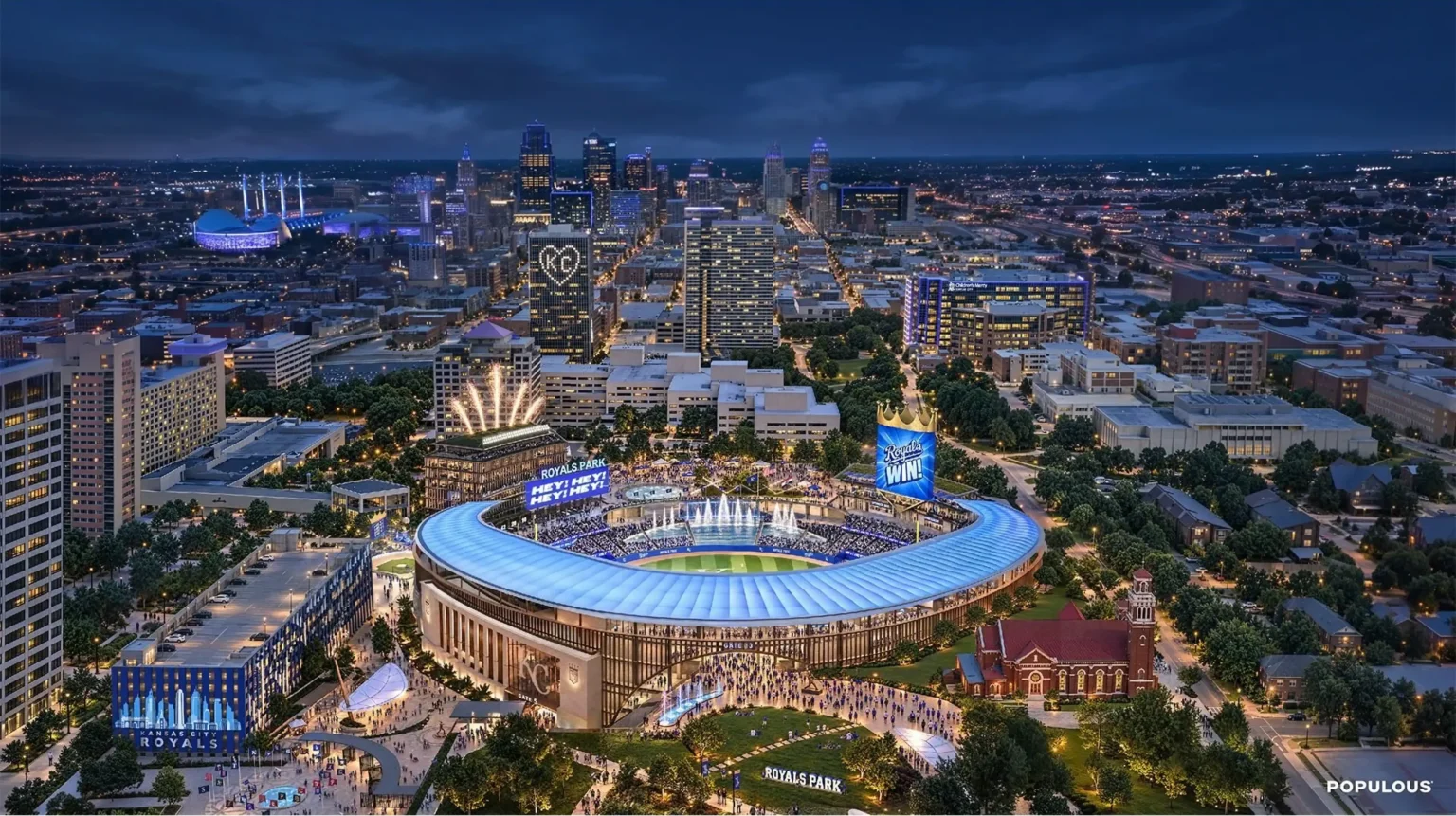


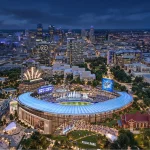
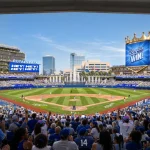
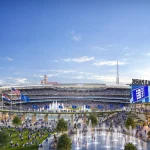
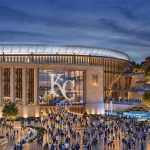
Kansas City’s next baseball stadium will not sit on top of the land. It will be carved into it. New renderings released by the Royals and design firm Populous show a ballpark set deep into the limestone bluffs of Crown Center, turning a geological feature that once complicated development into the foundation of a major civic project.
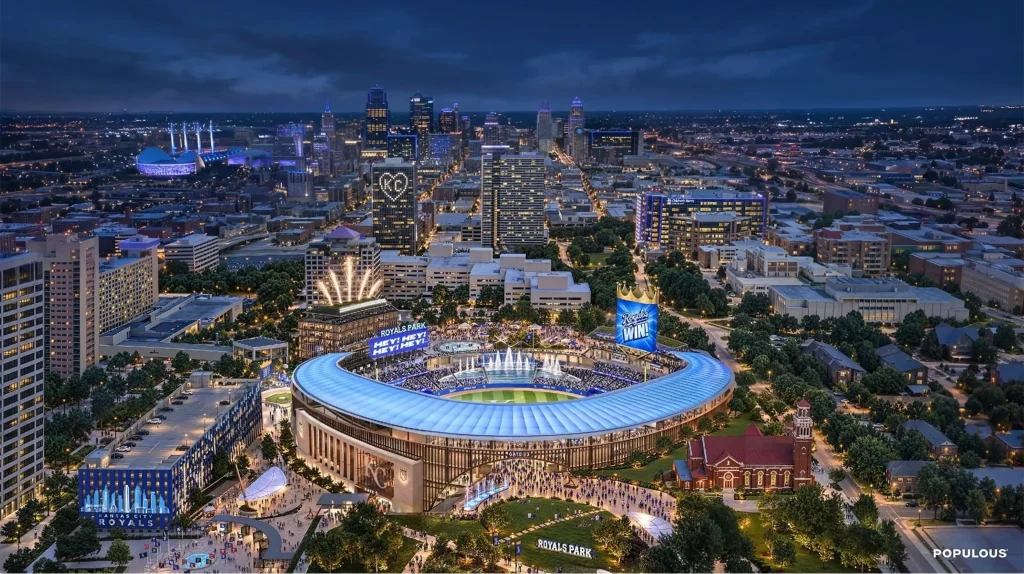
The open-air stadium is planned for approximately 34,000 seats plus 3,000 standing places. It forms the centerpiece of a larger mixed-use district on the former Hallmark headquarters site. Groundbreaking is targeted for mid-2027, with the aim of opening for the 2030 season.
Building Into the Stone
Construction will require excavating a roughly 90-foot-deep void and sculpting the structure from the existing limestone. The material will remain visible in the concourses and at the base of the building, connecting the architecture to Kansas City’s long tradition of limestone landmarks. Earl Santee of Populous, a Kansas City native, has emphasized authenticity and immersion. The design draws on local bridges, Municipal Auditorium and other civic buildings that rest on stone bases.
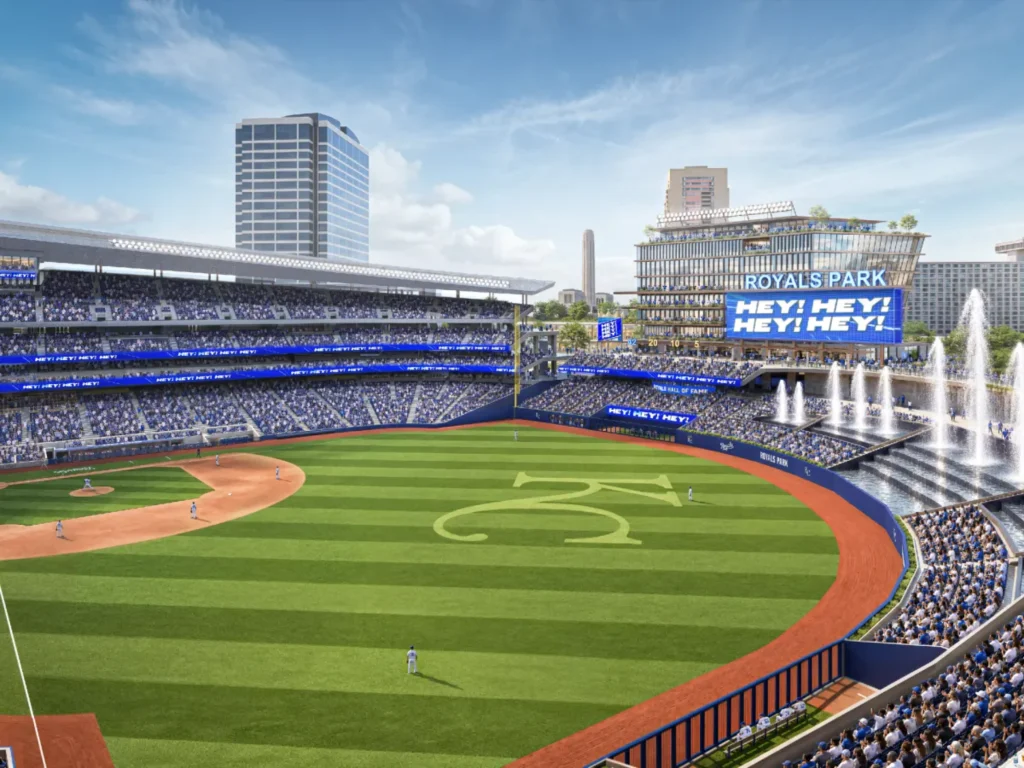
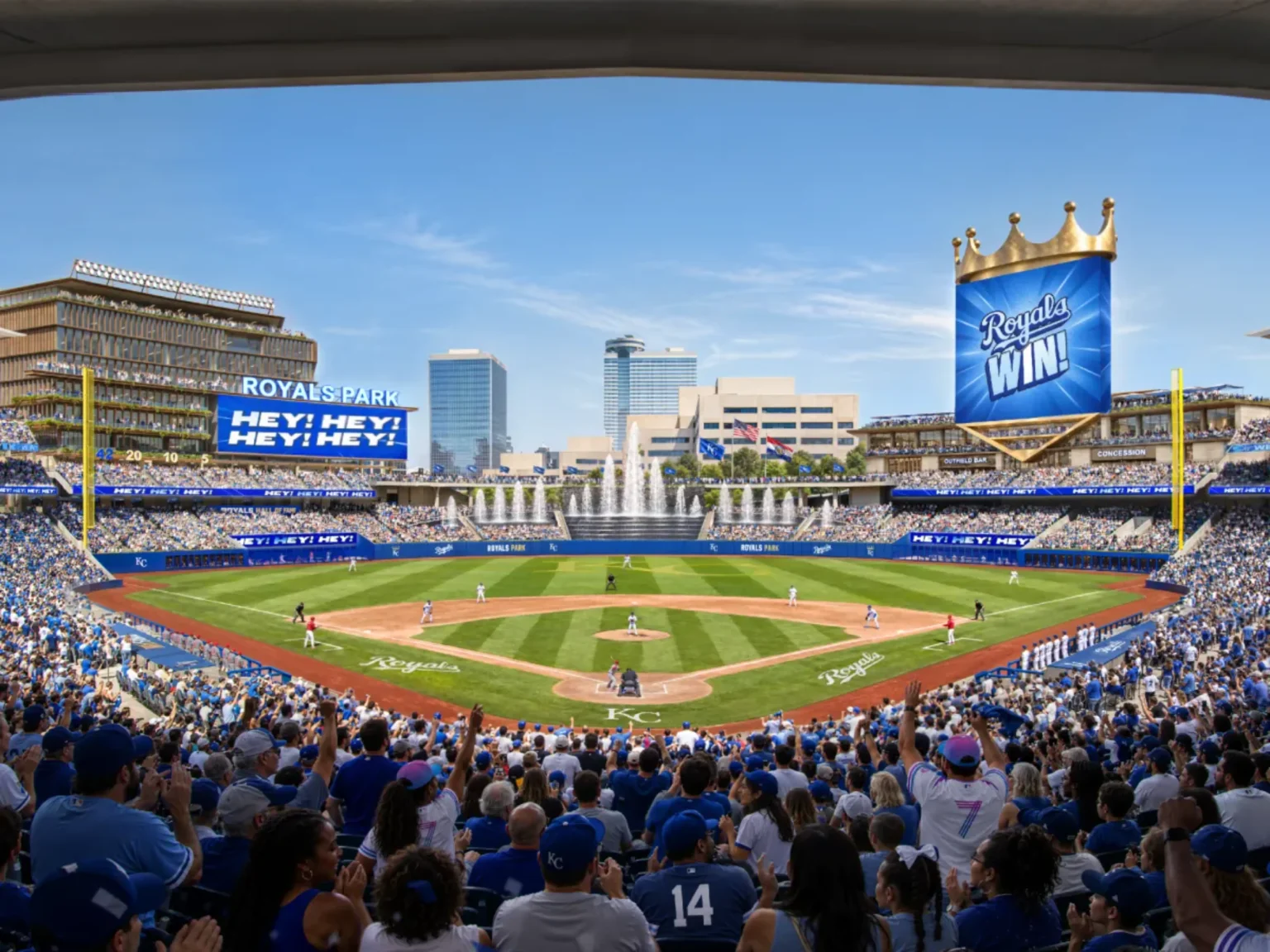
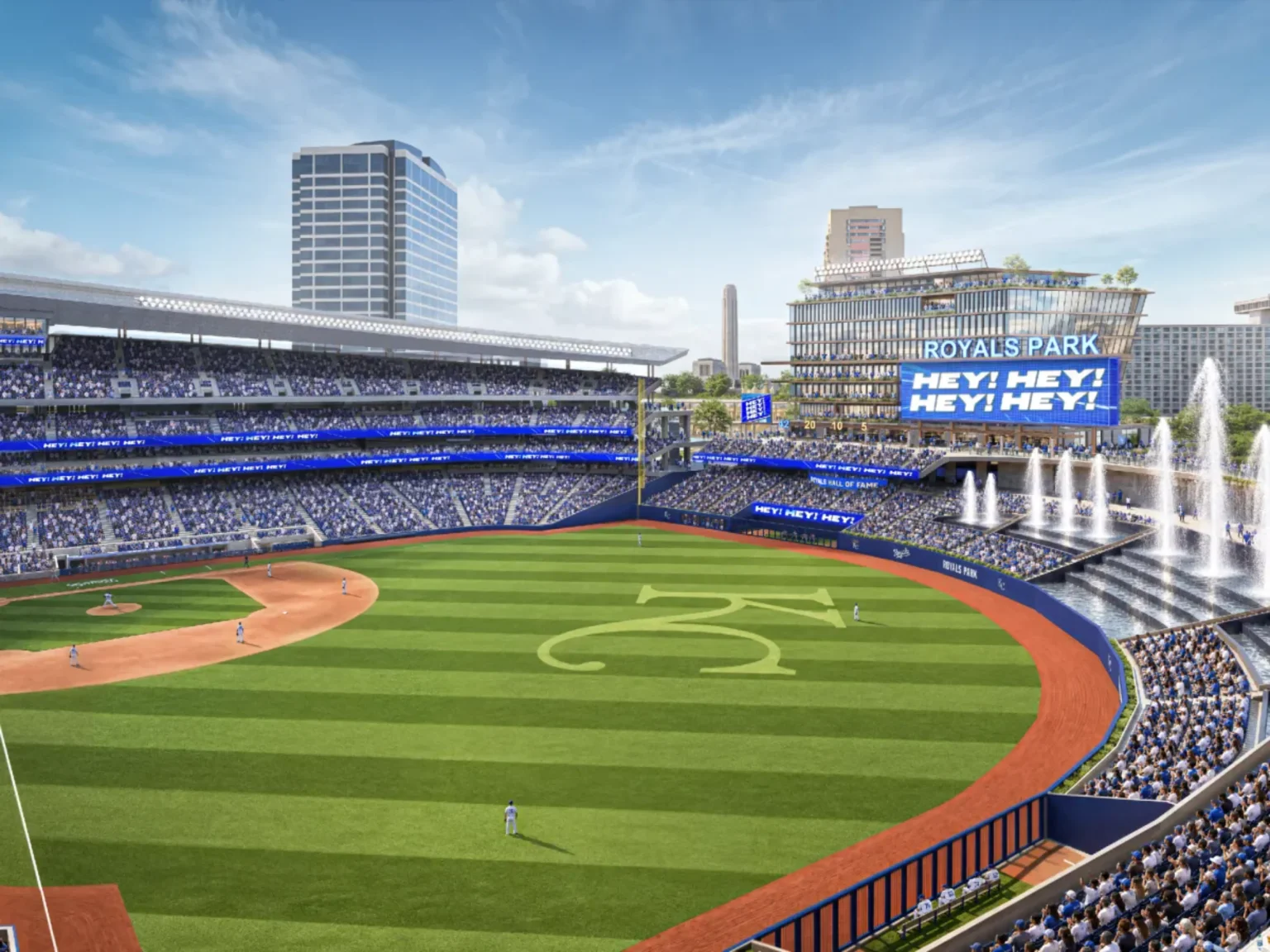
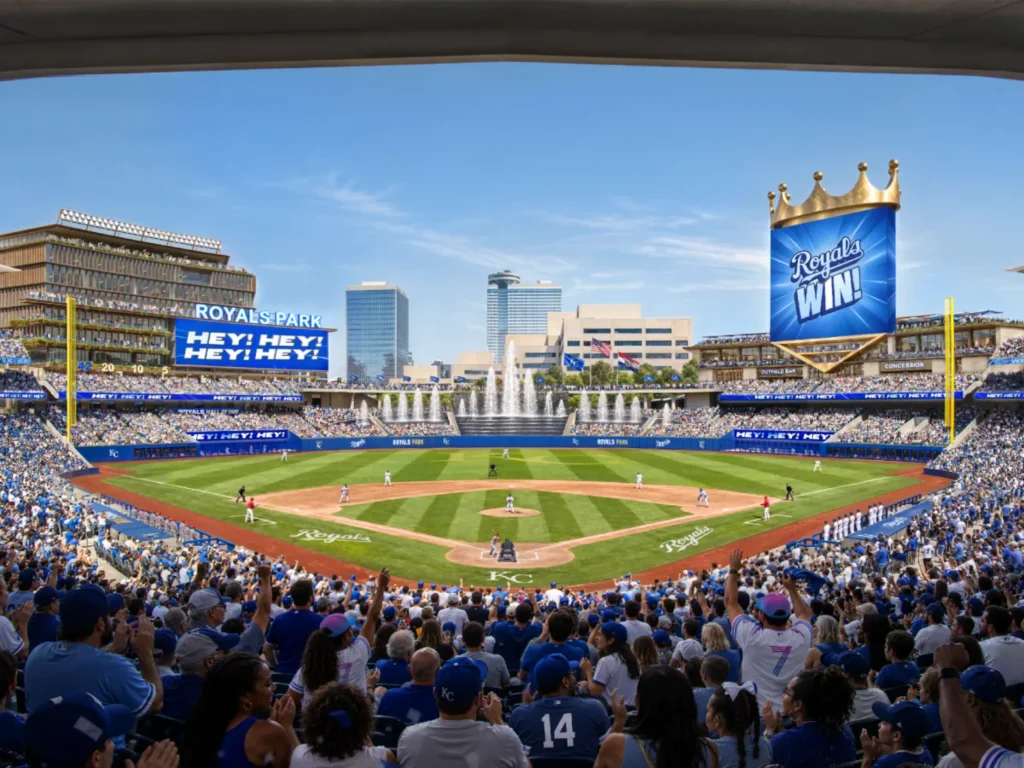
A dramatic west plaza will greet fans arriving by streetcar. Two continuous 360-degree concourses open the seating bowl to views of the city. A lightweight canopy will shade about 65 percent of the seats during late-afternoon games. Familiar Royals elements, including fountains and a three-dimensional crown-topped scoreboard, are retained and reinterpreted within the new setting.
Intimacy and Connection
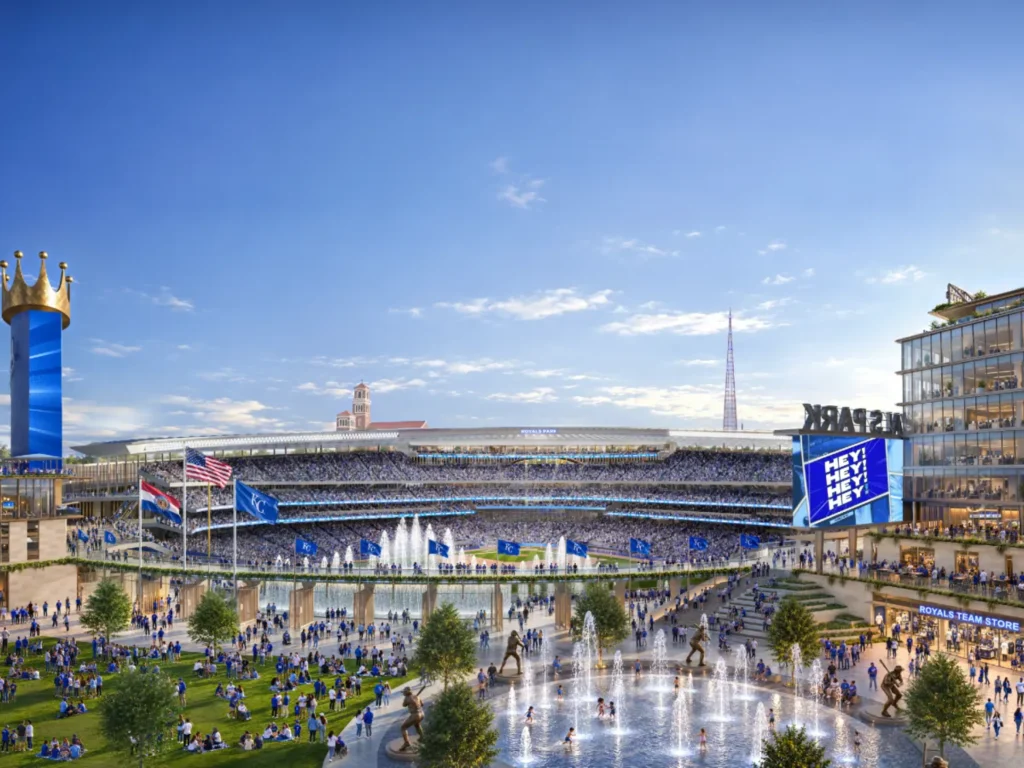
The seating arrangement places the majority of fans between the foul poles and brings spectators closer to the field than at many contemporary ballparks. The intention is an intimate experience that still feels connected to the surrounding city rather than sealed off from it. Right-field entertainment spaces and left-field team headquarters will sit within the same continuous circulation system.
The project is presented as unique to its site. Santee has stated that the design will be done once for this community and will not be replicated elsewhere. That claim rests on the decision to work with the limestone rather than erase it.
A Larger Urban Project
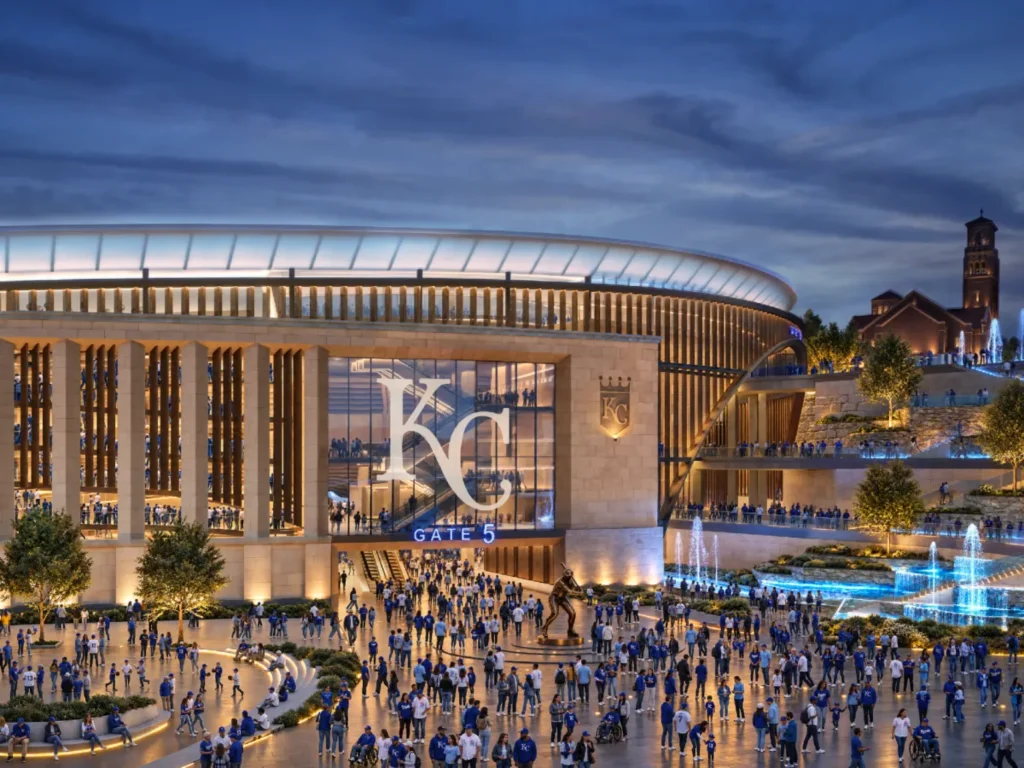
The stadium sits within an 85-acre district that includes mixed-use development. City leaders have highlighted the potential for increased downtown activity on game nights and the broader economic effects of relocating the team from the current Kauffman Stadium site. Financing and zoning arrangements have advanced in parallel with the design work.
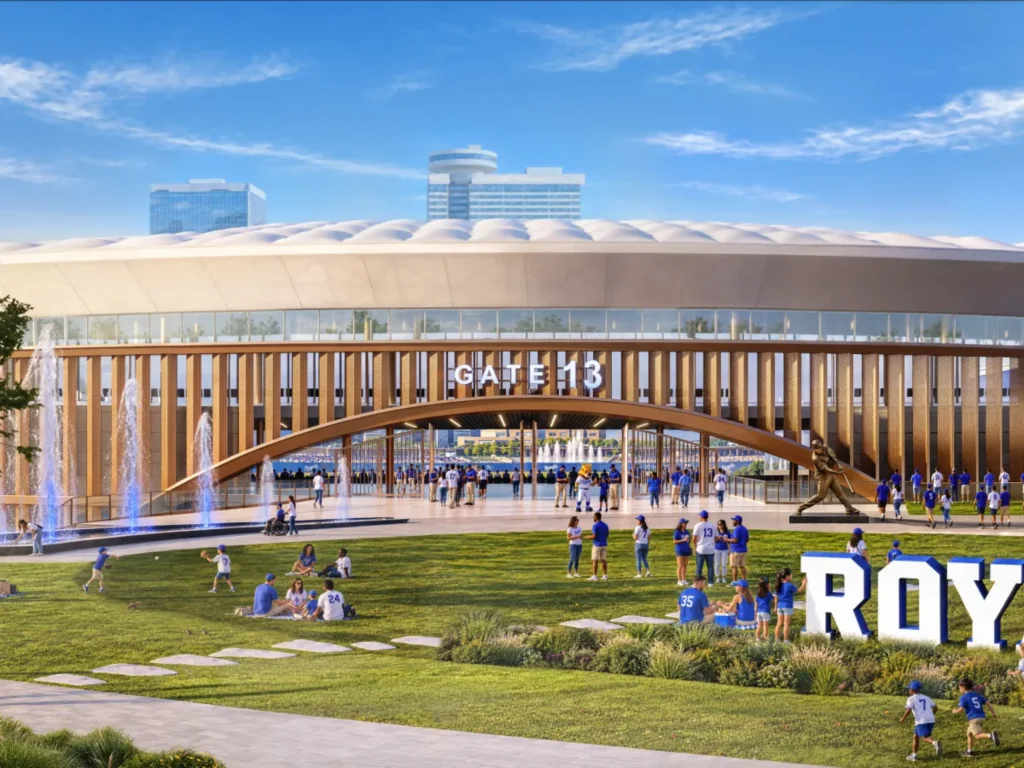
Most new stadiums announce themselves through size or technological display. The Royals’ proposed ballpark announces itself through material and place. By digging into the limestone that has shaped Kansas City’s architecture for generations, the project attempts to root a major sports venue in the physical character of the city itself.
Whether that ambition survives the realities of construction and cost will become clearer in the years ahead. For now, the renderings offer a clear proposition: a ballpark that belongs to its ground.
ABOUT THE KANSAS CITY ROYALS: The Kansas City Royals are a Major League Baseball team operated by a hometown ownership group led by Chairman and CEO John Sherman. Ewing Kauffman founded the club in 1969 because, in his words, “I believe the people of Kansas City deserved a Major League Baseball team.” No MLB team founded along with or since can match the Royals four American League pennants and two World Series Championships. Since Sherman’s purchase, the Royals won the Bud Selig Award for Philanthropic Excellence in 2021 and been a finalist three other times.
ABOUT POPULOUS: Populous is a global design firm that began with a singular focus — to draw people together around the things they love through experiences that capture all the senses and amplify the emotion shared in human moments. Over the last 40+ years, the firm has designed more than 3,500 projects worth over $60 billion across emerging and established markets. With nearly 1,700 employees in more than 40 offices on four continents, and regional centers in Kansas City, London and Brisbane, Populous designs destinations that bring people together and leave a lasting impact.