




Plaza of Kanagawa Institute of Technology is a marvel of structural engineering born out of necessity, a need for in-between or breakout spaces, that focused on passing one’s time, rather than on how to use the space. Master of contemporary Japanese architecture, Junya Ishigami + Associates, designed KAIT Plaza, challenging the conventional notions of shelter, structure, and program.
KAIT Plaza’s Experiential Versatility
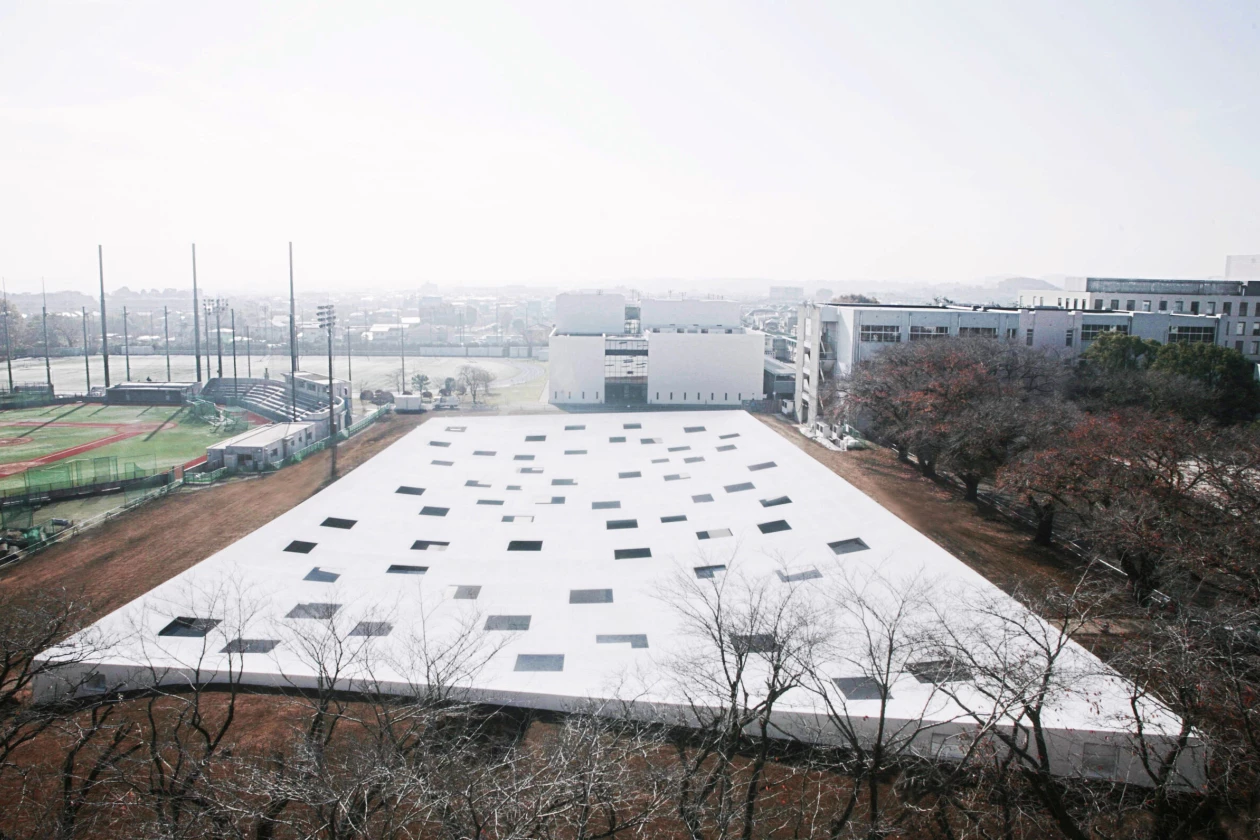
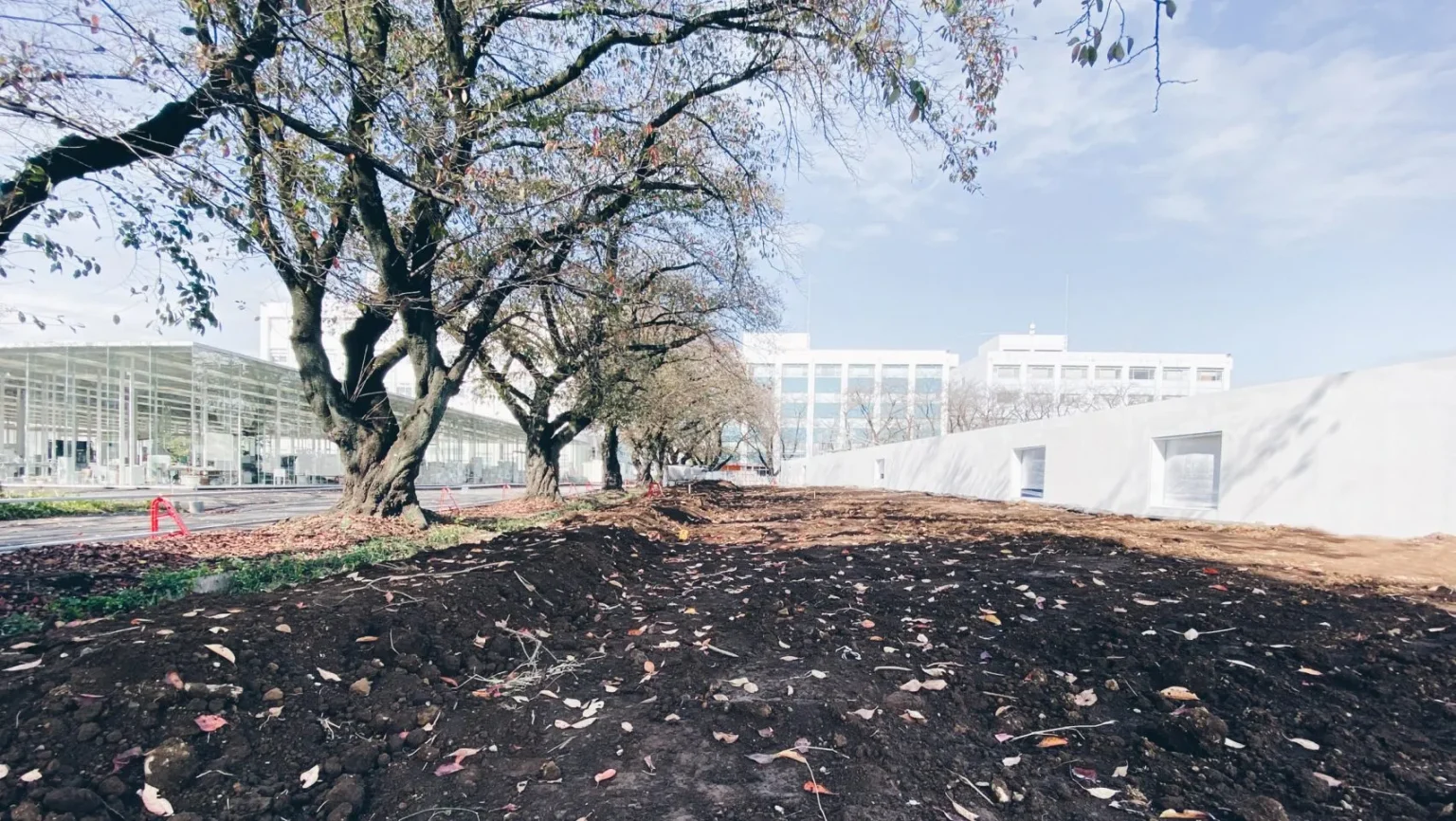
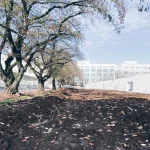
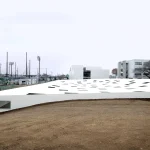
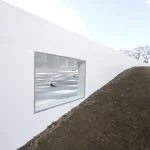
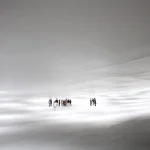
Nestled beside the Ishigami-designed KAIT workshop building in 2008, on a corner of the Kanagawa Institute of Technology, the plaza was partially submerged in the ground, featuring heterogeneous spaces for spontaneous social interaction. Junya Ishigami + Associates’ core concept of the plaza highlights the creation of openness in the university’s artificial built landscape and draws attention to the experiential beauty while observing the horizon, where land and sky converge into a single line.
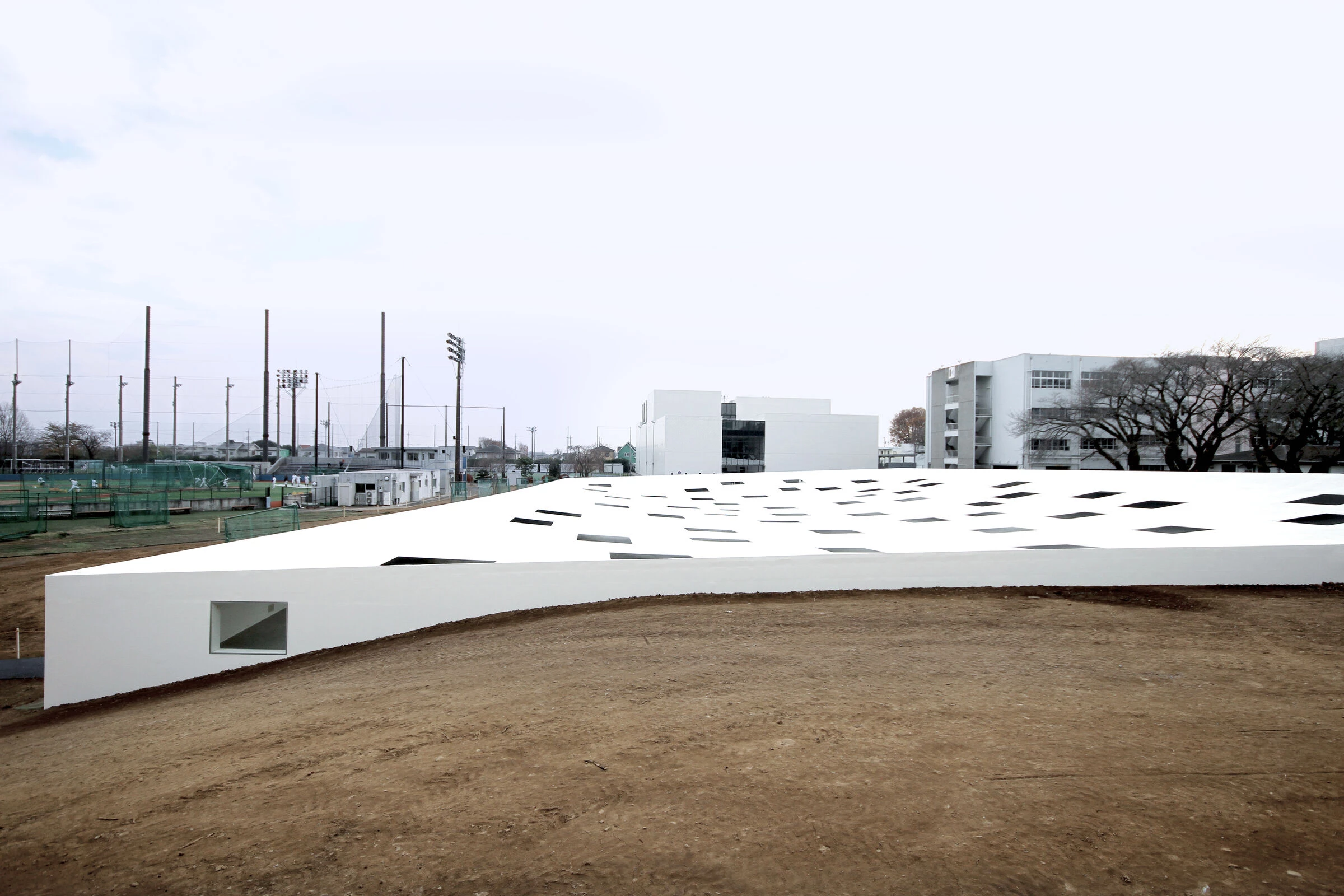
This philosophical intent was transformed into an architectural form through the dynamic interaction of two vast horizontal planes. Ishigami’s approach, with an objective of “outside-ness,” is an intervention that remains soothing without a functional condition. The result was a curated experiential space that dissolves the boundaries of interior and exterior, which was missing in the original campus context.
Structural Negation: Floating Between Sky and Earth
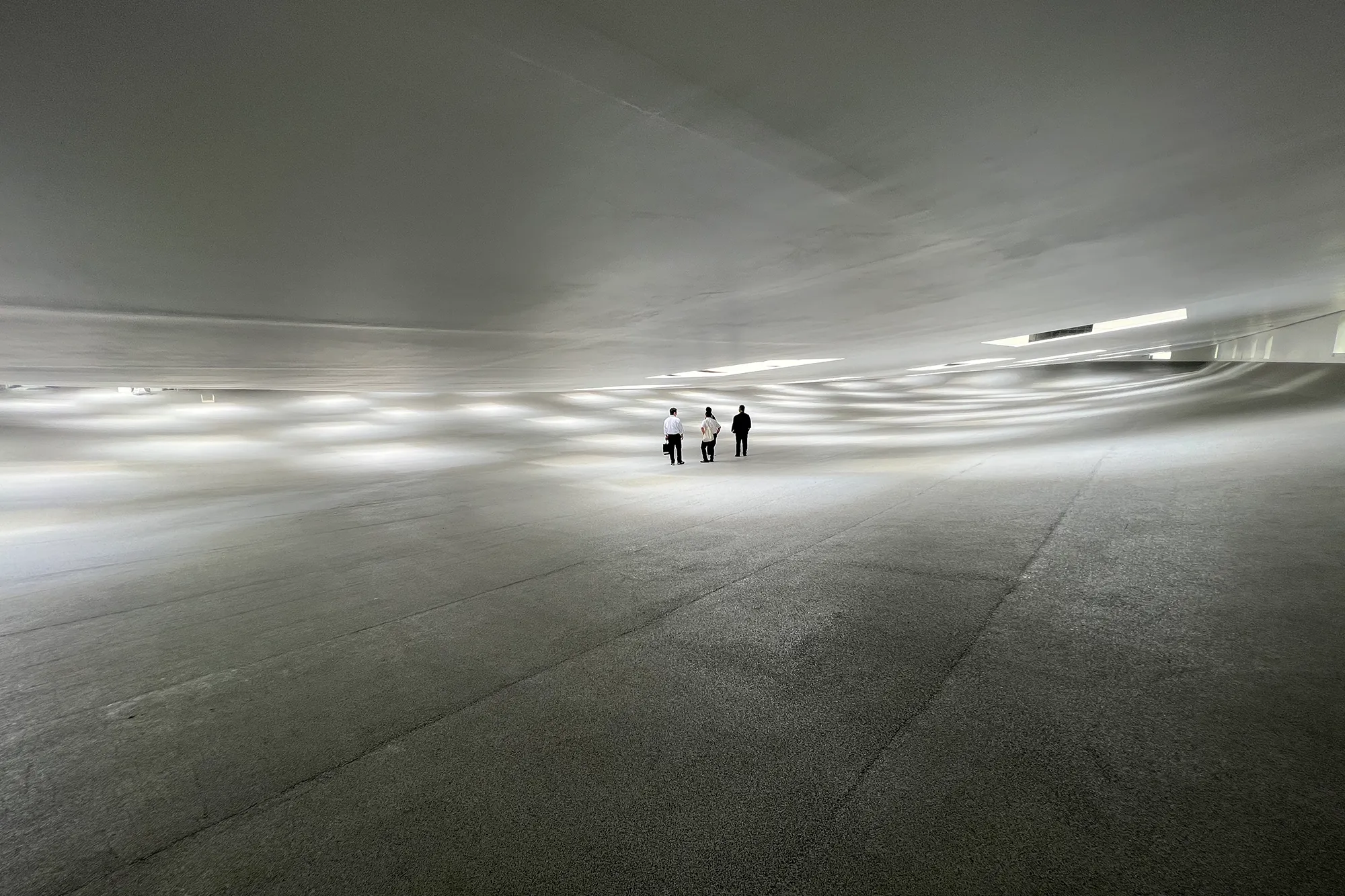
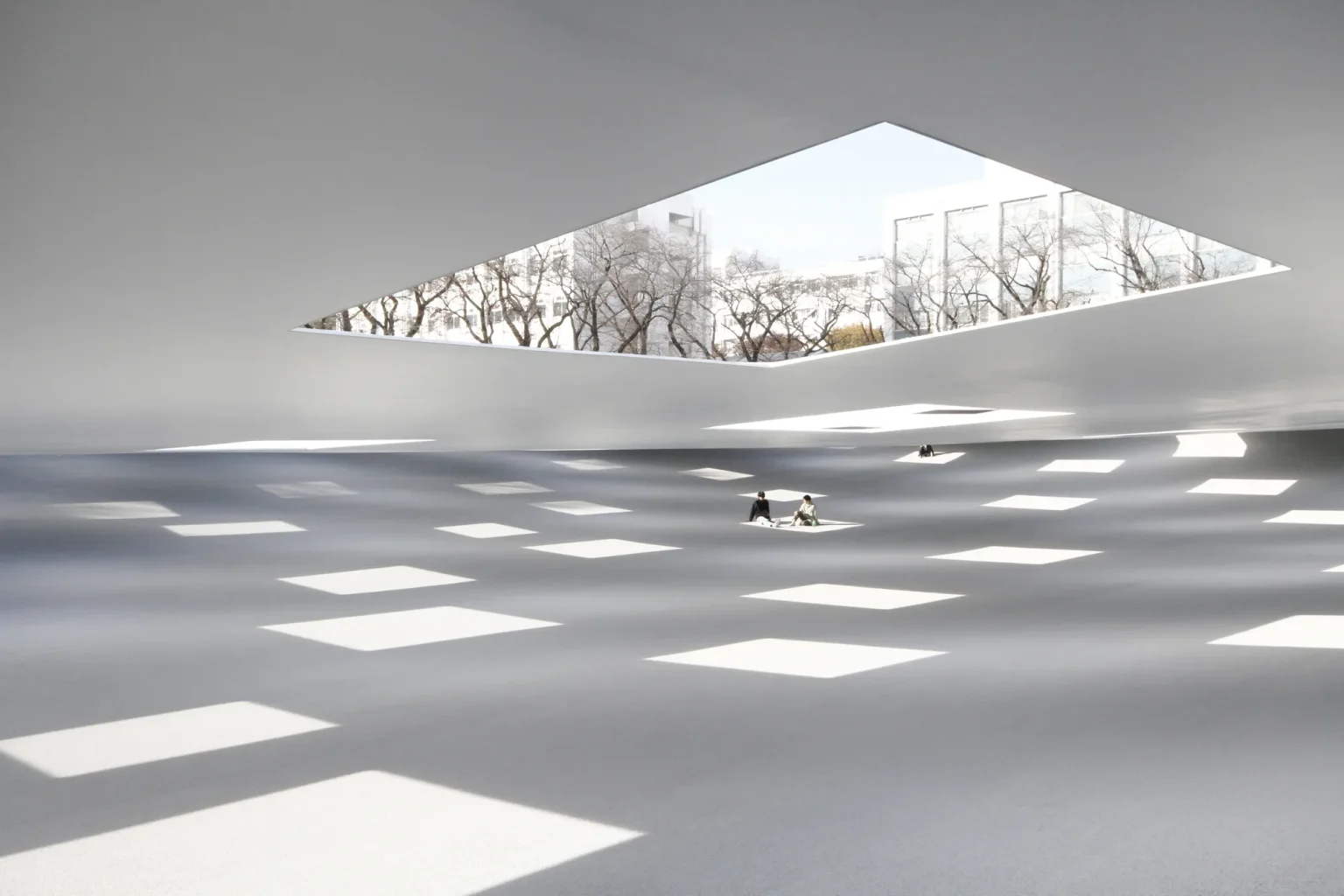
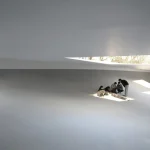
The floating iron plate ceiling, conceived as the sky without internal support, forms the structure, a spatial void that is less than a building in a traditional sense and more of a physical experience over time through manipulation of scale. Without interior supports, the structure naturally bends under gravity, forming a sweeping curve and an inverted chamber. This becomes the design’s central identity, where, in what one would imagine as a structural flaw, the team of Junya Ishigami + Associates playfully experimented with weight and form to create boundless space between sky (ceiling) sagging above and earth (floor) cupping below.
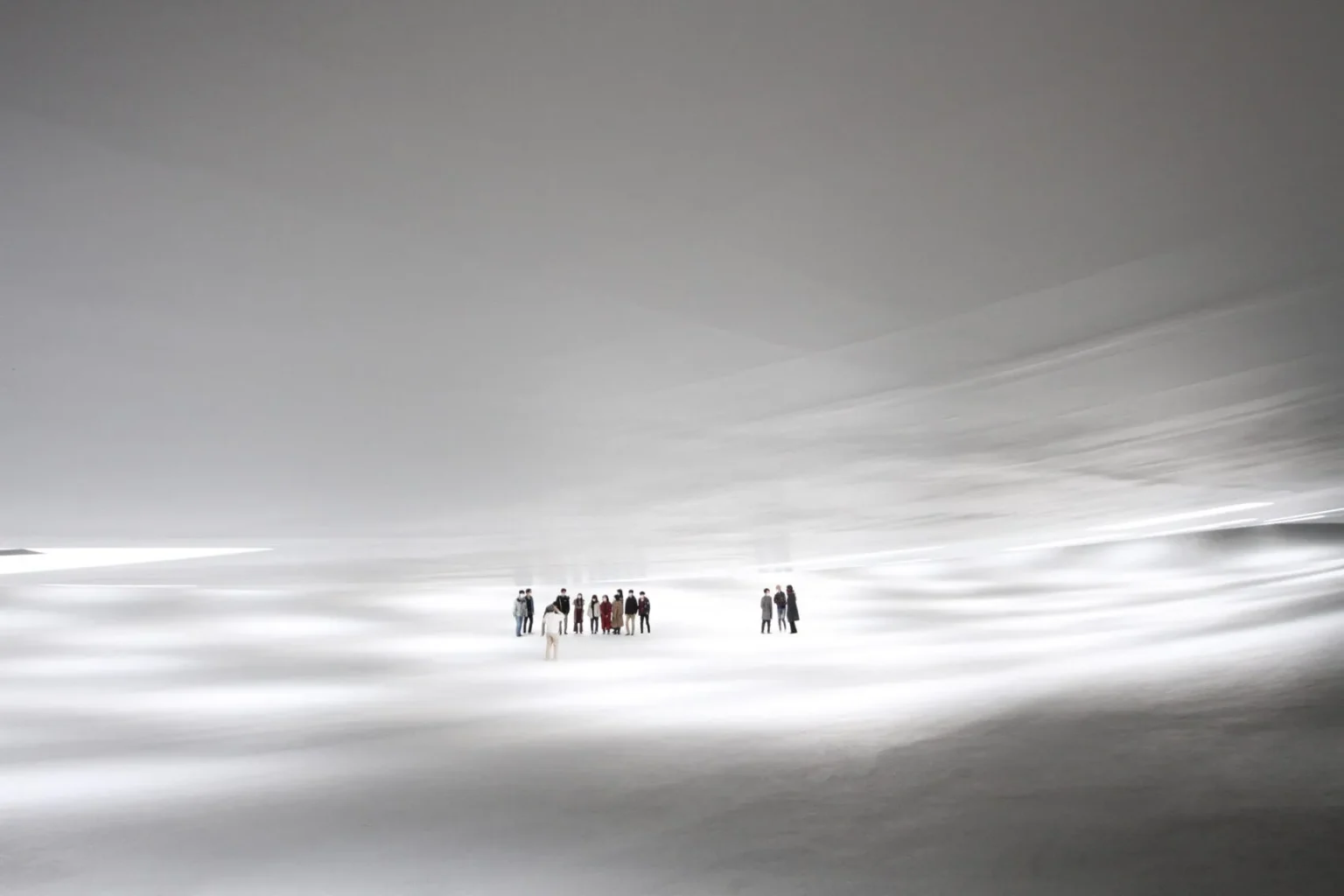
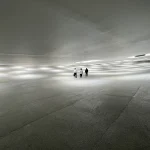
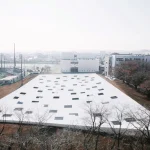
Spanning 4,100 square meters, the plaza, framed by a 12 mm thick steel roof, plays with diverse scales to create a spatial experience with a vast area that stretches 90 meters, evoking a sense of immeasurable openness. Yet, in contrast, the ceiling height remains low, between 2.2 meters and 2.8 meters. This thoughtful decision was a design success that imposed spatial constraints and augmented the sense of an artificial horizon.
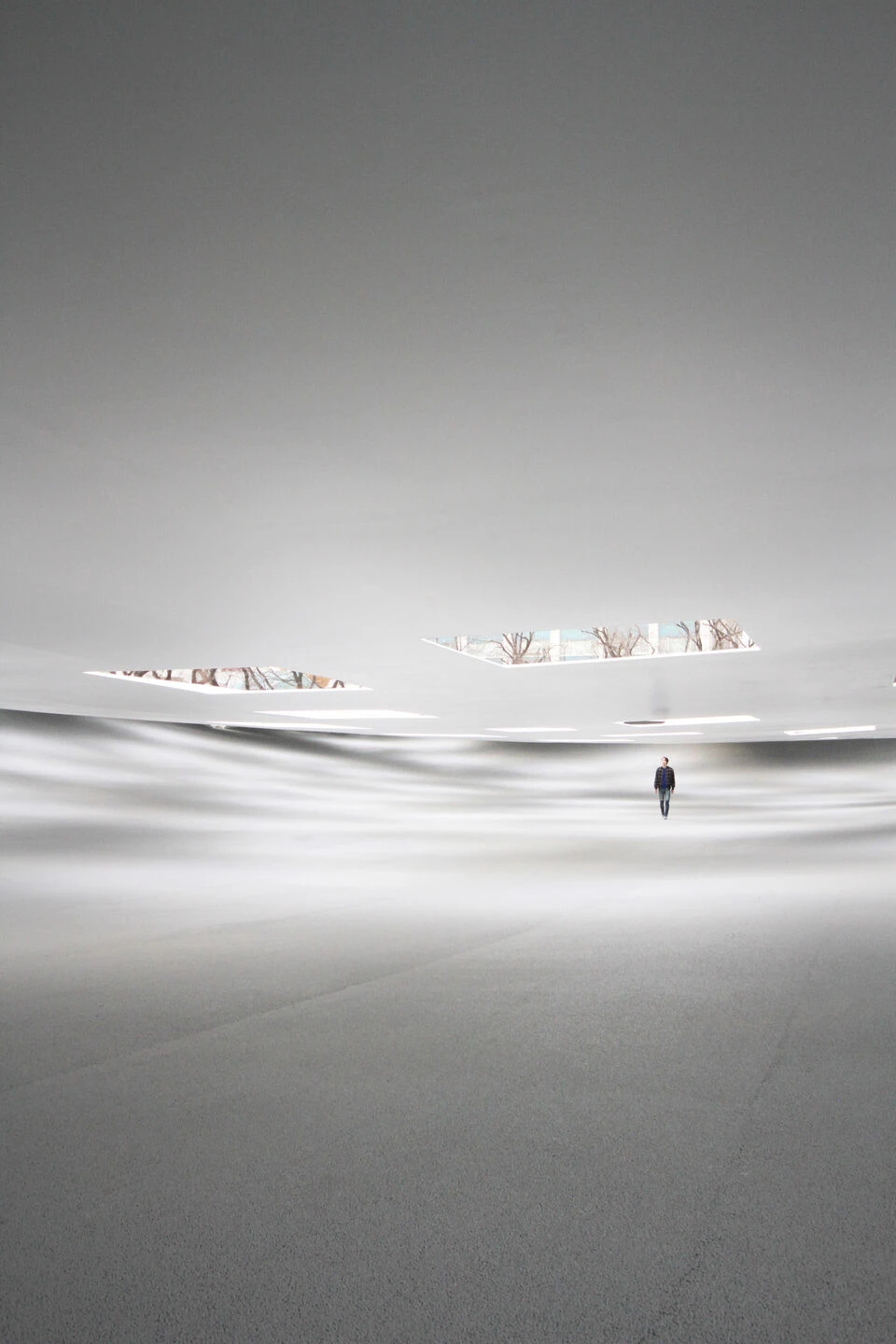
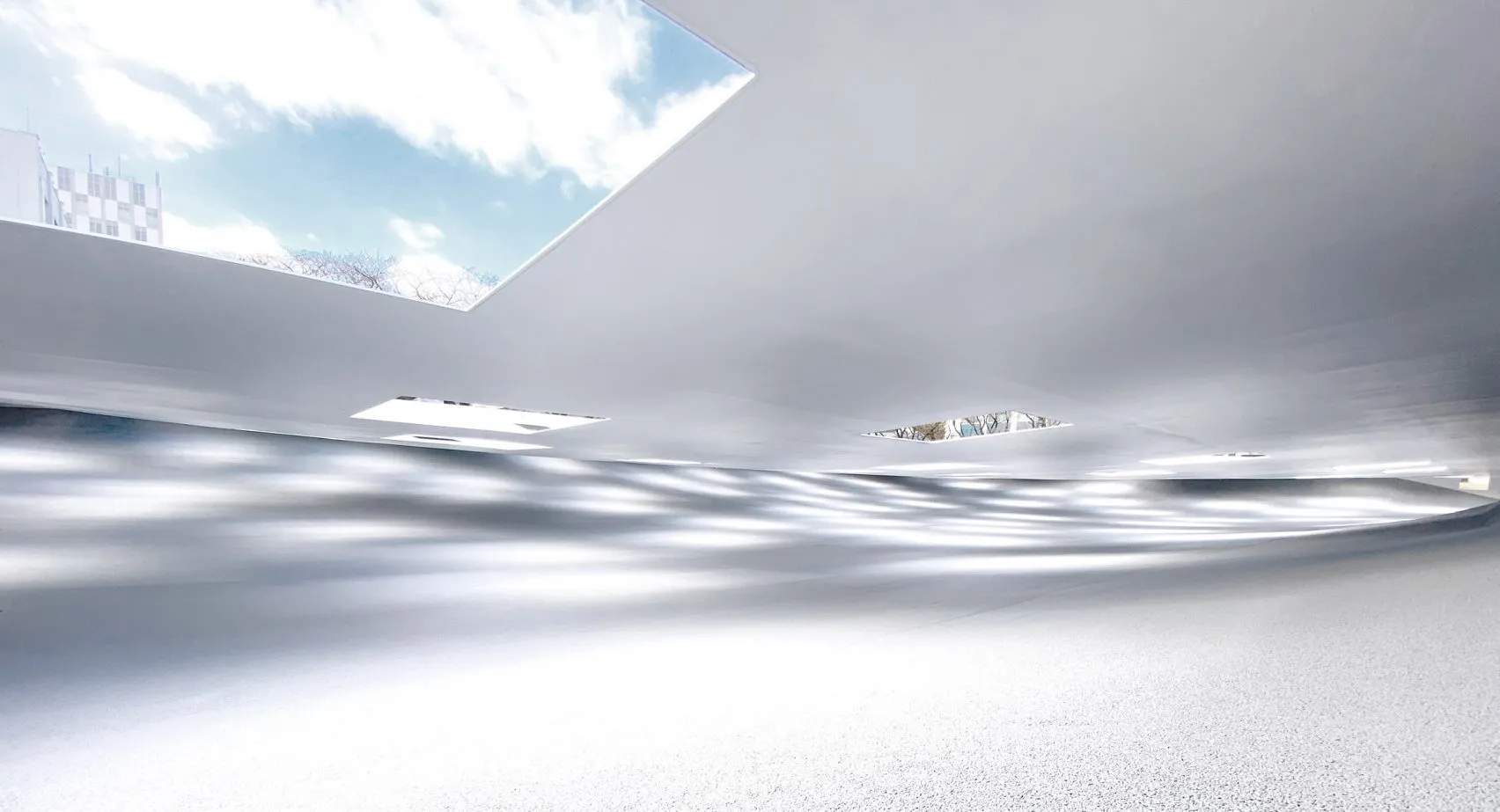
Moving through the shifting ceiling heights, the spatial proportions created multiple horizons and varied experiences, offering a sense of comfort, surreal vastness, and a sloping floor that varies by 5 meters to lie down or stand up. The interior, without any furniture, enhances the vision of “not built,” encouraging students to think independently, act in their unique ways, and relax on the floor crafted from 30 mm water-permeable asphalt that remains dry and pleasant to touch and interact with, while fostering a connection between humans and nature.
Water, Light, and Air as Architecture
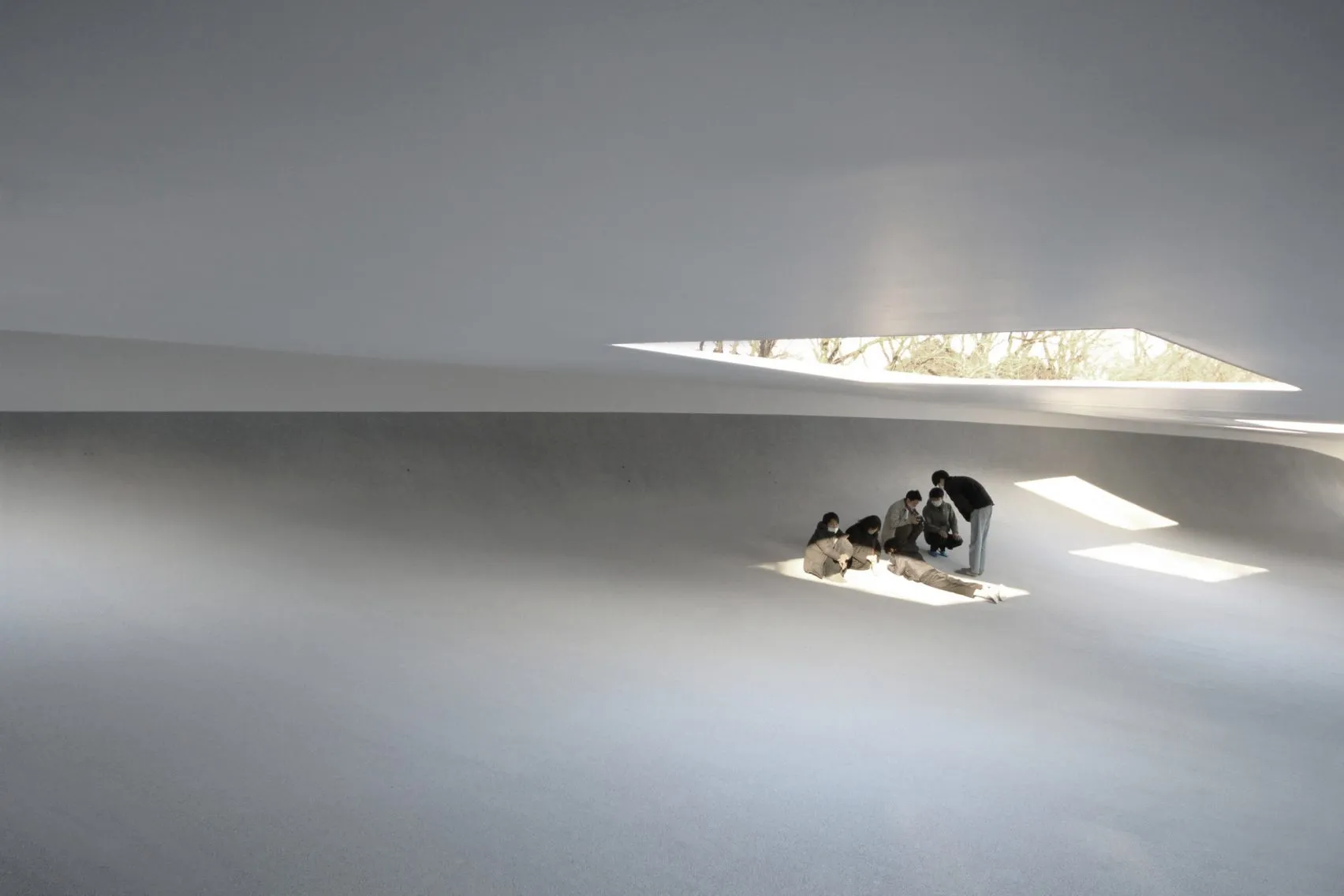
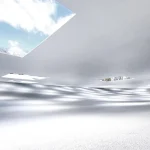
Connecting to the outside environment, the plaza’s roof consists of 59 rectangular openings scattered across the roof, unglazed, bringing light, rain, and air inside. The changing light through the seasons, the play of geometrical light and shadow across the sloping floor, and rhythmic water falling directly fill the space with sound, emphasizing the architecture that’s never stagnant while reinforcing the idea of passing the time.
The Paradigm of “New Outside-ness”
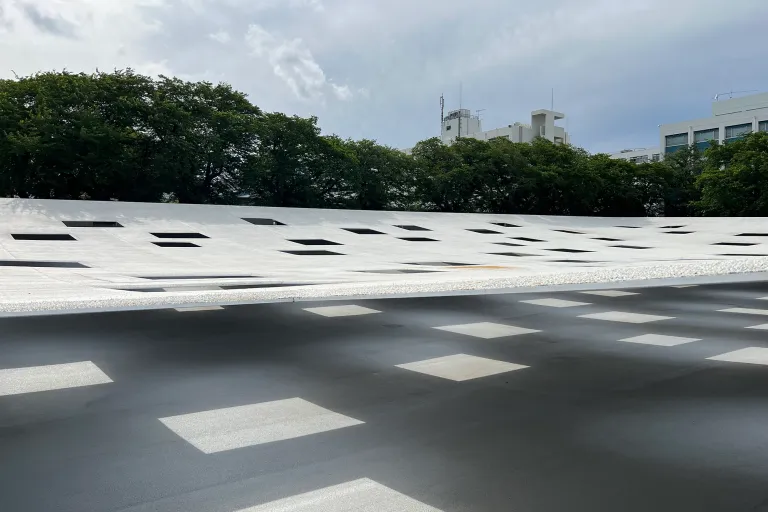
Programmatically, Ishigami ensured that the plaza remained versatile, allowing transcendent experiences to unfold for students to explore surprises, creativity, self-reflection, and the foundational theme of passing time through filtered, curated elements of nature, while blocking the visual chaos of the campus.
Minimalist design, dissolving the boundaries between inside and outside, and innovative engineering of the steel structure without supports influence traditional notions of semi-outdoor space, which were creatively translated in the contemporary Plaza of the Kanagawa Institute of Technology.
KAIT Plaza – Kanagawa Institute of Technology Project Details
Architects: Junya Ishigami + Associates
Location: Kanagawa, Japan
Year Completed: 2008
Site Area: 4,100 m²