

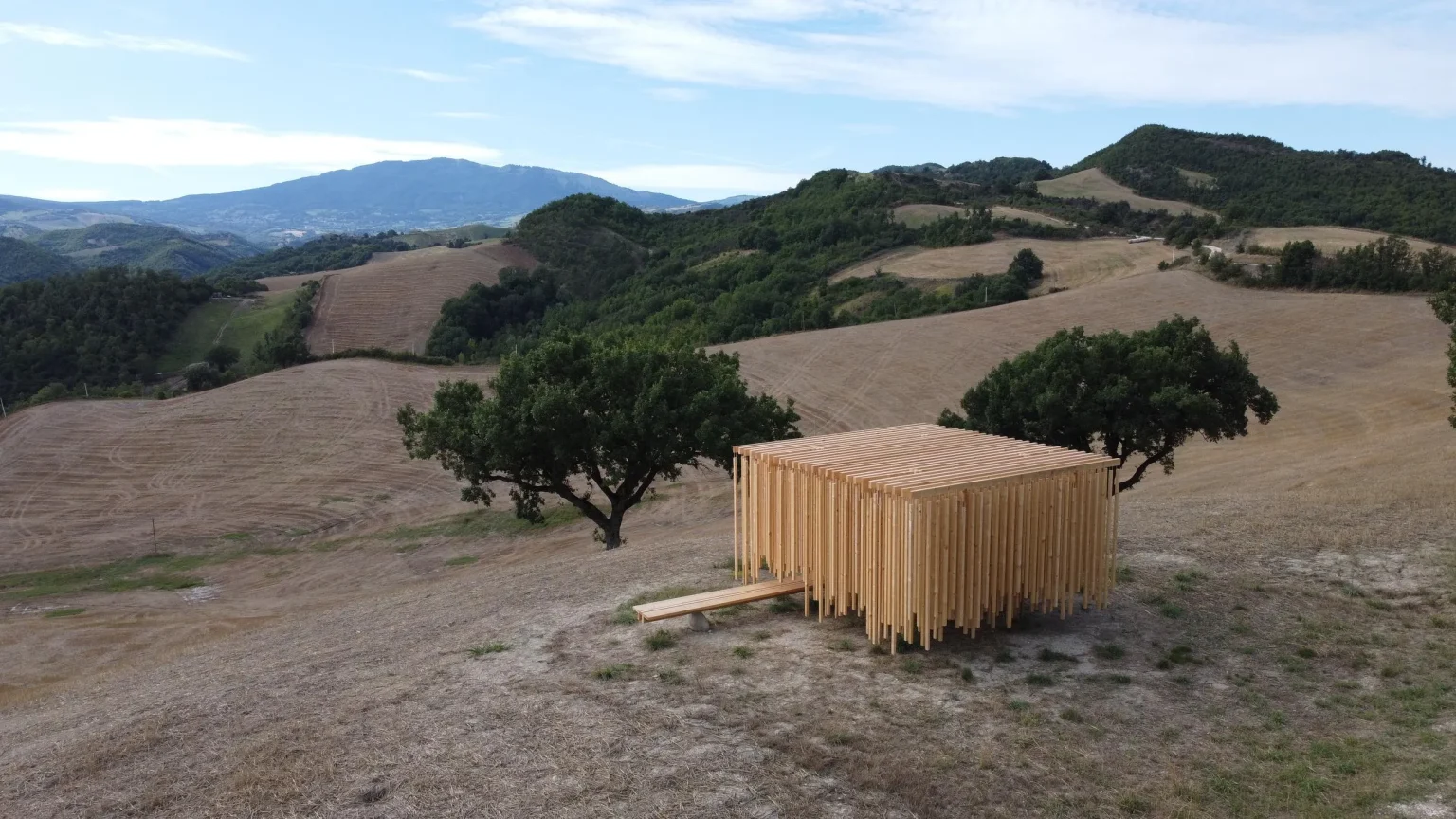


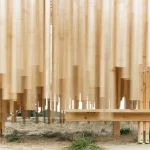
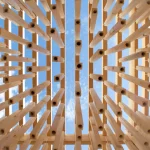
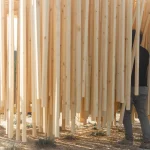
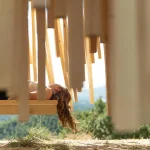

The Cappella del Suono in Lunano, Italy, designed by the Austrian collective Studio Carraldo, represents the intersection of acoustic performance and architectural form for a new era of sensitive architecture. It illustrates sustainable timber engineering and the sensory integration of the built environment and explores the surrounding landscape, emphasizing materiality.
Studio Carraldo and the 2025 Festival di Microarchitettura
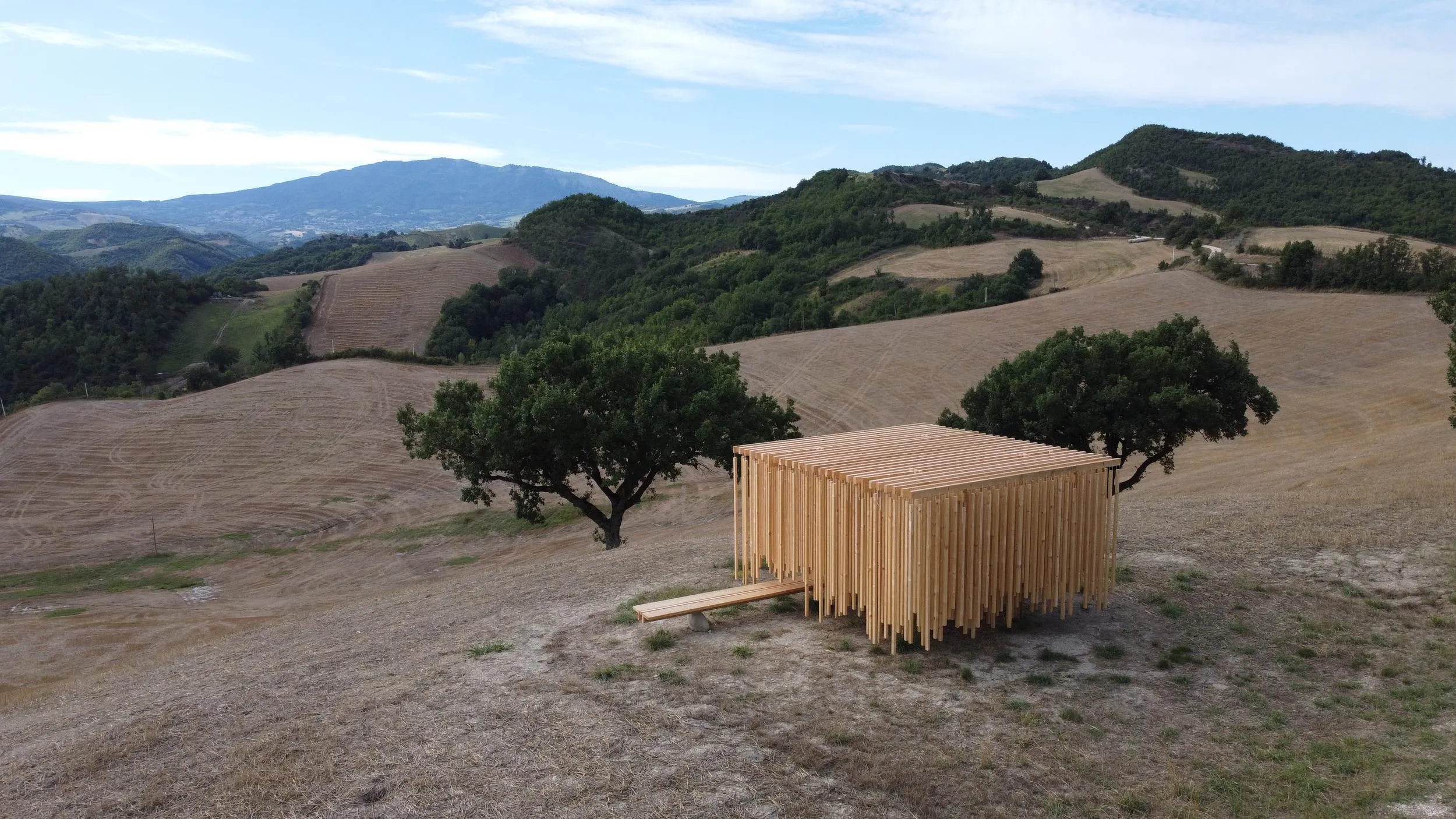
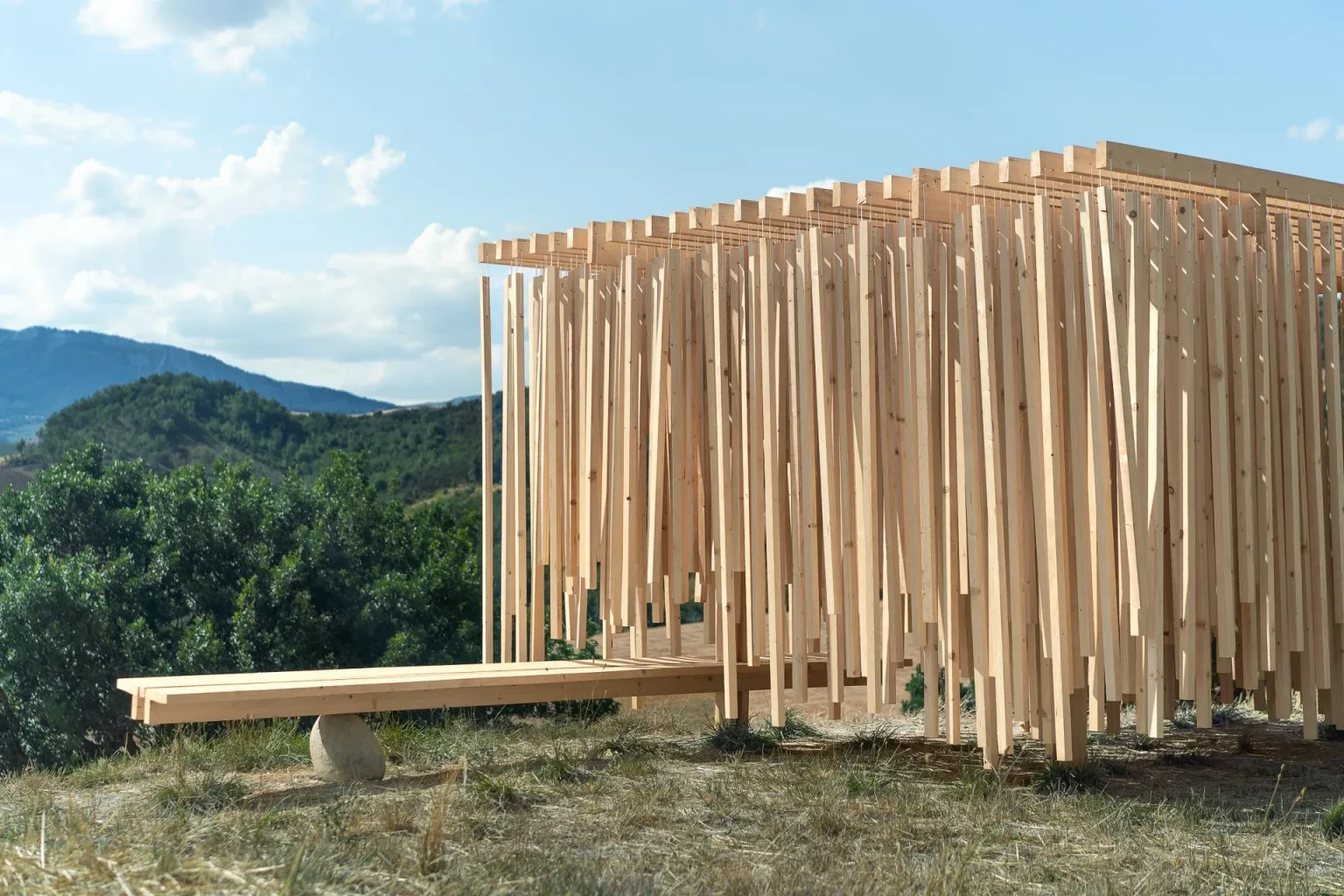
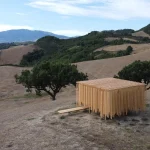
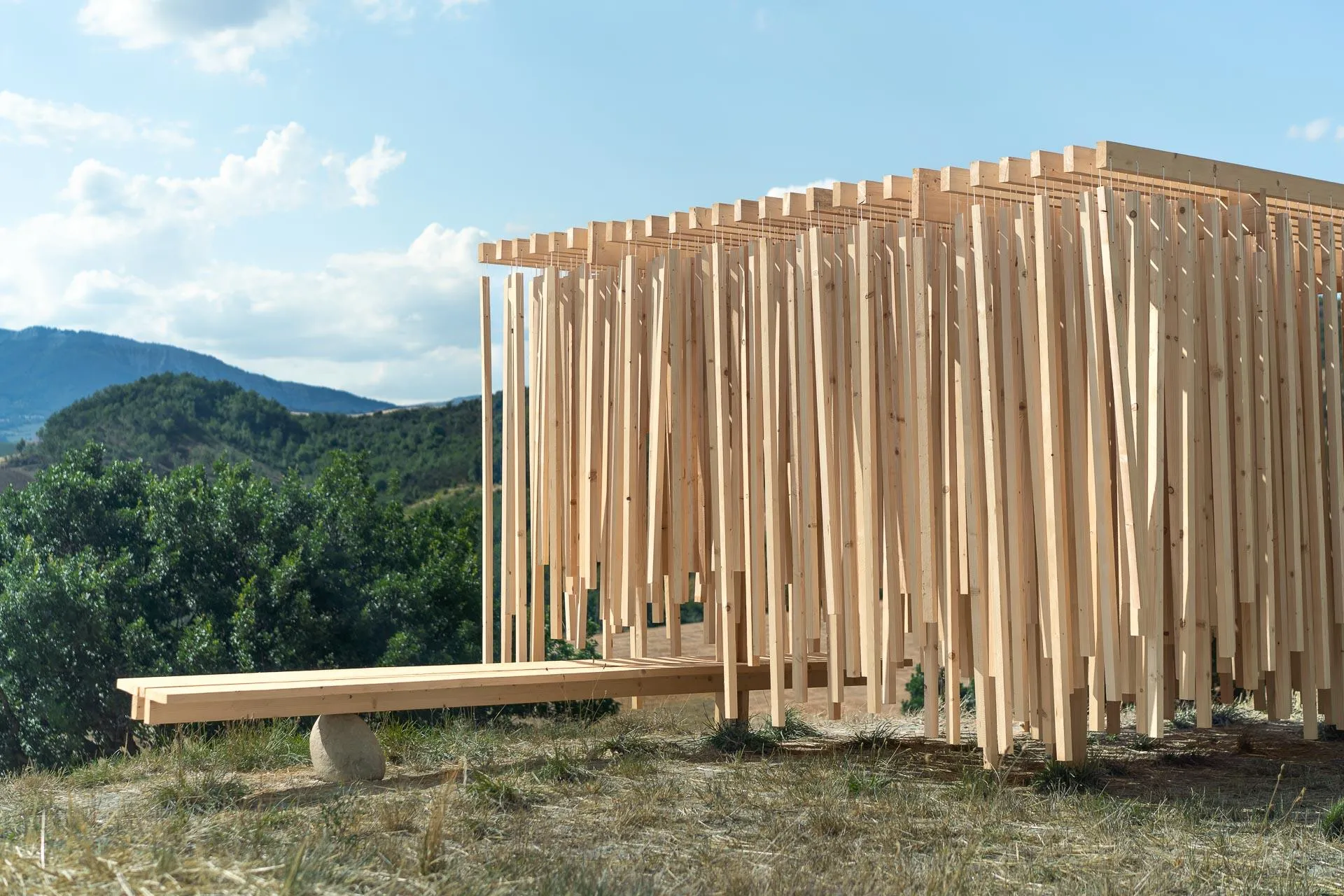
The Cappella del Suono is a pavilion located on a hillside in the grain fields of the Marche region. Defined by a deep connection to historical craftsmanship, the project demonstrates the profound potential of ephemeral interventions, redefining regional timber identity.
The Festival di Microarchitettura 2025 edition, held under the patronage of Pesaro 2024, the Italian Capital of Culture, invited international teams to propose installations of approximately 10 square meters that respond to the cultural and natural heritage of the Pesaro–Urbino province. Within this framework, the project emerged as the winning entry of the Festival di Microarchitettura 2025, designed by a collective formed in Innsbruck comprising David Zauels, Franka Ruhnau, Luis Navarro, Jonas Rosenfelder, and Valentin Fick.
Materiality and Sustainability
The pavilion, Cappella del Suono, constructed within a 10-day timeframe and with a limited budget of €2,000, is a triumph of material efficiency. The design process emphasized simplicity and the precise use of standard wood sections to minimize waste, focusing on the principles of the circular economy and a demountable assembly system.
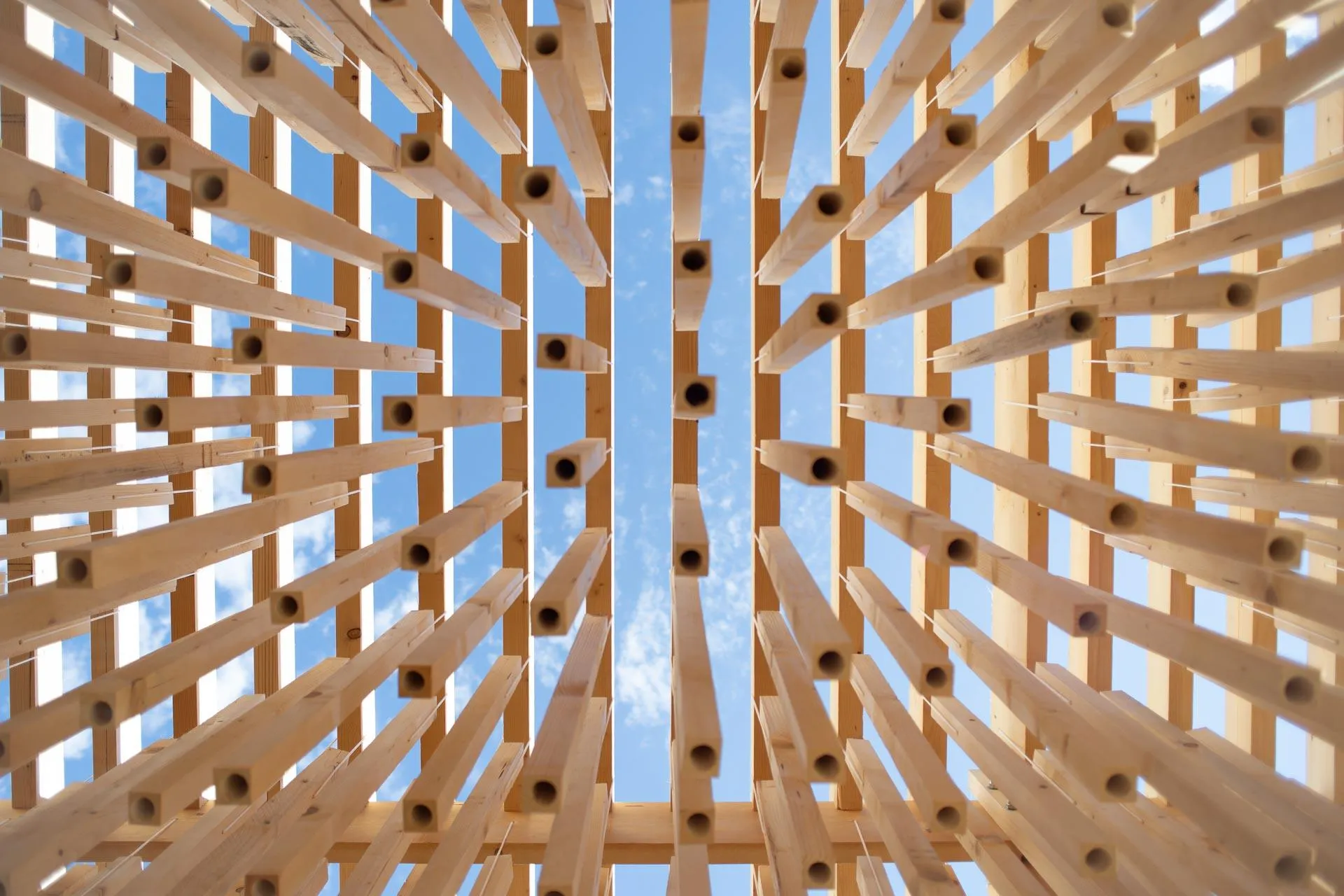
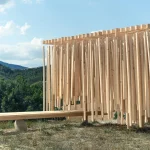
The choice of larch, found in the Marche and Alpine regions, is known for its durability and natural resistance to environmental conditions. It is used as the primary structural material, organized as a regular grid of vertical slats that define the spatial enclosure.
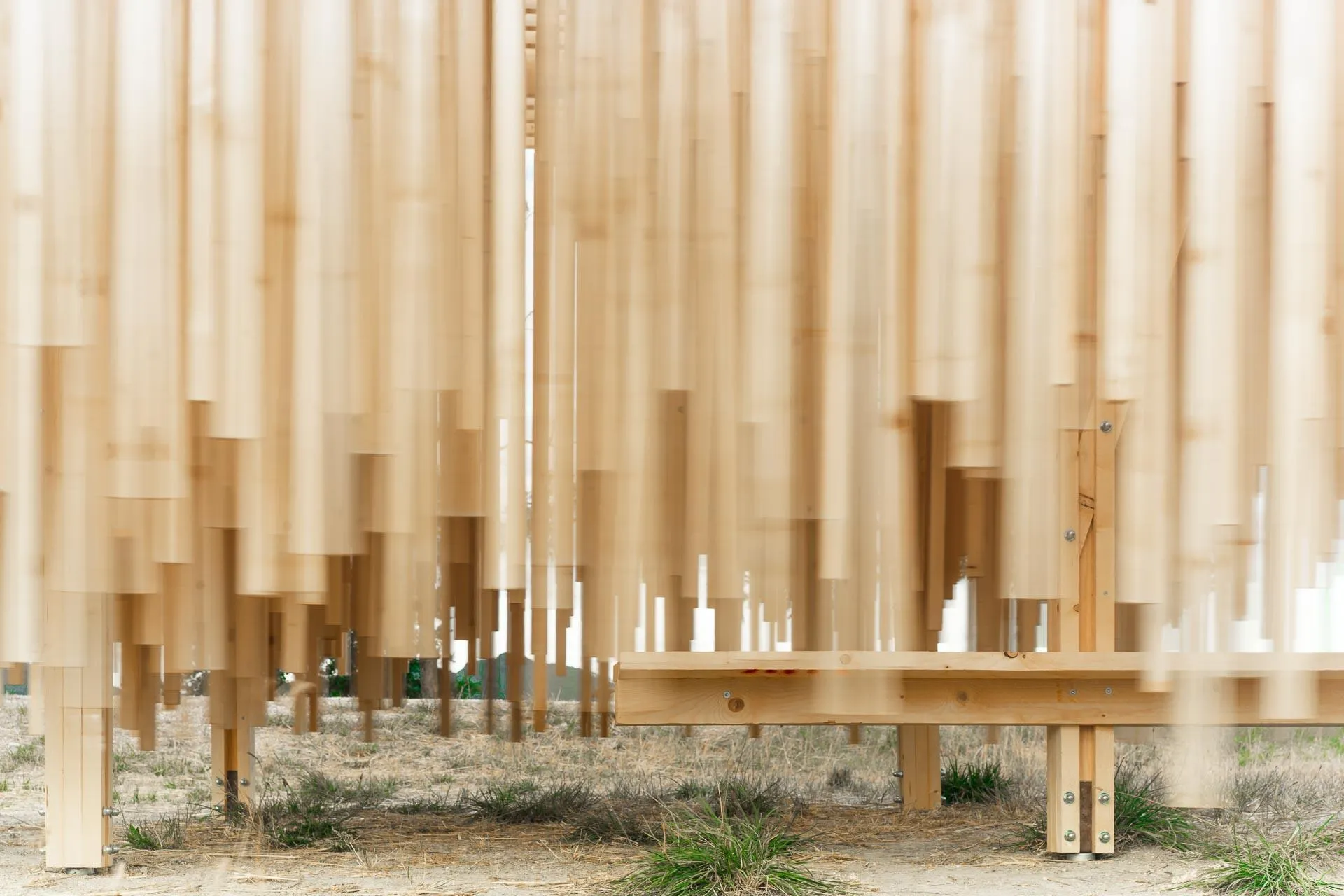
The pavilion transforms the language of architecture from seeing to listening, allowing the structure to emerge directly from the surrounding grain fields. It is a habitable sculpture that transforms the invisible currents of the air into a tangible, musical experience, proving that even the most temporary and small-scale interventions can have a lasting resonance in the field of contemporary design.
The Architecture of the Wind
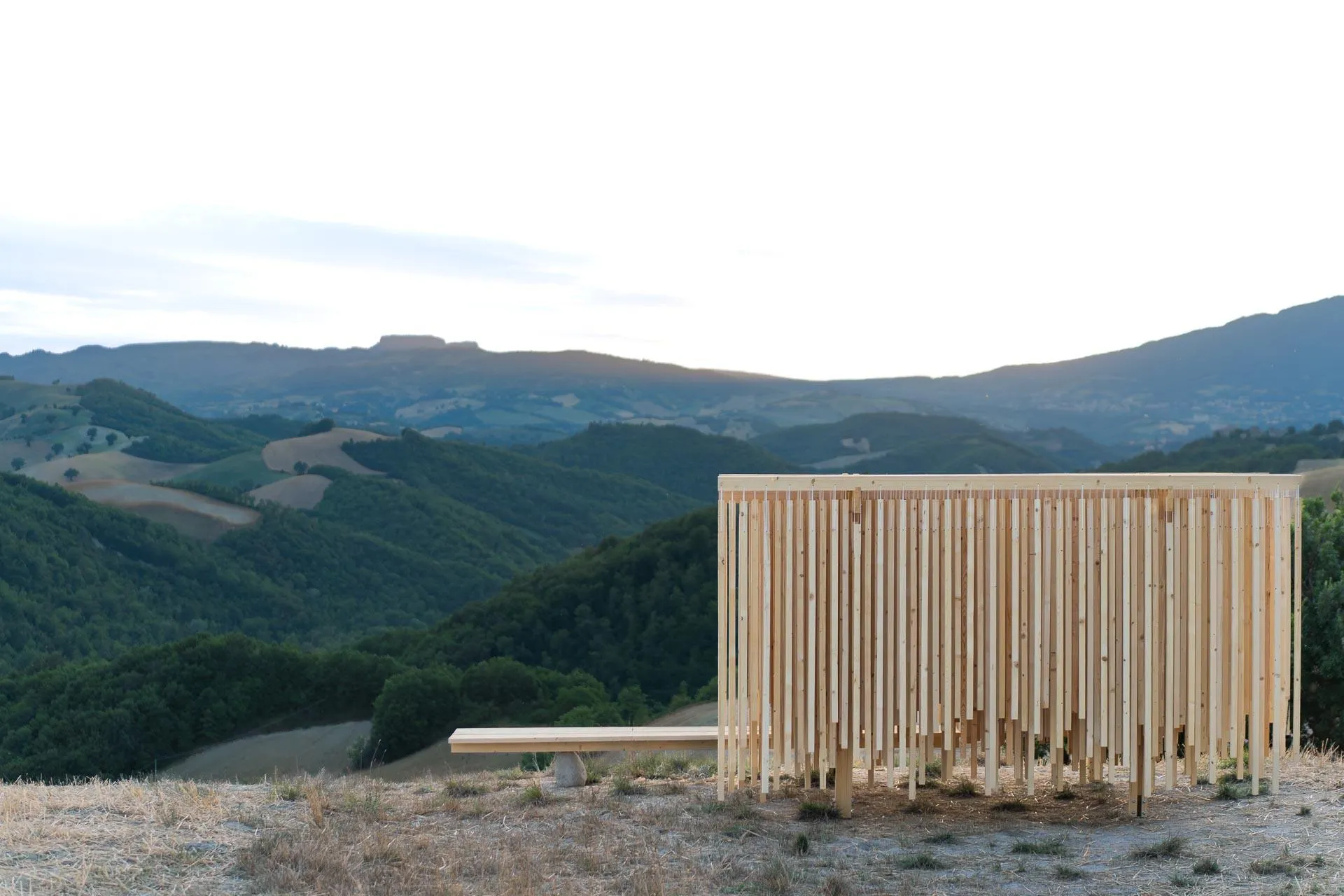
The striking feature of the Lunano pavilion is its internal array of sounding elements. These elements were developed through a collaboration between Studio Carraldo and a local piano maker from the town of Lunano. The sounding woods are calibrated with mathematical precision to generate different notes of the C-major scale. Each element features precisely drilled holes at the base, functioning as resonance chambers that amplify the vibrations created when the slats sway in the wind.
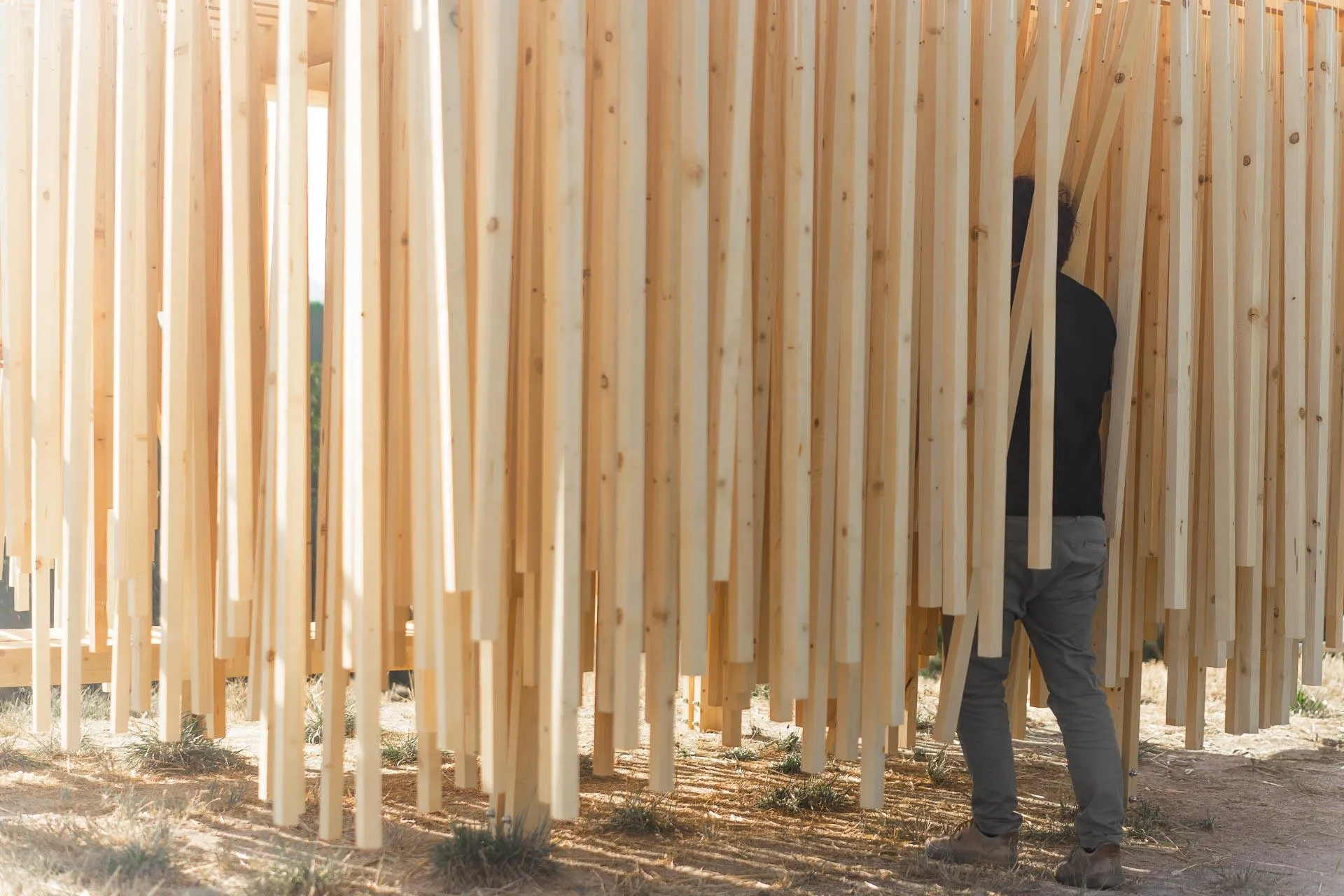
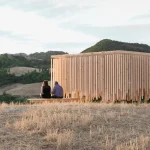
The slats are suspended at their vibration nodes to ensure maximum sound quality and prevent the suspension threads from dampening the resonance. The pavilion resembles a giant Aeolian instrument, resulting in a subtle wind symphony that varies according to the wind currents. The built-in bench within the pavilion extends from the interior to the exterior, inviting visitors to rest, observe, and listen. This design approach encourages a slow, contemplative form of tourism that supports the local community.
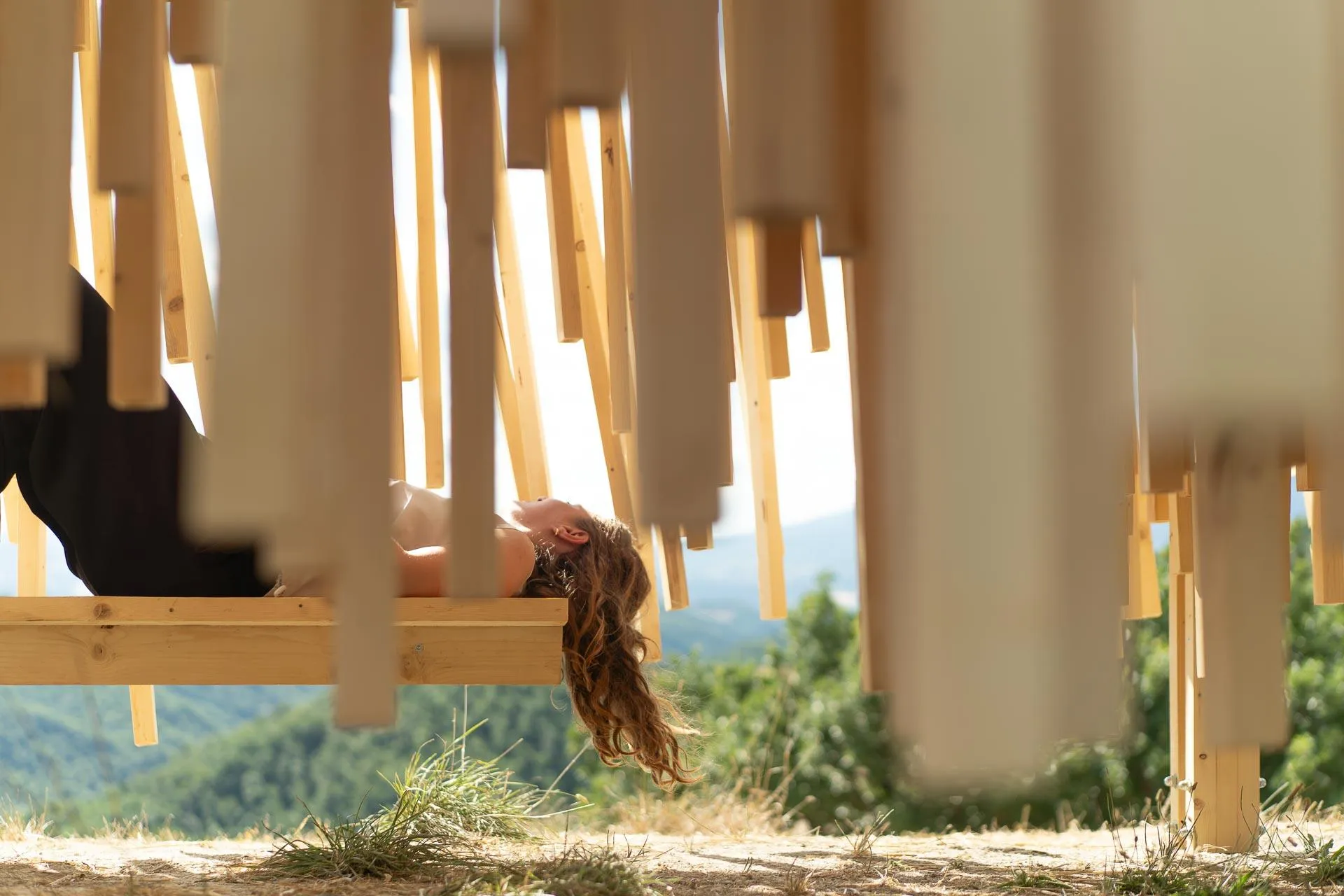
By winning the Festival di Microarchitettura 2025 and being nominated for the 2026 Wood Architecture Prize, organized by Klimahouse and Fiera Bolzano, the sustainable installation emphasizes the temporary character of the lightweight structure, which prioritizes sound and atmosphere. In the Cappella del Suono, the interaction between human and non-human elements, such as wind, wood, and visitors, creates a random yet harmonious relationship that feels profound.
Photo Credits: © Studio Carraldo