

The 40th-anniversary edition of Burning Man 2026 brings monumental pavilions, parametric timber construction, interactive light installations and immersive public art to Nevada’s Black Rock Desert.
A temporary city built around connection
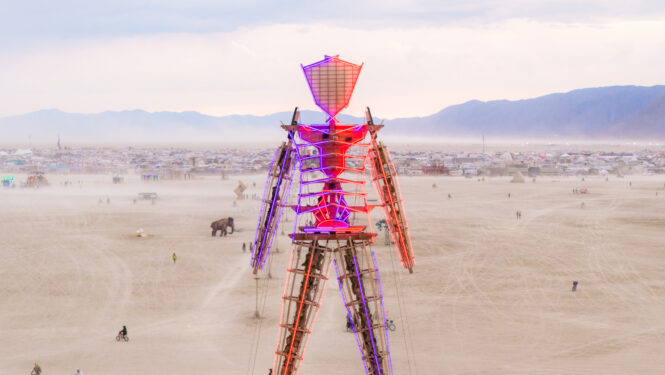
Burning Man 2026 is taking place in Nevada’s Black Rock Desert from August 30 through September 7. During the event, thousands of participants transform the remote playa into Black Rock City, a temporary settlement with radial streets, communal camps, performance spaces and large-scale art installations. After the festival, the city will be dismantled and the desert restored.
This year’s theme, Axis Mundi, explores the idea of a symbolic center connecting the earth, the sky and the human world. The concept has shaped the city’s street names, public artworks and central structures, giving the 2026 edition a strong architectural focus.
Burning Man 2026 Project’s annual art program includes funded Honoraria projects alongside hundreds of independently produced installations. The 2026 works bring together architecture, sculpture, engineering, traditional craft, sound, light and digital fabrication. Many are designed for climbing, walking, touching or collective interaction, making visitors active participants in the work rather than distant observers.
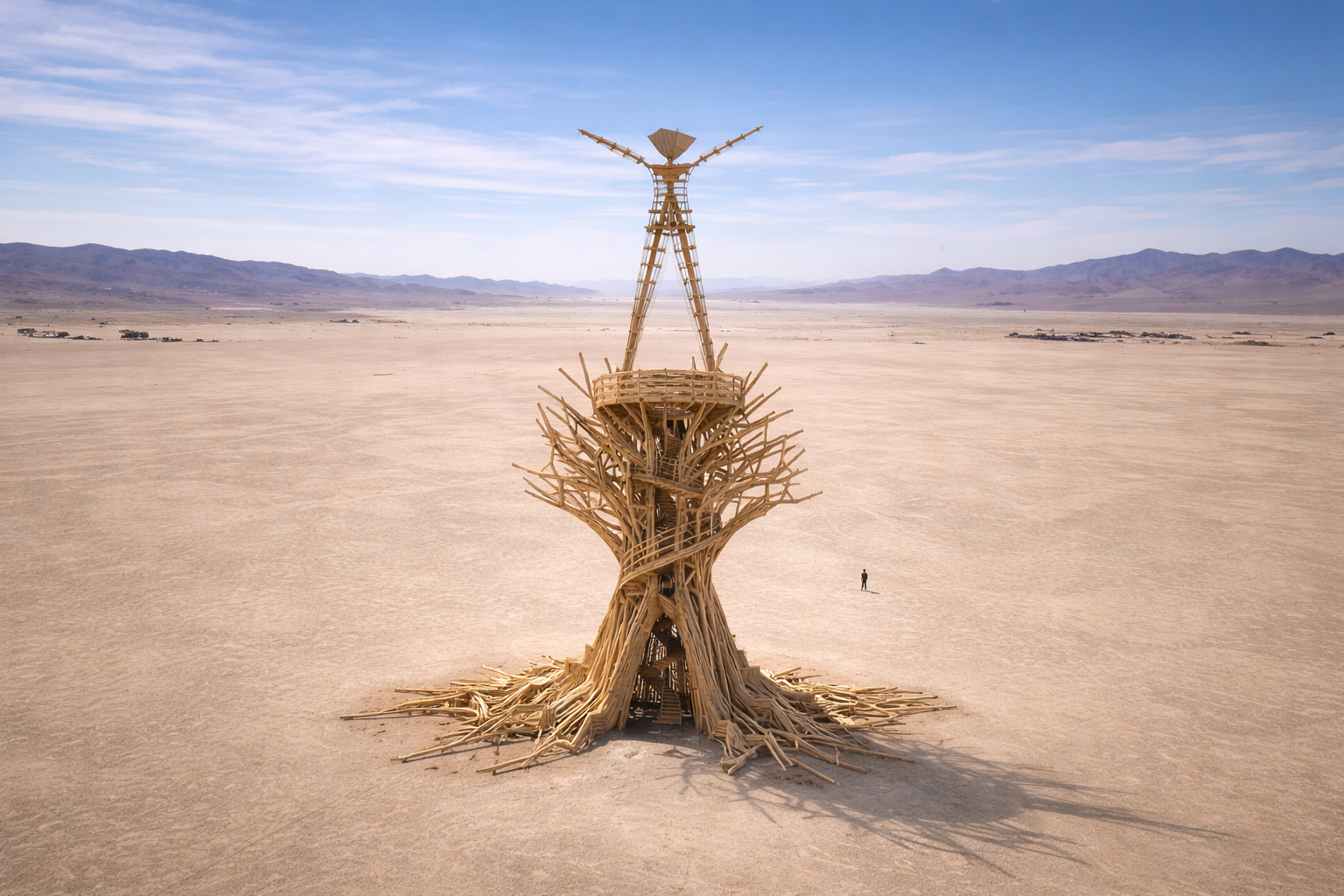
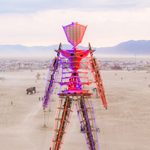
At the center of Black Rock City is Cryptomeria, the pavilion supporting the Man. Designed by Alexander Rose, the project draws from the roots and branching form of an ancient Japanese cedar. Its routes move through root-like elements before rising toward the central figure. A second spiral creates a continuous journey through the structure, linking the ground and upper levels.
The pavilion translates the Axis Mundi theme into a physical experience. Participants encounter the work through movement, elevation and changing views across the playa. Its design also reflects Burning Man’s approach to architecture, where a structure functions as a meeting place, route and public artwork at the same time.
Here are six projects that define the architectural and design landscape of Burning Man 2026.
Monumental installations define the 2026 playa
Temple of the Moon
Designer: James Gwertzman with the Moonlight Collective and Temple Build Crew
Type: Parametric timber temple
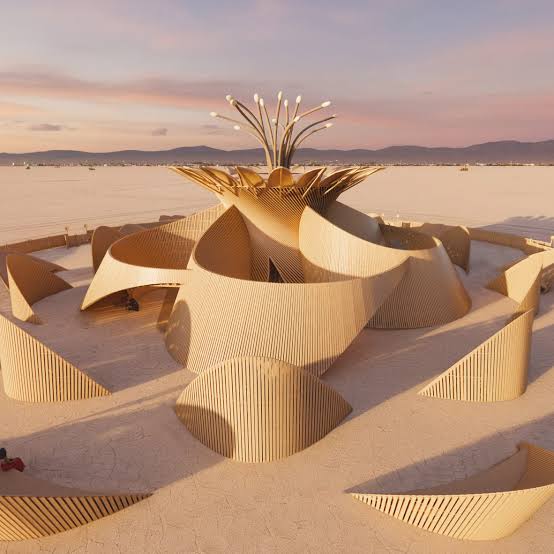
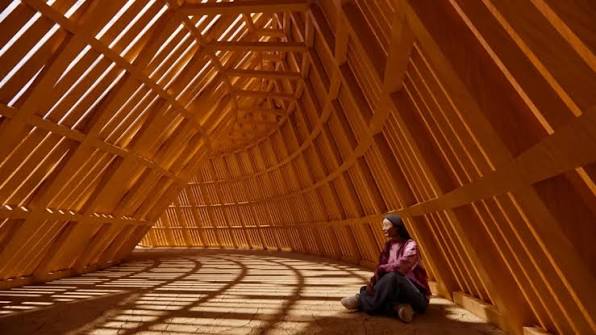
The Temple of the Moon is one of the defining architectural projects of Burning Man 2026. Its form is inspired by the Queen of the Night, a cactus flower that opens after sunset and lasts for a short period. The approximately 170-foot-diameter structure uses parametric design to produce curved forms from relatively straight timber components, allowing complex spatial geometry while keeping parts practical to fabricate, transport and assemble in the desert.
Eight gateways around the perimeter represent the phases of the moon. Inside, layered arches create spaces for communal gathering, personal reflection and remembrance. The temple incorporates CNC-cut panels with community-submitted motifs, combining digital production with handcrafted elements and collective labor.
The project is designed to burn on September 6, continuing Burning Man’s tradition of creating architecture with a deliberately limited lifespan. Its destruction forms part of the design narrative, connecting construction, occupation and release.
Cryptomeria: The 2026 Man Pavilion
Designer: Alexander Rose
Type: Participatory pavilion supporting the Man
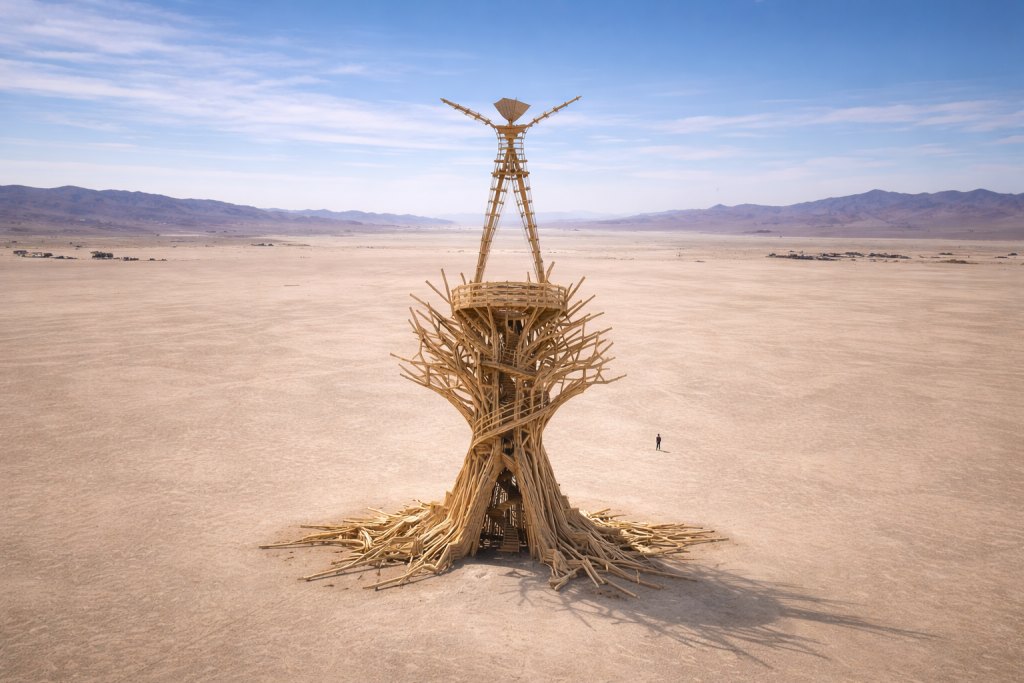
At the center of Black Rock City is Cryptomeria, the pavilion supporting the Man. Designed by Alexander Rose, the project draws from the roots and branching form of an ancient Japanese cedar. Its routes move through root-like elements before rising toward the central figure. A second spiral creates a continuous journey through the structure, linking the ground and upper levels.
The pavilion translates the Axis Mundi theme into a physical experience. Participants encounter the work through movement, elevation and changing views across the playa. Its design reflects Burning Man’s approach to architecture, where a structure functions as a meeting place, route and public artwork at the same time.
Eiffela Broken Dream
Designer: Philippe Maindron
Type: Fractured steel monument
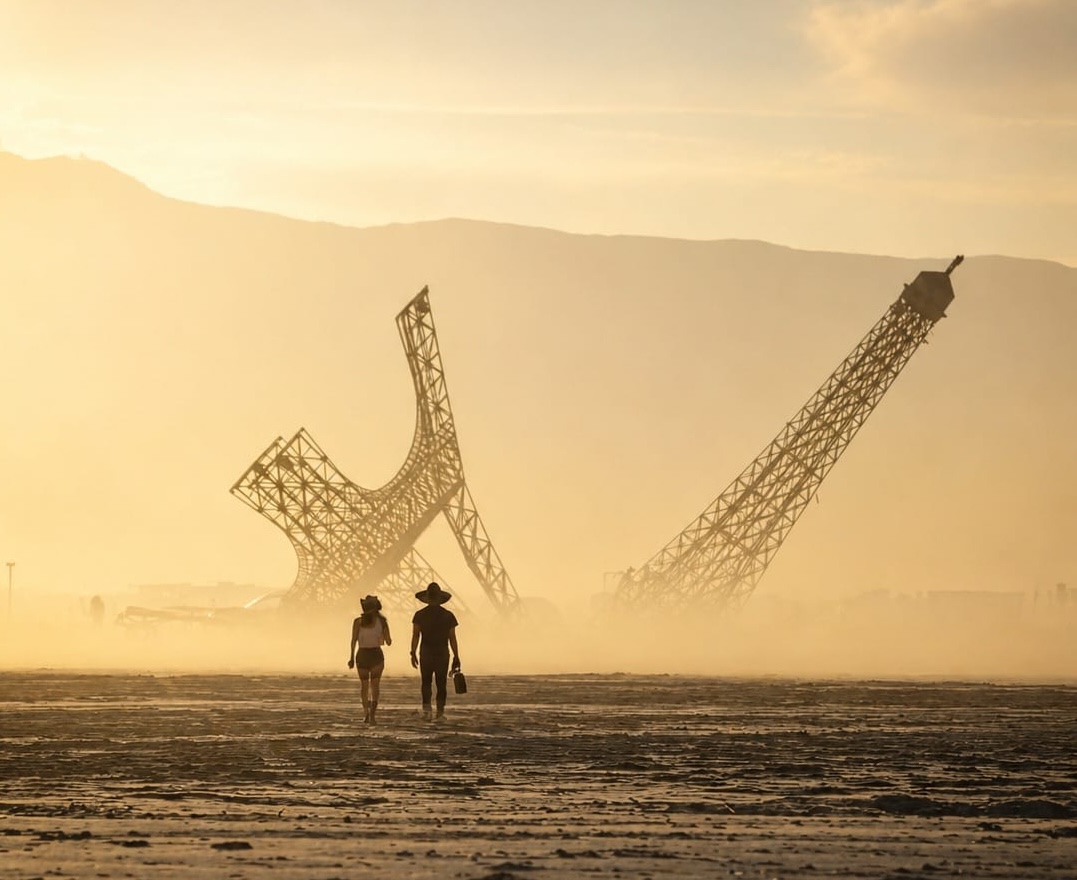
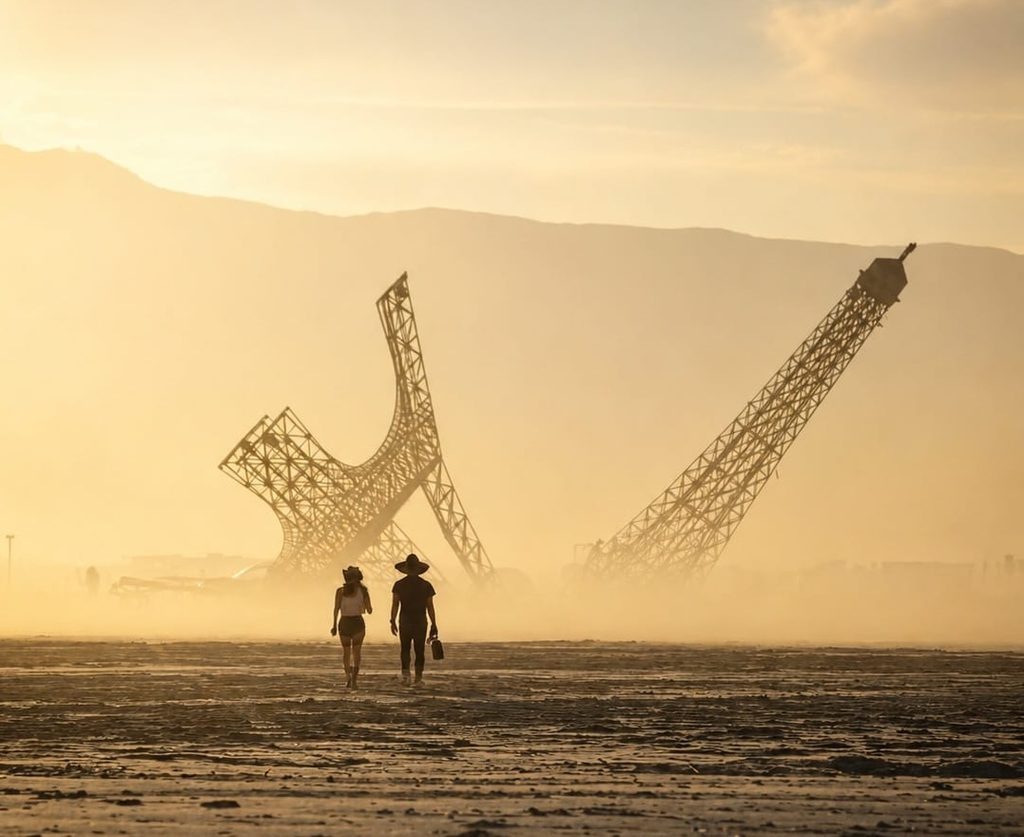
Eiffela Broken Dream, created by French artist and festival organizer Philippe Maindron, presents a 29-ton steel replica of the Eiffel Tower split into two halves. The structure is assembled from 5,000 individual pieces connected by 10,000 bolts. After a 50-day journey from Vendée, France, including transport through the Panama Canal and 600 kilometers of overland travel to Nevada, the installation was reassembled on-site in just 72 hours.
The work functions as both a sculptural object and a performance space. Tightrope walkers traverse a cable connecting the two broken sections, turning the fractured monument into a stage for human movement and risk. The project required two years of development and a budget approaching €300,000, funded partly through community support rather than corporate sponsorship.
Above & Below
Designer: Sean Orlando with Engineered Artworks and Five Ton Crane Arts Collective
Type: Immersive treehouse sculpture
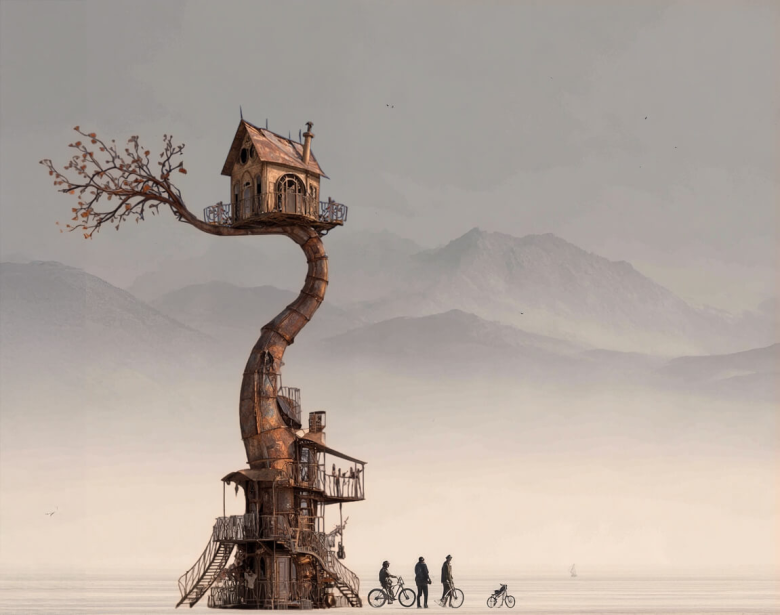
Above & Below takes the form of an interactive metal treehouse, with a small dwelling perched atop a twisting beanstalk-like structure that connects two imaginative worlds. The installation continues Orlando’s long exploration of immersive, story-driven environments built for curiosity and discovery. Inspired by fatherhood and fairy-tale imagery, the work incorporates magical objects, hidden spaces and climbable routes that encourage participants to move through the structure rather than observe it from a distance.
More than 130 artists, fabricators, designers, volunteers and engineers contributed to the build, which was completed in under four months. The project demonstrates how Burning Man architecture often depends on physical participation, with balance, movement and cooperation shaping the experience.
TITANIC
Designer: Titanic’s End collective | Justin Kan & Nicholas Parasram
Type: Monumental explorable sculpture
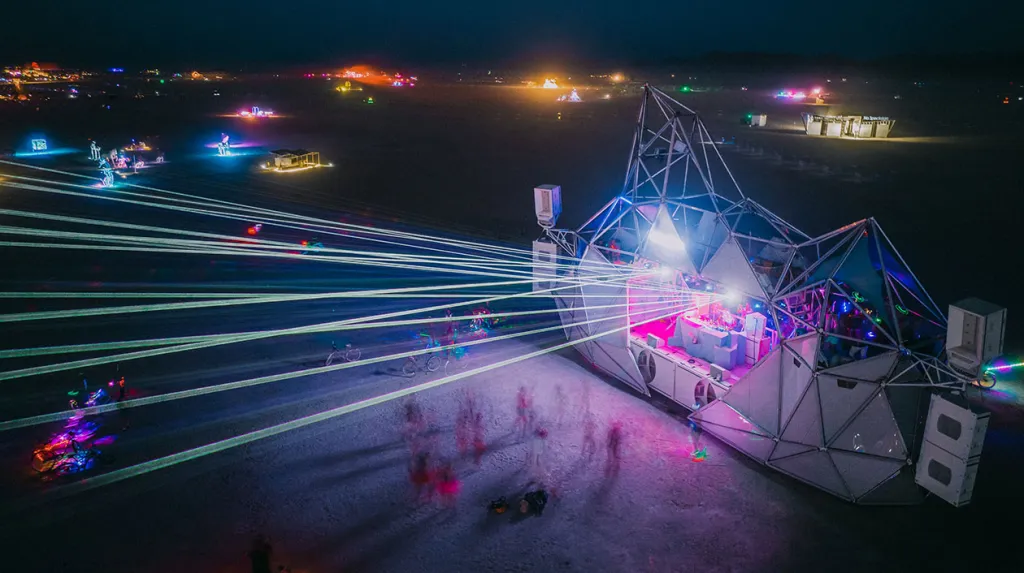
TITANIC presents a monumental sinking ocean liner as an explorable environment on the playa. The fragmented ship creates walk-through spaces that allow visitors to enter, navigate and reflect on themes of industrial ambition, environmental vulnerability and collective memory. The installation is scheduled to burn on Friday, September 4, at sunset, completing its narrative arc through the ritual destruction that defines many Burning Man projects.
The project uses the image of a famous ship to address themes of fragility and ecological responsibility, transforming a recognizable symbol of industrial achievement into a meditation on impermanence.
Resonant Spire
Designer: Sergei Konchekov
Type: Interactive light and sound tower
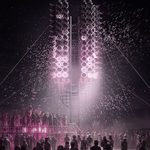
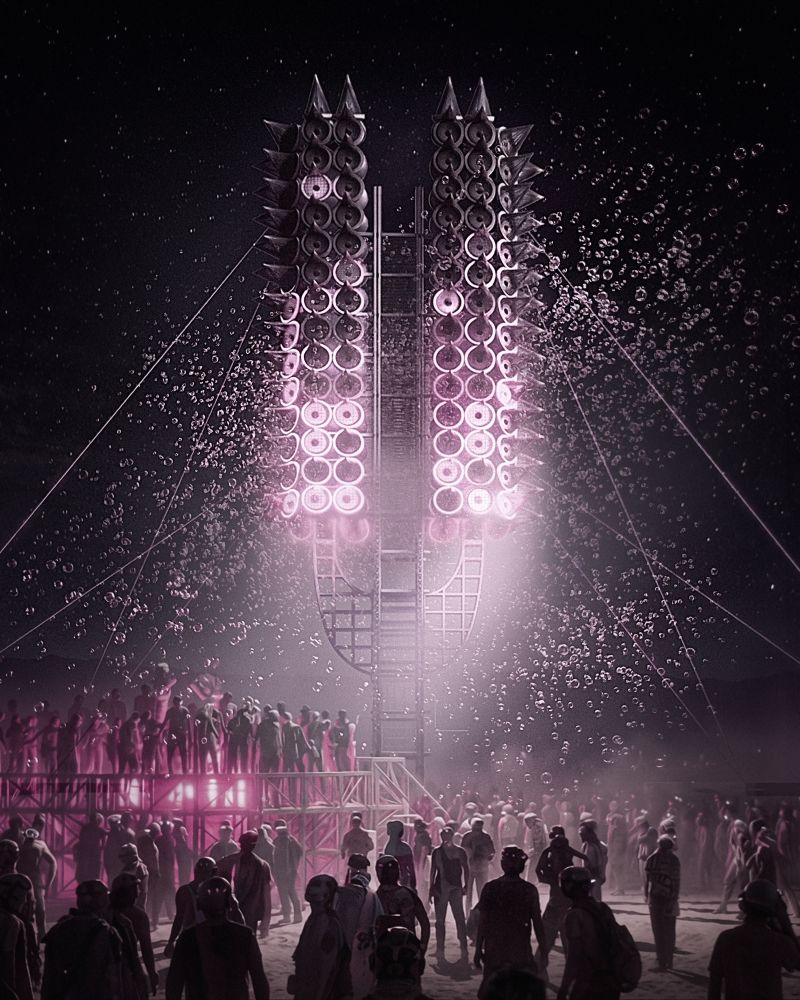
Axis Mundi: Resonant Spire explores the relationship between architecture, sound and group participation. The tower incorporates approximately 300 programmable rings of light. Visitors speak toward the structure, and their voices influence its lighting and sound responses. The installation changes according to the people gathered around it, turning a vertical landmark into a temporary public instrument.
From a design perspective, the project links geometry, interface and social purpose. Its height gives the work a civic presence, while its responsive system makes the surrounding crowd part of its operation. The result is closer to a temporary public instrument than a conventional sculpture.
Architecture designed to disappear
The construction of Black Rock City demands the precision of permanent architecture, even though the buildings will soon be removed. Designers and builders must account for high winds, intense heat, dust, fire safety, transportation and heavy public use. Parametric workflows can support this process by helping teams adjust dimensions, coordinate components and prepare fabrication files for complex structures.
Burning Man 2026 presents a different model of architectural value. The projects are not measured by permanence or commercial utility. Their importance comes from the encounters they create during a brief period in the desert.
When the event ends, the pavilions, temples and towers will disappear from the playa. Their materials may be dismantled, reused or stored, while the knowledge gained through collaboration continues into future projects. Black Rock City’s most significant achievement may therefore be its ability to demonstrate how architecture can be temporary, participatory and deeply connected to place.