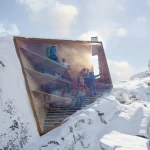
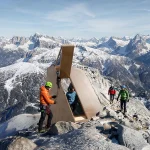
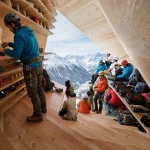



Italian studio CRA-Carlo Ratti Associati, in collaboration with Salone del Mobile.Milano has unveiled a digitally fabricated Alpine bivouac that will debut as an urban pavilion for the 2026 Winter Olympics in Milan. After the Games, they will relocate it from the city to the mountains, where it will serve as a permanent refuge for mountaineers at a high-altitude Alpine site.
Design inspired by Crystalline Alpine Formations
Carlo Ratti said, “Unfortunately, today bivouacs often look like airships that have landed on our beautiful alpine landscapes. Here, we took the opposite approach: a structure that blends as much as possible with the surroundings. Great 20th-century Italian architect Gio Ponti once said that architecture is ‘like a crystal.’ We took that literally in this design, using digital fabrication to design a bivouac as if it were part of the natural rock formations that shape the Alps.”
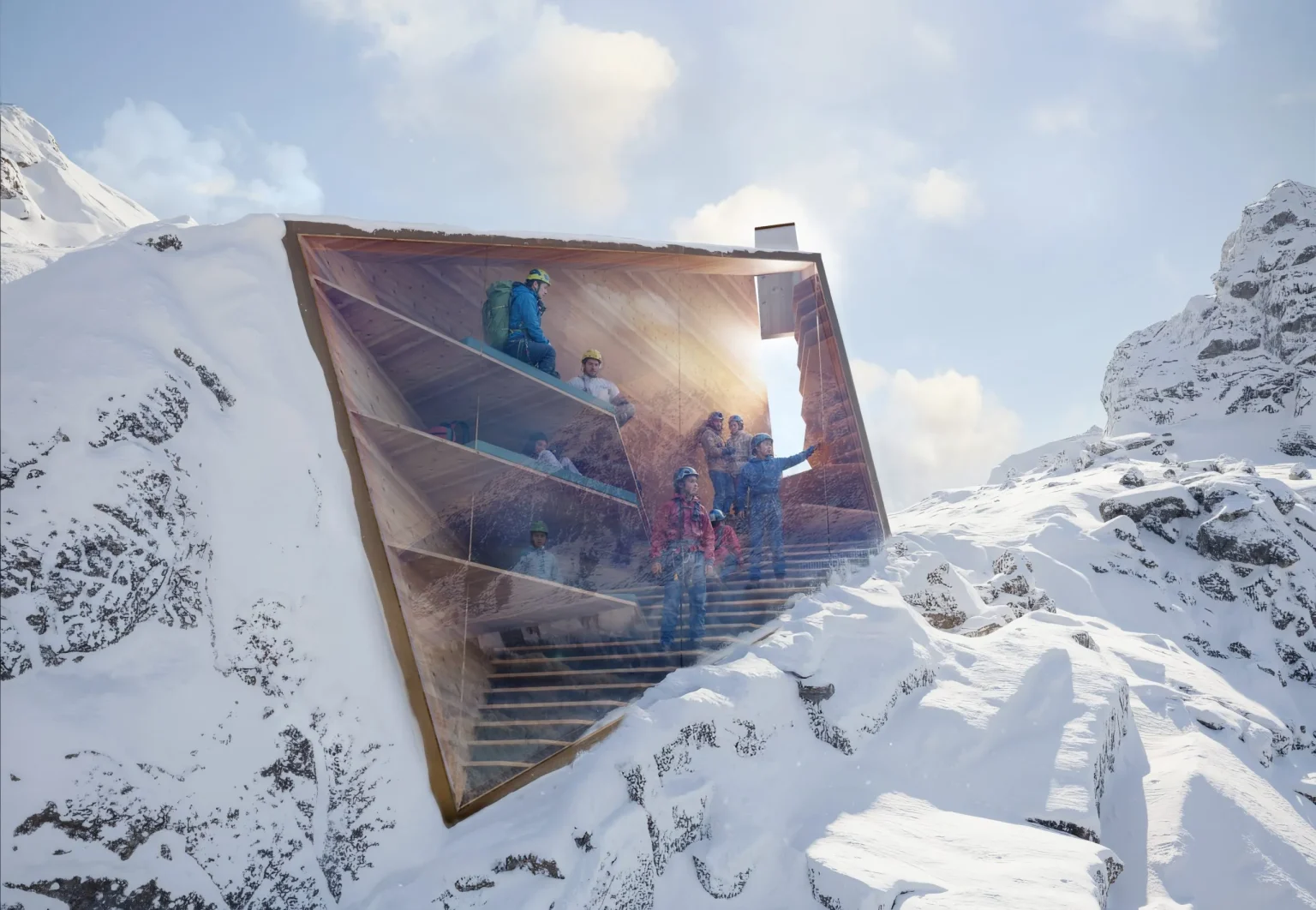
The design philosophy of this pavilion aims to “dissolve the boundary between nature and human-made structures” by integrating technologies for energy production, storage, and water harvesting. This approach began with a 3D scan of Alpine rock formations, which produced a precisely shaped angular model that directed the bivouac’s geometry while reducing its visual impact. It has an outer shell of cross-laminated timber (CLT), aerogel insulation, and a metal layer for durability against snow, ice, and wind.
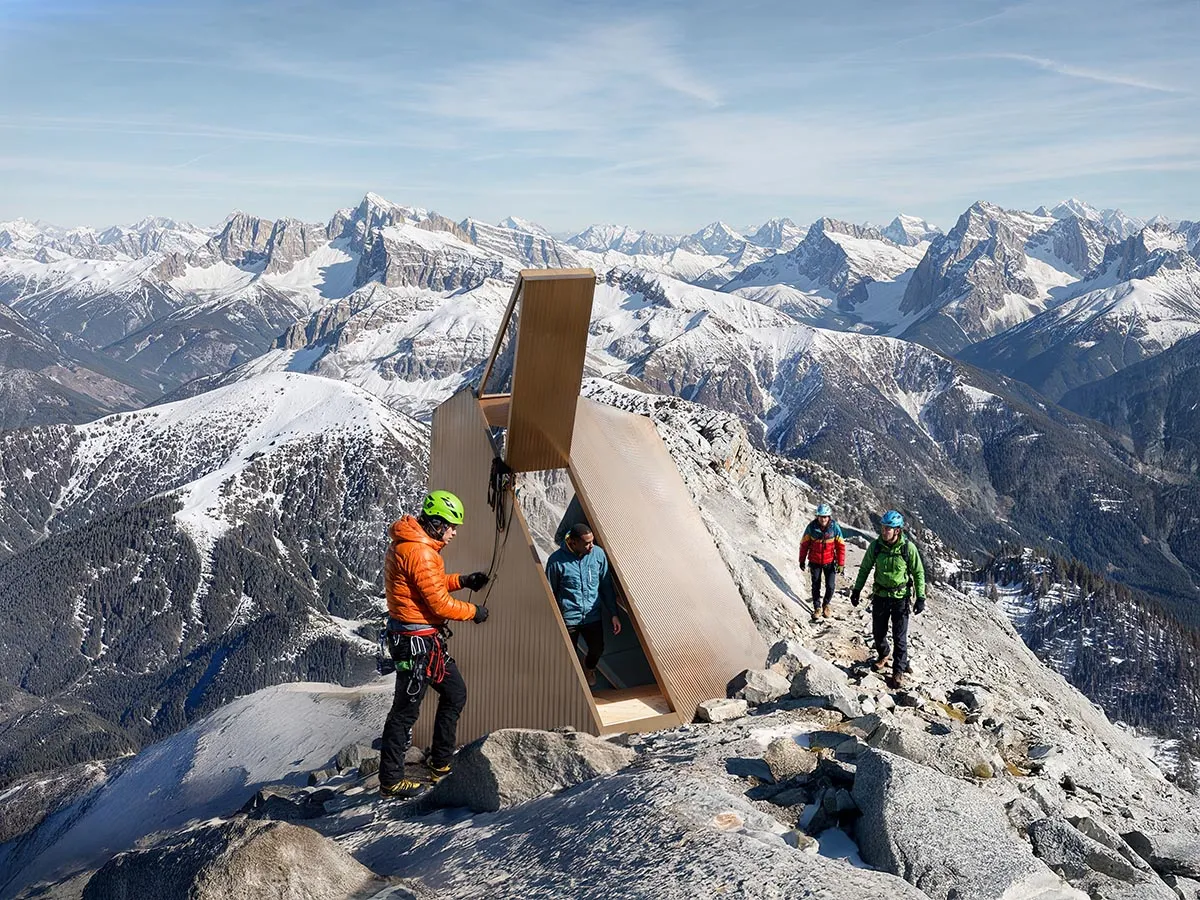
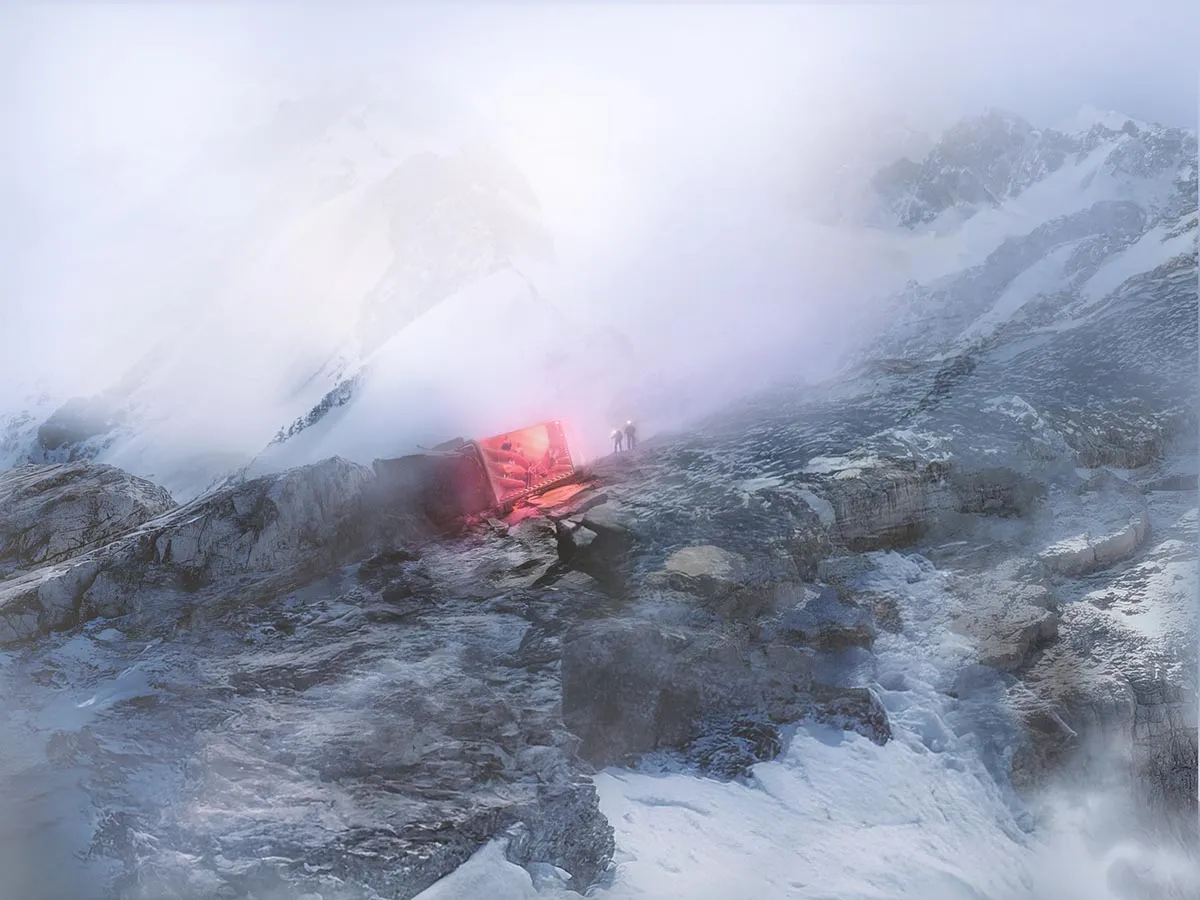
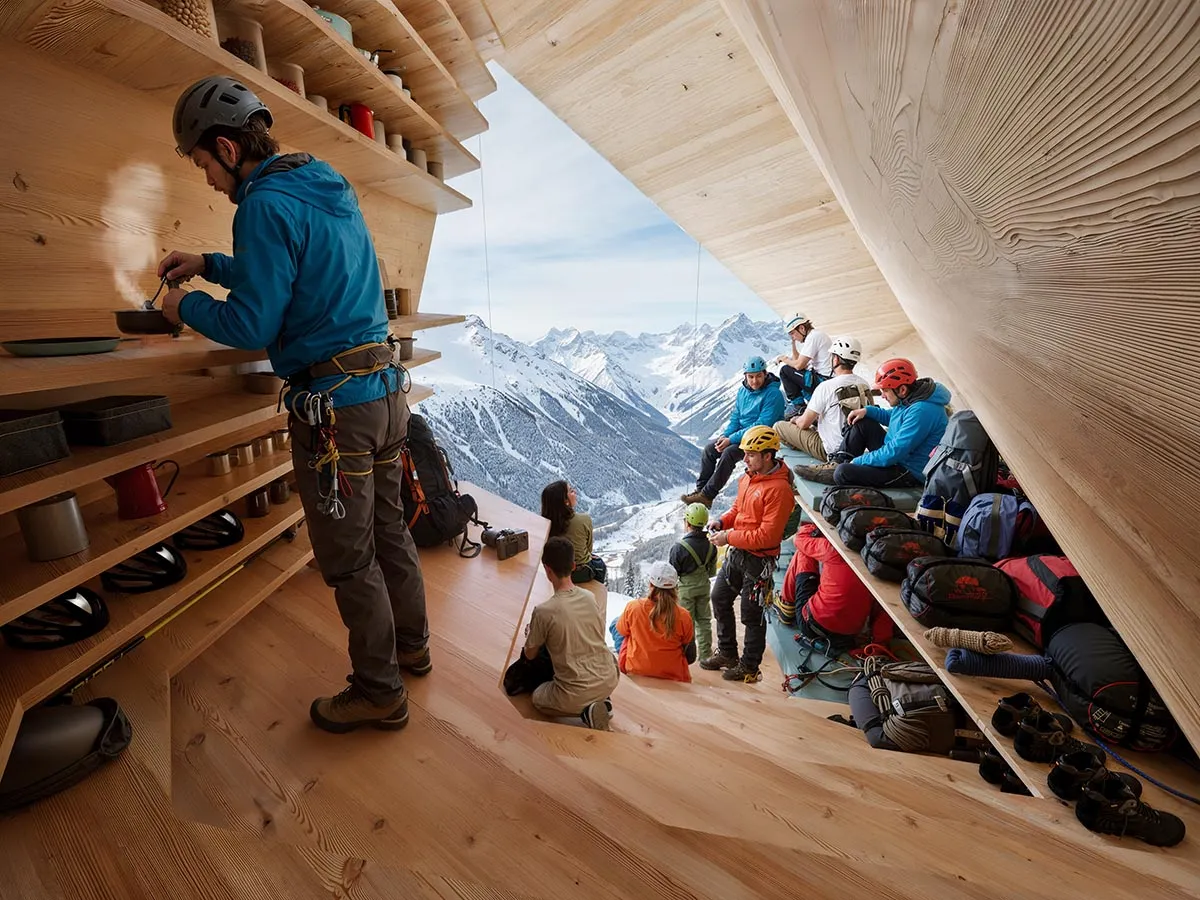
Unlike traditional brightly colored bivouacs used for visibility in fog or low light, this shelter has a more subtle appearance with a bright red safety light that automatically activates in low visibility to guide mountaineers. It features a vertically opening door and a large glass wall that opens the interior to sweeping mountain views, filling the area with natural light. While the timber-lined interior gently steps down toward the glazed façade, creating a warm yet minimal retreat for rest, sleep, and shelter from sudden weather changes.
Self-Sufficient Systems for Survival
The bivouac features a five kW peak photovoltaic system with integrated battery storage, which keeps lighting, sensors, and digital communication functional even when there is no sunlight. In addition to this, the air-condensation system extracts moisture from the air, producing several liters of potable water every day.
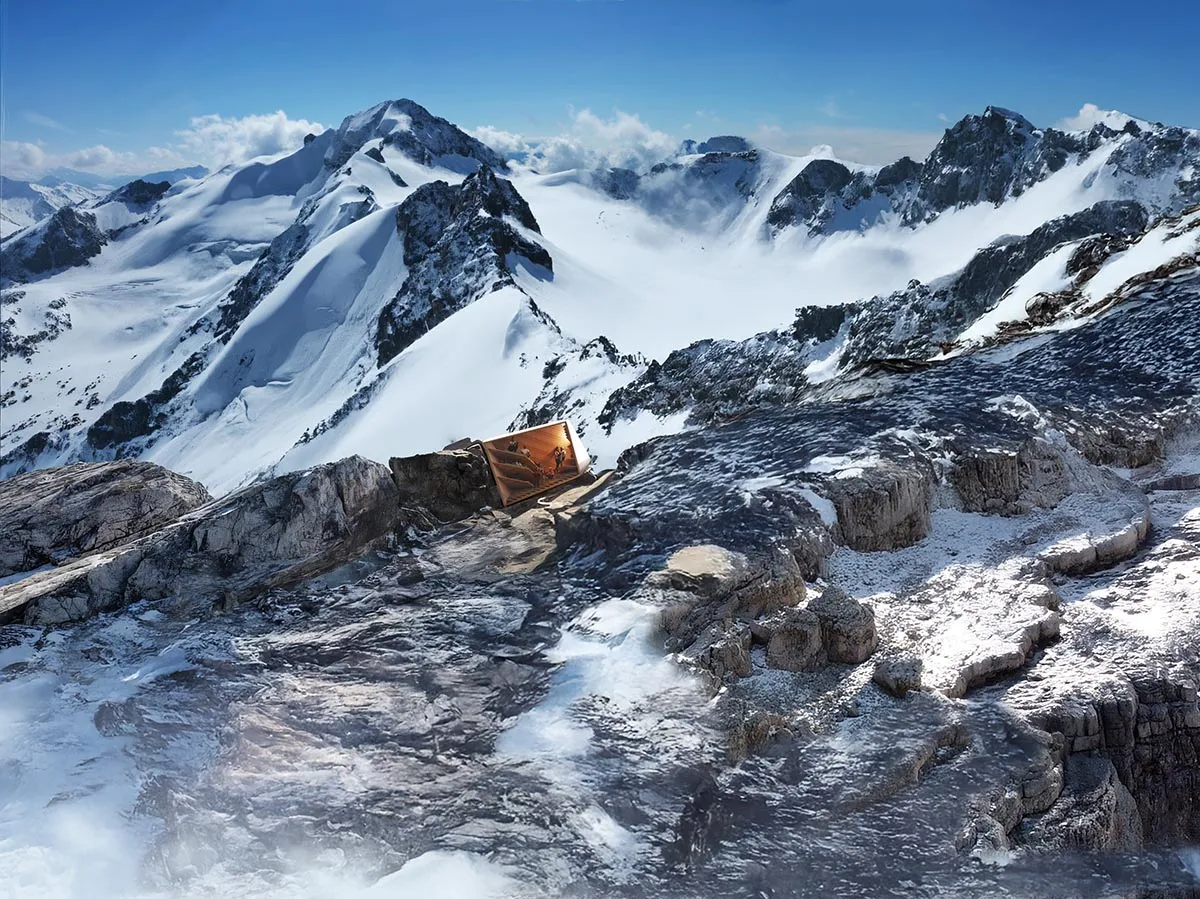
Salone del Mobile.Milano president Maria Porro said, “For the Salone, the bivouac by Carlo Ratti Associati conveys a vision of design we share—one capable of blending landscape, innovation, and respect.”
Two-Phase Circular Lifecycle
Phase One: It will appear in Milan during the 2026 Winter Olympics as a temporary pavilion promoting architecture and environmental innovation to the general public.
Phase Two: After the Games, the team will dismantle the structure, airlift it to the Alps, and reassemble it as a permanent mountaineering shelter.
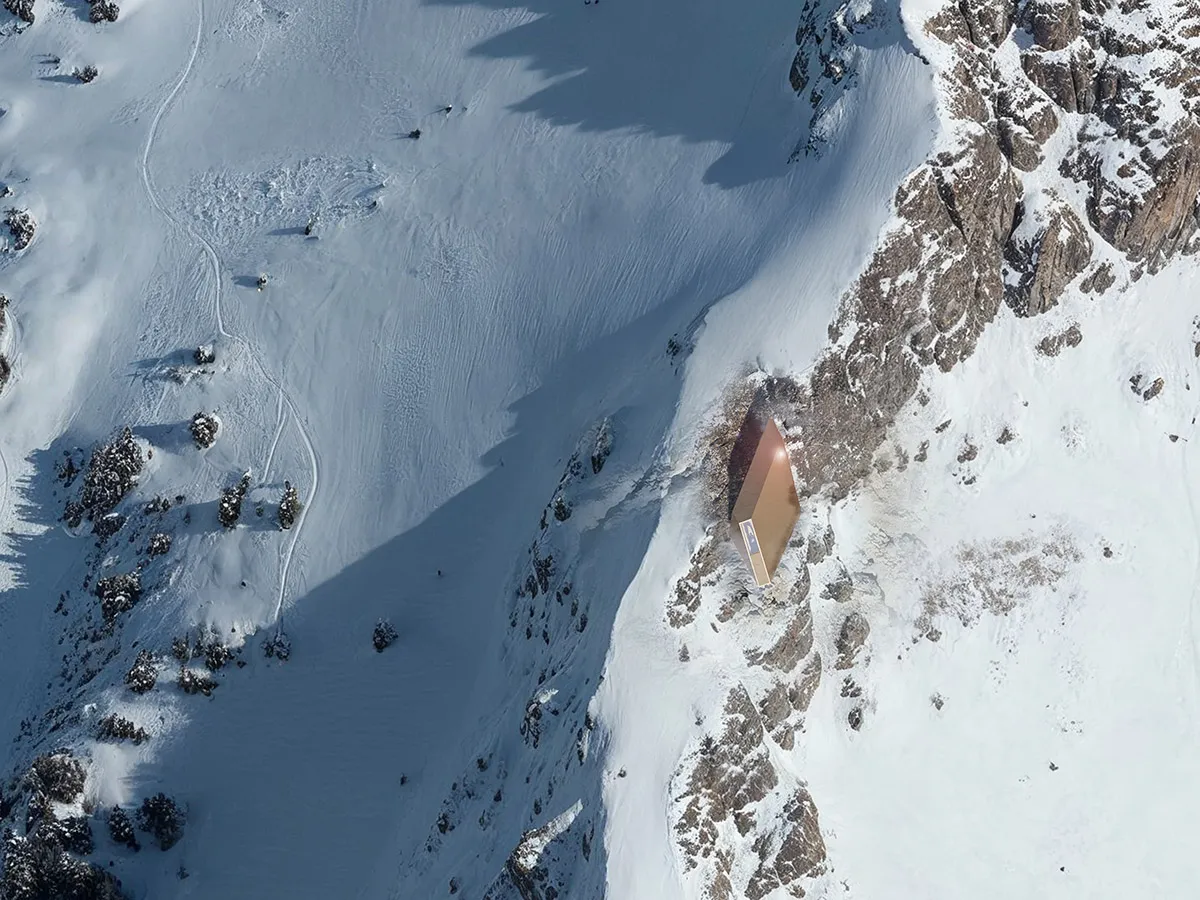
Porro says the project reflects a future where architecture works with nature rather than against it, using wood as a material that naturally interacts with the terrain. Its journey from Milan to the Alps expresses a shared commitment to circular and responsible design while reflecting CRA’s larger goal of integrating natural and artificial systems.
Bivouac Project Details
Architect: Carlo Ratti Associati
Completion: 2026
Image credit: © Carlo Ratti Associati