
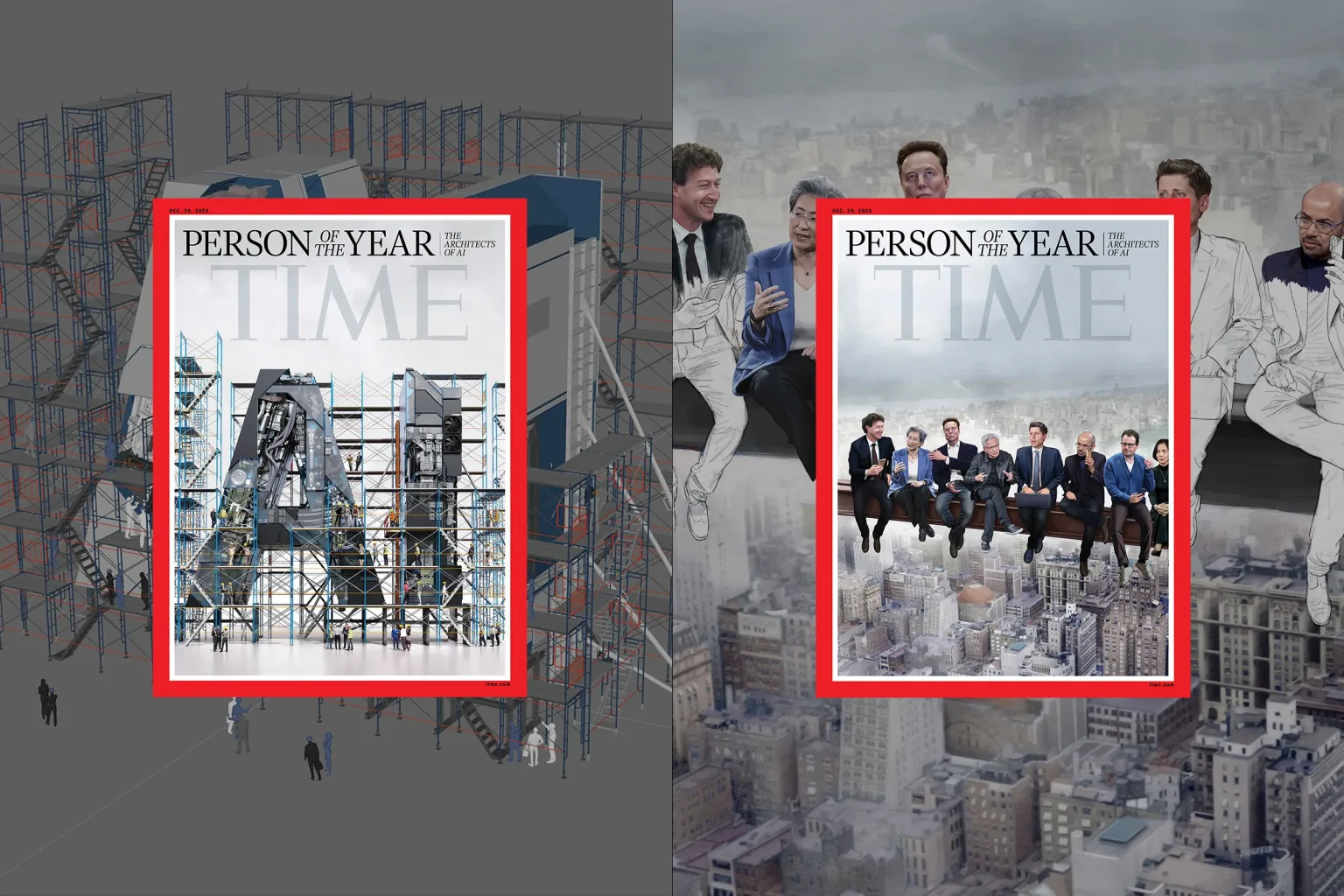

TIME magazine has named the “Architects of AI” as its Person of the Year for 2025, spotlighting the people behind the rapid spread of artificial intelligence and its deep impact on global life and work. The announcement was made on Thursday, the magazine said, marking a choice aimed at reflecting how this group shaped headlines and everyday experience throughout the year.
The honor is given to the person, group, or idea that most influenced news and public discussion over the year, whether for good or bad. In choosing the “Architects of AI,” Time focused not on the abstract idea of AI itself but on the individual leaders and innovators who built, guided, and pushed forward the technologies that are now widely used around the world.
Time described 2025 as the year when the potential and reach of AI became unmistakable. In its announcement, the magazine said these figures delivered “the age of thinking machines,” changing how people live and work while stirring both excitement and concern across societies.
Key figures associated with the group include top executives from major tech companies that led AI development this year, such as the heads of Nvidia, OpenAI, Meta, AMD, Tesla, DeepMind, and Anthropic. These leaders have been central in driving investment, research, and deployment of large AI systems used in everything from business tools to creative work.
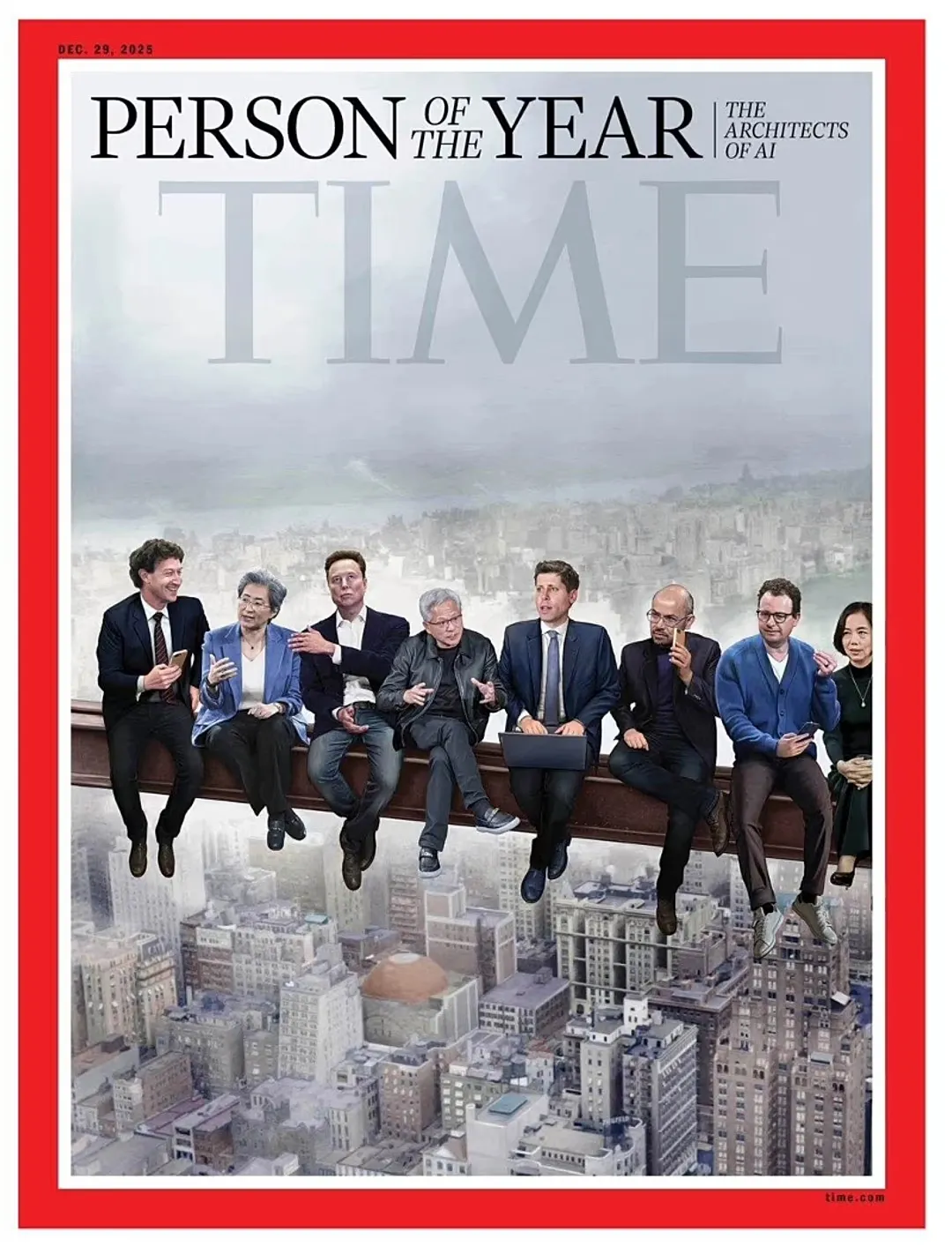
The 2025 Person of the Year cover visually highlights these individuals in a symbolic scene that evokes historical images of builders on a skyscraper beam, underscoring their role in shaping a technology that now touches many parts of life.
Time’s editors said the selection reflects both the broad influence and real-world effects of AI technology this year. AI has accelerated productivity in fields such as medicine and science. It has changed how software is written, how media is created, and how businesses operate. This widespread adoption helped push AI from a specialist tool into a part of daily life for millions of people.
At the same time, the rise of these technologies brought serious challenges and debates. Time noted that the spread of AI tools has raised questions about misinformation, job disruption, ethical use, mental health, energy consumption, and the concentration of economic power. These concerns have been part of public and political discussions around AI throughout the year.
Editors also pointed out that Time has sometimes recognized broad forces in past years, such as the personal computer in 1982 or the early users of social media in 2006, though the award is usually given to a person or small group. In this case, the “Architects of AI” represent a collective of leaders whose work had a defining effect on 2025.