


Alex Josephson & Arturo Tedeschi
Artificial intelligence has rapidly entered architectural practice, but much of the conversation remains focused on what AI can generate: images, models, renderings, and increasingly automated design workflows. For Alex Josephson, co-founder of Toronto-based architecture studio PARTISANS, and computational designer Arturo Tedeschi, this emphasis may be overlooking a much larger transformation.
In Episode 74 of Designing Forward, a podcast by Parametric Architecture, Josephson and Tedeschi joined host Hamid Hasanzade for a conversation about AI in architecture, computational design, software ownership, creative agency, and the future of architectural practice. Rather than asking whether artificial intelligence will replace architects, their discussion turned toward another question: Can architects use this technological shift to regain control over how they work?
From Computational Design to Artificial Intelligence
Tedeschi has worked at the intersection of architecture, algorithms, and computational design through several generations of digital transformation. Yet he sees the current AI moment as fundamentally different from the computational revolution that preceded it.
Parametric and algorithmic design were largely rooted in rational processes. Designers defined relationships, parameters, constraints, and objectives, translating a particular way of thinking into computational procedures. With generative AI and large language models, that relationship is changing. Designers can increasingly describe an objective and receive a result without explicitly constructing every intermediate step.
For Tedeschi, this shift could eventually lead toward highly personal design environments rather than universal software interfaces. He uses his own color blindness as a simple example: why should every designer use exactly the same interface when software could adapt itself to the individual using it?
This personalization also points toward a broader ambition. Tedeschi argues that architecture needs to move beyond a conversation dominated by technology itself. The goal should eventually be to make technology almost invisible, allowing architects to return their attention to space, perception, emotion, material, and architectural quality.
Alex Josephson: Architects Should Take Back Control
Josephson approached the AI debate from another direction: the economics and infrastructure of architectural practice.
Over several decades, architecture firms have accumulated increasingly complex software stacks for modeling, project management, image libraries, proposals, accounting, collaboration, rendering, scheduling, and administration. These systems often operate independently, forcing architects to move information manually between platforms.
Josephson argues that architects have contributed enormous expertise to this digital ecosystem without necessarily participating in the economic value created around it. His response is direct: architects should become more entrepreneurial and begin developing technologies around their own knowledge and workflows.
“We can build our own technology,” Josephson said during the conversation, describing the current moment as an opportunity to return agency to the profession. For him, the significance of AI is therefore not limited to generating architecture. It lies in making software development itself more accessible to architects.
PARTISANS has already begun experimenting with this proposition internally.
Rchy: An AI Platform Built Around Architectural Practice
During the podcast, Josephson demonstrated Rchy, an internal platform developed around PARTISANS’ workflows. Rather than attempting to automate the architect’s creative role, the system addresses what Josephson describes as the less visible infrastructure surrounding design.
Projects, team information, scheduling, marketing, image libraries, proposals, working hours, and business data can be brought into a shared environment. AI is then applied across this information to perform tasks such as categorizing architectural imagery, retrieving previous work, preparing proposal material, and connecting project information that would otherwise remain fragmented across multiple applications.
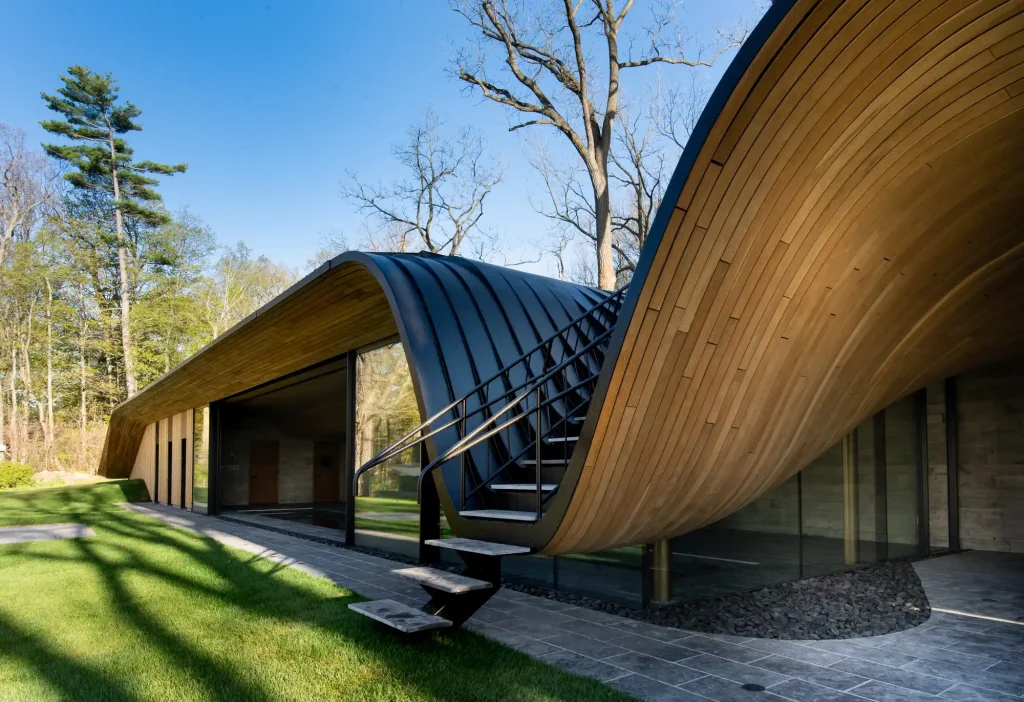
One example is proposal preparation. An architecture studio responding to an RFP may need to search years of projects, identify relevant imagery, assemble team experience, retrieve previous writing, and adapt everything to a new brief. Josephson explained that PARTISANS is experimenting with machine vision and language models to organize its accumulated knowledge and generate a substantial first pass of this work.
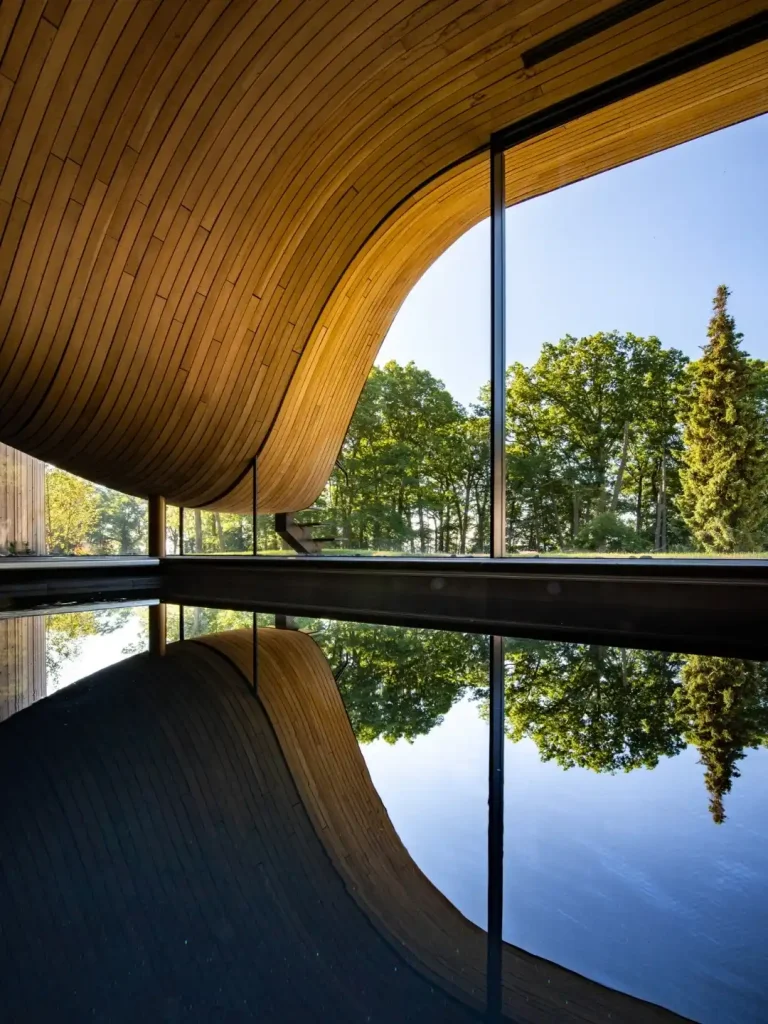
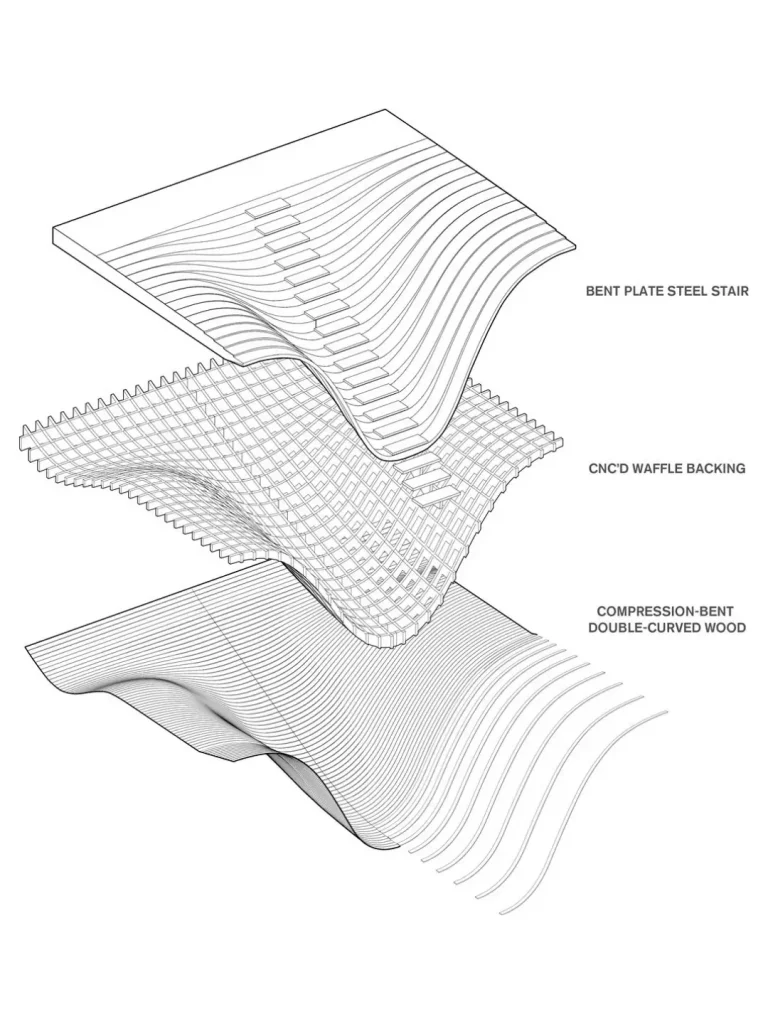
According to Josephson, PARTISANS has already eliminated approximately $60,000 in annual software costs by replacing several services with its own system, although major modeling platforms such as Rhino and Autodesk products remain part of the studio’s workflow. The larger ambition is not necessarily to rebuild every piece of software from scratch, but to question why architects accept fragmented digital environments as inevitable.
AI Architecture Is Still More Promise Than Transformation
Despite their enthusiasm about AI’s potential, both Josephson and Tedeschi were skeptical of some of the more dramatic narratives surrounding AI-generated architecture.
Tedeschi argued that AI has yet to produce a fundamental transformation in architectural quality. Much of what is currently presented as AI architecture, in his view, still applies new technology to existing processes rather than creating genuinely new architectural paradigms.


Josephson similarly distinguished between generating an architectural concept and delivering a building. Image generation may accelerate ideation and visualization, but architecture involves coordination, contracts, risk, technical knowledge, construction, materials, consultants, and an understanding of how things are actually made.
That distinction becomes particularly important when an AI-generated form moves toward physical construction. A compelling image does not explain how a complex facade should be divided, fabricated, transported, assembled, waterproofed, or maintained. Architecture still depends on accumulated knowledge of materials and craft.
For Josephson, this “invisible” knowledge represents much of the architect’s real value.
When Technology Becomes a Shield
Tedeschi pushed the discussion beyond productivity and into architectural culture. Technology, he suggested, can sometimes become a protective layer that prevents designers from confronting more difficult questions.
Every technology carries its own aesthetic tendencies. Parametric modeling, 3D printing, and now generative AI can each produce recognizable visual languages. When architects allow those tools to determine the architecture, technical sophistication can be mistaken for conceptual depth.
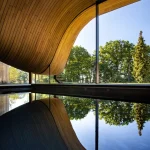
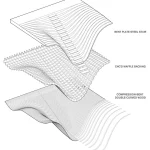
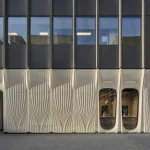
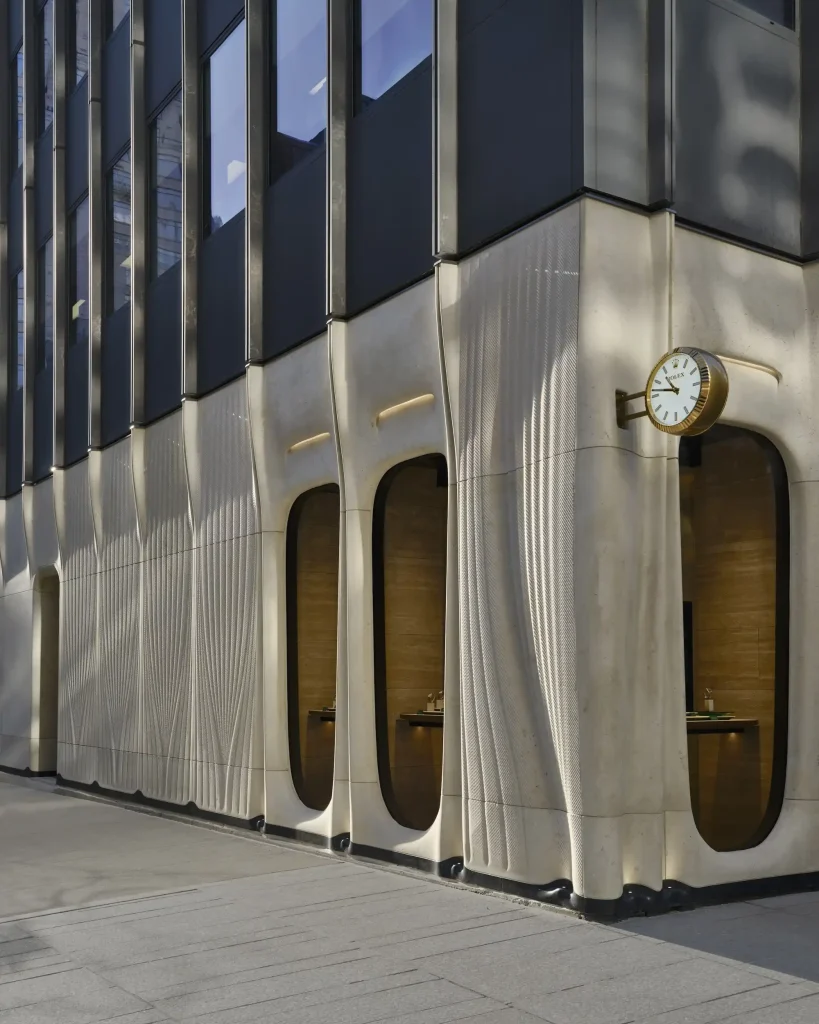
Tedeschi referenced his collaboration with Josephson on PARTISANS’ Rolex facade as an example of approaching the process differently. The project drew from ideas including Art Deco and Rolex’s oyster symbolism before computation and manufacturing technologies became mechanisms for realizing those ideas. The architectural narrative did not originate from the fabrication technology itself.
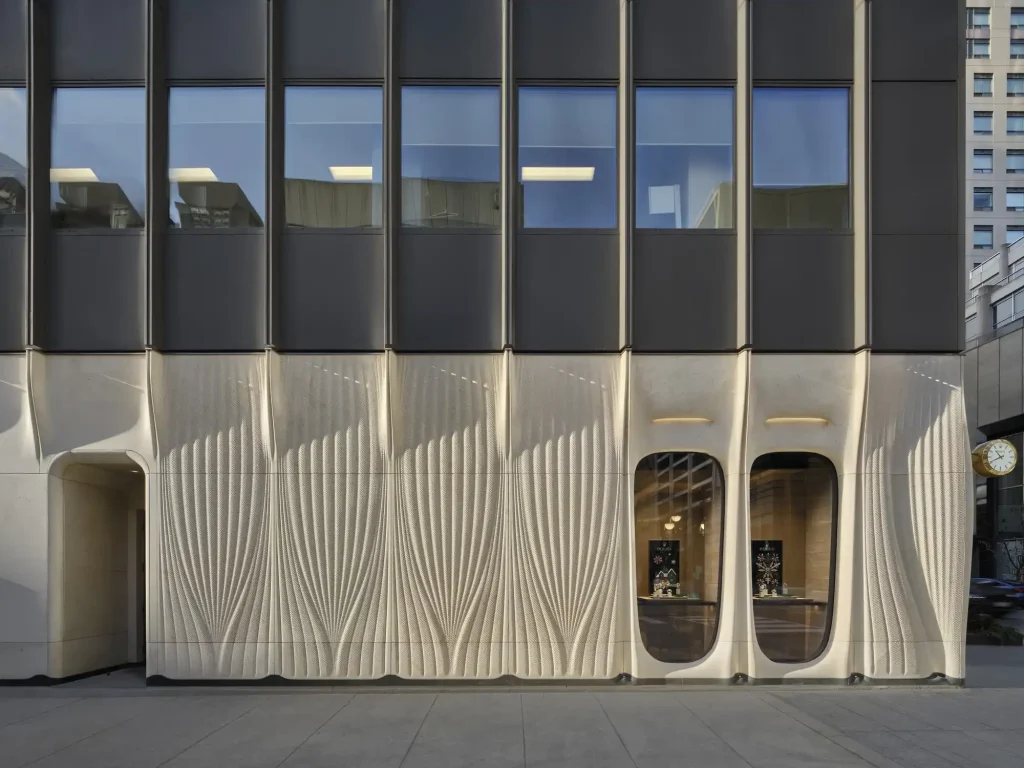
This may become even more important as AI lowers technical barriers. If almost anyone can generate sophisticated imagery or computational outcomes, architectural value may increasingly depend on what exists outside the software: history, references, storytelling, judgment, material knowledge, cultural understanding, and original thought.

The Future Architect May Also Be an Entrepreneur
The conversation ultimately returned to agency.
Josephson’s advice to architecture students was to think beyond the conventional trajectory of education followed by employment within an established practice. He encouraged emerging architects to become entrepreneurs, experiment with new models, and consider building the tools and businesses that will shape their profession.
Tedeschi offered a complementary perspective. Amid the enormous volume of AI tools, demonstrations, imagery, and marketing surrounding architects today, he encouraged younger designers to return to the original reasons they chose architecture.
Together, their positions suggest a different framework for discussing AI in architecture. The most consequential question may not be whether artificial intelligence can produce a building faster than an architect. It may be whether architects can use AI to remove technological friction while strengthening the distinctly human dimensions of architecture.
If technology eventually becomes as invisible as Tedeschi proposes, the conversation can return to architecture itself. And if architects can control more of the digital infrastructure behind their work, as Josephson argues, AI could become not simply another technology imposed upon the profession, but an opportunity for architects to redefine their own tools, economics, and creative agency.
Prefer to listen? Tune in to Episode 74 of Designing Forward on Spotify and hear the full conversation with Alex Josephson and Arturo Tedeschi on AI in architecture, creative agency, software ownership, and the future of design.