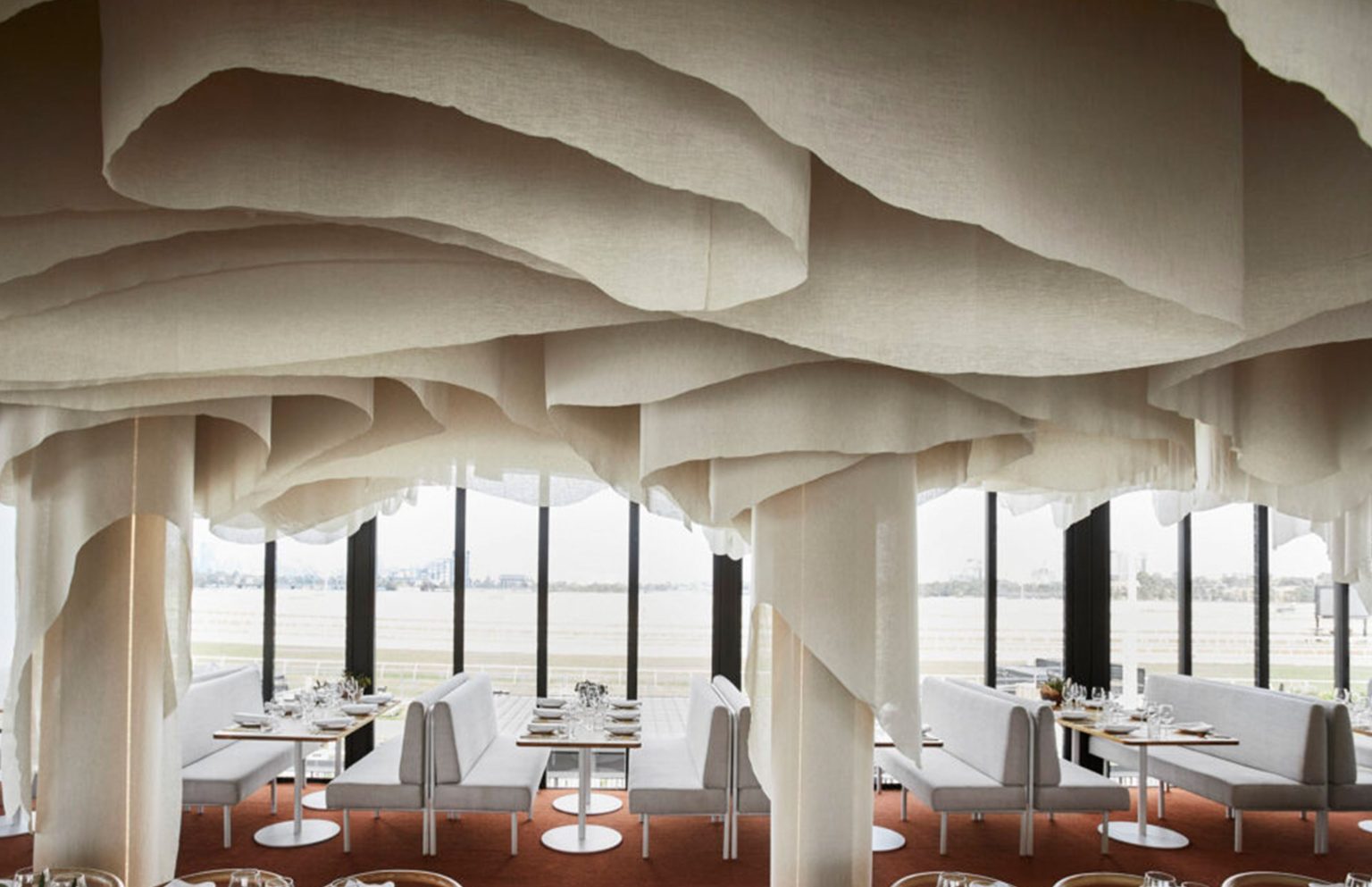

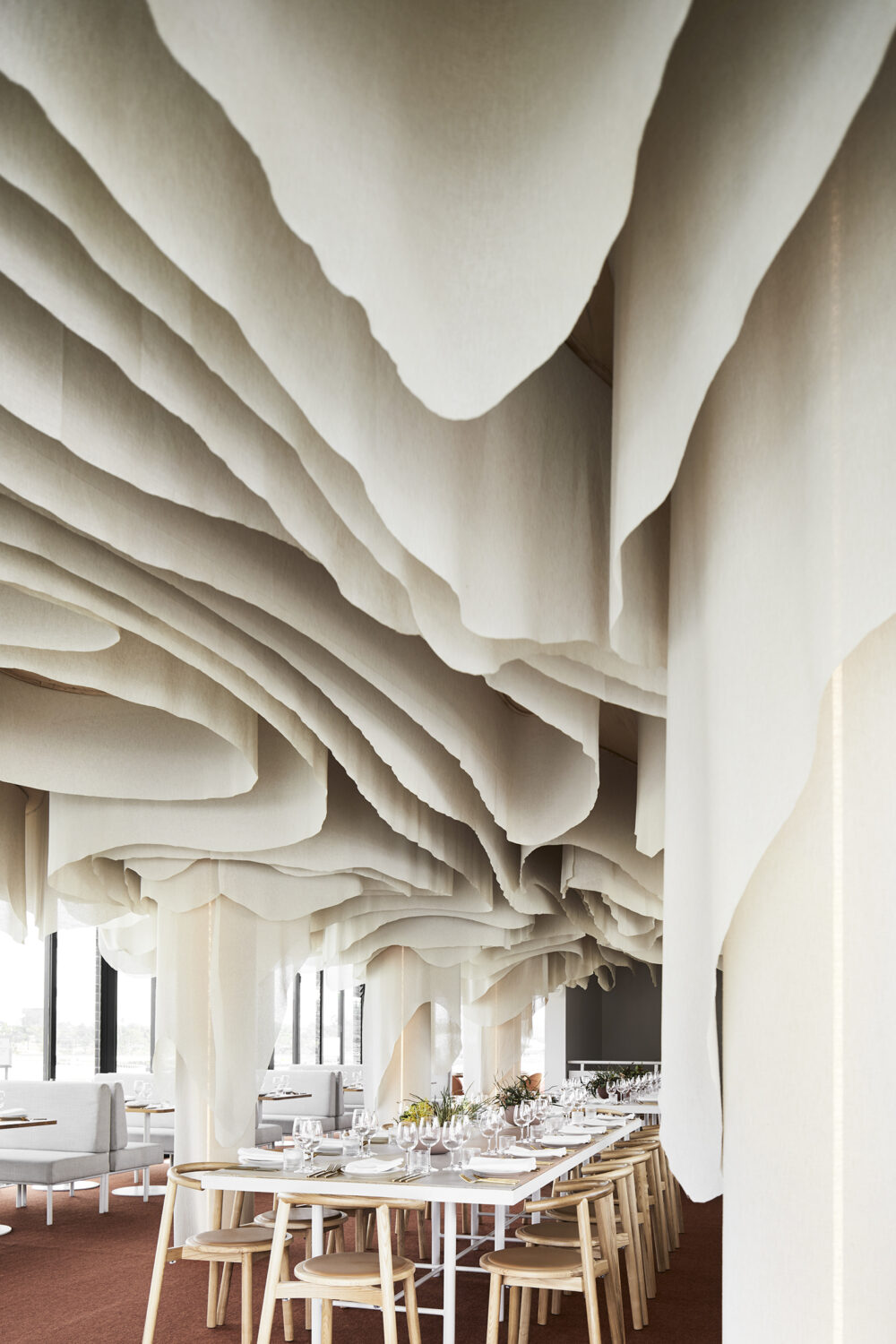
Paperbark is a 191 sqm “Zero Waste” pop-up restaurant for the Lexus Design Pavilion’s top floor in Melbourne, Australia. Designed by Koichi Takada Architects in 2019.
A five-meter-high bamboo gateway, or Japanese torii, was conceived as the passage from the ordinary to the remarkable, or from the city to nature, at the entrance.
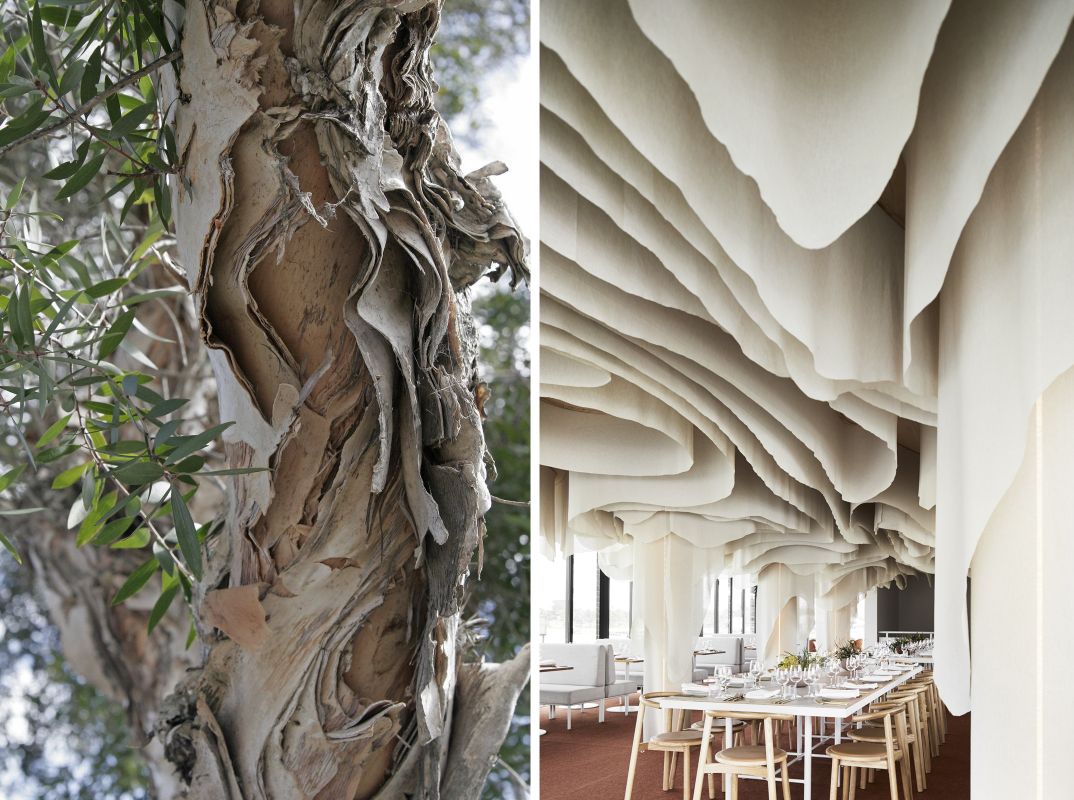
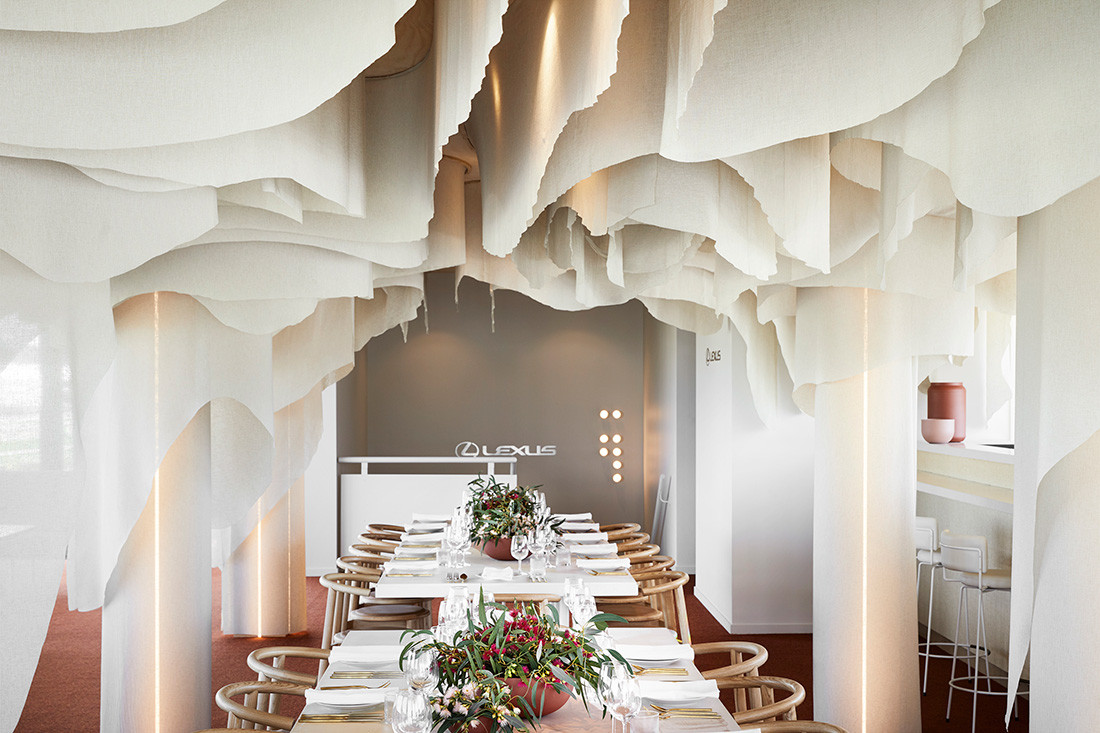
Paperbark’s main theme is based on the concept of “slow movement.” The Victorian Dandenong Ranges and the undulating curves of the native paperbark tree inspired Koichi Takada Architects.
Learn more about PA Talks 48 – Koichi Takada
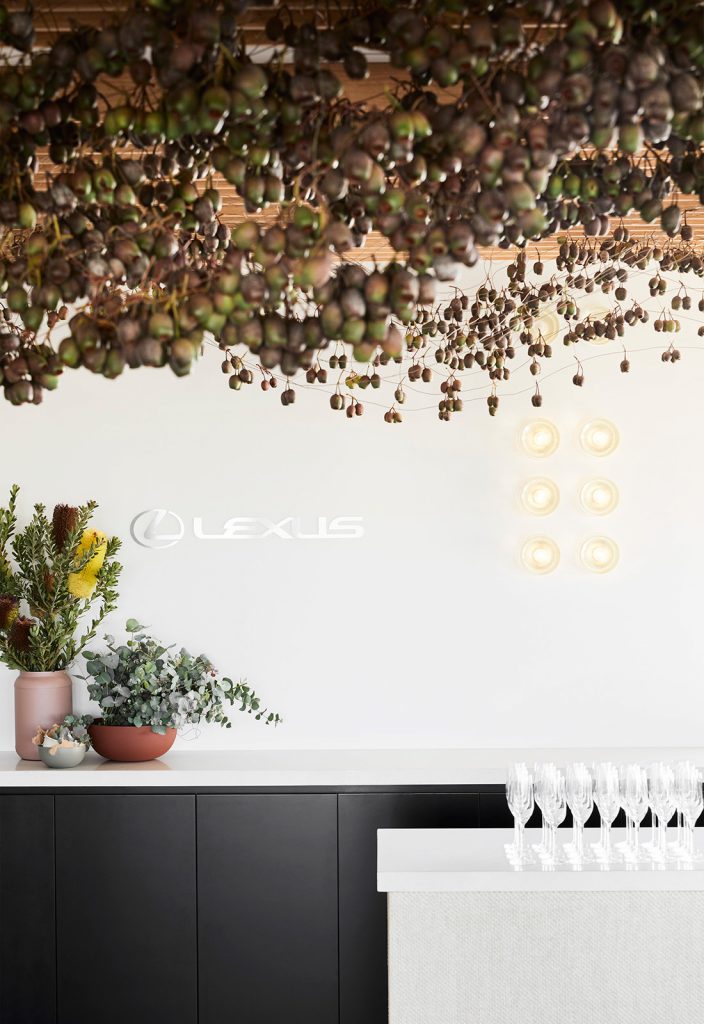
According to Takada, “This project gave us much freedom and it is wonderful to see and experience this while we design as a team. This is where it turns the building into architecture. Without it there’s no experience there’s just a box, there’s no emotion involved.”
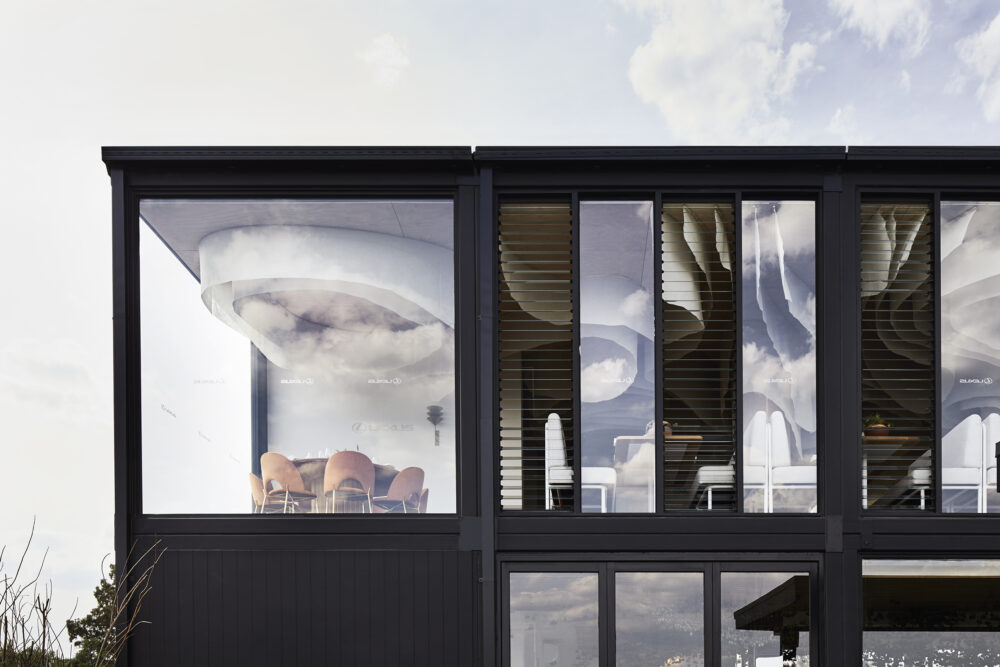
The installation comprises nearly a kilometre of reused biodegradable cloth curls and envelops guests adorn the ceiling. While the geometry is minimal, the facade produces an organic language reminiscent of the evocative and expressive paperbark tree. The pop-up restaurant creates an emotional connection to nature on a human scale through a play of natural textures, colors, light, and movement. The paperbark (Melaleuca quinquenervia) is a small to medium-sized tree native to Australia with white bark that peels off in strips.
Project Info
Interior Design: Koichi Takada Architects
Location: Melbourne, Australia
Completion Year: 2019