

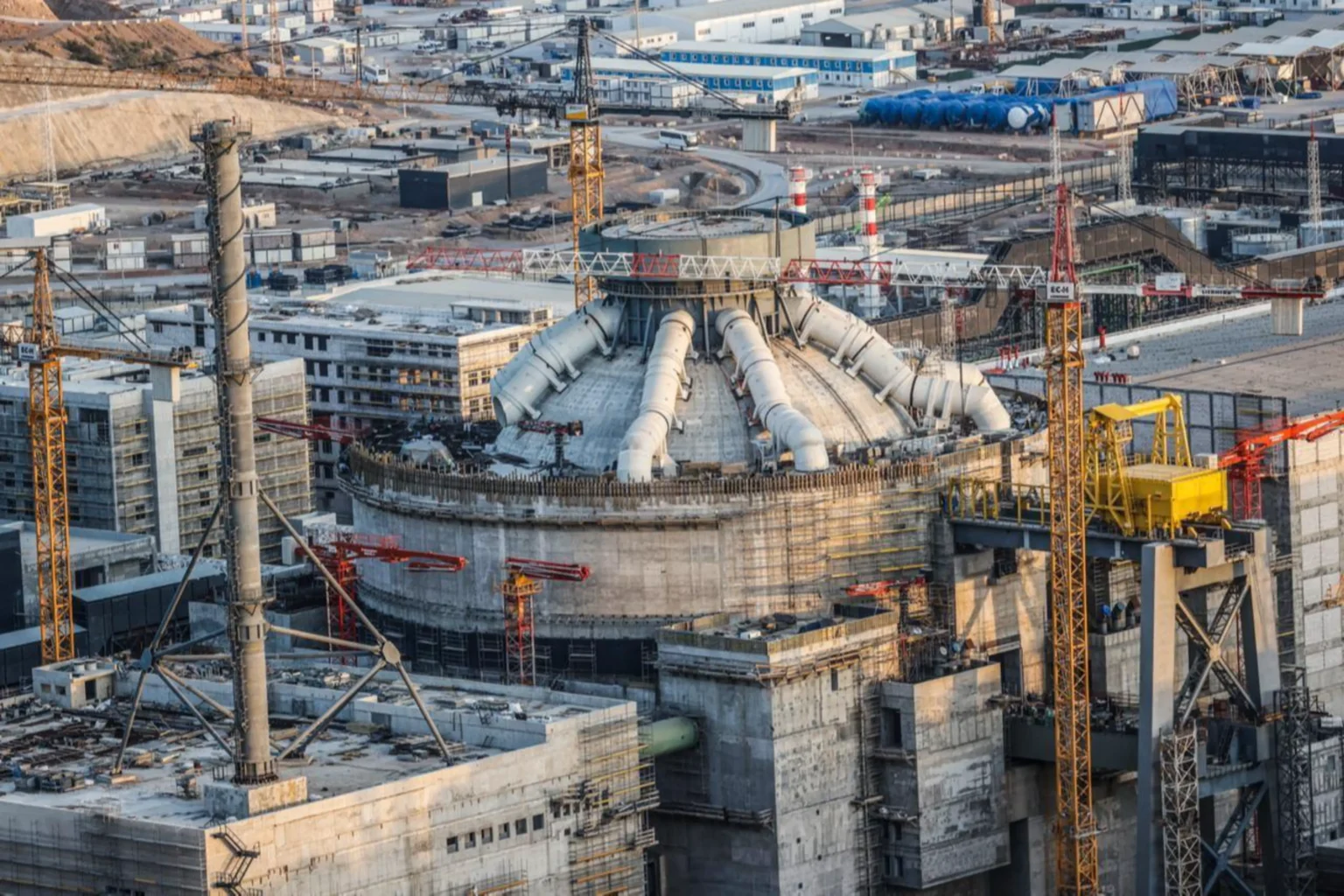
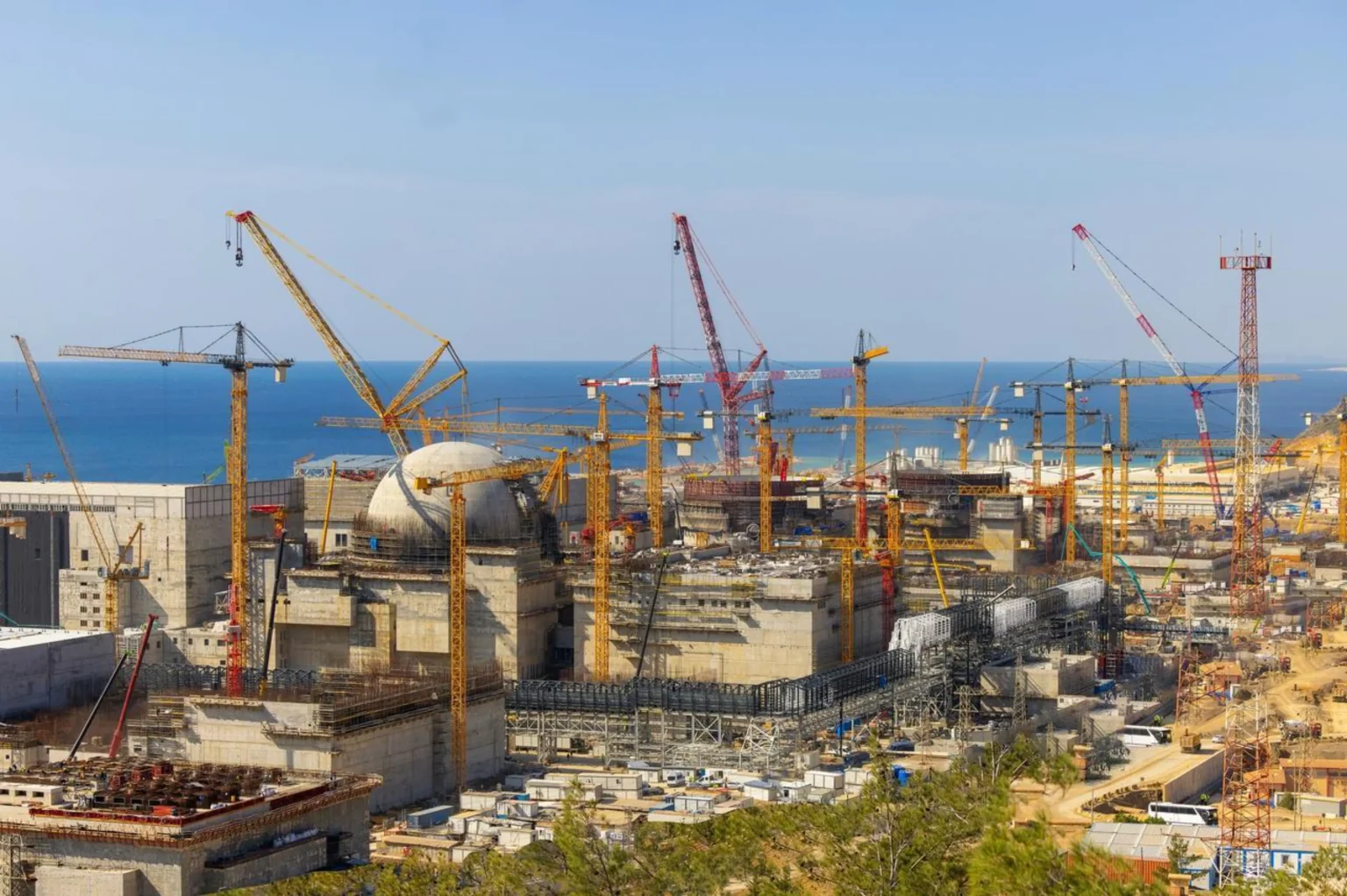


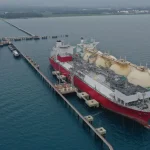
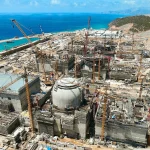
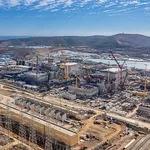
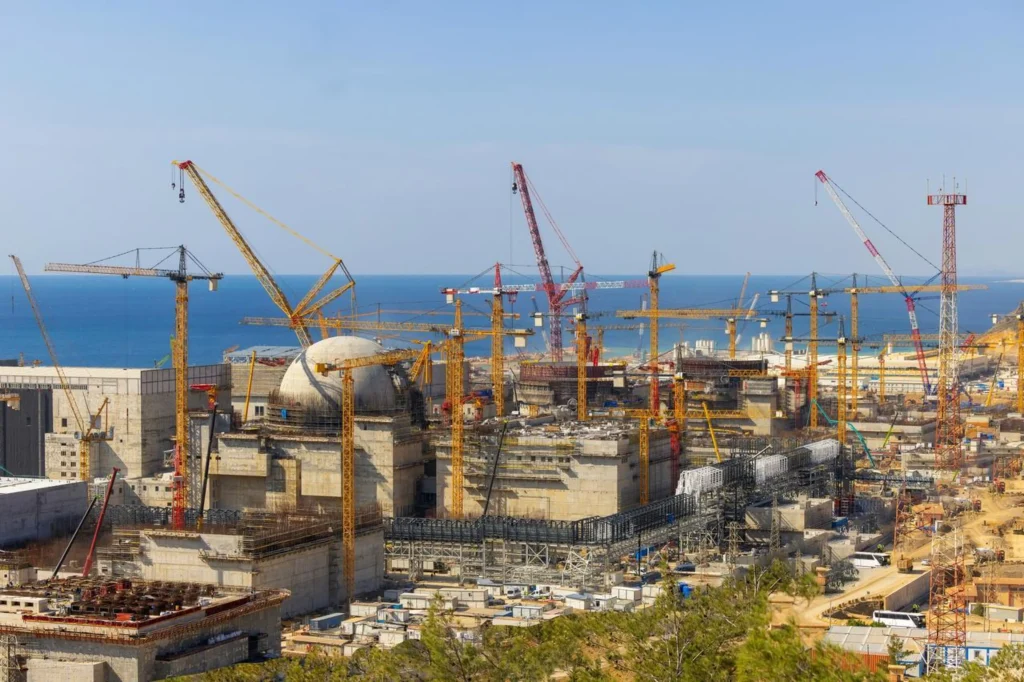
On the Mediterranean shore of Mersin Province, four massive reactor buildings rise against the blue water like quiet fortresses. Turkey’s long-delayed nuclear dream is finally taking physical form, and it is being written almost entirely in Russian. Beyond its immense scale and engineering complexity, the Akkuyu Nuclear Power Plant represents a turning point in Turkey’s energy ambitions and its relationship with Moscow. The project raises important questions about energy independence, geopolitical influence, and the long-term implications.
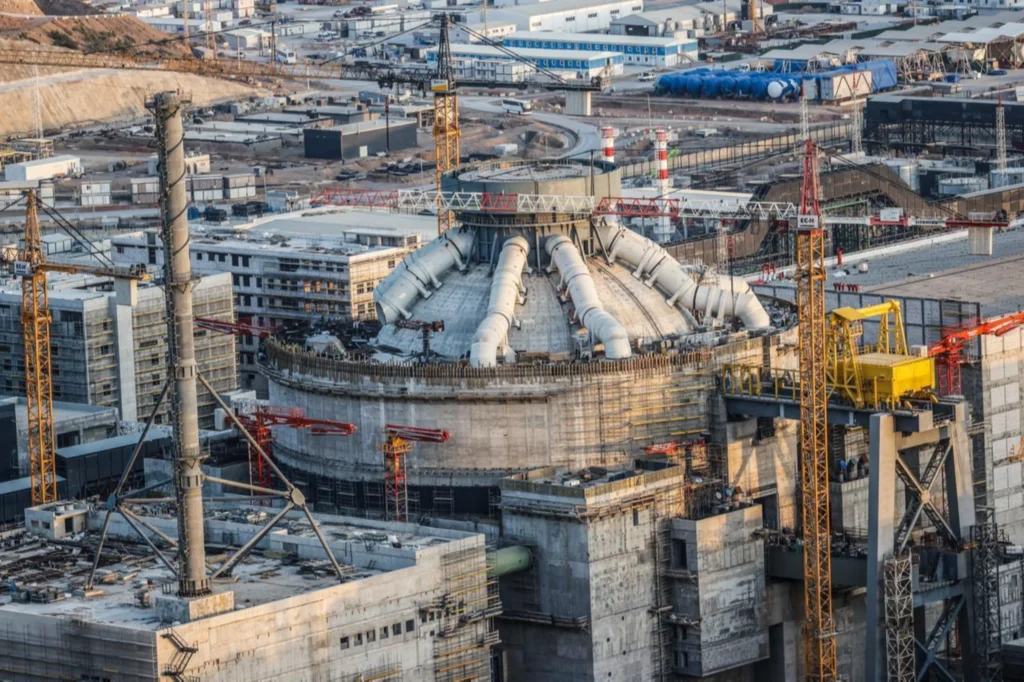
The Akkuyu Nuclear Power Plant is more than a power station. It is a $20–25 billion experiment in energy sovereignty, geopolitical partnership, and a rarely used delivery model known as build-own-operate. When complete, its four VVER-1200 reactors will generate roughly 35 billion kilowatt-hours a year — enough to meet about one-tenth of Turkey’s electricity demand.
A Nation’s Energy Hunger Meets a Singular Solution
Think of a nation’s energy system as a complex organism that has grown dependent on external nutrients. For decades, Turkey has imported nearly three-quarters of its energy, with coal still playing a major role and electricity demand rising faster than almost any other OECD country. Nuclear power was always the missing organ — clean, baseload, and capable of operating around the clock.
Akkuyu is the surgical insertion of that organ. The intergovernmental agreement was signed in 2010. First concrete for Unit 1 was poured in April 2018. Unit 4 followed in July 2022. Nuclear fuel arrived on site in 2023. As of late 2026, Rosatom describes the project as “one step away” from physical start-up of the first reactor, with the target still set for the end of the year.
The Build-Own-Operate Model Explained
What makes Akkuyu unusual is not the technology — the VVER-1200 is a proven Generation III+ design — but the commercial structure. Under the build-own-operate model, Rosatom does not simply design and construct. It finances the plant, owns the project company, supplies the fuel, manages the waste, and will operate the facility for decades.
Turkey’s primary role is that of an offtaker. It has agreed to purchase a significant share of the electricity at a fixed price for the first 15 years. In effect, Russia is building critical infrastructure on Turkish soil and will continue to control it. Additional Russian financing of approximately $9 billion was secured in late 2025 to keep construction moving after earlier delays and payment complications.
Systems Logic and the Architecture of Delivery
From a systems and computational perspective, Akkuyu is a masterclass in modular, rule-based project delivery at extreme scale. Each reactor unit follows a highly standardized sequence: foundation, containment, reactor vessel installation, steam generators, turbine hall, and commissioning protocols. The repetition across four units creates a learning curve that improves efficiency and quality control.
Digital tools, 3D modeling, and rigorous quality assurance systems — including recent World Association of Nuclear Operators peer reviews — treat the site as a living digital twin that must match physical reality at every stage. The turbine foundations alone illustrate the precision required. For Unit 4, more than 308 tonnes of reinforcement steel and over 2,200 cubic meters of concrete were placed in a continuous pour. The foundation must absorb not only static loads but the dynamic forces of a spinning turbine for sixty years or more.
This is parametric thinking applied to heavy industry: define the performance parameters, lock the geometry and material specifications, then execute with minimal deviation. Cooling water intake, spent-fuel storage, emergency systems, and grid connection are all orchestrated as interdependent subsystems. Change one variable and the effects ripple through the entire model.
Geopolitics on the Mediterranean Shore
The project carries unavoidable strategic weight. Turkey is a NATO member. Hosting a Russian-owned and operated nuclear plant creates a long-term relationship that extends far beyond electricity. Recent statements from both sides suggest Turkish investors may eventually take a minority stake — up to 49 percent has been discussed — but operational control and fuel supply remain with Rosatom for the foreseeable future.
At the same time, Ankara is already diversifying. Active talks with South Korea and Canada for the planned plants at Sinop and in Thrace signal that Akkuyu will not be the only model Turkey pursues. The broader national target remains ambitious: 10 GW of nuclear capacity by 2040 and 20 GW by 2050.
What Akkuyu Means for Turkey’s Energy Future
Once all four units are online, Akkuyu alone could displace significant volumes of natural gas and coal, easing the annual energy import bill measured in tens of billions of dollars. It will not eliminate the need for renewables, storage, or efficiency measures. But it represents a decisive step into a different technological era — one in which large-scale, low-carbon, domestic electricity generation becomes possible.
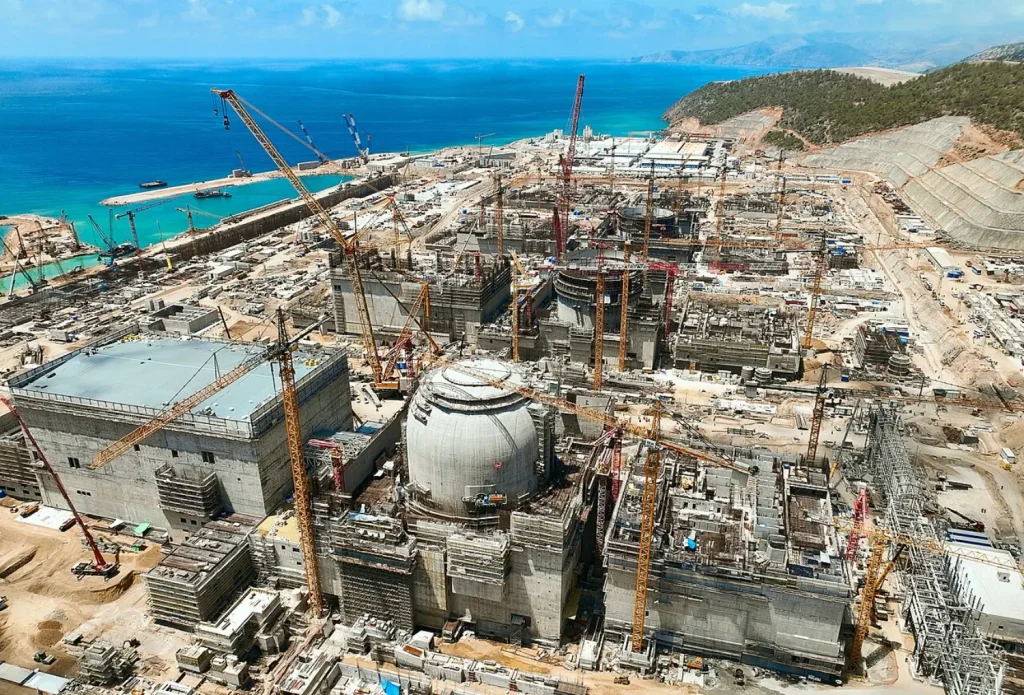
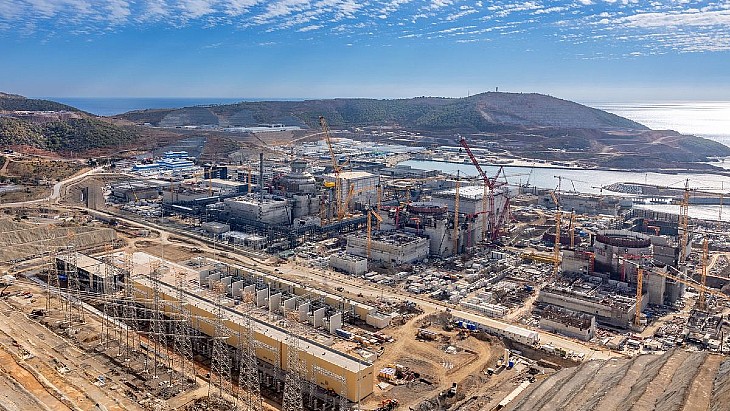
The site itself is a landscape of controlled intensity. Cranes, temporary buildings, concrete batching plants, and the emerging reactor domes occupy a carefully engineered coastal plateau. From the air, the project looks almost serene. On the ground, it is a city of specialists, Turkish and Russian, working to a schedule measured in millimeters and megawatts.
Akkuyu will not solve every energy challenge. Whether the build-own-operate experiment ultimately strengthens or complicates Turkey’s strategic autonomy is a question that will unfold over the next sixty years of operation. For now, the Mediterranean continues to lap against the shoreline while, a few hundred meters inland, the most consequential piece of energy infrastructure in modern Turkish history approaches its first critical moment. The concrete is poured. The systems are being tested. The fuel is waiting. And a $25 billion bet on the future of power in this region is about to go critical.