Topic: Tensegrity and Tensile Membranes in Kangaroo
Date: October 10 – 11, 2026
Time: 14:00 – 18:00 GMT
Format: Online on Zoom
Duration: 2 Sessions (8 Hours)
Registration Deadline: October 9th, 2026
Total Seats: 50 seats
Difficulty: Beginner – Intermediate
Language: English
Certificate: Yes
General Registration: 100 EUR
Join free: with Full Access membership
Fee for Digital Members: 85 EUR (15% discount available only for Digital Members)
Organized By: PAACADEMY
Tutor: Virginia Melnyk
Recordings: Recordings will be available for all participants indefinitely afterward.
Introduction to Tensegrity and Tensile Membranes in Kangaroo:
This workshop will introduce participants to computational modeling approaches using Rhino and Grasshopper to design and simulate deployable structures. The workflow will move through a series of design studies ranging from simple to more complex designs.
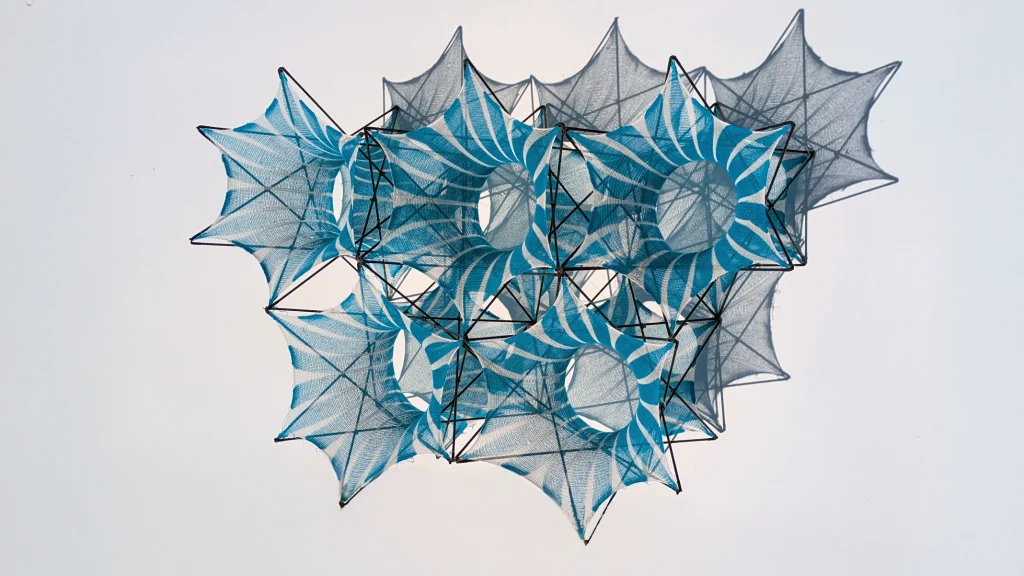
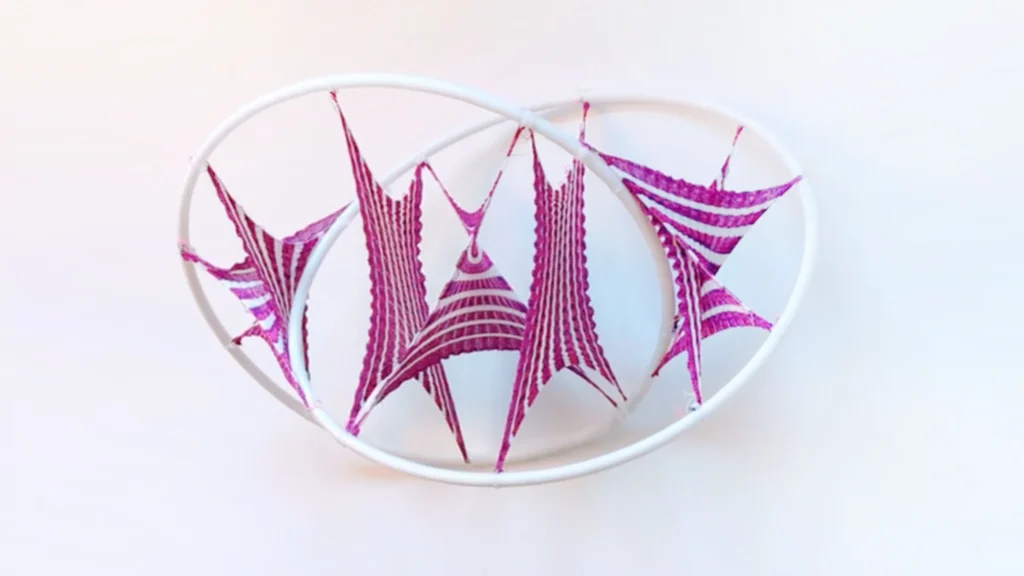
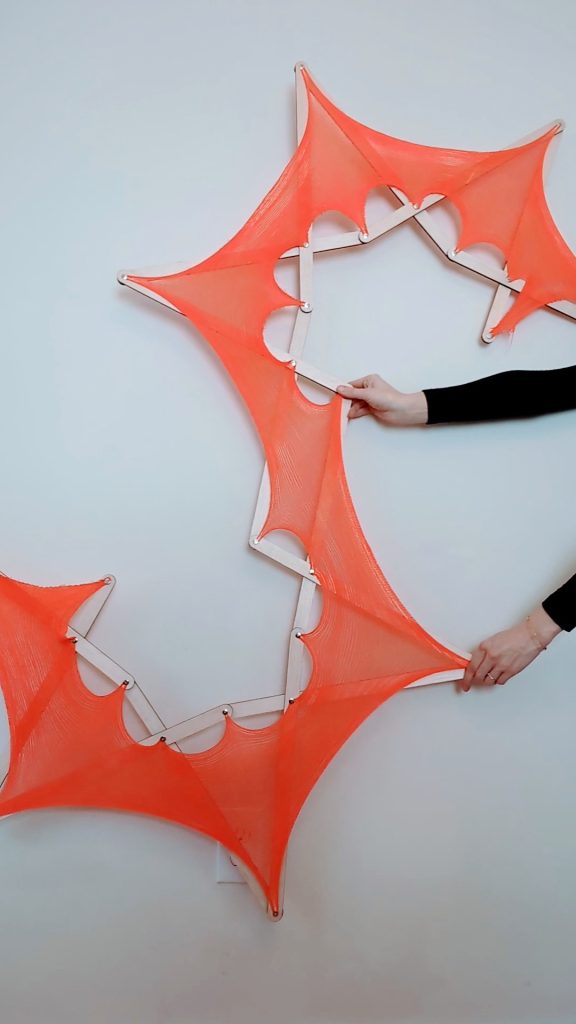
Beginning with simple scissor mechanisms for deployment, to more complex systems of hyperbolic and tensegrity structures. The participants will also investigate how membrane surfaces can be integrated as active elements contributing to the movement and equilibrium of the structures.
Grasshopper and Kangaroo will be used to study how these types of structures move and simulate the tensioned membrane materials. The participants will learn how to control the various parameters to build complexity and generate animations of their designs to study the materials and structures. The workshop will also introduce methods for translating the models into simple physical prototypes to assess simulation accuracy.
By the end of the workshop, participants will have developed a set of parametric definitions and designs for deployable systems. The goal is to provide learners with a conceptual understanding of the possibilities for scissor mechanisms and tension membranes to be used in the design of adaptive and lightweight structures and architectural designs. Setting up a practical workflow from computational design and simulation to physical prototypes.
Methodology:
The workshop will be broken into parts, first looking at references for deployable systems and particularly focusing on scissor mechanisms. The first simulations will be 2 dimensional and will go over the basic types of scissor mechanisms and movements.
The next step will be adding membrane materials to this by using Kangaroo to simulate mesh relaxation. The membrane material will follow and connect to the expanding and contracting scissor forms.
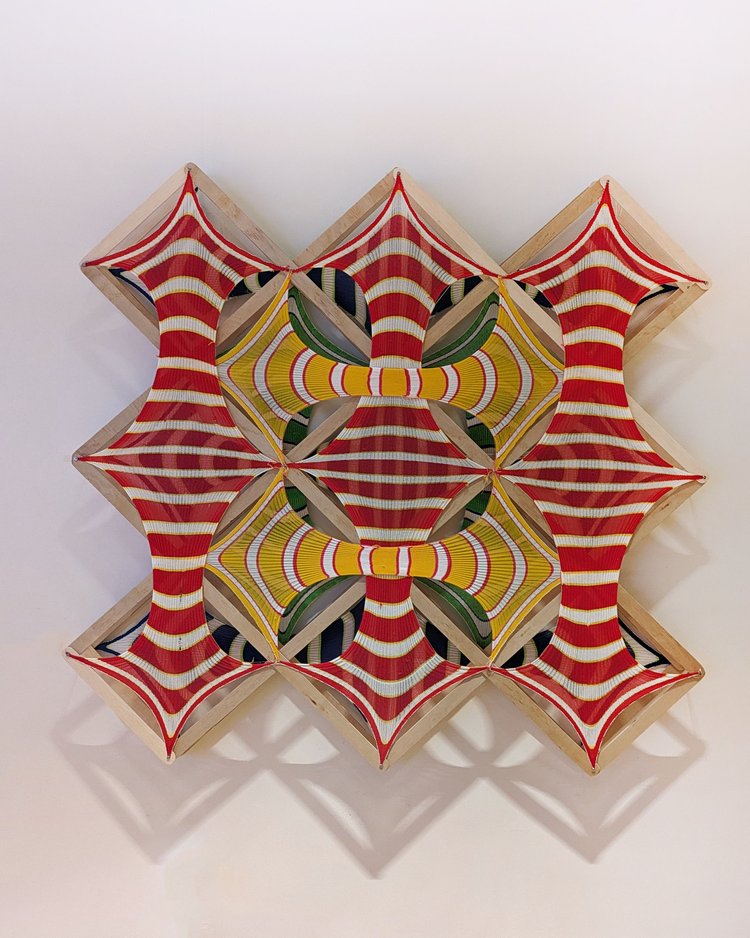
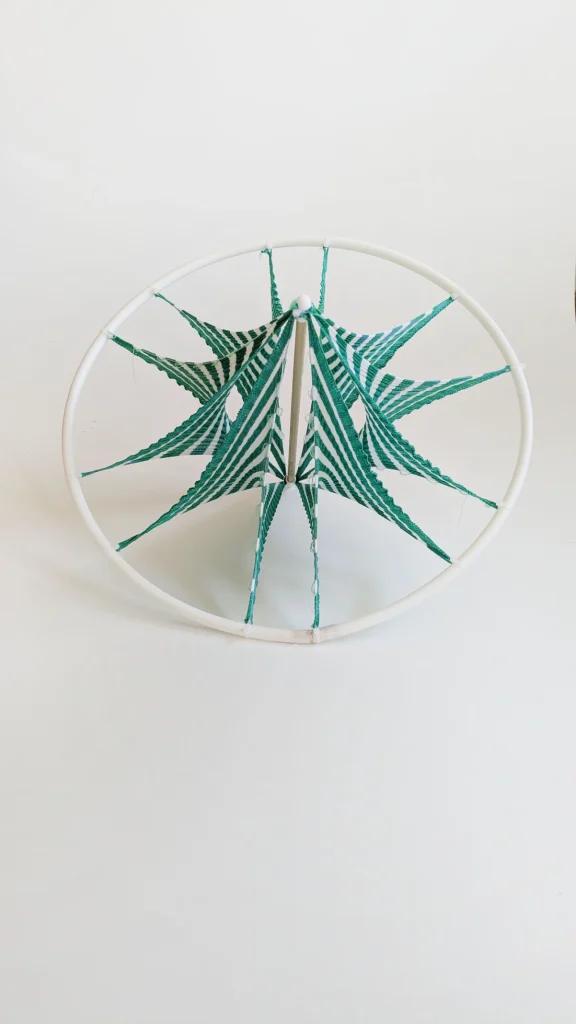
The Second part will be exploring in 3 dimensions with hyperbolic deployable systems; these will add more complexity and include Grasshopper and Kangaroo to again transform the base geometry and gain an understanding of the variety of variables and controls to transform these geometries. The next portion will be to combine these with membranes as well as adding aggregation and repetition of modules.
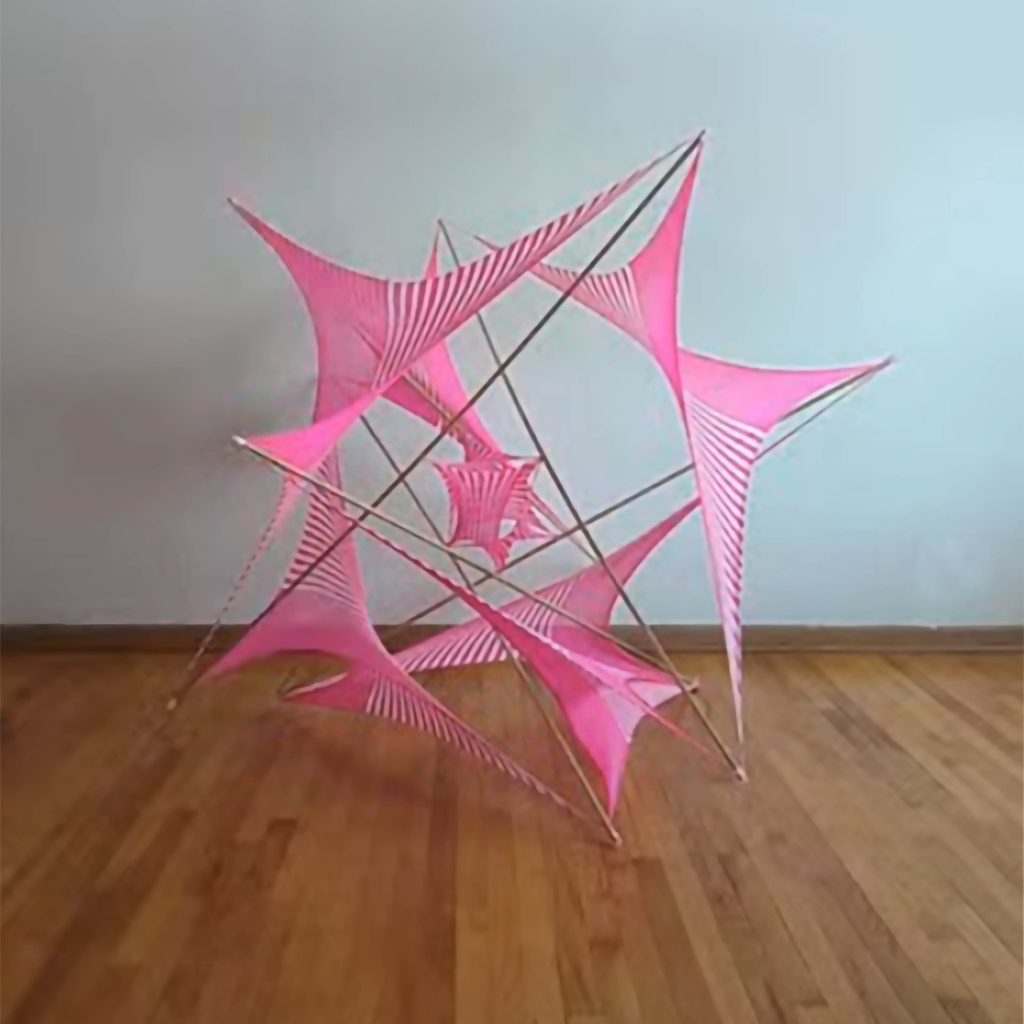
The final part will be a study of tensegrity systems where the membranes act in tension and linear struts are in compression. These forms are deployed through the activation of the membranes and structures to deploy and reach a structural equilibrium state. This will allow learners to understand structural arrangements as well as deployable forms for tensegrity modules in Grasshopper.
Finally, suggestions and workflow to translate these designs into physical prototypes will be addressed and discussed. To provide opportunities to study and understand the physical principles further.
Throughout the workshop, step-by-step instruction on making Grasshopper code will be provided. As well as discussion of the structural systems behind the designs and bringing in precedents and built examples, including deployable roofs and satellite forms from space travel. The studies ultimately will combine theory with the instruction of tools and methods.
Scope:
The workshop will introduce topics with lectures and precedents describing the goals for geometry to be created. As well as step-by-step instructions for developing the desired Grasshopper code for each of the pre-determined base forms. The results will allow students to deviate by adjusting a variety of parameters and scales, allowing them to individually develop their own designs.
Ultimately, the workshop will emphasize iterative design and working back and forth between the digital design simulations and testing results with physical study models and prototypes, allowing participants to work with a variety of materials that they may have available at hand to re-create their desired designs.
Group discussions of the results at each phase will offer an opportunity for participants to share and demonstrate their work. Opportunities will also be available to receive feedback and support for their individual developments.
Key Learning Topics:
- Understanding the principles of deployable structures in architecture (particularly scissor mechanisms)
- Develop parametric workflows in Rhino and Grasshopper to create scissor mechanisms that deploy and collapse
- Use Kangaroo physics to simulate membrane surfaces attached to deployable structures
- Control various design variables to develop new designs and influence deployable behaviors
- Simulation of Tensegrity in Grasshopper and Kangaroo with membrane surfaces
- Producing animations of deployment and movement
- Ability to translate design simulations into physical prototypes
Program:
Day 1: Foundations of 2D & 3D Deployable Scissor Systems
- Introduction to deployable systems: Understanding scissor mechanisms
- Basic Grasshopper workflow
- 2D scissor mechanisms in Grasshopper
- Introduction to precedents and examples
- Adding membrane simulation in Kangaroo
- 3D scissor aggregation in Grasshopper
- Discussion on physical prototypes
- Final questions and conclusions
Day 2: Hyperbolic Geometry, Tensegrity & Motion Simulation
- Introduction to deployable hyperbolic forms
- Grasshopper coding of hyperbolic forms
- Adding membranes to simulation
- Animating simulations
- Introduction to tensegrity and structural configurations
- Grasshopper coding for tensegrity modules with tensile membranes
- Discussion on physical prototypes
- Final questions and conclusions
Software:
- Rhinoceros 3D
- Grasshopper
- Kangaroo
Workshop Notes:
- Software Installation is NOT a part of the workshop! Students must have all the software installed before starting the workshop.
Instructor:
Virginia Melnyk
Virginia Ellyn Melnyk is a computational architectural designer and researcher specializing in knitting, lightweight structures, and transformable architecture. She is currently an assistant professor at Iowa State University. Her teaching and research explore the interplay between deployable and lightweight structures, utilizing the fabrication methods of CNC knitting to develop structural membranes. Her designs focus on knit pattern arrangements using elastic yarns and connecting them with transformable frameworks to create deployable structures that stretch and interact with both their environment and users.
Virginia has held academic positions at Virginia Tech, the University of Michigan, Clemson University, and the University at Buffalo. She has contributed to teaching and research in undergraduate studio design, computational design, structures, and textile research classes. Her work has been presented at numerous conferences, exhibited nationally and internationally, and published in books and journals.
Focused on design process and human-centered engagement, her research reimagines architecture as dynamic and tactile, integrating closely with the human body to create designs that are sustainable, responsive, and deeply interactive. Through her work, Virginia envisions a future where architecture adapts seamlessly to meet changing needs and conditions.
Important Notes:
- The “Tensegrity and Tensile Membranes in Kangaroo” workshop by PAACADEMY will start at 14:00 (GMT) on Saturday, October 10th, 2026.
- Total sessions: 2 Sessions (8 Hours).
- The teaching duration per session will be 4 hours.
- Students will have time for a break between teaching hours.
- The workshop will be recorded, and videos will be available for participants just a day after the class for an unlimited time.
- PAACADEMY will provide a certificate of attendance.
- The studio has limited seats. Tickets are non-transferable & non-refundable. Please read carefully before you register.
Topic: Tensegrity and Tensile Membranes in Kangaroo
Date: October 10 – 11, 2026
Time: 14:00 – 18:00 GMT
Format: Online on Zoom
Duration: 2 Sessions (8 Hours)
Registration Deadline: October 9th, 2026
Total Seats: 50 seats
Difficulty: Beginner – Intermediate
Language: English
Certificate: Yes
General Registration: 100 EUR
Join free: with Full Access membership
Fee for Digital Members: 85 EUR (15% discount available only for Digital Members)
Organized By: PAACADEMY
Tutor: Virginia Melnyk
Recordings: Recordings will be available for all participants afterward indefinitely.