






Hospitals have been planned as self-contained institutions where medical care remains separated from everyday urban life. The winning proposal for the new Main Hospital and Children’s Hospital in Brescia takes a radically different position. Designed by CRA-Carlo Ratti Associati, Park Associati, and Politecnica Building for Humans, together with Openfabric, DOTDOTDOT, Studio Mattioli, and Eckersley O’Callaghan, the project proposes healthcare as part of a larger ecological, social, and academic network.
Selected through an international design competition, the proposal introduces the concept of the CareRing, a continuous landscape and mobility system that reshapes the entire ASST Spedali Civili di Brescia campus. Instead of expanding the hospital through conventional blocks, the project builds a circular framework that connects clinical care, research, biodiversity, public life, and future adaptability into one integrated environment.
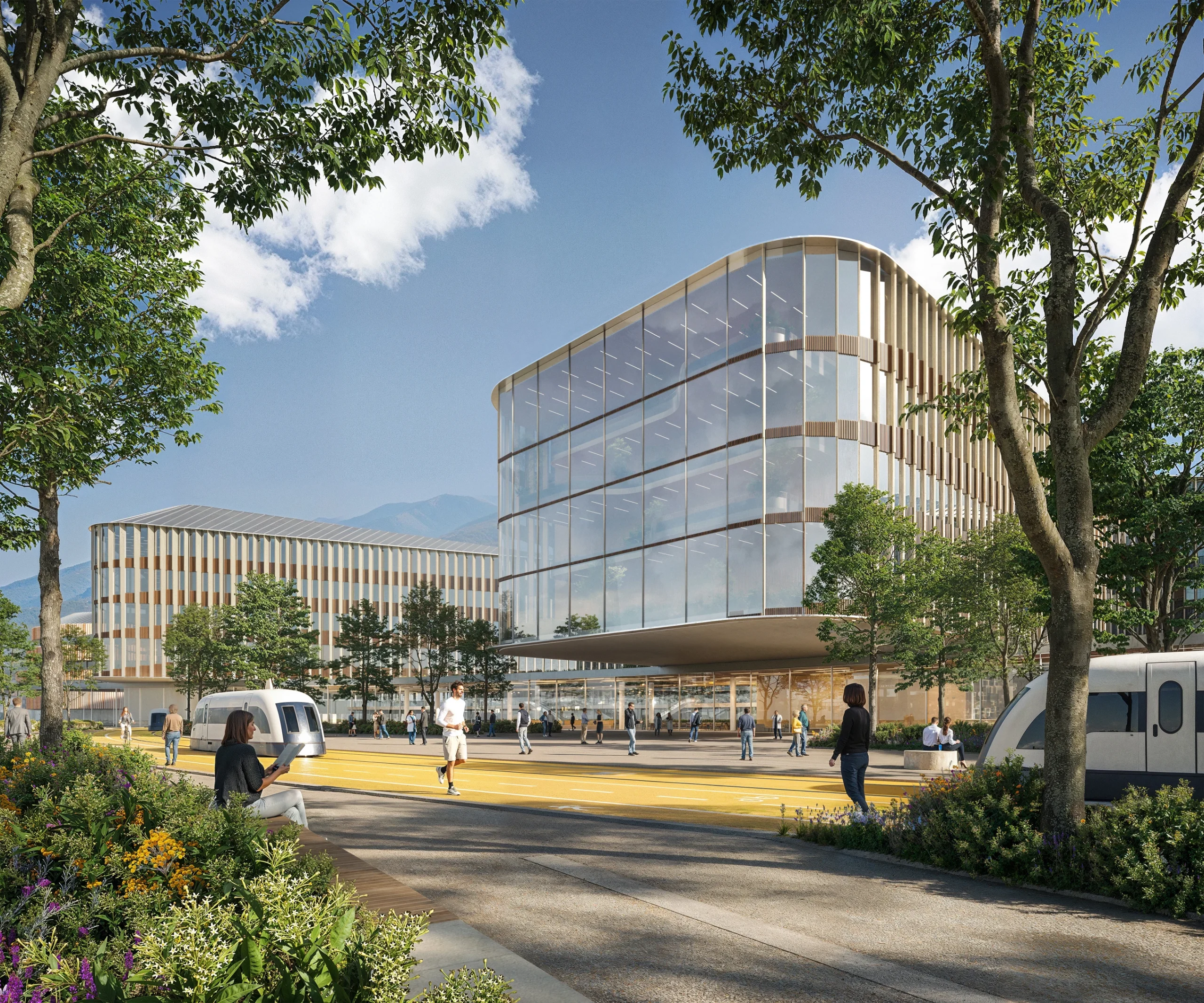
Spanning approximately 60,500 square meters with more than 745 beds, the new hospital represents one of Italy’s most significant healthcare developments, with construction expected to begin in 2028 following an investment of €274 million.
How CRA-Carlo Ratti Associati’s Winning Design Turns a Hospital into a Living Urban Ecosystem
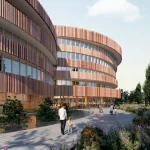
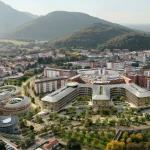
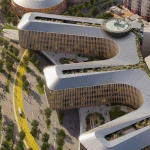
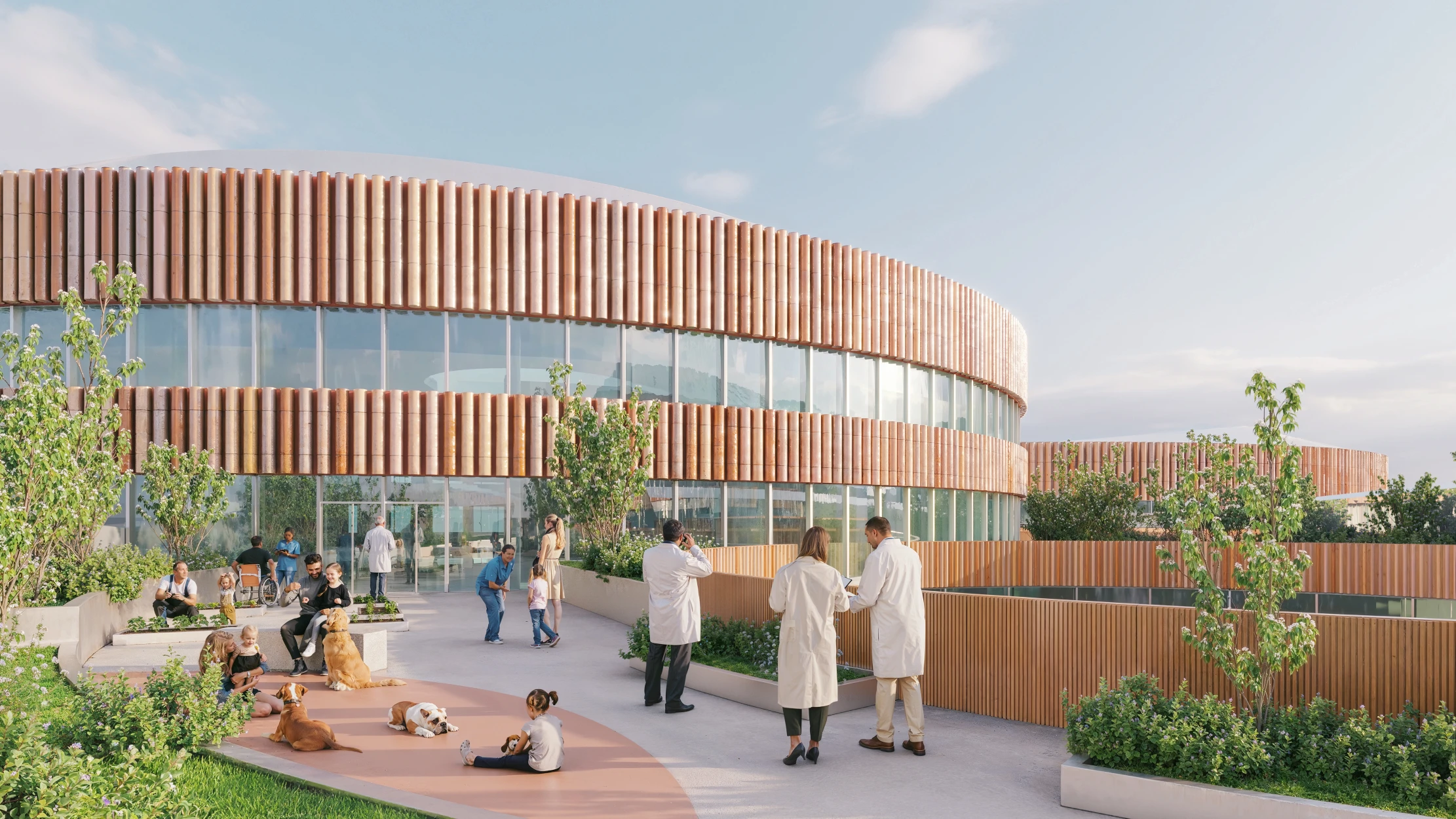
The defining architectural feature of the proposal is the CareRing, a continuous loop stretching over one kilometer around the existing hospital campus. The ring becomes the project’s organizing principle, restructuring how healthcare, landscape, and the city interact.
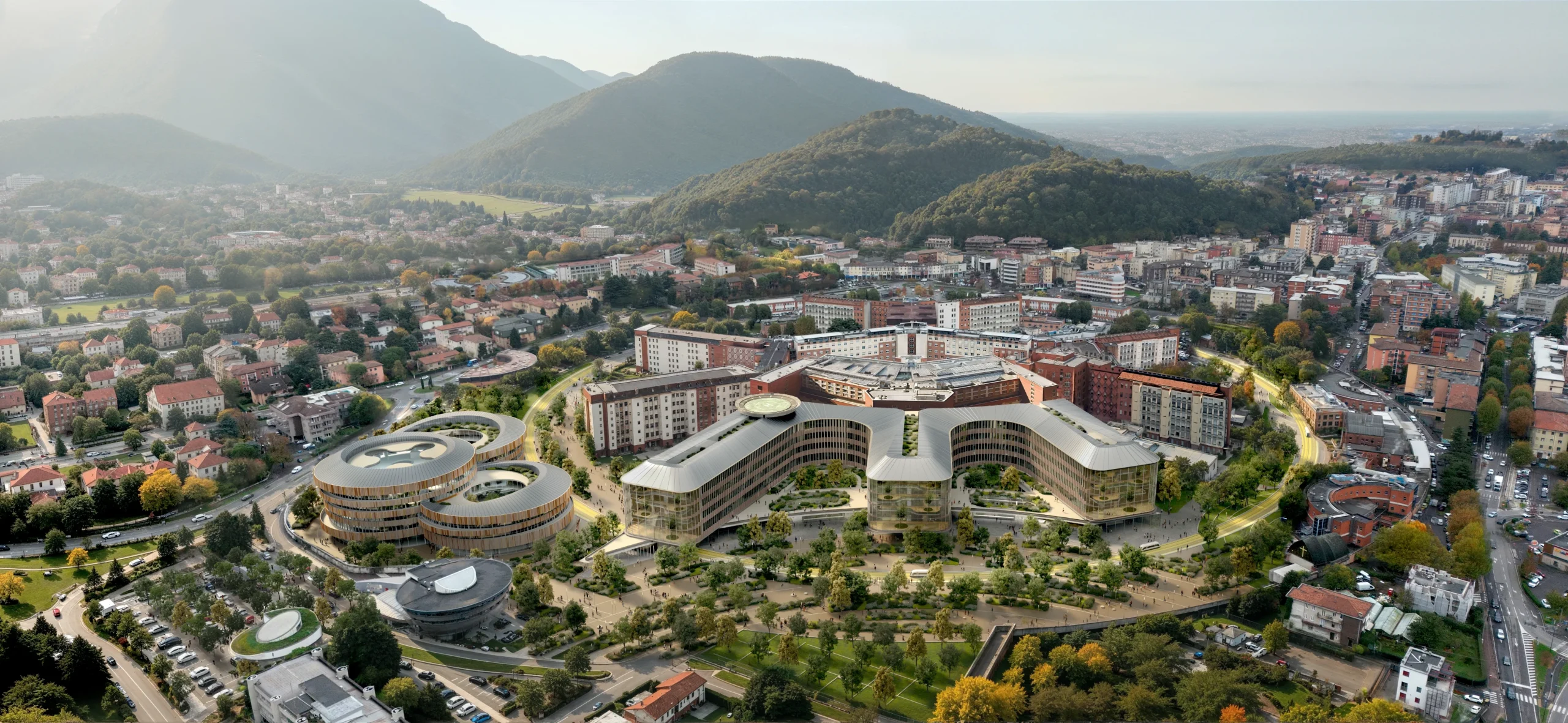
Inspired by the One Health philosophy, which recognizes the inseparable relationship between human health, environmental well-being, and social systems, the CareRing dissolves the traditional boundaries between hospital and city. Patients, visitors, healthcare professionals, and researchers move through gardens, tree-lined plazas, therapeutic landscapes, and open public spaces instead of relying solely on enclosed corridors.
The ring also performs multiple infrastructural roles. Beneath the landscape, it houses logistics, technical services, deliveries, waste management, and operational infrastructure. By separating these service routes from clinical circulation, the design significantly improves efficiency while creating safer and quieter environments for patients.
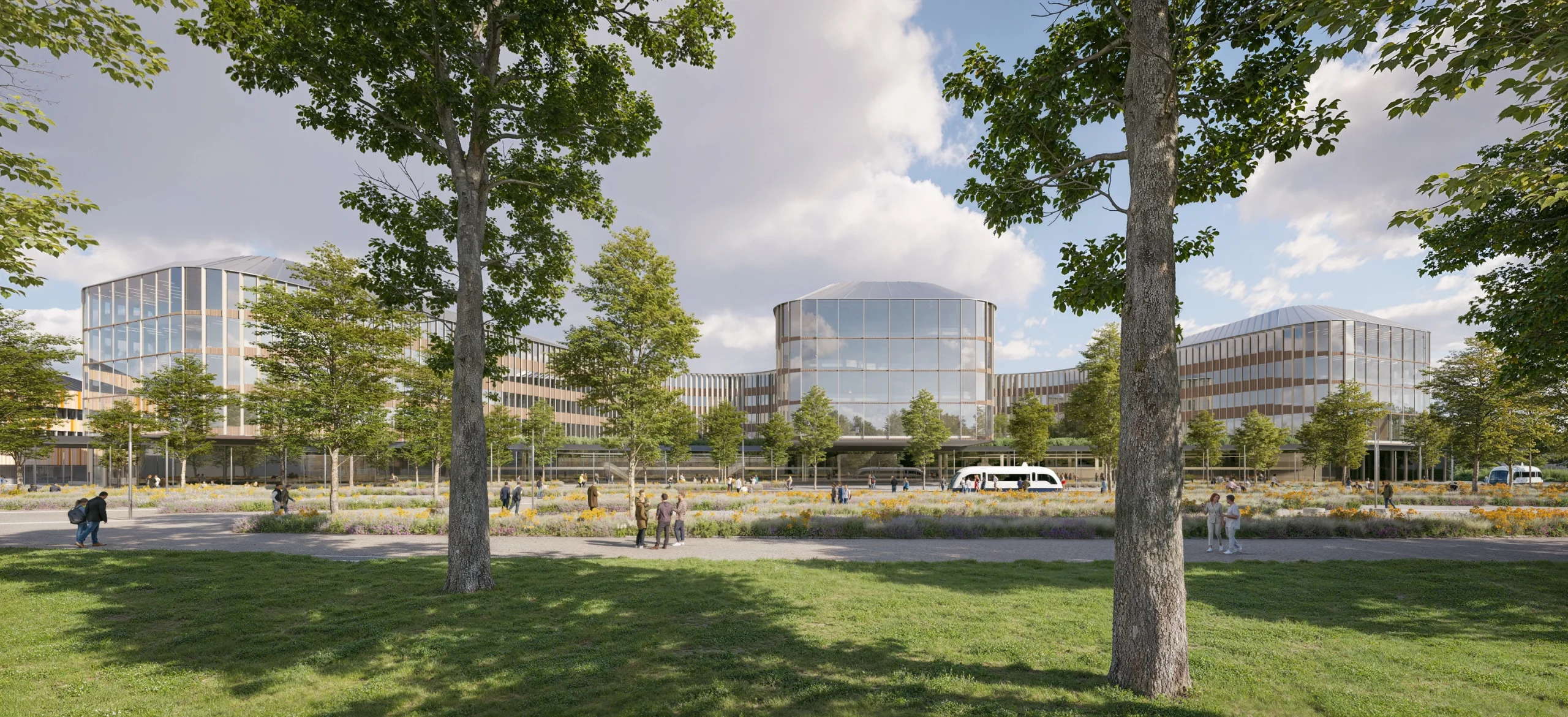
At ground level, however, the same ring transforms into a public green network that reconnects the hospital with Brescia’s urban fabric. Designed alongside landscape architects Openfabric, it improves biodiversity, reduces urban heat, enhances the site’s microclimate, and establishes healthcare as an extension of civic space.
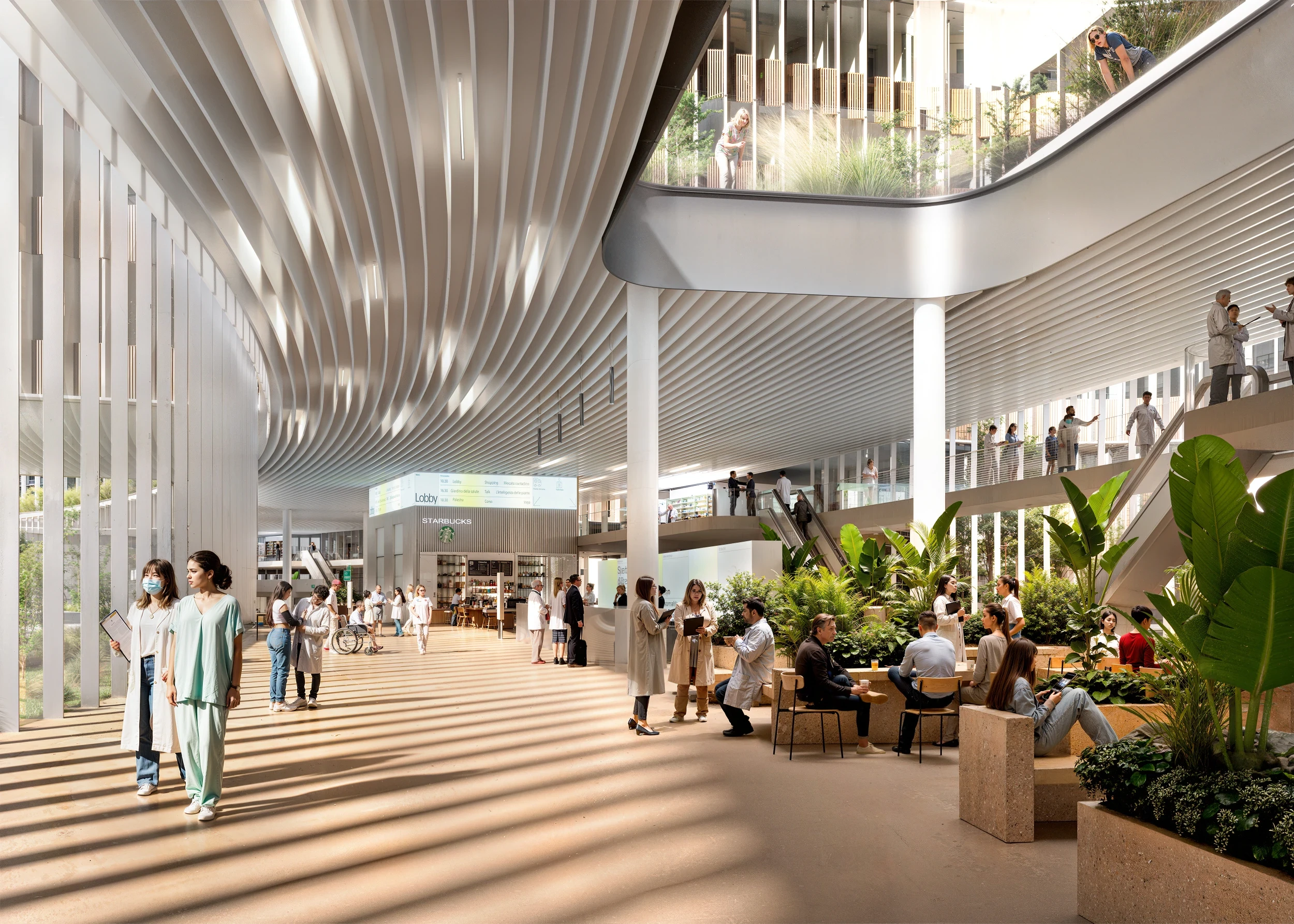
This integration of landscape into both operational planning and patient experience illustrates how environmental design becomes an active component of healthcare infrastructure.
Reinterpreting a Historic Hospital Through Contemporary Healing Architecture
Instead of replacing the existing campus, the design carefully builds upon its historic identity. The proposal preserves and extends the radial master plan originally conceived in the early twentieth century by engineer Angelo Bordoni, whose hexagonal planning established the spatial logic of Spedali Civili di Brescia.
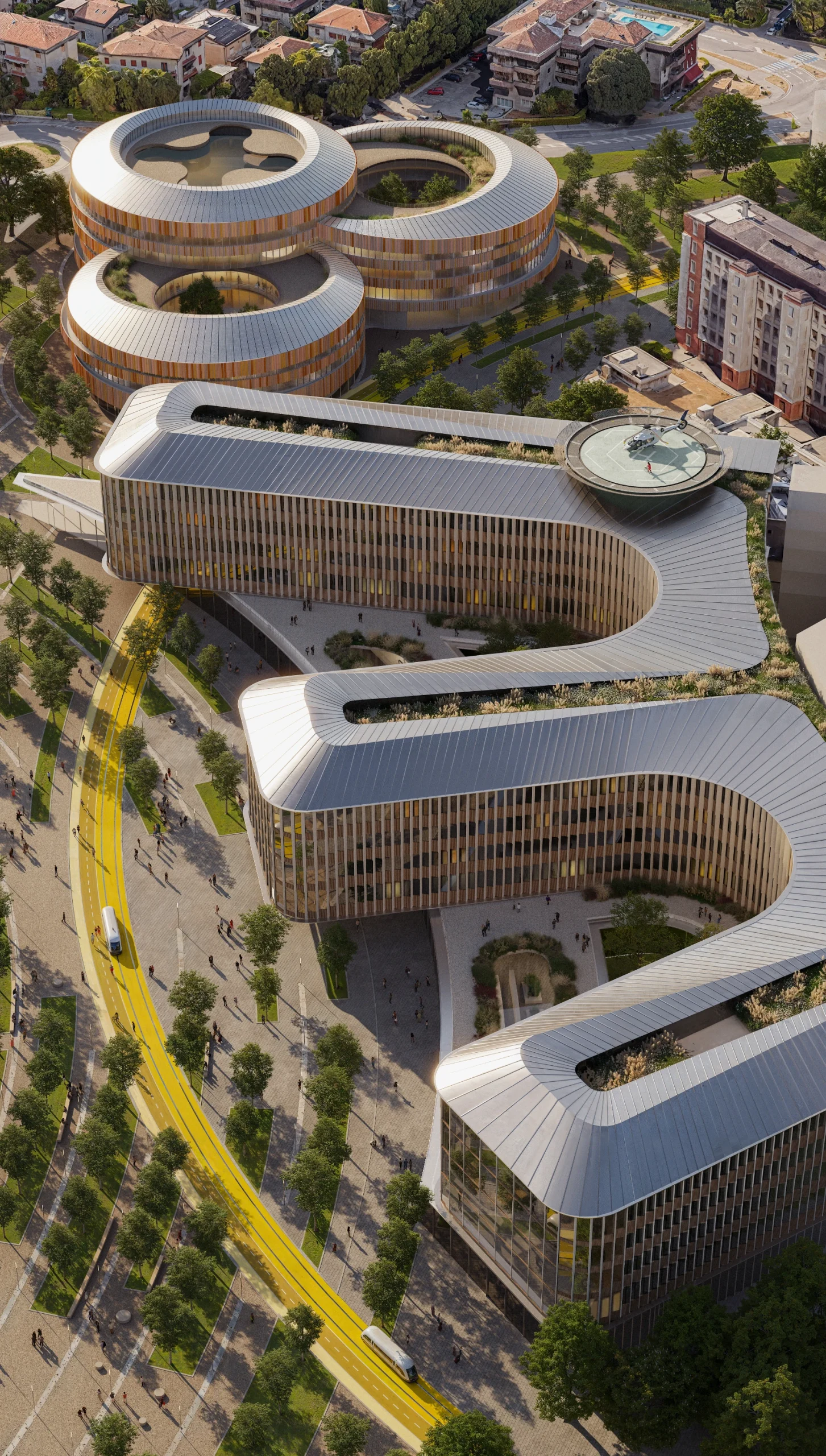
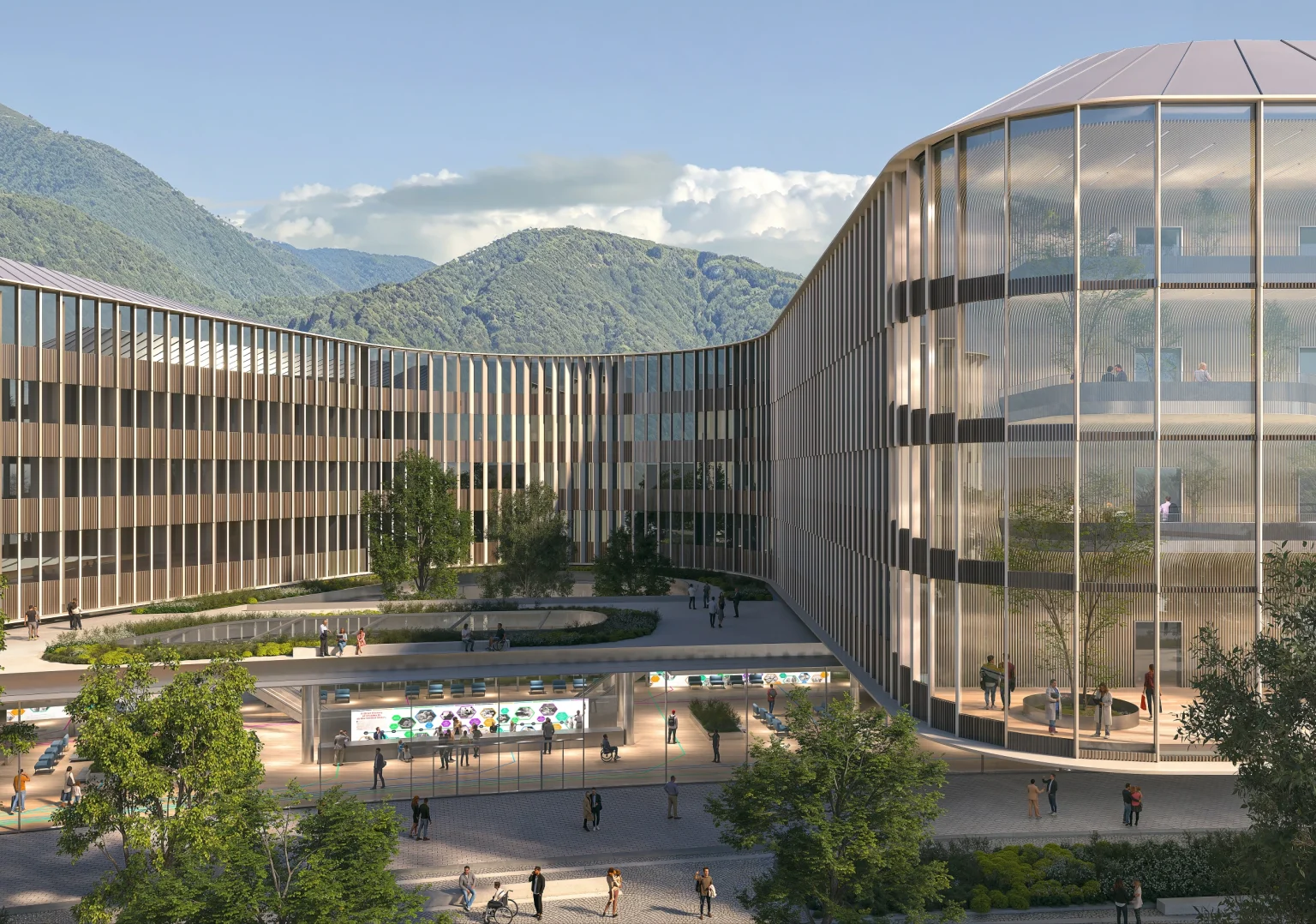
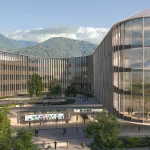
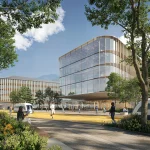
The architects reinterpret its organizational principles for contemporary healthcare. Three interconnected wings form the new Main Hospital, radiating outward toward the city while framing panoramic views of the Brescia Prealps.
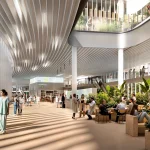
A fully glazed, sweeping entrance lobby becomes the project’s civic threshold. Facing a newly created public piazza, this transparent ground level dissolves the institutional character often associated with hospitals. The building opens itself to the city, welcoming visitors through daylight-filled spaces that prioritize orientation and visual connectivity.
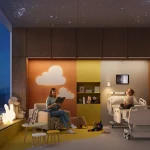
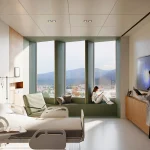
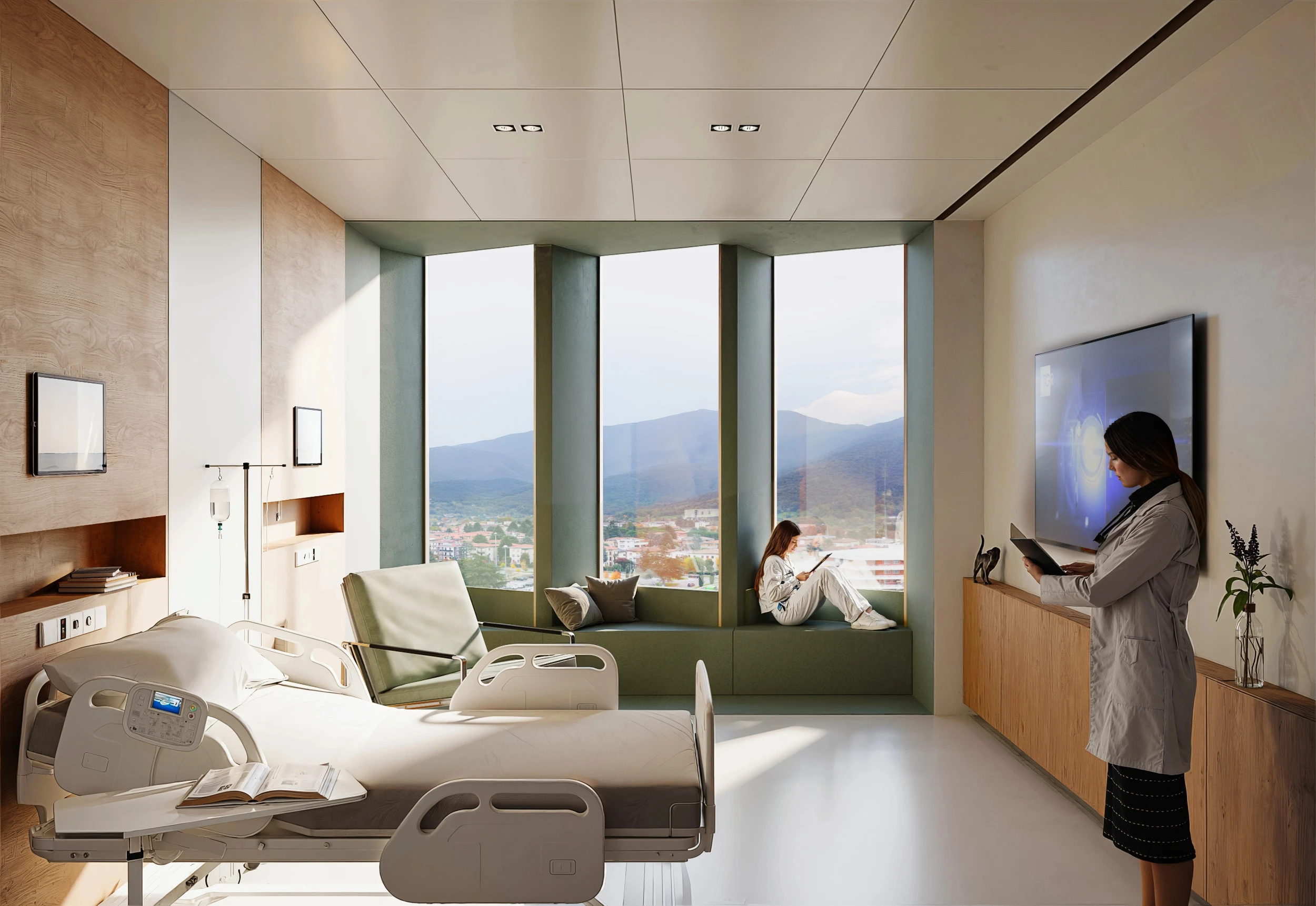
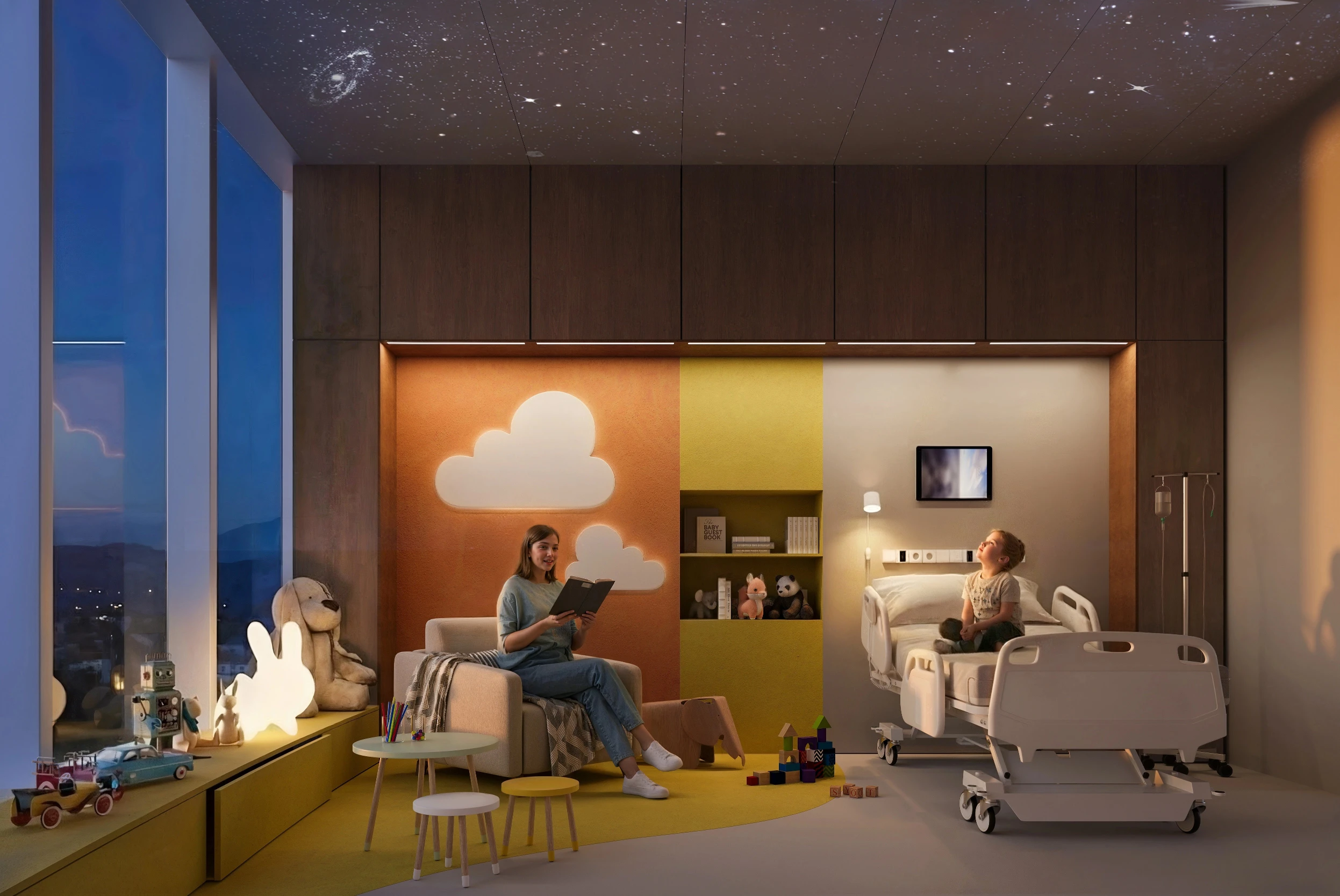
Throughout the Main Hospital, principles of Healing Architecture guide spatial decisions. Patient rooms maximize daylight while carefully balancing solar exposure through an advanced façade system developed with structural and façade engineers Eckersley O’Callaghan. Acoustic comfort, spatial proportions, controlled glare, and uninterrupted landscape views are all treated as measurable contributors to patient recovery.
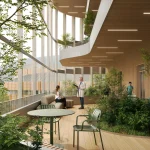
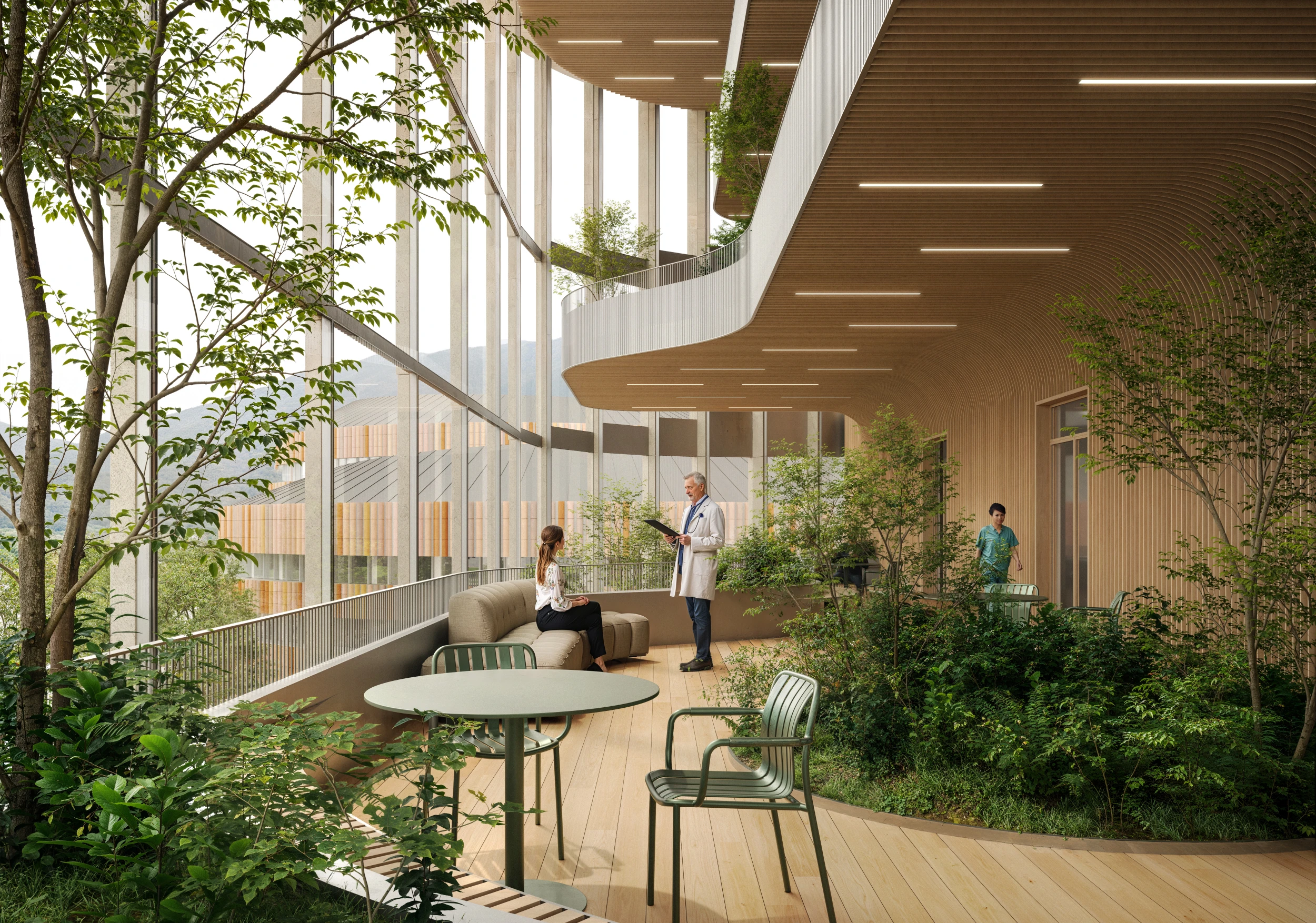
Large glazed winter gardens positioned at the end of each clinical wing further reinforce this approach. These indoor landscape spaces extend nature deep into the hospital, providing restorative environments throughout the year while reducing the psychological perception of confinement commonly experienced in healthcare settings.
The building’s internal planning also improves operational performance by shortening travel distances between diagnostics, surgery, intensive care, logistics, and treatment departments. This organizational clarity simultaneously supports medical staff efficiency and patient navigation.
A Children’s Hospital Designed Around Nature, Flexibility, and Future Healthcare
Adjacent to the Main Hospital, the Children’s Hospital establishes its own architectural identity while remaining connected to the larger healthcare ecosystem.
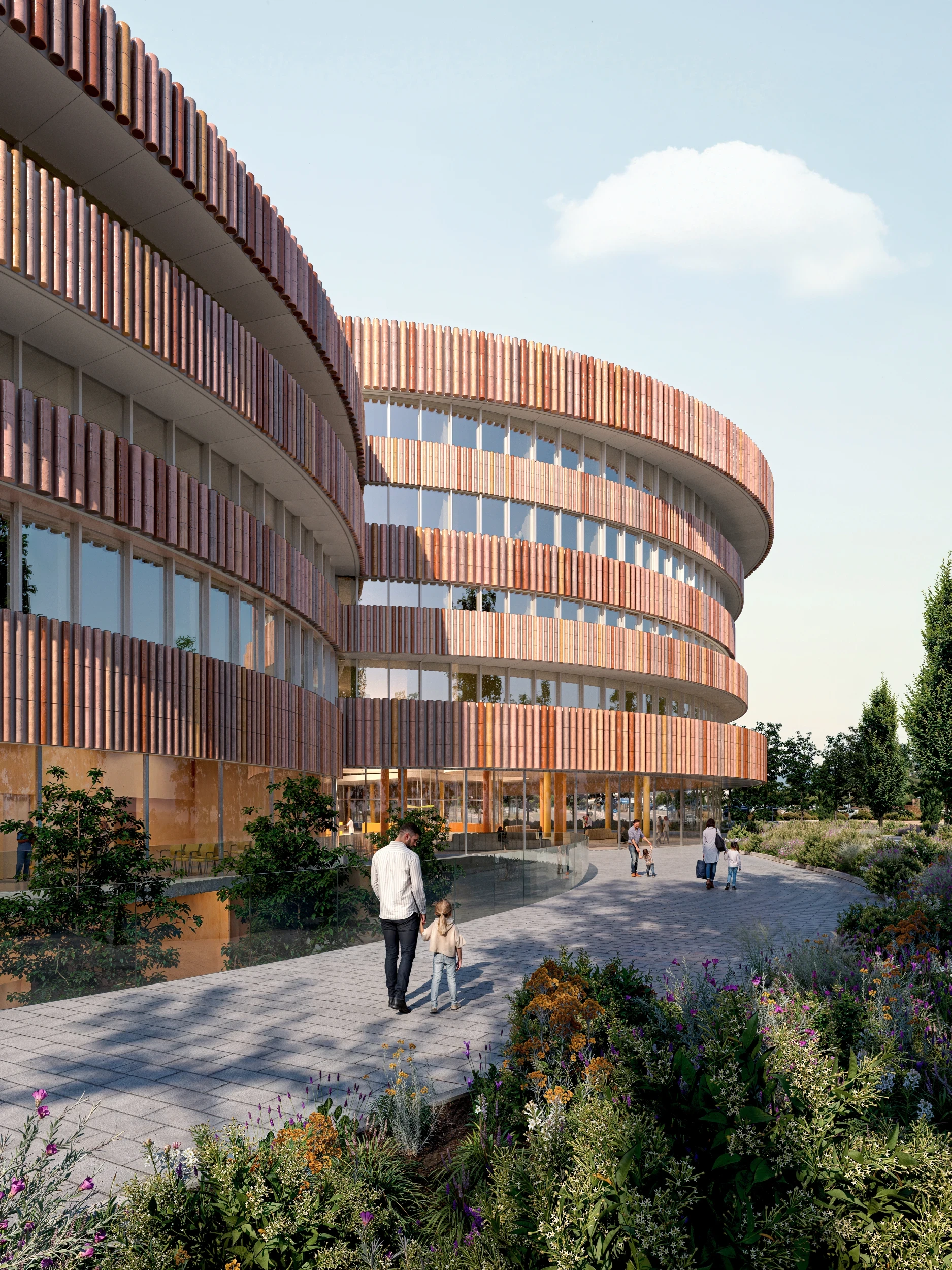
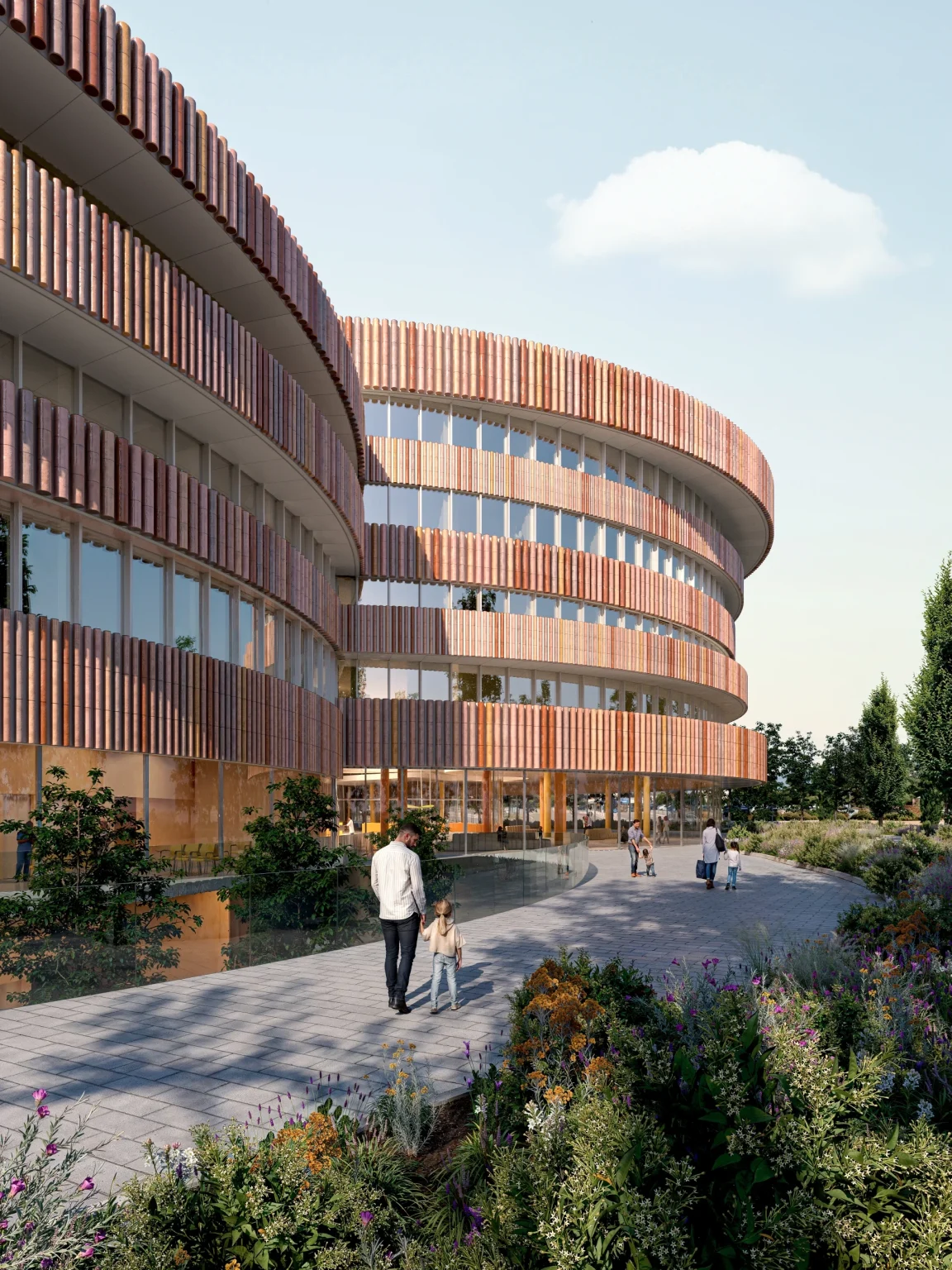
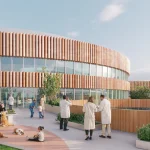
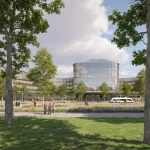
The building is composed of three cylindrical volumes of varying heights. Their rounded geometry creates softer, more intuitive environments that reflect children’s perception of space while simplifying orientation for young patients and families.
Nature remains present throughout the building. Internal courtyards, planted terraces, therapeutic gardens, and outdoor spaces are integrated into every level, ensuring continuous visual and physical connections with greenery during treatment and recovery.
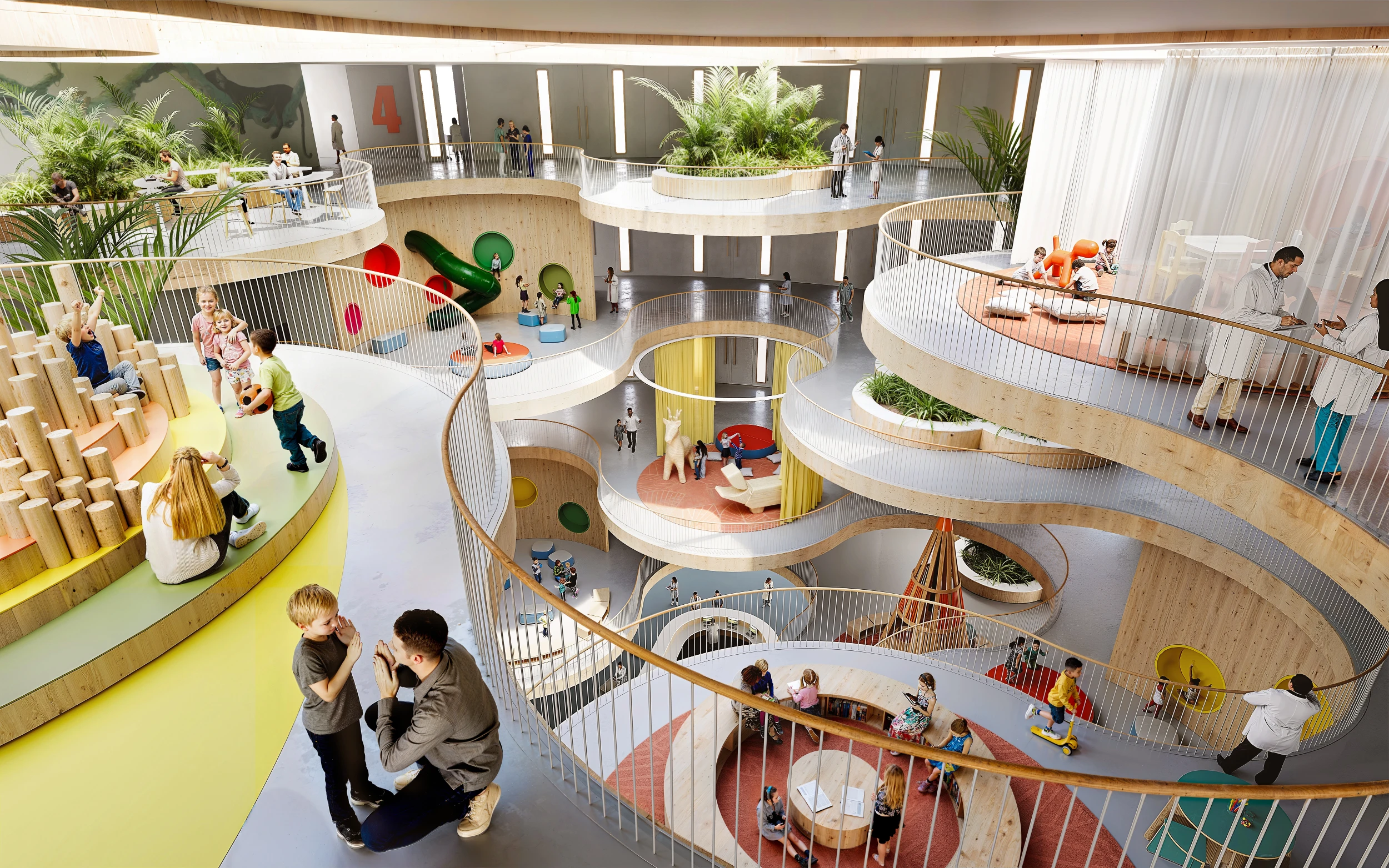
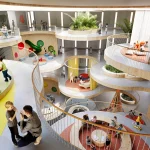
The central entrance opens into a full-height atrium designed less as a hospital reception and more as a shared social environment. Play spaces, consultation areas, waiting zones, and family gathering spaces coexist within a naturally illuminated volume that encourages interaction rather than isolation.
Beyond its architectural form, the project also embraces long-term adaptability. The hospital employs a hybrid timber-and-steel structural system assembled through dry construction methods, reducing embodied carbon while enabling faster construction and easier future modifications. As healthcare technologies evolve, departments can be reconfigured without requiring extensive structural intervention.
Digital infrastructure is equally embedded throughout the campus. Developed with DOTDOTDOT, intelligent wayfinding systems, environmental monitoring, and real-time flow management support daily operations while remaining largely invisible within the architectural experience. The project uses digital systems to improve accessibility, reduce unnecessary movement, optimize hospital logistics, and enhance operational resilience.
As clinical functions move into the new buildings, the historic pavilions across the existing campus will gradually be transformed into spaces dedicated to education, scientific research, and innovation. This strengthens connections with the University of Brescia’s Faculty of Medicine, allowing healthcare delivery, academic research, and public engagement to operate as one interconnected ecosystem.
Through the CareRing, healing architecture, adaptable construction, and landscape-led planning, CRA-Carlo Ratti Associati and its collaborators propose a hospital that extends far beyond medical treatment. The winning design positions the future Brescia Main Hospital and Children’s Hospital as an evolving civic infrastructure where architecture supports not only clinical excellence but also environmental resilience, public life, and long-term collective well-being.
Image Credit: Carlo Ratti Associati